Comprehensive Identification of Guan-Xin-Shu-Tong Capsule via a Mass Defect and Fragment Filtering Approach by High Resolution Mass Spectrometry: In Vitro and In Vivo Study

Abstract
1. Introduction
2. Results and Discussion
2.1. Optimization of Method Conditions
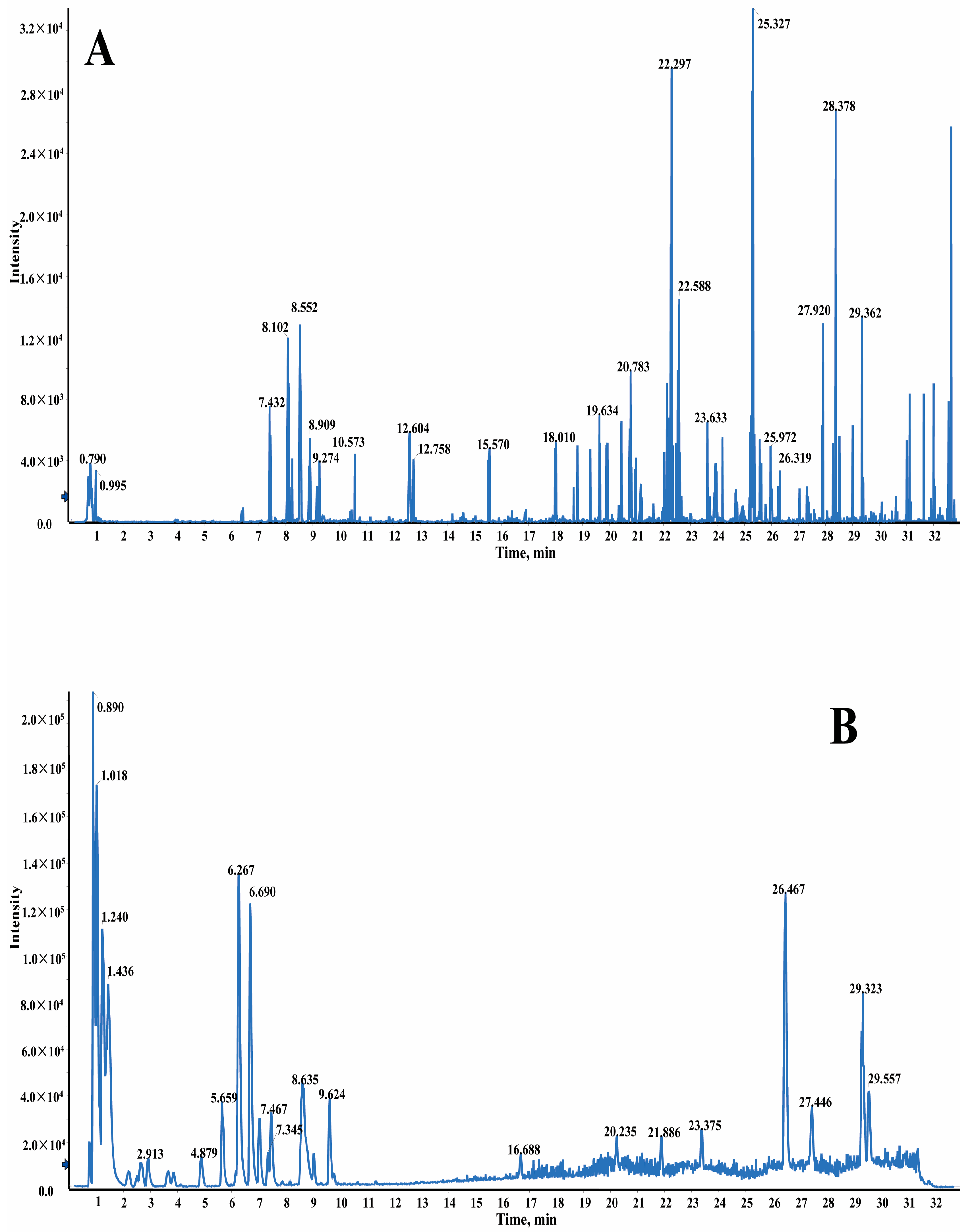
2.2. Analysis of the Compounds of GXSTC In Vitro
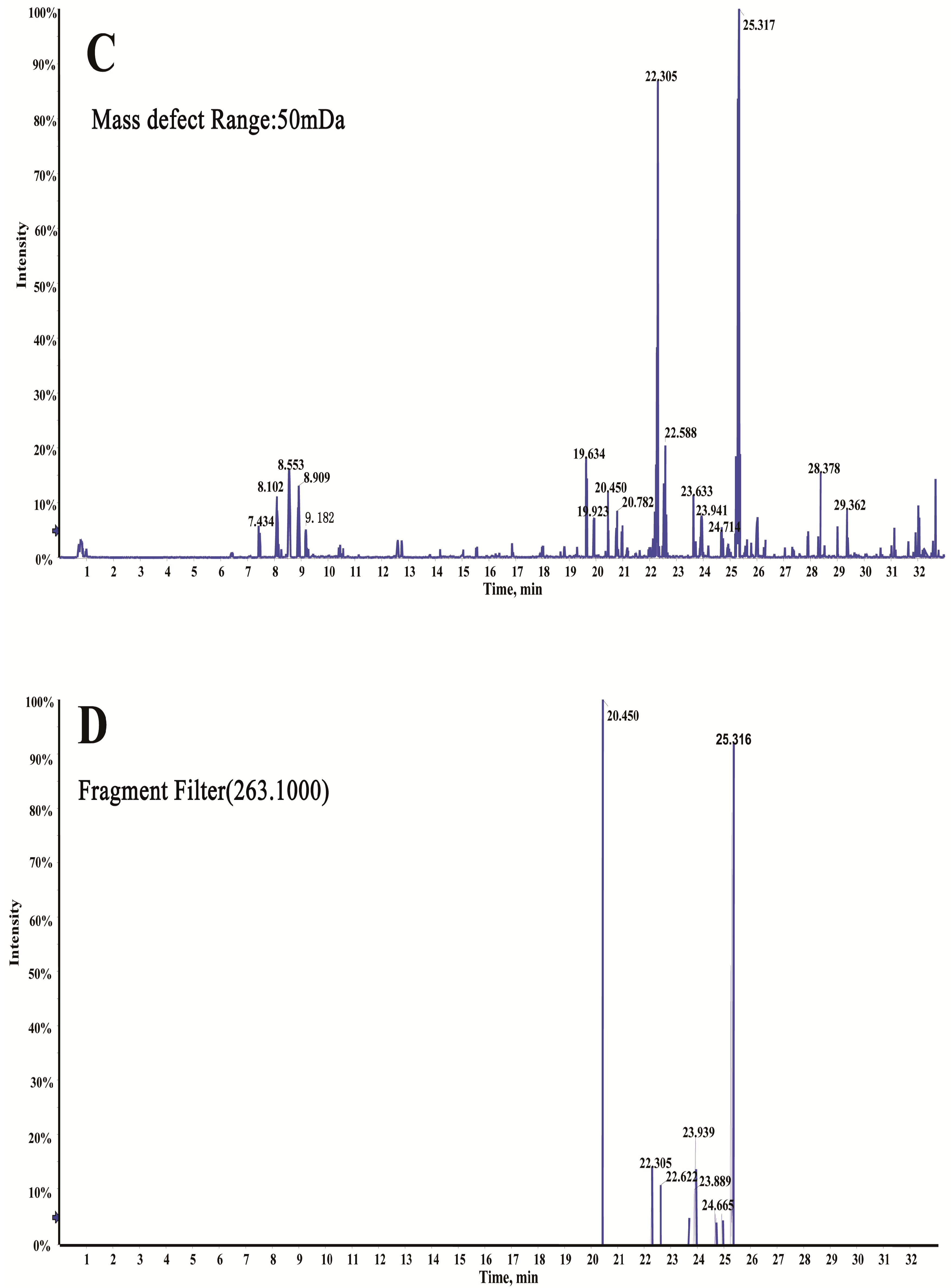
2.2.1. MDF Approach Profiling
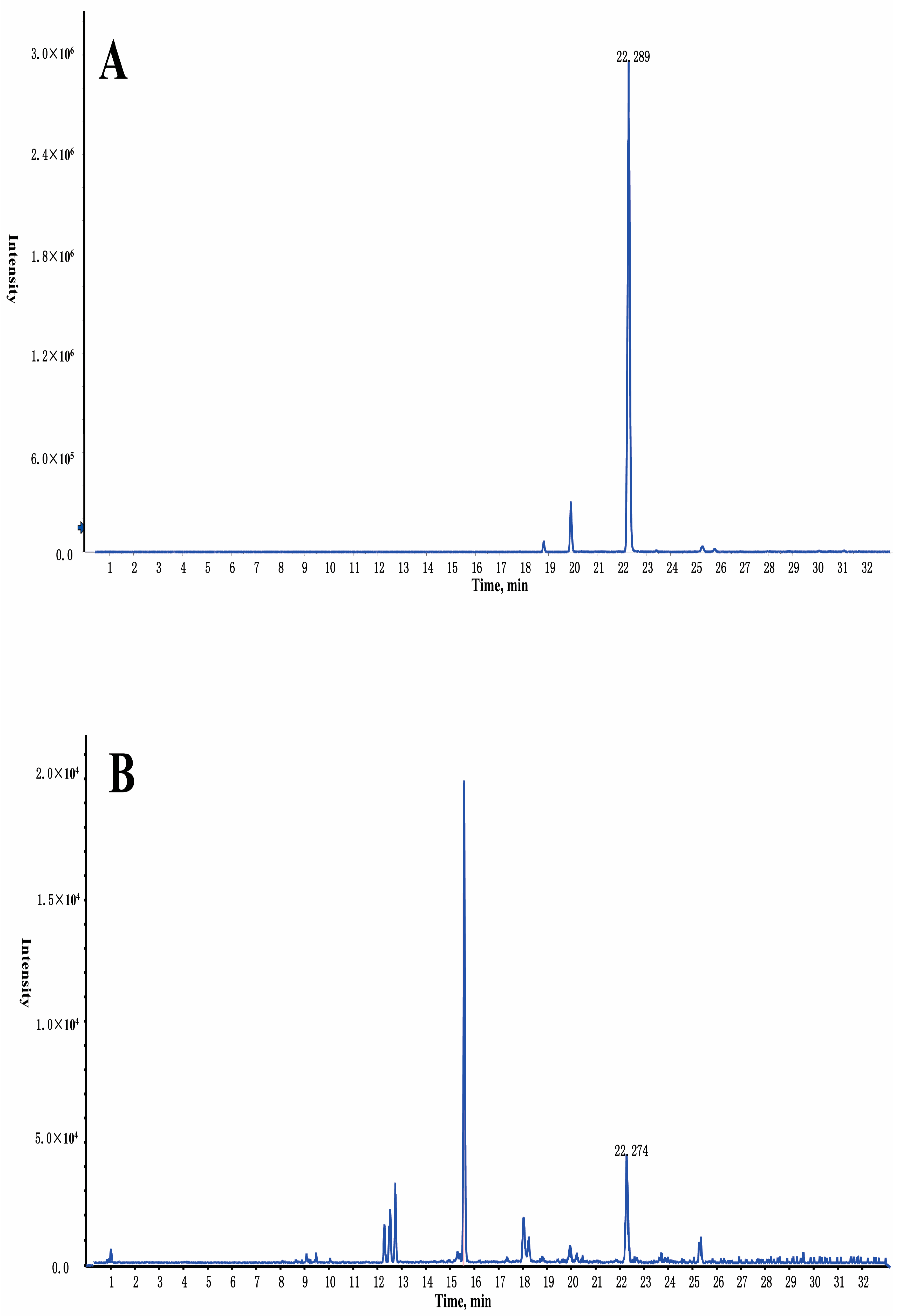
2.2.2. Fragment Filtering Approach Profiling
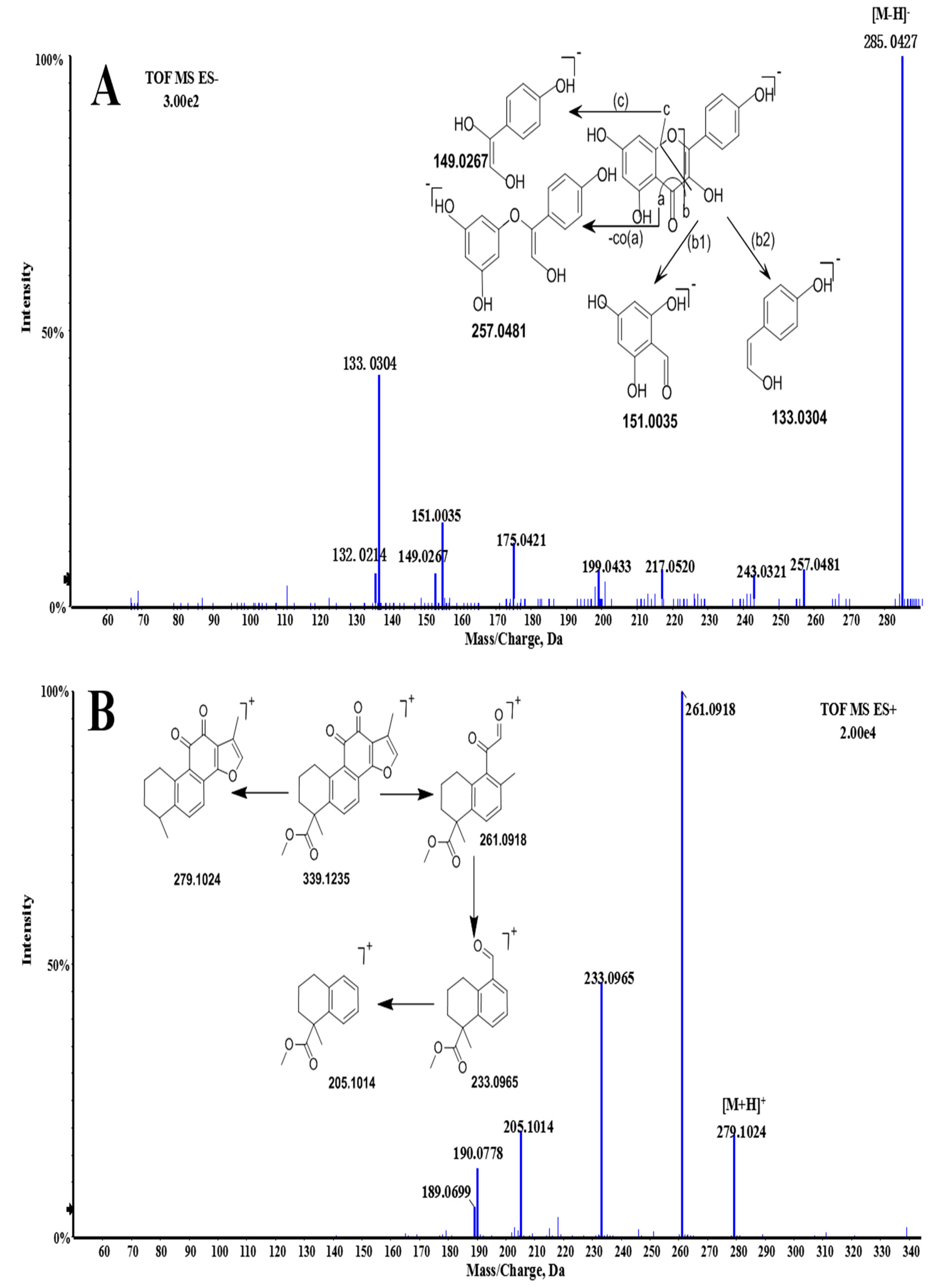
2.2.3. Identification of Flavonoids and Their Glycosides
2.2.4. Identification of Diterpenoids
2.2.5. Identification of Phenolic Acids
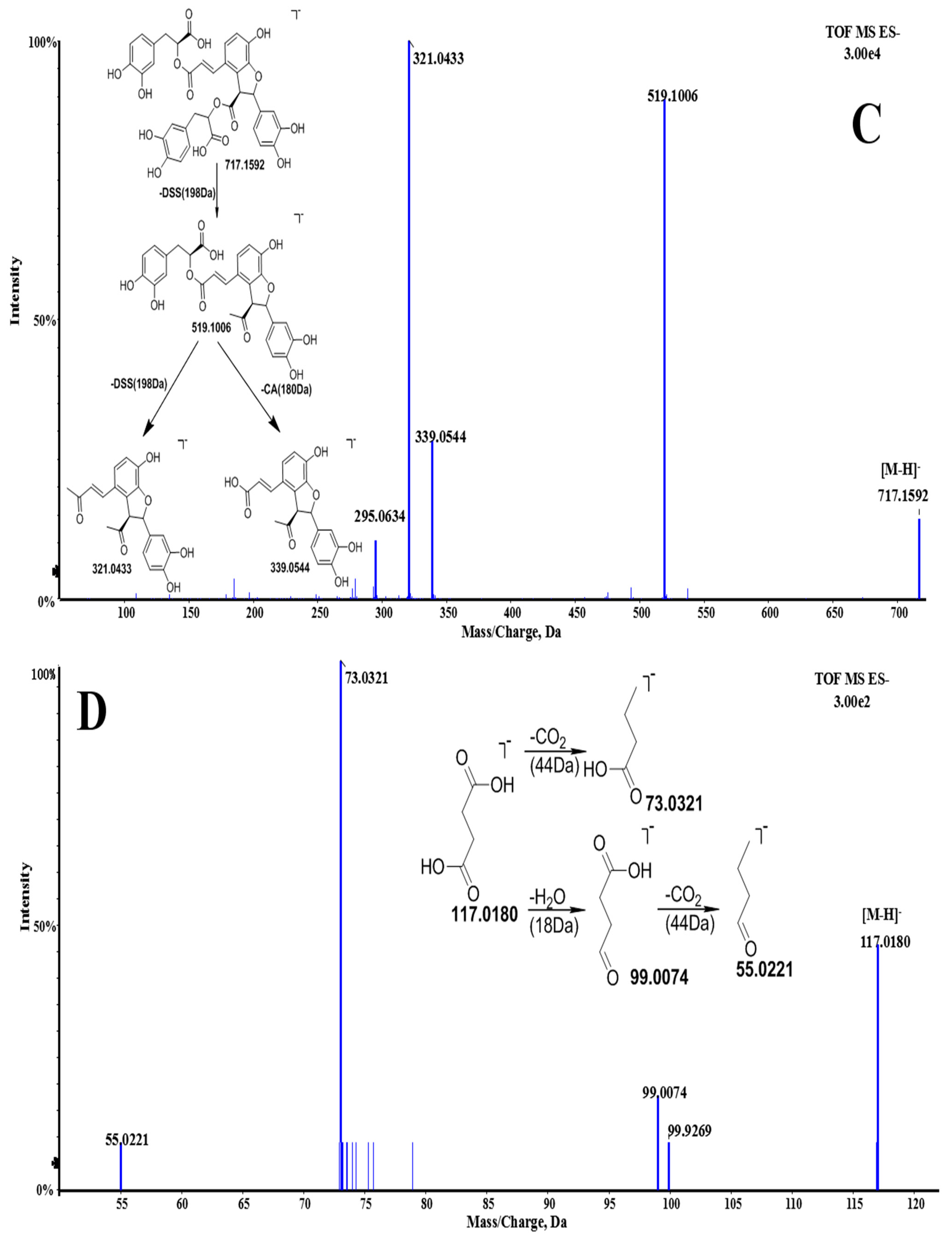
2.2.6. Identification of Organic Acid
2.2.7. Others
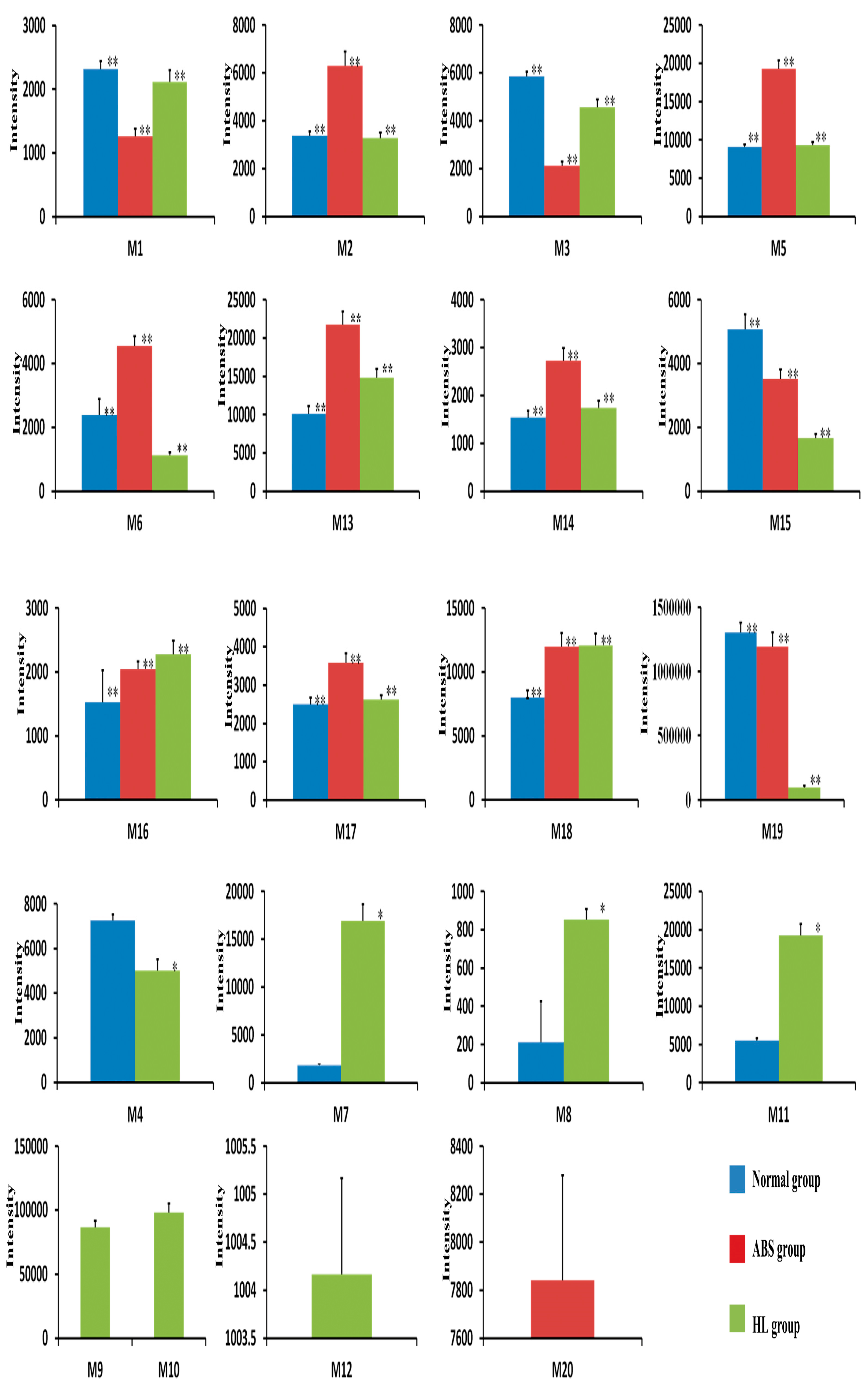
2.3. Analysis of the Active Component of GXSTC In Vivo
2.3.1. Analysis of the Prototype Components of GXSTC In Vivo
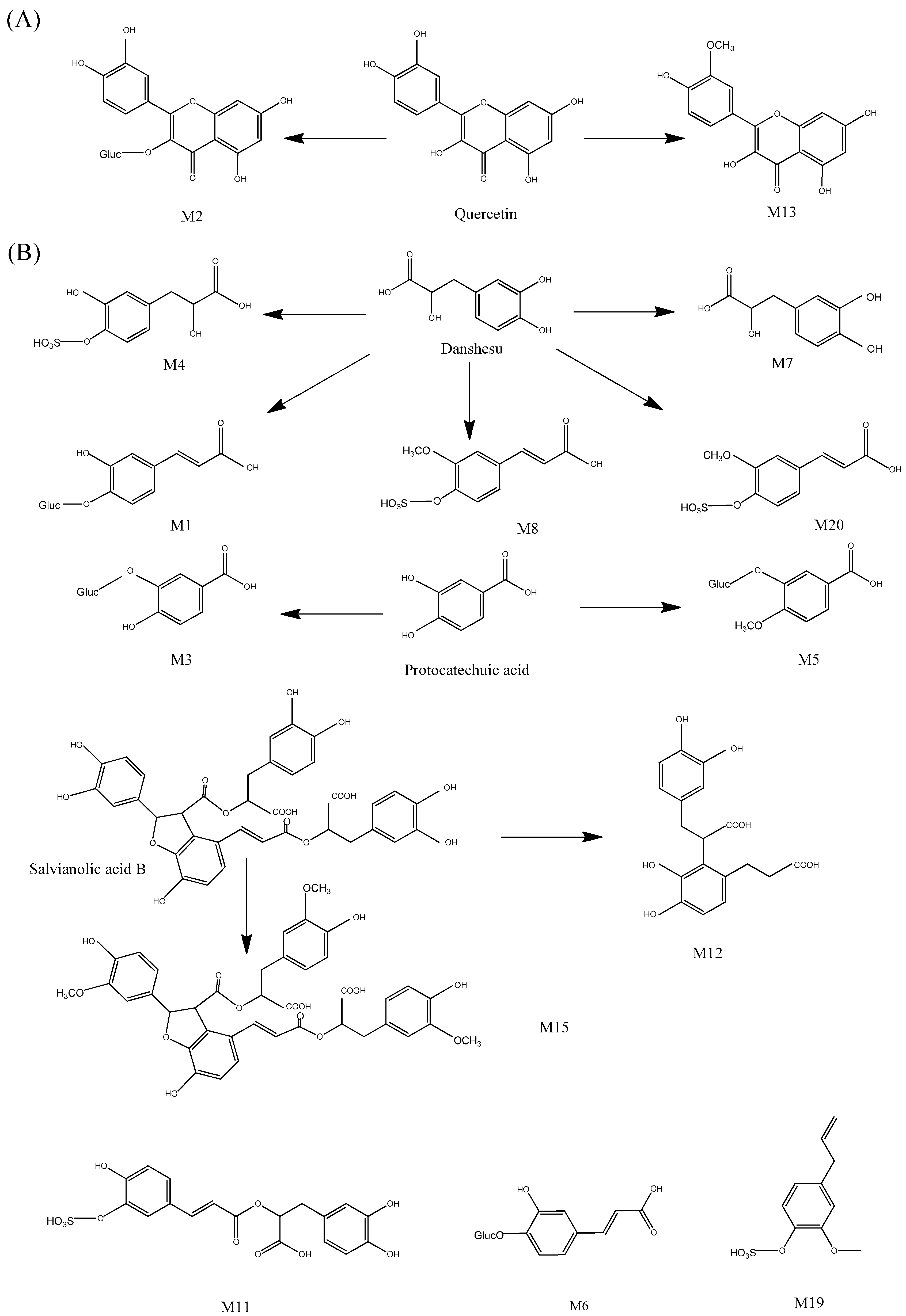
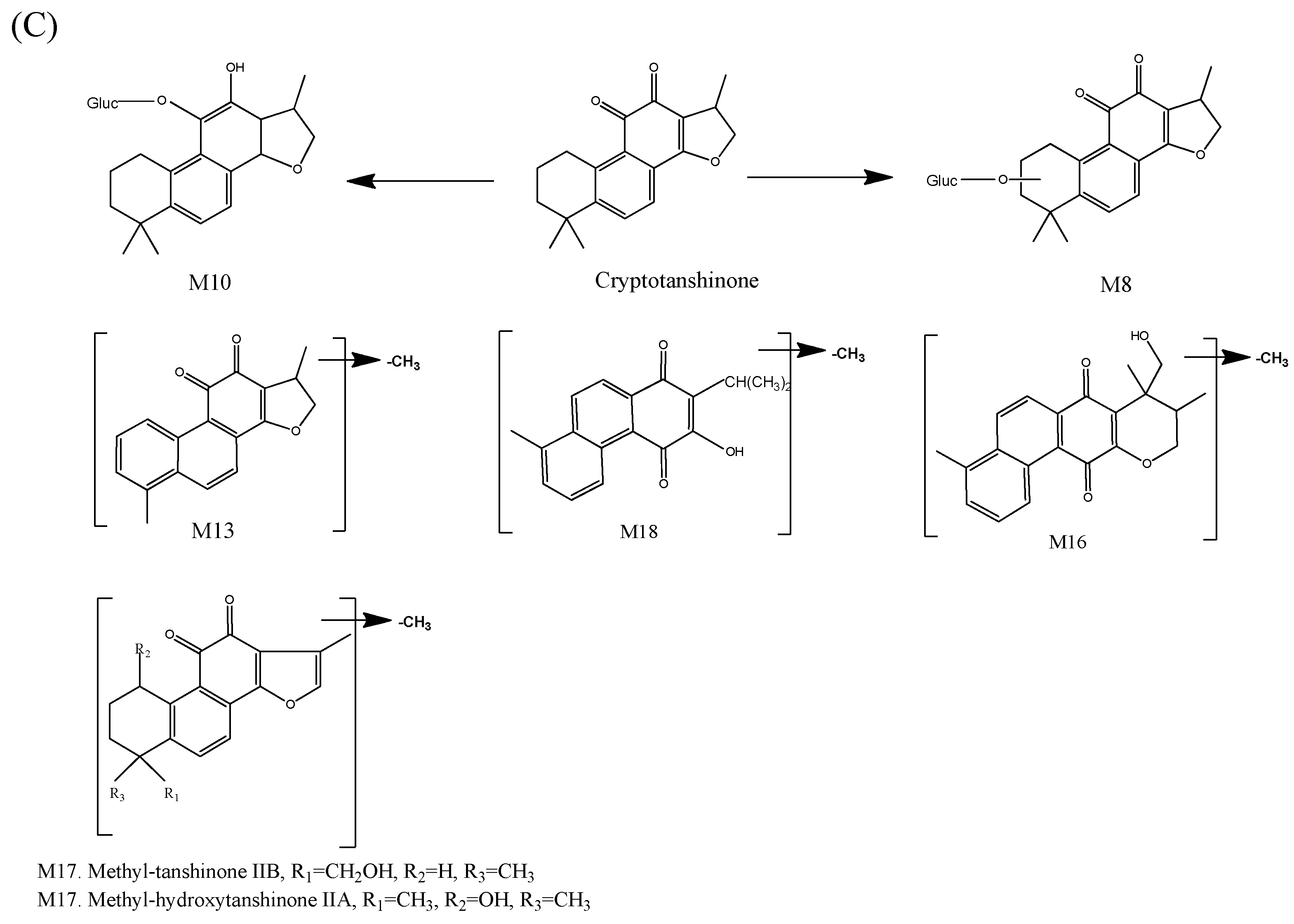
2.3.2. Analysis of the Metabolites of GXSTC In Vivo
Identification of Flavonoid-Related Metabolites
Identification of Phenolic Acid-Related Metabolites
Identification of Diterpenoid-Related Metabolites
Statistical Analysis
3. Materials and Methods
3.1. Chemicals and Reagents
3.2. Animal Experiment
3.3. Sample Preparation
3.3.1. Sample Preparation for In Vitro Analysis
3.3.2. Preparation of Plasma Sample and Quality Control Sample
3.4. Instrumentation and Conditions
3.5. Analytical Method Assessment
3.6. MS Data Processing
4. Conclusions
Supplementary Materials
Acknowledgments
Author Contributions
Conflicts of Interest
Abbreviations
| ABS | acute blood stasis |
| BPC | base peak chromatogram |
| EIC | extracted ion chromatogram |
| FF | fragment filtering |
| GXSTC | Guan-Xin-Shu-Tong capsules |
| HL | hyperlipidemic |
| IDA | information-dependent acquisition |
| LC-Q-TOF/MS | liquid chromatography quadrupole-time-of-flight mass spectrometry |
| m/z | mass-to-charge ratio |
| MDF | mass defect filtering |
| MS/MS | Tandem mass spectrometry |
| Q-TOF/MS | quadrupole-time-of-flight mass spectrometry |
| QC | quality control |
| RSD | relative standard deviation |
| TCM | traditional Chinese medicine |
References
- Shang, E.; Su, S.; Zeng, H.; Zhu, Z.; Duan, J. A novel modeling method to evaluate the bioactive contributions of compositions in traditional chinese medicine. Chemom. Intell. Lab. 2016, 159, 151–154. [Google Scholar] [CrossRef] [Scilit]
- Wang, W.; Zhang, T. Integration of traditional chinese medicine and western medicine in the era of precision medicine. J. Integr. Med. 2017, 15, 1–7. [Google Scholar] [CrossRef] [Scilit]
- Li, L.C.; Kan, L.D. Traditional chinese medicine for pulmonary fibrosis therapy: Progress and future prospects. J. Ethnopharmacol. 2017, 198, 45–63. [Google Scholar] [CrossRef] [Scilit] [PubMed]
- Wang, Y.; Xu, J.; Guo, R.; Xu, C.; Hao, Y.; Chen, C.; Hong, Y.; Lei, Z. Therapeutic effect in patients with coronary heart disease based on information analysis from traditional chinese medicine four diagnostic methods. J. Tradit. Chin. Med. 2014, 34, 34–41. [Google Scholar] [CrossRef] [Scilit]
- Lee, K.H.; Natschke, S.M.; Qian, K.; Dong, Y.; Yang, X.; Zhou, T.; Belding, E.; Akiyama, T. Recent progress of research on herbal products used in traditional chinese medicine: The herbs belonging to the divine husbandman’s herbal foundation canon. J. Tradit. Complement. Med. 2011, 2, 6–26. [Google Scholar] [CrossRef] [Scilit]
- Yang, S.; Zhang, K.; Lin, X.; Miao, Y.; Meng, L.; Chen, W.; Tang, X. Pharmacokinetic comparisons of single herb extract of fufang danshen preparation with different combinations of its constituent herbs in rats. J. Pharm. Biomed. Anal. 2012, 68, 77–85. [Google Scholar] [CrossRef] [Scilit] [PubMed]
- Hu, T.; Zhou, X.; Wang, L.; Or, P.M.Y.; Yeung, J.H.K.; Kwan, Y.W.; Cho, C.H. Effects of tanshinones from salvia miltiorrhiza on cyp2c19 activity in human liver microsomes: Enzyme kinetic and molecular docking studies. Chem.-Biol. Interact. 2015, 230, 1–8. [Google Scholar] [CrossRef] [Scilit] [PubMed]
- Wang, H.; Gao, X.D.; Zhou, G.C.; Cai, L.; Yao, W.B. In vitro and in vivo antioxidant activity of aqueous extract from choerospondias axillaris fruit. Food Chem. 2008, 106, 888–895. [Google Scholar] [CrossRef] [Scilit]
- Tu, L.Y.; Pi, J.; Jin, H.; Cai, J.Y.; Deng, S.P. Synthesis, characterization and anticancer activity of kaempferol-zinc(ii) complex. Bioorg. Med. Chem. Lett. 2016, 26, 2730–2734. [Google Scholar] [CrossRef] [Scilit] [PubMed]
- Cao, J.L.; Wei, J.C.; Hu, Y.J.; He, C.W.; Chen, M.W.; Wan, J.B.; Li, P. Qualitative and quantitative characterization of phenolic andditerpenoid constituents in danshen (salvia miltiorrhiza) bycomprehensive two-dimensional liquid chromatography coupledwith hybrid linear ion trap orbitrap mass. J. Chromatogr. A 2016, 1427, 79–89. [Google Scholar] [CrossRef] [Scilit] [PubMed]
- Wang, X.; Sun, W.; Sun, H.; Lv, H.; Wu, Z.; Wang, P.; Liu, L.; Cao, H. Analysis of the constituents in the rat plasma after oral administration of yin chen hao tang by UPLC/Q-TOF-MS/MS. J. Pharm. Biomed. Anal. 2008, 46, 477–490. [Google Scholar] [CrossRef] [Scilit] [PubMed]
- Wang, P.; Liang, Y.; Zhou, N.; Chen, B.; Yi, L.; Yu, Y.; Yi, Z. Screening and analysis of the multiple absorbed bioactive components and metabolites of dang-guibuxue decoction by the metabolic fingerprinting technique and liquid chromatography/diode-array detection mass spectrometry. Rapid Commun. Mass Spectrom. 2007, 21, 99–106. [Google Scholar] [CrossRef] [Scilit] [PubMed]
- Lv, Y.H.; Zhang, X.; Liang, X.; Liu, X.R.; Dai, W.X.; Yan, S.K.; Zhang, W.D. Characterization of the constituents in rat biological fluids after oral administration of fufang danshen tablets by ultra-performance liquid chromatography/quadrupole time-of-flight mass spectrometry. J. Pharm. Biomed. Anal. 2010, 52, 155–159. [Google Scholar] [CrossRef] [Scilit] [PubMed]
- Qiu, X.; Li, G.; Zheng, G. Effect of guanxin shutong capsule for coronary heart disease patients with cardiovascular events after coronary stent implantation. J. Inn. Mong. Univ. Natl. 2009, 24, 683–686. [Google Scholar]
- Ao, W.L.J.; Sun, Z.; Zhang, T.L.G.; Bai, M.; Wang, L.; Liu, J. Effect of guanxin shutong capsule on experimental myocardial ischemia, cardiac infarction and hemorrheology in dogs. Chin. J. Integr. Tradit. West. Med. 1998, 18, 9–11. [Google Scholar]
- Sun, Z.; Qiu, X.; Chen, G.; Yu, Y.; Zhao, M.; Ao, W.L.J. Protective effect of guanxin shutong capsule on experimental arrhythmia in rats. J. Inn. Mong. Univ. Natl. 2009, 24, 681–682. [Google Scholar]
- Guo, H.; Liu, T.; Zhang, C.; Zhang, A.; Zhou, Z. Effect of guanxin shutong capsule on serum high-sensitive c-reactive protein, interleukin-6 and superoxide dismutase in patients with alzheimer’s disease. Chin. Genet. Pract. 2012, 15, 860–862. [Google Scholar]
- Yan, K.; Chu, Y.; Huang, J.H.; Jiang, M.M.; Li, W.; Wang, Y.F.; Huang, H.Y.; Wang, W. Qualitative and quantitative analyses of compound danshen extract based on 1h nmr method and its application for quality control. J. Pharm. Biomed. Anal. 2016, 131, 183–187. [Google Scholar] [CrossRef] [Scilit] [PubMed]
- Li, W.; Qu, H. Rapid quantification of phenolic acids in radix salvia miltrorrhiza extract solutions by ft-nir spectroscopy in transflective mode. J. Pharm. Biomed. Anal. 2010, 52, 425–431. [Google Scholar] [CrossRef] [Scilit] [PubMed]
- Shen, X.J.; Ge, R.; Wang, J.H. Chemical constituents from choerospondias axillaris(roxb)burtt et hill. J. Henan Univ. (Med. Sci.) 2009, 28, 195–199. [Google Scholar]
- Jia, L.; Yang, Y.M.; Zhu, D.L.; Gao, X.H.; Wang, X.L.; Xing, H.H.; Bao, J.P.; Shu, L. Anti-proliferative effect of the extract of guangzao (fructus choerospondiatis) on cultured rat cardiac fibroblasts. J. Tradit. Chin. Med. 2015, 35, 685–689. [Google Scholar] [PubMed]
- Wang, X.Q.; Wang, L.W.; Zhao, Y.; Ma, C.M. Advance in chemical constituents and pharmacological activity of choerospondias axillaris fruit. Food Sci. 2014, 35, 281–285. [Google Scholar]
- Li, Q.Y.; Liu, Y.; Bao, H.Y. Progress on pharmaceutical effects and chemical constituents of salvia miltiorrhiza in recent five years. Food Drug 2014, 6, 145–147. [Google Scholar]
- Zhu, L.; Zhang, C.Z.; Li, C.; Zhou, W.Y. Studies on chemical constituents of choerospondias axillaris. J. Chin. Med. Mater. 2003, 26, 21–24. [Google Scholar]
- Zhang, H.N.; Yang, Y.M.; Wu, G.D. Separation of antiarrhythmic constituents of choerospondias axillaries (roxb) burtt et hill. J. Baotou Med. Coll. 2013, 29, 1–4. [Google Scholar]
- Ma, L.J.; Zhang, X.Z.; Zhang, H.P.; Gan, Y.R. Development of a fingerprint of salvia miltiorrhiza bunge by high-performance liquid chromatography with a coulometric electrode array system. J. Chromatogr. B. 2007, 846, 139–146. [Google Scholar]
- Zhang, J.L.; Cui, M.; He, Y.; Yu, H.L.; Guo, D.A. Chemical fingerprint and metabolic fingerprint analysis of danshen injection by hplc–uv and hplc–ms methods. J. Pharm. Biomed. Anal. 2005, 36, 1029–1035. [Google Scholar] [CrossRef] [Scilit] [PubMed]
- Liu, A.H.; Lin, Y.H.; Yang, M.; Guo, H.; Guan, S.H.; Sun, J.H.; Guo, D.A. Development of the fingerprints for the quality of the roots of salvia miltiorrhiza and its related preparations by HPLC-DAD and LC-MS(n). J. Chromatogr. B. 2007, 846, 32–41. [Google Scholar] [CrossRef] [Scilit] [PubMed]
- National Pharmacopoeia Committee. Pharmacopoeia of People’s Republic of China; Chinese Medicine science and Technology Press: Beijing, China, 2005; pp. 67–85.
- Xu, H.R.; Niu, H.B.; He, B.S.; Cui, C.; Li, Q.; Bi, K.S. Comprehensive qualitative ingredient profiling of chinese herbal formula wu-zhu-yu decoction via a mass defect and fragment filtering approach using high resolution mass spectrometry. Molecules 2016, 21, 664. [Google Scholar] [CrossRef] [Scilit] [PubMed]
- Ma, J.T.; Shan, N.; Lu, X.Y.; Wang, X.M.; Liu, F.; Nan, J.Y. Determination of gallic acid in guanxin shutong capsule by hplc method. World Chin. Med. 2011, 6, 354–355. [Google Scholar]
- Zhou, F.F.; Zhang, L.H.; Gu, L.Q.; Zhang, Y.Y.; Zhao, S.M.; Bi, K.S.; Chen, X.H.; Zhang, H.F. Simultaneous quantification of 13 components in guanxin shutong capsule by hplc method. J. Chromatogr. Sci. 2016, 54, 971–976. [Google Scholar] [CrossRef] [Scilit] [PubMed]
- Liu, F.; Ma, J.T.; Shan, N.; Lu, X.Y.; Dang, Y.N. Determination eugenol, borneol and isoborneol of guanxin shutong capsule by gas chromatography. Chin. J. Exp. Tradit. Med. 2011, 17, 56–59. [Google Scholar]
- Liu, L.; Leng, J.; Yang, X.; Liao, L.; Cen, Y.; Xiao, A.; Ma, L. Rapid screening and identification of bsa bound ligands from radix astragali using bsa immobilized magnetic nanoparticles coupled with HPLC-MS. Molecules 2016, 21, 1471. [Google Scholar] [CrossRef] [Scilit] [PubMed]
- Liang, Y.; Wu, J.L.; Zhou, H.; Liu, Z.; Yan, G.; Liu, Y.; Liu, L.; Li, N. Identification of oxygenated fatty acid as a side chain of lipo-alkaloids in aconitum carmichaelii by uhplc-q-tof-ms and a database. Molecules 2016, 21, 437. [Google Scholar] [CrossRef] [Scilit] [PubMed]
- Zhu, H.; Bi, K.; Hana, F.; Guan, J.; Tang, Z.; Zhao, L.; Yin, R.; Hou, X. Simultaneous determination of two iridoid glycosides, twoanthraquinones and four flavonoid glycosides of zhi-zi-da-huangdecoction in rat plasma by UFLC-MS/MS: Application to a comparativepharmacokinetic study in healthy and cholestatic liver injury rats. J. Chromatogr. B 2014, 960, 116–125. [Google Scholar] [CrossRef] [Scilit] [PubMed]
- Zhang, Q.Q.; Dong, X.; Liu, X.G.; Gao, W.; Li, P.; Yang, H. Rapid separation and identification of multiple constituents in danhong injection by ultra-high performance liquid chromatography coupled to electrospray ionization quadrupole time-of-flight tandem mass spectrometry. Chin. J. Nat. Med. 2016, 14, 147–160. [Google Scholar] [CrossRef] [Scilit]
- Liu, M.; Zhao, S.; Wang, Z.; Wang, Y.; Liu, T.; Wang, H.; Tu, P. Identification of metabolites of deoxyschizandrin in rats by UPLC-Q-TOF-MS/MS based on multiple mass defect filter dataacquisition and multiple data processing techniques. J. Chromatogr. B 2014, 949–950, 115–126. [Google Scholar] [CrossRef] [Scilit] [PubMed]
- Liu, S.; Che, Y.; Wang, F.; Shang, Z.; Lu, J.; Dai, S.; Zhang, J.; Cai, W. Identification of metabolites of 6′-hydroxy-3,4,5,2′,4′-pentamethoxychalcone in rats by a combination of ultra-high-performance liquid chromatography with linear ion trap-orbitrap mass spectrometry based on multiple data processing techniques. Molecules 2016, 21, 1266. [Google Scholar]
- Shi, Y.; Xia, Y.; Wang, J.; He, J.; Feng, F.; Liu, W. Metabolic profile of 5-hydroxy-4-methoxycanthin-6-one, a typical canthinone alkaloid, in rats determined by liquid chromatography-quadrupole time-of-flight tandem mass spectrometry together with multiple data processing techniques. J. Pharm. Biomed. Anal. 2016, 129, 60–69. [Google Scholar] [CrossRef] [Scilit] [PubMed]
- Zhou, Y.; Xu, G.; Choi, F.F.K.; Ding, L.S.; Han, Q.B.; Qiao, C.F.; Zhao, Q.S.; Xu, H.X. Qualitative and quantitative analysis of diterpenoids in salvia species by liquid chromatography coupled with electrospray ionization quadrupole time-of-flight tandem mass spectrometry. J. Chromatogr. A 2009, 1216, 4847–4858. [Google Scholar] [CrossRef] [Scilit] [PubMed]
- Qi, Z.; Yuting, Y.; Fengming, L.; Yiting, S. Effects of total flavonoids from fructus jujube on protein expression in ischemic myocardium of rats. Chin. Pharm. Bull. 2006, 1, 22. [Google Scholar]
- Liu, T.; Zhu, D.L.; Yang, Y.M. Effects of total flavonoids from fructus jujube on myocardial fibrosis induced by angii. Chin. J. Nat. Med. 2014, 12, 56–59. [Google Scholar]
- Zhang, S.; Wang, Y.; Ai, M. Effects of total flavonoids from fructus date on right ventricular papillary muscles of guinea pig. Chin. Pharm. Bull. 2002, 18, 266–269. [Google Scholar]
- Sun, A.; Zhang, Y.; Li, A.; Meng, Z.; Liu, R. Extraction and preparative purification of tanshinones from salvia miltiorrhiza bunge by high-speed counter-current chromatography. J. Chromatogr. B 2011, 879, 1899–1904. [Google Scholar] [CrossRef] [Scilit] [PubMed]
- Su, C.; Liang, M.; Khalid, R.; Ting, H.; Ping, Q. Salvia miltiorrhiza: Traditional medicinal uses, chemistry, and pharmacology. Chin. J. Nat. Med. 2015, 13, 163–182. [Google Scholar] [CrossRef] [Scilit]
- Park, O.K.; Choi, J.H.; Park, J.H.; Kim, I.H.; Yan, B.C.; Yan, B.C.; Kwon, S.H.; Won, M.-H. Comparison of neuroprotective effects of five major lipophilic diterpenoids from danshen extract against experimentally induced transient cerebral ischemic damage. Fitoterapia 2012, 83, 1666–1674. [Google Scholar] [CrossRef] [Scilit] [PubMed]
- Sun, W.; Tong, L.; Miao, J.; Huang, J.; Li, Y.; Xiao, H.; Sun, H.; Bi, K. Separation and analysis of phenolic acids from salvia miltiorrhiza and its related preparations by off-line two-dimensional hydrophilic interaction chromatography × reversed-phase liquid chromatography coupled with ion trap time-of-flight mass spectrometry. J. Chromatogr. A 2016, 1431, 79–88. [Google Scholar] [CrossRef] [Scilit] [PubMed]
- Liu, A.H.; Guo, H.; Ye, M.; Lin, Y.H.; Sun, J.H.; Xu, M.; Guo, D.-A. Detection, characterization and identification of phenolic acids in danshen using highperformance liquid chromatography with diode array detection and electrospray ionization mass spectrometry. J. Chromatogr. A 2007, 1161, 170–182. [Google Scholar] [CrossRef] [Scilit] [PubMed]
- Zeng, G.; Xiao, H.; Liu, J.; Liang, X. Identification of phenolic constituents in radix salvia miltiorrhizae by liquid chromatography/electrospray ionization mass spectrometry. Rapid Commun. Mass Spectrom. 2006, 20, 499–506. [Google Scholar] [CrossRef] [Scilit] [PubMed]
- Chen, W.; Wang, D.; Wang, L.S.; Bei, D.; Wang, J.; See, W.A.; Mallery, S.R.; Stoner, G.D.; Liu, Z.F. Pharmacokinetics of protocatechuic acid in mouse and its quantification in human plasma using lc tandem mass spectrometry. J. Chromatogr. B 2012, 39–44. [Google Scholar] [CrossRef] [Scilit] [PubMed]
- Roumeguère, T.; Wespes, E.; Carpentier, Y.; Hoffmann, P.; Schulman, C.C. Erectile dysfunction is associated with a high prevalence of hyperlipidemia and coronary heart disease risk. Eur. Urol. 2003, 44, 355–359. [Google Scholar] [CrossRef] [Scilit]
- Wang, S.H.; Wang, J.; Ji, L. Relationship between the gensini score of blood-stasis syndrome in coronary heart disease and vegf. World Sci. Technol. 2010, 12, 355–357. [Google Scholar]
- Zhang, H.; Wang, W.R.; Lin, R.; Zhang, J.Y.; Ji, Q.L.; Lin, Q.Q.; Yang, L.N. Buyang huanwu decoction ameliorates coronary heart disease with qi deficiency and blood stasis syndrome by reducing crp and cd40 in rats. J. Ethnopharmacol. 2010, 130, 98–102. [Google Scholar] [CrossRef] [Scilit] [PubMed]
- Gu, J.; Feng, L.; Zhang, M.; Qin, D.; Jiang, J.; Cheng, X.; Yang, S.; Jia, X. New metabolite profiles of danshensu in rats by ultraperformance liquid chromatography/quadrupole-time-of-flight mass spectrometry. J. Chromatogr. B 2014, 955, 20–25. [Google Scholar] [CrossRef] [Scilit] [PubMed]
- Dai, X.; Yan, Y.; Wu, Q.; Yu, C.; Liu, X.; Jiang, Y. Comparative pharmacokinetics of rhein and chrysophanol after oral administration of quyuqingregranules in healthy and acute blood stasis rabbits. J. Ethnopharmacol. 2014, 154, 338–343. [Google Scholar] [CrossRef] [Scilit] [PubMed]
- Tiana, Y.; Yang, Z.; Li, Y.; Qiao, Y.; Yang, J.; Jia, Y.; Wen, A. Pharmacokinetic comparisons of hydroxysafflower yellow a in healthy and blood stasis syndrome rats. J. Ethnopharmacol. 2010, 129, 1–4. [Google Scholar] [CrossRef] [Scilit] [PubMed]
- Liu, Y.; Lehmlerc, H.-J.; Robertsonc, L.W.; Duffela, M.W. Physicochemical properties of hydroxylated polychlorinated biphenyls aid in predicting their interactions with rat sulfotransferase 1A1 (rSULT1A1). Chem. Biol. Interact. 2011, 189, 153–160. [Google Scholar] [CrossRef] [Scilit] [PubMed]
- Dai, H.; Wang, M.; Li, X.; Wang, L.; Li, Y.; Xue, M. Structural elucidation of in vitro and in vivo metabolites of cryptotanshinone by HPLC-DAD-ESI-MSn. J. Pharm. Biomed. Anal. 2008, 48, 885–896. [Google Scholar] [CrossRef] [Scilit] [PubMed]
- Zhou, C.; Li, G.; Li, Y.; Gong, L.; Huang, Y.; Shi, Z.; Du, S.; Sun, C. A high-throughput metabolomic approach to explore the regulatory effect of mangiferin on metabolic network disturbances of hyperlipidemia rats. Mol. Biosyst. 2015, 11, 418–433. [Google Scholar] [CrossRef] [Scilit] [PubMed]
- Miao, H.; Chen, H.; Pei, S.; Bai, X.; Nosratola, D.; Vaziri; Zhao, Y.Y. Plasma lipidomics reveal profound perturbation of glycerophospholipids, fatty acids, and sphingolipids in diet-induced hyperlipidemia. Chem. Biol. Interact. 2015, 228, 79–87. [Google Scholar] [CrossRef] [Scilit] [PubMed]
Sample Availability: Samples of the compounds 9, 10, 11, 12, 13, 17, 24, 27 are available from the authors. |






| No. | tR (min) | Formula | Identified Constituents | Theoretical Molecular Weight (Da) | Measured Mass (Da) | Theoretical Mass Defect Shift (Da) | Fragment Filter (Da) | |
|---|---|---|---|---|---|---|---|---|
| [M + H]+ | [M − H]− | |||||||
| 1 | 0.98 | C5H7NO3 | l-pyroglutamic acid | 129.0425 | 130.0502 | 0.1022 | 84.0 | |
| 2 | 0.98 | C6H13NO2 | Leucine | 131.1729 | 132.1023 | 0.1142 | 86.0 | |
| 3 | 1.11 | C16H12O7 | Rhamnetin | 316.0583 | 315.0521 | 0.1293 | 133.0 | |
| 4 | 1.18 | C6H8O7 | Citric acid | 192.0270 | 193.0343 | 191.0199 | 0.0981 | 129.0 |
| 5 | 1.32 | C9H11NO2 | Phenylalanine | 165.1891 | 166.0868 | 0.0973 | 149.0 | |
| 6 | 4.26 | C15H14O6 | Catechin/Epicatechin | 290.0790 | 289.0719 | 0.1398 | 135.0 | |
| 7 | 5.47 | C21H20O12 | Hyperin | 464.0955 | 465.1133 | 0.2172 | 301.0 | |
| 8 | 6.07 | C24H26O13 | Salviaflaside | 522.1374 | 521.1317 | 0.2691 | 135.0 | |
| 9 | 6.15 | C21H20O11 | Kaempferol-7-O-glucopyranoside | 448.1006 | 449.1025 | 0.2121 | 301.0 | |
| 10 | 6.74 | C20H18O10 | Salvianolic acid D | 418.3509 | 417.0838 | 0.1914 | 175.0 | |
| 11 | 7.48 | C17H14O6 | Salvianolic acid F | 314.0790 | 313.0717 | 0.1398 | 135.0 | |
| 12 | 7.87 | C27H22O12 | Lithospermic acid | 538.1112 | 537.1053 | 0.2328 | 323.0 | |
| 13 | 9.34 | C15H10O6 | Kaempferol | 286.0478 | 285.0427 | 0.1086 | 151.0 | |
| 14 | 9.79 | C29H26O12 | Ethyl lithospermic acid | 567.4590 | 565.1355 | 0.2640 | 313.0 | |
| 15 | 10.27 | C29H26O12 | Dimethyl lithospermic acid | 567.4590 | 565.1355 | 0.2640 | 367.0 | |
| 16 | 14.42 | C15H12O7 | Dihydroquercetin | 304.0583 | 305.0654 | 0.1293 | 153.0 | |
| 17 | 16.90 | C19H18O4 | Tanshinone IIB | 310.1205 | 311.1285 | 0.1608 | 265.1 | |
| 18 | 17.95 | C20H20O5 | Trijuganone B | 340.1311 | 341.1393 | 0.1815 | 265.1 | |
| 19 | 18.81 | C21H20O4 | Danshenxinkun D | 336.1362 | 337.1422 | 0.1764 | 279.1 | |
| 20 | 19.70 | C18H14O3 | Methylene tanshiquinone | 278.0943 | 279.1028 | 0.1245 | 279.1 | |
| 21 | 20.45 | C18H16O3 | Danshenxinkun B | 280.1099 | 281.1180 | 0.1401 | 263.1 | |
| 22 | 20.79 | C20H18O5 | Methyl tanshinonate | 338.1155 | 339.1235 | 0.1659 | 261.1 | |
| 23 | 21.47 | C17H16O3 | Danshenspiroketallactone | 268.3000 | 269.1179 | 0.1401 | 233.1 | |
| 24 | 22.48 | C20H28O2 | Sugiol | 300.4351 | 301.2166 | 0.2286 | 233.1 | |
| 25 | 23.58 | C20H30O2 | Salviol | 302.2246 | 303.2327 | 0.2442 | 261.1 | |
| 26 | 23.94 | C19H16O3 | 1-Dehydrotanshinone | 292.3000 | 293.1181 | 0.1401 | 263.1 | |
| 27 | 24.67 | C19H20O2 | 1-Dehydromiltirone | 280.1464 | 281.1545 | 0.1662 | 263.1 | |
| 28 | 26.02 | C30H48O3 | Ursolic acid | 456.3603 | 455.3543 | 0.3897 | 221.0 | |
| 29 | 26.52 | C18H32O2 | Linoleic acid | 280.2403 | 281.2478 | 0.2598 | 149.0 | |
| 30 | 29.28 | C19H24O3 | Miltipolone | 300.1726 | 301.1801 | 0.2025 | 271.0 | |
| No. | tR (min) | Formula | Identified Constituents | Measured Mass | Error (ppm) | Source | MS/MS | Confidence Levels | |
|---|---|---|---|---|---|---|---|---|---|
| [M + H]+ | [M − H]− | ||||||||
| 1 | 0.65 | C17H24O11 | Oleoside-11-methyl ester | 403.1205 | −3.1 | c | 175, 159 | 2 | |
| 2 | 0.83 | C5H11NO2 | Betaine 1 | 118.0867 | 3.7 | d | 72, 58 | 2 | |
| 3 | 0.98 | C5H7NO3 | l-pyroglutamic acid | 130.0502 | 2.4 | a/b | 84, 56 | 2 | |
| 4 | 0.98 | C6H13NO2 | Leucine | 132.1023 | 2.4 | a/b | 86 | 2 | |
| 5 | 1.11 | C16H12O7 | Rhamnetin 1 | 315.0521 | 3.3 | c | 191, 173.0096 | 2 | |
| 6 | 1.12 | C4H6O5 | Malic acid | 133.0151 | 2.0 | a | 115 | 2 | |
| 7 | 1.18 | C6H8O7 | Citric acid | 193.0343 | 1.9 | a | 129 | 2 | |
| 191.0199 | 0.8 | a | 173 | ||||||
| 8 | 1.32 | C9H11NO2 | Phenylalanine | 166.0868 | 2.9 | a/b | 149 | 2 | |
| 9 | 1.55 | C4H6O4 | Succinic acid | 117.0180 | 3.1 | a/b | 99, 73 | 2 | |
| 10 | 1.66 | C7H6O5 | Gallic acid 1 | 169.0147 | 2.6 | a | 125 | 1 | |
| 11 | 2.19 | C9H10O5 | Danshensu 1 | 197.0457 | 0.4 | b | 179, 135.0453 | 1 | |
| 12 | 2.67 | C7H6O4 | Protocatechuic acid 1 | 153.0199 | 3.1 | b | 109 | 1 | |
| 13 | 3.65 | C7H6O3 | Protocatechuic aldehyde 1 | 137.0252 | 5.0 | b | 109, 93.0277 | 1 | |
| 14 | 4.22 | C9H8O4 | Caffeic acid | 179.0354 | 1.9 | a | 135.0457, 90.9994 | 1 | |
| 15 | 4.26 | C15H14O6 | Catechin/Epicatechin 1 | 289.0719 | 0.4 | a | 245.0822, 203.0716 | 2 | |
| 16 | 5.47 | C21H20O12 | Hyperin 1 | 465.1133 | 2.8 | a | 301.0438, 149.0808 | 2 | |
| 17 | 5.86 | C14H6O8 | Ellagic acid 1 | 300.9991 | 0.1 | a | 255.0299 | 1 | |
| 18 | 6.07 | C24H26O13 | Salviaflaside | 521.1317 | 3.1 | b | 359.0799, 248.9608 | 2 | |
| 19 | 6.15 | C21H20O11 | Kaempferol-7-O-glucopyranoside 1 | 449.1025 | 1.2 | a | 301.0707, 205.0035 | 2 | |
| 20 | 6.74 | C20H18O10 | Salvianolic acid D | 417.0838 | 2.4 | b | 373, 175 | 2 | |
| 21 | 6.87 | C27H22O12 | Salvianolic acid H | 537.1053 | 2.5 | b | 339 | 2 | |
| 22 | 7.48 | C17H14O6 | Salvianolic acid F 1 | 313.0717 | −0.4 | b | 269, 161 | 2 | |
| 23 | 7.87 | C27H22O12 | Lithospermic acid 1 | 539.1190 | 0.9 | b | 521, 323 | 2 | |
| 537.1053 | 2.5 | 339, 295 | |||||||
| 24 | 8.16 | C16H18O9 | Chlorogenic acid 1 | 353.0880 | 0.4 | a | 190 | 1 | |
| 25 | 8.31 | C27H22O12 | Salvianolic acid I | 537.1053 | 2.5 | b | 339 | 2 | |
| 26 | 8.55 | C28H44O | Ergosterol 1 | 397.3477 | 2.9 | a | 301, 205 | 2 | |
| 27 | 8.64 | C36H30O16 | Salvianolic acid B 1 | 719.1614 | 0.9 | b | 521, 323 | 1 | |
| 717.1592 | 1.8 | b | 519, 321 | ||||||
| 28 | 8.77 | C26H22O10 | Salvianolic acid A 1 | 493.1141 | 0.1 | b | 313, 295 | 1 | |
| 29 | 8.78 | C26H20O10 | Isosalvianolic acid C 1 | 491.0986 | 0.3 | b | 31, 293 | 2 | |
| 30 | 9.34 | C15H10O6 | Kaempferol 1 | 285.0427 | 3.0 | a | 151, 133 | 2 | |
| 31 | 9.41 | C18H16O8 | Rosmarinic acid 1 | 361.0923 | 1.2 | b | 163, 145 | 1 | |
| 359.0771 | −0.4 | b | 197, 179, 161 | ||||||
| 32 | 9.47 | C15H10O7 | Quercetin 1 | 301.0354 | −0.1 | a | 177, 151 | 1 | |
| 33 | 9.48 | C37H32O16 | 9″-Methyl lithospermate B | 731.1646 | 3.9 | b | 495, 248 | 2 | |
| 34 | 9.53 | C26H20O10 | Salvianolic acid C 1 | 491.0986 | 0.3 | b | 311, 293 | 1 | |
| 35 | 9.79 | C16H10O8 | 3,3′-Di-O-methylellagic acid 1 | 329.0210 | −1.0 | a | 298 | 2 | |
| 36 | 9.79 | C29H26O12 | Ethyl lithospermic acid 1 | 565.1355 | 0.5 | b | 519, 367 | 2 | |
| 37 | 10.27 | C29H26O12 | Dimethyl lithospermic acid | 565.1373 | 3.7 | b | 367 | 2 | |
| 38 | 11.16 | C18H16O5 | Tanshindiol B | 313.1080 | 2.8 | b | 295, 267 | 2 | |
| 39 | 11.52 | C18H16O5 | Tanshindiol C | 313.1080 | 2.8 | b | 295, 267 | 2 | |
| 40 | 12.69 | C18H16O5 | Tanshindiol A | 313.1080 | 2.8 | b | 295, 267 | 2 | |
| 41 | 13.03 | C10H12O2 | Eugenol 1 | 163.0770 | 3.3 | c | 149, 116.9310 | 1 | |
| 42 | 13.03 | C10H12O2 | Ethyl phenylacetate | 163.0770 | 3.3 | c | 135, 118 | 2 | |
| 43 | 13.03 | C9H10O2 | 2-Methoxy-4-vinylphenol 1 | 149.0609 | 0.3 | c | 104 | 2 | |
| 44 | 14.20 | C16H14O4 | Isomperatorin | 271.0974 | 3.1 | b | 243 | 2 | |
| 45 | 14.42 | C15H12O7 | Dihydroquercetin 1 | 305.0654 | −0.8 | a | 245 | 2 | |
| 46 | 15.01 | C8H8O2 | Anisaldehyde | 137.0597 | 1.5 | c | undetected | 3 | |
| 47 | 15.57 | C18H16O4 | Danshenxinkun A | 297.1130 | 2.9 | b | 261, 233 | 2 | |
| 48 | 16.48 | C19H18O4 | Hydroxytanshinone IIA | 311.1285 | 1.3 | b | 265 | 2 | |
| 49 | 16.90 | C19H18O4 | Tanshinone IIB | 311.1285 | 1.3 | b | 293, 283 | 2 | |
| 50 | 17.95 | C20H20O5 | Trijuganone B 1 | 341.1393 | 2.6 | b | 281 | 2 | |
| 51 | 18.16 | C12H1403 | Acetyl eugenol | 207.1021 | 2.4 | c | 165 | 2 | |
| 52 | 18.81 | C21H20O4 | Danshenxinkun D | 337.1422 | −3.8 | b | 297, 279 | 2 | |
| 53 | 19.70 | C18H14O3 | Methylene tanshiquinone 1 | 279.1028 | 3.5 | b | 261 | 2 | |
| 54 | 20.45 | C18H16O3 | Danshenxinkun B 1 | 281.1180 | 2.6 | b | 263 | 2 | |
| 55 | 20.79 | C20H18O5 | Methyl tanshinonate 1 | 339.1235 | 2.5 | b | 279, 261 | 2 | |
| 56 | 21.47 | C17H16O3 | Danshenspiroketallactone 1 | 269.1179 | 2.2 | b | 251, 233, 190 | 2 | |
| 57 | 22.31 | C19H20O3 | Cryptotanshinone 1 | 297.1493 | 2.6 | b | 279, 251 | 1 | |
| 58 | 22.48 | C20H28O2 | Sugiol 1 | 301.2166 | 1.2 | b | 259 | 2 | |
| 59 | 22.49 | C19H18O4 | Furo[3,2-c]naphth[2,1-e] oxepin-10,12-dione | 311.1282 | 1.3 | b | 283, 265 | 2 | |
| 60 | 22.61 | C18H12O3 | Tanshinone I 1/Isotanshinone I | 277.0870 | 2.5 | b | 249, 221 | 1 | |
| 61 | 23.23 | C18H16O2 | 2-Isopropyl-8-methyl-3,4-phenanthrenedione 1 | 265.1228 | 1.5 | b | 223 | 2 | |
| 62 | 23.58 | C20H30O2 | Salviol | 303.2327 | 2.6 | b | 285, 133 | 2 | |
| 63 | 23.70 | C18H14O3 | Dihydrotanshinone I 1 | 279.1024 | 2.8 | b | 261 | 1 | |
| 64 | 23.94 | C19H16O3 | 1-Dehydrotanshinone | 293.1181 | 3.1 | b | 275, 263 | 2 | |
| 65 | 24.50 | C17H12O3 | Tanshiniactone | 265.0682 | 0.9 | b | 237, 209 | 2 | |
| 66 | 24.67 | C19H20O2 | 1-Dehydromiltirone 1 | 281.1545 | 3.1 | b | 253, 223 | 2 | |
| 67 | 25.32 | C19H18O3 | Tanshinone IIA 1 | 295.1321 | 3.0 | b | 277, 265 | 1 | |
| 68 | 26.02 | C19H22O2 | Miltirone 1 | 283.1701 | 3.0 | b | 253, 241 | 1 | |
| 69 | 26.02 | C30H48O3 | Ursolic acid | 455.3543 | 2.6 | b | 221, 101 | 2 | |
| 70 | 26. 11 | C30H48O3 | Oleanolic acid | 455.3543 | 2.2 | c | undetected | 3 | |
| 71 | 26.32 | C18H36O2 | Stearic acid | 283.2652 | 3.3 | a | undetected | 3 | |
| 72 | 26.52 | C18H32O2 | Linoleic acid 1 | 281.2478 | 1.7 | a | 151, 149 | 2 | |
| 73 | 29.28 | C19H24O3 | Miltipolone | 301.1801 | 0.6 | b | 271 | 2 | |
| 74 | 29.33 | C16H32O2 | Palmic acid | 255.2332 | 0.8 | a | undetected | 3 | |
| No. | tR (min) | Formula | Identified Constituents | ESI+, m/z | ESI−, m/z | Error(ppm) | Source | Confidence | ||
|---|---|---|---|---|---|---|---|---|---|---|
| MS [M + H]+ | MS/MS | MS [M − H]− | MS/MS | Levels | ||||||
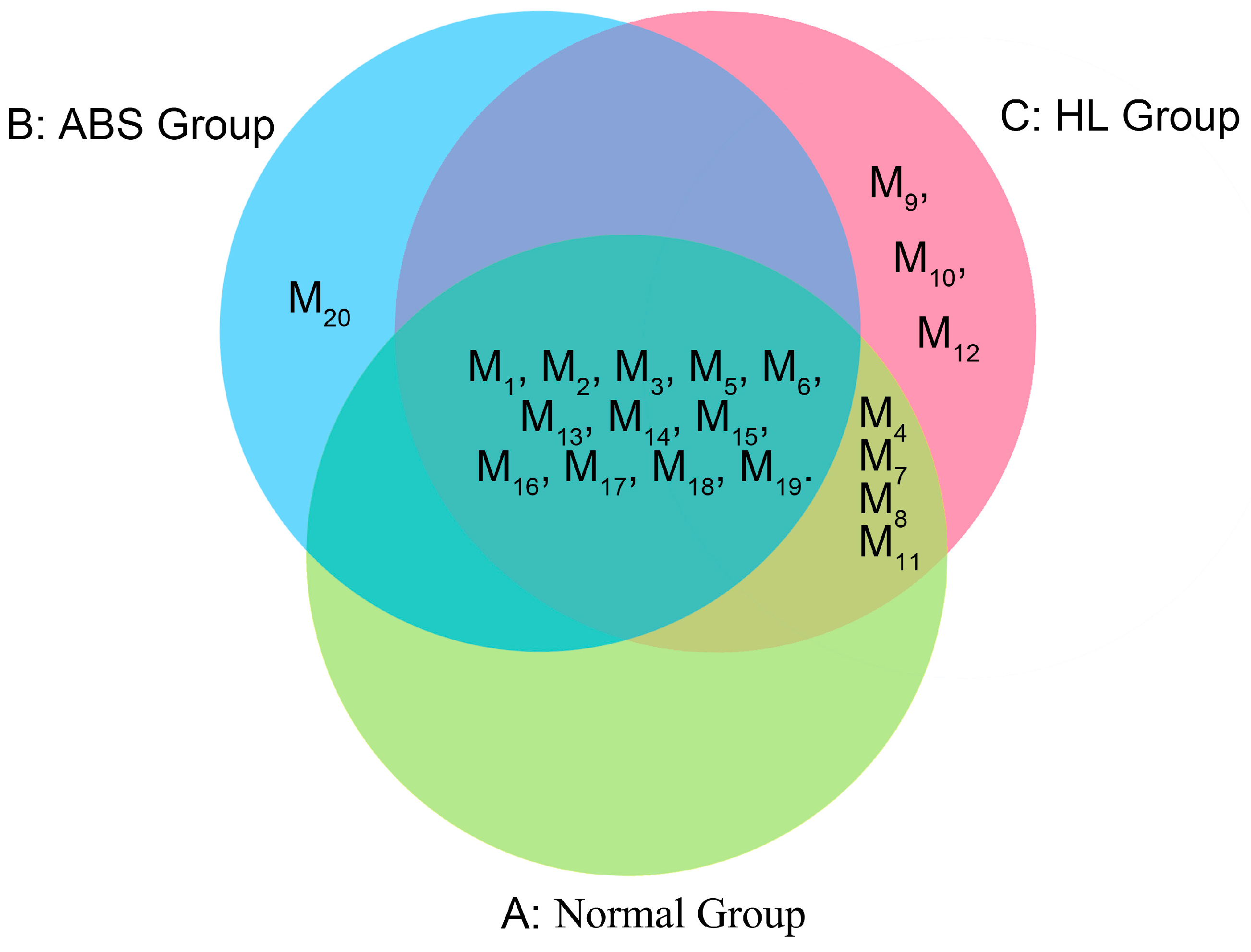
| 1 | 0.85 | C5H11NO2 | Betaine | 118.0867 | 72,58 | 116.0717 | - | −0.7 | c | 2 |
| 2 | 1.09 | C4H6O5 | Malic acid | 133.0149 | 115,71 | 4.3 | a | 2 | ||
| 3 | 1.39 | C6H8O7 | Citric acid | 191.0207 | 173,129 | 4.6 | a | 2 | ||
| 4 | 1.66 | C7H6O5 | Gallic acid | 169.0147 | 125 | 2.6 | a | 1 | ||
| 5 | 2.29 | C9H10O5 | Danshensu | 197.0457 | 179,135 | 0.4 | b | 1 | ||
| 6 | 2.70 | C7H6O4 | Protocatechuic acid | 153.0199 | 109 | 3.1 | b | 1 | ||
| 7 | 4.30 | C9H8O4 | Caffeic acid | 179.0356 | 135,91 | 3.4 | a | 2 | ||
| 8 | 7.52 | C18H16O8 | Rosmarinic acid | 359.0779 | 197,179,161 | 1.6 | b | 1 | ||
| 9 | 8.16 | C36H30O16 | Salvianolic acid B | 719.1611 | 521,323 | - | - | 0.5 | b | 1 |
| 10 | 8.16 | C16H18O9 | Chlorogenic acid | 353.0880 | 191 | 0.4 | a | 1 | ||
| 11 | 9.42 | C16H10O8 | 3,3′-Di-O-methylellagic acid | 329.0300 | 289 | 1.0 | a | 2 | ||
| 12 | 11.89 | C18H16O5 | Tanshindiol C | 313.1080 | 295,267 | −4.3 | b | 2 | ||
| 13 | 12.66 | C18H16O5 | Tanshindiol A | 313.1080 | 295,267 | −4.3 | b | 2 | ||
| 14 | 14.42 | C15H12O7 | Dihydroquercetin | 305.0654 | 287,245 | −0.8 | a | 2 | ||
| 15 | 16.40 | C19H18O4 | HydroxytanshinoneA | 311.1285 | 283,265,240 | 2.1 | b | 2 | ||
| 16 | 16.97 | C19H18O4 | Tanshinone II B | 311.1285 | 283,265,240 | 2.1 | b | 2 | ||
| 17 | 22.29 | C19H20O3 | Cryptotanshinone | 297.1462 | 279,251 | 2.7 | b | 1 | ||
| 18 | 22.62 | C18H12O3 | TanshinoneI | 277.0870 | 249,221 | 3.1 | b | 1 | ||
| 19 | 23.72 | C18H14O3 | DihydrotanshinoneI | 279.1024 | 261 | 2.8 | b | 1 | ||
| 20 | 25.30 | C19H18O3 | Tanshinone II A | 295.1329 | 277,265 | 0.1 | b | 1 | ||
| 21 | 25.69 | C19H22O2 | Miltirone | 283.1701 | 253,241,223 | −0.7 | b | 1 | ||
| 22 | 26.32 | C18H36O2 | Stearic acid | 283.2641 | −0.5 | a | 3 | |||
| 23 | 27.44 | C18H32O2 | Linoleic acid | 279.2325 | 261 | −1.6 | a | 2 | ||
| 24 | 29.32 | C16H32O2 | Palmic acid | 255.2332 | 231 | −2.8 | a | 2 | ||
| No. | tR (min) | Formula | Identified Constituents | ESI+, m/z | ESI−, m/z | Error (ppm) | Source | Theoretical Mass Defect Shift (mDa) | Metabolite Identification Levels | ||
|---|---|---|---|---|---|---|---|---|---|---|---|
| MS [M + H]+ | MS/MS | MS [M − H]− | MS/MS | ||||||||
| 1 | 1.02 | C15H16O10 | Dehydrogenate and dehydroxylate danshensu--glucuronide | 355.0666 | 268,257 | −1.4 | a | 0.1758 | 2 | ||
| 2 | 1.12 | C21H18O13 | Quercetin-3-O-glucoside | 477.0665 | 257,162 | −2.1 | a | 0.2067 | 3 | ||
| 3 | 2.33 | C13H14O10 | Protocatechuic acid-glucuronide | 329.0514 | 261,153 | −0.1 | a | 0.1602 | 2 | ||
| 4 | 2.52 | C9H10O8S | Danshensu-sulfate | 277.0024 | 230,173 | −0.2 | b/d | 0.0909 | 2 | ||
| 5 | 2.82 | C14H16O10 | Methylated protocatechuic acid-glucuronide | 343.0670 | 175,167,113 | −0.4 | a | 0.1758 | 2 | ||
| 6 | 3.58 | C15H16O10 | Caffeic acid-glucuronide | 355.0671 | 179,135 | −0.2 | a | 0.1758 | 3 | ||
| 7 | 6.04 | C9H10O3 | Deoxygenate-danshensu | 165.0565 | 147,124 | 4.6 | b/d | 0.0933 | 2 | ||
| 8 | 6.89 | C10H10O7S | Dehydrogenate and dehydroxylate methyl danshensu--sulfate | 273.0077 | 193 | 0.7 | b/d | 0.0858 | 2 | ||
| 9 | 7.26 | C25H28O10 | Hydroxylated cryptotanshinone-glucuronide | 487.1632 | 311 | 4.5 | d | 0.2694 | 2 | ||
| 10 | 8.18 | C25H30O9 | Cryptotanshinone catechol-glucuronide | 473.1837 | 297 | 4.0 | d | 0.2799 | 2 | ||
| 11 | 8.19 | C18H16O11S | Rosmarinic acid-sulfate | 439.0340 | 395,361 | −0.1 | b/d | 0.153 | 3 | ||
| 12 | 8.23 | C18H18O8 | Salvianolic acid R | 361.0925 | 239,177 | −1.3 | d | 0.1812 | 2 | ||
| 13 | 9.33 | C16H12O7 | Quercetin 3′-methyl ether | 315.0524 | 247 | 4.3 | a | 0.1293 | 3 | ||
| 14 | 10.42 | C19H16O3 | Methyl-dihydrotanshinone I | 293.1172 | 230,143 | −0.2 | a | 0.1401 | 2 | ||
| 15 | 10.74 | C39H36O16 | Trimethyl-salvianolic acid B | 759.1925 | 547,335 | −0.8 | a | 0.3624 | 2 | ||
| 16 | 10.93 | C22H22O4 | Methyl-danshenxinkun D | 351.1601 | 199,135 | 2.7 | a | 0.1920 | 3 | ||
| 17 | 12.50 | C20H20O4 | Methyl-tanshinone IIB/ | 325.1433 | 256 | −0.7 | a | 0.1764 | 2 | ||
| Methyl-hydroxytanshinone IIA | |||||||||||
| 18 | 16.66 | C18H16O3 | Methyl-danshenxinkun B | 295.1351 | 281,263 | −0.4 | a | 0.1401 | 3 | ||
| 19 | 18.40 | C10H12O5S | Eugenol-sulfate | 243.0337 | 116 | 1.5 | a | 0.0912 | 3 | ||
| 20 | 30.41 | C10H12O8S | Methyl danshensu--sulfate | 291.0191 | 211,196 | 3.7 | c | 0.1065 | 2 | ||
© 2017 by the authors. Licensee MDPI, Basel, Switzerland. This article is an open access article distributed under the terms and conditions of the Creative Commons Attribution (CC BY) license (http://creativecommons.org/licenses/by/4.0/).
Share and Cite
Gao, X.; Mu, J.; Li, Q.; Guan, S.; Liu, R.; Du, Y.; Zhang, H.; Bi, K. Comprehensive Identification of Guan-Xin-Shu-Tong Capsule via a Mass Defect and Fragment Filtering Approach by High Resolution Mass Spectrometry: In Vitro and In Vivo Study. Molecules 2017, 22, 1007. https://doi.org/10.3390/molecules22061007
Gao X, Mu J, Li Q, Guan S, Liu R, Du Y, Zhang H, Bi K. Comprehensive Identification of Guan-Xin-Shu-Tong Capsule via a Mass Defect and Fragment Filtering Approach by High Resolution Mass Spectrometry: In Vitro and In Vivo Study. Molecules. 2017; 22(6):1007. https://doi.org/10.3390/molecules22061007
Chicago/Turabian StyleGao, Xun, Jingqing Mu, Qing Li, Shaoyi Guan, Ran Liu, Yiyang Du, Huifen Zhang, and Kaishun Bi. 2017. "Comprehensive Identification of Guan-Xin-Shu-Tong Capsule via a Mass Defect and Fragment Filtering Approach by High Resolution Mass Spectrometry: In Vitro and In Vivo Study" Molecules 22, no. 6: 1007. https://doi.org/10.3390/molecules22061007
APA StyleGao, X., Mu, J., Li, Q., Guan, S., Liu, R., Du, Y., Zhang, H., & Bi, K. (2017). Comprehensive Identification of Guan-Xin-Shu-Tong Capsule via a Mass Defect and Fragment Filtering Approach by High Resolution Mass Spectrometry: In Vitro and In Vivo Study. Molecules, 22(6), 1007. https://doi.org/10.3390/molecules22061007