


Abstract
The objective of this study is to conduct a systematic literature review of repurchase intention in social commerce. Specifically, the study examines the current state of research, identifies the key determinants of repurchase intention, and synthesizes background theories and measurement approaches applied in this domain. This research employed the PRISMA procedure for a systematic literature review conducted across two databases: Web of Science and Scopus. A total of 177 papers were identified from databases, with no restrictions on publication year, facilitating the assessment of all pertinent research on the topic. After screening, eligibility for evaluation was based on the study’s objective; ultimately, 27 publications were identified for systematic review and analysis. The results underscore the top five primary determinants of repurchase intention in social commerce: trust, social influences, user experience, perceived value and social commerce attributes. Furthermore, the research identified 16 theoretical foundations for examining repurchase intention in social commerce, with the Stimulus–Organism–Response framework and the Technology Acceptance Model as the primary theories for this systematic review. Furthermore, the findings indicated that partial least squares structural equation modeling remains the predominant measurement technique, but alternative methods continue to be used.
1. Introduction
Social commerce (s-commerce), which emerged with the rise of e-commerce, was introduced by Yahoo in 2005 and quickly became a significant means for Amazon, Alibaba, and eBay to add value to their businesses by leveraging user engagement [1]. S-commerce is an evolution of e-commerce enabled by social media, facilitating client interaction online. The recent improvements in information and communication technology, together with the rise of Web 2.0 technologies and the increasing use of social media and networking sites, have led to the creation of new social platforms. These platforms enable s-commerce [2]. Web 2.0 is characterized as a platform that enables individuals to generate, disseminate, and jointly alter information, emphasizing engagement, transparency, and network impact [3]. S-commerce, which combines social media with e-commerce, has given buyers and sellers a new platform for communication that offers unique opportunities and holds significant potential to deepen understanding of consumer behaviour. Additionally, as social media platforms have grown to dominate online communication, purchasing and selling via these platforms has evolved from a trend to a practice that has a significant impact on the entire business environment [4]. For instance, social media platforms like Facebook, Instagram, and TikTok allow users to purchase items and services while socialising, providing feedback, and generating value [5]. Likewise, s-commerce offers capabilities for sharing transaction experiences, including discussion forums, comments, reviews, and tags. S-commerce differs from conventional e-commerce, where individuals engage with online buying platforms independently; it prioritizes the participation of social networks that foster interaction among individuals and current content or information. This social contact is anticipated to fortify the connections between the vendor and the client network [6]. Moreover, the surge in popularity of social media has transformed our perception of online purchasing and ushered in a new era of e-commerce. S-commerce facilitates the promotion of goods and services by enabling online transactions through a global peer network [7].
Furthermore, the growth of s-commerce is reshaping the commercial landscape by allowing providers of different sizes to interact more closely with clients, which is vital for fostering client retention and promoting repeat purchasing within the fiercely competitive digital marketplace [8]. Social media facilitates the establishment of social support, resulting in improved buying choices and increased repurchase intention within a connected consumer context. Thus, clients have a perception of social presence on s-commerce platforms. S-commerce provides businesses with innovative opportunities to enhance client interactions, develop effective marketing strategies, increase revenue, and drive economic growth. Consequently, understanding clients’ repurchase intentions in an interactive setting has become fundamental for e-retailers, enabling them to enhance their competitiveness and increase their earnings [9,10].
Shopping activities are notably engaging, and disseminating facts about s-commerce is engaging as well. Understanding the factors that influence consumers’ repurchase intentions in s-commerce is a fascinating topic [11]. Repurchase intention refers to the action of an individual desiring to acquire items or goods on multiple occasions. It is an outcome of purchasing an item or product [12]. Repurchase intention, which refers to the likelihood that a customer will buy from the same firm again, is a crucial measure of client retention and long-term profitability. Repurchase intention is a vital factor that may determine how well a business does and serves as a mechanism to increase its market share. Clients who are inclined to repurchase are vital properties; thus, the business must ensure their future repurchases. The consumer experience in s-commerce influences their desire to repurchase. Customers will retain memories of their experiences with items and services. An improved buyer experience increases the likelihood of repurchase [11,13]. Repurchase intention is crucial for firms as it influences consumer behavior towards loyalty; customers often exhibit a propensity to purchase items or services again, therefore benefiting the company from prior sales. Fostering customer loyalty is far less expensive than acquiring new clients, since businesses, particularly those operating online, must incur higher promotional expenses to attract new consumers [14]. Additionally, repurchase intention indicates a customer’s loyalty to a brand. Client retention is vital, as continuous success in s-commerce relies on both retaining existing customers and acquiring new prospective clients. Although emphasis is placed on acceptance and intent-to-buy features, the importance of maintaining and retaining clients remains widely underrecognized in customer behavior studies [8]. In addition, while repurchase intention maintains a uniform conceptual definition across retail environments, the processes shaping its emergence in s-commerce are different. The incorporation of social interaction technologies, user-generated content, and community-oriented communication generates significant social influence impacts, transforming repurchase intention from an individual transactional reaction to a socially constructed behavioural consequence [8,15,16,17,18]. Therefore, a domain-specific systematic review is necessary to understand better the unique mechanisms shaping repurchase intention in s-commerce. Despite an increasing body of literature on repurchase intention in s-commerce, a noticeable gap exists in systematic review studies. For instance, reference [14] investigates variables affecting repurchase intention; however, this study has not yet analyzed research theories applying to repurchase intention in s-commerce. The study in [19] cites only a systematic review in s-commerce and does not address repurchase intention. Likewise, the research in [5] only investigates a systematic review of s-commerce in Europe, excluding the topic of repurchase intention. Previous research has focused on impulsive buying behavior in s-commerce, while the issue of repurchase intention in s-commerce remains unexplored [10]. In short, the literature on repurchase intention in s-commerce is still fragmented, despite the increasing corpus of research on the topic. This limitation is due to the fact that the literature is dispersed across various factors influencing repurchase intentions, as well as various theoretical frameworks and measuring methods. Current studies mainly focus on individual factors, not giving a complete overview of the main influences, theories, or measuring methods related to repurchase intention in s-commerce. This lack of integration impedes theoretical progress and obscures a primary determinant and measurement method for repurchase intention in s-commerce contexts. From a practical perspective, practitioners require consolidated evidence regarding the most influential determinants of recurrent purchasing as customer retention becomes increasingly critical for sustainable competitive advantage. Therefore, this research tries to fill the existing gap in the literature by examining repurchase intention in s-commerce through a systematic literature review approach. Specifically, the study examines the current state of research, pinpoints the main factors that influence repurchase intention, outlines theoretical frameworks and measurement methods for repurchase intention in s-commerce, and offers clearer guidance for future studies and practitioner implications. To fulfill the aim of this study, the following research questions (RQ) are presented:
RQ1: How are the current studies of repurchase intention in s-commerce?
RQ2: What are the main factors influencing consumers’ repurchase intention in s-commerce?
RQ3: Which theoretical foundations are used to examine repurchase intention in s-commerce?
RQ4: What are the primary measuring methods used to analyze repurchase intention in s-commerce?
2. Literature Review
The section encompasses an overview of s-commerce and repurchase intention in s-commerce.
2.1. Social Commerce
The usage of social media platforms for business has significantly increased in recent years. According to [20], Instagram, Snapchat, and Pinterest have included “shoppable posts” that enable users to make direct purchases without ever leaving the site. Additionally, social media platforms like Facebook have made it easier for small businesses to sell goods on the platform by expanding their e-commerce capabilities through initiatives like Facebook Shops [21]. These changes imply that social media’s place in business is ever-changing and will probably continue to influence s-commerce in the future [22]. Likewise, s-commerce is gaining traction as businesses recognize the importance of leveraging social media platforms to enhance brand visibility, engage with consumers, and stimulate sales in a more personalized, social manner, thereby capitalizing on social interaction, user-generated content, and community involvement to help optimize and elevate the purchasing experience [23]. Similarly, s-commerce leverages social networking, enabling users to exchange insights about products and their online buying experiences to facilitate better purchasing decisions [18]. In addition, s-commerce has four distinct traits that differentiate it from traditional commercial environments: interaction, collaboration, community, and social issues [10]. In terms of interaction, s-commerce facilitates social connections between companies and among consumers. This interconnectedness among clients enables access to information disseminated via social interaction [9]. Social interaction enables organizations to obtain client input for the development of new goods and services, while also promoting favorable word-of-mouth referrals [22]. Regarding collaboration, s-commerce fosters an environment of cooperation that enables individuals to generate and disseminate content through social networking services [24], thereby enhancing co-creation [22]. In terms of community, s-commerce facilitates an environment where individuals can engage with peers, use social media platforms, and share ideas for items or discounts with acquaintances. S-commerce enhances the collective influence of individuals through a web of information that supports their purchase decisions and fulfils their needs and desires [25]. Regarding social issues, s-commerce is based on various forms of social media and emphasizes commercial activities funded by social media. Social media facilitates the formation of social support, leading to improved purchase decisions within a connected user environment [26]. Consequently, users have a feeling of social presence on s-commerce platforms [27]. The attributes of s-commerce offer businesses innovative opportunities to enhance customer interactions, develop effective marketing strategies, increase sales and repurchase intentions, and foster economic development [26]. Thus, understanding consumer behavior regarding repurchase intention in this dynamic environment is essential for online merchants, enabling them to improve competitiveness and boost profits [9].
Scholars used many concepts to define s-commerce, since it spans numerous disciplines, including sociology. Researchers have proposed several definitions; therefore, no single general definition exists [10]. S-commerce may be succinctly defined as commercial operations facilitated by online platforms [28]. S-commerce is an innovative e-commerce concept that utilizes Web 2.0 technology and social media to facilitate socially oriented trading activities [10]. S-commerce denotes the utilization of social media platforms to facilitate users’ engagement in trading, purchasing, comparison, and dissemination of information regarding items and services within online trading platforms as well as communities [22]. In this work, the term “s-commerce” is taken from [22]. It refers to simplifying the process of trading, buying, comparing, and sharing information about items and offerings within online buying platforms and communities. Moreover, reference [29] identifies two primary categories of s-commerce: (1) social network-based platforms that include commercial functionalities for transactions and advertising, and (2) traditional e-commerce platforms that combine social capabilities to enhance engagement and sharing. Whilst, according to reference [30], there are three distinct varieties of s-commerce: (1) social network-related websites, (2) regular e-commerce-based websites, and (3) group buying websites. These websites allow users to create online social groups based on shared interests and needs, and then transact to receive pricing benefits.
2.2. Repurchase Intention in Social Commerce
Repurchase intention is significantly correlated with customer loyalty and serves as a crucial psychological metric for forecasting real repurchase actions [31]. An offline intention to repurchase denotes an individual’s determination to acquire an item or service in particular again from the same business, considering the current conditions and prospective future scenarios. Online purchasing differentiates itself from conventional in-store shopping. Online repurchase intention refers to a consumer’s expressed likelihood of repurchasing [32]. Repurchase intention refers to consumers’ willingness to make future purchases and to suggest the vendors, goods, or services to others [33]. Although this definition is still relevant in retail settings, its formation mechanism is different in s-commerce environments. In s-commerce research, repurchase intention refers to a purchaser’s likelihood of engaging in a subsequent transaction with a given s-commerce vendor [34,35]. In this study, repurchase intention is conceptualized as a post-purchase behavioral intention reflecting consumers’ likelihood of conducting repeated transactions within s-commerce platforms. Conceptually related constructs such as continuance intention, engagement intention, and loyalty intention were included only when their operationalization explicitly captured repeated purchasing behavior. These constructs are treated as part of the broader category of post-adoption behavioral intentions while maintaining conceptual emphasis on transactional repetition. Customers inclined to repurchase are vital assets; thus, the vendors must ensure their future repurchases. Several factors influence the consumer repurchase process, including the consumer’s experience in s-commerce, which influences their desire to repurchase. Customers will retain memories of their experiences with products or services. Enhanced customer experience increases the likelihood of repurchase [11].
There are some studies on repurchase intention in s-commerce, such as [17,36,37]. Specifically, reference [36] examines the factors affecting customers’ continuous intentions towards social commerce and its underpinning mechanisms. Furthermore, reference [36], grounded in motivation theory, highlights perceived usefulness and perceived enjoyment as the driving forces underpinning customers’ sustained desire to participate in s-commerce. Yet, the research referenced in [36] failed to comprehensively analyze the variables influencing customers’ ongoing intentions toward s-commerce, nor did it draw on other theoretical frameworks to elucidate consumers’ repurchase intention in s-commerce. Reference [17] examines the stimulus–organism–response theory to develop a consumer repurchase decision model within the s-commerce context, analyzing how social commerce attributes (interactivity, recommendations, and feedback) affect perceived value (utilitarian and hedonic) and consumers’ repurchase intentions. However, the study cited in [17] also did not thoroughly examine the factors affecting users’ continuous intentions on s-commerce, nor did it explore various theoretical frameworks to clarify users’ repurchase intentions in s-commerce. Reference [37] addresses the impact of s-commerce attributes on repurchase intention, employing the stimulus-organism-response theory. The study concentrates on four essential platform attributes: content informativeness, service quality, website appeal, and conventional word-of-mouth communication. These factors serve as stimuli that influence client engagement (the organism component), eventually impacting intentions to make repeat purchases (the response component). Nevertheless, the research referenced in [37] also failed to comprehensively investigate the determinants influencing users’ sustained intentions in s-commerce, nor did it analyze diverse theoretical frameworks to elucidate users’ repurchase intentions in s-commerce.
To sum up, the studies mentioned above do not include systematic reviews that explicitly examine repurchase intention in s-commerce. Furthermore, some priors include systematic reviews, but they address only one of the two aspects: repurchase intention (e.g., [6,29,30]) and s-commerce (e.g., [5,7,15,31]). Thus, it is crucial to address current shortcomings in the literature by systematically reviewing repurchase intention in s-commerce.
3. Methodology
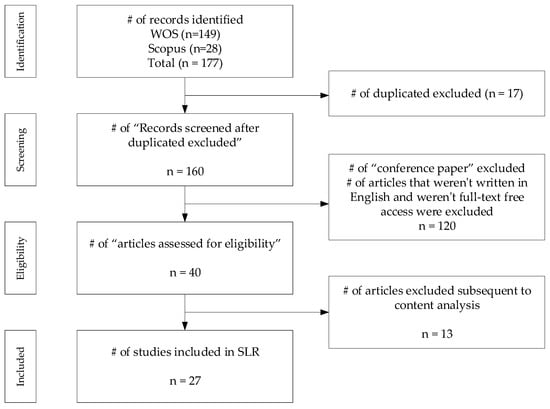
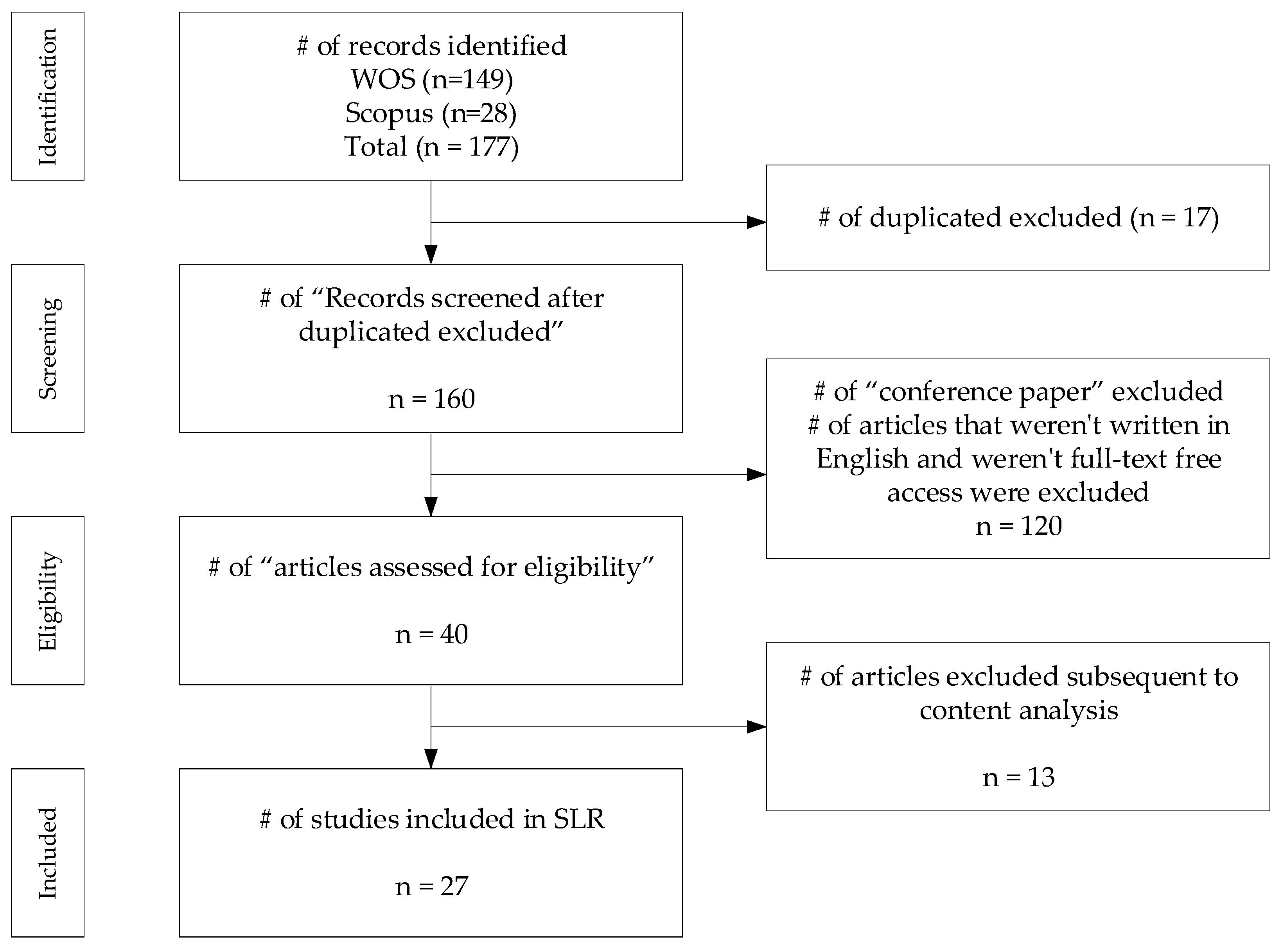
The present investigation employed a systematic literature review (SLR) methodology, following the PRISMA (Preferred Reporting Items for Systematic Reviews and Meta-Analyses) framework as outlined by [38,39] (see Supplementary Materials). PRISMA is a collection of recommendations established for systematic literature reviews and meta-analyses [5]. The SLR method may “reduce researcher bias concerning the inclusion or exclusion of research and transparently delineate how and to what extent the review was conducted” [38,40]. This approach is most efficacious when examining an extensive corpus of published work, particularly peer-reviewed scholarly publications, to guarantee transparent, comprehensive, and precise reporting [41]. The initial four-step diagram was created by [38]. Subsequently, the criteria were revised in the PRISMA 2020 guidelines. The diagram in Figure 1 illustrates the sequence of the SLR methodology employed in the study.
Figure 1.
PRISMA flow diagram for the systematic literature review (SLR) (# indicates the number of records at each stage).
Identification stage: The database was searched methodically using the Web of Science (WOS) and Scopus databases to obtain relevant academic articles. It was decided that WOS and Scopus would be the best databases to use for the study, as they have a more comprehensive index and a larger number of citations [42]. Likewise, WOS and Scopus were chosen because they are the two most significant interdisciplinary, peer-reviewed indexing platforms that comprehensively cover high-impact publications in information systems, management, and s-commerce. This decision aligns with the database selection criteria employed in prior systematic studies [31,36]. Although databases such as IEEE Xplore, ScienceDirect, and ProQuest provide pertinent resources, they primarily focus on conference proceedings, practical publications, or unpublished material, which fall outside the empirical and journal-centric parameters of this study. Nonetheless, their omission is recognized as a constraint that may limit comprehensiveness [40].
The identification process started with a targeted keyword search approach designed to describe the core topics of the investigation. The criteria utilized included “repurchase intention” and “social commerce”. Boolean operators (OR/AND) were used both inside and among clusters to guarantee thorough coverage. In Scopus, searches were restricted to the Title, Abstract, and Keywords fields, while in WOS, the Topic field (Title, Abstract, Author Keywords, and Keywords Plus) was used. All database configurations, search phrases, and retrieval dates were recorded in a search protocol log to guarantee precise repeatability. The methodology and documentation strategy adhered to exemplary practices derived from systematic reviews [40].
Moreover, to ensure both comprehensiveness and conceptual precision, the search strategy primarily focused on the construct of repurchase intention within the s-commerce context. The Boolean query included the core keywords “repurchase intention” and “social commerce,” applied across the title, abstract, and keyword fields in the selected databases. Although conceptually related constructs such as continuous purchase intention, continuance intention, and loyalty intention appear frequently in prior literature, these terms were not used as primary search keywords because they represent broader or partially overlapping behavioral constructs. Nevertheless, these constructs were carefully considered during the screening and eligibility stages when they explicitly referred to repeat purchasing behavior. This approach was adopted to maintain construct specificity while avoiding overly narrow definitions that might lead to the omission of relevant studies. During the full-text evaluation process, studies were retained only when the outcome variable clearly reflected repeated transactional behavior in an s-commerce environment. Table 1 shows the search strategy and filtering conditions in the WOS and Scopus databases.
Table 1.
Search strategy and filtering conditions.
These terms were selected to ensure a comprehensive review of the research domain. Additionally, there is no time restriction on the publication year of the articles, allowing the examination of all research on the relevant topic [43]. The search took place on 14 January 2026. A total of 177 works were produced during the identifying phase. The findings indicate that, despite extensive scholarly examination of repurchase intention and s-commerce, research specifically addressing repurchase intention within the context of s-commerce remains scarce.
Screening stage: Following the retrieval of data in the identification phase, a screening procedure was implemented to remove duplicates. Seventeen duplicate records were eliminated. After establishing the selection procedure for the articles to be examined in the research, inclusion and exclusion criteria were determined. During the selection of works for the review process, research that fulfilled the inclusion criteria and did not violate the exclusion criteria was retained. The inclusion criteria for the research were established as (1) publications published in peer-reviewed scientific journals, (2) studies written in English, and (3) works having full-text access. Conversely, (1) conference papers, books, chapters, and reviews, (2) works published in languages other than English, and (3) works not accessible in full text were omitted from the research. The screening step yielded 40 studies for the eligibility phase based on these criteria.
Eligibility stage: During the eligibility step, these forty studies were transferred to an Excel spreadsheet for content analysis. The research was evaluated based on its objective of investigating repurchase intentions in s-commerce. The eligibility step led to the exclusion of 13 studies. 13 studies were excluded due to conceptual mismatch with the focus on repurchase intention in s-commerce, non-social commerce context, non-empirical studies, or access limitations. The exclusion of 13 papers is summarized in Table 2. In accordance with these criteria, the eligibility stage led to the selection of 27 studies for inclusion in the review. On the other side, because this study focuses on conceptual and methodological synthesis rather than effect-size aggregation, a formal risk-of-bias scoring framework was not applied. Instead, methodological quality was indirectly addressed through strict inclusion criteria (peer-reviewed empirical studies, full-text availability, and relevance to repurchase intention in s-commerce), consistent with conceptual systematic review practices [41].
Table 2.
Reasons for exclusion of 13 papers at the eligibility stage.
Included stage: This step yielded 27 studies for final review and analysis. These articles cover livestream commerce because they connect to social media networks. Given the evolving nature of digital commerce, livestream commerce was included when conducted within social media environments that enable interaction between sellers and consumers. Conceptually, s-commerce is defined as commercial activities embedded in social media platforms involving social interaction and user-generated content. Operationally, studies were retained only when the social platform served as the primary context for communication and transaction-related behavior [15]. This review also examines studies on behavioral and s-commerce intentions as part of research on repurchase intentions following purchase, given the limited available studies in this area. These papers are listed in Table 3.
Table 3.
List of chosen publications.
4. Results and Discussion
This systematic review analyzes studies relevant to the proposed research questions. The synthesis of 27 empirical articles offers a comprehensive understanding of repurchase intention in s-commerce. Regarding RQ1, publication trends show increasing scholarly attention in recent years. For RQ2, trust, social factors, user experience, perceived value, and social commerce features emerge as the most influential determinants. Concerning RQ3, the SOR and TAM frameworks are the most frequently applied theoretical foundations, while RQ4 shows that PLS-SEM is the dominant analytical technique. Although methodological approaches are largely consistent, differences in construct operationalization and research contexts contribute to variations in empirical findings.
4.1. How Are the Current Studies of Repurchase Intention in S-Commerce? (RQ1)
4.1.1. Number of Articles Published by Year Related to Repurchase Intention in S-Commerce
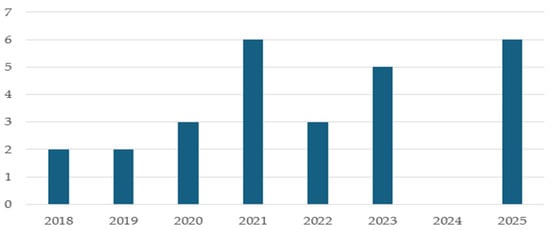
Figure 2 illustrates the annual number of articles on repurchase intention in s-commerce, based on a dataset of 27 articles from 2018 to 2025. The results revealed that, overall, there has been growth (except for 2024, when no publications related to the research topic were recorded), with notable increases in 2021 and 2025, which saw six publications. The increase in publications after 2020 is in relation to the rapid growth of s-commerce during the COVID-19 period. In addition, the peak years reflect increasing academic interest in post-adoption behaviors, particularly repurchase intention in emerging digital commerce environments.
Figure 2.
Distribution of publications by year (2018–2025).
4.1.2. Source Title for Publications Related to Repurchase Intention in S-Commerce
The top 10 sources titles relevant to this study are shown in Table 4. The most influential and highest cited journal in the field of repurchase intention in s-commerce is the Journal of Theoretical and Applied Electronic Commerce Research, with 6 articles and 328 citations. The second-ranked influential and cited journal is the Journal of Retailing and Consumer Services, with 1 article and 209 citations. On the other hand, Sustainability placed second in terms of the quantity of articles published, with 3 publications. However, it ranked sixth in terms of impact and citations, with 93 citations. Likewise, Frontiers in Psychology ranked third regarding the number of articles published, with two publications. It placed seventh regarding influence and citations, with a total of 71 citations.
Table 4.
Top 10 source titles for publications on repurchase intention in s-commerce.
4.2. What Are the Main Factors Influencing Consumers’ Repurchase Intention in S-Commerce? (RQ2)
Table 5 shows the main factors influencing consumers’ repurchase intention in s-commerce. As shown in Table 5, the SLR of 27 studies reveals that 16 key factors significantly influence repurchase intention in s-commerce. The factors most frequently used rank highest in decreasing order in the data. In addition, to improve conceptual clarity, this study distinguishes between s-commerce features and social factors. S-commerce features refer to platform-level technological and functional characteristics (e.g., reviews, recommendations, communication tools, and community functions) that enable interaction and information exchange. In contrast, social factors refer to interpersonal and relational mechanisms emerging from user interactions, including social support, social presence, and relationship quality. This discussion will focus on the top five elements widely used in the development of research models.
Table 5.
The main factors influencing consumers’ repurchase intention in s-commerce.
Trust, encompassing consumers’ trust, influencer trust, source credibility, perceived trust, community trust, seller trust, social media platform trust, livestreamer trust, product trust, peer trust, and emotional trust, is identified as the primary factor frequently utilized in the formulation of research models, as referenced in 16 papers. The second most prevalent element in the study is social factors, including social support (emotional and informational), social presence, and relationship quality, as referred to in 9 papers. This aligns with earlier studies by [57,60,65,72], which have shown that trust and social factors are key components in developing a research model for repurchase intention in s-commerce. The third factor is user experience, including flow, immersion, and personal experience, and is supported by 7 studies. This data is consistent with the results of other studies by [65,66,72], which identified user experience as a significant factor in fostering repurchase behavior in s-commerce. Also, equally third-ranked is perceived value (comprising functional value, hedonic value, perceived enjoyment, price, social value, and perceived emotional value), as referenced in 7 papers. The fifth rank is social commerce features (encompassing communication through short messages, social advertising, reviews and ratings, referrals and recommendations, communities, and forums), which is referenced in 6 papers. The results align with the study performed by [17], which highlighted perceived value and social commerce attributes as major factors in promoting repurchase behavior in s-commerce.
Based on the systematic synthesis of the 27 selected studies, the determinants of repurchase intention in s-commerce can be grouped into five conceptual themes. Through cross-study comparison, the extracted constructs were consolidated into trust-related factors, social-related factors, experience-related factors, value-related factors and platform feature-related factors. This thematic classification enables evaluation of the consistency, strength, and direction of empirical evidence across prior studies.
Trust-related factors (Robust evidence): Trust-related constructs represent the most consistently supported determinants of repurchase intention. The majority of the reviewed studies report a strong positive relationship between trust (e.g., trust in sellers, platforms, or communities) and repurchase intention. The effect’s direction is consistent across several study settings and analytical techniques, suggesting strong empirical evidence. This consistency implies that in s-commerce contexts, trust is fundamental to lowering uncertainty and enhancing enduring transactional relationships.
Social-related factors (Strong but context-dependent evidence): Social-related constructs, including social support (emotional and informational), social presence, and relationship quality, also demonstrate generally positive relationships with repurchase intention. Nevertheless, in contrast to trust-related characteristics, the extent of the impacts differs across research, mostly owing to variations in platform types and the operationalization of social constructs. Although the general trend is favourable, the data is robust but fairly varied, suggesting contextual sensitivity.
Experience-related factors (Moderately consistent evidence): Experience-related variables, including flow experience, immersion, and personal experience, show moderately consistent positive effects on repurchase intention. Several studies highlight the importance of emotional engagement and interactive experiences in influencing repeat purchasing behavior. Nevertheless, the number of studies examining experiential constructs remains smaller compared to trust and social themes, suggesting that the empirical support is moderate rather than fully robust.
Value-related factors (Moderate evidence with variation in operationalization): Perceived value, comprising functional value, hedonic value, perceived enjoyment, price value, social value, and emotional value, generally shows a positive influence on repurchase intention. However, variations in how value constructs are operationalized lead to differences in effect magnitude. Overall, the evidence is moderately consistent, suggesting the need for improved conceptual and measurement consistency in future studies.
Platform feature-related factors (Limited and heterogeneous evidence): Platform features include communication via short messages, social advertising, reviews and ratings, referrals and recommendations, and communities and forums. While some studies report significant positive effects, others find indirect or weaker relationships. These inconsistencies may stem from differences in platform characteristics and research models. Therefore, compared to other themes, the empirical support for platform-related factors is relatively limited and context-dependent.
Although several determinants appear consistently across studies, how they operate differs significantly. For example, trust is measured at different targets (e.g., seller, platform, influencer, or community), while perceived value is conceptualized using different combinations of functional, hedonic, social, and emotional dimensions. Similarly, social-related constructs are operationalized through social support, social presence, or relationship quality. These variations in measurement contribute to heterogeneity in empirical findings and highlight the need for more standardized construct definitions in future research.
Furthermore, to move beyond frequency-based reporting of determinants, this study further synthesizes the extracted factors using the SOR framework to explain the underlying mechanism of repurchase intention formation in s-commerce. Specifically, platform-related characteristics and social interaction elements are conceptualized as stimuli, representing external environmental cues such as social support, reviews and ratings, interactivity, and system quality. These stimuli influence consumers’ internal psychological and experiential states, conceptualized as the organism, including trust, perceived value, user experience, and satisfaction. These internal states subsequently shape the response, namely, consumers’ repurchase intention. This integrative structure enables a clearer interpretation of cross-study findings by explaining why trust and perceived value consistently demonstrate strong effects across different contexts. Moreover, variations in empirical results may be attributed to differences in construct operationalization and contextual factors such as platform types and cultural settings.
On the other hand, although prior studies typically analyze determinants in isolation, cross-study synthesis reveals dominant causal pathways. In s-commerce contexts, platform attributes, such as reviews, interactivity, recommendations, and community functions, along with social interaction mechanisms, function as environmental stimuli that activate internal organism states, including trust, perceived value, experiential immersion, and satisfaction, which in turn shape repurchase intention. Trust plays a pivotal mediating role within this structure. Unlike traditional e-commerce, where trust is largely institution-based and grounded in security and privacy safeguards, trust in s-commerce is socially constructed and relationally transferred among sellers, influencers, peer communities, and platforms. This multi-layered trust formation explains its consistently strong empirical impact. Moreover, social interaction operates through informational and normative mechanisms: social support reduces uncertainty, while social presence and community engagement strengthen identification and relational attachment. Consequently, repurchase intention in s-commerce is not merely a rational post-evaluation outcome but a socially embedded behavioral intention shaped by collective interaction and community dynamics. In addition, this mechanism differs structurally from traditional e-commerce models, which emphasize perceived usefulness, system quality, and transactional satisfaction as primary drivers. In contrast, s-commerce integrates technological, relational, and experiential mechanisms simultaneously. Therefore, repurchase intention formation in s-commerce can be conceptualized as a socially mediated post-adoption process rather than a purely individual cognitive evaluation.
4.3. Which Theoretical Foundations Are Used to Examine Repurchase Intention in S-Commerce? (RQ3)
Table 6 presents the primary theoretical foundations employed to examine repurchase intention in s-commerce. Table 6 illustrates that the SLR revealed 16 theories among 27 articles. The SOR framework, which cites 5 sources, is the most theoretically significant framework regarding repurchase intention in s-commerce. The second-most theoretically significant associated repurchase intention in s-commerce is TAM theory, which cites 4 sources. The third-most theoretically significant linked repurchase intention in s-commerce encompasses four theories, each cited in 2 sources: the TPB, social exchange theory, social support theory, and trust transfer theory.
Table 6.
The main theoretical foundations for examining repurchase intention in s-commerce.
On the other side, the SOR model and the TAM theory emerge as the most frequently applied theories, indicating general theoretical consistency. Other theories are used less often and mainly play complementary roles. However, variation in theory integration across studies suggests the need for more unified theoretical development in future research.
Additionally, the systematically reviewed literature indicates diversity in theoretical interpretations of repurchase intention within s-commerce. The SOR framework elucidates the psychological transformation process, in which social and platform-related stimuli affect customers’ internal evaluations (e.g., trust, satisfaction, and perceived value), which in turn drive behavioural reactions. TAM, conversely, underscores system-related perceptions, including perceived utility and perceived ease of use, highlighting the technical factors influencing continuing behaviour. The TPB examines repurchase intentions via a behavioural choice lens, integrating attitudes, subjective norms, and perceived behavioural control to elucidate the impact of individual and societal assessments on post-purchase intentions. These models are complementary since they elucidate distinct explanatory dimensions of s-commerce behaviour.
Moreover, several theoretical viewpoints remain inadequately examined. Post-adoption frameworks, such as the expectation-confirmation model (ECM), are especially essential for continued behaviour, but they are rarely used. Likewise, relational marketing theory, which highlights processes of long-term connection, is rarely used. Subsequent research should, therefore, use integrated frameworks that merge SOR with TAM or UTAUT while also including relational marketing theory and ECM.
4.4. What Are the Primary Measuring Methods Used to Analyze Repurchase Intention in S-Commerce? (RQ4)
Table 7 presents the primary measurement methods used to analyze repurchase intention in s-commerce. This SLR identified various approaches to assessing repurchase intention in s-commerce and juxtaposed them with established methodologies from other studies, as illustrated in Table 7.
Table 7.
The primary measurement methods used to analyze repurchase intention in s-commerce.
According to the measurement methods presented in Table 7, 19 papers examine techniques for assessing repurchase intention in s-commerce with the PLS-SEM approach. PLS-SEM is identified as the predominant method for assessing repurchase intention in s-commerce, followed by CB-SEM, which cites 5 references. The subsequent method integrates PLS-SEM and fsQCA to assess repurchase intention in s-commerce, which cites 2 references. Additionally, the final rank for assessing repurchase intention in s-commerce is linear multiple regression, which cites 1 reference.
In terms of measurement approaches, the reviewed studies were grouped according to the analytical techniques used to assess repurchase intention in s-commerce. PLS-SEM emerges as the predominant method, suggesting strong methodological alignment across studies, particularly for complex and exploratory research designs. CB-SEM is used in a smaller number of studies, mainly for theory confirmation. A limited number of studies adopt alternative or hybrid techniques, including the integration of PLS-SEM with fsQCA or the use of regression analysis, indicating growing methodological diversity. Differences in analytical methods may explain variations in empirical findings, given their distinct hypotheses and analytical frameworks. This methodological heterogeneity emphasizes the importance of selecting appropriate techniques consistent with research objectives and data structure. In addition, PLS-SEM emphasizes prediction-oriented analysis, making it appropriate for identifying key determinants of repurchase intention. However, compared with CB-SEM, PLS-SEM places less emphasis on global model fit evaluation, which may limit theory confirmation. Furthermore, most existing studies rely on cross-sectional questionnaire data combined with SEM techniques, while longitudinal designs, experimental approaches, and secondary behavioral data remain limited. This methodological concentration may restrict causal interpretation and dynamic analysis of repurchase behavior. Future research is therefore encouraged to adopt more diverse research designs to improve the robustness of measurement approaches.
In short, despite the generally consistent evidence regarding several key determinants of repurchase intention in s-commerce, the present systematic review also reveals noticeable heterogeneity across the included studies. Although several determinants, particularly trust, demonstrate relatively consistent positive effects, notable variations emerge in the direction, strength, and statistical significance of other relationships across the included studies. These inconsistencies can be explained by several aspects. First, methodological differences play an important role, as studies employ diverse analytical approaches (e.g., PLS-SEM, CB-SEM, regression, and hybrid methods), which differ in their hypotheses, predictive orientation, and model complexity. Second, construct operationalization varies considerably across studies; multidimensional constructs such as perceived value and social support are measured using different indicators, leading to variation in effect sizes. Third, contextual differences, including platform types (e.g., livestream commerce vs. general social commerce), cultural settings, and sample characteristics, may influence consumer behavior patterns and thus empirical outcomes. Fourth, the theoretical model differs across studies, with some adopting single-theory frameworks while others integrate multiple theories, resulting in differences in explanatory scope. These sources of heterogeneity suggest that, while certain determinants such as trust demonstrate robust and consistent effects, other relationships remain context-dependent. Future research is therefore encouraged to adopt more standardized measurement approaches and clearer theoretical integration to improve comparability across studies.
5. Contributions of the Research
5.1. Theoretical Contributions
Although there is an expanding body of research on s-commerce, systematic reviews that specifically address repurchase intention in this context are still limited in terms of analytical integration and scope. Numerous prior evaluations have provided important insights into s-commerce behaviour. For example, reference [14] investigated the determinants of repurchase intention. However, their synthesis predominantly focused on influencing factors without systematically integrating theoretical. Similarly, reference [19] offered a comprehensive examination of s-commerce research trends, but they did not concentrate on repurchase intentions in s-commerce. Other literature evaluations, including those conducted by [5], focused on s-commerce in Europe, excluding the topic of repurchase intention, while reference [10] concentrated on impulse purchasing behaviour rather than repurchase intention.
To clarify the positioning of the present study relative to existing systematic reviews, Table 8 compares prior studies in terms of research scope, retrieval coverage, and analytical dimensions. Unlike earlier reviews, the present study concentrates specifically on repurchase intention in s-commerce. It adopts a triple-integrated analytical framework, synthesizing determinants, theoretical foundations, and methodological approaches simultaneously. This structured integration provides a more comprehensive perspective on repurchase intention formation in s-commerce environments.
Table 8.
Comparison between the present study and existing systematic literature reviews.
Using the systematic literature review (SLR) technique, this study makes a substantial addition to the expanding corpus of research on repurchase intention in s-commerce. A total of 177 publications were discovered in the databases (WOS and Scopus) without constraints on the publication year, enabling the evaluation of all relevant research on the subject. After screening, eligibility for evaluation was based on the study’s objective; 27 papers were ultimately found for systematic review and analysis. 27 articles were chosen from research published between 2018 and 2025, offering a thorough and current coverage of the area.
One key theoretical contribution of this study lies in identifying 16 major determinants of repurchase intention in s-commerce. Among these, trust, social influence, user experience, perceived value, and social commerce characteristics emerge as the most frequently examined drivers. This synthesis provides a structured foundation for future research in selecting and extending determinant variables of repurchase intention in s-commerce.
Moreover, the SLR’s results revealed 16 theoretical foundations used in this domain, with the SOR framework and the TAM theory being the two most prevalent. These results provide future studies in this domain with a range of theories to consider when selecting or integrating theoretical lenses in future repurchase intention research.
In addition, the review synthesizes four primary methodological approaches, with PLS-SEM emerging as the dominant analytical technique due to its suitability for complex structural models and exploratory contexts. This methodological synthesis helps future researchers better understand prevailing empirical strategies in the domain.
Finally, this study contributes by organizing fragmented findings into an integrated structure that simultaneously covers determinants, theoretical foundations, and methodological trends. This integrated perspective provides a comprehensive and updated overview of repurchase intention research in s-commerce.
5.2. Practical Contributions
The results of this research offer useful insights for professionals and managers. By focusing on key factors that drive repurchase intention in s-commerce, specifically trust, social influences, user experience, perceived value and social commerce characteristics, professionals and managers can significantly influence customers’ desire to make repeat purchases through their marketing programs.
6. Conclusions
The purpose of this study is to provide a comprehensive assessment of the existing literature on repurchase intention in s-commerce, using the SLR approach and following the PRISMA procedure. The databases (WOS and Scopus) returned a total of 177 articles on repurchase intention in s-commerce, with no publication-year restrictions. The approach allowed all important studies on the subject to be evaluated. After screening, eligibility for evaluation was based on the study’s objective; in the end, 27 works were chosen for a thorough review and analysis. Following a review of the relevant literature, the study identifies 16 major factors that determine repurchase intention in s-commerce, with the 5 most important being trust, social influences, user experience, perceived value, and social commerce features. Furthermore, the research identified 16 theoretical foundations used to investigate repurchase intentions in s-commerce. The SOR framework and TAM theory were the key theories used to examine repurchase intentions in s-commerce in this systematic review. Furthermore, the data indicated that PLS-SEM is the predominant measurement method, despite the use of other methods in this area in the systematic review.
In the end, many limitations must be acknowledged when evaluating the study’s conclusions. This research cannot analyze articles from databases outside WOS and Scopus. While the WOS and Scopus databases are prominent and comprehensive, they may not include all pertinent research related to repurchase intention in s-commerce. Furthermore, the inability to examine publications published in languages other than English may result in the omission of significant research. Omitting conference proceedings, books, chapters, and reviews may lead to the neglect of significant ideas. The present investigation excluded unavailable full-text papers, possibly overlooking substantial information. Additionally, the present study synthesizes key determinants, theoretical foundations, and measurement approaches; however, it does not employ a quantitative meta-analysis. Future research is encouraged to apply meta-analytic techniques to estimate pooled effect sizes, examine heterogeneity across studies, and strengthen the statistical rigor of the synthesized findings. In addition, this study did not perform a formal assessment of the overall certainty or strength of evidence across the 27 included studies (e.g., risk-of-bias evaluation or evidence-grading frameworks). Future systematic reviews are encouraged to incorporate standardized tools to assess evidence quality and enhance the reliability of synthesized conclusions.
Supplementary Materials
The following supporting information can be downloaded at: https://www.mdpi.com/article/10.3390/jtaer21030088/s1; Table S1: PRISMA checklist.
Author Contributions
Conceptualization, D.T.C. and B.H.K.; methodology, D.T.C. and B.H.K.; formal analysis, D.T.C.; resources, D.T.C.; data curation, D.T.C.; writing—original draft preparation, D.T.C.; writing—review and editing, D.T.C.; visualization, D.T.C.; supervision, D.T.C. All authors have read and agreed to the published version of the manuscript.
Funding
This research received no external funding.
Institutional Review Board Statement
Not applicable.
Informed Consent Statement
Not applicable.
Data Availability Statement
No additional data are available beyond what has been cited in this study.
Conflicts of Interest
The authors declare no conflicts of interest.
Abbreviations
The following abbreviations are used in this manuscript:
| PRISMA | Preferred Reporting Items for Systematic Reviews and Meta-Analyses |
| RQ | Research question |
| SOR | Stimulus-organism-response |
| TAM | Technology acceptance model |
| TPB | Theory of Planned Behaviour |
| UTAUT | Unified theory of acceptance and use of technology |
| PLS-SEM | Partial least squares structural equation modeling |
| CB-SEM | Covariance-based structural equation modeling |
| fsQCA | Fuzzy sets qualitative comparative analysis |
References
- Wang, C.; Zhang, P. The Evolution of Social Commerce: The People, Management, Technology, and Information Dimensions. Commun. Assoc. Inf. Syst. 2012, 31, 105–127. [Google Scholar] [CrossRef] [Scilit]
- Hajli, N. Social Commerce Constructs and Consumer’s Intention to Buy. Int. J. Inf. Manag. 2015, 35, 183–191. [Google Scholar] [CrossRef] [Scilit]
- O’Reilly, T. What Is Web 2.0: Design Patterns and Business Models for the next Generation. Commun. Strateg. 2007, 65, 17–37. [Google Scholar]
- Ariesty, W.; Ikhsan, R.B. Exploring the Determinants of Repurchase Intention and Word of Mouth Intention in Social Commerce. Int. J. Bus. Econ. 2024, 6, 62–79. [Google Scholar] [CrossRef] [Scilit]
- Păuceanu, A.M.; Văduva, S.; Nedelcuț, A.C. Social Commerce in Europe: A Literature Review and Implications for Researchers, Practitioners, and Policymakers. J. Theor. Appl. Electron. Commer. Res. 2023, 18, 1283–1300. [Google Scholar] [CrossRef] [Scilit]
- Wirapraja, A.; Subriadi, A.P. Effectiveness of Social Commerce in Influencing Repurchase Intention: A Systematic Literature Review. In Proceedings of the International Conference on Computer Science, Information Technology, and Electrical Engineering, ICOMITEE 2019; IEEE: Piscataway, NJ, USA, 2019; Volume 1, pp. 24–29. [Google Scholar]
- Huang, J.; Yeap, J.A.L. Understanding Social Commerce: A Literature Review Approach. Glob. Bus. Manag. Res. Int. J. 2022, 14, 1250–1263. [Google Scholar]
- Da, J.Y.; Keat, O.B. Social Presence and Repurchase Intention in Social Commerce Platforms: Theoretical Review. J. Artif. Intell. Digit. Econ. 2025, 2, 494–512. [Google Scholar] [CrossRef] [Scilit]
- Lo, L.Y.S.; Lin, S.W.; Hsu, L.Y. Motivation for Online Impulse Buying: A Two-Factor Theory Perspective. Int. J. Inf. Manag. 2016, 36, 759–772. [Google Scholar] [CrossRef] [Scilit]
- Abdelsalam, S.; Salim, N.; Alias, R.A.; Husain, O. Understanding Online Impulse Buying Behavior in Social Commerce: A Systematic Literature Review. IEEE Access 2020, 8, 89041–89058. [Google Scholar] [CrossRef] [Scilit]
- Yuwanti, W.; Sumedi, A.; Sfenrianto, T.R.P.; Sfenrianto; Kaburuan, E.R. Analysis of the Factors Affecting Repurchase Intention in Social Commerce in Indonesia. J. Theor. Appl. Inf. Technol. 2019, 97, 3245–3254. [Google Scholar]
- Zeng, F.; Hu, Z.; Chen, R.; Yang, Z. Determinants of Online Service Satisfaction and Their Impacts on Behavioural Intentions. Total Qual. Manag. Bus. Excell. 2009, 20, 953–969. [Google Scholar] [CrossRef] [Scilit]
- Nasermoadeli, A.; Ling, K.C.; Maghnati, F. Evaluating the Impacts of Customer Experience on Purchase Intention. Int. J. Bus. Manag. 2013, 8, 128–138. [Google Scholar] [CrossRef] [Scilit]
- Wijarnoko, M.A.; Pramana, E.; Santoso, J. Factors That Influence Repurchase Intention: A Systematic Literature Review. Teknika 2023, 12, 252–260. [Google Scholar] [CrossRef] [Scilit]
- Liang, T.P.; Turban, E. Introduction to the Special Issue Social Commerce: A Research Framework for Social Commerce. Int. J. Electron. Commer. 2011, 16, 5–13. [Google Scholar] [CrossRef] [Scilit]
- Shang, B.; Bao, Z. How Repurchase Intention Is Affected in Social Commerce?: An Empirical Study. J. Comput. Inf. Syst. 2022, 62, 326–336. [Google Scholar] [CrossRef] [Scilit]
- Guo, J.; Li, L. Exploring the Relationship Between Social Commerce Features and Consumers’ Repurchase Intentions: The Mediating Role of Perceived Value. Front. Psychol. 2022, 12, 775056. [Google Scholar] [CrossRef] [Scilit]
- Lin, X.; Li, Y.; Wang, X. Social Commerce Research: Definition, Research Themes and the Trends. Int. J. Inf. Manag. 2017, 37, 190–201. [Google Scholar] [CrossRef] [Scilit]
- Han, H.; Xu, H.; Chen, H. Social Commerce: A Systematic Review and Data Synthesis. Electron. Commer. Res. Appl. 2018, 30, 38–50. [Google Scholar] [CrossRef] [Scilit]
- Hund, E.; McGuigan, L. A Shoppable Life: Performance, Selfhood, and Influence in the Social Media Storefront. Commun. Cult. Crit. 2019, 12, 18–35. [Google Scholar] [CrossRef] [Scilit]
- Wongkitrungrueng, A.; Assarut, N. The Role of Live Streaming in Building Consumer Trust and Engagement with Social Commerce Sellers. J. Bus. Res. 2020, 117, 543–556. [Google Scholar] [CrossRef] [Scilit]
- Busalim, A.; Asadi, S. What Drives Customers to Engage with Social Commerce: A Systematic Review and Factor Derivation Approach. Inf. Syst. E-Bus. Manag. 2025, 23, 717–743. [Google Scholar] [CrossRef] [Scilit]
- Juwitasary, H.; Anwar, N.; Nasir Ismail, M.; Kurniawan, Y. Unravelling the Social Commerce Users’ Engagement: A Mixed Method Analysis Using Bibliometric and Systematic Literature Review. J. Syst. Manag. Sci. 2025, 15, 204–222. [Google Scholar]
- Kim, S.; Park, H. Effects of Various Characteristics of Social Commerce (s-Commerce) on Consumers’ Trust and Trust Performance. Int. J. Inf. Manag. 2013, 33, 318–332. [Google Scholar] [CrossRef] [Scilit]
- Ng, C.S.P. Examining the Cultural Difference in the Intention to Purchase in Social Commerce. In Proceedings of the PACIS, Ho Chi Minh City, Vietnam, 11–15 July 2012; pp. 1–12. [Google Scholar]
- Hajli, N.; Sims, J. Social Commerce: The Transfer of Power from Sellers to Buyers. Technol. Forecast. Soc. Change 2015, 94, 350–358. [Google Scholar] [CrossRef] [Scilit]
- Kim, J.B. The Mediating Role of Presence on Consumer Intention to Participate in a Social Commerce Site. J. Internet Commer. 2015, 14, 425–454. [Google Scholar] [CrossRef] [Scilit]
- Curty, R.G.; Zhang, P. Social Commerce: Looking Back and Forward. Proc. Am. Soc. Inf. Sci. Technol. 2011, 48, 1–10. [Google Scholar] [CrossRef] [Scilit]
- Zhang, K.Z.K.; Benyoucef, M. Consumer Behavior in Social Commerce: A Literature Review. Decis. Support Syst. 2016, 86, 95–108. [Google Scholar] [CrossRef] [Scilit]
- Hu, T.; Dai, H.; Salam, A.F. Integrative Qualities and Dimensions of Social Commerce: Toward a Unified View. Inf. Manag. 2019, 56, 249–270. [Google Scholar] [CrossRef] [Scilit]
- Wu, Y.; Huang, H. Influence of Perceived Value on Consumers’ Continuous Purchase Intention in Live-Streaming E-Commerce—Mediated by Consumer Trust. Sustainability 2023, 15, 4432. [Google Scholar] [CrossRef] [Scilit]
- Seiders, K.; Voss, G.B.; Grewal, D.; Godfrey, A.L. Do Satisfied Customers Buy More? Examining Moderating Influences in a Retailing Context. J. Mark. 2005, 69, 26–43. [Google Scholar] [CrossRef] [Scilit]
- Zhou, T.; Lu, Y.; Wang, B. The Relative Importance of Website Design Quality and Service Quality in Determining Consumers’ Online Repurchase Behavior. Inf. Syst. Manag. 2009, 26, 327–337. [Google Scholar] [CrossRef] [Scilit]
- Ou, C.X.; Pavlou, P.A.; Davison, R.M. Swift Guanxi in Online Marketplaces: The Role of Computer-Mediated Communication Technologies. MIS Q. 2014, 38, 209–230. [Google Scholar] [CrossRef] [Scilit]
- Lin, J.; Yan, Y.; Chen, S.; Luo, X. Understanding the Impact of Social Commerce Website Technical Features on Repurchase Intention: A Chinese Guanxi Perspective. J. Electron. Commer. Res. 2017, 18, 225–244. [Google Scholar]
- Hu, X.; Chen, Z.; Davison, R.M.; Liu, Y. Charting Consumers’ Continued Social Commerce Intention. Internet Res. 2022, 32, 120–149. [Google Scholar] [CrossRef] [Scilit]
- Herzallah, F.; Abosamaha, A.J.; Salameh, S.M.; Alhayek, M. Social Commerce Attributes, Customer Engagement and Repurchase Intention in Social Commerce Platforms: A Stimulus–Organism– Response Approach. J. Open Innov. Technol. Mark. Complex. 2025, 11, 100635. [Google Scholar] [CrossRef] [Scilit]
- Moher, D.; Liberati, A.; Tetzlaff, J.; Altman, D.G. Preferred Reporting Items for Systematic Reviews and Meta-Analyses: The PRISMA Statement. J. Clin. Epidemiol. 2009, 62, 1006–1012. [Google Scholar] [CrossRef] [Scilit]
- Oglu, A.K.; Ozbuk, R.M.Y.; Unal, D.A.; Dirlik, O.; Akar, N. Unpacking Sustainable Packaging Through the Stimulus-Organism-Response Model: A Systematic Literature Review. SAGE Open 2024, 14, 21582440241302320. [Google Scholar] [CrossRef] [Scilit]
- Ahmad, A.; Ghani, N.A.; Hamid, S. Examining the Predictors of Consumer Trust and Social Commerce Engagement: A Systematic Literature Review. J. Theor. Appl. Electron. Commer. Res. 2025, 20, 247. [Google Scholar] [CrossRef] [Scilit]
- Page, M.J.; McKenzie, J.E.; Bossuyt, P.M.; Boutron, I.; Hoffmann, T.C.; Mulrow, C.D.; Shamseer, L.; Tetzlaff, J.M.; Akl, E.A.; Brennan, S.E.; et al. The PRISMA 2020 Statement: An Updated Guideline for Reporting Systematic Reviews. J. Clin. Epidemiol. 2021, 134, 178–189. [Google Scholar] [CrossRef] [Scilit]
- Bergman, E.M.L. Finding Citations to Social Work Literature: The Relative Benefits of Using Web of Science, Scopus, or Google Scholar. J. Acad. Librariansh. 2012, 38, 370–379. [Google Scholar] [CrossRef] [Scilit]
- Nightingale, A. A Guide to Systematic Literature Reviews. Surgery 2009, 27, 381–384. [Google Scholar] [CrossRef] [Scilit]
- Rashid, R.M.; Rashid, Q.u.A.; Pitafi, A.H. Examining the Role of Social Factors and Mooring Effects as Moderators on Consumers’ Shopping Intentions in Social Commerce Environments. SAGE Open 2020, 10, 2158244020952073. [Google Scholar] [CrossRef] [Scilit]
- Alkhalifah, A. Exploring Trust Formation and Antecedents in Social Commerce. Front. Psychol. 2022, 12, 789863. [Google Scholar] [CrossRef] [Scilit] [PubMed]
- Kumar, A.; Salo, J.; Li, H. Stages of User Engagement on Social Commerce Platforms: Analysis with the Navigational Clickstream Data. Int. J. Electron. Commer. 2019, 23, 179–211. [Google Scholar] [CrossRef] [Scilit]
- Wang, J.; Shahzad, F.; Ahmad, Z.; Abdullah, M.; Hassan, N.M. Trust and Consumers’ Purchase Intention in a Social Commerce Platform: A Meta-Analytic Approach. SAGE Open 2022, 12, 21582440221091262. [Google Scholar] [CrossRef] [Scilit]
- Ou, C.C.; Chen, K.L.; Tseng, W.K.; Lin, Y.Y. A Study on the Influence of Conformity Behaviors, Perceived Risks, and Customer Engagement on Group Buying Intention: A Case Study of Community E-Commerce Platforms. Sustainability 2022, 14, 1941. [Google Scholar] [CrossRef] [Scilit]
- Yang, X.; Zhao, K.; Tao, X.; Shiu, E. Developing and Validating a Theory-Based Model of Crowdfunding Investment Intention-Perspectives from Social Exchange Theory and Customer Value Perspective. Sustainability 2019, 11, 2525. [Google Scholar] [CrossRef] [Scilit]
- Aparicio, M.; Costa, C.J.; Moises, R. Gamification and Reputation: Key Determinants of e-Commerce Usage and Repurchase Intention. Heliyon 2021, 7, e06383. [Google Scholar] [CrossRef] [Scilit]
- Lu, B.; Wang, Z. Trust Transfer in Sharing Accommodation: The Moderating Role of Privacy Concerns. Sustainability 2022, 14, 7384. [Google Scholar] [CrossRef] [Scilit]
- Fang, Y.; Qureshi, I.; Sun, H.; McCole, P.; Ramsey, E.; Lim, K.H. Trust, Satisfaction and Online Repurchase Intention: The Moderating Role of Perceived Effectiveness of E-Commerce Institutional Mechanisms. MIS Q. 2014, 38, 407–427. [Google Scholar] [CrossRef] [Scilit]
- Jadil, Y.; Jeyaraj, A.; Dwivedi, Y.K.; Rana, N.P.; Sarker, P. A Meta-Analysis of the Factors Associated with s-Commerce Intention: Hofstede’s Cultural Dimensions as Moderators. Internet Res. 2023, 33, 2013–2057. [Google Scholar] [CrossRef] [Scilit]
- Goraya, M.A.S.; Jing, Z.; Shareef, M.A.; Imran, M.; Malik, A.; Akram, M.S. An Investigation of the Drivers of Social Commerce and E-Word-of-Mouth Intentions: Elucidating the Role of Social Commerce in E-Business. Electron. Mark. 2021, 31, 181–195. [Google Scholar] [CrossRef] [Scilit]
- Lin, X.; Wang, X. Towards a Model of Social Commerce: Improving the Effectiveness of e-Commerce through Leveraging Social Media Tools Based on Consumers’ Dual Roles. Eur. J. Inf. Syst. 2022, 32, 782–799. [Google Scholar] [CrossRef] [Scilit]
- Al-Adwan, A.S. Revealing The Influential Factors Driving Social Commerce Adoption. Interdiscip. J. Inf. Knowl. Manag. 2019, 14, 295–324. [Google Scholar]
- Al-Adwan, A.S.; Kokash, H. The Driving Forces of Facebook Social Commerce. J. Theor. Appl. Electron. Commer. Res. 2019, 14, 15–32. [Google Scholar] [CrossRef] [Scilit]
- Alotaibi, H.G.; Aloud, M.E. Investigating Behavior Intention Toward S-Commerce Adoption by Small Businesses in Saudi Arabia. Int. J. E-Bus. Res. 2023, 19, 27. [Google Scholar] [CrossRef] [Scilit]
- Chen, N.; Yang, Y. The Role of Influencers in Live Streaming E-Commerce: Influencer Trust, Attachment, and Consumer Purchase Intention. J. Theor. Appl. Electron. Commer. Res. 2023, 18, 1601–1618. [Google Scholar] [CrossRef] [Scilit]
- Hossain, M.A.; Jahan, N.; Kim, M. A Mediation and Moderation Model of Social Support, Relationship Quality and Social Commerce Intention. Sustainability 2020, 12, 9889. [Google Scholar] [CrossRef] [Scilit]
- Hossain, M.A.; Yesmin, N.; Jahan, N.; Reza, S.M.A. Effect of Social Presence on Behavioral Intention to Social Commerce Through Online Social Capital. Int. J. e-Collab. 2023, 19, 23. [Google Scholar] [CrossRef] [Scilit]
- Hussain, S.; Li, Y.; Li, W. Influence of Platform Characteristics on Purchase Intention in Social Commerce: Mechanism of Psychological Contracts. J. Theor. Appl. Electron. Commer. Res. 2021, 16, 1–17. [Google Scholar] [CrossRef] [Scilit]
- Khoa, B.T. The Triple Helix of Digital Engagement: Unifying Technology Acceptance, Trust Signaling, and Social Contagion in Generation Z’s Social Commerce Repurchase Decisions. J. Theor. Appl. Electron. Commer. Res. 2025, 20, 145. [Google Scholar] [CrossRef] [Scilit]
- Mendoza-Tello, J.C.; Mora, H.; Pujol-López, F.A.; Lytras, M.D. Social Commerce as a Driver to Enhance Trust and Intention to Use Cryptocurrencies for Electronic Payments. IEEE Access 2018, 6, 50737–50751. [Google Scholar] [CrossRef] [Scilit]
- Mičík, M.; Komárková, L.; Eger, L. Social Commerce Use Intention: The Mediating Effect of Trust and the Moderating Effect of Generational Cohorts. Oeconomia Copernic 2025, 16, 283–316. [Google Scholar] [CrossRef] [Scilit]
- Molinillo, S.; Liébana-Cabanillas, F.; Anaya-Sánchez, R. A Social Commerce Intention Model for Traditional E-Commerce Sites. J. Theor. Appl. Electron. Commer. Res. 2018, 13, 80–93. [Google Scholar] [CrossRef] [Scilit]
- Molinillo, S.; Anaya-Sánchez, R.; Liébana-Cabanillas, F. Analyzing the Effect of Social Support and Community Factors on Customer Engagement and Its Impact on Loyalty Behaviors toward Social Commerce Websites. Comput. Human Behav. 2020, 108, 105980. [Google Scholar] [CrossRef] [Scilit]
- Molinillo, S.; Aguilar-Illescas, R.; Anaya-Sánchez, R.; Liébana-Cabanillas, F. Social Commerce Website Design, Perceived Value and Loyalty Behavior Intentions: The Moderating Roles of Gender, Age and Frequency of Use. J. Retail. Consum. Serv. 2021, 63, 102404. [Google Scholar] [CrossRef] [Scilit]
- Shahbaz, H.; Li, Y.; Li, W. Psychological Contract-Based Consumer Repurchase Behavior on Social Commerce Platform: An Empirical Study. KSII Trans. Internet Inf. Syst. 2020, 14, 2061–2083. [Google Scholar] [CrossRef] [Scilit]
- Tohari, A.; Sugiono, S.; Irmayanti, E.; Solikah, M.; Meilina, R.; Sandy, T.A. The Impact of Word of Mouth, Product Quality, and Price on Trust and Repurchase Intentions: A SEM-Based Case Study of Indonesian Live Streaming E-Commerce. Int. J. Anal. Appl. 2025, 23, 113. [Google Scholar] [CrossRef] [Scilit]
- Tuncer, I. The Relationship between IT Affordance, Flow Experience, Trust, and Social Commerce Intention: An Exploration Using the S-O-R Paradigm. Technol. Soc. 2021, 65, 101567. [Google Scholar] [CrossRef] [Scilit]
- Utami, H.N.; Elfa, M.O.J.; Wiyono, S.N.; Sari, D.N.; Perdana, T. Sustaining Consumer Excitement: The Role of Online Customer Experience and Engagement in Shaping Behavioural Intentions in Food Social Commerce. Sustainability 2025, 17, 8061. [Google Scholar] [CrossRef] [Scilit]
- Ventre, I.; Mollá-Descals, A.; Frasquet, M. Drivers of Social Commerce Usage: A Multi-Group Analysis Comparing Facebook and Instagram. Econ. Res. Istraz. 2021, 34, 570–589. [Google Scholar] [CrossRef] [Scilit]
- Wang, P.; Huang, Q.; Davison, R.M. How Do Digital Influencers Affect Social Commerce Intention? The Roles of Social Power and Satisfaction. Inf. Technol. People 2020, 34, 1065–1086. [Google Scholar] [CrossRef] [Scilit]
- Wang, H.; Lee, K. Effects of Relational Bonds on Continuance Purchase Behavior in Live Streaming Commerce. Soc. Behav. Pers. 2023, 51, 1–13. [Google Scholar] [CrossRef] [Scilit]
- Wiese, M. The Role of Social Media in Online Shopper Behavior: Insights from South Africa. J. Afr. Bus. 2026, 27, 22–43. [Google Scholar] [CrossRef] [Scilit]
- Yang, X. Understanding Consumers’ Purchase Intentions in Social Commerce through Social Capital: Evidence from Sem and Fsqca. J. Theor. Appl. Electron. Commer. Res. 2021, 16, 1557–1570. [Google Scholar] [CrossRef] [Scilit]
- Zhou, R.; Tong, L. A Study on the Influencing Factors of Consumers’ Purchase Intention During Livestreaming e-Commerce: The Mediating Effect of Emotion. Front. Psychol. 2022, 13, 903023. [Google Scholar] [CrossRef] [Scilit] [PubMed]


Disclaimer/Publisher’s Note: The statements, opinions and data contained in all publications are solely those of the individual author(s) and contributor(s) and not of MDPI and/or the editor(s). MDPI and/or the editor(s) disclaim responsibility for any injury to people or property resulting from any ideas, methods, instructions or products referred to in the content. |
© 2026 by the authors. Licensee MDPI, Basel, Switzerland. This article is an open access article distributed under the terms and conditions of the Creative Commons Attribution (CC BY) license.