


Abstract
Evidence from practice and academic literature indicates that, compared with traditional e-commerce, consumers in social commerce are more prone to impulsive purchasing. This heightened tendency can be attributed to the robust interaction among users in social commerce. Peer intrinsic and extrinsic motivations represent two distinct mechanisms that stimulate impulsive purchasing under the influence of others. Given the diversity in types and strengths of social capital and their varying impacts on peer motivation, this study endeavors to broaden the understanding of impulsive buying in social commerce. It examines how peer intrinsic and extrinsic motivations influence purchasing behavior and explores how these motivations interact with three dimensions of social capital. Within a specific type of social capital context, the objective of this study is to uncover which type of peer motivation predominantly drives impulsive purchasing. To empirically test the research model, an online survey was conducted targeting social commerce users in China. The findings offer empirical support for retailers in implementing appropriate social media initiatives and managing consumer relationships in social commerce. By integrating peer motivation and group-level social capital into the social commerce framework, this research offers novel insights into retailers’ social media strategies and contributes to existing literature.
1. Introduction
A growing trend for consumers is to search for product information on large social networking platforms, such as Facebook, Twitter, WeChat, or TikTok, where people share their knowledge, interests, likeable personalities, and product consumption experiences [1,2,3]. Research has shown that retailers should invest more in social media technologies because consumers are often influenced by the purchasing patterns of their peers [4]. As the sharing of peers’ experience and communication with peers are easily accessed in social commerce, peer motivation, which refers to the perceived motivation from knowing about peers’ purchasing experiences, is expected to influence consumers’ behaviors in social commerce [5]. Evidence has been provided in prior research that others’ influences are imperative determinants of impulsive buying behaviors from the social influence perspective [6]. This implies that consumers may make rational or irrational/impulsive buying decisions following others’ suggestions or choices. With these points in mind, this study aims to reveal whether peer motivation also led to unexpected impulsive behavior. Specifically, both peer extrinsic and intrinsic motivation were examined to explored whether and how these two types of peer motivations trigger impulsive behavior [5]. This may contribute to enriching and extending literature focused on the positive effects of peer motivations on consumer behavior.
Moreover, emerging research has indicated that the social capital, e.g., relationship among consumers (e.g., tie strength) [3,7] and between consumers and sellers (e.g., swift-guanxi) [8] also significantly influence consumers’ purchase intention. Considering that social capital encompasses the existing and potential resources within social group relationships [9,10], peers’ influence on behavior may be contingent upon specific conditions. Consequently, social capital is treated as a critical moderator between peer motivation and purchasing behaviors. Previous studies have indicated that social capital is capable of supporting and facilitating consumers’ rational behavior [11]. Nevertheless, limited research has focused on exploring the connections between impulsive buying and social capital (refer to Table S1 in Supplementary Materials). More specifically, how various types of social capital—namely structural, cognitive, and relational—affect impulsive buying has been largely ignored in social commerce literature. Furthermore, previous research findings concerning how various aspects of social capital impact the outcome have yielded inconsistent results (refer to Table S2 in Supplementary Materials). For instance, cognitive social capital positively moderates the relationship between collaboration practices and suppliers’ social performance, and has no significant effect on the relationship between assessment practices and suppliers’ social performance [9]. Conversely, cognitive social capital can enhances the connection between service quality and user satisfaction [12]. Given these inconsistencies, further studies are necessary to explicitly examine the connections amid impulsive purchasing and social capital.
Grounded on social capital theory and an empirical survey with 337 valid responses in China, the present research explores how consumers’ perceptions of peer motivation influence the urge to buy impulsively. It also examines whether and how group-level social capital can moderate these effects in social commerce. This research will make contributions for the current literature on social commerce in three fundamental ways. First, it extends the motivation concept by incorporating the influences of peers, thereby contextualizing the link between social commerce and impulsive buying, providing a novel perspective and theoretical support for understanding impulsive buying. Second, it enriches the literature by providing novel insights into social group relationships between consumers and retailers. Finally, this research clarifies several inconsistent findings about the relationships between consumer behavior and its antecedents.
2. Related Work and Hypotheses
2.1. Impulsive Buying in Social Commerce
Impulse buying is defined as an unplanned and instantaneous purchasing behavior that occurs without prior shopping intentions [13]. Previous research suggests that studies on online impulse buying can be broadly categorized into two streams: impulse buying in e-commerce (IBEC) and impulse buying in social commerce (IBSC) [14]. The present study focuses on IBSC. Existing research on IBSC primarily addresses two key aspects. First, the emergence of a new research context has encouraged the application of various theoretical frameworks and models to explain this phenomenon. Second, a considerable body of research has focused on identifying the antecedents of impulse buying within this context.
Regarding the first aspect, researchers have extensively investigated IBSC from a variety of theoretical perspectives. Among these, the Stimulus–Organism–Response (SOR) framework is the most widely adopted [15,16,17]. Similarly, theoretical models such as the Elaboration Likelihood Model [18] and Dual Systems Model [19,20] have been extensively employed in IBSC research. Additionally, Uses and Gratifications Theory [21,22], Latent State-Trait Theory (LST) [23], Attachment Theory [18], Flow Theory [24,25], Parasocial Interaction Theory [17], and Social Learning Theory [14] have been frequently applied in this field. Collectively, these theoretical frameworks enhance the understanding of IBSC by elucidating the psychological, social, and technological factors that influence its mechanisms.
Upon the different theories and frameworks of IBSC, researchers investigate the antecedents of IBSC and regard impulse buying as a socially influenced behavior. Customer related factors [19], marketing stimuli [26], platform related factors [27] and situational stimuli [14,28,29] are the most frequently utilized antecedents of IBSC [30]. Situational stimuli—particularly social cues—demonstrate the most significant cumulative impact on IBSC, reinforcing the pivotal role of social dynamics in shaping such behaviors [13,30]. Existing studies indicate that when consumers shop together in offline settings, social influences tend to reinforce impulsive buying tendencies [6], highlighting the inherent social nature of consumption decisions. Recent research has identified several critical social determinants of IBSC, such as parasocial interaction [7], interpersonal influence [31], and peer communication [24]. This social aspect is further intensified in the context of social commerce, where advances in digital technologies have expanded interpersonal interactions and introduced novel forms of social influence.
2.2. Influence of Peer Motivation
Prior research has consistently demonstrated that both intrinsic and extrinsic motivation serve as fundamental drivers of human behavior across a wide range of activities [32,33]. Individuals who are intrinsically motivated derive pleasure from engaging in an activity, whereas those who are extrinsically motivated prioritize the outcome over the process of performing the activity [32]. Furthermore, extrinsic motivation pertains to individuals’ perceptions of pressure and rewards, while intrinsic motivation relates to inherent satisfaction [34]. Building upon these established motivational frameworks and extending them to social contexts, scholars have introduced the concept of peer motivation as a significant construct, differentiating between peer intrinsic and peer extrinsic motivation [5]. Peer intrinsic motivation refers to the recognition that individuals are propelled to participate in activities they perceive as enjoyable, self-directed, and conducive to skill development, as their peers do. Conversely, peer extrinsic motivation is defined as the belief that individuals are motivated by the pursuit of external rewards, whether tangible or intangible, as their peers are.
The relationship between peer influence and consumer behavior is well established [35,36]. Studies indicate that peers have a significant influence on individuals’ attitudes toward career choices [37], value co-creation [38], and consumer preferences [36]. Two key mechanisms explain how peer behavior translates into individual action within social systems [39]. The first mechanism involves transmitting information about products, thereby reducing uncertainty and fostering positive peer influence, which in turn enhances the desire for consumption. The second mechanism emphasizes the economic incentives behind consumers’ purchasing decisions, given their knowledge of who has purchased a product and how such consumption may affect their utility when consuming it (i.e., positive or negative peer influence). Both mechanisms may be triggered by direct or indirect interactions (e.g., word of mouth), where no explicit communication is exchanged between consumers.
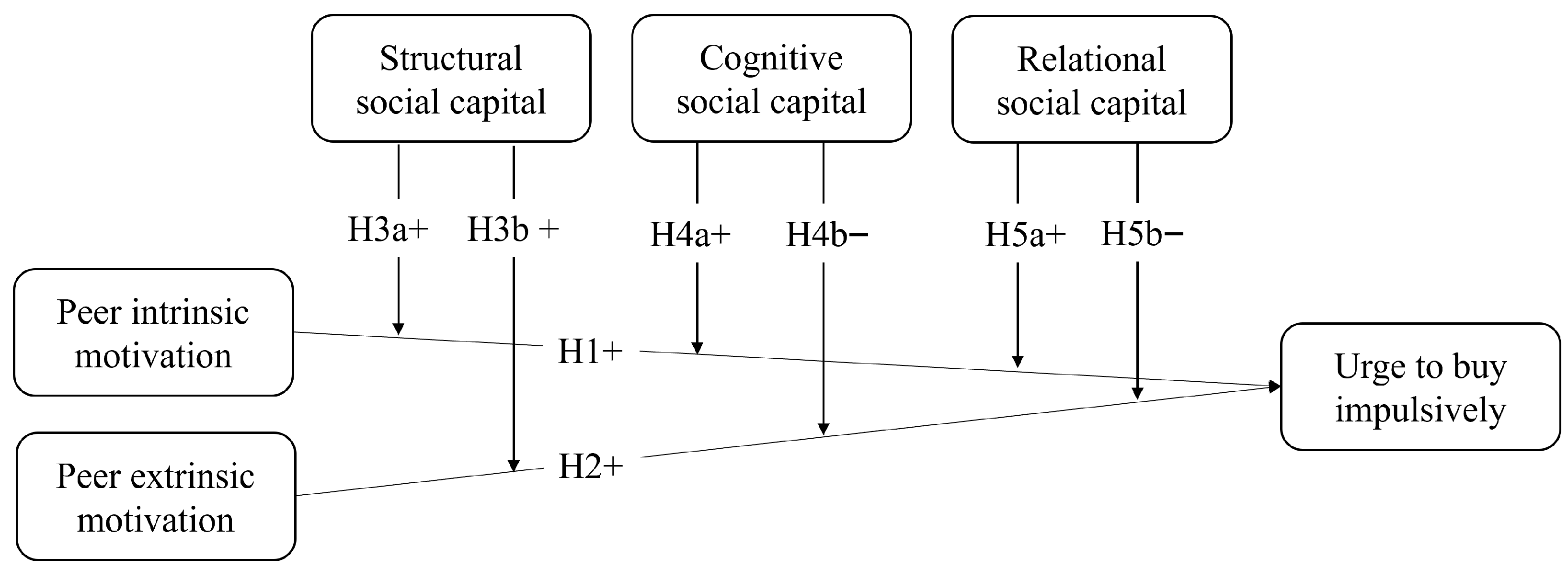
Within the social media environment, retailers in this context create online social groups with various followers or potential consumers. As social interactions take place in such social groups, peer motivation and peer influence are likely to occur in the social commerce context. For example, retailers usually develop initiatives (e.g., raffles) to stimulate consumer participation and purchasing within their online social groups. When introducing new products, retailers frequently post pictures of these products on their social media accounts. Additionally, they may select some consumers or influencers to review, repost, or promote the products after providing them with free samples. To enhance interactions, retailers can create campaigns to recognize the most beautiful buyer showcases or reward consumers with the highest engagement levels. Consumers who follow the retailers can participate in these activities and have many opportunities to observe others’ behaviors. Through this process, consumers develop a desire to share shopping or consumption experiences, gain rewards or incentives, build reputations through these activities, receive useful information from peers who share, and feel more motivated by seeing their peers participate actively and receive rewards. Figure 1 shows the research model of this research.
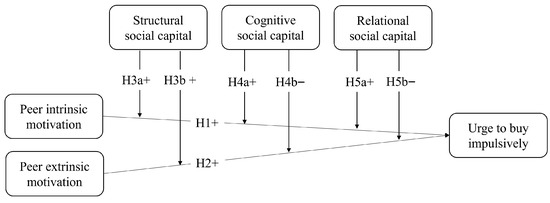
Figure 1.
Research Model.
Intrinsic motivation pertains to the internal drive to engage in activities primarily for the pleasure and gratification derived from the tasks themselves [40]. Online impulsive purchasing is often motivated by affective reactions, such as enjoyment and pleasure [16]. The perception of enjoyment plays an essential role in driving impulsive purchasing [41]. If consumers find following retailers and buying products from them enjoyable, they are likely to be driven by such intrinsic motivation and develop purchase behavior. Further, according to emotional contagion theory, when consumers express these positive feelings on social media platforms, a contagion effect of the feelings tends to occur [42]. That is, the characteristics and intensity of an emotion can be transmitted to others from the emotion source [43]. When consumers observe peers experiencing pleasure from purchases within a retailer’s social group, it increases the likelihood that they will develop an urge to buy something impulsively for experiencing a similar feeling. Therefore, this research postulates that
H1.
Peer intrinsic motivation is positively related to the urge to buy impulsively.
Extrinsic motivation is typically characterized by a rational evaluation of values and benefits [44]. From this perspective, many behaviors are driven by anticipated outcomes or rewards, such as monetary incentives, gifts, or power [45]. Prior research suggests that extrinsic motivators like bonuses and discounts are significant marketing stimuli for impulse buying [46,47]. Meanwhile, research posits that the closer the interpersonal relationship, the higher the likelihood of envy-induced comparison [48]. Consumers who follow the same retailer and belong to the same social group can observe each other due to the transparency inherent in social commerce. When they observe peers engaging in social activities and gaining rewards, feelings of envy may arise. Envy can help motivate people to increase their behavioral intentions [5]. Hence, consumers are inclined to emulate those perceived as highly rewarded. This phenomenon can be understood through the social comparison process between consumers and their peers, where consumers may think, “I wish I had what you’ve got”. Therefore, this research postulates that
H2.
Peer extrinsic motivation is positively related to the urge to buy impulsively.
2.3. Influence of Social Capital
Social capital theory suggests that social relationships represent productive resources embedded within social networks [49]. Social capital includes both potential and actual resources derived from these relational networks and is conceptualized through three dimensions: structural, cognitive, and relational [50]. The structural dimension captures the overall network connections and the pathways through which individuals interact. Cognitive social capital concerns the shared understanding that enables effective interactions among members [51], while the relational aspect deals with the interpersonal bonds developed through repeated communication among members [52]. Empirical evidence consistently demonstrates that online environments are conducive to the formation of social capital, as virtual interactions can serve both as a replacement for and a complement to conventional face-to-face interactions [10]. Studies have shown how social capital drives knowledge sharing and co-creation in virtual communities [53,54], and further correlates with user satisfaction and behavioral outcomes [9,12]. Consequently, social capital is critical not only for sustaining virtual communities but also for shaping consumer decision processes.
Nevertheless, the significant role of social capital in driving impulsive buying has largely been ignored in existing research. Furthermore, prior studies have predominantly examined social capital at the individual level in online contexts [9,55]. In the social commerce context, retailers maintain ongoing interactions with their followers and motivate consumer-to-consumer interactions on social media platforms, which can facilitate group-level social capital and influence group members’ behavioral intentions. This study addresses these issues by exploring how group-level social capital moderates the relationship between peer motivation and impulse buying.
Prior research has emphasized the crucial role of information in the decision-making process, while also highlighting that its collection can be costly [56]. Structural social capital involves the general network through which individuals are interconnected [50]. Present research identifies social interaction ties as critical representations of the structural dimension [57]. Beyond facilitating connections between individuals, social interaction ties also enable the acquisition of valuable resources and information [54]. Social interaction ties play a pivotal role in information diffusion by establishing efficient channels that can reduce the effort and time required for information collection [58]. In retailers’ social groups, they can interact with their followers, forward other consumers’ showcases, or post product content. Thus, consumers in the social group have abundant opportunities to see their peers’ responses and attitudes with little effort. If social interaction ties are strong within the social group, then consumers can easily obtain much information about peers who follow the same retailer [14]. Compared to weak ties, strong social interaction ties enable consumers to be more attentive to both intrinsic and extrinsic motivations from their peers. Therefore, this research proposes the following two hypotheses regarding the strengthened impacts of these two motivations under this circumstance:
H3a.
Structural social capital in a retailer’s social group strengthens the relationship between peer intrinsic motivation and the urge to buy impulsively.
H3b.
Structural social capital in a retailer’s social group strengthens the relationship between peer extrinsic motivation and the urge to buy impulsively.
Cognitive social capital refers to the shared understanding and interpretive frameworks among members of a community [9]. A key manifestation of cognitive social capital is shared language, which goes beyond mere linguistic commonality to encompass the internalized symbolic rules that guide members’ interpretations [54]. Shared language influences the relationship between peer motivation and impulse buying through a dual mechanism [59]. First, specific words and expressions can establish psychological boundaries and signify the exclusivity of social relationships within a given context [10,60]. In the realm of social commerce, for instance, retailers and consumers often assign nicknames to products. A red winter coat, for example, may be referred to as “New Year’s armor.” Such nicknames function as a form of shared language, signaling emotional attachment and identification with the product [61]. Consequently, communities that frequently employ shared language tend to demonstrate stronger attachment. Such attachment can enhance the emotional contagion process and serve as a buffer against negative information [62], thereby reducing purchase uncertainty and increasing consumers’ willingness to buy. Second, ritualized expressions such as “Shangche” (a social commerce term referring to the act of urging consumers to join a deal) and “Zhongcao” (a social commerce term representing the desire to purchase a product) transform individual purchasing behaviors into collective symbolic practices, thereby intensifying emotional contagion and facilitating the internalization of collective values [63].
The influence of cognitive social capital is primarily manifested through three mechanisms. First, high cognitive social capital enhances the ability to interpret expressions of pleasure from peers, thereby facilitating a more efficient conversion of peer experiences into personal emotional experiences. Second, the presence of a shared language promotes the integration of an individual’s self-concept with their community identity, which in turn aligns consumption behavior more closely with internal identity recognition. This process strengthens the impact of emotional energy on impulse buying through the ritual excitement effect [64]. Third, high cognitive social capital enables consumers to develop similar cognitive frameworks with their peers. Within such a shared framework, individuals are more likely to automatically accept peer recommendations, thereby reducing deliberation during the decision-making process. Based on symbolic interactionism theory, the reconstruction of motives through shared language essentially achieves value migration by deconstructing economic rationality [64]. Ultimately, within social commerce groups, the sustained presence of a shared language transforms peer intrinsic motivations—such as emotional experiences and identity expression—into drivers of impulse buying, while the influence of peer extrinsic motivations—such as reward acquisition—on impulse buying is attenuated. Based on the above, the following two hypotheses are proposed:
H4a.
Cognitive social capital in a retailer’s social group strengthens the relationship between peer intrinsic motivation and the urge to buy impulsively.
H4b.
Cognitive social capital in a retailer’s social group weakens the relationship between peer extrinsic motivation and the urge to buy impulsively.
Relational social capital emphasizes the interpersonal relationships developed during interactions [65]. This study draw upon the concept of reciprocity to elucidate relational social capital [65]. Reciprocity emerges from the theory of gift exchange, where one may give a return gift to maintain social balance or fairness, showing gratitude or rewarding generosity [66]. Members of the same social group may exchange purchasing experiences and recommendations, thereby mutually benefiting each other in social commerce. Facilitating actions within a social structure constitutes a pivotal function of relational social capital, which is essential for both social groups and their members [67]. This study posits that the presence of strong relational social capital not only enhances group members’ intrinsic enjoyment of reciprocal sharing behaviors but also foster an environment that promotes peer intrinsic motivation while mitigating the impact of peer extrinsic motivation. Accordingly, this research offers the following two hypotheses:
H5a.
Relational social capital in a retailer’s social group strengthens the relationship between peer intrinsic motivation and the urge to buy impulsively.
H5b.
Relational social capital in a retailer’s social group weakens the relationship between peer extrinsic motivation and the urge to buy impulsively.
3. Method
3.1. Data Collection
Data were collected through an online survey distributed via a professional survey platform (www.sojump.com, accessed on 14 August 2023). The target respondents of the survey were users of two prominent Chinese social media platforms—WeChat and Weibo, as these are the most widely used social commerce platforms, on which retailers frequently establish social groups. As of late 2024, Weibo reported 587 million monthly active users (https://data.weibo.com/report/reportDetail?id=473&wm=3049_0016, accessed on 20 December 2024), whereas WeChat Mini Programs had reached 949 million users (http://baijiahao.baidu.com/s?id=1818018727457021539&wrf=spider&for=pc, accessed on 20 December 2024). Given their substantial online reach and influence, these platforms have emerged as key hubs for social commerce, thereby making them highly suitable for the present study. Participants were required to answer all questions. Respondents were asked to provide their social media accounts and the retailer accounts they followed, and they received a monetary incentive of CNY 10 (approximately USD 1.44). A total of 337 valid responses were obtained.
The demographic characteristics of the respondents are presented in Table 1. To evaluate the representativeness of the sample, the survey data were compared with the general social commerce users’ demographics. According to recent reports, 63.93% of social commerce users are female (https://www.iimedia.cn/c1061/102032.html, accessed on 15 September 2024), and 77% are under the age of 34 (https://m.sohu.com/a/772579259_120801328/, accessed on 15 September 2024). Furthermore, Chinese social commerce users predominantly consist of females [68]. Prior research also notes that these users tend to be young adults with a bachelor’s degree [69]. Hence, the representativeness of the sample in the current study can be deemed satisfactory.

Table 1.
Demographic Profiles (N = 337).
3.2. Measures
The present study employed the measurements from prior research and made context-specific adjustments for this study (Table S3 in Supplementary Materials). For the measurement of all constructs, a 7-point Likert scale was utilized. In this scale, 1 corresponded to “strongly disagree” and 7 denoted “strongly agree”. Peer intrinsic and extrinsic motivation were evaluated through four-item scales [5]. Structural, cognitive, and relational social capital were measured using four-, three-, and two-item scales, respectively [52]. The urge to buy impulsively was evaluated by four items [70]. Considering the survey was conducted in China, the items were first translated into Chinese and subsequently back-translated into English. Before distributing the questionnaire, comparing both English versions and resolving all inconsistencies ensured the high translation quality of the Chinese version.
3.3. Common Method Bias
As the data acquisition was achieved via a self-reported survey, common method bias (CMB) could potentially be an issue. To address this, this research carried out two tests to quantify the magnitude of CMB. First, Harman’s single-factor test was been performed [71]. The results indicated that the first factor only represented 16.87% of the variance, suggesting no single dominant factor emerged and no factors dominated the variance. Second, a partial least squares (PLS) analysis was conducted by introducing a common method factor linked to all single-indicator constructs derived from the observed indicators [72]. The findings revealed that the principal constructs accounted for an average variance of 74.2%, whereas the method factors explained an average variance of merely 0.3% (Table S4 in Supplementary Materials). Additionally, the majority of the loadings on the method factor were statistically insignificant. Collectively, these results suggested that CMB is less likely to pose a significant threat to the present research.
4. Data Analysis and Results
The present research employs PLS structural equation modeling. PLS has been demonstrated to be particularly appropriate for validating predictive models under conditions where the sample sizes are comparatively small, owing to its component-based estimation approach [73]. This method has been extensively utilized within the information systems (IS) field. For validating the research model, SmartPLS 3.0 software was utilized. A two-step procedure was adopted in data analysis: the measurement model first and then followed by the structural model [74].
4.1. Measurement Model
The measurement model was evaluated using construct reliability, convergent validity, and discriminant validity. Construct reliability was assessed through composite reliability and Cronbach’s alpha. As presented in Table 2, all values exceeded 0.7, indicating satisfactory reliability [75]. Convergent validity was confirmed as AVE values were above 0.5 and item loadings exceeded 0.7 [75]. Table 2 shows strong convergent validity. Discriminant validity was assessed in three ways. First, the results of construct loadings demonstrated that the cross-loadings between constructs were consistently lower than the loadings within the same constructs [76]. Second, Table 3 presents the Fornell-Larcker criterion, which evaluates whether the square roots of AVE values exceed the inter-construct correlations [75]. Third, the heterotrait–monotrait (HTMT) ratio of correlations between constructs (as shown in Table 4) was below the 0.9 threshold [77]. Table 3 and Table 4 confirm satisfactory discriminant validity.
Table 2.
Results of confirmatory factor analysis.
Table 3.
Discriminant validity: Fornell-Larcker criterion.
Table 4.
Discriminant validity: HTMT ratio.
4.2. Structural Model
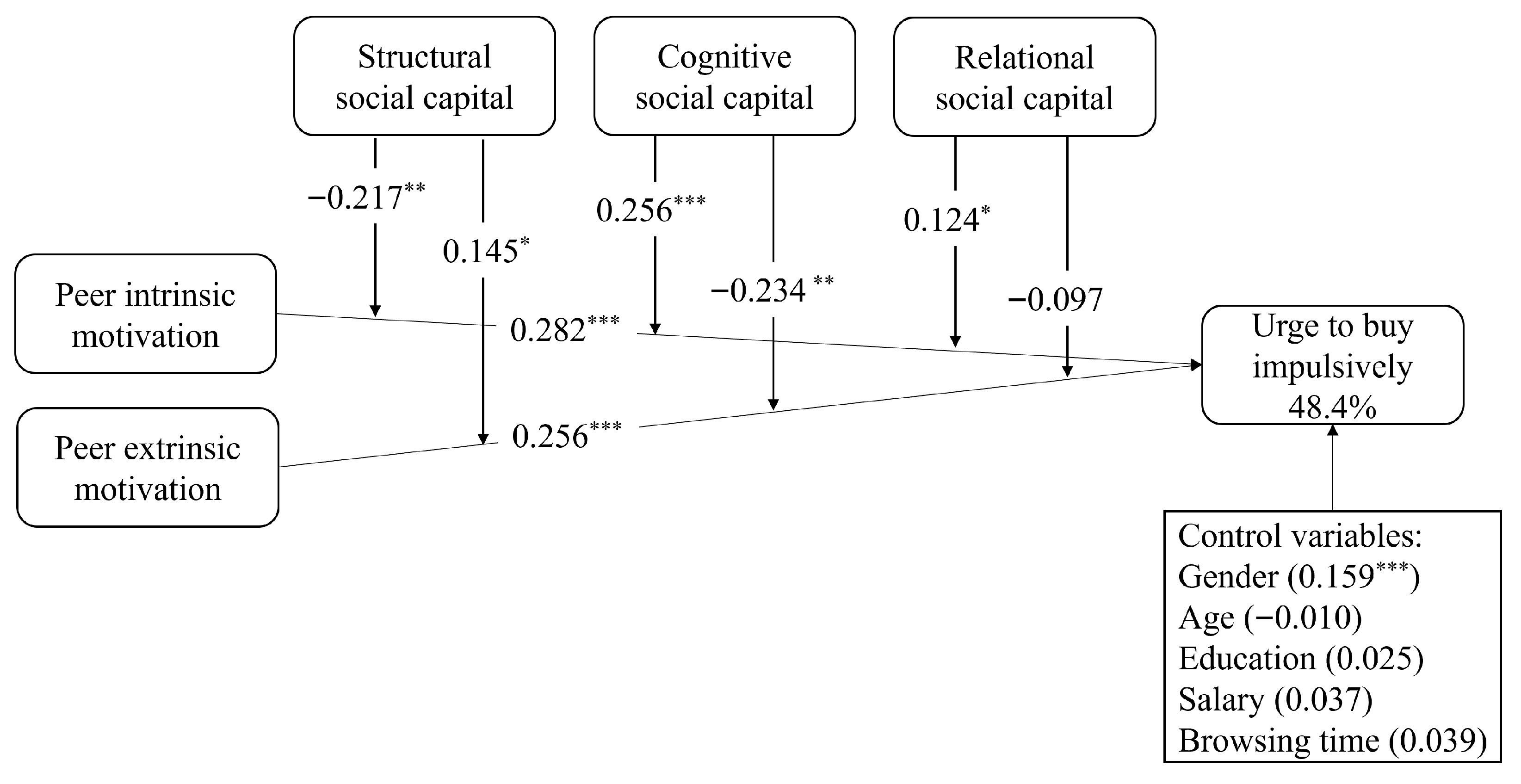
A bootstrapping analysis using 5000 subsamples at a 5% significance level was conducted to examine the path significance. The model exhibited an excellent fit, as indicated by a standardized root mean square residual (SRMR) value of 0.052. This metric evaluates the discrepancy between observed and predicted correlations, serving as an indicator for the model fit. The SRMR value was well below the threshold of 0.08 [78]. Specifically, Figure 2 illustrates the results of the structural model in this study. In the analysis, demographic variables, such as age, gender, salary, education and daily browsing time, were controlled. As shown below, peer intrinsic motivation (β = 0.282, t = 4.699) and peer extrinsic motivation (β = 0.256, t = 4.901) significantly affected the urge to buy impulsively, supporting H1 and H2. Additionally, this study also compared the differential effects of peer intrinsic and extrinsic motivation on the urge to buy impulsively, with the aim of determining which type of motivation is more influential within the context of this research. The path comparison analysis revealed that peer intrinsic motivation exerted a significantly stronger influence on the urge to buy impulsively compared to peer extrinsic motivation (t = 14.544) [79].
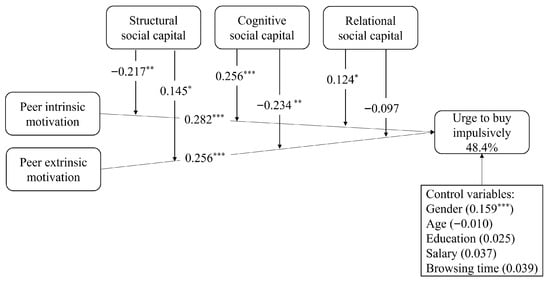
Figure 2.
Structural Model. *: p < 0.05; **: p < 0.01; ***: p < 0.001.
For the moderating effects, the results showed that structural social capital significantly weakened the effect of peer intrinsic motivation on the urge to buy impulsively (β = −0.217, t = 3.158). In contrast, it significantly strengthened the effect of peer extrinsic motivation on the urge to buy impulsively (β = 0.145, t = 1.962). Thus, H3b was supported, while H3a was not. In addition, cognitive social capital significantly strengthened the effect of peer intrinsic motivation on the urge to buy impulsively (β = 0.256, t = 3.938) but weakened the effect of peer extrinsic motivation (β = −0.234, t = 3.255). Relational social capital significantly strengthened the effect of peer intrinsic motivation on the urge to buy impulsively (β = 0.124, t = 2.149), but it had no significant impact on the effect of peer extrinsic motivation on the urge to buy impulsively (β = −0.097, t = 1.815). Therefore, H4a, H4b, and H5a were supported, but H5b was not.
5. Discussion
The present research offers significant insights into how peer motivation and social capital influence consumers’ urge to buy impulsively. First, the analysis shows that both peer intrinsic motivation and extrinsic motivation have a positive correlation with the urge to buy impulsively. This suggests that other consumers’ opinions and behaviors greatly influence an individual’s likelihood of making impulsive purchases through motivational mechanisms. The rapid evolution of technology has turned social media into an essential platform for consumer interaction. When shopping in peer contexts, individuals may be influenced by peers’ opinions or behaviors, becoming more susceptible to impulsive buying [6]. Additionally, the findings indicate that peer intrinsic motivation has a stronger association with the urge to buy impulsively compared to peer extrinsic motivation. While retailers might intuitively focus on external rewards such as raffles, this study demonstrates that intrinsic factors—such as peers’ enjoyment, interest, and fun derived from purchasing—are more strongly correlated with impulsive buying. Therefore, managerial practices aimed at fostering intrinsic motivation among consumers may prove particularly effective. However, the findings do not imply that retailers should disregard extrinsic motivators. Peer extrinsic motivation still positively influences impulsive buying. In general, once external motivators are established, intrinsic motivators tend to play a more prominent and efficient role in influencing impulsive purchases.
Second, building on previous research [80], the present study argues that social capital generated from continuous communications between consumers and retailers in the same group may influence other consumers’ behavior. In social commerce, this research extends this line of research by considering the social dynamics between a retailer and multiple consumers. Within such groups, consumers and the retailer can communicate and interact with each other, potentially generating group-level social capital. The present research investigated how social capital moderate consumers’ urge to buy impulsively. The findings reveal that structural social capital exerts a positive influence on the relationship between peer extrinsic motivation and the urge to buy impulsively. This suggests that increased retailer engagement within the social group can reduce consumer uncertainty, making external rewards more credible and thereby enhancing their impulse buying tendencies. Conversely, the results show that structural social capital negatively moderates the effect of peer intrinsic motivation on the urge to buy impulsively. A possible explanation is that frequent interactions between retailers and consumers may be perceived as deliberate efforts to influence consumer decision-making. From the perspective of Self-Determination Theory (SDT), such interactions may undermine the positive effect of peer intrinsic motivation on impulsive buying due to barriers in motivational internalization [44]. When consumers perceive repeated engagements as manipulative tactics aimed at influencing their choices, they may experience a diminished sense of control and autonomy. This perceived external pressure can obstruct the internalization of peer influence into self-endorsed values [81]. Given that intrinsic motivation is closely associated with the perception of autonomy and free choice, excessive retailer interaction may be viewed as an intrusion, thereby attenuating the positive influence of peer intrinsic motivation on impulse buying.
Thirdly, cognitive social capital moderates the effect of peer motivation on impulsive buying. High cognitive social capital enhances the ability to interpret peers’ emotions, converting peer experiences into personal feelings, thereby strengthening the influence of peer intrinsic motivation on impulsive buying. This is consistent with previous findings that cognitive social capital fosters group identity, effort recognition, and satisfaction [12]. Regarding extrinsic motivation, individuals with high cognitive social capital focus more on shared values than on material rewards—often feeling uncomfortable when purchasing for external gains. This aligns with supply chain research showing that cognitive social capital enhances the impact of collaborative practices (internal motivation) on social performance but not the impact of assessment practices (external pressure) [9]. In this study, peer extrinsic motivation refers to perceived external rewards. Cognitive social capital reduces its influence on impulsive buying by prioritizing shared values over material incentives.
Finally, relational social capital positively moderates the effect of peer intrinsic motivation on the urge to buy impulsively. High relational social capital fosters greater empathy and reciprocity among consumers within the same social group, further reinforcing this influence. Nevertheless, no significant moderating role of relational social capital was found in the connection between peer extrinsic motivation and the urge to buy impulsively, suggesting strong relationships within a social group do not mitigate the impact of peer extrinsic motivation driven by material rewards. The results are consistent with prior research that argues that the relationship between social capital and individual behavior is complex [63,80].
5.1. Implications for Theory
This research offers several contributions to the extant literature. First, it extends the concept of motivation to the peer level by integrating social commerce characteristics with impulsive buying through the lens of peer motivation. Previous research has proposed the critical role of environmental cues in impulsive buying, such as website or platform stimuli [18], marketing stimuli [7], situational stimuli [14], and impulsive consumer characteristics [23]. As social commerce becomes increasingly prevalent, new features associated with social interaction have emerged to support consumers’ purchase behavior. Unlike conventional e-commerce, social commerce enhances consumers’ ability to easily access and be influenced by others’ opinions and behaviors, making them more susceptible to peer influence. Specifically, this study enriches social commerce research by focusing on both peer intrinsic and extrinsic motivations.
Second, the present research further contributes to the social commerce literature by examining the dynamics within social groups that contain both consumers and retailers. Previous studies on impulsive buying have primarily focused on the relationships among consumers [82]. However, little research has investigated relationships in social groups that include retailers. Given that social commerce is becoming a pivotal instrument for retailers, it is important for them to understand how to build good relationships on social media platforms to attract more consumers. Establishing strong relationships can help retailers attract more consumers and increase sales.
Finally, while a significant number of researchers have explored how social capital influences users’ rational behavior, less attention has been paid to its influence on irrational behavior. This study argues that social capital developed within social groups can mitigate consumers’ perceived risk during shopping and expedite decision-making, potentially resulting in impulsive buying behavior. In a similar vein, prior research proposed that bridging and bonding social capital established online can promote peer communication, thus leading to an urge to buy impulsively [24]. However, the intricate relationship between the three dimensions of social capital and impulsive behavior remains underexplored empirically. Therefore, this research addresses this gap by investigating how the interplay between the three dimensions of social capital and peer motivation influences consumers’ impulsive behavior. Furthermore, the present study offers a more nuanced understanding to the inconsistent findings regarding the relationships between user behavior and its antecedents. Prior studies on the moderating role of social capital have yielded fragmented findings across various contexts [9]. The findings contribute to this line of research by providing new insights into how social capital plays a moderating role in the impulse buying process within online social groups.
5.2. Implications for Practice
The findings also have pivotal implications for business practitioners. Impulsive purchasing has long been recognized as an essential factor in online retail profits. Many retailers invest in social media to attract and convert followers into consumers. This study provides several suggestions for retailers. First, this study confirms that peer extrinsic motivation perceived by consumers has a positive association with their urge to buy impulsively. Therefore, organizing sponsored activities such as lucky draws, gifts, and special discount events continues to be effective. Additionally, the findings indicate that addressing consumers’ intrinsic needs can be more impactful in driving impulse purchases than extrinsic motivators. Hence, retailers should also focus on activating intrinsic motivators. For example, while peers’ emotions are external factors, they can influence or inspire consumers’ intrinsic motivation. Similarly, promoting a brand culture that fosters consumer identification with the brand and retailer, while also instilling a feeling of belonging and acceptance, can enhance consumers’ intrinsic motivation, leading to increased impulse buying and higher sales.
In addition, retailers should recognize that the influence of various motivation types can differ based on the levels of social capital dimensions present in online groups. For example, at a high level of structural social capital, while the effect of peer intrinsic motivation is unexpectedly lowered, retailers should at least be aware of the strengthened impact of peer extrinsic motivation. This suggests that they need to allocate more resources to help consumers notice how their peers have received external rewards. In contrast, if a retailer’s social group has reached a high level of cognitive or relational social capital, then the retailer should emphasize achieving peer intrinsic motivation over peer extrinsic motivation. In short, a “one size fits all” approach to motivation within the social group context may not yield optimal behavioral outcomes.
5.3. Limtations and Future Research
This research has some limitations, which also present prospects for future research. First, the data collection was limited to a survey-based approach conducted exclusively in China. Future research could benefit from incorporating qualitative or mixed-methods approaches, which may offer a richer and more in-depth understanding of the psychological mechanisms underlying the observed relationships. Furthermore, longitudinal studies could be employed to capture the dynamic evolution of social capital and its effects over time, rather than relying on data from a single time point. Additionally, a more comprehensive investigation into how these findings may apply to or differ in Western social commerce contexts would enhance the global applicability and relevance of the study.
Second, although the research model exhibits acceptable explanatory power, it accounts for only 48.4% of the variance in impulsive buying behavior. This result suggests that future studies should explore additional factors that may influence impulsive purchasing decisions. Prior research has indicated that market stimuli, consumer characteristics, and other contextual variables may significantly affect such behavior [16]. For example, retailers could leverage marketing tactics, such as pricing strategies, limited-time offers, and coupon distributions, to encourage consumers to make more impulse purchases within a shorter time frame. Despite these limitations, this study contributes to the existing literature by highlighting the role of peer influence within social groups in shaping impulsive buying behavior, grounded in motivation and social capital theories. To deepen the understanding of this phenomenon, future research could incorporate alternative theoretical perspectives.
Finally, the present study considers only one manifestation of each dimension of social capital. Prior research has identified that structural social capital can be measured through social interaction ties [52,53,63,80,83,84,85,86,87], centrality [67,88], and network density [89]. Future research should explore alternative measures of social capital tailored to specific research contexts.
Supplementary Materials
The following supporting information can be downloaded at: https://www.mdpi.com/article/10.3390/jtaer20030252/s1, Table S1: Literature Review on Consequences of Social Capital; Table S2: Literature Review on the Moderating Role of Social Capital; Table S3: Constructs and Scales; Table S4: Common Method Bias Analysis.
Funding
This research received no external funding.
Institutional Review Board Statement
This research was carried out via an online questionnaire survey, ensuring complete anonymity for participants. In accordance with the “Notice on the Issuance of the Measures for Ethical Review of Life Science and Medical Research Involving Human Beings” jointly published by the National Health Commission, the Ministry of Education, the Ministry of Science and Technology, and the National Administration of Traditional Chinese Medicine, research utilizing anonymized information data is exempt from ethical review to alleviate unnecessary burdens on researchers (Article.32).
Informed Consent Statement
Informed consent was obtained from all subjects involved in the study.
Data Availability Statement
The raw data supporting the conclusions of this article will be made available by the author upon reasonable request.
Conflicts of Interest
The author declares no conflicts of interest.
References
- Azad Moghddam, H.; Carlson, J.; Wyllie, J.; Mahmudur Rahman, S. Scroll, Stop, Shop: Decoding Impulsive Buying in Social Commerce. J. Bus. Res. 2024, 182, 114776. [Google Scholar] [CrossRef]
- Gong, X.; Yang, Y.; Wu, W. What Drives Social Shopping in Social Commerce Platform? The Effects of Affordance, Self-Congruity and Functional-Congruity. Inf. Technol. People, 2024; early access. [Google Scholar] [CrossRef]
- Mousavi, S.; Roper, S. Enhancing Relationships Through Online Brand Communities: Comparing Posters and Lurkers. Int. J. Electron. Commer. 2023, 27, 66–99. [Google Scholar] [CrossRef]
- Jia, Y.; Liu, L.; Lowry, P.B. How Do Consumers Make Behavioural Decisions on Social Commerce Platforms? The Interaction Effect between Behaviour Visibility and Social Needs. Inf. Syst. J. 2024, 34, 1703–1736. [Google Scholar] [CrossRef]
- Kong, J.S.-L.; Kwok, R.C.-W.; Fang, Y. The Effects of Peer Intrinsic and Extrinsic Motivation on MMOG Game-Based Collaborative Learning. Inf. Manag. 2012, 49, 1–9. [Google Scholar] [CrossRef]
- Luo, X. How Does Shopping with Others Influence Impulsive Purchasing? J. Consum. Psychol. 2005, 15, 288–294. [Google Scholar] [CrossRef]
- Hu, Q.; Pan, Z.; Lu, Y.; Wang, B. Heterophily or Homophily of Social Media Influencers: The Role of Dual Parasocial Relationships in Impulsive Buying. Int. J. Electron. Commer. 2023, 27, 558–589. [Google Scholar] [CrossRef]
- Ou, C.X.; Pavlou, P.A.; Davison, R.M. Swift Guanxi in Online Marketplaces: The Role of Computer-Mediated Communication Technologies. MIS Q. 2014, 38, 209–230. [Google Scholar] [CrossRef]
- Alghababsheh, M.; Gallear, D. Socially Sustainable Supply Chain Management and Suppliers’ Social Performance: The Role of Social Capital. J. Bus. Ethics 2021, 173, 855–875. [Google Scholar] [CrossRef]
- Weiler, M.; Stolz, S.; Lanz, A.; Schlereth, C.; Hinz, O. Social Capital Accumulation through Social Media Networks: Evidence from a Randomized Field Experiment and Individual-Level Panel Data. MIS Q. 2022, 46, 771–812. [Google Scholar] [CrossRef]
- Madrazo-Lemarroy, P.; Barajas-Portas, K.; Labastida Tovar, M.E. Analyzing Campaign’s Outcome in Reward-Based Crowdfunding: Social Capital as a Determinant Factor. Internet Res. 2019, 29, 1171–1189. [Google Scholar] [CrossRef]
- Sun, Y.; Fang, Y.; Lim, K.H.; Straub, D. User Satisfaction with Information Technology Service Delivery: A Social Capital Perspective. Inf. Syst. Res. 2012, 23, 1195–1211. [Google Scholar] [CrossRef]
- Iyer, G.R.; Blut, M.; Xiao, S.H.; Grewal, D. Impulse Buying: A Meta-Analytic Review. J. Acad. Mark. Sci. 2020, 48, 384–404. [Google Scholar] [CrossRef]
- Xu, H.; Gong, X.; Yan, R. Online Impulsive Buying in Social Commerce: A Mixed-Methods Research. Inf. Manag. 2024, 61, 103943. [Google Scholar] [CrossRef]
- Mehrabian, A.; Russell, J.A. The Basic Emotional Impact of Environments. Percept. Mot. Ski. 1974, 38, 283–301. [Google Scholar] [CrossRef] [PubMed]
- Chan, T.K.H.; Cheung, C.M.K.; Lee, Z.W.Y. The State of Online Impulse-Buying Research: A Literature Analysis. Inf. Manag. 2017, 54, 204–217. [Google Scholar] [CrossRef]
- Vazquez, D.; Wu, X.; Nguyen, B.; Kent, A.; Gutierrez, A.; Chen, T. Investigating Narrative Involvement, Parasocial Interactions, and Impulse Buying Behaviours within a Second Screen Social Commerce Context. Int. J. Inf. Manag. 2020, 53, 102135. [Google Scholar] [CrossRef]
- Shao, Z. How the Characteristics of Social Media Influencers and Live Content Influence Consumers’ Impulsive Buying in Live Streaming Commerce? The Role of Congruence and Attachment. J. Res. Interact. Mark. 2024, 18, 506–527. [Google Scholar] [CrossRef]
- Xu, H.; Zhang, K.Z.K.; Zhao, S.J. A Dual Systems Model of Online Impulse Buying. Ind. Manag. Data Syst. 2020, 120, 845–861. [Google Scholar] [CrossRef]
- Morozova, N.; Vlaev, I. The Urge to Splurge: Differentiating Unplanned and Impulse Purchases. Int. J. Mark. Res. 2024, 66, 519–542. [Google Scholar] [CrossRef]
- Chen, Y.; Lu, Y.; Wang, B.; Pan, Z. How Do Product Recommendations Affect Impulse Buying? An Empirical Study on WeChat Social Commerce. Inf. Manag. 2019, 56, 236–248. [Google Scholar] [CrossRef]
- Setyani, V.; Zhu, Y.-Q.; Hidayanto, A.N.; Sandhyaduhita, P.I.; Hsiao, B. Exploring the Psychological Mechanisms from Personalized Advertisements to Urge to Buy Impulsively on Social Media. Int. J. Inf. Manag. 2019, 48, 96–107. [Google Scholar] [CrossRef]
- Zafar, A.U.; Qiu, J.; Li, Y.; Wang, J.; Shahzad, M. The Impact of Social Media Celebrities’ Posts and Contextual Interactions on Impulse Buying in Social Commerce. Comput. Hum. Behav. 2021, 115, 106178. [Google Scholar] [CrossRef]
- Huang, L.-T. Flow and Social Capital Theory in Online Impulse Buying. J. Bus. Res. 2016, 69, 2277–2283. [Google Scholar] [CrossRef]
- Wu, I.-L.; Chiu, M.-L.; Chen, K.-W. Defining the Determinants of Online Impulse Buying through a Shopping Process of Integrating Perceived Risk, Expectation-Confirmation Model, and Flow Theory Issues. Int. J. Inf. Manag. 2020, 52, 102099. [Google Scholar] [CrossRef]
- Zafar, A.U.; Shahzad, M.; Ashfaq, M.; Shahzad, K. Forecasting Impulsive Consumers Driven by Macro-Influencers Posts: Intervention of Followers’ Flow State and Perceived Informativeness. Technol. Forecast. Soc. Change 2023, 190, 122408. [Google Scholar] [CrossRef]
- Zhou, Y.; Li, Y.-Q.; Ruan, W.-Q.; Zhang, S.-N. Owned Media or Earned Media? The Influence of Social Media Types on Impulse Buying Intention in Internet Celebrity Restaurants. Int. J. Hosp. Manag. 2023, 111, 103487. [Google Scholar] [CrossRef]
- Wu, W.; Yang, Q.; Gong, X. Impulsive Social Shopping in Social Commerce Platforms: The Role of Perceived Proximity. Inf. Syst. Front. 2023, 26, 1527–1541. [Google Scholar] [CrossRef]
- Li, L.; Kang, K.; Zhao, A.; Feng, Y. The Impact of Social Presence and Facilitation Factors on Online Consumers’ Impulse Buying in Live Shopping–Celebrity Endorsement as a Moderating Factor. Inf. Technol. People 2023, 36, 2611–2631. [Google Scholar] [CrossRef]
- Anoop, T.S.; Rahman, Z. Online Impulse Buying: A Systematic Review of 25 Years of Research Using Meta Regression. J. Consum. Behav. 2025, 24, 363–391. [Google Scholar] [CrossRef]
- Hu, X.; Zhang, H.; Sun, J.; Xiang, L.; Wei, J. Impulsive Purchase Behavior in Social Commerce The Role of Social Influence. In Proceedings of the Pacific Asia Conference on Information Systems, Chiayi, Taiwan, 27 July 2016; p. 18. [Google Scholar]
- Deci, E.L.; Ryan, R.M.; Gagné, M.; Leone, D.R.; Usunov, J.; Kornazheva, B.P. Need Satisfaction, Motivation, and Well-Being in the Work Organizations of a Former Eastern Bloc Country: A Cross-Cultural Study of Self-Determination. Pers. Soc. Psychol. Bull. 2001, 27, 930–942. [Google Scholar] [CrossRef]
- Venkatesh, V. Determinants of Perceived Ease of Use: Integrating Control, Intrinsic Motivation, and Emotion into the Technology Acceptance Model. Inf. Syst. Res. 2000, 11, 342–365. [Google Scholar] [CrossRef]
- Vallerand, R.J. Toward A Hierarchical Model of Intrinsic and Extrinsic Motivation. Adv. Exp. Soc. Psychol. 1997, 29, 271–360. [Google Scholar] [CrossRef]
- Fruchter, G.E.; Prasad, A. Too Popular, Too Fast: Optimal Advertising and Entry Timing in Markets with Peer Influence. Manag. Sci. 2022, 68, 4725–4741. [Google Scholar] [CrossRef]
- Pyo, T.-H.; Lee, J.Y.; Park, H.M. The Effects of Consumer Preference and Peer Influence on Trial of an Experience Good. J. Mark. Res. 2022, 59, 1161–1178. [Google Scholar] [CrossRef]
- Langer, N.; Jain, T. Peer Influence and IT Career Choice. Inf. Syst. Res. 2024, 35, 642–656. [Google Scholar] [CrossRef]
- Wu, X.; Han, X.; Moon, H. Host-Guest Interactions in Peer-to-Peer Accommodation: Scale Development and Its Influence on Guests’ Value Co-Creation Behaviors. Int. J. Hosp. Manag. 2023, 110, 103447. [Google Scholar] [CrossRef]
- Belo, R.; Ferreira, P. Free-Riding in Products with Positive Network Externalities: Empirical Evidence from a Large Mobile Network. MIS Q. 2022, 46, 401–430. [Google Scholar] [CrossRef]
- Klapper, H.; Reitzig, M. On the Effects of Authority on Peer Motivation: Learning from Wikipedia. Strateg. Manag. J. 2018, 39, 2178–2203. [Google Scholar] [CrossRef]
- Parboteeah, D.V.; Valacich, J.S.; Wells, J.D. The Influence of Website Characteristics on a Consumer’s Urge to Buy Impulsively. Inf. Syst. Res. 2009, 20, 60–78. [Google Scholar]
- Lee, M.T.; Theokary, C. The Superstar Social Media Influencer: Exploiting Linguistic Style and Emotional Contagion over Content? J. Bus. Res. 2021, 132, 860–871. [Google Scholar] [CrossRef]
- Hasford, J.; Hardesty, D.M.; Kidwell, B. More than a Feeling: Emotional Contagion Effects in Persuasive Communication. J. Mark. Res. 2015, 52, 836–847. [Google Scholar] [CrossRef]
- Good, V.; Hughes, D.E.; Kirca, A.H.; McGrath, S. A Self-Determination Theory-Based Meta-Analysis on the Differential Effects of Intrinsic and Extrinsic Motivation on Salesperson Performance. J. Acad. Mark. Sci. 2022, 50, 586–614. [Google Scholar] [CrossRef]
- Oliveira, T.; Barbeitos, I.; Calado, A. The Role of Intrinsic and Extrinsic Motivations in Sharing Economy Post-Adoption. Inf. Technol. People 2021, 35, 165–203. [Google Scholar] [CrossRef]
- Cao, Z.; Hui, K.-L.; Xu, H. When Discounts Hurt Sales: The Case of Daily-Deal Markets. Inf. Syst. Res. 2018, 29, 567–591. [Google Scholar] [CrossRef]
- Lo, P.-S.; Dwivedi, Y.K.; Wei-Han Tan, G.; Ooi, K.-B.; Cheng-Xi Aw, E.; Metri, B. Why Do Consumers Buy Impulsively during Live Streaming? A Deep Learning-Based Dual-Stage SEM-ANN Analysis. J. Bus. Res. 2022, 147, 325–337. [Google Scholar] [CrossRef]
- Liu, P.; He, J.; Li, A. Upward Social Comparison on Social Network Sites and Impulse Buying: A Moderated Mediation Model of Negative Affect and Rumination. Comput. Hum. Behav. 2019, 96, 133–140. [Google Scholar] [CrossRef]
- Caya, O.; Mosconi, E. Citizen Behaviors, Enterprise Social Media and Firm Performance. Inf. Technol. People 2022, 36, 1298–1325. [Google Scholar] [CrossRef]
- Nahapiet, J.; Ghoshal, S. Social Capital, Intellectual Capital, and the Organizational Advantage. Acad. Manag. Rev. 1998, 23, 242–266. [Google Scholar] [CrossRef]
- Chung, K.H.; Shim, D.C.; Park, H.H. Revisiting Theory of Social Capital: Can the Internet Make a Difference? Technol. Forecast. Soc. Change 2024, 202, 123282. [Google Scholar] [CrossRef]
- Chiu, C.-M.; Hsu, M.-H.; Wang, E.T.G. Understanding Knowledge Sharing in Virtual Communities: An Integration of Social Capital and Social Cognitive Theories. Decis. Support Syst. 2006, 42, 1872–1888. [Google Scholar] [CrossRef]
- Chang, H.H.; Chuang, S.-S. Social Capital and Individual Motivations on Knowledge Sharing: Participant Involvement as a Moderator. Inf. Manag. 2011, 48, 9–18. [Google Scholar] [CrossRef]
- Zhang, H.; Gupta, S.; Sun, W.; Zou, Y. How Social-Media-Enabled Co-Creation between Customers and the Firm Drives Business Value? The Perspective of Organizational Learning and Social Capital. Inf. Manag. 2020, 57, 103200. [Google Scholar] [CrossRef]
- Shao, Y.; Sun, L. Entrepreneurs’ Social Capital and Venture Capital Financing. J. Bus. Res. 2021, 136, 499–512. [Google Scholar] [CrossRef]
- Coleman, J.S. Social Capital in the Creation of Human Capital. Am. J. Sociol. 1988, 94, 95–120. [Google Scholar] [CrossRef]
- Huang, Q.; Chen, X.; Ou, C.X.; Davison, R.M.; Hua, Z. Understanding Buyers’ Loyalty to a C2C Platform: The Roles of Social Capital, Satisfaction and Perceived Effectiveness of E-commerce Institutional Mechanisms. Inf. Syst. J. 2017, 27, 91–119. [Google Scholar] [CrossRef]
- Horng, S.-M.; Wu, C.-L. How Behaviors on Social Network Sites and Online Social Capital Influence Social Commerce Intentions. Inf. Manag. 2020, 57, 103176. [Google Scholar] [CrossRef]
- Li, M. Understanding How Customer Social Capital Accumulation in Brand Communities: A Gamification Affordance Perspective. J. Retail. Consum. Serv. 2024, 78, 103761. [Google Scholar] [CrossRef]
- Wyer, R.S. Language and Advertising Effectiveness: Mediating Influences of Comprehension and Cognitive Elaboration. Psychol. Mark. 2002, 19, 693–712. [Google Scholar] [CrossRef]
- Zhang, Z.; Patrick, V.M. Mickey D’s Has More Street Cred Than McDonald’s: Consumer Brand Nickname Use Signals Information Authenticity. J. Mark. 2021, 85, 58–73. [Google Scholar] [CrossRef]
- Wei, Q.; Mu, Y.; Guo, X.; Jiang, W.; Chen, G. Dynamic Bayesian Network–Based Product Recommendation Considering Consumers’ Multistage Shopping Journeys: A Marketing Funnel Perspective. Inf. Syst. Res. 2023, 35, 1382–1402. [Google Scholar] [CrossRef]
- Shao, Z.; Pan, Z. Building Guanxi Network in the Mobile Social Platform: A Social Capital Perspective. Int. J. Inf. Manag. 2019, 44, 109–120. [Google Scholar] [CrossRef]
- Zollo, L. The Consumers’ Emotional Dog Learns to Persuade Its Rational Tail: Toward a Social Intuitionist Framework of Ethical Consumption. J. Bus. Ethics 2021, 168, 295–313. [Google Scholar] [CrossRef]
- Chen, X.; Huang, Q.; Davison, R.M. Economic and Social Satisfaction of Buyers on Consumer-to-Consumer Platforms: The Role of Relational Capital. Int. J. Electron. Commer. 2017, 21, 219–248. [Google Scholar] [CrossRef]
- Liu, C.-W.; Gao, G.; Agarwal, R. Reciprocity or Self-Interest? Leveraging Digital Social Connections for Healthy Behavior. MIS Q. 2022, 46, 261–298. [Google Scholar] [CrossRef]
- Wasko, M.M.; Faraj, S. Why Should I Share? Examining Social Capital and Knowledge Contribution in Electronic Networks of Practice. MIS Q. 2005, 29, 35–57. [Google Scholar] [CrossRef]
- Hu, X.; Chen, X.; Davison, R.M. Social Support, Source Credibility, Social Influence, and Impulsive Purchase Behavior in Social Commerce. Int. J. Electron. Commer. 2019, 23, 297–327. [Google Scholar] [CrossRef]
- Chen, X.; Liu, Z.; Wei, S.; Liu, Y. Understanding the Role of Affordances in Promoting Social Commerce Engagement. Int. J. Electron. Commer. 2021, 25, 287–312. [Google Scholar] [CrossRef]
- Verhagen, T.; van Dolen, W. The Influence of Online Store Beliefs on Consumer Online Impulse Buying: A Model and Empirical Application. Inf. Manag. 2011, 48, 320–327. [Google Scholar] [CrossRef]
- Podsakoff, P.M.; MacKenzie, S.B.; Lee, J.-Y.; Podsakoff, N.P. Common Method Biases in Behavioral Research A Critical Review of the Literature and Recommended Remedies. J. Appl. Psychol. 2003, 88, 879–903. [Google Scholar] [CrossRef]
- Liang, H.; Saraf, N.; Hu, Q.; Xue, Y. Assimilation of Enterprise Systems: The Effect of Institutional Pressures and the Mediating Role of Top Management. MIS Q. 2007, 31, 59–87. [Google Scholar] [CrossRef]
- Chin, W.W. Commentary: Issues and Opinion on Structural Equation Modeling. MIS Q. 1998, 22, vii–xvi. [Google Scholar]
- Hair, J.F.; Anderson, R.E.; Tatham, R.L.; Black, W.C. Multivariate Data Analysis; Prentice Hall: Upper Saddle River, NJ, USA, 1998. [Google Scholar]
- Fornell, C.; Larcker, D.F. Evaluating Structural Equation Models with Unobservable Variables and Measurement Error. J. Mark. Res. 1981, 18, 39–50. [Google Scholar]
- Liébana-Cabanillas, F.; Molinillo, S.; Ruiz-Montañez, M. To Use or Not to Use, That Is the Question: Analysis of the Determining Factors for Using NFC Mobile Payment Systems in Public Transportation. Technol. Forecast. Soc. Change 2019, 139, 266–276. [Google Scholar] [CrossRef]
- Henseler, J.; Ringle, C.M.; Sarstedt, M. A New Criterion for Assessing Discriminant Validity in Variance-Based Structural Equation Modeling. J. Acad. Mark. Sci. 2015, 43, 115–135. [Google Scholar] [CrossRef]
- Hu, L.; Bentler, P.M. Cutoff Criteria for Fit Indexes in Covariance Structure Analysis: Conventional Criteria versus New Alternatives. Struct. Equ. Model. A Multidiscip. J. 1999, 6, 1–55. [Google Scholar] [CrossRef]
- Cohen, J.; Cohen, P.; West, S.G.; Aiken, L.S. Applied Multiple Regression/Correlation Analysis for the Behavioral Sciences; Lawrence Erlbaum Associates: London, UK, 2003. [Google Scholar]
- Chan, C.K.; Fang, Y.; Li, H. Relative Advantage of Interactive Electronic Banking Adoption by Premium Customers: The Moderating Role of Social Capital. Internet Res. 2019, 30, 357–379. [Google Scholar] [CrossRef]
- Kim, S.; Chen, R.P.; Zhang, K. Anthropomorphized Helpers Undermine Autonomy and Enjoyment in Computer Games. J. Consum. Res. 2016, 43, 282–302. [Google Scholar] [CrossRef]
- Chen, J.V.; Su, B.; Widjaja, A.E. Facebook C2C Social Commerce: A Study of Online Impulse Buying. Decis. Support Syst. 2016, 83, 57–69. [Google Scholar] [CrossRef]
- Yang, X. Understanding Consumers’ Purchase Intentions in Social Commerce through Social Capital: Evidence from SEM and fsQCA. J. Theor. Appl. Electron. Commer. Res. 2021, 16, 1557–1570. [Google Scholar] [CrossRef]
- Tsai, W.; Ghoshal, S. Social Capital and Value Creation: The Role of Intrafirm Networks. Acad. Manag. J. 1998, 41, 464–476. [Google Scholar] [CrossRef]
- Wang, J.-C.; Chiang, M.-J. Social Interaction and Continuance Intention in Online Auctions: A Social Capital Perspective. Decis. Support Syst. 2009, 47, 466–476. [Google Scholar] [CrossRef]
- Tsai, Y.-H.; Joe, S.-W.; Lin, C.-P.; Wang, R.-T.; Chang, Y.-H. Modeling the Relationship between IT-Mediated Social Capital and Social Support: Key Mediating Mechanisms of Sense of Group. Technol. Forecast. Soc. Change 2012, 79, 1592–1604. [Google Scholar] [CrossRef]
- Li, Y.; Ye, F.; Sheu, C. Social Capital, Information Sharing and Performance: Evidence from China. Int. J. Oper. Prod. Manag. 2014, 34, 1440–1462. [Google Scholar] [CrossRef]
- Chen, X.; Pan, Y.; Guo, B. The Influence of Personality Traits and Social Networks on the Self-Disclosure Behavior of Social Network Site Users. Internet Res. 2016, 26, 566–586. [Google Scholar] [CrossRef]
- Rodrigo-Alarcón, J.; García-Villaverde, P.M.; Ruiz-Ortega, M.J.; Parra-Requena, G. From Social Capital to Entrepreneurial Orientation: The Mediating Role of Dynamic Capabilities. Eur. Manag. J. 2018, 36, 195–209. [Google Scholar] [CrossRef]
Disclaimer/Publisher’s Note: The statements, opinions and data contained in all publications are solely those of the individual author(s) and contributor(s) and not of MDPI and/or the editor(s). MDPI and/or the editor(s) disclaim responsibility for any injury to people or property resulting from any ideas, methods, instructions or products referred to in the content. |
© 2025 by the author. Licensee MDPI, Basel, Switzerland. This article is an open access article distributed under the terms and conditions of the Creative Commons Attribution (CC BY) license (https://creativecommons.org/licenses/by/4.0/).