


Abstract
The study aims to evaluate the factors influencing digital technology transformation in Taiwanese family companies. Data were obtained from nine Taiwanese experts with extensive expertise in family businesses and analyzed using the TOPSIS approach. The research findings identify twelve essential factors that influence digital technology transformation and provide the best recommendations for organizations. The study identified and analyzed four key elements deemed most critical in influencing the digital transformation of Taiwanese family businesses: education and training, technological complexity, technological advancements, and management support. Importantly, the organizational group is the primary driver of digital transformation through the case of Taiwanese family enterprises. This study adds to the existing literature by identifying the most essential criteria and ranking them. The Taiwanese family enterprises should use this model cautiously, considering the potential relationships among group factors in the TOE model. Moreover, the findings also offer potential suggestions for policymakers to enhance the integration of digital technologies across all facets of society and business.
1. Introduction
The family business model is characterized by family members playing an important role and participating in the company’s operations and management activities [1,2]. It is a popular and long-standing model of private enterprise in many countries and is an important source of job creation globally [3], especially contributing significantly to the global economy [1,4]. In the industry 5.0 era, digital technology is advancing rapidly and is being widely applied across various fields. Family businesses must enhance their adoption of digital technologies to develop business activities and ensure their survival [2,5]. However, these businesses face a critical challenge: effectively integrating their business strategies with digital technology to maximize the potential for long-term growth and expansion [6,7,8]. Particularly, due to the outbreak of the COVID-19 pandemic, the adoption of digital technology has been further accelerated [9,10]. As a result, family enterprises are actively seeking new solutions to enhance their operations, yet they encounter more obstacles compared to other enterprise models [11,12,13].
Blockchain technology, big data, cloud computing, and artificial intelligence (AI) are examples of digital technologies that have evolved to new heights and are now essential components of many professions [14,15]. To improve business operations and gain a competitive edge over rivals in the same sector, firms globally are seeking to optimize their digital transformation strategies [7]. Additionally, digital transformation enables them to develop long-term strategies that significantly strengthen their economies [16]. Unfortunately, there are still many challenges and factors to transform digital technology in enterprises [17,18]. For example, family companies may not fully understand digital technology despite the government’s desire for them to swiftly adopt cutting-edge solutions. This lack of clarity makes it challenging for enterprises to organize the financial and human resources necessary for digital technology implementation [19,20]. Indeed, family firms must adopt new technologies to expand their scale and remain competitive with others in the same sector [17,21]. Meanwhile, family businesses display unique characteristics compared to conventional enterprises, especially in terms of ownership and management structures, long-term goals and strategies, and the inheritance and transfer of power as well as the integration of family culture into business operations [22].
As technology becomes increasingly complex, firm employees must enhance their knowledge to manage it effectively [20,22]. Another potential benefit of implementing modern technology for organizations is the ability to reach customers loyalty while also gaining a competitive advantage [23,24]. Taiwanese businesses have considered implementing digital technologies, but they have yet to establish organizational consistency or develop specific procedures to prepare for digital transformation [8,25,26]. For an extended period, Taiwanese firms have exploited free social media to replace traditional marketing tactics and have achieved great benefits [8,27]. However, digital transformation in family businesses is still in its early stages of development, and there remains a lack of detailed research evaluating the key factors that influence this process [11,26]. To contribute new insights into the digital transformation of family businesses, this study focuses on Taiwanese family enterprises as a specific case, answering the following research questions:
RQ1.
What is the theoretical framework that can be constructed to identify the critical elements impacting the transformation of digital technology in Taiwanese family companies?
RQ2.
What is the prioritization of important factors impacting the transformation of digital technology in Taiwanese family businesses?
Hence, our findings contribute to the body of knowledge on digital technology transformation in family businesses from both theoretical and practical perspectives. This study categorizes the key elements driving digital technology transformation based on the Technology–Organization–Environment (TOE) framework [28,29]. By presenting a comprehensive list of factors influencing the digital technology transformation in Taiwanese family businesses, along with detailed explanations for each, this study assists top managers and policymakers in recognizing the importance of these factors throughout the digital transformation process.
2. Literature Review
Family enterprises serve as a foundational business model and make significant contributions to the global economy [1,4]. Indeed, numerous studies have highlighted the distinct differences between family and non-family enterprises, particularly in terms of ownership and profit goals [30,31,32]. In addition, a key factor in the long-term development of family businesses is the inheritance and transfer of management power across generations, which sets them apart from other business models [21,27,33]. Hence, these differences play a crucial role in shaping the development orientation and management mindset of this business model [1]. Rovelli et al. (2022) reviewed over 1300 research publications from 1988 to 2020, providing extensive insights into family businesses. Their study highlights the evolution of these enterprises from traditional practices to modern management principles and innovative business strategies [34].
Meanwhile, family firms make up a large proportion of the total number of businesses in economies worldwide, particularly in Asian countries [1,2,33]. They contribute significantly to the sustainable development of nations by creating jobs for local workers and fostering a stable, prosperous society [27]. However, to sustain and grow the family brand in the long term, the next generation of owners must be astute at adopting emerging technologies to protect and expand their enterprises [35,36]. A key challenge for these organizations is the need to actively internationalize to innovate and enhance operational efficiency [12,29]. Lasio et al. (2024) highlighted that family businesses are adapting their operating models and business strategies to survive in an uncertain business environment and amidst competitive pressures. They confirmed the significant positive impact of digital transformation on business performance [37]. Similarly, other scholars have emphasized the role of advanced technologies in strengthening family businesses and enabling them to apply international standards to their operations [38,39]. However, some scholars have found that ownership and the financial interests of family members can influence the development strategy and decision-making processes in family enterprises more than non-family counterparts [27,35,40]. For instance, first-generation business owners are often too elderly to fully understand emerging trends such as corporate social responsibility and green products [8,35].
The term “digital technology” refers to new innovations that combine information, computing, communication, and technology to benefit society [7,20]. Thus, digital technology transformation creates exceptional value, prompting firms to integrate and apply new technologies to their operational systems [7,17]. This transformation involves the adoption of various digital technologies, representing a fundamental shift in form, function, and structure. It is deeply intertwined with daily life, directly affecting everyday activities [17], and digitalization improves long-term company performance by enabling organizations to innovate and develop [19]. In the context of family firms, the rapid development of digital technology has significantly influenced strategic decisions related to organizational restructuring, driving the adoption of more optimal business models, cost-saving solutions, and improved operational performance [31,35,41]. Therefore, top managers in both family and non-family firms recognize that digital technology enhances organizational performance and delivers new experiences to customers [29,31,40]. According to Nieto et al. (2023), digital transformation will positively stimulate innovation in family businesses and enhance overall business performance [12]. Meanwhile, Ahmad (2024) stated that using digital technology could help firms gain a competitive advantage against other competitors [42]. The level of digitalization will undoubtedly increase depending on a firm’s ability to integrate the latest digital innovations into their business models [20,43]. However, the characteristics of each business model or industry determine the specific challenges that must be addressed in the digital transformation process [43,44]. Additionally, the diversity of influencing factors plays a key role in shaping the success of each organization, particularly within the family business model [45,46,47]. Some scholars suggested the need to identify the theoretical framework and the critical factors that impact digital transformation in family businesses [4,42].
A theoretical framework provides a solid foundation to guide the research process, helping to connect the study with previous work and ensuring the logic and reliability of the critical elements [46]. The existing literature highlights various theories used to investigate the factors influencing digital transformation, including the Diffusion of Innovation (DOI) [48], the TOE [29,46], and Technology Acceptance Model (TAM) [49]. Meanwhile, some scholars have discovered that the TOE framework is the most flexible and powerful theory for investigating technology adoption [29,50]. Furthermore, the TOE model is appropriate for various research backgrounds, as it includes investigating internal and external aspects to implement new technology [28,29]. As a result, the TOE model served as the primary theoretical framework for this investigation, considering three clusters that influence digital transformation: technology, organization, and environment, specifically in the case of Taiwanese family companies [51].
Prior studies have proposed several critical factors influencing digital technology transformation and have evaluated them across various industries and business models [12,17,46]. Some scholars suggested that the concept of digital transformation should be expanded to various sectors globally, with particular attention to the unique characteristics of each industry to uncover valuable insights. Importantly, the diversity and inconsistency of factors influencing digital transformation have been highlighted across various studies; however, most of these studies focus on non-family businesses. Specifically, Kitsios and Kapetaneas (2022) have considered twelve factors for Industry 4.0 transformation in the healthcare sector [52]. Employing the TOE model to discover the application of digital technology, Zhong et al. (2024) identified several deciding factors in the case of Chinese construction industries. They also emphasized the importance of valuable data and a flexible organizational culture [46]. In addition, considering in the Malaysian family business MSME model, Azman et al. (2023) found that the most important factor is the cost problem compared to four other factors [10]. According to Tasnim et al. (2023), the Bangladesh manufacturing industries should focus on relative advantage, technology readiness, top management support, employee knowledge, the pressure of trade partners, and competition [53]. Moreover, Schery et al. (2024) recommended that to transform your business structure into a digital model, forty important factors related to building information modeling must be considered [54]. Consequently, enterprises are increasingly concerned about security and privacy when adopting digital technologies, necessitating the implementation of robust data security measures [53,55]. Additionally, to ensure the effective adoption of digital technologies, firms must prioritize the development of digital training programs for their staff [18,48]. Thus, the successful deployment of digital technology requires not only technological advancements but also the enhancement of staff’s technical expertise [24,56], especially in the family company model, where the organization culture is a determinant [30,34].
Notably, Sachdeva et al. (2024) claim a lack of research on the critical factors influencing the digital transformation process in family firms [41]. Furthermore, the existing research gap, even with some findings related to the context of family enterprises, as highlighted by these studies, does not fully explain the dynamics of digital transformation in Taiwanese family firms [40,57]. Hence, to ensure the comprehensiveness and relevance of the critical factors in this study, the authors synthesized findings from previous research on the digital transformation processes in enterprises, with a particular focus on family business models. After identifying potential factors, the authors consulted with experts in the field to validate the accuracy and practicality of the research model. The experts provided valuable feedback, which helped refine and adjust the factors to better align with the practical context of Taiwanese family enterprises. Consequently, this study proposes twelve critical factors influencing digital technology transformation in family firms, as outlined in Table 1. The authors believe that these selected factors not only have a strong theoretical foundation but also hold high applicability for analyzing the digital transformation process in Taiwanese family businesses.

Table 1.
The identification of the critical factors impacting the digital technology transformation in Taiwanese family businesses.
3. The TOPSIS Approach
This article employed the Technique for Order of Preference by Similarity to Ideal Solution (TOPSIS) method to identify essential factors impacting digital technology transformation in Taiwan’s family businesses, which was divided into three categories: technology, organization, and environment. The TOPSIS technique is a criterion-measured decision-making process designed to assist decision-makers in ranking the advantages and disadvantages of various options based on their features [67,68]. The TOPSIS method is characterized by a clear structure, a solid theoretical foundation, and intuitive logical reasoning [69]. Compared to other similar methods for ranking influencing factors, such as AHP (Analytic Hierarchy Process), ELECTRE (Elimination and Choice Expressing Reality) [70], or VIKOR (VIšekriterijumsko Kompromisno Rangiranje) [71], the TOPSIS technique is less complex, particularly in terms of ease of application and its ability to provide comprehensive solutions in multi-criteria decision-making. Consequently, many scholars advocate for the use of this approach due to its time efficiency, making it well suited for situations involving data analysis [68,69,72]. In addition, this technique aids decision-makers in selecting the optimal alternative, ensuring satisfactory selection results [72]. By evaluating the key roles of components using the TOPSIS method, Taiwanese owners in family companies will be able to identify the most significant factors for digital technology transformation, thereby enhancing their decision-making processes. In this study, nine decision-makers were interviewed; they are working as senior managers or owners from Taiwanese family firms (see Table 2).
Table 2.
The demographics of the respondents (N = 9).
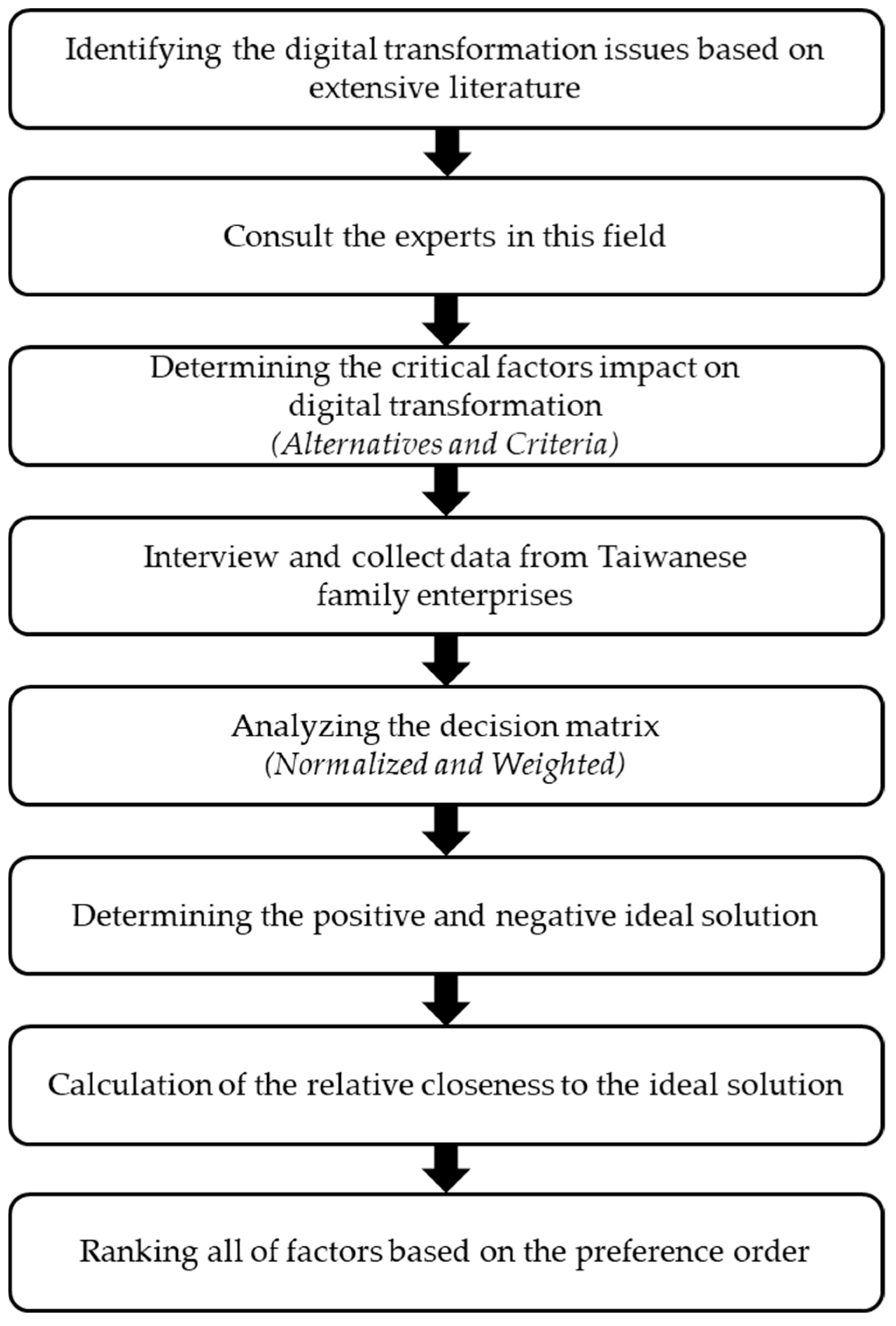
Participants were asked to assess each criterion on a seven-point scale ranging from 1 to 7 (1—Strongly unimportant; 7—Strongly important). Consequently, the steps of the TOPSIS technique process were as follows (see Figure 1).
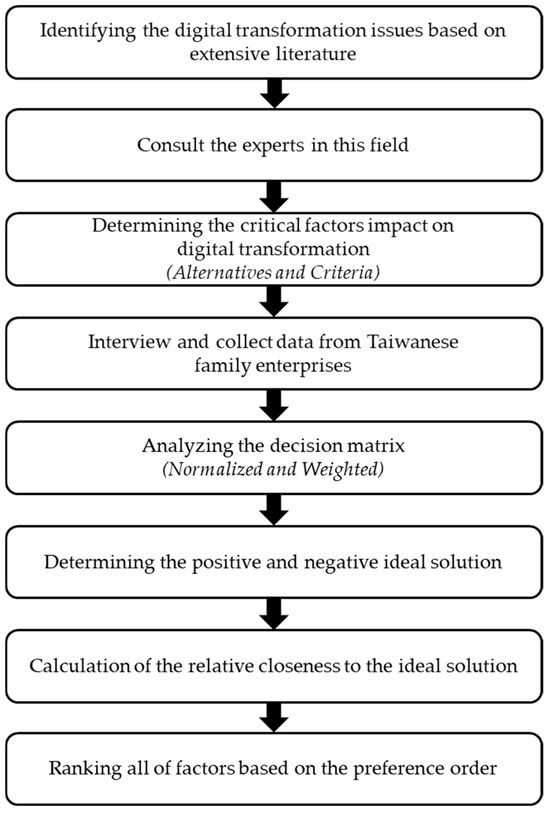
Figure 1.
The research flowchart.
- (S1) After identifying the digital technology transformation issues, the authors consulted the experts in this field to confirm what critical factors will be employed in this case. We had m alternative and n criteria, with ratings of ith decision-makers and jth criteria; a matrix format as can be represented for multi-criteria making decision-making problems as follows.
- (S2) The normalized decision matrix was assessed, resulting in the normalized decision matrix by computing the value .We have i = 1, 2, …, n; and j = 1, 2, …, m.
- (S3) The process can determine the weighted normalized matrix by calculating .We have i = 1, 2, …, n; j = 1, 2, …, m; and , which are weights of various attributes.
- (S4) To determine the ideal solutions, consisting of both positive and negative ideal solutions, the distances between the decisions and these ideal solutions were calculated and presented in Equation (3) and Equation (4), respectively.Positive ideal solution is as follows:Negative ideal solution is as follows:
- (S5) In this part, the Euclidean distance of each alternative from the positive and negative ideal solutions was calculated by Equation (5) and Equation (6), respectively. These solutions are determined by two values, and , as demonstrated as follows.We have i = 1, 2, …, m and j = 1, 2, …, n.
- (S6) The closeness coefficient value () of all critical factors’ impact on digital technology transformation in Taiwanese family firms was identified by Equation (7):
- (S7) The values range from 0 to 1, considering the most significant relying on the factor value closest to 1 cutoff. Importantly, we can also precisely determine the rank of these critical factors impacting digital technology transformation in Taiwanese family firms based on their values values.
4. Results and Discussion
To achieve the research objective of advancing digital technology transformation in Taiwanese family firms, the TOPSIS technique involves seven steps that provide valuable insights for business owners, helping them understand the key variables influencing digital transformation. As recommended by many previous studies, determining the importance of factors based on their rankings will greatly aid in decision-making, improve efficiency, and save costs [12,46].
This study integrates expert opinions on the digital technology transformation process in family businesses to evaluate key criteria. Nine decision-makers are chosen based on the following conditions: (1) Respondents are family business owners or senior managers with extensive technical knowledge, trend awareness, and digital technology comprehension. (2) They are willing to participate in discussions and complete the survey. (3) They are capable of effectively communicating and methodically completing the survey. Thus, selecting experts based on their field of work, competence, and experience enhances the survey’s accuracy and reliability. The authors obtained the data from Taiwanese owners of family firms, and their information can be seen in Table 2.
Following the TOPSIS technique approach, the authors have assigned weightings to all decision-makers based on their years of work experience. These weights not only reflect the significance of each respondent but also ensure more equitable and reasonable outcomes. Optimizing these results enables more reliable decision-making through the integration of diverse, multi-dimensional perspectives [68]. After calculating Equations (2) and (3), the weighted normalized decision matrix is created (see Table 3).
Table 3.
The matrix of normalized weighted values.
Then, two constructs, and , can be found. According to those matrixes, the authors can calculate two values, ideal solutions, as positive () and negative () (shown in Table 4).
Table 4.
Positive and negative ideal solutions.
Next to step five, for each influencing factor, the separation of Euclidean distance from positive and negative ideal solutions has been demonstrated in Table 5 and Table 6, respectively.
Table 5.
The distance from the positive ideal solution.
Table 6.
The distance from the negative ideal solution.
Identifying the relative closeness of each major component of digital technology transformation, the closeness ratio () values have been conducted and determined with Equation (6). Finally, according to the value of all important factors, the authors can address the second research question in the last step. Therefore, Table 7 shows the relative ranks of twelve key parameters for family companies using digital technologies.
Table 7.
The CCi values and ranking of critical factors.
Thus, the final hierarchy of factors impacting digital technology transformation by Taiwanese family firms is as follows: education and training of technical skills (O2) => complexity (T2) => technological improvements (T4) => management support (O4) => technical expertise (T3) => government support (E1) => organizational culture (O1) => customer satisfaction (E2) => financial readiness (O3) => security and privacy (T1) => competitive pressure (E3) => relative advantage (T5).
Additionally, Figure 2 depicts the findings of this study on the comparison of rated important elements in digital technology adoption based on values. This study highlights the primary factors influencing digital technology transformation in family companies and assessing the importance of these factors. Following discussions with specialists, twelve key sub-factors were selected based on three groups: technology, organization, and environment.
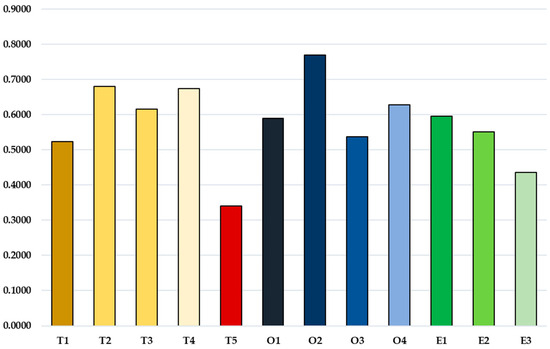
Figure 2.
Ranking of digital technology transformation factors.
The TOPSIS technique was used to conduct a more thorough examination of these elements and determine their priority. The analysis identifies the three most critical factors influencing the digital technology transformation of Taiwanese family businesses as education and training in technology (O2), complexity (T2), and technological improvements (T4). This demonstrates that technical training, technological complexity, and enterprise-driven technological innovation have a significant impact on the digital transformation of Taiwanese family firms. Our findings indicate that technical education and training are the most important factors, supporting the idea that coordinating technical education and training programs is critical. Meanwhile, the three factors ranked at the bottom of the list are security and privacy, competitive pressure, and relative advantages. While enterprises recognize the importance of security and privacy, these concerns are not major issues when conducting digital technology transformation in Taiwanese family enterprises.
Furthermore, Figure 3 indicates how technological, organizational, and environmental factors all contribute to beneficial digital technology transformation in Taiwanese family companies. This study gives important insights for firms that want to pick and successfully implement digital technologies in their operations. Specifically, the application of digital technologies in Taiwanese family enterprises is classified into three clusters with the following ranking list: organization => technology => environment. Some studies have found that this is largely due to their traditionally risk-averse nature and resistance to change. Generational differences within the family can also play a role, with older members often being less familiar with new technologies [21,27]. In contrast, non-family firms, particularly SMEs, are typically more open to rapid innovation, making it easier for them to address these challenges [48].
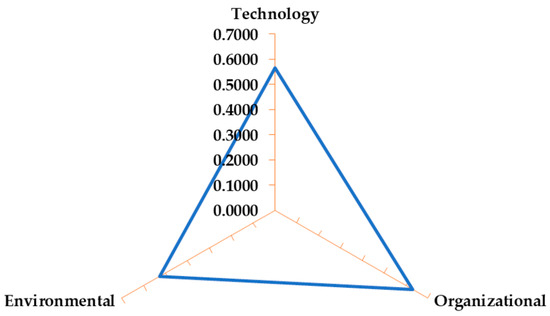
Figure 3.
Categories of digital technology transformation.
In terms of technology group, the factors are organized in the following order: complexity (T2) > technological improvements (T4) > technical expertise (T3) > security and privacy (T1) > relative advantage (T5). Taiwanese family companies are most concerned about technological complexity (T2) issues, which is a major concern for digital transformation decisions, ranking as the second most important. If a technology is complicated, difficult to understand, and tough to use, firms will be hesitant to adopt it. Family businesses tend to have more entrenched processes, making digital transformation appear more challenging compared to their non-family counterparts [12]. Additionally, businesses are keen on technological advancements. To facilitate the adoption of new digital technologies, firms must prioritize innovation and modernization [55]. If the technology is complicated and difficult to use, firms will be less likely to transform to new technology, as seen in the application of digital technology to Bangladesh’s non-family manufacturers [53]. Meanwhile, technological improvements (T4) and technical expertise (T3) are also important factors that family businesses must consider while developing digital technologies [46]. One clear difference highlighted by this study compared to those on non-family businesses is the profit goals. In Taiwanese family firms, technological issues are often assessed with a focus on long-term sustainability rather than immediate financial returns [30,31]. Moreover, our findings related to security and privacy (T1) concerns are in line with research on success factors for digital technology implementation in the supply chain of Biswas et al. (2023) [73]. Surprisingly, the relative advantage (T5) is at the bottom of the ranking, suggesting that the perceived benefits of digital transformation for family companies in Taiwan are not significant. This finding conflicts with earlier studies, which claimed that relative advantage is among the most important factors in the non-family business model, such as Shahadat et al. (2023) and Zhang et al. (2023) [48,59].
Regarding the organizational category, the factors are ranked as follows: education and training of technical skills (O2) > management support (O4) > organizational culture (O1) > financial readiness (O3). Technical education and training are the most essential in this category as well as in the transformation of digital technology to Taiwanese firms. Notably, this finding consistent with research on applying digital technologies to reach sustainability in the construction sector [24]. However, the culture of family businesses often relies on internal human resources, prioritizing internal training over hiring external experts due to considerations of trust and long-term loyalty [30,42]. This contrasts with non-family enterprises, where external expertise is more frequently sought [10]. In this work, Taiwanese family firms concentrated on maintaining family control and preserving the family legacy, which further elevates the importance of education and training. Furthermore, the analysis reveals that management’s willingness to support digital transformation efforts is closely linked to their desire to maintain control, making the process simpler and more convenient to execute [28,63]. This factor plays a crucial role in determining the success of digital transformation in Taiwanese family businesses. Moreover, the results present organizational culture and financial readiness as the next two factors in the organizational group. Having the support of business management and financial readiness is an important step in the adoption of digital technologies [30,46].
The last cluster is environmental factors, arranged in the following order: government support (E1) > customer satisfaction (E2) > competitive pressure (E3). In this study, government encouragement enhances the intention of Taiwanese family companies to adopt digital technologies. The government plays a role in supporting new technology policies for enterprises, although this is inconsistent with research on applying digital technology in emerging economies [24,65]. There is a strong bond across generations between family businesses and their customers, as family firms typically place a high value on maintaining long-term relationships built on the trust and loyalty of customers [74]. Thus, customer satisfaction is a key consideration in digital transformation in Taiwanese family firms. As customers become more sophisticated in their understanding of digital technologies, they expect businesses to follow suit, gaining experience with these technologies. Ranked lowest in terms of environmental impact among the three categories of the TOE framework is competitive pressure. This finding suggests that Taiwanese family businesses are less reactive to short-term market fluctuations. Eastern family firms tend to adopt digital transformation according to their own strategies, driven by internal factors and a focus on long-term sustainability rather than external competitive pressures [1,27,33]. Nonetheless, according to Shahadat et al. (2023) and Clemente-Almendros et al. (2024), non-family SMEs might feel the urgency of competitive pressure more acutely, especially if they operate in fast-moving or saturated markets [48,49].
5. Research Implications
5.1. Theoretical Implications
Taiwanese family businesses possess distinct characteristics in terms of management structure, organizational culture, family member involvement, and a tendency toward long-term sustainability. Chen (2020) reveals that Taiwanese family firms are shown to have significant potential for transformation through the implementation of digital technologies [26]. Hence, this study contributes to theoretical understanding by offering critical insights into how critical factors can drive the digital transformation of Taiwanese family businesses.
Firstly, this study extends the application of the TOE theoretical framework to family businesses, a type of enterprise characterized by unique organizational culture, family involvement, and a focus on long-term sustainability. The role of twelve proposed factors were shown to be different from previous studies, particularly in non-family firms, thereby contributing to the enrichment of digital transformation theory across diverse business contexts [29,46]. Secondly, another valuable theoretical contribution of this study is demonstrating the effectiveness of the TOPSIS analysis technique, which is particularly dominant compared to other techniques [56,68]. Employing the TOPSIS method to rank the twelve critical factors has provided a clear understanding of the priority factors in digital transformation. This approach not only contributes to the theory of digital transformation but also enables researchers to further analyze the differences between family businesses and other types of enterprises. Hence, our findings can provide useful directions to family businesses owners, senior managers, and policymakers in identifying and resolving the most significant factors for digital technology transformation projects from the perspective of Taiwanese family businesses. Thirdly, the unique characteristics of family businesses require greater attention in the digital transformation process. Notably, technical education and training emerged as the most essential factors, particularly for Taiwanese firms undergoing digital transformation. The emphasis Taiwanese family firms place on maintaining family control and preserving their legacy further highlights the importance of education and training for employees. Overall, the use of digital technology will drive company innovation toward a more sustainable and efficient future.
5.2. Practical Implications
This study contributes to the practical transformation of digital technology in Taiwanese family enterprises by offering a clear roadmap of what to prioritize when implementing digital transformation and a thorough understanding through three categories: technology, organization, and environment. By incorporating expert opinions, the study offers accurate advice on the critical and unique criteria for Taiwanese family companies to successfully digitally transform.
Specifically, our findings indicate that organizations should prioritize digital technology education and training for employees as the most critical issue. Taiwanese family businesses should invest heavily in building internal capabilities before adopting new technologies. This helps reduce risk and increase the success of the transition, which will reshape job markets and necessitate mandatory government participation and support. Consequently, governments must develop more support projects in education and training programs aimed at fostering digital literacy and technical skills. This suggestion is particularly valuable for family businesses undergoing digital transformation to meet international standards and improve competitiveness. Beyond education and training, complexity and technological developments are two significant concerns. If the technology is overly complex, it may hinder the voluntary adoption of digitalization and innovation [18,28]. Thus, Taiwanese family firms must explore ideas to reduce complexity and risk mitigation, which will help the digital transformation process go more smoothly and avoid cultural and psychological barriers that are common in organizations with complex structures and long-standing family traditions [13,42,63]. Additionally, experts have emphasized that technological innovation plays a pivotal role in the successful transformation of digital technologies within enterprises. Some studies suggested that digital transformation drives innovation in firms [12,58,75]; therefore, policymakers must implement more policies to encourage technological innovation, supporting family businesses in their efforts to reform their business models. However, they should be careful to focus on technological innovations that align with the family’s long-term goals rather than simply chasing the latest technology [33,57].
6. Conclusions
Aiming to uncover key factors that impact digital technology transformation decisions in Taiwanese family companies, this study employed the TOE framework to evaluate twelve critical factors, discussing them based on technological, organizational, and environmental aspects. The results indicate that organizational factors are the most important group in this study. With five critical factors belonging to the technology category, this group ranked second. Additionally, although less important, factors such as government support, customer satisfaction, and competitive pressure also have implications for the transformation of digital transformation in family businesses. The successful identification of the three group factors and twelve sub-factors addresses the first research question. Furthermore, the ranking of these twelve essential elements offers valuable insights, addressing the second research question. Our findings will assist business owners and senior managers in formulating strategies to enhance technological knowledge and digital adoption in the industry 5.0 era. This study also emphasizes the importance of understanding technological knowledge and attention within firms, providing guidance to decision-makers in Taiwanese family businesses regarding digital technology transformation. More importantly, the findings offer potential recommendations for policymakers to improve the integration of digital technologies across all sectors of society and business. Although this study focuses on family businesses in Taiwan, the results may be applicable to other sectors as well.
Nonetheless, there are significant limitations to the current study, which could be promising areas for future research. Firstly, this study interviewed nine experts with long-term experience in family businesses in Taiwan. Although these experts are very experienced in the market, it is difficult to generalize the findings to all enterprises in Taiwan. Hence, future research could involve a deeper exploration of various factors using a larger sample size. Secondly, to expand on this study, future studies can investigate more internal and external factors to see how their influence varies. Thirdly, our research focuses on family companies; thus, future research can investigate specific industries to identify key characteristics influencing the use of digital technologies. Hence, the authors expect that the findings of this study will spark additional discussions about digital technology transformation in family enterprises, helping to address prevalent concerns in this business model.
Author Contributions
Conceptualization, T.-T.H. and M.-H.D.; methodology, T.-T.H. and M.-H.D.; validation, Y.-F.H. and T.-T.H.; formal analysis, T.-T.H.; investigation, T.-T.H.; resources, T.-T.H.; data curation, T.-T.H.; writing—original draft preparation, M.-H.D. and T.-T.H.; writing—review and editing, T.-T.H. and M.-H.D.; visualization, T.-T.H.; supervision, Y.-F.H.; project administration, Y.-F.H. and M.-H.D. All authors have read and agreed to the published version of the manuscript.
Funding
This study received no external funding.
Institutional Review Board Statement
Not applicable.
Informed Consent Statement
Not applicable.
Data Availability Statement
The original contributions presented in this study are included in the article. Further inquiries can be directed to the corresponding author(s).
Acknowledgments
The authors thank the chief editor and the reviewers for their valuable comments to improve the manuscript.
Conflicts of Interest
The authors declare no conflicts of interest.
References
- Fang, H.C.; Singh, K.; Kim, T.; Marler, L.; Chrisman, J.J. Family Business Research in Asia: Review and Future Directions. Asia Pac. J. Manag. 2022, 39, 1215–1256. [Google Scholar] [CrossRef]
- Begnini, S.; Oro, I.M.; Tonial, G.; Dalbosco, I.B. The Relationship between the Use of Technologies and Digitalization Strategies for Digital Transformation in Family Businesses. J. Fam. Bus. Manag. 2024, 14, 710–726. [Google Scholar] [CrossRef]
- Ramadani, V.; Chang, E.P.C.; Palalić, R.; Memili, E. Nature of Family Business. In Entrepreneurial Family Businesses: A Textbook on Innovation, Governance, and Succession, with Case Studies; Springer: Berlin/Heidelberg, Germany, 2024; pp. 3–34. [Google Scholar]
- Soluk, J.; Kammerlander, N. Digital Transformation in Family-Owned Mittelstand Firms: A Dynamic Capabilities Perspective. Eur. J. Inf. Syst. 2021, 30, 676–711. [Google Scholar] [CrossRef]
- Akpan, I.J.; Udoh, E.A.P.; Adebisi, B. Small Business Awareness and Adoption of State-of-the-Art Technologies in Emerging and Developing Markets, and Lessons from the COVID-19 Pandemic. J. Small Bus. Entrep. 2022, 34, 123–140. [Google Scholar] [CrossRef]
- Ko, A.; Fehér, P.; Kovacs, T.; Mitev, A.; Szabó, Z. Influencing Factors of Digital Transformation: Management or IT Is the Driving Force? Int. J. Innov. Sci. 2022, 14, 1–20. [Google Scholar] [CrossRef]
- Battistoni, E.; Gitto, S.; Murgia, G.; Campisi, D. Adoption Paths of Digital Transformation in Manufacturing SME. Int. J. Prod. Econ. 2023, 255, 108675. [Google Scholar] [CrossRef]
- Lee, C.W.; Chen, H.C.; Peng, C.L.; Chen, S.H. Sustainability of Taiwanese SME Family Businesses in the Succession Decision-Making Agenda. Sustainability 2023, 15, 1237. [Google Scholar] [CrossRef]
- Agarwal, P.; Swami, S.; Malhotra, S.K. Artificial Intelligence Adoption in the Post COVID-19 New-Normal and Role of Smart Technologies in Transforming Business: A Review. J. Sci. Technol. Policy Manag. 2024, 15, 506–529. [Google Scholar] [CrossRef]
- Azman, N.; Albattat, A. Factors Influencing the Adoption of Digital Marketing in the Family Business MSME’s Owned by Women Entrepreneurs During COVID-19. In Tourism, Hospitality and Event Management; Springer Nature: Cham, Switzerland, 2023; Volume 2023, pp. 123–149. ISBN 9783031280535. [Google Scholar]
- Hung, H.C.; Chen, Y.W. Striving to Achieve United Nations Sustainable Development Goals of Taiwanese SMEs by Adopting Industry 4.0. Sustainability 2023, 15, 2111. [Google Scholar] [CrossRef]
- Nieto, M.J.; Santamaria, L.; Bammens, Y. Digitalization as a Facilitator of Open Innovation: Are Family Firms Different? Technovation 2023, 128, 102854. [Google Scholar] [CrossRef]
- Islam, N.; Wang, Q.; Marinakis, Y.; Walsh, S. Family Enterprise and Technological Innovation. J. Bus. Res. 2022, 147, 208–221. [Google Scholar] [CrossRef]
- Alazab, M.; Alhyari, S. Industry 4.0 Innovation: A Systematic Literature Review on the Role of Blockchain Technology in Creating Smart and Sustainable Manufacturing Facilities. Information 2024, 15, 78. [Google Scholar] [CrossRef]
- Ghobakhloo, M.; Fathi, M.; Iranmanesh, M.; Vilkas, M.; Grybauskas, A.; Amran, A. Generative Artificial Intelligence in Manufacturing: Opportunities for Actualizing Industry 5.0 Sustainability Goals. J. Manuf. Technol. Manag. 2024, 35, 94–121. [Google Scholar] [CrossRef]
- Maroufkhani, P.; Iranmanesh, M.; Ghobakhloo, M. Determinants of Big Data Analytics Adoption in Small and Medium-Sized Enterprises (SMEs). Ind. Manag. Data Syst. 2022, 123, 278–301. [Google Scholar] [CrossRef]
- Dąbrowska, J.; Almpanopoulou, A.; Brem, A.; Chesbrough, H.; Cucino, V.; Di Minin, A.; Giones, F.; Hakala, H.; Marullo, C.; Mention, A.L.; et al. Digital Transformation, for Better or Worse: A Critical Multi-Level Research Agenda. RD Manag. 2022, 52, 930–954. [Google Scholar] [CrossRef]
- Cichosz, M.; Wallenburg, C.M.; Knemeyer, A.M. Digital Transformation at Logistics Service Providers: Barriers, Success Factors and Leading Practices. Int. J. Logist. Manag. 2020, 31, 209–238. [Google Scholar] [CrossRef]
- Chen, A.; Li, L.; Shahid, W. Digital Transformation as the Driving Force for Sustainable Business Performance: A Moderated Mediation Model of Market-Driven Business Model Innovation and Digital Leadership Capabilities. Heliyon 2024, 10, e29509. [Google Scholar] [CrossRef]
- Barba-Sánchez, V.; Meseguer-Martínez, A.; Gouveia-Rodrigues, R.; Raposo, M.L. Effects of Digital Transformation on Firm Performance: The Role of IT Capabilities and Digital Orientation. Heliyon 2024, 10, e27725. [Google Scholar] [CrossRef]
- Ren, T.; Liu, X.; Ding, J. Intergenerational Dynamics of Digital Transformation in Family Firms. Technol. Soc. 2023, 74, 102261. [Google Scholar] [CrossRef]
- Rullani, E. The New Economy of Complexity: The Sense and Challenges of the Incoming Digital Transition. Sinergie 2022, 40, 17–33. [Google Scholar] [CrossRef]
- Fedushko, S.; Ustyianovych, T. E-Commerce Customers Behavior Research Using Cohort Analysis: A Case Study of COVID-19. J. Open Innov. Technol. Mark. Complex. 2022, 8, 12. [Google Scholar] [CrossRef]
- Oke, A.E.; Aliu, J.; Onajite, S.; Simeon, M. Success Factors of Digital Technologies (DT) Tools Adoption for Sustainable Construction in a Developing Economy. Constr. Innov. 2024, 24, 950–964. [Google Scholar] [CrossRef]
- Liu, Y.; Chen, Y.J.; Wang, L.C. Family Business, Innovation and Organizational Slack in Taiwan. Asia Pac. J. Manag. 2017, 34, 193–213. [Google Scholar] [CrossRef]
- Chen, C.L. Cross-Disciplinary Innovations by Taiwanese Manufacturing SMEs in the Context of Industry 4.0. J. Manuf. Technol. Manag. 2020, 31, 1145–1168. [Google Scholar] [CrossRef]
- Chiang, H.T.; Lin, Y.C.; Chen, W.W. Does Family Business Affect the Relationship between Corporate Social Responsibility and Brand Value? A Study in Different Industry Taiwan. Asia Pac. Manag. Rev. 2022, 27, 28–39. [Google Scholar] [CrossRef]
- Zhang, X.; Xu, Y.Y.; Ma, L. Information Technology Investment and Digital Transformation: The Roles of Digital Transformation Strategy and Top Management. Bus. Process Manag. J. 2023, 29, 528–549. [Google Scholar] [CrossRef]
- Abdurrahman, A.; Gustomo, A.; Prasetio, E.A. Impact of Dynamic Capabilities on Digital Transformation and Innovation to Improve Banking Performance: A TOE Framework Study. J. Open Innov. Technol. Mark. Complex. 2024, 10, 100215. [Google Scholar] [CrossRef]
- Wu, M.; Ni, Y.; Huang, P. Dividend Payouts and Family-Controlled Firms—The Effect of Culture on Business. Q. Rev. Econ. Financ. 2020, 75, 221–228. [Google Scholar] [CrossRef]
- Amato, S.; Broccardo, L.; Tenucci, A. Family Firms, Management Control and Digitalization Effect. Manag. Decis. 2024, 62, 1645–1667. [Google Scholar] [CrossRef]
- King, D.R.; Meglio, O.; Gomez-Mejia, L.; Bauer, F.; De Massis, A. Family Business Restructuring: A Review and Research Agenda. J. Manag. Stud. 2022, 59, 197–235. [Google Scholar] [CrossRef]
- Godlewski, C.J.; Nhung Le, H. Family Ties and Firm Performance Empirical Evidence from East Asia. Q. Rev. Econ. Financ. 2024, 94, 150–166. [Google Scholar] [CrossRef]
- Rovelli, P.; Ferasso, M.; De Massis, A.; Kraus, S. Thirty Years of Research in Family Business Journals: Status Quo and Future Directions. J. Fam. Bus. Strategy 2022, 13, 100422. [Google Scholar] [CrossRef]
- Lin, C.; Zhao, Y.; Zhai, H. Digital Transformation, Second Generation Involvement and Diversified Development of Chinese Family Enterprises. Technol. Anal. Strateg. Manag. 2024, 1–17. [Google Scholar] [CrossRef]
- Xu, L.; Zheng, Y.; Yin, X. Second-Generation Involvement and the Digitalisation of Family Firms: Evidence from China. Technol. Anal. Strateg. Manag. 2024, 1–16. [Google Scholar] [CrossRef]
- Lasio, V.; Gómez, J.M.; Rosso, J.; Sánchez, A. Entrepreneurial Orientation and Socioemotional Wealth as Enablers of the Impact of Digital Transformation in Family Firms. J. Fam. Bus. Manag. 2024, 14, 1268–1294. [Google Scholar] [CrossRef]
- Wei, S.-Y.; Lin, L.-W. The Relationship between Extent of Internationalization and Firm Performance (Taiwan 1992–2017). Math. Probl. Eng. 2021, 2021, 5528972. [Google Scholar] [CrossRef]
- Chen, Y.A.; Guo, S.L.; Huang, K.F. Antecedents of Internationalization of Taiwanese SMEs: A Resource-Based View. Int. J. Emerg. Mark. 2023, 19, 3581–3600. [Google Scholar] [CrossRef]
- Ting, I.W.K.; Lo, H.C.; Kweh, Q.L. How Do Ownership Concentration and Family Control Affect R&D Investments? New Evidence from Taiwan. Int. Rev. Financ. 2020, 20, 275–291. [Google Scholar] [CrossRef]
- Sachdeva, A.; Kathuria, A.; Karhade, P.; Ray, S. How Do Family Businesses Embark on Digital Transformation? A Call for Future IS Research. In Lecture Notes in Business Information Processing; Springer Nature: Cham, Switzerland, 2024; pp. 99–118. ISBN 9783031600029. [Google Scholar]
- Ahmad, Z.; AlWadi, B.M.; Kumar, H.; Ng, B.K.; Nguyen, D.N. Digital Transformation of Family-Owned Small Businesses: A Nexus of Internet Entrepreneurial Self-Efficacy, Artificial Intelligence Usage and Strategic Agility. Kybernetes 2024. [Google Scholar] [CrossRef]
- Zapata-Cantu, L.; Sanguino, R.; Barroso, A.; Nicola-Gavrilă, L. Family Business Adapting a New Digital-Based Economy: Opportunities and Challenges for Future Research. J. Knowl. Econ. 2023, 14, 408–425. [Google Scholar] [CrossRef]
- Shahi, C.; Sinha, M. Digital Transformation: Challenges Faced by Organizations and Their Potential Solutions. Int. J. Innov. Sci. 2021, 13, 17–33. [Google Scholar] [CrossRef]
- Saihi, A.; Ben-Daya, M.; As’ad, R. Underpinning Success Factors of Maintenance Digital Transformation: A Hybrid Reactive Delphi Approach. Int. J. Prod. Econ. 2023, 255, 108701. [Google Scholar] [CrossRef]
- Zhong, Y.; Chen, Z.; Ye, J.; Zhang, N. Exploring Critical Success Factors for Digital Transformation in Construction Industry–Based on TOE Framework. Eng. Constr. Archit. Manag. 2024. [Google Scholar] [CrossRef]
- Feliciano-Cestero, M.M.; Ameen, N.; Kotabe, M.; Paul, J.; Signoret, M. Is Digital Transformation Threatened? A Systematic Literature Review of the Factors Influencing Firms’ Digital Transformation and Internationalization. J. Bus. Res. 2023, 157, 113546. [Google Scholar] [CrossRef]
- Shahadat, M.M.H.; Nekmahmud, M.; Ebrahimi, P.; Fekete-Farkas, M. Digital Technology Adoption in SMEs: What Technological, Environmental and Organizational Factors Influence SMEs’ ICT Adoption in Emerging Countries? Glob. Bus. Rev. 2023. [Google Scholar] [CrossRef]
- Clemente-Almendros, J.A.; Nicoara-Popescu, D.; Pastor-Sanz, I. Digital Transformation in SMEs: Understanding Its Determinants and Size Heterogeneity. Technol. Soc. 2024, 77, 102483. [Google Scholar] [CrossRef]
- Grant, D.; Yeo, B. A Global Perspective on Tech Investment, Financing, and ICT on Manufacturing and Service Industry Performance. Int. J. Inf. Manag. 2018, 43, 130–145. [Google Scholar] [CrossRef]
- Chatterjee, S.; Rana, N.P.; Dwivedi, Y.K.; Baabdullah, A.M. Understanding AI Adoption in Manufacturing and Production Firms Using an Integrated TAM-TOE Model. Technol. Forecast. Soc. Change 2021, 170, 120880. [Google Scholar] [CrossRef]
- Kitsios, F.; Kapetaneas, N. Digital Transformation in Healthcare 4.0: Critical Factors for Business Intelligence Systems. Information 2022, 13, 247. [Google Scholar] [CrossRef]
- Tasnim, Z.; Shareef, M.A.; Baabdullah, A.M.; Hamid, A.B.A.; Dwivedi, Y.K. An Empirical Study on Factors Impacting the Adoption of Digital Technologies in Supply Chain Management and What Blockchain Technology Could Do for the Manufacturing Sector of Bangladesh. Inf. Syst. Manag. 2023, 40, 371–393. [Google Scholar] [CrossRef]
- Schery, C.A.D.; Caiado, R.G.G.; Aguilar Vargas, S.; Rodriguez Vignon, Y. Paths to BIM-Based Digital Transformation: A Bibliometric and Systematic Review of Critical Factors. Eng. Constr. Archit. Manag. 2024, 1–27. [Google Scholar] [CrossRef]
- Nguyen, T.H.; Le, X.C.; Vu, T.H.L. An Extended Technology-Organization-Environment (TOE) Framework for Online Retailing Utilization in Digital Transformation: Empirical Evidence from Vietnam. J. Open Innov. Technol. Mark. Complex. 2022, 8, 200. [Google Scholar] [CrossRef]
- Feng, X.; Li, E.; Li, J. Critical Factors Identification of Digital Innovation in Manufacturing Enterprises: Three Stage Hybrid DEMATEL–ISM–MICMAC Approach. Soft Comput. 2024, 28, 7341–7361. [Google Scholar] [CrossRef]
- Wang, C.-C.; Chuang, H.-C.; Liu, N.-T.; Shih, H.-S. The Organizational Evolutions and Strategies of Family Businesses in Taiwan. Open J. Bus. Manag. 2014, 2, 329–338. [Google Scholar] [CrossRef]
- Ceipek, R.; Hautz, J.; De Massis, A.; Matzler, K.; Ardito, L. Digital Transformation Through Exploratory and Exploitative Internet of Things Innovations: The Impact of Family Management and Technological Diversification*. J. Prod. Innov. Manag. 2021, 38, 142–165. [Google Scholar] [CrossRef]
- Zhang, G.; Wang, T.; Wang, Y.; Zhang, S.; Lin, W.; Dou, Z.; Du, H. Study on the Influencing Factors of Digital Transformation of Construction Enterprises from the Perspective of Dual Effects—A Hybrid Approach Based on PLS-SEM and FsQCA. Sustainability 2023, 15, 6317. [Google Scholar] [CrossRef]
- Ta, V.A.; Lin, C.Y. Exploring the Determinants of Digital Transformation Adoption for SMEs in an Emerging Economy. Sustainability 2023, 15, 7093. [Google Scholar] [CrossRef]
- He, Q.; Lassala, C.; Currás-Móstoles, R. Can Family CEOs Promote Enterprises’ Digital Transformation? An Analysis Based on Ability-Willingness Paradox. Int. Entrep. Manag. J. 2024, 20, 3181–3205. [Google Scholar] [CrossRef]
- Jaradat, Z.; Al-Hawamleh, A.; Al Shbail, M.O.; Hamdan, A. Does the Adoption of Blockchain Technology Add Intangible Benefits to the Industrial Sector? Evidence from Jordan. J. Financ. Report. Account. 2024, 22, 327–349. [Google Scholar] [CrossRef]
- Bornhausen, A.M.; Wulf, T. Digital Innovation in Family Firms: The Roles of Non-Family Managers and Transgenerational Control Intentions. Small Bus. Econ. 2024, 62, 1429–1448. [Google Scholar] [CrossRef]
- Arumugam, A.; Khazaei, H.; Bhaumik, A.; Kanesan, T. Analysing the Factors Influencing Digital Technology Adoption in Manufacturing Sectors: Leadership Effectiveness as a Mediator. WSEAS Trans. Bus. Econ. 2022, 19, 1764–1787. [Google Scholar] [CrossRef]
- Chaudhuri, S.; Agrawal, A.K.; Chatterjee, S.; Hussain, Z. Examining the Role of Gender on Family Business Entrepreneurial Intention: Influence of Government Support and Technology Usage. J. Fam. Bus. Manag. 2023, 13, 665–686. [Google Scholar] [CrossRef]
- Henao-Ramírez, A.M.; López-Zapata, E. Analysis of the Factors Influencing Adoption of 3D Design Digital Technologies in Colombian Firms. J. Enterp. Inf. Manag. 2022, 35, 429–454. [Google Scholar] [CrossRef]
- Hwang, C.-L.; Yoon, K.; Hwang, C.-L.; Yoon, K. Methods for Multiple Attribute Decision Making. In Multiple Attribute Decision Making: Methods and Applications a State-of-the-Art Survey; Springer: Berlin/Heidelberg, Germany, 1981; pp. 58–191. [Google Scholar]
- Do, M.H.; Huang, Y.F.; Phan, V.D. Van Analyzing the Barriers to Green Supply Chain Management Implementation: A Case Study of the Vietnamese Agriculture Sector. J. Enterp. Inf. Manag. 2024, 37, 125–147. [Google Scholar] [CrossRef]
- Pathak, D.K.; Verma, A.; Kumar, V. Performance Variables of GSCM for Sustainability in Indian Automobile Organizations Using TOPSIS Method. Bus. Strategy Dev. 2020, 3, 590–602. [Google Scholar] [CrossRef]
- Kumar, P.; Singh, R.K.; Kumar, V. Managing Supply Chains for Sustainable Operations in the Era of Industry 4.0 and Circular Economy: Analysis of Barriers. Resour Conserv. Recycl. 2021, 164, 105215. [Google Scholar] [CrossRef]
- Phan, V.-D.-V.; Huang, Y.-F.; Hoang, T.-T.; Do, M.-H. Evaluating Barriers to Supply Chain Resilience in Vietnamese SMEs: The Fuzzy VIKOR Approach. Systems 2023, 11, 121. [Google Scholar] [CrossRef]
- Chakraborty, S. TOPSIS and Modified TOPSIS: A Comparative Analysis. Decis. Anal. J. 2022, 2, 100021. [Google Scholar] [CrossRef]
- Biswas, S.; Sanyal, A.; Božanić, D.; Puška, A.; Marinković, D. Critical Success Factors for 5G Technology Adaptation in Supply Chains. Sustainability 2023, 15, 5539. [Google Scholar] [CrossRef]
- Kumar, D. From Tradition to Technological Advancement: Embracing Blockchain Technology in Family Businesses. J. Fam. Bus. Manag. 2024, 15, 278–296. [Google Scholar] [CrossRef]
- Xie, X.; Zhang, H.; Blanco, C. How Organizational Readiness for Digital Innovation Shapes Digital Business Model Innovation in Family Businesses. Int. J. Entrep. Behav. Res. 2023, 29, 49–79. [Google Scholar] [CrossRef]


Disclaimer/Publisher’s Note: The statements, opinions and data contained in all publications are solely those of the individual author(s) and contributor(s) and not of MDPI and/or the editor(s). MDPI and/or the editor(s) disclaim responsibility for any injury to people or property resulting from any ideas, methods, instructions or products referred to in the content. |
© 2025 by the authors. Licensee MDPI, Basel, Switzerland. This article is an open access article distributed under the terms and conditions of the Creative Commons Attribution (CC BY) license (https://creativecommons.org/licenses/by/4.0/).