



Need Help?
Announcements
31 July 2026
Ursula Röthlisberger Receives the Inaugural Michele Parrinello Award
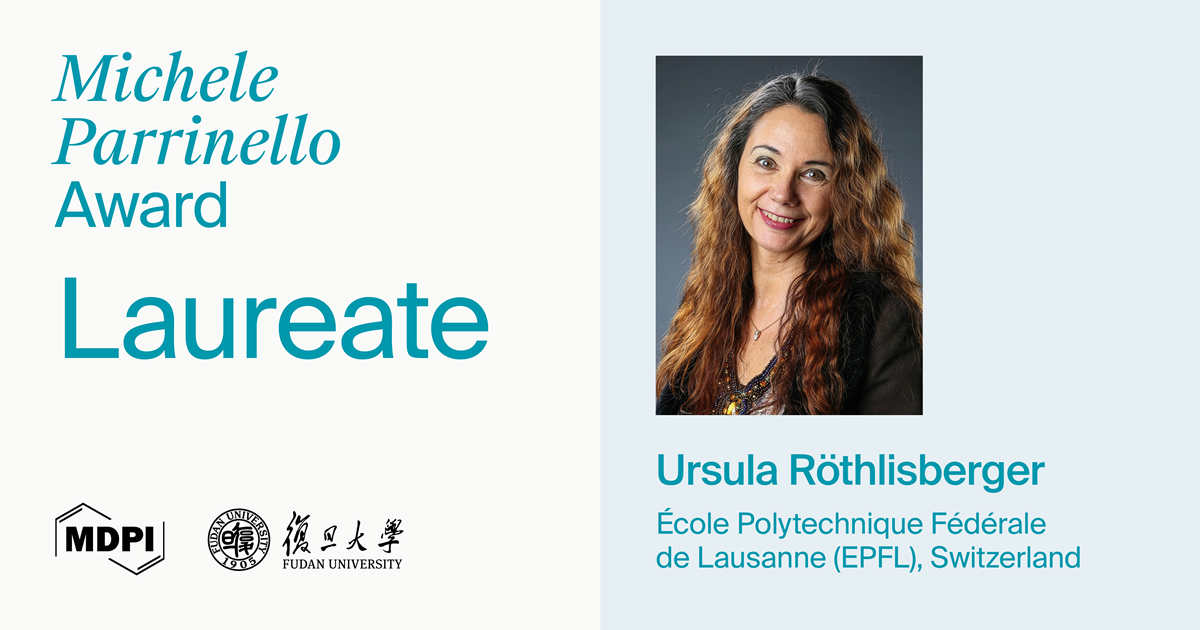
We are pleased to announce that the inaugural Michele Parrinello Award has been conferred upon Prof. Ursula Röthlisberger, in recognition of her outstanding contributions to computational chemistry and molecular simulation, particularly through her pioneering work in ab initio molecular dynamics and QM/MM multiscale simulation methods. This award celebrates researchers whose work embodies the spirit of scientific innovation and rigor that Professor Parrinello has championed throughout his career. We warmly congratulate Prof. Röthlisberger on this well-deserved recognition.
The achievements of Prof. Ursula Röthlisberger highlight the profound impact of computational methods on our understanding of complex chemical, biological, and materials systems. We invite the global scientific community to join us in celebrating her outstanding contributions to computational science.
“Professor Ursula Röthlisberger has been recognized by the 2026 Michele Parrinello Award Committee as an exceptional leader in computational chemistry and molecular simulation. Her innovative research has significantly advanced the predictive modeling of complex chemical and biological systems and has created lasting impact across multiple scientific disciplines. Through her outstanding scientific achievements, dedication to education, and leadership in the international research community, she has played a vital role in shaping the development of modern computational science.”
—Prof. Dr. Xin-Gao Gong, Chair of the Award Committee
2026 Michele Parrinello Award Laureate
|
Ursula Röthlisberger |
Prof. Ursula Röthlisberger is a professor at the Institute of Chemical Sciences and Engineering, EPFL, Switzerland, where she leads the Laboratory of Computational Chemistry and Biochemistry. Her research focuses on developing computational methods for molecular simulation, including ab initio molecular dynamics and quantum mechanical/molecular mechanical (QM/MM) multiscale approaches, to study complex chemical, biological, and materials systems. Her work has contributed to the advancement of computational frameworks for understanding molecular processes at the atomic level. She has also applied computational approaches to investigate next-generation photovoltaic materials, including dye-sensitized and perovskite solar cells, providing insights into material properties, stability, and performance through collaboration with experimental researchers. |

2026 Award Committee
Committee Chair:
- Prof. Dr. Xin-Gao Gong, Fudan University, China.
Committee Members (listed in alphabetical order):
- Prof. Alessandro Laio, Scuola Internazionale Superiore di Studi Avanzati, Italy;
- Prof. Michiel Sprik, University of Cambridge, UK;
- Prof. David J. Srolovitz, the University of Hong Kong, China;
- Prof. Mark E. Tuckerman, New York University, USA;
- Prof. Su-Huai Wei, Eastern Institute of Technology, Ningbo, China.
Note: The 2026 Award Committee comprises six members, including one anonymous member.
2026 Award Ceremony
The inaugural Michele Parrinello Award Ceremony will take place on 7 November 2026, at the Southern University of Science and Technology (SUSTech) in Shenzhen, China, as part of the 2026 MDPI Materials Science Conference. Further information and updates will be available on the official Michele Parrinello Award website.
About the Michele Parrinello Award
The Michele Parrinello Award was established in November 2025 to honor Professor Michele Parrinello’s enduring legacy in advancing computational science. This biennial international award recognizes senior researchers who have made outstanding contributions to computational physical sciences, encompassing physics, chemistry, and materials science. The recipient will receive a monetary prize of 50,000 EUR, a commemorative medal, and a certificate.
For further information about the award and the laureate, please visit the Michele Parrinello Award website.
26 August 2026
Meet Us at the 10th Asia-Pacific Conference on Plasma Physics (AAPPS-DPP2026), 11–16 October 2026, Busan, Republic of Korea

Conference: 10th Asia-Pacific Conference on Plasma Physics (AAPPS-DPP2026)
Date: 11–16 October 2026
Location: BPEX, Busan, Republic of Korea
The AAPPS-DPP was established in 2014 as the first division under AAPPS (the Association of Asia Pacific Physical Societies) and has since then held annual in-person conferences. These conferences have made steady progress in terms of scientific excellence and strength of attendance. In previous conferences, researchers in various fields of plasma physics (plasma application, astronomical plasma, laser plasma, magnetic fusion plasma, etc.) actively exchanged information and presented their research.
AAPPS-DPP has steadily evolved into one of the most significant gatherings for the plasma physics community across the Asia-Pacific region. Each year, the conference brings together researchers at every career stage to exchange scientific insights, explore new directions, and strengthen collaborative networks.
MDPI will be attending the 10th Asia-Pacific Conference on Plasma Physics as an exhibitor. This event will be held from 11 to 16 October, and we invite researchers to visit our booth and discuss their latest research with us.
The following MDPI journals will be represented at the conference:
Our delegates look forward to meeting you in person at MDPI’S booth and answering any questions you may have. For more information regarding the conference, please visit the following website: https://www.aappsdpp.org/DPP2026/index.html.
5 August 2026
MDPI INSIGHTS: The CEO’s Letter #37 – Canada Summit, Sciforum Relaunch, 30 Years of Impactful Research & ISPRS 2026

Welcome to the MDPI Insights: The CEO's Letter.
In these monthly letters, I will showcase two key aspects of our work at MDPI: our commitment to empowering researchers and our determination to facilitating open scientific exchange.
Opening Thoughts

Reflections from the MDPI Canada Summit 2026 in Toronto (9–10 July)
As part of this year’s MDPI Summit events, we were delighted to host Editors-in-Chief (EiCs) and Editorial Board Members (EBMs) in Toronto for the MDPI Canada Summit 2026 this July.
Across the two days, we presented on topics including research integrity, editorial leadership, artificial intelligence, peer review, and the evolving role of the EiC. More importantly, the Summit created space for feedback and conversations with the academic community: these engagements continue play and important role in shaping how MDPI develops its journals and services.
Why Canada?
Canada has become one of the world’s leading Open Access (OA) nations. In 2025, 68% of Canadian research publications were published OA, with more than 73,000 OA articles produced during the year. Over the past five years alone, Canadian researchers have published more than 526,000 scholarly articles, showing both the scale and quality of Canadian research.
MDPI Toronto Office

“Canada has become one of the world’s leading Open Access nations”
Since opening in 2019, our Toronto office has grown to more than 85 colleagues supporting editorial operations, research integrity, marketing, societies, conferences, indexing, author services, and many other functions across North America. It was great to spend time with the team, see first-hand the energy and enthusiasm they bring to their work, and recognize the significant role they play in building relationships with the Canadian research community and delivering events such as this Summit.
MDPI and Canada
Today, Canada is an important part of the MDPI community:
- More than 53,800 articles from Canadian institutions published with MDPI since 1996
- More than 5,800 MDPI publications from Canadian researchers in 2025
- Nearly 1,900 Canadian Editorial Board Members, including 24 Editors-in-Chief; 49 Section Editors-in-Chief
- More than 30 Institutional Open Access Partnerships (IOAP) with universities across Canada

“The academic community is at the center of everything we do”
These numbers reflect the long-term partnerships with researchers, reviewers, editors, and institutions who continue to place their trust in MDPI.
Summit Program
Throughout the Summit, we presented and discussed topics against the following agenda:
- MDPI at 30: Introduction, Reflections and the Road Ahead – Stefan Tochev (CEO)
- Engagement with Academic Community and Society Partnerships – Karen Irwin (Associate Editorial Engagement Manager) and Carla Aloè (Head of Societies and Acquisition)
- Latest Developments in the Editorial Process – Summer Huggard (Operations Manager)
- Research Integrity and Publication Ethics – Renato Merki (Research Integrity Specialist)
- AI and Technology in Publishing – Dr. Barnaby Crook (Regional Engagement Editor)
- Panel Discussion – Bob Vrooman (Head of Business Development / Operations Manager, USA), Summer Huggard, Renato Merki, and myself

These presentations reinforce something we often say at MDPI: The academic community is at the center of everything we do. Each session concluded with a Q&A, allowing for discussions throughout the Summit to engage directly with our EiCs and EBMs.
Further Reading
I also had the opportunity to be interviewed by University Affairs about the evolving landscape of scholarly publishing, Open Access, and the importance of engaging with the research community. If you’re interested, you can read the interview in:
- English: University Affairs – MDPI Toronto Summit 2026: Bringing Together Leaders to Shape the Future of Scholarly Publishing
- Français: Affaires universitaires – Sommet MDPI de Toronto 2026
Thank You
As OA continues to grow around the world, events such as the MDPI Canada Summit remind us of the importance of meeting with our academic community in person. Listening to feedback, exchanging ideas, and building relationships are essential to ensuring that MDPI continues to evolve alongside the researchers, editors, reviewers, and institutions we serve.

Impactful Research

Five Journals, Five Different Stories of Success
Each year, the release of the Journal Citation Reports (JCR) provides an opportunity to look at the progress of our journal portfolio and, more importantly, the achievements of the research communities behind it.
A recent MDPI Blog article from Tommy Lax (Content Specialist, MDPI) highlights five journals whose 2025 Journal Impact Factor results show that success can take many forms – from achieving a first Impact Factor, to steady long-term growth, to leadership within highly competitive disciplines.
The featured journals include:
- Machine Learning & Knowledge Extraction (MAKE) – Among the 330 MDPI journals which received an Impact Factor in 2025, MAKE (ISSN 2504-4990) holds the accolade of having the highest rating of 8.4. The journal, which provides an advanced forum for the study of machine learning and its applications, is placed in Q1 for three subject categories: Computer science, artificial intelligence; Computer science, interdisciplinary applications; and Engineering, electrical & electronic.
- Antioxidants – Continuing its strong position across multiple scientific disciplines, Antioxidants (ISSN 2076-3921) was awarded an exceptional Impact Factor of 8.2. In addition, the journal was placed in Q1 in three subject categories: Biochemistry & molecular biology; Chemistry, medicinal; and Food science & technology.
- Biomass – This year, Biomass (ISSN 2673-8783) was recognized in the JCR for the first time, with a strong debut Impact Factor of 6.7. What makes this achievement even more impressive is the journal’s placement in Q1 of the category Engineering, chemical.
- Analytica – Remaining with the theme of growth, Analytica (ISSN 2673-4532), which provides an advanced forum for all aspects of fundamental and applied analytical chemistry, recorded one of the largest year-on-year increases in Journal Impact Factor, with a 7.4 – an astounding 3.8-point increase from its 2024 rating of 3.6.
- Batteries – Indexed in SCIE, Batteries (ISSN 2313-0105) received an updated Impact Factor of 6.3 this year, representing an increase of 1.5 versus last year, demonstrating consistent growth and increasing visibility over several years.
While citation metrics provide one perspective on journal performance, they tell only part of the story. Every milestone reflects the dedication of Editors-in-Chief, Editorial Board Members, reviewers, authors, and colleagues across MDPI who work together to uphold rigorous editorial standards and support high-quality research.
As a signatory of the Declaration on Research Assessment (DORA), MDPI supports a balanced approach to research evaluation. Journal-level metrics should be viewed alongside article-level indicators and the broader scientific and societal impact of published research.
Thank you to everyone whose commitment continues to strengthen our journals and advance Open Access across the global research community.
Inside MDPI

Building Better Tools for the Research Community: The Relaunch of Sciforum
Innovation at MDPI extends beyond journals. Over the past decade, we have continued to invest in products that support researchers, conference organizers, editors, reviewers, and institutions throughout the research lifecycle. As part of this ongoing investment, our Product and Engineering teams have been modernizing several of MDPI’s digital platforms. One important milestone in that journey is the relaunch of Sciforum, our conference management platform.
Read More: Sciforum Relaunch: Empowering Science through Seamless Event Management
Rather than simply updating an existing system, our product and engineering teams have rebuilt Sciforum, using a modern architecture designed to improve the user experience, support future growth, and continue to strengthen our position in the conference management market.
“Scalable technology is essential to delivering a high-quality experience”
Why We Rebuilt Sciforum
Technology must continue evolving alongside the needs of our users. The previous platform had served MDPI well for many years but had become difficult to extend and maintain. The new platform introduces a modular architecture that enables faster development, more flexibility, and a scalable foundation for future work.
Major improvements include:
- Simplified submission workflows
- Role-based dashboards
- A modern website builder
- Flexible pricing options
- Permanent data hosting
- A scalable architecture for future development

Supporting Our Conference Community
Sciforum is more than a software platform: it supports researchers, conference organizers, reviewers, speakers, and attendees by helping them organize, participate in, and share scientific meetings more efficiently. As MDPI continues to expand its conference activities worldwide, investing in modern, scalable technology is essential to delivering a high-quality experience for both our external partners and our internal teams.
Looking Ahead
The relaunch represents the beginning Sciforum’s next chapter. Planned improvements include: the Program Builder, Communication Hub, expanded payment options, Zoom integration, and a mobile application. These will continue to enhance the platform over the coming months.
Coming Together for Science

Highlights from ISPRS Congress 2026 – Toronto, Canada
In early July, I had the pleasure of attending the XXV ISPRS Congress in Toronto, one of the world’s leading gatherings for the geospatial and remote sensing research community. It was a great opportunity to meet researchers, editors, society leaders, and collaborators, while gaining insights into some of the latest developments in geospatial science and technology.
Over several days, I had the privilege of presenting the Jack Dangermond Award; speaking about MDPI’s approach to AI in publishing and our 30-year journey in Open Access publishing; participating in Editorial Board meetings; and engaging with members of the ISPRS community.
Below is a summary of these activities:
Celebrating excellence in research
One of the highlights of the week was presenting the Jack Dangermond Award for the best paper published in the ISPRS International Journal of Geo-Information (IJGI). Sponsored by MDPI and ESRI, the award recognizes an outstanding paper published over a four-year period and includes an ISPRS certificate together with a USD 10,000 prize.

Awards such as these remind us that journals are much more than publication platforms: they celebrate research that advances knowledge, inspires future work, and delivers meaningful impact for both science and society.
Presentations at ISPRS
I also had the pleasure to give two presentations during the congress:

1. The AI Revolution in Publishing: Challenges, Innovations, and MDPI’s Vision
The development of AI continues to transform scholarly publishing. During this session, I shared how MDPI is integrating AI responsibly, not to replace editorial judgement or peer review, but to support our staff by improving efficiency while maintaining scientific quality and research integrity.
2. MDPI: 30 Years of Open Access Publishing
I also had the opportunity to share MDP’s 30-year journey from a small publishing initiative to becoming a global Open Access publisher serving millions of researchers worldwide. As part of this session, my colleague Carla Aloè (Head of Societies and Acquisitions) introduced the ISPRS International Journal of Geo-Information (IJGI), sharing its development and contribution to the geospatial research community.

Meeting with Our Editorial Boards
Another rewarding aspect of the congress was meeting with the Editorial Boards of two of our journals:
- Remote Sensing
- ISPRS International Journal of Geo-Information
These discussions went beyond journal metrics. We heard ideas about editorial quality and emerging research areas, and we discussed reviewer engagement, diversity within editorial boards, and how journals can continue serving their communities for the future. These conversations are a great way to connect directly to the scientists who help shape our journals.


“One of our core missions has always been to make high-quality research openly accessible”
Partnerships matter
Scientific publishing is built on collaboration. Throughout the congress, our team welcomed researchers to the MDPI booth, met with authors and editors, and discussed opportunities for collaboration across our journals and society partnerships.
Special thanks to our MDPI colleagues who were present throughout the ISPRS congress supporting our Editorial Board meetings and the MDPI booth: Andy Tran, Carla Aloè, Carlo Cunanan, Diana Ribeiro Tosato, and Elena Duan.

Thank you to ISPRS for organizing this congress, to the researchers who shared their work, to our Editorial Board members, and to MDPI colleagues whose dedication continues to shape the journals and communities we support.
Closing Thoughts

Insights Into 30 Years of Impactful MDPI Research
As we celebrate 30 years of MDPI, it’s worth reflecting on the impact that the research we publish has on society. One of our core missions has always been to make high-quality research openly accessible so that it can inform new discoveries, public policy, education and innovation around the world.
A recent article on the MDPI Blog highlights several examples of MDPI publications that have gone beyond academic citations to help inform governments, international organizations and public policy discussions.
Research Creating Real-World Impact
The MDPI blog article features research that has contributed to topics including:
- protecting the Amazon rainforest through satellite mapping
- understanding climate change and urban heat inequality
- encouraging more young women to pursue STEM careers
- tackling obesity through healthier food environments
- shaping sustainable urban planning through the “15-minute city” concept
These examples remind us that publishing research is not only about producing articles: it is about helping knowledge reach the people who can use it to improve lives and address global challenges.
Thirty Years of Open Access
MDPI’s 30th Anniversary is also an opportunity to recognize the collective contribution of everyone across MDPI. Every manuscript processed, every review coordinated, every system developed, every conference organized, every partnership established and every article published contributes to a much larger purpose: helping scientific knowledge move further and faster.
You can explore the full article here: 30 Years of Impactful MDPI Research
You can also visit our 30th Anniversary page to learn more about MDPI’s journey over the past three decades.
Chief Executive Officer
MDPI AG
31 July 2026
Announcing the Award Committee for the Inaugural Michele Parrinello Award

MDPI is pleased to announce the Award Committee for the inaugural Michele Parrinello Award, presented alongside the announcement of the 2026 laureate.
Established in 2025 in honor of Prof. Michele Parrinello’s pioneering contributions to atomistic simulation and computational science, the Michele Parrinello Award is presented biennially to recognize distinguished senior scientists who have made significant contributions to computational physical sciences, encompassing physics, chemistry, and materials science, with particular emphasis on fundamental research.
To ensure the highest standards of evaluation, the Award Committee brings together internationally recognized experts whose expertise spans computational physical sciences, including physics, chemistry, and materials science. Chaired by a distinguished scientist in the field, the committee provides independent perspectives to evaluate nominations based on rigor, integrity, and academic excellence.
Committee Chair:
|
|
Prof. Dr. Xin-Gao Gong |

Committee Members:
|
|
Prof. Alessandro Laio |
|
|
Prof. Michiel Sprik |
|
|
Prof. David J. Srolovitz |
|
|
Prof. Mark E. Tuckerman |
|
|
Prof. Su-Huai Wei |


Note: The 2026 Award Committee comprises six members, including one anonymous member.
We sincerely thank the committee members for their valuable contributions and dedication to the Michele Parrinello Award. Their expertise and commitment are essential to maintaining the academic excellence and integrity of this international award.
For more information about the Michele Parrinello Award, please visit the official award website: https://mparrinelloaward.org/.
30 July 2026
Meet Us at the 2026 Conference on Complex Systems (CCS 2026), 9–16 October 2026, Binghamton, USA

Conference: The 2026 Conference on Complex Systems (CCS 2026)
Date: 9–16 October 2026
Location: Binghamton, USA
MDPI will be attending the 2026 Conference on Complex Systems (CCS 2026) as an exhibitor, from 12 to 16 October 2026, welcoming researchers from diverse backgrounds to visit and share their latest ideas.
CCS 2026, the flagship international conference of the Complex Systems Society, will take place in Binghamton, New York, USA.
Relevant topics of CCS 2026 include (but are not limited to):
- Theoretical foundations of complex systems;
- Nonlinear dynamics and chaos;
- Systems theory, information theory, and systems science;
- Game theory, decision theory, and socio-economic applications;
- Self-organization, pattern formation, and collective behavior;
- Structure and dynamics of complex networks;
- Sustainability and adaptability of complex systems;
- Bio-inspired systems, machine learning, and evolutionary computation;
- Data-driven approaches to complex systems;
- Applications to the humanities, art, and literature;
- Historical and philosophical aspects of complex systems;
- Complex systems and education.
CCS 2026 will be held primarily in person on Binghamton University’s main campus, with an option to join online via Zoom.
The following MDPI journals will be represented:
- Entropy;
- Systems;
- Big Data and Cognitive Computing;
- Dynamics;
- Information;
- Physics;
- Complexities;
- Mathematics.
If you are planning to attend this conference, please do not hesitate to reach out to us online. Our conference representatives look forward to meeting you in person and answering any questions you may have. For more information, please visit https://ccs26.cssociety.org/.
22 July 2026
Meet Us at the 3rd International Conference on Mathematical Modelling in Mechanics and Engineering, 10–12 September 2026, Belgrade, Serbia

MDPI will be participating in the upcoming 3rd International Conference on Mathematical Modelling in Mechanics and Engineering. The conference will bring together leading academic scientists and researchers to share their experience and research results on various aspects of mathematical modelling in mechanics and engineering.
This conference offers an interdisciplinary platform for presenting and discussing the most recent innovations, theories, and algorithms, as well as practical challenges and solutions in the fields of classical mechanics, solid and fluid mechanics, computational mechanics, biomechanics, applied mathematics and physics, structural mechanics and engineering.
Topics:
- General Mechanics;
- Solid and Fluid Mechanics;
- Computational Mechanics;
- Nonlinear Mechanics;
- Biomechanics;
- Mechanics of Machines and Mechanisms;
- Control and Robotics;
- Mechanical and Aerospace Engineering;
- Civil Engineering;
- Materials Engineering;
- Wave Propagation in Mechanical Systems and Metamaterials;
- Applied Mathematics and Physics;
- Artificial Intelligence in Engineering;
- Interdisciplinary and Multidisciplinary Engineering Problems.
The following MDPI journals will be represented at the conference:
- Mathematics;
- Axioms;
- Applied Mechanics;
- Dynamics;
- Fluids;
- Foundations;
- Fractal and Fractional;
- AppliedMath;
- Computation.
If you are planning to attend the above conference, we warmly invite you to visit our booth and engage with our representatives. We look forward to meeting you in person and assisting with any questions or queries that you may have. For more details about the conference, please visit the official website.
21 July 2026
Recruiting Editorial Board Members for Dynamics

Dynamics (ISSN 2673-8716) is an international, peer-reviewed, open access journal that covers the broad field of all dynamic phenomena associated with physics. Dynamics is presently indexed in prominent databases such as ESCI (Web of Science), Scopus, EBSCO, and DOAJ. The journal currently holds a CiteScore of 1.8, which corresponds to a Q2 ranking in the “Mathematics” category, and an Impact Factor of 1.1, ranking Q3 in the JCR. We are currently seeking experts to join our Editorial Board and help guide the journal’s development.
Editorial Board Members will hold the position for two years with the possibility of renewal for a second term.
Application eligibility:
- Researchers who have completed their doctorate/PhD degree;
- Researchers who have a strong and impactful portfolio of publications in the field of dynamic phenomena associated with physics;
- Researchers who are currently (at the time of application) a senior lecturer, associate professor, or professor in academia;
- Researchers who are active and engaged in their community (e.g., experienced at presenting at academic conferences or involved in professional organizations).
Benefits of being Editorial Board Members include the following:
- A certificate recognizing you as an Editorial Board Member;
- Travel grants are offered to Editorial Board Members who make significant contributions to the journal;
- The opportunity to publish one paper per year free of charge in our journal and potential discounts for authors who are invited by you to submit papers;
- Organizing or promoting your own conferences using our SciForum platform;
- An expanded research network providing new insights, collaborations, and opportunities for future research projects.
Responsibilities of Editorial Board Members include the following:
- Pre-screening and making decisions on new submissions related to their research interests;
- Setting up at least one Special Issue during their term or supervising Special Issues on a topic pertaining to their research field;
- Helping to garner suitable expert authors and inviting young scholars to join as Guest Editors or reviewers;
- Providing input or feedback regarding the journal’s policies;
- Helping to promote the journal among their peers or at conferences;
- Attending Board meetings to suggest strategies for the journal’s development;
- Reviewing at least four manuscripts per year;
- Overseeing Guest Editor appointments and Special Issue proposals, checking content for relevance and ensuring the suitability of the material prior to the launch of Special Issues.
To apply for this position, recommend potential candidates, or request further information, please contact the Dynamics Editorial Office via dynamics@mdpi.com with the following two files attached:
- A full academic CV;
- A short cover letter that details your interest and enthusiasm for this position.
We look forward to welcoming new members to help shape the future of Dynamics.
13 July 2026
Meet Us at the 2nd International Symposium on AI and Fluid Mechanics, 31 August–3 September 2026, Chania, Greece

Conference: 2nd International Symposium on AI and Fluid Mechanics
Date: 31 August–3 September 2026
Location: Chania, Greece
MDPI will be attending the 2nd International Symposium on AI and Fluid Mechanics (AIFLUIDs) as an exhibitor. The conference will be held from 31 August to 3 September 2026. We welcome researchers from different backgrounds to visit and share their latest ideas with us.
Fluid mechanics has been explored by experimental, theoretical, and traditional computational methods. Recently, there has been a resurgence of data-driven and machine learning methods to provide an improved understanding and control of fluid flows. At the same time, novel approaches of solving fluid flow conservation equations based on AI techniques are under development. The inclusion of more than 300 participants from all over the world that had participated in the inaugural event is a testament to the rapidly growing interest in AI-driven approaches in fluid dynamics. Participants come from a range of backgrounds, including universities, research centres, and industry and corporations, reflecting the truly interdisciplinary nature of this field.
This symposium offers a timely and unique opportunity to exchange ideas, showcase new research, and foster collaboration. AIFLUIDs aspires to become the premier global forum dedicated to artificial intelligence and data-driven methods in the field of fluid mechanics. We believe that AIFLUIDs will play a key role in advancing benchmark datasets, validating machine learning models, and shaping the future of computational methods in fluid mechanics.
The following open access journals will be represented:
If you are planning to attend this conference, please do not hesitate to start an online conversation with us. Our delegates look forward to meeting you in person and answering any questions that you may have. For more information about the conference, please visit the following website: https://www.aifluids.net/.
10 July 2026
MDPI’s Journal Cluster of Engineering Physics

Cluster Introduction:
Engineering physics is a broad and interdisciplinary field that connects fundamental physical principles with real-world engineering systems and applications. It focuses on understanding, modeling, and controlling physical processes across multiple scales, bridging core areas of physics with advanced engineering design and technology development. Research in Engineering Physics spans a wide range of topics, including applied physics, plasma physics, thermodynamics and thermal science, fluid mechanics, quantum systems and quantum technologies, nonlinear dynamics, magnetism and the study of magnetic materials. By integrating theoretical physics, computational modeling, and experimental techniques, this field supports innovation in energy systems, advanced materials, photonics, aerospace, micro- and nano-scale devices, and emerging quantum and plasma-based technologies.
MDPI’s cluster of journals in engineering physics is dedicated to advancing research across these interconnected and rapidly developing areas. Each journal in the cluster provides a peer-reviewed platform for original research articles, theoretical developments, advanced simulations, and innovative experimental studies. Emphasis is placed on interdisciplinary approaches that combine physics-based modeling with engineering applications, including applied physics, plasma science, thermofluid systems, quantum and computational physics, nonlinear dynamics, and magnetism. By promoting open access publishing and encouraging cross-disciplinary collaboration, the cluster aims to accelerate the dissemination of high-impact research and foster innovation ranging from fundamental physical understanding to practical engineering solutions across diverse science and technology domains.
The six participating journals are as follows:
- AppliedPhys (ISSN 3042-6553) focuses on the application of physical science and technology. AppliedPhys is led by Editors-in-Chief Prof. Dr. Mauro Tonelli (Department of Physics, University of Pisa, Lungarno Antonio Pacinotti, 43, 56126 Pisa, PI, Italy) and Prof. Dr. Yi Zhang (National Laboratory of Solid State Microstructure, School of Physics, Nanjing University, Nanjing 210093, China);
- Dynamics (ISSN 2673-8716) focuses on the broad field of all dynamic phenomena associated with physics. Dynamics is led by Editor-in-Chief Prof. Dr. Christos Volos (Laboratory of Nonlinear Systems, Circuits & Coplexity (LaNSCom), Department of Physics, Aristotle University of Thessaloniki, GR-54124 Thessaloniki, Greece);
- Fluids (ISSN 2311-5521) focuses on all aspects of fluid and its applications, including mathematical modeling, numerical simulation, and experiments. Fluids is led by Editor-in-Chief Prof. Dr. D. Andrew S. Rees (Department of Mechanical Engineering, University of Bath, Bath BA2 7AY, UK);
- Magnetism (ISSN 2673-8724) focuses on magnetism and its related fields. Magnetism is led by Editor-in-Chief Dr. Gerardo F. Goya (Instituto de Nanociencia de Aragon (INA), University of Zaragoza, 50018 Zaragoza, Spain);
- Plasma (ISSN 2571-6182) focuses on all aspects of plasma science, such as plasma physics, plasma chemistry and space plasma. Plasma is led by Editor-in-Chief Prof. Dr. Andrey Starikovskiy (NEQLab, Lewes, DE 19958, USA);
- Quantum Reports (ISSN 2624-960X) focuses on quantum science. Quantum Reports is led by Editor-in-Chief Prof. Dr. Lajos Diósi (1. Wigner Research Center for Physics, H-1121 Budapest, Hungary; 2. Institute of Physics and Astronomy, Eötvös Loránd University, H-1117 Budapest, Hungary).
|
Journal |
Launch Year |
Impact Factor (2025) |
CiteScore (2025) |
First Decision (Median Days) |
Acceptance to Publication (Median Days) |
APC (CHF) |
 |
2025 |
- |
- |
18 |
7 |
1000 |
 |
2021 |
1.1 |
1.8 |
15.3 |
4.1 |
1200 |
 |
2016 |
2.1 |
4.1 |
17 |
2.9
|
1800 |
 |
2021 |
1.2 |
2.3 |
24.3 |
5.7 |
1200 |
 |
2018 |
3.1 |
3.9 |
17.5 |
3.7 |
1400 |
 |
2019 |
1.8 |
2.7 |
20.3 |
3.5 |
1400 |
MDPI’s Mission and Values:
As a pioneer of academic open access publishing, MDPI has been serving the scientific community since 1996. Our mission is to foster scientific exchange in all forms and across all disciplines. MDPI’s guidelines for disseminating open science are based on the following values and guiding principles:
- Open access—All of our content is published in open access and distributed under a Creative Commons License, providing free access to science and the latest research, allowing articles to be freely shared and their content reused with proper attribution;
- Timeliness and efficiency—Publishing the latest research through thorough editorial work, ensuring that authors receive a first decision in under 32 days and that papers are published within 7–10 days upon acceptance;
- Simplicity—Offering user-friendly tools and services in one place to enhance the efficiency of our editorial process;
- High-Quality Service—Supporting scholars and their work by providing a range of options, such as journal publication at mdpi.com, early publication at preprints.org, and conferences on sciforum.net, all aimed at maximizing the positive impact of research;
- Flexibility—Adapting and developing new tools and services to meet the changing needs of the research community, driven by feedback from authors, editors, and readers;
- Rooted in Sustainability—Ensuring the long-term preservation of published papers and supporting the future of science through partnerships, sponsorships, and awards.
By adhering to these values and principles, MDPI remains committed to advancing scientific knowledge and promoting open science practices.
Selected Topic and Special Issues:
“Recent Advances in Dynamic Phenomena—3rd Edition”
Guest Editor: Dr. Christos Volos
Deadline for manuscript submissions: 30 October 2026
“10th Anniversary of Fluids—Recent Advances in Fluid Mechanics”
Guest Editor: Prof. Dr. D. Andrew S. Rees
Deadline for manuscript submissions: 31 December 2026
“Beyond Conventional Magnetism: Modeling, Simulation, and Experiment”
Guest Editors: Dr. Roberto Zivieri and Dr. Israa Medlej
Deadline for manuscript submissions: 31 December 2026
“Processes in Atmospheric-Pressure Plasmas—2nd Edition”
Guest Editor: Dr. Dariusz Z. Korzec
Deadline for manuscript submissions: 10 September 2026
“Quantum Computing: Latest Advances and Prospects”
Topic Editors: Prof. Dr. Mingxing Luo, Prof. Dr. Ming Li and Dr. Xue Yang
Deadline for manuscript submissions: 31 March 2027
Selected Articles:
“Bridging the Gap Between Extreme Environments and Precision Measurements: Recent Progress in Megagauss Physics”
by Shojiro Takeyama
AppliedPhys 2026, 2(2), 6; https://doi.org/10.3390/appliedphys2020006
“Generalized Miller Formulae for Quantum Anharmonic Oscillators”
by Maximilian T. Meyer and Arno Schindlmayr
Dynamics 2025, 5(3), 34; https://doi.org/10.3390/dynamics5030034
“The Impact of Polydimethylsiloxane (PDMS) in Engineering: Recent Advances and Applications”
by Rui A. Lima
Fluids 2025, 10(2), 41; https://doi.org/10.3390/fluids10020041
“Altermagnetism and Altermagnets: A Brief Review”
by Rupam Tamang, Shivraj Gurung, Dibya Prakash Rai, Samy Brahimi and Samir Lounis
Magnetism 2025, 5(3), 17; https://doi.org/10.3390/magnetism5030017
“Hybrid Dielectric Barrier Discharge Reactor: Production of Reactive Oxygen–Nitrogen Species in Humid Air”
by Dariusz Korzec, Florian Freund, Christian Bäuml, Patrik Penzkofer, Oliver Beier, Andreas Pfuch, Klaus Vogelsang, Frank Froehlich and Stefan Nettesheim
Plasma 2025, 8(3), 27; https://doi.org/10.3390/plasma8030027
“Improving the Solving of Optimization Problems: A Comprehensive Review of Quantum Approaches”
by Deborah Volpe, Giacomo Orlandi and Giovanna Turvani
Quantum Rep. 2025, 7(1), 3; https://doi.org/10.3390/quantum7010003
8 July 2026
MDPI’s Newly Launched Journals in June 2026
Our portfolio of journals available for publishing up-to-date research in immediate open access format has been further expanded. In June 2026, eleven new journals released their inaugural issues and two transferred journals released their first issue as part of MDPI, covering the subjects of environmental & earth sciences, chemistry & materials science, public health & healthcare, engineering, medicine & pharmacology, and biology & life sciences.
We extend our gratitude to the Editors-in-Chief, Associate Editors, and Editorial Board Members who will shape the future course of these new journals. Each journal is dedicated to upholding strong editorial standards through a thorough peer review process, enabling impactful open access scholarship.
Please feel free to browse and discover more about the new journals below.
|
New Journals |
Founding Editor(s)-in-Chief |
Journal Topics (Selected) |
|
|
Prof. Dr. Xiaochuan Pan, Peking University, China |
public health research, practice, policy, and education; eco-health equity | |
|
|
Prof. Dr. Xin-Gao Gong Fudan University, China; Prof. Dr. Zhimei Sun Beihang University, China |
AI-enhanced theory & simulation; generative design & discovery; autonomous experimentation; AI for characterization; large language models and agents | |
|
|
Prof. Dr. Yong Liu, Wuhan University, China |
hydropower technology; renewable energy; water resources; optimization; rock and soil mechanics; power system stability | |
|
|
Prof. Dr. Giovanni Rezza, University Vita-Salute San Raffaele, Italy |
pandemic preparedness; public health; global outbreak dynamics and epidemiology; outbreak prediction and risk forecasting; one health approach; zoonotic and pre-pandemic vaccines | |
|
|
Prof. Dr. Brian Horton, University of Texas at Austin, USA |
stratigraphy; sedimentology; earth surface processes; basin evolution and tectonics; climate and paleoclimate | |
|
|
Prof. Dr. Yike Guo, Hong Kong University of Science and Technology, China |
artificial intelligence (AI); application of AI to engineering; Explainable AI (XAI); AI-driven design and optimization; AI for manufacturing and automation | view journal scope | submit an article |
|
|
Prof. Dr. Hei Wong, City University of Hong Kong, China |
novel semiconductor materials; advanced heterogeneous integration technologies; advanced characterization and testing techniques; heterogeneously integrated systems and applications; modeling and design automation| |
|
|
Prof. Dr. Michail Panagiotidis, Mississippi State University, USA |
plant-based medicines; natural products-based drug discovery; plant-based bioactive compounds; pharmacognosy; phytochemicals; pharmacokinetics | |
|
|
Prof. Dr. Khalid Meksem, Southern Illinois University, USA |
genome biotechnology; applied genomics; genetic engineering; agricultural biotechnology; medical biotechnology; data science and AI| |
|
|
Dr. Chenxi Wu, Chinese Academy of Sciences, China |
environmental cleanup; ecological restoration; environmental management and governance; environmental modeling and monitoring | |
|
|
Prof. Dr. Janusz Kozinski, Lakehead University, Canada |
renewable energy; sustainable agriculture; green innovation; climate change; artificial intelligence and environmental sustainability | |


|
Transferred Journals |
Editor(s)-in-Chief |
Journal Topics (Selected) |
|
|
Prof. Dr. Thomas Frese, Martin-Universität Halle-Wittenberg, Germany |
health services in primary care; integrated care models; quality and safety of care; coordination across primary and secondary care services; patient management; primary care clinical practice and interventions; clinical interventions delivered in primary care settings; |
|
|
Prof. Dr. Paul Gerson Unschuld, Geneva University Hospitals (HUG), Switzerland |
neurology, psychiatry, psychotherapy, and the neurosciences | |


We would like to thank everyone who has supported the development of open access publishing. If you would like to create a new journal, you are welcome to send an application here or contact the New Journal Committee (newjournal-committee@mdpi.com).
