

Ionizing and Non-ionizing Radiation: Advances in Healthcare, Environmental Safety and Occupational Radiation Protection
Topic Information
Dear Colleagues,
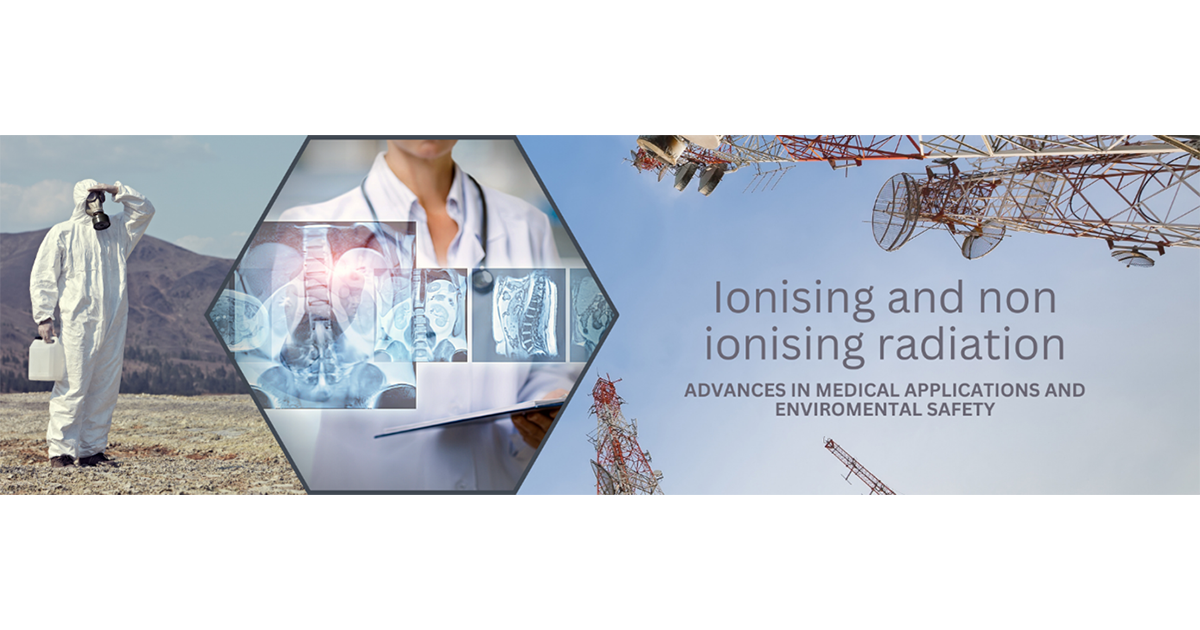
Recent decades have seen a dramatic acceleration in the development and adoption of new technologies using both ionizing and non-ionizing radiation.
Non-ionizing radiation is commonly used in healthcare applications such as laser surgery, endoscopy, UV light therapies, as well as magnetic resonance imaging. In addition, mobile telecommunication technologies transmit and receive electromagnetic fields that allow communication to occur. In particular, the scientific community has become increasingly interested in the exposure caused by 5G infrastructures over the past few years.
The use of ionizing radiation in healthcare has grown worldwide. The major advances of ionizing radiation in healthcare have led to groundbreaking innovations and improved patient care. In particular, radiation therapy has witnessed remarkable advances over the years, significantly transforming cancer treatment. As technology continues to advance, radiation therapy will likely play an increasingly central role in the comprehensive approach to cancer care, offering hope and improved prospects for patients worldwide.
Ionizing radiations also find applications in pharmacology, contributing to drug development and quality control. Radiolabeling techniques help researchers trace drug distribution and metabolism in vivo, facilitating a deeper understanding of pharmacokinetics. Furthermore, radiations are employed in sterilization processes to ensure the safety and sterility of medical devices and pharmaceutical products, safeguarding patient health.
Ultimately, the potential for CBRNe events (chemical, biological, radiological, nuclear, and explosive) to cause significant harm to human health and the environment is a critical concern for governments, emergency responders, and the public alike. Radiological risks in CBRN events arise primarily from the malevolent use of a radiation source or unauthorized/accidental release of radioactive materials, such as those used in medical, industrial, or nuclear applications. As radiological risks continue to evolve, continuous research, innovation, and vigilance remain essential in countering CBRNe events effectively.
The purpose of this Topic is to bring together state-of-the-art achievements, developments, and advances on all aspects of ionizing and non-ionizing radiation and serve as a platform for colleagues to exchange novel ideas in this area.
Submitted manuscripts should not have been published previously, nor be under consideration for publication elsewhere (except conference proceedings papers). We encourage authors to submit original research articles and reviews on (but not limited to) the following topics:
- Medical applications of ionizing and non-ionizing radiation;
- Recent developments in the use of radiation in healthcare;
- Ionizing radiation in pharmacology;
- Radiation, health effects and protective measures;
- Radiation dosimetry;
- Radiation protection;
- Advances in radiation oncology;
- Recent advances in molecular radiotherapy;
- Biological effects of radiation;
- Radiological and nuclear safety;
- CBRNe threats;
- Radiological hazards in CBRNe events;
- Medical radiation countermeasures for nuclear and radiological emergencies;
- Non-Ionizing radiation safety;
- Non-ionizing radiation in healthcare;
- Environmental radioactivity;
- Radon in the environment;
- Cosmic radiation and cosmogenic radionuclides.
In this Topic, we are looking for submissions mainly dealing with recent advances and developments in the application of ionizing and non-ionizing radiation.
Dr. Marco D'Arienzo
Dr. Andrea Malizia
Dr. Gian Marco Contessa
Topic Editors
Keywords
- ionizing radiation
- non-ionizing radiation
- radiation dosimetry
- radiation protection
- environmental radioactivity
- radiation therapy
- radiation safety
- cancer radiotherapy
- radiobiology
- radiological threats
Participating Journals


37,716 Articles
Launched in 2009
4.8Impact Factor
9.0CiteScore
18 DaysSubmission to First Decision
3 DaysAcceptance to Publication
Q2Highest JCR Category Ranking

20,450 Articles
Launched in 2011
3.8Impact Factor
6.9CiteScore
20 DaysSubmission to First Decision
3 DaysAcceptance to Publication
Q1Highest JCR Category Ranking

18,154 Articles
Launched in 2013
3.4Impact Factor
5.5CiteScore
21 DaysSubmission to First Decision
3 DaysAcceptance to Publication
Q1Highest JCR Category Ranking

115,248 Articles
Launched in 2000
5.6Impact Factor
10.0CiteScore
18 DaysSubmission to First Decision
3 DaysAcceptance to Publication
Q1Highest JCR Category Ranking

180 Articles
Launched in 2021
-Impact Factor
3.3CiteScore
21 DaysSubmission to First Decision
5 DaysAcceptance to Publication
-Highest JCR Category Ranking

894 Articles
Launched in 2015
2.4Impact Factor
3.9CiteScore
34 DaysSubmission to First Decision
7 DaysAcceptance to Publication
Q2Highest JCR Category Ranking