
Topic Editors


Applications of Polymers and Polymer Nanomaterials in Drug Delivery and Nanomedicine, 2nd Edition
Topic Information
Dear Colleagues,
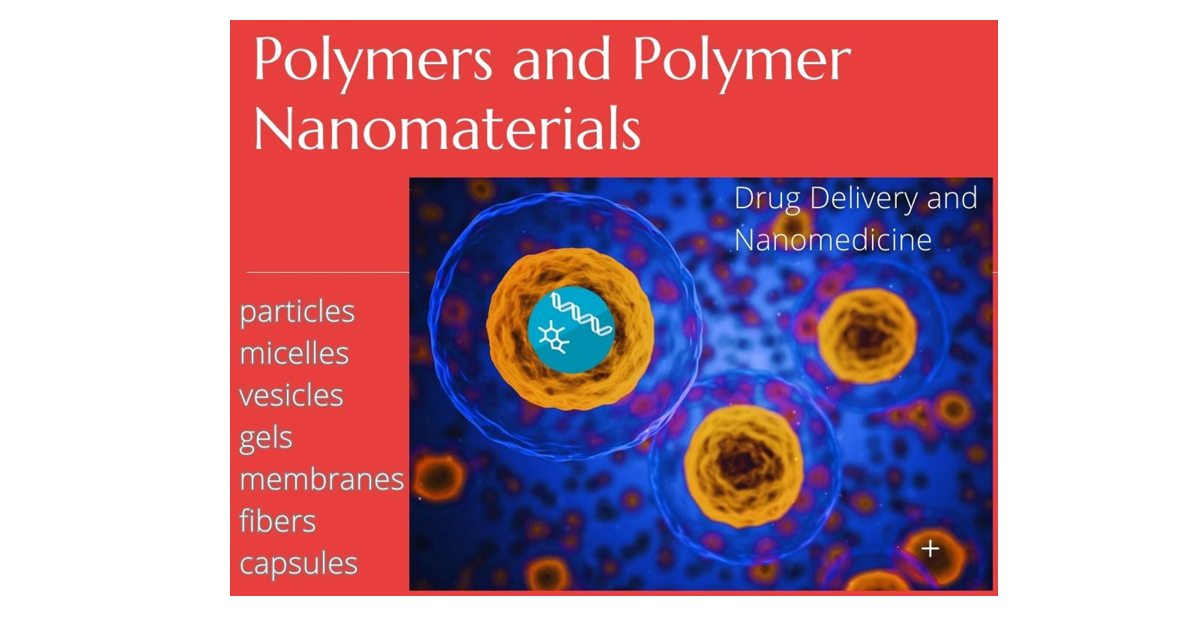
The focus of modern pharmaceutical science is aimed at the possibility for control, extension, sustaining, and targeting of the bioactive compounds. Moreover, the efforts are intended to overcome the limitations of the drugs itself, such as decreasing its toxicity and side effects, its instabilities, and unwanted changes. In the field of drug delivery science, polymers have seen significant progress. They provide the possibility for development of delivery systems of higher hierarchical order owing to their unique properties on a molecular and supramolecular level. Their possibility for improvement of the pharmacokinetic properties of drugs is practically unrestricted.
This topic is an attempt to summarize recent progress in the knowledge of drug delivery systems based on hydrogels, micro- and nanosized gels, biodegradable polymers, stimuli-responsive systems, polymer and polymer-hybrid nanoparticles, etc., in the development of alternative formulations and administration routes. The evolution of polymer based delivery systems of large molecules as well as biomolecules will also be addressed.
Prof. Dr. Stanislav Rangelov
Dr. Emi Haladjova
Topic Editors
Keywords
- biodegradable polymers
- polymer and polymer-hybrid nanoparticles
- hydrogels
- microgels
- nanopharmaceutics
- controlled release
- targeted therapy
- gene delivery
Participating Journals
| Journal Name | Impact Factor | CiteScore | Launched Year | First Decision (median) | APC | |
|---|---|---|---|---|---|---|

Applied Nano
|
- | 4.6 | 2020 | 15.7 Days | CHF 1000 | Submit |

Biomolecules
|
4.8 | 9.2 | 2011 | 17.9 Days | CHF 2700 | Submit |

Micro
|
1.9 | 3.2 | 2021 | 23.2 Days | CHF 1200 | Submit |

Nanomaterials
|
4.3 | 9.2 | 2010 | 14 Days | CHF 2400 | Submit |

Pharmaceuticals
|
4.8 | 7.7 | 2004 | 16 Days | CHF 2900 | Submit |

Pharmaceutics
|
5.5 | 10.0 | 2009 | 15.7 Days | CHF 2900 | Submit |

Scientia Pharmaceutica
|
2.5 | 4.6 | 1930 | 22.8 Days | CHF 1000 | Submit |

Preprints.org is a multidisciplinary platform offering a preprint service designed to facilitate the early sharing of your research. It supports and empowers your research journey from the very beginning.
MDPI Topics is collaborating with Preprints.org and has established a direct connection between MDPI journals and the platform. Authors are encouraged to take advantage of this opportunity by posting their preprints at Preprints.org prior to publication:
- Share your research immediately: disseminate your ideas prior to publication and establish priority for your work.
- Safeguard your intellectual contribution: Protect your ideas with a time-stamped preprint that serves as proof of your research timeline.
- Boost visibility and impact: Increase the reach and influence of your research by making it accessible to a global audience.
- Gain early feedback: Receive valuable input and insights from peers before submitting to a journal.
- Ensure broad indexing: Web of Science (Preprint Citation Index), Google Scholar, Crossref, SHARE, PrePubMed, Scilit and Europe PMC.
