Topic Editors

1. State Key Laboratory of Crop Gene Exploration and Utilization in Southwest China, Ministry of Science and Technology, Chengdu 611130, China
2. Key Laboratory of Crop Eco-Physiology & Farming System in Southwest China, Ministry of Agriculture and Rural Affairs, Chengdu 611130, China
Dr. Xiangbei Du
Crop Research Institute, Anhui Academy of Agricultural Sciences, Hefei 230031, China
Dr. Dagang Wang
Crop Research Institute, Anhui Academy of Agricultural Sciences, Hefei 230031, China

New Trends in Crop Breeding and Sustainable Production

Abstract submission deadline
28 February 2027
Manuscript submission deadline
31 May 2027
Viewed by
2338

Topic Information

Dear Colleagues,

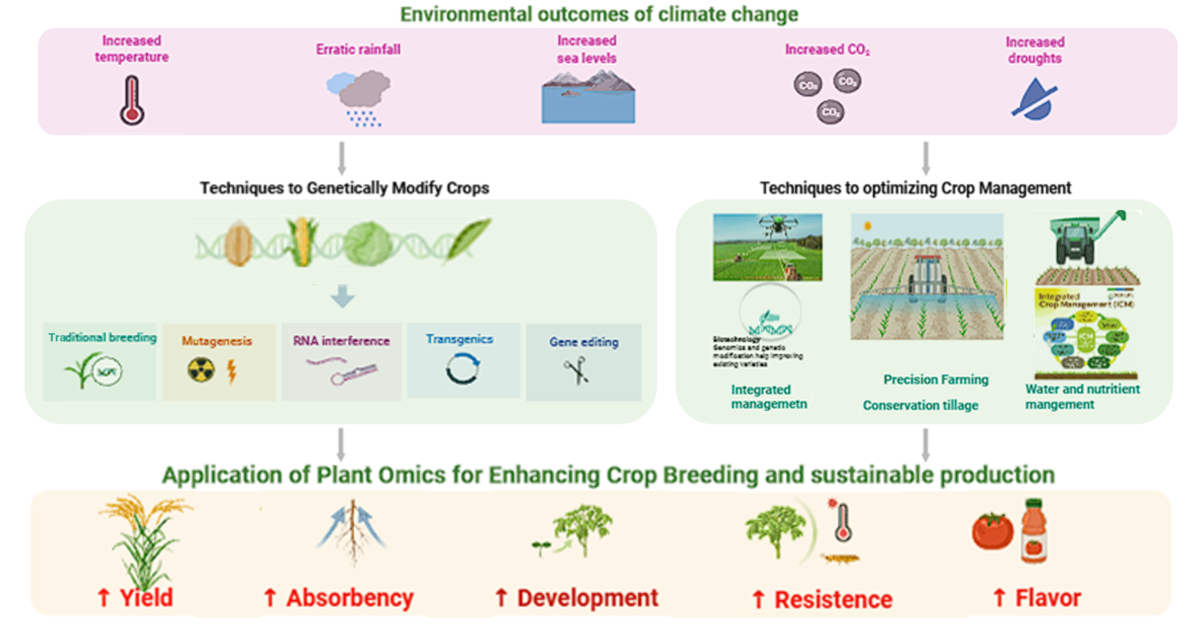
Under the escalating pressures of climate change, resource scarcity, and environmental degradation, maximizing crop yield and quality has become a critical global challenge. Addressing this requires breakthrough advances in crop breeding technologies, cultivation management practices, farming systems, precision agriculture, and food functionality research. This Topic, "New Trends in Crop Breeding and Sustainable Production," aims to establish a high-level academic platform focusing on the following key research areas:

Multi-Omics Technology Applications: Utilizing cutting-edge genomics, metabolomics, and other omics approaches to identify key genes for stress resistance, high yields, and superior quality in crops.

Climate-Resilient Breeding: Integrating artificial intelligence and genomic selection technologies to develop new crop varieties with enhanced stress tolerance, high yields, and excellent quality.

Nutritional Quality Improvement: Employing biofortification technologies to enhance the nutritional value of staple crops.

Climate-Adaptive Cultivation Management: Developing crop management techniques that combine stress resistance, high yields, quality, and resource efficiency to address various climatic adversities, along with sustainable agricultural practices with small environmental impacts.

We particularly emphasize the deep integration of modern molecular breeding technologies with smart agriculture and innovative applications of digital agriculture technologies in breeding and cultivation management. We welcome original research articles, comprehensive reviews, and perspective pieces covering plant stress physiology, metabolic pathways, field trials, and socio-economic impact assessments. Together, we aim to advance modern agriculture in regard to enhanced stress tolerance, high yields, efficiency, quality, and sustainability.

Dr. Hongkun Yang
Dr. Xiangbei Du
Dr. Dagang Wang
Topic Editors

Keywords

  • abiotic stress-resistant cultivation
  • molecular breeding
  • precision agriculture
  • sustainable intensification
  • food structure–function relationship
  • climate-smart crops
  • climate resilience
  • digital agriculture
  • integrated management
  • biofortification
  • multi-omics technologies

Participating Journals

Journal Name Impact Factor CiteScore Launched Year First Decision (median) APC
Agriculture
agriculture
3.6 6.3 2011 18.8 Days CHF 2600 Submit
Agronomy
agronomy
3.4 6.7 2011 17 Days CHF 2600 Submit
Crops
crops
1.9 2.4 2021 22.4 Days CHF 1200 Submit
International Journal of Molecular Sciences
ijms
4.9 9.0 2000 17.8 Days CHF 2900 Submit
International Journal of Plant Biology
ijpb
- 3.0 2010 17 Days CHF 1400 Submit
Plants
plants
4.1 7.6 2012 16.5 Days CHF 2700 Submit

Preprints.org is a multidisciplinary platform offering a preprint service designed to facilitate the early sharing of your research. It supports and empowers your research journey from the very beginning.

MDPI Topics is collaborating with Preprints.org and has established a direct connection between MDPI journals and the platform. Authors are encouraged to take advantage of this opportunity by posting their preprints at Preprints.org prior to publication:

  1. Share your research immediately: disseminate your ideas prior to publication and establish priority for your work.
  2. Safeguard your intellectual contribution: Protect your ideas with a time-stamped preprint that serves as proof of your research timeline.
  3. Boost visibility and impact: Increase the reach and influence of your research by making it accessible to a global audience.
  4. Gain early feedback: Receive valuable input and insights from peers before submitting to a journal.
  5. Ensure broad indexing: Web of Science (Preprint Citation Index), Google Scholar, Crossref, SHARE, PrePubMed, Scilit and Europe PMC.

Published Papers (4 papers)

Order results
Result details
Journals
Select all
Export citation of selected articles as:
14 pages, 3208 KB  
Article
Comparative Analysis of In Vitro vs. In Vivo dsRNA Production for CHS Silencing and Downstream Flavonoid Pathway Suppression in Arabidopsis thaliana
by Andrey R. Suprun, Stanislava A. Vinogradova, Konstantin V. Kiselev, Nikolay N. Nityagovsky and Alexandra S. Dubrovina
Int. J. Plant Biol. 2026, 17(4), 28; https://doi.org/10.3390/ijpb17040028 - 13 Apr 2026
Viewed by 358
Abstract
Exogenously induced RNA interference (exoRNAi) is a powerful biotechnology tool for precise gene regulation. The plant chalcone synthase (CHS) gene serves as a valuable model for molecular biology due to its central role in flavonoid biosynthesis. However, there are currently very [...] Read more.
Exogenously induced RNA interference (exoRNAi) is a powerful biotechnology tool for precise gene regulation. The plant chalcone synthase (CHS) gene serves as a valuable model for molecular biology due to its central role in flavonoid biosynthesis. However, there are currently very few studies addressing the advantages and disadvantages of in vitro (enzymatic) or in vivo (bacterial) methods for producing double-stranded RNA (dsRNA) for exogenous application. This study aims to optimize and compare the two methods for producing dsRNAs targeting the Arabidopsis thaliana CHS gene: enzymatic synthesis in vitro using a commercial kit and bacterial synthesis in vivo using an engineered E. coli HT115 (DE3) system. Bacterial synthesis conditions were optimized with respect to IPTG concentration and cultivation time, and the resulting dsRNA preparations were purified and quality-controlled. Their biological activities were assessed by treating A. thaliana plants and analyzing the effects on AtCHS gene expression and flavonoid production using qRT-PCR and HPLC-MS. The results demonstrated that purified AtCHS-dsRNA from both methods effectively suppressed AtCHS expression and downstream flavonoid biosynthetic gene expression, leading to significant reductions in anthocyanins and flavanols. This study confirmed the efficacy of exogenous dsRNAs in regulating plant metabolic pathways and provided a comparative analysis of dsRNA synthesis methods, highlighting their benefits and limitations for practical applications in plant biology and protection. Full article
(This article belongs to the Topic New Trends in Crop Breeding and Sustainable Production)
Show Figures

Figure 1

19 pages, 5204 KB  
Article
Dissecting the Opposing Roles of Thermal Intensity and Growing Degree Days in Regulating Spring Wheat Protein Content
by Xuan Lei, Jun Ye, Xiaobing Wang, Wenjia Yang, Haibin Zhang, Xuanwei Zhao, Juan Liu, Tingjia Zhang, Zhenyu Zhang, Tingyu Ma, Cundong Li, Xin Gao, Juan Li and Zhanyuan Lu
Plants 2026, 15(7), 1096; https://doi.org/10.3390/plants15071096 - 2 Apr 2026
Viewed by 417
Abstract
Protein content (PC) stability is crucial for wheat quality. This study utilized partial least squares regression and structural equation modeling to distinguish the physiological effects of “thermal intensity” versus “thermal accumulation” on spring wheat PC across Inner Mongolia. Environmental factors were the dominant [...] Read more.
Protein content (PC) stability is crucial for wheat quality. This study utilized partial least squares regression and structural equation modeling to distinguish the physiological effects of “thermal intensity” versus “thermal accumulation” on spring wheat PC across Inner Mongolia. Environmental factors were the dominant drivers of variation. Notably, the Erguna region achieved the highest PC (18.53%) despite recording the lowest total growing degree days. Structural equation modeling analysis revealed that thermal intensity during heading-to-anthesis exerted a strong positive effect on PC (path coefficient = 0.965), likely by enhancing nitrogen remobilization kinetics. Conversely, excessive thermal accumulation and sunshine duration during grain filling negatively impacted PC via a carbohydrate-driven “dilution effect”. These findings suggest that superior PC formation requires a specific spatiotemporal coupling: high thermal intensity prior to anthesis to prime nitrogen transport, combined with low thermal accumulation post-anthesis to restrict carbon dilution. This study provides a physiological basis for optimizing wheat quality zoning by decoupling heat magnitude from duration under future climate scenarios. Full article
(This article belongs to the Topic New Trends in Crop Breeding and Sustainable Production)
Show Figures

Figure 1

30 pages, 7930 KB  
Article
Photosynthetic Responses of Spring Wheat Seedlings to Neutral, Alkaline, and Combined Salt Stresses
by Yabo Dai, Jun Ye, Xuan Lei, Xiaobing Wang, Chenghao Zhang, Cundong Li, Zhanyuan Lu, Juan Li and Dejian Zhang
Int. J. Mol. Sci. 2026, 27(7), 3060; https://doi.org/10.3390/ijms27073060 - 27 Mar 2026
Viewed by 453
Abstract
Soil salinization poses a severe threat to global wheat production, yet the physiological mechanisms underlying photosynthetic responses to neutral, alkaline, and combined salt stress remain poorly understood. This study systematically evaluated the photosynthetic physiology and salt tolerance of six spring wheat genotypes under [...] Read more.
Soil salinization poses a severe threat to global wheat production, yet the physiological mechanisms underlying photosynthetic responses to neutral, alkaline, and combined salt stress remain poorly understood. This study systematically evaluated the photosynthetic physiology and salt tolerance of six spring wheat genotypes under three types of salt stress at varying concentrations. By integrating phenotypic data, gas exchange parameters, chlorophyll fluorescence indices, and biomass measurements, and applying structural equation modeling and multivariate analysis, key traits regulating biomass were identified. The results revealed significant interactions among salt stress type, genotype, and concentration on photosynthetic parameters. Structural equation modeling analysis revealed that under neutral salt stress, both gas exchange parameters and chlorophyll content had significant direct effects on seedling biomass, with standardized path coefficients of 0.421 and 0.400, respectively. Under alkaline and combined salt stresses, only chlorophyll content showed a significant direct effect on biomass, with standardized path coefficients of 0.873 and 0.790, respectively. Multiple regression analysis further identified key photosynthetic factors influencing growth under different stress types. Under neutral salt stress, phi (Ro) and E significantly affected biomass, whereas under alkaline and combined salt stresses, biomass was primarily co-regulated by phi (Ro) and phi (Eo). Based on a comprehensive evaluation of salt tolerance index, damage index, and biomass response, genotypes W06 and W02 exhibited the strongest overall salt tolerance. This study systematically elucidates the differential response mechanisms of photosynthesis in spring wheat under distinct salt stress types, providing an important theoretical basis and elite germplasm resources for breeding salt-tolerant wheat varieties. Full article
(This article belongs to the Topic New Trends in Crop Breeding and Sustainable Production)
Show Figures

Figure 1

23 pages, 3905 KB  
Article
Diversity and Seasonal Variability of Leaf Surface Micromorphology in Wheat-Related Hybrids with Wheatgrass Ancestry
by Alexander V. Babosha, Pavla O. Loshakova, Danila A. Shchelkanov, Anastasia D. Alenicheva, Margarita M. Gevorkyan and Alina A. Pogost
Int. J. Plant Biol. 2026, 17(3), 17; https://doi.org/10.3390/ijpb17030017 - 28 Feb 2026
Viewed by 340
Abstract
This study used cryoSEM to analyze the seasonal stability of leaf surface micromorphology in cereal hybrids derived from crossing maternal ×Trititrigia cziczinii × Thinopyrum junceum lines with paternal wheat–wheatgrass hybrids. Over two growing seasons, relatively rare traits showed high stability, while most [...] Read more.
This study used cryoSEM to analyze the seasonal stability of leaf surface micromorphology in cereal hybrids derived from crossing maternal ×Trititrigia cziczinii × Thinopyrum junceum lines with paternal wheat–wheatgrass hybrids. Over two growing seasons, relatively rare traits showed high stability, while most traits exhibiting initial diversity demonstrated seasonal variability. Paternal traits (hairs, prickles, elongated silica cells) predominated in hybrids, and hybrid diversity correlated significantly with paternal, but not maternal, line diversity. In 2025, a significant decrease in some paternally specific traits and an increase in rounded silica cells were observed compared to 2024. Coordinated dynamics were revealed: variations in maternal traits correlated positively with each other and negatively with some paternal traits. While certain micromorphological features exhibited relative stability, employing such traits for taxonomic purposes necessitates caution and a thorough understanding of their inherent variability ranges. Full article
(This article belongs to the Topic New Trends in Crop Breeding and Sustainable Production)
Show Figures

Figure 1

Back to TopTop