You are currently viewing a new version of our website. To view the old version click .
Polymers
  • Review
  • Open Access

24 February 2025

Recent Advances in Polymer Recycling: A Review of Chemical and Biological Processes for Sustainable Solutions


,
and
Faculty of Manufacturing Technologies with a Seat in Presov, Technical University of Kosice, Štúrova St. 31, 080 01 Presov, Slovakia
*
Author to whom correspondence should be addressed.
This article belongs to the Special Issue Additive Manufacturing Based on Polymer Materials

Abstract

Plastics, particularly synthetic organic polymers, have become indispensable in modern life, yet their large-scale production has led to significant environmental challenges due to persistent waste. Traditional mechanical recycling methods have proven insufficient in addressing these issues. This review explores recent advancements in polymer recycling, focusing on chemical and biological processes, such as pyrolysis, depolymerization, and enzyme-based degradation, which offer more efficient and sustainable alternatives. Within the framework of a circular economy, the review also examines strategies like closed-loop and circular plastic economies. These developments represent critical steps toward creating more sustainable plastic recycling practices. The final chapter includes the Quarterly Report 2024 on recycling plastics, providing an up-to-date overview of the current state of plastic recycling and its recent trends.

1. Introduction

The absence of plastics or synthetic organic polymers from modern life would be difficult to envision despite their large-scale manufacturing and integration being relatively recent advancements [1]. Early synthetic polymers, such as Bakelite, emerged in the early 20th century, but it was not until later that those plastics gained widespread application beyond specific sectors. Since then, the expansion of plastic production has been unprecedented, outpacing the growth of many other engineered materials, like steel and cement, extensively employed in construction, and continues to exhibit substantial industrial dominance, representing notable deviations from this trend [2,3].
However, in recent years, advancements in material science have facilitated the creation of innovative materials, which are increasingly replacing conventional metals and alloys in various engineering applications [4]. By combining materials with distinct characteristics, composite materials have emerged. Among these, polymer-based composites have gained considerable traction in industries due to their favorable strength-to-weight ratio [5,6]. These materials are widely employed in sectors such as aerospace and automotive engineering, where their mechanical properties, such as corrosion resistance and fatigue strength, are of paramount importance [7,8].
Polymer composites, often reinforced with carbon fibers (CFs) and glass fibers (GFs), have become integral to numerous engineering applications. In the aerospace sector, for instance, composite materials now constitute over 50% of the structure in aircraft. Carbon fiber-reinforced polymer (CFRP) and glass fiber-reinforced polymer (GFRP) are particularly prevalent, as exemplified by Boeing 787′s use of approximately 32 tons of composite materials [9,10]. Thermoset matrices, primarily epoxy resins, in these composites further enhance their durability, providing stability against environmental factors like humidity and temperature fluctuations. However, the increasing use of these materials raises significant concerns regarding plastic waste at the end of their lifecycle, driving ongoing research into waste management solutions [11,12].
Currently, the contribution of recycling to overall value generation remains relatively low, leading to the limited reintegration of significant quantities of used plastics and synthetic textiles into the economic cycle. Additionally, unlike metals and ceramics, the recycling of polymers typically results in a reduction in material properties. However, this does not preclude the potential for advancements that could enhance the quality of recycled polymer products to meet desired standards [13,14]. In the manufacturing process, a distinct category of solid plastic waste (SPW) emerges, classified as post-industrial (PI) waste, which does not reach the consumer stage. PI waste typically includes materials such as injection molding runners, production transition scraps, defective items, and various trimmings [15]. This waste type is advantageous due to its general lack of contamination and the known polymer composition. PI waste streams often consist of a single polymer type or mono-material, meaning they are not mixed with other polymers or non-polymeric substances [16].
Consequently, PI waste is typically considered a higher-grade polymer waste, making it more suitable for recycling. Conversely, at the end of their lifecycle, products become post-consumer (PC) waste. The collection and sorting processes for PC plastic waste vary by region, with some areas enforcing more stringent protocols than others. In many instances, PC waste includes mixed plastics with indeterminate compositions and may be contaminated by organic substances (e.g., food residues) or inorganic materials (e.g., paper), making recycling more complex compared to PI waste [17,18].
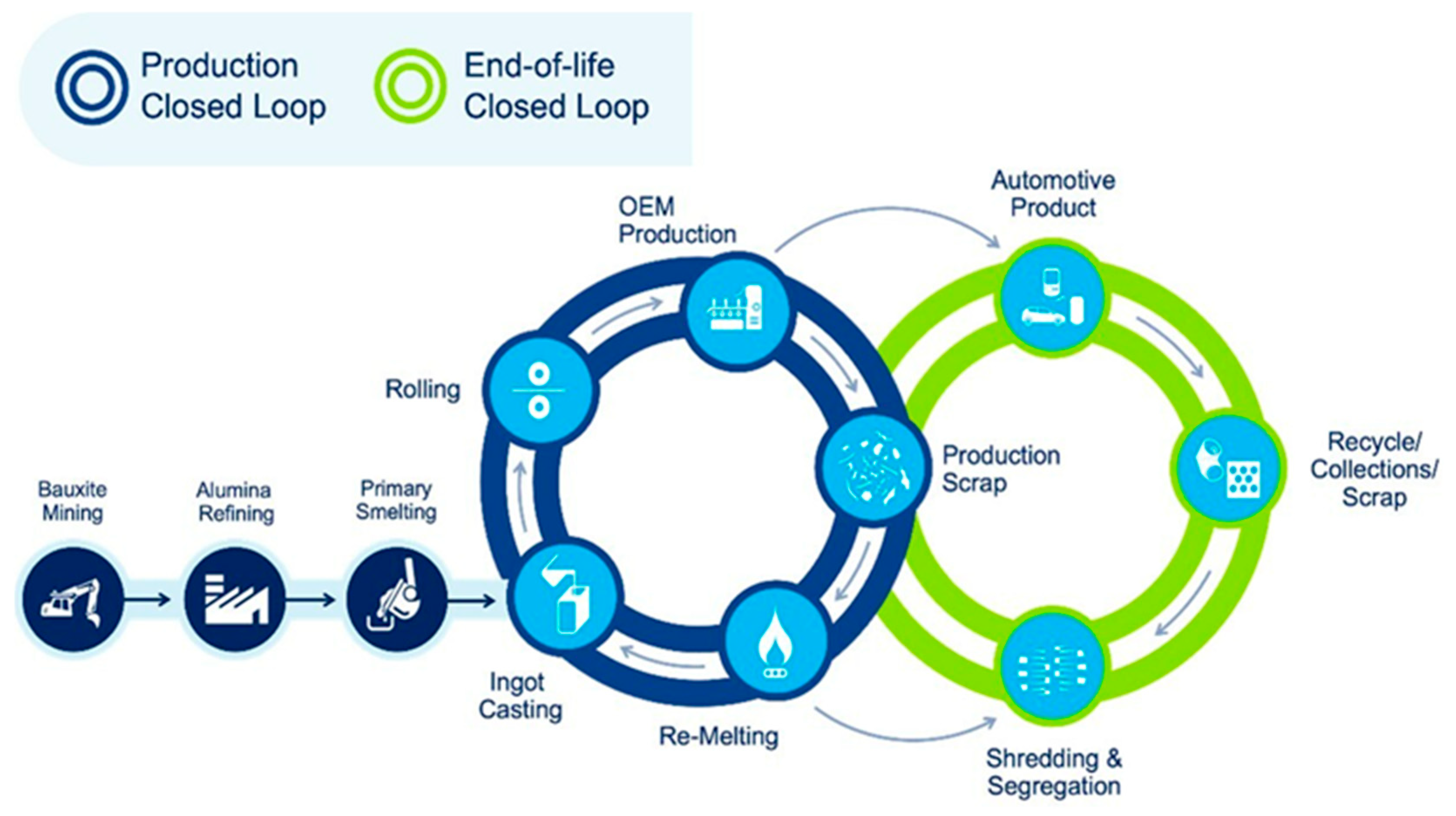
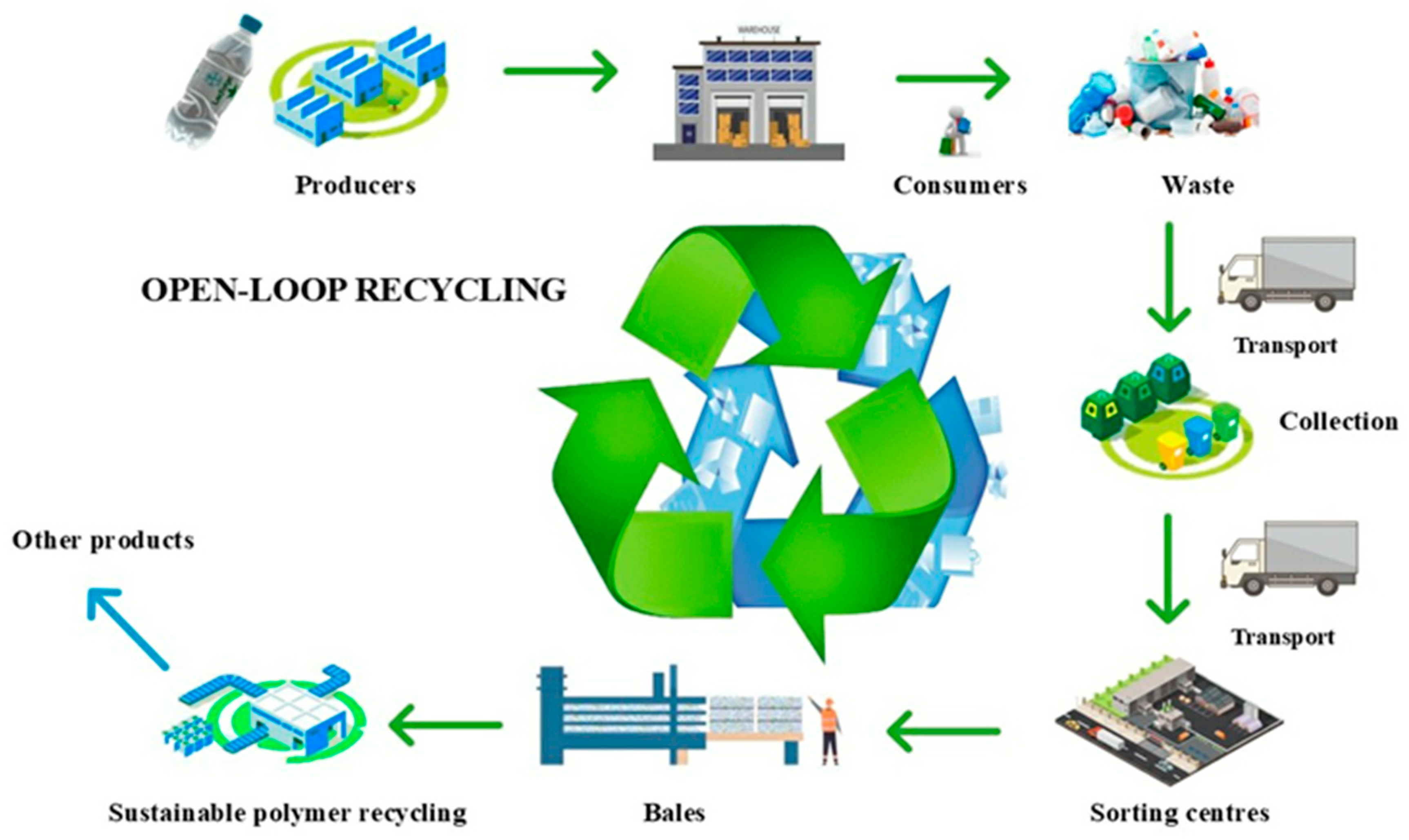
In addition, strict regulations imposed by the European Commission regarding the management of construction debris, end-of-life vehicles, and electronic waste are driving industries that utilize composites to investigate innovative and more efficient recycling methods for fiber-reinforced polymer (FRP) waste [19,20]. Recycling involves the repurposing of discarded materials, often requiring various processes to recover waste or convert it into new products, raw materials, or components. A circular economy, sometimes referred to as zero-waste manufacturing, represents an industrial paradigm where products are remanufactured, reused, and recycled after reaching their end-of-life (EOL) stage [21]. In modern industry, a key objective is to enhance circular economy designs through closed-loop recycling systems [22,23]. This approach is particularly advantageous for composite materials, as their physical properties are well-suited for efficient reprocessing. Ultimately, the circular economy not only mitigates the generation of hazardous materials and waste but also facilitates the production of goods with desired mechanical properties [24].
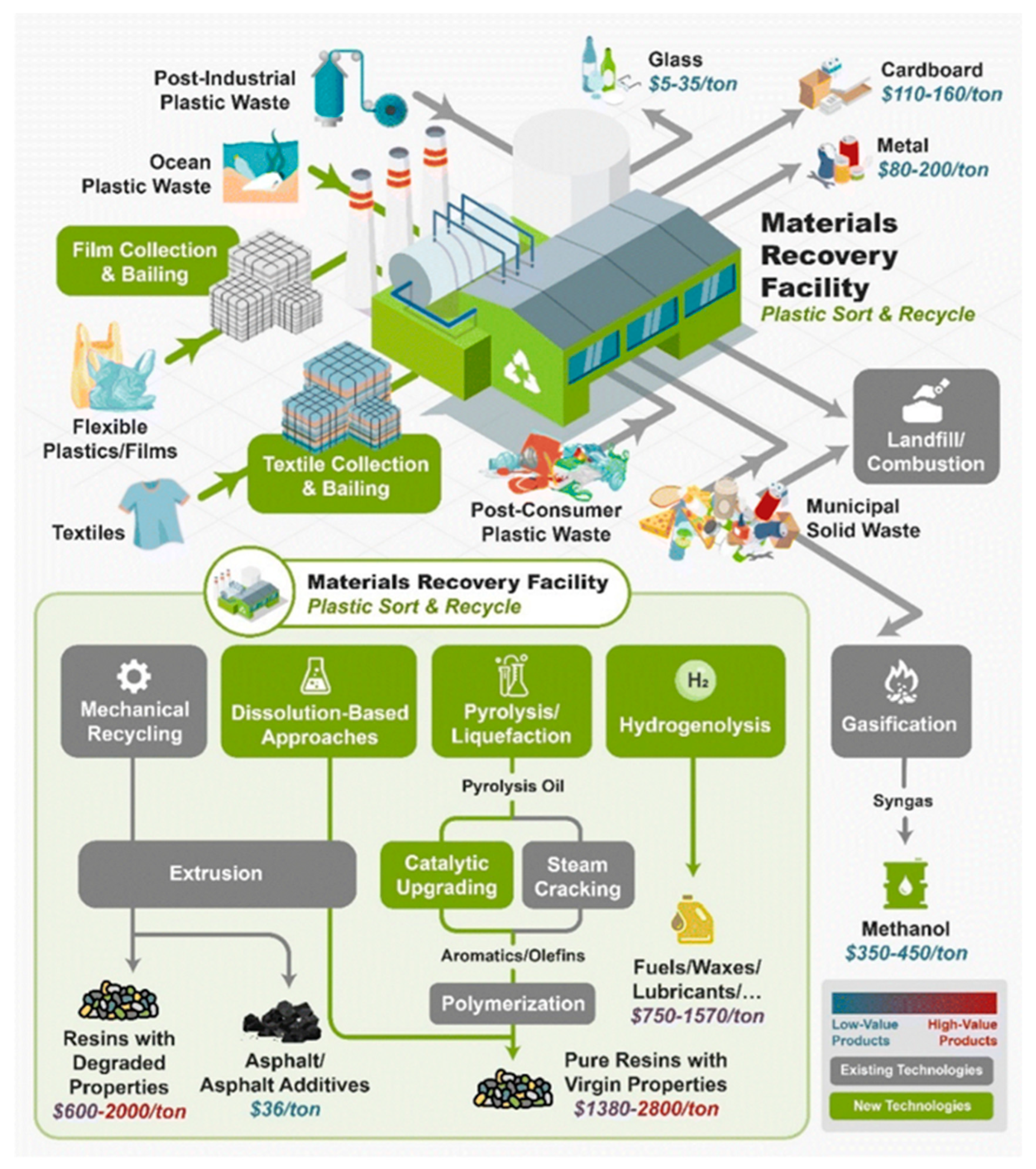
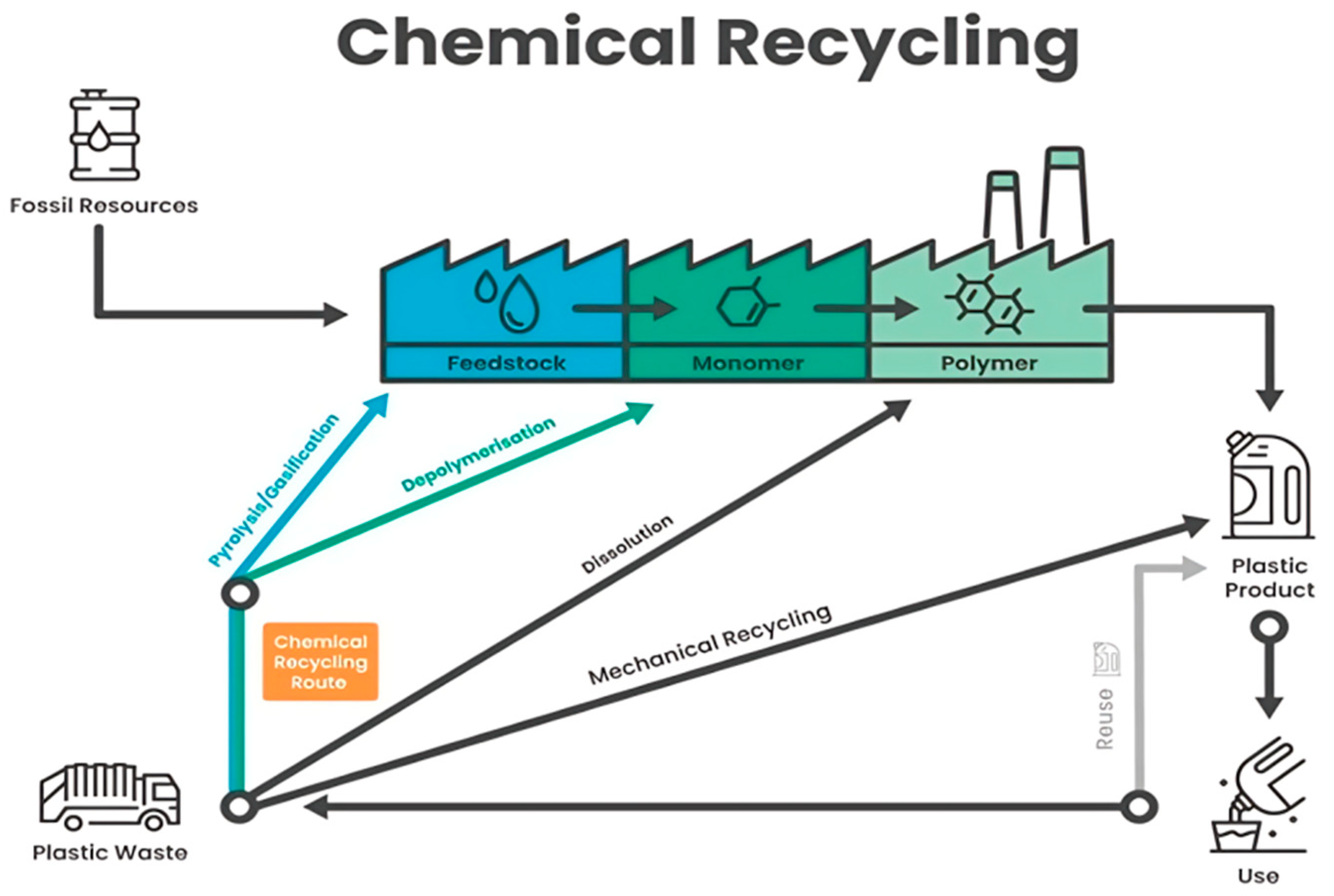
Scientists are advancing innovative technologies aimed at enhancing the efficiency of recycling and upcycling processes. A major focus of current research is the development of innovative recycling technologies, including thermomechanical processing, chemical recycling (e.g., glycolysis, pyrolysis), and biological depolymerization using enzymes and microorganisms [25]. While these technologies hold promise, challenges persist in material separation, economic feasibility, and societal acceptance [26].
The novelty of this review lies in its comprehensive analysis of state-of-the-art recycling technologies, with an emphasis on the latest innovations in polymer science and their industrial applications. Unlike previous studies, this review provides an updated assessment of emerging trends, regional case studies, and the scalability of advanced recycling methods. By addressing both technical and economic barriers, this study highlights opportunities for sustainable waste management and the integration of circular economy principles in polymer recycling. This review is supplemented by the Quarterly Report—Q1/2024, so the insights presented herein offer a valuable resource for researchers, policymakers, and industry professionals striving to mitigate plastic waste accumulation while maximizing material recovery efficiency.

2. Advancing Towards a Circular Plastics Economy

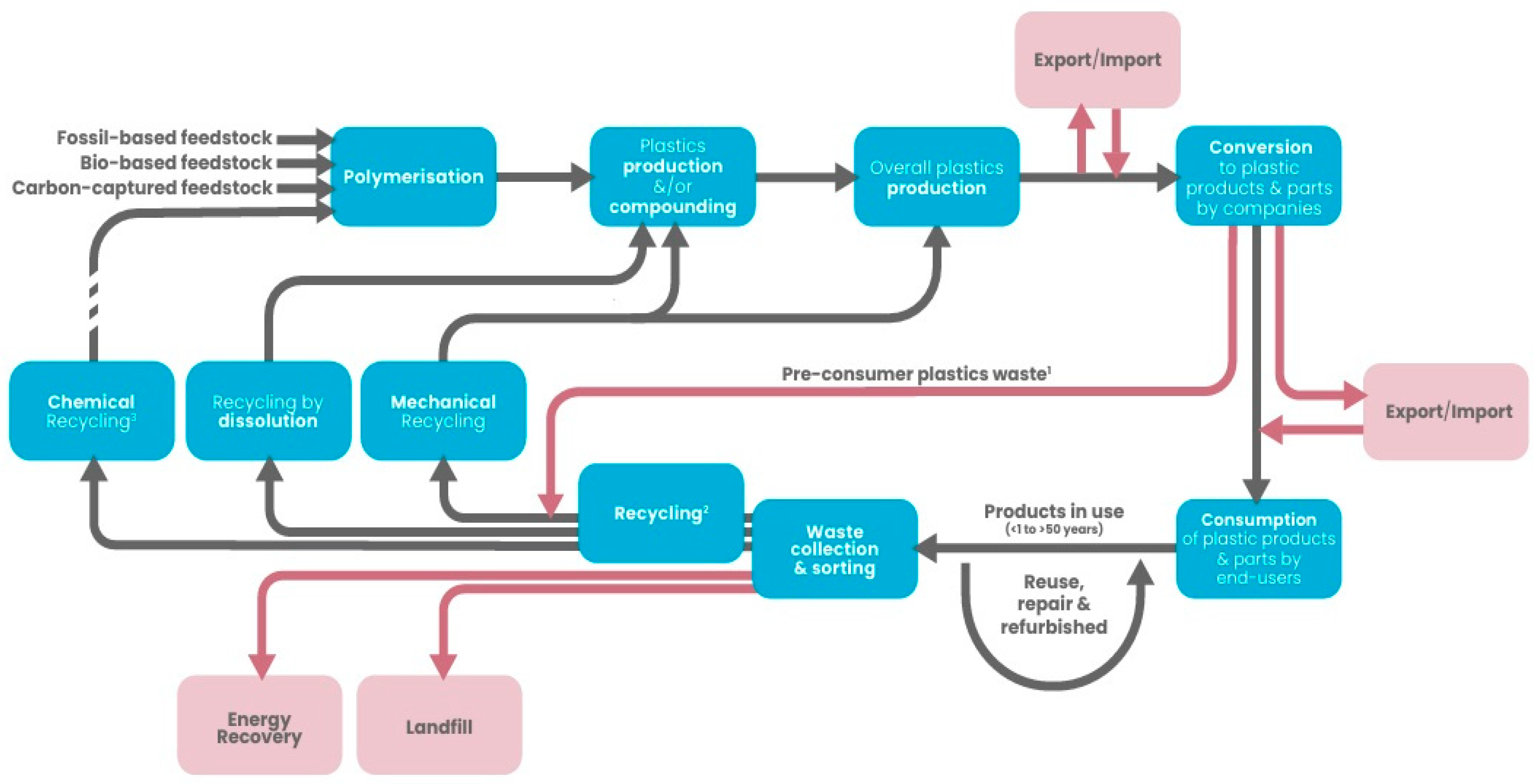
The circular economy for plastics (Figure 1) is a sustainable framework designed to extend the lifecycle of plastic materials [15]. This model emphasizes the reduction in plastic usage, alongside strategies for reusing and recycling plastics at the end of their functional life. It helps preserve the value of plastic waste as a resource, while simultaneously minimizing CO2 emissions and preventing plastics from being disposed of in landfills, incinerated, or contributing to marine pollution [27,28,29].
Figure 1. Circular plastic economy [27].
The 2022 report highlights that adopting circularity is the most rapid, cost-effective, and dependable strategy for diminishing plastic waste and lowering greenhouse gas (GHG) emissions within the plastics sector. Developing a circular economy for plastics is integral to the European Union’s Plastics Strategy and is essential to both the Circular Economy Action Plan and the Green Deal. A critical aspect of achieving a circular plastics economy is the need to significantly decrease Europe’s reliance on fossil-derived feedstocks and to transition towards circular alternatives. Such alternatives encompass recycled plastic waste, sustainably sourced bio-based materials, and CO2 from industrial activities [27,28].
The work plan on plastics was highlighted as a key priority within the “Closing the Loop” Action Plan for the Circular Economy [30]. While the Circular Economy Package established broad targets related to recycling rates and landfill reduction, the European Plastics Strategy specifically focuses on the packaging sector, providing a more targeted approach to addressing plastic waste and sustainability in this industry [31,32].
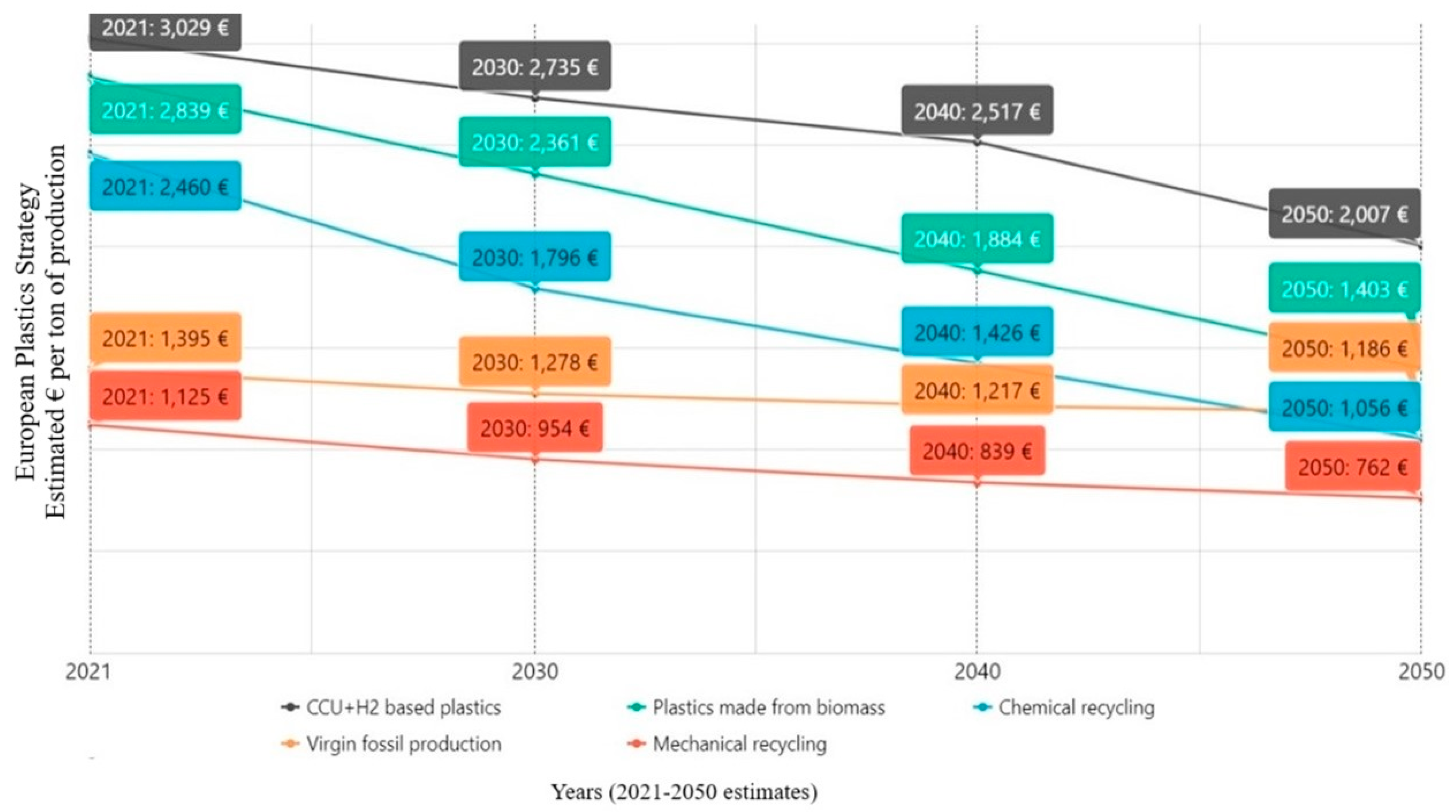
In 2023, European plastics manufacturers introduced the Plastics Transition roadmap [33] to guide the industry’s shift toward sustainability. The roadmap outlines a strategy to cut greenhouse gas emissions from the plastics sector by 28% by 2030, with the ultimate goal of achieving net-zero emissions by 2050 [32]. It also forecasts the progressive replacement of fossil-based plastics, estimating that circular plastics could fulfill 25% of European demand by 2030 and 65% by 2050 (Figure 2).
Figure 2. Estimated in euros per ton of production for the period 2021–2050 [33].
Achieving these targets is expected to require at least EUR 235 billion in additional investment and operational costs. The roadmap identifies key drivers and supportive measures and outlines specific short- and medium-term actions to accelerate the transition to a circular plastics economy for industry, policymakers, and the entire value chain [27].

3. Plastic Polymers: Types and Industrial Applications

In the context of polymer recycling, understanding the diversity of plastic polymers and their industrial applications is essential [34,35]. This chapter systematically categorizes the most prevalent and widely used plastic polymers, focusing on their key properties, production volumes, and the sectors where they are predominantly applied. By examining the specific applications of these polymers, we can better appreciate the challenges and opportunities in recycling each type, paving the way for improved recycling technologies and practices.
Given the wide range of polymer-based materials present both in commercial use and as waste, plastics are generally classified into two primary categories: thermosetting and thermoplastic [36]. Thermosetting polymers, characterized by their long molecular chains, undergo irreversible curing and cannot be reprocessed after initial use. In contrast, thermoplastics consist of shorter molecular links and can be re-melted and reshaped, granting them a degree of recyclability [37]. Plastics are generally categorized into six principal groups: Low-Density Polyethylene (LDPE), High-Density Polyethylene (HDPE), Polypropylene (PP), Polystyrene (PS), Polyethylene Terephthalate (PET), and Polyvinyl Chloride (PVC). These classifications represent the most common types of polymer materials used across various industries [38,39].
  • LDPE—Low-Density Polyethylene (Thermoplastic)
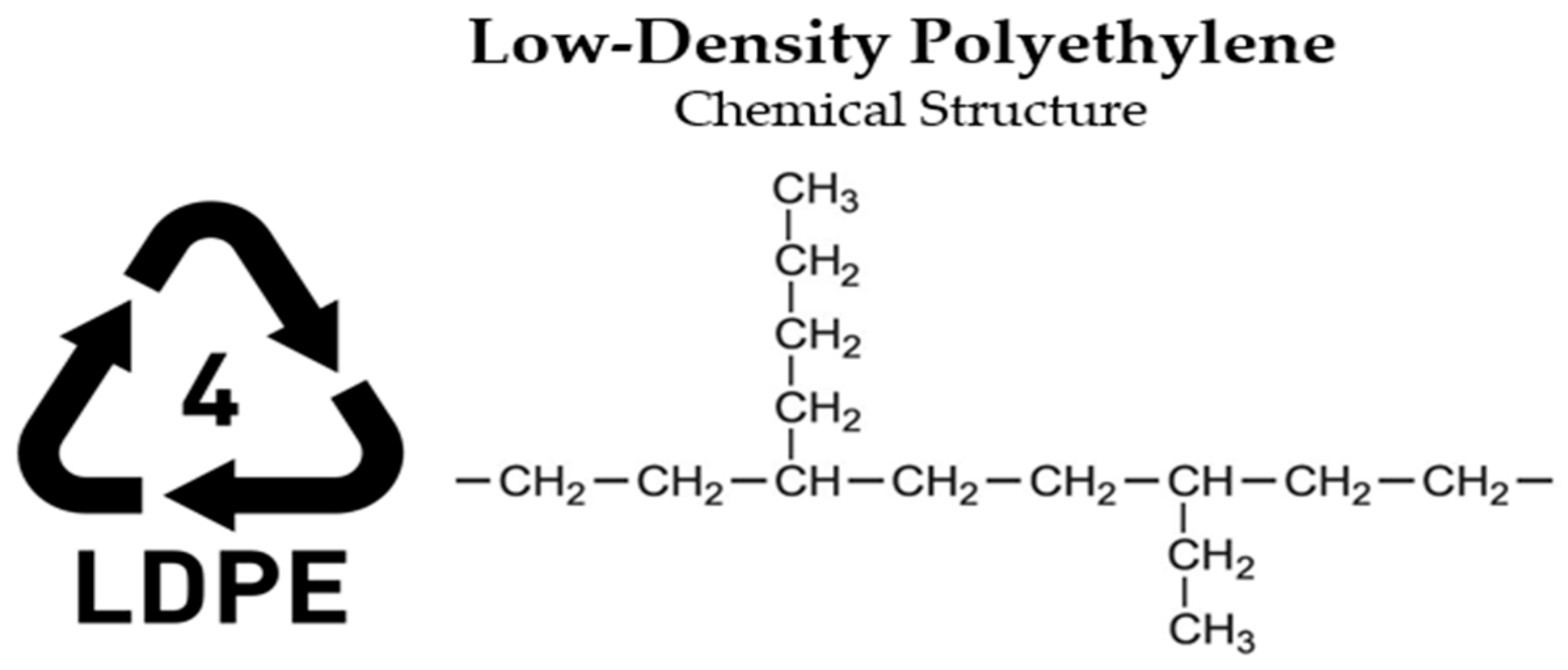
Applications: LDPE (Figure 3) is characterized by its branched molecular structure, which results in lower density and weaker intermolecular forces compared to high-density polyethylene (HDPE). These properties make it an ideal material for various applications, such as packaging for computer components, including hard disk drives, graphics cards, and optical disc drives, as well as trays. Additionally, low-density polyethylene (LDPE) is available in two forms: recycled granules (R), derived from leftover bottle caps and certain types of containers, and virgin granules (V), used for their production. Due to its flexibility, chemical resistance, and good electrical insulation properties, LDPE is also widely employed in the production of consumer goods and industrial products [40].
Figure 3. Labeling and chemical Structure of low-density polyethylene (LDPE).
  • Thermosetting: Vinyl ester
Applications: The marine sector, FRP (fiberglass reinforced plastic) tanks and vessels, lamination processes, and kit airplanes like Glasair and Glastar [38]. Vinyl ester is known for its excellent corrosion resistance, high mechanical strength, and good adhesion properties. These characteristics make it a reliable choice for structural and load-bearing applications in demanding environments.
  • HDPE—High-Density Polyethylene (Thermoplastic)
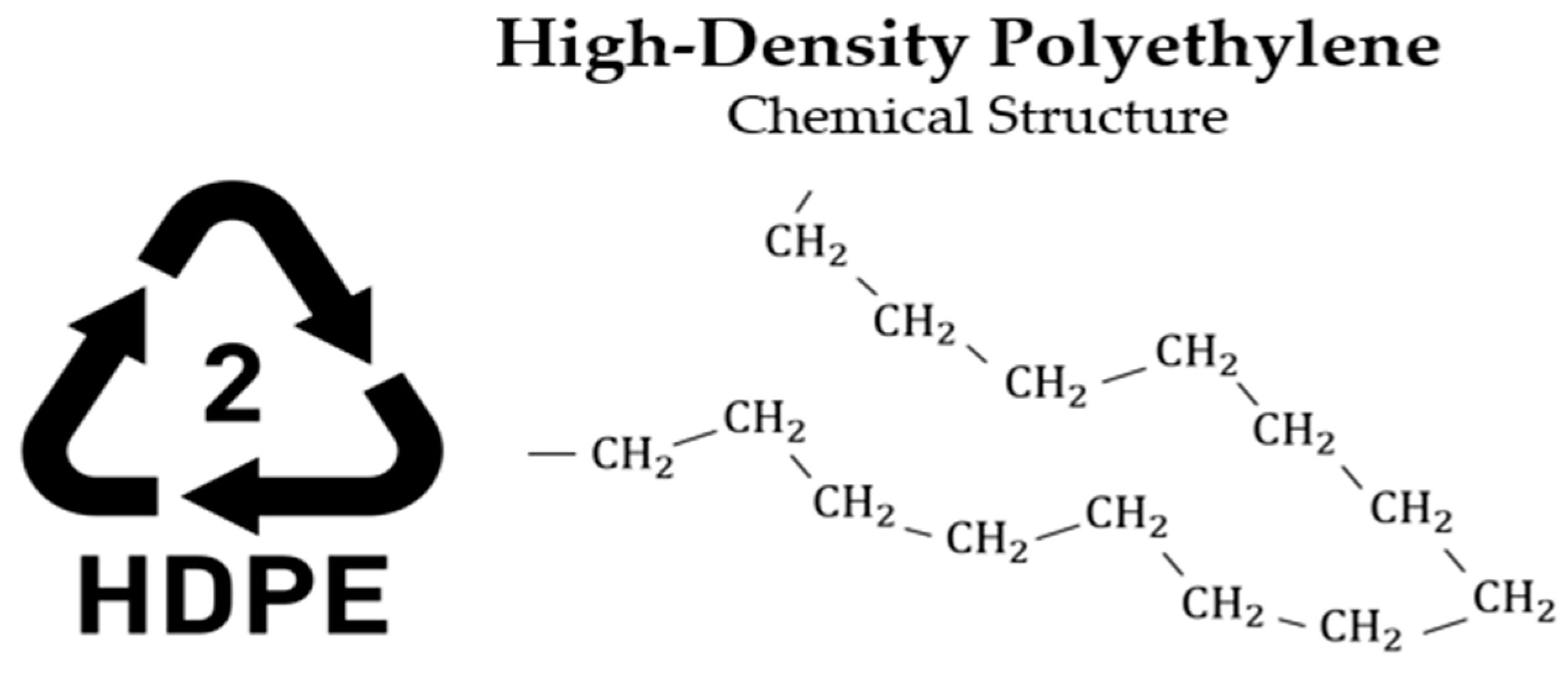
Applications: High-density polyethylene (HDPE) (Figure 4) is classified into two forms: recycled granules (R), obtained from post-consumer waste such as containers for cleaning agents, shampoos, and milk bottles, and virgin granules (V), which are employed in the synthesis of new HDPE products. Items such as toys, kitchenware, films, bottles, piping, processing machinery, as well as wire, cable insulation materials, and the packaging sector, which represents the most significant application of plastics, comprising 31% of total usage and achieving a market size of over 236 billion euros in 2022 [41].
Figure 4. Labeling and chemical structure of high-density polyethylene (HDPE).
  • Thermosetting: Phenol formaldehyde resin
Applications: Billiard balls, laboratory work surfaces, coatings and adhesives, electronic circuit boards, and fiberglass fabrics, among other applications. It is valued for its high thermal stability, chemical resistance, and durability.
  • PP—Polypropylene (Thermoplastic)
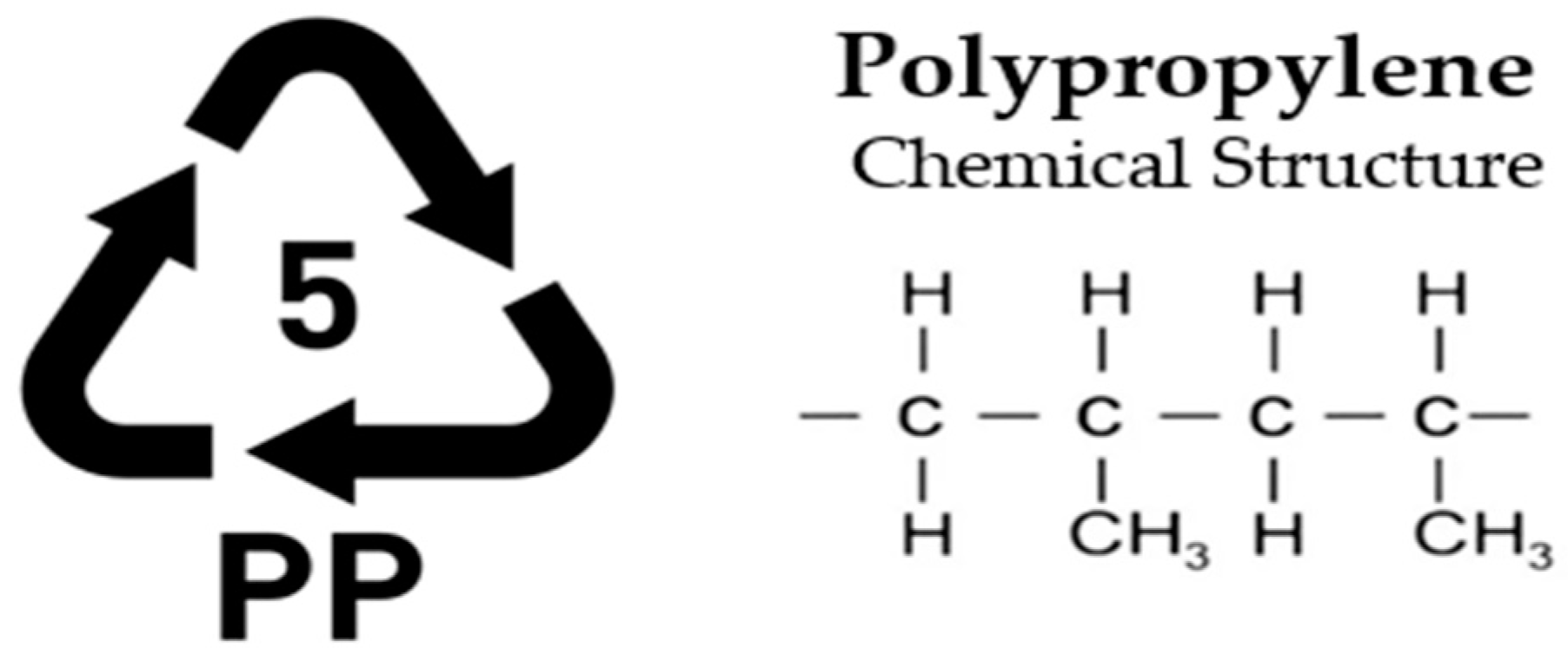
Polypropylene (Figure 5) is known for its high chemical resistance, low moisture absorption, and good electrical insulating properties, making it suitable for a wide range of industrial and consumer applications. Its semi-crystalline structure provides a balance of rigidity and flexibility while maintaining excellent durability and impact resistance. Additionally, polypropylene’s recyclability aligns with sustainable material practices, contributing to waste reduction in manufacturing and construction sectors. These properties enable its use in various applications, such as biaxially oriented polypropylene (BOPP), transparent packaging bags, carpets, rugs, mats, and recycled aggregate concrete, where the static elastic modulus reduces as the fiber volume fraction increases [42].
Figure 5. Labeling and chemical structure of polypropylene (PP).
  • Thermosetting: Silicon
Applications: Sealants, adhesives, lubricants, pharmaceuticals, cooking implements, thermal and electrical insulation materials, and silicone grease. Silicon is valued for its exceptional temperature resistance, weather stability, and electrical insulating properties. These attributes make it a versatile material in both industrial and consumer applications requiring durability and reliability.
  • PS—Polystyrene (Thermoplastic)
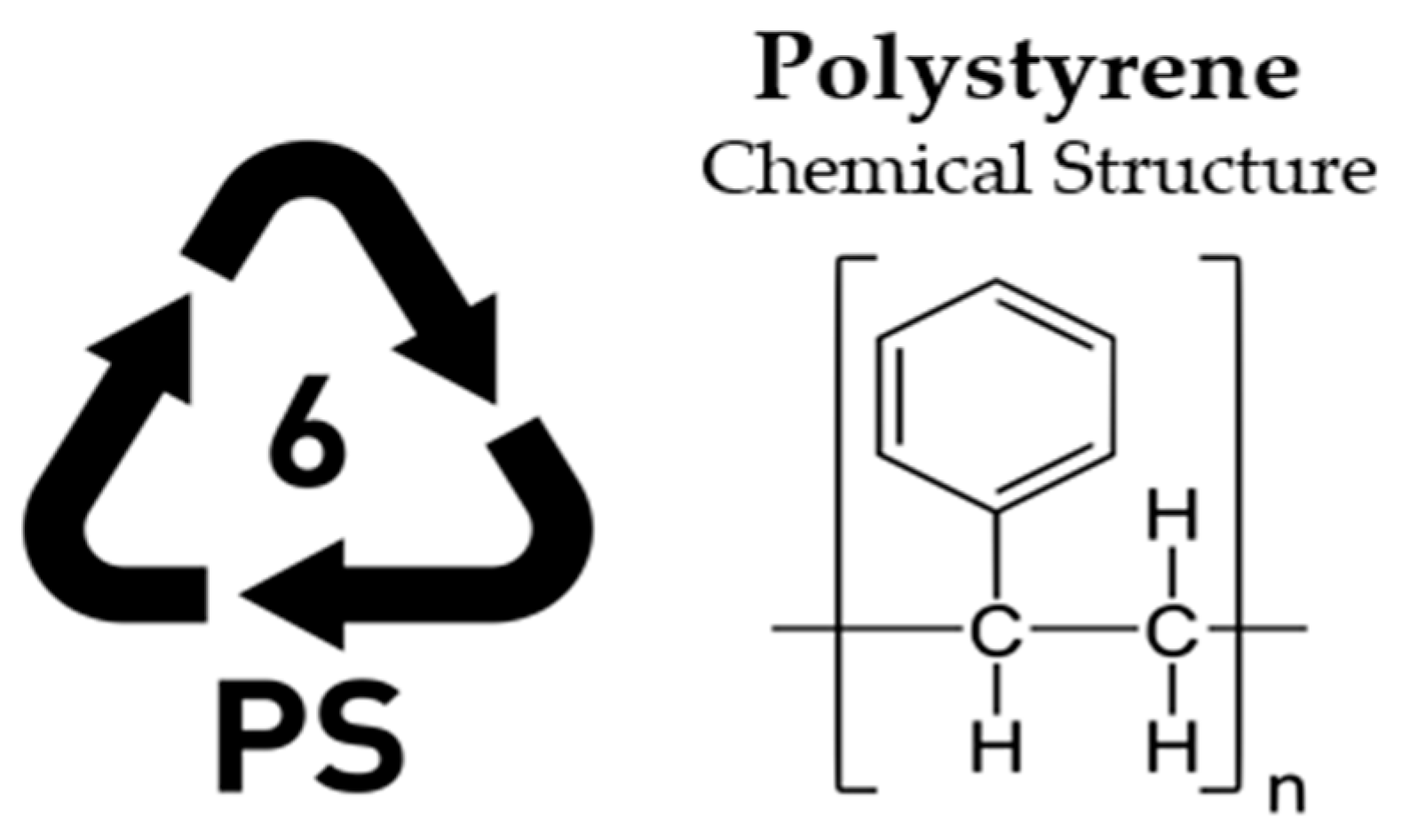
Applications: Single-use plastic cutlery and dinnerware, CD cases, housings for smoke detectors, license plates, and frames. Significantly, the most extensive expanded polystyrene (PS) (Figure 6) recycling facilities are predominantly located in north-western Europe. A new methodology was also created for developing triboelectric generators utilizing a single triboelectric polymer (PS) [43].
Figure 6. Labeling and chemical Structure of polystyrene (PS).
  • Thermosetting: Polyester
Applications: Staple fibers (PSF), containers for carbonated soft drinks (CSD), water, beer, juice, and detergents, as well as industrial yarns and tire reinforcement cords.
  • PET—Polyethylene Terephthalate (Thermoplastic)
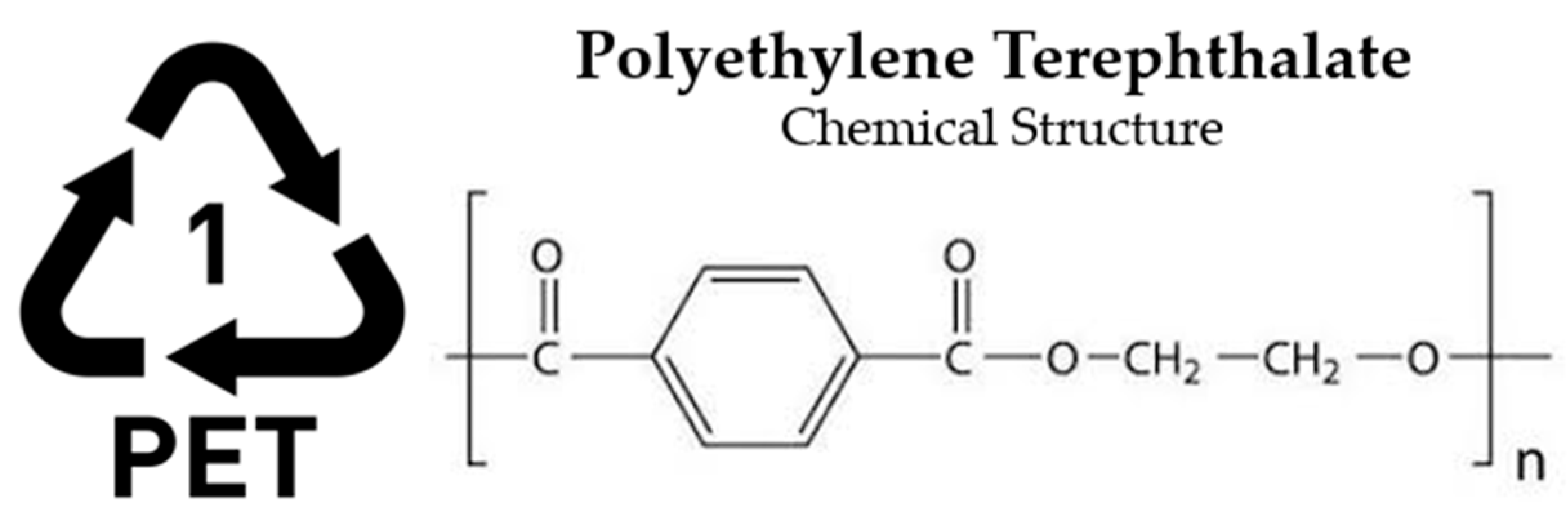
Applications: Polyethylene terephthalate (PET) (Figure 7), designated with a resin identification code #1, ranks as the third most prevalent polymer in the packaging industry. It is the primary material used for beverage containers, contributing to nearly 16% of total plastic consumption in the European packaging sector. Also, it has applications such as packaging films, PET bottles, carpet yarns, engineering plastics, filaments, non-woven materials, packaging straps, and staple fibers [44,45].
Figure 7. Labeling and chemical structure of polyethylene terephthalate (PET).
  • Thermosetting: Urea—Formaldehyde
Applications: Wall cavity fillers, agricultural products, decorative laminates, textiles, paper materials, foundry sand molds, wrinkle-resistant fabrics, cotton blends, rayon, corduroy, and others.
  • PVC—Polyvinyl chloride (Thermoplastic)
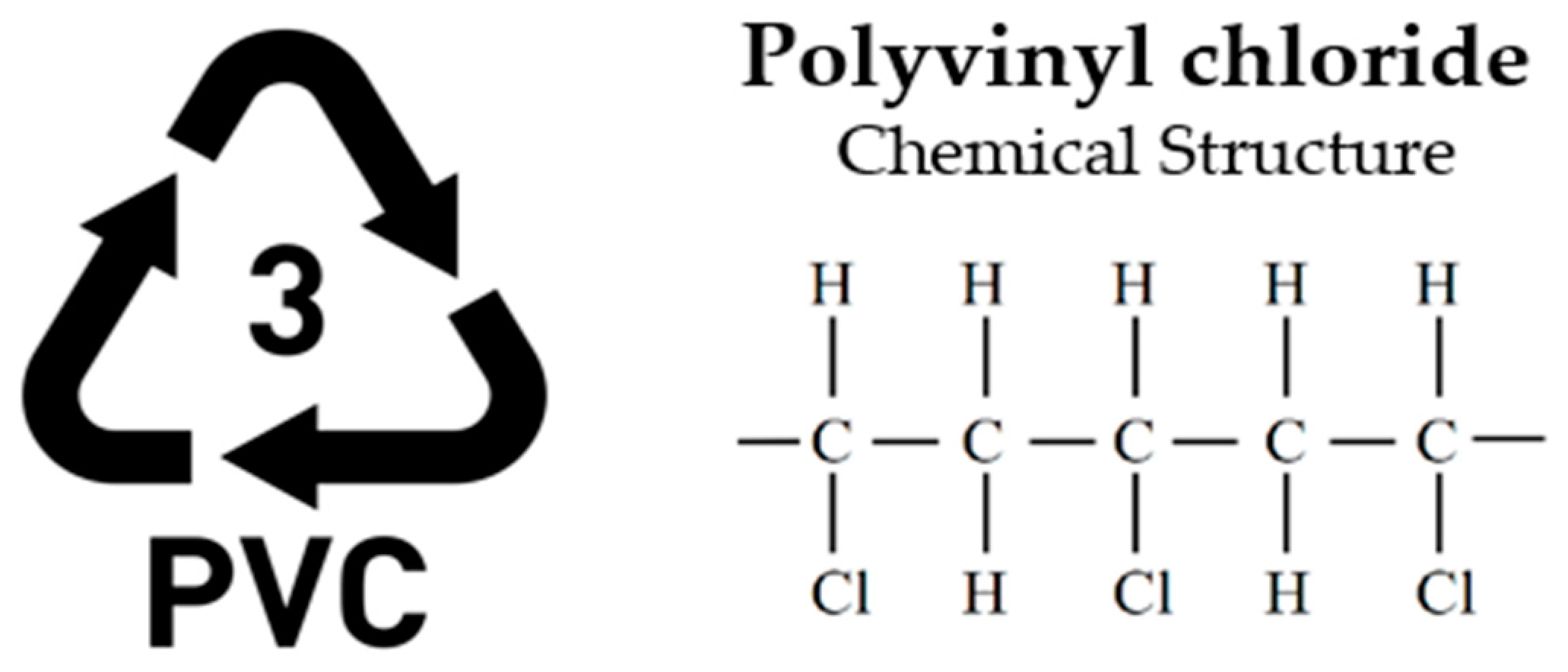
Applications: The physical properties of PVC (Figure 8), such as flexibility, rigidity, and color, are influenced by the specific additives employed, including lubricants, plasticizers, and pigments, which are tailored to achieve the desired performance in the final product. This versatility enables PVC to be extensively utilized across various industries, such as construction, electrical systems, and consumer goods.
Figure 8. Labeling and chemical structure of polyvinyl chloride (PVC).
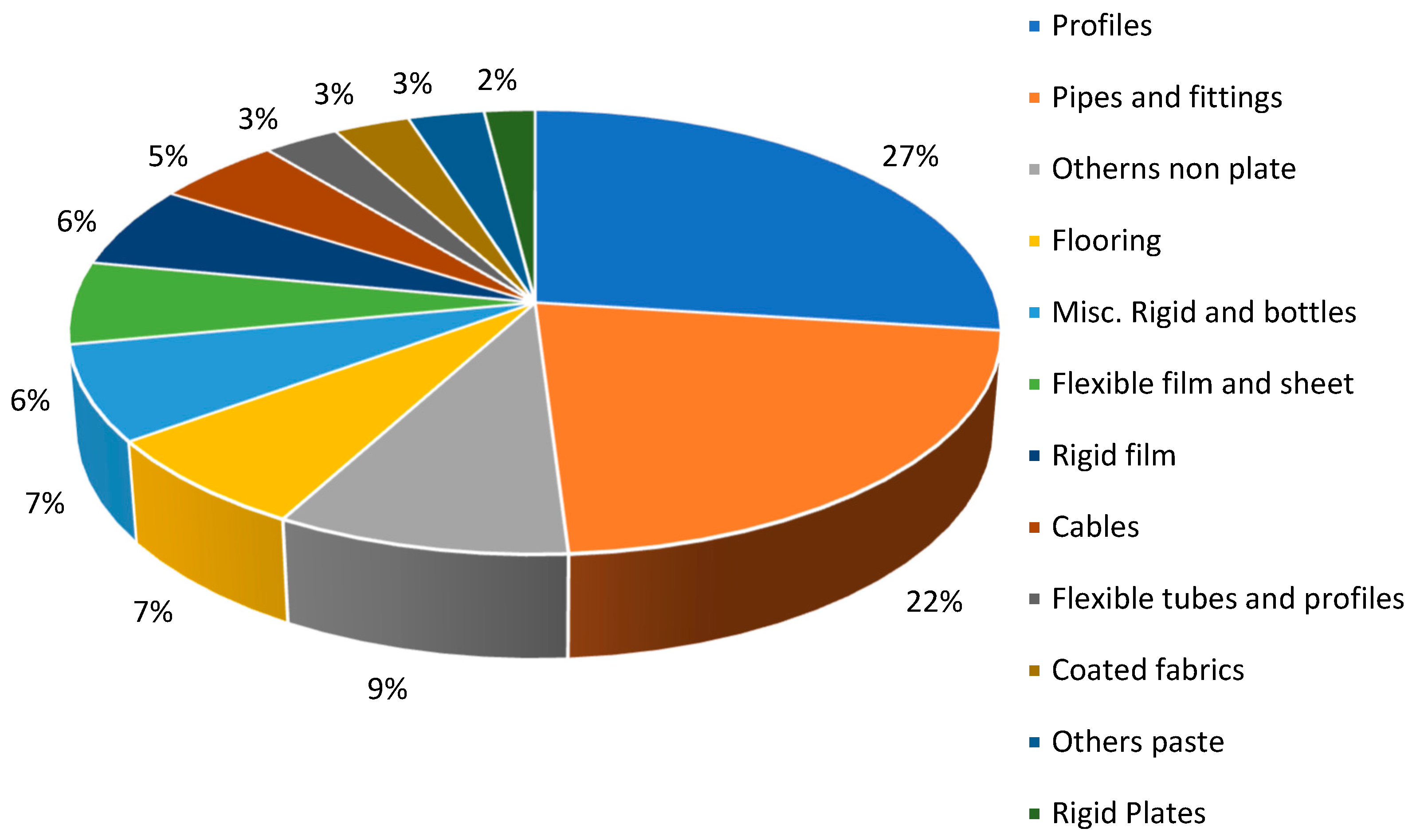
Notably, polyvinyl chloride (PVC) production in the EU-27, Norway, the UK, and Switzerland accounts for 6.5 million tons (Figure 9), reflecting its significant role in the materials industry. PVC is widely used in construction, automotive, and electrical applications due to its durability, chemical resistance, and cost-effectiveness. The high production volume also highlights the ongoing demand and economic importance of PVC in various industrial sectors, as well as efforts to improve its sustainability through recycling and eco-friendly production processes [46].
Figure 9. The diverse applications of the 6.5 million tons of PVC produced annually across the EU-27, Norway, the UK, and Switzerland [47].
  • Thermosetting: Bakelite
Applications: Electrical systems include non-conductive components found in telephones, radios, and various electronic devices, such as bases and sockets for light bulbs and vacuum tubes, supports for different electrical elements, distributor caps in automobiles, and insulators.
Temperature influences polymer behavior, leading to effects such as melting, degradation, and morphological changes (Table 1 and Table 2) [48]. It also impacts mechanical properties by increasing polymer chain mobility and free volume. These effects are characterized by two key temperatures: glass transition temperature, related to the amorphous regions, and melting temperature, associated with crystalline regions. Below the glass transition temperature, polymer chains remain in a rigid, glassy state, with limited movement. When heated above this threshold, polymers enter a rubbery state, where chain mobility increases, making the material soft and flexible. The heating process affects semi-crystalline polymers more complexly, where the amorphous regions soften first, providing initial flexibility, while crystalline regions retain their structure until the melting point. Furthermore, exceeding thermal stability thresholds can induce oxidative reactions, accelerating degradation. Prolonged heating of amorphous plastics causes them to soften and transition into a viscous liquid. For crystalline polymers, the melting temperature represents the point at which crystalline regions break down, leading to a dramatic loss in rigidity and strength. In semi-crystalline polymers, these transitions coexist, with the amorphous regions softening first, followed by the melting of crystalline structures. Additionally, heating polymers beyond a critical temperature can result in thermal degradation, where chemical bonds break, leading to molecular weight reduction and potential loss of mechanical properties. This degradation can manifest as discoloration, brittleness, or loss of elasticity, depending on the polymer type and exposure duration [49].
Table 1. Physical and mechanical characteristics of primary plastic materials 1/2 [45].
Table 2. Physical and mechanical characteristics of primary plastic materials 2/2 [45].
These tables present the physical and mechanical characteristics of primary plastic materials, highlighting key properties that influence their performance and applications. Table 1 outlines material-specific attributes, such as morphology, density etc., while Table 2 provides insights into initial degradation temperature, tensile strength, etc.

5. Quarterly Report—Q1/2024

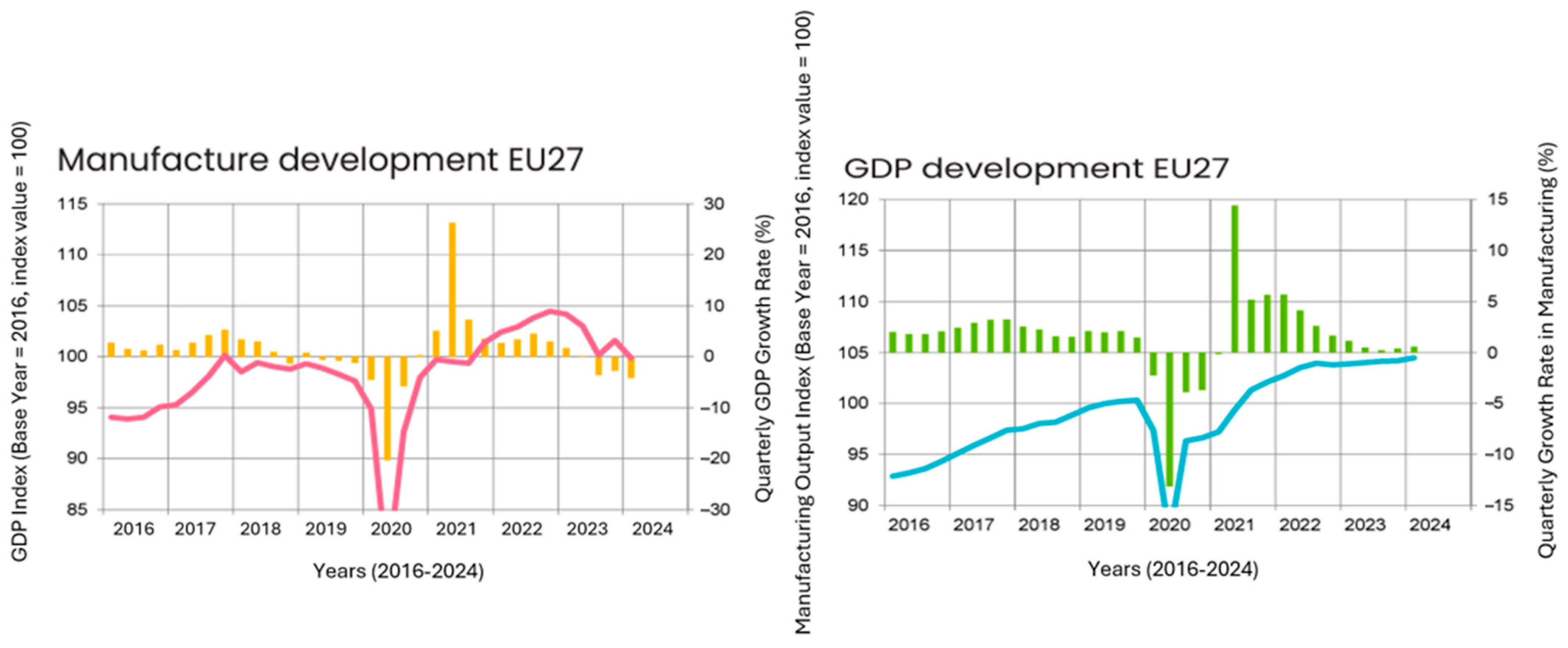
The global economic situation showed only modest improvement compared to the previous quarter. Emerging markets, such as China, exhibited more robust growth relative to developed regions, including the EU27 (Figure 18). The GDP of the EU27 saw a minimal rise of just 0.3% from the previous quarter. Persistent high inflation rates played a significant role in limiting the pace of recovery. In response, numerous central banks raised interest rates to curb inflation, which, while reducing inflationary pressures, also made access to credit more challenging, particularly for businesses seeking to expand. This, in turn, reduced the likelihood of corporate investments [104].
Figure 18. Production index—Q1 2024 [104].
Additionally, geopolitical tensions and protectionist policies have impacted global markets. However, rising wages contributed positively to consumer spending, and global industrial production increased by 1.1% quarter-over-quarter, surpassing the previous year’s figures by 2.8%. This growth mainly stemmed from countries like China, India, and Brazil. On the other hand, production saw declines in the US (−0.2%) and EU27 (−1.7%) compared to the last quarter (Table 3). While Germany and Spain experienced growth, countries like France, Italy, and Poland saw production decreases. Despite high inflation and rising production costs, there remain substantial opportunities to scale up chemical recycling technologies, which can lower material expenses, strengthen supply chain resilience, and support circular economy initiatives. Furthermore, adopting these technologies can enhance long-term sustainability, reduce dependence on virgin materials, and contribute to a more resilient and eco-friendlier industrial ecosystem [104,105].
Table 3. GDP and manufacturing development in EU27 [104].

5.1. Automotive Sector

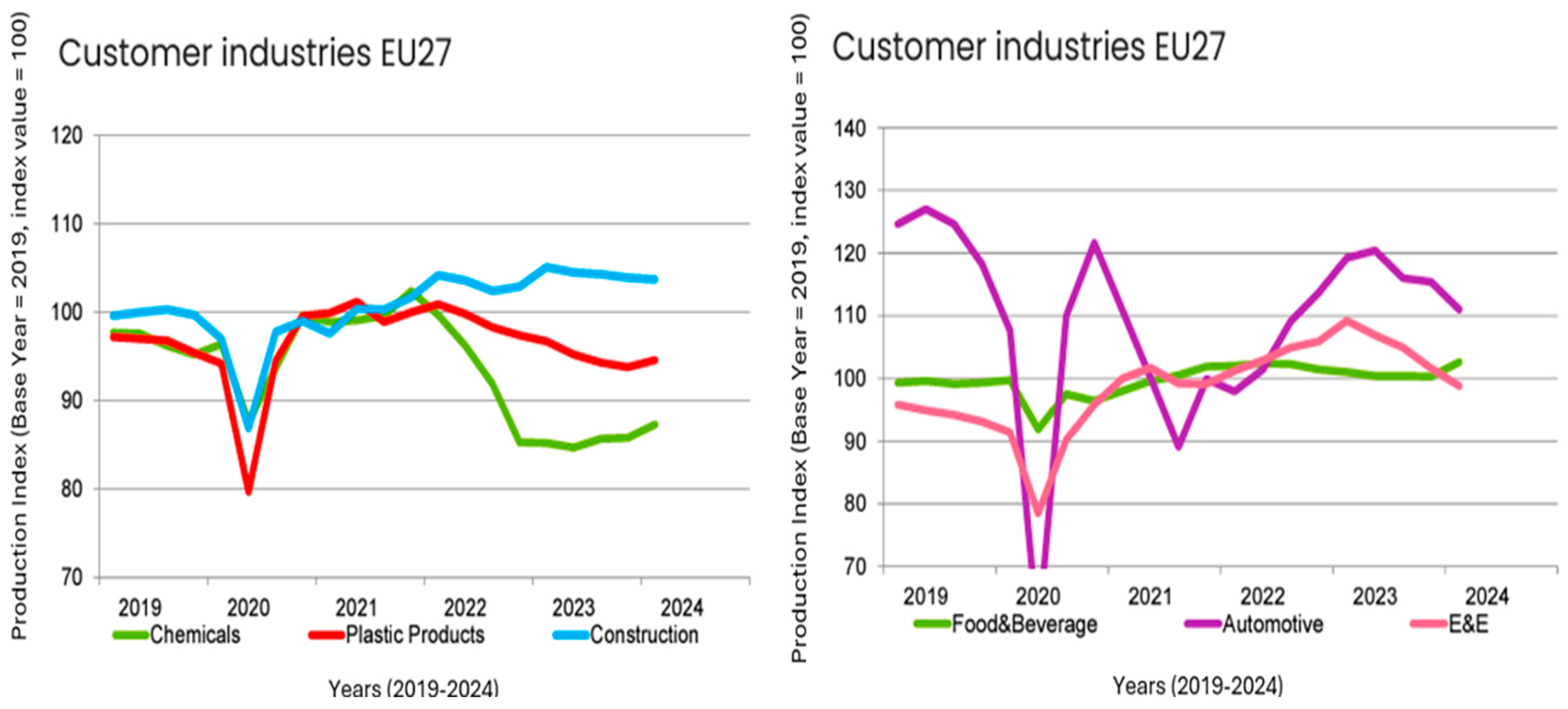
Industrial production in EU27 (Figure 19) contracted by 1.7% in comparison to the previous quarter, impacting key customer industries of plastics manufacturers. The European automotive sector experienced a production decline of 3.8%, marking the third consecutive quarter of negative growth. Demand for electric vehicles in particular remained subdued across Europe. Additionally, the electrical and electronics (E&E) sector saw a downturn in production. The easing of the exceptional conditions brought about by the COVID-19 pandemic, including social distancing measures and the shift to remote work, has resulted in reduced demand for E&E products. The construction sector faced only a slight decrease, although high interest rates continued to exert pressure on activity. This contraction across multiple industries underscores the challenging economic environment for plastics manufacturers reliant on these sectors [104].
Figure 19. Industrial production of plastics—Q1 2024 [104].
While the production of chemical and plastic products saw some recovery, chemical production remained significantly below pre-war levels. Energy-intensive sectors continue to struggle in Europe, facing ongoing challenges. After an extended period of stagnation, the food and beverage industry experienced a rebound in production (Table 4.) [104].
Table 4. Trends in customer industries in EU27 [104].
This industrial contraction highlights the vulnerability of plastics manufacturers to broader economic trends, such as shifting consumer demand, supply chain disruptions, and geopolitical uncertainties. Additionally, it emphasizes the need for strategic investments in sustainable manufacturing technologies, including chemical recycling, to improve material efficiency and reduce dependence on volatile markets. Embracing such initiatives can enhance resilience and competitiveness, ensuring long-term sustainability in a rapidly evolving economic landscape [104,105].

5.2. Production of Plastics

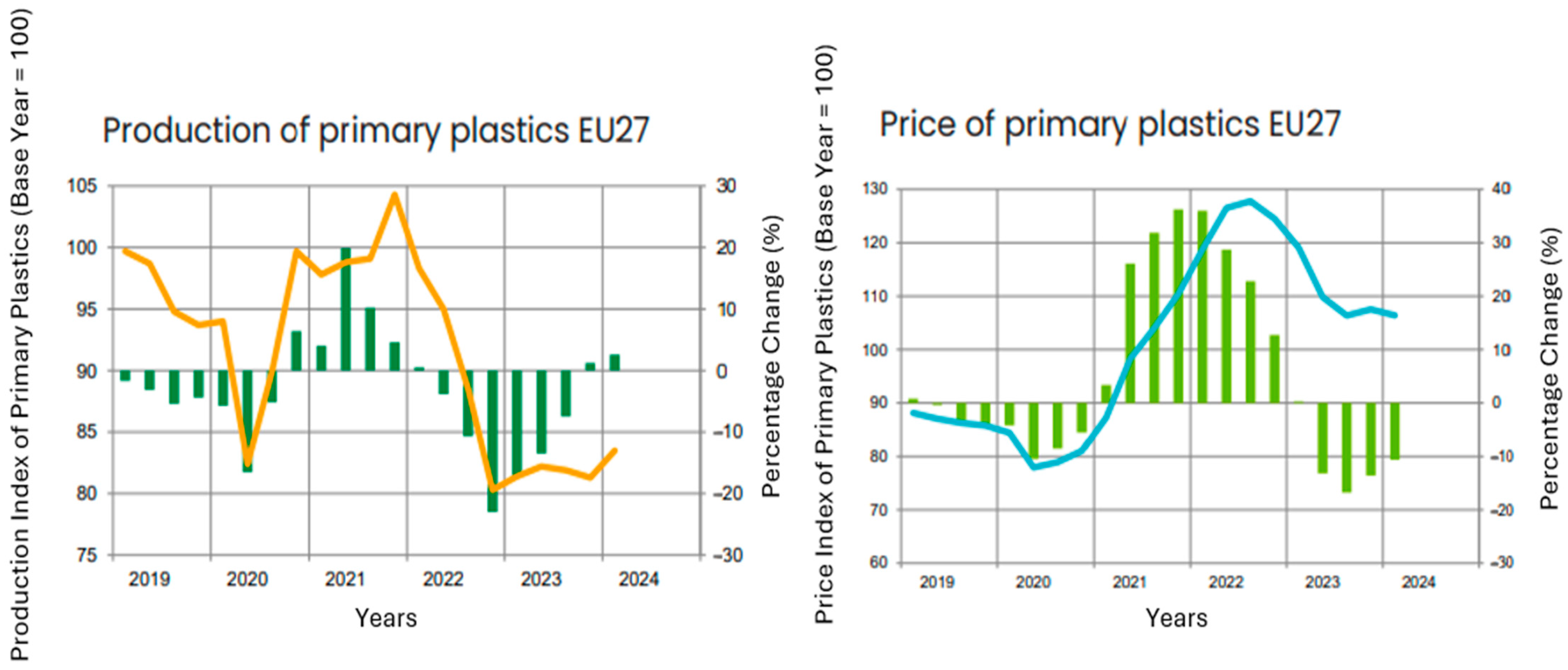
The production of plastics in primary forms experienced a notable reduction of 9.7% in 2023. However, this downward trend appeared to stabilize as the new year commenced. During the first quarter of 2024, production demonstrated a 2.7% increase compared to the previous quarter, surpassing levels recorded during the same period in the prior year (Figure 20). This improvement can largely be attributed to growing demand from industries outside Europe, driven by an upswing in global industrial output. Conversely, industrial activity within Europe continued to decline. Nonetheless, European industries slightly raised their orders for plastics, motivated by concerns over potential supply chain disruptions and inadequate inventory levels. Despite these early signs of recovery in 2024, the overall production levels of plastics in primary forms remained subdued. Persistent challenges, including elevated production costs and excessive bureaucratic hurdles within Europe, continued to constrain output [104].
Figure 20. Production of primary plastics—Q1 2024 [104].
Producer prices for plastics in primary forms experienced a steep decline in 2023, primarily due to a global decrease in demand. Although this trend persisted into 2024, the rate of price reduction slowed. While demand for plastics began to recover, prices remained 1% lower than in the previous quarter and were significantly reduced compared to the same period last year (Table 5.). European manufacturers faced additional challenges due to higher energy costs relative to other regions, which further inflated production expenses. This disparity intensified financial pressures on European producers, further squeezing profit margins. Moreover, the heightened energy costs are exacerbated by stricter environmental regulations, which necessitate significant investments in emissions-reducing technologies. While such measures align with long-term sustainability goals, they add immediate financial strain on producers operating within the European market. Additionally, limited access to affordable feedstocks and reliance on imports contribute to heightened material costs, further reducing price competitiveness on a global scale [104,105].
Table 5. Production and price trends of plastics in primary forms in EU27 [104].

5.3. Foreign Trade

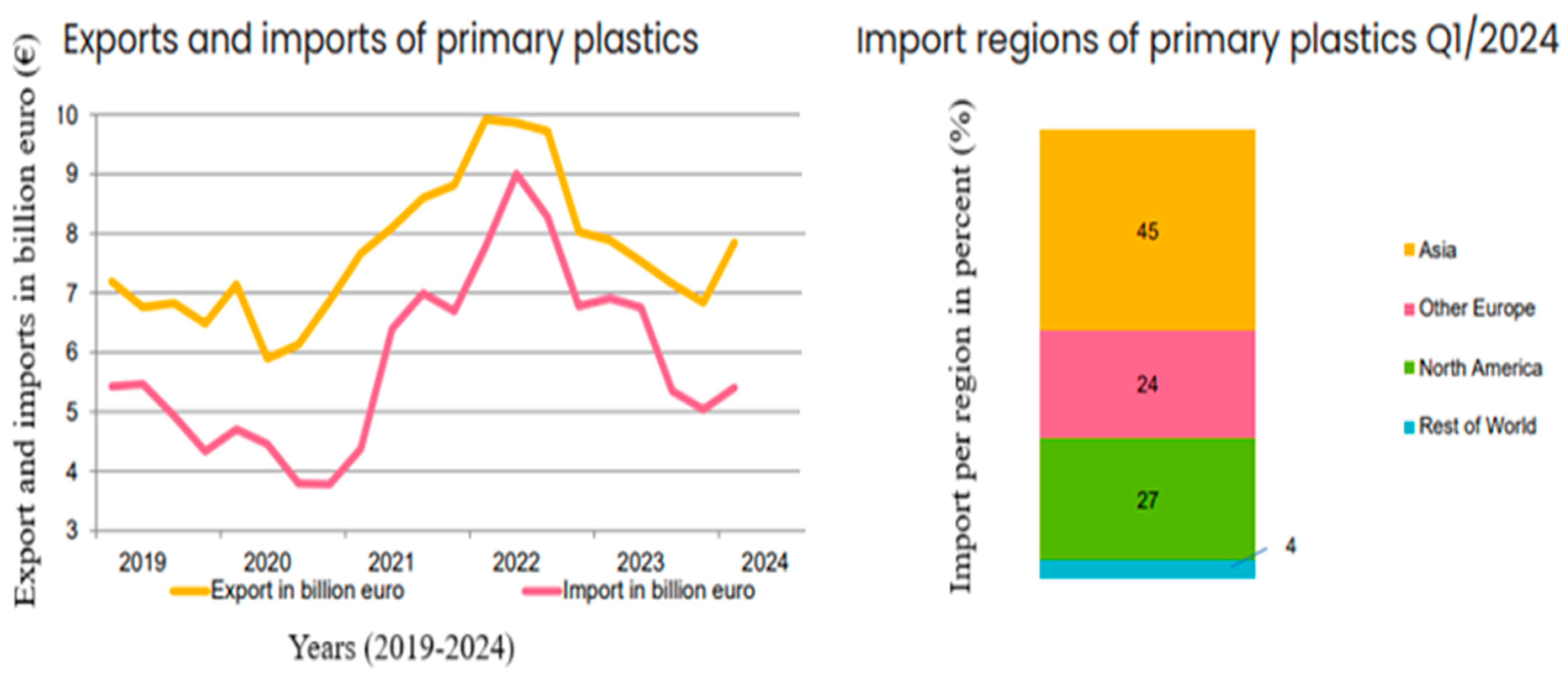
In the first quarter of 2024, the export value of plastics in primary forms reached 7.85 billion euros, marking a significant rise compared to the previous quarter (Figure 21). This increase was the first since Q1 2022, driven by a rebound in global economic activity, which boosted international trade. Exports increased across all regions, with the largest gains observed in Europe (excluding the EU) and North America. However, despite the quarterly growth, exports of plastics in primary forms remained lower compared to the same period last year. This rebound in export activity reflects the partial stabilization of global supply chains and a gradual recovery from trade disruptions observed during the previous economic downturns. The growth in demand outside the EU highlights the increasingly interconnected nature of global markets and underscores the importance of fostering trade agreements and improving logistical frameworks to sustain this momentum. Furthermore, the strategic role of plastics in primary forms as key inputs for various industrial sectors, including automotive and construction, suggests potential for further export growth as international production activities normalize [104].
Figure 21. Export and imports—Q1 2024 [104].
Similarly, the value of imports of plastics in primary forms to the EU27 rose to 5.41 billion euros, with import growth noted across all regions (Table 6.). As with exports, Europe and North America posted the highest growth rates. Despite these increases, imports of plastics in primary forms remained below last year’s levels. The downturn in imports appears to have passed for the EU, signaling the start of recovery. The trade balance improved and stayed positive. The rise in import values reflects both a stabilization of domestic consumption patterns and a strategic effort by EU27 industries to mitigate risks associated with supply chain disruptions. By diversifying sources of imports, industries are aiming to secure consistent access to raw materials essential for manufacturing processes [104,105].
Table 6. Comparison of exports and imports of plastics in primary forms in EU27 [104].

5.4. European Plastics Manufacturers

The production of plastics in primary forms rose by 2.7% compared to the previous quarter and exceeded the levels observed in the same period last year. This growth was primarily driven by demand from industries outside of Europe. While global industrial output saw an increase, the EU27 experienced a 1.7% decline in production. Despite signs of recovery, the outlook for European plastics manufacturers remains challenging. Current production levels are still approximately 20% lower than those recorded before the onset of the conflict in Ukraine. High production costs in Europe, compared to other regions, continue to undermine the competitiveness of the continent as a manufacturing base. Additionally, many companies are unable to fully pass on these elevated costs, putting significant pressure on profit margins within the European plastics industry. The ongoing shortage of orders is also a major obstacle for the sector [104].
Moreover, regulatory pressures and sustainability goals further complicate the recovery for European plastics manufacturers. Many companies face increased scrutiny regarding environmental compliance and the transition toward circular economy practices, which often requires substantial investments in green technologies. Combined with high energy costs and logistical challenges, this puts additional strain on production capabilities. Looking forward, the global economic outlook appears to be improving. Inflation rates are declining, and several central banks, particularly in emerging markets, have begun to reduce interest rates. A similar trend may emerge in the Eurozone shortly. Lower inflation and interest rates are expected to stimulate consumer spending and investment, leading to increased demand for industrial goods and plastics. Additionally, the stabilization of global supply chains and easing of geopolitical tensions could positively impact trade and industrial activities [105].
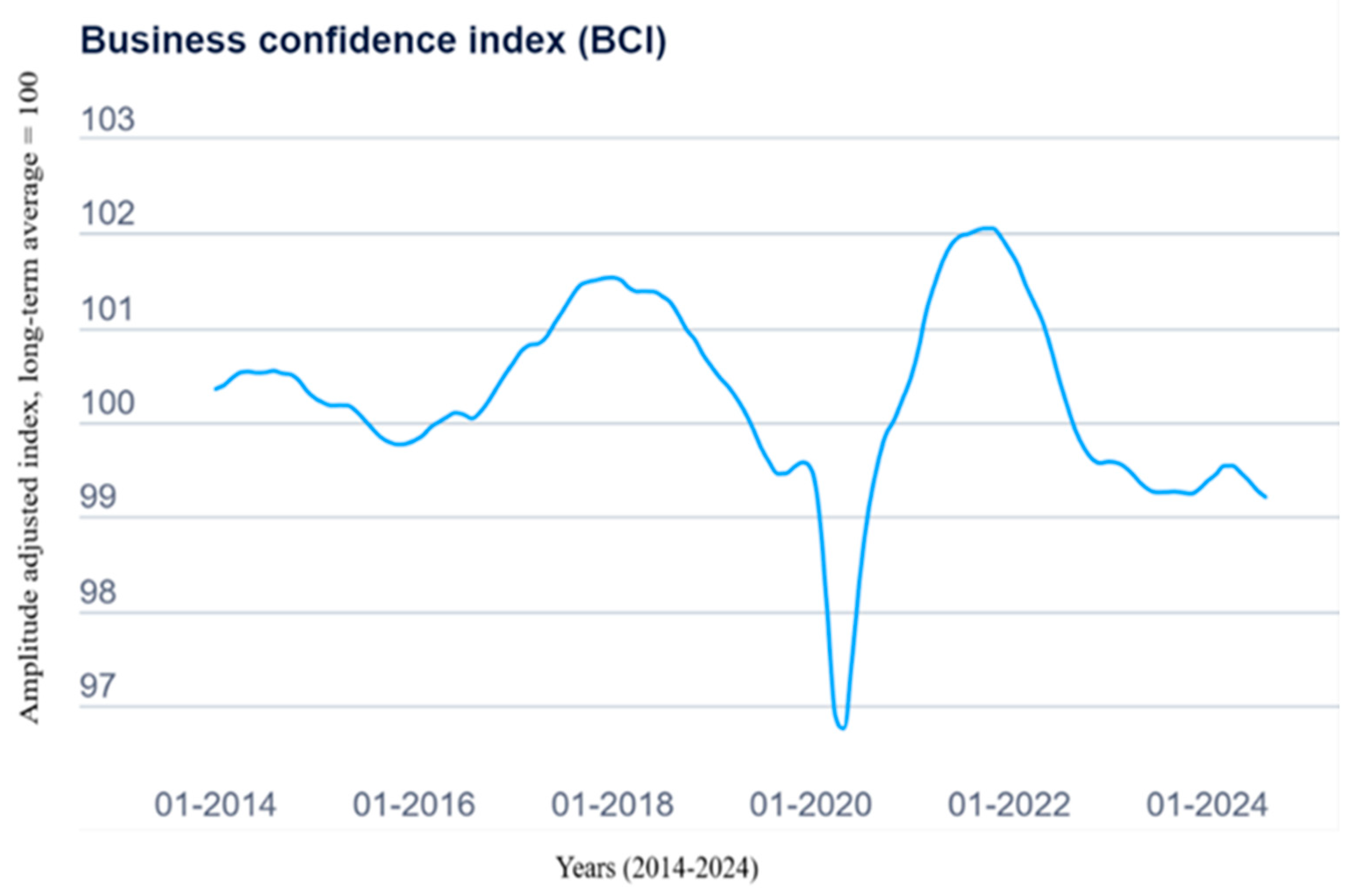
The Business Confidence Indicator (BCI), published by the OECD, serves as a tool to track industrial output growth and forecast key turning points in economic activity (Figure 22). This index is based on surveys assessing trends in production, orders, and inventories of finished goods in the industrial sector. A value above 100 indicates optimism regarding near-term business performance, while values below 100 reflect pessimism. In June 2024, the BCI continued its decline, falling to 99.42 points, indicating a cautious outlook. The decline reflects ongoing uncertainty fueled by high inflation rates, geopolitical tensions, and sluggish industrial recovery in key global markets. Despite this, pockets of growth in emerging markets and improving trade conditions offer some positive signals for future business sentiment [105].
Figure 22. Business Confidence Index (BCI) [105].

6. Conclusions and Future Directions

The state of polymer recycling is currently at a critical juncture, as it confronts the escalating environmental challenges associated with plastic waste. Traditional mechanical recycling methods have proven inadequate, prompting a shift towards innovative chemical and biological recycling processes such as pyrolysis, depolymerization, and enzyme-based degradation. These advanced technologies provide more sustainable solutions aligned with the principles of a circular economy, wherein materials are perpetually reused to minimize waste generation. Nevertheless, substantial obstacles persist in scaling these methodologies, including the need to ensure that recycled polymers meet established performance standards.
To advance polymer recycling, future efforts must concentrate on enhancing the scalability and efficiency of these chemical and biological processes. While technologies such as pyrolysis and enzymatic degradation show significant promise, their widespread implementation hinges on the successful navigation of technical challenges and regulatory barriers. The establishment of closed-loop recycling systems is crucial, as they guarantee that materials can be reused without significant degradation in quality.
Furthermore, research initiatives should prioritize the development of recycled polymers that exhibit properties comparable to those of virgin plastics, thereby expanding their applicability across various industrial sectors. Collaboration between industry stakeholders and policymakers will be essential for establishing more robust waste management frameworks, particularly in regions with underdeveloped post-consumer waste infrastructures. The integration of automation, AI-driven sorting technologies, and sustainable product design principles will also play pivotal roles in enhancing recycling initiatives.
The economic context, as highlighted in the Quarterly Report 2024, further complicates the landscape of recycling. The EU27 experienced only minimal GDP growth of 0.3% and a notable 1.7% decline in industrial production, particularly in critical sectors such as automotive and electronics. The automotive industry, which significantly influences plastics demand, contracted by 3.8%, marking its third consecutive quarter of negative growth. Despite these challenges, the production of plastics in primary forms showed early signs of recovery in Q1 2024, with a 2.7% quarterly increase, driven by demand from outside Europe and improved trade dynamics. Producer prices for plastics, although still lower than in the previous year, began to stabilize, signaling a shift toward economic recovery. Additionally, global trade in plastics exhibited resilience, with exports rising significantly compared to the prior quarter, particularly to non-European regions. Imports to the EU27 also increased, reflecting recovering demand and improved trade balances. These trends underscore the importance of addressing cost disparities and fostering innovation to sustain growth in the plastics sector.
In conclusion, while the polymer recycling sector faces formidable challenges, ongoing technological advancements, economic recovery, and collaborative efforts across various industries present a viable pathway forward. By addressing both the technical and economic barriers to effective recycling and aligning with circular economy principles, the sector has the potential to significantly contribute to a more sustainable framework for plastic waste management. This transition, supported by conducive regulatory environments, industrial innovation, and improving market conditions, will be essential in ensuring long-term sustainability amidst evolving environmental and economic pressures.

Author Contributions

D.P. conceived and wrote the paper; J.D. and P.M. analyzed and evaluated data, processed data. All authors have read and agreed to the published version of the manuscript.

Funding

This research has been elaborated in the framework of the projects VEGA no. 1/0488/23 and VEGA no. 1/0453/24 were granted by the Ministry of Education, Science, Research and Sport of the Slovak Republic. This publication is the result of the Project implementation: Development of excellent research capacities in the field of additive technologies for the Industry of the 21st century, ITMS: 313011BWN5, supported by the Operational Program Integrated Infrastructure funded by the ERDF. This paper is the result of the Project implementation: Automation and robotization for 21st century manufacturing processes—ITMS: 313011T566—supported by the Operational Programme Research and Innovation funded by the ERDF.

Institutional Review Board Statement

Not applicable.

Data Availability Statement

Not applicable.

Conflicts of Interest

The authors declare no conflicts of interest. The founding sponsors had no role in the design of the study; in the collection, analyses, or interpretation of the data; in the writing of the manuscript; or in the decision to publish the results.

References

  1. Geyer, R.; Jambeck, J.R.; Law, K.L. Production, use, and fate of all plastic ever made. Sci. Adv. 2017, 3, e1700782. [Google Scholar] [CrossRef] [PubMed]
  2. World Steel Association (WSA). Steel Statistical Yearbooks 1978 to 2016. Available online: www.worldsteel.org/steel-by-topic/statistics/steel-statistical-yearbook-.html (accessed on 28 October 2024).
  3. U.S. Geological Survey (USGS). Cement Statistics and Information. Available online: https://minerals.usgs.gov/minerals/pubs/commodity/cement/ (accessed on 28 October 2024).
  4. Khalid, M.Y.; Arif, Z.U.; Ahmed, W.; Arshad, H. Recent trends in recycling and reusing techniques of different plastic and polymers and their composite materials. Sustain. Mater. Technol. 2022, 31, e00382. [Google Scholar] [CrossRef]
  5. Wu, J.H.; Zhang, C.; Meng, Q.N.; Liu, B.C.; Sun, Y.H.; Wen, M.; Ma, S.M.; He, L.K. Study on tensile properties of carbon fiber reinforced AA7075 composites at high temperatures. Mater. Sci. Eng. A 2021, 825, 141931. [Google Scholar] [CrossRef]
  6. Cardona-Vivas, N.; Correa, M.A.; Colorado, H.A. Multifunctional composites obtained from combination of conductive polymer with different contents of primary battery waste powders. Sustain. Mater. Technol. 2021, 28, e00281. [Google Scholar] [CrossRef]
  7. Olivera, S.; Muralidhara, H.B.; Venkatesh, K.; Guna, V.K.; Gopalakrishna, K.; Kumar, K.Y. Potential applications of cellulose and chitosan nanoparticles/composites in wastewater treatment: A review. Carbohyd Polym. 2016, 153, 600–618. [Google Scholar] [CrossRef] [PubMed]
  8. Gonçalves, R.; Miranda, D.; Almeida, A.M.; Silva, M.M.; Meseguer-Duenas, J.M.; Ribelles, J.L.G.; Lanceros-Méndez, S.; Costa, C.M. Solid polymer electrolytes based on lithium bis(trifuoromethanesulfonyl)imide/poly(vinylidene fluoride-co-hexafluoropropylene) for safer rechargeable lithium-ion batteries. Sustain. Mater. Technol. 2019, 21, e00104. [Google Scholar]
  9. Selvan, R.T.; Raja, P.V.; Mangal, P.; Mohan, N.; Bhowmik, S. Recycling technology of epoxy glass fiber and epoxy carbon fiber composites used in aerospace vehicles. J. Compos. Mater. 2021, 55, 3281–3292. [Google Scholar] [CrossRef]
  10. Stergiou, V.; Konstantopoulos, G.; Charitidis, C.A. Carbon Fiber Reinforces Plastics in Space: Life Cycle Assessment towards Improved Sustainability of Space Vehicles. J. Compos. Sci. 2022, 6, 144. [Google Scholar] [CrossRef]
  11. Sommer, V.; Walther, G. Recycling and recovery infrastructures for glass and carbon fibre reinforced plastic waste from wind energy industry: A European case study. Waste Manag. 2021, 121, 265–275. [Google Scholar] [CrossRef] [PubMed]
  12. Al-Salem, S.M.; Lettieri, P.; Baeyens, J. Recycling and recovery routes of plastic solid waste (PSW): A review. Waste Manag. 2009, 29, 2625–2643. [Google Scholar] [CrossRef] [PubMed]
  13. Ignatyev, I.A.; Thielemans, W.; Vander Beke, B. Recycling of Polymers: A review. ChemSusChem 2014, 7, 1579–1593. [Google Scholar] [CrossRef] [PubMed]
  14. Dobransky, J.; Pollak, M.; Kocisko, M.; Kascak, J.; Torokova, M. Effect of Technological Waste on Rheological Properties of the Polymer Composite. Manuf. Technol. 2021, 21, 51–55. [Google Scholar] [CrossRef]
  15. Jung, H.Y.N.; Shin, G.; Kwak, H.; Hao, L.T.; Jegal, J.; Kim, H.J.; Jeon, H.; Park, J.; Oh, D.X. Review of polymer technologies for improving the recycling and upcycling efficiency of plastic waste. Chemosphere 2023, 320, 138089. [Google Scholar] [CrossRef] [PubMed]
  16. Ragaert, K.; Delva, L.; Van Geem, K. Mechanical and chemical recycling of solid plastic waste. Waste Manag. 2017, 69, 24–58. [Google Scholar] [CrossRef] [PubMed]
  17. Hubo, S.; Delva, L.; Van Damme, N.; Ragaert, K. Blending of recycled mixed polyolefins with recycled polypropylene: Effect on physical and mechanical properties. AIP Conf. Proc. 2016, 1779, 140006. [Google Scholar]
  18. Hubo, S.; Leite, L.; Martins, C.; Ragaert, K. Evaluation of post-industrial and post-consumer polyolefin-based polymer waste streams for injection moulding. In Proceedings of the 6th Polymer and Moulds Innovation Conference, Guimaraes, Portugal, 10–12 September 2014. [Google Scholar]
  19. Correira, J.R.; Almeida, N.M.; Figueira, J.R. Recycling of FRP composites: Reusing fine GFRP waste in concrete mixtures. J. Clean. Prod. 2011, 19, 1745–1753. [Google Scholar] [CrossRef]
  20. Gharde, S.; Kandasubramanian, B. Mechanothermal and chemical recycling methodologies for the Fibre Reinforced Plastic (FRP). Environ. Technol. Innov. 2019, 14, 100311. [Google Scholar] [CrossRef]
  21. Berger, F.; Gauvin, F.; Brouwers, H.J.H. The recycling potential of wood waste into wood-wool/cement composite. Constr. Build. Mater. 2020, 260, 119786. [Google Scholar] [CrossRef]
  22. Yang, L.; Sáez, E.R.; Nagel, U.; Thomason, J.L. Can thermally degraded glass fibre be regenerated for closed-loop recycling of thermosetting composites? Compos. Part A Appl. Sci. Manuf. 2015, 72, 167–174. [Google Scholar] [CrossRef]
  23. Ferdous, W.; Manalo, A.; Siddique, R.; Mendis, P.; Yan, Z.G.; Wong, H.S.; Lokuge, W.; Aravinthan, T.; Schubel, P. Recycling of landfill wastes (tyres, plastics and glass) in construction—A review on global waste generation, performance, application and future opportunities. Resour. Conserv. Recycl. 2021, 173, 105745. [Google Scholar] [CrossRef]
  24. Demets, R.; Van Kets, K.; Huysveld, S.; Dewulf, J.; De Meester, S.; Ragaert, K. Addressing the complex challenge of understanding and quantifying substitutability for recycled plastics. Resour. Conserv. Recycl. 2021, 174, 105826. [Google Scholar] [CrossRef]
  25. Ellis, L.D.; Rorrer, N.A.; Sullivan, K.P.; Otto, M.; McGeehan, J.E.; Román-Leshkov, Y.; Wierckx, N.; Beckham, G.T. Chemical and biological catalysis for plastics recycling and upcycling. Nat. Catal. 2021, 4, 539–556. [Google Scholar] [CrossRef]
  26. Thuy, V.T.T.; Hao, L.T.; Jeon, H.; Koo, J.M.; Park, J.; Lee, E.S.; Hwang, S.Y.; Choi, S.; Park, J.; Dongyeop, X.O. Sustainable, self-cleaning, transparent, and moisture/oxygen-barrier coating films for food packaging. Green. Chem. 2021, 23, 2658–2667. [Google Scholar] [CrossRef]
  27. The Circular Economy for Plastics—A European Analysis 2024: Plastics Europe. Retrieved from Plastics Europe. Available online: https://plasticseurope.org/knowledge-hub/the-circular-economy-for-plastics-a-european-analysis-2024/ (accessed on 30 October 2024).
  28. SYSTEMIQ. ReShaping Plastics: Pathways to a Circular, Climate Neutral Plastics System in Europe. 2022. Available online: https://plasticseurope.org/wp-content/uploads/2022/04/SYSTEMIQ-ReShapingPlastics-April2022.pdf (accessed on 30 October 2024).
  29. Schirmeister, C.G.; Mulhaupt, R. Closing the Carbon Loop in the Circular Plastics Economy. Macromol. Rapid Commun. 2022, 43, 2200247. [Google Scholar] [CrossRef] [PubMed]
  30. European Commission. An EU Action Plan for the Circular Economy. COM (2015) 614. 2015. Available online: https://www.eea.europa.eu/policy-documents/com-2015-0614-final (accessed on 2 November 2024).
  31. Piontek, W. The Circular Plastics Economy and the Instruments to Implement it. Econ. Environ. 2019, 3, 18–33. [Google Scholar]
  32. Foschi, E.; Bonoli, A. The Commitment of Packaging Industry in the Framework of the European Strategy for Plastics in a Circular Economy. Adm. Sci. 2019, 9, 18. [Google Scholar] [CrossRef]
  33. The Plastics Transition: Plastics Europe. Retrieved from Plastics Europe. 2024. Available online: https://plasticseurope.org/changingplasticsforgood/the-plastics-transition/ (accessed on 2 November 2024).
  34. Von Vacano, B.; Mangold, H.; Vandermeulen, G.W.M.; Battagliarin, G.; Hofmann, M.; Bean, J.; Kuenkel, A. Sustainable Design of Structural and Functional Polymers for a Circular Economy. Angew. Chem. Int. Ed. 2022, 62, e202210823. [Google Scholar] [CrossRef] [PubMed]
  35. Fenwick, C.; Mayers, K.; Lee, J.; Murphy, R. Recycling plastics from e-waste: Implications for effective eco-design. J. Ind. Ecol. 2023, 27, 1370–1388. [Google Scholar] [CrossRef]
  36. Jagadeesh, P.; Rangappa, S.M.; Siengchin, S.; Puttegowda, M.; Thiagamani, S.M.K.; Rajeshkumar, G.; Kumar, M.H.; Oladijo, O.P.; Fiore, V.; Cuadrado, M. Sustainable recycling technologies for thermoplastic polymers and their composites: A review of the state of the art. Polym. Compos. 2022, 43, 5831–5862. [Google Scholar] [CrossRef]
  37. Daborn, G.R.; Derry, R. Crogenic communition in scrap recycling. Resour. Conserv. Recycl. 1998, 1, 49–63. [Google Scholar] [CrossRef]
  38. Singh, N.; Hui, D.; Singh, R.; Ahuja, I.P.S.; Feo, L.; Fraternali, F. Recycling of plastic solid waste: A state of art review and future applications. Compos. Part B Eng. 2017, 115, 409–422. [Google Scholar] [CrossRef]
  39. Yu, J.; Sun, L.S.; Ma, C.; Qiao, Y.; Yao, H. Thermal degradation of PVC: A review. Waste Manag. 2016, 48, 300–314. [Google Scholar] [CrossRef] [PubMed]
  40. Rezakalla, A.I.; Petrovna, S.T. Study of Mechanical Properties of Recycled Polyethylene of High and Low Density. Mater. Plast. 2021, 58, 210–215. [Google Scholar] [CrossRef]
  41. Li, X.M.; Mahadas, N.A.; Zhang, M.X.; Depodesta, J.; Stefik, M.; Tang, C.B. Sustainable high-density polyethylene via chemical recycling: From modification to polymerization methods. Polymer 2024, 295, 126698. [Google Scholar] [CrossRef]
  42. Wang, J.C.; Li, Y.C.; Qiu, Z.M.; Zhang, Y.Q. Experimental research on compressive properties of recycling polypropylene (PP) fiber recycled coarse aggregate concrete. J. Build. Eng. 2023, 76, 107403. [Google Scholar] [CrossRef]
  43. Germane, L.; Berzina, A.; Eglitis, R.; Iesalnieks, M.; Lungevics, J.; Linarts, A.; Sutka, A.; Lapcinskis, L. Physical and Chemical Surface Modification of Recycled Polystyrene Films for Improved Triboelectric Properties. Energy Technol. 2024, 12, 2400762. [Google Scholar] [CrossRef]
  44. Nistico, R. Polyethylene terephthalate (PET) in the packaging industry. Polym. Test. 2020, 90, 106707. [Google Scholar] [CrossRef]
  45. Babaei, M.; Jalilian, M.; Shahbaz, K. Chemical recycling of Polyethylene terephthalate: A mini-review. J. Environ. Chem. Eng. 2024, 12, 112507. [Google Scholar] [CrossRef]
  46. Ait-Touchente, Z.; Khellaf, M.; Raffin, G.; Lebaz, N.; Elaissari, A. Recent advances in polyvinyl chloride (PVC) recycling. Polym. Adv. Technol. 2023, 35, e6228. [Google Scholar] [CrossRef]
  47. The European Council of Vinyl Manufacturers. PVC Applications 2024, Retrieved from ECMV. Available online: https://pvc.org/pvc-applications/ (accessed on 2 November 2024).
  48. Fleischhaker, F.; Haehnel, A.P.; Misske, A.M.; Blanchot, M.; Haremza, S.; Barner-Kowollik, C. Glass-Transition-, Melting-, and Decomposition Temperatures of Tailored Polyacrylates and Polymethacrylates: General Trends and Structure-Property Relationships. Macromol. Chem. Phys. 2014, 215, 1192–1200. [Google Scholar] [CrossRef]
  49. Li, H.Q.; Aguirre-Villegas, H.A.; Allen, R.D.; Bai, X.L.; Benson, C.H.; Beckham, G.T.; Bradshaw, S.L.; Brown, J.L.; Brown, R.C.; Cecon, V.S.; et al. Expanding plastics recycling technologies: Chemical aspects, technology status and challenges. Green. Chem. 2022, 25, 791–792. [Google Scholar] [CrossRef]
  50. Kumar, R.; Singh, R.; Ahuja, I.P.S.; Hashmi, M.S.J. Processing techniques of polymeric materials and their reinforced composites. Adv. Mater. Res. 2020, 6, 591–607. [Google Scholar] [CrossRef]
  51. Kolluru, S.; Thakur, A.; Tamakuwala, D.; Kumar, V.V.; Ramakrishna, S.; Chandran, S. Sustainable recycling of polymers: A comprehensive review. Polym. Bull. 2024, 81, 9569–9610. [Google Scholar] [CrossRef]
  52. Goodship, V. Plastic Recycling. Sci. Prog. 2007, 90, 245–268. [Google Scholar] [CrossRef] [PubMed]
  53. Zinser, J. Top 4 Benefits of Customized, Closed-Loop and End-of-Life Recycling Programs for Automakers; Novelis Inc. 2023. Available online: https://investors.novelis.com/news-events/press-releases/detail/25/top-4-benefits-of-customized-closed-loop-and-end-of-life-recycling-programs-for-automakers (accessed on 2 November 2024).
  54. Garcia, J.C.; Marcilla, A.; Beltran, M. The effect of adding processed PVC on the rheology of PVC plastisols. Polymer 1998, 39, 2261–2267. [Google Scholar] [CrossRef]
  55. Al-Salem, S.M.; Lettieri, P.; Baeyens, J. The valorization of plastic solid waste (PSW) by primary to quaternary routes: From re-use to energy and chemicals. Prog. Energ. Combust. 2010, 36, 103–129. [Google Scholar] [CrossRef]
  56. Baillie, C.; Matovic, D.; Thamae, T.; Vaja, S. Waste-based composites-Poverty reducing solutions to environmental problems. Resour. Conserv. Recycl. 2011, 55, 973–978. [Google Scholar] [CrossRef]
  57. Francis, R. Recycling of Polymers: Methods, Characterization and Applications; Wiley-VCH: Hoboken, NJ, USA, 2017. [Google Scholar]
  58. Achilias, D.S. Material Recycling—Trends and Perspectives; IntechOpen: Rijeka, Croatia, 2012. [Google Scholar]
  59. Dobry, A.; Boyerkawenoki, F. Phase separation in polymer solution. J. Polym. Sci. 1947, 2, 90–100. [Google Scholar] [CrossRef]
  60. Hopewell, J.; Dvorak, R.; Kosior, E. Plastic recycling: Challenges and opportunities. Philos. Trans. R. Soc. B 2009, 364, 2115–2126. [Google Scholar] [CrossRef]
  61. Arvanitoyannis, I.S.; Bosnea, L.A. Recycling of polymeric materials used for food packaging: Current status and perspectives. Food Rev. Int. 2001, 17, 291–346. [Google Scholar] [CrossRef]
  62. Brems, A.; Baeyens, J.; Dewil, R. Recycling and recovery of post-consumer plastic solid waste in a European context. Therm. Sci. 2012, 16, 669–685. [Google Scholar] [CrossRef]
  63. Gaur, A.; Shukla, A.; Saxena, D.; Maiti, P. Polymer Composites for Structural, Device, and Biomedical Applications. Mater. Sci. Technol. 2019, 1–34. [Google Scholar] [CrossRef]
  64. Oladele, I.O.; Otomosho, T.F.; Adediran, A.A. Polymer-based composites: An indispensable material for present and future applications. Int. J. Polym. Sci. 2020, 2020, 8834518. [Google Scholar] [CrossRef]
  65. Dubey, S.C.H.; Mishra, V.; Sharma, A. A review on polymer composites with waste material as reinforcement. Mater. Today Proc. 2021, 47, 2846–2851. [Google Scholar] [CrossRef]
  66. Kovačevič, T.; Brzic, S.; Kalagasidis, M. Reuse potential of functionalized thermoplastic waste as reinforcement for thermoset polymers: Mechanical properties and erosion resistance. J. Compos. Mater. 2021, 55, 4207–4220. [Google Scholar] [CrossRef]
  67. Stielmann, M. Closing the loop on chemical recycling in Europe. In European Plastics Manufacturers Plan 7.2 Billion Euros of Investment in Chemical Recycling; Press Release: Brussels, Belgium, 2021. [Google Scholar]
  68. Chemical Recycling—British Plastics Federation. 2024. Available online: https://www.bpf.co.uk/plastipedia/chemical-recycling-101.aspx (accessed on 4 November 2024).
  69. Qin, B.; Zhang, X. On Depolymerization. CCS Chem. 2024, 6, 297–312. [Google Scholar] [CrossRef]
  70. Chanda, M. Chemical aspects of polymer recycling. Adv. Ind. Eng. Polym. Res. 2021, 4, 133–150. [Google Scholar] [CrossRef]
  71. Chen, X.; Cheng, L.; Gu, J.; Yuan, H.; Chen, Y. Chemical recycling of plastic wastes via homogenous catalysis: A review. Chem. Eng. J. 2024, 479, 147853. [Google Scholar] [CrossRef]
  72. Zhao, Y.B.; Lv, X.D.; Ni, H.G. Solvent-based separation and recycling of waste plastics: A review. Chemosphere 2018, 209, 707–720. [Google Scholar] [CrossRef] [PubMed]
  73. Chemical Recycling—Plastics Europe. 2024. Available online: https://plasticseurope.org/sustainability/circularity/recycling/chemical-recycling/ (accessed on 4 November 2024).
  74. Punkkinen, H.; Oasmaa, A.; Laatikainen-Luntama, J.; Nieminen, M.; Laine-Ylijoki, J. Thermal conversion of plastic-containing waste: A review. VTT Res. Rep. 2017, D4, 1–22. [Google Scholar]
  75. Kamber, N.E.; Tsujii, Y.; Keets, K.; Waymouth, R.M. The depolymerization of poly (ethylene terephthalate) (PET) using N-heterocyclic carbenes from ionic liquids. J. Chem. Educ. 2010, 87, 519–521. [Google Scholar] [CrossRef]
  76. Shi, L.; Zhu, L. Recent Advances and Challenges in Enzymatic Depolymerization and Recycling of PET wastes. ChemBioChem 2024, 25, e202300578. [Google Scholar] [CrossRef]
  77. Avadanei, M.; Drobota, M.; Stoica, I.; Rusu, E.; Barboiu, V. Surface morphology and amide concentration depth profile of aminolyzed poly (ethylene terephthalate) films. J. Polym. Sci. Part A Polym. Chem. 2010, 48, 5456–5467. [Google Scholar] [CrossRef]
  78. Miao, Y.; Jouanne, A.; Yokochi, A. Current Technologies in Depolymerization Process and the Road Ahead. J. Polym. 2021, 13, 449. [Google Scholar] [CrossRef] [PubMed]
  79. Scheirs, J.; Kaminsky, W. Feedstock Recycling and Pyrolysis of Waste Plastics; John Wiley & Sons Ltd.: Hoboken, NJ, USA, 2006; pp. 709–728. [Google Scholar]
  80. Peterson, A.A.; Vogel, F.; Lachance, R.P.; Fröling, M.; Antal, M.J., Jr.; Tester, J.W. Thermochemical biofuel production in hydrothermal media: A review of sub-and supercritical water technologies. Energy Environ. Sci. 2008, 1, 32–65. [Google Scholar] [CrossRef]
  81. Moriya, T.; Enomoto, H. Characteristics of polyethylene cracking in supercritical water compared to thermal cracking. Polym. Degrad. Stab. 1999, 65, 373–386. [Google Scholar] [CrossRef]
  82. Mio, H.; Saeki, S.; Kano, J.; Saito, F. Estimation of mechanochemical dechlorination rate of poly (vinyl chloride). Environ. Sci. Technol. 2002, 36, 1344–1348. [Google Scholar] [CrossRef] [PubMed]
  83. Dement’ev, K.I.; Palankoev, T.A.; Alekseeva, O.A.; Babkin, I.A.; Maksimov, A.L. Thermal depolymerization of polystyrene in highly aromatic hydrocarbon medium. J. Anal. Appl. Pyrolysis 2019, 142, 104612. [Google Scholar] [CrossRef]
  84. Miskolczi, N.; Bartha, I.; Deák, G. Thermal degradation of polyethylene and polystyrene from the packaging industry over different catalysts into fuel-like feed stocks. Polym. Degrad. Stab. 2006, 91, 517–526. [Google Scholar] [CrossRef]
  85. Garforth, A.A.; Ali, S.; Hernández-Martínez, J.; Akah, A. Feedstock recycling of polymer wastes. Curr. Opin. Solid State Mater. Sci. 2004, 8, 419–425. [Google Scholar] [CrossRef]
  86. Lord, H.L.; Pfannkoch, E.A. Sample Preparation Automation for GC Injection. Comp. Samp Prep. 2012, 2, 597–612. [Google Scholar]
  87. Basu, P. Pyrolisis. Biomass Gasification, Pyrolisis and Torrefaction (Third Edition)—Practical Desing and Theory; Elsevier: Halifax, NS, Canada, 2018. [Google Scholar]
  88. Canevarolo, S.V., Jr. Ciência dos Polímeros; Artliber: São Paulo, Brazil, 2006; p. 277. [Google Scholar]
  89. Silva, R.R.A.; Marques, C.S.; Arruda, T.R.; Teixeira, S.C.; Oliveira, T.V. Biodegradation of Polymers: Stages, Measurement, Standards and Prospects. Macromol 2023, 3, 371–399. [Google Scholar] [CrossRef]
  90. Lade, V.G.; Chavhan, S.K.; Shirsat, S.P.; Bhanvase, B.A. Processes for the treatment of biomedical wastes: Challenges and issues. 360-Degree Waste Manag. 2023, 2, 123–138. [Google Scholar]
  91. Zeenat; Elahi, A.; Bukhari, D.A.; Shamim, S.; Rehman, A. Plastics degradation by microbes: A sustainable approach. J. King Saud. Univ.-Sci. 2021, 33, 101538. [Google Scholar] [CrossRef]
  92. Shah, A.A.; Hasan, F.; Hameed, A.; Ahmed, S. Biological degradation of plastics: A comprehensive review. Biotechnol. Adv. 2008, 26, 246–265. [Google Scholar] [CrossRef]
  93. Wu, Z.Y.; Shi, W.; Valencak, T.G.; Zhang, Y.A.; Liu, G.X.; Ren, D.X. Biodegradation of conventional plastics: Candidate organisms and potential mechanisms. Sci. Total Environ. 2023, 885, 163908. [Google Scholar] [CrossRef] [PubMed]
  94. Pathak, V.M.; Navneet. Review on the current status of polymer degradation: A microbial approach. Bioresour. Bioproces 2017, 4, 15. [Google Scholar] [CrossRef]
  95. Kliem, S.; Kreutzbruck, M.; Bonten, C. Review on the Biological Degradation of Polymers in Various Environments. Materials 2020, 13, 4586. [Google Scholar] [CrossRef] [PubMed]
  96. Magnin, A.; Pollet, E.; Phalip, V.; Avérous, L. Evaluation of biological degradation of polyurethanes. Biotechnol. Adv. 2020, 39, 107457. [Google Scholar] [CrossRef] [PubMed]
  97. Ghanbarzadeh, B.; Almasi, H. Biodegradable Polymers. Biodegrad.-Life Sci. 2013, 23, 141–185. [Google Scholar]
  98. Samir, A.; Ashour, F.H.; Hakim, A.A.A.; Bassyouni, M. Recent advances in biodegradable polymers for sustainable applications. Mater. Degrad. 2022, 6, 68. [Google Scholar] [CrossRef]
  99. Kumagai, S.; Yoshioka, T. Feedstock Recycling via Waste Plastic Pyrolysis. J. Jpn. Pet. Inst. 2016, 59, 243–253. [Google Scholar] [CrossRef]
  100. Rai, P.; Mehrotra, S.; Priya, S.; Gnansounou, E.; Sharma, S.K. Recent advances in the sustainable design and applications of biodegradable polymers. Bioresour. Technol. 2021, 325, 124739. [Google Scholar] [CrossRef]
  101. Lyu, S.; Untereker, D. Degradability of Polymers for Implantable Biomedical Devices. Int. J. Mol. Sci. 2009, 10, 4033–4065. [Google Scholar] [CrossRef] [PubMed]
  102. Kabir, E.; Kaur, R.; Lee, J.; Kim, K.-H.; Kwon, E.E. Prospects of biopolymer technology as an alternative option for non-degradable plastics and sustainable management of plastic wastes. J. Clean. Prod. 2020, 258, 120536. [Google Scholar] [CrossRef]
  103. Grynova, G.; Hodgson, J.L.; Coote, M.L. Revising the mechanism of polymer autooxidation. Org. Biomol. Chem. 2011, 9, 480–490. [Google Scholar] [CrossRef] [PubMed]
  104. Quarterly Report Q1/2024—European Plastics Manufacturers (EU 27). Available online: https://plasticseurope.org/knowledge-hub/quarterly-report-q1-2024/ (accessed on 6 November 2024).
  105. OECD (2024)—Business Confidence Index (BCI). Available online: https://www.oecd.org/en/data/indicators/business-confidence-index-bci.html?oecdcontrol-b2a0dbca4d-var3=2010-02&oecdcontrol-b2a0dbca4d-var4=2024-12 (accessed on 6 November 2024).
Disclaimer/Publisher’s Note: The statements, opinions and data contained in all publications are solely those of the individual author(s) and contributor(s) and not of MDPI and/or the editor(s). MDPI and/or the editor(s) disclaim responsibility for any injury to people or property resulting from any ideas, methods, instructions or products referred to in the content.

Article Metrics

Citations

Article Access Statistics

Multiple requests from the same IP address are counted as one view.