Regional Citrate Anticoagulation in Continuous Renal Replacement Therapy: Is Metabolic Fear the Enemy of Logic? A Systematic Review and Meta-Analysis of Randomised Controlled Trials

 , , and
Abstract
1. Introduction
2. Materials and Methods
2.1. Search Strategy
2.2. Study Selection
2.3. Study Quality
2.4. Grading Quality of Evidence
2.5. Data Collection
2.6. Statistical Analysis
3. Results
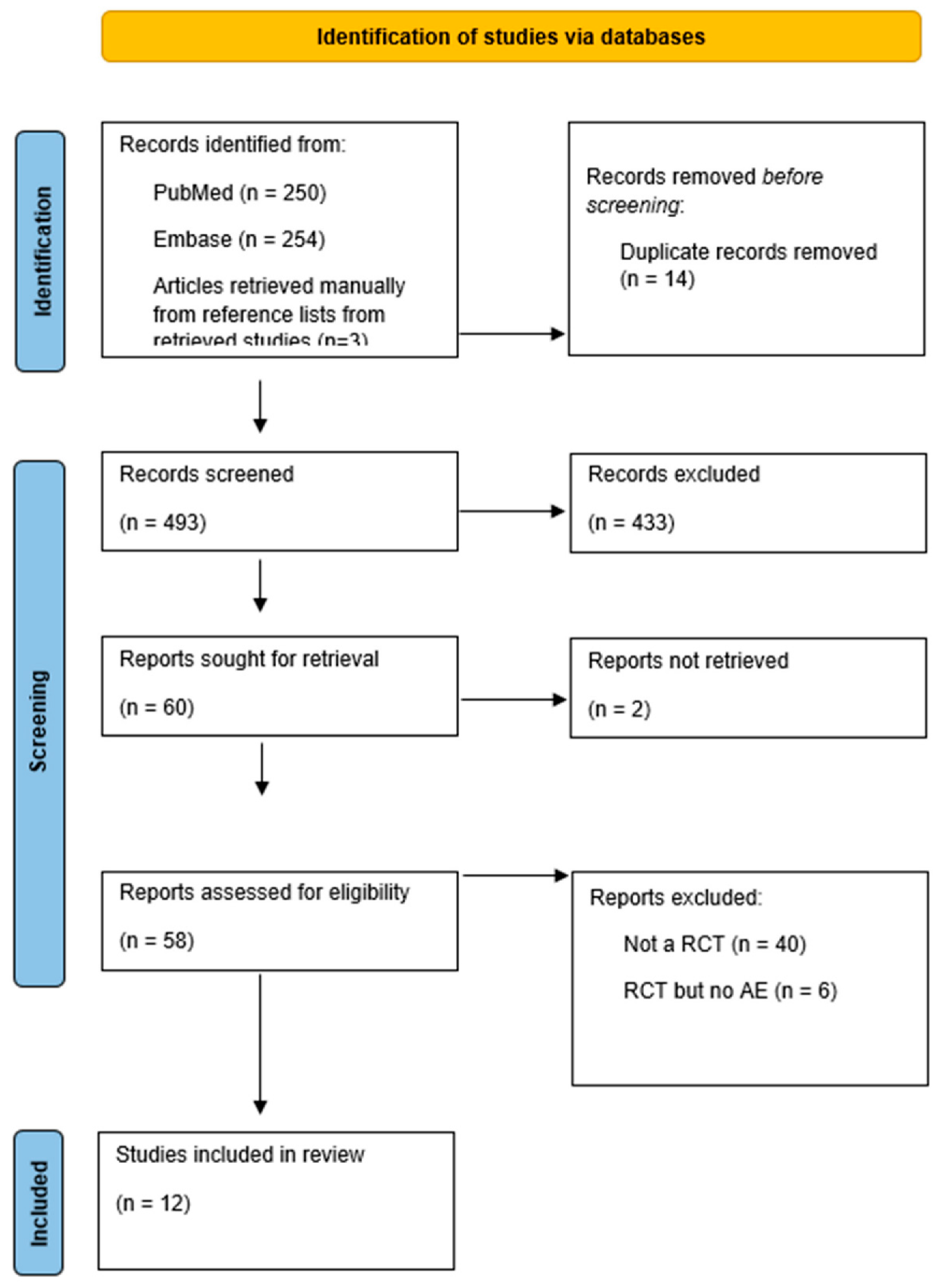
3.1. Selection of Studies
3.2. Description of the Included Studies and Patients
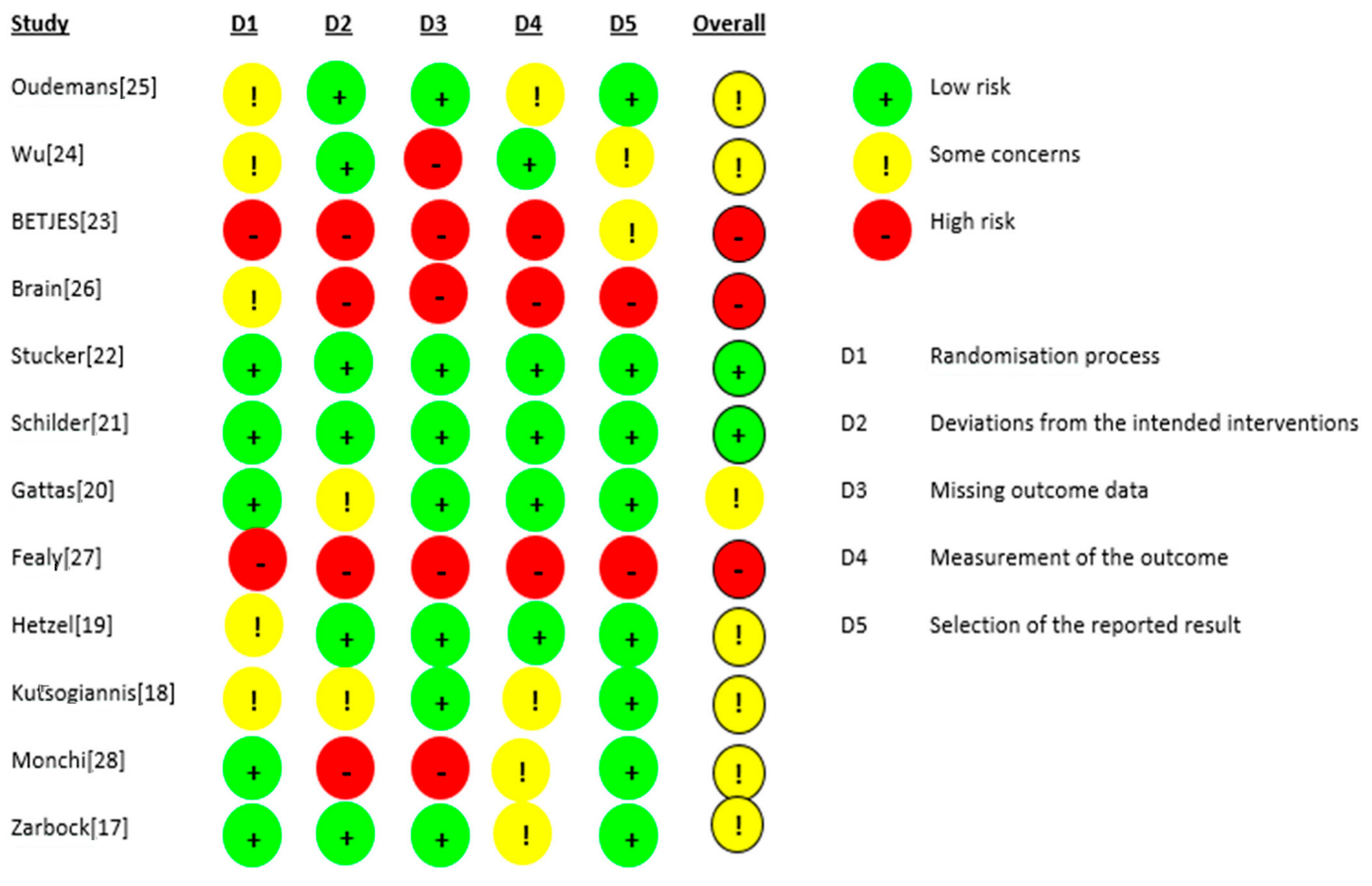
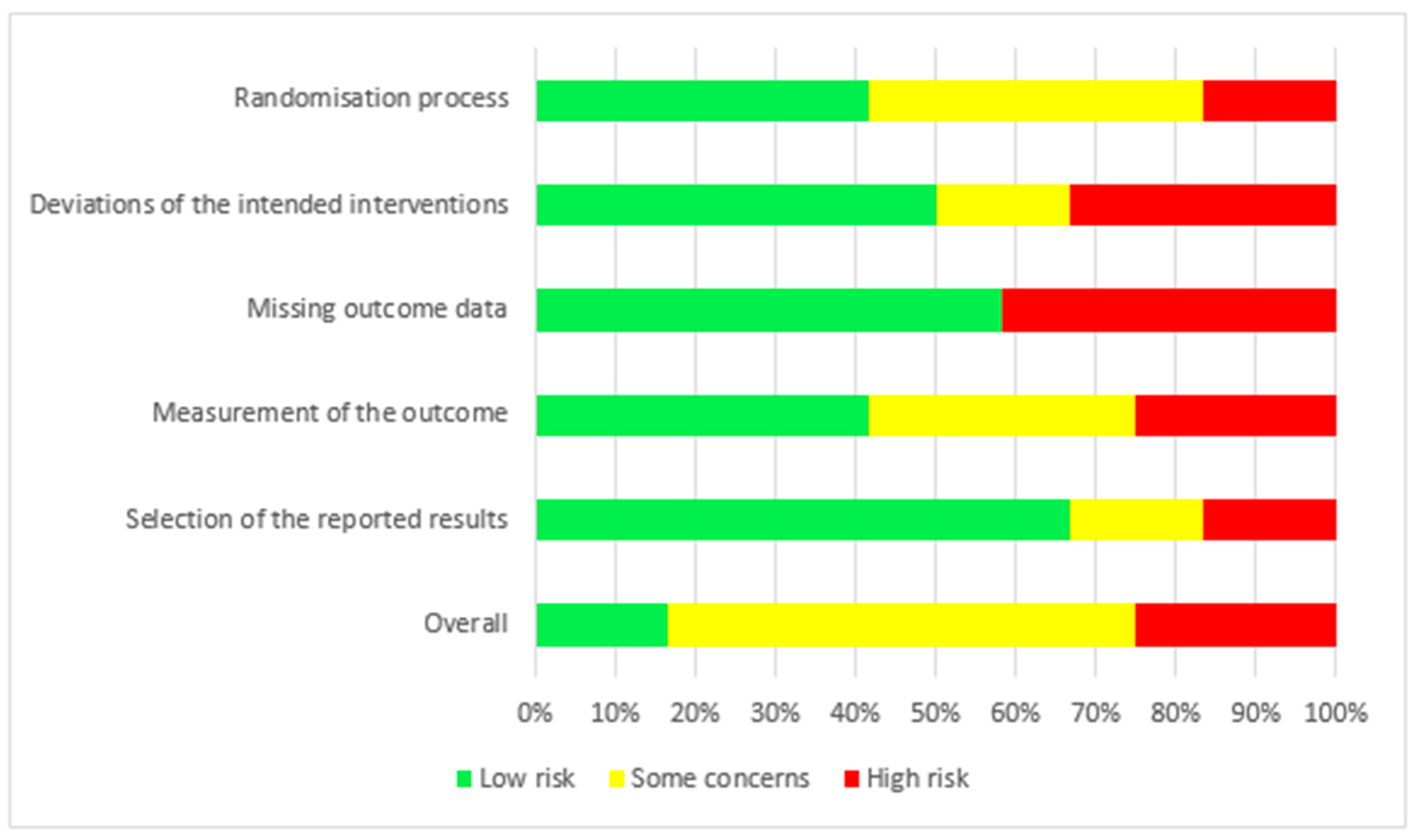
3.3. Quality Evaluation
3.4. Safety
3.4.1. Acid–Base Status
3.4.2. Electrolyte Disturbances
3.4.3. Citrate Accumulation
3.4.4. Bleeding
3.4.5. HIT
3.5. Efficacy
Filter Lifespan
3.6. Secondary Outcomes
3.7. Publication Bias
4. Discussion
4.1. Safety Outcomes: Electrolyte Derangements and Acid–Base Disorders
4.2. Limitations
4.3. Safety Outcomes: Bleeding and Hit
4.4. Filter Lifespan Efficacy
4.5. Secondary Outcomes: Mortality and Renal Recovery
4.6. Limitations
5. Conclusions
Supplementary Materials
Author Contributions
Funding
Institutional Review Board Statement
Informed Consent Statement
Data Availability Statement
Conflicts of Interest
References
- Bagshaw, S.M.; Berthiaume, L.R.; Delaney, A.; Bellomo, R. Continuous versus intermittent renal replacement therapy for critically ill patients with acute kidney injury: A meta-analysis*. Crit. Care Med. 2008, 36, 610–617. [Google Scholar] [CrossRef] [PubMed]
- Ostermann, M.; Bellomo, R.; Burdmann, E.A.; Doi, K.; Endre, Z.H.; Goldstein, S.L.; Kane-Gill, S.L.; Liu, K.D.; Prowle, J.R.; Shaw, A.D.; et al. Controversies in acute kidney injury: Conclusions from a Kidney Disease: Improving Global Outcomes (KDIGO) Conference. Kidney Int. 2020, 98, 294–309. [Google Scholar] [CrossRef] [PubMed]
- Oudemans-van Straaten, H.M.; Kellum, J.A.; Bellomo, R. Clinical review: Anticoagulation for continuous renal replacement therapy—Heparin or citrate? Crit. Care 2010, 15, 202. [Google Scholar] [CrossRef] [PubMed]
- Flanigan, M.J.; Pillsbury, L.; Sadewasser, G.; Lim, V.S. Regional hemodialysis anticoagulation: Hypertonic tri-sodium citrate or anticoagulant citrate dextrose-A. Am. J. Kidney Dis. 1996, 27, 519–524. [Google Scholar] [CrossRef]
- Fiaccadori, E.; Pistolesi, V.; Mariano, F.; Mancini, E.; Canepari, G.; Inguaggiato, P.; Pozzato, M.; Morabito, S. Regional citrate anticoagulation for renal replacement therapies in patients with acute kidney injury: A position statement of the Work Group “Renal Replacement Therapies in Critically Ill Patients” of the Italian Society of Nephrology. J. Nephrol. 2015, 28, 151–164. [Google Scholar] [CrossRef]
- Kramer, L.; Bauer, E.; Joukhadar, C.; Strobl, W.; Gendo, A.; Madl, C.; Gangl, A. Citrate pharmacokinetics and metabolism in cirrhotic and noncirrhotic critically ill patients. Crit. Care Med. 2003, 31, 2450–2455. [Google Scholar] [CrossRef] [PubMed]
- Sigwalt, F.; Bouteleux, A.; Dambricourt, F.; Asselborn, T.; Moriceau, F.; Rimmelé, T. Clinical Complications of Continuous Renal Replacement Therapy. In 40 Years of Continuous Renal Replacement Therapy; Karger Medical and Scientific Publishers: Basel, Switzerland, 2018; pp. 109–117. [Google Scholar]
- Cerdá, J.; Tolwani, A.J.; Warnock, D.G. Critical care nephrology: Management of acid–base disorders with CRRT. Kidney Int. 2012, 82, 9–18. [Google Scholar] [CrossRef]
- Morgera, S.; Scholle, C.; Voss, G.; Haase, M.; Vargas-Hein, O.; Krausch, D.; Melzer, C.; Rosseau, S.; Zuckermann-Becker, H.; Neumayer, H.-H. Metabolic Complications during Regional Citrate Anticoagulation in Continuous Venovenous Hemodialysis: Single-Center Experience. Nephron Clin. Pract. 2004, 97, c131–c136. [Google Scholar] [CrossRef]
- Fall, P.; Szerlip, H.M. Continuous Renal Replacement Therapy: Cause and Treatment of Electrolyte Complications. Semin. Dial. 2010, 23, 581–585. [Google Scholar] [CrossRef]
- Tsujimoto, H.; Tsujimoto, Y.; Nakata, Y.; Fujii, T.; Takahashi, S.; Akazawa, M.; Kataoka, Y. Pharmacological interventions for preventing clotting of extracorporeal circuits during continuous renal replacement therapy. Cochrane Database Syst. Rev. 2020, 3, CD012467. [Google Scholar] [CrossRef]
- Page, M.J.; McKenzie, J.E.; Bossuyt, P.M.; Boutron, I.; Hoffmann, T.C.; Mulrow, C.D.; Shamseer, L.; Tetzlaff, J.M.; Akl, E.A.; Brennan, S.E.; et al. The PRISMA 2020 statement: An updated guideline for reporting systematic reviews. J. Clin. Epidemiol. 2021, 134, 178–189. [Google Scholar] [CrossRef] [PubMed]
- Sterne, J.A.C.; Savović, J.; Page, M.J.; Elbers, R.G.; Blencowe, N.S.; Boutron, I.; Cates, C.J.; Cheng, H.Y.; Corbett, M.S.; Eldridge, S.M.; et al. RoB 2: A revised tool for assessing risk of bias in randomised trials. BMJ 2019, 366, l4898. [Google Scholar] [CrossRef] [PubMed]
- Guyatt, G.H.; Oxman, A.D.; Schünemann, H.J.; Tugwell, P.; Knottnerus, A. GRADE guidelines: A new series of articles in the Journal of Clinical Epidemiology. J. Clin. Epidemiol. 2011, 64, 380–382. [Google Scholar] [CrossRef] [PubMed]
- Wei, J.-J.; Lin, E.-X.; Shi, J.-D.; Yang, K.; Hu, Z.-L.; Zeng, X.-T.; Tong, T.-J. Meta-analysis with zero-event studies: A comparative study with application to COVID-19 data. Mil. Med. Res. 2021, 8, 41. [Google Scholar] [CrossRef] [PubMed]
- McGrath, S.; Sohn, H.; Steele, R.; Benedetti, A. Meta-analysis of the difference of medians. Biom. J. 2020, 62, 69–98. [Google Scholar] [CrossRef] [PubMed]
- Zarbock, A.; Küllmar, M.; Kindgen-Milles, D.; Wempe, C.; Gerss, J.; Brandenburger, T.; Dimski, T.; Tyczynski, B.; Jahn, M.; Mülling, N.; et al. Effect of Regional Citrate Anticoagulation vs Systemic Heparin Anticoagulation During Continuous Kidney Replacement Therapy on Dialysis Filter Life Span and Mortality Among Critically Ill Patients with Acute Kidney Injury. JAMA 2020, 324, 1629. [Google Scholar] [CrossRef]
- Kutsogiannis, D.J.; Gibney, R.T.N.; Stollery, D.; Gao, J. Regional citrate versus systemic heparin anticoagulation for continuous renal replacement in critically ill patients. Kidney Int. 2005, 67, 2361–2367. [Google Scholar] [CrossRef]
- Hetzel, G.R.; Schmitz, M.; Wissing, H.; Ries, W.; Schott, G.; Heering, P.J.; Isgro, F.; Kribben, A.; Himmele, R.; Grabensee, B.; et al. Regional citrate versus systemic heparin for anticoagulation in critically ill patients on continuous venovenous haemofiltration: A prospective randomized multicentre trial. Nephrol. Dial. Transplant. 2011, 26, 232–239. [Google Scholar] [CrossRef]
- Gattas, D.J.; Rajbhandari, D.; Bradford, C.; Buhr, H.; Lo, S.; Bellomo, R. A Randomized Controlled Trial of Regional Citrate Versus Regional Heparin Anticoagulation for Continuous Renal Replacement Therapy in Critically Ill Adults*. Crit. Care Med. 2015, 43, 1622–1629. [Google Scholar] [CrossRef]
- Schilder, L.; Nurmohamed, S.A.; Bosch, F.H.; Purmer, I.M.; den Boer, S.S.; Kleppe, C.G.; Vervloet, M.G.; Beishuizen, A.; Girbes, A.R.; Ter Wee, P.M.; et al. Citrate anticoagulation versus systemic heparinisation in continuous venovenous hemofiltration in critically ill patients with acute kidney injury: A multi-center randomized clinical trial. Crit. Care 2014, 18, 472. [Google Scholar] [CrossRef]
- Stucker, F.; Ponte, B.; Tataw, J.; Martin, P.-Y.; Wozniak, H.; Pugin, J.; Saudan, P. Efficacy and safety of citrate-based anticoagulation compared to heparin in patients with acute kidney injury requiring continuous renal replacement therapy: A randomized controlled trial. Crit. Care 2015, 19, 91. [Google Scholar] [CrossRef] [PubMed]
- Betjes, M.G.H.; van Oosterom, D.; van Agteren, M.; van de Wetering, J. Regional citrate versus heparin anticoagulation during venovenous hemofiltration in patients at low risk for bleeding: Similar hemofilter survival but significantly less bleeding. J. Nephrol. 2007, 20, 602–608. [Google Scholar]
- Wu, B.; Zhang, K.; Xu, B.; Ji, D.; Liu, Z.; Gong, D. Randomized Controlled Trial to Evaluate Regional Citrate Anticoagulation Plus Low-Dose of Dalteparin in Continuous Veno-Venous Hemofiltration. Blood Purif. 2015, 39, 306–312. [Google Scholar] [CrossRef]
- Oudemans-Van Straaten, H.M.; Bosman, R.J.; Koopmans, M.; van der Voort, P.H.J.; Wester, J.P.J.; van der Spoel, J.I.; Dijksman, L.M.; Zandstra, D.F. Citrate anticoagulation for continuous venovenous hemofiltration. Crit. Care Med. 2009, 37, 545–552. [Google Scholar] [CrossRef]
- Brain, M.J.; Roodenburg, O.S.; Adams, N.; McCracken, P.; Hockings, L.; Musgrave, S.; Butt, W.; Scheinkestel, C. Randomised trial of software algorithm driven regional citrate anticoagulation versus heparin in continuous renal replacement therapy: The Filter Life in Renal Replacement Therapy pilot trial. Crit. Care Resusc. 2014, 16, 131–137. [Google Scholar]
- Fealy, N.; Baldwin, I.; Johnstone, M.; Egi, M.; Bellomo, R. A Pilot Randomized Controlled Crossover Study Comparing Regional Heparinization to Regional Citrate Anticoagulation for Continuous Venovenous Hemofiltration. Int. J. Artif. Organs 2007, 30, 301–307. [Google Scholar] [CrossRef]
- Monchi, M.; Berghmans, D.; Ledoux, D.; Canivet, J.-L.; Dubois, B.; Damas, P. Citrate vs. heparin for anticoagulation in continuous venovenous hemofiltration: A prospective randomized study. Intensive Care Med. 2004, 30, 260–265. [Google Scholar] [CrossRef]
- Davenport, A.; Tolwani, A. Citrate anticoagulation for continuous renal replacement therapy (CRRT) in patients with acute kidney injury admitted to the intensive care unit. Clin. Kidney J. 2009, 2, 439–447. [Google Scholar] [CrossRef]
- Tolwani, A.J.; Prendergast, M.B.; Speer, R.R.; Stofan, B.S.; Wille, K.M. A Practical Citrate Anticoagulation Continuous Venovenous Hemodiafiltration Protocol for Metabolic Control and High Solute Clearance. Clin. J. Am. Soc. Nephrol. 2006, 1, 79–87. [Google Scholar] [CrossRef]
- Hamm, L.L. Renal handling of citrate. Kidney Int. 1990, 38, 728–735. [Google Scholar] [CrossRef]
- Kelly, A.; Levine, M.A. Hypocalcemia in the Critically Ill patient. J. Intensive Care Med. 2013, 28, 166–177. [Google Scholar] [CrossRef] [PubMed]
- Schneider, A.G.; Journois, D.; Rimmelé, T. Complications of regional citrate anticoagulation: Accumulation or overload? Crit. Care 2017, 21, 281. [Google Scholar] [CrossRef] [PubMed]
- Morabito, S.; Pistolesi, V.; Tritapepe, L.; Fiaccadori, E. Regional Citrate Anticoagulation for RRTs in Critically Ill Patients with AKI. Clin. J. Am. Soc. Nephrol. 2014, 9, 2173–2188. [Google Scholar] [CrossRef]
- Bakker, A.J.; Boerma, E.C.; Keidel, H.; Kingma, P.; van der Voort, P.H.J. Detection of citrate overdose in critically ill patients on citrate-anticoagulated venovenous haemofiltration: Use of ionised and total/ionised calcium. Clin. Chem. Lab. Med. (CCLM) 2006, 44, 962–966. [Google Scholar] [CrossRef] [PubMed]
- Meier-Kriesche, H.-U.; Gitomer, J.; Finkel, K.; DuBose, T. Increased total to ionized calcium ratio during continuous venovenous hemodialysis with regional citrate anticoagulation. Crit. Care Med. 2001, 29, 748–752. [Google Scholar] [CrossRef]
- Mariano, F.; Morselli, M.; Bergamo, D.; Hollo, Z.; Scella, S.; Maio, M.; Tetta, C.; Dellavalle, A.; Stella, M.; Triolo, G. Blood and ultrafiltrate dosage of citrate as a useful and routine tool during continuous venovenous haemodiafiltration in septic shock patients. Nephrol. Dial. Transplant. 2011, 26, 3882–3888. [Google Scholar] [CrossRef]
- Slowinski, T.; Morgera, S.; Joannidis, M.; Henneberg, T.; Stocker, R.; Helset, E.; Andersson, K.; Wehner, M.; Kozik-Jaromin, J.; Brett, S.; et al. Safety and efficacy of regional citrate anticoagulation in continuous venovenous hemodialysis in the presence of liver failure: The Liver Citrate Anticoagulation Threshold (L-CAT) observational study. Crit. Care 2015, 19, 349. [Google Scholar] [CrossRef]
- Khadzhynov, D.; Schelter, C.; Lieker, I.; Mika, A.; Staeck, O.; Neumayer, H.-H.; Peters, H.; Slowinski, T. Incidence and outcome of metabolic disarrangements consistent with citrate accumulation in critically ill patients undergoing continuous venovenous hemodialysis with regional citrate anticoagulation. J. Crit. Care 2014, 29, 265–271. [Google Scholar] [CrossRef]
- Tan, J.-N.; Haroon, S.W.P.; Mukhopadhyay, A.; Lau, T.; Murali, T.M.; Phua, J.; Tan, Z.-Y.; Lee, N.; Chua, H.-R. Hyperlactatemia Predicts Citrate Intolerance with Regional Citrate Anticoagulation During Continuous Renal Replacement Therapy. J. Intensive Care Med. 2019, 34, 418–425. [Google Scholar] [CrossRef]
- Venkatesh, B. Stewart’s Textbook of Acid-Base, 2nd edition. Crit. Care 2009, 13, 306. [Google Scholar] [CrossRef]
- Naka, T.; Egi, M.; Bellomo, R.; Cole, L.; French, C.; Wan, L.; Fealy, N.; Baldwin, I. Low-dose Citrate Continuous Veno-venous Hemofiltration (CVVH) and Acid-base Balance. Int. J. Artif. Organs 2005, 28, 222–228. [Google Scholar] [CrossRef] [PubMed]
- Egi, M.; Naka, T.; Bellomo, R.; Langenberg, C.; Li, W.; Fealy, N.; Baldwin, I. The Acid-Base Effect of Changing Citrate Solution for Regional Anticoagulation during Continuous Veno-Venous Hemofiltration. Int. J. Artif. Organs 2008, 31, 228–236. [Google Scholar] [CrossRef] [PubMed]
- Jacobs, R.; Honore, P.M.; Diltoer, M.; Spapen, H.D. Chloride content of solutions used for regional citrate anticoagulation might be responsible for blunting correction of metabolic acidosis during continuous veno-venous hemofiltration. BMC Nephrol. 2016, 17, 119. [Google Scholar] [CrossRef] [PubMed]
- Rewa, O.G.; Villeneuve, P.-M.; Lachance, P.; Eurich, D.T.; Stelfox, H.T.; Gibney, R.T.N.; Hartling, L.; Featherstone, R.; Bagshaw, S.M. Quality indicators of continuous renal replacement therapy (CRRT) care in critically ill patients: A systematic review. Intensive Care Med. 2017, 43, 750–763. [Google Scholar] [CrossRef] [PubMed]
- Tolwani, A.J.; Wille, K.M. Anticoagulation for Continuous Renal Replacement Therapy. Semin. Dial. 2009, 22, 141–145. [Google Scholar] [CrossRef]
- Legrand, M.; Tolwani, A. Anticoagulation strategies in continuous renal replacement therapy. Semin. Dial. 2021, 34, 416–422. [Google Scholar] [CrossRef]
- Davenport, A. Anticoagulation for Continuous Renal Replacement Therapy. Contrib Nephrol. 2004, 144, 228–238. [Google Scholar]
- Oudemans-van Straaten, H.M.; Wester, J.P.J.; de Pont, A.C.J.M.; Schetz, M.R.C. Anticoagulation strategies in continuous renal replacement therapy: Can the choice be evidence based? Intensive Care Med. 2006, 32, 188–202. [Google Scholar] [CrossRef]
- Ricci, Z.; Ronco, C.; D’amico, G.; de Felice, R.; Rossi, S.; Bolgan, I.; Bonello, M.; Zamperetti, N.; Petras, D.; Salvatori, G.; et al. Practice patterns in the management of acute renal failure in the critically ill patient: An international survey. Nephrol. Dial. Transplant. 2006, 21, 690–696. [Google Scholar] [CrossRef]
- Warkentin, T.E.; Levine, M.N.; Hirsh, J.; Horsewood, P.; Roberts, R.S.; Gent, M.; Kelton, J.G. Heparin-Induced Thrombocytopenia in Patients Treated with Low-Molecular-Weight Heparin or Unfractionated Heparin. N. Engl. J. Med. 1995, 332, 1330–1336. [Google Scholar] [CrossRef]
- Hirsh, J.; Raschke, R. Heparin and Low-Molecular-Weight Heparin. Chest 2004, 126, 188S–203S. [Google Scholar] [CrossRef] [PubMed]
- Ricci, Z.; Ronco, C.; Bachetoni, A.; D’amico, G.; Rossi, S.; Alessandri, E.; Rocco, M.; Pietropaoli, P. Solute removal during continuous renal replacement therapy in critically ill patients: Convection versus diffusion. Crit. Care 2006, 10, R67. [Google Scholar] [CrossRef]
- Joannidis, M.; Oudemans-van Straaten, H.M. Clinical review: Patency of the circuit in continuous renal replacement therapy. Crit. Care 2007, 11, 218. [Google Scholar] [CrossRef] [PubMed]
- Baldwin, I. Factors Affecting Circuit Patency and Filter ‘Life’. In Acute Kidney Injury; Karger Publishers: Basel, Switzerland, 2007; pp. 178–184. [Google Scholar]
- Hoste, E.A.J.; Kellum, J.A.; Selby, N.M.; Zarbock, A.; Palevsky, P.M.; Bagshaw, S.M.; Goldstein, S.L.; Cerdá, J.; Chawla, L.S. Global epidemiology and outcomes of acute kidney injury. Nat. Rev. Nephrol. 2018, 14, 607–625. [Google Scholar] [CrossRef]
- Kramer, P.; Wigger, W.; Rieger, J.; Matthaei, D.; Scheler, F. Arteriovenous haemofiltration: A new and simple method for treatment of over-hydrated patients resistant to diuretics. Klin. Wochenschr. 1977, 55, 1121–1122. [Google Scholar] [CrossRef]
- Khwaja, A. KDIGO Clinical Practice Guidelines for Acute Kidney Injury. Nephron Clin. Pract. 2012, 120, c179–c184. [Google Scholar] [CrossRef]
- Ye, Z.; Wang, Y.; Ge, L.; Guyatt, G.H.; Collister, D.; Alhazzani, W.; Bagshaw, S.M.; Belley-Cote, E.P.; Fang, F.; Hou, L.M.; et al. Comparing Renal Replacement Therapy Modalities in Critically Ill Patients with Acute Kidney Injury: A Systematic Review and Network Meta-Analysis. Crit. Care Explor. 2021, 3, e0399. [Google Scholar] [CrossRef] [PubMed]
- Li, R.; Gao, X.; Zhou, T.; Li, Y.; Wang, J.; Zhang, P. Regional citrate versus heparin anticoagulation for continuous renal replacement therapy in critically ill patients: A meta-analysis of randomized controlled trials. Ther. Apher. Dial. 2022, 26, 1086–1097. [Google Scholar] [CrossRef]
- Liu, C.; Mao, Z.; Kang, H.; Hu, J.; Zhou, F. Regional citrate versus heparin anticoagulation for continuous renal replacement therapy in critically ill patients: A meta-analysis with trial sequential analysis of randomized controlled trials. Crit. Care 2016, 20, 144. [Google Scholar] [CrossRef]




| Study | Study Design | Follow-up | Inclusion Criteria | Exclusion Criteria | Age (Years) Mean ± SD, Median (Range) | Sex (M/F) | Endpoints |
|---|---|---|---|---|---|---|---|
| Betjes et al. [23]; 2007 | Parallel RCT | NR | AKI requiring RRT | Contraindication anticoagulant; patients with anticoagulation for medical reason | H: 55.2 ± 2.8 C: 57.8 ± 4.2 | H: 19/8 C: 15/6 | AE, Circuit survival, bleeding |
| Schilder et al. [21]; 2014 | Parallel RCT; multicenter | 90 days | AKI requiring RRT | Risk of bleeding; <18 or >80 y; need for systemic anticoagulation or HIT; chronic RT, administration of activated protein C or PE therapy | C: 67 (36–87) H: 67 (23–85) | C: 44/22 H: 49/24 | Mortality, renal outcome, safety and efficacy |
| Fealy et al. [27]; 2007 | Cross-over RCT | NR | AKI; RIFLE “F”, requiring CRRT | Liver failure; suspected ischemic hepatitis; contraindication heparin/protamine | 70.5 (63.4–76.5) | 9/1 | Circuit clotting, bleeding |
| Brain et al. [26]; 2014 | Parallel RCT | 90 days | AKI requiring RRT | Weight < 30 kg; contraindication anticoagulant, chronic RT; pregnancy/lactation; therapeutic hypothermia; previous participation in study; indication different dialysis prescription | C: 64 ± 13 H: 51 ± 17 | C: 12/7 H: 7/4 | Safety and efficacy, RT dependence, mortality |
| Gattas et al. [20]; 2015 | Parallel RCT; multicenter | NR | AKI requiring RRT, no contraindication for anticoagulation of CRRT circuit, IC | Stay ICU < 24 h; < 18 y; pregnant/lactation; liver failure; allergy to heparin/protamine; HIT; chronic dialysis | C: 66.4 ± 14.3 H: 66.8 ± 14.9 | C: (74/105) H: (72/107) | FLS, mortality, cytokines change, transfusion, LOS duration of CRRT, |
| Hetzel et al. [19]; 2011 | Parallel RCT; multicenter | Discharge from ICU up to 30 d | AKI requiring RRT; MV | HIT; need of systemic UFH; pH > 7.50 and BE > +4 mmol/L; pregnancy/lactation; chronic RT; participation another study <3 m; previous participation in study | C: 61.7 ± 15.3 H: 65.1 ± 12.5 | C: 57/30 H: 59/24 | Efficacy and safety |
| Kutsogiannis et al. [18]; 2005 | Parallel RCT; multicenter | Hospital discharge or death | AKI | Contraindication to anticoagulant or requirement of systemic heparin for medical reasons; pregnancy | C: 66.5 ± 14.5 H: 63.9 ± 21.2 | C: 7/16 H: 8/14 | FLS and bleeding |
| Monchi et al. [28]; 2004 | Cross-over RCT | NR | AKI | Cirrhosis; severe coagulopathy; high risk of bleeding; allergy to heparin | H: 64 (52–74) C: 67 (52–77) | H: 11/12 C: 12/14 | Efficacy and safety |
| Oudemans et al. [25]; 2009 | Parallel RCT | 90 days | AKI requiring RRT | Cirrhosis Child–Pugh C; bleeding; surgery within 24 h before CVVH; need of therapeutic anticoagulation; HIT; chronic RT; DNR | C: 73 (64–79) H: 73 (67–79) | C:(66/31) H: (70/33) | AE, transfusion, metabolic, and clinical outcomes FLS |
| Stucker et al. [22]; 2015 | Parallel RCT | 90 days | AKI requiring RRT according to RIFLE | Active hemorrhagic disorders or PC < 50 × 109/L; HIT; severe liver failure (=factor V < 20%); on waiting list for liver transplantation | C: 60 ± 14 H: 65 ± 16 | C: 32/22 H: 32/17 | FLS, AE, RRT dose, survival, LOS |
| Wu et al. [24]; 2015 | Parallel RCT | NR | AKI requiring CVVH for >48 h; no contraindication for anticoagulation | Aged ≤ 18 years; coagulopathy; anticoagulation/hemostatic agent <24 h prior to enrolment; need anticoagulation/hemostatic agent for other reasons | C: 48.1 ± 3.9 LMWH: 45.2 ± 4.1 | C: 10/5 LMWH: 12/7 | FLS, premature clotting, AE |
| Zarbock et al. [17]; 2020 | Parallel RCT | 90 days | AKI KDIGO 3 requiring RRT + sepsis/septic shock, vasopressor or refractory fluid overload, 18–90 years, intention to provide full treatment for at least 3 days | Bleeding risk; diseases with hemorrhagic diathesis; chronic RT; need of therapeutic anticoagulation; HIT; allergy to anticoagulants; AKI due to occlusion/lesion renal arteries; AKI due to interstitial or glomerulonephritis, vasculitis or urinary tract obstruction; DNR; HUS/TTP; persistent lactate acidosis due to ALF/shock; kidney transplant <12 months; pregnancy/lactating; no CRRT machine free; participation in another trial <3 months; persons with dependency on sponsor/investigator; detained person | C: 67.5 ± 12.3 H: 67.6 ± 12.5 | C: (206/94) H: (207/89) | FLS and 90-day mortality, bleeding, and new infections |
| Author | Study Participants | Other Anticoagulant | Citrate Anticoagulation | Replacement Fluid | Dialysate | Additives |
|---|---|---|---|---|---|---|
| Oudemans-van Straaten et al. [25] | RCA: 97 Nadroparin: 103 | IV bolus of 2850 IU nadroparin, or 3800 IU if > 100 kg, followed by 380IU/h or 456 IU/h, respectively, no monitoring of anti-Xa | Hospital pharmacy prepared containing 500 mmol/L citrate, 1352 mmol/L sodium, and 148 mmol/L hydrogen | C: SH 44 HEP or SH 53 HEPnadroparin: -if metabolic acidosis and/or hyperlactatemia: SH 53 HEP -if no acidosis and lac < 5 mmol/L: BH504 | For iCa++: 0.9–1.0 mmol/L: calcium-magnesium-chloride (0–0.4mmol/h of calcium and 0–0.24 mmol/h magnesium) | |
| Wu et al. [24] | RCA: 15 Dalteparin: 19 | Dalteparin loading dose: 40 IU/kg; maintenance: 4 IU/kg per h | Citrate- (7 mmol/L) and bicarbonate (17 mmol/L)-based calcium-free replacement fluid | Bicarbonate-based | Calcium and magnesium supplement | |
| Betjes et al. [23] | RCA: 21 Hep: 27 | Bolus of 3000–5000 IU, followed by continuous infusion 1500 IU/h~APTT 50–70 s | Trisodium citrate solution (13%) at 55 mL/min | H: HF32bic C: SH 44 HEP | Calcium chloride if iCa++ < 0.9 mmol/L | |
| Stucker et al. [22] | RCA: 54 Hep: 49 | Unfractioned heparin 500 IU/h | Prismocitrate 18 | Prismasol | Prismocal B22 | |
| Schilder et al. [21] | RCA: 66 Hep: 73 | Heparin bolus of 5000 IU and 833 IU/h~APTT 50 s | HFCitPre (citrate 39.9 and sodium 139.9) mmol/L | H: HF32bic or BH504 | Calciumgluconate for iCa++: 1–1.35 mmol/L | |
| Fealy et al. [27] | 10 | H: 1500 u/h before hemofilter;Protamine 15 mg/h after hemofilter | Citrate-buffered RF: infused prefilter at 28 mmol/h | H: lactate buffered RF prefilter at 2000 mL/h. If lactate > 5 mmol/L: lactate-free bicarbonate-buffered RFC: citrate buffered RF prefilter at 2000 mL/h | Calcium: 4mmol/h magnesium: 2 mmol/h | |
| Gattas et al. [20] | RCA: 105 Hep: 107 | 1000–1500 IU/h regional UFH plus 10–15 mg/h protamine | Prismocitrate 10/2 | C: Hemosol B0 postfilter at 200 mL/h H: Hemosol B0 prefilter at 2000 mL/h; postfilter at 200 ml/h | C: Prismocal at 500 mL/h H: Hemosol B0 at 500 mL/h | Calcium chloride for iCa++: 1–1.2 mmol/L |
| Hetzel et al. [19] | RCA: 87 Hep: 83 | Systemic heparin | HF-citrate 13 mmol/L and 140 mmol/L sodium | H: HF-bicarbonate prefilter at 42 ml/kg/h | Calcium chloride | |
| Monchi et al. [28] | Hep:12 RCA: 8 | Bolus of 2000–5000 IU of heparin into the circuit + continuous infusion of 1000 U/h~APTT 60–80 s | Trisodium citrate 1 mmol/ml | Postfilter RF: (Na+ 120, K+ 1, Cl− 122, Mg2+ 0.5) mmol/L H: + 25–28 mmol/L Nabic + 1.1 mmol/L calciumchloride | Calcium chloride for iCa++: 1.0–1.15 mmol/L Magnesiumsulfate 1 mmol | |
| Kutsogiannis et al. [18] | RCA: 16 Hep: 14 | Heparin bolus: 50 IU/kg for~APTT ≤ 35 s, followed by protocolized algorithm for~APTT 45–65 s | Tricitrisol at 190 mL/h (25 mmol/h) | RF: Na+ 117, Mg2+ 0.70, Cl− 117) mmol/L+ HCO3−: 33.3–50 mmol/L; at 1000 mL/h prefilter | Solution: Na+ 117, Mg2+ 0.70, Cl− 117) mmol/LIn case of Hep: Solution+ HCO3−: 33.3–50 mmol/L; at 1000 mL/h | Calcium chloride |
| Zarbock et al. [17] | RCA: 300 Hep: 296 | Heparin for~APTT 45–60 s | 4% sodiumcitrate Prismocitrate 10/2 or 18/0 30% sodiumcitrate | -Multibic -Phoxilium -sodium chloride | -K2 or K4 -Prismocal -HDE 2/0 | |
| Brain et al. [26] | RCA: 19 Hep: 11 | Heparin 1000 IU/h;~APTT 50–80 s | Prismocitrate 18 | 0.9% normal saline | In case of citrate: Prismocal B22 In case heparin: Hemosol B0 | Calcium chloride infusion if iCa++ < 1.1 mmol/L |
| Study | Modality CRRT | Device | Blood Flow mL/min | Citrate Target (mmol/L) Blood Flow | Dilution Mode | Postfilter iCa++ Target (mmol/L) | CRRT Dose |
|---|---|---|---|---|---|---|---|
| Oudemans-van Straaten et al. [25] | CVVH | Diapact and Aquarius | 220 | 3 | Postdilution | NR | NR |
| Wu et al. [24] | CVVH | Aquarius and Multifiltrate | 180–200 | NR | Predilution | NR | 4 L/h |
| Betjes et al. [23] | CVVH | Hygieia Ultima | 150 | NR | Postdilution | 0.25–0.3 | 25 mL/h |
| Stucker et al. [22] | CVVHDF | Prismaflex | 100–200 | 3 | 2/3 in Predilution mode &and 1/3 in postdilution | 0.25–0.3 | 30 mL/kg/h |
| Schilder et al. [21] | CVVH | NR | 180 | NR | Predilution | Not measured | 2000–4000 mL/h |
| Fealy et al. [27] | CVVH | Kimal Hygieia | 150 | NR | Predilution | NR | NR |
| Gattas et al. [20] | CVVH CVVHDF | Prismaflex and Aquarius | 150–200 | 2.5–3 | Predilution | Not measured | 2000–4000 mL/h |
| Hetzel et al. [19] | CVVH | Multifiltrate | Blood flow to HF: 3/1 | 4 | Predilution | <0.4 | NR |
| Monchi et al. [28] | CVVH | Baxter CM11-CM14 device | 150 | 4.3 | Postdilution | <0.3 | 35 mL/kg/h |
| Kutsogiannis et al. [18] | CVVHDF | Prisma CFM System | 125 | Predilution | 0.25–0.35 | NR | |
| Zarbock et al. [17] | CVVH CVVHD CVVHDF | Fresenius MC Prismaflex BBraun | 100 | NR | Pre- and postdilution | 0.25–0.35 | 30 mL/kg/h |
| Brain et al. [26] | CVVHDF | Prismaflex | 150–250 (according to weight) | 3 | Postdilution | Prefilter 0.3–0.44 | NR |
Disclaimer/Publisher’s Note: The statements, opinions and data contained in all publications are solely those of the individual author(s) and contributor(s) and not of MDPI and/or the editor(s). MDPI and/or the editor(s) disclaim responsibility for any injury to people or property resulting from any ideas, methods, instructions or products referred to in the content. |
© 2023 by the authors. Licensee MDPI, Basel, Switzerland. This article is an open access article distributed under the terms and conditions of the Creative Commons Attribution (CC BY) license (https://creativecommons.org/licenses/by/4.0/).
Share and Cite
Jacobs, R.; Verbrugghe, W.; Dams, K.; Roelant, E.; Couttenye, M.M.; Devroey, D.; Jorens, P. Regional Citrate Anticoagulation in Continuous Renal Replacement Therapy: Is Metabolic Fear the Enemy of Logic? A Systematic Review and Meta-Analysis of Randomised Controlled Trials. Life 2023, 13, 1198. https://doi.org/10.3390/life13051198
Jacobs R, Verbrugghe W, Dams K, Roelant E, Couttenye MM, Devroey D, Jorens P. Regional Citrate Anticoagulation in Continuous Renal Replacement Therapy: Is Metabolic Fear the Enemy of Logic? A Systematic Review and Meta-Analysis of Randomised Controlled Trials. Life. 2023; 13(5):1198. https://doi.org/10.3390/life13051198
Chicago/Turabian StyleJacobs, Rita, Walter Verbrugghe, Karolien Dams, Ella Roelant, Marie Madeleine Couttenye, Dirk Devroey, and Philippe Jorens. 2023. "Regional Citrate Anticoagulation in Continuous Renal Replacement Therapy: Is Metabolic Fear the Enemy of Logic? A Systematic Review and Meta-Analysis of Randomised Controlled Trials" Life 13, no. 5: 1198. https://doi.org/10.3390/life13051198
APA StyleJacobs, R., Verbrugghe, W., Dams, K., Roelant, E., Couttenye, M. M., Devroey, D., & Jorens, P. (2023). Regional Citrate Anticoagulation in Continuous Renal Replacement Therapy: Is Metabolic Fear the Enemy of Logic? A Systematic Review and Meta-Analysis of Randomised Controlled Trials. Life, 13(5), 1198. https://doi.org/10.3390/life13051198