


Abstract
Reports from various countries have described increasing numbers of scabies cases, especially in the past two decades. The epidemiological data for various world regions showed prevalence estimates ranging from 0.2% to 71%, with the highest prevalence in the Pacific region and Latin America. Therefore, geographically, scabies occurs more commonly in the developing world, tropical climates, and in areas with a lack of access to water. According to results from specific regions of the world, the greatest burdens from scabies were recorded for East Asia, Southeast Asia, Oceania, tropical Latin America, and South Asia. Among countries with the highest rates, the top 10 were Indonesia, China, Timor-Leste, Vanuatu, Fiji, Cambodia, Laos, Myanmar, Vietnam, and the Seychelles. From Europe, available data shows an increasing trend in scabies infestation, particularly evident among populations with associated contributing factors, such as those who travel frequently, refugees, asylum seekers, those who regularly lack drinking water and appropriate hygiene and are of a younger age, etc. This increase in observed cases in the last 10–20 years has been evidenced by research conducted in Germany, France, Norway, and Croatia, among other countries. In addition, increased scabies transmission was also recorded during the COVID-19 pandemic and may have been the result of increased sexual intercourse during that time. Despite all the available treatment options, scabies commonly goes unrecognized and is therefore not treated accordingly. This trend calls for a prompt and synergistic reaction from all healthcare professionals, governmental institutions, and non-governmental organizations, especially in settings where population migration is common and where living standards are low. Furthermore, the proper education of whole populations and accessible healthcare are cornerstones of outbreak prevention. Accurate national data and proper disease reporting should be a goal for every country worldwide when developing strategic plans for preventing and controlling the community spread of scabies.
1. Introduction
For centuries, scabies has primarily been thought of as a disease that affects those living in squalor and poverty; however, reports in recent times show that it has become more common in the general population. Generally, scabies has been thought to occur only sporadically, but in the last two decades, there has been an increase in published papers indicating that disease is occurring more frequently [1,2,3,4,5,6,7,8,9].
Reports from various countries have described an increase in the incidence of scabies (Table 1) [8,10,11,12,13,14,15,16,17,18,19]. From Europe, available data shows an increasing trend in scabies infestations, particularly evident among populations with associated contributing factors, such as those who travel frequently, refugees, asylum seekers, those who regularly lack drinking water and appropriate hygiene, those who are of a younger age, etc. This increase in observed cases in the last 10–20 years has been evidenced by research conducted in Germany, France, Norway, and Croatia, among other countries (Table 2) [1,2,5,6,7,20,21,22,23,24,25,26,27,28,29,30,31]. In addition, in recent years, there has been greater public discussion around scabies, and in 2017, the World Health Organization (WHO) listed scabies as a Neglected Tropical Disease (NTD) [32]. Therefore, the current scientific literature consists of an increasing number of published papers concerning the frequency of scabies in the world and Europe. At the same time, physicians and dermatovenereologists have been reporting increased cases in their daily practices. For this reason, we wanted to present the current data available on the frequency of and risk factors for scabies by looking at studies (available in the PubMed database) published during the period between 2000 and 2022 (i.e., at the beginning of the 21st century).

Table 1.
Selected reports and findings on scabies occurrence in various countries around the world (except Europe) published during 2000–2022.
Table 2.
Selected reports and findings on scabies occurrence in European countries published during 2000–2022.
2. Clinical Features and Management of Scabies
Scabies is a common, contagious ectoparasite infection caused by the mite Sarcoptes scabiei var. hominis [33,34,35,36]. The disease may present with typical signs of itching (predominantly) and lesions at certain predilection sites (the sides and webs of the fingers, wrists, axillae, areolae, umbilical area, genitalia, etc.) (Figure 1). However, scabies may also have an atypical presentation or be similar to other diseases [37]. A rarer type, crusted scabies, is associated with a heavy mite burden and usually manifests with thick scales, crusts, and fissures. This type of scabies was formerly known as Norwegian scabies and primarily occurs in older adults or immunocompromised individuals [38]. The transmission of scabies usually happens through close, person-to-person skin contact, and a true scabies infestation is not transmitted from animals to humans (animal infestation is caused by a slightly different mite, Sarcoptic Mange) [37,39].
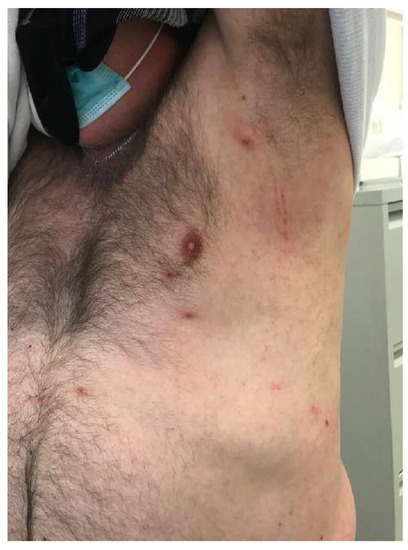
Figure 1.
Clinical manifestations of scabies: small erythematous papules accompanied by an intense itching sensation confirmed by linear scratch marks and excoriations scattered throughout the axillar and thoracic region.
The clinical manifestation of a primary scabies infestation can take from 2 to 6 weeks to appear, whereas reinfestation can trigger a swift allergic reaction [40]. The most common scabies manifestations include rashes, followed by multiple papules and vesicles or even urticaria on specific sites [33,41,42]. Symptoms appear due to an allergic reaction to the mites [33]. Sometimes, though rarely, scabies may be complicated by secondary Staphylococcal or Streptococcal infections, including impetigo, ecthyma, paronychia, and furunculosis. Streptococcal infections may further lead to poststreptococcal glomerulonephritis or other complications, such as nephritis, acute rheumatic fever, or fatal invasive sepsis [43,44].
Since scabies is a contagious skin disease which spreads by direct contact, the most important aspect of its management is timely recognition and reporting, which is currently often inadequately performed [33,40]. It is crucial to include/consider scabies as one of many differential diagnoses in cases when an itch is associated with eczematous lesions and/or findings of skin burrows or comma-like papules at scabies-typical characteristic localizations. Furthermore, in patients presenting with pruritus (especially a nocturnal itch), scabies should always be considered [45].
The Consensus Criteria for the Diagnosis of Scabies published in 2020 by The 2020 International Alliance for the Control of Scabies comprises three degrees of diagnostic certainty: confirmed scabies, clinical scabies, and suspected scabies [39]. While a suspicion of scabies infestation is based upon patient history and a physical examination, confirmation by the parasitological examination of mites, eggs, or faeces (skin preparation) is crucial for further therapy and outcomes [46]. Some patients can have a false negative finding through skin scrapings, leading to problems in practice when patients are treated ineffectively [33,47]. However, clinicians commonly set a diagnosis based only on the clinical picture, specific localization, and itch [9,21]. In addition, dermoscopic findings may be a useful diagnostic tool in daily practice (Figure 2). One multicentre study conducted among several European countries reported that clinicians predominantly confirmed scabies infestation based on clinical presentation [31]. Additionally, a study conducted in the United Kingdom reported that scabies outbreaks in care homes were always diagnosed clinically and by general practitioners or home staff (not by dermatologists) [30]. According to a French study, general practitioners mainly relied on only the typical localization of pruritus to make a scabies diagnosis, while diagnostic tests were used by just 6% of practitioners (at least one or more scabies cases was reported by 89% of general practitioners) [21]. So, most physicians do not perform essential diagnostic procedures or do not have the available essential diagnostic tools and, consequently, anti-scabies therapy is often given only on the basis of a clinical appearance. This can be problematic in practice, especially in modern/Western countries because patients may be disinclined to accept treatment without diagnostic evidence of scabies, especially those who do not belong to a risk group. However, when a parasitological examination is not easily accessible, the clinician’s experience and a patient’s psychological and physical profile and quality of life may help in the early recognition of scabies in rural areas [48].
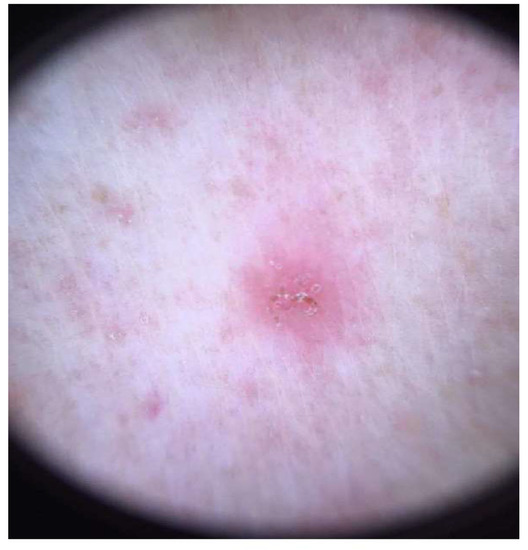
Figure 2.
Dermoscopic finding of scabies infestation by the mite Sarcoptes scabiei: a triangular dense head structure with an accompanying S-shaped burrow (relatively translucent scabies body) indicate the presence of mites.
According to recommendations and available data, treatment for classic scabies includes a 5% permethrin cream or a 25% benzyl benzoate lotion, or sometimes alternative treatments (a 0.5% malathion aqueous lotion, 1% ivermectin lotion, and 6–33% sulphur cream, ointment, or lotion) [49]. Oral ivermectin is also effective for treating scabies [50]. For crusted scabies, therapy includes a combination of topical scabicide and oral ivermectin [50,51]. For the mass treatment of large populations where scabies is endemic, single doses of ivermectin can be administered [51]. However, resistance to anti-scabies therapy has often been recorded in practice [49,50]. Persistent symptoms caused by a scabies infestation raise the need to reconsider the diagnosis and treatment options. They can be the result of several causes, including a misdiagnosis, insufficient treatment, an inappropriate drug prescription, poor compliance or noncompliance with treatment, post-scabetic reactions to the mites or their products, reinfection, delusions of parasitosis, or a drug-resistant case of scabies. There has been an increasing trend in drug-resistant scabies—which is the result of long-term use or overdosing of scabicides, resulting in prolonged treatment procedures, repeated visits to healthcare providers, high healthcare costs, and social stigmatization for an ever-greater number of patients [49,50]. The management of scabies includes not only the need to treat the patient successfully but to control the transmission of the disease. Scabies infestation can be prevented by avoiding direct skin-to-skin contact with an infested person and their personal items. The mean survival time of the mite outside of the host is between 48 and 72 h; therefore, items used by infested person within this period should either be placed in a plastic bag for at least 72 h or should be machine washed in hot water (at least 60 °C) and machine dried or dry-cleaned. Simultaneous scabies treatment is recommended both for patients and their close contacts, particularly those who have had prolonged skin-to-skin contact with an infested person, regardless of symptoms.
3. General Epidemiological Aspects of Scabies
Epidemiologically, it is estimated that the worldwide prevalence of scabies is 200–300 million people, with wide variations among specific geographic regions [52]. The epidemiological data (based on the systematic review of population-based studies) for various world regions, except North America, showed prevalence estimates ranging from 0.2% to 71%, with the highest prevalence in the Pacific region and Latin America. Therefore, geographically, scabies occurs more commonly in the developing world, tropical climates, and in areas with a lack of access to water [53].
By age and gender, it is generally equally common in both sexes and among people of different ages [4,54]. However, by age, data shows that scabies more commonly affects children and young adults [4,5,22,24,54,55,56]. Concerning gender, variations have also been described—some parts of the world note a higher prevalence among women and others among men [14,17,43,57,58].
Epidemiologically, scabies is considered a disease of those who live in poor socioeconomic conditions, yet the disease affects individuals of any socioeconomic status [33,40]. Still, the risk of transmission increases in crowded living conditions, resource-limited regions, child-care facilities, group homes, and institutional settings (e.g., long-term care facilities, prisons, etc.) [33]. Furthermore, recent data have confirmed a correlation between scabies incidence and population movements, meaning that population movements lead to a higher incidence in the general population [4,59,60,61,62]. According to study results, among refugee and asylum seeker populations, scabies is one of the three most frequently reported infectious diseases [23]. According to results of a recent study that included statistical analyses, among the determinant factors of scabies outbreaks were travel in the last six weeks to an area experiencing a scabies epidemic, the presence of person with itching in the family/household, sleeping with a scabies patient, and the infrequent use of a detergent when showering [63]. According to another study, scabies was among the most common skin diseases diagnosed in travellers returning from the tropics, along with infectious cellulitis, pruritis of unknown origin, and others [64].
4. Trends in Scabies Incidence/Prevalence Recorded during the Last Two Decades
As of 2015, scabies affected 2.8% of the population worldwide, i.e., 200–300 million people [34,52,65]. During the 1960s, and peaking around 1980, scabies became more frequent in North America and Europe. It has declined somewhat but remains a common problem. Generally, scabies is underreported in most of countries, and its management is often inadequate [40]. Although there are few global epidemiological studies, some research analyses and systematic reviews (population-level and country-level) support/indicate certain trends [10,66]. Therefore, due to the increasing trend of scabies prevalence and lack of clinical recognition, the WHO has identified scabies as a neglected tropical disease in 2017 and is encouraging countries to stop this trend by 2030 as part of its Sustainable Development Goals [66].
Karimkhani, C. et al. estimated the global burden of scabies through the analysis of data from 195 countries between 1990 to 2015 [10]. Their cross-sectional analysis combined prevalence estimates with a disability weight, measuring disfigurement, itch, and concomitant pain in order to determine years lived with disability (YLDs); where YLDs were equivalent to disability-adjusted life-years (DALYs). According to results from specific regions of the world, the greatest burdens (DALYs) from scabies were recorded for East Asia (age-standardised DALYs 136·32), Southeast Asia (134·57), Oceania (120·34), tropical Latin America (99·94), and South Asia (69·41). Among countries with the highest rates (DALY burdens per 100,000 people), the top 10 were Indonesia (153·86), China (138·25), Timor-Leste (136·6), Vanuatu (131·59), Fiji (130·91), Cambodia (126·93), Laos (124·96), Myanmar (124·46), Vietnam (123·30), and the Seychelles (122·99) [10]. So, the burden of scabies over the human lifespan varies according to region and a wide analysis revealed that scabies burden is greatest in tropical regions, such as the above-mentioned parts of Asia, Oceania, and Latin America, and varies by age (especially common in children, adolescents, and the elderly). Specifically, the greatest scabies burdens by age were recorded for East and Southeast Asia, with highest burden (DALY) for ages 1–4 years, followed by a gradually decreasing rate for ages 5–24 years and into adulthood, followed by a slight increase after age 70. This pattern is much less common in North America and western Europe, as these are low-burden regions, where its prevalence is more evenly distributed across all age groups, including elderly people, though scabies outbreaks can be common in care homes.
Although scabies prevalence has never been particularly high in Europe, a trend of increasing cases has been reported. German data show that scabies case numbers have been rising since 2009 and especially since 2014. Among outpatients (during 2010–2015), there was an increase of 52.8% to around 128,000 treatment cases; in Germany, more than 11,000 inpatient scabies cases were recorded annually (as the main diagnosis) [7]. In addition, during the period between 2010 and 2016, there was an increase of about 306%. While outpatients were predominately treated by dermatologists and general practitioners, inpatients were treated in dermatology, paediatrics, and internal medicine departments. According to data from the literature, the prevalence of scabies infestation is higher in immigrants and refugees coming from the Middle East and Africa than in the general German and Belgian populations [1,67]. A German study conducted by Augustin et al. [7] confirmed similar findings, and the same trend was recognized by another German study conducted by Reichert F et al., who reported a nine-fold increase in Germany in the period between 2009 and 2018 [22]. Similarly, data from a Spanish study confirms the German findings: Redondo-Bravo et al. reported increased scabies admissions in the period between 2014 and 2017, which they explained by a worsening in living conditions due to impacts of the economic crisis and the presence of migrant groups [28]. Thus, in Spain, they recorded a decreasing rate of patient admissions due to scabies during 1997–2014, followed by an increasing trend from 2014 to 2017. Additionally, wide geographical differences were recorded, which were dependent on the database explored. Similar results were found in Norway, where authors reported an increase in scabies diagnoses since 2013 [2]. In addition, data from the Netherlands confirms that the scabies incidence in that country had increased by more than threefold for the period from 2011–2020 [5].
Factors that contribute to an increase in scabies occurrence are travel and refugee status. Outbreaks have been noted in asylum centres across Western Europe, which is unsurprising given that direct, prolonged skin-to-skin contact, in this case due to overcrowding, contributes to scabies transmission [40]. Geographical location can also contribute to an increased scabies incidence, especially in the case of mass migration, e.g., along refugee migration routes. Thus, in Croatia, an approximately 6-fold increase in scabies incidence was observed between 2007–2017 during numerous refugee/migrant movements from the Middle East to western Europe, where counties near the south-eastern European migrant route were particularly affected [4]. However, this upward trend of scabies in Croatia began in 2008, with the steepest increase during 2014–2017, which could be explained by late disease diagnostics and recognition, the delay of anti-scabies treatment, as well as an increase of migration from neighbouring countries with high scabies incidence rates (Bosnia and Hercegovina, Kosovo, Serbia), and an increase in travel and tourism [4].
Increasing trends have also been recorded in other countries. Reports from Istanbul, Turkey, show tertiary-centre scabies outbreaks in 2018 and 2019 [29], along with a rising trend of scabies infestation [55]. Greece also noted an increasing trend of scabies infestation for the period from 2016–2020 [23]. When analysing epidemiological trends for scabies incidences, English authors noticed a cyclical increase of scabies infestation every 20 years [56,59]. Another important observation was the finding of seasonal variations in scabies occurrences [19,68]. According to available data, scabies infestations are especially common in winter [4,19,26,56]. In addition, scabies outbreaks are commonly noted in nursing homes and extended-care facilities, places where timely diagnoses are especially important so that there is less risk of any accompanying complications [1]. These observations indicate areas of risk for scabies transmission, and preventive measures are needed for these situations and settings.
Concerning data on scabies occurrence during the COVID-19 pandemic, some interesting observations have been recorded. One Italian clinic reported a significant increase in the percentage of patients positive for scabies, especially for people under 18 and over 65 during a governmental “stay-at-home” policy period (March 2020–March 2021) [25]. Similar reports were confirmed in Turkey, Spain, Ireland, and some Italian counties/centres, where investigators observed a rising trend of scabies infestation during COVID-19 lockdown periods [3,24,27,69,70]. This rising trend is likely due to close human-to-human contact during the lockdown policies and the lack of healthcare accessibility [71]. Furthermore, scabies transmission during the COVID-19 pandemic may have been the result of increased sexual intercourse since there was a noted increase in the frequency of several sexually transmitted diseases during that time [69]. French authors, however, noticed a decrease in the sale of local and oral anti-scabies therapies during the same period, which they explained as a result of physical distancing and the reduction of scabies circulation [20].
It should be noted, however, that due to a lack of reports based on the specific national data, and predominantly local reports, it is often not possible to obtain precise data.
5. Measures for Improvement of Negative Trends
Scabies is a significant and common health problem, a highly contagious disease which can affect quality of life, work performance, sleep, and cause/influence psychosocial problems in patients and their family members. Therefore, additional measures in primary care and the public health management of scabies could impact overall patient quality of life and reduce this infectious disease in whole communities [72].
Although scabies represents an increasing public health problem, until recently, there were no agreed-upon international diagnostic guidelines [73]. Authors from the United Kingdom performed an analysis of 20 different guidelines and noted the heterogeneous nature of these guidelines, especially concerning prophylactic measures and anti-scabies treatment, infection control measures, and mass treatment [74]. Thus, a very useful epidemiological measure would be to publish globally agreed-upon guidelines on measures for scabies prevention and management. Due to an increase in the scabies rate/incidence associated with large migrations, German guidelines published in 2016 contain lists for additional healthcare measures, including the possible treatment of healthy persons/persons who come into contact with infected persons, clothes, linens, or other possibly infected articles [75]. Special attention must also be given to the treatment of infected persons’ sexual partners with a look-back period of 2 months, including screening for other sexually transmitted infections. Patients and their close contacts should avoid sexual contact until anti-scabies therapy completion and should conduct specific personal hygiene measures, especially when in crowded spaces. Finally, medical records should be created and kept even for suspected/unconfirmed cases [37,51]. The latest European guidelines for the management of scabies published in 2017 relies on data from a comprehensive literature review of previous guidelines [51]. In 2020, the IACS Criteria for the Diagnosis of Scabies were established and may provide greater consistency and international standardization for the diagnosis of scabies [39].
Based on outbreak data, the late recognition of scabies by physicians has been a significant problem, e.g., some medical doctors had not even seen scabies cases before and consequently did not take into consideration scabies as a possible diagnosis. Additionally, there are many examples of non-compliance with anti-scabies treatment in practice. Epidemiological services have an important role to play in working out the scope of contacts, stressing the necessity of conducting and overseeing therapy. Therefore, for early recognition and the proper and timely management of patients with scabies, there is a necessity for collaboration between dermatologists, physicians, and epidemiologists.
6. Conclusions
Scabies is an easily treatable communicable disease but requires timely diagnostics and treatment to prevent community spread. Unfortunately, the prevalence of this parasitic skin infestation is continuously high and is considered a neglected tropical disease that today affects younger age groups in particular. Recent literature data confirms that many countries have reported increasing numbers of scabies cases, especially in the past two decades. Despite all the available treatment options, the disease commonly goes unrecognized and is therefore not treated accordingly. Continuously growing numbers of patients affected with scabies calls for a prompt and synergistic reaction from all healthcare professionals, governmental institutions, and non-governmental organizations, especially in settings where population migration is common and where living standards are low. Furthermore, the proper education of whole populations and accessible healthcare are cornerstones of outbreak prevention. Finally, accurate national data and proper disease reporting should be a goal for every country worldwide when developing strategic plans for preventing and controlling the community spread of scabies.
Author Contributions
Conceptualization, L.L.-M. and M.D.A.; methodology, M.D.A., L.L.-M., I.B, L.P. and A.G; validation, M.D.A., I.B. and N.F.; formal analysis and investigation, L.L.-M., I.B., L.P., N.F. and A.G.; resources and data curation, M.D.A., I.B., L.P. and N.F.; writing—original draft preparation, L.L.-M., M.D.A., I.B., L.P. and A.G.; writing—review and editing, L.L.-M., M.D.A. and A.G.; visualization, L.L.-M. and M.D.A.; supervision, L.L.-M. All authors have read and agreed to the published version of the manuscript.
Funding
This research received no external funding.
Institutional Review Board Statement
Not applicable.
Informed Consent Statement
Not applicable.
Conflicts of Interest
All authors declare no conflict of interest.
References
- Sunderkötter, C.; Aebischer, A.; Neufeld, M.; Löser, C.; Kreuter, A.; Bialek, R.; Hamm, H.; Feldmeier, H. Increase of scabies in Germany and development of resistant mites? Evidence and consequences. J. Dtsch. Dermatol. Ges. 2019, 17, 15–23. [Google Scholar] [CrossRef] [PubMed]
- Amato, E.; Dansie, L.S.; Grøneng, G.M.; Blix, H.S.; Bentele, H.; Veneti, L.; Stefanoff, P.; MacDonald, E.; Blystad, H.H.; Soleng, A. Increase of scabies infestations, Norway, 2006 to 2018. Eurosurveillance 2019, 24, 190020. [Google Scholar] [CrossRef]
- Akaslan, T.Ç.; Mert, Ö.; Su Küçük, Ö. Scabies increase during the COVID-19 pandemic: Should we change our treatment strategy during the pandemic? Ann. Parasitol. 2022, 68, 35–38. [Google Scholar]
- Lugović-Mihić, L. The increase in Croatia’s scabies incidence: How did refugees and traveling contribute? Travel Med. Infect. Dis. 2019, 29, 74. [Google Scholar] [CrossRef] [PubMed]
- Van Deursen, B.; Hooiveld, M.; Marks, S.; Snijdewind, I.; van den Kerkhof, H.; Wintermans, B.; Bom, B.; Schimmer, B.; Fanoy, E. Increasing incidence of reported scabies infestations in the Netherlands, 2011–2021. PLoS ONE 2022, 17, e0268865. [Google Scholar] [CrossRef] [PubMed]
- Lugović-Mihić, L.; Aždajić, M.D.; Filipović, S.K.; Bukvić, I.; Prkačin, I.; Grbić, D.Š.; Ličina, M.L.K. An Increasing Scabies Incidence in Croatia: A Call for Coordinated Action among Dermatologists, Physicians and Epidemiologists. Slov. J. Public Health 2020, 59, 264–272. [Google Scholar] [CrossRef] [PubMed]
- Augustin, M.; Garbe, C.; Girbig, G.; Strömer, K.; Kirsten, N. Epidemiologie der Skabies in Deutschland: Multi-Source-Analyse von Primär- und Sekundärdaten [Epidemiology of scabies in Germany: Multisource analysis of primary and secondary data]. Hautarzt 2022, 73, 61–66. [Google Scholar] [CrossRef] [PubMed]
- Dei-Cas, I.; Carrizo, D.; Giri, M.; Boyne, G.; Domínguez, N.; Novello, V.; Acuña, K.; Dei-Cas, P. Infectious skin disorders encountered in a pediatric emergency department of a tertiary care hospital in Argentina: A descriptive study. Int. J. Dermatol. 2019, 58, 288–295. [Google Scholar] [CrossRef]
- Thompson, M.J.; Engelman, D.; Gholam, K.; Fuller, L.C.; Steer, A.C. Systematic review of the diagnosis of scabies in therapeutic trials. Clin. Exp. Dermatol. 2017, 42, 481–487. [Google Scholar] [CrossRef]
- Karimkhani, C.; Colombara, D.V.; Drucker, A.M.; Norton, S.A.; Hay, R.; Engelman, D.; Steer, A.; Whitfeld, M.; Naghavi, M.; Dellavalle, R.P. The global burden of scabies: A cross-sectional analysis from the Global Burden of Disease Study 2015. Lancet Infect. Dis. 2017, 17, 1247–1254. [Google Scholar] [CrossRef]
- Kobangué, L.; Guéréndo, P.; Abéyé, J.; Namdito, P.; Mballa, M.D.; Gresenguet, G. Gale sarcoptique: Aspects épidémiologiques, cliniques et thérapeutiques à Bangui [Scabies: Epidemiological, clinical and therapeutic features in Bangui]. Bull. Soc. Pathol. Exot. 2014, 107, 10–14. [Google Scholar] [CrossRef]
- Azene, A.G.; Aragaw, A.M.; Wassie, G.T. Prevalence and associated factors of scabies in Ethiopia: Systematic review and Meta-analysis. BMC Infect. Dis. 2020, 20, 380. [Google Scholar] [CrossRef]
- Romani, L.; Whitfeld, M.J.; Koroivueta, J.; Kama, M.; Wand, H.; Tikoduadua, L.; Tuicakau, M.; Koroi, A.; Ritova, R.; Andrews, R.; et al. The epidemiology of scabies and impetigo in relation to demographic and residential characteristics: Baseline findings from the skin health intervention Fiji Trial. Am. J. Trop. Med. Hyg. 2017, 97, 845–850. [Google Scholar] [CrossRef]
- Boateng, L.A. Ghana Southampton Scabies Research Partnership. Healthcare-seeking behaviour in reporting of scabies and skin infections in Ghana: A review of reported cases. Trans. R. Soc. Trop. Med. Hyg. 2020, 114, 830–837. [Google Scholar] [CrossRef]
- Galván-Casas, C.; Mitjá, O.; Esteban, S.; Kafulafula, J.; Phiri, T.; Navarro-Fernández, Í.; Román-Curto, C.; Mtenje, H.; Thauzeni, G.; Harawa, E.; et al. A facility and community-based assessment of scabies in rural Malawi. PLoS Negl. Trop. Dis. 2021, 15, e0009386. [Google Scholar] [CrossRef]
- Ahmed, A.E.; Al-Jahdali, H.; Jradi, H.; ALMuqbil, B.I.; AlBuraikan, D.A.; Albaijan, M.A.; Ali, Y.Z.; Al Shehri, A.M. Recurrence rate of scabies in patients 14 years or older in Saudi Arabia. Saudi Med. J. 2019, 40, 1267–1271. [Google Scholar] [CrossRef]
- Kim, H.J.; Cheong, H.K. Epidemiologic Trends and Seasonality of Scabies in South Korea, 2010–2017. Korean J. Parasitol. 2019, 57, 399–404. [Google Scholar] [CrossRef]
- Lake, S.J.; Engelman, D.; Sokana, O.; Nasi, T.; Boara, D.; Grobler, A.C.; Osti, M.H.; Andrews, R.; Marks, M.; Whitfeld, M.J.; et al. Defining the need for public health control of scabies in Solomon Islands. PLoS Negl. Trop. Dis. 2021, 15, e0009142. [Google Scholar] [CrossRef]
- Liu, J.M.; Wang, H.W.; Chang, F.W.; Liu, Y.P.; Chiu, F.H.; Lin, Y.C.; Cheng, K.C.; Hsu, R.J. The effects of climate factors on scabies. A 14-year population-based study in Taiwan. Parasite 2016, 23, 54. [Google Scholar] [CrossRef]
- Launay, T.; Bardoulat, I.; Lemaitre, M.; Blanchon, T.; Fardet, L. Effects of the COVID-19 pandemic on head lice and scabies infestation dynamics: A population-based study in France. Clin. Exp. Dermatol. 2022, 47, 867–872. [Google Scholar] [CrossRef]
- Schmidt-Guerre, A.R.; Aranda-Hulin, B.; Maumy-Bertrand, M.; Aubin, F. Diagnosis and treatment of scabies by general practitioners: A survey of practices in France. Ann. Dermatol. Venereol. 2018, 145, 89–94. [Google Scholar] [CrossRef] [PubMed]
- Reichert, F.; Schulz, M.; Mertens, E.; Lachmann, R.; Aebischer, A. Reemergence of Scabies Driven by Adolescents and Young Adults, Germany, 2009–2018. Emerg. Infect. Dis. 2021, 27, 1693–1696. [Google Scholar] [CrossRef] [PubMed]
- Louka, C.; Logothetis, E.; Engelman, D.; Samiotaki-Logotheti, E.; Pournaras, S.; Stienstra, Y. Scabies epidemiology in health care centers for refugees and asylum seekers in Greece. PloS Negl. Trop. Dis. 2022, 16, e0010153. [Google Scholar] [CrossRef] [PubMed]
- Griffin, L.R.; Pender, E.K.; Laing, M.E.; Markham, T. Unexpected consequences of SARS-CoV-2 pandemic: Scabies infestation. Clin. Exp. Dermatol. 2022, 47, 1196–1197. [Google Scholar] [CrossRef] [PubMed]
- De Lucia, M.; Potestio, L.; Costanzo, L.; Fabbrocini, G.; Gallo, L. Scabies outbreak during COVID-19: An Italian experience. Int. J. Dermatol. 2021, 60, 1307–1308. [Google Scholar] [CrossRef] [PubMed]
- Korycinska, J.; Dzika, E.; Kloch, M. Epidemiology of scabies in relation to socio-economic and selected climatic factors in north-east Poland. Ann. Agric. Environ. Med. 2020, 27, 374–378. [Google Scholar] [CrossRef] [PubMed]
- Martínez-Pallás, I.; Aldea-Manrique, B.; Ramírez-Lluch, M.; Manuel Vinuesa-Hernando, J.; Ara-Martín, M. Scabies outbreak during home confinement due to the SARS-CoV-2 pandemic. J. Eur. Acad. Dermatol. Venereol. 2020, 34, e781–e783. [Google Scholar] [CrossRef] [PubMed]
- Redondo-Bravo, L.; Fernandez-Martinez, B.; Gómez-Barroso, D.; Gherasim, A.; García-Gómez, M.; Benito, A.; Herrador, Z. Scabies in Spain? A comprehensive epidemiological picture. PLoS ONE 2021, 16, e0258780. [Google Scholar] [CrossRef]
- Baykal, C.; Atci, T.; Kutlay, A.; Baykut, B.; Türkoğlu, Z. Scabies outbreak in Turkey in 2018–2019. J. Eur. Acad. Dermatol. Venereol. 2021, 35, e384–e385. [Google Scholar] [CrossRef]
- Hewitt, K.A.; Nalabanda, A.; Cassell, J.A. Scabies outbreaks in residential care homes: Factors associated with late recognition, burden and impact. A mixed methods study in England. Epidemiol. Infect. 2015, 143, 1542–1551. [Google Scholar] [CrossRef]
- Richardson, N.A.; Cassell, J.A.; Head, M.G.; Lanza, S.; Schaefer, C.; Walker, S.L.; Middleton, J. Scabies outbreak management in refugee/migrant camps across Europe 2014–17: A retrospective qualitative interview study of healthcare staff experiences and perspectives. medRxiv 2021. [Google Scholar] [CrossRef]
- World Health Organization. August 2020. Available online: https://www.who.int/news-room/fact-sheets/detail/scabies (accessed on 12 August 2022).
- Search—UpToDate. Available online: https://www.uptodate.com/contents/scabies-epidemiology-clinical-features-and-diagnosis (accessed on 15 August 2022).
- Chosidow, O. Clinical practices. Scabies. N. Engl. J. Med. 2006, 354, 1718–1727. [Google Scholar] [CrossRef]
- Fuller, L.C. Epidemiology of scabies. Curr. Opin. Infect. Dis. 2013, 26, 123–126. [Google Scholar] [CrossRef]
- Bowman, D.D. Georgis’ Parasitology for Veterinarians, 10th ed.; Elsevier Health Sciences: Saint Louis, MO, USA, 2014; p. 68. ISBN 9781455739882. [Google Scholar]
- Lugović-Mihić, L.; Delaš-Aždajić, M.; Bešlić, I. Scabies cases misdiagnosed and treated as allergic diseases: A case series. Acta Clin. Croat. 2022, 61, 349–353. [Google Scholar]
- Sánchez-Borges, M.; González-Aveledo, L.; Capriles-Hulett, A.; Caballero-Fonseca, F. Scabies, crusted (Norwegian) scabies and the diagnosis of mite sensitisation. Allergol. Immunopathol. 2018, 46, 276–280. [Google Scholar] [CrossRef]
- Engelman, D.; Yoshizumi, J.; Hay, R.J.; Osti, M.; Micali, G.; Norton, S.; Walton, S.; Boralevi, F.; Bernigaud, C.; Bowen, A.C.; et al. The 2020 International Alliance for the Control of Scabies Consensus Criteria for the Diagnosis of Scabies. Br. J. Dermatol. 2020, 183, 808–820. [Google Scholar] [CrossRef]
- Stamm, L.V.; Strowd, L.C. Ignoring the “Itch”: The global health problem of scabies. Am. J. Trop. Med. Hyg. 2017, 97, 1647–1649. [Google Scholar] [CrossRef]
- Pomares, C.; Marty, P.; Delaunay, P. Isolated itching of the genitals. Am. J. Trop. Med. Hyg. 2014, 90, 589–590. [Google Scholar] [CrossRef][Green Version]
- Eshagh, K.; DeKlotz, C.M.; Friedlander, S.F. Infant with a papular eruption localized to the back. JAMA Pediatr. 2014, 168, 379–380. [Google Scholar] [CrossRef]
- Swe, P.M.; Christian, L.D.; Lu, H.C.; Sriprakash, K.S.; Fischer, K. Complement inhibition by Sarcoptes scabiei protects Streptococcus pyogenes—An in vitro study to unravel the molecular mechanisms behind the poorly understood predilection of S. pyogenes to infect mite-induced skin lesions. PLoS Negl. Trop. Dis. 2017, 11, e0005437. [Google Scholar] [CrossRef]
- Bernigaud, C.; Fischer, K.; Chosidow, O. The Management of Scabies in the 21st Century: Past, Advances and Potentials. Acta Derm. Venereol. 2020, 100, 225–234. [Google Scholar] [CrossRef]
- Jonsson, P.; Lindelöf, B.; Nordlind, K.; Bornstein, S. Vid klåda, tänk alltid på skabb! [In case of pruritus, always consider scabies!]. Lakartidningen 2017, 114, 1–7. [Google Scholar]
- Hengge, U.R.; Currie, B.J.; Jager, G.; Lupi, O.; Schwartz, R.A. Scabies: A ubiquitous neglected skin disease. Lancet Infect. Dis. 2006, 6, 769–779. [Google Scholar] [CrossRef]
- Micheletti, R.G.; Dominguez, A.R.; Wanat, K.A. Bedside diagnostics in dermatology: Parasitic and noninfectious diseases. J. Am. Acad. Dermatol. 2017, 77, 221–230. [Google Scholar] [CrossRef]
- Nair, P.A.; Vora, R.V.; Jivani, N.B.; Gandhi, S.S. A study of clinical profile and quality of life in patients with scabies at a rural tertiary care centre. J. Clin. Diagn. Res. 2016, 10, WC01–WC05. [Google Scholar] [CrossRef]
- Khalil, S.; Abbas, O.; Kibbi, A.G.; Kurban, M. Scabies in the age of increasing drug resistance. PLoS Negl. Trop. Dis. 2017, 11, e0005920. [Google Scholar] [CrossRef]
- Executive Committee of Guideline for the Diagnosis and Treatment of Scabies. Guideline for the diagnosis and treatment of scabies in Japan (third edition): Executive Committee of Guideline for the Diagnosis and Treatment of Scabies. J. Dermatol. 2017, 44, 991–1014. [Google Scholar] [CrossRef]
- Salavastru, C.M.; Chosidow, O.; Boffa, M.J.; Janier, M.; Tiplica, G.S. European guideline for the management of scabies. J. Eur. Acad. Dermatol. Venereol. 2017, 31, 1248–1253. [Google Scholar] [CrossRef]
- GBD 2015 Disease and Injury Incidence and Prevalence Collaborators. Global, regional, and national incidence, prevalence, and years lived with disability for 310 diseases and injuries, 1990–2015: A systematic analysis for the Global Burden of Disease Study 2015. Lancet 2016, 388, 1545–1602. [Google Scholar] [CrossRef]
- Romani, L.; Steers, A.C.; Whitfeld, M.J.; Kaldor, J.M. Prevalence of scabies and impetigo worldwide: A systematic review. Lancet Infect. Dis. 2015, 15, 960–967. [Google Scholar] [CrossRef]
- Anderson, K.L.; Strowd, L.C. Epidemiology, Diagnosis, and Treatment of Scabies in a Dermatology Office. J. Am. Board Fam. Med. 2017, 30, 78–84. [Google Scholar] [CrossRef] [PubMed]
- Çetinkaya, Ü.; Şahin, S.; Ulutabanca, R.Ö. The Epidemiology of Scabies and Pediculosis in Kayseri. Turk. Parazitol. Derg. 2018, 42, 134–137. [Google Scholar] [CrossRef] [PubMed]
- Downs, A.M.; Harvey, I.; Kennedy, C.T. The epidemiology of head lice and scabies in the UK. Epidemiol. Infect. 1999, 122, 471–477. [Google Scholar] [CrossRef] [PubMed]
- Lassa, S.; Campbell, M.J.; Bennett, C.E. Epidemiology of scabies prevalence in the U.K. from general practice records. Br. J. Dermatol. 2011, 164, 1329–1334. [Google Scholar] [CrossRef]
- Mulligan, K.M.; Cullison, C.R.; Zheng, D.X.; Tripathi, R.; Beveridge, M.G.; Ray, A.J.; Scott, J.F. Sociodemographic factors associated with scabies in the inpatient setting. Am. J. Infect. Control 2021, 49, 1558–1560. [Google Scholar] [CrossRef]
- Nittari, G.; Battineni, G.; Messinetti, M.; Campanozzi, L.; Sirignano, A. Critical reflections and solutions for health problems of Italian refugees. Clin. Ter. 2021, 172, 158–162. [Google Scholar]
- Wollina, U.; Gaber, B.; Mansour, R.; Lagner, D.; Hansel, G.; Koch, A. Dermatologic challenges of health care for displaced people. Lessons from a German emergency refugee camp. Our Dermatol. Online 2016, 7, 136–138. [Google Scholar] [CrossRef]
- Kuhne, A.; Gilsdorf, A. Infectious disease outbreaks in centralized homes for asylum seekers in Germany from 2004–2014. Bundesgesundheitsblatt Gesundh. Gesundh. 2016, 59, 570–577. [Google Scholar]
- Isenring, E.; Fehr, J.; Gültekin, N.; Schlagenhauf, P. Infectious disease profiles of Syrian and Eritrean migrants presenting in Europe: A systematic review. Travel Med. Infect. Dis. 2018, 25, 65–76. [Google Scholar] [CrossRef]
- Debe Worku, E.; Asemahagn, M.A.; Endalifer, M.L. Determinants of scabies outbreak in Takusa district of Amhara Region, Northwest Ethiopia. J. Public Health Afr. 2020, 11, 1325. [Google Scholar] [CrossRef]
- Ansart, S.; Perez, L.; Jaureguiberry, S.; Danis, M.; Bricaire, F.; Caumes, E. Spectrum of dermatoses in 165 travelers returning from the tropics with skin diseases. Am. J. Trop. Med. Hyg. 2007, 76, 184–186. [Google Scholar] [CrossRef]
- Search—UpToDate. Available online: https://www.uptodate.com/contents/scabies-beyond-the-basics (accessed on 15 August 2022).
- El-Moamly, A.A. Scabies as a part of the World Health Organization roadmap for neglected tropical diseases 2021–2030: What we know and what we need to do for global control. Trop. Med. Health 2021, 49, 64. [Google Scholar] [CrossRef]
- Lapeere, H.; Naeyaert, J.M.; De Weert, J.; De Maeseneer, J.; Brochez, L. Incidence of scabies in Belgium. Epidemiol. Infect. 2008, 136, 395–398. [Google Scholar] [CrossRef]
- Falagas, M.E.; Theocharis, G.; Spanos, A.; Vlara, L.A.; Issaris, E.A.; Panos, G.; Peppas, G. Effect of meteorological variables on the incidence of respiratory tract infections. Respir. Med. 2008, 102, 733–737. [Google Scholar] [CrossRef]
- Kartal, S.P.; Çelik, G.; Sendur, N.; Aytekin, S.; Serdaroğlu, S.; Doğan, B.; Yazıcı, A.C.; Çiçek, D.; Borlu, M.; Kaçar, N.G.; et al. Multicenter study evaluating the impact of COVID-19 outbreak on dermatology outpatients in Turkey. Dermatol. Ther. 2020, 33, e14485. [Google Scholar] [CrossRef]
- Isoletta, E.; Vassallo, C.; Brazzelli, V.; Giorgini, C.; Tomasini, C.F.; Sabena, A.; Perlini, S.; De Silvestri, A.; Barruscotti, S. Emergency accesses in Dermatology Department during the COVID-19 pandemic in a referral third level center in the north of Italy. Dermatol. Ther. 2020, 33, e14027. [Google Scholar] [CrossRef]
- Kutlu, Ö.; Aktaş, H. The explosion in scabies cases during COVID-19 pandemic. Dermatol. Ther. 2020, 33, e13662. [Google Scholar] [CrossRef]
- May, P.J.; Tong, S.Y.C.; Steer, A.C.; Currie, B.J.; Andrews, R.M.; Carapetis, J.R.; Bowen, A.C. Treatment, prevention and public health management of impetigo, scabies, crusted scabies and fungal skin infections in endemic populations: A systematic review. Trop. Med. Int. Health 2019, 24, 280–293. [Google Scholar] [CrossRef]
- Bhat, S.A.; Mounsey, K.E.; Liu, X.; Walton, S.F. Host immune responses to the itch mite, Sarcoptes scabiei, in humans. Parasites Vectors 2017, 10, 385. [Google Scholar] [CrossRef]
- White, L.C.; Lanza, S.; Middleton, J.; Hewitt, K.; Freire-Moran, L.; Edge, C.; Nicholls, M.; Rajan-Iyer, J.; Cassell, J.A. The management of scabies outbreaks in residential care facilities for the elderly in England: A review of current health protection guidelines. Epidemiol. Infect. 2016, 144, 3121–3130. [Google Scholar] [CrossRef]
- Sunderkötter, C.; Feldmeier, H.; Fölster-Holst, R.; Geisel, B.; Klinke-Rehbein, S.; Nast, A.; Philipp, S.; Sachs, B.; Stingl, J.; Stoevesandt, J.; et al. S1 guidelines on the diagnosis and treatment of scabies—Short version. J. Dtsch. Dermatol. Ges. 2016, 14, 1155–1167. [Google Scholar] [CrossRef]
Publisher’s Note: MDPI stays neutral with regard to jurisdictional claims in published maps and institutional affiliations. |
© 2022 by the authors. Licensee MDPI, Basel, Switzerland. This article is an open access article distributed under the terms and conditions of the Creative Commons Attribution (CC BY) license (https://creativecommons.org/licenses/by/4.0/).