Vitamin D-Related Genetic Variations and Nonalcoholic Fatty Liver Disease: A Systematic Review
 , and
, and
Abstract
:1. Introduction
2. Methods
2.1. Search Strategy
2.2. Eligibility Criteria
2.3. Data Extraction
3. Results and Discussion
3.1. Results
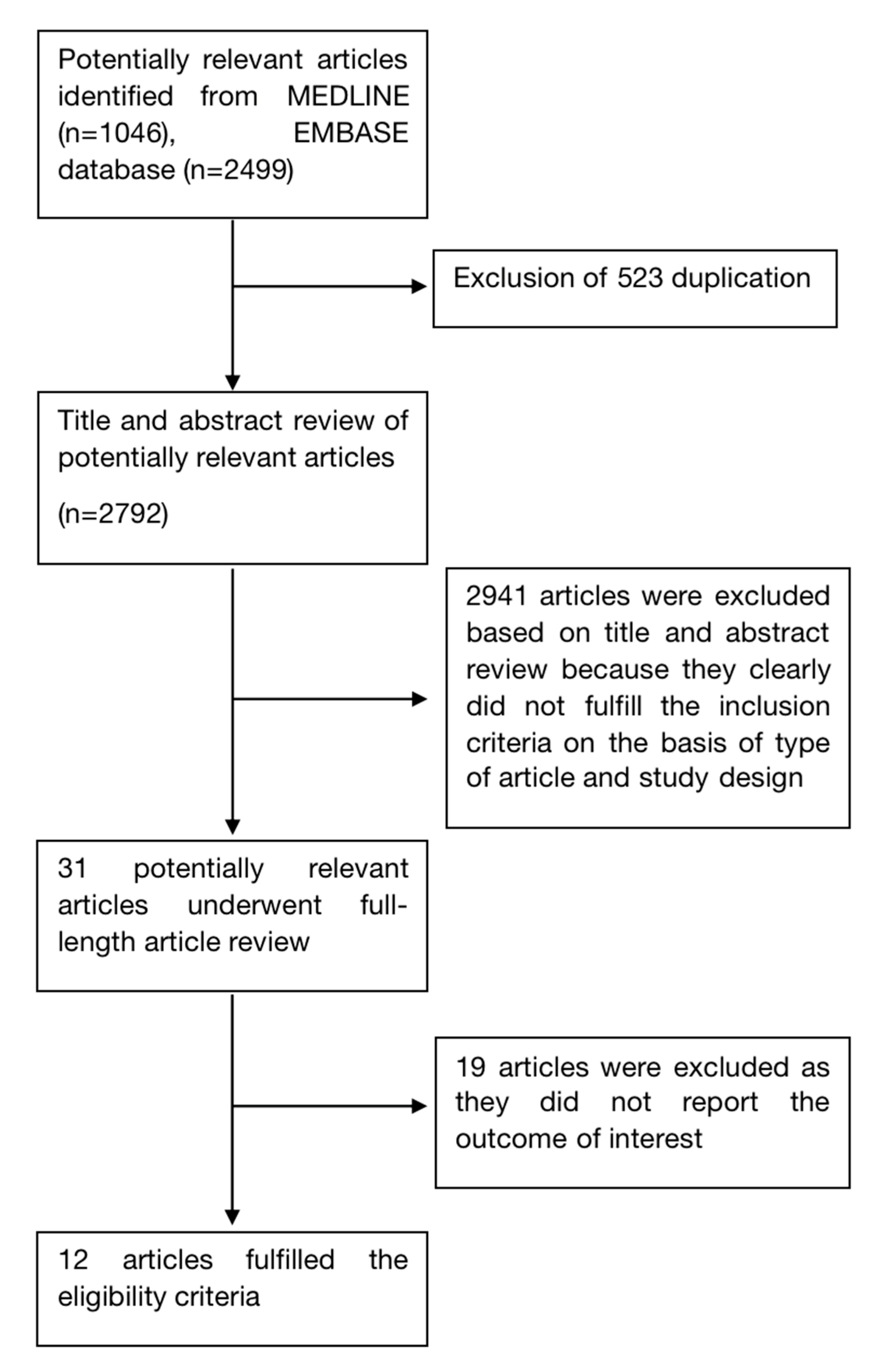
3.1.1. Search Results
3.1.2. Characteristics of Studies Reporting the Association between Vitamin D-Related Genetic Variations and Presence and/or Severity of NAFLD
3.1.3. Association between Vitamin D-Related Polymorphism and Presence, Severity and Response to Treatment of Nonalcoholic Fatty Liver Disease
3.2. Discussion
4. Conclusions
Supplementary Materials
Author Contributions
Funding
Institutional Review Board Statement
Informed Consent Statement
Conflicts of Interest
References
- Puri, P.; Sanyal, A.J. Nonalcoholic fatty liver disease: Definitions, risk factors, and workup. Clin. Liver Dis. 2012, 1, 99–103. [Google Scholar] [CrossRef]
- Banini, B.A.; Sanyal, A.J. Nonalcoholic Fatty Liver Disease: Epidemiology, Pathogenesis, Natural History, Diagnosis, and Current Treatment Options. Clin. Med. Insights Ther. 2016, 8, 75–84. [Google Scholar] [CrossRef]
- Loomba, R.; Sanyal, A.J. The global NAFLD epidemic. Nat. Rev. Gastroenterol. Hepatol. 2013, 10, 686–690. [Google Scholar] [CrossRef]
- Perumpail, B.J.; Khan, M.A.; Yoo, E.R.; Cholankeril, G.; Kim, D.; Ahmed, A. Clinical epidemiology and disease burden of nonalcoholic fatty liver disease. World J. Gastroenterol. 2017, 23, 8263–8276. [Google Scholar] [CrossRef]
- Fabbrini, E.; Sullivan, S.; Klein, S. Obesity and nonalcoholic fatty liver disease: Biochemical, metabolic, and clinical implications. Hepatology 2010, 51, 679–689. [Google Scholar] [CrossRef]
- Charoenngam, N.; Shirvani, A.; Holick, M.F. Vitamin D for skeletal and non-skeletal health: What we should know. J. Clin. Orthop. Trauma. 2019, 10, 1082–1093. [Google Scholar] [CrossRef]
- Holick, M.F. Vitamin D Deficiency. New Engl. J. Med. 2007, 357, 266–281. [Google Scholar] [CrossRef]
- Carlberg, C.; Campbell, M.J. Vitamin D receptor signaling mechanisms: Integrated actions of a well-defined transcription factor. Steroids 2013, 78, 127–136. [Google Scholar] [CrossRef]
- Bikle, D.D. Vitamin D: Newer Concepts of Its Metabolism and Function at the Basic and Clinical Level. J. Endocr. Soc. 2020, 4, bvz038. [Google Scholar] [CrossRef]
- Aiba, I.; Yamasaki, T.; Shinki, T.; Izumi, S.; Yamamoto, K.; Yamada, S.; Terato, H.; Ide, H.; Ohyama, Y. Characterization of rat and human CYP2J enzymes as Vitamin D 25-hydroxylases. Steroids 2006, 71, 849–856. [Google Scholar] [CrossRef]
- Zhu, J.G.; Ochalek, J.T.; Kaufmann, M.; Jones, G.; Deluca, H.F. CYP2R1 is a major, but not exclusive, contributor to 25-hydroxyvitamin D production in vivo. Proc. Natl. Acad. Sci. USA 2013, 110, 15650–15655. [Google Scholar] [CrossRef]
- Holick, M.F.; Binkley, N.C.; Bischoff-Ferrari, H.A.; Gordon, C.M.; Hanley, D.A.; Heaney, R.P.; Murad, M.H.; Weaver, C.M. Evaluation, Treatment, and Prevention of Vitamin D Deficiency: An Endocrine Society Clinical Practice Guideline. J. Clin. Endocrinol. Metab. 2011, 96, 1911–1930. [Google Scholar] [CrossRef]
- Ross, A.C.; Manson, J.E.; Abrams, S.A.; Aloia, J.F.; Brannon, P.M.; Clinton, S.K.; Durazo-Arvizu, R.A.; Gallagher, J.C.; Gallo, R.L.; Jones, G.; et al. The 2011 Report on Dietary Reference Intakes for Calcium and Vitamin D from the Institute of Medicine: What Clinicians Need to Know. J. Clin. Endocrinol. Metab. 2011, 96, 53–58. [Google Scholar] [CrossRef]
- Hossein-nezhad, A.; Holick, M.F. Vitamin D for health: A global perspective. Mayo Clin. Proc. 2013, 88, 720–755. [Google Scholar] [CrossRef]
- Eliades, M.; Spyrou, E.; Agrawal, N.; Lazo, M.; Brancati, F.L.; Potter, J.J.; Koteish, A.A.; Clark, J.M.; Guallar, E.; Hernaez, R. Meta-analysis: Vitamin D and non-alcoholic fatty liver disease. Aliment. Pharmacol. Ther. 2013, 38, 246–254. [Google Scholar] [CrossRef]
- Jaruvongvanich, V.; Ahuja, W.; Sanguankeo, A.; Wijarnpreecha, K.; Upala, S. Vitamin D and histologic severity of nonalcoholic fatty liver disease: A systematic review and meta-analysis. Dig. Liver Dis. 2017, 49, 618–622. [Google Scholar] [CrossRef]
- Charoenngam, N.; Holick, M.F. Immunologic Effects of Vitamin D on Human Health and Disease. Nutrients 2020, 12, 2097. [Google Scholar] [CrossRef]
- Szymczak-Pajor, I.; Śliwińska, A. Analysis of Association between Vitamin D Deficiency and Insulin Resistance. Nutrients 2019, 11, 794. [Google Scholar] [CrossRef]
- Hariri, M.; Zohdi, S. Effect of Vitamin D on Non-Alcoholic Fatty Liver Disease: A Systematic Review of Randomized Controlled Clinical Trials. Int. J. Prev. Med. 2019, 10, 14. [Google Scholar] [CrossRef]
- Feng, M.; Li, H.; Chen, S.-F.; Li, W.-F.; Zhang, F.-B. Polymorphisms in the vitamin D receptor gene and risk of autoimmune thyroid diseases: A meta-analysis. Endocrine 2013, 43, 318–326. [Google Scholar] [CrossRef]
- Li, L.; Wu, B.; Liu, J.-Y.; Yang, L.-B. Vitamin D Receptor Gene Polymorphisms and Type 2 Diabetes: A Meta-analysis. Arch. Med. Res. 2013, 44, 235–241. [Google Scholar] [CrossRef] [PubMed]
- Lu, S.; Guo, S.; Hu, F.; Guo, Y.; Yan, L.; Ma, W.; Wang, Y.; Wei, Y.; Zhang, Z.; Wang, Z. The Associations Between the Polymorphisms of Vitamin D Receptor and Coronary Artery Disease: A Systematic Review and Meta-Analysis. Medicine 2016, 95, e3467. [Google Scholar] [CrossRef] [PubMed]
- Pakpahan, C.; Wungu, C.D.K.; Agustinus, A.; Darmadi, D. Do Vitamin D receptor gene polymorphisms affect bone mass density in men?: A meta-analysis of observational studies. Ageing Res. Rev. 2022, 75, 101571. [Google Scholar] [CrossRef] [PubMed]
- Adams, L.A.; White, S.W.; Marsh, J.A.; Lye, S.J.; Connor, K.L.; Maganga, R.; Ayonrinde, O.T.; Olynyk, J.K.; Mori, T.A.; Beilin, L.J.; et al. Association between liver-specific gene polymorphisms and their expression levels with nonalcoholic fatty liver disease. Hepatology 2013, 57, 590–600. [Google Scholar] [CrossRef]
- Arai, T.; Atsukawa, M.; Tsubota, A.; Koeda, M.; Yoshida, Y.; Okubo, T.; Nakagawa, A.; Itokawa, N.; Kondo, C.; Nakatsuka, K.; et al. Association of vitamin D levels and vitamin D-related gene polymorphisms with liver fibrosis in patients with biopsy-proven nonalcoholic fatty liver disease. Dig. Liver Dis. 2019, 51, 1036–1042. [Google Scholar] [CrossRef]
- Gibson, P.; Fitzpatrick, E.; Quaglia, A.; Dhawan, A.; Wu, H.; Hart, K.; Lanham-New, S.; Moore, J.B. Assessment of vitamin D status and genetic variation in vitamin-D related genes: Key findings from a UK paediatric non-alcoholic fatty liver disease population. Proc. Nutr. Soc. 2015, 74, OCE1. [Google Scholar] [CrossRef]
- Gibson, P.S.; Fitzpatrick, E.; Quaglia, A.; Dhawan, A.; Wu, H.; Hart, K.; Lanham-New, S.; Moore, J.B. Association of NADSYN1, DHCR7, GC and VDR genotypes with steatosis and liver inflammation in UK paediatric non-alcoholic fatty liver disease patients. Hepatology 2014, 60, 967A. [Google Scholar] [CrossRef]
- Gibson, P.S.; Quaglia, A.; Dhawan, A.; Wu, H.; Lanham-New, S.; Hart, K.H.; Fitzpatrick, E.; Moore, J.B. Vitamin D status and associated genetic polymorphisms in a cohort of UK children with non-alcoholic fatty liver disease. Pediatric. Obes. 2018, 13, 433–441. [Google Scholar] [CrossRef]
- Jamka, M.; Arslanow, A.; Bohner, A.; Krawczyk, M.; Weber, S.N.; Grunhage, F.; Lammert, F.; Stokes, C.S. Effects of Gene Variants Controlling Vitamin D Metabolism and Serum Levels on Hepatic Steatosis. Digestion 2018, 97, 298–308. [Google Scholar] [CrossRef]
- Wang, M.; Wang, M.; Zhang, R.; Shen, C.; Zhang, L.; Ding, Y.; Tang, Z.; Wang, H.; Zhang, W.; Chen, Y.; et al. Influences of Vitamin D Levels and Vitamin D-Binding Protein Polymorphisms on Nonalcoholic Fatty Liver Disease Risk in a Chinese Population. Ann. Nutr. Metab. 2022, 78, 61–72. [Google Scholar] [CrossRef]
- Wang, M.; Zhang, R.; Wang, M.; Zhang, L.; Ding, Y.; Tang, Z.; Wang, H.; Zhang, W.; Chen, Y.; Wang, J. Genetic Polymorphism of Vitamin D Family Genes CYP2R1, CYP24A1, and CYP27B1 Are Associated With a High Risk of Non-alcoholic Fatty Liver Disease: A Case-Control Study. Front. Genet. 2021, 12, 717533. [Google Scholar] [CrossRef] [PubMed]
- Wang, N.; Chen, C.; Zhao, L.; Chen, Y.; Han, B.; Xia, F.; Cheng, J.; Li, Q.; Lu, Y. Vitamin D and Nonalcoholic Fatty Liver Disease: Bi-directional Mendelian Randomization Analysis. EBioMedicine 2018, 28, 187–193. [Google Scholar] [CrossRef] [PubMed]
- Yaghooti, H.; Ghanavati, F.; Seyedian, S.S.; Cheraghian, B.; Mohammadtaghvaei, N. The efficacy of calcitriol treatment in non-alcoholic fatty liver patients with different genotypes of vitamin D receptor FokI polymorphism. BMC Pharmacol. Toxicol. 2021, 22, 18. [Google Scholar] [CrossRef] [PubMed]
- Young, K.A.; Fingerlin, T.E.; Wagenknecht, L.E.; Engelman, C.D.; Haffner, S.M.; Lorenzo, C.; Chen, Y.D.; Sibbel, S.P.; Norris, J.M. Variants in vitamin D genes are associated with liver density and non-alcoholic fatty liver disease (NAFLD) in Hispanics and African Americans: The IRAS Family Study. Diabetologia 2010, 53, S139–S140. [Google Scholar] [CrossRef]
- Zhang, R.; Wang, M.; Wang, M.; Zhang, L.; Ding, Y.; Tang, Z.; Fu, Z.; Fan, H.; Zhang, W.; Wang, J. Vitamin D Level and Vitamin D Receptor Genetic Variation Were Involved in the Risk of Non-Alcoholic Fatty Liver Disease: A Case-Control Study. Front. Endocrinol. 2021, 12, 648844. [Google Scholar] [CrossRef]
- Luchini, C.; Stubbs, B.; Solmi, M.; Veronese, N. Assessing the quality of studies in meta-analyses: Advantages and limitations of the Newcastle Ottawa Scale. World J. Meta-Anal. 2017, 5, 80–84. [Google Scholar] [CrossRef]
- Keane, J.T.; Elangovan, H.; Stokes, R.A.; Gunton, J.E. Vitamin D and the Liver-Correlation or Cause? Nutrients 2018, 10, 496. [Google Scholar] [CrossRef]
- Bidulescu, A.; Morris, A.A.; Stoyanova, N.; Meng, Y.X.; Vaccarino, V.; Quyyumi, A.A.; Gibbons, G.H. Association between Vitamin D and Adiponectin and Its Relationship with Body Mass Index: The META-Health Study. Front. Public Health 2014, 2, 193. [Google Scholar] [CrossRef]
- Sung, C.C.; Liao, M.T.; Lu, K.C.; Wu, C.C. Role of vitamin D in insulin resistance. J. Biomed. Biotechnol. 2012, 2012, 634195. [Google Scholar] [CrossRef]
- Marchesini, G.; Brizi, M.; Morselli-Labate, A.M.; Bianchi, G.; Bugianesi, E.; McCullough, A.J.; Forlani, G.; Melchionda, N. Association of nonalcoholic fatty liver disease with insulin resistance. Am. J. Med. 1999, 107, 450–455. [Google Scholar] [CrossRef]
- Sharifi, N.; Amani, R. Vitamin D supplementation and non-alcoholic fatty liver disease: A critical and systematic review of clinical trials. Crit. Rev. Food Sci. Nutr. 2019, 59, 693–703. [Google Scholar] [CrossRef] [PubMed]
- Manousaki, D.; Mitchell, R.; Dudding, T.; Haworth, S.; Harroud, A.; Forgetta, V.; Shah, R.L.; Luan, J.a.; Langenberg, C.; Timpson, N.J.; et al. Genome-wide Association Study for Vitamin D Levels Reveals 69 Independent Loci. Am. J. Hum. Genet. 2020, 106, 327–337. [Google Scholar] [CrossRef] [PubMed]
- Ruiz-Ballesteros, A.I.; Meza-Meza, M.R.; Vizmanos-Lamotte, B.; Parra-Rojas, I.; de la Cruz-Mosso, U. Association of Vitamin D Metabolism Gene Polymorphisms with Autoimmunity: Evidence in Population Genetic Studies. Int. J. Mol. Sci. 2020, 21, 9626. [Google Scholar] [CrossRef] [PubMed]
- Krasniqi, E.; Boshnjaku, A.; Wagner, K.-H.; Wessner, B. Association between Polymorphisms in Vitamin D Pathway-Related Genes, Vitamin D Status, Muscle Mass and Function: A Systematic Review. Nutrients 2021, 13, 3109. [Google Scholar] [CrossRef] [PubMed]
- Zhang, H.; Shen, Z.; Lin, Y.; Zhang, J.; Zhang, Y.; Liu, P.; Zeng, H.; Yu, M.; Chen, X.; Ning, L.; et al. Vitamin D receptor targets hepatocyte nuclear factor 4α and mediates protective effects of vitamin D in nonalcoholic fatty liver disease. J. Biol. Chem. 2020, 295, 3891–3905. [Google Scholar] [CrossRef] [PubMed]
- Barchetta, I.; Carotti, S.; Labbadia, G.; Gentilucci, U.V.; Muda, A.O.; Angelico, F.; Silecchia, G.; Leonetti, F.; Fraioli, A.; Picardi, A.; et al. Liver vitamin D receptor, CYP2R1, and CYP27A1 expression: Relationship with liver histology and vitamin D3 levels in patients with nonalcoholic steatohepatitis or hepatitis C virus. Hepatology 2012, 56, 2180–2187. [Google Scholar] [CrossRef]
- Shirvani, A.; Kalajian, T.A.; Song, A.; Holick, M.F. Disassociation of Vitamin D’s Calcemic Activity and Non-calcemic Genomic Activity and Individual Responsiveness: A Randomized Controlled Double-Blind Clinical Trial. Sci. Rep. 2019, 9, 17685. [Google Scholar] [CrossRef] [PubMed]
- Shirvani, A.; Kalajian, T.A.; Song, A.; Allen, R.; Charoenngam, N.; Lewanczuk, R.; Holick, M.F. Variable Genomic and Metabolomic Responses to Varying Doses of Vitamin D Supplementation. Anticancer Res. 2020, 40, 535. [Google Scholar] [CrossRef]
- Carlberg, C.; Haq, A. The concept of the personal vitamin D response index. J. Steroid Biochem. Mol. Biol. 2018, 175, 12–17. [Google Scholar] [CrossRef] [PubMed]
- Das, S.; Choudhuri, D. Calcium supplementation shows a hepatoprotective effect against high-fat diet by regulating oxidative-induced inflammatory response and lipogenesis activity in male rats. J. Tradit Complement. Med. 2019, 10, 511–519. [Google Scholar] [CrossRef]
- Page, M.J.; McKenzie, J.E.; Bossuyt, P.M.; Boutron, I.; Hoffmann, T.C.; Mulrow, C.D.; Shamseer, L.; Tetzlaff, J.M.; Akl, E.A.; Brennan, S.E.; et al. The PRISMA 2020 statement: An updated guideline for reporting systematic reviews. BMJ 2021, 372, n71. [Google Scholar] [CrossRef] [PubMed]


| Study | Young [34] | Adams [24] | Gibson [27] |
| Country | USA | Australia | UK |
| Year of publication | 2010 | 2012 | 2014 |
| Total number of participants | 1180 | 928 | 78 |
| Recruitment of participants | Cases were patients with NAFLD recruited from families in San Antonio, San Luis Valley, and Los Angeles, USA who had CT measured of liver and visceral fat Controls were patients without NAFLD recruited from the same sites during the same period | Cases were patients with NAFLD recruited from the Western Australian Pregnancy Cohort (Raine) Study in Perth, Western Australia from 1989 to 1992 Controls were patients without NAFLD recruited from the same sources during the same period | Cases were NAFLD patients with increased fibrosis of liver (F2–F4) or increased NAS score recruited from medical records from the King’s College Hospital Pediatric Liver Clinic, UK Controls were NAFLD patients without increased fibrosis of liver (F2–F4) or increased NAS score recruited from the same source during the same period |
| Evaluation of NAFLD | CT measure of the liver and visceral fat | Liver ultrasound at age 17 | Liver biopsy |
| Average age of participants (years) | 48.7 | Cases: 17.0 Controls: 17.0 | N/A |
| Percentage of female participants | 62.4 | Cases: 60.3 Controls: 45.9 | N/A |
| Variables adjusted in multivariate analysis | N/A | N/A | N/A |
| Newcastle–Ottawa score | Selection: 4 Comparability: 0 Exposure: 3 | Selection: 4 Comparability: 0 Exposure: 3 | Selection: 3 Comparability: 0 Exposure: 3 |
| Study | Gibson [26] | Gibson [28] | Jamka [29] |
| Country | UK | UK | Germany |
| Year of publication | 2015 | 2018 | 2018 |
| Total number of participants | 103 | 103 | 241 |
| Recruitment of participants | Participants were patients with NAFLD recruited from medical records from the King’s College Hospital Pediatric Liver Clinic, UK, from March 2001 to July 2013 | Participants were patients with NAFLD recruited from medical records from the King’s College Hospital Pediatric Liver Clinic, UK, from March 2001 to July 2013 | Participants were patients with chronic liver diseases recruited from the Department of Medicine II, Saarland University Medical Center, Homburg, Germany |
| Evaluation of NAFLD | Liver biopsy | Liver biopsy | Fibroscan |
| Average age of participants (years) | 13.8 | 13.8 | 55.0 |
| Percentage of female participants | 34.0 | 34.0 | 43.1 |
| Variables adjusted in multivariate analysis | N/A | N/A | Age, season |
| Newcastle–Ottawa score | Selection: 3 Comparability: 0 Exposure: 3 | Selection: 3 Comparability: 0 Exposure: 3 | Selection: 3 Comparability: 1 Exposure: 3 |
| Study | Wang [32] | Arai [25] | Wang [31] |
| Country | China | Japan | China |
| Year of publication | 2018 | 2019 | 2021 |
| Total number of participants | 9182 | 229 | 3025 |
| Recruitment of participants | Cases were patients with NAFLD recruited from adult Chinese citizens from 23 sites in Shanghai, Zhejiang, Jiangsu, Anhui, and Jiangxi provinces from 2014 to 2016 Controls were patients without NAFLD recruited from the same sites during the same period | Cases were NAFLD patients with advanced fibrosis of liver (F3–F4) recruited from families in San Antonio, San Luis Valley, and Los Angeles Controls were NAFLD patients without advanced fibrosis of liver (F3–F4) recruited from the same sites during the same period | Cases were patients with NAFLD recruited from a community in Nanjing, Jiangsu, China from July to September 2018 Controls were patients without NAFLD recruited from the same source during the same period |
| Evaluation of NAFLD | Liver ultrasound | Liver biopsy | Liver ultrasound |
| Average age of participants (years) | 54.0 | 55.0 | Cases: 40.4 Controls: 39.7 |
| Percentage of female participants | 64.0 | 46.7 | Cases: 15.5 Controls: 18.1 |
| Variables adjusted in multivariate analysis | N/A | Age, body mass index, total cholesterol, serum 25(OH)D3 | Age, sex, visceral obesity, ALT, GGT, hypertension, hypertriglyceridemia, hyperglycemia, low HDL-C, unfavorable alleles |
| Newcastle–Ottawa score | Selection: 4 Comparability: 0 Exposure: 3 | Selection: 3 Comparability: 2 Exposure: 3 | Selection: 3 Comparability: 2 Exposure: 3 |
| Study | Yaghooti [33] | Zhang [35] | Wang [30] |
| Country | Iran | China | China |
| Year of publication | 2021 | 2021 | 2022 |
| Total number of participants | 128 | 3023 | N/A |
| Recruitment of participants | Participants were patients with fatty liver recruited from patients referred to the Ahvaz Golestan Hospital, Iran, from 2017 to 2018 | Cases were patients with NAFLD recruited from a community in Nanjing, Jiangsu, China, from July to September 2018 Controls were patients without NAFLD recruited from the same source during the same period | Cases were patients with NAFLD recruited from Chinese population Controls were patients without NAFLD recruited from the same source during the same period |
| Evaluation of NAFLD | Liver ultrasound | Liver ultrasound | N/A |
| Average age of participants (years) | N/A | Cases: 40.5 Controls: 39.9 | N/A |
| Percentage of female participants | N/A | Cases: 15.4 Controls: 17.5 | N/A |
| Variables adjusted in multivariate analysis | N/A | Age, visceral obesity, hypertension, hypertriglyceridemia, low HDL-C, ALT, exercise | Age, gender, overweight, abdominal obesity, hypertension, hypertriglyceridemia, hyperglycemia |
| Newcastle–Ottawa score | Selection: 3 Comparability: 0 Exposure: 3 | Selection: 4 Comparability: 2 Exposure: 3 | Selection: 3 Comparability: 2 Exposure: 3 |
| Outcome | Gene | Locus | Finding |
|---|---|---|---|
| Presence of NAFLD | GC | rs222054 |
|
| GC | rs222020 |
| |
| GC | rs10011000 |
| |
| GC | rs7041 |
| |
| GC | rs2282679 |
| |
| GC | rs222020 |
| |
| GC | rs4588 |
| |
| GC | rs1155563 |
| |
| GC | rs16847024 |
| |
| GC | rs3733359 |
| |
| VDR | rs2228570 |
| |
| VDR | rs11168287 |
| |
| VDR | rs10783219 |
| |
| VDR | rs4752 |
| |
| CYP24A1 | rs3787557 |
| |
| CYP24A1 | rs6068816 |
| |
| CYP24A1 | rs2296241 |
| |
| CYP24A1 | rs2248359 |
| |
| CYP24A1 | rs6013897 |
| |
| CYP27B1 | rs4646536 |
| |
| CYP2R1 | rs10741657 |
| |
| DHCR7 | rs12785878 |
| |
| Liver density a | VDR | rs4334089 |
|
| CYP24A1 | rs3787555 |
| |
| CYP24A1 | rs6068816 |
| |
| CYP24A1 | rs6097809 |
| |
| CYP24A1 | rs6127119 |
| |
| CYP24A1 | rs2248359 |
| |
| CYP24A1 | rs3787554 |
| |
| CYP24A1 | rs4809960 |
| |
| CYP24A1 | rs6022999 |
| |
| CYP27B1 | N/A |
| |
| CYP2R1 | N/A |
| |
| Steatosis b | DHCR7 | rs12785878 | |
| DHCR7 | rs3829251 |
| |
| GC | rs7041 |
| |
| VDR | rs2228570 |
| |
| VDR | rs79754353 |
| |
| CYP2R1 | rs10741657 |
| |
| Inflammation and fibrosis c | DHCR7 | rs12785878 |
|
| GC | rs4588 |
| |
| VDR | rs2228570 |
| |
| CYP2R1 | rs10741657 |
| |
| Advanced fibrosis d | DHCR7 | rs7944926 |
|
| DHCR7 | rs12785878 |
| |
| GC | rs2282679 |
| |
| VDR | rs1544410 |
| |
| VDR | rs2228750 |
| |
| VDR | rs7975232 |
| |
| VDR | rs731236 |
| |
| CYP27B1 | rs10877012 |
| |
| CYP2R1 | rs1993116 |
| |
| CYP2R1 | rs10741657 |
| |
| NAFLD activity score e | CYP2R1 | rs10741657 |
|
| NAFLD histological severity f | GC | rs2282679 |
|
| CYP2R1 | rs10741657 |
| |
| Response to calcitriol treatment | VDR | rs10735810 |
|
Publisher’s Note: MDPI stays neutral with regard to jurisdictional claims in published maps and institutional affiliations. |
© 2022 by the authors. Licensee MDPI, Basel, Switzerland. This article is an open access article distributed under the terms and conditions of the Creative Commons Attribution (CC BY) license (https://creativecommons.org/licenses/by/4.0/).
Share and Cite
Jaroenlapnopparat, A.; Suppakitjanusant, P.; Ponvilawan, B.; Charoenngam, N. Vitamin D-Related Genetic Variations and Nonalcoholic Fatty Liver Disease: A Systematic Review. Int. J. Mol. Sci. 2022, 23, 9122. https://doi.org/10.3390/ijms23169122
Jaroenlapnopparat A, Suppakitjanusant P, Ponvilawan B, Charoenngam N. Vitamin D-Related Genetic Variations and Nonalcoholic Fatty Liver Disease: A Systematic Review. International Journal of Molecular Sciences. 2022; 23(16):9122. https://doi.org/10.3390/ijms23169122
Chicago/Turabian StyleJaroenlapnopparat, Aunchalee, Pichatorn Suppakitjanusant, Ben Ponvilawan, and Nipith Charoenngam. 2022. "Vitamin D-Related Genetic Variations and Nonalcoholic Fatty Liver Disease: A Systematic Review" International Journal of Molecular Sciences 23, no. 16: 9122. https://doi.org/10.3390/ijms23169122
APA StyleJaroenlapnopparat, A., Suppakitjanusant, P., Ponvilawan, B., & Charoenngam, N. (2022). Vitamin D-Related Genetic Variations and Nonalcoholic Fatty Liver Disease: A Systematic Review. International Journal of Molecular Sciences, 23(16), 9122. https://doi.org/10.3390/ijms23169122