


Abstract
Health risk factors such as tobacco smoking, inadequate fruit intake, inadequate vegetable intake, risky alcohol consumption, physical inactivity, obesity, anxiety and depression often commence during adolescence and young adulthood. Vocational education institutions enrol many students in these age groups making them an important setting for addressing multiple health risk factors. This systematic review examined (i) co-occurrence of health risk factors, (ii) clustering of health risk factors, and (iii) socio-demographic characteristics associated with co-occurrence and/or clusters of health risks among vocational education students. MEDLINE, PsycINFO, EMBASE, CINAHL and Scopus were searched to identify eligible studies published by 30 June 2020. Two reviewers independently extracted data and assessed methodological quality using the National Heart, Lung and Blood Institute Quality Assessment Tool. Five studies assessed co-occurrence and three studies clustering of health risks. Co-occurrence of health risk factors ranged from 29–98% and clustering of alcohol use and tobacco smoking was commonly reported. The findings were mixed about whether gender and age were associated with co-occurrence or clustering of health risks. There is limited evidence examining co-occurrence and clustering of health risk factors in vocational education students. Comprehensive assessment of how all these health risks co-occur or cluster in vocational education students is required.
1. Introduction
Noncommunicable diseases (NCDs) such as cancer, diabetes and cardiovascular diseases are the leading cause of death globally [1]. Modifiable behavioural health risk factors such as smoking tobacco, inadequate fruit consumption, inadequate vegetable intake, risky alcohol consumption, physical inactivity and obesity have consistently been found to be associated with increased risk of NCDs and mortality from such diseases [2,3,4,5]. Often, these health risk factors can co-occur or cluster with psychological distress such as depression and anxiety [6,7,8,9]. Co-occurrence of health risk factors refers to concurrent engagement in two or more health risk factors and clustering refers to the association between co-occurring health risk factors [10]. Concurrently engaging in two or more health risk factors and clustering of health risk factors increase the risk of non-communicable diseases and deaths compared to no health risk factors [2,11]. For instance, a longitudinal study that examined the combined effect of four health risk behaviours (i.e., smoking, inadequate fruit and vegetable intake, alcohol intake and physical inactivity) among British adults revealed that the risk of mortality was greater among those engaging in all four health risk behaviours compared to those engaging in one health risk behaviour [3]. Addressing multiple health risk factors may therefore maximise health benefits and result in a greater reduction in health care costs [12,13]. As part of primary preventive strategies to reduce the global chronic disease burden, the World Health Organization recommends approaches that tackle these multiple health risk factors instead of targeting single health risk factors [14].
Health risk factors often commence during adolescence and become established during early adulthood [15,16]. Vocational education institutions are therefore an important setting to address multiple health risk factors in students because most students who enrol in vocational education are adolescents or young adults [17]. Vocational education settings include trade schools, technical schools, community colleges, colleges of further education, institutes of technology, apprenticeship training, career and technical education and polytechnic institutions [18]. Vocational education settings prepare students for specific occupations in trade or craft as technicians, or in professional vocations such as dentistry [17]. This training can be offered at the secondary, post-secondary, non-tertiary, further education, or higher education level [18].
The transition into vocational education may be characterised by the individual’s growing independence that may lead to unhealthy lifestyle choices such as smoking tobacco, frequent consumption of fast foods rather than fruit and vegetables, risky consumption of alcohol, inadequate physical activity, increase in body weight, and the experience of psychological distress such as anxiety and depression [19,20,21]. Factors such as the cost of healthy foods being greater than unhealthy fast foods [22], the high cost of using the gym, busy lifestyles, cognitive-emotional factors (i.e., lack of confidence), social smoking and drinking with peers may contribute to multiple health risk factors in vocational education students [22,23,24].
Furthermore, vocational education students compared to university students are more likely to engage in health risk behaviours and to experience psychological distress [25,26,27]. This may be due to additional competing demands and/or life circumstances as vocational education students are more likely to work full time than university students, have low socio-economic status and be part of minority groups [25,28].
Two systematic reviews have examined clustering of multiple health risk behaviours [29,30], although not specifically within the vocational education setting. The systematic review by Meader and colleagues identified which risk behaviours (i.e., tobacco smoking, low fruit and vegetable intake, alcohol misuse, physical inactivity, illicit drug use, and sexual risk) cluster or co-occur and the socio-demographic factors associated with co-occurrence or clustering of health risk behaviours [30].
The systematic review by Noble and colleagues examined clustering of smoking tobacco, nutrition, alcohol, and physical activity (SNAP) health risk behaviours and socio-demographic characteristics associated with SNAP health risk clusters [29]. More than half of the studies included in this review reported clustering of smoking tobacco and alcohol use [29]. Among the five studies that examined the clustering of health risk behaviours among university students, three studies reported clustering of alcohol use and smoking tobacco [29]. None of these reviews included studies that examined obesity, depression, and anxiety. Furthermore, none of the existing reviews included studies that examined the co-occurrence and/or clustering of multiple health risk factors among vocational education students.
In relation to young adults, the existing systematic reviews on multiple health risk factors focused on university students but not vocational education students [29,30]. This is despite a substantial proportion of young adults attending vocational education settings and not universities [17], highlighting a need to also examine multiple health risk factors in this important sub-group of young adults. Therefore, a systematic review that synthesises studies investigating multiple health risk factors among vocational education students is necessary to address the existing gap in the literature and to inform the development of effective health promotion interventions targeting multiple health risk factors among vocational education students. This systematic review aims to examine among vocational education students:
- The co-occurrence of key multiple health risk factors responsible for NCDs (i.e., at least two of smoking tobacco, inadequate fruit intake, inadequate vegetable intake, risky alcohol consumption, physical inactivity, obesity, anxiety and depression);
- Clustering patterns of these health risk factors;
- Socio-demographic characteristics associated with co-occurrence of health risk factors or identified clusters.
2. Materials and Methods
2.1. Design and Registration
The systematic review was a narrative synthesis of studies registered with PROSPERO (International Prospective Register of Systematic Reviews) (registration number: CRD42019118161) and was conducted following the guidelines in the Preferred Reporting Items for Systematic Review and Meta-Analysis (PRISMA) [31].
2.2. Literature Search
The following electronic databases were searched: MEDLINE, PsycINFO, EMBASE, CINAHL and Scopus to identify studies published by 30 June 2020 that examined multiple health risk factors in vocational education settings. The search was undertaken using keywords and medical subject heading searches (MesH). Boolean Operators “AND” and “OR” were used to combine search terms where appropriate. “OR” was used for within group combinations while “AND” was used for between group combinations. The search was restricted to studies with human participants. The reference lists of included articles were also checked to identify other eligible articles that may not have been captured during the database search. Table 1 outlines the search strategy.
Table 1.
Search strategy.
2.3. Inclusion Criteria
2.3.1. Type of Studies
Only quantitative studies published in English in peer-reviewed journals and published thesis or dissertations were included.
2.3.2. Study Design
Studies were included if they used any of the following designs: cross-sectional, longitudinal/cohort studies or baseline data from randomised controlled trials where co-occurrence and/or clustering of any combination of smoking tobacco, fruit intake, vegetable intake, alcohol consumption, physical activity, obesity, anxiety and depression was reported.
2.3.3. Participants
Studies were included if they surveyed students attending a vocational education institution only or subgroup analysis was available for the vocational education students.
2.3.4. Outcomes
Studies were included if they analysed together at least two of the following outcome measures:
- Smoking tobacco: any measure assessing current tobacco smoking behaviours (e.g., cigarette smoking);
- Fruit intake: any measure assessing fruit intake (e.g., daily serves of fruits);
- Vegetable intake: any measure assessing vegetable intake (e.g., daily serves of vegetables);
- Alcohol use: any measure assessing alcohol consumption (e.g., standard drinks per day);
- Physical activity: any measure of physical activity (e.g., minutes of moderate or vigorous physical activity);
- Obesity: any measure of obesity (e.g., body mass index, waist circumference);
- Depression: any measure of depression (e.g., having low interest in doing things);
- Anxiety: any measure of anxiety (e.g., feeling nervous or on edge).
Co-occurrence of multiple health risk factors was defined as concurrent engagement in two or more health risk factors and clustering was defined as association between co-occurring health risk factors [10].
2.4. Study Exclusion Criteria
Studies were excluded if they reported co-occurrence of multiple health risk factors where the percentage contained a majority (i.e., at least 4) of health risk factors not addressed by this review (e.g., illicit drug use, carrying a weapon, non-use of seat belts or crash helmets, physical fighting). Studies were also excluded if they were conducted in the vocational education setting but assessed the staff rather than the student population. Conference proceedings, non-peer reviewed articles, commentaries, protocols, systematic reviews, case control studies and non-English publications were all excluded.
2.5. Screening
All articles during the electronic search were exported into Endnote (Version 9, Clarivate Analytics, Philadelphia, PA, USA and duplicates removed. After deduplication, articles were exported into Covidence for title and abstract screening. Title and abstract screening was completed independently by two members (P.A. and (F.T. or J.B.)) of the review team based on the inclusion and exclusion criteria. If the eligibility of the study could not be determined during the title and abstract screening the full text of the article was obtained. Full-text screening was completed independently by two members (P.A. and (F.T. or J.B.)) of the review team. Discrepancies were resolved between the two reviewers. Reasons for exclusion during the full-text screening were recorded. Using Cohen kappa, inter-rater reliability between the two raters was k= 0.80, demonstrating substantial agreement [32].
2.6. Data Extraction
Data extraction was performed independently by two members of the review team (P.A. and J.B.). The reviewers discussed any discrepancies until resolved and if required consulted a third reviewer to resolve disagreements (F.T.). The following data were extracted from each of the included studies:
- Publication details: author(s), publication year, country of study and year data were collected;
- Study setting: type of vocational education setting;
- Study design: cross-sectional studies, longitudinal studies, and baseline data from randomised controlled trials;
- Sample characteristics: socio-demographic characteristics (e.g., age, gender, education, employment status, socio-economic status, marital status, country of birth, area of residence), sample size, recruitment methods used, eligibility criteria, consent rates;
- Measures: type of tobacco smoking, fruit intake, vegetable intake, alcohol use, physical activity, obesity, depression, and anxiety measures used;
- Outcomes: co-occurrence of two or more health risk factors, clustering of multiple health risk factors and socio-demographic characteristics associated with co-occurrence of multiple health risk factors and/or identified clusters.
2.7. Methodological Quality Assessment
The National Heart, Lung and Blood Institute (NHLBI) standardized Quality Assessment Tool for Observational Cohort and Cross-sectional studies [33] was used to assess the methodological quality of eligible studies. This quality assessment tool has 14 items with three response options (Yes, No, and other (i.e., CD, cannot determine; NA, not applicable, and NR, not reported). Quality of studies was judged as “good”, “fair” or “poor” based on the ratings of the items in the tool. This was done independently by two members (P.A. and F.T.) of the team. These two reviewers discussed any discrepancies until resolved.
2.8. Data Analysis and Synthesis
A systematic narrative synthesis was conducted as heterogeneity across the included studies did not allow for meta-analysis. The characteristics of studies, co-occurrence of health risk factors or clustering of health risk factors were presented using tables and narrative summaries. We followed the Guidance of the conduct of Narrative synthesis in Systematic Reviews [34]. P.A. performed all analysis and synthesis with the guidance of the other members of the review team.
3. Results
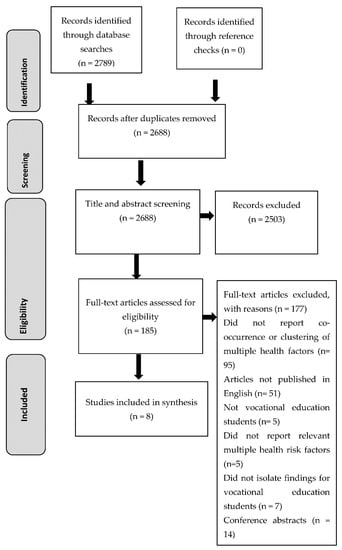
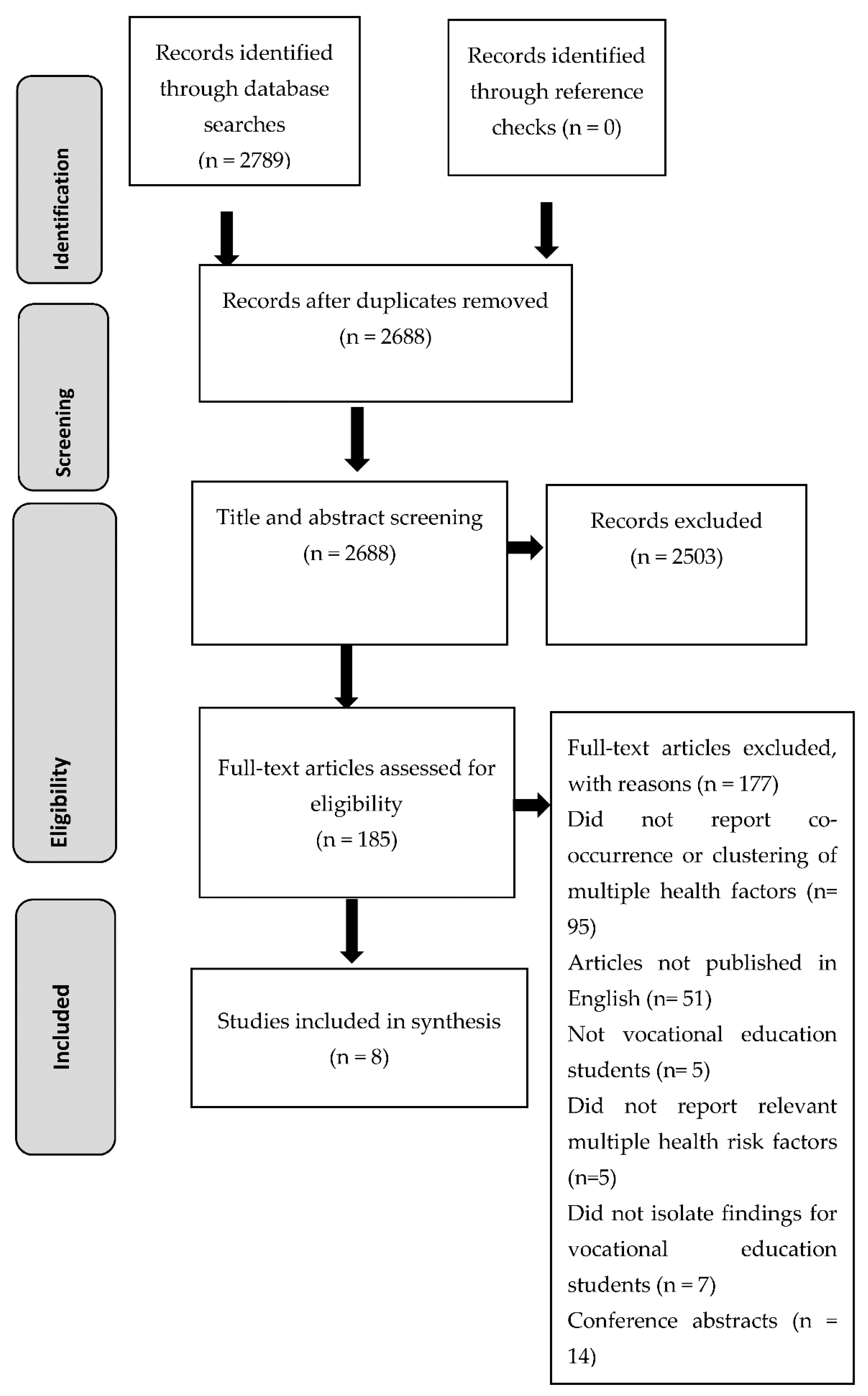
Figure 1 presents the PRISMA diagram for screening and selection. A total of 2789 records were identified during the database search, and after duplicates were removed, 2688 records were screened. During the title and abstract screening, 2503 records were excluded leaving 185 full-text records which were assessed for eligibility (Figure 1). Overall, 177 of the full-text records were excluded and reasons for exclusion are presented in Figure 1. Eight studies [35,36,37,38,39,40,41,42] were deemed eligible and were included in the review.
Figure 1.
PRISMA diagram of screening and selection process.
3.1. Study Characteristics
Table 2 describes the characteristics of included studies. Two studies were conducted in the United States [37,39] and one study in each of Australia [36], the Netherlands [35], France [38], Switzerland [42], Germany [40] and United Kingdom [41]. All eight studies were published from 2007 onwards. Seven studies used a cross-sectional design [35,36,37,38,39,41,42], and one study used a longitudinal design [40]. The sample size ranged from 142 [37] to 5688 [40]. Five studies reported mean age which ranged from 17.4 years [38] to 22.75 years [37]; one study reported a median age of 18 years [42], and one study recruited participants 16 years and older [36]. Five studies [35,36,37,39,42] reported a majority of female participants whereas two studies [38,40] reported a majority of male participants. For recruitment method used, two studies recruited students using an information sheet distributed to students weeks prior to the data collection [35,36]; one study displayed posters, distributed handouts around campuses and advertised via community college newspapers and email [37]; one study recruited all adolescents who attended the National Defence and Citizenship Day (JDC) [38]; one study recruited students during a regular school lesson reserved for health education [42]; one study recruited students by sending questionnaire packs to their advisors who distributed them during their study day [41], and two studies did not report recruitment method [39,40]. Across the eight studies the response rate ranged from 66% [41] to 99.5% [39,42].
Table 2.
Characteristics of studies examining the co-occurrence and clustering of health risk factors.
3.2. Combinations of Health Risk Factors Measured
Three of the studies measured two health risk factors [38,40,41]. The combinations assessed were smoking cigarettes/tobacco and drinking alcohol for all three studies. Three studies measured three health risk factors [35,37,42]. The combinations explored were alcohol drinking, depression and anxiety [37], hazardous drinking, smoking and physical inactivity and cigarette smoking, binge drinking and depression [35,42]. One study measured four health risk factors (i.e., tobacco use, alcohol use, leisure time physical activity and overweight/obesity) [39], whereas one study measured six of the health risk factors (i.e., smoking tobacco, alcohol consumption, fruit consumption, vegetable consumption, physical activity and obesity/overweight) [36]. None of the studies measured all eight health risk factors examined in this review.
3.3. Co-Occurrence of Multiple Health Risk Factors
Five studies reported the co-occurrence of multiple health risk factors among vocational education students [36,37,38,41,42]. Across the five studies, vocational education students’ engagement in two or more health risk factors ranged from 29% [42] to 98% [36].
3.4. Clustering Patterns of Health Risk Factors
Three studies examined the clustering of health risk factors [35,39,40]. Bannink et al. reported two clusters (i.e., “substance use” cluster characterised by binge drinking, cannabis use and cigarette smoking and “problem behaviour” cluster characterised by students who were delinquent, truant and incurred debts) using principal component analysis [35]. The study by Jeffries et al. reported three clusters (i.e., cluster 1: “active, binge drinkers with healthy dietary intake”, cluster 2: “non-active moderate-smokers and non-drinkers with poor dietary intake” and cluster 3: “moderately active, non-smoking and non-drinkers with moderately healthy dietary intake”) using Latent Class Analysis (LCA) [39]. Finally, Tomczyk et al. reported three clusters (i.e., “low users” characterised by students who reported low use of cigarettes, alcohol and cannabis/marijuana, “alcohol users” comprised of students who reported high use of alcohol and average scores for smoking cigarettes and “polysubstance users” characterised by students who reported high use of cigarette smoking, alcohol use and cannabis/marijuana) using Latent Transition Analysis (LTA) [40].
3.5. Socio-Demographic Characteristics Associated with Co-Occurrence of Multiple Health Risk Factors and/or Identified Clusters
3.5.1. Gender
One study reported that females were less likely to engage in (a) hazardous drinking and tobacco smoking but more likely to engage in (b) hazardous drinking and physical inactivity; (c) tobacco smoking and physical inactivity and (d) hazardous drinking, tobacco smoking and physical inactivity [42]. All three studies that examined the clustering patterns of health risk factors did not find an association between gender and the identified clusters [35,39,40].
3.5.2. Age
One study reported that vocational education students aged 17 years and older were more likely to engage in hazardous drinking and physical inactivity whereas those aged 21 years or more were more likely to smoke tobacco and be physically inactive [42]. Participants older than 18 years were more likely to engage in hazardous drinking, tobacco smoking and physical inactivity [42].
The study by Jeffries et al. reported that for every additional year in age, participants were 8% more likely to belong to the “active, binge drinkers with healthy dietary intake” cluster [39]. Tomczyk et al. did not find any association between age and the clusters reported in their study [40] while Bannink and colleagues reported no association between age and the substance use cluster [35].
3.5.3. Socio-Economic Status (SES)
Only one study examined whether SES was associated with clusters and found no significant association between SES and “low users,” “alcohol users” or “polysubstance users” [40].
3.5.4. Education
Haug et al. found that those with secondary school education were less likely than those with no educational qualification to engage in hazardous drinking and tobacco smoking [42]. The remaining studies did not examine whether level of education was associated with engaging in multiple health risk factors or clusters [35,36,37,38,39,40,41].
3.5.5. Ethnicity
Bannink et al. reported that participants of non-Dutch ethnicity were less likely to belong to the “substance use” cluster [35]. In the study by Haug et al. participants who had both parents born outside Switzerland were less likely than those with none of their parents born outside of Switzerland to engage in (a) hazardous drinking and tobacco smoking and (b) hazardous drinking and physical inactivity but more likely to engage in tobacco smoking and physical inactivity [42].
3.6. Methodological Quality Assessment
Table 3 outlines the methodological quality of the eight included studies in relation to 14 items and the overall quality rating. In terms of the overall quality rating one study was rated as good [40], six studies were rated as fair [35,36,38,39,41,42] and one study was rated as poor [37]. All studies adequately reported the research question and reported their participation/consent rate to be above 50%. Six studies [36,38,39,40,41,42], adequately reported the study population using demographics, locations, and time period whereas two studies [35,37] did not clearly specify and define the study population. Seven studies reported the eligibility criteria used to recruit the sample [35,36,37,38,39,41,42]. None of the studies provided a justification for the sample size. Five studies [35,37,39,40,42] did not report if outcome assessors were blinded and the longitudinal study did not report the follow-up rate [40]. Four studies did not provide information to indicate whether potential confounding factors were measured and adjusted for [36,37,38,41]. We could not determine if the outcome measures used were validated for six studies [35,36,38,40,41,42]. None of the studies measured the exposure variables more than once. Seven studies did not assess the exposure variables before the outcome variables were measured and did not allow a sufficient timeframe to see any effect [35,36,37,38,39,41,42].
Table 3.
Methodological quality assessment of eligible studies.
4. Discussion
This is the first systematic review to examine the co-occurrence of multiple health risk factors, clustering of health risk factors and socio-demographic characteristics associated with co-occurrence of multiple health risk factors and/or identified clusters among vocational education students. Eight studies were included in the review. Five studies [36,37,38,41,42] reported the co-occurrence of health risk factors but only one of these studies reported the socio-demographic characteristics associated with co-occurrence of health risk factors [42]. Three of the eight studies examined the clustering of health risk factors and socio-demographic characteristics associated with cluster membership [35,39,40].
Across five studies, vocational education students’ engagement in two or more health risk factors ranged from 29% [42] to 98% [36]. This evidence highlights that a substantial proportion of vocational education students engage in multiple health risk factors. However, there were no studies that included all of the eight health risk factors examined in this review. All eight studies measured alcohol consumption [35,36,37,38,39,40,41,42]; seven studies measured smoking cigarettes/tobacco [35,36,38,39,40,41,42]; three measured physical activity [36,39,42]; two measured depression and/or anxiety [35,37]; two measured obesity/overweight [36,39], and one study measured fruit and vegetable consumption [36]. This highlights that substance use factors were more frequently reported than other health risk factors among vocational education students. Future studies should therefore take a broader approach to measuring the co-occurrence of multiple health risk factors in vocational education students by including a more comprehensive list of factors related to physical and mental health.
The three studies that reported the clustering of health risk factors reported clustering of alcohol use and tobacco smoking among vocational education students [35,39,40]. This is consistent with previous studies among university students and adult populations that have reported a strong clustering pattern of tobacco smoking and alcohol use [7,29]. Other health risk factors found to cluster together were (i) physical activity, binge drinking, and healthy diet [39] and (ii) physical inactivity, smoking and poor diet [39]. This emphasises the need to take a holistic approach to behaviour change in the vocational education setting. Multiple health risk factor interventions that address health risks simultaneously or sequentially may be particularly beneficial for vocational education students. However, importantly none of the existing studies examined clustering of all eight health risk factors together in vocational education students. Future research should assess how all eight health risk factors cluster together in vocational education students in order to inform the development and delivery of effective, comprehensive preventive health interventions in the vocational education setting. Clustering between physical activity and alcohol consumption has not received much attention with regards to policy. Further research should explore this relationship.
Only four [35,39,40,42] of the eight studies examined socio-demographic characteristics associated with the co-occurrence of multiple health risk factors or clustering of health risk factors. Gender and age were examined as characteristics that may be associated with co-occurrence of health risk factors or clusters in all four studies [35,39,40,42]. In relation to gender the findings were mixed with only one of the four studies reporting an association between gender and co-occurrence of health risk factors [42]. Specifically, females were found to be (i) less likely to engage in hazardous drinking and tobacco smoking but more likely to engage in (ii) hazardous drinking and physical inactivity, (iii) tobacco smoking and physical inactivity and (iv) hazardous drinking, tobacco smoking and physical inactivity. In terms of age, two of the four studies reported a significant association, specifically Haug and colleagues reported that participants aged 17 years and above were more likely to engage in hazardous drinking and physical inactivity, participants aged 21 years and above were more likely to report they smoked tobacco and physical inactivity and those aged 19 years and older were more likely to engage in hazardous drinking, tobacco smoking and physical inactivity [42]. In the study by Jeffries et al. for every additional increase in age, participants were more likely to belong to the ‘active, binge drinkers and healthy dietary intake’ cluster [39]. The findings by Haug et al. [38] are consistent with previous studies [43,44,45] that reported females were more likely to belong to clusters characterised by physical inactivity, hazardous drinking, and tobacco smoking among young adults in universities. Further research is needed among vocational education students to strengthen the evidence-base about potential associations between gender, age, SES, education and ethnicity and the co-occurrence of health risk factors or clustering of multiple health risk factors.
Given that vocational education settings have a large number of students, they are an ideal setting for targeting multiple health risk factors [17]. Vocational education settings also have facilities such as gyms which could be helpful for modifying health risk factors [46]. Furthermore, vocational education students are often adolescents or young adults [17] which provides opportunity to modify health risk factors earlier in life in an effort to produce positive health outcomes in the short- and long-term.
Limitations
This systematic review has a number of limitations. Firstly, all studies defined health risk factors differently and measured these health factors using different measures. This contributed to the heterogeneity in this review. Secondly, all three studies that reported clustering of health risk factors used different statistical techniques to identify clusters. The different statistical techniques used to identify clusters makes comparison between studies challenging. Thirdly, some studies we excluded measured more than one health risk factor but failed to analyse and report the co-occurrence or clustering of multiple health risk factors. This illustrates that health risk factors in vocational education students are often considered in isolation rather than a holistic approach adopted of analysing multiple health risk factors collectively. Finally, the methodological quality assessment was based on information available in the published article and it is possible that inadequate reporting influenced the ratings.
5. Conclusions
This systematic review identified limited high-quality evidence about the co-occurrence of multiple health risk factors, clustering of health risk factors and associated socio-demographic characteristics in vocational education students. Given that no studies examined all eight health risk factors associated with NCDs, further research is needed to conduct a more comprehensive assessment of how these multiple health risk factors co-occur or cluster in vocational education students. This could inform the design of multiple health risk interventions that holistically target vocational education students’ health risk behaviours and mental health concurrently instead of targeting them in isolation.
Author Contributions
P.A., F.T., C.P., B.B. and J.W. conceived and designed the study. P.A. and F.T. developed the search strategy with assistance from a Librarian, and P.A. conducted the search. P.A., J.B. and F.T. screened the studies for inclusion. P.A. and J.B. extracted data, and P.A. and F.T. assessed the methodological quality of the included studies. P.A. drafted the manuscript. All co-authors contributed to the revision of the manuscript and approved the final version for publication. All authors have read and agreed to the published version of the manuscript.
Funding
P.A. was supported by a 50/50 Faculty of Health and Medicine, University of Newcastle PhD Scholarship. F.T. was supported by a National Health and Medical Research Council (NHMRC) Career Development Fellowship (APP1143269). The sponsors had no role in the design of the study and analysis and interpretation of data, in the writing of the manuscript, or in the decision to submit the paper for publication.
Institutional Review Board Statement
Not applicable.
Informed Consent Statement
Not applicable.
Data Availability Statement
No new data were created or analysed in this study. Data sharing is not applicable to this article.
Acknowledgments
Infrastructure support was provided by the School of Medicine and Public Health, Hunter New England Population Health and Hunter Medical Research Institute.
Conflicts of Interest
The authors declare no conflict of interest.
References
- World Health Organization. Noncommunicable Diseases Country Profiles 2018. 2018. Available online: https://www.who.int/nmh/publications/ncd-profiles-2018/en/ (accessed on 1 October 2020).
- Myint, P.K.; Luben, R.N.; Wareham, N.J.; Bingham, S.A.; Khaw, K.T. Combined effect of health behaviours and risk of first ever stroke in 20,040 men and women over 11 years’ follow-up in Norfolk cohort of European Prospective Investigation of Cancer (EPIC Norfolk): Prospective population study. BMJ 2009, 338, b349. [Google Scholar] [CrossRef] [Scilit] [PubMed]
- Kvaavik, E.; Batty, G.D.; Ursin, G.; Huxley, R.; Gale, C.R. Influence of individual and combined health behaviors on total and cause-specific mortality in men and women: The United Kingdom health and lifestyle survey. Arch. Internet Med. 2010, 170, 711–718. [Google Scholar] [CrossRef] [Scilit]
- Webber, L.; Divajeva, D.; Marsh, T.; McPherson, K.; Brown, M.; Galea, G.; Breda, J. The future burden of obesity-related diseases in the 53 WHO European-Region countries and the impact of effective interventions: A modelling study. BMJ Open 2014, 4, e004787. [Google Scholar] [CrossRef] [Scilit]
- Webber, L.; Kilpi, F.; Marsh, T.; Rtveladze, K.; Brown, M.; McPherson, K. High rates of obesity and non-communicable diseases predicted across Latin America. PLoS ONE 2012, 7, e39589. [Google Scholar] [CrossRef] [Scilit] [PubMed]
- Champion, K.E.; Mather, M.; Spring, B.; Kay-Lambkin, F.; Teesson, M.; Newton, N.C. Clustering of Multiple Risk Behaviors Among a Sample of 18-Year-Old Australians and Associations with Mental Health Outcomes: A Latent Class Analysis. Front. Public Health 2018, 6, 135. [Google Scholar] [CrossRef] [Scilit]
- Bennasar-Veny, M.; Yanez, A.M.; Pericas, J.; Ballester, L.; Fernandez-Dominguez, J.C.; Tauler, P.; Aguilo, A. Cluster Analysis of Health-Related Lifestyles in University Students. Int. J. Environ. Res. Public Health 2020, 17, 1776. [Google Scholar] [CrossRef] [Scilit]
- Thomas, K.; Nilsson, E.; Festin, K.; Henriksson, P.; Lowen, M.; Lof, M.; Kristenson, M. Associations of Psychosocial Factors with Multiple Health Behaviors: A Population-Based Study of Middle-Aged Men and Women. Int. J. Environ. Res. Public Health 2020, 17, 1239. [Google Scholar] [CrossRef] [Scilit] [PubMed]
- Gardner, L.A.; Champion, K.E.; Parmenter, B.; Grummitt, L.; Chapman, C.; Sunderland, M.; Thornton, L.; McBride, N.; The Health Life, T.; Newton, N.C. Clustering of Six Key Risk Behaviors for Chronic Disease among Adolescent Females. Int. J. Environ. Res. Public Health 2020, 17, 7211. [Google Scholar] [CrossRef] [Scilit] [PubMed]
- McAloney, K.; Graham, H.; Law, C.; Platt, L. A scoping review of statistical approaches to the analysis of multiple health-related behaviours. Prev. Med. 2013, 56, 365–371. [Google Scholar] [CrossRef] [Scilit] [PubMed]
- Khaw, K.T.; Wareham, N.; Bingham, S.; Welch, A.; Luben, R.; Day, N. Combined impact of health behaviours and mortality in men and women: The EPIC-Norfolk prospective population study. PLoS Med. 2008, 5, e12. [Google Scholar] [CrossRef] [Scilit]
- Prochaska, J.J.; Nigg, C.R.; Spring, B.; Velicer, W.F.; Prochaska, J.O. The benefits and challenges of multiple health behavior change in research and in practice. Prev. Med. 2010, 50, 26–29. [Google Scholar] [CrossRef] [Scilit] [PubMed]
- Prochaska, J.J.; Spring, B.; Nigg, C.R. Multiple health behavior change research: An introduction and overview. Prev. Med. 2008, 46, 181–188. [Google Scholar] [CrossRef] [Scilit] [PubMed]
- Prochaska, J.O.; Evers, K.E.; Castle, P.H.; Johnson, J.L.; Prochaska, J.M.; Rula, E.Y.; Coberley, C.; Pope, J.E. Enhancing multiple domains of well-being by decreasing multiple health risk behaviors: A randomized clinical trial. Popul. Health Manag. 2012, 15, 276–286. [Google Scholar] [CrossRef] [Scilit] [PubMed]
- Kwan, M.Y.; Cairney, J.; Faulkner, G.E.; Pullenayegum, E.E. Physical activity and other health-risk behaviors during the transition into early adulthood: A longitudinal cohort study. Am. J. Prev. Med. 2012, 42, 14–20. [Google Scholar] [CrossRef] [Scilit] [PubMed]
- Hale, D.R.; Viner, R.M. Policy responses to multiple risk behaviours in adolescents. J. Public Health 2012, 34 (Suppl. 1), i11–i19. [Google Scholar] [CrossRef] [Scilit]
- Organisation for Economic Co-Operation and Development. Education at a Glance 2018: OECD Indicatiors; OECD Publishing: Paris, France, 2018. [Google Scholar] [CrossRef] [Scilit]
- Suciati, P. Why Do Students Choose Vocational School? Lesson Learned from Indonesian Vocational Education. KnE Soc. Sci. 2018, 3. [Google Scholar] [CrossRef] [Scilit]
- Kwan, M.Y.; Arbour-Nicitopoulos, K.P.; Duku, E.; Faulkner, G.E. Patterns of multiple health risk–behaviours in university students and their association with mental health: Application of latent class analysis. Health Promot. Chronic Dis. Prev. Can. Res. Policy Pract. 2016, 36, 163. [Google Scholar] [CrossRef] [Scilit] [PubMed]
- Patton, G.C.; Coffey, C.; Romaniuk, H.; Mackinnon, A.; Carlin, J.B.; Degenhardt, L.; Olsson, C.A.; Moran, P. The prognosis of common mental disorders in adolescents: A 14-year prospective cohort study. Lancet 2014, 383, 1404–1411. [Google Scholar] [CrossRef] [Scilit]
- Patel, V. Reducing the burden of depression in youth: What are the implications of neuroscience and genetics on policies and programs? J. Adolesc. Health 2013, 52, S36–S38. [Google Scholar] [CrossRef] [Scilit] [PubMed]
- Ashton, L.M.; Hutchesson, M.J.; Rollo, M.E.; Morgan, P.J.; Thompson, D.I.; Collins, C.E. Young adult males’ motivators and perceived barriers towards eating healthily and being active: A qualitative study. Int. J. Behav. Nutr. Phys. Act. 2015, 12, 93. [Google Scholar] [CrossRef] [Scilit]
- Aceijas, C.; Waldhausl, S.; Lambert, N.; Cassar, S.; Bello-Corassa, R. Determinants of health-related lifestyles among university students. Perspect. Public Health 2017, 137, 227–236. [Google Scholar] [CrossRef] [Scilit]
- Janssen, M.M.; Mathijssen, J.J.; van Bon-Martens, M.J.; Van Oers, H.A.; Garretsen, H.F. A qualitative exploration of attitudes towards alcohol, and the role of parents and peers of two alcohol-attitude-based segments of the adolescent population. Subst. Abus. Treat. Prev. Policy 2014, 9. [Google Scholar] [CrossRef] [Scilit] [PubMed]
- Laska, M.N.; Sevcik, S.M.; Moe, S.G.; Petrich, C.A.; Nanney, M.S.; Linde, J.A.; Lytle, L.A. A 2-year young adult obesity prevention trial in the US: Process evaluation results. Health Promot. Int. 2016, 31, 793–800. [Google Scholar] [CrossRef] [Scilit] [PubMed]
- Nelson, M.C.; Larson, N.I.; Barr-Anderson, D.; Neumark-Sztainer, D.; Story, M. Disparities in dietary intake, meal patterning, and home food environments among young adult nonstudents and 2- and 4-year college students. Am. J. Public Health 2009, 99, 1216–1219. [Google Scholar] [CrossRef] [Scilit]
- Eisenberg, D.; Hunt, J.; Speer, N. Help seeking for mental health on college campuses: Review of evidence and next steps for research and practice. Harv. Rev. Psychiatry 2012, 20, 222–232. [Google Scholar] [CrossRef] [Scilit] [PubMed]
- Vankim, N.A.; Ehlinger, E.; Lust, K.; Story, M.; Laska, M.N. Understanding young adult physical activity, alcohol and tobacco use in community colleges and 4-year post-secondary institutions: A cross-sectional analysis of epidemiological surveillance data. BMC Public Health 2010, 10. [Google Scholar] [CrossRef] [Scilit]
- Noble, N.; Paul, C.; Turon, H.; Oldmeadow, C. Which modifiable health risk behaviours are related? A systematic review of the clustering of Smoking, Nutrition, Alcohol and Physical activity (‘SNAP’) health risk factors. Prev. Med. 2015, 81, 16–41. [Google Scholar] [CrossRef] [Scilit] [PubMed]
- Meader, N.; King, K.; Moe-Byrne, T.; Wright, K.; Graham, H.; Petticrew, M.; Power, C.; White, M.; Sowden, A.J. A systematic review on the clustering and co-occurrence of multiple risk behaviours. BMC Public Health 2016, 16, 657. [Google Scholar] [CrossRef] [Scilit] [PubMed]
- Moher, D.; Liberati, A.; Tetzlaff, J.; Altman, D.G. Preferred reporting items for systematic reviews and meta-analyses: The PRISMA statement. PLoS Med. 2009, 6, e1000097. [Google Scholar] [CrossRef] [Scilit] [PubMed]
- Landis, J.R.; Koch, G.G. The measurement of observer agreement for categorical data. Biometrics 1977, 33, 159–174. [Google Scholar] [CrossRef] [Scilit]
- National Heart Lung and Blood Institute. Background: Development and Use of Study Quality Assessment Tools. Available online: http://www.nhlbi.nih.gov/health-pro/guidelines/in-develop/cardiovascular-risk-reduction/tools/background (accessed on 1 February 2018).
- Popay, J.; Roberts, H.; Sowden, A.; Petticrew, M.; Arai, L.; Rodgers, M.; Britten, N.; Roen, K.; Duffy, S. Guidance on the conduct of narrative synthesis in systematic reviews. Prod. ESRC Methods Programme Version 2006, 1, b92. [Google Scholar]
- Bannink, R.; Broeren, S.; Heydelberg, J.; van’t Klooster, E.; Raat, H. Depressive symptoms and clustering of risk behaviours among adolescents and young adults attending vocational education: A cross-sectional study. BMC Public Health 2015, 15, 396. [Google Scholar] [CrossRef] [Scilit] [PubMed]
- Bonevski, B.; Guillaumier, A.; Paul, C.; Walsh, R. The vocational education setting for health promotion: A survey of students’ health risk behaviours and preferences for help. Health Promot. J. Austr. 2013, 24, 185–191. [Google Scholar] [CrossRef] [Scilit]
- Cadigan, J.M.; Lee, C.M. Identifying Barriers to Mental Health Service Utilization Among Heavy Drinking Community College Students. Community Coll. J. Res. Pract. 2019, 43, 585–594. [Google Scholar] [CrossRef] [Scilit] [PubMed]
- Chyderiotis, S.; Benmarhnia, T.; Spilka, S.; Beck, F.; Andler, R.; Legleye, S.; Menvielle, G. Why do apprentices smoke much more than high school students? Understanding educational disparities in smoking with a Oaxaca-blinder decomposition analysis. BMC Public Health 2020, 20, 924. [Google Scholar] [CrossRef] [Scilit] [PubMed]
- Jeffries, J.K.; Lytle, L.; Sotres-Alvarez, D.; Golden, S.; Aiello, A.E.; Linnan, L. Chronic Disease Risk Typologies among Young Adults in Community College. Am. J. Health Behav. 2018, 42, 71–84. [Google Scholar] [CrossRef] [Scilit]
- Tomczyk, S.; Pedersen, A.; Hanewinkel, R.; Isensee, B.; Morgenstern, M. Polysubstance use patterns and trajectories in vocational students--a latent transition analysis. Addict. Behav. 2016, 58, 136–141. [Google Scholar] [CrossRef] [Scilit]
- Underwood, B.; Hackshaw, A.; Fox, K. Smoking, alcohol and drug use among vocational dental practitioners in 2000 and 2005. Br. Dent. J. 2007, 203, 701–705. [Google Scholar] [CrossRef] [Scilit]
- Haug, S.; Schaub, M.P.; Salis Gross, C.; John, U.; Meyer, C. Predictors of hazardous drinking, tobacco smoking and physical inactivity in vocational school students. BMC Public Health 2013, 13, 475. [Google Scholar] [CrossRef] [Scilit] [PubMed]
- Laska, M.N.; Pasch, K.E.; Lust, K.; Story, M.; Ehlinger, E. Latent class analysis of lifestyle characteristics and health risk behaviors among college youth. Prev. Sci. 2009, 10, 376–386. [Google Scholar] [CrossRef] [Scilit]
- Quintiliani, L.; Allen, J.; Marino, M.; Kelly-Weeder, S.; Li, Y. Multiple health behavior clusters among female college students. Patient Educ. Couns. 2010, 79, 134–137. [Google Scholar] [CrossRef] [Scilit] [PubMed]
- Dodd, L.J.; Al-Nakeeb, Y.; Nevill, A.; Forshaw, M.J. Lifestyle risk factors of students: A cluster analytical approach. Prev. Med. 2010, 51, 73–77. [Google Scholar] [CrossRef] [Scilit] [PubMed]
- Plotnikoff, R.C.; Costigan, S.A.; Williams, R.L.; Hutchesson, M.J.; Kennedy, S.G.; Robards, S.L.; Allen, J.; Collins, C.E.; Callister, R.; Germov, J. Effectiveness of interventions targeting physical activity, nutrition and healthy weight for university and college students: A systematic review and meta-analysis. Int. J. Behav. Nutr. Phys. Act. 2015, 12, 45. [Google Scholar] [CrossRef] [Scilit] [PubMed]

Publisher’s Note: MDPI stays neutral with regard to jurisdictional claims in published maps and institutional affiliations. |
© 2021 by the authors. Licensee MDPI, Basel, Switzerland. This article is an open access article distributed under the terms and conditions of the Creative Commons Attribution (CC BY) license (http://creativecommons.org/licenses/by/4.0/).