


Shinrin-Yoku (Forest Bathing) and Nature Therapy: A State-of-the-Art Review
Abstract
1. Introduction
2. Materials and Methods
Review Method
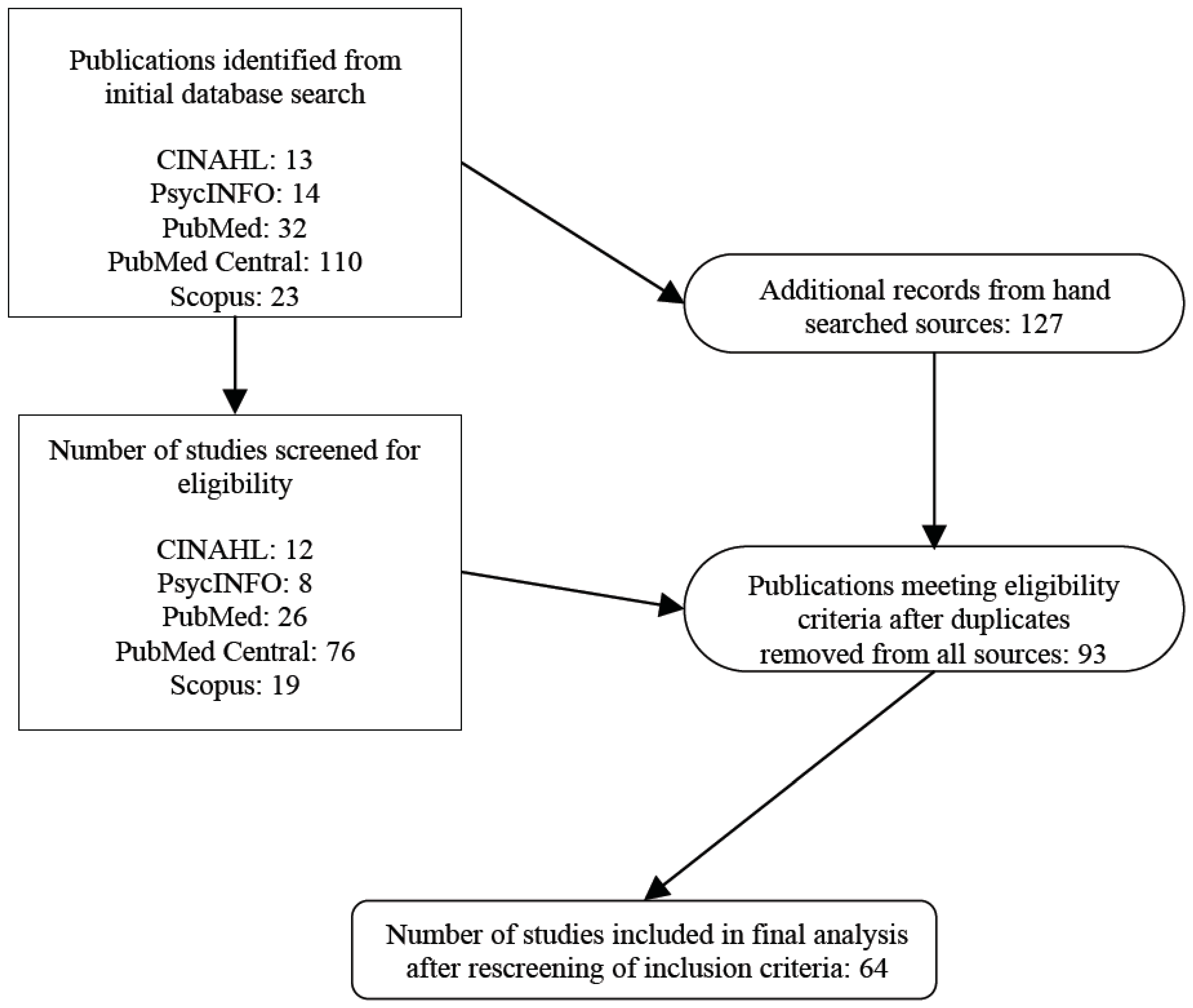
Search Method
3. Results
3.1. Physiological and Psychological (PP) Effects
3.2. Heart-Rate Metrics
3.3. Physiological Disease States
3.4. Psychological
3.5. Autonomic Nervous System Effects
3.6. Endocrine Function
3.7. Sensory Metrics (SM)
3.8. Conceptual Frameworks
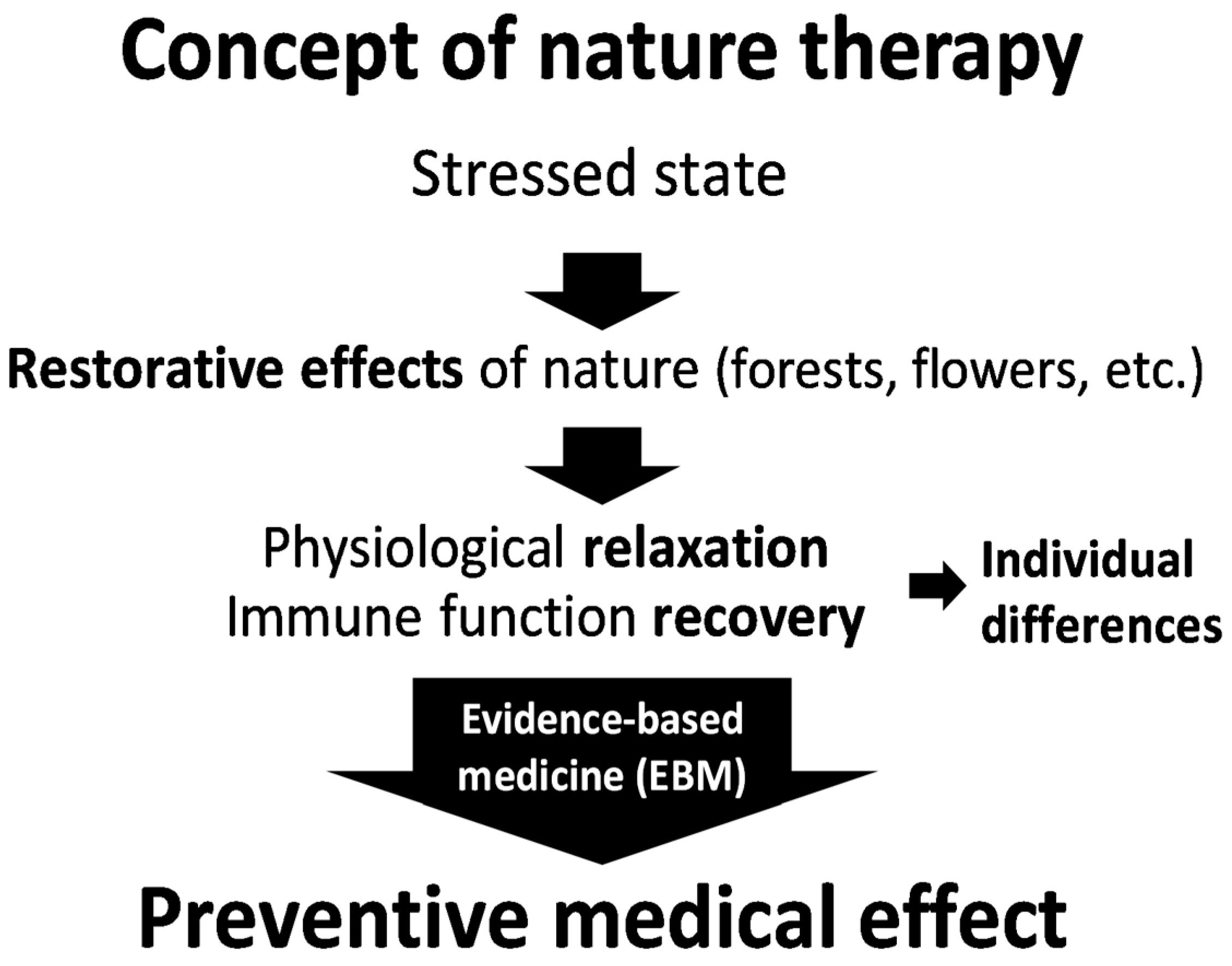
3.8.1. Nature Therapy
3.8.2. Psychological Underpinnings
3.9. Limitations
4. Discussion
4.1. Overview of Health Benefits of SY and NT
4.2. Implications for Future Research
4.3. Implications for Future Healthcare Practice
5. Conclusions
Acknowledgments
Author Contributions
Conflicts of Interest
References
- Bowler, D.E.; Buyung-Ali, L.M.; Knight, T.M.; Pullin, A.S. A systematic review of evidence for the added benefits to health of exposure to natural environments. BMC Public Health 2010, 10, 456. [Google Scholar] [CrossRef] [PubMed]
- Chun, M.H.; Chang, M.C.; Lee, S. The effects of forest therapy on depression and anxiety in patients with chronic stroke. Int. J. Neurosci. 2017, 127, 199–203. [Google Scholar] [CrossRef] [PubMed]
- Han, J.; Choi, H.; Jeon, Y.; Yoon, C.; Woo, J.; Kim, W. The Effects of Forest Therapy on Coping with Chronic Widespread Pain: Physiological and Psychological Differences between Participants in a Forest Therapy Program and a Control Group. Int. J. Environ. Res. Public Health 2016, 13, 255. [Google Scholar] [CrossRef] [PubMed]
- Anonymous. Shinrin Yoku. Available online: http://www.shinrin-yoku.org/shinrin-yoku.html (accessed on 21 July 2017).
- Williams, F. This Is Your Brain on Nature. Natl. Geogr. 2016, 229. [Google Scholar]
- Kaplan, R.; Kaplan, S. The Experience of Nature: A Psychological Perspective; Cambridge University Press: Cambridge, UK, 1989. [Google Scholar]
- Ulrich, R.S.; Simons, R.F.; Losito, B.D.; Fiorito, E.; Miles, M.A.; Zelson, M. Stress recovery during exposure to natural and urban environments. J. Environ. Psychol. 1991, 11, 201–230. [Google Scholar] [CrossRef]
- Kellert, S.R.; Wilson, E.O. The Biophilia Hypothesis; Island Press: Washington, DC, USA, 1993. [Google Scholar]
- Song, C.; Ikei, H.; Miyazaki, Y. Physiological Effects of Nature Therapy: A Review of the Research in Japan. Int. J. Environ. Res. Public Health 2016, 13, 781. [Google Scholar] [CrossRef] [PubMed]
- Sifferlin, A. The healing power of nature. Time Mag. 2016, 188, 24–26. [Google Scholar]
- Igarashi, M.; Song, C.; Ikei, H.; Miyazaki, Y. Effect of Stimulation by Foliage Plant Display Images on Prefrontal Cortex Activity: A Comparison with Stimulation using Actual Foliage Plants. J. Neuroimaging 2015, 25, 127–130. [Google Scholar] [CrossRef] [PubMed]
- Livni, E. Trees Please: The Japanese Practice of ‘Forest Bathing’ Is Scientifically Proven to Improve Your Health. 2016. Available online: https://qz.com/804022/health-benefits-japanese-forest-bathing/ (accessed on 26 April 2017).
- Tsunetsugu, Y.; Park, B.; Miyazaki, Y. Trends in research related to “Shinrin-yoku” (taking in the forest atmosphere or forest bathing) in Japan. Environ. Health Prev. Med. 2010, 15, 27–37. [Google Scholar] [CrossRef] [PubMed]
- Jo, H.; Rodiek, S.; Fujii, E.; Miyazaki, Y.; Park, B.-J.; Ann, S.-W. Physiological and Psychological Response to Floral Scent. HortScience 2013, 48, 82–88. [Google Scholar]
- Igarashi, M.; Miwa, M.; Ikei, H.; Song, C.; Takagaki, M.; Miyazaki, Y. Physiological and Psychological Effects of Viewing a Kiwifruit (Actinidia deliciosa ‘Hayward’) Orchard Landscape in Summer in Japan. Int. J. Environ. Res. Public Health 2015, 12, 6657–6668. [Google Scholar] [CrossRef] [PubMed]
- Ikei, H.; Song, C.; Miyazaki, Y. Effects of olfactory stimulation by α-pinene on autonomic nervous activity. J. Wood Sci. 2016, 62, 568–572. [Google Scholar] [CrossRef]
- Kobayashi, H.; Park, B.; Miyazaki, Y. Normative references of heart rate variability and salivary alpha-amylase in a healthy young male population. J. Physiol. Anthropol. 2012, 31, 9. [Google Scholar] [CrossRef] [PubMed]
- Kobayashi, H.; Song, C.; Ikei, H.; Kagawa, T.; Miyazaki, Y. Analysis of Individual Variations in Autonomic Responses to Urban and Forest Environments. Evid. Based Complement. Altern. Med. 2015, 2015, 671094. [Google Scholar] [CrossRef] [PubMed]
- Koga, K.; Iwasaki, Y. Psychological and physiological effect in humans of touching plant foliage—Using the semantic differential method and cerebral activity as indicators. J. Physiol. Anthropol. 2013, 32, 7. [Google Scholar] [CrossRef] [PubMed]
- Lee, M.; Lee, J.; Park, B.; Miyazaki, Y. Interaction with indoor plants may reduce psychological and physiological stress by suppressing autonomic nervous system activity in young adults: A randomized crossover study. J. Physiol. Anthropol. 2015, 34, 21. [Google Scholar] [CrossRef] [PubMed]
- Lee, J.; Park, B.J.; Tsunetsugu, Y.; Ohira, T.; Kagawa, T.; Miyazaki, Y. Effect of forest bathing on physiological and psychological responses in young Japanese male subjects. Public Health 2011, 125, 93–100. [Google Scholar] [CrossRef] [PubMed]
- Lee, J.; Tsunetsugu, Y.; Takayama, N.; Park, B.; Li, Q.; Song, C.; Komatsu, M.; Ikei, H.; Tyrväinen, L.; Kagawa, T.; et al. Influence of Forest Therapy on Cardiovascular Relaxation in Young Adults. Evid. Based Complement. Altern. Med. 2014, 2014. [Google Scholar] [CrossRef] [PubMed]
- Li, Q.; Morimoto, K.; Kobayashi, M.; Inagaki, H.; Katsumata, M.; Hirata, Y.; Hirata, K.; Suzuki, H.; Li, Y.J.; Wakayama, Y.; et al. Visiting a forest, but not a city, increases human natural killer activity and expression of anti-cancer proteins. Int. J. Immunopathol. Pharmacol. 2008, 21, 117–127. [Google Scholar] [CrossRef] [PubMed]
- Mao, G.X.; Lan, X.G.; Cao, Y.B.; Chen, Z.M.; He, Z.H.; Lv, Y.D.; Wang, Y.Z.; Hu, X.L.; Wang, G.F.; Yan, J. Effects of short-term forest bathing on human health in a broad-leaved evergreen forest in Zhejiang Province, China. Biomed. Environ. Sci. 2012, 25, 317–324. [Google Scholar] [PubMed]
- Ochiai, H.; Ikei, H.; Song, C.; Kobayashi, M.; Miura, T.; Kagawa, T.; Li, Q.; Kumeda, S.; Imai, M.; Miyazaki, Y. Physiological and Psychological Effects of a Forest Therapy Program on Middle-Aged Females. Int. J. Environ. Res. Public Health 2015, 12, 15222–15232. [Google Scholar] [CrossRef] [PubMed]
- Park, B.; Furuya, K.; Kasetani, T.; Takayama, N.; Kagawa, T.; Miyazaki, Y. Relationship between psychological responses and physical environments in forest settings. Landsc. Urban Plan. 2011, 102, 24–32. [Google Scholar] [CrossRef]
- Park, B.-J.; Tsunetsugu, Y.; Kasetani, T.; Hirano, H.; Kagawa, T.; Sato, M.; Miyazaki, Y. Physiological effects of Shinrin-yoku (taking in the atmosphere of the forest)—Using salivary cortisol and cerebral activity as indicators. J. Physiol. Anthropol. 2007, 26, 123–128. [Google Scholar] [CrossRef] [PubMed]
- Joung, D.; Kim, G.; Choi, Y.; Lim, H.; Park, S.; Woo, J.; Park, B. The Prefrontal Cortex Activity and Psychological Effects of Viewing Forest Landscapes in Autumn Season. Int. J. Environ. Res. Public Health 2015, 12, 7235–7243. [Google Scholar] [CrossRef] [PubMed]
- Mao, G.; Cao, Y.; Lan, X.; He, Z.; Chen, Z.; Wang, Y.; Hu, X.; Lv, Y.; Wang, G.; Yan, J. Therapeutic effect of forest bathing on human hypertension in the elderly. J. Cardiol. 2012, 60, 495–502. [Google Scholar] [CrossRef] [PubMed]
- McCaffrey, R.; Hansen, C.; McCaffrey, W. Garden Walking for Depression: A Research Report. Holist. Nurs. Pract. 2010, 24, 252–259. [Google Scholar] [CrossRef] [PubMed]
- Kim, W.; Lim, S.; Chung, E.; Woo, J. The Effect of Cognitive Behavior Therapy-Based Psychotherapy Applied in a Forest Environment on Physiological Changes and Remission of Major Depressive Disorder. Psychiatry Investig. 2009, 6, 245–254. [Google Scholar] [CrossRef] [PubMed]
- Morita, E.; Imai, M.; Okawa, M.; Miyaura, T.; Miyazaki, S. A before and after comparison of the effects of forest walking on the sleep of a community-based sample of people with sleep complaints. Biopsychosoc. Med. 2011, 5, 13. [Google Scholar] [CrossRef] [PubMed]
- Nakau, M.; Imanishi, J.; Imanishi, J.; Watanabe, S.; Imanishi, A.; Baba, T.; Hirai, K.; Ito, T.; Chiba, W.; Morimoto, Y. Spiritual care of cancer patients by integrated medicine in urban green space: A pilot study. Explore 2013, 9, 87–90. [Google Scholar] [CrossRef] [PubMed]
- Ohtsuka, Y. Effect of the Forest Environment on Blood Glucose; Li, Q., Ed.; Forest Medicine; Nova: Hauppauge, NY, USA, 2012; pp. 109–114. [Google Scholar]
- Shin, W.S.; Shin, C.S.; Yeoun, P.S. The influence of forest therapy camp on depression in alcoholics. Environ. Health Prev. Med. 2012, 17, 73–76. [Google Scholar] [CrossRef] [PubMed]
- Stigsdotter, U.K.; Ekholm, O.; Schipperijn, J.; Toftager, M.; Kamper-Jørgensen, F.; Randrup, T.B. Health promoting outdoor environments—Associations between green space, and health, health-related quality of life and stress based on a Danish national representative survey. Scand. J. Public Health 2010, 38, 411–417. [Google Scholar] [CrossRef] [PubMed]
- Park, B.-J.; Tsunetsugu, Y.; Kasetani, T.; Morikawa, T.; Kagawa, T.; Miyazaki, Y. Physiological effects of forest recreation in a young conifer forest in Hinokage Town, Japan. Silva Fenn. 2009, 43, 291–301. [Google Scholar] [CrossRef]
- Park, B.-J.; Tsunetsugu, Y.; Ishii, H.; Furuhashi, S.; Hirano, H.; Kagawa, T.; Miyazaki, Y. Physiological effects of Shinrin-yoku (taking in the atmosphere of the forest) in a mixed forest in Shinano Town, Japan. Scand. J. For. Res. 2008, 23, 278–283. [Google Scholar] [CrossRef]
- Song, C.; Ikei, H.; Igarashi, M.; Takagaki, M.; Miyazaki, Y. Physiological and Psychological Effects of a Walk in Urban Parks in fall. Int. J. Environ. Res. Public Health 2015, 12, 14216–14228. [Google Scholar] [CrossRef] [PubMed]
- Tsunetsugu, Y.; Park, B.; Ishii, H.; Hirano, H.; Kagawa, T.; Miyazaki, Y. Physiological effects of Shinrin-yoku (taking in the atmosphere of the forest) in an old-growth broadleaf forest in Yamagata Prefecture, Japan. J. Physiol. Anthropol. 2007, 26, 135–142. [Google Scholar] [CrossRef] [PubMed]
- Song, C.; Ikei, H.; Kobayashi, M.; Miura, T.; Taue, M.; Kagawa, T.; Li, Q.; Kumeda, S.; Imai, M.; Miyazaki, Y. Effect of Forest Walking on Autonomic Nervous System Activity in Middle-Aged Hypertensive Individuals: A Pilot Study. Int. J. Environ. Res. Public Health 2015, 12, 2687–2699. [Google Scholar] [CrossRef] [PubMed]
- Kardan, O.; Gozdyra, P.; Misic, B.; Moola, F.; Palmer, L.J.; Paus, T.; Berman, M.G. Neighborhood greenspace and health in a large urban center. Sci. Rep. 2015, 5, 1–14. [Google Scholar] [CrossRef] [PubMed]
- Grazuleviciene, R.; Vencloviene, J.; Kubilius, R.; Grizas, V.; Dedele, A.; Grazulevicius, T.; Ceponiene, I.; Tamuleviciute-Prasciene, E.; Nieuwenhuijsen, M.J.; Jones, M.; et al. The Effect of Park and Urban Environments on Coronary Artery Disease Patients: A Randomized Trial. BioMed Res. Int. 2015, 2015, 403012. [Google Scholar] [CrossRef] [PubMed]
- Jia, B.B.; Yang, Z.X.; Mao, G.X.; Lyu, Y.D.; Wen, X.L.; Xu, W.H.; Lyu, X.L.; Cao, Y.B.; Wang, G.F. Health Effect of Forest Bathing Trip on Elderly Patients with Chronic Obstructive Pulmonary Disease. Biomed. Environ. Sci. 2016, 29, 212–218. [Google Scholar] [CrossRef] [PubMed]
- Ohtsuka, Y. Walking in a Forest Is Beneficial for Type 2 Diabetic Patients; Li, Q., Ed.; Forest Medicine; Nova: Hauppauge, NY, USA, 2012; pp. 109–114. [Google Scholar]
- Morita, E.; Fukuda, S.; Nagano, J.; Hamajima, N.; Yamamoto, H.; Iwai, Y.; Nakashima, T.; Ohira, H.; Shirakawa, T. Psychological effects of forest environments on healthy adults: Shinrin-yoku (forest-air bathing, walking) as a possible method of stress reduction. Public Health 2007, 121, 54–63. [Google Scholar] [CrossRef] [PubMed]
- Sung, J.; Woo, J.; Kim, W.; Lim, S.; Chung, E. The effect of cognitive behavior therapy-based “forest therapy” program on blood pressure, salivary cortisol level, and quality of life in elderly hypertensive patients. Clin. Exp. Hypertens. 2012, 34, 1–7. [Google Scholar] [CrossRef] [PubMed]
- Largo-Wight, E.; Chen, W.W.; Dodd, V.; Weiler, R. Healthy Workplaces: The Effects of Nature Contact at Work on Employee Stress and Health. Public Health Rep. 2011, 126, 124–130. [Google Scholar] [CrossRef] [PubMed]
- Takayama, N.; Korpela, K.; Lee, J.; Morikawa, T.; Tsunetsugu, Y.; Park, B.; Li, Q.; Tyrväinen, L.; Miyazaki, Y.; Kagawa, T. Emotional, Restorative and Vitalizing Effects of Forest and Urban Environments at Four Sites in Japan. Int. J. Environ. Res. Public Health 2014, 11, 7207–7230. [Google Scholar] [CrossRef] [PubMed]
- Kang, B.; Kim, T.; Kim, M.J.; Lee, K.H.; Choi, S.; Lee, D.H.; Kim, H.R.; Jun, B.; Park, S.Y.; Lee, S.J.; et al. Relief of Chronic Posterior Neck Pain Depending on the Type of Forest Therapy: Comparison of the Therapeutic Effect of Forest Bathing Alone Versus Forest Bathing with Exercise. Ann. Rehabil. Med. 2015, 39, 957–963. [Google Scholar] [CrossRef] [PubMed]
- Hawker, G.A.; Mian, S.; Kendzerska, T.; French, M. Measures of adult pain: Visual Analog Scale for Pain (VAS Pain), Numeric Rating Scale for Pain (NRS Pain), McGill Pain Questionnaire (MPQ), Short-Form McGill Pain Questionnaire (SF-MPQ), Chronic Pain Grade Scale (CPGS), Short Form-36 Bodily Pain Scale (SF-36 BPS), and Measure of Intermittent and Constant Osteoarthritis Pain (ICOAP). Arthritis Care Res. 2011, 63, S240–S252. [Google Scholar] [CrossRef]
- Beil, K.; Hanes, D. The Influence of Urban Natural and Built Environments on Physiological and Psychological Measures of Stress—A Pilot Study. Int. J. Environ. Res. Public Health 2013, 10, 1250–1267. [Google Scholar] [CrossRef] [PubMed]
- Kobayashi, H.; Miyazaki, Y. Distribution characteristics of salivary cortisol measurements in a healthy young male population. J. Physiol. Anthropol. 2015, 34, 30. [Google Scholar] [CrossRef] [PubMed]
- Engert, V.; Vogel, S.; Efanov, S.I.; Duchesne, A.; Corbo, V.; Ali, N.; Pruessner, J.C. Investigation into the cross-correlation of salivary cortisol and alpha-amylase responses to psychological stress. Psychoneuroendocrinology 2011, 36, 1294–1302. [Google Scholar] [CrossRef] [PubMed]
- Fisher, D.; Ramachandran, G. The Man Who Planted Trees: A Conversation with David Milarch, by Awakin Call Editors. 2017. Available online: http://www.dailygood.org/story/1549/the-man-who-planted-trees-a-conversation-with-david-milarch-awakin-call-editors/ (accessed on 21 July 2017).
- Igarashi, M.; Aga, M.; Ikei, H.; Namekawa, T.; Miyazaki, Y. Physiological and Psychological Effects on High School Students of Viewing Real and Artificial Pansies. Int. J. Environ. Res. Public Health 2015, 12, 2521–2531. [Google Scholar] [CrossRef] [PubMed]
- Tsutsumi, M.; Nogaki, H.; Shimizu, Y.; Stone, T.E.; Kobayashi, T. Individual reactions to viewing preferred video representations of the natural environment: A comparison of mental and physical reactions. Jpn. J. Nurs. Sci. 2017, 14, 3–12. [Google Scholar] [CrossRef] [PubMed]
- Park, B.J.; Tsunetsugu, Y.; Kasetani, T.; Kagawa, T.; Miyazaki, Y. The physiological effects of Shinrin-yoku (taking in the forest atmosphere or forest bathing): Evidence from field experiments in 24 forests across Japan. Environ. Health Prev. Med. 2010, 15, 18–26. [Google Scholar] [CrossRef] [PubMed]
- Logan, A.C.; Selhub, E.M. Vis Medicatrix naturae: Does nature “minister to the mind”? BioPsychoSoc. Med. 2012, 6, 11. [Google Scholar] [CrossRef] [PubMed]
- Selhub, E.M.; Logan, A.C. Your Brain on Nature: The Science of Nature’s Influence on Your Health, Happiness and Vitality; Wiley: Somerset, NJ, USA, 2012. [Google Scholar]
- Berger, R. Building a home in nature: An innovative framework for practice. J. Hum. Psychol. 2008, 48, 264–279. [Google Scholar] [CrossRef]
- Zdravkovic, S.; Clifford, A.M. Workshops and Retreats. Available online: http://www.natureandforesttherapy.org/workshops-and-retreats.html (accessed on 28 April 2017).
- Poulsen, D.V.; Stigsdotter, U.K.; Djernis, D.; Sidenius, U. ‘Everything just seems much more right in nature’: How veterans with post-traumatic stress disorder experience nature-based activities in a forest therapy garden. Health Psychol. Open 2016, 3. [Google Scholar] [CrossRef] [PubMed]
- Beck, D.L.; Srivastava, R. Perceived level and sources of stress in baccalaureate nursing students. J. Nurs. Educ. 1991, 30, 127–133. [Google Scholar] [PubMed]
- Reeve, K.L.; Shumaker, C.J.; Yearwood, E.L.; Crowell, N.A.; Riley, J.B. Perceived stress and social support in undergraduate nursing students’ educational experiences. Nurse Educ. Today 2013, 33, 419–424. [Google Scholar] [CrossRef] [PubMed]
- Kreitzer, M.J. Integrative nursing: Application of principles across clinical settings. Rambam Maimonides Med. J. 2015, 6, e0016. [Google Scholar] [CrossRef] [PubMed]
- Watson, J. Core Concepts of Jean Watson’s Theory of Human Caring/Caring Science. 2010. Available online: https://www.watsoncaringscience.org/files/Cohort%206/watsons-theory-of-human-caring-core-concepts-and-evolution-to-caritas-processes-handout.pdf (accessed on 21 July 2017).
- Olsson, A.; Lampic, C.; Skovdahl, K.; Engström, M. Persons with early-stage dementia reflect on being outdoors: A repeated interview study. Aging Ment. Health 2013, 17, 793–800. [Google Scholar] [CrossRef] [PubMed]
- Song, C.; Ikei, H.; Kobayashi, M.; Miura, T.; Li, Q.; Kagawa, T.; Kumeda, S.; Imai, M.; Miyazaki, Y. Effects of viewing forest landscape on middle-aged hypertensive men. Urban For. Urban Green. 2017, 21, 247–252. [Google Scholar] [CrossRef]
- Berger, R.; Tiry, M. The enchanting forest and the healing sand—Nature therapy with people coping with psychiatric difficulties. Arts Psychother. 2012, 39, 412–416. [Google Scholar] [CrossRef]
- Berger, R. Going on a journey: A case study of nature therapy with children with a learning difficulty. Emot. Behav. Diffic. 2008, 13, 315–326. [Google Scholar] [CrossRef]
- Berger, R. Nature Therapy: A Framework That Incorporates Nature, the Arts and Ritual in Therapy; Kopytin, A., Rugh, M., Kopytin, A., Rugh, M., Eds.; Nova Science Publishers: Hauppauge, NY, USA, 2016; pp. 27–45. [Google Scholar]

| Study | Country | Population | Sample | Setting | Aim & Design | Findings |
|---|---|---|---|---|---|---|
| Bowler [1] | UK | Articles were culled from PubMed, EMBASE, CINAHL, PsycINFO, Web of Science, SPORTDiscus, ASSIA, HMIC Data, LILACS, UK Natl. Research Register archives, TRIP database, UK Natl. Lib. for Health, Index to Theses Online, Directory of Open Access Journals, Economic and Social Data Service, Database of Promoting Health Effectiveness Reviews, Trials Register of Promoting Health Interventions, Cochrane Collab., Campbell Collab. | Article total = 25. Studies that met the review inclusion criteria included crossover or controlled trials, which investigated the effects of short-term exposure to each environment during a walk or run. Including ‘natural’ environments, such as public parks and green university campuses, and synthetic environments, such as indoor and outdoor built environments. | Centre for Evidence-Based Conservation at the School of the Environment and Natural Resources, Bangor University, Bangor, Gwynedd, United Kingdom. | Systematic review to collate and synthesize the findings of studies that compare measurements of health or well-being in natural and synthetic environments. Effect sizes of the differences between environments were calculated and meta-analysis used to synthesize data from studies measuring similar outcomes. PP | The studies suggested that natural environments may have direct and positive impacts on several aspects of health and well-being. |
| Chun [2] | Korea | Chronic stroke patients recruited from a stroke welfare center in the Republic of Korea. Of those included: 31 patients had a history of cerebral infarcts, and 28 with a history of intracerebral hemorrhage. | N = 59; 40 men, 19 women; 60.8 ± 9.1 years of age with an age range of 36–79 years. | Settings included a recreational forest area in Gyenggi-do, Republic of Korea. The urban group stayed in a hotel Gyenggi-do in the Republic of Korea. | Assessment of forest therapy effectiveness for treating depression and anxiety in patients with chronic stroke by using psychological tests. This study measured reactive oxygen metabolite (d-ROM) levels and biological antioxidant (BAPs) potentials associated with psychological stress. Patients were randomly assigned to a forest group (recreational forest site) or urban group (staying in an urban hotel). Scores on Beck’s Depression Inventory, Hamilton Depression Scale, and the Spielberger State Trait Anxiety Inventory were analyzed. PP | Forest groups had BDI, HAm-D17 and STAI scores were significantly lower following treatment. BAPs were significantly higher than baseline. Urban group STI scores were significantly higher following treatment. Forest therapy is beneficial for treating depression and anxiety symptoms in patients with chronic stroke and may be useful in patients who can’t be treated by standard pharmacological or electroconvulsive therapies. |
| Han [3] | Korea | Employees of a public organization providing building and facilities management services in Seoul Metro area, all of whom were diagnosed with Chronic Widespread Pain (CWP). | N = 61; 35 females and 26 males; randomly assigned to the either the experimental forest therapy group (n = 33), or the control group (n = 28). | Forest therapy intervention took place at a campsite at the Saneum Natural Recreation Forest in Yangpyeong county of Gyeonggi Province. Additional assessments were taken at the Inje University Seoul Paik Hospital in the urban environment. | To explore the effects of a 2-day forest therapy program on those with chronic widespread pain. Measures assessed included the following: pre- post heart rate variability, natural killer cell, self-reported pain, depression level and health related quality of life. PP | Forest therapy participants reported significant decreases in pain, depression and increased QOL. Forest therapy is an effective intervention to relieve psychological and physiological pain. |
| Anonymous [4] | Supporting material | NA | NA | Shinrin Yoku. A website describing the practice of SY and programs offered for forest guide training. | NA | |
| Williams [5] | Supporting material | NA | NA | An article presented in the National Geographic magazine about the effects of NT. | NA | |
| Kaplan [6] | Supporting material | NA | NA | A book about Kaplan’s Attention Restorative Hypothesis. | NA | |
| Ulrich [7] | Supporting material | NA | NA | An article about Ulrich’s Stress Reduction Hypothesis. | NA | |
| Kellert [8] | Supporting material | NA | NA | A book explaining the Biophilia Hypothesis. | NA | |
| Song [9] | Japan | Researchers culled articles from the Pubmed database using various keywords. | Article total: 52 | NA | Literature review aimed to objectively demonstrate the physiological effects of NT. Reviewed research findings in Japan related to the green space, plants and wooden material and the analysis of differences that arise therein. PP | Researchers elucidated various scientific data, which assessed physiological indicators, such as brain activity, autonomic nervous activity, endocrine activity, immune activity are accumulating from the field and lab experiments. NT will play a significant role in preventative medicine in the future. |
| Sifferlin [10] | Supporting material | NA | NA | A Time magazine article about the effects of living and interacting in green spaces. Results indicate people are more energetic, in good overall health and have more of a sense of meaningful purpose in life. | NA | |
| Igarashi [11] | Japan | Female students from the University of Chiba, Japan, deemed healthy at the time of the study. | N = 18; adult female university students with a mean age of 21.6 ± 1.5 years. | Artificial climate chamber in a laboratory of the Center for Environment, Health, and Field Sciences, Chiba University, Japan. | Quantitative study was to determine if images of natural objects elicited similar neural responses (activation of the prefrontal cortex) as those brought about with the interaction of real objects. Physiological measurements were performed in an artificial climate chamber maintained at 25 °C with 50% relative humidity and 300 lux illumination. For foliage plants three dracaena plants (Dracaena deremensis) were used. Oxy-hemoglobin concentrations in the prefrontal cortex were assessed with time-resolved near-infrared spectroscopy. SM | Subjects viewing actual live plants had significantly increased oxy-hemoglobin concentrations in the prefrontal cortex. Subjective ratings of “comfortable vs. uncomfortable” and “relaxed vs. awakening” were similar for both live and artificial plants. Results were significant for the benefits for urban, domestic and workplace foliage. |
| Livni [12] | Supporting material | NA | NA | The Japanese practice of ‘Forest Bathing’ as scientifically proven to improve your health. | NA | |
| Tsunetsugu [13] | Japan | N/A | Author-researchers culled articles for this literature review from a studies rooted in physiological data, data collected from field experiments in forest settings, laboratory settings, and studies categorized into sub-themes specific to the five-senses. Exact literature search methodology and total number of articles culled unknown. | N/A | To investigate the physiological effects of Shinrin-yoku according to specific themes centered on the health applications of FB. The authors reviewed previous physiological experiments with trials in forests and laboratory settings, to determine the physiological effects on individuals from exposure to forests and elements of forest settings. Metrics investigated included: physiological measurements of central nervous activity, autonomic nervous activity, and biomarkers reflecting stress response. PP | Author-researchers summarized the separate elements of forests in terms of the five senses, and provide contribution to effects of Shinrin-yoku within the framework of the “Therapeutic Effects of Forests” project. |
| Jo [14] | Japan | Participants comprised Japanese male graduate and undergraduate students at Chiba University, recruited from landscape and horticulture programs. | N = 26; males aged early to mid- twenties mean age 24 ± 1.8 years. | Chiba University in a screened room, such that the participants were blinded to the observers. | Quantitative. Controlled trial without randomization. The aim of this study was to elucidate how floral fragrance could impact human health; specifically, the psycho-physiological responses to the floral scent of the Japanese plum blossom. Changes in cerebral activity were measured by multichannel near-infrared spectroscopy. Pulse rate, heart-rate variability and arterial blood pressure were taken. The brief-form Japanese version Profile of Mood States questionnaire (POMS) tested for psychological stress. SM | Sensory stimuli from plants may reduce stress and provide a general sense of wellbeing among this population. Hypothesis was supported by the data. |
| Igarashi [15] | Japan | Seventeen Japanese adult females were recruited from a population living within the urban suburbs of Kashiwa in the Chiba Prefecture of Japan. All were deemed healthy prior to the experiment. | N = 17; Adult Japanese females with a mean age of 46.1 ± 8.2 years. | Kiwifruit orchard adjacent to the Center for Environment, Health and Field Sciences, Chiba University, Japan. | Physiological and psychological relaxation effects of viewing kiwifruit orchard landscapes in summertime in Japan were investigated. Quantitative, randomized controlled trial wherein subjects viewed a kiwifruit orchard landscape or a building site (control) for 10 min. Intervals. HRV and HR were measured continuously. Modified semantic differential method and short-form Profile of Mood States (POMS) were determined. SM | Significant increase in PNS activity and marginally significant decrease in HR and an increase in comfortable, relaxed and natural feelings and a significant improvement in mood states. |
| Ikei [16] | Japan | Female students from the University of Chiba, Japan, deemed healthy at the time of the study. | N = 13; adult female university students with a mean age of 21.5 ± 1.0 years. | Center for Environment, Health and Field Sciences, Chiba University, Japan. | Quantitative controlled trial without randomization was to determine the effects of olfactory-stimulation of the alpha-pinene (a volatile compound in Japanese cedar wood) on autonomic and parasympathetic nervous system activity. Measures were taken at 30 s before and 90 s during/after smell admin. HRV and HR were measured. HR SM | Olfactory stimulation by a-pinene significantly increased the High Frequency measure of HRV, which is associated with parasympathetic nervous activity, and decreased HR overall—these are signs of increased physiologic relaxation. |
| Kobayashi [17] | Japan | The study consisted of 456 Japanese male students at the University of Chiba, Japan, deemed healthy at the time of the study. | N = 456; Males aged 20 to 29 years old (mean, 21.9 ± 1.6 years). | Experimental design and procedures took place at the Forestry and Forest Products Research Institute and Center for Environment, Health and Field Sciences, Chiba University, Japan. | To deduce and present the “normative values,” or “reference” range of heart rate variability (measured in 417 young male students), and salivary alpha-amylase in 430 “healthy” male students from Chiba University with an emphasis on the distribution and reproducibility of the values. Measures within this quantitative study included: short-term HRV; beat to beat HR recorded at 2 min intervals with portable/wearable HR monitor Salivary alpha-amylase measurements taken before breakfast (6:30 to 7:30 a.m.) after subjects sat “resting” 1 min. PP | Results suggested a relatively small correlation between HRV and salivary alpha-amylase. This study is mostly indicative of intra-individual variability in measures. Provides example of metrics we can use in our study as well as “normative” values. |
| Kobayashi [18] | Japan | The population consisted of in 267 male students from The University of Chiba, Japan, deemed healthy at the time of the study. | N = 267: Males with a mean age of 21.7 ± 1.5 years. | Chiba University’s research labs and additional laboratory studies performed at the laboratories of SRL Inc. in Tokyo, Japan. | Quantitative study aimed to specify the normal salivary cortisol levels, and reference ranges in subjects at University of Chiba, as a relatively innocuous biomarker for stress levels during the mornings on two consecutive days, which were analyzed by radioimmunoassay. Quantitative. Saliva collected before breakfast, appx. 20–40 min after awakening (6:30–7:30 a.m.) and again before participants brushed teeth. Each subject rested for 1 min in a sitting position before saliva collection. Measures were repeated the following day. PP | Consistency and reliability (“distribution characteristics”) of salivary cortisol measures were reported to be steadier in the morning samples ~30–45 min after waking. |
| Koga [19] | Japan | Japanese male students from The University of Chiba were recruited for this study. | N = 14; Males with an age range of 21–27 years. | Laboratory rooms at The University of Chiba, Japan. | Quasi-experimental study was to gauge the feeling elicited by (with eyes closed), touching four different “tactile” samples: a plate of aluminum, a piece of velveteen, leaf of natural Epipremnum aureum, and an artificial resin-made leaf, for about ~120 s. Measures included pre and posttest psychological and physiological indices, Cerebral Blood Flow (hemodynamics) measured via near infrared spectroscopy (NIRS; NIRO-300; Hamamatsu Photonics, JAPAN); measured pre and post stimulus. Psychological data were acquired using a semantic differential questionnaire. SM | Participants successfully reported feeling a measurable sense of “calm” when touching natural plant material, as opposed to the other materials |
| Lee [20] | Japan | Male students from the University of Chiba, Japan. | N = 24; Japanese males with a mean age of 24.9 ± 2.1. | Settings included laboratory rooms at The University of Chiba, Japan. | To examine the psychological and physiological benefits of interaction with indoor plants vs. computer tasks. Researchers implemented a quantitative crossover experimental design. Participants were randomly distributed into 2 groups (n = 12 plants; n = 12 computer task). PP | Feelings during the transplanting task were different from that during the computer task. Feeling more comfortable, soothed, and natural after the transplanting task Sympathetic activity increased over time during the computer task but decreased at the end of the transplanting task. Diastolic BP lower after transplanting task. |
| Lee [21] | Japan | Twelve young Japanese male adults were recruited from local universities. At the recruitment stage, those who had past or current mental disorders, and those with cardiovascular or allergic diseases were screened. Those who were habituated to smoking or drinking were excluded. The adults who participated in the study had a mean age of 21.2 years [standard deviation (SD) 0.9]. | N = 12; Japanese males with a mean age of 21. | Field experiments were performed at two different sites (forest and urban) in Hokkaido Prefecture, Japan. The forest site was characterized by broad-leaved deciduous trees and was located in Tsurui Village. The urban site was a typical commercial area situated in the town of Kushiro. | To provide scientific evidence supporting the efficacy of FB as a natural therapy by investigating its physiological benefits using biological indicators in outdoor settings. 3 days 2-night study. Physiological responses as well as self-reported psychological responses to forest and urban environmental stimuli were measured in real settings. PP | Results of each indicator were compared against each environmental stimulus. HF power analysis, which reflects the activity of the parasympathetic nervous system, significantly higher values were obtained for forest stimuli than urban stimuli. Additionally, LF/HF ratio values of HRV, which mediate the activity of the sympathetic nervous system, were significantly lower in the forest than at the urban site. |
| Lee [22] | Japan | Male students ages 21–22 at Chiba University in Japan were recruited to participate in the walking programs. All were deemed healthy at the outset of the trials. | N = Japanese males with a mean age of 21.1 ± 1.2 years. | Field experiments were performed at four different sites in Japan including: Yoshino Town in Nara Prefecture, Akiota Town in Hiroshima Prefecture, Kamiichi Town in Toyama Prefecture, and Oita City in Oita Prefecture. Data analysis performed at The University of Chiba, Japan. | Quasi-experimental study aimed to compare the effects of a forest walking therapy program with an Urban walking program over 2 consecutive days to determine the cardiovascular relaxation indices. Walks included 12–15 min of self-paced walking in forest (4 sites selected throughout Japan) and urban (the control) environments. HRV measured with a portable ECG w/in 1 min intervals. 4 psychological questionnaires delivered: semantic differential (SD) techniques. Japanese version of the Profile of Mood States (POMS). Anxiety levels studies with Spielberger State-Trait Anxiety Inventory (STAI). PP | Cardiovascular relaxation was noted with the forest walking therapy program, but not as with the urban control -specifically the differences in HRV and BP within the two exposures. Psychological tests are concurrent with these findings. |
| Li [23] | Japan | Male adult subjects were selected from four large companies in Tokyo, Japan. Subjects having infectious disease, utilizing immunosuppressive drugs and/or other relevant medications were ruled out. Subjects were deemed healthy at the time of the trial. | N = 12; Males aged 35–56 years, with a mean age of 45.1 ± 6.7. | Various forested and urban locations across Japan. Specifically, the FB groups experienced three different forest areas in Agematsu town in Nagano prefecture of northwest Japan. Whereas the city group experienced Nagoya city located in Aichi prefecture in the center of Japan. | To study NK activity in both forest and urban environments. Twelve healthy male subjects, age 35–56 years, experienced a three-day/two-night trip to forest fields and to a city, in which activity levels during both trips were matched. On day 1, subjects walked for two hours in the afternoon in a forest field; and on day 2, they walked for two hours in the morning and afternoon, respectively, in two different forest fields; and on day 3, the subjects finished the trip and returned to Tokyo after drawing blood samples and completing the questionnaire. Blood and urine were sampled on the second and third days during the trips, and on days 7 and 30 after the trip, and NK activity, numbers of NK and T cells, and granulysin, perforin, and granzymes A/B expressing lymphocytes in the blood samples, and the concentration of adrenaline in urine were measured. Similar measurements were made before the trips on a normal working day as the control. PP | Phytoncide concentrations in forest and city air were measured. The FB trip significantly increased NK activity and the numbers of NK, perforin, granulysin, and granzyme AlB-expressing cells and significantly decreased the concentration of adrenaline in urine. The increased NK activity lasted for more than 7 days after the trip. In contrast, a city tourist visit did not increase NK activity, numbers of NK cells, nor the expression of selected intracellular anti-cancer proteins, and did not decrease the concentration of adrenaline in urine. |
| Mao [24] | China | Male University students deemed healthy at the time of the trials without documented history of physiological or psychiatric disease and/or disorder. | N = 20; Male age 20.79 ± 0.54 years. | Locations included the Wuchao Mountain Forest in Hangzhou, Zhejiang, China and the urban, downtown district of Hangzhou, China. | Quantitative randomized controlled trial was to measure the effects of forest-bathing for short periods of time on overall human health using a variety of metrics. To investigate potentially positive effects of FB on the subject’s health from the standpoint of pathophysiological metrics. Subjects were randomly divided into two groups. Forest site and city site. Measures included: malondialdehyde (MDA) concentrations, cytokine production, serum cortisol, testosterone assay, lymphocyte assay, POMS evaluations. PP | Data supported the hypothesis that several physiological and psychological metrics were presented in accordance with a decrease in overall stress and subsequent toxic physiologic effects of stress. |
| Ochiai [25] | Japan | Participants included those recruited from the Health Promotion Center in Agematsu, Nagano Prefecture. All participants needed to be Inclusion aged 40 years or older and deemed healthy at the time of the study. | N = 17 Female adults with an average age of 62.2 ± 9.4 years. | Forest therapy phase was conducted in Akasawa Shizen Kyuyourin, Akasawa Natural Recreation Forest, Agematsu, Nagano Prefecture. Additional assessment took place at the nearby health promotion center. | To assess the psychological and physiological effects of a forest therapy program on middle age adult women. Measures included pulse rate, salivary cortisol levels and psychological indices were taken the day before and the day of forest therapy. PP | Pulse rate, salivary cortisol levels were significantly lower than baseline indicating a physiological relaxed state. Reported significantly more comfortable, relaxed and natural according to the semantic differential. POMS negative mood subscale for tension and anxiety was significantly lower while the “vigor” was significantly higher following forest therapy. A significant decrease in pulse, decrease in salivary cortisol levels, increase in positive feelings, decrease in negative feelings. Substantial benefit to middle age females. |
| Park [26] | Japan | Participants included young male Japanese university students. | N = 168 Male (100%), mean age 20.4 ± 4.1 years | 14 forests and 14 urban areas across Japan | To investigate the relationships between psychological responses and either an urban or a forest setting. Using both the SD method and POMS questionnaire, comparisons were made for both the walking and viewing phases within each area of accommodation. PP | Researchers found that descriptions of the forest area using the SD method were more “enjoyable, friendly, natural, and sacred”. There were also significant differences among POMS results for both the city and forest areas. |
| Park [27] | Japan | Male University students recruited from Chiba University, Japan. | N = 12; Males with an average age of 22.8 ± 1.4 years. | The experimental trials took place in a Seiwa Prefectural Forest Park in Chiba Prefecture, Japan. | To investigate the physiological effects of Shinrin-yoku using salivary cortisol and cerebral activity as indicators. On the first day of the experiment, one group of 6 subjects was sent to a forest area, the other 6 were sent to a city area. On the second day, each group was sent to the opposite area for a cross check. In the morning, the subjects were asked to walk around their location for 20 min. In the afternoon, they were asked to sit on chairs and watch the landscapes of their set locale for 20 min. Prefrontal cortical cerebral activity and salivary cortisol were measured before and after walking in the forest, or city locations and before and after watching the landscapes in the afternoon in the forest and city areas. PP | Results indicated that cerebral activity in the prefrontal area of the forest area group was significantly lower than that of the group in the city area after walking; the concentration of salivary cortisol in the forest area group was significantly lower than that of the group in the city area before and after watching each landscape. The results of the physiological measurements show that Shinrin-yoku can effectively relax both people’s body and spirit. |
| Joung [28] | Korea | Eight Korean university students participated in this study. The subjects were deemed physically and mentally healthy prior to the initiation of this study. | N = 8; Participants had an age range of 22.0 ± 2.2 years. Gender undocumented. | Forested-region located in Dowon-ri, Toseong-myun, Goseong-gun, Gangwon-do, Korea. The contrasting urban area was in Yuseong-gu, Daejeon Metropolitan City, Korea. | Determine if forest environments have physiological and psychological relaxing effects by viewing a forest area compared with viewing an urban area from the roof of an urban building without being watched by others. Near-infrared spectroscopy measurement was performed on subjects while they viewed scenery for 15 min. At each experimental site (forest and urban) Total hgb and oxyhemoglobin concentrations were measured. SM | Total hgb and oxyhemoglobin concentrations were significantly lower in their forest area than the urban area. Comfortable, natural, and soothed were significantly higher in the forest vs. urban area. For mood states, the forest group had significantly lower negative emotions. |
| Mao [29] | China | Subjects included patients diagnosed with essential hypertension in stable condition at the time of the study. All were being treated in Hangzhou, China. | N = 24; Adults, aged from 60 to 75 years, specific demographics unknown. | Broad-leaved evergreen forest “White Horse Mountain National Forest Park” in Suichang, County, Zhejiang Province, China. For comparison, the control city was an urban area in Hangzhou, China. | Quantitative randomized controlled trial was to provide scientific evidence to support the use and efficacy of SY as a practical application for treating, or ameliorating essential hypertension in the elderly. Patients with essential hypertension were randomly divided into a field study group and a control group of 12 persons each. The intervention (field study) group went to a broad-leaved evergreen forest to experience a 7-day/7-night trip, and the control group experienced a city area in Hangzhou for control. Measurements of the following were collected: blood pressure indicators, cardiovascular disease-related pathological factors including endothelin-1, homocysteine, renin, angiotensinogen, angiotensin II, angiotensin II type 1 receptor, angiotensin II type 2 receptor, inflammatory cytokines interleukin-6 and tumor necrosis factor were detected. The profile of mood states (POMS) was used for psychological indicators. PP | Results of this study demonstrated that there is direct evidence to support the application of SY for the amelioration of essential hypertension in the population studied. Data indicates that SY practices contribute to the inhibition of the renin–angiotensin system and inflammation, thereby reducing cardiac workload and further stress on the heart when compared with the urban control. |
| McCaffrey [30] | USA | Participants included older adults over the age of 65 with depression. | N = 40 (mean age = 71.3 years) with depression diagnosed by a physician. | Morikami Gardens, Florida | To determine the effects of garden walking on depression in older adults. Participants were asked to complete 12 two- hour garden walks during a 3-month period. Throughout the walks, they were asked to read a descriptive paragraph and journal upon reaching specified locations within the gardens. Pictures of these locations were also provided so that journaling could continue when the participants were away from the gardens as well. PP | Mean scores on the Geriatric Depression Scale decreased from 13 to 9.4 after completion of the 12 forest walks. |
| Kim [31] | Korea | Patients recruited for this study were among a population diagnosed with major depressive disorder at one university hospital located in Seoul, Republic of Korea. | N = 63 males and females; 23 in the forest group, 19 in the hospital group, and 21 in the control group. | Settings were the following; the forest program took place at the Hong-Reung arboretum, while the hospital program took place at the Seoul Paik Hospital. | To test the effect of cognitive behavior therapy (CBT)-based psychotherapy applied in a forest environment on major depressive disorder. Tests used included the Hamilton Rating Scales for Depression (HRSD) scores of the forest group were significantly decreased after 4 sessions compared with controls. Montgomery-Asberg Depression Rating Scales (MADRS) scores of the forest group were significantly decreased compared with both the hospital group and the controls. The remission rate (7 and below in HRSD) of the forest group was 61% (14/23), significantly higher than both the hospital group (21%, 4/19) and the controls (5%, 1/21). PP | CBT-based psychotherapy applied in the forest environment was helpful in the achievement of depression remission, and its effect was superior to that of psychotherapy performed in the hospital and the usual outpatient management. |
| Morita [32] | Japan | 71 healthy adult volunteers participated in this study. Ages ranged from teens to late 70s. | N = 71; 43 males and 28 females. | Ryukoku Forest of Ryukoku University in Shiga Prefecture, located in the western region of Honshu, Japan. Data analysis took place at the University of Shiga, Japan. | Pre and posttest study was to evaluate the immediate effects of forest walking in a community-based population with sleep complaints. Two-hour forest-walking sessions were conducted on 8 different weekend days. Sleep conditions were compared between the nights before and after walking in a forest by self-administered questionnaire and actigraphy data. PP | Results indicated that 2 h of forest walking improved sleep characteristics; impacting actual sleep time, immobile minutes, self-rated depth of sleep, and sleep quality. |
| Nakau [33] | Japan | Patients were recruited from a pool of cancer patients, specifically those with breast cancer, or lung cancer of various stages. For all participants, one month passed after they had undergone surgery, chemotherapy, or radiation and were in stable condition at the time of study. All participants resided in urban areas and lacked access to green, outdoor environments. | N = 22; Men and women with a mean age of 58.1 years +/10.8 years. Participants included 4 males with an average age of 65.3 and 18 females with an average age of 56.6 years. | Within the Kyoto prefecture of Japan, sites included: The Japan World Exposition 70 Commemorative Park (Suita, Osaka Pref, Japan), parks, forests, and gardens within the park, horticultural settings, participants’ homes, and a local day treatment facility. While watching a yoga video. | To explore the impacts of spiritual care and integration of the natural environments in terms of its’ impact on 22 cancer patients. Specifically, the integrative treatment protocol consisted of forest therapy, horticultural therapy, yoga meditation, and support group therapy sessions were conducted once a week for 12 weeks. The spirituality (the Functional Assessment of Chronic Illness Therapy-Spiritual well-being), quality of life (Short Form-36 Health Survey Questionnaire), fatigue (Cancer Fatigue Scale), psychological state (Profile of Mood States, short form, and State-Trait Anxiety Inventory) and natural killer cell activity were metrics assessed before and after the sessions. PP | There were dramatic shifts pre and post intervention to support the hypothesis aforementioned. Emotional and spiritual health improved for all participants. This study helps to delineate what is meant by “spiritual well-being” with specific questionnaires from which we can glean much in terms of semantics. |
| Ohtsuka [34] | Japan | Researchers culled their participants from a sample of patients being treated for Type II Diabetes with an age range of 60–83, mean height 154.0 cm ± 1.3, and mean body mass index (BMI) of 23.6 ± 0.4 kg/m2. Additionally, researchers incorporated data from longitudinal studies addressing Type II Diabetic patients over a period of 6 years. This increased the sample to 116 persons, from which 25 paired samples were studied. Healthy subjects were used as a control. | N = 48 (16 males and 32 female) Type 2 Diabetic patients with a mean age of 66.8 years. | Research facility and nearby recreational areas in connection with Hokkaido University, Japan. | Quantitative longitudinal study aimed to address the effects of Shinrin-Yoku on blood glucose levels in patients with Type II Diabetes. In an effort to summarize data from future studies, the author of this article noted that an additional sample of 116 persons, organized into 25 paired groups were incorporated. Available data reflects these additional participants. Of the initial sample (N = 48), 11 participants experienced only dietary and exercise therapy, 27 were given oral medication, and 10 were being treated with insulin administration at the time of, and during the study. Pre and posttest measures of blood glucose were taken at specific timed intervals during the intervention process. Participants were assessed after morning meals at the research hospital. Peripheral venous blood samples were collected for glucose levels. Participants were divided into two forest-walking groups. Glucose samples were drawn again post Shinrin-yoku treatment. PP | Results demonstrated that Shinrin-yoku and a decrease in blood glucose are significantly correlated. However, due to the additional longitudinal participant sample being reported in the data, the specificities of the total population are unclear. |
| Shin [35] | Korea | Subjects were adult males and females diagnosed with alcoholism and coming from treatment at the Korean Alcohol Research Center, Chungbuk Province, South Korea. The Korean Alcohol Research Center is a national inpatient alcohol rehabilitation facility. | N = 92; Adults 84 males, 8 females, aged ~44–49 yeas. | Saneum Recreational Forest, in Kyungggi Province, South Korea. | Quantitative case-control/cohort study with pretest vs. posttest assessments. Subjects were assessed over 9-day while in a forest healing camp in Saneum Recreational Forest, in Kyungggi Province, South Korea, for the determining this therapy’s potential treatment of depression for alcoholics. Measures included The Beck Depression Inventory (BDI), and a self-reported survey of 21 items relating to personal variables and lifestyle metrics. PP | Alcoholics with higher pre-test depression levels improved on the BDI post-test scores upon completion of the forest program more than participants with lower pre-test depression levels. Education level and marital status of participants did not significantly influence results. |
| Stigsdotter [36] | Denmark | Initial sampling of data from 21,832 adults from Denmark was used for this study. The sample came from a 2005 nationally administered health interview survey employing region-stratified random sampling from the Danish Civil Registration System. 10,250 individuals responded and their data recorded for this study. | N = 10,250; Adult Danes aged 16–75 years, 5802 men and 5448 women. | Utilized data from a previous study taking place across various regions of Denmark by The Danish National Institute of Public Health, University of Southern Denmark. | Case study of pre-existing data. The aim of this study was to research and determine the relevant associations between access to green-space, health, health-related quality of life indicators, and stress. Data was collected from respondents following up of a 2005 Danish Health Interview Survey. The data was collected from face-to-face interviews and self-administered questionnaires. Measures analyzed included: the SF-36, (measuring eight dimensions of health) and the Perceived Stress Scale. Multiple logistic regression analyses were used to determine the association between distance to green space and self-perceptions stress. PP | Results of this study demonstrate that Danish individuals living more than 1 km from green-space reported lower satisfaction of perceived health and quality of life than those living less than 1 km to accessible green-space. Additionally, persons living less than 1 km from a green-space experienced less stress than respondents living farther from green-space. Respondents who didn’t report stress were reported to be more likely to visit green-spaces than respondents reporting stress. Overall, there was a viable association between distance to green-spaces and the health- oriented variables in the research question. |
| Park [37] | Japan | Male students from the Chiba University, Japan. | N = 12; Male (100%), mean age 21.8 ± 0.8 | Conifer forest in Hinokage Town , and Hyuga City in Miyazaki Prefecture, Japan | Quantitative randomized controlled trial forest recreation and its effects on the autonomic nervous system were assessed. By random assignment, two groups were formed into forest-area and urban-area groups. Measures included heart rate and heart-rate variability. The R-R interval of the electrocardiogram was used to analyze how aspects of HRV reflect the parasympathetic nervous activity sympathetic nervous activity respectively. Pulse rate a blood pressure were also measured. PP | Pulse rate, diastolic blood pressure and LF/(LF + HF) (LF—low frequency, HF—high frequency) components of HRV were significantly lower in the forest area than in the city area. HF components of HRV tended to be higher in the forest than in the city. Forest recreation is effective for relaxation of both the mind and body. |
| Park [38] | Japan | Participants included young male Japanese university students. | N = 12; Male (100%), mean age 21.3 ± 1.1 | Areas of study included Shinano town and Nagano city in Nagano Prefecture. | To determine the physiological effects of SY. Day one of the experiment required that six subjects went to the forest area, and the other six went to a city area. On the second day, subjects went to the opposite of their previously assigned areas. During the morning and evening within the area of accommodation, heart rate variability (HRV), salivary cortisol and pulse rate were measured, In the afternoon, they were seated on chairs watching the landscapes of their given area for 15 min. The aforementioned physiological indices were again measured before and after watching the landscapes in the given field areas. PP | Researchers found that HRV of subjects in the forest area was significantly higher than that of subjects in the city area. On the other hand, both pulse rate and salivary cortisol concentration of subjects in the forest area was significantly lower than that of subjects in the city area. |
| Song [39] | Japan | Male students from the Chiba University, Japan. | N = 23; Male (100%), mean age 22.3 ± 1.2 | Kashiwa-no-ha Park in Kashiwa City, Chiba Prefecture, Japan, with a nearby city area denoted as the urban control site. | Quantitative. Non-randomized controlled trial, within-subjects design. The aim of this study was to demonstrate how the intervention of walking in urban parks during the fall season impacted participants’ heart-rate and stress levels. Students walked 15 min each on specific trails in a park and in a nearby urban area (the control). HR, HRV, the State Trait Anxiety Inventory, and POMS, were measured to assess the difference outcomes between walk-sites. PP | The walk in the park enhanced relaxation in the participants via parasympathetic nervous system stimulation, while sympathetic nervous system stimulation was decreased. Heart-rate lowered overall. Suggests the effectiveness of even “small” green areas on heart-rate variability. |
| Tsunetsugu [40] | Japan | Male university students were recruited for this study. All were deemed healthy at the time of the trial. | N = 12; Males aged 21 to 23 (mean ± SD: 22.0 ± 1.0). | Conducted in a broadleaf forest mainly Nukumidaira, Oguni, Yamagata, Japan. | To study the physiological effects of SY were examined by investigating blood pressure, pulse rate, heart rate variability (HRV), salivary cortisol concentration, and immunoglobulin A concentration in saliva. Subjective feelings of being “comfortable”, “calm”, and “refreshed” were also assessed by questionnaire. Physiological measurements were conducted six times, i.e., in the morning and evening before meals at the place of accommodation, before and after the subjects walked a predetermined course in the forest and city areas for 15 min, and before and after they sat still on a chair watching the scenery in the respective areas for 15 min. PP | Data of the study revealed that blood pressure and pulse rate were significantly lower, and that the power of the HF component of the HRV tended to be higher and LF/(LF + HF) tended to be lower. Salivary cortisol concentration was significantly lower in the forest area, and feelings of comfort were significantly higher in the forest area. |
| Song [41] | Japan | Participants recruited for this study were adult male Japanese citizens with a history of prehypertension and/or current hypertension deemed in suitable physical condition to participate in this study. | N = 20; Adult men with a mean age of 58.0 ± 10.6 years. | Akasawa Shizen Kyuyourin; Akasawa natural recreation forest within Agematsu town of Nagano Prefecture in central Japan. The control was a city area within A City of Nagano Prefecture, Japan. | To look at the effects of forest walking on the autonomic nervous system in middle aged hypertensive adults. Subjects were instructed to walk predetermined courses in forest and urban (control). The course length was 17-min. Walk walking speed and energy expenditure were equal between both groups. HRV and HR were used to quantify physiological responses. PP | HR significantly lower and high frequency component of HRV was significantly higher. Questionnaire results indicate after walking in the forest the feelings were increased around comfortable, relaxed, natural, vigorous, decreased tension and anxiety, depression, anxiety hostility, fatigue and confusion. A brief walk in the forest elicited psychological relaxation and physiological calm on the subjects. |
| Kardan [42] | Canada | Large urban population in Toronto, Canada. | Tree lined streets in urban neighborhoods. | The study was conducted in Toronto, Canada. | Multivariate study combining high-resolution satellite imagery and individual tree data from Toronto with self-reports of general health perception, cardio-metabolic conditions and mental illness derived from the Ontario Health Study. | Having 10 or more trees in a city block improves health perception in a way that is like an increase in annual personal salary of $10,000. And, having 11 more trees in a city block decreased cardio-metabolic conditions in ways compared to an increase in an annual personal income of $20,000. |
| Grazuleviciene [43] | Lithuania | 20 male and female residents of Kaunas, Lithuania each with a diagnosis of Coronary Artery Disease and cardiac comorbidities being treated at the Cardiologic Clinic of the Hospital of Lithuanian University of Health Sciences. | N = 20; Male and female participants with a mean age of 62.3 ± 12.6 years. | The study was conducted in Kaunas. The urban exposure area was a street near the Hospital of Lithuanian U. Cardiology Clinic. The green exposure region was a pine tree park located near the Cardiology Clinic. | Quantitative Randomized Controlled Trial was to study the impact of forest-walking on patients being treated for CAD. Participants were randomly assigned to either green or urban exposure groups and walked in these different environments for 30 min on 7 consecutive days. Researchers aimed to determine how the different environments impacted patients’ hemodynamics and state of their CAD diagnoses. Testing involved pretest phenotype questionnaires, various health assessment tools including: SBP, DBP, HR, PWV, ECG, W (workload), Spiroergometry. PP | Walking in a park had a more positive effect on overall cardiac function in patients than walking in urban environments. |
| Jia [44] | China | Adult patients diagnosed with Chronic Obstructive Pulmonary Disease, from the region of Hangzhou, China, with no exacerbations of COPD within 6 weeks of the trial. | N = 20; male and female adult participants aged 60 to 79 years. | Hangzhou, China | Elucidate health effects of a FB trip on elderly patients with chronic obstructive pulmonary disease (COPD). Subjects were randomly divided into two groups. One group was sent to forest, and the other was sent to an urban area as control. Flow cytometry, ELISA, and profile of mood states (POMS) were evaluated. PP | Within the forest group, there was a significant decrease of perforin and granzyme B expressions, accompanied by decreased levels of pro-inflammatory cytokines and stress hormones. Meanwhile, the scores in the negative subscales of POMS decreased after FB trip. These results indicate that FB trip has health effect on elderly COPD patients by reducing inflammation and stress level. |
| Ohtsuka [45] | Japan | Researchers culled their participants from a sample of patients being treated for Type II Diabetes with an age range of 60–83, mean height 154.0 ± 1.3 cm, and mean body mass index (BMI) of 23.6 ± 0.4 kg/m2. Additionally, researchers incorporated data from longitudinal studies addressing Type II Diabetic patients over a period of 6 years. This increased the sample to 116 persons, from which 25 paired samples were studied. Healthy subjects were used as a control. | N = 48 (16 males and 32 female) Type 2 Diabetic patients with a mean age of 66.8 years. | Research facility and nearby recreational areas in connection with Hokkaido University, Japan. | Quantitative longitudinal study aimed to address the effects of Shinrin-Yoku on blood glucose levels in patients with Type II Diabetes. In an effort to summarize data from future studies, the author of this article noted that an additional sample of 116 persons, organized into 25 paired groups were incorporated. Available data reflects these additional participants. Of the initial sample (n = 48), 11 participants experienced only dietary and exercise therapy, 27 were given oral medication, and 10 were being treated with insulin administration at the time of, and during the study. Pre and posttest measures of blood glucose were taken at specific timed intervals during the intervention process. Participants were assessed after morning meals at the research hospital. Peripheral venous blood samples were collected for glucose levels. Participants were divided into two forest-walking groups. Glucose samples were drawn again post Shinrin-yoku treatment. PP | NA |
| Morita [46] | Japan | 71 healthy adult volunteers participated in this study. Ages ranged from teens to late 70s. | N = 71; 43 males and 28 females. | Ryukoku Forest of Ryukoku University in Shiga Prefecture, located in the western region of Honshu, Japan. Data analysis took place at the University of Shiga, Japan. | Pre and posttest study was to evaluate the immediate effects of forest walking in a community-based population with sleep complaints. Two-hour forest-walking sessions were conducted on 8 different weekend days. Sleep conditions were compared between the nights before and after walking in a forest by self-administered questionnaire and actigraphy data. PP | Results indicated that 2 h of forest walking improved sleep characteristics; impacting actual sleep time, immobile minutes, self-rated depth of sleep, and sleep quality. |
| Sung [47] | The Republic of Korea | Recruitment included stable patients with stage 1 HTN, and/or patients who were on antihypertensive medication. | N = 56; Males and females aged 63–73 years. | The forest group participated at two recreation forest sites including Hoengseong and Saneum, in Kangwon-do, Republic of Korea. The control group maintained regular treatment at the treatment facility. | To study the effects of a Forest Therapy/CBT-based community program on adult patients with HTN, referred from two local health centers in Seoul, S. Korea. This study was a controlled trial without true randomization. For an 8-week intervention duration of the treatment protocol. Data included a comparison of pre and post intervention measures of: BP, A. Qol. (Quality of Life survey tool), and salivary cortisol measurements of control group vs. Forest Therapy program group, SBP and DBP manual measurements. PP | Forest Therapy/CBT-based community program may have initially reduced SBP measures, marked decrease in salivary cortisol levels, and improvement in A Qol measures. |
| Largo-Wight [48] | USA | Full-time, desk-bound, and otherwise sedentary office staff (secretaries and clerks), at an undisclosed southeastern university in Florida, USA. | N = 503. Office staff at a southeastern university. Response rate (30%). Women (92.9%) Caucasian (82.5%). Mean age (42 years; SD 12 years) Appx. (47.5%) of all participants attended college or technical school. (49.5%) reported annual income of $25,001–$35,000 per year. (54.4%) reported being married. | Workplace (office) environment at a southeastern university. | Quantitative study with a cross-sectional design. Employed all web-based questionnaires including (via email invitation); 16-item survey on workplace environs, the Nature Contact Questionnaire (NCQ), The Perceived Stress Questionnaire (PSQ) and 13-item health behavior assessed dependent variables and health outcomes. web-based survey design. PP | Significant, negative association between nature contact and stress and nature contact and general health complaints. The results indicate that as workday nature contact increased, perceived stress and generalized health complaints decreased. |
| Takayama [49] | Japan | Participants were recruited from four prefectures in Japan. All participants were male university students deemed healthy at the time of the study. | N = 45; Adult males aged 19–22 years. | Forested and urban sites (8 total)), were used in this study. All sites located in, or near to the towns of Yoshino, Akiota and Kamiichi and the city of Oita, Japan. | To test the beneficial health effects of walking in forests against urban environs in 45 total respondents. Four nature walking sites and an urban control were used as the field sites. This quantitative study included the following psychological assessment tools: Profile of Mood States (POMS) indexes, Restorative Outcome Scale (ROS) and Subjective Vitality Scale (SVS). PP | Hypothesis was supported—in that- compared with the urban control, overall psychological well-being improved more in forest environments. Subjects noted that the forest walking program induced feelings of relief and revitalization, whereas the urban walks did not. |
| Kang [50] | Korea | Participants for this study were recruited from the Department of Rehabilitation Medicine of Hanyang University Medical Center, where they were being treated with posterior neck pain for a period of 3 months or greater. | N = 64; 11 males and 53 females. | Experimental trials took place at the Department of Rehabilitation Medicine of Hanyang University Medical Center and undisclosed nearby forested area. | To compare the pain-reducing effect of FB alone vs. FB in combination with stretching and strengthening exercises in patients with chronic posterior neck pain. Participants were randomly divided into FB Alone (FBA: n = 32) and FB Exercise (FBE: n = 32). The Visual Analog Scale, neck disability index (NDI), Euro-Qual 5D-3L VAS (EQ VAS) and index (EQ index). McGill pain questionnaire (MPQ), number of trigger points in posterior neck region (TRPs) and ROM of cervical spine were evaluated on the first and last day of the program and compared between groups. PP | The number of TRPs were significantly reduced in the FBE group compared with the FBA group (p = 0.013). The other scales used showed no difference. |
| Hawker [51] | Visual Analog Scale reliability and validity | NA | NA | Measures of adult pain: Visual Analog Scale for Pain (VAS Pain), Numeric Rating Scale for Pain (NRS Pain), McGill Pain Questionnaire (MPQ), Short-Form McGill Pain Questionnaire (SF-MPQ), Chronic Pain Grade Scale (CPGS), Short Form-36 Bodily Pain Scale (SF-36 BPS), and Measure of Intermittent and Constant Osteoarthritis Pain (ICOAP) | NA | |
| Beil [52] | USA | Participants included residents of Portland, Oregon. | N = 15; 15 (8 males, 7 female), aged 20–61 years with an average age of 42.3. | Urban and natural outdoor settings (4 total) within 15 km of research lab. | Quantitative, randomized controlled trial with pre- and post-test design. Participants were exposed to urban and natural forested environmental settings respectively for 20 min at a time. Salivary amylase and subjective measures of stress were taken before and after each exposure. Testing methods included web-based survey analyses via the Subjective Stress Scale (Stress), Environmental Identity (EID) Scale Perceived Stress Scale (PSS) Perceived Restrictiveness Scale (PRS) [post-test only], Saliva (sCort and sAA). PP | Participants experienced less physiological & psychological stress from exposure to the natural environments versus built environs as measured by pre- and post-intervention changes in salivary amylase and self-reported stress. The greatest decrease in stress was noted in females in natural settings. |
| Kobayashi [53] | Japan | The study consisted of 625 male Japanese students at the University of Chiba, Japan, deemed healthy at the time of the study. | N = 625; Males with a mean age of 21.6 years +/1.6 years. | Forested areas (57), and urban areas (57) within Japan. | To expose Japanese students at the Chiba University to urban and forest environments respectively—in order to ascertain relevant effects on autonomic nervous system function. This quantitative RCT included 57 Forest and 57 Urban sites selected across Japan. Participants sat for 15 min while viewing either setting. Measures included HRV, which was monitored continuously. The experiment was performed over 2 consecutive days at each site. Measures of HRV were conducted between 13:30 and 15:30 for 15 min at a time. These were RCTs; one group was exposed to the forest site prior to the urban site & vice versa. PP | Demonstrated a roughly 80% increase in the parasympathetic indicators of HRV with a decrease in sympathetic indicators of HRV—physiologically demonstrating that forest-viewing was more effective in reducing indicators of stress than the urban areas. |
| Engert [54] | Supporting material | NA | NA | Investigation into the cross-correlation of salivary cortisol and alpha-amylase responses to psychological stress. | NA | |
| Fisher [55] | Supporting material | NA | NA | A Conversation with David Milarch | NA | |
| Igarashi [56] | Japan | Students (male and female), from the Chiba Prefectural Kashiwanoha Senior School, deemed in good health prior to the orientation of the study. | N = 48; 19 high school males mean age 16.2 ± 0.7 years, and 21 high school females mean age 16.6 ± 0.9 years. | Chiba Prefectural Kashiwanoha Senior High School lab rooms. | Clarification on the physiological and psychological effects on HS students viewing real vs. artificial pansies. Participants were exposed to yellow fresh pansies for 3 min each. Artificial pansies in a planter were used as a control. Heart rate variability (HRV) was tested. SM | Exposure to real pansies increased the activity of the Parasympathetic Nervous System (PNS). Viewing real flowers resulted in comfortable relaxed and natural feelings. Visual stimulation with real flowers induced psychological relaxation effects HS students |
| Tsutsumi [57] | Japan | Participants included young male Japanese adults deemed healthy at the time of study. | N = 12; Males, with a mean age of 22.2 ± 1.7 years. | Studies completed in laboratory settings at the research center. | To determine whether stimulation by viewing an individual preferred video of sea or forest has an effect on relaxation. Participants were divided into two groups based on their preference for sea or forest scenery. By using a visual analog scale the participants watched 90 min. DVDs of the sea with natural sounds and forest with natural sounds while HR variability and Bispectral Index System value were measured using MemCalc/Tawara and Bispectral Index System monitor. SM | Decreased HR, increase in high frequency and sustained arousal level were observed while viewing the preferred video. The viewing of the preferred video had a positive relaxation effect. Individual preferences should be honored when initiating video relaxation therapy. |
| Park [58] | Supporting material | NA | NA | The physiological effects of Shinrin-yoku (taking in the forest atmosphere or forest bathing): Evidence from field experiments in 24 forests across Japan. | NA | |
| Logan [59] | USA | Supporting material | NA | NA | Literature review is based upon 30 years of available research demonstrating the potential healing properties of nature on mental and physical well-being under the premise of nature’s healing power coined by Sir. J. Arthur Thomson. The authors propose a philosophical and psychological framework from which to conceive of the potential for forest-therapy and forest-bathing programs F | Research culled demonstrated that “nature” exposure is beneficial to the mind in terms of relaxation and feelings of connectedness - as are viewed by the tenets of this paper to be “beneficial.” |
| Selhub [60] | Supporting material | NA | NA | The Science of Nature’s Influence on Your Health | NA | |
| Berger [61] | USA | Supporting material | NA | NA | Describes a creative framework in which nature is incorporated into therapy with older adults. Using a practical example, this study illustrated how the integration of concepts from a narrative approach and the innovative nature-therapy framework could aid a geriatric population in expanding personal perspectives, strengths, and coping strategies, while gaining a wider sense of acceptance and completion in life. F | This framework highlighted a way in which the connection between the personal story and the natural, cosmic story could enhance the participants’ sense of completion within themselves and their surroundings, which may be further implemented into holistic nursing. |
| Zdravkovic [62] | Supporting material | NA | NA | Nature and forest therapy workshops offered online. | NA | |
| Poulsen [63] | Denmark | The population addressed were soldiers and veterans from the Danish military rehabilitation unit who had served in war and were diagnosed with some degree of Post-Traumatic Stress Disorder. | N = 8; Males aged 26–47 years. | University of Copenhagen forest therapy garden “Nacadia,” which is located in Hørsholm arboretum. | Qualitative study employed a phenomenological approach in an effort to understand and elucidate the effects of Nature-Based Therapy (NBT), on the well-being of the subjects. The design of the study was based on a previous case study from China addressing similar questions. In this study the participants PTSD is the concern, the context is the forest therapy garden and the phenomenon is the participant’s experience of NBT from 10 consecutive weeks of treatment. Interviews were conducted at four stages of the program. PP | Researchers generated three key themes from analysis of the interviews. These included: taking nature in, Nature-Based association as an initiation to therapeutic processes, and nature seen as a part of everyday life. Participants reported a sense of refuge, safety, calmness, and general wellbeing. |
| Beck [64] | Supporting material | NA | NA | Perceived level and sources of stress in baccalaureate nursing students. | NA | |
| Reeve [65] | Supporting material | NA | NA | Perceived stress and social support in undergraduate nursing students’ educational experiences. | NA | |
| Kreitzer [66] | Supporting material | NA | NA | Integrative nursing: Application of principles across clinical settings. | NA | |
| Watson [67] | Supporting material | NA | NA | The core concepts of Jean Watson’s Theory of Human Caring and Caring Science. | NA | |
| Olsson [68] | Sweden | Population criteria included males and females from a region in Sweden diagnosed with early-stage dementia of various ages, who were able to speak. Sampling included persons who had an expressed desire to be alone outdoors and were living at home. | N = 11; Aged between 52 to 81 years, 5 women and 6 men. | Interviews in this study took place in the participant’s homes; indoors and outdoors at the homes. | Qualitative interview based study was to determine and report on how persons diagnosed with dementia reflect on what it’s like for them when experience an outdoor setting. Purposive sampling was used to obtain this cohort. As part of a larger study focusing on dementia, qualitative content analysis was used to categorize the interview results into core themes based upon interviewee’s experiences and discussion. PP | Results of these interviews reflected that subjects unanimously experiences a sense of well-being and self-worth regarding independent outdoor activity. Furthermore, interviewees reported the outdoor setting as complementary to a sense of well-being. Potential challenges and adaptive strategies were addressed when navigating outdoor settings. |
| Song [69] | Japan | Middle-age hypertensive men, that had never taken medication for HTN, HLD, or DM | N = 20; Male (100%, )mean age 58.0 ± 10.6 years | Akasawa natural recreation forest near the Agematsu town of Nagano Prefecture | To determine the effects of FB on the autonomic nervous system. Participants were asked to sit in both urban and forest areas for 10 min in each location and Heart Rate were both measured. Questionnaires were also given to participants to collect data on emotional condition while viewing both settings. PP | HF HRV was increased while viewing a forest landscape, while heart rate was decreased in comparison to the urban setting viewings. Additionally, participants felt more “comfortable,” “relaxed,” and “natural” after viewing the forest. |
| Berger [70] | USA | Supporting material | N/A | N/A | Proposed an application of NT for the treatment of emotional and psychiatric issues. This expository piece provided a framework based upon previous applications of NT in two anecdotal examples from Israel: “The Healing Sand” and “The Enchanting Forest.” F | The innovative approach offered in this article was supported by background research in relevant expressive arts therapies. It inferred that NT enables persons to feel relief from stress in addition to increased social conscientiousness. |
| Berger [71] | Israel | The population at the center of this study included students in the elementary classroom of Galim as well as their homeroom teacher and therapist. | N = 13; 9 boys and 2 girls aged 7–9, 2 female adults aged 42 and 33, respectively. | Galim elementary school (Israel) for children with learning and behavioral disabilities. | Expositional case study, rooted in grounded theory analysis, qualitatively analyzed the utilization of the NT framework for children with learning and behavioral disabilities. Subjects engaged in a NT program for 1 year. Interviews and questionnaires provided data based upon analysis of the framework’s role in education and scholastic development. PP | This study demonstrated a successful protocol and application for nature -oriented therapeutic activities in a classroom setting for study population and described how NT can enhance, or support pre-existing modalities for students with learning disabilities. |
| Berger [72] | USA | Supporting material | N/A | N/A | NT created theories and models to assist the therapist working in nature to create a therapeutically appealing setting. From a psychological, eco-social perspective, the author surmised that strengthening a relationship with nature may reduce depression and anxiety and foster emotional continuity, happiness and wonder. The purpose of this book chapter (#2) was to illustrate a framework for NT as a creative therapeutic discipline via active research and reflexive process for the author’s PhD. F | This framework showcased concepts from eco-psychology, drama and ritual. |
© 2017 by the authors. Licensee MDPI, Basel, Switzerland. This article is an open access article distributed under the terms and conditions of the Creative Commons Attribution (CC BY) license (http://creativecommons.org/licenses/by/4.0/).
Share and Cite
Hansen, M.M.; Jones, R.; Tocchini, K. Shinrin-Yoku (Forest Bathing) and Nature Therapy: A State-of-the-Art Review. Int. J. Environ. Res. Public Health 2017, 14, 851. https://doi.org/10.3390/ijerph14080851
Hansen MM, Jones R, Tocchini K. Shinrin-Yoku (Forest Bathing) and Nature Therapy: A State-of-the-Art Review. International Journal of Environmental Research and Public Health. 2017; 14(8):851. https://doi.org/10.3390/ijerph14080851
Chicago/Turabian StyleHansen, Margaret M., Reo Jones, and Kirsten Tocchini. 2017. "Shinrin-Yoku (Forest Bathing) and Nature Therapy: A State-of-the-Art Review" International Journal of Environmental Research and Public Health 14, no. 8: 851. https://doi.org/10.3390/ijerph14080851
APA StyleHansen, M. M., Jones, R., & Tocchini, K. (2017). Shinrin-Yoku (Forest Bathing) and Nature Therapy: A State-of-the-Art Review. International Journal of Environmental Research and Public Health, 14(8), 851. https://doi.org/10.3390/ijerph14080851

