


Pathogens in Wildlife and Companion Animal: From Discovery to One Health Implications

A special issue of Veterinary Sciences (ISSN 2306-7381). This special issue belongs to the section "Veterinary Microbiology, Parasitology and Immunology".

Deadline for manuscript submissions: 31 July 2026 | Viewed by 2263

Special Issue Editors

Department of Veterinary Surgery, College of Veterinary Medicine, Sichuan Agricultural University, Chengdu 611130, China
Interests: veterinary dentistry; computer-aided design; personalized medicine
Special Issues, Collections and Topics in MDPI journals

E-Mail Website
Guest Editor
Department of Veterinary Surgery, College of Veterinary Medicine, Sichuan Agricultural University, Chengdu 611130, China
Interests: microbiology; antibiotic resistance
Special Issues, Collections and Topics in MDPI journals

Special Issue Information

Dear Colleagues,

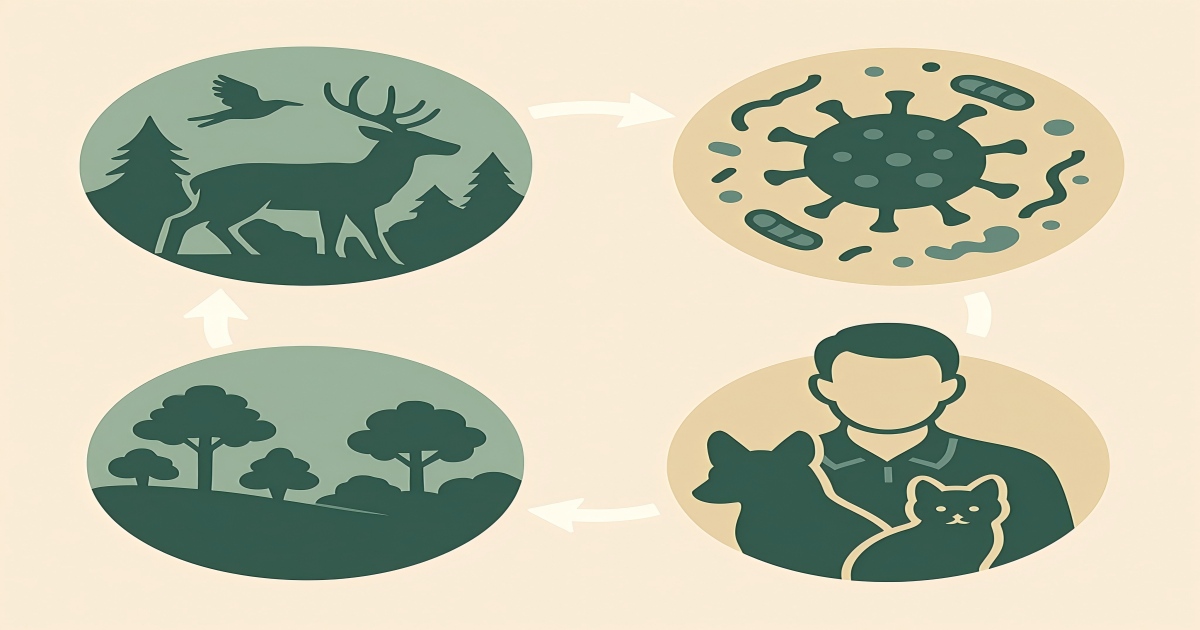
Wildlife and companion animals play increasingly recognized roles in the ecology, evolution, and transmission of diverse pathogens, but these processes do not occur in isolation. Environmental factors—such as habitat alteration, climate variability, pollution, and human-driven landscape changes—create dynamic ecological interfaces that shape pathogen persistence, transmission opportunities, and cross-species contacts. As urbanization accelerates and wildlife–human–pet interactions intensify, understanding the pathogens that circulate across these animal populations and their surrounding environmental reservoirs will be essential for protecting animal health, ecosystem stability, and public health.

This Special Issue aims to integrate high-quality research spanning microbial and viral pathogens in wildlife and companion animals, with particular attention on the environmental conditions that influence pathogen ecology. We seek studies that move from pathogen discovery and molecular characterization toward broader ecological, environmental, and One Health-relevant insights. Work examining how environmental drivers mediate host–pathogen interactions, shape transmission routes among wildlife, pets, livestock, and humans, or promote pathogen emergence and spillover is especially encouraged.

Topics of interest include the following:

  • Identification and characterization of viral, bacterial, parasitic, and fungal pathogens in wildlife and companion animals;
  • Comparative pathogen ecology across wildlife and domestic companion species;
  • Cross-species transmission pathways and zoonotic potential;
  • Molecular epidemiology, genomics, and evolutionary patterns of pathogens;
  • Surveillance strategies and diagnostic advances for wildlife and pet-associated diseases;
  • The environmental and anthropogenic drivers influencing pathogen emergence;
  • Health risks at the wildlife–pet–human interface within the One Health framework.

This Special Issue welcomes original research, reviews, and methodological advances that will contribute to a deeper understanding of the infectious threats shared among wildlife, companion animals, and humans.

Dr. Ziyao Zhou
Prof. Dr. Zhijun Zhong
Guest Editors

Manuscript Submission Information

Manuscripts should be submitted online at www.mdpi.com by registering and logging in to this website. Once you are registered, click here to go to the submission form. Manuscripts can be submitted until the deadline. All submissions that pass pre-check are peer-reviewed. Accepted papers will be published continuously in the journal (as soon as accepted) and will be listed together on the special issue website. Research articles, review articles as well as short communications are invited. For planned papers, a title and short abstract (about 250 words) can be sent to the Editorial Office for assessment.

Submitted manuscripts should not have been published previously, nor be under consideration for publication elsewhere (except conference proceedings papers). All manuscripts are thoroughly refereed through a single-blind peer-review process. A guide for authors and other relevant information for submission of manuscripts is available on the Instructions for Authors page. Veterinary Sciences is an international peer-reviewed open access monthly journal published by MDPI.

Please visit the Instructions for Authors page before submitting a manuscript. The Article Processing Charge (APC) for publication in this open access journal is 2100 CHF (Swiss Francs). Submitted papers should be well formatted and use good English. Authors may use MDPI's English editing service prior to publication or during author revisions.

Keywords

  • environmental reservoirs
  • environmental drivers
  • ecological interface
  • habitat change
  • environmental transmission
  • anthropogenic pressures
  • climate-related disease risk

Benefits of Publishing in a Special Issue

  • Ease of navigation: Grouping papers by topic helps scholars navigate broad scope journals more efficiently.
  • Greater discoverability: Special Issues support the reach and impact of scientific research. Articles in Special Issues are more discoverable and cited more frequently.
  • Expansion of research network: Special Issues facilitate connections among authors, fostering scientific collaborations.
  • External promotion: Articles in Special Issues are often promoted through the journal's social media, increasing their visibility.
  • Reprint: MDPI Books provides the opportunity to republish successful Special Issues in book format, both online and in print.

Further information on MDPI's Special Issue policies can be found here.

Published Papers (3 papers)

Order results
Result details
Select all
Export citation of selected articles as:

Research

Jump to: Other

17 pages, 3787 KB  
Article
Giant Panda Feces-Derived Weissella confusa BSP201703 Protects Mice Against Chronic ETEC Infection by Repairing Intestinal Barrier Function
by Yan Zeng, Lvchen Xiong, Yi Zhou, Jie Wang, Lei Liu, Ziyao Zhou, Bo Jing, Kangcheng Pan, Dong Zeng, Zhijun Zhong and Xueqin Ni
Vet. Sci. 2026, 13(4), 382; https://doi.org/10.3390/vetsci13040382 - 15 Apr 2026
Viewed by 304
Abstract
Enterotoxigenic Escherichia coli (ETEC) causes severe intestinal infections in animals and threatens public health under the One Health framework. Most conventional studies focus on acute short-term ETEC infection, while natural persistent colonization oftern induces chronic intestinal mucosal compensatory remodeling in hosts. This study [...] Read more.
Enterotoxigenic Escherichia coli (ETEC) causes severe intestinal infections in animals and threatens public health under the One Health framework. Most conventional studies focus on acute short-term ETEC infection, while natural persistent colonization oftern induces chronic intestinal mucosal compensatory remodeling in hosts. This study evaluated the protective effects of giant panda-derived Weissella confusa BSP201703 against chronic ETEC-induced intestinal damage using a giant panda fecal microbiota-associated (GPF) mouse model. Seventy-two Kunming mice were divided into six groups: blank control (C1), GPF control (C2), ETEC control (C3), and three W. confusa BSP201703 groups at low (1.0 × 10⁷ cfu/mL, W1), medium (1.0 × 10⁸ cfu/mL, W2), and high (1.0 × 10⁹ cfu/mL, W3) doses. Mice were first subjected to continuous ETEC challenge for 5 days to establish stable chronic intestinal injury, followed by a subsequent 5-day intervention with probiotic or sterile PBS for repairing existing damage. Growth performance, histopathology, serum D-lactate, SIgA, tight junction genes (ZO-1, Occludin, Claudin-1), and gut microbiota were analyzed. Histomorphologically, the chronic ETEC challenge induced compensatory increases in ileal villus height and crypt depth, which differed from typical acute necrotic atrophy. W. confusa BSP201703 mitigated ETEC-induced damage, reduced serum D-lactate (p < 0.05), increased SIgA, and upregulated tight junctions (p < 0.05). Microbial results demonstrated that medium-dose W2 maximized microbial diversity, while W1/W3 selectively enriched beneficial Bacteroidetes, Clostridium cluster IV, and Clostridium cluster XIVa taxa, confirming that moderate doses yielded optimal protection. In conclusion, W. confusa BSP201703 relieves ETEC injury by enhancing intestinal barrier function and regulating gut microbiota, highlighting its potential as a wildlife probiotic for One Health applications. Full article
Show Figures

Figure 1

16 pages, 1320 KB  
Article
Hepatitis E Virus Exposure Across Multiple Host Species in a Shared Ecosystem in Argentina
by Agostina Tammone Santos, Mariana A. Rivero, Walter E. Condorí, Tamara B. Soto, María C. Moran, Andrea E. Caselli, Adela Tisnés, Marcela M. Uhart, Silvina E. Gutiérrez and Silvia M. Estein
Vet. Sci. 2026, 13(2), 179; https://doi.org/10.3390/vetsci13020179 - 11 Feb 2026
Viewed by 537
Abstract
The hepatitis E virus (HEV) is an emerging multi-host pathogen, with suids being the main reservoir. Humans are primarily infected through the consumption of contaminated water or food. In Argentina, HEV circulation has been confirmed in humans, domestic pigs, wild boar (Sus [...] Read more.
The hepatitis E virus (HEV) is an emerging multi-host pathogen, with suids being the main reservoir. Humans are primarily infected through the consumption of contaminated water or food. In Argentina, HEV circulation has been confirmed in humans, domestic pigs, wild boar (Sus scrofa), and surface water. In El Palmar National Park, invasive wild boar and axis deer (Axis axis) are controlled, and their meat is released for public consumption, with trimmings and offal frequently fed to dogs. Between 2017 and 2019, we conducted a multi-species serological survey in this protected area to assess HEV exposure in invasive mammals and in dog and human consumers of game meat. We also evaluated associations between seropositivity and environmental variables, as well as behavioral risk factors among game-meat consumers. Total anti-HEV antibodies were detected in 29/75 (38.67%) wild boar, 1/134 (0.75%) deer, 1/18 (5.6%) dogs, and 6/59 (10.17%) humans. A spatial cluster of seropositive wild boar was identified in a low-lying, flood-prone area near the confluence of the El Palmar stream and the Uruguay river, suggesting increased risk of environmental transmission. This is the first report of HEV exposure in wild boar from this park and in axis deer and dogs in Argentina. Participation in culling and game meat handling and consumption may contribute to HEV exposure pathways among humans. These findings improve understanding of HEV epidemiology at the wildlife–domestic animal–human interface and highlight the influence of environmental factors and human behavior on zoonotic virus circulation. Full article
Show Figures

Graphical abstract

Other

Jump to: Research

36 pages, 2189 KB  
Systematic Review
A Systematic Review of Bacterial Sampling Collection for Veterinary Microbiology in Companion Animals
by Inês C. Rodrigues, Joana C. Prata, Ângela Pista and Paulo Martins da Costa
Vet. Sci. 2026, 13(2), 126; https://doi.org/10.3390/vetsci13020126 - 28 Jan 2026
Viewed by 1092
Abstract
Accurate microbiological diagnosis in companion animals relies heavily on appropriate sample collection, handling, storage, and transport. This systematic review, conducted according to the PRISMA 2020 guidelines, aimed to assess current microbiological sampling procedures used in dogs and cats, from specimen collection to laboratory [...] Read more.
Accurate microbiological diagnosis in companion animals relies heavily on appropriate sample collection, handling, storage, and transport. This systematic review, conducted according to the PRISMA 2020 guidelines, aimed to assess current microbiological sampling procedures used in dogs and cats, from specimen collection to laboratory submission. Seventeen studies published in English over the past decade met the inclusion criteria. Considerable variability in sampling practices was observed across different anatomical systems. Although swabs were the most frequently employed sampling method, their use is limited by reduced representativeness and an increased risk of contamination, whereas tissue biopsies and aspirates provide more reliable diagnostic results. Sampling practices were generally more consistent for urine samples; however, pre-laboratory factors, such as prior antimicrobial exposure, as well as transport and storage conditions, were inconsistently reported, hindering reproducibility and standardisation. The anatomical site sampled and the suspected pathogen determined whether aerobic or combined aerobic–anaerobic cultures were recommended. Overall, the findings reveal considerable methodological gaps and underscore the need for harmonised, evidence-based guidelines to support accurate and clinically relevant bacterial culture in veterinary diagnostics. Standardised protocols, developed collaboratively by clinicians and diagnostic laboratories, have the potential to improve diagnostic consistency, strengthen antimicrobial stewardship, enhance surveillance, and ultimately benefit clinical outcomes within One Health initiatives. Full article
Show Figures

Figure 1

Back to TopTop