

Journal Menu
► ▼ Journal Menu-
- Toxics Home
- Aims & Scope
- Editorial Board
- Reviewer Board
- Topical Advisory Panel
- Early Career Editorial Board
- Instructions for Authors
- Special Issues
- Topics
- Sections & Collections
- Article Processing Charge
- Indexing & Archiving
- Editor’s Choice Articles
- Most Cited & Viewed
- Journal Statistics
- Journal History
- Journal Awards
- Conferences
- Editorial Office
Journal Browser
► ▼ Journal BrowserNeed Help?
Announcements
29 September 2026
Tu Youyou Award—Final Call for Nominations
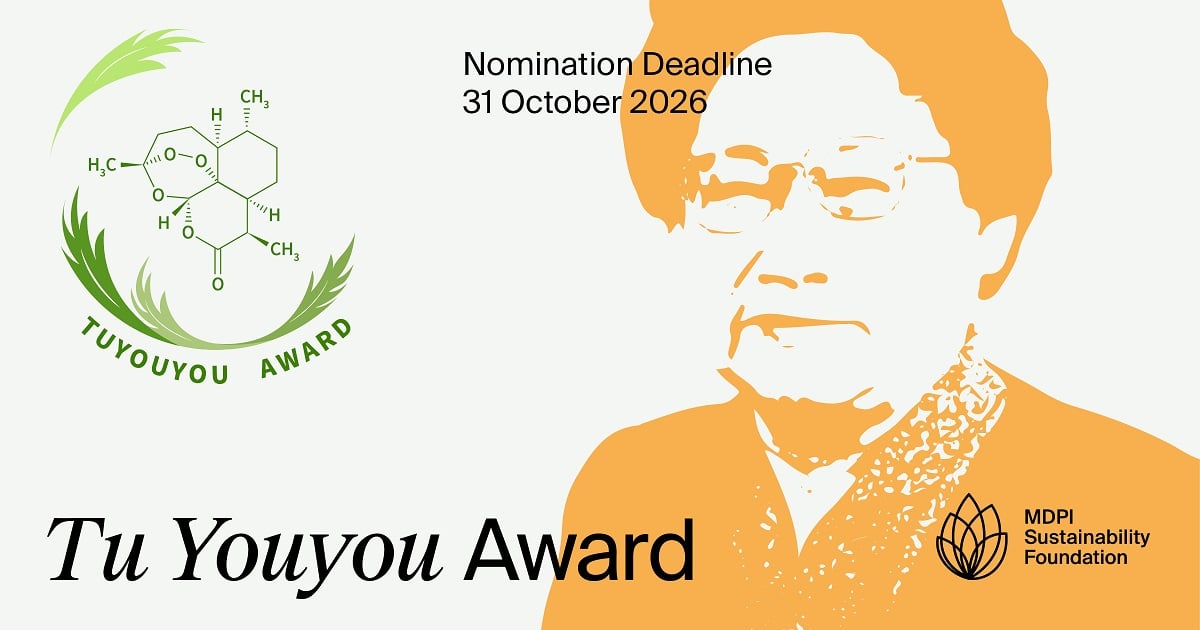
The nomination deadline for the Tu Youyou Award is approaching. Researchers are encouraged to submit nominations by 31 October 2026 (UTC-12).
The Tu Youyou Award recognizes outstanding researchers whose work has made significant contributions to natural products chemistry and medicinal chemistry, advancing scientific innovation and human health. It is named after Nobel laureate Tu Youyou, whose discovery of artemisinin has saved millions of lives.
The current award committee is chaired by Prof. Dr. William Gerwick, a Distinguished Professor at the University of California San Diego, USA, and a renowned expert in marine natural products chemistry and pharmacology. Under his leadership, the committee will evaluate nominations and recognize impactful research achievements in the related fields.
Prize:
- CHF 100,000
- A medal
- A certificate
The monetary prize will be shared equally should there be multiple recipients.
Who may be nominated?
- Scientists with outstanding achievements and contributions in the fields of natural products chemistry and medicinal chemistry.
Nominees must be individuals; team or group nominations are not permitted. Nominations are valid only for the current award cycle.
Who may submit a nomination?
- The director of the nominee’s host research institution or a recognized scientist within the field.
Self-nominations will not be considered.
Nomination materials:
- A biographical sketch
- A detailed description of the nominee’s contributions
- 5–10 representative academic publications
- A list of academic honors, awards, and funded projects
- A nomination letter signed by two nominators
How to submit?
Submit your nomination by 31 October 2026 via: https://tuyouyouprize.org/nomination/form.
For further information, please visit the Tu Youyou Award website. For any inquiries, please contact the Tu Youyou Award Team at tuyouyouaward@mdpi.com.
29 December 2025
Meet Us Virtually at the 3rd International Online Conference on Toxics (IOCTO2026), 9–11 September 2026

We are delighted to announce the 3rd International Online Conference on Toxics (IOCTO2026), chaired by Dr. Natalia Garcia-Reyero (Institute for Genomics, Biocomputing & Biotechnology, Mississippi State University, Starkville, USA) and Dr. Carlos Barata (Institute of Environmental Assessment and Water Research (IDAEA-CSIC), Barcelona, Spain). This conference will take place virtually from 9 to 11 September 2026.
We warmly invite researchers from academic institutions and professionals in the toxicology industry to attend IOCTO2026 and share their original research, innovative ideas, scientific insights, and practical experiences.
Topics are organized into five sessions, corresponding to the following journal Sections:
S1. Exposure Routes/Exposome of Emerging Contaminants and Materials in the Environment;
S2. Wildlife Ecotoxicology, Sentinel Species, and Ecosystem Health;
S3. Innovating Toxicology: NAMs and Computational Tools for Next-Generation Risk Assessment;
S4. Molecular and Cellular Mechanisms, Comparative Toxicology, and Multi-Omics Integration;
S5. Risk assessment, Policy, and Environmental Justice in Chemical Safety.
Important dates:
Deadline for registration: 4 September 2026.
Please register for this event at: https://sciforum.net/event/IOCTO2026/registration.
Please refer to: https://sciforum.net/event/iocto2026 for further information.
For any enquiries regarding this event, please contact us at iocto2026@mdpi.com.
We look forward to seeing you at the 3rd International Online Conference on Toxics.
30 September 2026
2026 Nobel Prize—Where Breakthroughs Meet Open Sciences
Each October, the Nobel Prizes turn the world’s attention toward the discoveries that have redrawn the boundaries of science. They are science’s most prestigious recognition, and increasingly its most interdisciplinary. Recent laureates have been honored for work spanning quantum dots, machine learning, and molecular medicine, fields that rarely stay within a single discipline’s borders for long.
Open access has a growing role in that story. To date, more than 40 Nobel laureates have published their research in MDPI journals—a body of work spanning genetics, physics, chemistry, and medicine. Publishing openly means a laureate’s findings reach not only fellow scientists, but the students, clinicians, policymakers, and curious readers who would otherwise meet that work only secondhand, if at all. Open access doesn’t just carry Nobel-level research, it amplifies the voice behind it, letting the discovery speak directly to everyone it stands to affect.
This is also where MDPI’s breadth becomes an advantage. With over 500 journals covering the full spectrum of scientific inquiry, our platform mirrors the reality of modern discovery—where breakthroughs increasingly emerge at the intersection of fields, not within the walls of one. It’s this structure that lets us support interdisciplinary work from first submission to global publication, connecting researchers across borders and disciplines alike.
As this year’s laureates are announced, we’ll continue spotlighting where Nobel Prize–winning research intersects with the work of our authors, editors, and reviewers—celebrating both the achievements being recognized and the open access model that helps ensure they reach the widest possible audience.
Explore selected works by Nobel laureates within the MDPI portfolio below, and join us in celebrating the global impact of their ideas.

Put your scientific intuition to the test and join MDPI’s 2026 Nobel Prize Prediction Challenge! As we honor three decades of open research, we invite you to cast your votes for the next trailblazing laureates in chemistry, physics, and physiology or medicine. Predict the pioneer minds shaping tomorrow’s scientific legacy for a chance to win 100 CHF voucher of MDPI Video Service.
Deadline: 4 October 2026 | 18:00 CEST
Winner announcement: 16 October 2026


Discover high-impact research driving tomorrow’s breakthroughs. Browse our open access selections in Chemistry & Materials Science, Medicine & Pharmacology, and Physical Sciences, featuring key studies aligned with this year’s top Nobel prize-contending topics.
|
|
|
|


Join our distinguished Editors-in-Chief and Section Editors-in-Chief for an exclusive live discussion on this year’s Nobel Prize announcements. Our expert panel will break down the winning breakthroughs, explore their global impact, and discuss the future trajectories of open science across Chemistry, Physics, and Medicine. Don’t miss this opportunity to engage with leading voices in research.
|
|
2026 Nobel Medicine & Pharmacology Roundtable
|
|
|
2026 Nobel Physics Roundtable
|
|
|
2026 Nobel Chemistry & Materials Roundtable
|
|
|
2026 Nobel Chemistry & Materials Roundtable Session #2
|


MDPI remains committed to ensuring that the breakthroughs of today—and tomorrow—are shared, debated, and built upon by the global research community. Explore science, join the conversation, and be part of the next chapter.
30 September 2026
MDPI INSIGHTS: The CEO’s Letter #39 - Peer Review Week, Chief Publishing Officer, Tu Youyou Award, OASPA & AI

Welcome to the MDPI Insights: The CEO's Letter.
In these monthly letters, I will showcase two key aspects of our work at MDPI: our commitment to empowering researchers and our determination to facilitating open scientific exchange.
Opening Thoughts

Recognizing the People Behind Peer Review
September marked Peer Review Week 2026, this year focused on “Peer Review Capacity: Volume, Speed, and Quality.” The theme reflects a challenge across scholarly publishing: research output and submissions continue to grow, while the time and expertise researchers can dedicate to reviewing are finite.
At MDPI, more than 200,000 reviewers contribute their expertise each year. Their work is fundamental to maintaining the quality and integrity of the research we publish, and Peer Review Week gave us an opportunity not only to thank them, but also to reflect on how we can better support their contribution.

This year, we highlighted three commitments that guide our approach: protecting reviewers’ time and judgment, ensuring high-quality and efficient processes, and recognizing and rewarding reviewers for their contribution. We also shared results from our 2026 Voice of the Community surveys. Among 1,627 reviewer respondents, 86% rated their experience with MDPI as “Good” or “Excellent,” 88% said manuscripts matched their expertise, and 92% found our reviewer instructions clear and helpful. From the author perspective, 95% of 16,795 respondents agreed that reviewers’ comments helped improve their manuscripts.

Recognition is an important part of this relationship too. Through our Top 1000 Reviewers program, 743 scholars accepted awards this year, with a combined CHF 526,500 returned directly to the reviewer community through cash awards and APC vouchers. During Peer Review Week, we also created opportunities for reviewers to share their own experiences through webinars, including The Reviewer’s Perspective: Navigating Volume, Speed, and Quality in Peer Review and our UK Reviewer Club.

Peer review ultimately depends on people choosing to give their time and expertise to the work of other researchers. As publishing continues to evolve, including through new technologies and increasing research volumes, we should not lose sight of that human contribution. Thank you to all the reviewers who work with MDPI, and to our colleagues who support them every day.
Read more about Peer Review Week 2026 here.
Inside MDPI

Welcoming Dr. Constanze Schelhorn as MDPI’s Chief Publishing Officer
This month, we announced the appointment of Dr. Constanze Schelhorn as MDPI’s Chief Publishing Officer (CPO). The appointment marks an important step for MDPI and the latest chapter in a journey within the organization that now spans a decade.

Stefan Tochev (CEO, MDPI) with Constanze at STM, Frankfurt, Germany, October 2025.
Constanze joined MDPI in June 2016 and has taken on several different responsibilities across editorial, indexing, and publishing over the years.
Since 2023, she has held leadership roles as Head of Indexing and later Head of Publishing, before taking on the role of Chief Publishing Officer.
I’ve had the opportunity to work with Constanze over many of those years and to see her take on increasingly important responsibilities.
What I’ve always appreciated is the growth mindset and expertise she brings to her work, together with a commitment to quality.
She understands how MDPI works and how the publishing environment is evolving to meet the expectations of the academic communities we serve.
Looking Ahead
Publishing has changed considerably over the past decade, and that change is only accelerating. Research integrity, artificial intelligence, editorial standards, indexing requirements, new publishing models, and changing expectations from researchers and institutions are just some of the areas we are navigating.

Stefan Tochev (CEO, MDPI) with Constanze and Prof. Dr. Manoj Gupta, Editor-in-Chief of MDPI journal Technologies, in Singapore, January 2025.
MDPI has changed considerably too. As we celebrate our 30th anniversary this year, our journal portfolio now includes more than 540 titles, and the scale of our work brings greater opportunities and responsibilities.
Continuing to develop our publishing practices and ensuring that we respond to changes in academic publishing will remain important priorities for us.
Constanze’s experience across several areas of MDPI puts her in a position to help us do that.
As CPO, she will help provide strategic direction across our publishing functions while working with colleagues throughout the organization. She will also represent MDPI with external stakeholders, including industry organizations and indexing partners, ensuring that we remain engaged in the conversations shaping the future of publishing.
“Please join me in congratulating Constanze on her appointment”
Growing Together
There is another aspect of this appointment that I think is worth recognizing about MDPI. I appreciate seeing people develop alongside the organization. Constanze’s journey from joining MDPI in 2016 to becoming our Chief Publishing Officer ten years later is a good example of what can happen when experience, knowledge, and responsibility build over time.
Our 30th anniversary naturally gives us an opportunity to look back at how far MDPI has come. But it should also make us think about the people who will shape where we go next. I’m pleased that Constanze will be one of those people.
Please join me in congratulating Constanze on her appointment as we look forward to continuing to work with her in this new role and seeing what we can accomplish together.

P.S. A fun fact about Constanze: she loves climbing. So, if she’s visiting your city and you’re wondering how to make her feel at home, point her towards the nearest climbing gym.
Here’s a photo from a climbing session during our visit to the Singapore office in January 2025.
Impactful Research

A Decade of the Tu Youyou Award: Celebrating Scientific Excellence
Few examples demonstrate the potential impact of scientific research as clearly as Professor Tu Youyou's discovery of artemisinin. Her team’s work contributed to the development of artemisinin-based combination therapies for malaria, which the World Health Organization (WHO) recommends as the main treatment for P. falciparum malaria.
Behind that achievement is also a remarkable scientific journey: drawing on knowledge from traditional Chinese medicine, Professor Tu and her team investigated hundreds of extracts before identifying artemisinin and helping transform the treatment of malaria.
This legacy is at the heart of the Tu Youyou Award, established by MDPI in 2016 to recognize outstanding achievements in natural products chemistry and medicinal chemistry.
“Professor Tu Youyou's scientific journey is an extraordinary example”
Ten Years of the Tu Youyou Award
This year marks a decade since the award was established. Over that time, six scholars have been recognized as Tu Youyou laureates for their contributions to research and innovation.
The connection between MDPI and Professor Tu Youyou’s work goes back even further. In 2009, MDPI Founder and President, Dr. Shu-Kun Lin, launched a Special Issue in MDPI journal Molecules commemorating Professor Tu’s 80th birthday, several years before the establishment of the award.
Below is a photo of Professor Tu Youyou with MDPI Founder and President Dr. Shu-Kun Lin during an MDPI visit to congratulate Professor Tu on receiving the 2015 Nobel Prize in Physiology or Medicine.

The 2026 Tu Youyou Award continues this tradition, awarding CHF 100,000, together with a medal and certificate, to recognize the achievements in natural products chemistry and medicinal chemistry.
Scientific Excellence and Impact
Professor Dr. William Gerwick, Chair of the 2026 Tu Youyou Award Committee, recently reflected on what distinguishes the award: “This award is truly special in that it recognizes scientific excellence as well as impact.”
I think this combination is important. Research advances our understanding, but its influence can extend much further: inspiring new discoveries, informing new treatments, addressing societal challenges, and ultimately improving people’s lives.
Professor Tu Youyou's scientific journey is an extraordinary example. Her work combined rigorous scientific investigation with a problem of enormous human importance, ultimately contributing to treatments that have transformed the fight against malaria.
Recognizing researchers who continue this tradition allows us to celebrate both scientific achievement and the broader contribution research can make to society.
Nominations Open Until 31 October
Nominations for the 2026 Tu Youyou Award are now open to scientists with outstanding achievements and contributions in natural products chemistry and medicinal chemistry. Nominations may be submitted by directors of nominees’ host research institutions or scientists within the field. Self-nominations are not accepted.
The nomination deadline is 31 October 2026, with the announcement of the winner planned for March 2027.
Learn More
Coming Together for Science

OASPA 2026: Conversations Shaping the Future of Open Access
From 21–23 September, I attended the 2026 Conference of the Open Access Scholarly Publishing Association (OASPA) in Zagreb, Croatia.
MDPI has been a Platinum Sponsor of the OASPA conference for several years, supporting an event that brings together the open access (OA) community to discuss some of the opportunities and challenges shaping publishing. This year, MDPI also sponsored the conference reception at the City Museum of Zagreb.

The program covered topics from sustainable publishing and research assessment to open infrastructure, new models for OA agreements, and, of course, the growing influence of artificial intelligence (AI). For me, though, the value of conferences like OASPA goes beyond the program. It’s about hearing different perspectives from across publishing, reconnecting with familiar faces, building new relationships, and having conversations that sometimes lead somewhere unexpected.

Stefan Tochev (CEO, MDPI) at the OASPA conference in Zagreb, Croatia.
Open Access in the Age of AI
One discussion I particularly enjoyed was the opening-day panel, “Does open access still matter in a Gen AI world?” As AI continues to become an interface through which people discover and interact with research, making knowledge openly available remains important. But questions around trust, provenance, governance, and responsibility are becoming more difficult to separate from the OA conversation.
Who is responsible for ensuring that AI-generated or AI-mediated information can be trusted? What responsibilities sit with publishers, researchers, institutions, infrastructure providers, and AI companies? And, perhaps most importantly, how do we work together rather than trying to address these challenges in isolation?
There are no simple answers, but hearing these discussions highlighted the fact that many of us across publishing are working with similar questions. Creating spaces where we can explore them together is valuable.
“Who is responsible for ensuring that AI-generated or AI-mediated information can be trusted?”
Conversations That Lead Somewhere
The conference also reminded me of the value of simply meeting people. I had a great conversation with César Pallares from Consortia Colombia about the publishing ecosystem in Colombia and the possibility of exploring a consortium agreement with MDPI in Colombia. César was very open to continuing the conversation, and I’ve already connected this opportunity with colleagues from our Institutional Open Access Program (IOAP) team.
I also caught up with Yvonne Campfens, Executive Director of OA Switchboard, who has recently taken on the role of Director for the Academic Publishing in Europe (APE) conference. We look forward to continuing to support APE as part of MDPI’s broader commitment to academic and publishing-industry events.

And, of course, it was good to connect with familiar faces from previous OASPA conferences and meet new ones. These conversations happen over coffee, between sessions, at receptions, or sometimes while walking through a city. Not every conversation needs to result in a project or partnership. Sometimes the value is simply understanding another perspective, sharing what we’re working on, or beginning a relationship that develops over time.
Thank you to the OASPA team, speakers, moderators, participants, and fellow sponsors for creating that space in Zagreb. I’m pleased that MDPI could once again support the conference and, more importantly, be part of the conversations taking place there. I look forward to seeing where some of them lead.
Closing Thoughts

AI Is Making Science More Accessible. How Do We Keep It Trustworthy?
Artificial Intelligence (AI) is changing how people find, understand, and interact with scientific research.
For decades, one of the biggest barriers to engaging with scientific research was access. Open Access (OA) has helped change that, with around 61% of global journal articles, reviews, and conference papers published in 2025 now openly accessible. AI is now beginning to lower another barrier: understanding. Researchers can quickly navigate large volumes of literature, patients can ask for complex medical research to be explained in plain language, and policymakers can more easily explore findings outside their own areas of expertise.

But easier access and understanding don’t automatically make scientific information easier to trust.
This is the topic explored by our Scientific Communications Lead, Dr. Giulia Stefenelli, in her recent article for Research Information, Scientific literacy must keep pace with artificial intelligence.
A recent study cited in the article found that when GPT-4o was tested without external retrieval and asked to cite recent scientific literature, it fabricated citations in 78–90% of cases. By contrast, OpenScholar, a specialized AI system that retrieves information from millions of OA papers, achieved citation accuracy comparable to human experts.
One line about the gap between AI content generation and verification particularly stood out to me: “Generation is becoming cheap, but verification is not.” While AI can reproduce the appearance of credible scientific information, verifying the underlying data, references, methods, and conclusions still requires time, expertise, and access to the evidence.
“The important question is whether the underlying research can be trusted”
Detection Is Not Verification
Giulia’s distinction between AI detection and research verification is particularly relevant to scholarly publishing. A manuscript can contain AI-assisted language and report sound research. Equally, something written entirely by a person can contain fabricated data, inappropriate methods, or unsupported conclusions. The important question isn’t only “Was AI used?” but whether the underlying research can be trusted.
For publishers, this makes strong editorial processes, expert peer review, research integrity checks, transparency, and human accountability increasingly important.
A Shared Responsibility
Giulia argues that publishers cannot address this challenge alone. Researchers, institutions, publishers, technology providers, and readers all have a role to play in how scientific information is created, evaluated, communicated, and understood.
As AI continues to develop, our understanding of scientific literacy must develop alongside it. Making knowledge accessible and helping people understand it are important. The next question is: how do we make it easier for people to examine where information comes from and decide how much confidence it deserves?
You can read the full article on Research Information. It is a great example of the expertise within MDPI contributing to conversations about the future of scientific publishing and communications. Technology can help us address some of these challenges, but ultimately people must remain accountable for the decisions that shape the scientific record.
Chief Executive Officer
MDPI AG
28 September 2026
Meet Us at the 12th National Toxicology Congress of the Chinese Society of Toxicology and 9th National Congress General Assembly, 16–19 October 2026, Chengdu, China

We are pleased to announce that MDPI will be exhibiting the 12th National Toxicology Congress of the Chinese Society of Toxicology and 9th National Congress General Assembly, taking place from 16 to 19 October 2026 in Chengdu, China.
This conference is themed “Toxicology Empowering Healthy China and Innovative Development”, focusing on fields such as nanotoxicology, drug toxicology and safety evaluation, veterinary toxicology, food toxicology, industrial toxicology, traditional Chinese medicine toxicology and safety evaluation, special environmental toxicology, clinical laboratory toxicology, liver toxicology, and toxicological pathology. In addition, the conference features a special session on the formulation and application of group standards by the Chinese Society of Toxicology, as well as the “FutureTox Youth Forum: Interdisciplinarity, Innovation, and Future Leading Talents”.
Why visit MDPI’s booth?
Join us at MDPI’s booth to discover how we are advancing open science by supporting rapid, transparent, and accessible research dissemination:
- Learn more about MDPI’s open access publishing model and commitment to advancing open science;
- Explore journals covering medicine, pharmacology, public health, healthcare, and clinical sciences;
- Connect with MDPI’s editorial team to discuss publishing opportunities and collaborations;
- Collect conference materials and MDPI giveaways.
The following MDPI journals will be represented:
If you are planning to attend the 12th National Toxicology Congress of the Chinese Society of Toxicology and 9th National Congress General Assembly, we would be delighted to meet you in person. Visit us at booth #14 to speak with our team and learn about how MDPI can support the visibility and impact of your research.
For more information about the conference, please visit the following website: http://cstmeeting.chntox.org/meeting/116.
14 September 2026
Toxics | Interview with One of the Authors—Dr. Yun Gyong Ahn

We had the pleasure of speaking with Dr. Yun Gyong Ahn, the corresponding author of an Editor’s Choice Article in Toxics (ISSN 2305-6304). Here, she shares insights into her academic journey, her research focus, and the motivation behind her recent work.
Submission information:
“Probabilistic Ecological Risk Assessment of Synthetic Musk Compounds in the Han River Estuary: Integrating Multi-Year Monitoring and Explainable Machine Learning”
by Jungmin Jo, Na Rae Choi, Eunjin Lee, Jae Won Yoo, Dong Sik Ahn, Ji Yi Lee and Yun Gyong Ahn
Toxics 2026, 14(8), 718; https://doi.org/10.3390/toxics14080718
Available online: https://www.mdpi.com/2305-6304/14/8/718
Biography:
Dr. Yun Gyong Ahn majored in chemistry as an undergraduate and expanded her expertise in the fields of chemistry and environmental engineering by pursuing a master’s and a doctoral degree in environmental engineering. Her research has primarily focused on the development and application of advanced analytical methods for the identification, quantification, and characterization of hazardous chemicals and emerging contaminants in environmental matrices. She obtained her PhD from Korea University on August 25, 2007. Her doctoral dissertation was titled “A Study on the New Cleanup Method for the Determination of Polychlorinated Dibenzo-P-Dioxins/Dibenzofurans and Endocrine-Disrupting Phenols in Fish by Freezing-Lipid Filtration”.
The following is an interview with Dr. Yun Gyong Ahn:
1. Could you briefly introduce the main research focus of this paper?
Synthetic musk compounds (SMCs) are widely used in perfumes, cosmetics, detergents, and other consumer products, and their continued use results in their continuous input into wastewater treatment plants through domestic wastewater and subsequent release into aquatic environments via treated effluents. Despite growing concerns regarding the persistence and potential toxicity of these compounds, systematic long-term environmental monitoring and consistent emission management standards for SMCs remain limited worldwide. This study investigated the occurrence, spatial and temporal distribution, and ecological risks of 12 SMCs in the Han River Estuary, Republic of Korea, based on a three-year monitoring program from 2020 to 2022. Unlike previous studies that focused mainly on specific locations or limited sampling periods, our study integrates long-term monitoring of SMCs from wastewater treatment facilities through rivers and estuaries to coastal environments, together with their seasonal variability, environmental drivers, and ecological risks. Machine learning identifies the environmental drivers of SMC distribution, probabilistic hazard quotient (HQ) assessment quantifies the associated ecological risks, and the resulting risk map visualizes where those risks are concentrated. The integrated risk map combining probabilistic ecological risk assessment with the spatial distribution of synthetic musk compounds allows major risk areas to be readily identified. It can help identify areas with relatively high predicted ecological risks, thereby supporting risk prioritization and informed environmental management and decision-making.
2. Could you tell us a little bit about yourself and your current research?
I am a Principal Research Scientist at the Korea Basic Science Institute (KBSI), where I conduct a variety of research projects on hazardous substances and metabolites using advanced mass spectrometry-based approaches. My work also focuses on the development of analytical methods for the efficient separation and detection of endocrine-disrupting chemicals, pharmaceuticals, and other emerging contaminants, as well as the establishment of robust QA/QC procedures and validation of analytical methods to ensure reliable and accurate quantification.
Recently, I have been expanding my research beyond the analysis and risk assessment of highly toxic chemicals detected in environmental and human exposure settings to the comprehensive identification and characterization of their metabolites and transformation products generated in humans and the environment. From an exposome perspective, I aim to better understand the complex exposure and biological effects of multiple environmental contaminants by integrating advanced analytical chemistry with toxicological information. In addition, I am expanding my research to incorporate machine learning-based toxicity prediction and probabilistic ecological risk assessment, aiming to develop an integrated framework for quantitatively evaluating exposure, toxicity, and ecological risks associated with complex environmental contaminants.
3. How do you evaluate research trends in this field, and what advice would you give to early career researchers who are interested in this area of study?
Recently, ecological risk assessment has been moving beyond the conventional approach of evaluating individual contaminants based primarily on their environmental concentrations and risk quotients. Increasingly, research is focusing on a more integrated assessment that considers multiple chemical exposures, complex mixtures, unknown contaminants, metabolites and transformation products, as well as their biological effects. Advances in high-resolution mass spectrometry, non-target screening, and machine learning are also providing new opportunities to identify previously overlooked contaminants and predict their potential toxicity. Because research in this area cannot be effectively addressed from a single discipline, interdisciplinary collaboration is essential. Therefore, my advice to early career researchers interested in this field is to avoid limiting themselves to existing methodologies or a single research area. Instead, they should first develop a strong foundation in their own area of expertise while actively learning concepts and methodologies from complementary disciplines. Building collaborative networks with researchers from different disciplines is particularly important for developing meaningful interdisciplinary research. Ultimately, I believe it will become increasingly important to build researchers’ ability to connect various academic disciplines around well-defined scientific questions.
4. Why did you choose Toxics as a platform for publishing your work and how was your experience? Would you consider publishing your future research in Toxics?
I selected Toxics because there is a very strong match between the journal’s scope and my research. Also, I have had a positive experience with the journal in the past, and its scope closely matches my research. I highly value Toxics for its international readership and interdisciplinary approach. In particular, I believe that the journal is a good fit for our research because it allows research findings to be interpreted and discussed not only from an analytical perspective but also from a toxicological perspective. For these reasons, I consider Toxics to be an appropriate publication platform for effectively communicating the scientific value of our research to the international readers. Based on my positive experience with the journal, I would also be very interested in publishing our future research findings in Toxics.
5. How do you think open access publishing impacts authors?
The increasing proportion of open access publications in science, technology, and medicine reflects the growing demand for broader and faster access to scientific information. In this sense, I believe that open access will play an increasingly important role in promoting international collaboration and scientific advancement. I also think that greater accessibility can encourage authors to maintain high scientific and ethical standards, because their research can be widely read, evaluated, and discussed by the scientific community. However, I hope that more diverse support systems will be established to reduce the financial burden on authors while enabling researchers to select OA publication journals based on the quality and relevance of their research.
6. In your opinion, which research topics will be of particular interest to the research community in the coming years?
I think the research trend will be a shift from studying individual contaminants toward understanding complex chemical mixtures and cumulative exposure. PFAS, microplastics, transformation products, and other emerging contaminants will remain important, while high-resolution mass spectrometry, non-target screening, exposomics, and machine learning will become increasingly important tools. I also expect greater integration of long-term monitoring, toxicity, and risk assessment, particularly considering climate change and vulnerable ecosystems. In this context, combining advanced analytical chemistry with explainable machine learning and ecological risk assessment is, in my opinion, a particularly promising research direction.
14 September 2026
Toxics | Interview with One of the Authors—Dr. Claudio Casella

We had the pleasure of speaking to Dr. Claudio Casella, the first and corresponding author of a highly cited paper in Toxics (ISSN 2305-6304). Here, he shares insights into his academic journey, research focus, and the motivation behind his recent work.
“Plastic Smell: A Review of the Hidden Threat of Airborne Micro and Nanoplastics to Human Health and the Environment”
by Claudio Casella, Umberto Cornelli, Santiago Ballaz, Giuseppe Zanoni, Gabriele Merlo and Luis Ramos-Guerrero
Toxics 2025, 13(5), 387; https://doi.org/10.3390/toxics13050387
Dr. Claudio Casella is an exceptionally promising scholar whose multidisciplinary work bridges chemical engineering, environmental toxicology, and green materials science. Demonstrating extraordinary academic momentum, Dr. Casella has achieved remarkable bibliometric milestones in just two years (2024–2026)—authoring 37 peer-reviewed publications in top-tier Q1 and Q2 journals (Toxics, Environmental Pollution, Food Hydrocolloids, Journal of Materials Chemistry B, Journal of Hazardous Materials), accumulating over 580 citations (h-index: 11; i10-index: 14 on Google Scholar), and securing a ResearchGate Interest Score of 346.4. His scientific engagement is further highlighted by Web of Science metrics placing his Author Impact Beamplot Summary in the 81st percentile alongside 134 verified peer reviews. Dr. Claudio Casella is an emerging researcher whose multidisciplinary work spans chemical engineering, environmental toxicology, and green materials science. He holds a Doctoral degree in Chemical, Environmental, and Biofood Engineering, receiving an International Doctorate Mention (University of Oviedo, Spain) for his academic achievements and collaborative projects. Dr. Casella’s primary research focuses on environmental pollutants—particularly microplastics and nanoplastics—and their potential bioaccumulation, human health outcomes, and metabolic disruptions such as insulin resistance. A central line of his investigation involves developing sustainable, natural polymers—most notably chitosans and polyglucosamine-starch networks derived from waste streams—to physically entrap or sequester microplastics within the gastrointestinal tract under in vitro gastric conditions. Starting in October 2026, he will begin a postdoctoral project within the Department of Chemistry at the University of Pavia, focusing on the environmental dynamics, biological interactions, and bioaccumulation of microplastics, nanoplastics, and per- and polyfluoroalkyl substances (PFAS). Dr. Casella integrates experimental chemistry with biomedical insights. Collaborating closely with international institutions across Europe and the Americas, Dr. Casella integrates experimental chemistry with biomedical insights. With dozens of peer-reviewed scientific contributions published in leading international journals, he continues to pioneer novel biopolymer applications to mitigate xenobiotic toxicity and advance global environmental health.
The following is an interview with Dr. Claudio Casella:
1. Could you please briefly introduce the main research content of the published paper?
This work explores the critical role of microplastics and nanoplastics (MNPs) as potential environmental and metabolic disruptors, focusing particularly on their links to insulin resistance, metabolic dysregulation, and tissue accumulation frameworks. By synthesizing mechanistic insights and cellular turnover models, our studies assess how ingested or systemic microplastics interact with biological barriers and metabolic pathways. Furthermore, we investigated natural therapeutic strategies—specifically chitosan-based biopolymers—to evaluate their capacity to sequester MNPs within simulated gastric conditions, offering a practical avenue to reduce microplastic bioaccumulation in human and animal tissues.
2. Could you tell us a little bit about yourself and your current research?
I have a background in chemical, environmental, and biofood engineering, and my interdisciplinary work lies at the intersection of environmental toxicology, sustainable materials, and biomedical science. Over the past two years, I have actively expanded my scientific output, establishing active collaborations with researchers across Europe and the Americas, including ongoing joint projects with Dr. Umberto Cornelli, MD, PhD, at the Loyola University School of Medicine (Maywood, IL, USA). As an active member of NYAS, AAAS, ACS, and SITOX, I place strong emphasis on collaborative research. Starting this October, I will commence my PhD at the Department of Chemistry at the University of Pavia, where my research will focus specifically on the fate, toxicity, and interaction of MNPs and PFAS. Additionally, my work explores biopolymer-based intervention strategies (such as tailored chitosan networks, especially Procambarus clarkii chitosan) designed to bind and eliminate microplastics in the gastrointestinal system before systemic absorption occurs.
3. How do you evaluate research trends in this field, and what advice would you give to early-career researchers who are interested in this research area?
The field of environmental toxicology is rapidly moving beyond basic contaminant detection toward comprehensive mechanistic toxicology and multi-pollutant exposure models (such as examining MNPs alongside persistent chemicals like PFAS). Researchers are increasingly combining material science, multi-omics, and advanced toxicological modeling to understand real-world exposures. My advice to early-career researchers is to cultivate an interdisciplinary mindset and engage actively with professional networks like ACS or SITOX. The complexity of anthropogenic pollutants requires collaboration across chemistry, environmental engineering, and clinical toxicology. Staying open to innovative solutions—such as repurposing biopolymer waste to tackle toxicological challenges—can open exciting avenues of discovery.
4. Why did you choose Toxics as a platform for publishing your work, and how was your experience? Would you consider publishing future research in Toxics?
We selected Toxics because of its strong reputation for publishing cutting-edge research in environmental health, xenobiotic mechanisms, and chemical toxicology. The journal’s scope aligned perfectly with our research on MNP bioaccumulation, toxicological frameworks, and metabolic disruption. My experience with Toxics was exceptionally positive: the peer-review process was thorough, highly constructive, and efficient, which allowed our findings to reach the scientific community promptly. I would certainly consider Toxics for publishing future research outputs, including our ongoing work on emerging contaminants.
5. How do you think open access publishing impacts authors?
Open access publishing is essential for maximizing research visibility, engagement, and real-world impact. In environmental toxicology, findings regarding contaminants like MNPs and PFAS have direct implications for public health professionals, regulatory agencies, policymakers, and the general public. Removing paywalls ensures that crucial data regarding chemical exposure and health risks are freely accessible globally, encouraging transparent scientific discourse and promoting international collaborations across academic institutions.
6. In your opinion, which research topics will be of particular interest to the research community in the coming years?
In the coming years, I anticipate a major research focus on the co-exposure dynamics of complex contaminant mixtures—particularly how MNPs act as vectors for persistent organic pollutants like PFAS. Key areas will include understanding the exact molecular mechanisms of metabolic disruption (such as neurodegenerative and metabolic diseases linked to environmental exposure), cross-species health impacts, and the development of proactive, sustainable mitigation technologies—such as targeted gastrointestinal sequestrants and advanced green materials—to limit human and ecological exposure.
11 September 2026
Interview with Prof. Dr. Lianguo Chen–Winner of the Toxics Young Investigator Award

- Could you briefly introduce yourself, including your current affiliation and tell us about your current research interests?
I am currently a Full Professor at China University of Geosciences (Wuhan), Hubei Province, China. My research interests have persisted since my postgraduate studies, centering mainly on the aquatic toxicology of emerging environmental pollutants, such as flame retardants, per‑ and polyfluoroalkyl substances (PFAS), and preservatives. As facilitated by the introduction and development of novel approaches, our research aims to identify molecular initiating events, convincingly unravel mechanistic cascades, and establish defined adverse outcome pathways for environmental pollutants. Building upon these findings, we develop a mechanism‑driven strategy to design environmentally benign alternatives, with the ultimate goal of achieving source reduction of toxic chemicals. - How does it feel to be recognized with the Toxics Young Investigator Award?
I am deeply honored to receive the Toxics Young Investigator Award from the international review panel. I recognize that this is a highly competitive award, with numerous applicants every year. This distinction represents international recognition of our group’s research accomplishments, and it will further motivate us to pursue our ongoing research directions. I hope we can generate more original findings in the years ahead. - Can you tell us about the specific research project or breakthrough that led to this recognition? What potential impact do you foresee this work having on the toxicology and environment science?
To comprehensively decipher the reproductive toxicity and underlying mechanisms of isothiazolinone, an emerging antimicrobial preservative, our team has spent five years accumulating robust evidence in vivo, in vitro, in silico, and ex vivo. By developing and optimizing a pull‑down protocol tailored for toxicological investigations, we successfully screened for potential binding targets and further validated Gαi as the molecular initiating event responsible for isothiazolinone‑induced reproductive toxicity in animal models. Through co‑exposure experiments with diverse agonists and antagonists, we confirmed the causal link between Gαi disruption and reproductive impairments. These findings allowed us to propose a compelling, novel adverse outcome pathway for reproductive toxicity. This work underscores that Gαi‑mediated signaling can trigger adverse reproductive outcomes, representing a valuable addition to the existing repertoire of receptor‑driven reproductive toxicity mechanisms. This insight suggests that pollutant screening workflows should not be limited to well‑characterized targets. Future mechanistic studies are expected to uncover additional molecular targets that can be integrated into risk prediction and diagnostic frameworks.
Beyond mechanistic toxicology, our research extends toward the rational design of green chemicals. Based on divergent antimicrobial potency and differential Gαi‑binding affinity among isothiazolinone analogs, we have established structure–activity and structure–toxicity relationships. These relationships support the design of alternative compounds with reduced reproductive endocrine toxicity and enhanced antimicrobial performance. Ultimately, two candidate compounds have been synthesized and are being evaluated for real‑world applications. Compared with conventional mortality‑centered approaches, mechanism‑ and target‑driven chemical design strategies have proven more environmentally relevant and sustainable. - Which research topics do you think will be of particular interest to the research community in the coming years?
Currently, toxicological research is confronted with multiple critical challenges. Notably, the field needs to shift its focus from characterizing toxicological effects toward dissecting underlying mechanisms. At present, descriptive observations alone are insufficient and constrain data interpretation. We must develop innovative toxicological approaches to identify direct binding targets that causally mediate the specific biological effects triggered by environmental pollutants. Validating the causal link between these molecular targets and adverse outcomes is of particular interest and significance. Furthermore, once molecular targets are unambiguously identified, it becomes imperative to integrate these newly‑discovered targets into high‑throughput screening and predictive workflows, alongside conventionally established targets. Leveraging artificial intelligence and big‑data mining, environmental pollutants posing substantial ecological and health risks can be prioritized for subsequent experimental validation. In parallel, toxicology should strengthen its capacity to support chemical risk management and evidence‑based policy‑making. Beyond advancing fundamental science, toxicological research must also emphasize application‑oriented outputs. - Could you tell us about your experience with Toxics either as an author, reviewer, editor, or reader?
Previously, I served as a Guest Editor and assisted in organizing a Special Issue for Toxics. I was also involved in manuscript review and processing in my capacity as both a reviewer and an editor. To date, our group has published two papers in Toxics, one of which has been featured on the journal’s front cover. Through frequent, multi‑faceted interactions with Toxics’ editorial management team, what has impressed me most is the high efficiency of its manuscript‑processing workflow. Adhering to rigorous standards, the journal enables timely online publication of research outputs, facilitating knowledge exchange among international readers. Moreover, the Toxics management team demonstrates great enthusiasm for elevating the journal to greater heights. They have established online conference platforms, solicited advice from Editorial Board Members, and spared no effort to promote Toxics to a broader audience. All these initiatives will undoubtedly benefit the journal’s further development. - What have been some of the major technical or career challenges you faced when transitioning from a student to an independent faculty member or group leader? How did you overcome them?
After returning from Hong Kong to take up a position in Wuhan, I was appointed as a full professor in 2018 and tasked with establishing a new laboratory. In the following year, I began to recruit postgraduate students. Supervising student research proved challenging in the initial stage. Since new students lacked prior experience in toxicological experiments, I had to train them in core technical skills while encouraging them to think independently and pursue innovative research ideas. Defining the future research direction of our lab also posed considerable difficulties. Fortunately, my students progressed rapidly and acquired toxicological methodologies through intensive training. Gradually, they became capable of working independently, freeing up my time for other responsibilities. As a principal investigator (PI), I am required to secure sufficient grants to fund our toxicological research. This represents a persistent challenge for all researchers, yet it is particularly acute for early‑career faculty and new group leaders. Given the wide variety of funders and grant application systems, it is critical to become familiar with grant‑writing procedures at an early stage and seize every available opportunity. - Based on your journey, what specific advice would you give to young researchers or PhD students who are just starting their careers in toxicology and environment science?
In my view, scientific research should be driven by the most innovative ideas, with paper publication never treated as its ultimate goal. Therefore, I recommend that early career researchers and PhD students devote their limited time and energy to exploring topics that truly interest them. Rather than spreading their efforts across fragmented experiments, they are better off pursuing comprehensive, in‑depth research focused on a single specific subject. Admittedly, such thorough investigations are more likely to encounter obstacles and may even end in failure. Nevertheless, the rewards are far greater when researchers strive to identify solutions and tackle a scientific challenge. - Finally, do you have any suggestions on how Toxics could further support young researchers and the academic community?
Under current circumstances, early‑career researchers struggle to compete against senior experts for research grants. Without grant funding, they lack the resources to sustain their research and advance their careers. In this context, I believe it would be highly beneficial for Toxics to establish a grant program specifically for early career researchers. An international review committee could conduct impartial assessments to uphold the standards and authority of this Toxics‑affiliated grant.
10 September 2026
Toxics | Interview with the Editorial Board Member—Prof. Dr. David A. Lawrence

We are pleased to share the following interview with Prof. Dr. David A. Lawrence, Editorial Board Member of Toxics (ISSN 2305-6304).
Prof. Dr. David A. Lawrence is a professor of immunotoxicology at University at Albany, USA. The Lawrence Lab addresses the biochemical and molecular analysis of the human and murine immune-neuroendocrine network with specific emphasis on the mechanisms by which chemicals and drugs alter the structure/function of antigen-presenting cells and the T-lymphocyte subsets responsible for maintenance of the immune homeostasis (controlled cell-mediated and humoral (antibody-mediated) immune responses).
He is especially concerned with the influence of oxidative stress from environmental toxicants and pathogens as well as developmental aging stresses on immune responsiveness. Current funded research is focused on the immune mechanisms responsible for the developmental disorders such as autism and Multisystem Inflammatory Syndrome in Children (MIS-C).
The following is an interview with Prof. Dr. David A. Lawrence:
1. What is the most satisfying discovery or achievement you have obtained in your laboratory?
On the personal side, every new amount of information is satisfying because it opens up more discoveries needed, which keeps my mind more active (an important physiological activity for an aging person). From a more scientific vantage point, I would say that the connections of oxidative stress on nerve and immune interactions have been important but specific molecular involvements are needed.
2. When you encountered repeated failed experiments and long-term bottlenecks in the early stages of your research, did you ever consider giving up scientific research? What kept you going?
The main bottleneck has been getting funding for the pursuit of new ideas. Even apparently failed experiments usually lead to the need to develop new approaches, or understanding what the result may be suggests new paths forward. The wonder of science is that every new discovery leads to many questions still unanswered.
3. How do you maintain a balance between research commitments and personal life?
That is a question probably better and more honestly answered by my wife. It is getting harder now with more physical health issues, but when I was younger, I always left time for an outside walk in the garden or a forest. When enjoying nature, including animals, the mind is refreshed and allows new thoughts to enter.
4. How has your experience working with Toxics been since you joined the Editorial Board? What is your primary expectation toward the journal’s future development?
We need to keep researching environmental stressors connected to physical and mental health. Lately this is especially true for psychological stress affecting health. We also need to make more scientists and the public aware of the numerous aspects of wars and climate change that are changing and impacting health.
5. As an academic editor, what aspects do you prioritize most when evaluating manuscripts? What advice would you give to authors preparing to submit their work to Toxics?
First, better understand what the new information is that you want the reader to concentrate upon. A good description of your results adds to what has been known and accepted by most scientists.
6. You are currently editing the Special Issue “Environmental Toxicants in Human Health: Oxidative Stress, Metabolism and Toxicity”. From your perspective as a Guest Editor, what potential value do you think this Special Issue can bring to research or clinical practice in your field?
My students consider me very anal about bringing up oxidative stress for many disorders, but I believe it is connected and we need to get more information about the specific molecules implicated. It is especially important to discuss the cell and molecular implications of aging and increased incidence of disorders. Dietary and physical activities need to be connected.
7. In your view, what are the essential components of a high-quality research paper? Is it primarily the result of groundbreaking research with substantial scientific merit, or does it hinge on well-conceived ideas and proficient writing?
Both are important. Great new results will not get much attention if they are presented poorly, and no matter how well a manuscript is written, if it doesn’t introduce a new idea, it will not attract attention.
8. What role do you think academic journals play in scientific communication?
All communication is important. At meetings, I have always learned more in discussions after a presentation than the presentation alone. In classes, I think students learn more about the topic by discussing the topic after class.
9. What does the future of your research field look like? In your opinion, what under-explored questions in modern immunotoxicology deserve more attention from researchers?
For example, the oxidative stress effects causing immunotoxicology, what specific molecules are involved, and how does the structure of these molecules change due to stress.
10. Finally, what is one piece of advice you would give to early career researchers?
Keep an open mind and listen carefully. If you disagree with a comment, ask yourself why.
9 September 2026
Toxics | Issue Cover Articles in the First Half of 2026

The articles below have been selected as Issue Cover Articles for the first half of 2026 by the Editorial Office of Toxics (ISSN 2305-6304). These articles are from multiple fields within the scope of the journal, and we hope they will provide insights and serve as references for scholars in related fields. For more information about this journal volume, please click on the following link: https://www.mdpi.com/2305-6304/14.

1. “Micronuclei and Nuclear Abnormalities in Oral Mucosa as Indicators of Genotoxicity in Healthcare Professionals”
by Juana Sánchez-Alarcón, Stefano Bonassi, Mirta Milić, Ninfa Ramírez-Durán, Keila Isaac-Olivé and Rafael Valencia-Quintana
Toxics 2026, 14(1), 61; https://doi.org/10.3390/toxics14010061
Available online: https://www.mdpi.com/2305-6304/14/1/61
Cover Story: Occupational exposure to physical and chemical agents represents a potential risk for genomic instability in healthcare professionals. This cover illustrates the use of the buccal micronucleus cytome assay as a minimally invasive biomonitoring tool to detect early genotoxic effects in oral mucosal cells. By comparing different occupational groups, the figure highlights an increased frequency of micronuclei and nuclear abnormalities among nurses, suggesting a higher susceptibility to occupational genotoxic stress. These findings support the relevance of cytogenetic biomarkers for risk assessment and prevention strategies in healthcare settings.

2. “From Enrichment to Fate: Transport, Transformation, and Fate of Micro- and Nanoplastics in Marine Environments”
by Wei Ma, Xinjie Liang, Changling Ding, Yingying Ye and Jiji Li
Toxics 2026, 14(2), 120; https://doi.org/10.3390/toxics14020120
Available online: https://www.mdpi.com/2305-6304/14/2/120
Cover Story: Micro- and nanoplastics (MNPs) pervade marine environments, yet their ecological impacts remain unclear. This review examines how MNPs transport, transform, and affect ocean ecosystems. MNPs travel long distances while fragmenting, accumulating from surface waters to deep sediments. They threaten critical habitats like seagrass beds and coral reefs. Marine organisms ingest these particles, leading to oxidative stress, metabolic disruption, and immune impairment. The “Plastisphere” may also facilitate pathogen spread. Beyond direct effects, MNP pollution may disrupt carbon sequestration and food web stability. The authors outline research priorities: improved detection, long-term ecosystem studies, and understanding interactions with other pollutants—essential steps for addressing this growing marine threat.

3. “Machine Learning Prediction of Transthyretin Binding for Thyroid Hormone Transport Disruption for Chemical Risk Assessment”
by Shuaikang Hou, Chao Ji, Christopher M. Reh and Patricia Ruiz
Toxics 2026, 14(3), 240; https://doi.org/10.3390/toxics14030240
Available online: https://www.mdpi.com/2305-6304/14/3/240
Cover Story: Thyroid hormone balance is essential for development and metabolism, yet many environmental chemicals disrupt its transport by binding to transthyretin (TTR). This study leverages machine learning models trained on over 1500 compounds to predict TTR-binding affinity and identify structural features driving disruption. The results highlight key molecular determinants such as hydrophobicity and electronic properties while demonstrating acceptable predictive performance and reliability. This work advances non-animal screening approaches, enabling faster identification and prioritization of endocrine-disrupting chemicals for risk assessment.

4. “Common Carp Kidney as a Multipurpose Biomarker Organ: Insights from Perfluorooctanoic Acid Exposure”
by Maurizio Manera, Cosma Manera and Luisa Giari
Toxics 2026, 14(4), 287; https://doi.org/10.3390/toxics14040287
Available online: https://www.mdpi.com/2305-6304/14/4/287
Cover Story: The common carp kidney uniquely integrates renal, hematopoietic, and thyroid functions, positioning it as a multipurpose biomarker organ. Subchronic waterborne exposure to perfluorooctanoic acid (PFOA)—a prototype per- and polyfluoroalkyl substance (PFAS)—induces concentration-dependent nephrotoxic effects (glomerular filtration barrier disruption and proximal tubule vesiculation), immunotoxic rodlet cell recruitment/activation in hematopoietic tissue, and thyrotoxic follicle increase and colloid vesiculation. A novel hierarchical multipurpose index, via z-scoring of morphological endpoints, synthesizes these into modular subindices. Toxicologic pathology researchers are encouraged to extend this modular framework to other waterborne contaminants, supporting One Health monitoring.

5. “Early Pregnancy Targeted Exposome: Biological Response and Maternal BMI”
by Nadia Saadat, Soundara Viveka Thangaraj, Jasmin Chovatiya, Ravikumar Jagani, Syam S. Andra and Vasantha Padmanabhan
Toxics 2026, 14(5), 421; https://doi.org/10.3390/toxics14050421
Available online: https://www.mdpi.com/2305-6304/14/5/421
Cover Story: Pregnancy is a uniquely sensitive window during which metabolic, hormonal, and physiologic adaptations may amplify susceptibility to environmental chemicals. Maternal BMI may further modify exposure–response relationships by influencing toxicokinetics, bioaccumulation, metabolism, inflammation, and stress-pathway activation. This study provides an integrated understanding of how complex urinary exposome signatures are linked to maternal stress biomarkers, and the role played by BMI in modifying these biological responses with the potential to influence pregnancy outcomes. By evaluating real-world mixtures within the context of maternal metabolic health, this study may help improve identification of high-risk pregnancies, uncover mechanisms of environmental susceptibility, and inform prevention strategies to improve maternal and fetal health.

6. “Time- and Temperature-Dependent Effects of PHBV on Physiological Responses in Brine Shrimp”
by Natalia S. Buzzi, Anna Jáuregui, Anna Marín, Juan C. Navarro, Mar Llorca, Myriam Lizanda, María Constanza Díaz Andrade, Ana Carolina Moya, José Gámez-Pérez, Luis Cabedo et al.
Toxics 2026, 14(6), 533; https://doi.org/10.3390/toxics14060533
Available online: https://www.mdpi.com/2305-6304/14/6/533
Cover Story: Aquatic organisms face multiple stressors, including microplastic pollution and rising temperatures, yet the impacts of bioplastics remain poorly understood. Here, the biopolymer PHBV was evaluated in Artemia franciscana across different exposure scenarios. PHBV increased growth and development at higher concentrations, longer exposure, and warming. These effects were accompanied by changes in enzymatic activity, lipid peroxidation, fatty acids, and gut structure, with marked damage at high temperature. Despite these alterations, no oxidative damage was detected. The results show that PHBV induces distinct, condition-dependent responses and underscore the importance of comprehensive multi-stressor ecotoxicological assessments of bioplastics promoted as sustainable alternatives.
