



Special Issue "Advances in Research and Sustainable Applications of Energy—Related Occupant Behavior in Buildings"

A special issue of Sustainability (ISSN 2071-1050).

Deadline for manuscript submissions: 31 August 2021.

Special Issue Editors

Prof. Dr. Chun-Qing Li
E-Mail Website
Guest Editor
School of Engineering, RMIT University, Melbourne 3001, Australia
Interests: life cycle assessment; risk-cost optimization; sustainable building energy efficiency
Dr. Yaolin Lin
E-Mail Website
Guest Editor
School of Environment and Architecture, University of Shanghai for Science and Technology, Shanghai 200093, China
Interests: thermal comfort; HVAC system control; sustainable building energy efficiency
Special Issues and Collections in MDPI journals
Dr. Wei Yang
E-Mail Website
Guest Editor
Faculty of Architecture, Building and Planning, The University of Melbourne, Melbourne 3010, Australia
Interests: thermal comfort; building energy management; sustainable building energy efficiency;
Special Issues and Collections in MDPI journals

Special Issue Information

Dear Colleagues,

Occuppant behavior has a great impact on building energy consumption and peak energy demand. Different occupant behaviors could result in differences of 20% in annual energy consumption and of 40% in peak daily energy demand. Therefore, proper prediction of occupant behavior and management of the energy consumption equipment are very important for green house gas reduction and sustainable development. Today, advancements in smart sensing technology, data ming approaches, and internet of things have provided new ways for the prediction and management of occupant behavior .

This Special Issue aims to present the state of the art and current trends in research on energy-related behaviors of buildings’ occupants, including related sustainable applications. Original experimental studies, works on computer models, and reviews on all aspects of occupant behavior’s modeling, sensing, and management are welcome.

Potential topics of interest include but are not limited to:

  • Smart sensors in occupant behavior research
  • Sustainable occupant behavior model development
  • Data mining and machine learning approaches applied to occupant behavior
  • Building energy management based on occupant behavior
  • Internet of things and occupant behavior
  • Impact of COVID-19 on occupant behavior

Prof. Dr. Chun-Qing Li
Dr. Yaolin Lin
Dr. Wei Yang
Guest Editors

Manuscript Submission Information

Manuscripts should be submitted online at www.mdpi.com by registering and logging in to this website. Once you are registered, click here to go to the submission form. Manuscripts can be submitted until the deadline. All papers will be peer-reviewed. Accepted papers will be published continuously in the journal (as soon as accepted) and will be listed together on the special issue website. Research articles, review articles as well as short communications are invited. For planned papers, a title and short abstract (about 100 words) can be sent to the Editorial Office for announcement on this website.

Submitted manuscripts should not have been published previously, nor be under consideration for publication elsewhere (except conference proceedings papers). All manuscripts are thoroughly refereed through a single-blind peer-review process. A guide for authors and other relevant information for submission of manuscripts is available on the Instructions for Authors page. Sustainability is an international peer-reviewed open access semimonthly journal published by MDPI.

Please visit the Instructions for Authors page before submitting a manuscript. The Article Processing Charge (APC) for publication in this open access journal is 1900 CHF (Swiss Francs). Submitted papers should be well formatted and use good English. Authors may use MDPI's English editing service prior to publication or during author revisions.

Keywords

  • sustainable occupant behavior
  • energy efficiency 
  • machine learning
  • internet of things
  • computer model
  • experimental studies

Published Papers (1 paper)

Order results
Result details
Select all
Export citation of selected articles as:

Research

Article
Parametric Study on Residential Passive House Building in Different Chinese Climate Zones
Sustainability 2021, 13(8), 4416; https://doi.org/10.3390/su13084416 - 15 Apr 2021
Viewed by 447
Abstract
With the increasing of building energy consumptions, the related issues of energy crisis and environmental pollution become more and more prominent. As an effective energy-saving technology, the passive house (PH) has been widely applied in China to reduce the building energy utilization. However, [...] Read more.
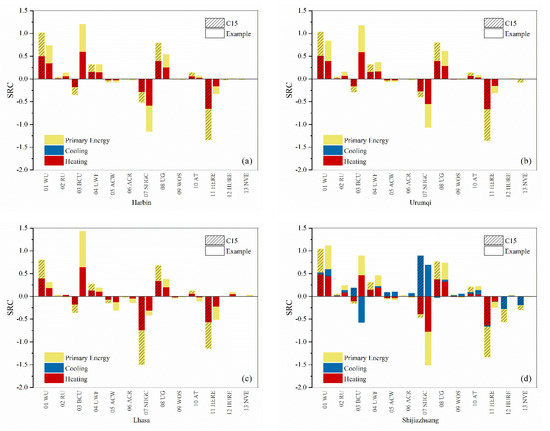
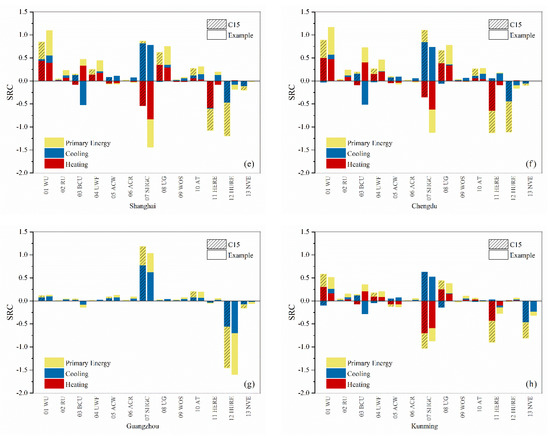
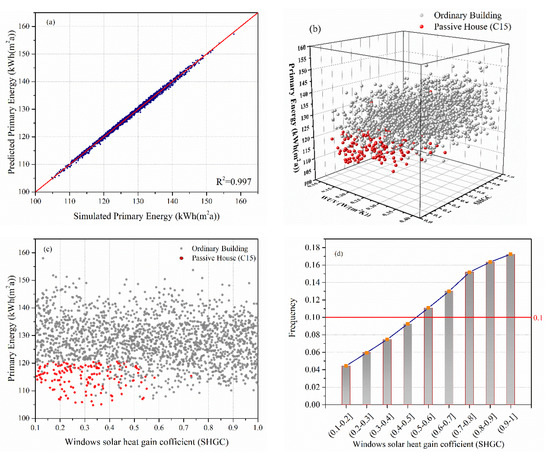
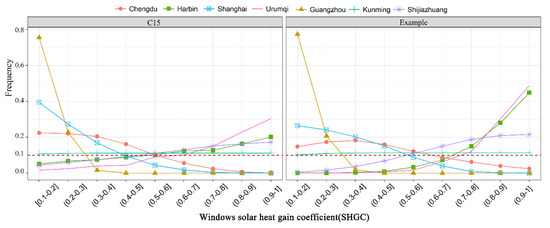
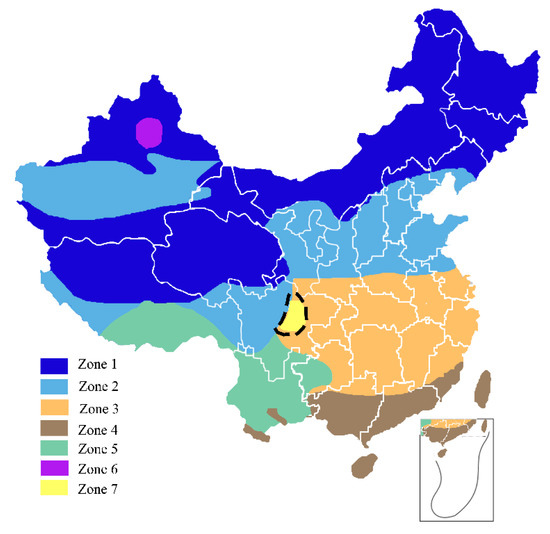
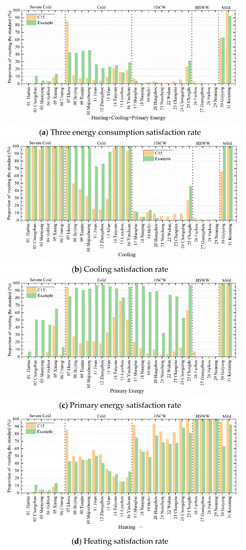
With the increasing of building energy consumptions, the related issues of energy crisis and environmental pollution become more and more prominent. As an effective energy-saving technology, the passive house (PH) has been widely applied in China to reduce the building energy utilization. However, the design and application of PH vary with different climate conditions. Therefore, it is significant to conduct the parameterization of PH and propose a suitable design zoning of PH in China. In our study, a comprehensive feasibility analysis of the implementation of PH is performed, which chooses 31 representative cities covering 5 climatic regions. The sensitivity analysis firstly filters the key parameters that heavily affect energy consumption. The results indicate that the key parameters include external wall heat transfer coefficient (WU), basement ceiling heat transfer coefficient (BCU), solar heat gain coefficient (SHGC), glass G value (UG), heat recovery efficiency (HERE) and humidity recovery efficiency (HURE). Then, with the multiple regression approach, the values of key parameters are optimized. Based on the determined values of sensitive parameters, the design zoning of PH in China is finally proposed, which can guide the design of PH as well as enhance the application of PH in China. Full article
Show Figures

Figure 1
Back to TopTop