
Special Issue "Ecosystem Services and Human Well-Being for Environmental Sustainability"

A special issue of Sustainability (ISSN 2071-1050). This special issue belongs to the section "Geography and Sustainability".

Deadline for manuscript submissions: 15 May 2022.

Special Issue Editors

Prof. Dr. Erfu Dai
E-Mail Website
Guest Editor
Institute of Geographic Science and Natural Resources Research, Chinese Academy of Sciences, Beijing 100101, China
Interests: physical geography; climate-change risk; land-use change; ecosystem service; landscape ecology
Dr. Chunsheng Wu
E-Mail Website
Guest Editor
Institute of Geographic Science and Natural Resources Research, Chinese Academy of Sciences, Beijing 100101, China
Interests: land use change; ecological assessment; soil salinization; spatial interpolation; ecosystem services; remote sensing; GIS

Special Issue Information

Dear Colleagues,

Ecosystem services are all kinds of tangible and intangible benefits obtained by human beings from ecosystem. Human activities, especially land use change, also affect and change the provision of ecosystem services. The reduction, degradation and even loss of ecosystem services will have a serious impact on human well-being and directly threaten regional and even global ecological security. Ecosystem can provide people with a variety of ecosystem services, which is an important guarantee for human well-being.

Due to the diversity of ecosystem services, the imbalance of spatial distribution and the selectivity of human use, the relationship between ecosystem services has changed under the action of human activities and natural factors. The relationship between different ecosystem services is complex and interacts with each other, which is often manifested as trade-off relationship and synergistic relationship. Identifying the main types of regional ecosystem services, analyzing the trade-off synergistic relationships among ecosystem services and exploring the driving mechanisms are important for coordinating eco-environmental protection, promoting human well-being for environmental sustainability.

This Special Issue of Sustainability provides a platform for researchers on which to publish high-quality original research papers and reviews that focus on ecosystem services, ecosystem services assessment, ecosystem service relationships, tradeoffs and synergy mechanisms, relationship-driven mechanism and human well-being for environmental sustainability. It is important to analyze spatiotemporal characteristics, interrelationships and driving mechanisms of ecosystem services, which contributes to the sustainable development of environment.

Prof. Dr. Erfu Dai
Dr. Chunsheng Wu
Guest Editors

Manuscript Submission Information

Manuscripts should be submitted online at www.mdpi.com by registering and logging in to this website. Once you are registered, click here to go to the submission form. Manuscripts can be submitted until the deadline. All papers will be peer-reviewed. Accepted papers will be published continuously in the journal (as soon as accepted) and will be listed together on the special issue website. Research articles, review articles as well as short communications are invited. For planned papers, a title and short abstract (about 100 words) can be sent to the Editorial Office for announcement on this website.

Submitted manuscripts should not have been published previously, nor be under consideration for publication elsewhere (except conference proceedings papers). All manuscripts are thoroughly refereed through a single-blind peer-review process. A guide for authors and other relevant information for submission of manuscripts is available on the Instructions for Authors page. Sustainability is an international peer-reviewed open access semimonthly journal published by MDPI.

Please visit the Instructions for Authors page before submitting a manuscript. The Article Processing Charge (APC) for publication in this open access journal is 1900 CHF (Swiss Francs). Submitted papers should be well formatted and use good English. Authors may use MDPI's English editing service prior to publication or during author revisions.

Keywords

  • ecosystem service
  • trade-off and synergy
  • human well-being
  • environmental sustainability

Published Papers (1 paper)

Order results
Result details
Select all
Export citation of selected articles as:

Research

Article
Spatial-Temporal Evolution and Relationship between Urbanization Level and Ecosystem Service from a Dual-Scale Perspective: A Case Study of the Pearl River Delta Urban Agglomeration
Sustainability 2021, 13(15), 8537; https://doi.org/10.3390/su13158537 - 30 Jul 2021
Viewed by 375
Abstract
Since the beginning of the 21st century, urbanization has brought about dramatic changes in population, life, and economy, while having a significant impact on the distribution of ecosystem service. As research on the relationship between urbanization and ecosystem service has gradually specified, we [...] Read more.
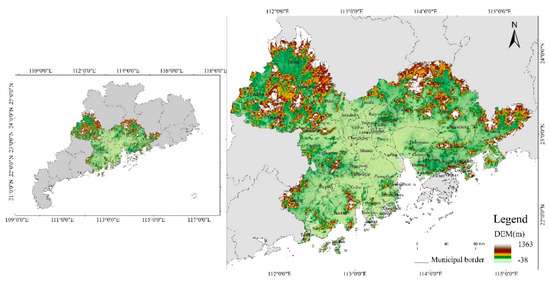
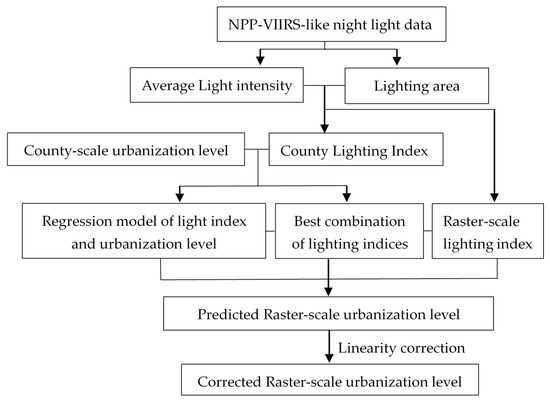
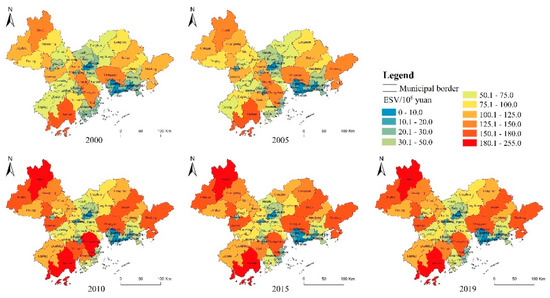
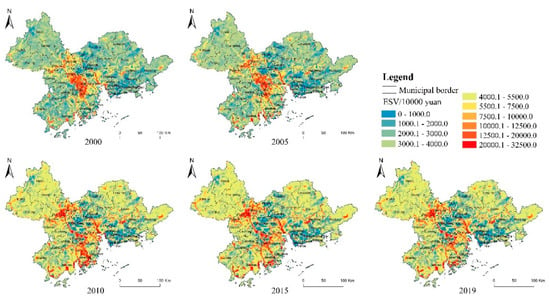
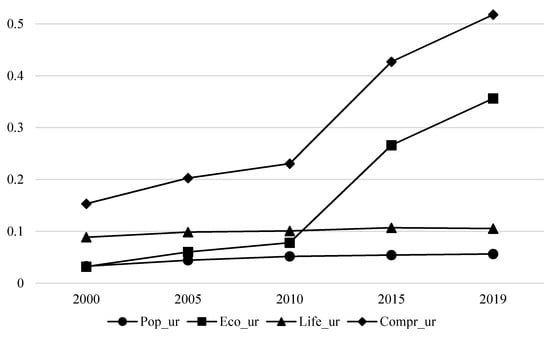
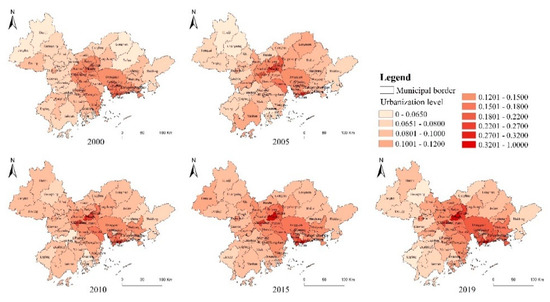
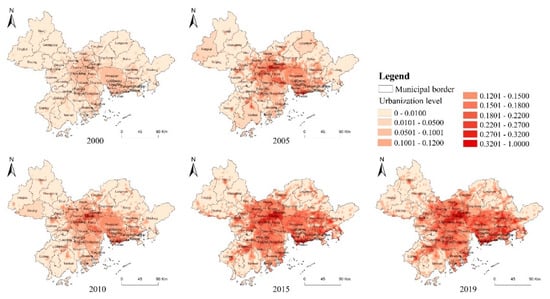
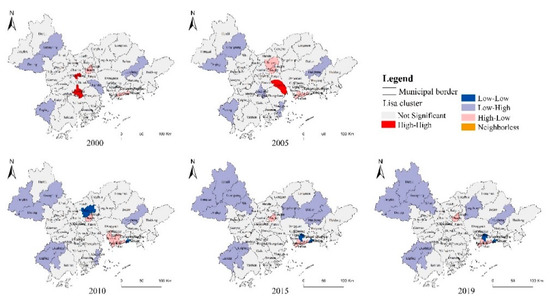
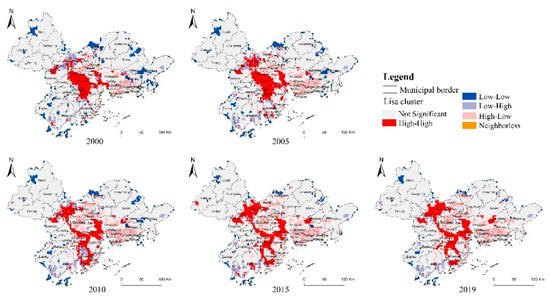
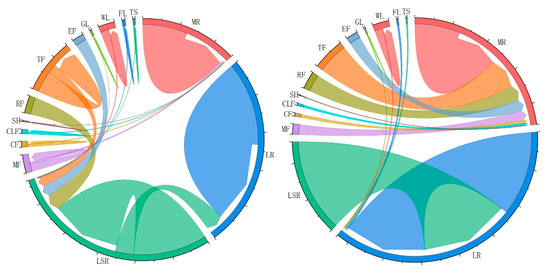
Since the beginning of the 21st century, urbanization has brought about dramatic changes in population, life, and economy, while having a significant impact on the distribution of ecosystem service. As research on the relationship between urbanization and ecosystem service has gradually specified, we decided to explore it at different scales. In this paper, we quantified and mapped the spatial–temporal evolution and relationship between urbanization and ecosystem service value in the Pearl River Delta Urban Agglomeration from 2000 to 2019 based on a dual-scale perspective of county and 3 km × 3 km raster. Our results show that the overall trend of urbanization level and ecosystem service value was increasing. Urbanization and ecosystem service value at the county scale showed a negative spatial correlation, while it was not significant at the raster scale. The “high–high” agglomeration was more concentrated, while the other three “low–low”, “low–high” and “high–low” agglomerations were more dispersed. Our findings suggest it is crucial to identify the key factors of small urban areas to grasp the development mechanism in the urbanization process and maintain the balance of the ecosystem. Full article
Show Figures

Figure 1
Back to TopTop