Special Issue "Advertising and Sustainable Development"

A special issue of Sustainability (ISSN 2071-1050). This special issue belongs to the section "Economic and Business Aspects of Sustainability".

Deadline for manuscript submissions: 31 December 2021.

Special Issue Editors

Dr. Leonidas Hatzithomas
E-Mail Website
Guest Editor
Department of Business Administration, University of Macedonia, 546 36 Thessaloniki, Greece
Interests: consumer behaviour; advertising; neuromarketing; green marketing and social media marketing; the effectiveness of humorous advertising; the use and effectiveness of minimal advertising; consumer engagement in social media; the use of emotions in political communication
Prof. Dr. Christina Boutsouki
E-Mail Website
Guest Editor
Department of Economics, Aristotle University of Thessaloniki, Thessaloniki 541 24, Greece
Interests: consumer behaviour; advertising; neuromarketing; green marketing and social media marketing; the effectiveness of humorous advertising; the use and effectiveness of minimal advertising; consumer engagement in social media; the use of emotions in political communication

Special Issue Information

Dear Colleagues,

In the last two decades, there has been a growing interest in green and sustainable advertising in the western world. Given that, at our current levels of consumption, the planet cannot sustain us, marketing—the traditional mainstay for both consumer culture and overconsumption—has been coming under fire (McDonagh and Prothero 2014). Hence, green and sustainable marketing and advertising have been standing out as a contemporary business trend. On one hand, green and sustainable advertising has the mission to retrieve marketing’s lost esteem in the eyes of the consumers, leading them to undertake more sustainable behaviors.  On the other hand, it tries to minimize the “green gap”; that is, the difference between what consumers believe that should be done to protect and improve the environment and what they actually do in this direction (McNally 2011).

Sustainability is a megatrend of our time and we uphold that marketing and advertising can significantly contribute to the solution of environmental problems and their social consequences (see the developmental school of thought) (Mittelstaedt et al. 2014). Although a growing body of literature investigating green and sustainable advertising is emerging (Kim et al. 2020; Diez-Martin et al. 2019; Minton et al. 2012; Moon et al. 2017), there are many important areas that still need to be researched. The scope and the purpose of the present Special Issue are to bring together current research on how advertising can contribute to establishing social norms, such as recycling and eco-buying behavior, green and ethical consumption, sustainable lifestyle, and support of sustainable tourism destinations (see also Young et al. 2000).  Moreover, the Special Issue aims to identify the best practices in green and sustainable advertising, communication and branding, such as the use of sustainable advertising media, eco-labels, and sustainable advertising/packaging materials.

Suggested topics include, but are not limited to:

  1. The use and the effectiveness of green advertising.
  2. Cross-cultural differences in demand for green advertising.
  3. Sustainable marketing and social media communications.
  4. Digital marketing and sustainability.
  5. Sustainable advertising media.
  6. Advertising strategies for green brands.
  7. Advertising strategies for sustainable tourism destinations.
  8. Advertising of products originating from sustainable tourism destinations.
  9. The use and the effectiveness of eco-labels in advertising.
  10. Sustainable advertising materials (e.g., PVC-free and recycled banners, gifts, flyers, and billboards).
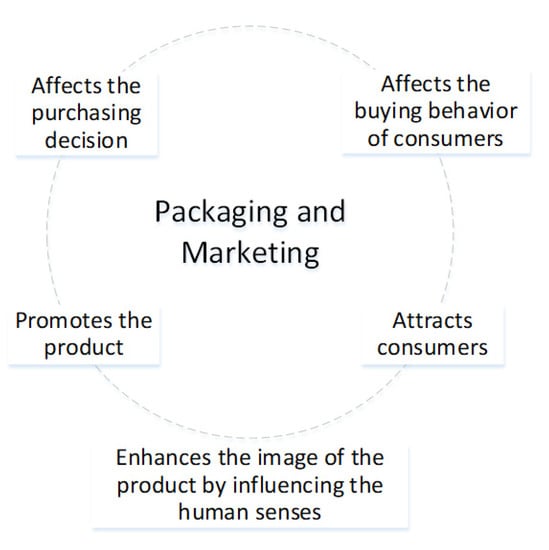
  11. Sustainable packaging materials (e.g., ecologically friendly packaging supplies, practices, and design).
  12. Green brands and sustainability branding.

Assist. Prof. Dr. Leonidas Hatzithomas
Prof. Dr. Christina Boutsouki
Guest Editors

Manuscript Submission Information

Manuscripts should be submitted online at www.mdpi.com by registering and logging in to this website. Once you are registered, click here to go to the submission form. Manuscripts can be submitted until the deadline. All papers will be peer-reviewed. Accepted papers will be published continuously in the journal (as soon as accepted) and will be listed together on the special issue website. Research articles, review articles as well as short communications are invited. For planned papers, a title and short abstract (about 100 words) can be sent to the Editorial Office for announcement on this website.

Submitted manuscripts should not have been published previously, nor be under consideration for publication elsewhere (except conference proceedings papers). All manuscripts are thoroughly refereed through a single-blind peer-review process. A guide for authors and other relevant information for submission of manuscripts is available on the Instructions for Authors page. Sustainability is an international peer-reviewed open access semimonthly journal published by MDPI.

Please visit the Instructions for Authors page before submitting a manuscript. The Article Processing Charge (APC) for publication in this open access journal is 1900 CHF (Swiss Francs). Submitted papers should be well formatted and use good English. Authors may use MDPI's English editing service prior to publication or during author revisions.

Keywords

  • green advertising
  • sustainable advertising media
  • green products
  • sustainable destinations
  • sustainable materials

Published Papers (3 papers)

Order results
Result details
Select all
Export citation of selected articles as:

Research

Article
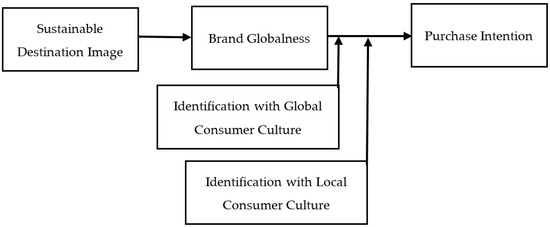
The Link between Sustainable Destination Image, Brand Globalness and Consumers’ Purchase Intention: A Moderated Mediation Model
Sustainability 2021, 13(17), 9584; https://doi.org/10.3390/su13179584 - 25 Aug 2021
Viewed by 305
Abstract
The present study investigates the effect of a tourism destination’s perceived sustainable image on the globalness of brands named after the destination and attests the mediating role of brand globalness on the relationship between destination image and purchase intention. A model that incorporates [...] Read more.
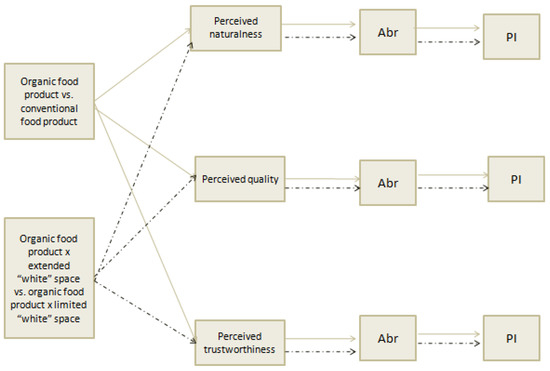
The present study investigates the effect of a tourism destination’s perceived sustainable image on the globalness of brands named after the destination and attests the mediating role of brand globalness on the relationship between destination image and purchase intention. A model that incorporates identification with local and global consumer culture as moderators of the relationship between brand globalness and purchase intention is proposed. A 2 (Destination: Santorini vs. Serres) × 2 (Product: tomato paste, yogurt) online experiment was designed through Prolific Academic for the purposes of the study. As Greece is a top destination among British tourists, a British audience was addressed, resulting in 425 participants. Britons with high identification with global consumer culture indicated higher purchase intentions for brands named after a sustainable destination. It also appears that a sustainable destination image is a critical factor in creating brand globalness and purchase intention for a brand named after this destination. Hence, destinations with a sustainable image can be used as a basis for the development of exports. An in-depth understanding of the international image of popular destinations will help indigenous companies create and maintain strong global brands. Significant implications for exporting companies are highlighted. Full article
(This article belongs to the Special Issue Advertising and Sustainable Development)
Show Figures

Figure 1

Article
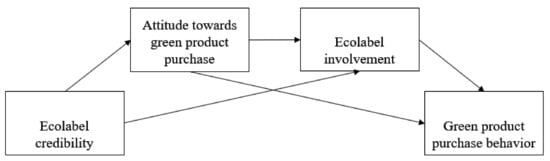
Ecolabels and the Attitude–Behavior Relationship towards Green Product Purchase: A Multiple Mediation Model
Sustainability 2021, 13(12), 6867; https://doi.org/10.3390/su13126867 - 17 Jun 2021
Viewed by 703
Abstract
Ecolabels are regarded as an exceptional marketing and advertising tool that informs contemporary consumers about the green traits of a product. They provide information that motivates consumers to exhibit a positive attitude and actual behavior towards a green product purchase. Despite the growing [...] Read more.
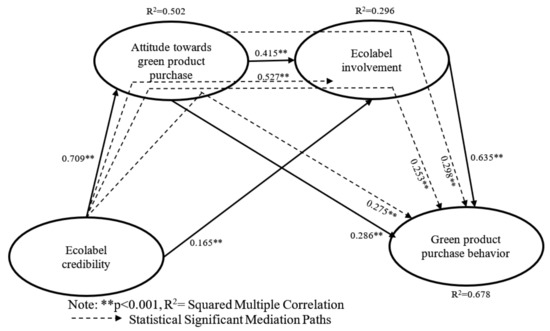
Ecolabels are regarded as an exceptional marketing and advertising tool that informs contemporary consumers about the green traits of a product. They provide information that motivates consumers to exhibit a positive attitude and actual behavior towards a green product purchase. Despite the growing interest in the relationship between green attitude and the corresponding green purchase behavior, studies that investigate the influence of ecolabel features on this relationship are rather scarce. In the present study, a survey carried out in Greece with a sample of 571 participants, examined the direct and indirect effects of ecolabel credibility and ecolabel involvement on attitude and actual behavior about green product purchase. A multiple mediation model about green purchase behavior was developed. Results highlighted the crucial role of ecolabel credibility that positively influences attitude towards green product purchase as well as ecolabel involvement. Moreover, emphasis was given on the concepts of attitude towards green product purchase and ecolabel involvement that proved to be significant mediators of this model. Findings can provide useful guidance to green marketers so that they can generate effective strategies based of ecolabels and favor a positive attitude towards green product purchase that ultimately will enhance green product purchase behavior. Full article
(This article belongs to the Special Issue Advertising and Sustainable Development)
Show Figures

Figure 1

Article
Does a Pro-Environmental Firm Attract Future Cash Flow? With an Impact of Sustainable Advertisement on Firms’ Financial Performance
Sustainability 2021, 13(3), 1348; https://doi.org/10.3390/su13031348 - 28 Jan 2021
Viewed by 549
Abstract
This study investigates the future existence of firms that are engaged in environment-oriented activities. Recently, strategic activities for firms’ sustainable growth has been critical for the environment. We use regression analysis to examine the relationship using firms listed in the Korea Stock Exchange [...] Read more.
This study investigates the future existence of firms that are engaged in environment-oriented activities. Recently, strategic activities for firms’ sustainable growth has been critical for the environment. We use regression analysis to examine the relationship using firms listed in the Korea Stock Exchange market from 2014 to 2018. We use five aspects of environment-oriented activities: organization, management, strategy, performance, and shareholders, provided by the Korea Corporate Governance Service. The empirical results indicate that the firms participating in environment-oriented activities are likely to predict future cash flow, implying firms’ sustainability. We also claim that firms engaged in environment-oriented activities are likely to advertise their pro-environmental engagements, resulting in firms’ sustainable existence in the future. These findings are robust when we use the aggregate value as an alternative measurement. Our finding provides useful information for corporate practice. Active involvement in environmental activities can be used as a strategy that leads to superior performance. These efforts will contribute to enhancing the public image and improving green competitiveness. From the perspective of regulators, the non-financial information assessment supports the government’s eco-friendly policy that emphasizes environment-oriented activities. The results indicate that transparent information for external investors seeking to invest in firms are engaged in environment-oriented activities. Full article
(This article belongs to the Special Issue Advertising and Sustainable Development)
Back to TopTop