Dear Colleagues,
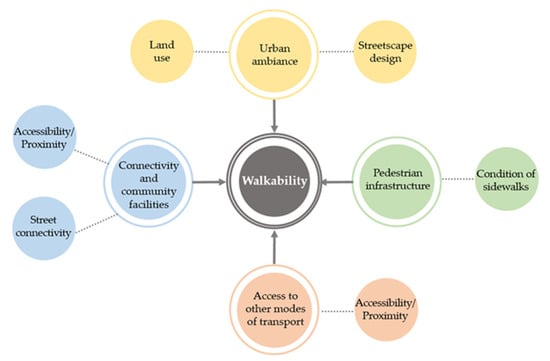
Walking is one of the easiest, greenest, healthiest, and most enjoyable modes of transport. Switching to walking reduces the negative environmental impact of motorised vehicles. Walking is also an inclusive mode of transport and a form of physical activity that helps to prevent various diseases associated with sedentary lifestyles. Finding solutions to transform our cities from car-oriented into more people-oriented spaces has been a major concern for researchers and planners. Many cities are unattractive for pedestrians and are still far from the 15-minute city concept. Within the notion of walkability, extensive research has been carried out over the last years to measure how walkable a place is. However, people may not necessarily walk more just because they live in a walkable area. This happens because the propensity to walk also relies on individual characteristics such as age, gender, education, income, race, and mobility culture, which determine different psychological perceptions of space and travel behaviours. Thus, collecting qualitative data is potentially highly valuable to gain an in-depth understanding of pedestrian behaviours and preferences.
This Topical Collection aims to promote a cross-sectorial learning space to analyse and discuss the influence of attitudinal and cognitive factors in the overall experience of walking, resulting from the interaction between pedestrians and the built environment and other street users. This knowledge can potentially be highly valuable for researchers, planners, and policymakers in their endeavour to define and implement planning policies tailored to pedestrian needs with the purpose of creating healthier, more liveable, and sustainable urban environments. It is aimed at researchers and practitioners from different disciplines and countries engaged in advancing knowledge regarding the role of walking to regenerate urban environments and to promote health and well-being in our cities.
This Topical Collection is devoted to the entire spectrum of qualitative studies on walking. Authors are encouraged to present reviews, case studies, applications, and tools developed to collect, examine, and compare pedestrian attitudes, experiences, and perceptions that may inspire policies for designing more walkable cities. Topics of interest include, but are not limited to:
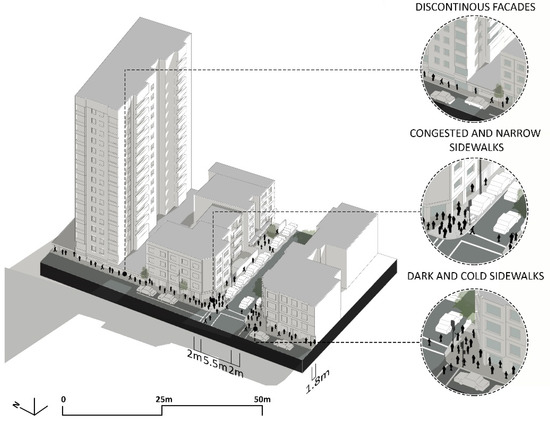
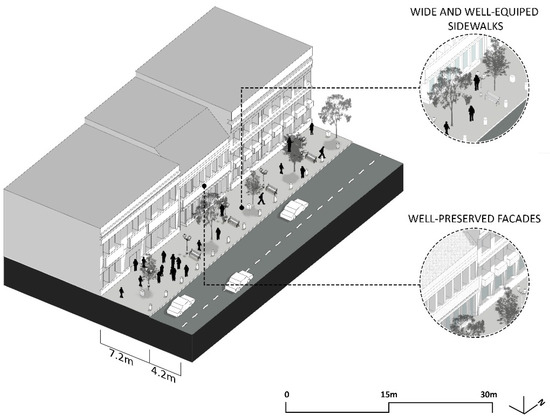
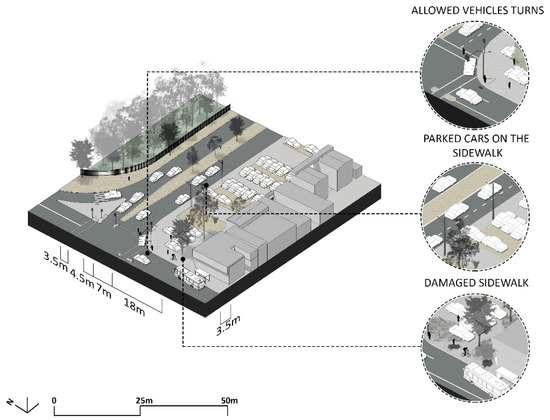
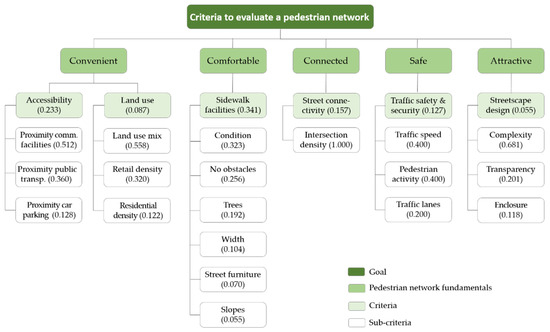
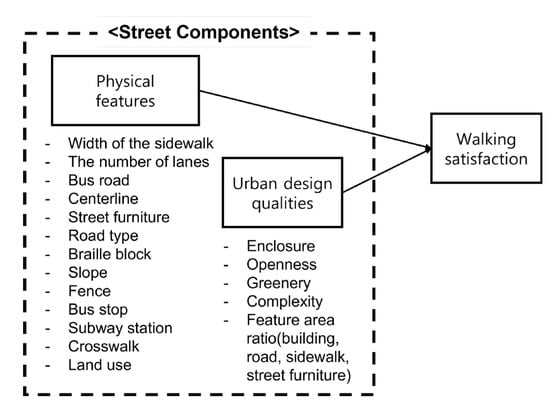
- Pedestrians’ perceptions of the effect of built environment attributes at the macro, meso, and micro-scales on walking;
- Pedestrians’ perceptions of the effect of environmental conditions, such as air quality, noise, and microclimate, on walking;
- Implications of new technologies on walking habits: routing, monitoring, trip planning, gamified incentives, etc.;
- Effects of walking on self-assessed physical and mental health conditions;
- Pedestrian behaviours, perceptions, and safe practices during the COVID-19 pandemic and other risky situations;
- Realistic behavioural data regarding pedestrian route preferences: shortest route, least directional change routes, healthier routes, etc.;
- Pedestrians’ perceptions on the effect of urban design and regeneration policies in our cities;
- The role of affective and cognitive attitudes in walking and feelings from walking excursions;
- Emerging tools and techniques to collect and analyse pedestrian qualitative data: geodata-based tools, sensors, etc.
Dr. Fernando Fonseca
Prof. Dr. Paulo Ribeiro
Dr. Elisa Conticelli
Prof. Dr. George N. Papageorgiou
Collection Editors
Manuscript Submission Information
Manuscripts should be submitted online at www.mdpi.com by registering and logging in to this website. Once you are registered, click here to go to the submission form. All submissions that pass pre-check are peer-reviewed. Accepted papers will be published continuously in the journal (as soon as accepted) and will be listed together on the collection website. Research articles, review articles as well as short communications are invited. For planned papers, a title and short abstract (about 250 words) can be sent to the Editorial Office for assessment.
Submitted manuscripts should not have been published previously, nor be under consideration for publication elsewhere (except conference proceedings papers). All manuscripts are thoroughly refereed through a single-anonymized peer-review process. A guide for authors and other relevant information for submission of manuscripts is available on the Instructions for Authors page. Sustainability is an international peer-reviewed open access semimonthly journal published by MDPI.
Please visit the Instructions for Authors page before submitting a manuscript.
The Article Processing Charge (APC) for publication in this open access journal is 2400 CHF (Swiss Francs).
Submitted papers should be well formatted and use good English. Authors may use MDPI's
English editing service prior to publication or during author revisions.