


sensors-logo

Journal Browser

Journal Browser

Systems for Contactless Monitoring of Vital Signs

A special issue of Sensors (ISSN 1424-8220). This special issue belongs to the section "Biosensors".

Deadline for manuscript submissions: 15 August 2026 | Viewed by 7456

Special Issue Editors


E-Mail Website
Guest Editor
Department of Information Engineering, Electronics and Telecommunications, Sapienza University of Rome, 00184 Rome, Italy
Interests: permittivity measurement; non-destructive material characterization; biomedical instrumentation; biomedical measurements
Special Issues, Collections and Topics in MDPI journals

E-Mail Website
Guest Editor
Department of Information Engineering, Electronics and Telecommunications, Sapienza University of Rome, 00184 Rome, Italy
Interests: synthesis of near and far EM fields; antennas; radars for through-the-wall imaging and vital sign monitoring; microwave circuits; electromagnetic compatibility

E-Mail Website
Guest Editor
Department of Information Engineering, Electronics and Telecommunications, Sapienza University of Rome, 00184 Rome, Italy
Interests: measurement of complex permittivity of materials; time domain reflectometry applications; biomedical instrumentation design
Special Issues, Collections and Topics in MDPI journals

Special Issue Information

Dear Colleagues,

The remote monitoring of vital signs represents a groundbreaking approach to healthcare, enabling the continuous assessment of physiological parameters to improve traditional clinical settings. Thanks to advances in sensor and radar technology, it is now possible to design and develop systems that capture key vital signs, such as heart and respiratory activities, in real time and without direct contact with the patient, along with precise data on patient posture and location.

These systems are particularly valuable in scenarios requiring long-term, non-invasive sensing, such as chronic disease management, post-operative care, home monitoring, and emergency response. In particular, the ability to monitor patients in a continuous and contactless way can improve unobtrusiveness and efficiency in healthcare delivery. Furthermore, combining patient tracking and localization enhances safety, supports timely interventions, and optimizes resource allocation.

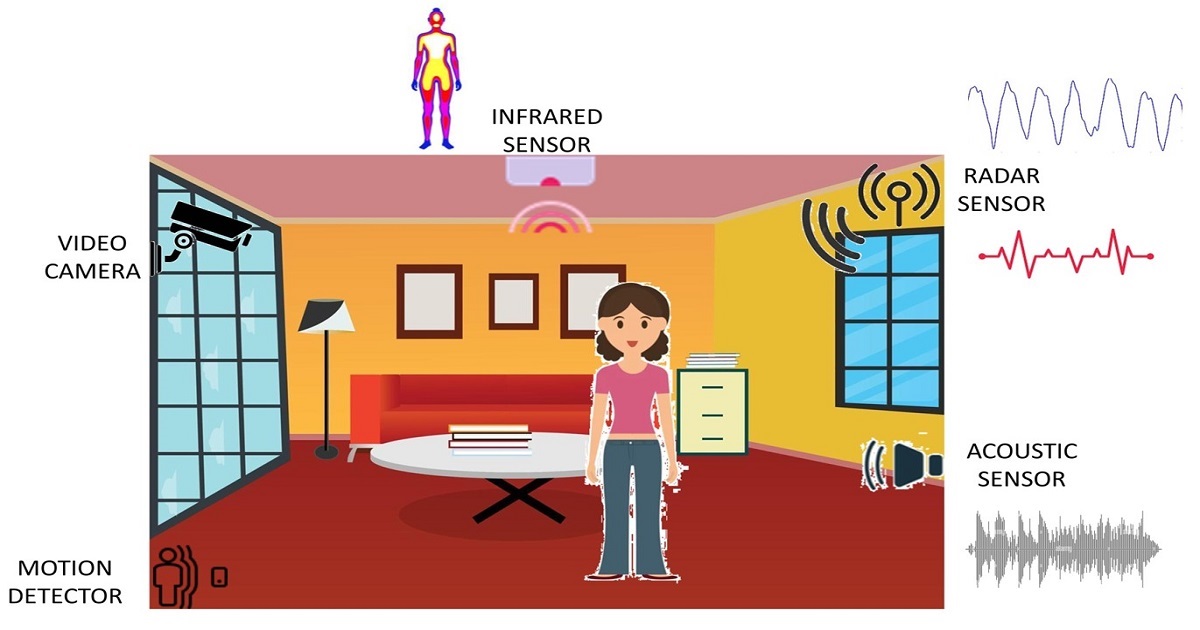
For this Special Issue, we invite submissions focusing on innovative systems for the continuous contactless monitoring of vital signs, tracking, and localization. Topics of interest include, but are not limited to, the development of advanced sensing technologies, integration challenges, and the design of reliable, accurate monitoring systems. Key technologies include, but are not limited to, radar sensors, systems based on cameras, and acoustic sensing solutions. Contributions presenting original designs for physiological parameters for contactless sensing systems and their practical implementation in real-world applications are particularly encouraged.

Dr. Emanuele Piuzzi
Dr. Orlandino Testa
Dr. Erika Pittella
Guest Editors

Manuscript Submission Information

Manuscripts should be submitted online at www.mdpi.com by registering and logging in to this website. Once you are registered, click here to go to the submission form. Manuscripts can be submitted until the deadline. All submissions that pass pre-check are peer-reviewed. Accepted papers will be published continuously in the journal (as soon as accepted) and will be listed together on the special issue website. Research articles, review articles as well as short communications are invited. For planned papers, a title and short abstract (about 250 words) can be sent to the Editorial Office for assessment.

Submitted manuscripts should not have been published previously, nor be under consideration for publication elsewhere (except conference proceedings papers). All manuscripts are thoroughly refereed through a single-blind peer-review process. A guide for authors and other relevant information for submission of manuscripts is available on the Instructions for Authors page. Sensors is an international peer-reviewed open access semimonthly journal published by MDPI.

Please visit the Instructions for Authors page before submitting a manuscript. The Article Processing Charge (APC) for publication in this open access journal is 2600 CHF (Swiss Francs). Submitted papers should be well formatted and use good English. Authors may use MDPI's English editing service prior to publication or during author revisions.

Keywords

  • radar remote sensing
  • acoustic sensors
  • infrared sensors
  • optical sensors
  • smart healthcare
  • vital sign sensors
  • non-invasive diagnostics

Benefits of Publishing in a Special Issue

  • Ease of navigation: Grouping papers by topic helps scholars navigate broad scope journals more efficiently.
  • Greater discoverability: Special Issues support the reach and impact of scientific research. Articles in Special Issues are more discoverable and cited more frequently.
  • Expansion of research network: Special Issues facilitate connections among authors, fostering scientific collaborations.
  • External promotion: Articles in Special Issues are often promoted through the journal's social media, increasing their visibility.
  • Reprint: MDPI Books provides the opportunity to republish successful Special Issues in book format, both online and in print.

Further information on MDPI's Special Issue policies can be found here.

Published Papers (5 papers)

Order results
Result details
Select all
Export citation of selected articles as:

Research

34 pages, 3350 KB  
Article
Seconds Matter: Rapid Non-Contact Monitoring of Heart and Respiratory Rate from Face Videos
by Taha Khan, Péter Pál Boda, Annette Björklund and Stefan Malmberg
Sensors 2026, 26(5), 1506; https://doi.org/10.3390/s26051506 - 27 Feb 2026
Viewed by 1363
Abstract
Accurate, non-contact vital-sign monitoring promises a scalable alternative to conventional sensors, yet low signal quality and long recording times have limited real-life adoption. We present a dual-modality system that combines Eulerian video magnified remote photoplethysmography (rPPG) from facial videos with optical flow-based shoulder [...] Read more.
Accurate, non-contact vital-sign monitoring promises a scalable alternative to conventional sensors, yet low signal quality and long recording times have limited real-life adoption. We present a dual-modality system that combines Eulerian video magnified remote photoplethysmography (rPPG) from facial videos with optical flow-based shoulder tracking to estimate heart rate (HR) and respiratory rate (RR) from ultra-short 15 s recordings. With 200 participants, each providing 2 videos, 387 videos passed strict usability criteria, excluding flicker, blur, occlusion, and low illumination. For 15 s recordings, the HR estimates reached 98.5% accuracy within a ±10 beats per minute tolerance (MAE = 3.25, RMSE = 4.88, r = 0.93; p < 0.05) and the RR estimates achieved 98.4% accuracy within a ±5 respirations per minute tolerance (MAE = 0.69, RMSE = 0.87, r = 0.90; p < 0.05), exceeding prior studies that required 30 to 60 s recording lengths. Computational analysis on a standard home computer confirmed feasibility, with near real-time performance achievable on optimized hardware. By integrating complementary modalities and rigorous video quality control, the system overcomes low-SNR challenges, delivering high-fidelity, clinically validated vital signs monitoring. These results establish a robust, scalable, and precise framework for clinical and home care, demonstrating that accurate, contact-free HR and RR monitoring can now be achieved in seconds, making rapid, real-life vital signs assessment practical and accessible. Full article
(This article belongs to the Special Issue Systems for Contactless Monitoring of Vital Signs)
Show Figures

Figure 1

17 pages, 2597 KB  
Article
Interfacial Charge-Transfer Engineering in Borophene–MWCNT Heterostructures for Multifunctional Humidity and Physiological Sensing
by Anran Ma, Tao Wang, Zhilin Zhao, Yi Liu, Maoping Xu, Shengxiang Gao, Rui Zhu, Jiamin Wu, Chuang Hou and Guoan Tai
Sensors 2026, 26(3), 976; https://doi.org/10.3390/s26030976 - 2 Feb 2026
Viewed by 600
Abstract
Humidity sensing is essential in medical fields such as respiratory support, neonatal care, sterilization, and pharmaceutical storage. However, current sensors face limitations, including slow response/recovery, low sensitivity, and poor long-term stability. To address these challenges, we developed borophene-multiwalled carbon nanotube (MWCNT) heterostructures using [...] Read more.
Humidity sensing is essential in medical fields such as respiratory support, neonatal care, sterilization, and pharmaceutical storage. However, current sensors face limitations, including slow response/recovery, low sensitivity, and poor long-term stability. To address these challenges, we developed borophene-multiwalled carbon nanotube (MWCNT) heterostructures using a stepwise in situ thermal decomposition method. The resulting humidity sensor exhibits an ultrabroad detection range (11–97% RH), ultra-high sensitivity (55,000% at 97% RH), and fast response/recovery times (10.04 s/4.8 s). Through interfacial charge-transfer engineering, the system facilitates rapid electron migration, enhances Schottky barrier modulation, and provides abundant active adsorption sites for water molecules, thereby achieving comprehensive improvement in sensing performance. It also demonstrates excellent selectivity, mechanical flexibility, and operational stability. Notably, the sensor’s sensitivity at 97% RH surpasses that of sensors based on pure borophene or MWCNT by 37–462 times, highlighting the advantages of heterostructure engineering. The multifunctionality of the device suggests its potential in areas beyond conventional sensing, including non-contact voice recognition, skin humidity mapping, and real-time breath monitoring. These results lay a solid foundation for developing borophene-MWCNT heterostructures into a high-performance platform for next-generation medical diagnostics and intelligent health monitoring. Full article
(This article belongs to the Special Issue Systems for Contactless Monitoring of Vital Signs)
Show Figures

Figure 1

15 pages, 3599 KB  
Article
High-Fidelity rPPG Waveform Reconstruction from Palm Videos Using GANs
by Tao Li and Yuliang Liu
Sensors 2026, 26(2), 563; https://doi.org/10.3390/s26020563 - 14 Jan 2026
Viewed by 846
Abstract
Remote photoplethysmography (rPPG) enables non-contact acquisition of human physiological parameters using ordinary cameras, and has been widely applied in medical monitoring, human–computer interaction, and health management. However, most existing studies focus on estimating specific physiological metrics, such as heart rate and heart rate [...] Read more.
Remote photoplethysmography (rPPG) enables non-contact acquisition of human physiological parameters using ordinary cameras, and has been widely applied in medical monitoring, human–computer interaction, and health management. However, most existing studies focus on estimating specific physiological metrics, such as heart rate and heart rate variability, while paying insufficient attention to reconstructing the underlying rPPG waveform. In addition, publicly available datasets typically record facial videos accompanied by fingertip PPG signals as reference labels. Since fingertip PPG waveforms differ substantially from the true photoplethysmography (PPG) signals obtained from the face, deep learning models trained on such datasets often struggle to recover high-quality rPPG waveforms. To address this issue, we collected a new dataset consisting of palm-region videos paired with wrist-based PPG signals as reference labels, and experimentally validated its effectiveness for training neural network models aimed at rPPG waveform reconstruction. Furthermore, we propose a generative adversarial network (GAN)-based pulse-wave synthesis framework that produces high-quality rPPG waveforms by denoising the mean green-channel signal. By incorporating time-domain peak-aware loss, frequency-domain loss, and adversarial loss, our method achieves promising performance, with an RMSE (Root Mean Square Error) of 0.102, an MAPE (Mean Absolute Percentage Error) of 0.028, a Pearson correlation of 0.987, and a cosine similarity of 0.989. These results demonstrate the capability of the proposed approach to reconstruct high-fidelity rPPG waveforms with improved morphological accuracy compared to noisy raw rPPG signals, rather than directly validating health monitoring performance. This study presents a high-quality rPPG waveform reconstruction approach from both data and model perspectives, providing a reliable foundation for subsequent physiological signal analysis, waveform-based studies, and potential health-related applications. Full article
(This article belongs to the Special Issue Systems for Contactless Monitoring of Vital Signs)
Show Figures

Figure 1

23 pages, 1950 KB  
Article
Multi-Classification Model for PPG Signal Arrhythmia Based on Time–Frequency Dual-Domain Attention Fusion
by Yubo Sun, Keyu Meng, Shipan Lang, Pei Li, Wentao Wang and Jun Yang
Sensors 2025, 25(19), 5985; https://doi.org/10.3390/s25195985 - 27 Sep 2025
Cited by 2 | Viewed by 2038
Abstract
Cardiac arrhythmia is a leading cause of sudden cardiac death. Its early detection and continuous monitoring hold significant clinical value. Photoplethysmography (PPG) signals, owing to their non-invasive nature, low cost, and convenience, have become a vital information source for monitoring cardiac activity and [...] Read more.
Cardiac arrhythmia is a leading cause of sudden cardiac death. Its early detection and continuous monitoring hold significant clinical value. Photoplethysmography (PPG) signals, owing to their non-invasive nature, low cost, and convenience, have become a vital information source for monitoring cardiac activity and vascular health. However, the inherent non-stationarity of PPG signals and significant inter-individual variations pose a major challenge in developing highly accurate and efficient arrhythmia classification methods. To address this challenge, we propose a Fusion Deep Multi-domain Attention Network (Fusion-DMA-Net). Within this framework, we innovatively introduce a cross-scale residual attention structure to comprehensively capture discriminative features in both the time and frequency domains. Additionally, to exploit complementary information embedded in PPG signals across these domains, we develop a fusion strategy integrating interactive attention, self-attention, and gating mechanisms. The proposed Fusion-DMA-Net model is evaluated for classifying four major types of cardiac arrhythmias. Experimental results demonstrate its outstanding classification performance, achieving an overall accuracy of 99.05%, precision of 99.06%, and an F1-score of 99.04%. These results demonstrate the feasibility of the Fusion-DMA-Net model in classifying four types of cardiac arrhythmias using single-channel PPG signals, thereby contributing to the early diagnosis and treatment of cardiovascular diseases and supporting the development of future wearable health technologies. Full article
(This article belongs to the Special Issue Systems for Contactless Monitoring of Vital Signs)
Show Figures

Figure 1

13 pages, 1531 KB  
Article
Thermal Cameras for Overnight Measuring of Respiration in a Clinical Setting
by Raquel Alves, Fokke van Meulen, Sebastiaan Overeem, Hennie Janssen, Pauline van Hirtum, Svitlana Zinger and Sander Stuijk
Sensors 2025, 25(19), 5956; https://doi.org/10.3390/s25195956 - 24 Sep 2025
Viewed by 1720
Abstract
Thermal imaging is a non-contact method for monitoring respiration activity during sleep. In this study, we evaluated its clinical application during overnight recordings in a sleep clinic. Five thermal cameras were used to detect breaths, the estimated respiration rate (RR), and inter-breath intervals [...] Read more.
Thermal imaging is a non-contact method for monitoring respiration activity during sleep. In this study, we evaluated its clinical application during overnight recordings in a sleep clinic. Five thermal cameras were used to detect breaths, the estimated respiration rate (RR), and inter-breath intervals (IBIs) in seven adults undergoing diagnostic polysomnography (PSG). Forty-five minutes of recordings were selected, consisting of 12 motionless and event-free segments. The thermal videos were processed using an adapted pre-existing thermal video processing algorithm. The respiration signals generated with the thermal cameras were validated against simultaneously recorded signals from the PSG system, the current gold standard for monitoring sleep. The results show a mean absolute error (MAE) ranging between 0.64 and 0.91 breaths per minute for the RR. Breath detection showed a sensitivity of 96.3%, and a precision of 94.1%. The MAE obtained between IBIs was 0.48 s, and the mean IBI variability difference recorded was 3.9 percentage points. In addition, the results from this clinical study show that the use of all five cameras and a single camera revealed no statistically significant differences, demonstrating the work towards a robust system. This first study of thermal cameras for the assessment of respiration in a clinical setting shows us the potential application of thermal imaging in clinical practice for respiration monitoring and establishes a foundation for further implementation in assessing sleep-disordered breathing. Full article
(This article belongs to the Special Issue Systems for Contactless Monitoring of Vital Signs)
Show Figures

Figure 1

Back to TopTop