

Biomaterials for Periodontal and Peri-Implant Regeneration

A special issue of Journal of Functional Biomaterials (ISSN 2079-4983). This special issue belongs to the section "Dental Biomaterials".

Deadline for manuscript submissions: 31 October 2026 | Viewed by 2412

Special Issue Editors


E-Mail Website
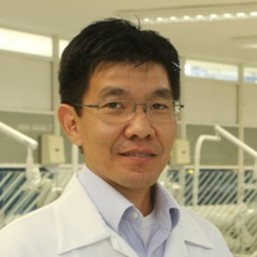
Guest Editor
School of Dentistry of Ribeirão Preto, University of São Paulo, Ribeirão Preto 14040-900, SP, Brazil
Interests: periodontal; regeneration; periodontitis; peri-implantitis; biologic; scaffold
Special Issues, Collections and Topics in MDPI journals

E-Mail Website
Guest Editor
Department of Periodontology and Operative Dentistry, University Medical Center, Mainz, Germany
Interests: periodontal plastic surgery; periodontal surgery; biomaterials; regenerative periodontal therapy; implants
Special Issues, Collections and Topics in MDPI journals

E-Mail Website
Guest Editor
Department of Dental Biomaterials, School of Dentistry, Kyungpook National University, Daegu 41940, Republic of Korea
Interests: dental tissue engineering; 3D printing; biopolymer; scaffolds; biodegradability; periodontal tissues; micro-computed tomography (micro-CT)
Special Issues, Collections and Topics in MDPI journals

Special Issue Information

Dear Colleagues,

Tissue regeneration presents a significant challenge. However, with the continuous evolution of biomaterials, technological advancements, innovations, and clinical applications are often at the forefront of knowledge development. To keep up with the current advances, this Special Issue, titled "Biomaterials for Periodontal and Peri-Implant Regeneration", will present manuscripts related to the developments and usage of biomaterials applied to tissue regeneration, with a focus on soft and hard tissue reconstruction.

Topics for consideration in this Special Issue include, but are not limited to, tissue substitutes, bone substitutes, biomaterial science, bioinks, bioprinting, scaffolds, enriched scaffolds, and biomaterial processing and applications. We invite you to contribute full research papers and review articles related to the methods and clinical applications of biomaterials in both animal models and human patients.

Dr. Mario Taba Jr.
Prof. Dr. Adrian Kasaj
Dr. Chan Ho Park
Guest Editors

Manuscript Submission Information

Manuscripts should be submitted online at www.mdpi.com by registering and logging in to this website. Once you are registered, click here to go to the submission form. Manuscripts can be submitted until the deadline. All submissions that pass pre-check are peer-reviewed. Accepted papers will be published continuously in the journal (as soon as accepted) and will be listed together on the special issue website. Research articles, review articles as well as short communications are invited. For planned papers, a title and short abstract (about 250 words) can be sent to the Editorial Office for assessment.

Submitted manuscripts should not have been published previously, nor be under consideration for publication elsewhere (except conference proceedings papers). All manuscripts are thoroughly refereed through a single-blind peer-review process. A guide for authors and other relevant information for submission of manuscripts is available on the Instructions for Authors page. Journal of Functional Biomaterials is an international peer-reviewed open access monthly journal published by MDPI.

Please visit the Instructions for Authors page before submitting a manuscript. The Article Processing Charge (APC) for publication in this open access journal is 2700 CHF (Swiss Francs). Submitted papers should be well formatted and use good English. Authors may use MDPI's English editing service prior to publication or during author revisions.

Keywords

  • bone
  • periodontal
  • regeneration
  • periodontitis
  • peri-implantitis
  • biomaterial
  • scaffold

Benefits of Publishing in a Special Issue

  • Ease of navigation: Grouping papers by topic helps scholars navigate broad scope journals more efficiently.
  • Greater discoverability: Special Issues support the reach and impact of scientific research. Articles in Special Issues are more discoverable and cited more frequently.
  • Expansion of research network: Special Issues facilitate connections among authors, fostering scientific collaborations.
  • External promotion: Articles in Special Issues are often promoted through the journal's social media, increasing their visibility.
  • Reprint: MDPI Books provides the opportunity to republish successful Special Issues in book format, both online and in print.

Further information on MDPI's Special Issue policies can be found here.

Published Papers (2 papers)

Order results
Result details
Select all
Export citation of selected articles as:

Research

Jump to: Review

13 pages, 3249 KB  
Article
Clinical Success Rates of Dental Implants with Bone Grafting in a Large-Scale National Dataset
by Mordechai Findler, Haim Doron, Jonathan Mann, Tali Chackartchi and Guy Tobias
J. Funct. Biomater. 2026, 17(1), 46; https://doi.org/10.3390/jfb17010046 - 15 Jan 2026
Viewed by 1273
Abstract
Objective: To evaluate the clinical success outcomes and risk factors associated with dental implants placed with simultaneous bone augmentation in a large-scale, real-world cohort. Methods: A retrospective analysis was conducted on 158,824 implants, including 45,715 Dental Bone Grafts, placed between 2014 and 2022 [...] Read more.
Objective: To evaluate the clinical success outcomes and risk factors associated with dental implants placed with simultaneous bone augmentation in a large-scale, real-world cohort. Methods: A retrospective analysis was conducted on 158,824 implants, including 45,715 Dental Bone Grafts, placed between 2014 and 2022 within a national healthcare network. Multivariate Generalized Estimating Equations were utilized to assess the impact of demographic, anatomical, and procedural variables on implant failure. Results: The augmented cohort demonstrated a high clinical success rate of 97.83% (2.17% failure), statistically comparable to the general implant population. Failures were predominantly early (<1 year), accounting for 70% of losses. Significant independent risk factors included immediate implant placement (3.08% failure vs. 2.07% for delayed), male gender, and maxillary location. Notably, low socioeconomic status (SES) emerged as a significant predictor, with a failure rate of 3.07% compared to 2.06% in high-SES groups. Conclusions: Simultaneous bone augmentation is a predictable modality that does not inherently increase implant failure risk, supporting the stabilization hypothesis. However, failure is modulated by specific variables. The identification of lower SES, male gender, and immediate placement as significant risk indicators highlights the necessity for personalized risk assessment and targeted protocols to optimize outcomes in augmented sites. Full article
(This article belongs to the Special Issue Biomaterials for Periodontal and Peri-Implant Regeneration)
Show Figures

Figure 1

Review

Jump to: Research

12 pages, 266 KB  
Review
Hyaluronic Acid as an Adjunctive Therapy in Periodontal and Dental Treatment of Medically Compromised Patients: A Narrative Review
by Meizi Eliezer, Ruxandra Christodorescu, Alla Belova, Darian Rusu, Stefan Milicescu, Moshe Cohen and Stefan-Ioan Stratul
J. Funct. Biomater. 2026, 17(3), 154; https://doi.org/10.3390/jfb17030154 - 20 Mar 2026
Viewed by 760
Abstract
Hyaluronic acid (HA) is a biologically active glycosaminoglycan with recognized roles in wound healing and inflammation modulation, and its adjunctive use in dental and periodontal therapy has gained interest, particularly in medically compromised patients. This narrative review critically evaluated preclinical and clinical evidence [...] Read more.
Hyaluronic acid (HA) is a biologically active glycosaminoglycan with recognized roles in wound healing and inflammation modulation, and its adjunctive use in dental and periodontal therapy has gained interest, particularly in medically compromised patients. This narrative review critically evaluated preclinical and clinical evidence on locally applied HA in periodontal, oral surgical, peri-implant, and oral medicine treatments in patients with systemic conditions. A literature search of PubMed/MEDLINE, Scopus, and Web of Science (January 2015–December 2025) identified in vivo translational studies, randomized and controlled clinical trials, and selected systematic reviews involving medically compromised populations. Qualitative synthesis focused on biological plausibility, clinical outcomes, and safety. Nine core studies were included, comprising two preclinical in vivo investigations and seven clinical trials. In diabetic models, cross-linked high-molecular-weight HA reduced macrophage infiltration and delayed collagen membrane degradation without impairing angiogenesis. Clinically, adjunctive HA use in patients with type 2 diabetes mellitus was associated with modest but statistically significant short-term improvements in clinical attachment level (CAL) and enhanced early soft tissue healing following tooth extraction. In peri-implantitis therapy and oncology-related oral complications, HA application was linked to reduced inflammatory markers, decreased lesion severity, and improved patient-reported symptoms. No systemic adverse effects were reported. Overall, HA appears to be a locally safe adjunct that may support early healing and inflammation control in medically compromised patients, although its effects are primarily short-term and do not indicate disease-modifying potential. Full article
(This article belongs to the Special Issue Biomaterials for Periodontal and Peri-Implant Regeneration)
Back to TopTop