Novel Insights into the Sleeping, Waking, and Dreaming Brain
Share This Topical Collection
Editor
 Prof. Dr. Michael Lazarus
Prof. Dr. Michael Lazarus
E-Mail
Website
Collection Editor
International Institute for Integrative Sleep Medicine (WPI-IIIS), University of Tsukuba, Tsukuba 305-8575, Japan
Interests: sleep; motivation; arousal; sleep function; neural circuits; opto-biology/pharmacology
Special Issues, Collections and Topics in MDPI journals
Topical Collection Information
Dear Colleagues,
Over the past two decades, our understanding of the brain circuits that control sleep–wake behavior has grown considerably. However, it remains unclear how brain circuits can switch states within seconds while accumulating and dissipating sleep, which typically takes hours. This teleological problem of sleep regulation and function stems from the presumption that sleep evolved from a default state of wakefulness, a bias influenced by the egocentricity of waking consciousness. The collection aims to gather original research and review articles on the control of non-REM sleep, REM sleep, or wakeful consciousness. We seek contributions illuminating mechanisms underlying key aspects of sleep states, such as sleep need, circadian, ultradian, or behavioral gating of sleep, and REM sleep homeostasis. We welcome articles using innovative techniques to study the detailed circuit and synaptic basis of sleep/wake control, such as electrophysiological recording or imaging combined with pharmacologic or genetically driven perturbation of specific neurons or glial cells in animals capable of sleep or sleep-like behavior. Additionally, we invite studies on the molecular profiling of sleep and wake states, the crosstalk between sleep and peripheral physiological systems (e.g., the immune system or metabolism), and the physical and chemical factors influencing sleep and wakefulness. Importantly, we seek articles on sleep disorders' molecular and neuronal mechanisms.
Prof. Dr. Michael Lazarus
Collection Editor
Manuscript Submission Information
Manuscripts should be submitted online at www.mdpi.com by registering and logging in to this website. Once you are registered, click here to go to the submission form. All submissions that pass pre-check are peer-reviewed. Accepted papers will be published continuously in the journal (as soon as accepted) and will be listed together on the collection website. Research articles, review articles as well as short communications are invited. For planned papers, a title and short abstract (about 250 words) can be sent to the Editorial Office for assessment.
Submitted manuscripts should not have been published previously, nor be under consideration for publication elsewhere (except conference proceedings papers). All manuscripts are thoroughly refereed through a single-blind peer-review process. A guide for authors and other relevant information for submission of manuscripts is available on the Instructions for Authors page. International Journal of Molecular Sciences is an international peer-reviewed open access semimonthly journal published by MDPI.
Please visit the Instructions for Authors page before submitting a manuscript.
There is an Article Processing Charge (APC) for publication in this
open access journal. For details about the APC please see here.
Submitted papers should be well formatted and use good English. Authors may use MDPI's
English editing service prior to publication or during author revisions.
Keywords
- sleep
- neurobiology
- dreaming
Published Papers (2 papers)
Open AccessArticle
Association Between Organophosphate Flame Retardant Exposure and Trouble Sleeping: Integrating Epidemiological Evidence with Mechanistic Insights
by
Yifei Guo, Ke Fan, Wenhan Tang, Caoyue Wu, Xin Ni, Tianqi Ling, Linhao Zong, Fei Ma and Miao Guan
Cited by 1 | Viewed by 649
Abstract
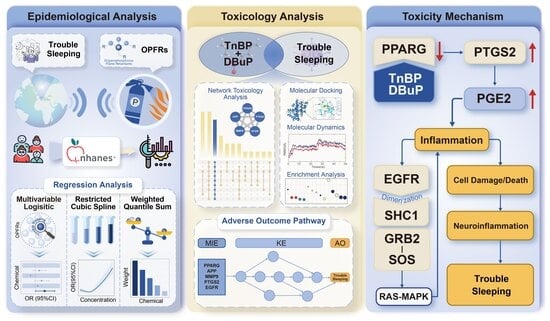
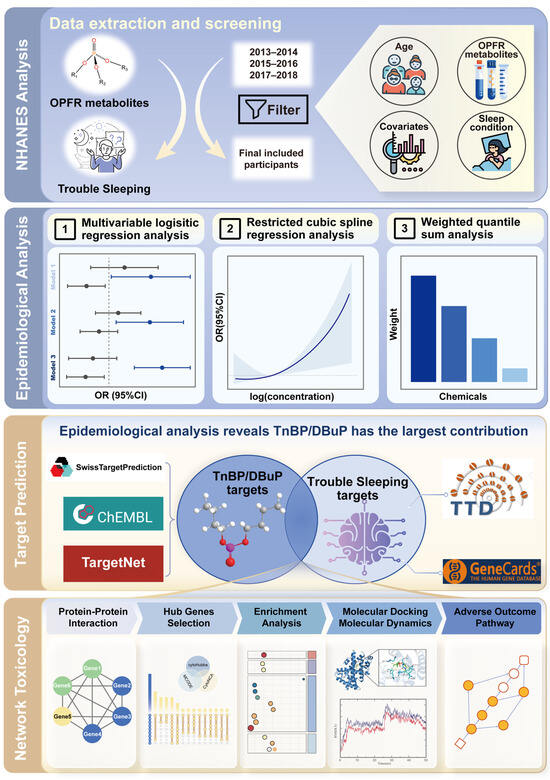
Trouble sleeping has become a global public health challenge. However, the relationship between organophosphate flame retardant (OPFR) exposure and trouble sleeping remains unclear. This study integrated epidemiological analysis, network toxicology, molecular docking, molecular dynamics simulations, and adverse outcome pathway (AOP) construction to identify
[...] Read more.
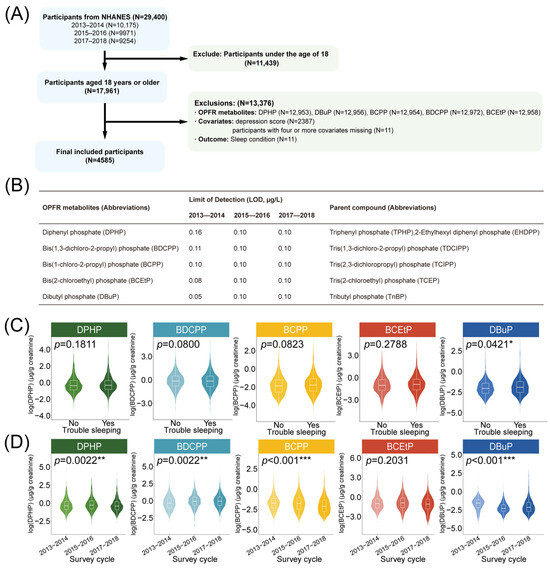
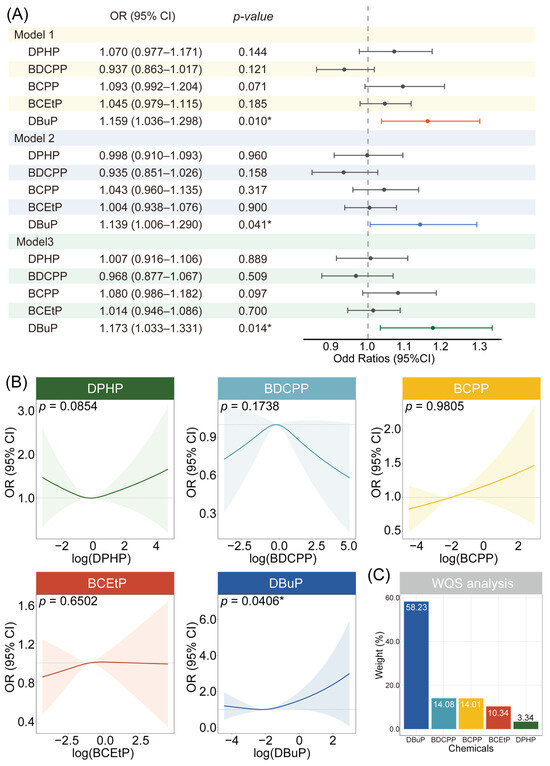
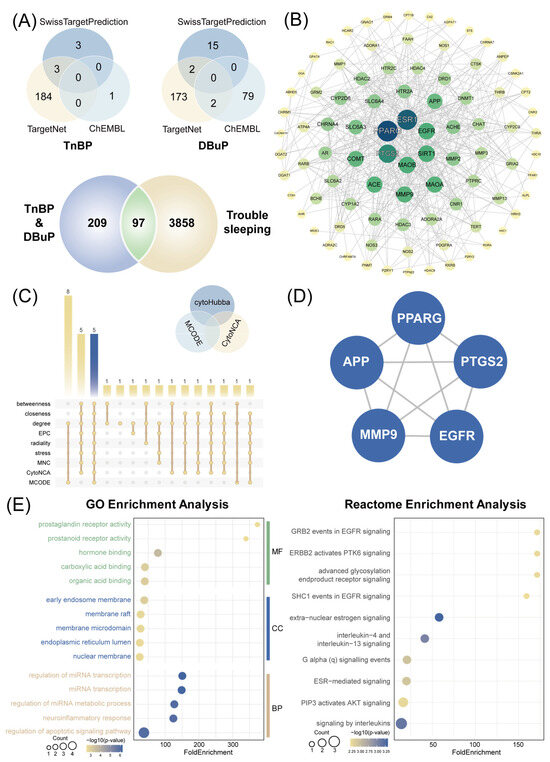
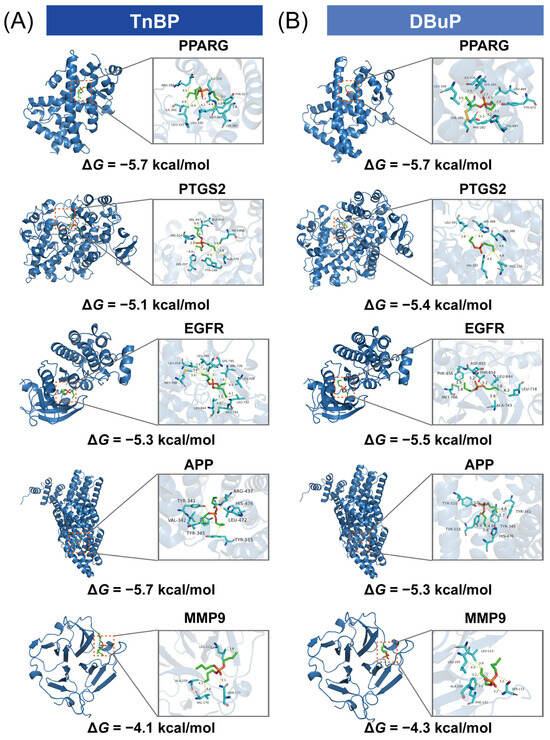
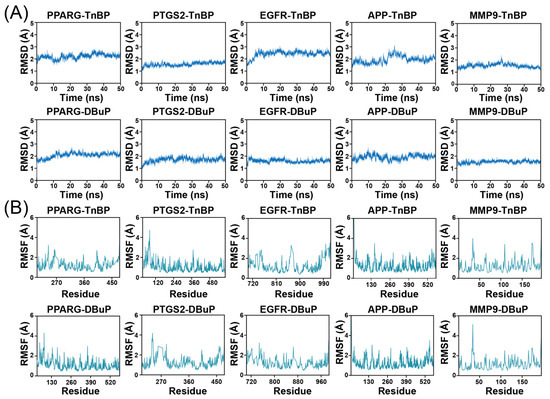
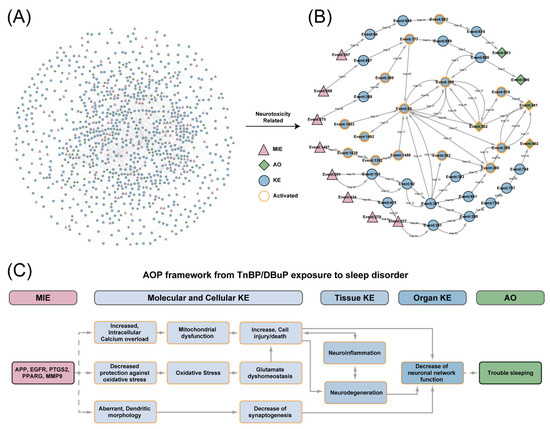
Trouble sleeping has become a global public health challenge. However, the relationship between organophosphate flame retardant (OPFR) exposure and trouble sleeping remains unclear. This study integrated epidemiological analysis, network toxicology, molecular docking, molecular dynamics simulations, and adverse outcome pathway (AOP) construction to identify OPFRs linked to trouble sleeping and attempted to elucidate underlying molecular mechanisms. We analyzed cross-sectional data from the U.S. National Health and Nutrition Examination Survey (NHANES 2013–2018) involving 4585 eligible adults. Logistic regression confirmed dibutyl phosphate (DBuP) as significantly correlated with trouble sleeping. Restricted cubic splines (RCSs) revealed a significant non-linear, J-shaped relationship between dibutyl phosphate (DBuP) levels and trouble sleeping. Weighted quantile sum (WQS) analysis determined that DBuP accounted for the majority contribution (58.23%) to the observed effects within exposure mixtures. These findings indicated that DBuP, a metabolite of tributyl phosphate (TnBP), was closely related to trouble sleeping, suggesting that the environmental health risks of TnBP may be jointly contributed to by itself and DBuP. We used network analysis to identify five core target genes (
PPARG,
MMP9,
PTGS2,
APP,
EGFR) that interact with DBuP and its parent compound TnBP. Molecular docking predicted binding poses of TnBP and DBuP toward these five core targets; all showed moderate binding affinity (Δ
G ≤ −5.0 kcal/mol) except MMP9, which exhibited weak binding. Molecular dynamics simulations further supported this putative binding. Enrichment analysis highlighted inflammatory response pathways. Ultimately, we elucidated the process from molecular exposure to trouble sleeping by constructing an AOP framework. In conclusion, we proposed that TnBP and DBuP may contribute to trouble sleeping through multi-target interactions, primarily through PPARG-driven inflammatory dysregulation. These findings suggest a potential link between OPFR exposure and trouble sleeping, providing insights that warrant further mechanistic investigation.
Full article
►▼
Show Figures
Open AccessReview
Orexin and Lifestyle Habits: A Meaningful Connection Among Nutrition, Physical Activity, and Sleep Pattern in Health and Diseases
by
Ersilia Nigro, Francesca Argentino, Giuseppe Musumeci and Aurora Daniele
Cited by 3 | Viewed by 5049
Abstract
Orexin is a neuropeptide produced in the hypothalamus that plays a key role in regulating slee—wake cycles, energy metabolism, feeding behavior, and physical activity. It exists in two forms, orexin-A and orexin-B, which bind to G protein-coupled receptors OX
1R and OX
[...] Read more.
Orexin is a neuropeptide produced in the hypothalamus that plays a key role in regulating slee—wake cycles, energy metabolism, feeding behavior, and physical activity. It exists in two forms, orexin-A and orexin-B, which bind to G protein-coupled receptors OX
1R and OX
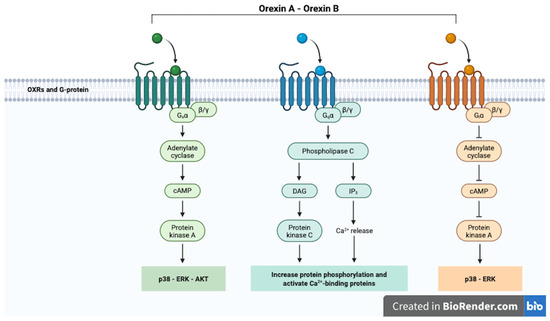
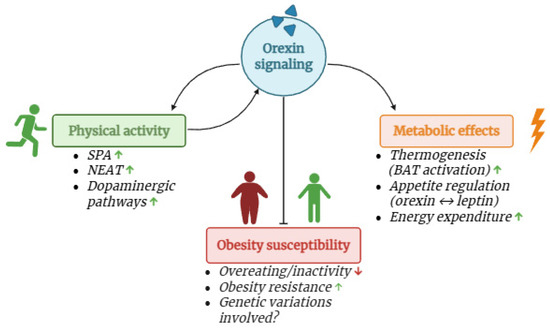
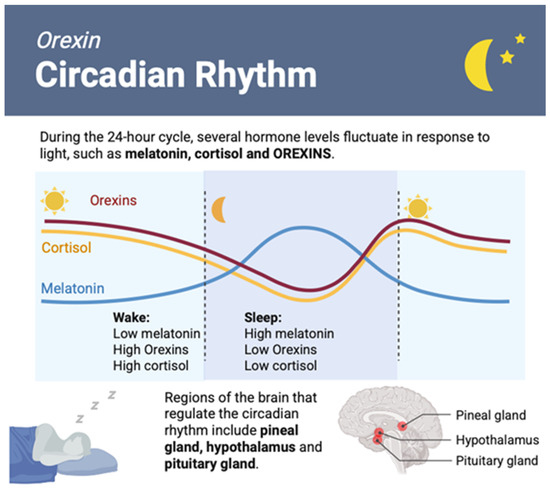
2R with differing affinities. Orexin signaling is widespread in the brain and extends to peripheral tissues, including adipose tissue. Its involvement in hypothalamic and extrahypothalamic circuits suggests a broad role in homeostatic regulation. Dysfunctions in the orexinergic system are implicated in neurodegenerative diseases such as Alzheimer’s, Parkinson’s, and multiple sclerosis, particularly through mechanisms involving sleep disturbances and neuroinflammation. This study examines how orexin influences neural circuits related to arousal, motivation, and motor control. It also explores how physical activity stimulates orexin release, enhancing neuroplasticity and cognitive resilience. In addition, orexin’s role in reward-related feeding, genetic susceptibility to obesity, and brown adipose tissue thermogenesis is discussed. Overall, the orexinergic system represents a vital neurochemical link between physical activity, metabolism, and cognitive health. Although many of its mechanisms remain to be clarified, its central role in integrating energy balance and behavioral responses makes it a promising target for future therapeutic strategies.
Full article
►▼
Show Figures