



- 4.0Impact Factor
- 7.6CiteScore
- 17 daysTime to First Decision
Nanocatalysis Towards Energy Transition and Environmental Sustainability
Special Issue Information
Dear Colleagues,
Catalysis holds the keys to sustainable development and is receiving ongoing attention from both academic and industrial community. Heterogeneous catalysis is massively involved in numerous significant energy and environmental processes working towards green energy transition and environmental sustainability, such as energy production and storage, the manufacturing of value-added chemicals and fuels, the abatement of hazardous substances, and carbon and nitrogen recycling, among others. In view of this fact, extensive research efforts have been recently devoted to the fundamental understanding and practical development of innovative catalytic materials fulfilling the requirements of high activity and stability at a reasonable price.
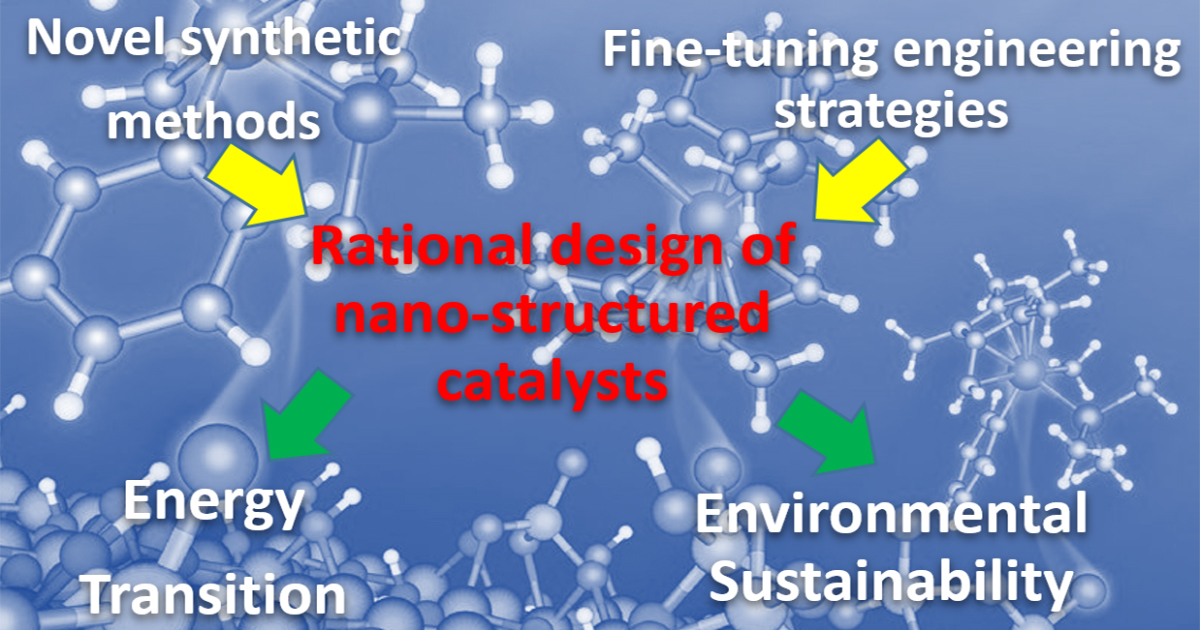
The present topical collection is focused on the recent theoretical and experimental advances in the field of nanocatalysis, covering all aspects from novel synthetic methods to fine-tuning engineering strategies and advanced characterization studies. Size, shape, and porous engineering at the nanoscale in conjunction with the use of appropriate promotional strategies (e.g., aliovalent doping, surface promotion, special pretreatment protocols, etc.) could facilitate the development of nano- or atom-efficient catalysts with fine-tuned intrinsic and interfacial properties. All subjects related to nanoscale advanced synthesis, optimization, and characterization studies working towards the development of nano- or atom-efficient catalysts are perfectly matched to this topical collection. Moreover, theoretical and experimental studies focusing on the fundamental understanding of metal–support interactions and structure–property relationships are very welcomed.
If you would like to submit papers to this Topical Collection or have any questions, please contact the in-house editor, Ms. Rita Lin (rita.lin@mdpi.com).
Prof. Dr. Michalis Konsolakis
Dr. Sónia Carabineiro
Collection Editors
Manuscript Submission Information
Manuscripts should be submitted online at www.mdpi.com by registering and logging in to this website. Once you are registered, click here to go to the submission form. Manuscripts can be submitted until the deadline. All submissions that pass pre-check are peer-reviewed. Accepted papers will be published continuously in the journal (as soon as accepted) and will be listed together on the special issue website. Research articles, review articles as well as short communications are invited. For planned papers, a title and short abstract (about 250 words) can be sent to the Editorial Office for assessment.
Submitted manuscripts should not have been published previously, nor be under consideration for publication elsewhere (except conference proceedings papers). All manuscripts are thoroughly refereed through a single-blind peer-review process. A guide for authors and other relevant information for submission of manuscripts is available on the Instructions for Authors page. Catalysts is an international peer-reviewed open access monthly journal published by MDPI.
Please visit the Instructions for Authors page before submitting a manuscript. The Article Processing Charge (APC) for publication in this open access journal is 2200 CHF (Swiss Francs). Submitted papers should be well formatted and use good English. Authors may use MDPI's English editing service prior to publication or during author revisions.
Keywords
- nanostructured catalytic materials
- single atom catalysts
- energy and environmental applications
- heterogeneous catalysis/electrocatalysis/photocatalysis
- novel synthetic and promotional methods
- size and shape effects in catalysis
- advanced characterization studies

Benefits of Publishing in a Special Issue
- Ease of navigation: Grouping papers by topic helps scholars navigate broad scope journals more efficiently.
- Greater discoverability: Special Issues support the reach and impact of scientific research. Articles in Special Issues are more discoverable and cited more frequently.
- Expansion of research network: Special Issues facilitate connections among authors, fostering scientific collaborations.
- External promotion: Articles in Special Issues are often promoted through the journal's social media, increasing their visibility.
- e-Book format: Special Issues with more than 10 articles can be published as dedicated e-books, ensuring wide and rapid dissemination.