



Key Technologies in Battery Management Systems for New Energy Vehicles
A special issue of Batteries (ISSN 2313-0105). This special issue belongs to the section "Electric Vehicles and Mobile Energy Storage Systems".
Deadline for manuscript submissions: 9 September 2026 | Viewed by 1097
Special Issue Editors

Interests: energy management of lithium-ion batteries; new energy storage technology for power systems; gradual utilization of retired lithium batteries; state estimation of power systems

Interests: machine learning algorithms and applications; autonomous driving; robotics; energy storage for rail transit; electric vehicles
Special Issues, Collections and Topics in MDPI journals

Interests: battery modeling and SOX estimation; battery diagnosis and performance prediction; energy storage system design; energy management; multi-objective optimization models and algorithms, machine learning and intelligent algorithms
Special Issue Information
Dear Colleagues,
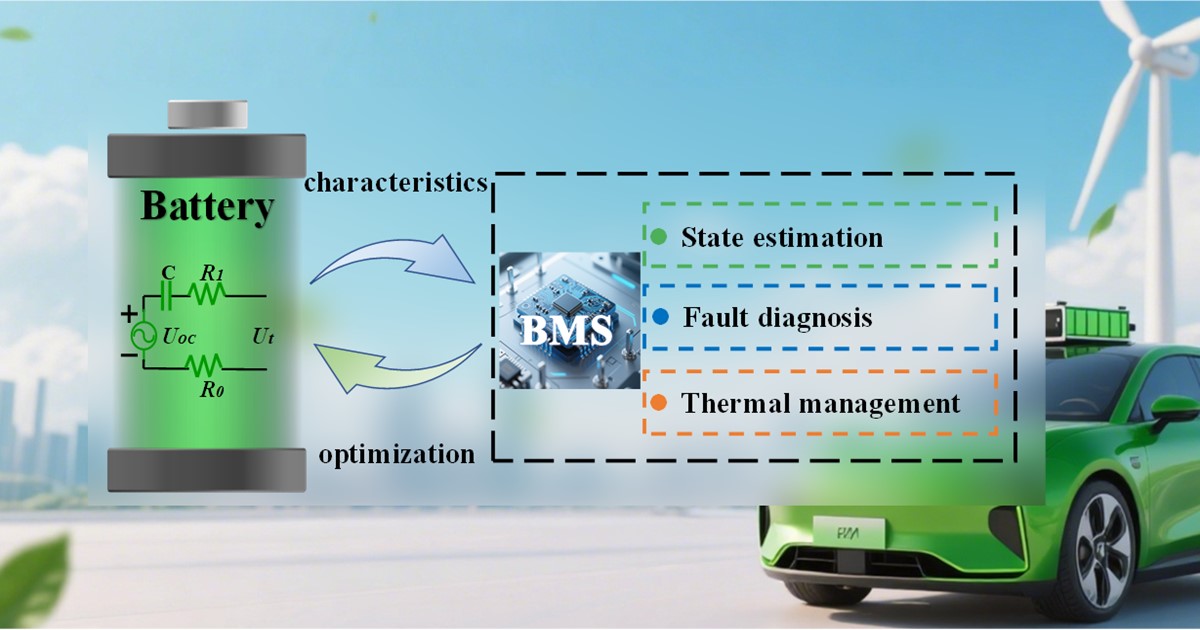
This Special Issue focuses on key technologies for battery management systems (BMSs), a core component of new energy vehicles (NEVs), aiming to advance the development of high-safety, long-range, and low-cost BMSs. It highlights three core domains: high-precision state estimation (e.g., real-time monitoring of SOC, SOH, SOP, SOE, and RUL), where combined models and advanced algorithms address the nonlinear characteristics of lithium-ion batteries to enhance accuracy under complex operating conditions; active safety and lifespan management, integrating thermal monitoring, fault diagnosis, and full-lifecycle consistency control to prevent thermal runaway and extend battery life; and intelligent technology integration, exploring digital twins, cyber–physical systems, and data-driven models for the dynamic optimization of battery behavior. The issue also examines next-generation BMS innovations, including wireless dynamic charging (Move-and-Charge), self-reconfigurable battery designs, and blockchain/cloud platform-based smart management frameworks. By synthesizing theoretical modeling, real-time control strategies, and experimental validation, this Special Issue provides cutting-edge references for academia and industry to accelerate the commercialization of high-robustness BMS technologies and advance the NEV industry. Submissions are cordially invited in areas including battery modeling, balancing control, thermal management, advanced algorithms (e.g., AI/SOC co-estimation), and functional safety.
Expected Submission Topics:
- Advanced Algorithms for SOC/SOH/SOP Estimation
- Machine learning/AI-enhanced state estimation under dynamic operating conditions.
- Multi-parameter fusion techniques for nonlinear battery systems.
- Battery Modeling and Parameter Identification
- Data-driven modeling (e.g., neural networks vs. equivalent circuit models).
- Electrochemical model simplification techniques.
- EIS-enhanced multi-physics coupling mechanisms.
- Online parameter identification for aging batteries.
- Thermal Runaway Prevention and Safety Management
- Early fault diagnosis algorithms (e.g., internal short-circuit detection).
- Active thermal control strategies for extreme environments.
- Intelligent Battery Digital Twin Systems
- CPS frameworks integrating electrothermal-aging models.
- Real-time simulation for battery behavior prediction.
- Next-Generation Wireless BMS Architectures
- Dynamic charging coordination (Move-and-Charge).
- Self-reconfigurable battery topologies for fault tolerance.
- Cloud-Edge Collaborative BMS Platforms
- Blockchain-based battery data traceability.
- Federated learning for privacy-preserving health evaluation.
- AI-Driven Lifetime Optimization
- Deep reinforcement learning for aging-aware charging control.
- SOH-based adaptive balancing strategies.
Topics of interest include, but are not limited to, the following:
- Electrochemical-Equivalent Circuit Hybrid Modeling;
- Online Parameter Identification for Aging Batteries;
- Multi-timescale Modeling Techniques;
- Data-Driven Model Reduction;
- State-of-charge (SOC) estimation;
- State-of-health (SOH) estimation;
- State-of-power (SOP) estimation;
- Remaining useful life prediction;
- Synchronized SOC/SOP/SOH Estimation;
- Dynamic Parameter-Identification Embedded Estimation;
- Active Balancing Topology Optimization;
- Model Predictive Control for Cell Balancing;
- Multi-objective Balancing Control;
- Thermal Runaway Prevention.
The types of submissions we expect to receive include the following:
1. Original Research Articles
Scope: Novel algorithms/architectures for modeling, estimation, or balancing.
2. Comprehensive Reviews
Scope: Critical analysis of advances in one core area (e.g., parameter identification techniques).
Dr. Chunling Wu
Dr. Heng Li
Dr. Lei Cai
Guest Editors
Manuscript Submission Information
Manuscripts should be submitted online at www.mdpi.com by registering and logging in to this website. Once you are registered, click here to go to the submission form. Manuscripts can be submitted until the deadline. All submissions that pass pre-check are peer-reviewed. Accepted papers will be published continuously in the journal (as soon as accepted) and will be listed together on the special issue website. Research articles, review articles as well as short communications are invited. For planned papers, a title and short abstract (about 250 words) can be sent to the Editorial Office for assessment.
Submitted manuscripts should not have been published previously, nor be under consideration for publication elsewhere (except conference proceedings papers). All manuscripts are thoroughly refereed through a single-blind peer-review process. A guide for authors and other relevant information for submission of manuscripts is available on the Instructions for Authors page. Batteries is an international peer-reviewed open access monthly journal published by MDPI.
Please visit the Instructions for Authors page before submitting a manuscript. The Article Processing Charge (APC) for publication in this open access journal is 2700 CHF (Swiss Francs). Submitted papers should be well formatted and use good English. Authors may use MDPI's English editing service prior to publication or during author revisions.
Keywords
- lithium-ion batteries
- battery modeling
- parameter identification
- aging mechanisms
- state estimation
- lifetime prediction
- state of charge
- state of health
- remaining useful life
- intelligent equalization control
- machine learning
- AI-BMS Integration
- fault diagnosis
Benefits of Publishing in a Special Issue
- Ease of navigation: Grouping papers by topic helps scholars navigate broad scope journals more efficiently.
- Greater discoverability: Special Issues support the reach and impact of scientific research. Articles in Special Issues are more discoverable and cited more frequently.
- Expansion of research network: Special Issues facilitate connections among authors, fostering scientific collaborations.
- External promotion: Articles in Special Issues are often promoted through the journal's social media, increasing their visibility.
- Reprint: MDPI Books provides the opportunity to republish successful Special Issues in book format, both online and in print.
Further information on MDPI's Special Issue policies can be found here.
