


Abstract
This study explores the role of Applied Theatre as a form of cultural mediation in addressing issues of environmental justice within higher education. Eight university professors participated in the study, providing qualitative data through semi-structured interviews that focused on their perceptions of environmental inequalities, their teaching practices, and the potential of theatrical approaches to foster critical engagement with sustainability issues, drawing on their prior use of drama-based methods in university teaching. Using a directed content analysis framework, the study highlights that environmental inequalities are not only material or ecological but are closely intertwined with social relations, access to resources, and collective experiences. The findings indicate that Applied Theatre can create an intermediate learning space where knowledge, emotion, and action intersect, enabling students to engage critically and experientially with social and environmental injustices. Essential conditions for successful integration include targeted professional development of faculty, institutional support, and interdisciplinary collaborations, while challenges such as limited resources, time constraints, and lack of curricular recognition remain significant. The study contributes to the development of a theoretical framework that positions Applied Theatre as cultural mediation in higher education, framing it not only as an artistic methodology but also as a social and educational practice. This framework provides directions for future research and policy, particularly in the design of sustainable teaching practices that connect higher education with social justice and ecological responsibility.
1. Introduction
Environmental justice has become a central notion in contemporary education for sustainability, as the focus shifts away from the mere transmission of knowledge toward cultivating critical reflection, social awareness, and democratic participation [1,2,3]. Within higher education, the concept serves as a connection between social equity and sustainability, shaping curriculum design and the pedagogical role of university teachers in preparing citizens with ecological and social consciousness [4,5]. Environmental education scholars such as David Orr and Arjen Wals underline that higher education must cultivate critical reflection and participatory engagement to address socio-ecological inequities in meaningful ways [6,7].
Inequalities concerning access to environmental goods, the consequences of the climate crisis, and the uneven ways in which different social groups experience these realities are not confined to school settings. They extend into the university context, which is called upon to adopt teaching approaches that link academic knowledge with lived experience and foster participatory forms of learning [8]. The development of innovative pedagogical methods that allow students to engage critically with the environmental and social dimensions of sustainability is now widely regarded as a prerequisite for reimagining the university as a space grounded in democracy, equality, and social responsibility [9].
Drama-based approaches in higher education can be understood as critical pedagogical practices that respond directly to this need [10,11]. Through techniques such as process drama, role-play, and collective creation, students are given opportunities to cultivate empathy, strengthen their capacity for critical analysis, and connect personal experiences with broader social and environmental concerns [12,13]. Applied theatre here operates as a form of cultural mediation, bringing theoretical knowledge into dialogue with practice and rendering learning active, experiential, and socially situated [14].
This study examines the perspectives of higher education instructors engaged in postgraduate environmental education programs, focusing on their views regarding the role of drama-based approaches in understanding and addressing environmental inequalities within higher education. It explores how they define environmental justice, in what ways they believe applied theatre can be incorporated into university teaching, and what conditions or constraints they identify for its implementation. The overarching aim is to enrich the ongoing debate on sustainability education in higher education and to highlight teaching practices that reinforce the democratic and sustainable character of the university space.
Theatrical Practices in Higher Education for Cultivating Environmental Justice
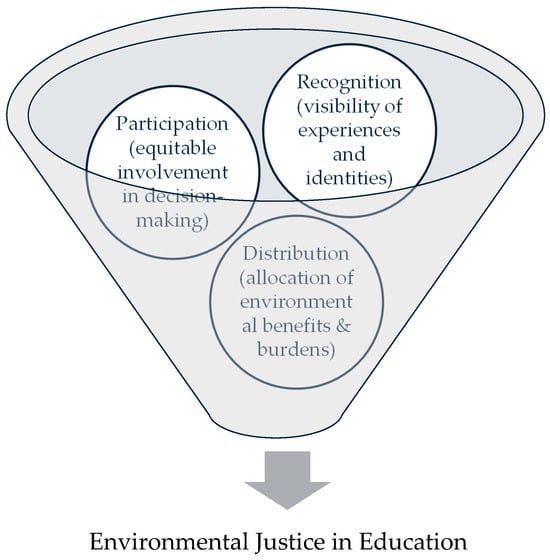
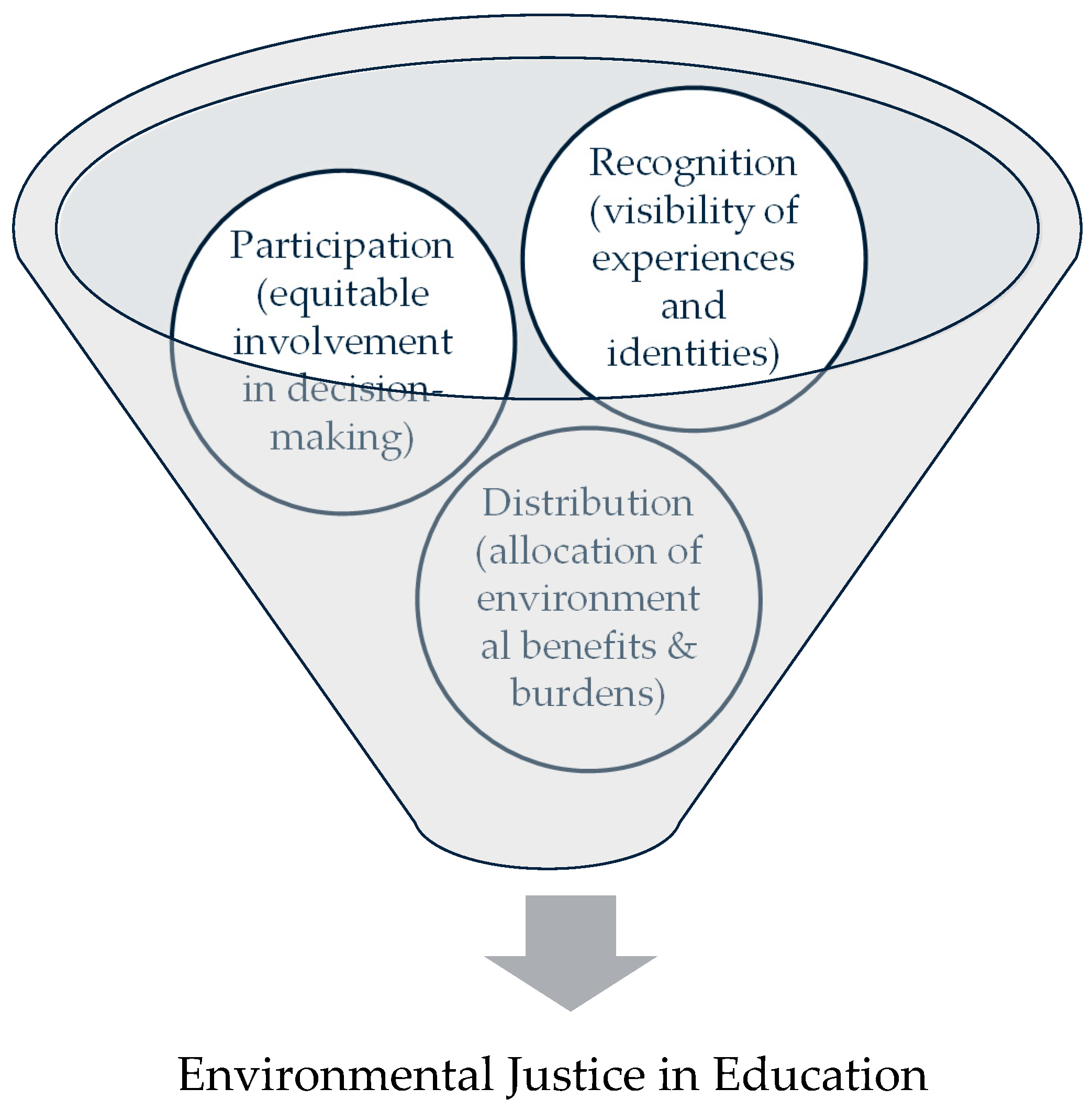
In higher education, environmental justice is not confined to the transmission of ecological knowledge; it is closely tied to the university’s role as a space of democratic participation and social empowerment [1,10,11,15]. This view aligns with traditions of critical pedagogy, where Freire and Giroux emphasize education as a dialogic and emancipatory practice that enables students to develop agency and collective responsibility [16,17]. It constitutes both a theoretical and pedagogical framework that acknowledges the unequal experiences of students, shaped by their social, economic, and geographical backgrounds, while developing the skills that enable them to become active agents of change. In this sense, the focus shifts away from simple ecological awareness towards a critical stance that connects knowledge with equality and collective action [18]. Building on this perspective, theoretical models have emerged that highlight the complex interplay among environment, society, and education, expanding the meaning of justice beyond the distribution of resources to include participation in decision-making and the recognition of lived experiences and identities. From this vantage point, the Educational Environmental Justice model [19,20] has become a reference framework, suggesting an integrated lens that brings together the material, political, and cultural dimensions of the educational experience (see Figure 1).
Figure 1.
Conceptual Model of Environmental Justice in Education.
Its first dimension emphasizes the distribution of environmental benefits and burdens, drawing attention to unequal access to clean air, water, and green spaces, as well as the disproportionate impact of pollution and climate change on socially vulnerable groups. University teaching, viewed through this lens, must make such material inequalities visible and embed it in the learning process. The second dimension broadens the notion of justice beyond fair distribution, stressing the active involvement of all stakeholders in decision-making. In higher education this translates into cultivating democratic practices, acknowledging student voices, and enabling their meaningful participation in shaping both academic and social realities. Finally, the third dimension concerns recognition: the acceptance and visibility of the experiences, identities, and needs of groups that are frequently excluded or marginalized. Within the university, this implies that environmental education cannot remain neutral or uniform but must consider students’ diverse cultural backgrounds and social contexts, thereby linking knowledge with identity and everyday experience.
The existing literature has already underlined the contribution of environmental education to the development of critical thinking and social awareness, particularly by connecting knowledge to social action [21,22,23,24]. To this foundation we may add the contribution of applied theatre, as research demonstrates how theatre functions as a field of experiential learning, empathy, and collective empowerment [25,26,27,28].
Within the university context, participatory educational theatre can be incorporated into environmental education courses, transforming students from passive recipients into active co-creators of the learning process [29,30,31,32]. Similarly, role-play and drama games may serve as pathways for exploring environmental justice issues, strengthening students’ ability to engage with matters of equity and recognition [33]. Data from drama offers another innovative methodology, translating complex environmental phenomena into performative form and thereby fostering empathy towards their social and ecological dimensions [34].
This didactic dynamic is grounded in a robust theoretical background. Landy’s role theory [35] highlights the development of self-awareness and social interaction through role alteration. Dokter’s self-representation model [36] conceives of the stage as a space of “aesthetic distance” and creative transformation. Jennings’ developmental model of Embodiment–Projection–Role [37] illustrates how performative practice supports the growth of identity and empathy. Complementary perspectives such as Vygotskian views on learning through social interaction, newer theories of embodied learning [38], and research on emotion and the collective regulation of learning [39,40] reinforce the understanding of theatre as a space where the physical, emotional, and social dimensions of knowledge are interwoven. In the same vein, Goffman’s notion of the “expanded self” [41] suggests that adopting multiple roles helps students broaden their perception of self and others, thus deepening their grasp of social diversity.
Yet despite the established contributions of both environmental education and applied theatre, their intersection within higher education remains fragmented and insufficiently explored. Only a handful of studies have systematically addressed how theatrical pedagogical practices can serve as means of understanding and mitigating environmental inequalities in the university context. The present study seeks to address this gap by examining the perspectives of higher education instructors involved in postgraduate environmental education programs. Special emphasis is placed on how these educators perceive the potential of theatrical approaches to heighten sensitivity to environmental justice and to activate forms of engagement that cultivate democratic participation and solidarity. In doing so, the study links theoretical debates on environmental justice with artistic practices that can enrich higher education teaching with social and cultural meaning.
2. Materials and Methods
2.1. Purpose and Research Questions
This study seeks to explore how theatrical teaching practices can serve as forms of cultural mediation for understanding and addressing environmental inequalities within the university setting. While the international literature on Education for Sustainability has emphasized the value of participatory and experiential methods, research that explicitly connects environmental justice with artistic or theatrical practices in higher education remains limited.
To this end, the study is grounded in the theoretical framework of Environmental Justice in Education [19,20,42] and focuses on the perspectives and experiences of university instructors involved in postgraduate programs in environmental education. The aim is to highlight both the potential and the constraints of incorporating applied theatre into teaching, not only as a means of raising awareness of environmental inequalities but also as a way of fostering democratic participation.
Accordingly, the following research questions are posed:
- How do university instructors understand environmental inequalities, and what significance do they attribute to the notion of environmental justice within higher education?
- In what ways do they consider theatrical teaching practices capable of contributing to the understanding and mitigation of environmental inequalities?
- What conditions, opportunities, or constraints do they identify for integrating theatrical approaches into the teaching of environmental education at the university level?
These three research questions correspond directly to the three dimensions of the Environmental Justice in Education model, and their sequence reflects the conceptual progression of the framework: (a) instructors’ perceptions of inequalities (RQ1), (b) their views on the pedagogical role of theatre (RQ2), and (c) the institutional conditions shaping implementation (RQ3).
2.2. Research Design
This study employs Interpretative Phenomenological Analysis in order to explore in depth how university instructors understand the notion of environmental justice within higher education and how they perceive the potential of theatrical teaching practices in addressing related inequalities. This methodological approach places emphasis on lived experience and on the ways in which individuals construct meaning, shedding light on the varied interpretations that participants attribute to the phenomena they encounter [43]. The choice of Interpretative Phenomenological Analysis is particularly appropriate given that the intersection of environmental justice and theatrical practices in the university context remains underexplored in international literature. Examining instructors’ perspectives is therefore essential, as it allows us to capture not only descriptive accounts of the teaching practices that are currently implemented or envisioned but also the cognitive and emotional processes that accompany them. In doing so, the analysis provides insight into how instructors themselves construct meaning around the relationship between environmental inequalities, university teaching, and culture.
2.3. Participants
The study involved eight higher education instructors drawn from Departments of Primary Education and Early Childhood Education in Greek universities. The sample consisted of four women and four men, whose teaching experience ranged from 5 to 17 years and who held different academic ranks. In this study, the term “higher education instructors” refers to teaching staff engaged in university-level teaching, regardless of rank or contract type. Participants were selected through purposive sampling, as the aim was to recruit higher education instructors with direct relevance to the subject of the study. Eligibility required active involvement in teaching courses related to environmental education or education for sustainability, along with either an expressed interest in or prior experience with artistic or drama-based teaching practices. More specifically, all participants had used, at least to some degree, drama-based or applied-theatre techniques in their teaching, either when addressing environmental topics or when cultivating related skills such as critical reflection, collaborative inquiry, or experiential engagement.
2.4. Data Collection
Data were gathered through semi-structured interviews, conducted online to facilitate the participation of university instructors. Each interview lasted between forty and fifty-five minutes, a duration sufficient to allow for in-depth dialogue without causing fatigue to the participants. Semi-structured interviews were chosen as the main tool because they combine the structured guidance of a question protocol with the flexibility needed for new themes to emerge from participants’ narratives, an essential feature for the interpretative phenomenological analysis employed in this study [44].
The structure and content of the interview guide were based on the theoretical model of Environmental Justice in Education, as developed by Bell [42] and Di Chiro [19,20]. This model identifies three dimensions: (a) how participants perceive environmental inequalities and the significance of environmental justice; (b) the teaching methods that can be used to transform these issues into experiential and participatory learning; and (c) the institutional and practical framework in which university teaching is situated. On the basis of these dimensions, a set of twelve questions was developed (see Appendix A). The questions were organized in a way that addressed the study’s research aims while also leaving space for personal accounts. They focused on participants’ understanding of environmental inequalities and the meaning of environmental justice, their experiences with artistic and drama-based practices in higher education, and the conditions, opportunities, and challenges they recognized for incorporating such approaches into university teaching.
2.5. Data Analysis
The data were analyzed using directed content analysis [45], a method particularly suited to studies that are grounded in an existing theoretical framework and the QCAmap software (version 1.2.0) [46]. In this case, the model of Environmental Justice in Education [15,16,38] was employed, which is organized around three dimensions: (a) perceptions of inequalities and justice, (b) pedagogical approaches and experiential learning, and (c) the institutional and practical context of implementation. These dimensions served as predetermined coding categories into which the data were classified. The process involved transcribing the interviews and repeatedly reading the material to gain thorough familiarity with the participants’ accounts. The content was then coded according to the three dimensions of the model, while also allowing space for the identification of new subthemes that revealed additional aspects of the participants’ experiences.
This method was considered appropriate because it ensured a consistent link between the analysis and the theoretical framework, while at the same time enabling the interpretation of instructors’ personal meaning-making regarding environmental inequalities, justice, and the role of drama pedagogy in environmental education.
3. Results
The interview analysis yielded a series of themes that were organized around the three dimensions of the theoretical model of Environmental Justice in Education. In total, ten subcategories and twenty-two codes were identified. These reflect how university instructors conceptualize environmental inequalities and justice, how they view the contribution of drama-based teaching approaches to addressing such issues in higher education, and how they define the conditions, opportunities, and obstacles for implementing them in academic contexts. The findings are presented in the three subsections that follow, each corresponding to one of the model’s core dimensions.
3.1. Participants’ Understandings of Environmental Inequality and Justice
The analysis related to the first research question revealed four main subcategories, developed through a total of ten codes. These subcategories concern, on the one hand, the unequal distribution of material and natural resources and, on the other, the links between environmental issues and broader social inequalities, as well as the ways in which instructors ascribe meaning to the notion of environmental justice (see Table 1).
Table 1.
Subcategories and codes for the perception of environmental inequalities and justice.
The first subcategory concerns inequalities stemming from material infrastructures and access to resources within the university environment. Participants referred to the disparities that exist among institutions and departments in terms of classrooms, equipment, and opportunities available to students, emphasizing that such conditions result in uneven learning experiences [“one department has modern laboratories, another does not” (Participant 5)]. At the same time, environmental inequalities linked to the loss or degradation of natural resources were also highlighted, depriving both students and the local community of contact with the natural environment [“when the forest around the campus burns, a part of our lives is lost as well” (Participant 2)].
The second subcategory relates to the close connection instructors identified between environmental and socioeconomic inequalities. Their accounts showed that environmental burdens disproportionately affect lower-income groups, who often live or study in areas with fewer infrastructures and limited access to quality environmental goods [“students from poorer families live and study in more degraded areas” (Participant 4)]. The third subcategory focuses on how university instructors themselves give meaning to the concept of environmental justice. Two main perspectives emerged from their responses. The first frames justice as equality of opportunity, where all students should have access to high-quality teaching and environmental awareness [“for me, justice means that all students have the same opportunities” (Participant 6)]. The second emphasizes participation, underlining students’ right to have a voice and an active role in decisions concerning environmental issues, both within the university and in society at large [“if you do not give students a voice, you cannot speak of justice” (Participant 1)].
3.2. Theatrical Practices for Understanding Inequalities and Learning
The analysis of the interviews brought forward three main subcategories and six codes in total, which illustrate the ways in which university instructors perceive applied theatre, as an artistic practice, as contributing to the understanding and mitigation of environmental inequalities (see Table 2).
Table 2.
Subcategories and codes on the role of drama-based pedagogical practices in understanding and addressing environmental inequalities.
The first subcategory relates to the cultivation of understanding and empathy toward social and environmental inequalities. Participants emphasized that role-play, drama games, and theatrical activities allow students, and by extension the pupils they will eventually teach, to grasp more vividly the consequences faced by different social groups. The emotional engagement that theatre provokes supports a deeper involvement with the concept of environmental justice [“when students take on the role of a resident who loses their home in a flood, they perceive injustice in a completely different way” (Participant 6)].
The second subcategory concerns experiential and active learning. The instructors stressed that theatre creates conditions of active engagement, in which students, and later their pupils, do not remain passive recipients of information but participate in improvisations, collaborative performances, and the creation of collective narratives. Participants described these processes as fostering a sense of belonging and providing a creative avenue for expressing experiences and attitudes regarding environmental inequalities [“through a shared story about a polluted river, the students came to see the problem as their own” (Participant 2)].
The third subcategory focuses on the development of skills for action and awareness. Theatre emerged as a method capable of empowering students to cultivate critical thinking and a readiness to initiate social change, capacities they can also transfer into their future teaching practice. Particularly significant was the connection to local environmental issues, which strengthens awareness of the immediate links between personal experience and global environmental phenomena [“when we discussed the burned forests in the area and dramatized it, students felt they had to take action” (Participant 5)].
Several participants also described additional drama-based tasks they had used in their teaching, such as short improvisations on local environmental conflicts, small group role-plays involving different stakeholders, and collective image-theatre activities. These examples were mentioned as ways of helping students translate abstract environmental issues into embodied experience and shared reflection.
3.3. Framework for Integrating Drama-Based Educational Practices and Learning
The analysis of the data for the third research question revealed three main subcategories with a total of six codes, relating to the conditions, opportunities, and obstacles that university instructors identified regarding the use of drama-based pedagogical approaches in the field of environmental education (see Table 3).
Table 3.
Subcategories and codes concerning the conditions, opportunities, and barriers to integrating drama pedagogy into environmental education.
As necessary conditions, participants highlighted the importance of professional training and methodological preparation. They stressed that without specialized instruction in the use of drama tools and their connection to issues of sustainability, implementation remains fragmented and often improvised [“…we need tools, methodologies, and guidance in order to know how to apply them properly” (Participant 5)]. They also pointed to the need for an institutional framework that formally recognizes the value of theatre in higher education and explicitly includes it within the directions of environmental justice education [“if there is no corresponding orientation in the philosophy of curriculum design, it is difficult to implement it systematically” (Participant 8)].
In terms of opportunities, participants underlined the potential offered by elective courses, workshops, and research projects as spaces for experimentation and the application of creative practices [“through laboratory courses we can try out more creative activities” (Participant 2)]. Interdisciplinarity was also viewed as a privileged domain for linking theatre and the environment, enabling collaboration across university departments from different fields and enriching the learning experience [“it could be connected with language, with history, not only with environmental education” (Participant 6)].
At the same time, participants noted significant barriers. Limited teaching time was mentioned by most as a major constraint, since the pressure to cover the prescribed curriculum often leaves little room for creative interventions [“the syllabus is so demanding that it is difficult to find time for anything additional” (Participant 4)]. Participants also referred to the lack of appropriate infrastructure and resources, as theatre-based activities require classrooms, equipment, and, in some cases, financial support that is not always available [“we do not have suitable spaces, nor the materials for such activities” (Participant 7)].
4. Discussion
This study examined university instructors’ perceptions of environmental inequalities and justice, the role of drama-based pedagogical practices in understanding and addressing such issues, as well as the conditions and obstacles involved in their integration into higher education. The findings suggest that environmental justice is conceived not only as equitable access to natural and material resources but also as a social right linked to students’ participation in academic life [8]. At the same time, the study highlighted the potential of theatre to foster empathy, promote experiential and active learning, and cultivate skills for social engagement, findings that resonate with previous research [10,11,47,48,49,50]. Nonetheless, significant limitations were identified, including restricted teaching time within curricula, the lack of appropriate infrastructures, and the absence of systematic training for instructors in the application of such methodological tools.
4.1. Perceptions of Environmental Inequalities and Justice
In line with recent findings in international literature, university instructors’ perceptions of environmental inequality were structured around three dimensions: (a) distributive justice, concerning the allocation of environmental benefits and burdens, (b) procedural justice, concerning decision-making processes and participation, and (c) recognition, referring to the visibility and acknowledgment of different social groups within related policies and practices. Recent studies in Environmental and Climate Education note that educational programs often focus primarily on the first two dimensions, while recognition tends to remain less developed, a pattern also reflected in our findings [6]. This tripartite understanding of justice echoes Fraser’s and Schlosberg’s work, which highlights distribution, participation, and recognition as interdependent dimensions of social and environmental justice [51,52].
The link between environmental and socioeconomic inequalities, as expressed in participants’ accounts, is consistent with recent studies documenting the uneven distribution of environmental burdens among vulnerable populations and youth communities. For example, research conducted in educational settings shows that the quality of the immediate outdoor environment (green space, exposure to pollution, environmental hazards) is distributed unequally and correlates with social indicators, with clear consequences for both learning and health [9]. At the same time, the debate on access to nature in urban contexts emphasizes that recognition and participation are essential preconditions for genuine equality of access, not merely the “measurable” indicators of green space [5].
With respect to procedural justice, recent pedagogical approaches indicate that participatory models (e.g., community-engaged research in universities or schools) amplify students’ voices and translate “justice” into concrete practices of decision-making and action within the educational community, an observation that resonates with our own finding on the emphasis placed on student participation [53,54]. Lastly, recent policy and theoretical literature reminds us that assessing “environmental justice” in both research and practice requires tools that evaluate the depth of engagement with all three dimensions. This underscores the need for professional development and methodological support for educators themselves [1,14].
4.2. The Contribution of Artistic and Theatrical Approaches to the Learning Process
Our findings showed that instructors view artistic and theatrical approaches not simply as vehicles for transmitting environmental knowledge but as tools for fostering critical understanding of social and environmental inequalities [12,55]. Storytelling, role-taking, and experiential drama techniques were described as means of cultivating students’ ability to “step into another’s shoes” and develop empathy toward communities disproportionately affected by environmental consequences and crises [13,27,48,56]. This perspective aligns with international literature demonstrating that applied theatre and the arts can act as cultural mediators between personal experience and broader socio-ecological issues, thereby reinforcing the capacity to grasp multiple perspectives and encouraging active engagement in debates about justice [11,29,57].
A second theme to emerge was the recognition that artistic and theatrical activities create spaces of collective inquiry and voice for students who are often marginalized. Participants emphasized that such practices enable students to articulate experiences of environmental injustice that would otherwise remain invisible. Similarly, international studies confirm that theatre can bring forward the values and concerns of local communities and translate them into dialogic frameworks recognized by institutions and experts [58,59,60]. In this respect, our study supports the argument that artistic approaches can empower students and communities to assume an active role in negotiating environmental decisions.
In addition, professors noted that these approaches lead students beyond comprehension, toward action and shared responsibility. This finding resonates with contemporary scholarship on environmental justice education, which points to a shift away from mere awareness-raising toward participation and empowerment [8]. The connection between learning and practice surfaced both in our interviews and in studies highlighting the effectiveness of role-play in fostering an understanding of justice and in navigating environmental conflicts [33]. Lastly, particular emphasis was placed on experiential engagement with the natural environment through artistic activities, which can strengthen students’ emotional connection with nature and provide a foundation for understanding environmental injustice. This observation is directly supported by recent studies showing that artistic experiences in natural settings nurture not only positive emotions but also ecological citizenship [57]. Beyond these broader patterns, several techniques mentioned by participants, such as short improvisations on local environmental conflicts, multi-stakeholder role-plays, and small-group image-theatre compositions, illustrate how applied theatre can translate abstract socio-ecological issues into embodied and relational learning experiences. These examples reinforce the view that the pedagogical value of theatrical work lies not only in its expressive dimension but also in its ability to support critical engagement with environmental inequalities.
4.3. Conditions and Limits of Integrating Artistic and Theatrical Approaches
Findings regarding the necessary conditions (professional training, institutional support, curriculum flexibility, and interdisciplinary collaborations) and the limits of implementation (lack of time, pressure to cover the syllabus, inadequate resources and infrastructure) are consistent with the relevant literature. A key prerequisite is targeted professional development for instructors, with an experiential character and clear potential for transfer into teaching practice [14]. Training programs that incorporate techniques of theatrical improvisation or process drama have been shown to strengthen pedagogical competence and self-confidence among university educators, especially when grounded in principles such as scaffolded practice, reflective communities, and guided application [61].
The institutional dimension also proves decisive, since curricula and institutional priorities shape whether innovative approaches are incorporated or sidelined. Research on justice-centered sustainability education indicates that without regulatory provisions, incentives, and evaluation mechanisms that recognize the importance of socio-environmental learning, innovations remain fragmented and sporadic [4]. At the same time, analyses in higher education policy point out that partnerships with cultural organizations, NGOs, and local communities can offset institutional gaps, provided that stable funding and coordinating structures are in place [62].
At the level of everyday teaching practice, barriers widely reported internationally (limited time, pressure to complete curricula, lack of appropriate spaces) are equally present in universities [63]. Outdoor learning and the use of experiential scenarios often collide with organizational and regulatory restrictions [64]. With respect to the suitability of artistic and theatrical approaches for environmental justice, studies in decision-making contexts suggest that forms such as Forum Theatre broaden participation, bring to light marginalized values and voices, and foster collective reflection [59,65,66]. However, such practices require careful design, ethically sound methodology, and co-creation with communities [58,59]. Integration into the university curriculum is facilitated when artistic and theatrical practices operate across disciplines, connect with diverse fields of knowledge, and are framed by clearly defined learning goals and activities that ensure the participation of all students [67,68]. Lastly, conditions for implementation in higher education remain often fragmented, characterized by insufficient funding and a lack of teaching materials, as well as emotional and ethical challenges for instructors. This helps explain why such interventions require time, sustained support for professional well-being, and communities of practice in order to achieve continuity and stability [69,70,71].
5. Limitations and Directions for Future Research
This study presents certain limitations that should be acknowledged. The relatively small number of university professors who participated restricted the generalizability of the findings. Nevertheless, the in-depth analysis of the interviews, approached in the spirit of a case study, yielded rich insights into their perceptions and practices [72]. These insights can be drawn upon both to strengthen university teaching and to inform the design of new pedagogical approaches in environmental education with a focus on justice. In addition, the use of directed content analysis, grounded in a specific theoretical framework, may have constrained the emergence of unanticipated or alternative themes. Finally, by focusing exclusively on instructors’ perspectives, the study did not capture students’ experiences or attitudes, leaving an important avenue for further investigation.
Future research should examine students’ experiences directly, in order to document the perspectives of the primary beneficiaries and assess the impact of artistic and theatrical approaches on their learning and participatory engagement. Comparative studies across different departments, academic disciplines, and cultural contexts would also be of particular interest, as they could highlight variations in the application of environmental justice within higher education. Equally significant would be the use of mixed-method or experimental designs, which could allow for a systematic assessment of the effectiveness of artistic interventions in universities, thereby contributing to the development of a more comprehensive pedagogical and research framework for education in sustainability and democratic participation.
6. Conclusions
This study has highlighted how theatrical approaches can function as forms of cultural mediation for understanding and addressing issues of environmental justice within the university context. The analysis showed that environmental inequalities are not confined to technical or ecological matters but are interwoven with social relations, unequal access to resources, and experiences of collective responsibility. Within this frame, theatre and its applied forms emerge as practices that create a creative space where scientific knowledge, critical reflection, and experiential engagement coexist [10,11,24]. Furthermore, the findings contribute to the broader literature on post-secondary active learning by illustrating how embodied and participatory theatre-based methods can enhance student engagement, deepen understanding of complex socio-ecological issues, and support more meaningful learning outcomes in higher education.
Beyond their contribution to university teaching, the findings underscore the importance of cultivating a critical pedagogy that connects learning with social and environmental justice. Theatre-based approaches were identified as methodologies that foster experiential understanding, empathy, and the capacity of students to imagine and work through alternative modes of social and ecological coexistence [12]. The contribution of this study lies in advancing a theoretical framework that conceptualizes theatre as a form of cultural mediation in relation to social and environmental inequalities in higher education. This framework can serve as a foundation for further research and the development of teaching practices that harness the arts in education for sustainability, positioning theatre not only as an artistic process but also as a socio-pedagogical practice that connects students with the environment and society on the basis of equity and justice [73].
7. Implications for University Practice
Drama and theatre pedagogy can be understood as a form of cultural mediation that links environmental education in higher education with experiential and critical learning. At the heart of this perspective lies the idea that applied theatre and artistic approaches create an intermediate space where personal experience, social reality, and ecological issues meet and are reframed through collective processes [38]. Students are not confined to the passive reception of theoretical lectures; rather, they are invited to engage actively with environmental phenomena through representation, dialogue, bodily action, and emotional involvement [32,73]. In this way, the understanding of environmental inequalities does not remain at a purely cognitive level but is inscribed into the realm of lived experience and empathy, strengthening their ability to recognize, interpret, and critically examine the social dimensions of the ecological crisis [13,74].
The findings of our study indicate that university instructors recognize the value of this mediating function. Through theatrical and experiential activities, students place themselves in the position of the “other,” explore the consequences of environmental inequalities, and develop a more complex understanding of the concept of justice. Within this framework, drama-based approaches serve as creative tools for cultivating critical environmental awareness and humanistic values, reinforcing the link between theoretical knowledge and social action [75,76].
For this approach to be effectively implemented, institutional integration within curricula and university policies is essential. Faculties and Centers for Teaching and Learning can serve as key sites for embedding such practices, enriching academic programs with participatory and interdisciplinary activities. Building collaborations among universities, research centers, artists, and local communities can further strengthen the dimension of environmental justice as both a collective and political issue, emphasizing not only theoretical understanding but also the formation of active citizens and professionals with a sense of social responsibility. In this light, applied theatre can inform university policies by supporting the design of participatory curricula, strengthening students’ democratic engagement in sustainability decisions, and encouraging institutions to adopt pedagogical practices that address environmental inequalities in a systematic way.
Author Contributions
Conceptualization, K.M., M.K., A.G. and C.D.; methodology, K.M. and A.G.; software, K.M. and A.G.; validation, K.M., M.K., A.G. and C.D.; formal analysis, K.M. and A.G.; investigation, K.M., M.K., A.G. and C.D.; resources, K.M., M.K., A.G. and C.D.; data curation, K.M. and A.G.; writing—original draft preparation, K.M., M.K., A.G. and C.D.; writing—review and editing, K.M., M.K., A.G. and C.D. All authors have read and agreed to the published version of the manuscript.
Funding
This research received no external funding.
Institutional Review Board Statement
The study was conducted in accordance with the Declaration of Helsinki, and approved by the Ethics and Research Committee of the Medical School of the National and Kapodistrian University of Athens (Ref. No. 242/2025. 18 June 2025).
Informed Consent Statement
All participating professors provided informed consent prior to their involvement in the study. They were fully briefed on the purpose of the research, the voluntary nature of their participation, and their right to withdraw at any time without consequence. Consent was given for the use of anonymized quotations in publications, and all data were handled in accordance with ethical research standards.
Data Availability Statement
The data presented in this study are available on request from the corresponding author.
Conflicts of Interest
The authors declare no conflicts of interest.
Appendix A
Semi-Structured Interview Guide
Dimension 1: Perceptions of Inequalities and Justice
- How would you describe, in your own words, the notion of environmental inequality?
- To what extent do you believe these inequalities affect students at your university or within your field of teaching?
- What does the term environmental justice mean to you in the context of higher education?
Dimension 2: Pedagogical Approaches and Experiential Learning
- 4.
- How do you usually address issues related to the environment and sustainability in your teaching?
- 5.
- Have you ever used artistic or drama-based activities to approach environmental topics? If so, in what way?
- 6.
- In your view, how can applied theatre or theatrical forms in higher education (e.g., drama games, improvisation, dramatized storytelling, readers’ theatre) help students understand social and environmental inequalities?
- 7.
- Can you imagine an example of a theatrical activity that could raise your students’ awareness of environmental issues?
Dimension 3: Institutional and Practical Context of Implementation
- 8.
- What conditions do you consider necessary for integrating theatrical or artistic approaches into environmental education at the university?
- 9.
- What opportunities do you see within the current university framework (e.g., courses, research projects, outreach activities) for implementing such practices?
- 10.
- What obstacles might hinder their implementation in higher education?
- 11.
- How prepared do you think universities or university instructors are to adopt such methods?
- 12.
- If you were asked to propose a change to the curriculum or to the educational policy of your institution, what would it be in order for applied theatre to contribute more effectively to fostering environmental justice among students?
References
- Méndez-Barrientos, L.E.; Shah, S.H.; Roque, A.D.; MacClements, V.; Stern, A.K. Assessing Environmental Justice Contributions in Research and Public Policy: An Applied Framework and Methodology. J. Environ. Policy Plan. 2024, 26, 188–204. [Google Scholar] [CrossRef] [Scilit]
- Wilder, R.; Nuwategeka, E.; Monge, C.; Talavera, A.B. Environmental Justice in Education for Climate Action: Case Studies from Perú and Uganda. Child. Soc. 2024. [Google Scholar] [CrossRef] [Scilit]
- Mercan, G.; Varol Selçuk, Z. Integrating Environmental Justice and Education: A Comprehensive Review. Eurasian J. For. Sci. 2024, 12, 73–83. [Google Scholar] [CrossRef] [Scilit]
- Ajaps, S. Deconstructing the Constraints of Justice-Based Environmental Sustainability in Higher Education. Teach. High. Educ. 2023, 28, 1024–1038. [Google Scholar] [CrossRef] [Scilit]
- Langhans, K.E.; Echeverri, A.; Daws, S.C.; Moss, S.N.; Anderson, C.B.; Chaplin-Kramer, R.; Hendershot, J.N.; Liu, L.; Mandle, L.; Nguyen, O.; et al. Centring Justice in Conceptualizing and Improving Access to Urban Nature. People Nat. 2023, 5, 897–910. [Google Scholar] [CrossRef] [Scilit]
- Wals, A.E.J. Learning Our Way to Sustainability. J. Educ. Sustain. Dev. 2011, 5, 177–186. [Google Scholar] [CrossRef] [Scilit]
- Orr, D. Dangerous Years: Climate Change, the Long Emergency, and the Way Forward; Yale University Press: New Haven, CT, USA, 2018. [Google Scholar]
- Trott, C.D.; Lam, S.; Roncker, J.; Gray, E.-S.; Courtney, R.H.; Even, T.L. Justice in Climate Change Education: A Systematic Review. Environ. Educ. Res. 2023, 29, 1535–1572. [Google Scholar] [CrossRef] [Scilit]
- Gallez, E.; Canters, F.; Gadeyne, S.; Baró, F. A Multi-Indicator Distributive Justice Approach to Assess School-Related Green Infrastructure Benefits in Brussels. Ecosyst. Serv. 2024, 70, 101677. [Google Scholar] [CrossRef] [Scilit]
- Österlind, E. Drama Workshops as Single Events in Higher Education—What Can We Learn? In The Routledge Companion to Drama in Education; McAvoy, M., O’Connor, P., Eds.; Routledge: London, UK, 2022; pp. 324–337. [Google Scholar]
- O’Toole, J. Scenes at the Top Down Under: Drama in Higher Education in Australia. Res. Drama Educ. J. Appl. Theatre Perform. 2002, 7, 114–121. [Google Scholar] [CrossRef] [Scilit]
- Andrikopoulou, E.; Koutrouba, K. Promoting Mindfulness about the Environment through the Use of Drama in the Primary Classroom: Greek Teachers’ Views and Attitudes. Educ. Sci. 2019, 9, 22. [Google Scholar] [CrossRef] [Scilit]
- Curtis, D.J.; Howden, M.; Curtis, F.; McColm, I.; Scrine, J.; Blomfield, T.; Reeve, I.; Ryan, T. Drama and Environment: Joining Forces to Engage Children and Young People in Environmental Education. Aust. J. Environ. Educ. 2013, 29, 182–201. [Google Scholar] [CrossRef] [Scilit]
- Mastrothanasis, K.; Kladaki, M. Drama-Based Methodologies and Teachers’ Self-Efficacy in Reading Instruction. Ir. Educ. Stud. 2025, 1–17. [Google Scholar] [CrossRef] [Scilit]
- Misiaszek, G.W.; Rodrigues, C. Six Critical Questions for Teaching Justice-Based Environmental Sustainability (JBES) in Higher Education. Teach. High. Educ. 2023, 28, 211–219. [Google Scholar] [CrossRef] [Scilit]
- Freire, P. Pedagogy of the Oppressed; Bloomsbury: London, UK, 2018. [Google Scholar]
- Giroux, H. On Critical Pedagogy, 2nd ed.; Bloomsbury: London, UK, 2020. [Google Scholar]
- Miles, M.; Schindel, A.; Haq, K.; Aziz, T. Advancing Environmental Justice Education: A Critical Review of Research and Practice. Environ. Educ. Res. 2025, 31, 1461–1480. [Google Scholar] [CrossRef] [Scilit]
- Guevara-Herrero, I.; Bravo-Torija, B.; Pérez-Martín, J.M. Educational Practice in Education for Environmental Justice: A Systematic Review of the Literature. Sustainability 2024, 16, 2805. [Google Scholar] [CrossRef] [Scilit]
- Di Chiro, G. Response: Reengaging Environmental Education in the ‘Anthropocene’. Aust. J. Environ. Educ. 2014, 30, 17. [Google Scholar] [CrossRef] [Scilit]
- Liarakou, G.; Kalafati, M. Teaching Climate Change to Kindergarteners Through Art-Based Methods. In University Initiatives on Climate Change Education and Research; Springer Nature: Cham, Switzerland, 2023; pp. 1–23. [Google Scholar]
- van de Wetering, J.; Leijten, P.; Spitzer, J.; Thomaes, S. Does Environmental Education Benefit Environmental Outcomes in Children and Adolescents? A Meta-Analysis. J. Environ. Psychol. 2022, 81, 101782. [Google Scholar] [CrossRef] [Scilit]
- Ison, M.; Bramwell-Lalor, S. The Arts in Environmental Education: Connecting Learners with Their Talents and Nature. Environ. Educ. Res. 2023, 29, 964–979. [Google Scholar] [CrossRef] [Scilit]
- Mastrothanasis, K.; Kladaki, M. The Pedagogy of Theatre for Environmental Education and Sustainable Development; Diadrassi Press: Athens, Greece, 2023. [Google Scholar]
- Mastrothanasis, K.; Dumitru, C.; Darie, N.; Kladaki, M.; Pikoulis, E.; Sidiropoulou, A.; Papouli, E.; Papantoniou, D.; Pikouli, A.; Karamagioli, E. Participatory Arts as Emergency Responses for Strengthening Community Resilience and Psychosocial Support: A Retrospective Phenomenological Inquiry. Children 2025, 12, 1498. [Google Scholar] [CrossRef] [Scilit]
- Zakopoulos, V.; Makri, A.; Ntanos, S.; Tampakis, S. Drama/Theatre Performance in Education through the Use of Digital Technologies for Enhancing Students’ Sustainability Awareness: A Literature Review. Sustainability 2023, 15, 13387. [Google Scholar] [CrossRef] [Scilit]
- Mastrothanasis, K.; Pikoulis, E.; Kladaki, M.; Pikouli, A.; Karamagioli, E.; Papantoniou, D. Digital Drama-Based Interventions in Emergency Remote Teaching: Enhancing Bilingual Literacy and Psychosocial Support During Polycrisis. Psychol. Int. 2025, 7, 53. [Google Scholar] [CrossRef] [Scilit]
- Mastrothanasis, K.; Gkontelos, A.; Kladaki, M.; Papouli, E. Examining Puppetry’s Contribution to the Learning, Social and Therapeutic Support of Students with Complex Educational and Psychosocial Needs in Special School Settings: A Phenomenological Study. Disabilities 2025, 5, 67. [Google Scholar] [CrossRef] [Scilit]
- Cahill, A.; Warwick, P. Reimagining Applied Practices: A Case Study on the Potential Partnership between Applied Practices and Education for Sustainable Development. Res. Drama Educ. J. Appl. Theatre Perform. 2019, 24, 390–396. [Google Scholar] [CrossRef] [Scilit]
- Hu, Y.; Shu, J. The Effect of Drama Education on Enhancing Critical Thinking Through Collaboration and Communication. Educ. Sci. 2025, 15, 565. [Google Scholar] [CrossRef] [Scilit]
- Machado, W.B.; Landeira-Fernandez, A.M.; Silva, A.; Fraga da Silva, E.; Mignaco, J.A.; Prosdocimi, F. Gaia-Pachamama: An Educational Theater Performance to Foster Environmental Consciousness. Environ. Educ. Res. 2025, 31, 1569–1585. [Google Scholar] [CrossRef] [Scilit]
- Robson, R.; Krolikowska, E.; Williams, K. “I Notably Watched and Listened More”—Enhancing Lecturer Effectiveness through Drama-Based Techniques. Innov. Educ. Teach. Int. 2025, 62, 542–556. [Google Scholar] [CrossRef] [Scilit]
- Castellazzi, E.; Hakkarainen, V.; Raymond, C.M. Role-Play as a Catalyst for Justice Awareness: A Relational Approach to Nature-Based Solutions with Secondary School Students. Ecosyst. People 2024, 20, 2430591. [Google Scholar] [CrossRef] [Scilit]
- Wolff, A.; Pässilä, A.; Owens, A.; Kantola, L. Designing Data Dramas to Build Empathy to Nature through Collective Acts. In Designing More-than-Human Smart Cities; Heitlinger, S., Foth, M., Clarke, R., Eds.; Oxford University Press: Oxford, UK, 2024; pp. 167–186. [Google Scholar]
- Landy, R. Persona and Performance: The Meaning of Role in Drama, Therapy, and Everyday Life; Guilford Press: New York, NY, USA, 1993. [Google Scholar]
- Dokter, D. Arts Therapists, Refugees and Migrants: Reaching Across Borders; Jessica Kingsley Publishers: London, UK, 1998. [Google Scholar]
- Jennings, S. Introduction to Developmental Playtherapy: Play and Health; Jessica Kingsley Publishers: London, UK, 1998. [Google Scholar]
- Mastrothanasis, K.; Kladaki, M.; Andreopoulou, A. The Role of Psychodrama in the Prevention of Cyberbullying: School Psychologist’s Perspective. In Students’ Online Risk Behaviors: Psychoeducational Predictors, Outcomes, and Prevention; Touloupis, T., Sofos, A.L., Vasiou, A., Eds.; IGI Global: Hershey, PA, USA, 2025; pp. 367–391. [Google Scholar] [CrossRef] [Scilit]
- Järvelä, S.; Hadwin, A.F. New Frontiers: Regulating Learning in CSCL. Educ. Psychol. 2013, 48, 25–39. [Google Scholar] [CrossRef] [Scilit]
- Ahmed, S. The Cultural Politics of Emotion; Edinburgh University Press: Edinburgh, UK, 2004. [Google Scholar]
- Goffman, E. The Presentation of Self in Everyday Life; Anchor Books: New York, NY, USA, 1959. [Google Scholar]
- Bell, L.A. Teaching for Diversity and Social Justice. In Teaching for Diversity and Social Justice; Adams, M., Bell, L.A., Goodman, D.J., Shlasko, D., Briggs, R.R., Pacheco, R., Eds.; Routledge: New York, NY, USA, 2022; pp. 3–26. ISBN 9781003005759. [Google Scholar]
- Smith, J.A.; Fieldsend, M. Interpretative Phenomenological Analysis. In Qualitative Research in Psychology: Expanding Perspectives in Methodology and Design; Camic, P., Ed.; American Psychological Association: Washington, DC, USA, 2021; pp. 147–166. [Google Scholar]
- Adeoye-Olatunde, O.A.; Olenik, N.L. Research and Scholarly Methods: Semi-Structured Interviews. J. Am. Coll. Clin. Pharm. 2021, 4, 1358–1367. [Google Scholar] [CrossRef] [Scilit]
- Hsieh, H.-F.; Shannon, S.E. Three Approaches to Qualitative Content Analysis. Qual. Health Res. 2005, 15, 1277–1288. [Google Scholar] [CrossRef] [Scilit]
- Fenzl, T.; Mayring, P. QCAmap: Eine Interaktive Webapplikation Für Qualitative Inhaltsanalyse. Z. Soziologie Erzieh. Sozial. ZSE 2017, 37, 333–340. [Google Scholar]
- Cox, S.; Smithdeal, M.; Lee, M. Behind the Scenes: Insights on Pedagogy during Implementation of an RbT Open Educational Resource. Arts 2023, 12, 243. [Google Scholar] [CrossRef] [Scilit]
- Stathi, E.; Mastrothanasis, K. Drama-Based Interventions for the Psychosocial Recovery of Children and Adolescents in Times of Crisis. Eur. J. Educ. Stud. 2025, 12, 32–49. [Google Scholar] [CrossRef] [Scilit]
- Mastrothanasis, K.; Zervoudakis, K.; Kladaki, M. An Application of Computational Intelligence in Group Formation for Digital Drama Education. Iran J. Comput. Sci. 2024, 7, 551–563. [Google Scholar] [CrossRef] [Scilit]
- Turner-King, R.; Smith, B. Confronting the Messy Complexities of the Climate Crisis through Drama Education and Applied Theatre. Res. Drama Educ. J. Appl. Theatre Perform. 2024, 29, 238–258. [Google Scholar] [CrossRef] [Scilit]
- Fraser, N. The Old Is Dying and the New Cannot Be Born; Verso: Miamisburg, OH, USA, 2019. [Google Scholar]
- Schlosberg, D.; Collins, L.B. From Environmental to Climate Justice: Climate Change and the Discourse of Environmental Justice. WIREs Clim. Change 2014, 5, 359–374. [Google Scholar] [CrossRef] [Scilit]
- Busby, S. Applied Theatre: Research-Based Theatre, or Theatre-Based Research? Exploring the Possibilities of Finding Social, Spatial, and Cognitive Justice in Informal Housing Settlements in India, or Tales from the Banyan Tree. Arts 2024, 13, 63. [Google Scholar] [CrossRef] [Scilit]
- Kim, W.J. Community-Engaged Research Projects in School Settings: Science Teachers’ Practices and Reflections. Soc. Sci. 2024, 13, 661. [Google Scholar] [CrossRef] [Scilit]
- Andrikopoulou, E.; Koutrouba, K. Improvised Eco—Theatre as Educational Tool for the Environmental Awareness of Elementary Students. In Proceedings of the International Conference on Education and New Learning Technologies, Barcelona, Spain, 3–5 July 2017; pp. 2818–2827. [Google Scholar]
- Philippopoulou-Iosifidou, M.; Mastrothanasis, K. Enhancing the Resilience of Children and Adolescents Through Drama Pedagogical Approaches in Times of Crisis. Educ. Theatre 2025, 26, 10–19. [Google Scholar]
- Moula, Z.; Walshe, N.; Lee, E. “It Was like I Was Not a Person, It Was like I Was the Nature”: The Impact of Arts-in-Nature Experiences on the Wellbeing of Children Living in Areas of High Deprivation. J. Environ. Psychol. 2023, 90, 102072. [Google Scholar] [CrossRef] [Scilit]
- Olvera-Hernandez, S.; Novo, P.; Martin-Ortega, J.; Mesa-Jurado, M.A.; Holmes, G. Challenges and Opportunities of Using Applied Theatre in Environmental Decision-Making: The Views of Practitioners. Ecol. Soc. 2025, 30, art35. [Google Scholar] [CrossRef] [Scilit]
- Olvera-Hernández, S.; Mesa-Jurado, M.A.; Novo, P.; Martin-Ortega, J.; Walsh, A.; Holmes, G.; Borchi, A. Forum Theatre as a Mechanism to Explore Representation of Local People’s Values in Environmental Governance: A Case of Study from Chiapas, Mexico. People Nat. 2023, 5, 119–133. [Google Scholar] [CrossRef] [Scilit]
- Ingram, C. Arts-Based Approaches to Evaluating Impact: A Case Study of Youth Perspectives towards Smart Local Energy Systems. Stud. Theatre Perform. 2025, 45, 381–402. [Google Scholar] [CrossRef] [Scilit]
- Goodnight, K.; van Beuningen, C.; de Graaff, R. Setting the Stage: Designing Effective Professional Development in Improvisational Drama Techniques for Foreign Language Teachers. Res. Drama Educ. J. Appl. Theatre Perform. 2023, 28, 613–634. [Google Scholar] [CrossRef] [Scilit]
- Halverson, E.; Saplan, K.; Martin, C.K. Building Arts Education Policy Using the Tools of Out-of-School Time Youth Arts Organizations. Arts Educ. Policy Rev. 2024, 125, 300–312. [Google Scholar] [CrossRef] [Scilit]
- Kyriakidis, A.; Zervoudakis, K.; Krassadaki, E.; Tsafarakis, S. Exploring the Impact of ICT on Higher Education Teaching During COVID-19: Identifying Barriers and Opportunities Through Advanced Text Analysis on Instructors’ Experiences. J. Knowl. Econ. 2024, 16, 11896–11926. [Google Scholar] [CrossRef] [Scilit]
- Patchen, A.K.; Rakow, D.A.; Wells, N.M.; Hillson, S.; Meredith, G.R. Barriers to Children’s Outdoor Time: Teachers’ and Principals’ Experiences in Elementary Schools. Environ. Educ. Res. 2024, 30, 16–36. [Google Scholar] [CrossRef] [Scilit]
- Katsaridou, M.; Vio, K. Theatre of the Oppressed as a Tool of Educational and Social Intervention: The Case of Forum Theatre. In Proceedings of the IV International Conference on Critical Education “Critical Education in the Era of Crisis”, Thessaloniki, Greece, 23–26 June 2014; Grollios, G., Liambas, A., Pavlidis, P., Eds.; Aristotle University of Thessaloniki: Thessaloniki, Greece, 2015; Volume 2, pp. 334–356. [Google Scholar]
- Gourd, K.M.; Gourd, T.Y. Enacting Democracy: Using Forum Theatre to Confront Bullying. Equity Excell. Educ. 2011, 44, 403–419. [Google Scholar] [CrossRef] [Scilit]
- Sanchez, S.L.; Athanases, S.Z.; Cahalan, O.L.; Houk, J.G. Drama Integration across Subjects, Grades, and Learners: Insights from New Teachers as Inquiring Reflective Practitioners. Arts Educ. Policy Rev. 2023, 124, 201–219. [Google Scholar] [CrossRef] [Scilit]
- Fountain, J.; Newcomer, K.E. Developing and Sustaining Effective Faculty Mentoring Programs. J. Public Aff. Educ. 2016, 22, 483–506. [Google Scholar] [CrossRef] [Scilit]
- Beasy, K.; Jones, C.; Kelly, R.; Lucas, C.; Mocatta, G.; Pecl, G.; Yildiz, D. The Burden of Bad News: Educators’ Experiences of Navigating Climate Change Education. Environ. Educ. Res. 2023, 29, 1678–1691. [Google Scholar] [CrossRef] [Scilit]
- Mastrothanasis, K.; Gkontelos, A.; Pikoulis, E.; Kladaki, M.; Vasiou, A.; Sidiropoulou, A.; Papantoniou, D.; Pikouli, A.; Karamagioli, E. School-Based Participatory Arts for Psychosocial Adjustment and Well-Being in Health Emergencies: An Embedded Mixed-Methods Study. Healthcare 2025, 13, 2737. [Google Scholar] [CrossRef] [Scilit] [PubMed]
- Huang, C.-H.; Hsieh, C.-Y.; Chen, Y.-L.; Wedekind, H. Integrating a Drama-Based Framework with Science Education to Enhance Pre-Service Teachers’ Engagement and Self-Efficacy: A Cluster-Based Study. Sage Open 2025, 15. [Google Scholar] [CrossRef] [Scilit]
- Knott, E.; Rao, A.H.; Summers, K.; Teeger, C. Interviews in the Social Sciences. Nat. Rev. Methods Primers 2022, 2, 73. [Google Scholar] [CrossRef] [Scilit]
- Yusnilitam, N.; Mujiyanto, Y.; Saleh, M.; Bharati, D.A.L. Lecturers’ Roles in Readers’ Theatre Instruction for Building Students’ Literacy. Asian EFL J. 2019, 23, 41–51. [Google Scholar]
- Dedieu, L.; Plé, E. A Sustainable Development Project Including a Role-Play: Analysis of Teachers’ Intentions to Promote Students’ Engagement. Environ. Educ. Res. 2023, 29, 1104–1117. [Google Scholar] [CrossRef] [Scilit]
- Giannouli, P.-B. Theatre/Drama and the Development of the Greek Curriculum: Coercion or Liberty? Res. Drama Educ. J. Appl. Theatre Perform. 2016, 21, 90–92. [Google Scholar] [CrossRef] [Scilit]
- Grammatas, T.; Mastrothanasis, K. Exploration of Preserved Memories and Humanist Values in European Culture: A Year after Attending Aeschylus’ Seven against Thebes Theatrical Performance. Parabasis J. Dep. Theatre Stud. Univ. Athens 2024, 19, 205–228. [Google Scholar]

Disclaimer/Publisher’s Note: The statements, opinions and data contained in all publications are solely those of the individual author(s) and contributor(s) and not of MDPI and/or the editor(s). MDPI and/or the editor(s) disclaim responsibility for any injury to people or property resulting from any ideas, methods, instructions or products referred to in the content. |
© 2026 by the authors. Licensee MDPI, Basel, Switzerland. This article is an open access article distributed under the terms and conditions of the Creative Commons Attribution (CC BY) license.