
Article

A Serious Game for Upper Limb Rehabilitation Implementing a Custom Vibrotactile Wireless Wearable Device and Leap Motion

by
Estrella Rubi Sánchez-Nava
1,†,
Monserrat Ríos-Hernández
1,2,†,
Juan Manuel Jacinto-Villegas
1,3,*,†,
Otniel Portillo-Rodríguez
1,2 and
Adriana Herlinda Vilchis-González
1
1
School of Engineering, Autonomous University of the State of Mexico, Toluca 50110, State of Mexico, Mexico
2
School of Medicine, Autonomous University of the State of Mexico, Toluca 50110, State of Mexico, Mexico
3
Program “Researchers by Mexico” of SECIHTI, Mexico City 03940, Mexico
*
Author to whom correspondence should be addressed.
These authors contributed equally to this work.
Virtual Worlds 2026, 5(2), 25; https://doi.org/10.3390/virtualworlds5020025
Submission received: 7 May 2026 / Revised: 21 May 2026 / Accepted: 22 May 2026 / Published: 26 May 2026

Abstract

Over the past decade, serious games and virtual reality have gained increasing relevance in upper-limb rehabilitation, yet desktop virtual reality solutions often suffer from reduced spatial correspondence and limited sensory feedback. This work presents the design and preliminary evaluation of a desktop virtual reality-based serious game that combines Leap Motion Controller hand tracking with a custom wireless vibrotactile wearable device to support upper-limb rehabilitation training. Three training scenarios were implemented to target pronation/supination, pinch grip, ulnar/radial deviation, and wrist, elbow, and finger flexion/extension. Usability (System Usability Scale, SUS), user experience (short AttrakDiff), and perceived workload (Raw NASA-TLX), together with functionality and perception questionnaires, were collected from healthy participants randomly assigned to two groups (Group 1: n = 13 , LMC only; Group 2: n = 9 , LMC plus wearable). Across all instruments, the configuration including the wearable device tended to obtain higher usability ratings, more desirable pragmatic and hedonic quality scores, and lower overall workload means than the LMC-only configuration, with moderate effect sizes but limited statistical power due to the small samples. Participants in the wearable condition also reported clearer feedback, a perceived improvement in movement precision, and a stronger perceived alignment between real and virtual actions. These findings suggest that the proposed system may serve as a promising user-centered prototype for desktop VR-based upper-limb rehabilitation and provide preliminary design evidence to support future clinical and kinematic validation studies with larger cohorts.

1. Introduction

The upper limb (UL) plays a fundamental role in human autonomy, as its joints enable essential movements for daily activities. Due to its continuous use, the UL is highly susceptible to injuries and pathologies that may compromise motor function and significantly impact an individual’s independence. Motor disability of the UL primarily arises from musculoskeletal and neurological conditions such as fractures, stroke, and cerebral palsy [1,2]. According to the World Health Organization’s Rehabilitation Need Estimator, millions of individuals worldwide are affected by these conditions, with a significant proportion presenting UL impairments that limit functional independence [3].
Given the impacts of these conditions on the UL, rehabilitation plays a crucial role in restoring patients’ independence and quality of life [4]. Therapeutic interventions focus on recovering movement, coordination, and strength through guided repetitive exercises during physical therapy sessions [5]. However, conventional rehabilitation faces challenges such as the lack of patient engagement and motivation due to the monotonous nature of therapy sessions [6], highlighting the need for appropriate strategies that promote active participation and foster patient interest in the rehabilitation process.
In the medical field, virtual reality (VR) is used to reduce costs and enhance quality across various applications, including diagnosis [7], education [8,9,10,11,12], rehabilitation [13,14], and telemedicine [15]. Among these, rehabilitation has emerged as one of the most prominent areas of application, second only to education. In the context of rehabilitation, VR has proven a valuable tool for motor rehabilitation, offering interactive environments that promote the repetitive execution of therapeutic exercises in a more engaging and motivating way. In particular, integrating serious games (SGs) into VR-based rehabilitation has proven especially effective. By incorporating gamification elements that stimulate interest and commitment, SGs not only enhance the overall user experience but have also been associated with improved treatment adherence. For instance, their implementation has been associated with improved UL function and increased patient participation [16].
However, although some developments incorporate immersive VR, many systems rely on desktop VR to avoid side effects such as fatigue, nausea, and dizziness [17,18]. Nevertheless, desktop VR limits spatial correspondence, affecting the relationship between the user’s physical movements and their representation within the virtual environment (VE). This limitation can reduce the naturalness and effectiveness of interaction. Haptic feedback has been shown to enhance immersion, particularly through vibrotactile feedback, which is widely used for its safety and effectiveness relative to other modalities [19,20].
This work presents the development of a UL rehabilitation system that integrates a virtual reality tool based on an SG, an optical hand-tracking device (Leap Motion Controller, LMC), and a custom wearable device that provides vibrotactile feedback. This integration enables users to perform closed kinematic chain movements, thereby aiming to improve perceived spatial correspondence within the VE. Moreover, the system was designed following User-Centered Design principles, and a preliminary evaluation was conducted with healthy users, focusing on functionality, usability, and perceived cognitive workload. Unlike previous developments that lacked haptic feedback [21,22,23,24], this work incorporates a wearable vibrotactile device to enhance interaction and improve the perceptual alignment between real and virtual actions.
The main contributions of this work are threefold. First, a custom wireless wearable vibrotactile device is designed and integrated into a desktop VR serious game for upper-limb rehabilitation. Second, a preliminary user experience evaluation is conducted using three validated, complementary instruments: (i) the short AttrakDiff questionnaire [25] to assess pragmatic and hedonic quality; (ii) the Raw NASA Task Load Index (NASA-TLX) [26] to measure perceived cognitive, physical, and temporal workload across six dimensions; and (iii) the System Usability Scale (SUS) [27] to evaluate overall perceived usability. Functionality was additionally assessed through a purpose-built participant perception questionnaire. Together, these instruments provide a multidimensional characterization of whether the vibrotactile spatial cues delivered by the wearable device translate into measurable and consistent improvements in user experience, workload reduction, and usability. Third, spatial correspondence is operationally defined as the user’s perceived alignment between physical actions and corresponding virtual events [28]; improvements across the evaluation metrics are attributed to the vibrotactile cues that reinforce this alignment, thereby enhancing the user’s perceived spatial awareness within the VE.
The remainder of this paper is organized as follows: Section 2 presents the State-of-the-Art. Section 3 describes the development of the system for UL rehabilitation. Section 4 presents the system testing protocol. Section 5 reports the results. Section 6 discusses the findings and limitations. Finally, Section 7 presents the conclusions and directions for future work.

2. State-of-the-Art

This section reviews existing work on the development and evaluation of SGs and VR systems for UL rehabilitation. The review is organized around three interconnected problems: (i) the design of movement-targeted serious games that align with therapeutic requirements; (ii) the roles of natural interaction devices—particularly the (LMC)—in facilitating intuitive rehabilitation interaction; and (iii) the limitations of desktop VR environments regarding spatial correspondence and the role of haptic feedback in addressing them. Together, these themes delineate the research gap that motivates the present work.
Regarding SG design for UL rehabilitation, the design of SGs for UL rehabilitation must consider the specific movements and motor skills targeted during therapy. Several works have approached this from a user-centered perspective. For example, Kai-Lun Liao et al. [29] developed mini-games focused on specific UL movements to encourage patient engagement. Similarly, user-centered design approaches have been used to adapt VE and improve user experience [30,31]. In addition, natural interaction devices such as Kinect and LMC enable intuitive interaction by capturing human motion, facilitating smoother engagement with therapeutic environments [32].
Regarding LMC-based systems, the integration of LMC into rehabilitation systems has demonstrated benefits in improving gesture accuracy and user immersion [21]. Several studies have used LMC in serious games to enhance coordination, dexterity, and fine motor skills. For instance, Cuesta-Gómez et al. [33] and Cabrera Hidalgo et al. [34] developed interactive systems focused on improving motor skills, while other works have combined multiple technologies to increase engagement and support rehabilitation processes [18,23,24]. However, a common characteristic of these systems is their reliance on visual and auditory feedback alone, without incorporating any form of haptic stimulation. This absence of tactile cues creates a sensory mismatch between the user’s physical actions and the corresponding virtual events, which progressively degrades the quality of interaction [35,36].
Regarding haptic feedback and spatial correspondence in VR rehabilitation, the concept of spatial correspondence describes the degree to which the spatial properties of haptic stimuli are perceived as aligning with the corresponding visual stimuli, thereby reinforcing the user’s sense of agency and presence within the VE [35,36]. In desktop VR systems—where visual information is confined to a 2D screen while physical movements occur in 3D space—the absence of tactile cues disrupts this alignment, increasing the cognitive effort required to interpret depth and object location [19,37]. Vibrotactile feedback has been demonstrated as an effective, safe, and low-cost modality to partially reinforce perceived spatial correspondence in these contexts [20,38]; in particular, by delivering tactile signals synchronized with virtual collision events, it reinforces the user’s perception that physical and virtual actions coincide in space. Despite this evidence, few rehabilitation systems have explicitly incorporated and evaluated vibrotactile wearable devices to improve spatial correspondence during LMC-based interaction.
The reviewed literature reveals three main limitations. First, most LMC-based rehabilitation serious games rely exclusively on visual and auditory feedback, lacking haptic stimulation that could reinforce spatial correspondence [21,22,23,24]. Second, evaluation methodologies are often limited to single usability instruments or custom questionnaires, rather than using a multidimensional battery that jointly characterizes user experience (AttrakDiff), perceived workload (NASA-TLX), and system usability (SUS). Third, when haptic devices have been incorporated, they are typically tethered or exoskeletal systems that impose physical constraints on natural movement [37], which is incompatible with the free-hand interaction paradigm enabled by LMC. Consequently, there is a gap in the literature regarding wireless wearable vibrotactile devices designed specifically to complement LMC-based desktop VR rehabilitation systems and evaluated using a standardized, multidimensional battery.

3. Development of a System for Upper Limb Rehabilitation

The system integrates a VE designed with gamification principles to promote UL rehabilitation through engaging tasks. It incorporates a wearable device that delivers vibrotactile feedback and uses the LMC for optical hand tracking, enhancing user interaction and spatial correspondence within the VE. Additionally, this work was carried out in four stages: (i) identification of UL rehabilitation movements, for which key motions were gathered through questionnaires administered to physical therapists at the State Center for Rehabilitation and Special Education (CEREE) in Toluca, Mexico; (ii) the design and development of the virtual scenarios and the wearable vibrotactile feedback device; (iii) the integration of the custom wearable device into the VE; and (iv) evaluation of the user experience with the system.

3.1. User Requirements

To define the exercises implemented in the VE, a survey was conducted with 20 physiotherapists from the CEREE. The survey was divided into two sections. The first gathered information on key aspects of conventional rehabilitation, including the most common conditions treated, session frequency and duration, and the rehabilitation techniques used. The second focused on the use and perception of VR tools in clinical practice. Therefore, the survey results indicated that the most frequently treated patients had fractures or sequelae of cerebrovascular disease affecting the UL. Other reported diagnoses included burns, multiple sclerosis, and carpal tunnel syndrome. Less frequently, cases of rheumatoid arthritis, brachial plexus injury, radiculopathies, rotator cuff tendinopathy, Guillain–Barré syndrome, and painful shoulder were also noted. Then, based on this information, the exercises for the virtual scenarios were designed.
In addition, the specialists mentioned that the duration and frequency of the sessions depend on the patient and their diagnosis. Generally, a conventional session lasts between 45 and 60 min, with a frequency of 2 to 3 sessions per week. In virtual reality therapy, sessions are reduced to 30 min. Initially, 10 sessions are scheduled, and the number is adjusted according to the patient’s progress. Breaks lasting 5 to 15 s are set based on the patient’s pain tolerance and fatigue.

3.2. Virtual Environment Design

During the development of the rehabilitation system, various tools and devices were used. The Unreal Engine (UE) 4.27 game engine was employed to design the VE and program the task mechanics. This platform supports block-based programming through Blueprints which, as open-source software, offers extensive documentation and an active community that facilitates problem-solving and access to shared tools, such as plugins. Moreover, the “Ultraleap Hand Tracking Plugin” (https://github.com/ultraleap/UnrealPlugin accessed on 21 May 2026) was used to connect the LMC device to the virtual environment, as it serves as the primary input device for user interface interaction.
The LMC version one device was used as the interaction interface with UE. According to the manufacturer’s specifications, when placed on a desk, its tracking area has an inverted pyramid shape with a range of up to 60 cm [39]. However, this position limits tracking effectiveness, as it forces the user to keep their arm raised, causing fatigue when seated at the desk. For this reason, the device position was reversed, mounting it on an elevated base that provides a greater tracking range and extends the interaction area. Empirically, the effective tracking range was estimated to be approximately 80 cm without significant loss of relevant hand-tracking points. It is worth noting that its precision is 0.2 mm during static tracking and decreases to 1 mm during dynamic tracking [40].
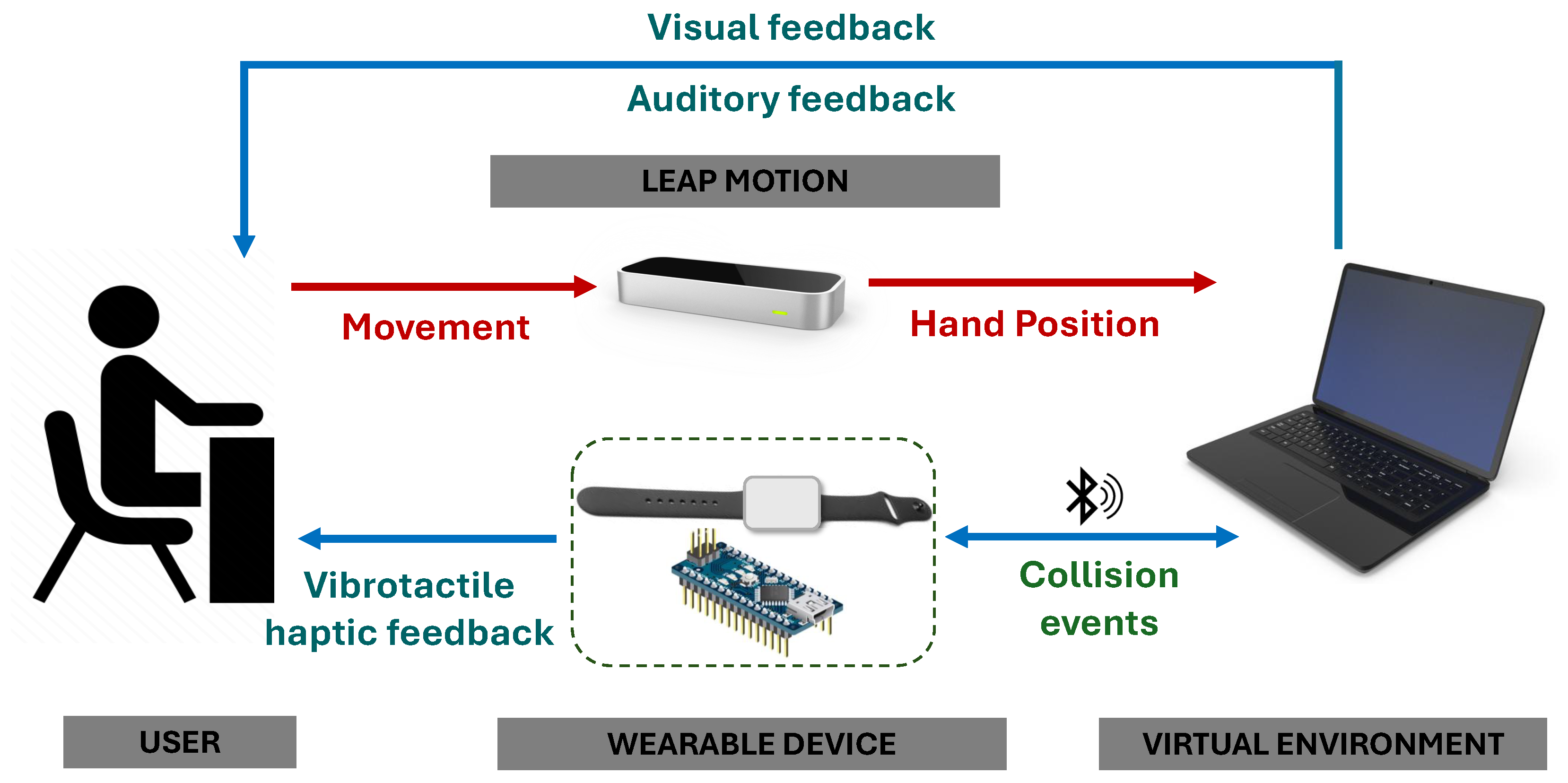
Figure 1 shows the general diagram of the proposed system’s operation. The user must place their hand below the LMC device to allow tracking of the performed movements, which are displayed on the computer screen running the VE that provides visual and auditory feedback. Based on the user’s actions (such as collisions with objects or error detection), it also delivers vibrotactile feedback.
The VE was organized into two main components: a graphical user interface (GUI) that manages user sessions and configuration, and three virtual scenarios, each structured across three progressive difficulty levels with a dedicated task mechanic. Both components are described in detail in the following subsections.

3.2.1. Graphical User Interface (GUI)

According to the user-centered design approach, the VE is intended for two types of user groups: physical therapists and patients requiring upper-limb rehabilitation.
The GUI follows the workflow described below:
  • Login: The physical therapist enters their username and password.
  • Patient registration: A new patient is registered (name, age, sex, diagnosis), or an existing patient is selected. Clinical observations can also be added.
  • Settings: Parameters such as game mode, sound, and the selection of scenarios and difficulty levels are configured.
  • Game mode selection:
    (a)
    Both hands: The game starts with the right hand and switches to the left hand halfway through the level.
    (b)
    Single hand: The UL to be used for the exercises is selected.
  • Scenario and level selection: The user can select one of four gameplay modes.
    (a)
    By game: A single scenario with its three difficulty levels.
    (b)
    By level: All three scenarios at a single difficulty level.
    (c)
    Game and level: A specific scenario and desired difficulty level.
    (d)
    Play all: All scenarios and all levels.
  • Tutorial and virtual scenarios execution: Before the game begins, five video tutorials are presented. The first is a general tutorial that appears before any gameplay option is selected. The four remaining scenarios explain how to perform the exercises correctly. Bubbles provides two tutorials: an easy level (12 s) and one for intermediate and advanced levels (13 s); the Maze tutorial lasts 24 s; and the Fish tutorial lasts 41 s. After completing each tutorial, the corresponding scenario is launched based on the selected settings.
  • End of session: A summary is displayed showing the patient’s name, ID, number of correct actions, errors, and session duration.

3.2.2. Virtual Scenarios

Based on the survey, three virtual scenarios were defined, each with three levels of difficulty, designed to fulfill the movement requirements of conventional rehabilitation for UL.
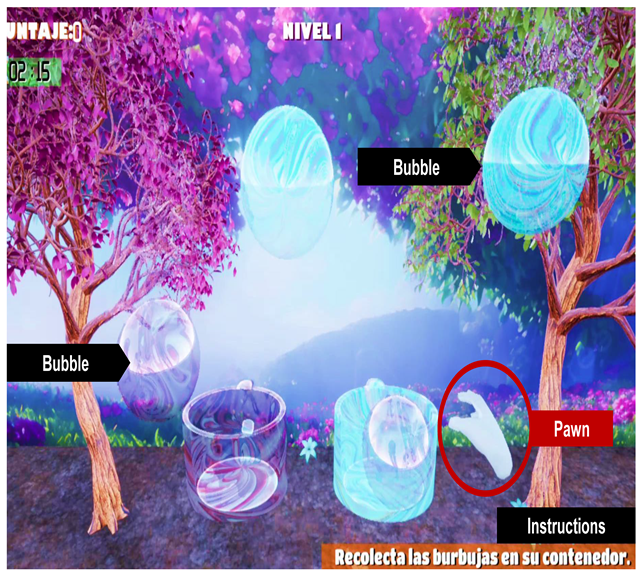
  • Bubbles: Set in a flower field, bubbles of varying sizes and colors appear. In the easy level, bubbles float horizontally; in the intermediate and advanced levels, they fall vertically like raindrops. Each level involves different tasks:
    (a)
    Easy: Users must pop bubbles (large or small) as instructed, using a pinch gesture, thumb to index finger. Successfully popping bubbles increases the score. Movements include metacarpophalangeal flexion and slight interphalangeal flexion, which are commonly employed in UL rehabilitation exercises.
    (b)
    Intermediate and Advanced: Users collect bubbles and sort them by color into containers. The forearm must be supinated to catch a bubble and pronated to release it. Movements include forearm pronation/supination. Difficulty increases with the number of bubbles (two in intermediate, four in advanced) and the speed of appearance.
  • Maze: The scene features a 3D maze on the far wall of a room. Users guide a virtual hand through a sequence of spheres representing the solution path to reach a diamond. Once the diamond is obtained, a new level is automatically generated with a different trajectory; i.e., longer and more complex maze paths, with varying shapes and sizes. Movements involve elbow and shoulder flexion, and metacarpophalangeal flexion–extension.
  • Fish: Set in a marine environment, users control an orange fish using wrist and elbow movements. The goal is to collide with point-gaining objects (bubbles, starfish) while avoiding harmful ones (rocks, sharks). Sensitivity settings adjust the fish’s response speed, allowing customization to the user’s range of motion. Higher levels increase the number, type, and speed of incoming objects. Moreover, as the levels progress, both the speed at which objects approach and the number and variety of objects increase. Table 1 shows the objects present in each level of the Fish scenario. Table 2 illustrates the movement of the pawn represented by the Fish (a manipulation metaphor) based on the user’s executed motions. For ulnar and radial deviation of the wrist, the direction of the pawn’s movement changes depending on whether the left or right UL is used. For the rest of the movements, including flexion/extension of wrist and elbow, the resulting displacement is the same with either hand. Initially, the user must place their wrist in a neutral position, with the forearm in pronation, the elbow semiflexed, and the arm positioned close to the side of the body.
Table 3 shows the final visualization of the three designed scenarios. In the screenshot of each scenario, the top section displays the current level, accumulated score, and elapsed time. Additionally, an instruction box appears in the bottom-left corner to guide users during the interaction. In the Bubbles and Maze scenarios, a virtual hand is used as the manipulation metaphor, while in Fish, the metaphor is represented by an orange fish.

3.3. Wearable Device Design

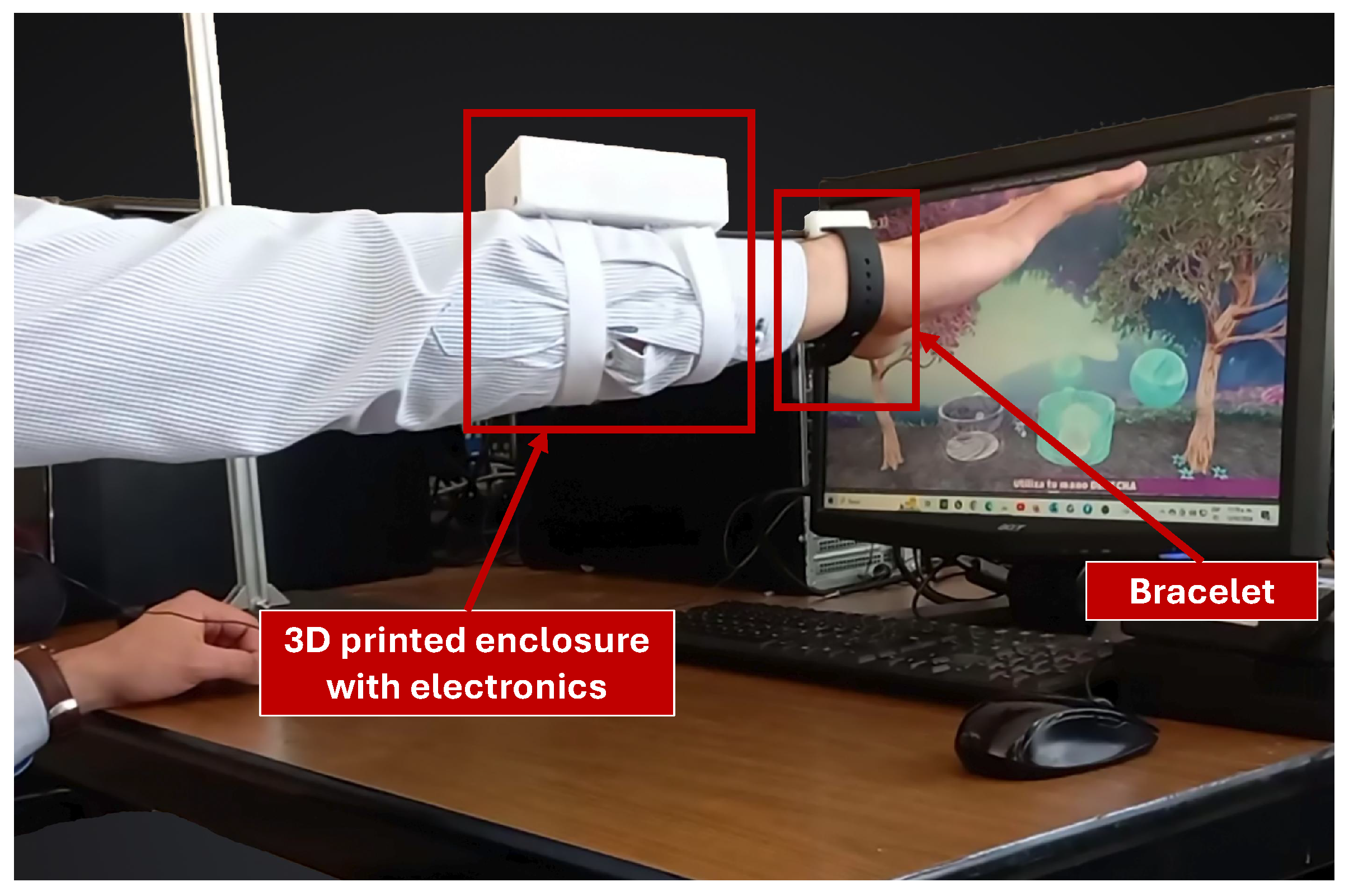
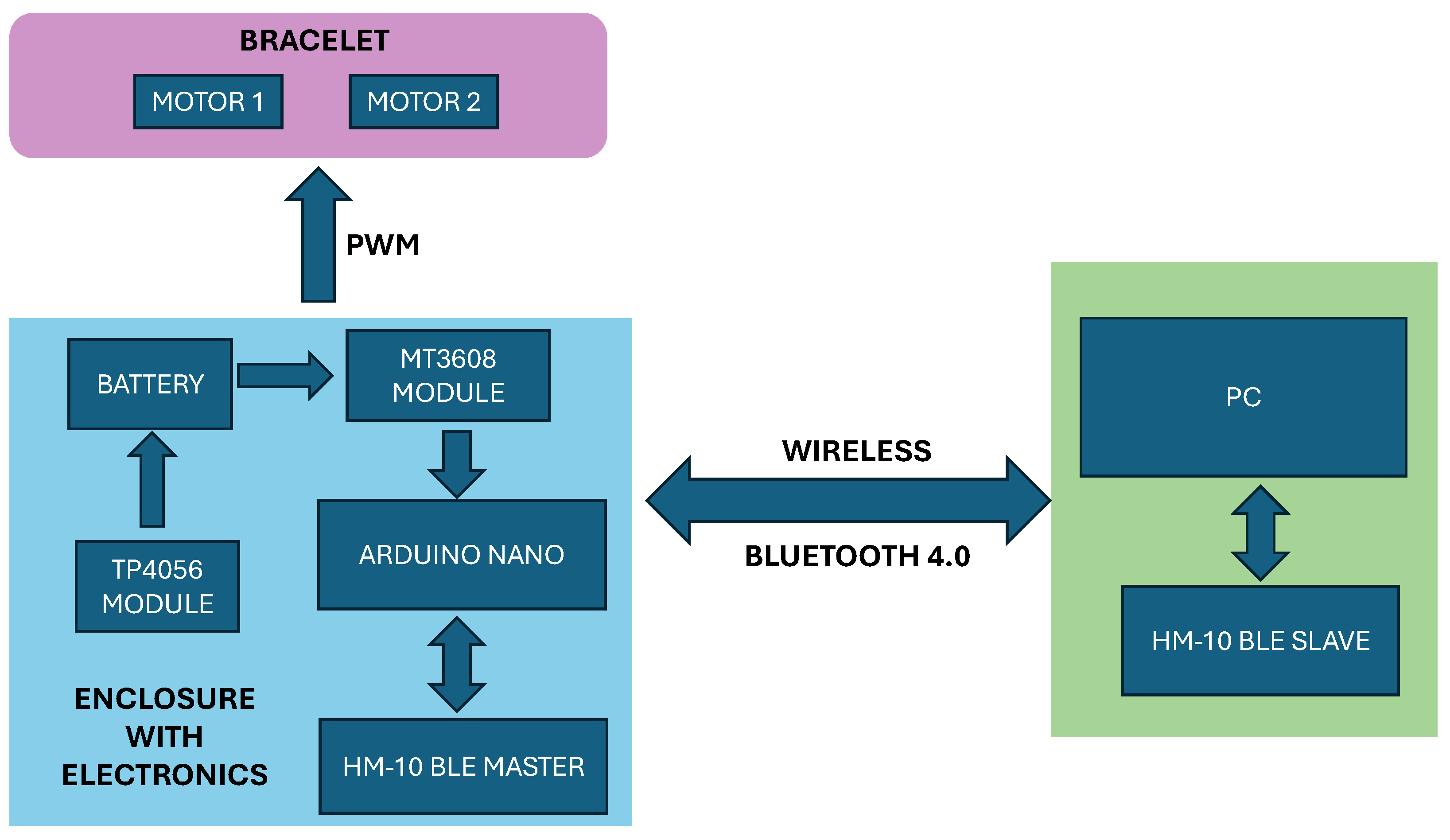
A custom wearable device was designed as a bracelet, with a 3D-printed enclosure housing electronic components, including an embedded Arduino NANO-based system, a Bluetooth module, a charging module, and a battery. The bracelet (secured using two adjustable straps) features two vibration motors that deliver vibrotactile feedback upon receiving a PWM signal from the Arduino NANO. This feedback enables the user to perform closed kinematic chain movements, potentially enhancing the user’s perception of virtual object localization. Figure 2 shows the wearable device worn on a participant’s arm.
The Arduino NANO board is powered by 5 V supplied from an MT3608 step-up regulator, which is connected to a 3.7 V lithium battery. In addition, a TP4056 charging module is included for charging the battery.
As shown in Figure 3, communication between the wearable device and the VE in UE is achieved through the Universal Asynchronous Receiver–Transmitter (UART) serial communication protocol. Two HM-10 Bluetooth modules are configured in a master–slave setup, operating at 125 Hz (9600 baud) with an 8-byte transmission message. The master Bluetooth module is connected to the Arduino NANO, while the slave module interfaces with the PC via a serial-to-USB adapter.
To enable interaction between the wearable bracelet and the VE, the following components were implemented in UE: (1) a “Serial COM” (https://github.com/videofeedback/Unreal_Engine_SerialCOM_Plugin accessed on 21 May 2026) plugin specifically designed for Arduino and (2) a Blueprint for collision detection. These components allow UE to transmit data to the Arduino NANO upon detecting collisions with virtual objects or workspace boundaries. Upon receiving this input, the embedded system activates one or both vibrotactile motors through an 8-bit PWM signal, allowing the user to perceive different vibration intensities and patterns depending on the performed action. As shown in Table 4, during standard collision events, a single motor was activated; however, to intensify vibrotactile feedback during specific events (e.g., collisions with sharks and rocks in the Fish scenario), both motors were activated simultaneously. The PWM signal remained continuously active while the collision event persisted in the VE. The vibrotactile motors operated at a fixed nominal vibration frequency determined by the electromechanical characteristics of the motor under the applied PWM duty cycles. The PWM duty cycle values were identical for all participants and were not individually calibrated.
The end-to-end latency between collision detection in UE and vibrotactile stimulation was not directly measured during the experimental sessions. However, with the implemented UART configuration of 1 start bit, 8 data bits, and 1 stop bit (10 bits per byte), the 8-byte transmission message corresponds to 80 transmitted bits. Therefore, the theoretical time required to fully transmit the 8-byte serial message is approximately 80/9600 = 8.33 ms. This value represents only the time required to transmit the complete message via UART and does not include delays associated with UE processing, Bluetooth transmission, Arduino parsing, PWM updates, or vibration motor response. Consequently, the actual collision-to-vibration latency remains unquantified and should be directly measured in future work using synchronized timestamps or oscilloscopic measurements.
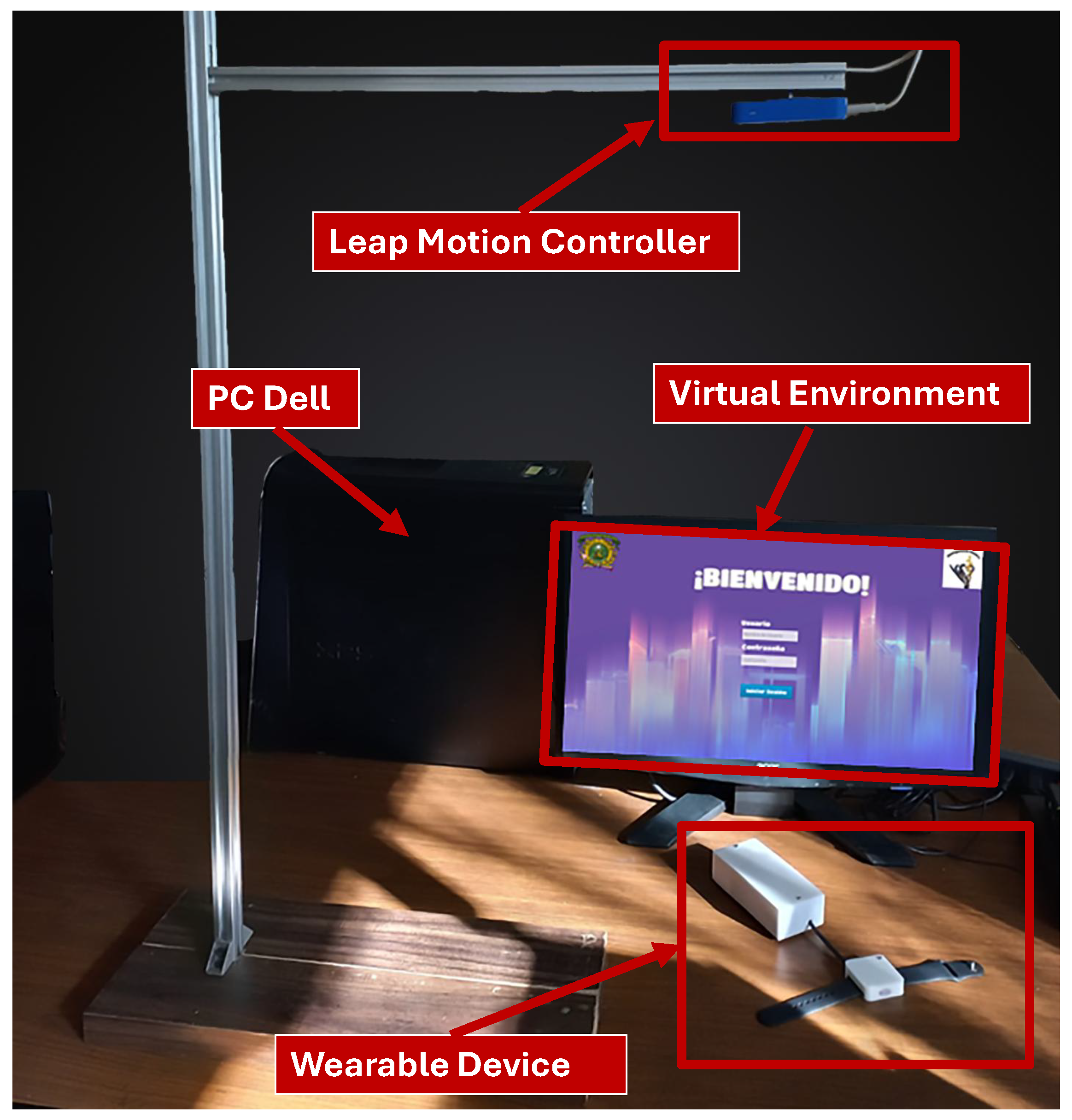
Figure 4 shows the final integration of the components comprising the developed VR rehabilitation system. The system was implemented on a Dell computer equipped with an Intel Core i7 processor, 16 GB of RAM, and an NVIDIA GeForce GTX 650 Ti graphics card.

4. Testing the System

To evaluate the system’s performance, a between-subjects study was conducted with 26 healthy participants aged between 18 and 45 years old. Participants were randomly assigned to one of two groups prior to the experimental session. In Group 1 ( n initial = 15 ), participants used the system without the wearable device; however, only 13 assessments were retained as valid. Two sessions were excluded due to technical errors; specifically, one case of persistent LMC tracking failure caused by involuntary hand occlusion during the familiarization phase, and one case of incomplete session data resulting from an unexpected software interruption. In Group 2 ( n initial = 11 ), participants used the complete system (LMC with wearable device); two sessions were similarly excluded due to Bluetooth communication failures between the wearable device and the PC, which prevented consistent haptic feedback delivery. The final sample comprised Group 1 ( n = 13 ) and Group 2 ( n = 9 ).

4.1. Evaluation Protocol Description

This study was classified as minimal-risk research, as it involved evaluating the user experience in healthy participants. The protocol was approved by the Research Ethics Committee of the School of Medicine, Autonomous University of the State of Mexico (register number 008.2025; see Appendix A for the Spanish version and Appendix B for the English version), and was conducted in accordance with the Declaration of Helsinki and the Regulations of the General Health Law on Health Research (Title Two: Ethical Aspects of Research in Human Subjects, Chapter I, Article 17).
Participants with a history of UL injuries were excluded from the study, and each session, lasting approximately 40 min from the initial explanation to the completion of the final questionnaire, was divided into two parts: one using the dominant hand and the other the non-dominant hand. In the first part (about 19 min), participants played all levels of each scenario, while in the second (about 2 min) they played only the final level of the Fish scenario. For Group 2, the wearable device was always worn on the active UL, placed on the dominant hand and forearm during the first part and repositioned on the non-dominant UL before the second part to ensure that vibrotactile feedback remained spatially congruent with the limb controlling the virtual scenarios.
The Fish scenario was chosen for the non-dominant hand condition because it requires coordinated wrist and elbow movements involving multiple upper-limb joints, making it the most representative scenario for exploring potential differences between dominant and non-dominant limb interactions. However, since all recruited participants were right-handed, a comparative laterality analysis was not feasible and is deferred to future work.
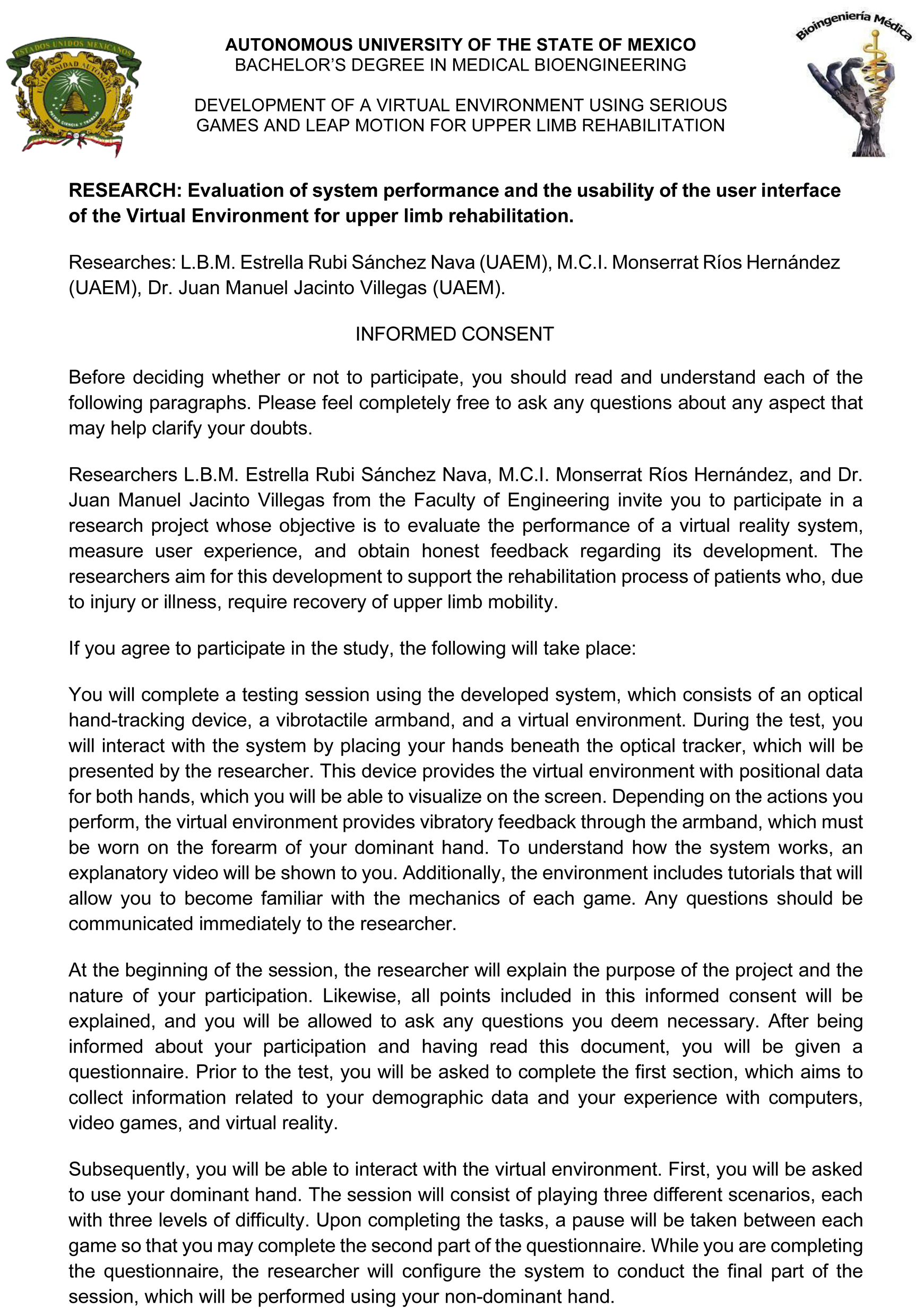
Prior to participation, all individuals were informed of the test’s duration, the study’s objectives, and the content of each session. They received a comprehensive informed consent form (see Appendix C) detailing the objectives of the research project, the interaction process with the VE, the testing procedure, and the confidentiality of data, which would be used exclusively for research purposes. If they agreed to participate, they signed the form.
To ensure a clear understanding, an explanatory video was provided (https://youtu.be/_q7nIEPFBkQ accessed on 21 May 2026), illustrating the system’s functionality and demonstrating user interaction with the VE, such as a general overview of the scenarios, levels, exercises, and mechanics involved.
Afterward, a questionnaire comprising three sections was developed to collect participant feedback. Before the first experimental session, participants were asked to complete the first section of the questionnaire. The remaining sections were administered during the experiment, as described below. The three sections of the questionnaire are described as follows:
(a)
Demographic information (administered before the session) collected demographic information, including level of computer proficiency, experience with video games and VR, and prior use of optical motion trackers. This data was used to characterize participants’ technical backgrounds across both groups.
(b)
Workload assessment (administered after each scenario) assessed the perceived mental workload of each virtual scenario using the Raw NASA Task Load Index (Raw NASA-TLX) [26,41]. The Raw NASA-TLX version was used because it evaluates workload dimensions independently—without subjective weighting between dimensions—thereby preserving the individual contribution of each subscale and avoiding information loss [26]. The six evaluated dimensions are mental demand, physical demand, temporal demand, performance, effort, and frustration level. Each dimension is rated on a scale from 1 to 100, where 1 indicates a very low level and 100 a very high level. In addition to per-dimension scores, an overall workload score was computed for each participant as the unweighted mean of the six subscales [26], providing a global index of perceived workload for between-group comparison.
(c)
User experience evaluation (administered at the end of the session) explored the user’s experience with the system through four subsections: (i) the short AttrakDiff questionnaire [25], consisting of 10 pairs of opposing adjectives to assess pragmatic and hedonic quality; (ii) the 10-item SUS scale [27,42] to evaluate perceived usability; (iii) a purpose-built questionnaire (Table 5) to assess physical discomfort, enjoyment of the scenarios, and the clarity of information provided by the VE; and (iv) a 1–5 rating of the overall system based on user perception (1 = bad, 5 = good) to identify specific errors and opportunities for improvement.
Before starting the session, participants were given time to familiarize themselves with the system using the Bubbles scenario. The duration of this familiarization phase was not fixed, adapting to each participant’s pace. The goal was to ensure proper hand placement under the LMC device, help participants identify the interaction area, and observe how their movements were represented in the VE. This phase was conducted in a relaxed, pressure-free atmosphere.
Next, the first part of the session began with the participant’s dominant hand, covering the Bubbles, Maze, and Fish scenarios in that order. After completing the third level of each scenario, a brief pause was taken to complete the (b) Workload assessment section of the questionnaire. The tutorial for the next scenario was then shown before continuing.
For the second part, the researcher reconfigured the system to enable control with the non-dominant hand and selected the “By game and level” mode, choosing the third level of the Fish scenario. Upon completion, participants were asked to complete the (c) User experience evaluation section of the questionnaire.

4.2. Experimental Testing

Functionality tests were conducted with two groups, and participants were randomly assigned to each. The first group used the system without the wearable device, while the second group tested the complete system. Computer proficiency was assessed using a self-reported scale from 0 (low experience) to 10 (high experience), collected in the (a) Demographic information section of the questionnaire, and was used to characterize participants’ technical background across both groups.
  • Group 1 (System without Wearable Device): This group consisted of 6 men and 7 women. Regarding educational background, 8 participants were undergraduate students, 4 were master’s students, and 1 was a PhD student.
    Participants rated their computer proficiency as follows: two rated themselves as 9, one as 8.5, six as 8, three as 7, and one as 6. Weekly computer usage was reported as follows: four users between 1 and 10 h, two between 11 and 20 h, four between 21 and 30 h, and three for more than 40 h per week. Regarding video game usage, six participants reported playing rarely, three occasionally, and four frequently. Eight participants were familiar with VR and had previously used a VR system. One participant was familiar with the LMC; five participants reported knowledge of the Kinect sensor.
  • Group 2 (Complete System): This group included 4 men and 5 women. Regarding educational background, six participants had completed high school, two held a bachelor’s degree, and one held a master’s degree. In terms of computer proficiency, participants reported the following ratings: two rated themselves as 9, two as 8, one as 7, and four as 6. Weekly computer usage was distributed as follows: two participants reported between 10 and 20 h, three between 21 and 30 h, three between 31 and 40 h, one between 41 and 50 h, and one for 60 h per week. Regarding video game use, one participant did not play, three played rarely, two played occasionally, and three played frequently. Eight participants were familiar with VR, and five had previously used a VR system. No participants were aware of the LMC or had previously used it; six had interacted with the Kinect sensor.
It should be noted that the two groups differ in educational background, with Group 1 comprising predominantly university-level students (undergraduate and graduate) and Group 2, which contains a higher proportion of high school graduates. This difference arises from the nature of participant recruitment: participants were recruited using convenience sampling, and after enrollment were randomly assigned to Group 1 or Group 2. Convenience sampling is common in preliminary usability studies [43,44] and was used here to capture a broader range of user profiles, but it did not control for educational level as a stratification variable. Although educational level and prior technology experience may influence subjective responses to novel systems, both groups showed comparable ranges of computer proficiency ratings and VR familiarity, which partially mitigates the potential influence of these factors on the reported outcomes. This heterogeneity is acknowledged as a limitation, and future studies should employ stratified or quota sampling to ensure group comparability on these variables.

5. Results

This section presents the quantitative and qualitative results obtained from the evaluation of the VR rehabilitation system. Three validated instruments were used: the short AttrakDiff questionnaire to assess pragmatic and hedonic quality, the Raw NASA Task Load Index (NASA-TLX) to measure perceived workload, and the System Usability Scale (SUS) to evaluate overall usability. Additionally, a custom questionnaire was administered to gather participants’ perceptions regarding system functionality.

5.1. User Experience: AttrakDiff Questionnaire

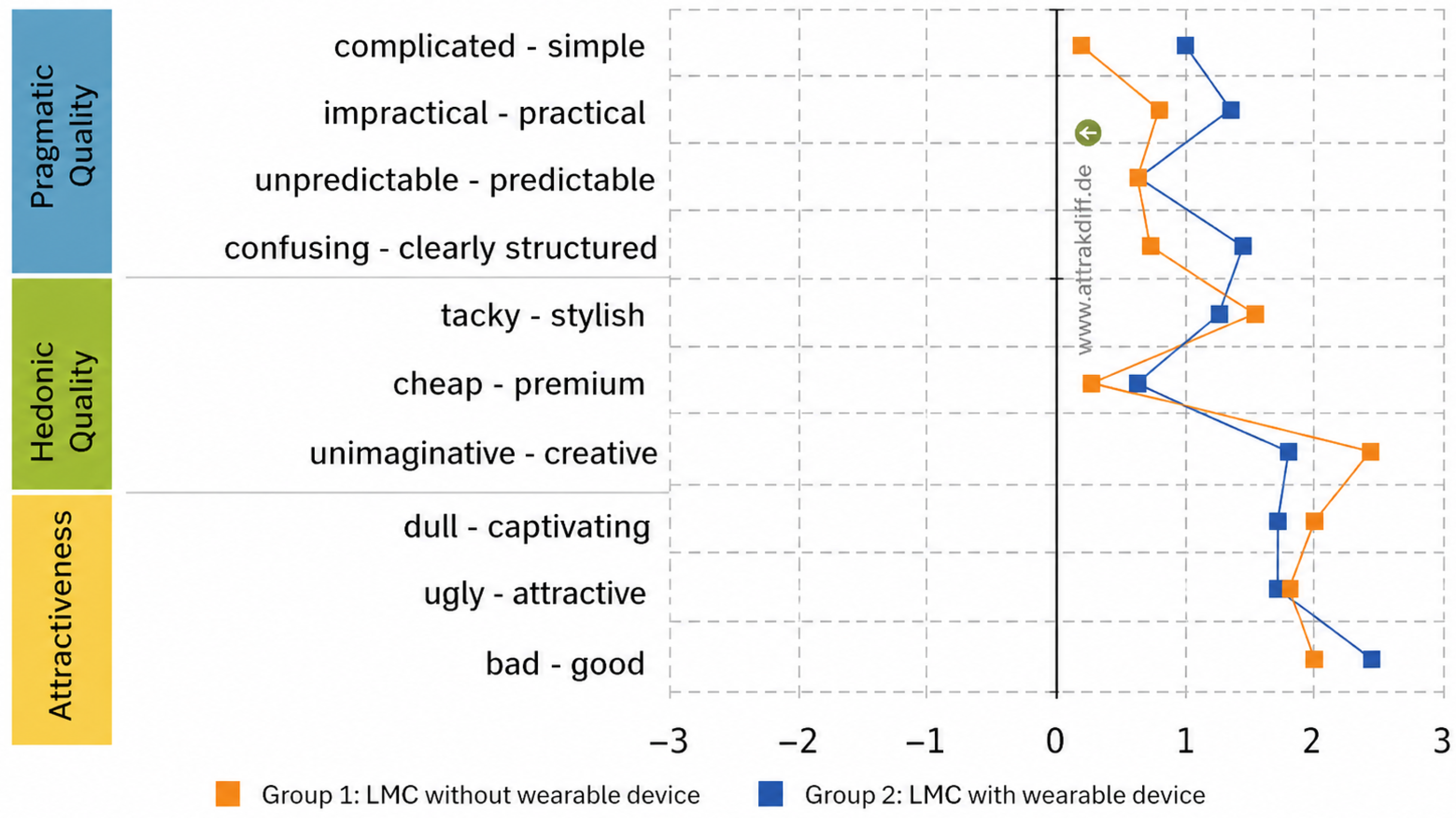
The AttrakDiff questionnaire evaluates user experience across two dimensions: pragmatic quality (PQ), which reflects task-oriented functionality; and hedonic quality (HQ), which captures experiential and emotional aspects of interaction. Figure 5 presents the mean scores for each word pair, comparing the two experimental conditions.
Both groups rated the system positively across most dimensions. However, Group 2 (with a wearable device) consistently scored higher than Group 1 (without a wearable device). The most pronounced differences were observed in the pragmatic dimension: the system with the wearable was perceived as simpler, practical, and clearly structured. In the hedonic dimension, it was rated as more premium and creative. Overall attractiveness also favored Group 2, with higher scores on the goodbad dimension.
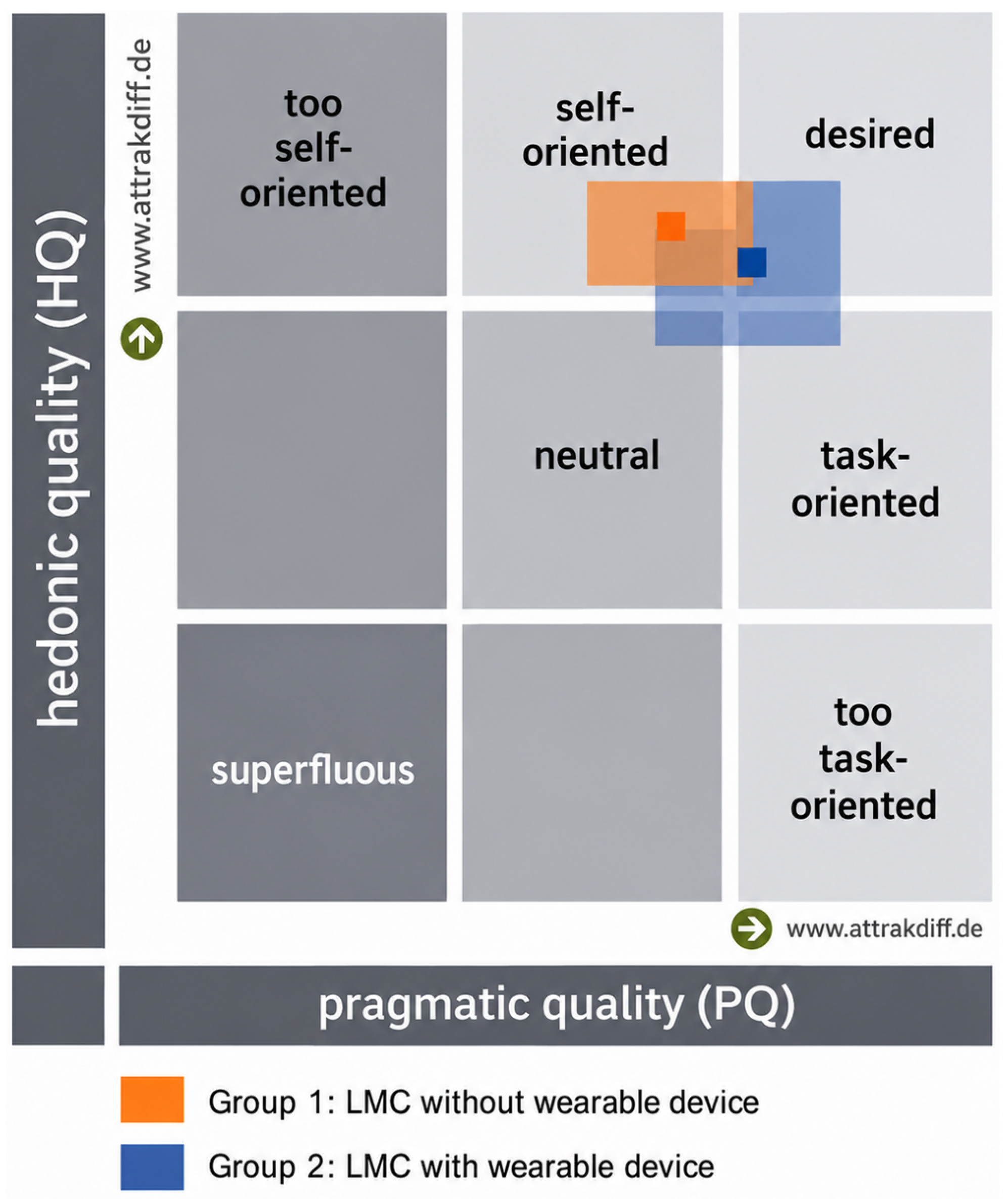
Figure 6 shows the portfolio representations of both systems in the AttrakDiff classification space. The system with the wearable device (Group 2, blue) is positioned in the desired region, indicating a balance between high pragmatic and high hedonic quality. In contrast, the system without the wearable (Group 1, orange) falls within the self-oriented region, reflecting lower pragmatic quality despite acceptable hedonic quality.

5.2. Perceived Workload: Raw NASA-TLX

The Raw NASA-TLX was selected to evaluate perceived workload because it assesses six independent dimensions—mental demand, physical demand, temporal demand, effort, performance, and frustration—without requiring participants to assign subjective weights across dimensions. This approach preserves the individual contribution of each subscale and avoids potential information loss inherent in the weighted NASA-TLX version [26].
Prior to statistical analysis, data normality was assessed using the Shapiro–Wilk test, which is appropriate for small sample sizes ( n < 50 ). The results showed that the workload scores in Group 2 deviated significantly from a normal distribution in two of the three scenarios (Bubbles and Maze), as well as in the global average, while Group 1 did not exhibit significant departures from normality (Table 6). Consequently, the non-parametric Mann–Whitney U test was used to compare workload scores between groups.
Overall workload was computed as the unweighted mean of the six NASA–TLX subscales for each participant [26]. Table 7 summarizes the Mann–Whitney U test results for overall perceived workload across the three scenarios and for the global average. Although none of the between-group comparisons reached conventional statistical significance at the α = 0.05 level, all three scenarios and the global average showed the same directional trend, with Group 2 (with the wearable device) reporting lower mean workload scores than Group 1 (without the wearable). Effect sizes, expressed as rank-biserial correlation coefficients r, were consistently in the moderate range (r 36 41 % ). The corresponding post hoc power estimates, based on the observed effect sizes and group sizes ( n 1 = 13 , n 2 = 9 ), remained modest, ranging approximately from 35–40% (Fish) to 45–50% (Bubbles and global average), below the conventional 80% threshold.
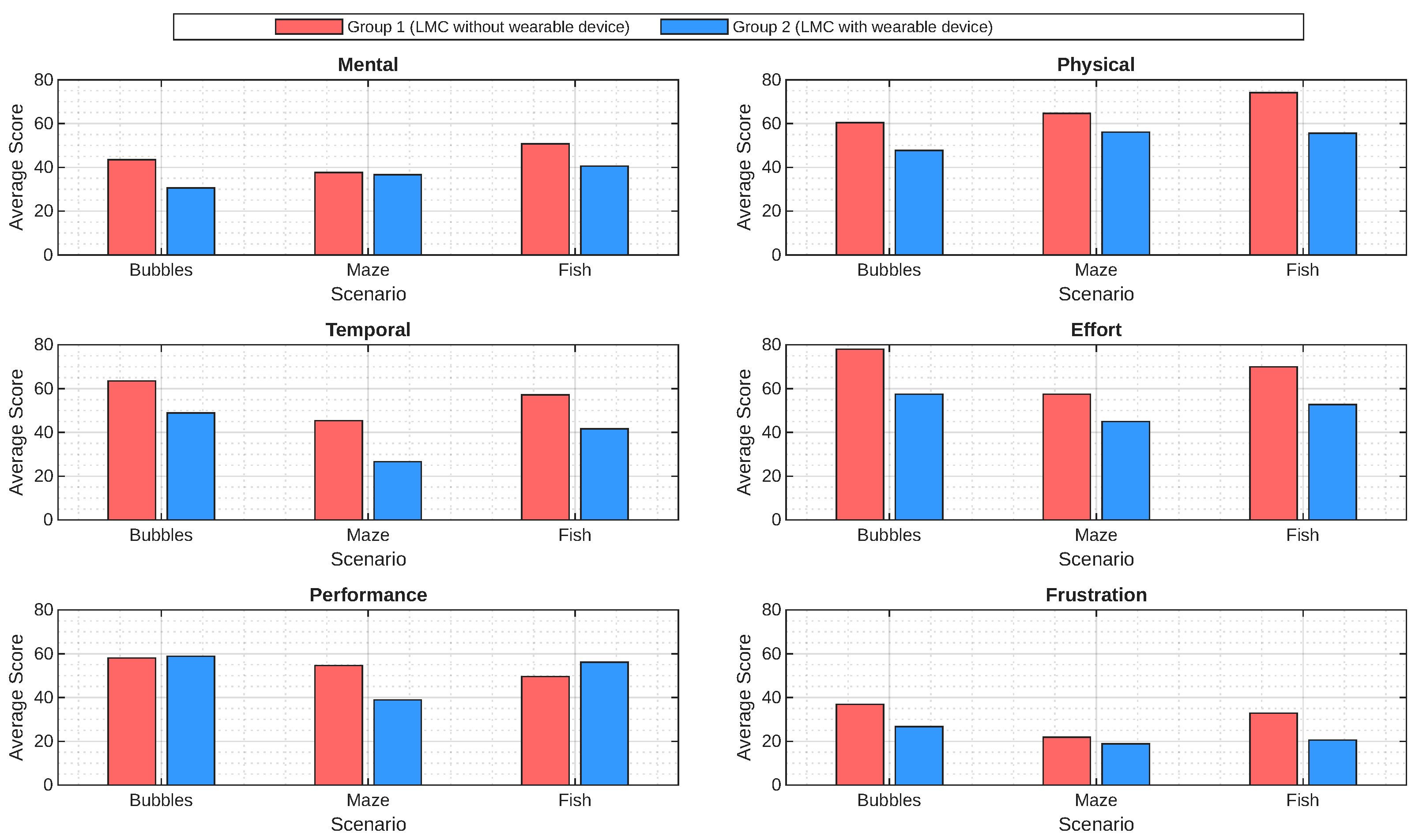
Figure 7 presents the mean scores for each of the six NASA-TLX dimensions across scenarios and groups. Across all three scenarios, Group 2 consistently reported lower scores than Group 1 for mental demand, physical demand, temporal demand, effort, and frustration, while reporting slightly higher perceived performance (lower NASA-TLX scores indicate better perceived performance). These patterns are consistent with the overall workload findings summarized in Table 7.

5.3. System Usability Scale (SUS)

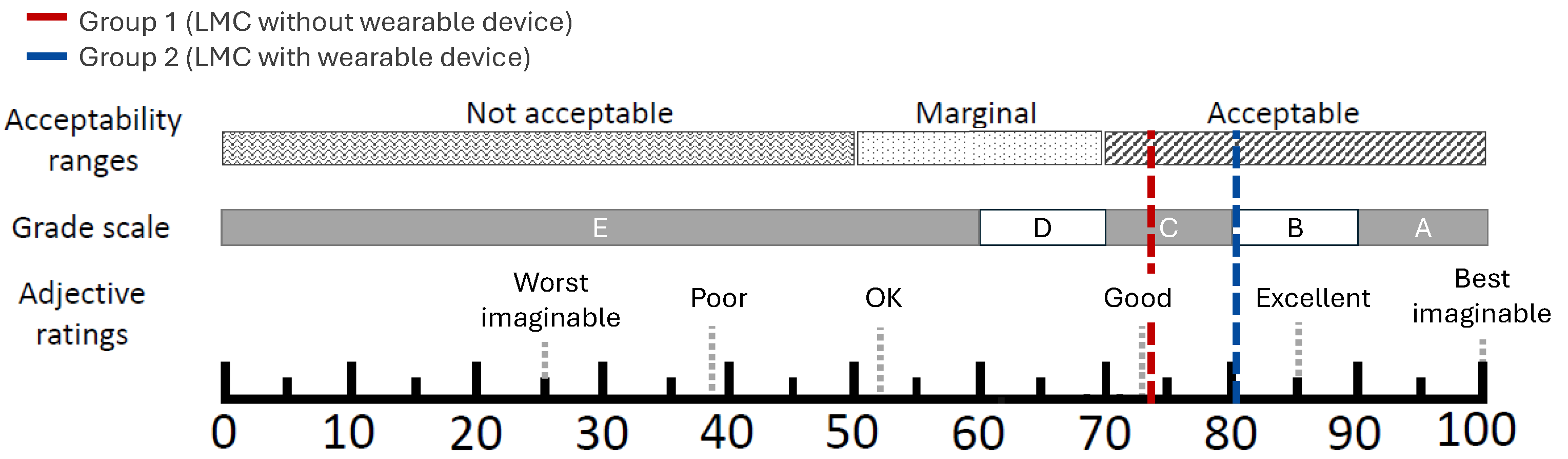
The System Usability Scale (SUS) was administered to assess overall perceived usability of the system. SUS scores range from 0 to 100, with values above 68 generally considered acceptable and scores above 80 classified as excellent [27,45].
Table 8 and Table 9 report the individual SUS scores for participants in Group 1 and Group 2, respectively. Group 1 (without the wearable device) achieved a mean SUS score of 74.42 ± 12.50 , exceeding the acceptability threshold and corresponding to a good usability rating, whereas Group 2 (with the wearable device) obtained a higher mean score of 80.83 ± 5.15 , falling within the excellent range (Figure 8).
Before comparing groups, data normality was assessed using the Shapiro–Wilk test. As shown in Table 10, SUS scores in Group 1 did not deviate significantly from normality, whereas Group 2 exhibited a significant departure from normality ( W = 0.80 , p = 0.02 ). In light of this violation of the normality assumption in one group and the relatively small sample sizes, a non-parametric Mann–Whitney U test was used to compare overall SUS scores between groups (Table 11). The analysis did not reveal a statistically significant difference in usability ratings (U = 43.0, p = 0.31), although Group 2 showed descriptively higher SUS scores than Group 1, with a small effect size (r = 0.22) and low post hoc power (approximately 15–20%), reflecting the limited sensitivity associated with the available sample size.
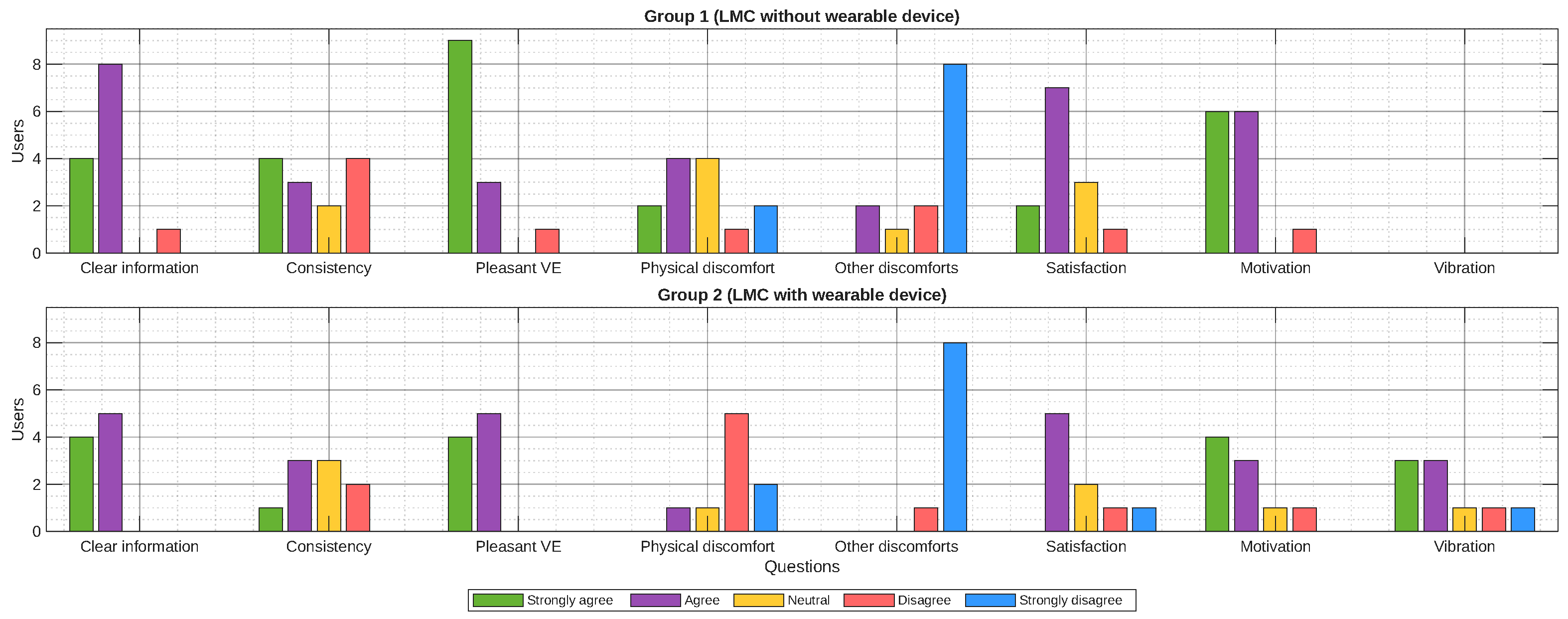
Regarding the additional statements included in the SUS questionnaire, the response distributions are shown in Figure 9. Group 2 exhibits a higher concentration of positive responses, particularly in the Clear information, Consistency, and Pleasant VE categories, where Strongly agree ratings predominate. This pattern suggests that participants perceived the information presented in the VE as clearer and more coherent, and that their movements were more consistent with those shown on screen. Overall, Group 2 shows fewer negative responses than Group 1, indicating a more favorable subjective appraisal of the system.
In contrast, Group 1 displays a more dispersed pattern, with a greater proportion of negative responses such as Disagree and Strongly disagree, especially for items related to Satisfaction, Motivation, and perceived discomfort. Although some participants in Group 2 also reported physical discomfort, these reports were less frequent and did not substantially affect the overall system judgment. Taken together, these findings suggest that integrating the wearable device contributes to a more positive, coherent, and comfortable user experience.
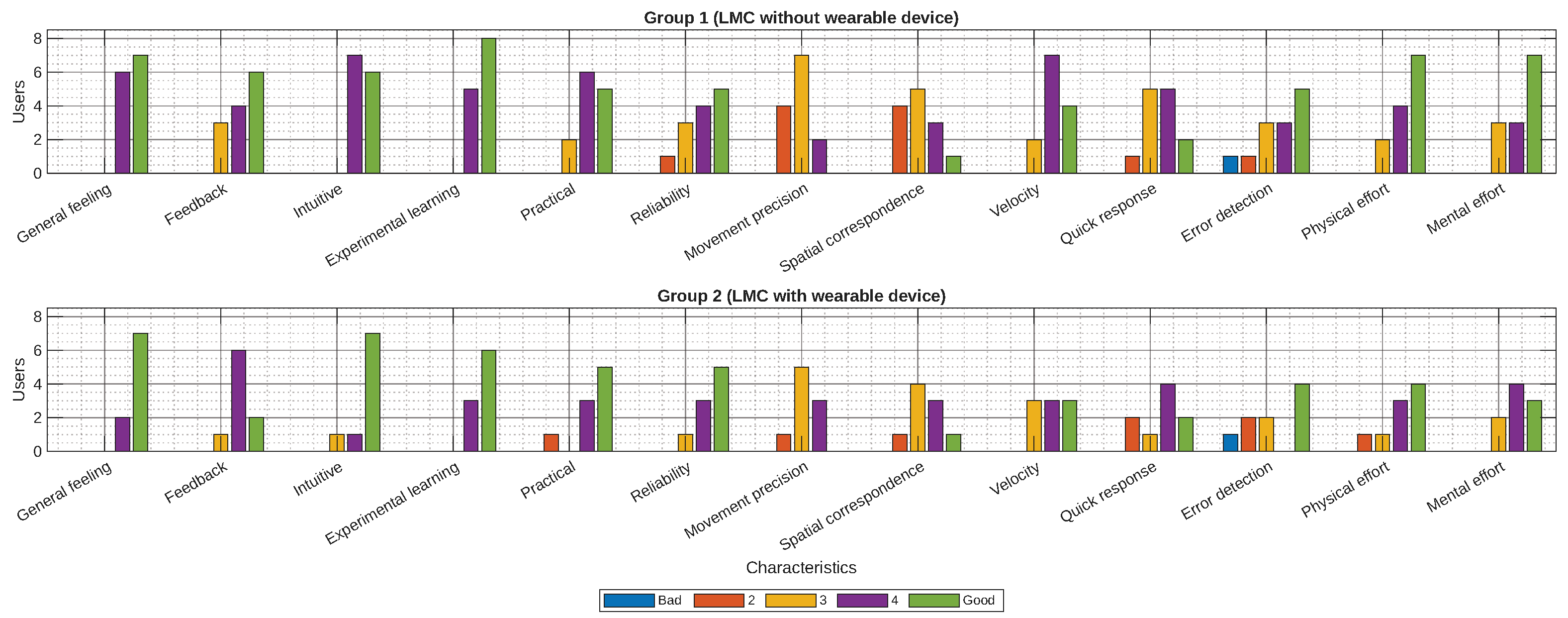
Figure 10 presents the results of the general system evaluation based on participant perception. When using the complete system (Group 2), none of the evaluated features received the lowest rating (1, poor), whereas Group 1 received poor ratings for 9 of the 13 assessed features. This contrast indicates a more consistently positive perception of the system when the wearable device was integrated.
In Group 2, Experimental learning received the highest ratings, followed by General feeling, with most scores between 4 and 5. Participants in Group 1 also rated Experimental learning positively; however, scores for General feeling were more variable, ranging from 2 to 5. Here, Experimental learning reflects the system’s capacity to support learning through practice, whereas General feeling captures the emotional state after completing the tasks, with lower ratings indicating stress or frustration and higher ratings reflecting curiosity or calmness.
For the Feedback feature, which evaluates the quality and clarity of information provided to the user, Group 2 obtained more positive ratings. This improvement can be attributed to the inclusion of vibrotactile feedback, which complemented the visual and auditory cues present in Group 1. A similar trend was observed for Movement precision, defined as the perceived similarity between users’ physical gestures and their visual representation on screen, where Group 2 received higher ratings, indicating a clearer correspondence between action and visual feedback.
In terms of Spatial correspondence, understood as the extent to which feedback helps users to identify the relative position of virtual objects within the manipulation metaphor, Group 2 demonstrated a marked improvement. Participants in Group 2 reported enhanced spatial perception in the VE; they described being able to locate and track virtual objects more accurately. These are subjective perceptions and should not be interpreted as evidence of objective changes in proprioception or motor control. Likewise, for the Quick response feature—defined as the perceived ability of both the VE and the wearable device to respond promptly to user actions—participants in Group 2 reported a clearer subjective sense of immediacy, which they associated with smoother and more fluid interaction.

6. Discussion

The results obtained in this study allow a comprehensive discussion of the proposed system from the perspectives of usability, user experience, and perceived workload. In line with the objectives established in Section 1, the evaluation focuses on whether integrating a wearable vibrotactile device with a LMC-based SG improves interaction quality and user experience in a VE for upper-limb rehabilitation. The study was conceived as a preliminary, user-centered evaluation of a functional prototype with healthy participants, aimed at revealing usability trends and perceptual patterns rather than providing definitive inferential evidence.
It is important to note that none of the between-group comparisons reached conventional statistical significance at the 0.05 level. This outcome is expected, given the small and unbalanced sample sizes and the exploratory nature of the study. Consequently, our interpretation focuses on the convergence of descriptive trends (i.e., consistently better mean scores for the wearable condition), moderate effect sizes, and qualitative feedback, rather than on strict null-hypothesis significance testing. The present findings should therefore be viewed as preliminary design evidence that requires confirmation with larger and more diverse samples, including clinical populations.
From a usability standpoint, the SUS results indicate that both system configurations achieved acceptable usability levels, with Group 1 (without wearable) reaching a good usability rating and Group 2 (with wearable) attaining an excellent level. The higher mean SUS score and reduced dispersion observed in Group 2 suggest that the addition of vibrotactile feedback makes the interaction more predictable and easier to learn, even when LMC-based interaction alone is already sufficient to support task execution. This pattern is consistent with previous user-centered design studies showing that small, well-targeted design changes can produce perceptible gains in perceived usability, even at early development stages.
The AttrakDiff evaluation further reinforces these findings by jointly considering pragmatic and hedonic qualities of user experience. Participants interacting with the complete system positioned it within the desired region of the AttrakDiff space, reflecting a balanced combination of pragmatic quality (task support, clarity, and efficiency) and hedonic quality (stimulation, novelty, and identification). In contrast, the system without the wearable device was located in a more self-oriented region, indicating that, although functional, it did not provide the same level of engagement or experiential richness. This distinction is especially relevant in rehabilitation-oriented VE, where sustained motivation and emotional involvement are critical to encourage adherence and long-term use.
Perceived workload, assessed using the Raw NASA-TLX, provides complementary insight into how users experienced the interaction demands of each scenario. Across the three virtual scenarios and for the global average workload, Group 2 consistently reported lower mean NASA-TLX scores than Group 1, particularly for mental, physical, and temporal demand, effort, and frustration, while simultaneously reporting slightly better perceived performance. Although none of the between-group comparisons reached conventional statistical significance at α = 0.05 , the overall workload analysis—computed as the unweighted mean of the six NASA-TLX subscales for each participant—showed a coherent reduction in mean workload for the wearable condition in all scenarios and in the global average. The associated effect sizes were moderate, and the direction of the differences was consistent across scenarios, which is noteworthy for an early-stage evaluation with small samples.
Importantly, the post hoc power estimates remained well below the conventional 80% threshold across all comparisons: values ranged from 35–50% for the NASA-TLX workload analyses and fell as low as 15–20% for the SUS. This severely limits the ability to detect true between-group differences and precludes generalization to inference. Consequently, the trend-level p-values (0.057–0.094) should not be interpreted as near-significant evidence of an effect, and the moderate effect sizes ( r = 0.36 0.41 ), while potentially meaningful signals for future adequately powered studies, must be treated with considerable caution given the small and unbalanced sample sizes (Group 1: n = 13 ; Group 2: n = 9 ). These values are reported in the spirit of transparent documentation to guide future study design [43,44,46].
A key construct linking these results is spatial correspondence, operationally defined in this work as the user’s perceived alignment between physical actions and corresponding virtual events within the manipulation metaphor. The questionnaire data show that participants in Group 2 rated Movement precision, Spatial correspondence, and Quick response more positively than those in Group 1, and reported clearer, more coherent feedback in items related to Clear information, Consistency, and Pleasant VE. Together with the reductions in NASA-TLX workload dimensions, these findings suggest that vibrotactile cues help users to better predict and interpret the consequences of their actions, thereby reducing reliance on purely visual depth cues and lowering the cognitive effort required to maintain control in desktop VR.
Despite these advantages, some scenario-specific nuances were observed. In particular, in the Maze task, adding vibrotactile feedback may increase attentional demands for some users, occasionally leading to slightly higher frustration scores. This pattern indicates that not all combinations of task complexity and feedback intensity are equally beneficial: in tightly constrained or precision-oriented tasks, excessive or poorly timed haptic cues can compete with visual processing and transiently overload attention. These observations underscore the importance of carefully tuning feedback parameters (timing, intensity, and pattern) and matching them to the specific demands of each therapeutic scenario.
The interpretation of these findings must be framed within the methodological constraints of the study. First, this work should be understood as a preliminary evaluation of a functional prototype conducted with small and unbalanced groups (Group 1: n = 13 ; Group 2: n = 9 ). Such sample sizes are typical of early user-centered design iterations and are adequate for detecting major usability problems and robust trends [46], but they inherently limit the statistical power of between-group comparisons and do not fully control for individual difference confounders such as prior experience with VE, technical background, or gaming familiarity [43,44]. The observed effect sizes and consistent trends across SUS, AttrakDiff, and NASA-TLX are therefore interpreted as preliminary evidence rather than as definitive population-level estimates.
Second, the evaluation relies exclusively on subjective instruments (SUS, AttrakDiff, NASA-TLX, and Likert-type questions), and was conducted only with healthy participants. It is important to distinguish between gross motor interaction—which the proposed system supports through LMC-based hand tracking—and clinically meaningful motor rehabilitation outcomes, which require longitudinal evaluations in patient populations, standardized clinical scales (e.g., Fugl–Meyer Assessment, Wolf Motor Function Test), and objective kinematic metrics. As explicitly acknowledged in the Introduction and Methods, this study did not record kinematic variables, motor performance indicators, or clinical rehabilitation outcome measures. Consequently, the reported findings should be interpreted as participants’ subjective perceptions related to improved interaction quality, usability, workload, spatial awareness, and feedback clarity, rather than as objective evidence of motor recovery, biomechanical alignment, compensatory movement reduction, or rehabilitation effectiveness. The present work demonstrates the feasibility and user acceptance of the proposed prototype, while the evaluation of its therapeutic efficacy remains a direction for future research.
Additionally, the present evaluation was conducted exclusively with healthy participants, and the proposed exercises were designed to avoid restricting natural upper-limb movements during interaction. Therefore, users with motor impairments such as tremor, spasticity, reduced finger extension, limited range of motion, or compensatory movement strategies may interact differently with the system, potentially affecting the stability and accuracy of LMC-based hand tracking. Future work must evaluate system performance and usability specifically within these populations.
Third, spatial correspondence in this work is assessed at the perceptual level rather than through objective visuo-motor alignment metrics. The theoretical rationale, developed in Section 2, is that vibrotactile feedback synchronized with virtual events (e.g., collisions with objects or workspace boundaries) can reduce sensory mismatches between visual and haptic information, thereby improving the user’s sense of alignment and agency in desktop VR. The current data support this theoretical account at the level of user reports (higher ratings for movement precision, spatial correspondence, and quick response in Group 2), but do not permit conclusions about changes in proprioception or fine motor control. Future work will need to incorporate motion capture, task performance metrics, and clinical scales to rigorously test these hypotheses in patient populations.
Finally, the sampling strategy introduces additional limitations. Participants were recruited through convenience sampling and then randomly assigned to Group 1 or Group 2, resulting in differences in educational background between groups (with Group 1 containing more university-level participants and Group 2 a higher proportion of high school graduates). Although both groups showed comparable ranges of self-reported computer proficiency and VR familiarity, such heterogeneity may still influence subjective responses to novel technologies. This aspect should be considered when generalizing the findings, and future studies should employ stratified or quota sampling to ensure greater comparability between groups on key demographic and experiential variables.
In summary, the converging evidence from SUS, AttrakDiff, and NASA–TLX suggests that integrating a wireless vibrotactile wearable device into an LMC-based serious game for upper-limb rehabilitation enhances perceived usability, improves user experience, and tends to reduce perceived workload relative to a purely visual–auditory configuration. Although moderate effect sizes were observed across several comparisons, these trends should be interpreted cautiously due to the limited post hoc statistical power associated with the small and unbalanced sample sizes. These benefits appear to be mediated by improved perceived spatial correspondence and clearer, more informative feedback, which together support smoother, more confident interaction in desktop VR. At the same time, the exclusive reliance on subjective measures and the limited statistical power of the analyses warrant a cautious interpretation of the results. Rather than claiming clinical effectiveness, this study provides a structured, multidimensional characterization of user perceptions that informs subsequent design iterations and lays the groundwork for future, larger-scale trials with objective kinematic and clinical endpoints.

7. Conclusions

This work introduced a desktop VR system for UL rehabilitation that combines LMC-based interaction with a custom wireless vibrotactile wearable device. The system was conceived within a user-centered design framework and evaluated in healthy participants using standardized instruments for usability, user experience, and perceived workload.
The results of this preliminary evaluation suggest that augmenting visual–auditory interaction with vibrotactile cues may represent a promising strategy to support upper-limb rehabilitation tasks in desktop VR. In particular, the configuration including the wearable device tended to yield more favorable subjective assessments of the system, pointing to a qualitatively richer and more supportive interaction for end users. Overall, the present results support the feasibility and user acceptance of the proposed prototype; however, they do not demonstrate rehabilitation efficacy. Future studies should include patients and incorporate objective kinematic, biomechanical, and clinical outcome measures.
At the same time, the study was intentionally limited in scope: it relied on small, unbalanced groups, exclusively subjective measures, and a healthy population. As such, the present findings should be interpreted as early design evidence rather than as proof of motor recovery or clinical efficacy. The main value of this work lies in mapping perceptual trends and identifying design directions that can guide subsequent iterations.
Future research will build on these insights by recruiting larger, more balanced samples, incorporating objective kinematic and performance metrics, and extending the evaluation to clinical populations. It will also explore adaptive vibrotactile strategies and further hardware refinements to improve comfort and integration into routine therapy. Within this longer-term agenda, the proposed system is envisioned as a complement to conventional physical therapy, aimed at enhancing engagement and interaction quality in VE rather than substituting for rehabilitation professionals.

Author Contributions

Conceptualization, E.R.S.-N., J.M.J.-V. and M.R.-H.; methodology, E.R.S.-N., J.M.J.-V. and M.R.-H.; software, E.R.S.-N. and M.R.-H.; validation, J.M.J.-V., M.R.-H., O.P.-R. and A.H.V.-G.; formal analysis, E.R.S.-N., O.P.-R. and J.M.J.-V.; investigation, E.R.S.-N., J.M.J.-V. and M.R.-H.; data curation, E.R.S.-N.; writing—original draft preparation, E.R.S.-N. and J.M.J.-V.; writing—review and editing, E.R.S.-N., J.M.J.-V., M.R.-H., O.P.-R. and A.H.V.-G.; visualization, E.R.S.-N. and J.M.J.-V.; supervision, J.M.J.-V., M.R.-H. and A.H.V.-G. All authors have read and agreed to the published version of the manuscript.

Funding

This research received no external funding.

Institutional Review Board Statement

This study was conducted in accordance with the Declaration of Helsinki, and the protocol was approved by the Research Ethics Committee of the Faculty of Medicine of the Autonomous University of the State of Mexico (CONBIOETICA-15-CEI-002-20210531, approval number: 008.2025) on 3 October 2025.

Informed Consent Statement

Informed consent was obtained from all subjects involved in the study.

Data Availability Statement

The data presented in this study are available on request from the corresponding author (the data are not publicly available due to privacy or ethical restrictions).

Acknowledgments

The authors would like to thank the volunteers and the physical therapists from the care organization CEREE for their time and assistance in the user-centered design.

Conflicts of Interest

The authors declare no conflicts of interest.

Abbreviations

The following abbreviations are used in this manuscript:
CEREEState Center for Rehabilitation and Special Education
GUIGraphical User Interface
HMDsHead-Mounted Displays
IVRImmersive Virtual Reality
LMCLeap Motion Controller
NASA TLXNASA Task Load Index
NUINatural User Interface
SGSerious Game
SUSSystem Usability Scale
UEUnreal Engine
ULUpper Limb
VEVirtual Environment
VRVirtual Reality

Appendix A. Research Ethics Committee Approval (Spanish Version)

Virtualworlds 05 00025 i004

Appendix B. Research Ethics Committee Approval (English Version)

Virtualworlds 05 00025 i005

Appendix C. Informed Consent (English Version)
Virtualworlds 05 00025 i006
Virtualworlds 05 00025 i007

References

  1. Mahfouz, D.M.; Shehata, O.M.; Morgan, E.I.; Arrichiello, F. A Comprehensive Review of Control Challenges and Methods in End-Effector Upper-Limb Rehabilitation Robots. Robotics 2024, 13, 181. [Google Scholar] [CrossRef] [Scilit]
  2. Belluzzi, E.; Pozzuoli, A.; Ruggieri, P. Musculoskeletal Diseases: From Molecular Basis to Therapy. Biomedicines 2024, 12, 32. [Google Scholar] [CrossRef] [Scilit] [PubMed]
  3. Institute for Health Metrics and Evaluation (IHME). WHO Rehabilitation Need Estimator. 2024. Available online: https://vizhub.healthdata.org/rehabilitation/ (accessed on 21 May 2026).
  4. Gimigliano, F.; Negrini, S. The World Health Organization “rehabilitation 2030: A call for action”. Eur. J. Phys. Rehabil. Med. 2017, 53, 155–168. [Google Scholar] [CrossRef] [Scilit]
  5. Riener, R.; Harders, M. Chapter 7 Virtual Reality for Rehabilitation. In Virtual Reality in Medicine; Springer: London, UK, 2012; pp. 160–180. [Google Scholar] [CrossRef] [Scilit]
  6. Rego, P.A.; Moreira, P.M.; Reis, L.P. Architecture for serious games in health rehabilitation. In Proceedings of the New Perspectives in Information Systems and Technologies; Springer: Cham, Switzerland, 2014; Volume 2, pp. 307–317. [Google Scholar]
  7. Sabatino, E.; Moschetta, M.; Lucaroni, A.; Barresi, G.; Ferraresi, C.; Podda, J.; Grange, E.; Brichetto, G.; Bucchieri, A. A Pilot Study on Mixed-Reality Approaches for Detecting Upper-Limb Dysfunction in Multiple Sclerosis: Insights on Cerebellar Tremor. Virtual Worlds 2025, 4, 4. [Google Scholar] [CrossRef] [Scilit]
  8. Ríos-Hernández, M.; Jacinto-Villegas, J.M.; Zemiti, N.; Vilchis-González, A.H.; Padilla-Castañeda, M.A.; Debien, B. Development of a lumbar puncture virtual simulator for medical students training: A preliminary evaluation. Int. J. Med. Robot. Comput. Assist. Surg. 2023, 19, e2572. [Google Scholar] [CrossRef] [Scilit]
  9. Laspro, M.; Groysman, L.; Verzella, A.N.; Kimberly, L.L.; Flores, R.L. The Use of Virtual Reality in Surgical Training: Implications for Education, Patient Safety, and Global Health Equity. Surgeries 2023, 4, 635–646. [Google Scholar] [CrossRef] [Scilit]
  10. Li, X.; Elnagar, D.; Song, G.; Ghannam, R. Advancing Medical Education Using Virtual and Augmented Reality in Low- and Middle-Income Countries: A Systematic and Critical Review. Virtual Worlds 2024, 3, 384–403. [Google Scholar] [CrossRef] [Scilit]
  11. Suh, I.; McKinney, T.; Siu, K.-C. Current Perspective of Metaverse Application in Medical Education, Research and Patient Care. Virtual Worlds 2023, 2, 115–128. [Google Scholar] [CrossRef] [Scilit]
  12. Fealy, S.; Irwin, P.; Tacgin, Z.; See, Z.S.; Jones, D. Enhancing Nursing Simulation Education: A Case for Extended Reality Innovation. Virtual Worlds 2023, 2, 218–230. [Google Scholar] [CrossRef] [Scilit]
  13. Ríos-Hernández, M.; Jacinto-Villegas, J.M.; Portillo-Rodríguez, O.; Vilchis-González, A.H. User-centered design and evaluation of an upper limb rehabilitation system with a virtual environment. Appl. Sci. 2021, 11, 9500. [Google Scholar] [CrossRef] [Scilit]
  14. Mubin, O.; Alnajjar, F.; Jishtu, N.; Alsinglawi, B.; Al Mahmud, A. Exoskeletons with virtual reality, augmented reality, and gamification for stroke patients’ rehabilitation: Systematic review. JMIR Rehabil. Assist. Technol. 2019, 6, e12010. [Google Scholar] [CrossRef] [Scilit] [PubMed]
  15. Cerda, I.H.; Therond, A.; Moreau, S.; Studer, K.; Donjow, A.R.; Crowther, J.E.; Mazzolenis, M.E.; Lang, M.; Tolba, R.; Gilligan, C.; et al. Telehealth and virtual reality technologies in chronic pain management: A narrative review. Curr. Pain Headache Rep. 2024, 28, 83–94. [Google Scholar] [CrossRef] [Scilit] [PubMed]
  16. Doumas, I.; Everard, G.; Dehem, S.; Lejeune, T. Serious games for upper limb rehabilitation after stroke: A meta-analysis. J. Neuroeng. Rehabil. 2021, 18, 100. [Google Scholar] [CrossRef] [Scilit]
  17. Somrak, A.; Pogačnik, M.; Guna, J. Suitability and Comparison of Questionnaires Assessing Virtual Reality-Induced Symptoms and Effects and User Experience in Virtual Environments. Sensors 2021, 21, 1185. [Google Scholar] [CrossRef] [Scilit]
  18. Maldonado, P.; Muñoz, D.; Barría, P.; Alberti, P.; Ojeda, C. Proyecto de realidad virtual inclusivo para pacientes con discapacidad motriz. In Proceedings of the Memorias Congreso Iberoamericano de Tecnologías de Apoyo a la Discapacidad; Escuela Colombiana de Ingeniería: Bogotá, Colombia, 2017; pp. 339–345. Available online: https://reasiste.umh.es/portfolio/iberdiscap-2017/ (accessed on 21 May 2026).
  19. Slater, M.; Sanchez-Vives, M.V. Enhancing our lives with immersive virtual reality. Front. Robot. AI 2016, 3, 74. [Google Scholar] [CrossRef] [Scilit]
  20. Pacchierotti, C.; Sinclair, S.; Solazzi, M.; Frisoli, A.; Hayward, V.; Prattichizzo, D. Wearable haptic systems for the fingertip and the hand: Taxonomy, review, and perspectives. IEEE Trans. Haptics 2017, 10, 580–600. [Google Scholar] [CrossRef] [Scilit]
  21. Aguilera-Rubio, Á.; Cuesta-Gómez, A.; Mallo-López, A.; Jardón-Huete, A.; Oña-Simbaña, E.D.; Alguacil-Diego, I.M. Feasibility and efficacy of a virtual reality game-based upper extremity motor function rehabilitation therapy in patients with chronic stroke: A pilot study. Int. J. Environ. Res. Public Health 2022, 19, 3381. [Google Scholar] [CrossRef] [Scilit]
  22. De Los Reyes-Guzmán, A.; Lozano-Berrio, V.; Álvarez Rodríguez, M.; López-Dolado, E.; Ceruelo-Abajo, S.; Talavera-Díaz, F.; Gil-Agudo, J. RehabHand: Oriented-tasks serious games for upper limb rehabilitation by using leap motion controller and target population in spinal cord injury. NeuroRehabilitation 2021, 48, 365–373. [Google Scholar] [CrossRef] [Scilit]
  23. Shah, V.; Cuen, M.; McDaniel, T.; Tadayon, R. A rhythm-based serious game for fine motor rehabilitation using leap motion. In Proceedings of the 2019 58th Annual Conference of the Society of Instrument and Control Engineers of Japan (SICE); IEEE: New York, NY, USA, 2019; pp. 737–742. [Google Scholar]
  24. Postolache, G.; Carry, F.; Lourenço, F.; Ferreira, D.; Oliveira, R.; Girão, P.S.; Postolache, O. Serious Games Based on Kinect and Leap Motion Controller for Upper Limbs Physical Rehabilitation. In Modern Sensing Technologies; Mukhopadhyay, S.C., Jayasundera, K.P., Postolache, O.A., Eds.; Springer International Publishing: Cham, Switzerland, 2019; Volume 29, pp. 147–177. [Google Scholar] [CrossRef] [Scilit]
  25. Hassenzahl, M.; Burmester, M.; Koller, F. AttrakDiff: Ein Fragebogen zur Messung wahrgenommener hedonischer und pragmatischer Qualität. In Proceedings of the Mensch & Computer 2003: Interaktion in Bewegung; Szwillus, G., Ziegler, J., Eds.; Springer: Stuttgart, Germany, 2003; pp. 187–196. [Google Scholar]
  26. Hart, S.G. NASA-task load index (NASA-TLX); 20 years later. In Proceedings of the Human Factors and Ergonomics Society Annual Meeting; Sage Publications: Los Angeles, CA, USA, 2006; pp. 904–908. [Google Scholar]
  27. Brooke, J. SUS: A “Quick and Dirty” Usability Scale. In Usability Evaluation in Industry; Jordan, P.W., Thomas, B., Weerdmeester, B.A., McClelland, A.L., Eds.; Taylor & Francis: London, UK, 1996; pp. 189–194. [Google Scholar]
  28. Kong, G.; He, K.; Wei, K. Sensorimotor experience in virtual reality enhances sense of agency associated with an avatar. Conscious. Cogn. 2017, 52, 115–124. [Google Scholar] [CrossRef] [Scilit]
  29. Liao, K.L.; Huang, M.; Wang, Y.; Wu, Z.; Yang, R.; Zhang, J.; Wang, L. A Virtual Reality Serious Game Design for Upper Limb Rehabilitation. In Proceedings of the International Conference on Serious Games and Applications for Health (SeGAH); IEEE: New York, NY, USA, 2021. [Google Scholar] [CrossRef] [Scilit]
  30. Paraense, H.; Marques, B.; Amorim, P.; Dias, P.; Santos, B.S. Whac-A-Mole: Exploring Virtual Reality (VR) for Upper-Limb Post-Stroke Physical Rehabilitation based on Participatory Design and Serious Games. In Proceedings of the 2022 IEEE Conference on Virtual Reality and 3D User Interfaces Abstracts and Workshops (VRW); IEEE: New York, NY, USA, 2022; pp. 716–717. [Google Scholar] [CrossRef] [Scilit]
  31. Villada Castillo, J.F.; Montoya Vega, M.F.; Muñoz Cardona, J.E.; Lopez, D.; Quiñones, L.; Henao Gallo, O.; López, J.F. Design of Virtual Reality Exergames for Upper Limb Stroke Rehabilitation Following Iterative Design Methods: Usability Study. JMIR Serious Games 2024, 12, e48900. [Google Scholar] [CrossRef] [Scilit]
  32. Bachmann, D.; Weichert, F.; Rinkenauer, G. Review of three-dimensional human-computer interaction with focus on the leap motion controller. Sensors 2018, 18, 2194. [Google Scholar] [CrossRef] [Scilit]
  33. Cuesta-Gómez, A.; Sánchez-Herrera-Baeza, P.; Oña-Simbaña, E.D.; Martínez-Medina, A.; Ortiz-Comino, C.; Balaguer-Bernaldo-de Quirós, C.; Jardón-Huete, A.; Cano-de-la Cuerda, R. Effects of virtual reality associated with serious games for upper limb rehabilitation in patients with multiple sclerosis: Randomized controlled trial. J. Neuroeng. Rehabil. 2020, 17, 90. [Google Scholar] [CrossRef] [Scilit]
  34. Hidalgo, J.C.C.; Delgado, J.D.A.; Bykbaev, V.R.; Bykbaev, Y.R.; Coyago, T.P. Serious game to improve fine motor skills using Leap Motion. In Proceedings of the 2018 Congreso Argentino de Ciencias de la Informática y Desarrollos de Investigación (CACIDI); IEEE: New York, NY, USA, 2018; pp. 1–5. [Google Scholar]
  35. Lécuyer, A. Simulating Haptic Feedback Using Vision: A Survey of Research and Applications of Pseudo-Haptic Feedback. Presence Teleoperators Virtual Environ. 2009, 18, 39–53. [Google Scholar] [CrossRef] [Scilit]
  36. Ernst, M.O.; Banks, M.S. Humans integrate visual and haptic information in a statistically optimal fashion. Nature 2002, 415, 429–433. [Google Scholar] [CrossRef] [Scilit]
  37. Burdea, G.C. Force and Touch Feedback for Virtual Reality; John Wiley & Sons: New York, NY, USA, 1996. [Google Scholar]
  38. Bark, K.; Khanna, P.; Irwin, R.; Kapur, P.; Bhirangi, V.; Cutkosky, M. Lessons in Using Vibrotactile Feedback to Guide Fast Arm Motions. In Proceedings of the 2011 IEEE World Haptics Conference; IEEE: Piscataway, NJ, USA, 2015; pp. 355–360. [Google Scholar] [CrossRef] [Scilit]
  39. Ultraleap. Hand Tracking Documentation. Available online: https://docs.ultraleap.com/hand-tracking/index.html (accessed on 21 May 2026).
  40. Weichert, F.; Bachmann, D.; Rudak, B.; Fisseler, D. Analysis of the Accuracy and Robustness of the Leap Motion Controller. Sensors 2013, 13, 6380–6393. [Google Scholar] [CrossRef] [Scilit] [PubMed]
  41. Nygren, T.E. Psychometric Properties of Subjective Workload Measurement Techniques: Implications for Their Use in the Assessment of Perceived Mental Workload. Hum. Factors 1991, 33, 17–33. [Google Scholar] [CrossRef] [Scilit]
  42. Grier, R.A.; Bangor, A.; Kortum, P.; Peres, S.C. The system usability scale: Beyond standard usability testing. In Proceedings of the Human Factors and Ergonomics Society Annual Meeting; SAGE Publications: Los Angeles, CA, USA, 2013; pp. 187–191. [Google Scholar]
  43. Virzi, R.A. Refining the Test Phase of Usability Evaluation: How Many Subjects Is Enough? Hum. Factors 1992, 34, 457–468. [Google Scholar] [CrossRef] [Scilit]
  44. Nielsen, J.; Landauer, T.K. A Mathematical Model of the Finding of Usability Problems. In Proceedings of the INTERACT ’93 and CHI ’93 Conference on Human Factors in Computing Systems; ACM: New York, NY, USA, 1993; pp. 206–213. [Google Scholar] [CrossRef] [Scilit]
  45. Hyzy, M.; Bond, R.; Mulvenna, M.; Bai, L.; Dix, A.; Leigh, S.; Hunt, S. System usability scale benchmarking for digital health apps: Meta-analysis. JMIR mHealth uHealth 2022, 10, e37290. [Google Scholar] [CrossRef] [Scilit] [PubMed]
  46. Faulkner, L. Beyond the Five-User Assumption: Benefits of Increased Sample Sizes in Usability Testing. Behav. Res. Methods Instrum. Comput. 2003, 35, 379–383. [Google Scholar] [CrossRef] [Scilit]
Figure 1. Proposed system with its components.
Virtualworlds 05 00025 g001
Figure 2. Designed wearable device with the 3D-printed enclosure and bracelet.
Virtualworlds 05 00025 g002
Figure 3. Block diagram which represents the electronic connections and communication of the wearable device with the PC.
Virtualworlds 05 00025 g003
Figure 4. Final integration and components of the rehabilitation system.
Virtualworlds 05 00025 g004
Figure 5. AttrakDiff Word-Pair Diagram for the UL rehabilitation system evaluation.
Virtualworlds 05 00025 g005
Figure 6. System type representation according to the AttrakDiff evaluation.
Virtualworlds 05 00025 g006
Figure 7. Average scores by dimension (mental, physical, temporal, effort, performance, frustration) from the Raw NASA-TLX questionnaire.
Virtualworlds 05 00025 g007
Figure 8. Comparison of average SUS scores by adjective ratings and overall acceptability range.
Virtualworlds 05 00025 g008
Figure 9. Additional questions to the SUS questionnaire.
Virtualworlds 05 00025 g009
Figure 10. General system evaluation according to the perception of the participants.
Virtualworlds 05 00025 g010
Table 1. Objects present in the Fish scenario.
LevelDesired ObjectsUndesired Objects
1- Starfish- Rocks
2- Starfish- Rocks
- Bubbles
3- Starfish- Rocks
- Bubbles- Sharks
Collision outcomeIncreases the number of hits.Increases the number of errors.
Table 2. Fish movement based on UL joint actions.
MovementsLeft ULRight UL
Wrist
Ulnar deviationMoves to the leftMoves to the right
Radial deviationMoves to the rightMoves to the left
FlexionMoves downward
ExtensionMoves upward
Elbow
FlexionMoves backward
ExtensionMoves forward
Table 3. Developed Virtual Scenarios.
ScenarioMovements
Bubbles: Intermediate level.
Virtualworlds 05 00025 i001
  • Pinch (metacarpophalangeal flexion and slight interphalangeal flexion).
  • Forearm pronation–supination.
Maze: Easy level.
Virtualworlds 05 00025 i002
  • Shoulder flexion–extension.
  • Elbow flexion–extension.
  • Metacarpophalangeal flexion–extension.
Fish: Intermediate level.
Virtualworlds 05 00025 i003
  • Ulnar and radial deviation.
  • Wrist flexion–extension.
  • Elbow flexion–extension.
Table 4. Vibrotactile feedback according to virtual collision events.
ActionsDuty Cycle
8 Bits
Vibration
Frequency
Motor Activated
Bubbles: popping bubbles, bubble collisions and depositing
in containers.
Maze: collision with spheres.
Fish: collision with desired objects.
55% 38.4 Hz Motor 1
Maze: collecting diamonds and collision with the black wall.
Fish: workspace boundaries.
59% 38.8 Hz Motor 1
Fish: collision with undesired objects.79% 75.14 Hz Motor 1
Motor 2
Table 5. Questions and statements included in the SUS questionnaire table.
QuestionKeywords
Is the information provided by the VE clear?Clear information
Do the on-screen movements make sense in relation to my own?Coherence
I liked the game environments.Pleasant VE
Did you experience any physical discomfort or pain while using the system?Physical discomfort
Did you experience any visual or auditory discomfort while using the system?Other discomfort
I successfully completed the activities.Satisfaction
I felt motivated to finish the games.Motivation
I think that vibration modes are distinguished according to the actions performed.Vibration
Table 6. Shapiro–Wilk normality test results for overall NASA-TLX scores by scenario and group, including global average.
ScenarioGroupW Statisticp-Value
BubblesGroup 10.930.37
Group 20.810.03
MazeGroup 10.980.95
Group 20.740.00
FishGroup 10.930.33
Group 20.920.38
Global averageGroup 10.960.80
Group 20.730.00
Table 7. Between-group comparisons for overall NASA-TLX workload by scenario and global average, including sample size, Mann–Whitney U statistic, effect size, and post hoc power.
Analysis n 1 n 2 Group 1
Mean ± SD
Group 2
Mean ± SD
Up-ValueEffect Size (r)Post Hoc Power
Bubbles13956.74 ± 16.4642.96 ± 19.7687.50.0570.41≈45–50%
Maze13946.95 ± 18.0337.13 ± 22.7185.50.0770.38≈40–45%
Fish13955.74 ± 18.8544.54 ± 18.0884.00.0940.36≈35–40%
Global average13953.15 ± 16.0241.54 ± 19.0187.00.0620.41≈45–50%
All p-values correspond to two-sided Mann–Whitney U tests with α = 0.05 . Effect sizes (r) were derived from the standardized test statistics and are interpreted as small ( r 0.1 ), medium ( r 0.3 ), or large ( r 0.5 ). Post hoc power values were estimated from the observed effect sizes and group sizes using a normal approximation, and are reported as ranges to emphasize their exploratory character. The global average corresponds to the mean of overall NASA-TLX workload scores across the three virtual scenarios for each participant.
Table 8. SUS results—Group 1.
Group 1
User123456789
SUS Score87.582.57052.58552.562.572.582.5
User10111213
SUS Score77.582.57090
Average: 74.42 ± 12.50
Table 9. SUS results—Group 2.
Group 2
User123456789
SUS Score7582.582.585857082.58085
Average: 80.83 ± 5.15
Table 10. Shapiro–Wilk normality test results for overall SUS scores by group.
MeasureGroupW Statisticp-Value
SUS overallGroup 10.900.16
Group 20.800.02
Table 11. Between-group comparison for overall SUS scores, including sample size, Mann–Whitney U statistic, effect size, and post hoc power.
Analysis n 1 n 2 Group 1
Mean ± SD
Group 2
Mean ± SD
Up-ValueEffect Size (r)Post Hoc Power
SUS overall13974.42 ± 12.5180.83 ± 5.1543.00.3100.22≈15–20%
The p-value corresponds to a two-sided Mann–Whitney U test with α = 0.05 . The effect size (r) was derived from the standardized test statistic and is interpreted as small ( r 0.1 ), medium ( r 0.3 ), or large ( r 0.5 ). Post hoc power was estimated from the observed effect size and group sizes using a normal approximation, and is reported as a range to emphasize its exploratory character.
Disclaimer/Publisher’s Note: The statements, opinions and data contained in all publications are solely those of the individual author(s) and contributor(s) and not of MDPI and/or the editor(s). MDPI and/or the editor(s) disclaim responsibility for any injury to people or property resulting from any ideas, methods, instructions or products referred to in the content.