1. Introduction
Esports event production requires complex coordination, real-time decision-making, and procedural expertise that are difficult to develop through traditional instruction alone. From a system perspective, these competencies involve coordinated interaction across multiple subsystems under real-time constraints, requiring repeated, context-based engagement rather than purely conceptual understanding. Prior research on immersive and simulation-based learning suggests that virtual environments can support the development of applied operational understanding and scenario-based reasoning through active engagement and iterative interaction [
1,
2]. However, immersion alone does not guarantee effective outcomes, as effectiveness depends critically on interaction design, task structure, and feedback mechanisms [
3,
4].
In real esports production contexts, training is further constrained by cost and risk considerations. Live production systems involve expensive equipment, tightly coordinated workflows, and real-time broadcasting conditions, where errors can disrupt operations and negatively affect audience experience. As a result, opportunities for novices to practice directly in real environments are limited, and trial-and-error learning is often impractical. These constraints make it difficult to provide sufficient hands-on experience while maintaining operational reliability. Simulation-based approaches are therefore recommended, as they allow users to engage with complex procedures in a controlled virtual environment without affecting real operations. In this context, simulation-based approaches provide a useful means of representing real-world systems in virtual environments, where actions can be explored and evaluated safely [
5]. Prior work has applied such ideas in domains requiring realistic system structures and human–system interaction [
6], and within broader simulation ecosystems for system testing and training [
7]. In educational settings, immersive simulations informed by these principles have been shown to support the transition from conceptual knowledge to applied understanding through scenario-based interaction and hands-on decision-making [
8]. However, most existing work has focused on industrial and engineering domains, with limited attention to how such environments support interaction processes and learning outcomes in complex, real-time event production contexts such as esports. In particular, there is limited empirical evidence explaining how interaction within immersive simulation supports the transition from conceptual knowledge to applied operational understanding.
Building on this perspective, this study investigates how a VR-based workflow simulation supports interaction processes and applied operational understanding in esports event production. The simulation enables users to engage in structured, workflow-based tasks that reflect real-world procedures through interactive system feedback and iterative problem-solving. From this perspective, the approach emphasizes interaction-driven processes that support the development of applied operational understanding alongside conceptual knowledge.
This study makes three contributions to immersive and virtual environment research. First, it provides empirical evidence on how VR-based simulation differentially supports conceptual knowledge and applied operational understanding in a complex training context. Second, it examines how interaction-driven processes, reflected through engagement and task-based interaction, contribute to user outcomes in immersive environments. Third, it offers insights into the role of workflow-based simulation in facilitating the transition from conceptual knowledge to scenario-based operational reasoning, as well as the trade-off between interaction fidelity and usability. This work aligns with Sustainable Development Goal 4 (Quality Education) by promoting innovative and scalable learning approaches, and Sustainable Development Goal 9 (Industry, Innovation and Infrastructure) by advancing simulation-based environments in complex technical domains. To address these objectives, the study is guided by the following research questions:
RQ1. How does VR-based simulation compare to lecture-based instruction in improving knowledge of esports event production?
RQ2. How does VR-based simulation affect participants’ applied operational understanding of production systems compared to lecture-based instruction?
RQ3. How does VR-based simulation influence perceived learning engagement across its key dimensions?
RQ4. How do interaction patterns within the VR-based simulation relate to learning outcomes and task performance?
3. Design of a VR-Based Workflow Simulation
3.1. Northern Regional Esports Learning Center and Operational Context
The Northern Regional Esports Learning Center (NREL) is an official esports training and research facility established under Chiang Mai University, developed with support from the Digital Economy Promotion Agency (DEPA) of the Thai government to strengthen the esports ecosystem and develop knowledge and applied operational understanding in esports and digital media production in Northern Thailand. The center serves as a hub for esports education, training, and event organization, providing facilities for esports competitions, broadcast production, and experiential learning related to esports technologies. The venue includes a competition stage, large-scale display systems, spectator seating areas, and production control stations used to manage audiovisual elements during live esports events, and it is regularly used to host esports tournaments and competitive events. Through these activities, the center provides students with opportunities to gain hands-on experience and learn about the esports industry through real operational practice. The spatial layout and operational structure of NREL served as the foundation for constructing the VR-based simulation environment proposed in this study, with key structural elements, equipment positions, and operational zones systematically mapped to their real-world counterparts, enabling trainees to practice esports event production tasks within a realistic yet controlled virtual environment.
3.2. Simulation Environment Design
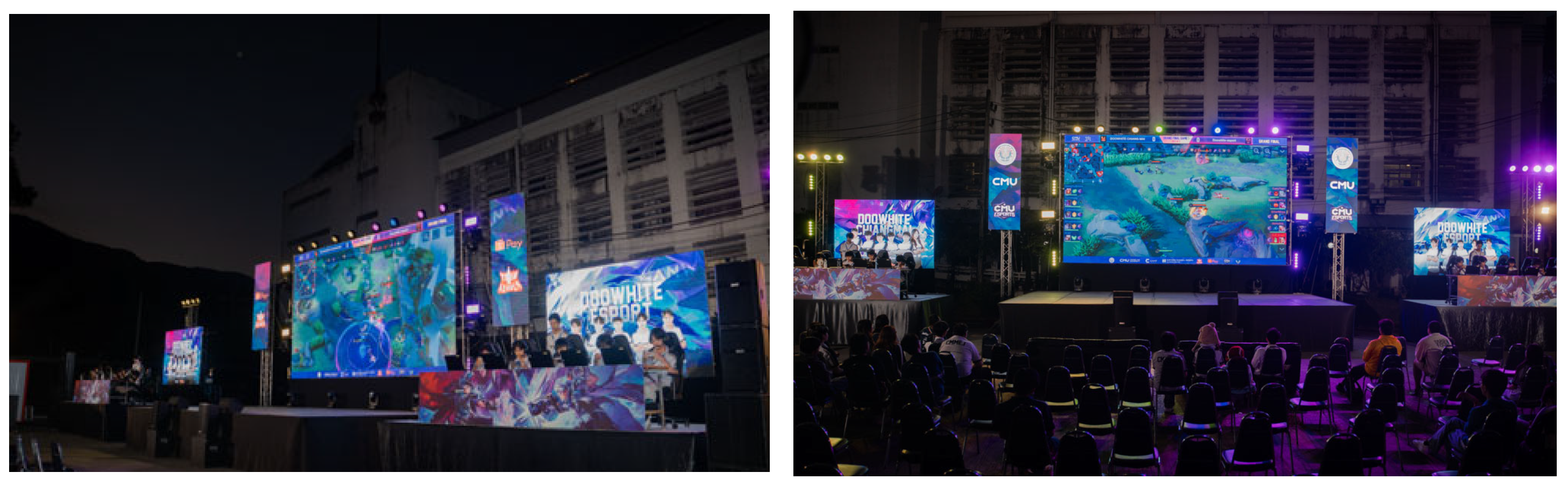
The simulation environment was developed by replicating the spatial layout and operational characteristics of the esports venue at the NREL. The virtual environment models the key structural components of a real esports competition setting, including the competition stage, a large central LED display used for live gameplay broadcasting, team player stations located on both sides of the stage, lighting systems, and the spectator seating area positioned in front of the stage. The physical venue used as the reference for this reconstruction is shown in
Figure 1 and
Figure 2, which illustrate an esports competition organized at NREL. These elements were recreated using 3D modeling techniques to closely reflect the spatial configuration and visual perspective of the real venue where esports tournaments are conducted, ensuring spatial fidelity and alignment with the physical environment.
Beyond replicating the physical layout, the simulation environment was designed to capture the atmosphere and operational context of a live esports event. Visual components such as stage lighting, broadcast displays, and audience seating were incorporated into the simulation to recreate the dynamic setting typically observed during esports competitions. This immersive representation allows trainees to experience the spatial scale of the venue and understand how different elements of an esports event are arranged within the environment. Through this simulation environment, users can explore the virtual venue and gain a clearer understanding of the spatial relationships and operational context involved in esports event production, providing a realistic foundation for workflow-based training activities while maintaining functional alignment with real-world production processes. The simulation was delivered using Meta Quest 3 head-mounted displays and handheld controllers. Participants navigated the virtual environment and interacted with production system interfaces through controller-based operations, enabling direct engagement with the simulated esports venue and workflow-based training activities in an immersive environment.
3.3. Training Scenario and Task Design
The training scenarios were designed to simulate essential operational activities involved in esports event production. Within the VR-based simulation environment, trainees are placed in a virtual representation of the esports venue where they can explore and interact with operational components of the event setup. The scenario allows users to navigate the competition stage, monitor gameplay outputs displayed on the central broadcast screen, and identify how the stage layout, audience area, and broadcast systems are configured during a live esports competition. These exploratory activities support the development of spatial awareness and contextual understanding by allowing trainees to examine how different elements of the venue are organized and how production systems are situated within the operational environment. Through this process, trainees gain a foundational understanding of the spatial and functional relationships that underpin esports event production workflows.
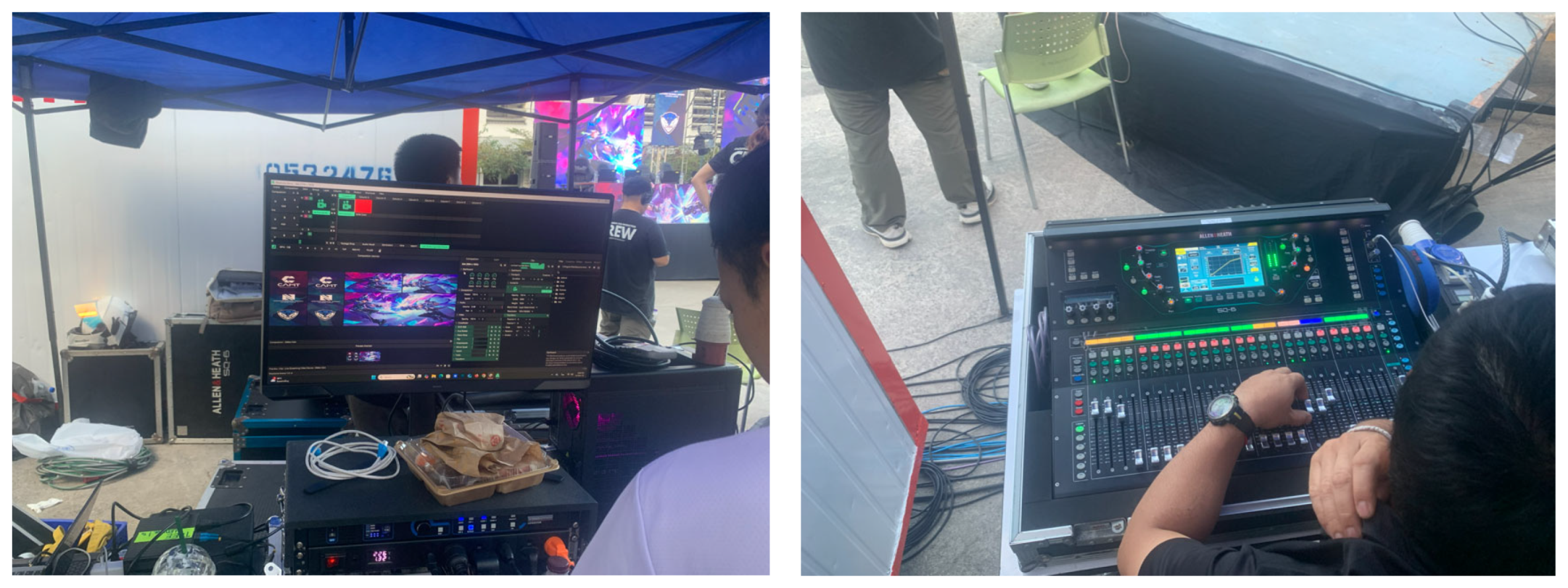
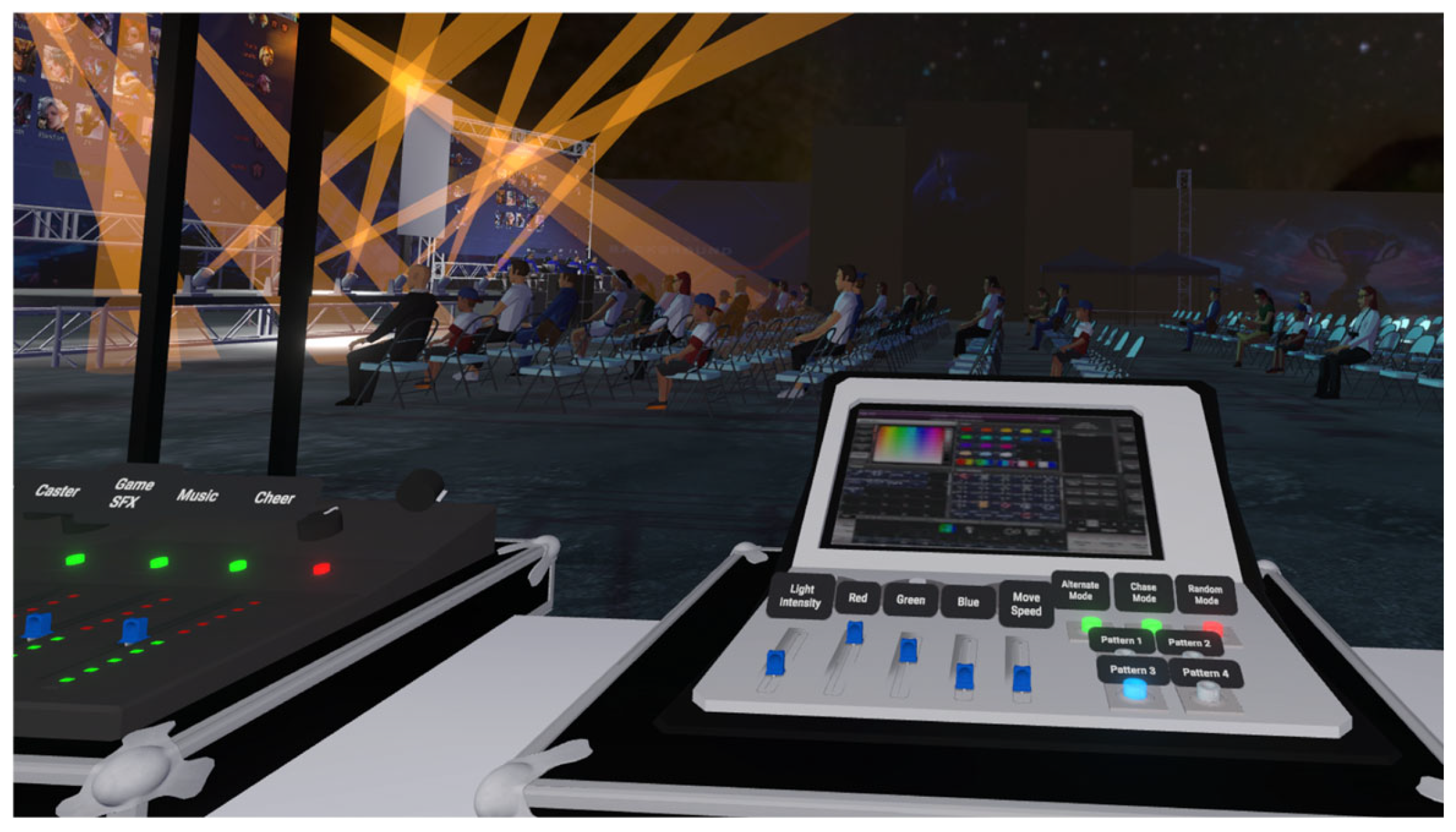
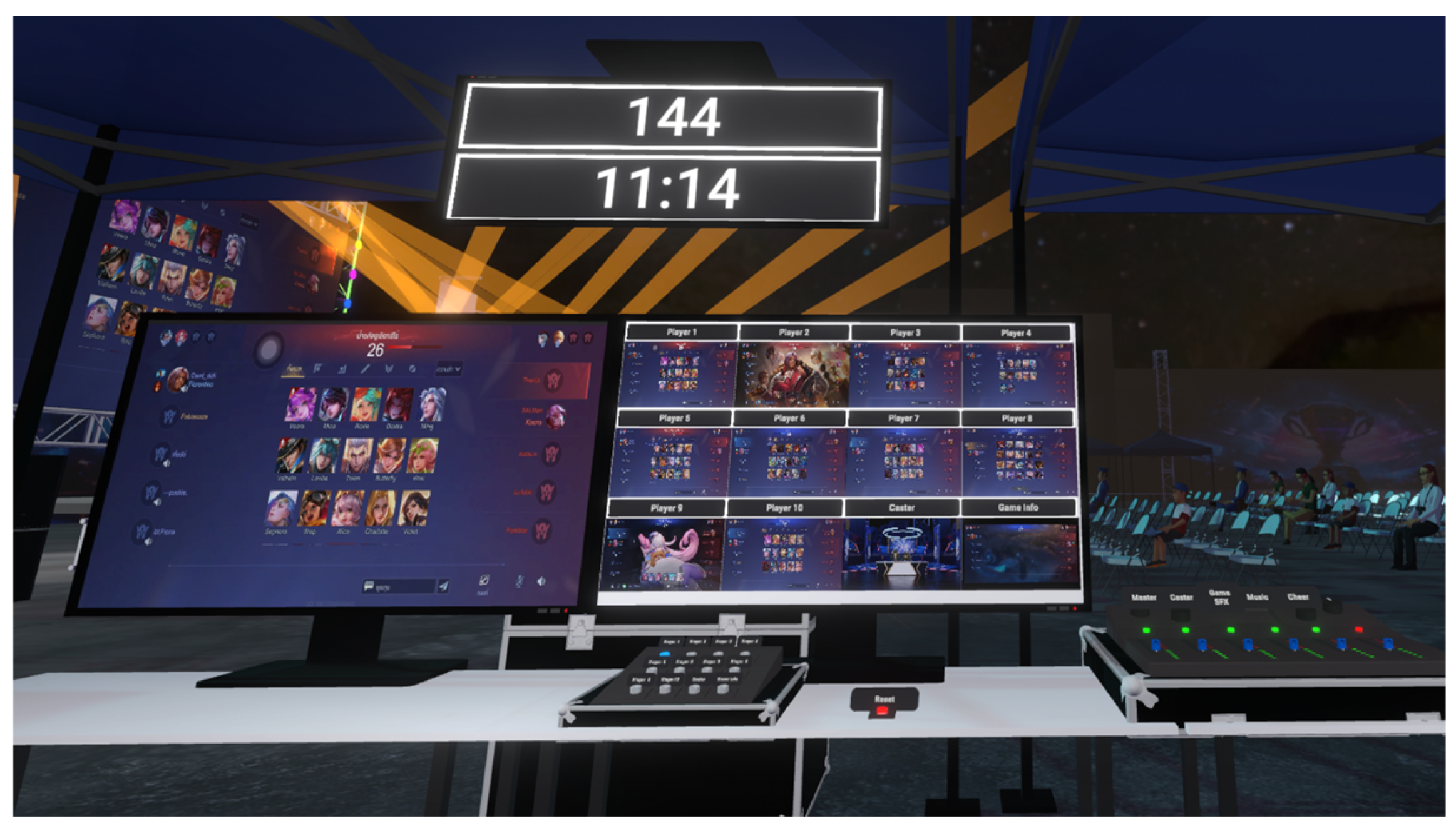
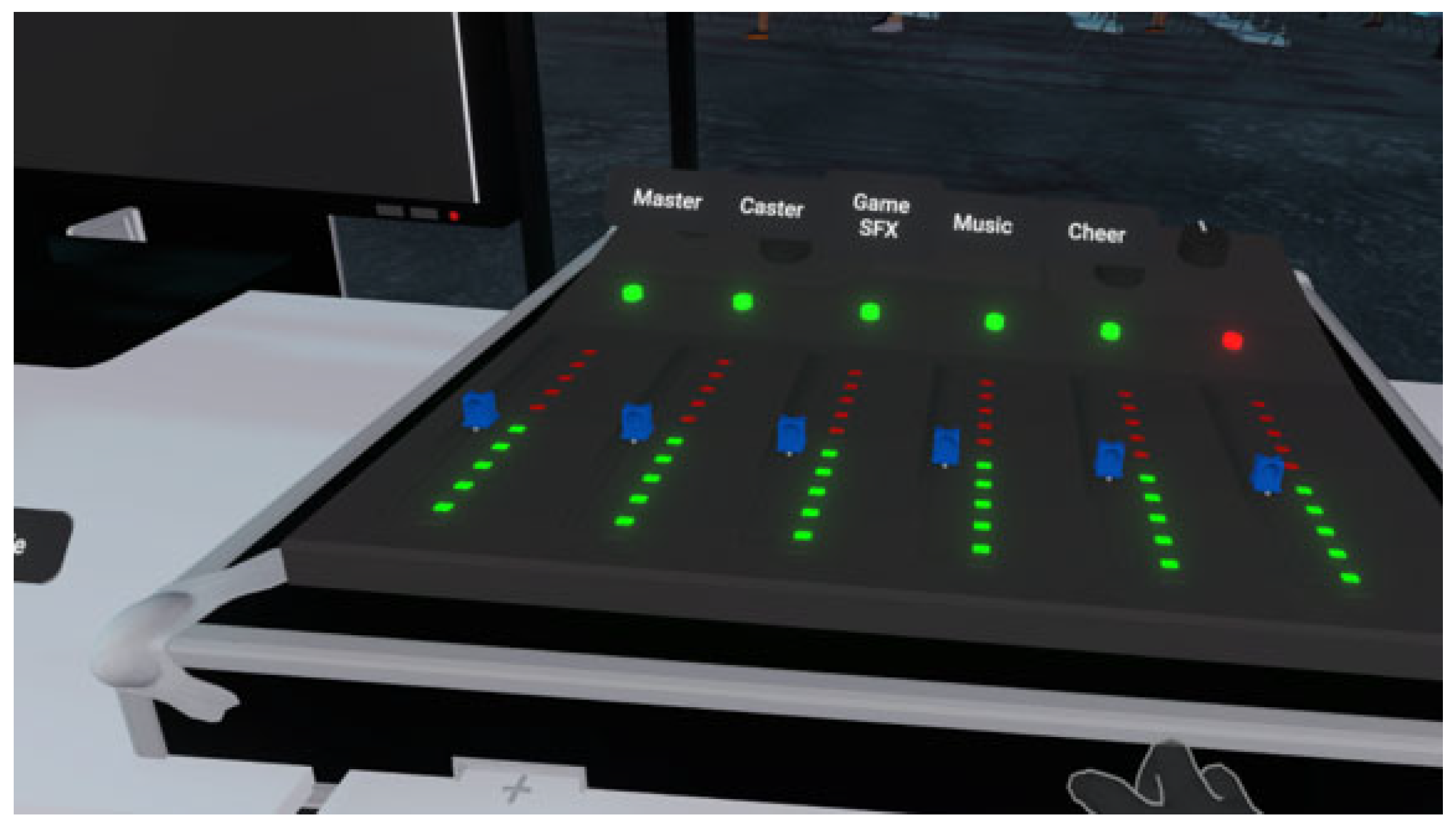
In addition to environmental exploration, the training scenarios include structured operational tasks across three core production systems commonly used in esports event management: lighting control, audio control, and broadcast switching monitoring. These tasks are designed as workflow-based activities that reflect real-world production procedures and are implemented through rule-based interactions and system state changes. Participants interacted with the lighting control, broadcast monitoring, and audio control interfaces shown in
Figure 3,
Figure 4 and
Figure 5 using handheld VR controllers to manipulate interface elements, adjust system parameters, and execute task-specific operational actions. The system provided immediate visual feedback through interface updates and changes in the simulated environment, allowing trainees to observe the consequences of their actions in real time. User actions within each system produce observable consequences, requiring trainees to interpret system feedback and adjust their decisions accordingly. For example, modifications to lighting parameters affect stage visibility and atmosphere, audio adjustments influence the balance and clarity of sound outputs, and broadcast monitoring actions determine how visual content is presented across display channels.
Furthermore, task sequences are structured to reflect workflow dependencies, where specific actions must be performed in an appropriate order to achieve successful task completion. Incorrect actions did not terminate the simulation; instead, participants were allowed to continue interacting with the system and repeat actions until the task objectives were achieved within the allocated training period. This design emphasizes procedural learning through interaction, encouraging trainees to engage in context-based reasoning and iterative problem-solving as they evaluate system responses and refine their actions within a coherent operational framework. The detailed training functions implemented for each system are summarized in
Table 1, providing trainees with structured exposure to the operational workflows involved in esports event production.
3.4. System Architecture
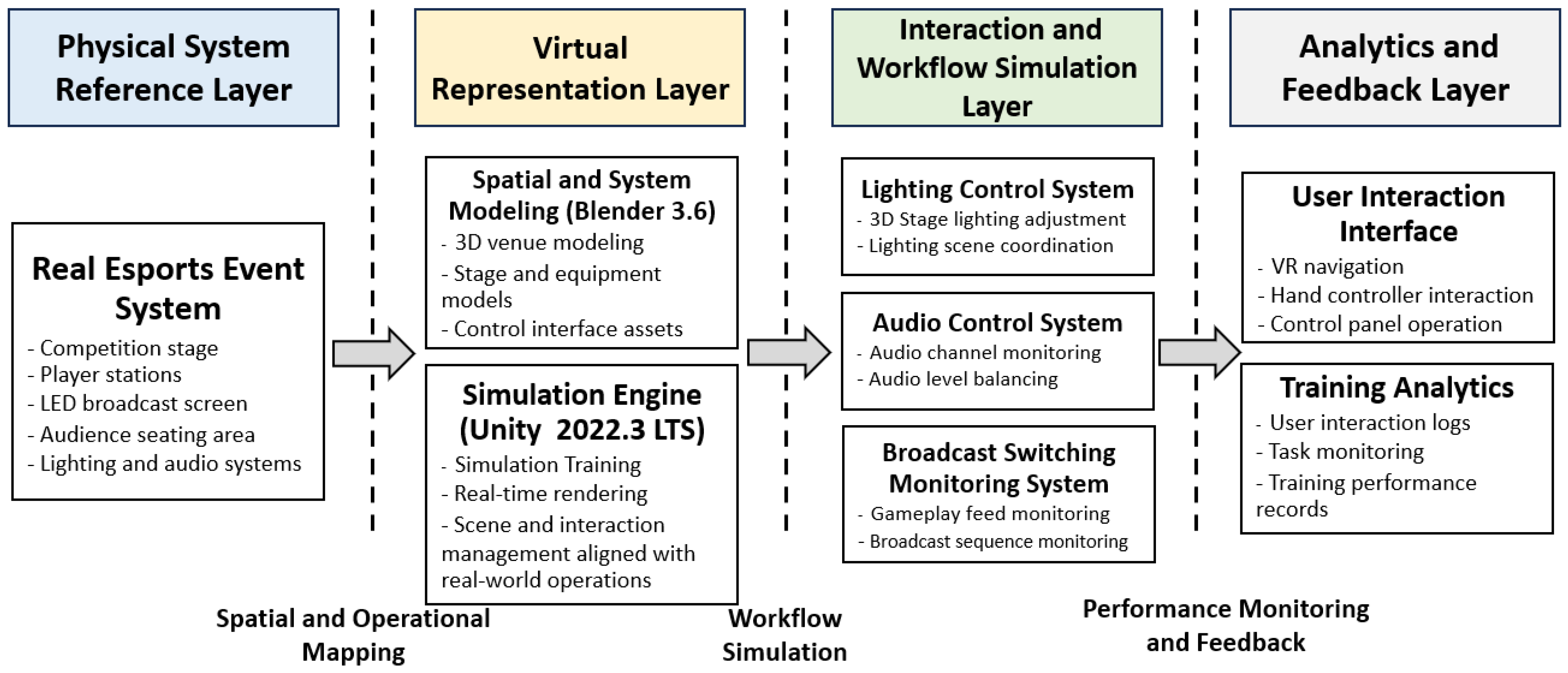
The system architecture of the proposed VR-based training environment integrates real-world esports event operations with a virtual simulation platform for esports event production training. The architecture establishes a structured correspondence between the physical esports system and its virtual representation, enabling trainees to engage with simulated production workflows in an immersive environment. As illustrated in
Figure 6, the system consists of four main layers: the Physical System Reference Layer, the Virtual Representation Layer, the Interaction and Workflow Simulation Layer, and the Analytics and Feedback Layer. The Physical System Reference Layer represents the real esports event system at the NREL, including key operational components such as the competition stage, player stations, LED broadcast screens, audience seating areas, and lighting and audio systems. These elements serve as the reference model for spatial and operational mapping to the virtual environment.
The Virtual Representation Layer reconstructs the esports venue as a digital environment with spatial and system-level fidelity. Three-dimensional models of the venue and production equipment are developed using Blender 3.6, and the simulation is implemented in Unity 2022.3 LTS, which supports real-time rendering, scene management, and interaction handling. Building on this representation, the Interaction and Workflow Simulation Layer implements core operational subsystems for training, including the Lighting Control System, Audio Control System, and Broadcast Switching Monitoring System. These subsystems simulate key production workflows observed in real esports events, allowing trainees to perform task-based activities such as adjusting lighting parameters, balancing audio channels, and monitoring broadcast outputs in a manner that reflects real-world operations.
The Analytics and Feedback Layer captures user interactions and captures task execution and interaction data within the simulation environment. This layer includes the user interaction interface, which supports navigation and control operations, and the training analytics component, which records interaction logs, task execution data, and task-completion outcomes. These data provide insights into user behavior and support monitoring of task completion, interaction patterns, and feedback during training. Through the integration of spatial modeling, workflow simulation, and interaction and task-based evaluation, the system supports experiential and workflow-based learning in esports event production.
3.5. Learning and Interaction Analytics
The VR-based training environment incorporates a learning and performance analytics component designed to capture user interactions during training activities. As trainees interact with the virtual environment, the system records behavioral data generated from their engagement with the simulated production systems. These data include navigation movements within the virtual venue, interactions with control panels, and operational actions performed on the lighting, audio, and broadcast monitoring interfaces. In addition to recording interaction events, the system captures task-related information associated with the training scenarios, including the sequence of operational activities, the frequency of interface usage, and the duration of interactions with different production systems. The analytics component stores these interaction and task-performance data for subsequent evaluation and reporting. Through this data collection process, the system supports the monitoring of trainee behavior and interaction patterns during esports event production training.
4. Methodology
4.1. Research Design
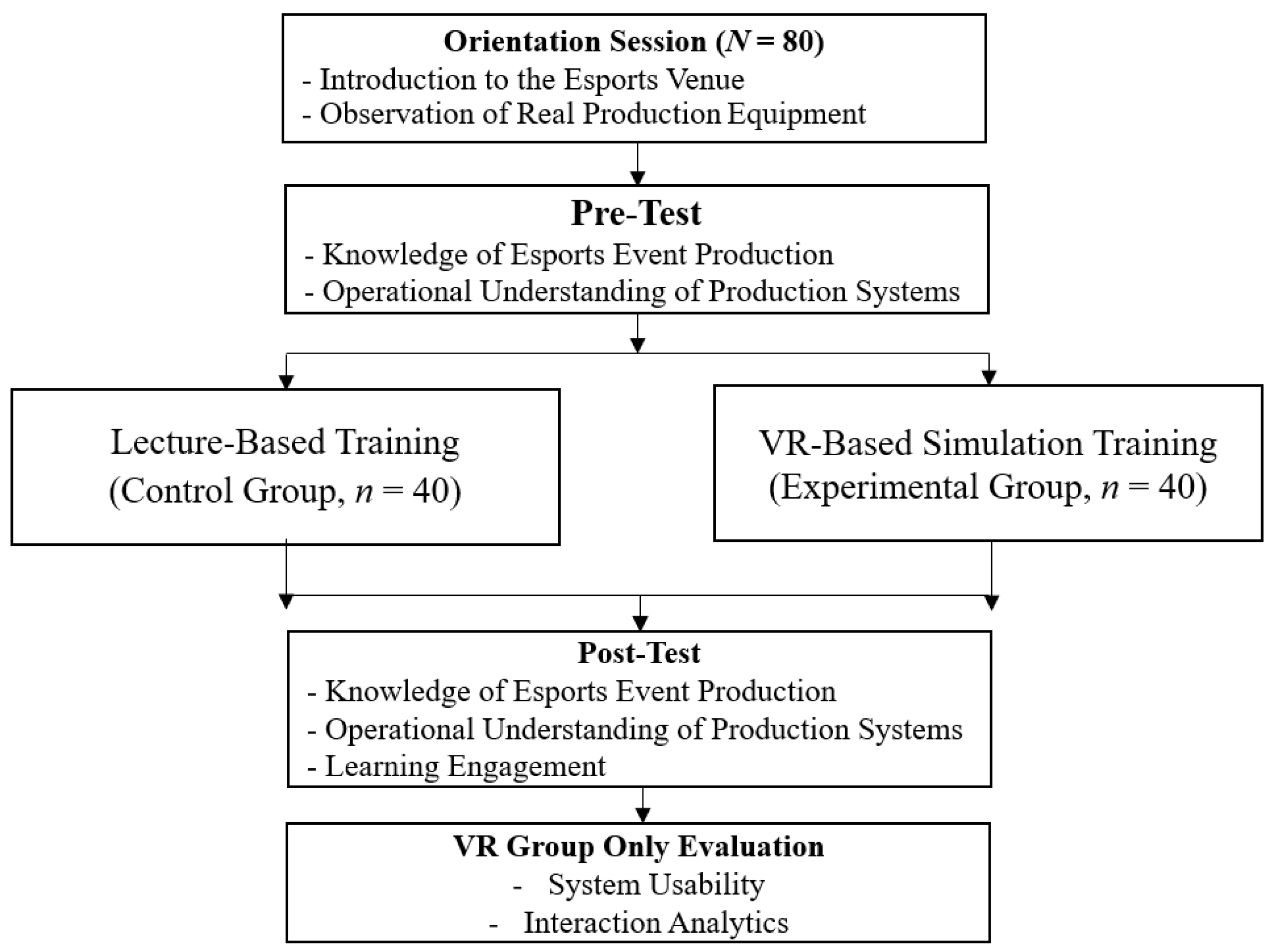
This study employed a controlled pretest–posttest comparison design to evaluate the effectiveness of a VR-based training environment for esports event production. Two instructional approaches were compared: a lecture-based training method and an approach using the VR-based training environment. Participants were recruited using convenience sampling and subsequently assigned to groups through random allocation. Participants were assigned to either a control group receiving lecture-based instruction or an experimental group participating in training through the VR-based training environment. To assess learning outcomes, a pre-test and post-test design was applied to measure changes in participants’ knowledge of esports event production and their applied operational understanding of production systems, allowing comparison of learning gains while accounting for baseline differences.
Prior to the training sessions, all participants attended an orientation session at the esports venue, where they were introduced to the physical environment and observed real production equipment, including lighting, audio, and broadcast systems. This step was designed to enhance internal validity by ensuring comparable contextual exposure across both groups. After the orientation, participants completed a pre-test assessing their conceptual knowledge and applied operational understanding as distinct learning constructs. Following the training intervention, participants completed a post-test measuring knowledge, applied operational understanding, and learning engagement. In addition, participants in the VR-based training group completed a system usability evaluation using the System Usability Scale (SUS).
4.2. Participants
A total of 80 undergraduate students participated in this study. The participants were recruited from programs related to digital media, information technology, and communication studies at the university, and the majority were novice learners with no prior experience in esports event production systems, including lighting control, audio management, and broadcast monitoring. Participants were assigned to two groups of equal size (n = 40 per group) through random allocation, with 40 students in the lecture-based training group (control group) and 40 students in the VR-based training group (experimental group).
The gender distribution was balanced across the two groups, with approximately equal numbers of male and female participants in each condition. The average age of participants in the lecture-based training group was 21.2 years, while the average age of participants in the VR-based training group was 20.7 years. These characteristics indicate a comparable baseline between groups prior to the intervention, supporting internal validity. All participants attended the same orientation session and completed identical pre-test and post-test assessments as part of the experimental procedure, ensuring consistency of measurement and exposure across conditions. All participants provided informed consent prior to participation. Participation was voluntary, and participants were informed of their right to withdraw from the study at any time without penalty. All collected data were anonymized prior to analysis and stored securely for research purposes only. Participants were monitored during VR use, and no adverse events requiring intervention were reported during the study. The study was approved by the Chiang Mai University Research Ethics Committee (COA No. 018/69).
4.3. Experimental Procedure
The experimental procedure consisted of several stages designed to ensure that both groups received comparable contextual exposure before the training intervention, as illustrated in
Figure 7. First, all participants attended an orientation session at the esports venue, where they were introduced to the physical environment and allowed to observe real production equipment, including lighting systems, audio control devices, and broadcast monitoring displays. This orientation ensured that participants in both groups had a similar understanding of the esports event production environment before participating in the training activities. After the orientation, all participants completed a pre-test assessing their knowledge of esports event production and their applied operational understanding of production systems.
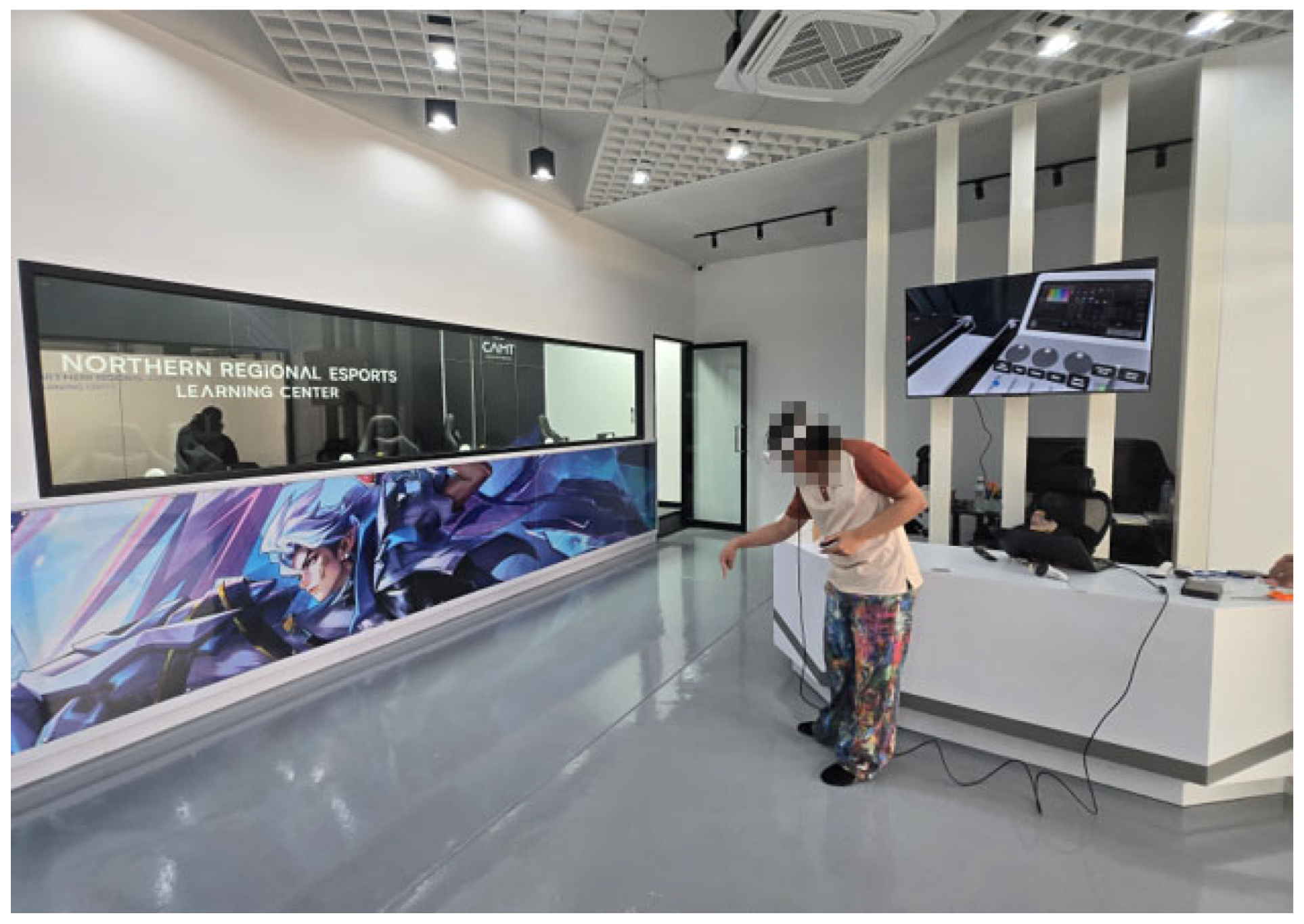
Following the pre-test, participants were assigned to either the lecture-based training group or the VR-based simulation group. The lecture-based group received instructor-led explanations covering the structure of esports events, the functions of production systems, and the operational roles of lighting, audio, and broadcast monitoring during competitions, delivered within a 60 min session. In contrast, the experimental group participated in a training session using the VR-based simulation environment, where they completed a set of structured tasks involving lighting control, audio management, and broadcast monitoring within a fixed 60 min session (approximately 20 min per system). The training session was time-controlled to ensure equivalent instructional duration across participants. Both conditions were designed around the same learning objectives and covered the same operational concepts, workflows, and production systems. The instructional materials and examples were aligned across conditions to ensure that participants received comparable content and preparation for the post-intervention assessments. Both instructional approaches covered the same core content and operational workflows to maintain consistency in learning objectives between groups. However, differences in interaction modality (passive instruction versus interactive task-based learning) may have influenced the observed outcomes and are considered in the interpretation of results. An example of the VR-based simulation setup in the real-world environment of the NREL is shown in
Figure 8.
After completing their respective training sessions, all participants completed a post-test measuring knowledge of esports event production, applied operational under-standing of production systems, and learning engagement. In addition, participants in the VR-based simulation group completed a system usability evaluation using the System Usability Scale (SUS). The overall procedure followed a structured sequence consisting of orientation, pre-test, training intervention, and post-test assessment.
4.4. Measures and Instruments
4.4.1. Knowledge of Esports Event Production
Participants’ knowledge of esports event production was assessed using a 20-item multiple-choice questionnaire (MCQ) developed specifically for this study. The instrument was designed to measure participants’ conceptual understanding of esports event organization, including the overall structure of esports events, the roles and responsibilities of production personnel, and the functions of core systems used in live esports competitions, such as lighting, audio, and broadcast display systems. Each item provided four response options, with one correct answer per item. The total score ranged from 0 to 20, with higher scores indicating greater knowledge of esports event production. The same instrument was administered as both the pre-test and post-test to evaluate changes in participants’ conceptual knowledge following the training intervention. To ensure content validity, the questionnaire was reviewed by three experts with relevant experience in esports production and educational assessment using the Index of Item-Objective Congruence (IOC). The internal consistency of the instrument was satisfactory, with a Cronbach’s alpha coefficient of 0.82, indicating acceptable reliability for use in this study.
4.4.2. Applied Operational Understanding of Production Systems
Applied operational understanding of production systems was assessed using a 10-item scenario-based instrument developed for this study. The assessment focused on participants’ understanding of typical workflows involved in esports event production, with items covering three key operational areas: lighting control, audio management, and broadcast monitoring. Each item presented a short production-related scenario requiring participants to identify the most appropriate action, decision, or system component needed to complete a specific task during a live esports event. Unlike the knowledge test, which emphasized conceptual understanding, this instrument was intended to measure applied operational reasoning in context. The instrument assessed participants’ ability to apply operational knowledge to context-specific scenarios rather than measuring actual task performance. Each item had one correct answer, and total scores ranged from 0 to 10, with higher scores indicating stronger applied operational understanding of production systems. The instrument was reviewed by domain experts to ensure that the scenarios and answer options appropriately reflected real esports production workflows. The reliability of the assessment was acceptable, with a Cronbach’s alpha coefficient of 0.79.
4.4.3. Learning Engagement Measurement
Learning engagement was measured using the User Engagement Scale—Short Form (UES-SF) [
41]. This instrument evaluates participants’ level of engagement during the learning activity across dimensions such as focused attention, perceived usability, aesthetic appeal, and reward. Participants rated each item using a Likert scale ranging from strongly disagree to strongly agree. The engagement score reflects participants’ perceived involvement and interest in the training activity. For the lecture-based group, a parallel version of the questionnaire was administered by replacing references to the VR training environment and VR training activities with references to the lecture-based learning activities while preserving the original item wording, meaning, and measurement constructs.
4.4.4. System Usability
System usability of the VR-based training environment was evaluated using the SUS [
42]. The SUS is a widely used standardized instrument for assessing the usability of interactive systems. The questionnaire consists of ten items rated on a Likert scale and provides an overall usability score. This evaluation was conducted only for participants in the VR-based training environment group, as they were the only group that interacted directly with the VR training system.
4.4.5. Training Interaction Analytics Measures
Training interaction analytics were collected from the VR-based training environment to examine participants’ behavioral engagement during training. The system automatically recorded interaction logs across three core tasks: lighting control, audio control, and broadcast monitoring. The metrics included time-on-task (min), number of interactions, and task completion rate (%). These measures were used to analyze interaction patterns and task performance, with time-on-task and interactions reflecting engagement and task complexity, and completion rate indicating task accomplishment within the training environment. The results were reported as mean and standard deviation for each task and overall task-completion outcomes.
4.5. Data Analysis
The collected data were analyzed using descriptive and inferential statistical methods to examine differences in learning outcomes and user experience between the two training approaches. Descriptive statistics, including mean and standard deviation, were used to summarize participants’ scores on knowledge tests, applied operational understanding assessments, learning engagement, and system usability. To evaluate learning improvement, paired-sample t-tests were conducted to compare pre-test and post-test scores within each group. Independent-samples t-tests were first conducted to examine baseline equivalence between the lecture-based and VR groups using pre-test scores for knowledge and applied operational understanding. This step was included to confirm group comparability prior to the intervention, consistent with the controlled pretest–posttest design.
In addition, independent-sample t-tests were performed to compare gain scores between the lecture-based training group and the VR-based training environment group for both knowledge and applied operational understanding. Gain scores (post-test minus pre-test) were used to directly capture learning improvement across conditions. Although alternative approaches such as ANCOVA or mixed ANOVA could be applied to analyze pretest–posttest data and control for baseline differences, gain score analysis was selected due to the comparable pre-test results observed between groups and the study’s focus on directly examining learning improvement across conditions. Independent-sample t-tests were also used to compare learning engagement scores across dimensions between the two groups. Knowledge acquisition and applied operational understanding were designated as the primary outcomes of the study because they directly addressed the main research objectives.
Learning engagement, system usability, and interaction analytics were treated as secondary or exploratory outcomes intended to provide additional insights into user experience and interaction patterns within the VR-based training environment. To further examine the relationships between interaction behaviors and training outcomes, Pearson correlation analyses were conducted between interaction metrics, operational understanding gain scores, and system usability scores within the VR-based training group. The level of statistical significance was set at p < 0.05. Prior to conducting the analyses, the assumptions of normality and homogeneity of variance were assessed using the Shapiro–Wilk test and Levene’s test, respectively. The results indicated that these assumptions were satisfied, supporting the use of parametric statistical tests. Accordingly, no formal correction for multiple comparisons was applied, and findings from secondary or exploratory analyses should be interpreted with appropriate caution. The internal consistency of the learning engagement scale was assessed using Cronbach’s alpha to ensure measurement reliability. All statistical analyses were performed using standard data analysis software to evaluate the effectiveness of the VR-based training environment.
6. Discussion
6.1. Knowledge Acquisition
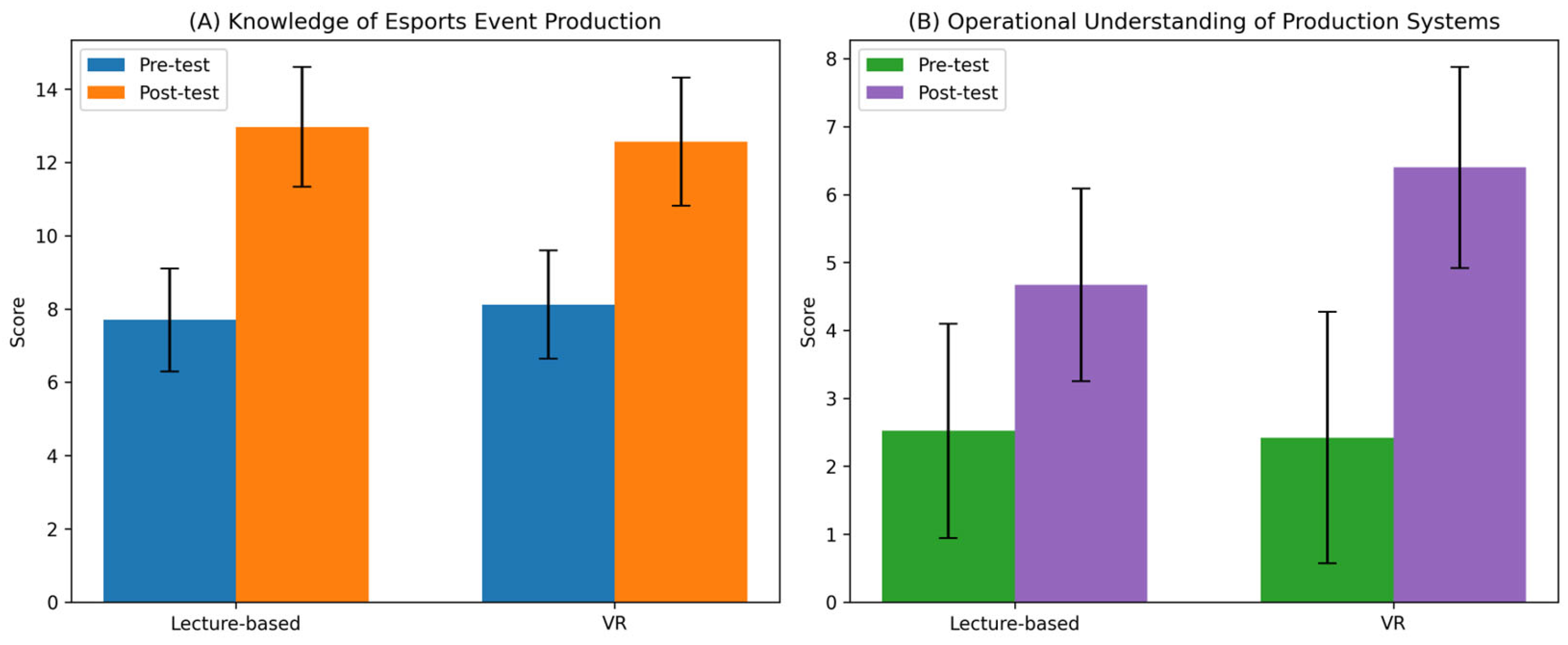
The findings for RQ1 indicate that both lecture-based instruction and the VR-based simulation environment resulted in statistically significant improvements in participants’ knowledge of esports event production. However, no significant difference was observed between the two groups in terms of knowledge gain, suggesting that both approaches are comparably effective in supporting declarative knowledge outcomes. This finding aligns with prior research indicating that immersive technologies do not consistently outperform traditional instructional methods in promoting conceptual knowledge. For example, Ref. [
43] reported that while immersive VR can enhance learning experiences in higher education, its advantage in knowledge acquisition remains inconsistent and strongly dependent on instructional design. Similarly, Ref. [
44] demonstrated through meta-analysis that immersive VR using head-mounted displays can improve overall learning performance, but the magnitude of this effect varies across contexts, outcome types, and pedagogical conditions. Collectively, these findings suggest that the value of VR for knowledge acquisition is conditional rather than inherently superior.
One plausible explanation is that conceptual knowledge in esports event production, including system roles, workflows, and functional components, does not inherently require intensive interaction with a virtual environment and can be effectively delivered through structured instruction. In such cases, lecture-based approaches may provide a more cognitively efficient pathway by minimizing additional attentional and navigational demands. In contrast, the VR-based simulation introduces interaction and environmental complexity that may not directly contribute to declarative knowledge acquisition. This interpretation is consistent with research suggesting that immersive environments may impose additional cognitive load when tasks are conceptually oriented rather than procedural, potentially limiting their effectiveness for immediate knowledge acquisition. For instance, Ref. [
45] found that immersive VR did not significantly improve declarative knowledge acquisition in vocational education, despite increasing motivation and perceived immersion. From a system perspective, these findings suggest that the benefits of VR-based environments are not uniform across outcome types, and that interaction-driven design plays a more critical role in supporting procedural and workflow-based understanding than in facilitating conceptual knowledge acquisition.
6.2. Applied Operational Understanding
In contrast to the findings for knowledge acquisition, the results for RQ2 demonstrate that the VR-based simulation led to significantly greater improvements in participants’ applied operational understanding of esports production systems compared to lecture-based instruction. This outcome highlights the strength of immersive, simulation-based environments in supporting procedural and application-oriented outcomes. The observed advantage of the VR condition is consistent with prior research indicating that immersive technologies are particularly effective when users engage in task-based, action-oriented activities [
14,
39]. These findings suggest that the benefits of VR become more pronounced when outcomes extend beyond conceptual understanding to include context-dependent operational reasoning.
A key explanation for this effect lies in the interaction-driven and workflow-based structure of the VR-based simulation. Unlike lecture-based instruction, which primarily supports abstract understanding, the VR-based system enables users to actively manipulate system components, observe the consequences of their actions, and iteratively refine their responses within structured task sequences. This form of interaction supports procedural reasoning by allowing users to engage directly with workflow dependencies and system feedback in context. As a result, participants in the VR condition were better able to develop an operationally grounded understanding of production systems and apply their knowledge to scenario-based tasks. However, it is important to note that applied operational understanding in this study was assessed through scenario-based measures rather than direct real-world performance, and therefore reflects improvements in context-based reasoning rather than validated operational competence.
6.3. Learning Engagement
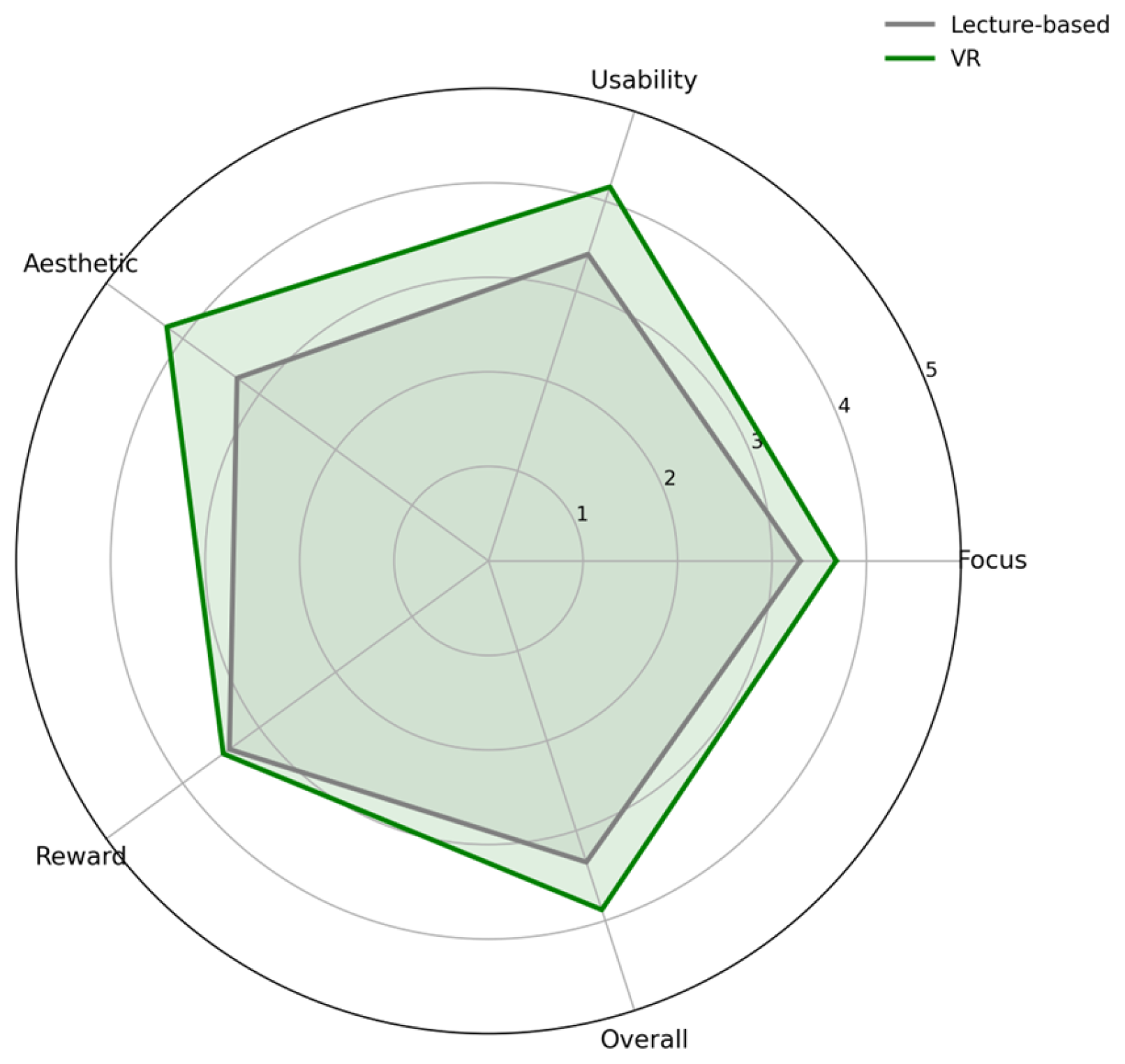
The results for RQ3 indicate that participants in the VR-based simulation condition reported significantly higher levels of perceived engagement than those in the lecture-based group across most dimensions of the UES-SF, including focused attention, perceived usability, and aesthetic appeal, while no significant difference was found in the reward dimension. This pattern suggests that the immersive and interactive characteristics of the VR environment primarily support cognitive and task-oriented engagement rather than increased enjoyment. These findings are consistent with prior research showing that immersive environments enhance engagement by promoting active involvement, sustained attention, and interaction with task-relevant elements [
11,
46]. In this context, the effectiveness of VR appears to depend on how interaction design aligns with task structure, positioning engagement as a functional outcome of system interaction rather than a purely affective response.
Notably, the absence of a significant difference in the reward dimension highlights a distinction between engagement and hedonic experience, suggesting that increased immersion does not necessarily lead to greater perceived enjoyment. Instead, engagement in the VR-based simulation appears to be driven by task-oriented interaction and system usability, reflecting users’ involvement in structured workflows rather than intrinsic pleasure. From a system perspective, this suggests that engagement emerges from the alignment between interaction design, workflow structure, and usability. However, the engagement results in this study were based on post-intervention self-reports and may be influenced by factors such as novelty effects or differences in interaction modality. Therefore, while the findings indicate that VR-based simulation can enhance perceived engagement in context-based environments, further research is needed to examine the stability of these effects and their relationship with longer-term outcomes.
6.4. Usability and Interaction
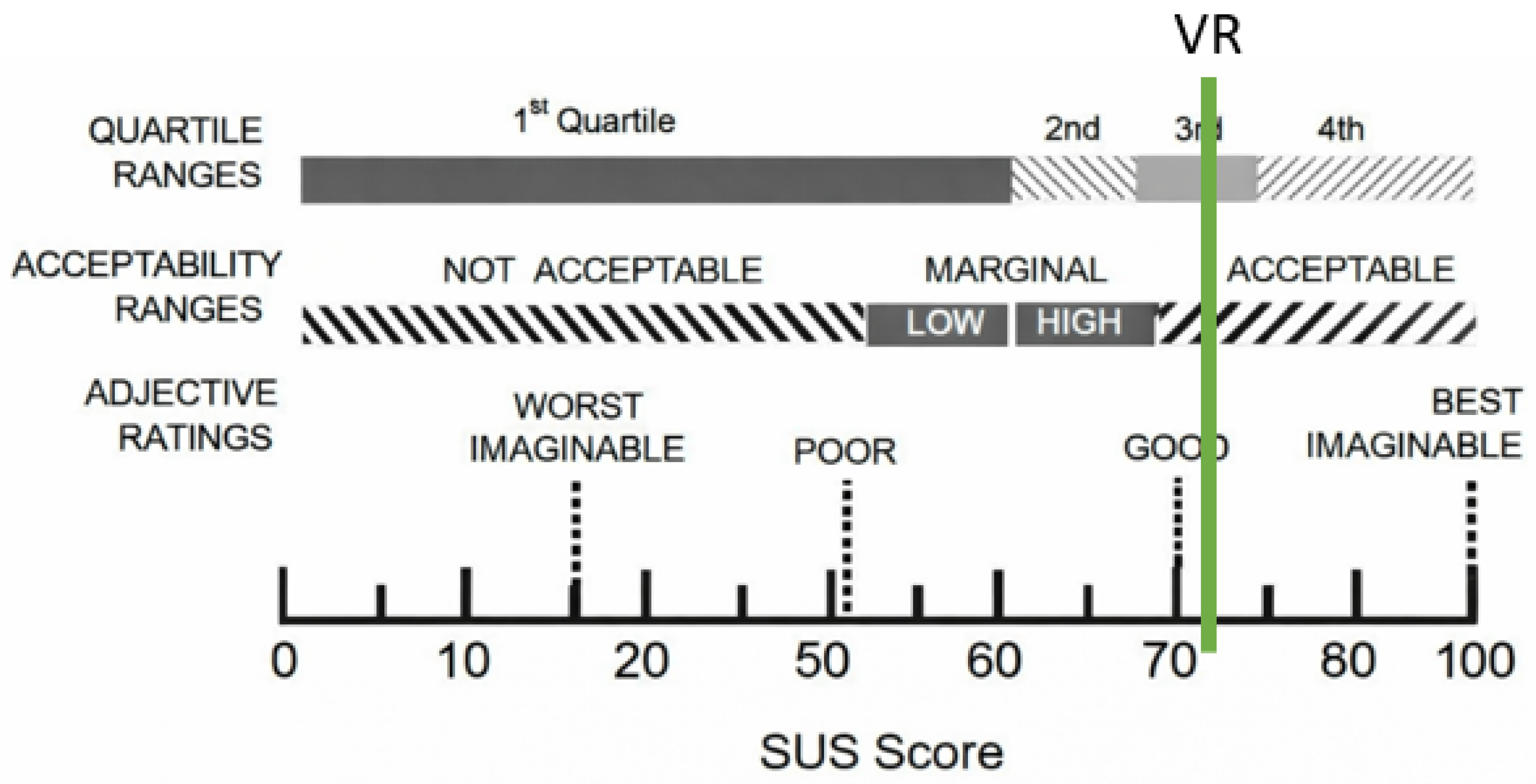
The results for RQ4 indicate that the VR-based simulation achieved an overall SUS score within the acceptable range, suggesting that users were able to interact with the system effectively with a satisfactory level of usability. Although the usability rating did not reach an “excellent” level, it reflects a functional and learnable system that supports interaction with complex workflows without major usability barriers. Prior research has similarly reported that immersive VR systems often achieve moderate usability scores when simulating multi-component workflows, where interaction demands are inherently higher [
3,
27]. The interaction analytics further showed that task completion rate was positively associated with both operational understanding gain and system usability, whereas interaction frequency and time on task were not significantly related to these outcomes. These findings suggest that successful completion of workflow-based tasks may be more closely associated with training outcomes than the amount of interaction or time spent within the VR environment. From a system perspective, this suggests that usability in immersive environments should be interpreted not solely as interface simplicity, but as the degree to which system interactions remain coherent, interpretable, and aligned with task objectives. In this sense, usability functions as a prerequisite for effective interaction rather than an outcome in itself.
In addition to usability, the interaction analytics provide insight into how users engaged with the simulated production systems. Tasks with higher operational complexity were associated with increased interaction frequency and longer time-on-task, but lower completion rates, indicating greater cognitive demand and difficulty in task execution. For example, the lighting control task achieved the highest completion rate, which may be attributed to its relatively direct interaction workflow and immediate visual feedback, allowing participants to more easily associate actions with system responses. In contrast, broadcast monitoring exhibited the lowest completion rate despite generating the highest interaction frequency. This pattern may reflect the increased cognitive load associated with monitoring multiple information sources, interpreting dynamic event conditions, and switching attention between different interface elements. It may also indicate usability challenges associated with managing multiple interface components simultaneously. Therefore, lower completion rates should not be interpreted solely as evidence of increased interaction fidelity, but may also reflect limitations in interface design and task complexity. These findings suggest opportunities for improving broadcast monitoring tasks through enhanced guidance, interface simplification, or adaptive support mechanisms. This pattern reflects a trade-off between interaction fidelity and usability: while higher fidelity simulations may enhance realism and engagement, they can also introduce additional interaction complexity that affects performance if not appropriately structured. Although correlation analyses were conducted to examine associations between interaction metrics and learning-related outcomes, causal relationships and underlying mechanisms were not directly modeled. The observed patterns suggest that interaction complexity plays a critical role in shaping user performance in immersive environments. These findings highlight the importance of incorporating structured guidance, progressive task design, and feedback mechanisms to support users in managing complex interactions while maintaining system usability.
6.5. Integrative Interaction Mechanism of the VR-Based Simulation
The combined findings across RQ1–RQ4 indicate that the effectiveness of the VR-based simulation is outcome-dependent rather than universally superior. While both lecture-based and VR-based approaches were equally effective in supporting conceptual knowledge acquisition, the VR-based simulation demonstrated clear advantages in enhancing applied operational understanding, engagement, and interaction effectiveness. This pattern suggests that immersive VR environments do not primarily function as tools for improving declarative knowledge, but rather as systems that support interaction-driven procedural processes. In particular, the results indicate that the VR-based simulation facilitates the transition from conceptual understanding to scenario-based operational reasoning by enabling users to engage directly with workflows, system interactions, and decision-making processes in context. From a system perspective, this highlights that the value of VR lies not in immersion alone, but in how interaction design aligns with task structure and system behavior.
Based on these findings, this study proposes an integrative mechanism in which user outcomes emerge from the interaction of three core system elements: spatial fidelity, workflow simulation, and interactive feedback. Spatial fidelity supports contextual awareness by providing a coherent representation of the operational environment. Workflow simulation enables users to engage with task sequences and system dependencies that reflect real-world processes, thereby supporting procedural reasoning. Interactive feedback allows users to observe the consequences of their actions, iteratively refine their responses, and develop a more consistent understanding of system behavior. Together, these elements form an interaction-driven mechanism that bridges conceptual knowledge and context-based application. However, this mechanism also reflects a trade-off between interaction fidelity and usability, as increased system complexity may impose additional cognitive and interactional demands that affect task performance. Therefore, effective VR-based simulation design requires a balance between fidelity, interactivity, and usability to support performance in complex workflow-based environments.
6.6. Limitations and Future Work
Despite the contributions of this study, several limitations should be acknowledged. First, although participants were assigned through random allocation, the use of convenience sampling may limit the generalizability of the findings, particularly to professional esports production contexts or learners with prior domain expertise. In addition, participant characteristics such as prior VR experience, gaming/esports experience, and media production experience were not formally assessed and therefore could not be controlled for in the analysis. These factors may have influenced usability perceptions and training performance. Second, the evaluation focused on short-term learning outcomes measured immediately after the intervention and therefore does not capture long-term retention or the transfer of learning to real-world operational settings. Third, while instructional time and content coverage were controlled, differences in interaction modality between lecture-based and VR-based conditions may have introduced additional cognitive load and interaction-related demands that influenced learning outcomes. In particular, the current design does not isolate the effects of interactivity from immersion. Consequently, the observed advantages of the VR-based simulation may reflect not only the VR medium itself, but also the effects of active learning, task-based practice, feedback, and engagement. Future studies should employ comparison conditions that better isolate the specific contribution of VR technology. Fourth, applied operational understanding was assessed through scenario-based measures rather than direct performance-based tasks, which limits the extent to which the findings can be interpreted as evidence of real operational competence. Finally, learning engagement was measured using post-intervention self-report instruments, which may be subject to response bias, including potential novelty effects associated with immersive technologies, and the study focused on individual rather than collaborative learning contexts.
These limitations highlight several directions for future research. First, longitudinal studies are needed to examine the retention and transfer of learning outcomes in immersive environments, particularly in real operational settings. Second, future research should investigate collaborative and multi-user VR simulations to better reflect the team-based nature of esports production workflows. Third, further work is needed to disentangle the roles of immersion, interactivity, and cognitive load in shaping learning outcomes, enabling a clearer understanding of the mechanisms underlying immersive learning. Finally, future studies should explore how variations in system fidelity, interaction complexity, and instructional scaffolding influence learning effectiveness, particularly in balancing realism with cognitive demand and usability in simulation-based training environments.
7. Conclusions
This study examined the effectiveness of a workflow-driven VR simulation for esports event production in comparison with lecture-based instruction across multiple outcome measures. The findings indicate that while both approaches were similarly effective in supporting conceptual knowledge acquisition, the VR-based simulation demonstrated clear advantages in enhancing applied operational understanding, engagement, and interaction effectiveness. These results suggest that the benefits of immersive environments are outcome-dependent rather than universally superior, with VR-based approaches being particularly effective for procedural and application-oriented tasks rather than declarative knowledge acquisition.
Beyond these empirical findings, this study contributes by identifying an interaction-driven mechanism through which VR-based simulation supports applied operational understanding and user interaction outcomes. Specifically, spatial fidelity, workflow-based task structures, and interactive feedback work together to enable users to engage with system processes and develop context-based operational understanding. At the same time, the findings highlight a critical trade-off between interaction fidelity and usability, where increased system complexity may introduce additional cognitive and interactional demands that affect performance. Overall, this study demonstrates that the value of VR lies not in immersion alone, but in its capacity to support structured, workflow-based interaction, positioning VR-based simulation as an effective approach for representing and engaging with complex operational environments. However, the findings should be interpreted as evidence from an educational prototype evaluated under controlled conditions. Further validation with professional users and in authentic operational settings is needed before the system can be considered a robust training solution for esports event production.