1. Introduction
Diabetic Foot Ulceration (DFU) is one of the most debilitating and costly complications of diabetes mellitus, representing a significant cause of morbidity, disability, and healthcare burden worldwide. Defined as foot ulceration associated with neuropathy and/or peripheral arterial disease (PAD) of the lower limb in patients with diabetes, DFUs result from a complex interplay of vascular, neuropathic, and immune-mediated dysfunctions that compromise tissue integrity and wound healing capacity [
1,
2]. These ulcers frequently become chronic and highly susceptible to infection, often progressing to extensive soft tissue damage, osteomyelitis, gangrene, and ultimately, lower-extremity amputation if inadequately treated [
3,
4].
Globally, the prevalence of DFUs among individuals with diabetes ranges from 4% to 10%, with a lifetime incidence estimated between 12% and 25% [
1,
2]. In the United Kingdom, DFUs affect approximately 5.3% of individuals with type 2 diabetes and up to 7.4% when both type 1 and type 2 diabetes are considered [
3,
4]. In the North-West region of England, recent data report an annual incidence of 2.2% and a point prevalence of 1.7% for active foot ulcers in the diabetic population [
5]. Alarmingly, up to 85% of diabetes-related lower limb amputations are preceded by a foot ulcer [
6], and the prognosis following ulceration is poor—mortality rates are estimated at 5% within the first year of onset and escalate to 42% within five years [
7].
Such disparities in outcomes are not uniformly distributed but rather influenced by regional, socioeconomic, and systemic healthcare factors. Variations in access to specialist services, inconsistent referral pathways, and differing interpretations of clinical guidelines contribute to the wide heterogeneity in healing outcomes and amputation rates across the UK and globally [
5,
8]. Thus, despite established guidelines and multidisciplinary frameworks, current DFU management often remains inadequate for achieving durable wound resolution, particularly in chronic, non-healing ulcers.
The pathogenesis of DFUs is multifactorial and complex. Peripheral neuropathy, a common complication of long-standing diabetes, leads to diminished protective sensation, motor dysfunction, and autonomic denervation, which collectively impair proprioception, redistribute plantar pressures, and reduce sweat gland function, resulting in callus formation, dry skin, and increased mechanical trauma risk [
9,
10]. PAD further complicates the clinical picture by impeding blood flow and impairing oxygen and nutrient delivery to tissues. It is estimated that PAD is 2 to 8 times more prevalent in diabetic individuals compared to the general population and frequently affects distal arteries below the knee [
9]. Most DFUs, especially in elderly patients, are of mixed neuro-ischaemic origin, compounding the challenges to effective treatment [
11].
Accurate classification of ulcers is paramount in guiding therapeutic decisions. The Wagner-Meggitt scale is widely used to stratify ulcers based on depth and the presence of infection or gangrene [
8,
12]; however, it is limited by its failure to incorporate critical variables such as perfusion status and infection severity. Alternative systems like the SINBAD score and the University of Texas classification attempt to address these shortcomings but have yet to achieve universal adoption. Early recognition and correct categorisation of DFUs remain critical for prognostication and selection of appropriate interventions. These classification systems can guide both intervention and predict prognosis.
Conventional treatment strategies include pressure offloading, regular debridement, infection control, wound dressings, and stringent glycaemic management. However, even with best practice, healing remains elusive in a substantial subset of patients due to the persistent inflammatory state within chronic wounds, low concentrations of endogenous growth factors, impaired neovascularisation, and increased activity of matrix metalloproteinases (MMPs), which degrade extracellular matrix components necessary for healing [
13,
14,
15].
In response to these limitations, autologous biologic therapies have emerged as adjunctive modalities with the potential to augment wound healing. Among them, platelet-rich fibrin (PRF)—a second-generation platelet concentrate devoid of anticoagulants or external activators—has demonstrated encouraging results. PRF forms a dense, three-dimensional fibrin matrix enriched with bioactive molecules such as platelet-derived growth factor (PDGF), transforming growth factor-beta (TGF-β), and vascular endothelial growth factor (VEGF), which collectively facilitate cell migration, angiogenesis, and tissue regeneration [
16,
17]. Compared to its predecessor, platelet-rich plasma (PRP), PRF offers advantages including a more stable fibrin network, sustained release kinetics, and simpler preparation protocols without the need for bovine thrombin or calcium chloride [
18,
19].
One such commercially available PRF-based biomaterial, Arthrozheal® (TRB Chemedica Ltd. 9 Evolution, Lymedale Business Park, Hooters Hall Road, Newcastle-under-Lyme ST5 9QF), incorporates these principles into a single-use, closed-loop system that facilitates point-of-care production of an autologous, bioactive wound matrix. This matrix can also be co-delivered with antibiotics such as gentamicin, offering a dual-action therapeutic strategy that targets both impaired healing and microbial colonisation. The ability to deliver high concentrations of local antibiotics directly to the wound bed without systemic toxicity is particularly relevant in DFUs, which often harbour polymicrobial biofilms resistant to systemic therapies.
Despite these promising attributes, the clinical adoption of PRF therapy in the management of chronic DFUs remains limited, primarily due to a paucity of long-term outcome data, variability in preparation protocols, and the need for real-world evidence from non-trial settings. Therefore, observational studies and audits that examine the use of PRF in everyday clinical environments are essential to bridge the translational gap and provide practical insights into its efficacy, safety, and durability in high-risk patient cohorts.
In this clinical audit, we evaluated the outcomes of a cohort of patients with chronic, refractory DFUs treated with a single-application, autologous PRF matrix combined with locally administered gentamicin. All participants were referred through a multidisciplinary foot care pathway and had failed to respond to conventional treatments. The primary aim was to assess the real-world effectiveness of this biologic-antibiotic combination in promoting durable wound closure, minimising recurrence and preventing amputation. Additionally, we report minimum follow-up data to 12 months, providing critical insights into the longevity of therapeutic benefit in this complex patient population.
2. Materials and Methods
This retrospective clinical audit was conducted at Wythenshawe Hospital, Manchester University NHS Foundation Trust—a tertiary referral centre with a dedicated multidisciplinary diabetic foot service. The audit was registered and approved by the Institutional Clinical Audit Committee (Audit Registration Number: S168), in accordance with institutional guidelines governing retrospective observational studies.
2.1. Patient Selection
Eligible patients were identified through the hospital’s Multidisciplinary Orthopaedic-Vascular Team (MDT) pathway between 2022 and 2023. Inclusion criteria comprised adult patients (aged ≥18 years) diagnosed with diabetes mellitus (type 1 or type 2) presenting with chronic diabetic foot ulcers (DFUs) that had failed to respond to at least 12 weeks of optimal standard care, including wound debridement, infection control, pressure offloading, and appropriate dressings. Non-healing was defined as a failure to achieve a 30% reduction in wound area despite these interventions. These are study-specific inclusion criteria. Patients were excluded if they had active systemic infection (e.g., sepsis), untreated critical limb ischaemia not amenable to revascularisation, osteomyelitis or contraindications to blood withdrawal or local antibiotic therapy.
Initial referral to the MDT followed established hospital protocols for DFU management. Each patient underwent a comprehensive evaluation including vascular assessment (palpation of pulses, ankle-brachial pressure index), neuropathy screening, and imaging (plain radiography or MRI, where indicated) to assess for complications such as osteomyelitis or abscess formation. For those with suspected infection, wound swabs were obtained, and empiric antibiotic therapy commenced and was later refined based on culture results. Cases of osteomyelitis or deep-seated soft tissue infection underwent surgical debridement or bone resection, followed by systemic, culture-directed antibiotics.
Patients deemed at risk of imminent amputation due to ulcer progression despite conventional therapy were selected for adjunctive treatment with the autologous PRF matrix biomaterial. Informed verbal consent was obtained after explaining the procedure, expected benefits, and limitations.
2.2. PRF Matrix Biomaterial Preparation and Application
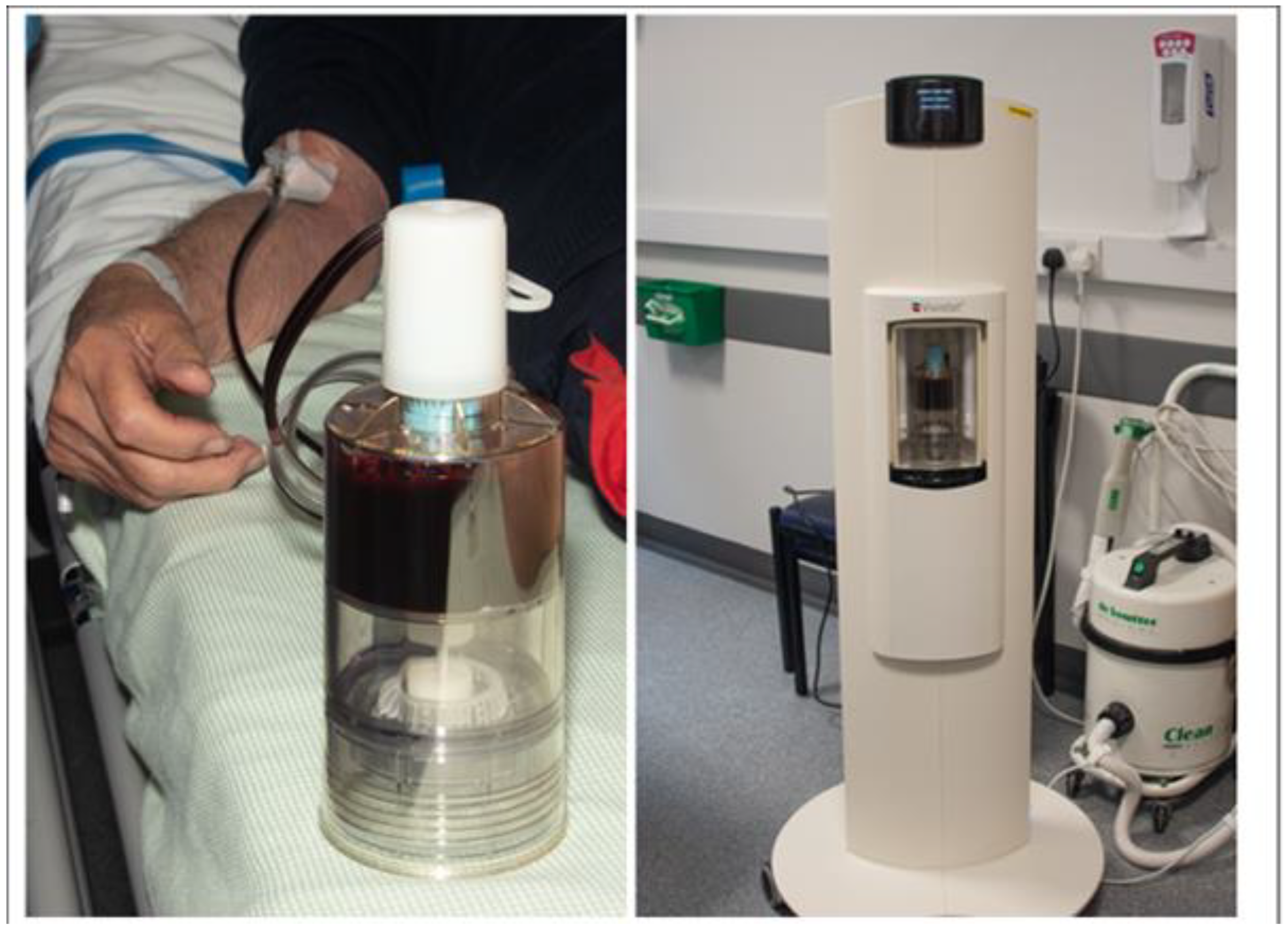
At the first treatment visit (Visit 1), eligibility was reconfirmed by the treating consultant. Approximately 115 mL (±5 mL) of peripheral venous blood was collected from each patient using a 16- or 18-gauge cannula into a sterile, single-use, closed-system PRF preparation unit (Arthrozheal®, TRB Chemedica Ltd., UK 9 Evolution, Lymedale Business Park, Hooters Hall Road, Newcastle-under-Lyme ST5 9QF). The sealed device ensured sterility and minimised handling, mitigating the risk of contamination.
In patients with limited vascular access or poor peripheral veins, blood was drawn from the most viable accessible site. The collected blood was immediately transferred to a centrifuge unit embedded within the Arthrozheal
® system (
Figure 1). This centrifugation process separated thrombocyte-rich plasma fractions from erythrocytes and leukocytes, thereby yielding a concentrated matrix rich in platelet-derived growth factors (PDGF), vascular endothelial growth factor (VEGF), and transforming growth factor-beta (TGF-β).
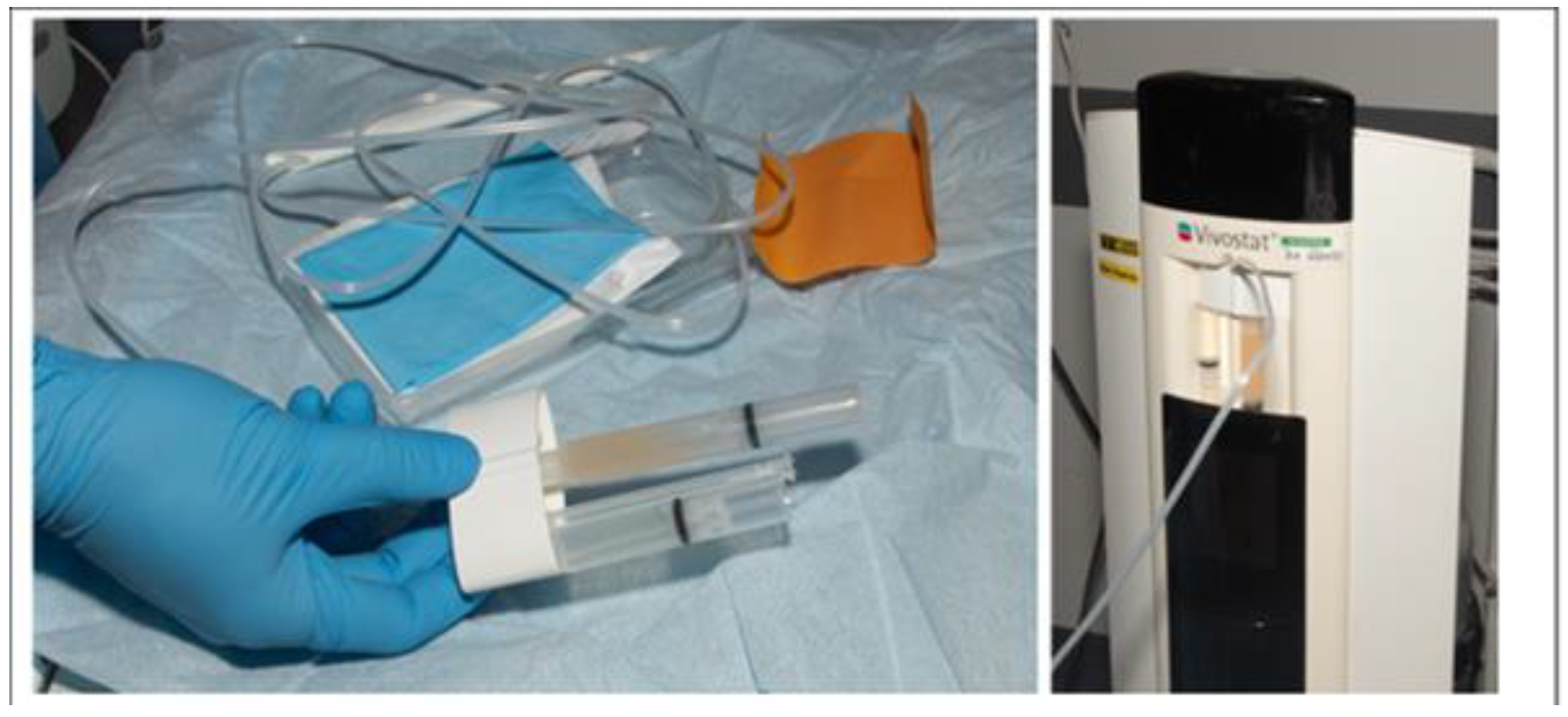
Once separated, the thrombocyte concentrate was loaded into a dual-chamber applicator (
Figure 2). This device allowed the simultaneous delivery of the PRF biomaterial and a liquid adjuvant—gentamicin in this case—at the point of care. The PRF component was activated by combining it with a proprietary, pH-balanced polymerisation buffer, resulting in immediate gel formation upon contact with the wound bed.
The co-administered gentamicin (2 mL of 40 mg/mL solution, i.e., 80 mg total dose) was selected for its efficacy against common DFU pathogens, including Pseudomonas aeruginosa and Staphylococcus aureus. This was done for all cases in the series, irrespective of ulcer size/location.
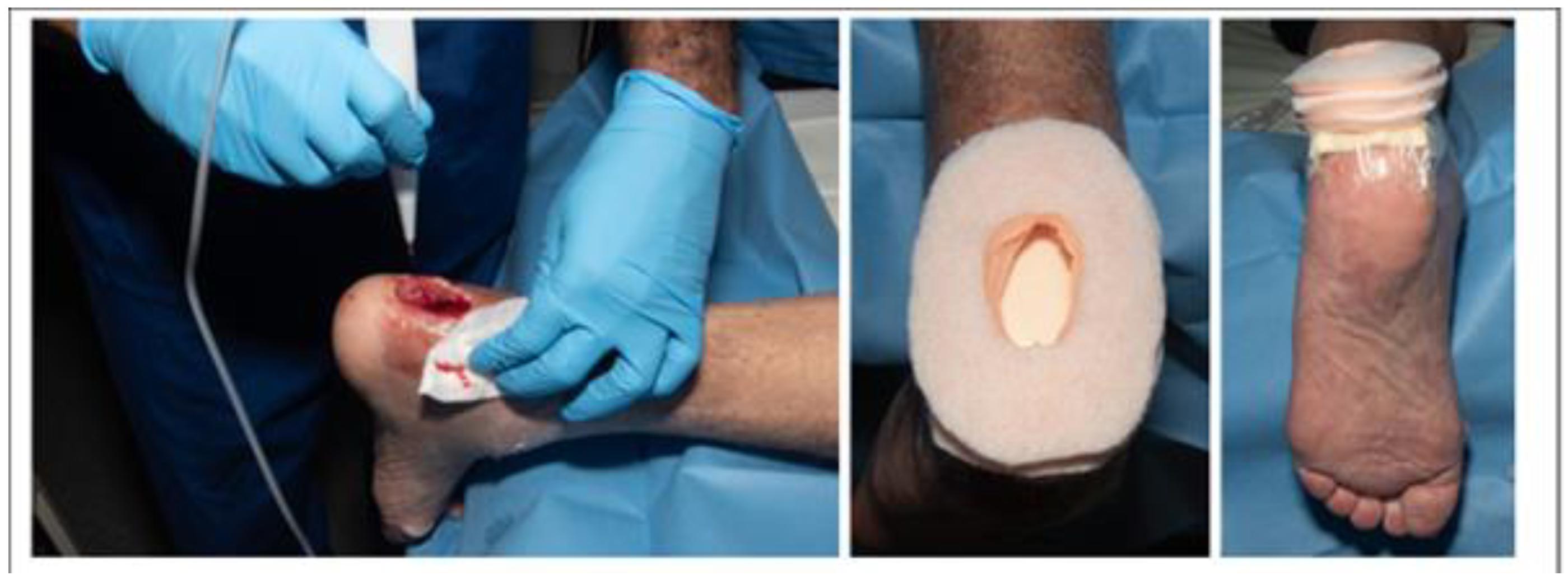
The final application was delivered via a sterile, pen-like microspray instrument designed for controlled flow and precise wound coverage (
Figure 3). This ensured homogenous application across the ulcer surface. Importantly, the PRF matrix polymerised within seconds, forming a cohesive biologic dressing with antimicrobial properties and regenerative potential. Following application, the wound was dressed with Atrauman
® (a non-adherent primary dressing) and Kliniderm
® (a secondary absorbent dressing), consistent with institutional practice.
2.3. Follow-Up and Wound Monitoring
After the initial application, patients were reviewed every three weeks in the outpatient wound care clinic unless discharged earlier due to satisfactory healing. All patients received standard multidisciplinary care, including regular clinical assessment, pressure offloading, and wound debridement as required. Each follow-up assessment involved a full clinical examination by the MDT, focusing on signs of infection, tissue viability, and patient-reported symptoms.
Standardised digital wound imaging was performed at each visit using the Aranz Medical Silhouette® 3D camera. This system enabled objective and reproducible assessment of wound area, depth, perimeter, and tissue composition (granulation vs. epithelialisation) over time.
All wounds were managed in accordance with NICE (National Institute for Health and Care Excellence) guidelines and institutional best practices throughout the follow-up period. Additional systemic antibiotics or wound care interventions were initiated only if new signs of infection or dehiscence were noted.
Patients were discharged from the MDT pathway once wounds achieved complete epithelialisation without active exudate, necrosis, or infection, and the patient was fully ambulatory. Those discharged early were given safety-netting advice and encouraged to seek urgent review in case of recurrence or complications.
2.4. Extended Follow-Up
To assess the durability of the healing response, long-term outcome data were collected from patient records up to a minimum of 12 months post-treatment. Extended follow-up focused on ulcer recurrence, new ulcer development, amputations, or delayed complications such as osteomyelitis. Where necessary, patients were contacted directly or reviewed in clinic to update outcome status.
2.5. Data Analysis
Quantitative wound measurements (area, depth, perimeter, tissue type) recorded via the Silhouette® system were exported to Microsoft Excel for statistical analysis. Statistical analysis was carried out with the IBM SPSS® package (IBM United Kingdom Limited, Building C, Hursley Park Road, Winchester, Hampshire, SO21 2JN, UK). Paired t-tests were used to assess differences between baseline and final wound characteristics. Statistical significance was set at p < 0.05. Patient demographic and clinical data were summarised descriptively. All data were anonymised prior to analysis, and no identifying information was retained.
3. Results
A total of eleven consecutive patients (
Table 1) with chronic, non-healing neuropathic diabetic foot ulcers (DFUs) were included in this clinical audit. The cohort comprised ten males (90.9%) and one female, with a mean age of 58.2 years (range: 34–86). The male-to-female ratio is disproportionate and is due to random case availability. Most patients (81.8%) had type 2 diabetes mellitus, while two individuals (18.2%) had type 1 diabetes. The average HbA1c at baseline was 63.3 mmol/mol (range: 23–112), and 63.3% of patients were receiving insulin therapy at the time of treatment. The mean duration from initial ulcer presentation to intervention with the PRF matrix was 437 days (range: 69–1977), underscoring the chronicity and treatment-resistant nature of these wounds.
All eleven patients successfully completed the treatment protocol. Quantitative wound analysis using the Silhouette
® 3D imaging system demonstrated a statistically significant reduction in wound area, from a mean of 12.64 cm
2 at baseline to 1.66 cm
2 post-treatment—representing an 87.9% mean reduction (
p = 0.00172). Significant improvements were also observed across multiple wound dimensions (
Table 2): perimeter reduced by 64.4% (
p = 0.00038), width by 76.7% (
p = 0.00005), and maximum depth by 72.4% (
p = 0.01596). These reductions reflected consistent, clinically meaningful improvements across the cohort.
Tissue quality also demonstrated favourable changes. The proportion of epithelialised tissue increased substantially from 24.7% to 82.8% (p = 0.00004), indicating advanced wound closure. Concurrently, granulation tissue decreased from 43.6% to 12.8% (p = 0.00295), reflecting resolution of the active wound phase and progression toward maturation. No adverse events were reported, and all patients were ambulatory upon discharge. Importantly, none required amputation during the initial follow-up period.
Extended Follow-Up Outcomes
Patients were reviewed at three-week intervals following treatment, unless discharged earlier due to satisfactory healing. Long-term outcome data were available for all eleven patients, with a minimum follow-up duration of 12 months (range: 12–20.4 months). At the time of final follow-up, nine patients (81.8%) had maintained complete ulcer healing without recurrence. Two patients experienced late complications: one underwent surgical debridement for a recurrent ulcer at 18 months, and another developed ulcer recurrence associated with systemic sepsis. Additionally, one patient developed osteomyelitis that culminated in a lower limb amputation; however, this was unrelated to the site of the original treated ulcer.
4. Discussion
Diabetic foot ulceration (DFU) represents a critical clinical challenge and a significant public health concern due to its complex pathophysiology, high risk of recurrence, and the potential for limb loss. Despite being largely preventable, DFUs remain one of the most common and costly complications of diabetes, contributing to substantial morbidity, prolonged hospitalisation, and frequent readmissions.
In the United Kingdom alone, the annual cost associated with the management of DFUs and related lower limb amputations is estimated to exceed £1 billion [
19]. These costs are not only financial but extend to quality of life, with DFUs associated with a five-year mortality rate comparable to many cancers [
6,
7].
The present clinical audit evaluated the outcomes of a single outpatient application of autologous platelet-rich fibrin (PRF) matrix co-delivered with gentamicin in patients with chronic, non-healing DFUs who had failed conventional management. The results demonstrated statistically significant improvements in wound healing parameters, including wound size, perimeter, depth, and tissue quality in the study population.
Traditional treatment of DFUs includes offloading, debridement, infection control, and moist wound healing techniques. However, these strategies may be insufficient in chronic or neuro-ischaemic ulcers where underlying pathology such as ischaemia, biofilm formation, and a hostile inflammatory microenvironment limit healing. Chronic wounds are characterised by an imbalance between proteolytic enzymes and their inhibitors, a deficit in growth factors, and impaired angiogenesis [
13,
14,
15]. These findings have been consistently demonstrated in histological analyses and clinical wound biomarker studies [
20,
21].
In this context, autologous biologic therapies like PRF offer a mechanistically targeted approach by delivering a scaffold rich in endogenous growth factors, cytokines, and chemotactic molecules that can stimulate tissue regeneration and modulate inflammation [
22]. PRF, in contrast to platelet-rich plasma (PRP), is advantageous due to its simplified preparation, absence of exogenous thrombin or anticoagulants, and slower, sustained release of growth factors. Its dense fibrin network provides a supportive extracellular matrix that facilitates cellular migration, angiogenesis, and collagen deposition [
16,
17]. Additionally, the Arthrozheal
® platform used in this study allows point-of-care production and instantaneous delivery of the PRF matrix in combination with liquid antibiotics, thereby integrating regenerative and antimicrobial strategies in a single intervention [
23]. It must also be highlighted that these mechanisms were not directly evaluated in the present study.
Local antibiotic therapy is increasingly utilised in orthopaedics, with growing interest in its application to chronic wound management. The SOLARIO trial demonstrated that combining local antibiotic delivery with a short systemic course (≤7 days) resulted in infection recurrence rates comparable to those seen with prolonged systemic therapy, while significantly reducing overall antibiotic exposure (median 5 vs. 37 days) [
24]. However, its carrier medium—a bone void filler—limits applicability in diabetic foot ulcers (DFUs).
In DFU management, infection control remains paramount, particularly due to colonisation by multi-resistant organisms embedded within biofilms that are poorly penetrated by systemic antibiotics. The localised application of gentamicin directly to the ulcer bed offers high tissue concentrations with minimal systemic absorption, potentially enhancing bacterial clearance while mitigating the risk of nephrotoxicity and ototoxicity [
25]. This integrated strategy—combining tissue regeneration with local antimicrobial delivery—is gaining traction, supported by emerging evidence from both orthopaedic and diabetic foot literature [
26].
The strength of this audit lies in its pragmatic, real-world approach. Patients included had extensive comorbidities and were managed within a busy tertiary care service using an MDT framework. The audit reflects the outcomes achievable in routine clinical practice without the rigid inclusion criteria of a randomised controlled trial. The use of digital 3D imaging (Silhouette
®) for wound assessment ensured objective, reproducible, and quantifiable data across multiple parameters, reducing the subjectivity often associated with visual wound evaluation [
27,
28].
Our follow-up data, with a minimum duration of 12 months, revealed sustained healing in the majority (81.8%) of patients. Not all cases achieved sustained healing; two patients experienced recurrence, and one developed osteomyelitis at a separate site. Some patients require ongoing monitoring, and recurrence may occur despite treatment. The absence of major complications or adverse events in our cohort further underscores the safety and tolerability of the PRF-gentamicin combination.
Nonetheless, several important limitations warrant consideration. The sample size was small (n = 11), and there was no control group for direct comparison. Efficacy was observed only in this small, highly specific cohort. As a retrospective observational audit, the results should be interpreted cautiously. The heterogeneity of ulcers, differences in baseline characteristics, and absence of standardisation in prior treatment history could have influenced healing trajectories. Haematologic parameters, such as haemoglobin, white cell count, or markers of systemic inflammation, were not collected and may offer additional insights into wound healing capacity in future studies. Moreover, while the PRF matrix delivery system was well-tolerated and easy to apply, operator technique and patient-specific factors such as glycaemic control and vascular status may affect the reproducibility of outcomes in other settings. The lack of a control group (standard of care vs. PRF + gentamicin) makes it difficult to attribute the outcomes solely to the intervention. Also, antibiotic elution data from the PRF matrix has not been fully evaluated. This study combines both type 1 (n = 2) and type 2 (n = 9) diabetes patients. The small number of DM1 in our series patients may also influence the results presented.
Future studies should explore the effectiveness of PRF matrix therapy in larger cohorts with varying degrees of ulcer severity, including patients with SINBAD scores ≥5 or critical limb-threatening ischaemia. Comparative trials against advanced wound dressings, negative pressure wound therapy, or hyperbaric oxygen therapy would also be valuable to delineate the relative benefits of biologic therapy. Furthermore, the pharmacokinetics of antibiotic elution from PRF scaffolds and their impact on microbial resistance patterns remain areas of ongoing research interest [
29]. Comorbidities beyond diabetes were not systematically captured in this audit. Future studies should evaluate broader patient-level factors to better understand healing outcomes. Incorporating cost-effectiveness analyses into future trials is essential, given the increasing emphasis on value-based care within national health systems. Preliminary estimates suggest that the use of PRF matrix biomaterial can lead to reductions in amputation rates and dressing costs, with potential improvements in quality-adjusted life years (QALYs) [
30,
31], which also need further validation.
In summary, this audit adds to the growing body of evidence supporting the use of autologous platelet-rich fibrin as a safe, well-tolerated, and biologically active treatment modality for non-healing diabetic foot ulcers. When combined with localised antibiotic delivery, the PRF matrix may represent a valuable adjunct in the MDT armamentarium—targeting both the impaired regenerative micro-environment and persistent infection that underlie chronic DFU pathology.