You are currently viewing a new version of our website. To view the old version click .
Encyclopedia
  • Systematic Review
  • Open Access

11 December 2025

Why Method Matters: A Systematic Review and Meta-Analysis of the Marketing Capability–Performance Relationship


and
1
Faculty of Management Studies, Periyar Maniammai Institute of Science and Technology, Thanjavur 613403, India
2
Qasim Ibrahim School of Business, Villa College, Malé 20373, Maldives
*
Author to whom correspondence should be addressed.
This article belongs to the Section Social Sciences

Abstract

This systematic review and meta-analysis synthesises 88 effect sizes from 88 peer-reviewed journal articles to evaluate the association between marketing capability and firm performance. Studies were identified in Scopus and Dimensions for the period 2000–2025 and were eligible if they reported a construct identifiable as marketing capability, at least one firm performance outcome, and sufficient statistics to compute a correlation. Random-effects pooling indicates a positive and practically meaningful correlation between marketing capability and performance (r = 0.44, 95% CI [0.40, 0.48]), with a 95% prediction interval from 0.06 to 0.71, indicating that marketing capability is an important correlate of performance outcomes. Subgroup analyses show stronger correlations for reflective first-order models, weaker estimates for higher-order and formative specifications, and wider prediction intervals when confirmatory factor analysis (CFA) is reported. Contextual differences are also evident: business-to-consumer samples exhibit the largest effects, business-to-business samples moderate effects, and mixed samples smaller effects. Small-study patterns were examined with funnel plots, Egger’s test and trim-and-fill, and sensitivity analyses using Restricted Maximum Likelihood (REML), Hartung–Knapp, and multilevel models produced similar pooled estimates. Most included studies were cross-sectional, which limits causal interpretation, so the findings should be read as consistent associations rather than proven effects. Taken together, the review shows that construct design, validation practice, and market setting systematically shape both the size and spread of the marketing capability–performance association and provides benchmarks and prediction intervals that future studies can use for theory development and research design.

1. Introduction

Marketing capability is defined as an organisation’s ability to coordinate, integrate, and deploy market-facing resources and practices that generate value and support commercial outcomes [1,2,3]. Capability theory explains performance differences through firm-specific practices that are valuable, difficult to imitate, and persistent over time [1,4]. This perspective suggests that a positive capability–performance association should be expected and motivates examination of how construct specification and measurement choices influence the magnitude of that association. Empirical studies have linked marketing capability to objective and subjective performance indicators, including profitability, sales growth, changes in market share, and composite indices that combine financial and market outcomes [3,5]. Reported associations vary across studies, reflecting differences in construct specification, measurement quality, performance operationalisation, and market settings. In practical terms, this study answers three questions. How strong is the typical association between marketing capability and performance across published research? What happens to this association when different measurement models of marketing capability are used? And finally, under what market conditions are stronger or weaker associations likely to be observed Against this background, a major driver of heterogeneity concerns construct specification. At least six measurement models are recognised: reflective, formative, reflective–formative, formative–reflective, reflective–reflective, and formative–formative [6]. Reflective models treat observed items as manifestations of a latent capability, requiring evidence of item covariance, validity, and overall fit. Formative models treat observed components as defining the construct, requiring justification of indicator content, checks for multicollinearity, and assessment of weight structures [6,7]. These approaches differ in causal direction, treatment of measurement error, and identification requirements. Shifts between them alter construct meaning and can bias structural coefficients, including correlations with performance. In addition, higher-order structures introduce additional complexity. Reflective second-order factors aggregate lower-order reflective dimensions into a broader capability, whereas formative higher-order composites combine distinct elements such as competitor-oriented scanning and customer-oriented implementation [8]. These alternatives affect observed associations with performance. Aggregating elements with uneven relevance to performance may dilute associations, whereas a narrowly defined first-order reflective construct can capture capabilities more closely aligned with performance-linked practices. Beyond specification, differences in measurement validation also drive heterogeneity. Reflective models require evidence of convergent validity, discriminant validity, and fit measures, via confirmatory factor analysis. Weak or incomplete reporting reduces comparability and increases uncertainty in structural estimates. For formative composites, evaluation depends on the weight structure, multicollinearity diagnostics, and content coverage. Absent or inadequate reporting weakens the interpretive link between indicators and construct [7]. This may further complicate the assessment of the association between antecedents and performance Furthermore, market context shapes findings and interacts with specification and validation. Business-to-business studies emphasise relational coordination, account management, and knowledge integration [9,10,11]. Business-to-consumer studies focus on branding, market segment management, service quality, customer relationship, market-sensing, and channel execution [12,13,14]. Mixed samples combine these settings. These differences influence the average association and the dispersion around that average, and they intersect with specification choices. For example, higher-order composites are used to capture capabilities across industries [10,15,16]. To address these issues, this study addresses three questions. First, what is the pooled correlation between marketing capability and firm performance in eligible empirical research? Second, do construct specification choices, including first-order reflective, second-order reflective, formative first-order where available, and formative higher-order composites, moderate the pooled correlation? Third, do measurement attributes, particularly the reporting of confirmatory factor analysis for reflective structures, moderate the pooled correlation? A related question concerns market setting: do business-to-business and business-to-consumer studies report comparable magnitudes, and how do mixed settings relate to pooled effects. Thus, the study aims to make three contributions. First, it quantifies the average association and provides a prediction interval that describes the dispersion expected in comparable future studies. Second, it demonstrates that construct specification choices have measurable effects on the magnitude of the capability–performance association. Third, it shows that reported measurement validation coincides with differences in both central tendency and dispersion, informing instrument design and reporting practices.
This study contributes to the marketing capability literature in three main ways. First, it provides a quantitative synthesis of the marketing capability–performance association based on 88 effects reported between 2000 and 2025. Second, it compares alternative construct specifications, including reflective first-order, reflective higher-order, and formative models, and examines how these choices relate to both the magnitude and the dispersion of observed effects. Third, it investigates whether studies that report confirmatory factor analysis metrics yield different capability–performance associations from studies without such reporting and whether the association varies across business-to-business, business-to-consumer, and mixed market settings.

2. Literature Review

2.1. Theoretical Foundation and Application in Marketing Studies

The resource-based view explains performance differences by the ownership and control of resources that are valuable, rare, hard to imitate, and non-substitutable. Advantage persists when isolating mechanisms limit imitation and when firms can deploy resource bundles in value-creating ways [17,18,19,20]. Within this perspective, marketing capability is a bundle of market-facing processes and know-how that supports value creation and capture value through customer understanding, brand building, channel management, and pricing. Dynamic capability theory extends this view by explaining adaptation when environments shift. It highlights higher-order practices for sensing opportunities and threats, seizing opportunities through timely commitments, and reconfiguring assets and processes [4,21,22,23]. Marketing capabilities contribute to each class. Thus, market-sensing practices support branding, pricing; and channel practices support selection and execution. Reconfiguration relies on cross-functional coordination that updates offerings and go-to-market systems [1]. In marketing studies, these theories guide the definition of domains such as market sensing, customer linking, and channel management, and the tests of their links to financial and market outcomes [2,3,5]. In capability theory, capabilities can be interpreted either as relatively consistent routines or as bundles of underlying resources and processes. Reflective first-order models align more closely with the view of capabilities as logical routines, where indicators are interchangeable manifestations of an underlying competence. Higher-order and formative models treat capabilities as composites of distinct sub-dimensions. These different conceptualisations imply different expectations about their empirical association with performance. If capabilities operate as consistent routines, reflective first-order models should show stronger and more stable correlations with performance than models that aggregate heterogeneous subcomponents.

2.2. Measurement Models and Challenges

Marketing capability is measured with reflective and formative models that connect theory to indicators [6,7]. In a reflective model, items are signs of a core capability. Items are expected to covary, and a latent factor explains their shared variance. Removing an item reduces measurement precision but does not change what the construct means. In a formative model, indicators define the capability. Items need not covary, and each indicator captures a distinct element of the domain. Removing an indicator changes the construct. These alternative logics suggest different causal directions between constructs and indicators and different roles for measurement error and identification, so choosing between them has direct consequences for structural estimates that link capability to performance.
Researchers also extend first-order models to higher-order structures that influence the strength of links to performance. In reflective–reflective second-order models, lower-order reflective dimensions such as pricing, product development, and channel management load on a higher-order reflective factor that represents a broader capability. In formative higher-order composites, distinct capability elements such as ‘architectural and specialised marketing capabilities’ are combined using formative links [15]. In reflective-formative second-order models, lower-order reflective dimensions such as technology, business and human resources load on a higher-order formative factor that represents a broader capability [24]. These choices matter because combining elements with uneven relevance to a focal outcome can dilute a single latent association and may align more closely with practices tied to that outcome.
Modern works add subdomains to the marketing capability research domain that include data and digital processes. Some examples of emerging subdomains within the marketing capability domain are digital marketing capability, analytics capability, social media marketing capability, omnichannel management capability, and customer relationship management capability. Instruments for these subdomains vary. Some use reflective items that capture a clear set of variables. Others use formative indices that list distinct activities. Treating these alternatives as interchangeable can blur empirical patterns. Clear reporting of specification and justification for the chosen model are therefore essential to support valid inference and to enable synthesis across studies.

2.3. Performance Outcomes and Their Measurement

Studies use objective indicators such as profitability, sales growth, and market share and subjective indicators such as managers’ assessments of financial or market standing [25,26,27]. Alignment between capability content and the chosen outcome is important for interpretable estimates. Aggregating across outcomes that respond differently to capability can produce smaller correlations than a single aligned indicator. Reporting prediction intervals alongside confidence intervals quantifies the expected dispersion in new studies using heterogeneous outcomes. Taken together, the diversity of subjective, objective, and composite performance indicators is a likely source of heterogeneity in the marketing capability–performance association.

2.4. Measurement Quality and Validity Evidence

Measurement quality conditions the credibility of structural estimates. In reflective models, researchers report loadings, reliability, convergent validity, discriminant validity, and fit for the measurement model. In formative composites, researchers justify content coverage, estimate indicator weights with appropriate tests, and check multicollinearity. Internal consistency is not expected for formative constructs, so reliability coefficients designed for reflective models are not informative. A mismatch between diagnostics and model logic creates ambiguity and complicates synthesis across studies [6,7].

2.5. Market Settings and Boundary Conditions

Business-to-business studies emphasise relational coordination, key processes, and knowledge integration [9,10,11]. Business-to-consumer studies emphasise branding, category management, service quality, and channel execution [12,28,29]. Mixed samples combine sectors and customer types. The same named capability can appear differently across settings. Customer-linking, for example, involves key account governance in business-to-business markets and omnichannel experience design in business-to-consumer markets. A reflective second-order model may suit organisations where lower-order practices move together under shared governance or technology, whereas a formative composite may suit settings where firms assemble varied portfolios of practices tailored to segments. Higher-order composites are used to capture heterogeneous capability profiles across industries.

2.6. Hypotheses

Existing meta-analyses [30,31] provide relevant benchmarks but do not address core design choices in marketing capability research. Meta-analyses of market orientation report positive links to performance while documenting heterogeneity across settings and measures [32,33]. A meta-analysis of dynamic capabilities also reports a positive association with performance with significant variation across operationalisations, research designs, and environmental conditions [34]. These syntheses advance understanding of market knowledge and adaptation, yet they either do not focus on marketing capability as a distinct construct family or they do not code the measurement choices used in this domain. Therefore, two gaps remain. First, prior syntheses do not classify marketing capability estimates by construct specification. They do not distinguish first-order reflective scales from reflective second-order factors or formative higher-order composites, so they cannot test whether aggregation logic changes the magnitude of the capability and performance link. Second, prior syntheses rarely treat measurement reporting as a moderator. They do not systematically compare effects from studies that report confirmatory factor analysis for reflective models with effects from studies that do not, and they report confidence intervals but not prediction intervals. As a result, readers lack guidance on both the expected mean effect and the dispersion that new studies are likely to observe. The present study addresses these gaps by synthesising marketing capability and performance estimates with explicit coding of construct specification and measurement reporting, and by presenting both confidence and prediction intervals. It also assesses market setting as a boundary condition that can shift central tendency and dispersion. Thus, the following four hypotheses were proposed.
H1: 
Marketing capability exhibits a positive pooled correlation with firm performance.
This expectation follows from capability theory, which views marketing capability as a performance relevant bundle of routines and know-how that should be positively reflected in financial and market outcomes.
H2: 
The pooled correlation differs by construct specification, with first-order reflective scales producing larger estimates than reflective second-order factors and formative higher-order composites.
Reflective first-order models are expected to yield stronger correlations with performance because they represent consistent routines that map directly onto observable marketing actions. Higher-order and formative models combine distinct components and may dilute the link to performance outcomes.
H3: 
Reported confirmatory factor analysis for reflective models is associated with a difference in the pooled correlation and in the dispersion around that mean.
If CFA reporting reflects more rigorous measurement practice, one might expect higher observed correlations with performance among such studies. At the same time, more rigorous studies may also sample more varied settings and outcomes, which could increase heterogeneity.
H4: 
Market setting moderates the pooled correlation across business-to-business, business-to-consumer, and mixed samples.
Market setting is expected to matter because the same named capability can involve different routines in business-to-business and business-to-consumer markets. For example, customer-linking emphasises key account governance in business-to-business contexts and omnichannel experience design in business-to-consumer contexts, which may lead to different capability–performance associations.

3. Method

3.1. Review Protocol and Governance

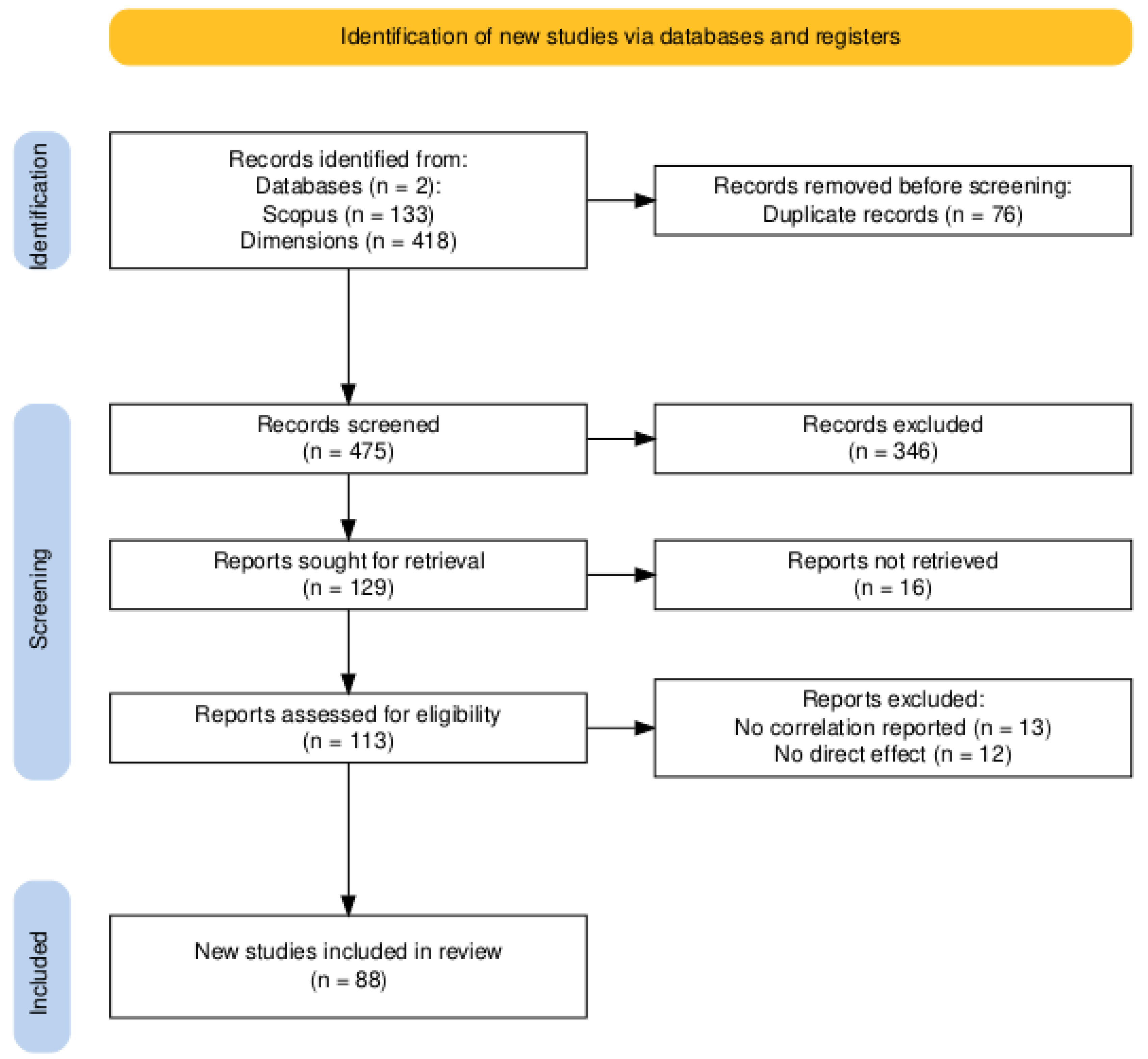
Figure 1 presents the “Preferred Reporting Items for Systematic reviews and Meta-Analyses” (PRISMA) 2020 flow diagram [35]. The review followed PRISMA 2020 guidance for transparent evidence synthesis [36]. The protocol prespecified information sources, time window, search strings, eligibility criteria, screening stages, data items, and the statistical plan. The protocol was developed before data collection and was not prospectively registered in a public repository, but it is available from the authors on request. No deviations from the protocol were introduced.
Figure 1. PRISMA 2020 Report on Article selection. Adapted from Ref. [35].
Searches were conducted in Scopus and Dimensions to reduce selection bias. Scopus was searched on 15 March 2025 and Dimensions on 18 March 2025. The window covered publications from 2000 to 2025 to capture the diffusion of reflective and formative measurement practice and the emergence of digital capability subdomains. The core string was “marketing capabilit* AND performance”, searched in titles, abstracts, and keywords. To capture terms used in empirical work, the core string was combined with named subdomains, including digital marketing capability, analytics capability, social media marketing capability, omnichannel management capability, and customer relationship management capability. Reference lists of included studies were checked to identify additional records. Full database-specific query strings and filters are reported in Supplementary Table S1.
The Scopus query returned 133 records (TITLE-ABS-KEY (“marketing capability” AND “performance”) with filters: Business, Management and Accounting; article; all open access; years 2000–2025). The Dimensions query returned 418 records (“marketing capability” AND “performance” with filters: Fields of Research “Australian and New Zealand Standard Research Classification” (ANZSRC) 2020 = 35 Commerce, Management, Tourism and Services; years 2007–2025; all open access). In total, 551 records were identified. Deduplication removed 76 records, leaving 475 for title and abstract screening. At this stage, 346 records were excluded. Retrieval was attempted for 129 reports; 16 could not be retrieved. Full text was assessed for 113 reports; 25 were excluded, comprising 13 with no correlation reported and 12 without a direct capability–performance effect. In total, 88 studies met the inclusion criteria and were used in the meta-analysis. Title and abstract screening and full-text eligibility assessment were conducted by two reviewers working independently. Disagreements were discussed and resolved and the articles shortlisted are summarised in Figure 1 and in the screening log in Supplementary Table S2.
Eligibility required a peer-reviewed journal article that examined a construct identifiable as marketing capability or a recognised subdomain; a declared and classifiable measurement model (reflective or formative, including higher-order structures); at least one firm performance outcome; and sufficient statistics for effect-size calculation or conversion to a correlation. Exclusion removed conference items, editorials, dissertations, and working papers; records where capability was used only as a minor covariate without conceptual definition; studies with unclear or unstated measurement logic; records without a performance outcome were dropped. The focus on peer-reviewed journal articles was adopted to ensure a consistent baseline of methodological quality and reporting detail suitable for meta-analytic synthesis. Non-journal literature such as dissertations, conference papers, and working papers was excluded because reporting of effect-size statistics and measurement details was often incomplete.
Data extraction captured study identifiers; capability specification and indicator content; measurement quality reporting; performance outcomes and their operationalisation; zero-order effect statistics (or convertible statistics); and market setting. When multiple eligible effects were present, priority was given to the performance link designated by the authors as primary; if none was designated, effects linking an overall marketing capability to an overall performance indicator were selected. Non-overlapping samples were treated as independent. Within-study dependence for the same capability–outcome pair was resolved by prespecified selection or by within-study Fisher-z averaging. To assess the reliability of coding decisions, a subset of studies was independently double-coded for construct specification, measurement model, market setting, and CFA reporting. Agreement on these categorical variables exceeded κ = 0.80. Discrepancies were resolved through discussion and minor revisions to the coding manual. No automation tools were used for screening or data extraction. Only peer-reviewed journal articles were included. Dissertations, conference papers, and book chapters were excluded to maintain a consistent level of methodological quality and reporting detail suitable for meta-analysis.

3.2. Effect Size Computation

The synthesis metric was the Pearson product–moment correlation [37] between marketing capability and performance. When studies reported Fisher-transformed correlations, those values and their reported variances or standard errors were used directly. Otherwise, reported correlations were transformed to Fisher’s z using the inverse hyperbolic tangent transformation [38]. The sampling variance on the z scale was computed using the standard large-sample approximation that depends on the study’s sample size. Pooled estimates, confidence intervals, and prediction intervals were computed on the z scale and then back-transformed to the correlation metric for interpretation. For numerical stability, correlations equal to ±1 were truncated slightly within the open interval before transformation [38].
Some studies reported more than one correlation between marketing capability and performance, for example, through several performance indicators or more than one capability subdimension estimated on the same sample. When such correlations were conceptually redundant and drawn from the same sample, they were averaged using Fisher’s z transformation to obtain a single effect per study. When distinct capability–performance links were reported for clearly different constructs or samples, the effects were retained as separate entries and treated as statistically dependent in subsequent sensitivity analyses. The primary analyses used inverse-variance weighted random-effects models with the DerSimonian and Laird estimator for τ2 to maintain comparability with earlier work in marketing. To address within-study dependence more directly, an additional multilevel model with a random intercept for Study was estimated and robust variance estimation with “Cluster-Robust Variance Estimator, Type 2” (CR2) small-sample adjustment was applied. These models produced similar pooled correlations and did not change the substantive conclusions.

3.3. Meta-Analytic Model

Random-effects models were estimated with inverse-variance weights. The primary analyses used the DerSimonian and Laird moment estimator for the between-effect variance [39], because this estimator remains standard in applied marketing meta-analyses and facilitates comparison with earlier work. All calculations for means, standard errors, confidence intervals, and prediction intervals were performed on the Fisher-z scale and then back-transformed to correlations. Heterogeneity was summarised with Cochran’s Q, its degrees of freedom, and the I2 index [40]. Prediction intervals combined uncertainty in the pooled mean with the estimated between-effect variance and were back-transformed for presentation [41]. To evaluate the stability of the findings, the overall model was re-estimated using restricted maximum likelihood with Hartung-Knapp adjustment of confidence intervals: this specification produced similar pooled correlations and did not alter the substantive conclusions.

3.4. Moderator Analysis

Three moderator families were specified and analysed with random-effects subgroup models. Construct specification used four levels: reflective first-order, reflective second-order, formative first-order where present, and formative higher-order composite. Where coding allowed, higher-order composites that corresponded to distinct elements such as customer-oriented and competitor-oriented capability were retained as separate cells. For reflective structures, the presence of reported confirmatory factor analysis fit served as a binary indicator of measurement validation. Market setting was coded as business-to-business, business-to-consumer, or mixed from the study’s sampling frame. For each subgroup, reporting includes the number of effects, the pooled correlation with a 95% confidence interval, heterogeneity statistics, and the 95% prediction interval. Performance outcome type was not analysed as a moderator because reporting of separate financial, market, and composite outcomes was inconsistent across studies, which precluded reliable subgroup classification.

3.5. Small-Study and Sensitivity Assessments

Small-study patterns were examined using funnel plots with the effect shown against its standard error on the Fisher-z scale. Egger’s regression test was applied where the subgroup size reached at least 10 effects [42]. Where visual inspection suggested asymmetry, trim-and-fill analyses were performed as a sensitivity check to gauge the influence of potentially missing effects on pooled estimates [43]. Both Egger’s regression and trim-and-fill are known to have limited reliability in the presence of strong heterogeneity and dependent effect sizes. For this reason, these diagnostics were interpreted descriptively and were not treated as definitive corrections. Sensitivity checks included leave-one-out influence analysis and recomputation of the overall effect using restricted maximum likelihood with Hartung–Knapp adjustment of confidence intervals. In addition, a multilevel random-effects model with a random intercept for Study was estimated to account for dependence among multiple effects from the same study. Robust variance estimation with CR2 small-sample adjustment was applied to the multilevel model to obtain cluster-robust standard errors and confidence intervals. These sensitivity analyses yielded pooled correlations (Table S3) that were similar to the primary DerSimonian–Laird model and did not change the pattern of moderator results.

4. Results

4.1. Overall Association

The random-effects synthesis (Table 1) across k = 88 effects yielded a positive correlation between marketing capability and performance (r = 0.44, 95% CI [0.40, 0.48]). Heterogeneity was substantial (Q = 1064.70, df = 87; I2 = 91.83%; τ2 = 0.04). The 95% prediction interval (PI) on the correlation scale ranged from 0.06 to 0.71, indicating that future studies are expected to observe positive associations, although the dispersion suggests that effects may vary considerably. The REML model with Hartung–Knapp adjustment produced an identical pooled correlation (r = 0.439, 95% CI [0.402, 0.475]), which shows that the central estimate is robust to the choice of heterogeneity estimator and test statistic.
Table 1. Overall random-effects meta-analytic summary.
H1 was supported because the pooled correlation and its confidence limits were strictly positive.
The REML model with Hartung–Knapp adjustment produced the same pooled correlation at two decimal places (r = 0.439, 95% CI [0.402, 0.475]), which shows that the central estimate is robust to the choice of heterogeneity estimator and test statistic. A multilevel random-effects model with a random intercept for study produced a similar correlation (r = 0.49 on the Fisher–z scale, 95% CI [0.38, 0.59]). Robust variance estimation with CR2 small-sample adjustment yielded an estimate of r = 0.451, 95% CI [0.354, 0.538], which largely overlaps with the primary model. These sensitivity checks indicate that dependence among within-study effects does not materially alter the substantive conclusion.

4.2. Construct Specification (H2)

Subgroup analyses (Table 2) showed statistically significant heterogeneity across construct specifications (Qbetween = 150.07, df = 3, p < 0.001). Reflective first-order specifications produced the largest pooled correlation (r = 0.46, 95% CI [0.42, 0.50]; k = 74). Reflective second-order specifications were markedly smaller (r = 0.25, 95% CI [0.06, 0.43]; k = 4). Formative first-order models yielded r = 0.43 (95% CI [−0.01, 0.73]; k = 2), but the wide interval reflects imprecision due to the very limited number of effects. Formative second-order specifications produced r = 0.31 (95% CI [0.23, 0.39]; k = 8). Estimates for reflective second-order (k = 4) and formative first-order models (k = 2) are therefore based on very few studies and wide intervals, so these results are exploratory and should be interpreted with caution.
Table 2. Construct specification results.
These results show that reflective first-order models yielded correlations nearly twice as large as reflective second-order models, while formative structures were intermediate. H2 was supported.

4.3. Measurement Validation Within Reflective Models (H3)

Among reflective effects (Table 3), the pooled correlation did not differ significantly between studies that reported confirmatory factor analysis (CFA) fit indices and those that did not (Qbetween = 0.78, df = 1, p = 0.377). For studies reporting CFA fit, the pooled correlation was r = 0.44 (95% CI [0.37, 0.50]; k = 44), with high heterogeneity (I2 = 95.09%; τ2 = 0.07) and a prediction interval from −0.05 to 0.76. For studies without CFA reporting, the pooled correlation was r = 0.45 (95% CI [0.41, 0.48]; k = 43), with lower heterogeneity (I2 = 76.50%; τ2 = 0.01) and a prediction interval of 0.24 to 0.61. Both categories contained more than 40 effects, although heterogeneity remained high. The non-significant Qbetween result should be read in light of this residual heterogeneity.
Table 3. Measurement quality results (reflective effects only).
Although CFA reporting increased heterogeneity, the pooled correlations were similar. Hence, H3 was not supported.

4.4. Market Setting (H4)

The pooled correlation (Table 4) differed significantly across market settings (Qbetween = 53.12, df = 2, p < 0.001). In business-to-business (B2B) samples, the pooled correlation was r = 0.44 (95% CI [0.37, 0.50]; k = 36), with substantial heterogeneity (I2 = 93.22%; τ2 = 0.06). In business-to-consumer (B2C) samples, the pooled correlation was larger at r = 0.53 (95% CI [0.44, 0.61]; k = 17; I2 = 90.44%; τ2 = 0.05). Mixed-setting studies yielded r = 0.41 (95% CI [0.37, 0.45]; k = 33; I2 = 80.77%; τ2 = 0.01). Subgroup estimates are based on k = 36, 17, and 33 effects for B2B, B2C, and mixed settings, respectively, and all three settings show substantial heterogeneity, so the pooled values are best interpreted as typical associations rather than fixed benchmarks.
Table 4. Market setting results.
These findings indicate that marketing capability correlates most strongly with performance in B2C contexts, followed by B2B, with mixed settings showing the smallest average effect. H4 was supported.

4.5. Small-Study Patterns and Influence

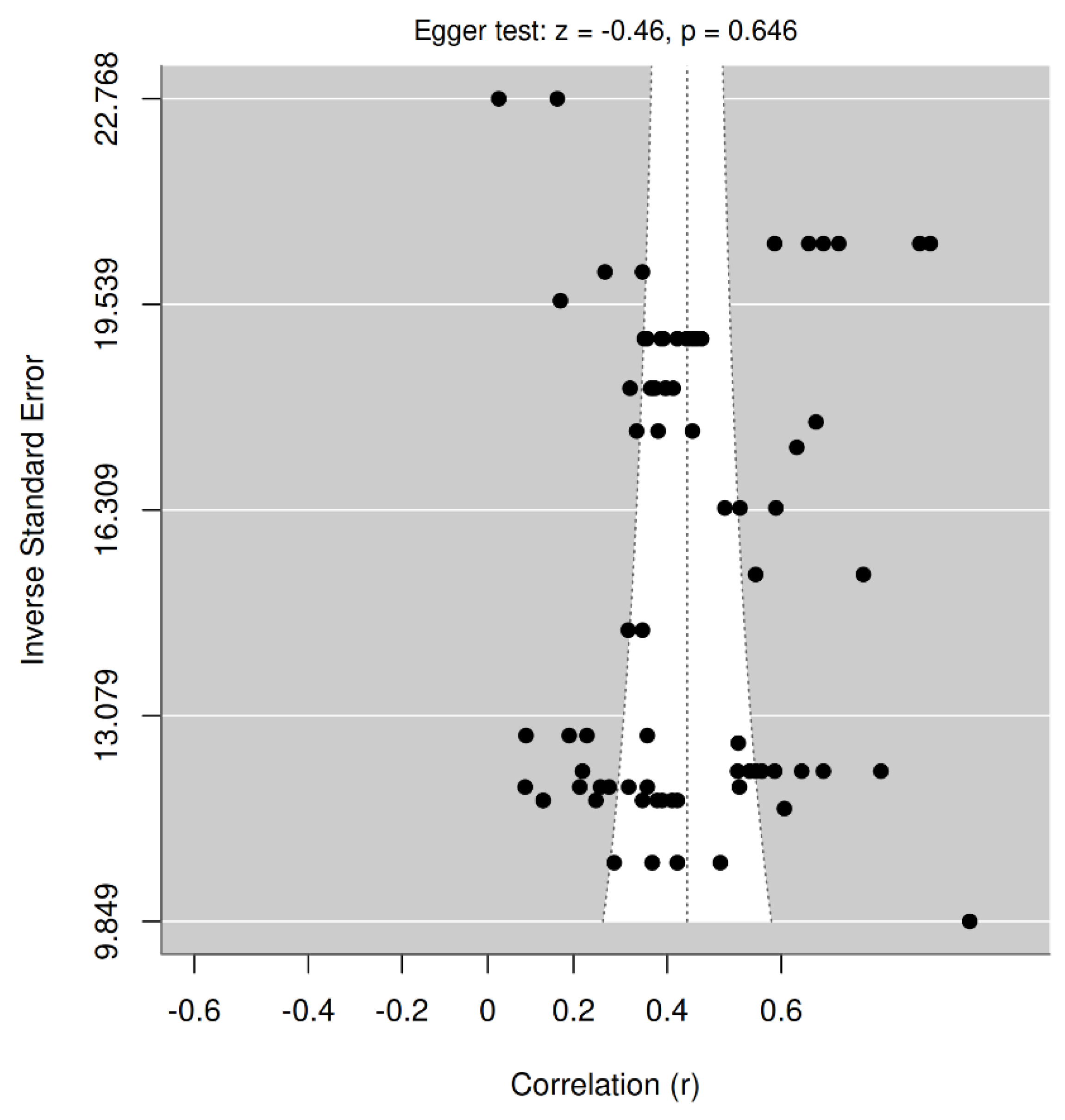
Figure 2 presents the funnel plot on the Fisher-z scale, and small-study diagnostics are summarised in Table 5. The Egger regression test did not detect significant asymmetry (z = −0.46, p = 0.646), so there was no systematic statistical evidence of publication bias.
Figure 2. Funnel Plot.
Table 5. Small-study bias and influence diagnostics.
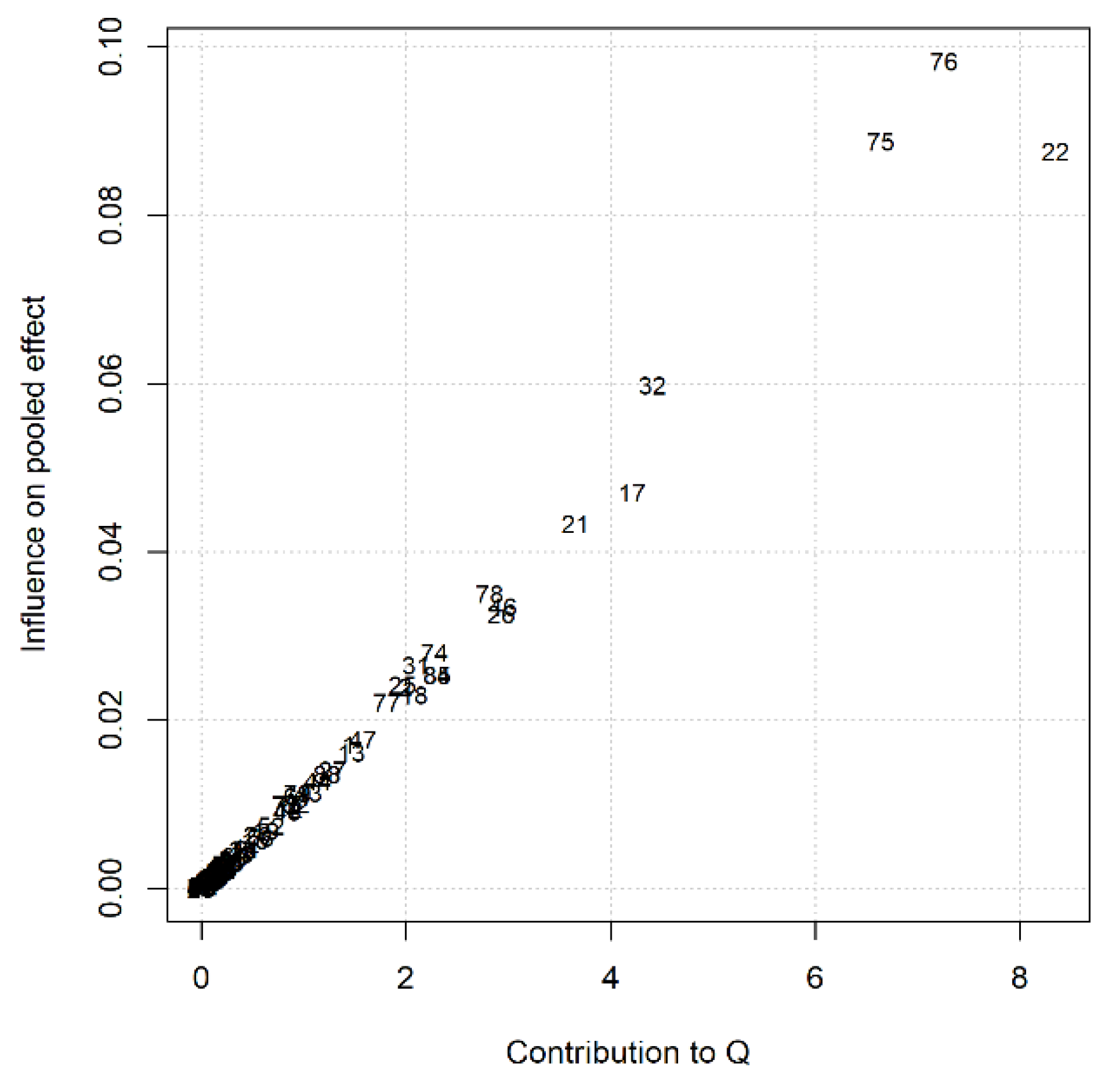
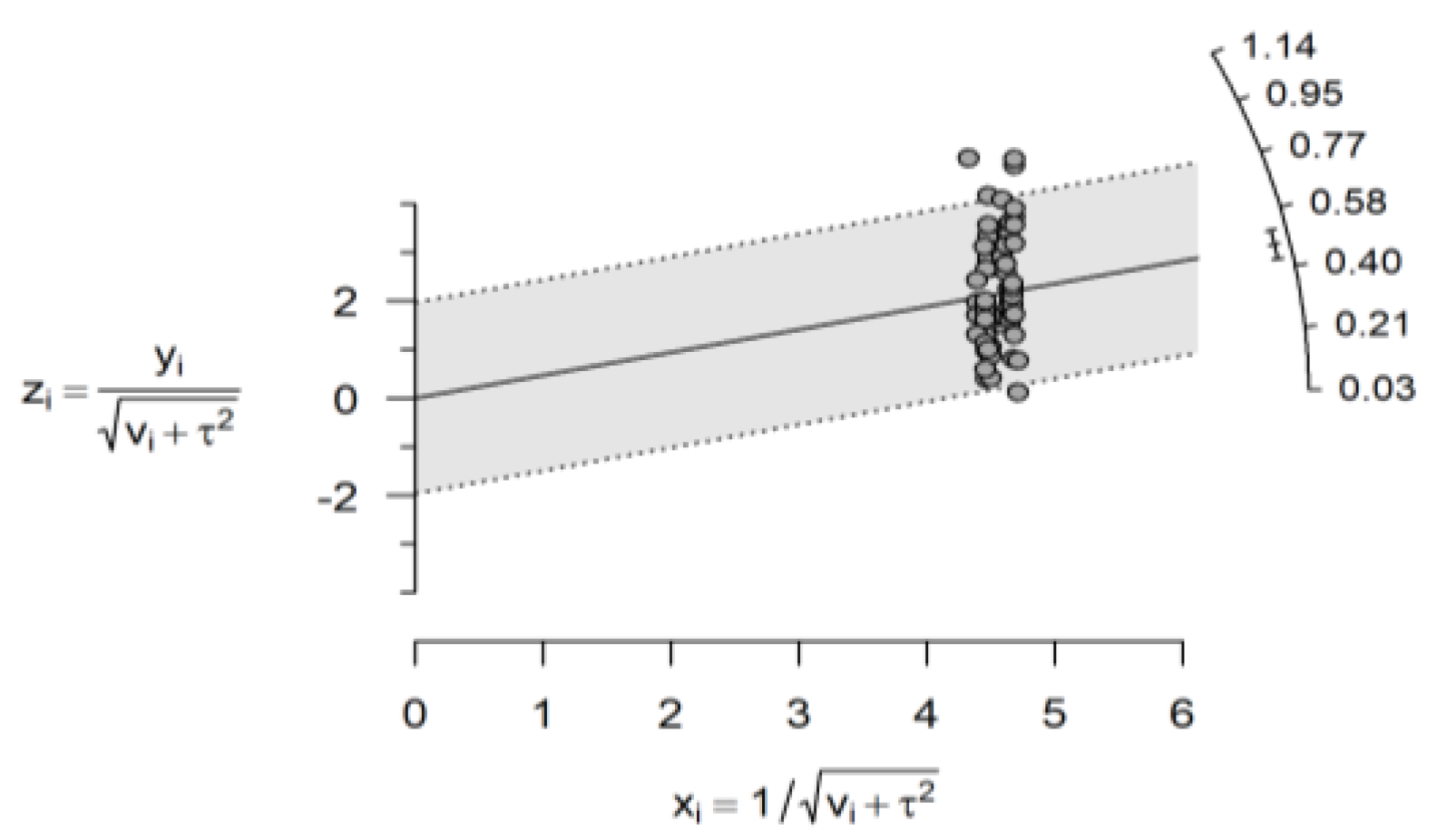
Baujat diagnostics (Figure 3) identified a small set of influential effects (IDs 22, 32, 75, and 76) that contributed disproportionately to heterogeneity. The radial plot (Figure 4) confirmed these studies as exerting relatively higher influence on the pooled estimate. Sensitivity checks excluding these effects did not materially change the overall pooled correlations.
Figure 3. Baujat Plot.
Figure 4. Radial Plot.
Visual inspection of the funnel plot (Figure 2) suggested asymmetry, and trim-and-fill estimated that 17 studies might be missing on the right-hand side of the plot. The corresponding adjusted random-effects model yielded a larger pooled correlation, which is consistent with under-representation of large positive effects in the original sample. However, Egger’s regression test was not significant, and both methods have limited reliability under high heterogeneity and dependence. These diagnostics are therefore treated as descriptive checks rather than formal corrections, and the substantive conclusions rely on the primary random-effects and multilevel models.

5. Discussion

This synthesis confirms that marketing capability is positively related to firm performance, with an overall pooled correlation of r = 0.44 (95% CI [0.40, 0.48]) and a 95% prediction interval from 0.06 to 0.71. The heterogeneity is high (I2 = 91.83%), and moderator tests show that construct specification, measurement validation, and market setting explain part of this variation. These findings demonstrate that measurement and contextual conditions materially affect the size of the association.

5.1. Theoretical Contributions

The results address the four research questions formulated in the introduction. First, the average association between marketing capability and performance is moderate and positive across contexts. Second, construct specification matters, with reflective first-order models yielding stronger correlations than higher-order and formative models. Third, the reporting of confirmatory factor analysis fit statistics does not increase the pooled correlation but is associated with wider prediction intervals, which suggests greater variability across settings. Fourth, the capability–performance association is stronger in business-to-consumer markets than in business-to-business and mixed markets.
H1 is supported: the positive pooled correlation confirms that marketing capability consistently relates to stronger performance. This adds to evidence that marketing capability functions as a performance-enhancing resource within both resource-based theory [1] and dynamic capability theory [4].
H2 shows that first-order reflective specifications generate stronger correlations with performance than higher-order or formative models. These specifications capture unified characteristics which are part of modern organisational practices, such as shared processes for customer sensing or cross-functional implementation [1,3]. By contrast, higher-order reflective and formative composites weaken observed effects by averaging across facets with uneven contributions or by introducing risk of measurement mismatch [6,7].
H3 finds that confirmatory factor analysis (CFA) reporting does not increase mean correlations but is linked with wider prediction intervals. This pattern indicates that validation does not inflate estimates; rather, validated instruments are typically deployed across diverse industries, geographies, and performance measures, which reveals more heterogeneity [1,4]. The wider prediction intervals for studies that report CFA fit suggest that more formal validation does not guarantee uniformly stronger capability–performance associations. One interpretation is that such studies are more likely to sample diverse industries, countries, and performance indicators and to report complete results, including weaker or non-significant links. This combination can increase dispersion even when the average association remains similar, making variation across contexts more visible rather than inflating effect sizes.
H4 shows that setting matters: business-to-consumer studies yielded the strongest correlation (r = 0.53), business-to-business samples were moderate (r = 0.44), and mixed studies lower (r = 0.41). This implies that the value of marketing capability partly depends on customer orientation and market structure, which aligns with insights from market orientation research [8,44].
The findings from these results extend capability theory by showing that construct design and market context shape observed magnitudes. The association depends not only on basic practices but also on whether measurement captures unified characteristics or broad aggregates, and whether reporting practices make contextual variation visible.

5.2. Managerial Implications

The findings have direct implications for managers. From H1, firms with stronger reported marketing capabilities tend to report high performance outcomes, although causal effects cannot be inferred from these data. From H2, evidence indicates that organisations that describe consistent and integrated marketing practices, such as common market-sensing practices and coordinated execution, also report stronger capability-performance associations than those that describe more disconnected activities [3]. From H3, validated instruments should be used not because they increase estimates but because they make performance outcomes across contexts more interpretable [22]. From H4, managers in consumer markets generally observe stronger associations between reported marketing capability and performance than those in business-to-business or mixed environments [8].
The prediction intervals provide realistic bounds for planning. For example, in business-to-business settings, the expected correlation is r = 0.44 with a possible range from −0.01 to 0.74, while in consumer markets the expected correlation is r = 0.53 with a range from 0.12 to 0.78. Mixed settings show a lower mean (r = 0.41) with narrower bounds (0.20 to 0.58). These ranges indicate how strongly reported capability and performance tend to co-vary in different settings and should inform investment decisions, rather than relying on a single average value or assuming causal effects.

5.3. Limitations and Directions for Future Research

The evidence base of this research using PRISMA 2020 guidelines (Table S4) consists largely of cross-sectional correlational studies that report zero-order correlations between self-reported marketing capability and performance. Formal study-level risk-of-bias tools designed for randomised trials are not directly applicable to this literature. Instead, potential sources of bias were assessed through small-study and publication-bias diagnostics and through the examination of heterogeneity and prediction intervals. Thus, the certainty of evidence can be characterised as moderate: the pooled correlation is stable across estimators and models, but causal interpretation is not warranted and unexplained heterogeneity remains substantial.
This study comes with two limitations. First, most studies are correlational, which restricts causal inference. As the underlying studies are predominantly cross-sectional and non-experimental, this meta-analysis cannot establish that marketing capability causes performance improvements; the results document consistent associations that may reflect both genuine capability effects and confounding factors. Establishing causality requires longitudinal designs, repeated measures, natural experiments, or quasi-experimental methods that separate capabilities from unobserved drivers [45]. Second, some moderator categories have small sample sizes, for example, formative first-order models (k = 2), which reduces precision. Although sensitivity checks and prediction intervals were used to reflect both central tendency and dispersion, the evidence base remains uneven. In addition, performance outcomes could not be coded consistently into comparable categories, so outcome type was not examined as a moderator and remains a source of unexplained heterogeneity.
Future research can advance along three directions. First, longitudinal models such as latent growth and cross-lagged panels can test persistence and direction of effects [21]. Second, quasi-experimental strategies including difference-in-differences and synthetic controls can provide stronger causal identification when natural experiments occur [45]. Third, studies should analyse mediating and moderating conditions. Mediators [46,47] such as innovation capability, customer relationship quality, or market responsiveness can clarify how capabilities translate into performance. Moderators such as environmental turbulence, industry life cycle, or firm size can explain where and when capability effects are stronger or weaker. To ensure comparability, reflective measures should undergo invariance testing, and formative measures should include diagnostics for weight stability and redundancy.

6. Conclusions

This meta-analysis establishes that marketing capability is positively associated with firm performance (H1), with an overall correlation of r = 0.44 (95% CI [0.40, 0.48]). The effect, however, varies systematically depending on construct specification (H2), measurement validation (H3), and market setting (H4). Reflective first-order models, which capture unified characteristics, show stronger associations than higher-order or formative composites. Studies that report confirmatory factor analysis yield similar pooled means but wider prediction intervals, reflecting the deployment of validated instruments across diverse contexts. Among market settings, business-to-consumer studies report the strongest association, business-to-business studies a moderate one, and mixed settings the weakest.

6.1. Theoretical Implications

The findings reinforce the idea that measurement design is not a technical detail but an integral part of capability theory. When constructs capture basic practices as unified characteristics, they align closely with resource-based and dynamic capability perspectives, which view practices as valuable and difficult to imitate [1,4]. Conversely, higher-order and formative composites weaken observed effects because they combine elements with uneven relevance or introduce risks of specification error [7,19]. By linking measurement practices with empirical magnitudes, this study positions research design as part of the causal process through which capabilities are linked to outcomes in empirical analyses.

6.2. Practical Implications

For managers, the results imply that firms that report marketing capabilities built around consistent and integrated practices, such as shared market-sensing practices and cross-functional implementation, also tend to report higher performance levels than firms with more fragmented practices, although causality cannot be inferred Assessment instruments should match construct logic: reflective scales are appropriate for unified characteristics, while formative indices require strong theoretical justification and diagnostic checks for stability. Planning should also account for dispersion across contexts. In business-to-consumer markets, studies tend to report stronger capability-performance associations, whereas studies of business-to-business or mixed settings tend to report more modest associations. Prediction intervals reported here provide realistic benchmarks for evaluating expected returns on capability investments in correlational terms rather than as guaranteed causal effects.

6.3. Future Directions

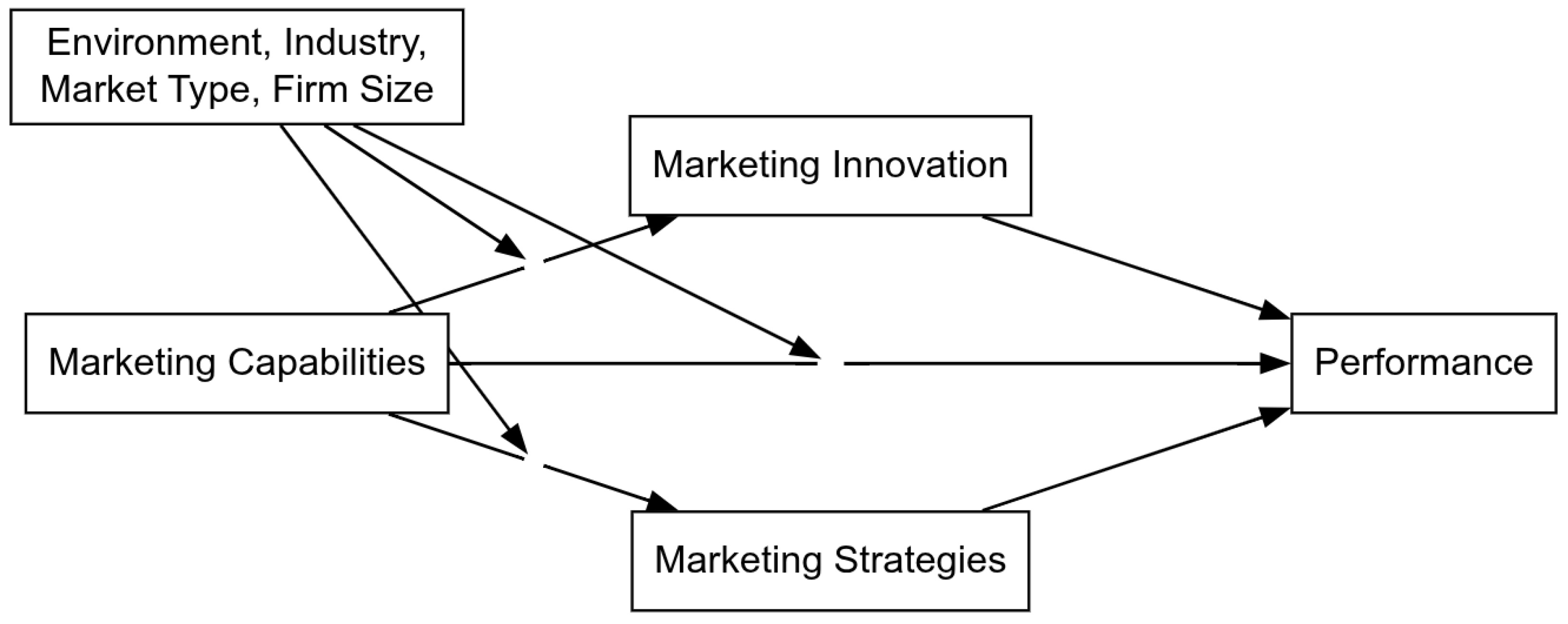
Future research should extend these findings by clarifying mechanisms and boundary conditions. Longitudinal and quasi-experimental designs are needed to establish causality. Multi-group structural models can explore whether customer-oriented and competitor-oriented practices contribute differently to specific outcomes. Importantly, mediation and moderation analyses should be prioritised. Mediators such as innovation capabilities and marketing strategies can explain how marketing capability translates into performance, while moderators such as environmental turbulence, industry type, firm size, and market structure can clarify where and when capability effects are stronger or weaker. Rigorous validation of measurement instruments, including invariance checks for reflective models and stability diagnostics for formative models, is essential for credible cross-study comparisons.

7. Conceptual Diagram

The framework below summarises these directions for future research. Marketing capability influences performance indirectly through mediators such as marketing innovation and marketing strategy, while moderators shape the strength of these pathways.
Figure 5 illustrates how mediators and moderators shape the marketing capability–performance relationship.
Figure 5. Conceptual Diagram.

Supplementary Materials

The following supporting information can be downloaded at: https://www.mdpi.com/article/10.3390/encyclopedia5040212/s1, Table S1: Database search strategy and filters; Table S2: Screening and selection log; Table S3: Overall and sensitivity models for the marketing capability–performance association; Table S4: PRISMA 2020 Checklist. Reference [36] is cited in the Supplementary Materials.

Author Contributions

Conceptualization, M.A.S.; Methodology, M.A.S.; Investigation, M.A.S. and S.J.; Data Curation, M.A.S.; Software, M.A.S.; Resources, M.A.S.; Formal Analysis, M.A.S.; Validation, M.A.S.; Funding Acquisition, M.A.S.; Project Administration, M.A.S.; Writing (Original Draft), M.A.S.; Writing (Review and Editing), M.A.S. and S.J.; Visualisation, M.A.S.; Supervision, S.J. All authors have read and agreed to the published version of the manuscript.

Funding

This research received no external funding.

Institutional Review Board Statement

Not applicable.

Data Availability Statement

The data is available upon request from the corresponding author.

Conflicts of Interest

The authors declare no conflicts of interest.

References

  1. Day, G.S. The Capabilities of Market-Driven Organizations. J. Mark. 1994, 58, 37–52. [Google Scholar] [CrossRef]
  2. Morgan, N.A.; Vorhies, D.W.; Mason, C.H. Market orientation, marketing capabilities, and firm performance. Strateg. Manag. J. 2009, 30, 909–920. [Google Scholar] [CrossRef]
  3. Vorhies, D.W.; Morgan, N.A. Benchmarking marketing capabilities for sustainable competitive advantage. J. Mark. 2005, 69, 80–94. [Google Scholar] [CrossRef]
  4. Teece, D.J.; Pisano, G.; Shuen, A. Dynamic capabilities and strategic management. Strateg. Manag. J. 1997, 18, 509–533. [Google Scholar] [CrossRef]
  5. Krasnikov, A.; Jayachandran, S. The Relative Impact of Marketing, Research-and-Development, and Operations Capabilities on Firm Performance. J. Mark. 2008, 72, 1–11. [Google Scholar] [CrossRef]
  6. Jarvis, C.B.; MacKenzie, S.B.; Podsakoff, P.M. A Critical Review of Construct Indicators and Measurement Model Misspecification in Marketing and Consumer Research. J. Consum. Res. 2003, 30, 199–218. [Google Scholar] [CrossRef]
  7. Diamantopoulos, A.; Winklhofer, H.M. Index Construction with Formative Indicators: An Alternative to Scale Development. J. Mark. Res. 2001, 38, 269–277. [Google Scholar] [CrossRef]
  8. Narer, J.C.; Slater, S.F. The Effect of a Market Orientation on Business Profitability. J. Mark. 1990, 54, 20–35. [Google Scholar] [CrossRef]
  9. Reimann, C.; Carvalho, F.; Duarte, M. The influence of dynamic and adaptive marketing capabilities on the performance of Portuguese SMEs in the B2B international market. Sustainability 2021, 13, 579. [Google Scholar] [CrossRef]
  10. Shoham, A.; Asseraf, Y.; Lev, S.; Fiegenbaum, A. Marketing and Technological Absorptive Capacities: Environmental Antecedents and Performance Outcomes in High-Tech Firms. J. Bus.-Bus. Mark. 2017, 24, 165–182. [Google Scholar] [CrossRef]
  11. Yusr, M.M.; Othman, A.R.; Mokhtar, S.S.M. Assessing the mediating role of marketing capability in the relationship between TQM practices and innovation performance dynamic capabilities approach. Int. J. Bus. Soc. Sci. 2012, 3, 165–176. [Google Scholar]
  12. Nuseir, M.; Refae, G.E. The effect of digital marketing capabilities on business performance enhancement: Mediating the role of customer relationship management (CRM). Int. J. Data Netw. Sci. 2022, 6, 295–304. [Google Scholar] [CrossRef]
  13. Tarsakoo, P.; Charoensukmongkol, P. Contribution of marketing capability to social media business performance. ASEAN J. Manag. Innov. 2019, 6, 75–87. [Google Scholar] [CrossRef]
  14. Zahara, Z.; Ikhsan Santi, I.N.; Farid. Entrepreneurial marketing and marketing performance through digital marketing capabilities of SMEs in post-pandemic recovery. Cogent Bus. Manag. 2023, 10, 2204592. [Google Scholar] [CrossRef]
  15. Massiera, P.; Trinchera, L.; Russolillo, G. Evaluating the presence of marketing capabilities: A multidimensional, hierarchical index. Rech. Appl. Mark. 2018, 33, 30–52. [Google Scholar] [CrossRef]
  16. Wilden, R.; Gudergan, S. Service-dominant orientation, dynamic capabilities and firm performance. J. Serv. Theory Pract. 2017, 27, 808–832. [Google Scholar] [CrossRef]
  17. Barney, J. Firm Resources and Sustained Competitive Advantage. J. Manag. 1991, 17, 99–120. [Google Scholar] [CrossRef]
  18. Barney, J.B. Is the Resource-Based “View” a Useful Perspective for Strategic Management Research? Yes. Acad. Manag. Rev. 2001, 26, 41–56. [Google Scholar] [CrossRef]
  19. Peteraf, M.A. The cornerstones of competitive advantage: A resource-based view. Strateg. Manag. J. 1993, 14, 179–191. [Google Scholar] [CrossRef]
  20. Wernerfelt, B. A resource-based view of the firm. Strateg. Manag. J. 1984, 5, 171–180. [Google Scholar] [CrossRef]
  21. Eisenhardt, K.; Martin, J. Dynamic capability: What are they. Strateg. Manag. J. 2000, 21, 1105–1121. [Google Scholar] [CrossRef]
  22. Teece, D.J. Explicating dynamic capabilities: The nature and microfoundations of (sustainable) enterprise performance. Strateg. Manag. J. 2007, 28, 1319–1350. [Google Scholar] [CrossRef]
  23. Teece, D.J. Business models and dynamic capabilities. Long Range Plan. 2018, 51, 40–49. [Google Scholar] [CrossRef]
  24. Trainor, K.J.; Rapp, A.; Beitelspacher, L.S.; Schillewaert, N. Integrating information technology and marketing: An examination of the drivers and outcomes of e-Marketing capability. Ind. Mark. Manag. 2011, 40, 162–174. [Google Scholar] [CrossRef]
  25. Cassia, F.; Magno, F. Cross-border e-commerce as a foreign market entry mode among SMEs: The relationship between export capabilities and performance. Rev. Int. Bus. Strategy 2022, 32, 267–283. [Google Scholar] [CrossRef]
  26. Choi, S.-K.; Han, S.; Kwak, K.-T. Innovation Capabilities and the Performance of Start-Ups in Korea: The Role of Government Support Policies. Sustainability 2021, 13, 6009. [Google Scholar] [CrossRef]
  27. Zhang, H.; Wang, Y.; Song, M. Does Competitive Intensity Moderate the Relationships between Sustainable Capabilities and Sustainable Organizational Performance in New Ventures? Sustainability 2020, 12, 253. [Google Scholar] [CrossRef]
  28. Takahashi, A.R.W.; Bulgacov, S.; Semprebon, E.; Giacomini, M.M. Dynamic capabilities, marketing capability and organizational performance. BBR Braz. Bus. Rev. 2017, 14, 466–478. [Google Scholar] [CrossRef]
  29. Tarsakoo, P.; Charoensukmongkol, P. Dimensions of social media marketing capabilities and their contribution to business performance of firms in Thailand. J. Asia Bus. Stud. 2020, 14, 441–461. [Google Scholar] [CrossRef]
  30. Asgarnezhad Nouri, B.; Sanayei, A.; Fathi, S.; Kazemi, A. The effect of marketing tactical capabilities on the financial performance of the firms: Meta-analysis approach. Interdiscip. J. Manag. Stud. (Former. Known Iran. J. Manag. Stud.) 2015, 8, 73–96. [Google Scholar]
  31. Shanka, M.S.; Ness, H.; Sandvik, K. Examining the linkage between strategic orientations and firm performance: A meta-analysis on the role of marketing capabilities and cultural and environmental contingencies. Eur. Bus. Rev. 2025, 37, 810–834. [Google Scholar] [CrossRef]
  32. Ellis, P.D. Market Orientation and Performance: A Meta-Analysis and Cross-National Comparisons. J. Manag. Stud. 2006, 43, 1089–1107. [Google Scholar] [CrossRef]
  33. Kirca, A.H.; Jayachandran, S.; Bearden, W.O. Market Orientation: A Meta-Analytic Review and Assessment of its Antecedents and Impact on Performance. J. Mark. 2005, 69, 24–41. [Google Scholar] [CrossRef]
  34. Fainshmidt, S.; Pezeshkan, A.; Lance Frazier, M.; Nair, A.; Markowski, E. Dynamic Capabilities and Organizational Performance: A Meta-Analytic Evaluation and Extension. J. Manag. Stud. 2016, 53, 1348–1380. [Google Scholar] [CrossRef]
  35. Haddaway, N.R.; Page, M.J.; Pritchard, C.C.; McGuinness, L.A. PRISMA2020: An R package and Shiny app for producing PRISMA 2020-compliant flow diagrams, with interactivity for optimised digital transparency and Open Synthesis. Campbell Syst. Rev. 2022, 18, e1230. [Google Scholar] [CrossRef]
  36. Page, M.J.; McKenzie, J.E.; Bossuyt, P.M.; Boutron, I.; Hoffmann, T.C.; Mulrow, C.D.; Shamseer, L.; Tetzlaff, J.M.; Akl, E.A.; Brennan, S.E.; et al. The PRISMA 2020 statement: An updated guideline for reporting systematic reviews. BMJ 2021, 372, n71. [Google Scholar] [CrossRef]
  37. Pearson, K., VII. Note on regression and inheritance in the case of two parents. In Proceedings of the Royal Society of London, London, UK, 25 April–20 June 1895; Volume 58, pp. 240–242. [Google Scholar] [CrossRef]
  38. Fisher, R.A. Frequency distribution of the values of the correlation coeffients in samples from an indefinitely large population. Biometrika 1915, 10, 507–521. [Google Scholar] [CrossRef]
  39. DerSimonian, R.; Laird, N. Meta-analysis in clinical trials. Control. Clin. Trials 1986, 7, 177–188. [Google Scholar] [CrossRef]
  40. Higgins, J.P.T.; Thompson, S.G. Quantifying heterogeneity in a meta-analysis. Stat. Med. 2002, 21, 1539–1558. [Google Scholar] [CrossRef]
  41. Riley, R.D.; Higgins, J.P.; Deeks, J.J. Interpretation of random effects meta-analyses. BMJ 2011, 342, d549. [Google Scholar] [CrossRef]
  42. Egger, M.; Davey Smith, G.; Schneider, M.; Minder, C. Bias in meta-analysis detected by a simple, graphical test. BMJ 1997, 315, 629–634. [Google Scholar] [CrossRef]
  43. Duval, S.; Tweedie, R. Trim and fill: A simple funnel-plot–based method of testing and adjusting for publication bias in meta-analysis. Biometrics 2000, 56, 455–463. [Google Scholar] [CrossRef] [PubMed]
  44. Jaworski, B.J.; Kohli, A.K. Market Orientation: Antecedents and Consequences. J. Mark. 1993, 57, 53–70. [Google Scholar] [CrossRef]
  45. Abadie, A. Using synthetic controls: Feasibility, data requirements, and methodological aspects. J. Econ. Lit. 2021, 59, 391–425. [Google Scholar] [CrossRef]
  46. Baron, R.M.; Kenny, D.A. The moderator–mediator variable distinction in social psychological research: Conceptual, strategic, and statistical considerations. J. Personal. Soc. Psychol. 1986, 51, 1173–1182. [Google Scholar] [CrossRef] [PubMed]
  47. Hayes, A.F. Partial, conditional, and moderated moderated mediation: Quantification, inference, and interpretation. Commun. Monogr. 2018, 85, 4–40. [Google Scholar] [CrossRef]
Disclaimer/Publisher’s Note: The statements, opinions and data contained in all publications are solely those of the individual author(s) and contributor(s) and not of MDPI and/or the editor(s). MDPI and/or the editor(s) disclaim responsibility for any injury to people or property resulting from any ideas, methods, instructions or products referred to in the content.

Article Metrics

Citations

Article Access Statistics

Multiple requests from the same IP address are counted as one view.