


Abstract
Sustainability issues often trigger risks that require systematic management. Risks associated with various sustainability factors in the supply chain are becoming more pertinent in many food industries because of growing concerns about food safety and quality. This paper aims to identify the development of research topics related to risk management and sustainability in agri-food supply chains and to identify future research opportunities related to these topics through bibliometric analysis. We analyzed 320 articles from the Scopus database to determine publication trends, the most productive journals, the largest publishers, and the most cited articles. We visualized this bibliometric analysis using VosViewer version 1.6.20. The analysis reveals that “sustainability” is the most frequently studied keyword, clustering together with “risk management”, “agri-food supply chain”, “circular economy”, “supply chain resilience”, “artificial intelligence”, and “blockchain”, indicating a close relationship between these topics. “Food supply chain” and “agri-food supply chain” are also topics that have emerged in the last few years. However, there are still a few authors who publish on this topic. The combination of these keywords offers a potential avenue for future research.
1. Introduction
Risk management in supply chains has become a crucial research topic due to globalization, which has lengthened and complicated supply chains and increased societal attention to supply chain risks [1]. While supply chain risk management has been widely studied in manufacturing and service sectors, more empirical research is needed on agricultural supply chains, particularly agri-food, despite its critical role in the global food supply [2,3]. Risk in agri-food supply chains is a significant business problem today because it is more complicated than risk management for ordinary manufacturing supply chains [4]. A typical agri-food supply chain comprises several entities connected from production to consumption, including farmers, suppliers, cooperatives, packaging facilities, transporters, exporters, importers, wholesalers, retailers, and consumers [5]. Agri-food products have unique characteristics, namely seasonality, surges in supply, and perishability, making the supply chain for agri-food products different from that for other manufactured products [1].
Sustainability issues are a significant future challenge in the agri-food industry and require a risk-based approach [6]. Risks associated with various sustainability factors in the supply chain are becoming more pertinent in many food industries because of growing concerns about food safety and quality [7]. There is increasing awareness and concern regarding the influence of sustainability features on the production and consumption of agri-food products, and there is growing concern about the social and environmental sustainability of the agri-food industry supply chain [8,9].
In recent years, there has been a significant increase in research on supply chain risk management that considers sustainability dimensions [10], but this research has not been extensively conducted in the agri-food sector. Therefore, this paper aims to determine the development of research related to risk management and sustainability in agri-food supply chains and identify future research opportunities related to this topic through bibliometric analysis.
Bibliometric analysis identifies trends and developments in a specific field by summarizing and analyzing relevant publications [11]. In this paper, we applied bibliometric analysis to the literature on risk management and sustainability in agri-food supply chains to identify key authors, themes, and emerging trends. Additionally, this paper discusses the current state of research and highlights gaps in the field.
This paper is organized as follows: Section 1 provides the introduction. Section 2 presents the literature review. Section 3 presents the methods used in bibliometric analysis. Section 4 presents the analysis results and findings. Section 5 presents research gaps and recommendations for further research. Section 6 presents the final conclusions and limitations of this research.
2. Literature Review
2.1. Risk Management
Risk management is a coordinated activity that directs and controls an organization concerning risks [12]. The risk management method typically has four stages: risk identification, risk assessment, risk mitigation, and risk monitoring [13]. The risk identification stage aims to identify all relevant risks by taking a comprehensive approach to identify all potential threats [14]. The next step is risk assessment, which involves estimating the potential loss and evaluating the overall risk, both qualitatively and quantitatively [15]. The process of preparing a plan or strategy to reduce risk to a level the organization can tolerate or accept is known as the risk mitigation stage [16,17]. The final stage is risk monitoring, a control or evaluation effort to check remaining risks and ensure the success of previous mitigation efforts [18].
Risk in the agri-food supply chain refers to the potential for harm, operational challenges, financial losses, and economic detriment arising from various uncertainties encountered by each entity within the food supply chain [19]. The agri-food supply chain primarily faces risks from weather, biological/environmental factors (such as excess rainfall, pests, and diseases), logistics/infrastructure, market factors (such as labour shortages and fluctuating customer demand), policy/regulation, financial, and operational/managerial factors [20,21].
2.2. Sustainability
Sustainability is a process that ensures the development of all aspects of human life [22]. The WCED launched the concept of sustainable development as a ‘global goal’ to guide policies oriented towards balancing ‘economic and social systems and ecological conditions’ [23]. Sustainability, as stated in [24], encompasses the impact of organizational decisions on the company’s future economic, social, and environmental conditions.
Sustainability is usually characterized by three triple bottom-line dimensions: environmental, social, and economic. The environmental dimension includes non-renewable resources, landfills, reducing energy use, and carbon emissions [25]. The social dimension can help assess the social acceptance of the company’s system in society [26]. The economic dimension evaluates the feasibility of a company’s investment in promoting sustainability-related reinvestment [27]. Agri-food supply chains generally face complex challenges in achieving sustainable development. Sustainability is a significant challenge in the future in the agri-food industry and requires a risk-based approach [6].
2.3. Agri-Food Supply Chain
The agri-food supply chain is a complex flow of activities that deliver food from farmers to consumers [28]. The agri-food supply chain refers to all activities related to handling agricultural products from farmers to customers [29]. It encompasses a complex network of stakeholders directly or indirectly involved in achieving the same objective. Many entities, including farmers, local governments, and city governments, collaborate to coordinate food supply chains at the regional level [30].
A characteristic of the agri-food supply chain sets it apart from the manufactured product supply chain: the products are susceptible to damage, increasing the risk associated with every supply chain activity [31,32,33]. The agri-food supply chain continues to experience difficulties due to several variables, such as an uncertain climate, fluctuating food prices, food waste, increasingly worrying food safety, and governance problems [34].
3. Methods
This paper designs its method to comprehensively analyze the current state of research and future research opportunities related to risk management and sustainability in agri-food supply chains. Bibliometric analysis can help map extensive volumes of scientific literature [35].
There are several stages used in this analysis:
- Article search process. We searched for articles using the Scopus database. We chose Scopus due to its extensive abstract and citation database, which boasts over 20,000 indexed abstracts, and its widespread use among academics worldwide [36]. We searched the Scopus database in March 2024 in several stages. We entered the following search string into the Scopus database: (TITLE-ABS-KEY (“risk*”) AND TITLE-ABS-KEY (“sustainab*”) AND TITLE-ABS-KEY (“agr*-food” OR “agr* food” OR “food”) AND TITLE-ABS-KEY (“supply chain”)).
- The procedure involves gathering and refining articles. Generally, we conduct the first search without sorting by year, document type, or access type. The articles obtained were 544—a collection of articles from 2003 to 2024. The articles produced from the search process include research articles, review articles, encyclopedias, book chapters, conference abstracts, and book reviews. Meanwhile, the search results’ access type includes open and closed-access articles. Next, proceed to the second search process by filtering the results from the first search process. The screening process involves selecting articles based on the document type, language, and source. We utilize research articles as the document type, English as the language, and journals as the document source. This second search yielded 320 articles.
- Bibliometric analysis. We identified developments in this paper’s topic using this bibliometric analysis and examined existing research gaps. This analysis identified publication trends, the most prominent publishers, productive journals, the highest article citations, and keyword networks. We visualized this bibliometric analysis using the VosViewer version 1.6.20 We selected VosViewer due to its user-friendly interface and compatibility with various data source formats [37].
4. Results and Discussion
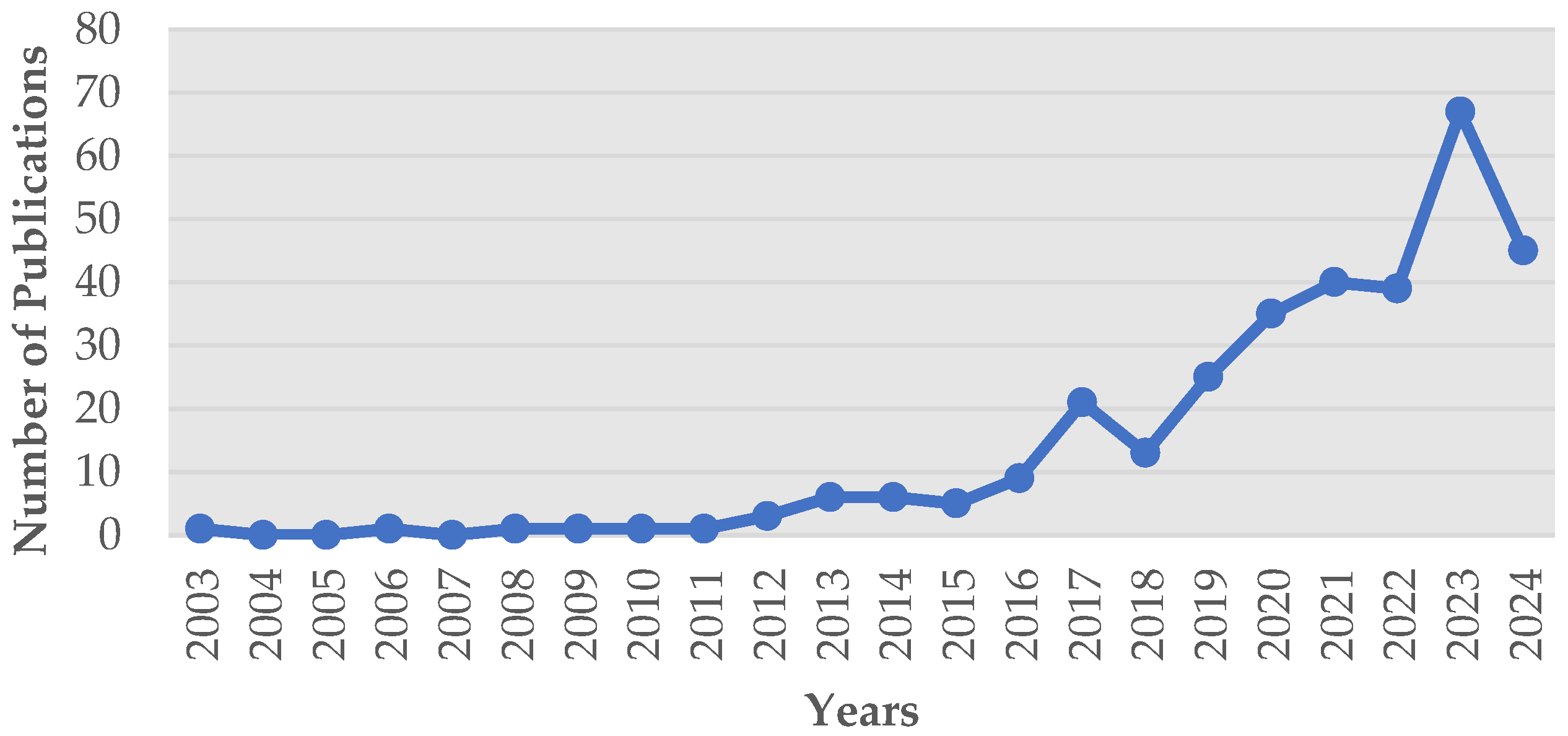
The search in the Scopus database yielded 320 articles published from 2003 to 2024. As shown in Figure 1, publication trends reveal a steady increase in articles on this topic. From 2003 to 2016, fewer than ten articles were published annually. However, publication numbers have risen in the past six years, peaking in 2023 with 67 articles, reflecting growing research interest.
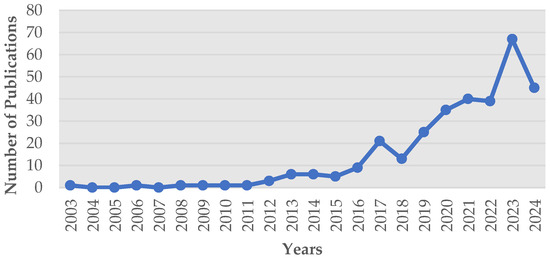
Figure 1.
Research trends from 2003 to 2024.
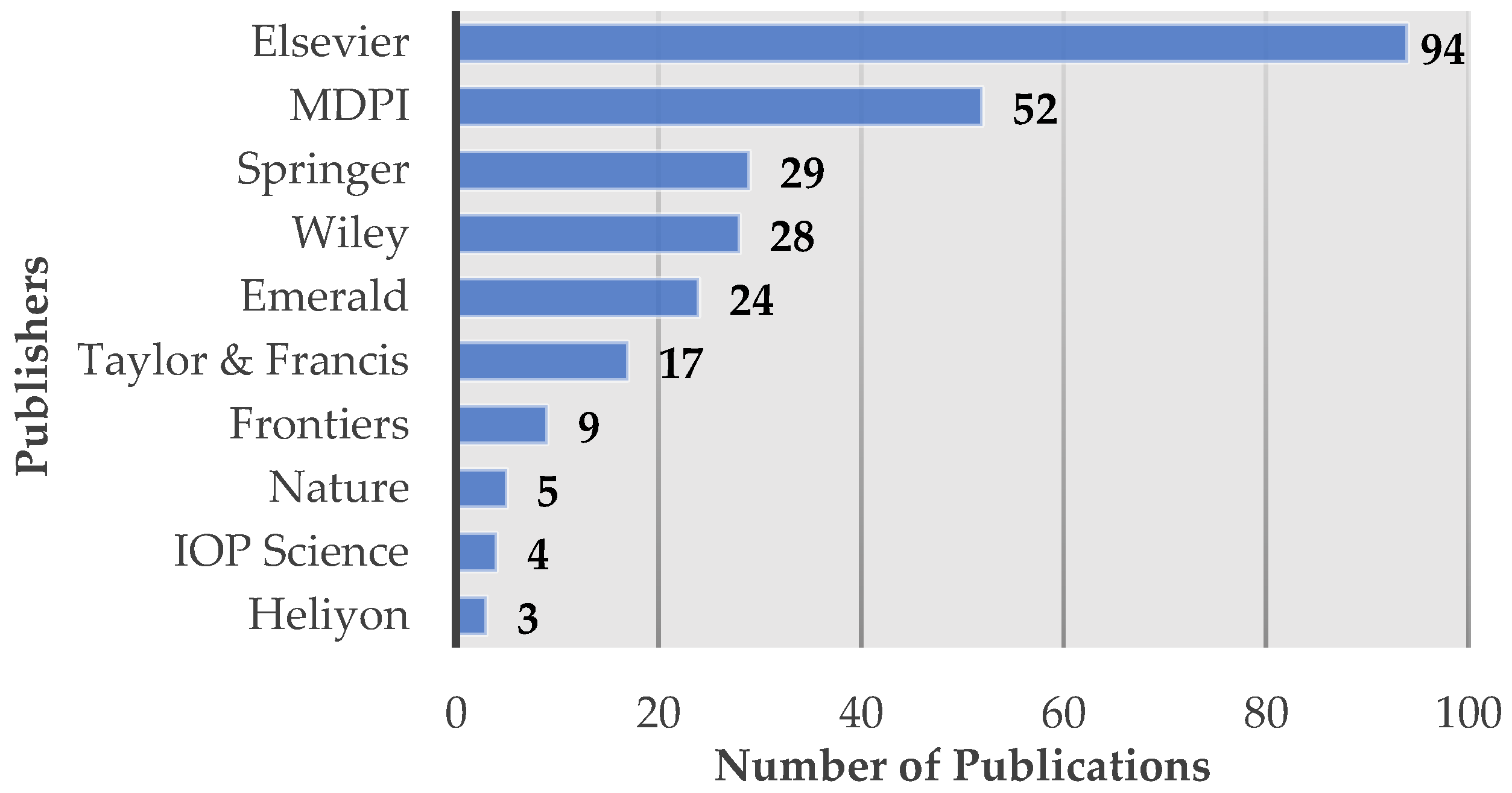
Based on 320 articles published from 2003 to 2024, Elsevier published the most articles on the topic of this paper (94 articles). The next publisher with the most is MDPI (52 articles), and the third is Springer (29 articles). This indicates that many researchers place their trust in these publishers for the publication of risk management and sustainability articles within the agri-food supply chain. Figure 2 displays the ten publishers who published the most articles in this paper from 2003 to 2024.
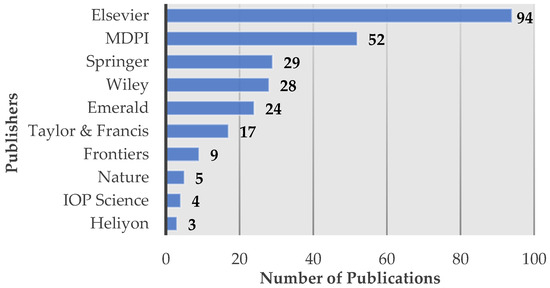
Figure 2.
Top 10 publishers from 2003 to 2024.
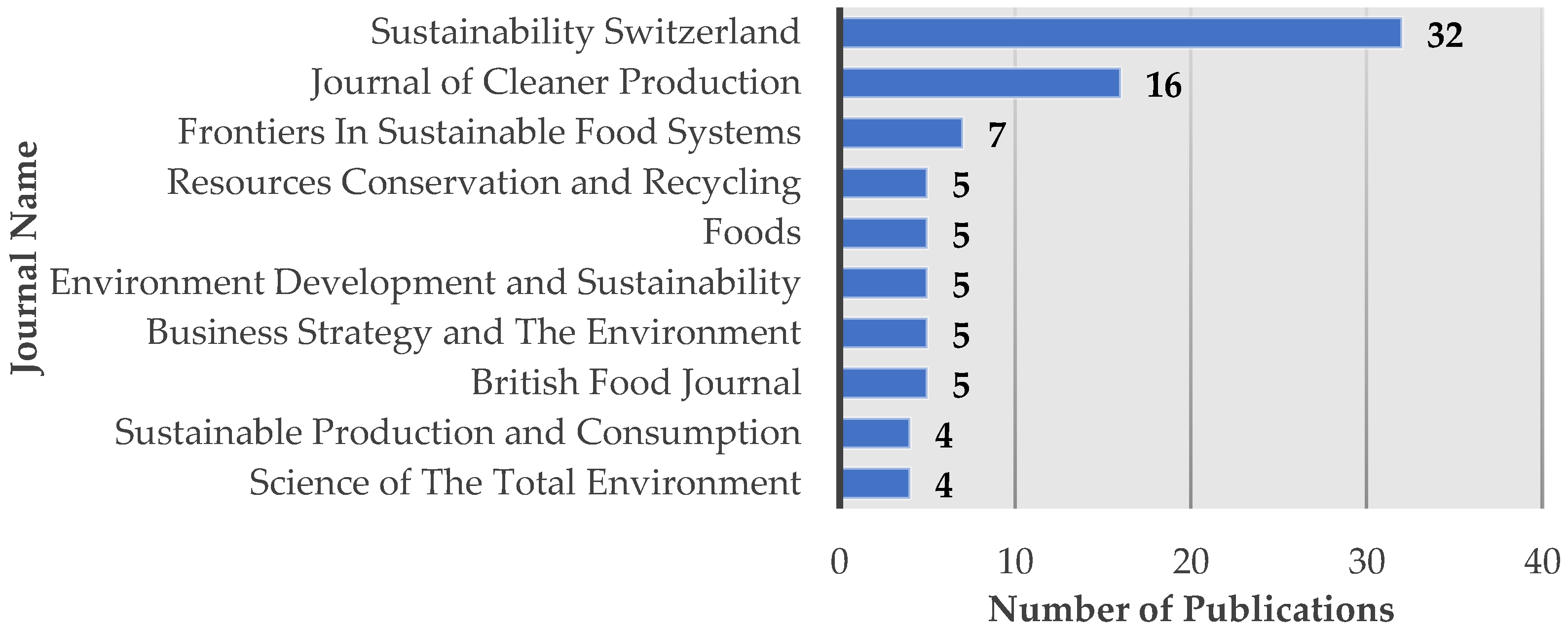
The following analysis focuses on the most productive journals among the 320 selected articles. Figure 3 shows the top ten journals from 2003 to 2024. The three most productive journals are Sustainability Switzerland (32 articles), Journal of Cleaner Production (16 articles), and Frontiers in Sustainable Food Systems (7 articles). Of the ten journals, Elsevier publishes four (Journal of Cleaner Production, Resources Conservation and Recycling, Sustainable Production and Consumption, and Science of the Total Environment), MDPI publishes two (Sustainability Switzerland and Foods), and Frontiers, Springer, Wiley, and Emerald each publish one.
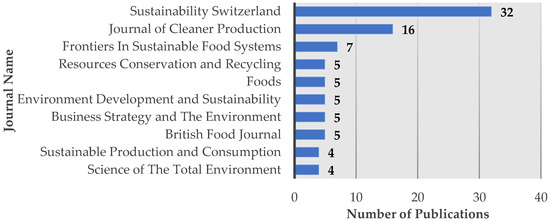
Figure 3.
Top 10 productive journals from 2003 to 2024.
The quotation analysis reveals that the most-cited article from 2003 to 2024 is by Toubolic et al. (2014), with 235 citations and a citation rate of 23.5 per year. The second most-cited article is by Kumar et al. (2021), with 151 citations and a citation rate of 50 per year. The third is by Busse et al. (2017), with 147 citations and a rate of 21 per year. The top 10 cited articles are listed in Table 1.

Table 1.
Top 10 article citations from 2003 to 2024.
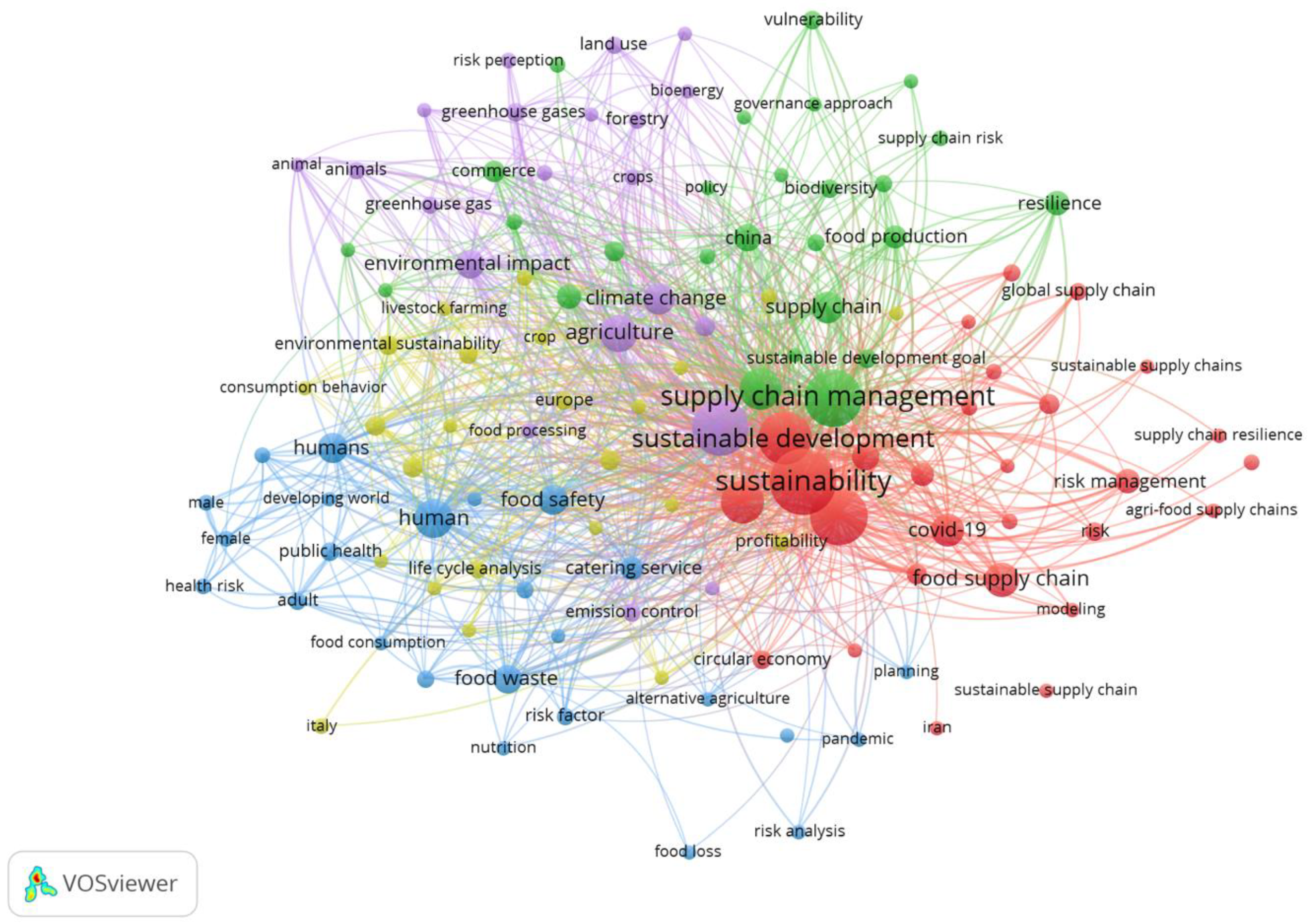
We used VosViewer version 1.6.20 to display three types of results: keyword network visualization, overlay, and density. The first result, shown in Figure 4, is a keyword network visualization that includes only keywords appearing together in at least five publications. After applying these criteria, the initial 2732 keywords were reduced to 124, grouped into five clusters: red (28 items), green (26 items), blue (25 items), yellow (24 items), and purple (21 items). The colours signify the cluster to which an item is assigned. These clusters can guide future research on related keywords. The red cluster, centred around “sustainability”, has the largest circle and label, indicating its prominence in the literature. The size of the circles reflects the frequency of research on each topic [38]. “Sustainability” is also closely linked with “risk management” and “agri-food supply chain”, suggesting a strong relationship between these three keywords.
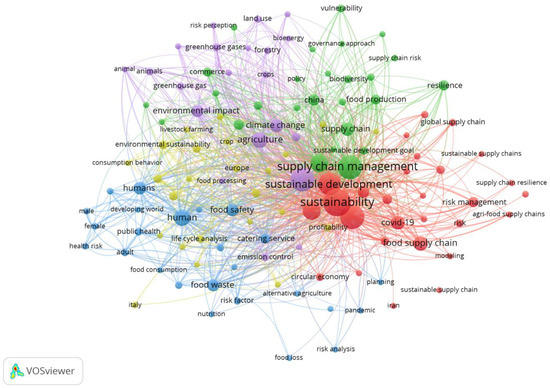
Figure 4.
Keyword network visualization.
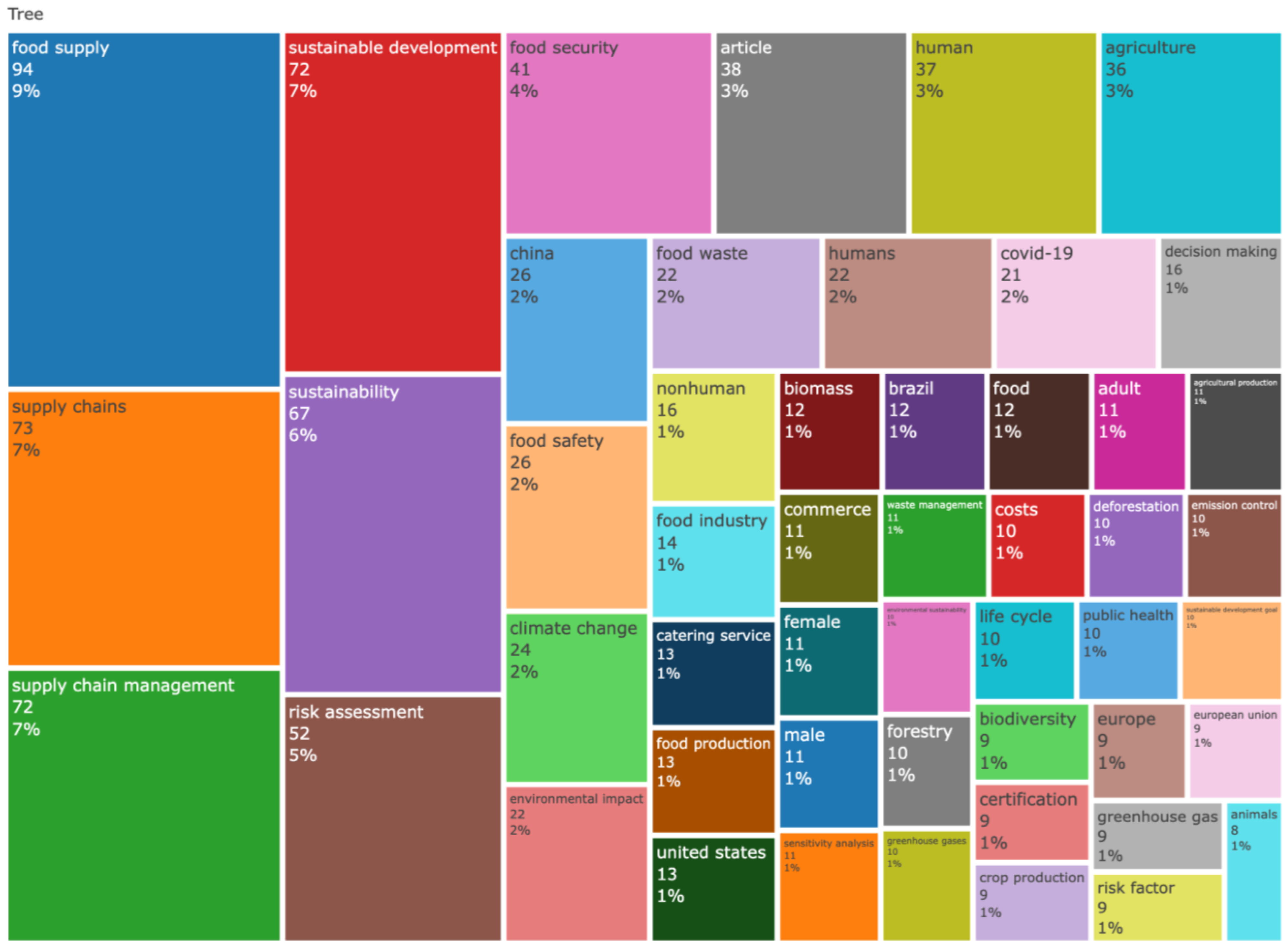
The following analysis identifies the most frequently occurring keywords in the articles. Figure 5 presents a treemap of these keywords and their frequencies. The top six are: “food supply” (94 occurrences), “supply chains” (73), “supply chain management” (72), “sustainable development” (72), “sustainability” (67), and “risk assessment” (52). The treemap displays author’s keywords, their frequency of occurrence, and their proportion relative to the total number of keywords. Larger boxes indicate a higher proportion of a keyword in the dataset, while smaller boxes represent less frequent keywords. Using a colour palette helps readers quickly identify the prominence of each keyword, making it clear which keywords appear more frequently than others.
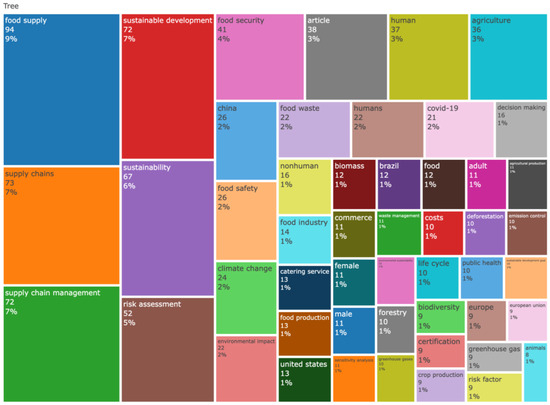
Figure 5.
Treemap of keywords.
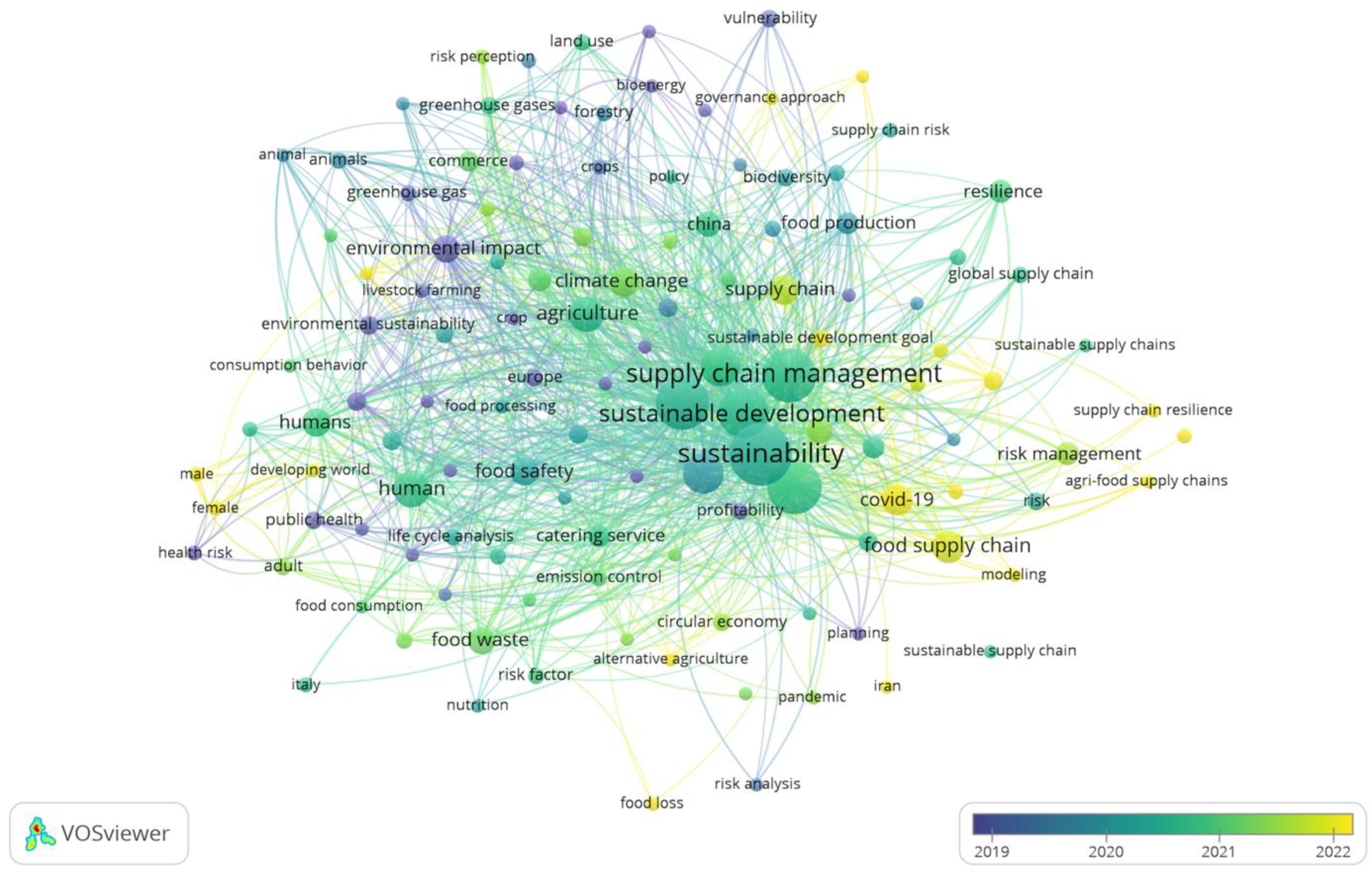
The second visualization, an overlay, uses purple-to-yellow circles to represent the publication period of each keyword. Purple indicates researchers have used the keyword or topic for a long time, while yellow shows recent trends. This colour gradient effectively highlights the evolution of research interests, allowing viewers to identify which topics have gained traction in recent years quickly. Examining the distribution of colours allows one to discern patterns and shifts in academic focus that may inform future studies. Figure 6 highlights “food supply chain” and “agri-food supply chain” in yellow, indicating their recent rise in prominence. These keywords are strongly connected to others such as “supply chain management”, “COVID-19”, “risk management”, “sustainability”, “food safety”, “food production”, “food waste”, and “environmental impact”.
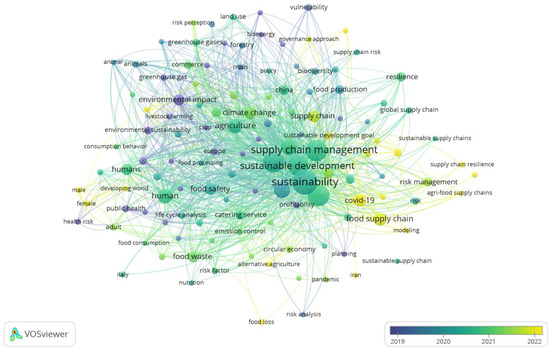
Figure 6.
Overlay visualization.
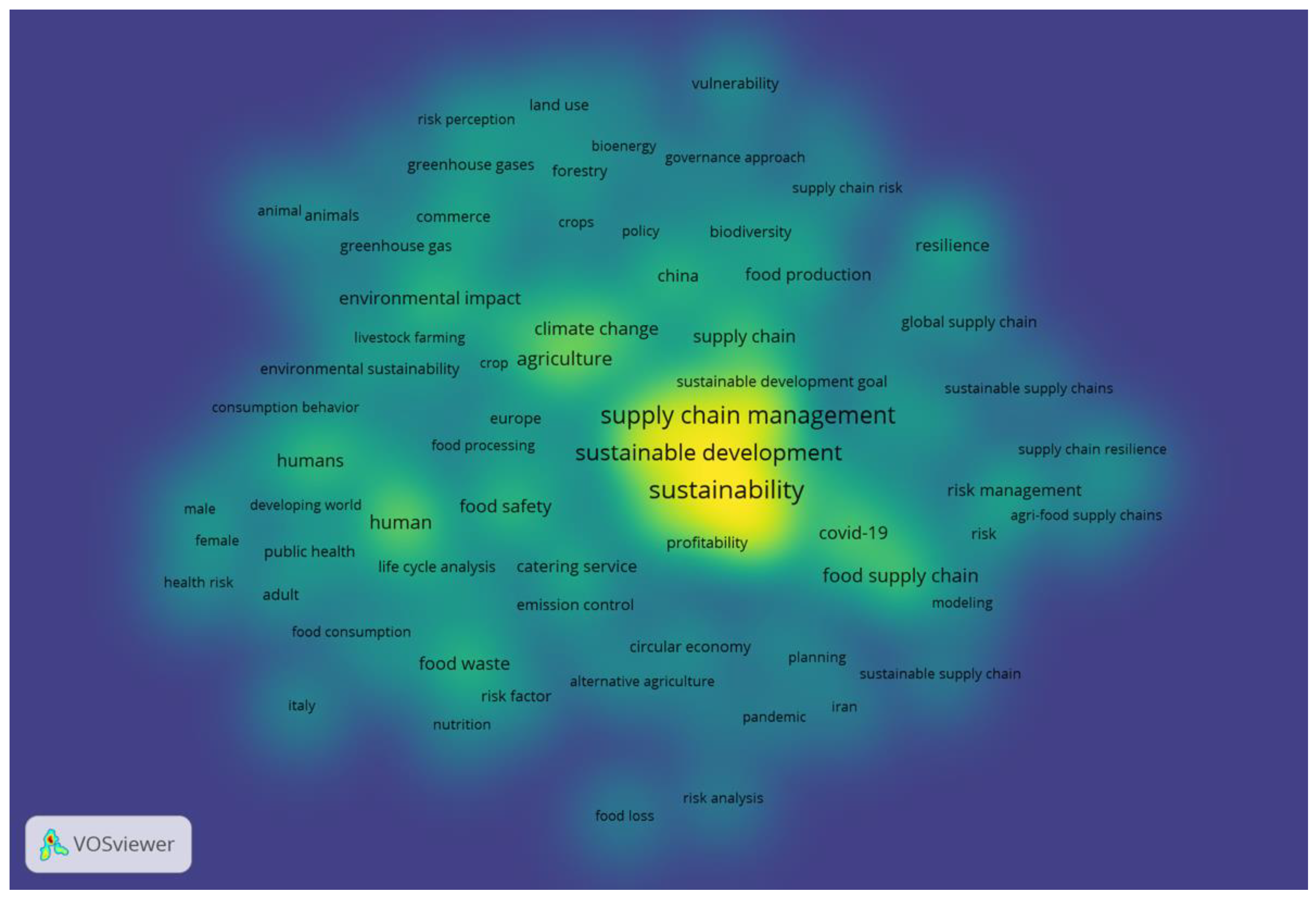
The third result is density visualization, which uses colour to map keyword density and highlight dominant topics. Density visualization can be seen in Figure 7. Figure 7 shows that the keywords “supply chain management”, “sustainable development”, and “sustainability” have high density, marked by bright yellow, reflecting extensive discussion and publication. This indicates a growing interest in these areas within academic and professional circles. The prominence of these keywords suggests a shift toward integrating sustainability practises in supply chain management discussions, emphasizing their relevance in current research and industry practises.
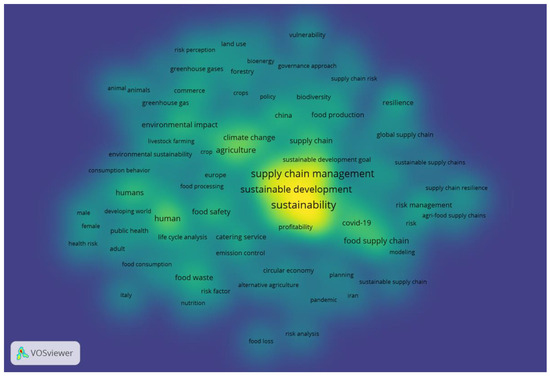
Figure 7.
Density visualization.
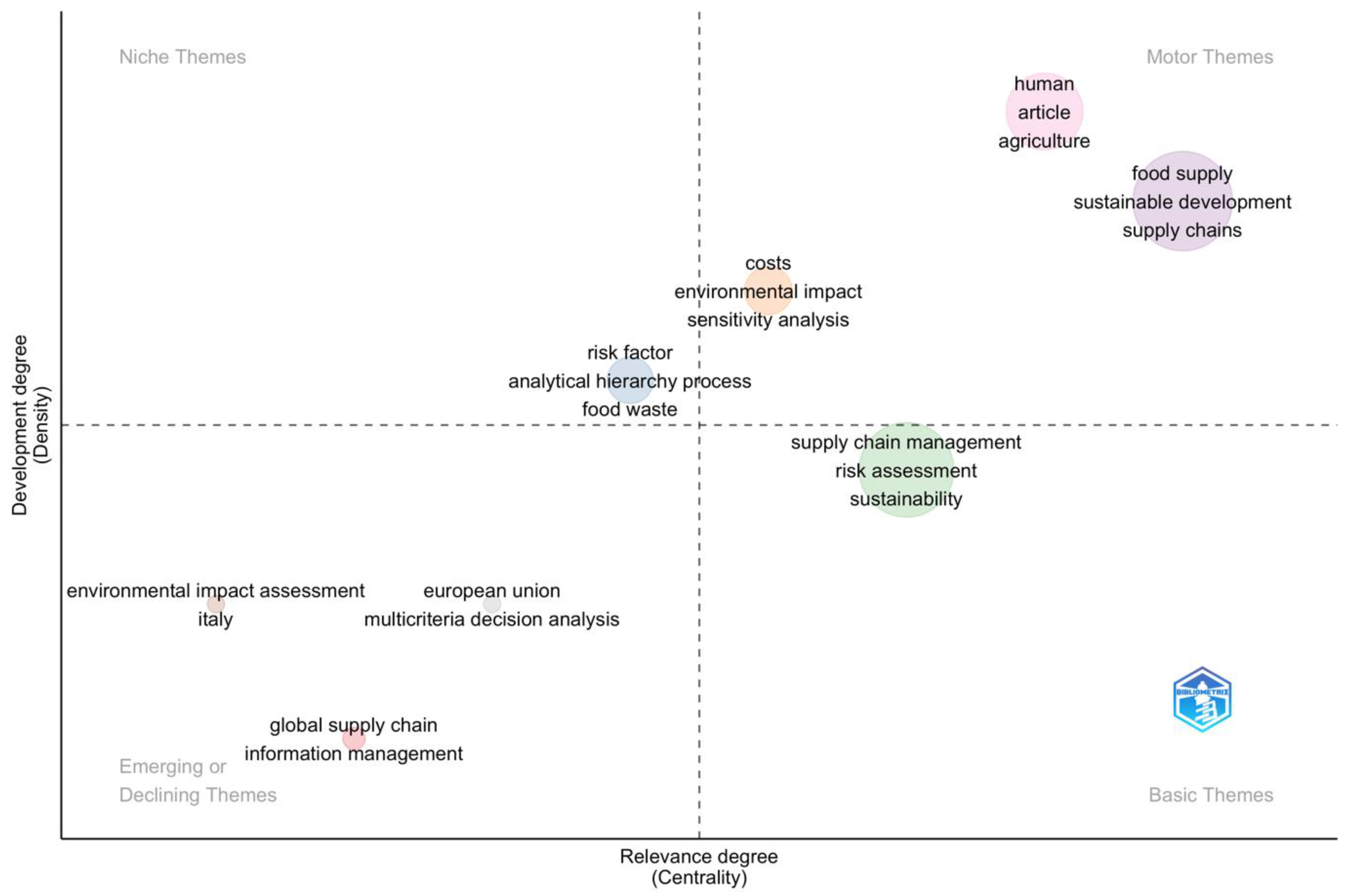
The thematic map analysis, shown in Figure 8, is divided into four quadrants based on density and centrality. The upper left (Niche Themes) features specific, rare topics with high density but low centrality. The upper right (Motor Themes) highlights topics with high centrality and density, suggesting they need further study. The lower left (Emerging or Declining Themes) displays topics on the decline, while the lower right (Basic Themes) contains fundamental topics with high centrality but low density.
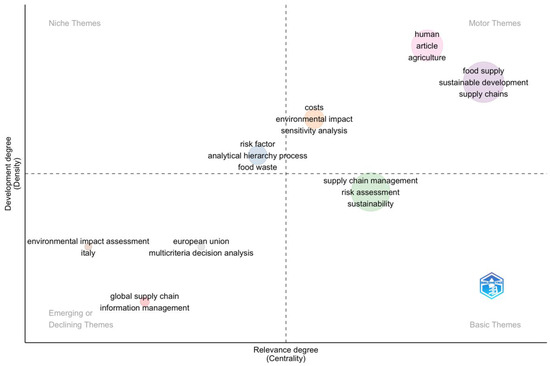
Figure 8.
Thematic map.
Based on Figure 8, research topics are divided into eight clusters, represented by differently coloured circles across four quadrants. The clusters for “supply chain management”, “sustainability”, and “risk assessment” are in the lower right quadrant (Basic Themes), indicating that while publications on these topics are still limited, they have a strong influence and present research opportunities.
5. Research Gaps and Recommendations for Future Research
Risk in the agri-food supply chain is a major global issue, as food products require specific properties to be maintained at each stage. Ensuring quality and safety is crucial for their survival throughout the supply chain and for making them suitable for consumption. Additionally, agri-food supply chains face complex challenges in achieving sustainable development, which demands a risk-based approach. Previous research highlights the importance of risk and sustainability in the agri-food sector, with significant implications for the supply chain. This bibliometric analysis also shows that keywords like “food supply”, “supply chains”, “supply chain management”, “risk management”, “sustainability”, and “sustainable development” frequently appear together, indicating a solid interconnection and network among these concepts.
The key research gaps and future research directions identified are:
- Frameworks that can integrate risk and sustainability across all stages of the agri-food supply chain are still limited, so it is necessary to develop practical frameworks that can integrate them by considering food types, supply chain structures, and regional variations.
- Research on the quality and safety of food products that influence risk management strategies at each stage of the supply chain needs to be further studied. Therefore, it is necessary to explore how food properties (e.g., perishability, nutrition, packaging, etc.) can influence risk management strategies, optimizing quality and safety regulations at each stage to ensure sustainability and minimize risks such as spoilage or contamination.
- Risk-based research to apply sustainability in the agri-food supply chain, especially in addressing global challenges such as climate change and pandemics, still needs to be improved. Therefore, research models must be adaptable to various regions and food sectors to promote long-term sustainability.
- Research on how critical keywords such as “food supply”, “supply chain”, “risk management”, and “sustainability” are interrelated and influence the resilience of the agri-food supply chain is still limited. Therefore, future research needs to explore further how these concepts interrelate and influence the resilience of agri-food supply chains, leading to a more holistic approach to supply chain design.
- Collaboration of various stakeholders (farmers, suppliers, government, consumers) in building resilient and sustainable supply chains with a risk approach should be further explored. This can be achieved by further exploring the roles and responsibilities of each stakeholder and how incentives, policies and governance techniques can support greater collaboration.
- There is a need for standard metrics to assess sustainability and risk efforts across the agri-food supply chain. Future research should focus on creating a reliable and universally applicable measurement system for effective comparison and benchmarking across different food supply chains and sectors.
6. Conclusions
Our analysis of 320 articles from the Scopus database shows an increasing trend in publications on risk management, sustainability, and agri-food supply chains over the past six years. Elsevier published the most articles (94), and the journal Sustainability Switzerland contributed the highest number (32) as the most productive journal. Toubolic et al. (2014) had the highest total citations, while Kumar et al. (2021) had the highest citations per year. VosViewer analysis reveals that “sustainability” is the most studied keyword, often clustered with “risk management”, “agri-food supply chain”, “circular economy”, “supply chain resilience”, “artificial intelligence”, and “blockchain”, highlighting strong connections between these concepts. While “food supply chain” and “agri-food supply chain” have gained attention, research in this area remains limited, presenting an opportunity for further study. Future research should explore the interrelationships of these concepts and their impact on supply chain resilience and sustainability, with a focus on emerging trends such as AI and blockchain. Additionally, new models integrating risk management, sustainability, and circular economy principles could strengthen agri-food supply chains. A limitation of this study is its reliance on a single Scopus-based database, suggesting that future research could benefit from using multiple databases, such as Web of Science or Google Scholar, and a broader range of keywords.
Author Contributions
Conceptualization, D.M.I., M.S. and I.V.; methodology, D.M.I., M.S. and I.V.; software, D.M.I.; validation, D.M.I.; formal analysis, D.M.I.; investigation, D.M.I.; resources, D.M.I.; data curation, D.M.I.; writing—original draft preparation, D.M.I.; writing—review and editing, D.M.I., M.S. and I.V.; visualization, D.M.I.; supervision, M.S. and I.V.; project administration, D.M.I. All authors have read and agreed to the published version of the manuscript.
Funding
This research was funded by Indonesia Endowment Funds for Education (LPDP) and Center for Higher Education Funding (BPPT) based on Letter of Decree number 1144/J5.2.3./BPI.06/10/2021.
Institutional Review Board Statement
Not applicable.
Informed Consent Statement
Not applicable.
Data Availability Statement
The data presented in this study are available on request from the corresponding author.
Conflicts of Interest
The authors declare no conflicts of interest.
References
- Behzadi, G.; O’Sullivan, M.J.; Olsen, T.L.; Zhang, A. Agribusiness supply chain risk management: A review of quantitative decision models. Omega 2018, 79, 21–42. [Google Scholar] [CrossRef]
- Moazzam, M.; Akhtar, P.; Garnevska, E.; Marr, N.E. Measuring agri-food supply chain performance and risk through a new analytical framework: A case study of New Zealand dairy. Prod. Plan. Control 2018, 29, 1258–1274. [Google Scholar] [CrossRef]
- Sufiyan, M.; Haleem, A.; Khan, S.; Khan, M.I. Evaluating food supply chain performance using hybrid fuzzy MCDM technique. Sustain. Prod. Consum. 2019, 20, 40–57. [Google Scholar] [CrossRef]
- Pérez-Mesa, J.C.; Piedra-Muñoz, L.; Galdeano-Gómez, E.; Giagnocavo, C. Management strategies and collaborative relationships for sustainability in the agrifood supply chain. Sustainability 2021, 13, 749. [Google Scholar] [CrossRef]
- Matopoulos, A.; Vlachopoulou, M.; Manthou, V.; Manos, B. A conceptual framework for supply chain collaboration: Empirical evidence from the agri-food industry. Supply Chain Manag. 2007, 12, 177–186. [Google Scholar] [CrossRef]
- Green, D.P. Sustainable Food Supply Chains. J. Aquat. Food Prod. Technol. 2010, 19, 55–56. [Google Scholar] [CrossRef]
- Hoffmann, P.; Schiele, H.; Krabbendam, K. Uncertainty, supply risk management and their impact on performance. J. Purch. Supply Manag. 2013, 19, 199–211. [Google Scholar] [CrossRef]
- Allaoui, H.; Guo, Y.; Choudhary, A.; Bloemhof, J. Sustainable agro-food supply chain design using two-stage hybrid multi-objective decision-making approach. Comput. Oper. Res. 2018, 89, 369–384. [Google Scholar] [CrossRef]
- Li, D.; Wang, X.; Chan, H.K.; Manzini, R. Sustainable food supply chain management. Int. J. Prod. Econ. 2014, 152, 1–8. [Google Scholar] [CrossRef]
- Wang, L.; Cheng, Y.; Wang, Z. Risk management in sustainable supply chain: A knowledge map towards intellectual structure, logic diagram, and conceptual model. Environ. Sci. Pollut. Res. 2022, 29, 66041–66067. [Google Scholar] [CrossRef]
- Rejeb, A.; Rejeb, K.; Appolloni, A.; Iranmanesh, M.; Treiblmaier, H.; Jagtap, S. Exploring food supply chain trends in the COVID-19 era: A bibliometric review. Sustainability 2022, 14, 12437. [Google Scholar] [CrossRef]
- ISO 31073:2022(en) Risk Management—Vocabulary. Available online: https://www.iso.org/obp/ui/en/#iso:std:iso:31073:ed-1:v1:en (accessed on 7 July 2024).
- Asbjørnslett, B.E. Assessing the vulnerability of supply chains. In Supply Chain Risk: A Handbook of Assessment, Management, and Performance; Zsidisin, G.A., Ritchie, B., Eds.; Springer: Boston, MA, USA, 2009; Volume 124, pp. 15–33. [Google Scholar]
- Kern, D.; Moser, R.; Hartmann, E.; Moder, M. Supply risk management: Model development and empirical analysis. Int. J. Phys. Distrib. Logist. Manag. 2012, 42, 60–82. [Google Scholar] [CrossRef]
- Nakandala, D.; Lau, H.; Zhao, L. Development of a hybrid fresh food supply chain risk assessment model. Int. J. Prod. Res. 2016, 55, 4180–4195. [Google Scholar] [CrossRef]
- Grabowski, M.; Roberts, K.H. Risk mitigation in virtual organizations. Organ. Sci. 1999, 10, 704–721. [Google Scholar] [CrossRef]
- Nishat, F.M.; Banwet, D.K.; Shankar, R. Supply chain risk mitigation: Modeling the enablers. Bus. Process Manag. J. 2006, 12, 535–552. [Google Scholar] [CrossRef]
- Talet, A.N.; Karadsheh, L.; Jarrah, M.A.A.L.; Alhawari, S. Risk monitoring through better knowledge-based risk processes. J. Oper. Risk 2018, 13, 77–101. [Google Scholar]
- Septiani, W.; Marimin, M.; Herdiyeni, Y.; Haditjaroko, L. Method and approach mapping for agri-food supply chain risk management: A literature review. J. Supply Chain Manag. 2016, 5, 51–64. [Google Scholar]
- Behzadi, G.; O’Sullivan, M.J.; Olsen, T.L.; Scrimgeour, F.; Zhang, A. Robust and resilient strategies for managing supply disruptions in an agribusiness supply chain. Int. J. Prod. Econ. 2017, 191, 207–220. [Google Scholar] [CrossRef]
- Nyamah, E.Y.; Jiang, Y.; Feng, Y.; Enchill, E. Agri-food supply chain performance: An empirical impact of risk. Manag. Decis. 2017, 55, 872–891. [Google Scholar] [CrossRef]
- Akisik, O.; Gal, G. Sustainability in businesses, corporate social responsibility, and accounting standards: An empirical study. Int. J. Acc. Inf. Manag. 2011, 19, 304–324. [Google Scholar] [CrossRef]
- Nielsen, K.A.; Elling, B.; Figueroa, M.; Jelsoe, E. A New Agenda for Sustainability; Ashgate Publishing Limited: Farnham, UK, 2010; pp. 15–30. [Google Scholar]
- Giannakis, M.; Papadopoulos, T. Supply chain sustainability: A risk management approach. Int. J. Prod. Econ. 2016, 171, 455–470. [Google Scholar] [CrossRef]
- Buddress, L. Managing supply chain sustainability and risk. In Proceedings of the Conference Board, New York, NY, USA, 11 July 2014. [Google Scholar]
- Moktadir, M.A.; Dwivedi, A.; Khan, N.S. Analysis of risk factors in sustainable supply chain management in an emerging economy of leather industry. J. Clean. Prod. 2021, 283, 124641. [Google Scholar] [CrossRef]
- Valinejad, F.; Rahmani, D. Sustainability risk management in the supply chain of telecommunication companies: A case study. J. Clean. Prod. 2018, 203, 53–67. [Google Scholar] [CrossRef]
- Yadav, J.; Misra, M.; Goundar, S. An overview of food supply chain virtualisation and granular traceability using blockchain technology. Int. J. Blockchains Cryptocurrencies 2020, 1, 154–178. [Google Scholar] [CrossRef]
- Agnusdei, G.P.; Coluccia, B. Sustainable agrifood supply chains: Bibliometric, network and content analyses. Sci. Total Environ. 2022, 824, 153704. [Google Scholar] [CrossRef] [PubMed]
- Singh, K.; Abraham, R.; Yadav, J. Analysis of barriers for sustainable agro-food supply chain: An interpretive structural modeling and MICMAC approach. Environ. Dev. Sustain. 2024, 26, 25311–25333. [Google Scholar] [CrossRef]
- Jonkman, J.; Barbosa-Póvoa, A.P.; Bloemhof, J.M. Integrating harvesting decisions in the design of agro-food supply chains. Eur. J. Oper. Res. 2019, 276, 247–258. [Google Scholar] [CrossRef]
- Onggo, B.S.; Panadero, J.; Corlu, C.G.; Juan, A.A. Agri-food supply chains with stochastic demands: A multi-period inventory routing problem with perishable products. Simul. Model Pract. Theory 2019, 97, 101970. [Google Scholar] [CrossRef]
- Prakash, S.; Soni, G.; Rathore, A.P.S.; Singh, S. Risk analysis and mitigation for perishable food supply chain: A case of dairy industry. Benchmarking Int. J. 2017, 24, 2–23. [Google Scholar] [CrossRef]
- Barbosa, M.W. Uncovering research streams on agri-food supply chain management: A bibliometric study. Glob. Food Secur. 2021, 28, 100517. [Google Scholar] [CrossRef]
- González-Torres, T.; Rodríguez-Sánchez, J.L.; Pelechano-Barahona, E.; García-Muiña, F.E. A systematic review of research on sustainability in mergers and acquisitions. Sustainability 2020, 12, 513. [Google Scholar] [CrossRef]
- Parmentola, A.; Petrillo, A.; Tutore, I.; De Felice, F. Is blockchain able to enhance environmental sustainability? A systematic review and research agenda from the perspective of Sustainable Development Goals (SDGs). Bus. Strategy Environ. 2022, 31, 194–217. [Google Scholar] [CrossRef]
- Yuniarti, R.; Arvitrida, S.N.I. Sustainable and resilient supply chain network design: A systematic and bibliometric review. In Proceedings of the First Australian International Conference on Industrial Engineering and Operations, Sydney, Australia, 20–21 December 2022. [Google Scholar]
- Talan, T. Artificial intelligence in education: A bibliometric study. Int. J. Res. Educ. Sci. 2021, 7, 822–837. [Google Scholar] [CrossRef]
Disclaimer/Publisher’s Note: The statements, opinions and data contained in all publications are solely those of the individual author(s) and contributor(s) and not of MDPI and/or the editor(s). MDPI and/or the editor(s) disclaim responsibility for any injury to people or property resulting from any ideas, methods, instructions or products referred to in the content. |
© 2025 by the authors. Licensee MDPI, Basel, Switzerland. This article is an open access article distributed under the terms and conditions of the Creative Commons Attribution (CC BY) license (https://creativecommons.org/licenses/by/4.0/).