


Abstract
The health and productivity of dairy cows are critical factors in sustainable livestock management. Along with the rapid rise in intelligence and technology, applying intelligence in livestock management helps in monitoring and provide precise and effective care for the cattle herd. This research designs an intelligent system that can assist the farmers and predict Gir cows’ diseases and a support system powered by Artificial Intelligence (AI). The proposed system integrates Internet of Things (IoT) and sensors to track and monitor critical health parameters of the Gir cow, which includes the step count, lying time, rumination time, heart rate, and various environmental factors contributing to the well-being of the cow. The data points that are gathered from the sensors is then processed and analysed using machine learning (ML) algorithms, including Random Forest (RF), decision tree (DT), Logistic Regression, K-Neighbours, and Support Vector Machine (SVM) to predict abnormalities including diseases such as lameness, mastitis, heat stress, and digestive problems. The AI techniques used in the system involve complex data processing and pattern recognition to identify early signs of diseases. The RF and DT ML models achieved the highest accuracy (100%), while SVM demonstrated robust performance with 94% accuracy. Integrating real-time monitoring with predictive analytics enables early detection of health issues, allowing timely interventions and improving overall herd management. The proposed system enhances cow welfare and optimises farm productivity but also has the potential to revolutionise the dairy industry. The complex intelligent system provides a reliable and efficient platform for disease prediction and herd management, and can significantly contribute to the sustainability and profitability of dairy farming, thereby shaping the future of the industry.
1. Introduction
Effectively managing dairy herds is essential for ensuring both animal welfare and the economic sustainability of dairy farming. The health of dairy cows significantly influences their productivity, reproduction, and longevity. The Gir cow breed, a prominent indigenous breed in India, is chosen as the focus of this research due to its resilience, high milk yield, and adaptability to harsh climatic conditions. These unique characteristics of the Gir cow breed make it an ideal candidate for applying the proposed intelligent system for disease prediction and support systems using the potential of Artificial Intelligence (AI). With livestock, health issues can compromise productivity and well-being; the spread of diseases is also unpredictable if the animal with the disease symptoms is not addressed promptly. Traditional methods of monitoring cow health, primarily based on visual inspection and manual observation, are often subjective and can lead to delays in identifying illnesses. Hence, there is an increasing emphasis on developing automated and intelligent systems that can provide timely insights into cow health by integrating sensor-based monitoring and AI techniques.
Advancements in Internet of Things (IoT), which can capture real-time data from the livestock and machine learning (ML), which can process and mine patterns from the data, have opened new avenues for real-time livestock health monitoring and disease prediction. Studies have demonstrated that monitoring physiological and behavioural parameters such as step count, heart rate, lying time, and rumination activity can provide early indicators of health conditions such as lameness, mastitis, heat stress, and digestive disorders [1,2]. Farmers could gain valuable insights and can monitor their cow’s health status through wearable sensors and taking timely interventions to prevent disease escalation [3]. The application of intelligent techniques should be provided and made available for small-scale farmers and farms to widen the impact of the application of intelligence on everyday life. Educating the impact of the application of intelligent techniques and their impact is a challenge for spreading intelligent techniques in farming and real-time monitoring and data analysis to drive further agricultural innovation.
Diseases are common for livestock; various diseases occur in them, and these can be observed with minor changes in the health parameters of the animals. Lameness, characterised by reduced mobility and increased resting periods, is a major welfare issue in dairy cows, causing significant economic losses due to reduced milk yield and fertility. Studies have shown that monitoring lying time and step count can effectively indicate lameness [4]. Similarly, mastitis, an inflammatory udder condition, can be identified by monitoring deviations in heart rate, rumination activity, and physical movement [5]. Issues including heat stress, which negatively impacts productivity and reproduction in cows, can be detected by tracking variations in heart rate and lying time [6].
Several studies have explored the application of sensors and intelligence for monitoring cow health; there is a need for a comprehensive, integrated system that monitors multiple health indicators and leverages ML techniques to predict diseases. This study addresses this gap by developing an intelligent system to monitor a prominent variety of cattle in India—the Gir cow—for its disease prediction and support system using AI, which combines IoT-based sensor networks and ML models to predict common health issues in Gir cows.
2. Background
The application of intelligent techniques in various applications has gained momentum. Intelligent techniques and solutions are designed and developed for multiple use cases. The application of intelligent techniques has found various implementation options in precision agriculture, where minute factors are considered for farming. Integrating IoT and ML in livestock management has gained significant traction. Research and development efforts have increasingly focused on developing systems to monitor the health and behaviour of dairy cows, thereby enhancing productivity, welfare, and farm efficiency. Critical contributions are made in cattle health monitoring and disease prediction using technological interventions by various researchers in various contexts. Farm monitoring and predictive systems are required to control and monitor the changes in the livestock and their maintenance. The intelligent systems enable the farmers to know the status of their herd well in advance and plan the strategies of medication and appropriate changes required in the farm, helping them to make informed decisions. Emerging IoT technologies have been widely applied to monitor cows’ behaviour and physiological parameters. The effectiveness of accelerometers and gyroscopes in tracking activities such as walking, lying, and standing [1]. The study demonstrated that real-time monitoring of activities helps them with the identification of behavioural changes associated with health conditions including lameness and heat stress. Wearable sensor networks could monitor the rumination and lying behaviour, establishing correlations between these parameters and health indicators including digestive disorders and stress [2]. Sensors, combined with the AI-ML techniques in gathering data and processing them, play a significant role in planning and implementing intelligent farming techniques.
Different sensors capture different parameters that are associated with health, environment, and daily routines according to the needs of the farm and livestock managed. The health and other environment parameters of each animal in the herd are collected with the help of the intelligent techniques for analysing and processing. Accurate data is to be collected from the sources (i.e., sensors), and preprocessing techniques prepare and support in validating the data before storing it in the system. In order to enhance the accuracy of health monitoring, various studies have combined multiple and redundant sensors to collect a range of data points. Photoplethysmography (PPG) sensors and rumination monitoring devices detect early signs of mastitis in dairy cows [5]. Their findings underscored the importance of combining sensors to capture heart rate variability and rumination patterns to achieve better understanding of cow health. Pressure sensors and Inertial Measurement Units (IMUs) could analyse cow gait and predict lameness based on deviations from standard mobility patterns [4].
Sensor values, preprocessing, computation, and validation techniques have played an essential role in measuring livestock health and other crucial factors that promote sustainable, precise intelligent approaches to farming and agricultural practices. The application of ML techniques has revolutionised disease prediction in livestock. With the support of big data processing techniques, large volumes of sensor-generated data could be easily processed by ML models, enabling the identification of complex patterns often missed by traditional methods. Random Forest (RF) has the ability to handle non-linear relationships between features and prevents overfitting through ensemble learning [1]. ML and DL approaches are being used by various other researchers for cattle disease classification [7,8]. Various other researchers in similar settings have used RF models to predict multiple diseases in dairy cows with high accuracy and interpretability [2]. The application of ML to data helps identify and act upon the hidden data patterns. This supports the generation of a more robust and intelligent system and promotes the application of intelligent techniques in farming and agricultural practices. AI and its applications can also be implemented in multiple segments to ensure that the entire system uses the maximum potential of the systems. Intelligence that comes from data analysis without intelligent techniques is a challenge, where the machine can effectively scroll through abnormalities in the data and act upon the observations. Support Vector Machines (SVMs) have also been employed for binary classification tasks, such as distinguishing healthy cows from those suffering from specific ailments.
Some researchers [5] implemented SVM to detect mastitis in dairy cows by analysing heart rate and activity levels. The study demonstrated that SVM could effectively handle high-dimensional data, achieving robust results in differentiating between normal and infected cows. Logistic Regression was additionally utilised [3] to estimate the likelihood of lameness based on movement and rumination data, showing the model’s efficiency in handling linear relationships between features. ML algorithms are applied and have been applied for multiple applications on similar lines; a complex system is to be designed to help analyse and process large amounts of data effectively and securely, ensuring the reliability of the data.
Despite the advancements made in health monitoring systems, several challenges persist. One of the primary limitations lies in the accuracy of individual sensors, which can be affected by external factors such as environmental conditions and sensor placement [2]. Furthermore, most studies [9,10,11] have focused on detecting single diseases in isolation, with limited emphasis on comprehensive systems capable of predicting multiple diseases simultaneously. There is also a need for scalable solutions that can handle large herds without compromising the quality of predictions. The primary objective of this study is to design and implement a system that enables real-time health monitoring and disease prediction in Gir cows. By employing IoT sensors to collect vital health parameters [12] and utilising ML algorithms [13] such as RF, decision tree (DT), Logistic Regression, K-Neighbours, and SVM, the proposed system aims to achieve accurate and timely identification of diseases like lameness, mastitis, heat stress, and digestive disorders. Integrating the advancements in technology not only enhances the welfare of the livestock but also improves the efficiency, sustainability and profitability of farming.
The AI-based Intelligent Gir Cow Disease Prediction and Support System presented in the study aims to address the gaps and challenges identified by integrating multiple IoT sensors, with the support of the AI-ML algorithms to monitor live health parameters in livestock. The proposed solution could easily identify and predict diseases, including lameness, mastitis, heat stress, and digestive problems. Apart from the existing systems, the proposed system works on the basis of real-time data. The system combines various predictions with the support of ML algorithms like RF, DT, SVM, K-NN, and Logistic Regression and provide explainability of the predictions for the end-users. The environment factor monitoring and estrus detection expand the system’s functionality, enabling farmers to make informed health management and reproductive planning decisions.
3. Proposed Model
The proposed Disease Prediction and Support System for the Gir cow integrates various IoT sensors, with data processed by automated pipelines and ML algorithms, helping to achieve real-time monitoring, prediction, and support for Gir cows. The proposed system consists of these major phases:
- Data collection;
- Data processing;
- Feature extraction;
- ML application;
- Monitoring Dashboard.
This section describes each phase in detail, including the sensor setup, data aggregation, and the ML models employed.
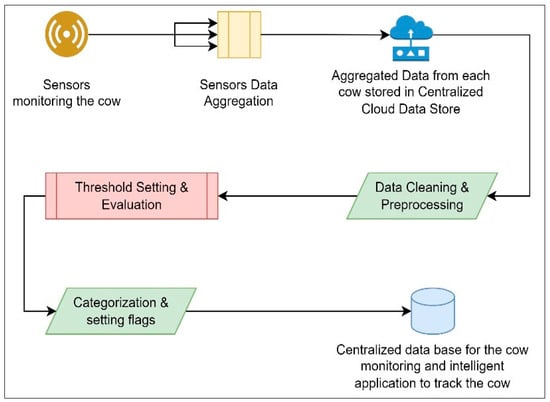
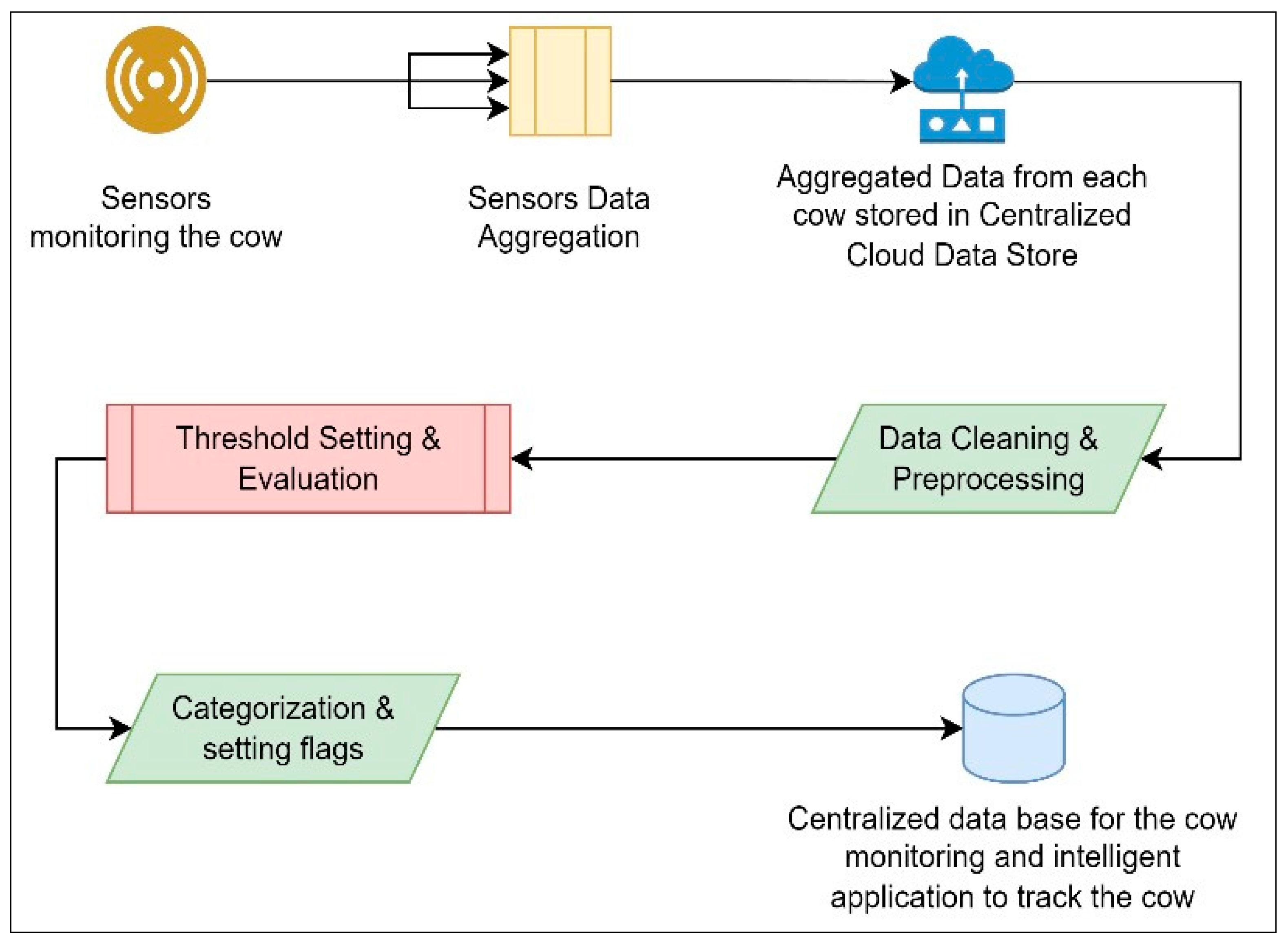
The proposed model is depicted in Figure 1. The model processes the data from the sensors employed in the cow helps gather data; the data from the sensors is then aggregated and stored in a centralised shared database that can handle data on a large scale. The data is then updated with the appropriate clearing, processing, and pre-processing steps to make it convenient for future applications. The data then passes through a threshold setting and evaluation mechanism that has been seen by the experts and veterinarians who asses the cattle and give the required changes in the parameters and thresholds. Based on the mechanisms, threshold flags will be generated to help the farmers and farm managers attend to that cattle and provide the required support in addressing the change observed concerning the parameters. The processed and labelled data is then stored in another database for processing and informed decision-making.
Figure 1.
The overall methodology of the intelligent system.
3.1. Data Collection
The first phase of the methodology of the proposed system to monitor the cattle in the herd involves continuous monitoring of health parameters with the help of the combination of wearable sensors attached to the cows. The data was gathered from a farm of Gir cows in India; the sensors were attached to a set of cows for one week and then gathered and stored for the following parameters:
- Cow_ID;
- Date;
- Step_Count;
- Distance_Traveled_km;
- Lying_Time_hrs;
- Lying_Standing_Transitions;
- Resting_Periods_hrs;
- Active_Periods_hrs
- Heart_Rate_bpm;
- Body_Temperature_C;
- Rumination_Time_hrs;
- GPS_Latitude;
- GPS_Longitude;
- Estrus_Activity;
- Illness_Alert;
- Body_Weight_Estimate_kg;
- BCS;
- Health_Status.
The selected sensors and their placements are determined based on the specific parameters required to predict diseases. The critical sensors used in this study include the following:
- 3-axis Accelerometer: Captures data on step count and distance travelled. It is strategically placed on the cow’s leg or neck to monitor mobility.
- Gyroscope: Tracks lying/standing transitions to detect changes in posture.
- IMU (Inertial Measurement Unit): Combines accelerometer and gyroscope data to analyse gait patterns and identify mobility issues.
- PPG/ECG Sensor: Measures the cow’s heart rate to detect variations that may indicate illness or stress.
- Microphone + Accelerometer: Used to monitor rumination activity, placed near the cow’s jawline to capture chewing behaviour.
- Temperature and Humidity Sensors: Monitors ambient conditions to detect potential heat stress
Table 1 explains the different types of sensors and their placement with the justification for the parameters that can be monitored from the placement of sensors. Each cow has these sensors, continuously transmitting data to a centralised cloud storage system. The sensors are connected via a wireless communication protocol, ensuring reliable data transmission even in remote farm settings.
Table 1.
Sensor(s), parameters, and expected placement of sensors.
3.2. Data Aggregation and Preprocessing
The data collected from the IoT sensors is aggregated and stored in a centralised database. The aggregation process consolidates the real-time data streams from each cow and organises them for further analysis. The key steps involved in this phase include the following:
- Data Cleaning: Removing erroneous or noisy data points caused by sensor malfunctions or environmental interference. For example, the extreme values in the step count or heart rate that exceed physiological limits are flagged and removed.
- Data Imputation: Missing data with respect to some of the system errors can be handled by employing data interpolation techniques, ensuring that the dataset remains consistent for models.
- Feature Extraction: Extracting the relevant features from the raw sensor data. These features include the calculation of average step count, lying time, rumination time, number of lying/standing transitions, and heart rate variability.
The Body Condition Scoring (BCS) is a crucial part of the system that creates and evaluates the cow’s overall health and nutritional parameters. The BCS is measured on a scale of 1 to 5, where 1 indicates a weak cow, and 5 denotes an over-conditioned cow. The scoring is based on visual inspection, along with the feature extraction based on AI techniques and physical observation of anatomical regions to assess fat and muscle reserves. Comprehensive BCS is calculated using sensor-based parameters and physical inspection; the data points including step count, lying time, rumination time, and heart rate, etc., also contribute to the BCS calculation.
BCS = 𝑓 (Step Count, Lying Time, Rumination Time, Heart Rate)
Function f is based on the following approach, with weights assigned for each of the parameters: for step count, the weight is 20%; for lying time, it is 30%; for rumination time, it is 35%; and for heart rate, it is 15%.
- Low Activity (Step Count < 4000) + High Lying Time (>12 h) + Low Rumination Time (<7 h) → Lower BCS Score.
- Moderate Activity (Step Count 4000 to 7000) + Optimal Lying Time (10–12 h) + Sufficient Rumination Time (7–9 h) → Ideal BCS Score.
- High Activity (Step Count > 7000) + Low Rumination Time (<6 h) or High Lying Time (>12 h) → higher BCS or potentially over-conditioned Score.
3.3. Threshold Setting and Illness Detection
Based on the extracted features, the system employs threshold-based rules to detect abnormal behaviour patterns. These rules are derived from the existing literature on cow health monitoring and expert consultations. The thresholds set for critical parameters are as follows:
- Step count below 4000 steps/day and lying time over 12 h indicate lameness.
- Heart rate exceeding 75 bpm, with rumination time below 7 h/day, suggests mastitis.
- Heart rate above 80 bpm and lying time over 12 h signal heat stress.
- Rumination time below 5 h/day, combined with a step count below 3800 steps/day, points to digestive issues.
These thresholds allow the system to flag potential illnesses and categorise cows based on their predicted health status. Various diseases and the parameters considered to determine whether cattle may potentially be prone to any of the following disease flags are based on monitoring the change in the following parameters.
- Lameness: Low step count, high lying time, and few transitions.
- Mastitis: Elevated heart rate, low rumination time, and reduced activity.
- Heat Stress: High heart rate, increased lying time, and reduced activity.
- Digestive Problems: Reduced rumination time, elevated heart rate, and low step count.
- Healthy: Cows that do not match disease conditions are classified as healthy.
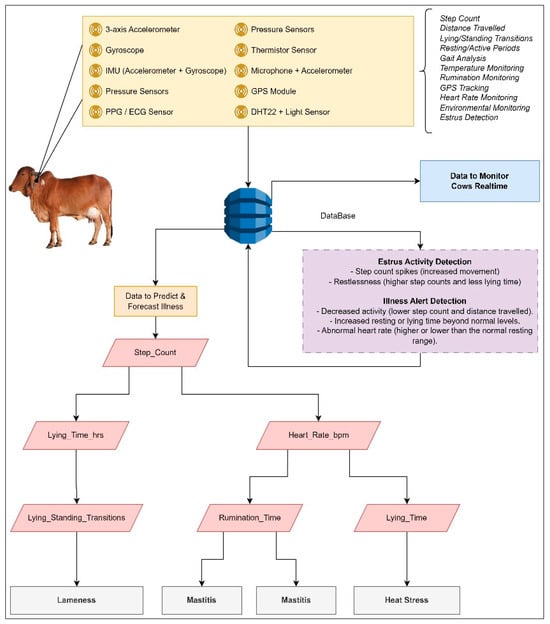
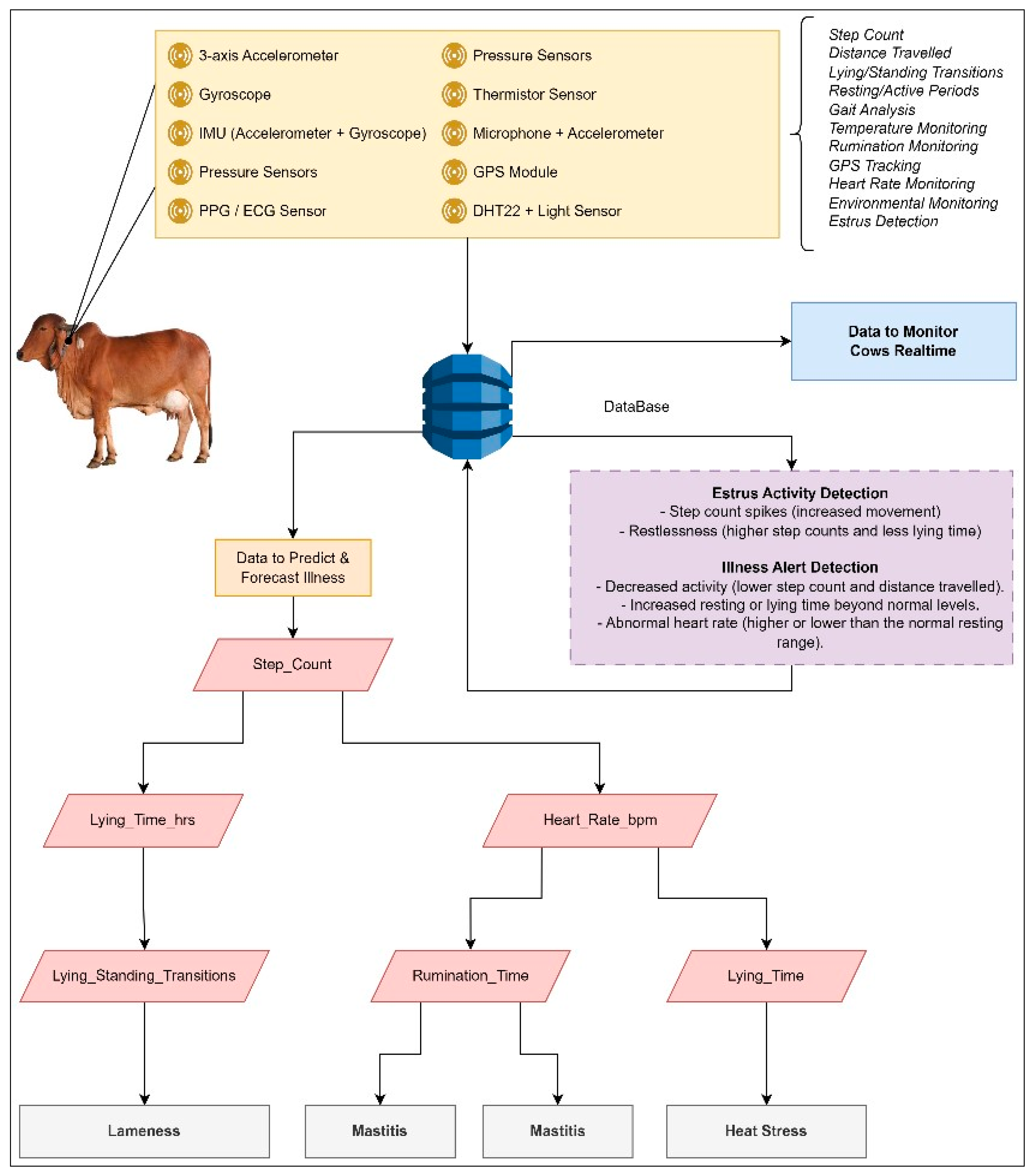
Figure 2 shows the detailed methodology of the proposed intelligent system to monitor cattle herds in farms. The diagram also shows the alert detection system and centralised data store that captures the data points for intelligent analysis and predictive modelling. The preprocessing system also allows the system to flag the cattle into groups. It suggests that managers should take special care of cattle with significant changes in the monitored parameters. Different illness flags are also assigned to cattle if they fall into certain groups. This intelligent system helps to isolate the cattle with issues and gives unique, precise treatments according to their requirements to restore them to normal health. Real-time monitoring and intelligent systems and their application help minimise health risks and diseases that spread in the herd.
Figure 2.
Detailed methodology and flag generation on illness.
Table 2 shows the sample dataset generated for the study. Data from each cow for one week is recorded, and some attributes are determined based on the sensor readings and processing of the data from the sensors.
Table 2.
Dataset used for the study.
3.4. Disease Prediction Using Machine Learning
The final stage of the proposed methodology focuses on developing and training ML models to predict diseases based on the aggregated data. Five ML algorithms were employed to classify the cows into health categories:
Random Forest (RF): The RF algorithm is an ensemble learning method that constructs multiple DTs and aggregates their predictions to enhance accuracy. Each decision tree in the forest is trained on a randomly selected subset of the dataset, which helps capture diverse aspects of the data and reduce overfitting. The RF model was applied to the dataset on the features from the dataset including step count, heart rate, lying time, rumination time, and temperature. The model combined the predictions from all DTs using a majority voting mechanism, providing a final output for each cow’s health status [14]. The high accuracy of the RF model in detecting diseases such as lameness and mastitis indicates its robustness in handling complex relationships and non-linear patterns in the dataset.
Decision tree (DT): A simple and powerful ML model that splits the dataset into branches based on the conditional rules derived from the features. Each internal node of the tree represented a specific health parameter (for example: heart rate), and each branch corresponded to a decision rule. The leaf nodes signified the predicted disease class (lameness, heat stress). DT could provide interpretable results, allowing users to understand the conditions under which each disease was predicted [15]. DT could effectively capture the relationships between parameters such as lying time, step count, and rumination.
Logistic Regression (LR): LR is a statistical model commonly used for binary and multi-class classification problems. LR estimates the probability of each of the disease outcome based on a linear combination of the input features. LR could predict the likelihood of a cow being healthy or having a specific disease based on parameters such as step count, rumination time, and lying–standing transitions [16]. LR effectively indicates the relationship between specific features and disease conditions. The strength of LR lies in its interpretability and ability to provide probabilistic insights into the health status of each cow.
K-Neighbours (K-NN): K-NN is a non-parametric algorithm that could classify the data points based on the majority class of their k nearest neighbours. K-NN could classify the cows into different health categories by comparing their feature values with those of their closest neighbours [17,18]. K-NN calculates the Euclidean distance between data points and determine the nearest neighbours; the majority class among these neighbours is then assigned to the cow. K-NN model performed well in classifying diseases such as lameness and digestive problems. Its ability to detect local patterns in the data makes K-NN a practical choice for identifying health conditions based on specific combinations of parameters.
Support Vector Machine (SVM): SVM is a supervised learning ML algorithm, which aims to find the optimal hyperplane that separates different classes in the feature space. SVM works by differentiating healthy cows from those suffering from diseases based on the input features [19,20]. By maximising the margin between classes, SVM effectively separates healthy and sick cows in high-dimensional spaces. With the help of non-linear kernel functions, SVM handles complex relationships between the features and effectively distinguishes between overlapping classes.
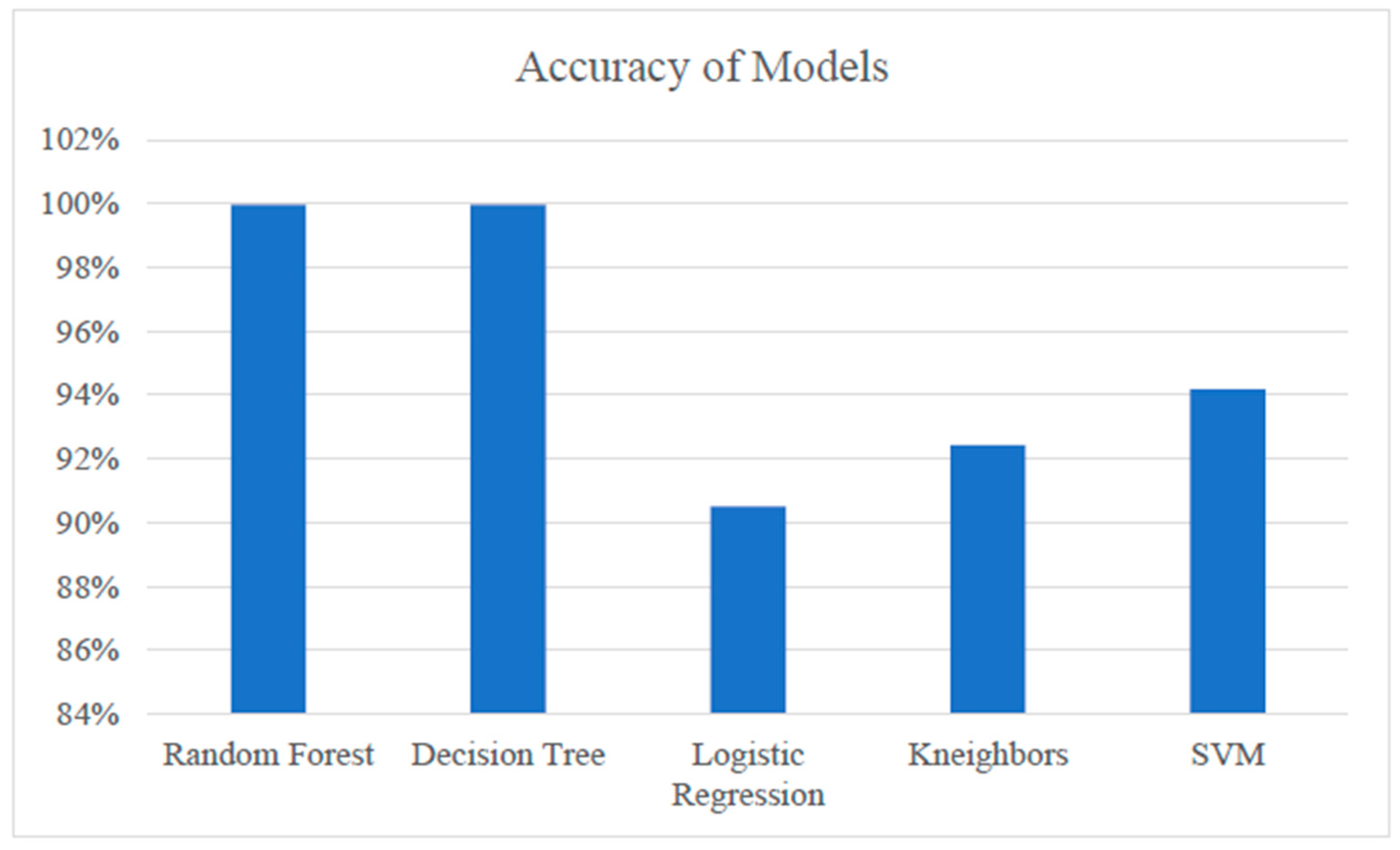
The dataset used in the study, consisting of health parameters and disease labels, was divided into training and testing sets. Each model was trained on the training set and evaluated on the testing set. The model’s performance was assessed using accuracy, precision, recall, and F1-score metrics. The RF and DT models achieved the highest accuracy of 100%, while the SVM model demonstrated robust classification performance with an accuracy of 94%.
The final system integrates the trained machine learning models with a real-time monitoring platform. The system continuously monitors the sensor data, processes it through ML models, and generates alerts when a cow’s health deviates from the established norms. The alerts are communicated to farmers and veterinarians via a mobile application, enabling timely interventions and reducing the risk of disease escalation.
4. Results and Discussion
The performance of the proposed intelligent system for Gir cow’s disease prediction and support system was evaluated based on its ability to predict common health issues in Gir cows. The system’s predictions were compared with actual disease conditions, and the results are discussed below in terms of model performance, disease classification accuracy, and implications for dairy farming.
The study employed five machine learning algorithms—RF, DT, LR, K-NN, and SVM—to predict diseases such as lameness, mastitis, heat stress, and digestive problems. The accuracy of each of the model was calculated using a test dataset consisting of labelled examples. The evaluation metrics included accuracy, precision, recall, and F1-score to ensure a comprehensive assessment of each model’s ability to classify health conditions accurately.
RF and DT models achieved an accuracy of 100%, demonstrating robustness in identifying and learning from the complex patterns within the dataset. These models could successfully capture non-linear relationships and interactions between multiple health parameters of the cow, which includes step count, lying time, heart rate, and rumination activity. The high accuracy of these models is attributed to their ability to perform feature selection and ensemble learning, which reduced the risk of overfitting and improved generalizability.
SVM attained an accuracy of 94%, and the effectiveness of SVM lies in distinguishing between health conditions is due to the model’s capacity to find optimal hyperplanes that separate classes in high-dimensional feature spaces. The slightly lower accuracy than RF and DT models suggests that SVM faces limitations in capturing subtle relationships between parameters.
K-NN achieved an accuracy of 92%, indicating that it effectively classified diseases based on feature similarities. The K-NN model was powerful in identifying lameness, which involves straightforward patterns in step count and lying time. However, its reliance on local neighbours may have limited its performance for diseases with overlapping feature distributions.
LR reached an accuracy of 91%, performing well in cases where the relationship between features and health outcomes was approximately linear. However, this model’s relative simplicity limited its ability to handle more complex interactions between the parameters.
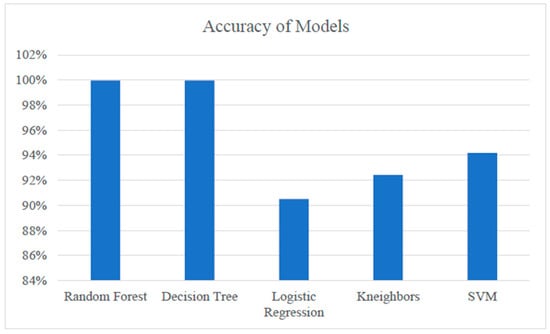
The results of applying the ML algorithm to predict health issues from the gathered data for Gir cows were performed. The data for the various parameters are computed from the sensors’ readings and stored in the database for further processing and notification systems. The ML algorithms also use these data to predict diseases and the chances of getting sick and determine whether the cow needs personal attention are shown in Table 3 and Figure 3.
Table 3.
ML algorithms and their accuracy performance.
Figure 3.
Comparison of accuracy of the ML models.
Based on established thresholds for each health parameter, the system identified critical diseases affecting Gir cows, including lameness, mastitis, heat stress, and digestive problems. The threshold-based rules were designed to detect abnormalities in step count, heart rate, lying time, and rumination time, which indicate different health conditions. The results demonstrated the following:
Lameness Detection: The system accurately flagged cows with low step count (<4000 steps/day), high lying time (>12 h/day), and few lying/standing transitions (<5 transitions) as potentially lame. This finding aligns with previous studies emphasising the importance of monitoring cow mobility and posture changes to identify lameness [4].
Mastitis Prediction: Cows exhibiting elevated heart rates (>75 bpm), reduced rumination time (<7 h/day), and decreased activity levels were classified as potentially suffering from mastitis. This classification approach is in line with the findings of previous study [3], which also highlighted the role of physiological indicators in early mastitis detection.
Heat Stress Identification: Cows with high heart rates (>80 bpm) and increased lying time (>12 h/day), combined with reduced step count, are flagged to be experiencing heat stress. These results also align with the earlier study [6], in which observed that cows who are exposed to high temperatures show prolonged lying periods and elevated heart rates.
Digestive Problems: The system could identify cows with reduced rumination time (<5 h/day), elevated heart rates (>70 bpm), and low step count as cows with digestive issues. This confirms the significance of rumination monitoring in detecting gastrointestinal disorders in cows.
The results of this study demonstrate that the IoT-based health monitoring system with AI techniques offers a reliable and scalable solution to monitor and receive disease alerts. The system could accurately identify and predict common diseases in cows. The proposed system enables the farmers to take preventive steps and timely interventions on sick cows. This approach improves the welfare and enhances milk productivity by minimising the impact of health issues on the herd. The high accuracy achieved by the ML algorithms, namely, RF and DT models, underscores the effectiveness of ensemble learning techniques. These models can handle complex datasets and make robust predictions based on various health parameters. The combination of threshold-based rules and ML ensures that the system remains interpretable for farmers and veterinarians, allowing them to understand the basis of each prediction and make informed decisions.
5. Conclusions
This study designs and presents a comprehensive and complex data-based approach on health monitoring and disease prediction in Gir cows. The system is designed based on the IoT-based sensor networks and ML algorithms. The system integrates various sensors to continuously monitor key health parameters including step count, lying time, heart rate, rumination time, and temperature. With the support of real-time data, the system employs various ML models—RF, DT, LR, K-NN, and SVM—to predict diseases including lameness, mastitis, heat stress, and digestive problems. The findings from the experiments made as part of the system demonstrate that RF and DT models achieved accuracy of 100%, while SVM demonstrated robust classification with 94% accuracy as shown in Figure 3. The study confirms that integrating ensemble learning techniques with IoT-based health monitoring provides reliable predictions, enabling early disease detection and timely interventions. The threshold-based classification rules, combined with ML models, makes the system both accurate and interpretable. The system offers significant benefits on dairy farming, enhanced cattle welfare, improved milk productivity, and reduced economic losses. The combination of data-driven insights and real-time monitoring enables a proactive approach to livestock management, contributing to the sustainability and profitability of dairy operations. Future work will focus on expanding the system’s capabilities to include more physiological and behavioural parameters for more precise predictions. Integrating Deep Learning (DL) techniques with explainability will enhance the system’s ability to capture complex hidden patterns in behaviour and health. Further developments could also make the system scalable and cost-effective for larger herds, benefiting a wider range of dairy farms.
Author Contributions
Conceptualization, A.V. and V.S.; methodology, A.V., V.S. and P.S.; software, A.V.; validation, A.V., P.S. and V.S.; formal analysis, A.V.; investigation, A.V.; resources, A.V.; data curation, A.V. and V.S.; writing—original draft preparation, A.V., P.S. and V.S.; writing—review and editing, V.S.; visualization, A.V.; supervision, P.S., A.V. All authors have read and agreed to the published version of the manuscript.
Funding
This research received no external funding.
Institutional Review Board Statement
The animal study protocol was approved by the Institutional Review Board of The Gandhigram Rural Institute–Deemed to be University (Reference number: S.Ag.&A.Sc./59/2024-2025/3 and Date: 7 July 2024).
Informed Consent Statement
Not applicable.
Data Availability Statement
Data will be shared on request to the corresponding author.
Conflicts of Interest
The authors declare no conflict of interest.
References
- Borchers, M.R.; Chang, Y.M.; Tsai, I.C.; Wadsworth, B.A.; Bewley, J.M. Machine learning in dairy cattle behavior and health monitoring. J. Dairy Sci. 2017, 100, 9805–9823. [Google Scholar]
- Rutten, C.J.; Velthuis, A.G.; Steeneveld, W.; Hogeveen, H. Invited review: Sensors to support health management on dairy farms. J. Dairy Sci. 2013, 96, 1928–1952. [Google Scholar] [CrossRef] [Scilit] [PubMed]
- Adkin, A.; Green, M.; Hudson, C.; Bradley, A. Monitoring lameness in dairy cattle: The relationship between environmental factors and lameness. J. Dairy Sci. 2009, 92, 1802–1808. [Google Scholar]
- Neveux, S.; Weary, D.M.; Rushen, J.; Von Keyserlingk, M.A.G.; de Passillé, A.M. Hoof discomfort and its effects on resting behavior in dairy cows. Appl. Anim. Behav. Sci. 2006, 101, 120–127. [Google Scholar]
- Cavero, D.; Tölle, K.H.; Buxadé, C.; Krieter, J. Mastitis detection in dairy cows using support vector machines. Livestig. Sci. 2008, 114, 280–286. [Google Scholar] [CrossRef] [Scilit]
- West, J.W. Effects of heat-stress on production in dairy cattle. J. Dairy Sci. 2003, 86, 21312144. [Google Scholar] [CrossRef] [Scilit] [PubMed]
- Rony, M.; Barai, D.; Hasan, Z. Cattle external disease classification using deep learning techniques. In Proceedings of the 2021 12th International Conference on Computing Communication and Networking Technologies (ICCCNT), Kharagpur, India, 6–8 July 2021; pp. 1–7. [Google Scholar]
- Pavkin, D.Y.; Dorokhov, A.S.; Vladimirov, F.E.; Dovlatov, I.M.; Lyalin, K.S. Algorithms for detecting cattle diseases at early stages and for making diagnoses and related recommendations. Appl. Sci. 2021, 11, 11148. [Google Scholar] [CrossRef] [Scilit]
- Li, D.; Li, B.; Li, Q.; Wang, Y.; Yang, M.; Han, M. Cattle identification based on multiple feature decision layer fusion. Sci. Rep. 2024, 14, 26631. [Google Scholar] [CrossRef] [Scilit] [PubMed]
- Bhanuteja, T.; Kumar, K.V.N.; Poornachand, K.S.; Ashish, C.; Anudeep, P. Symptoms Based Multiple Disease Prediction Model using Machine Learning Approach. Int. J. Innov. Technol. Explor. Eng. (IJITEE) 2021, 10, 2278–3075. [Google Scholar] [CrossRef] [Scilit]
- Gloster, J.; Ebert, K.; Gubbins, S.; Bashiruddin, J.; Paton, D.J. Normal variation in thermal radiated temperature in cattle: Implications for foot-and-mouth disease detection. BMC Vet. Res. 2011, 7, 1–10. [Google Scholar] [CrossRef] [Scilit] [PubMed]
- Džermeikaitė, K.; Bačėninaitė, D.; Antanaitis, R. Innovations in cattle farming: Application of innovative technologies and sensors in the diagnosis of diseases. Animals 2023, 13, 780. [Google Scholar] [CrossRef] [Scilit] [PubMed]
- Turimov Mustapoevich, D.; Muhamediyeva Tulkunovna, D.; Safarova Ulmasovna, L.; Primova, H.; Kim, W. Improved Cattle Disease Diagnosis Based on Fuzzy Logic Algorithms. Sensors 2023, 23, 2107. [Google Scholar] [CrossRef] [Scilit] [PubMed]
- Kukreja, V.; Srivastava, P.; Garg, A.; Hariharan, S. Synergizing CNN and Random Forest for Accurate Cattle Disease Identification. In Proceedings of the 2024 IEEE International Conference on Information Technology, Electronics and Intelligent Communication Systems (ICITEICS), Bangalore, India, 28–29 June 2024; pp. 1–6. [Google Scholar]
- Lowie, T.; Callens, J.; Maris, J.; Ribbens, S.; Pardon, B. Decision tree analysis for pathogen identification based on circumstantial factors in outbreaks of bovine respiratory disease in calves. Prev. Vet. Med. 2021, 196, 105469. [Google Scholar] [CrossRef] [Scilit] [PubMed]
- Megahed, A.; Kandeel, S.; Alshaya, D.S.; Attia, K.A.; AlKahtani, M.D.; Albohairy, F.M.; Selim, A. A comparison of logistic regression and classification tree to assess brucellosis associated risk factors in dairy cattle. Prev. Vet. Med. 2022, 203, 105664. [Google Scholar] [CrossRef] [Scilit] [PubMed]
- García, R.; Aguilar, J. A meta-learning approach in a cattle weight identification system for anomaly detection. Comput. Electron. Agric. 2024, 217, 108572. [Google Scholar] [CrossRef] [Scilit]
- Martin, M.K.; Helm, J.; Patyk, K.A. An approach for de-identification of point locations of livestock premises for further use in disease spread modeling. Prev. Vet. Med. 2015, 120, 131–140. [Google Scholar] [CrossRef] [Scilit] [PubMed]
- Miekley, B.; Traulsen, I.; Krieter, J. Mastitis detection in dairy cows: The application of support vector machines. J. Agric. Sci. 2013, 151, 889–897. [Google Scholar] [CrossRef] [Scilit]
- Mammadova, N.; Keskin, İ. Application of the support vector machine to predict subclinical mastitis in dairy cattle. Sci. World J. 2013, 2013, 603897. [Google Scholar] [CrossRef] [Scilit] [PubMed]

Disclaimer/Publisher’s Note: The statements, opinions and data contained in all publications are solely those of the individual author(s) and contributor(s) and not of MDPI and/or the editor(s). MDPI and/or the editor(s) disclaim responsibility for any injury to people or property resulting from any ideas, methods, instructions or products referred to in the content. |
© 2025 by the authors. Licensee MDPI, Basel, Switzerland. This article is an open access article distributed under the terms and conditions of the Creative Commons Attribution (CC BY) license (https://creativecommons.org/licenses/by/4.0/).