


Abstract
Currently, the recommendation system is a challenging task in the 21st centuries.The three main reasons and these are: the need for real-time user behavior analysis, the inability to explain why recommendations are made, and the difficulty handling new users/items. In this article, our objective is to develop a hybrid recommendation system that solves the challenges of traditional approaches. Our framework combined real-time learning and agentic rules, as well as sensor compatibility, in a dynamic environment. We developed a novel framework called SAFIRE (Sensor-Aware Framework for Intelligent Recommendations and Explainable Hybrid Techniques), where the eight traditional algorithms (User-Based CF, Item-Based CF, KNNWithMeans, KNNBaseline, SVD, SVD++, NMF, and BaselineOnly), a hybrid ensemble, and Explainable AI are used to recommend it. Our experimental work reveals that the model of BaselineOnly (Baseline Estimation Algorithm) whose accuracy under 5-fold obtained is 0.5156, MAE of 0.34055. Similarly, under 10-fold cross-validation, the models’ performance reached to 0.51558,0.34069, respectively. It has been observed that the lowest MAE obtained in the 5 CV setting is 0.29913. The model NMF(Non-Negative Matrix Factorisation) achieved an MAE of 0.30144 under 10-fold CV. Apart from this, Memory-Based Collaborative Filtering models perform marginally better with 10-fold CV as compared to the 5-fold CV. Overall, the model-based methods—BaselineOnly, NMF, and SVD—show little variance between folds (mean difference < 0.003), suggesting that they hold steady across various cross-validation setups.
1. Introduction
In today’s digital market, Product Recommender systems have a pivotal function in delivering customized suggestions to users on the basis of their preferences and browsing history. Traditional recommendation systems are based on some filtering techniques, such as collaborative filtering and content-based filtering, for suggesting preferred products to users.
These methods are effective and providing the good results but these model are having some limitations, such as suffering the cold-start problem and lack of transparency. These issues are observed during the recommending a product.To overcome the above issues, hybrid recommendation systems emerged, combining multiple recommendation techniques, including collaborative filtering, content-based filtering, and association rule mining (ARM). When the user spends more time on e-business platforms, then the user understands online shopping. As well as the user can also recommend the product easily. In other words, the customer wants to know about this specific product. why not recommend another product be recommended. This clarity gives the DSS(decision-making system ) proper. If users understand the reasons behind recommendations, they are more inclined to trust the platform and make informed purchasing decisions.
To meet the above challenges, Explainable Hybrid Recommendation Systems emerged with the combination of ARM, filtering algorithms, and Explainable Artificial Intelligence (XAI), which not only enhances user trust, transparency, and understanding of why a particular product is recommended but also increases user satisfaction and acceptance of recommendations.
Major Contribution
- This study utilizes an eight collaborative filtering approach for a product recommendation system.
- In this paper, we have developed a framework (Digital Sensor-Aware Recommendation Systems) that improves e-commerce decision-making by giving accurate results and statistically supported recommendations.
This study consists of a four-section study, and our objective was to recommend the product. Section 1 presents the introductory concept of the product recommendation, digital sensors, explainability, etc., and discusses the motivation of product recommendation. Section 2 presents the state of the art of product recommendation through the various techniques. Section 3 discusses the material and methods for product recommendation. Section 4 presents the results and discussion, followed by a conclusion.
2. Materials and Methods
Perumal, B. et al. [1] proposed a recommendation system and discussed the XAI technique. Even though the XAI recommendation systems are becoming popular and common in e-commerce, it affect customer satisfaction and trust due to a lack of explanations in the product recommendation. To achieve this goal(product recommendation), it contributes to some visibility, trustworthiness, effectiveness, and customer satisfaction Hashmi, E. & Yayilgan, S. Y. et al., [2] employed sentiment analysis using three distinct embedding methods, including TF-IDF, Word2Vec, and FastText. It resulted in the FastXCatStack model, which achieved accuracy scores of 0.93, 0.93, and 0.94 on mobile electronics, major appliance, and personal care appliance datasets, respectively, and linear SVM showed an accuracy score of 0.91 on software reviews when combined with FastText. Zhang, Y. et al. [3] focused much more on the recommendation system and discussed the four “WH” words, such as “how recommendation is possible”, “where recommendation is possible,” “Why recommendation is needed”,” when recommendation is needed “. Chaudhary, M. et al. [4] introduced the Explainable AI (XAI) concept to predict the product recommendation system. The author developed the chatbot to answer products to recommend based on the users query. Vultureanu-Albişi, A. et al. [5] In this paper, the author briefly explains explainable AI and how it is useful for a product recommendation system. Their objective was to identify the reason behind the product recommendation through the XAI, and how it interprets the predictions so that it helps the customer to predict the product recommendation.
Sanjammagari, H. S. G. et al. [6] discussed the adaptive XAI framework to explain the fitness of user-level expertise by classifying users into novice, intermediate, expert, and advanced users with domain-specific knowledge. It strengthens user trust, promotes digital literacy, and improves the user experience generally. Here, BERT transformers were also implemented on a recommendation dataset and achieved better scores (above 0.9) between input user queries and recommendations. Chen, C. et al. [7] demonstrated that the presence of post hoc explanations increases interpretability perceptions, which in turn fosters positive consumer responses (e.g., trust, purchase intention, and click-through) to AI recommendations. Sreelakshmi, A. et al. [8] presented how the hybrid algorithms help us to make effective decisions for product recommendation. The author presented that the combined approach helps to find the product recommendation efficiently. Their objective was to use the Apriori and FP-Growth algorithms individually, and further make it hybridization to see how the rules are efficiently generated for product recommendation. Padhy, N. et al. [9] used the association rule mining algorithms (Apriori and FP-Growth) and collaborative filtering algorithms such as SVD, SVD+, and ALS for product recommendation. Along with this, the authors used item-based filtering (KNNBasic) to recommend the e-commerce products.
3. Results and Discussion
Proposed Model for Digital Sensor-Aware Recommendation Systems
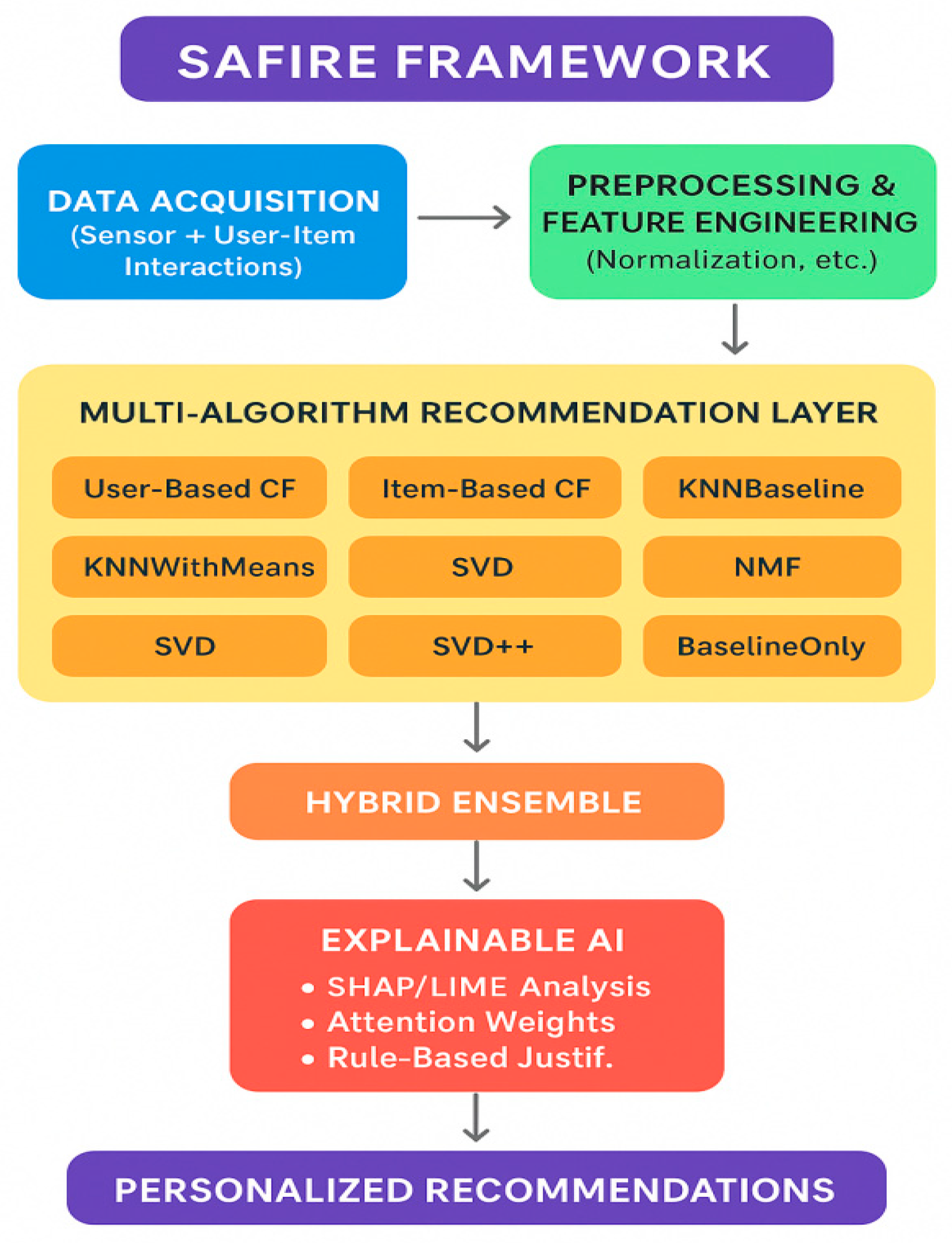
Figure 1 discusses how product recommendation is possible through collaborative approaches. This model comprises the four phases altogether to recommend the product as well as interpret the model prediction. Phase 1: Data Acquisition (Sensor-Aware Layer): In this phase, we performed the data prepossessing, where the data sources were OPT devices, wearable trackers, and smart devices. The dataset consists of different features, which consist of time_stamp, visitor_id, event_item_id, and transaction_id. These are the features that are in this dataset. The above structure helps with recommendation logs. The time_stamp feature is created when purchasing any product, and visitor_id is the unique ID of the users, it is an important feature for the user-based collaborative filtering and personalization purposes we used. Information regarding the type of interaction performed, either view, cart, or purchase, is available in the event feature, and item_id is used for item-based similarity computation purposes. Phase 2—Data Preprocessing and Feature Engineering: In this phase, we cleaned the dataset. During this process, we removed the null entries and duplicate logs, as well as incomplete entries. Finally, we prepared the structured user-item matrix. Phase 3—Model Layer: In this phase, we used the eight recommendation algorithms in parallel, and these are as follows: User-Based CF: this algorithm is used to identify similar users based on historical interactions. Item-Based CF: This algorithm is used to find the co-occurrence of patterns to recommend them. KNNWithMeans: This is used when you compute for similar users/items. KNNBaseline: This algorithm is suitable when we need to increase the accuracy (user baseline ratings). SVD and SVD++: These techniques are used for matrix factorisation; SVD++ improves suggestion accuracy by adding implicit feedback signals to the regular SVD methodology. NMF: This is used for generating the interaction matrix. BaselineOnly: This algorithm is used to predict the ratings. Our objective was to generate a ranked list of the recommended products for the user. Phase 4—Explainable AI (XAI) Layer: In this phase, we interpreted the product recommendation algorithms. We used three different methods to achieve this, such as SHAP and LIME. Our objective was to provide a transparent recommendation system. We considered the items preferred by comparable visitors, items similar to what the visitor has already interacted with, and a ranked list of item_id values for each visitor_id.
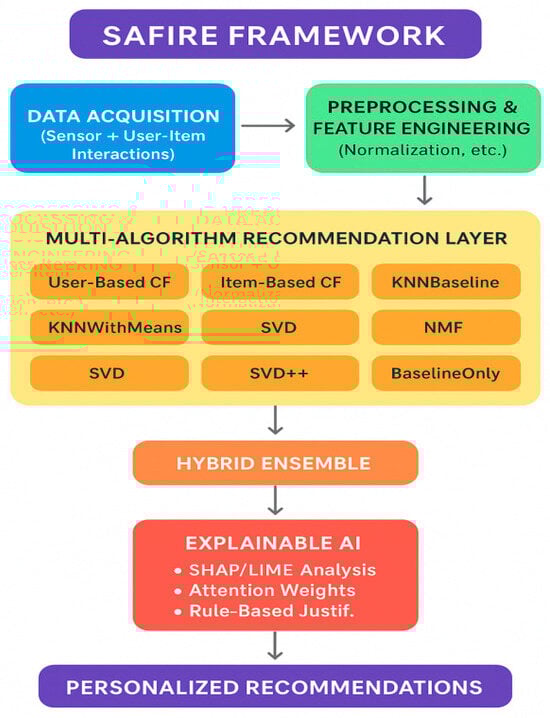
Figure 1.
Proposed model for a product recommendation system using a collaborative filtering approach.
Given a target user (visitor_id), SAFIRE employs eight collaborative filtering algorithms, a hybrid ensemble, and XAI to offer a prioritized list of item_ids that the person is most likely to interact with or purchase next.
Table 1 discusses the performance metrics. Here, we used 5-fold cross-validation with eight collaboration filtering techniques for product recommendation. The performance metric RMSE was considered to recommend the product. The CXF model, like BaselineOnly, obtained the lowest RMSE (0.5156) score, and the MAE was 0.34055. The matrix factorization method obtained SVD (RMSE: 0.52695, MAE: 0.34235) and SVD++ (RMSE: 0.52733, MAE: 0.34205) of the relationship between the product and the users. Overall, these findings show that matrix factorization and baseline-enhanced models are more suited for accurate product rating predictions, resulting in more reliable personalized recommendations than typical neighborhood-based collaborative filtering.

Table 1.
Five-fold cross-validation performance metrics.
Table 2 discusses the 0-fold cross-validation technique for a product recommendation system. It has been observed that the BaselineOnly model gives the best RMSE (0.5156) and MAE (0.3407) performance. The SVD (RMSE 0.526657, MAE 0.34231) and SVD++ (RMSE 0.52722, MAE 0.34220) factorization approaches were stable after 10-fold cross-validation.
Table 2.
Ten-fold cross-validation performance metrics.
Table 3 presents the comparison between 5-fold CV and 10-fold CV. It has been observed that the factorization method provides good results. Memory-based techniques benefited from the higher training portion in a 10-fold CV, with RMSE reductions ranging from 0.0109 to 0.0120 and MAE improvements reaching 0.0061.
Table 3.
Comparison of 5-fold and 10-fold cross-validation results.
Table 4 and Table 5 discusses the statistical results and testing hypothesis. In these two tables we have presented how RMSE performs under the 5-fold and 10-fold cross-validation. It has been observed that the BaselineOnly algorithm is the best because it obtained a consistently lower RMSE score (0.515879 for 5-fold, 0.515715 for 10-fold).
Table 4.
Detailed statistical results.
Table 5.
Detailed statistical results with testing hypothesis.
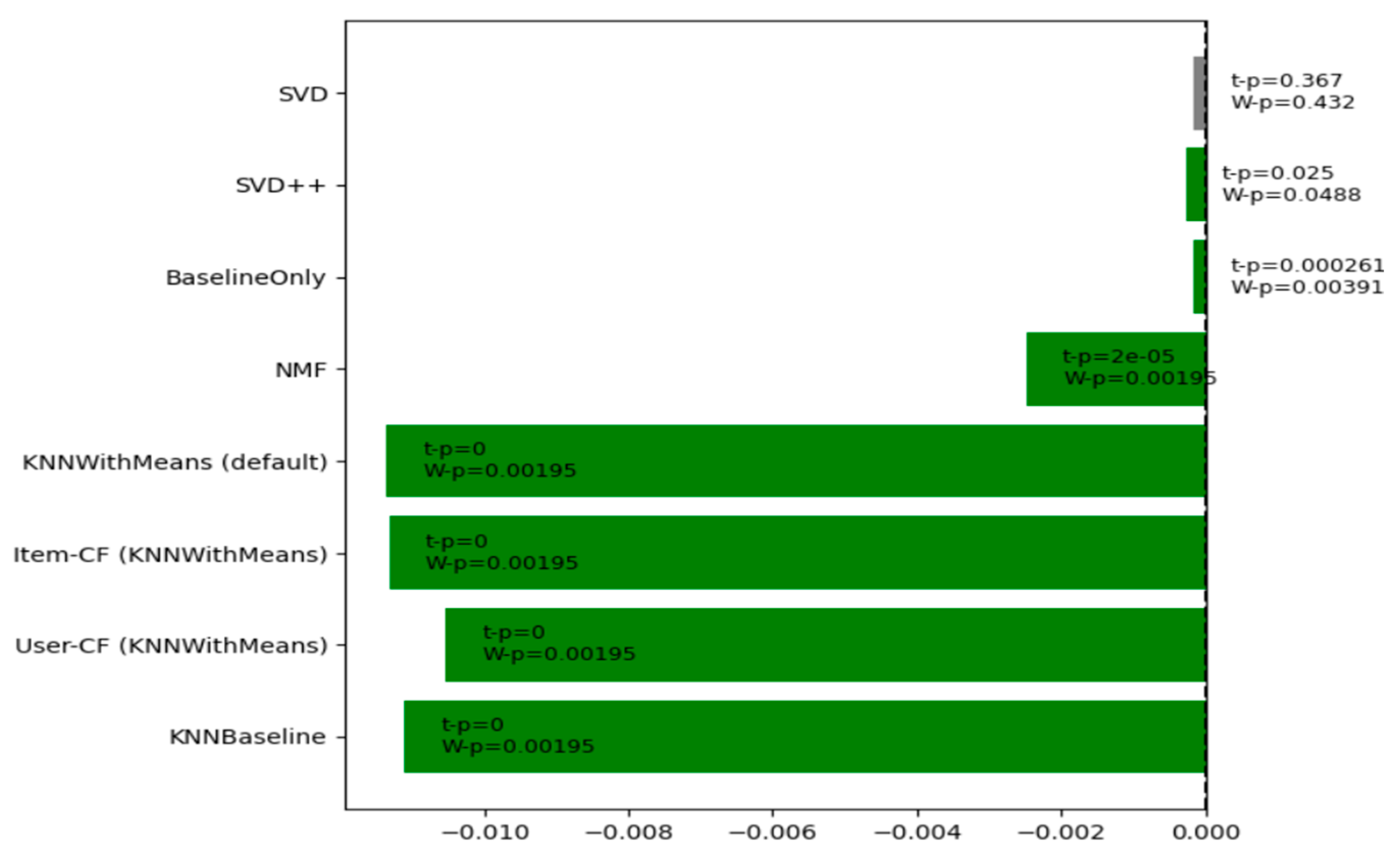
We also conducted the paired t-test and obtained the t-value of t = −5.796, p = 0.000261.The experimental work reveals that all the models are significant at 0.05 except SVD.
In Figure 2, we have performed a comparison of collaborative filtering algorithms for product recommendation. The statistical significance of the different folds has been estimated for different CF algorithms. We observed that in Table 6, the CF models, such as KNNBaseline, User-CF (KNNWithMeans), Item-CF (KNNWithMeans), and KNNWithMeans (default), performed well with an improvement with p < 0.001 when consider a performance metrics of RMSE under the 10-fold CV. We also observed that the model SVD does not have a statistically significant difference with p > 0.05. Figure 2 demonstrates that neighborhood-based collaborative filtering approaches are more vulnerable to changes in cross-validation folds, whereas matrix factorisation techniques stay rather stable. All models had statistically significant changes in RMSE across folds, with the exception of SVD, which showed no significant variance.
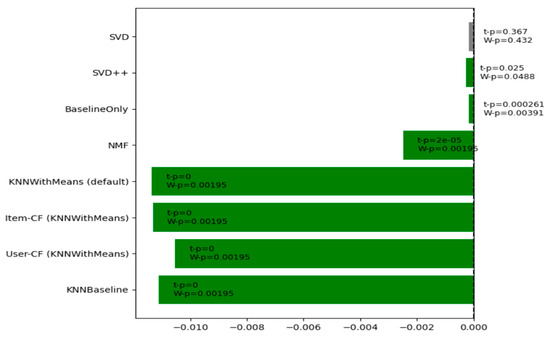
Figure 2.
Comparison of collaborative filtering algorithms for product recommendations using a statistical test.
Table 6.
Hypothesis test summary.
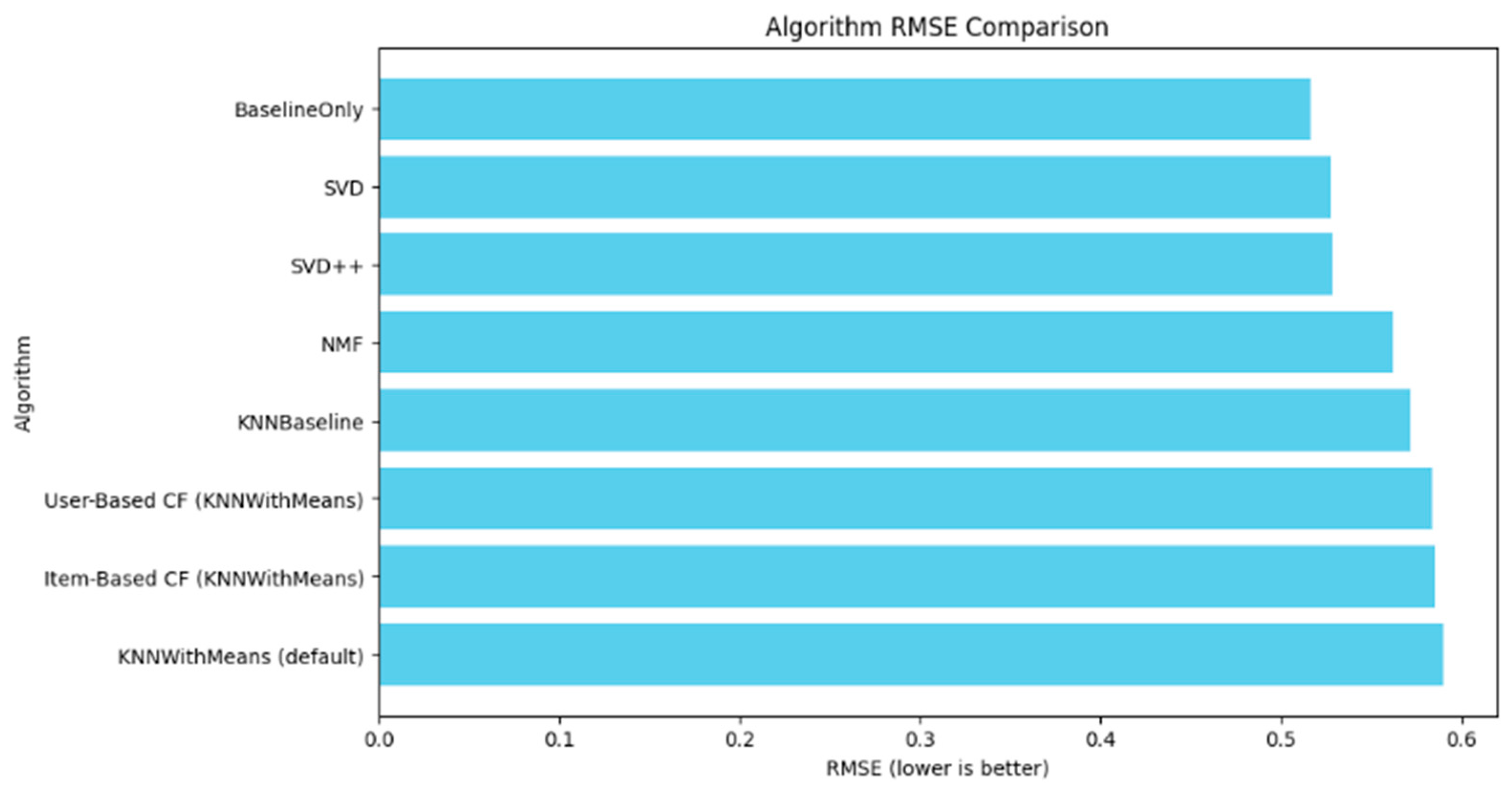
Figure 3 presents the RMSE comparison of eight collaborative filtering algorithms. This figure reveals that the CF models, such as BaselineOnly, SVD, and SVD++, obtained a lower RMSE score (≈0.51). This means the model is performing well. Models like NMF and KNNBaseline, on the other hand, produce slightly higher RMSE values (about 0.55), indicating a slight decrease in accuracy when compared to the top approaches.These findings show that matrix factorization techniques (SVD and SVD++) and baseline-adjusted methods are better at reducing prediction mistakes than traditional neighbourhood-based collaborative filtering. This demonstrates their ability to identify hidden patterns in user interactions with items.
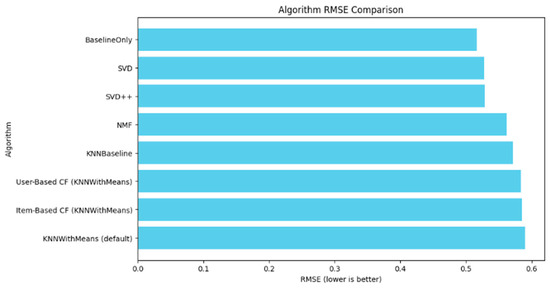
Figure 3.
RMSE comparison of different collaborative filtering approaches.
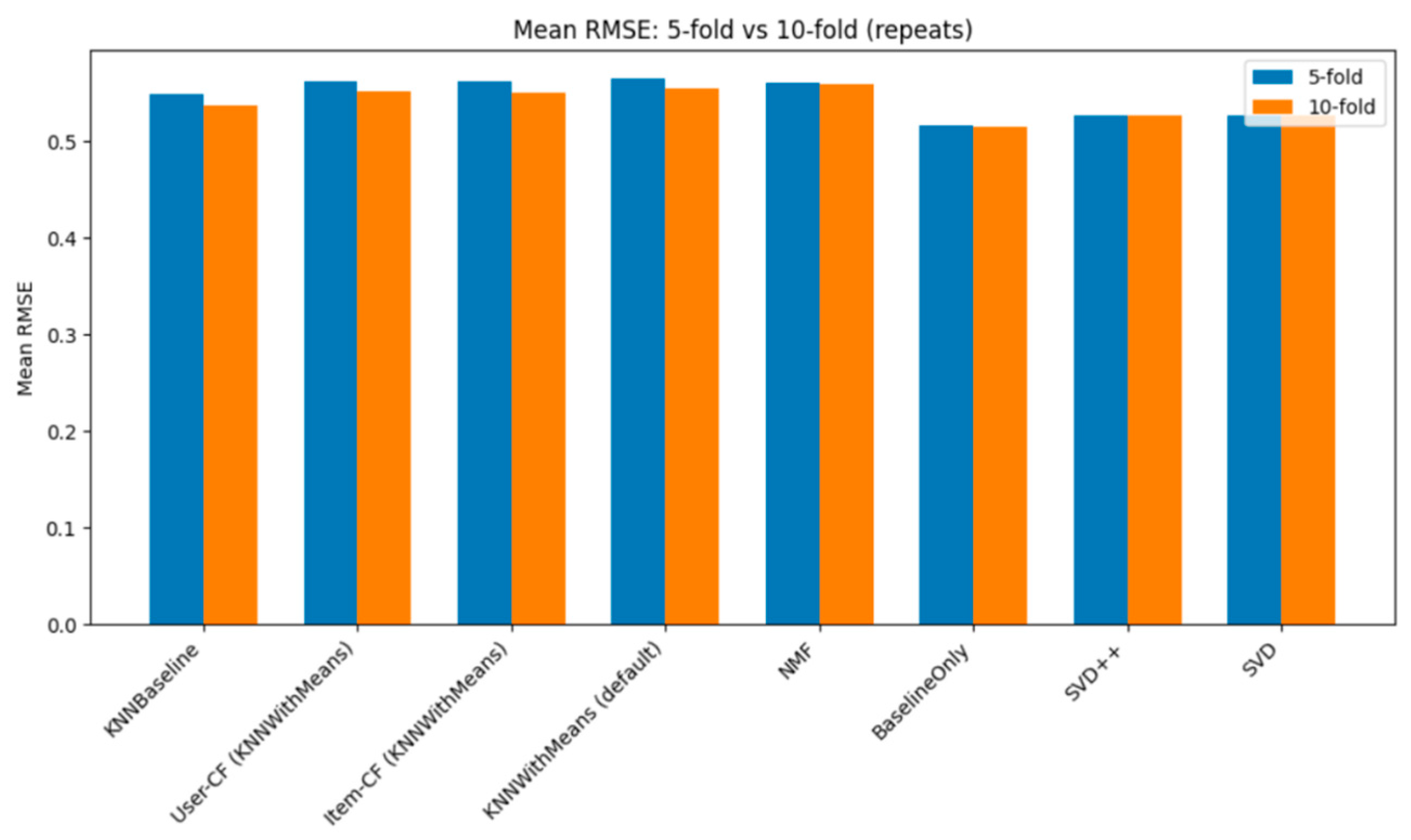
Figure 4 discusses the mean RMSE of the 5-fold and 10-fold cross-validation. In this case, we have estimated the 5- and 10-fold cross-validation scores and presented them in the bar graph to represent which cross-validation is the best choice for product recommendation. The color blue represents the 5-fold CV and the orange represents for the 10-fold CV. The 10-fold CV constantly gave a lower RMSE score compared to the 5-fold CV. That means when we increase the number of folds, the performance increases. This was especially observed in the case of neighborhood-based collaborative filtering methods.
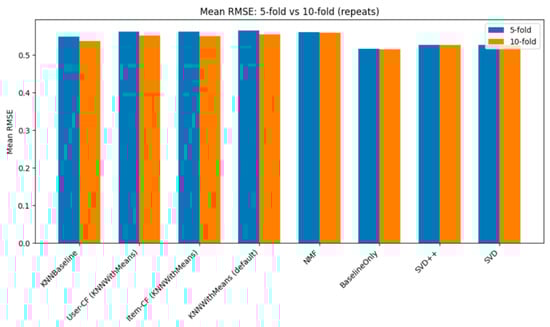
Figure 4.
Comparison of mean RMSE values between 5-fold and 10-fold cross-validation.
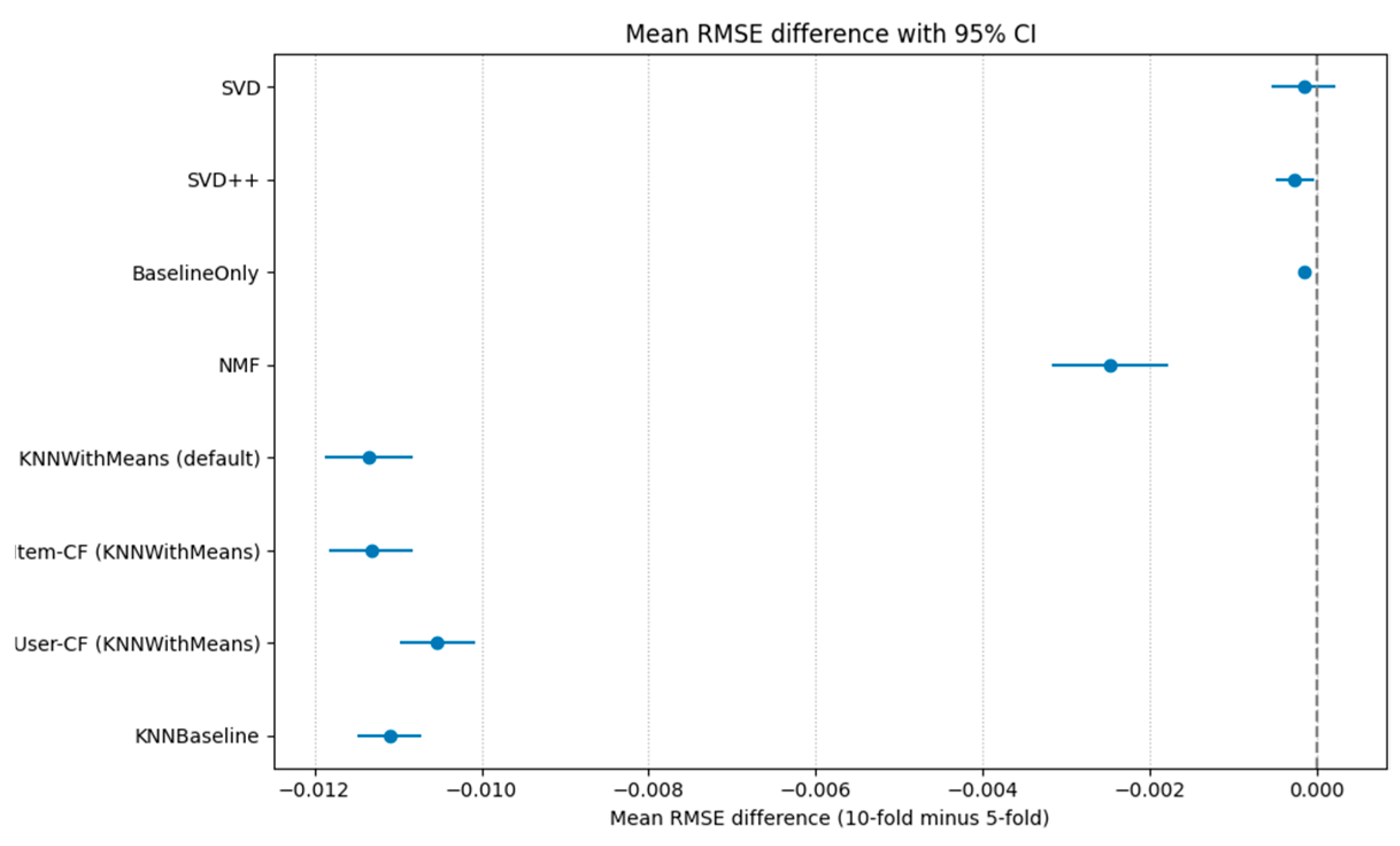
Figure 4 demonstrates the difference between the 10-fold CV and 5-fold CV of different algorithms along with 95% confidence intervals. The analysis provided a negative mean difference, indicating that the models performed better with the 10-fold cross-validation option.
It has been observed that the lower RMSE is a better choice. On the other hand, BaselineOnly, SVD++, and SVD show differences that are very close to zero, with SVD’s interval crossing zero, showing that there was no statistically significant change. These results show that adding more folds is good for most algorithms, especially those that use neighborhood-based joint filtering. However, matrix factorization methods like SVD are not affected.
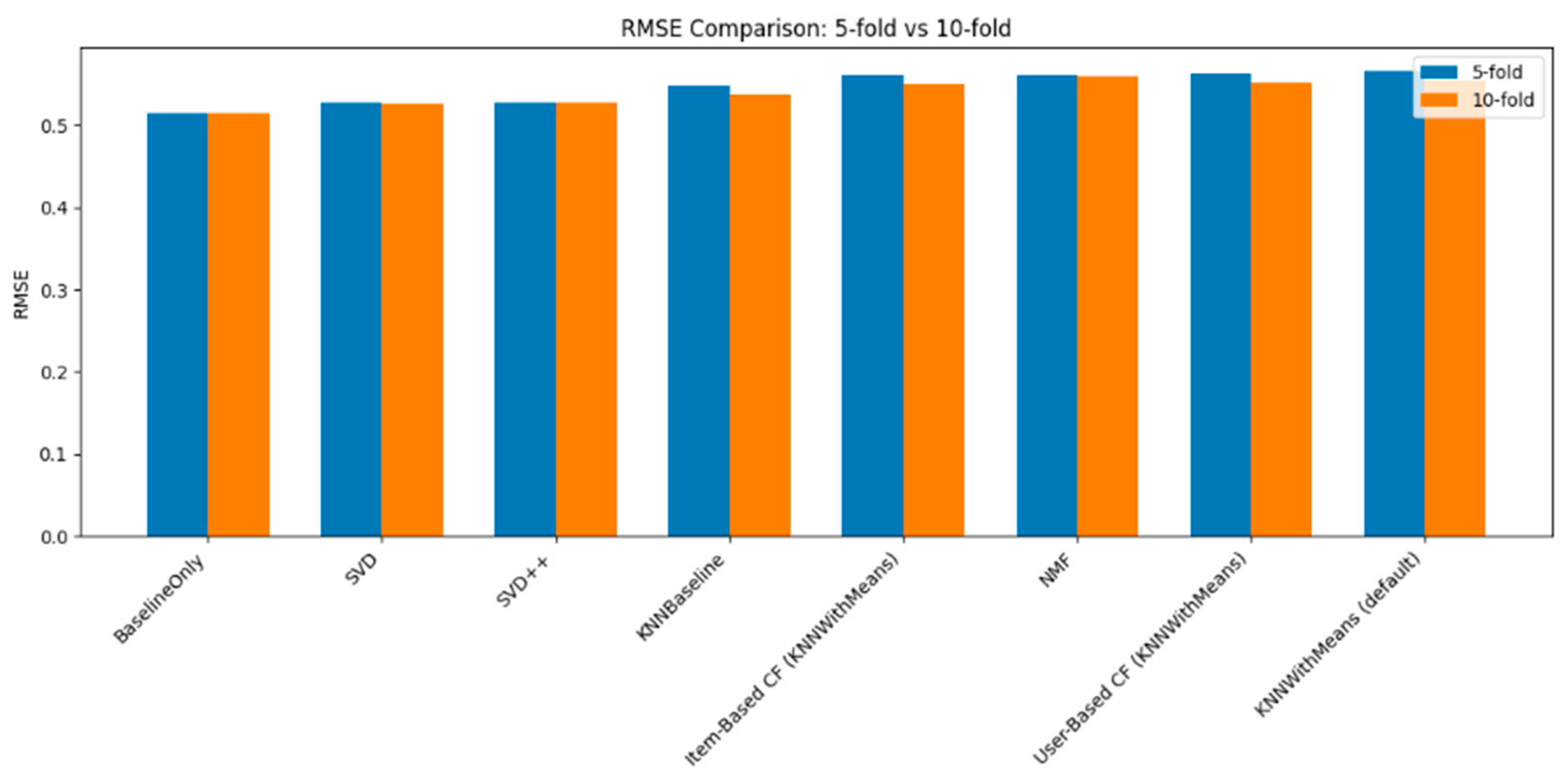
Figure 5 presents the RMSE comparison between 5-fold and 10-fold CV. We have considered the eight collaborative filtering approaches to see whether 5-fold or 10-fold CV is best for product recommendation. It has been observed that there is a marginal difference between these two folds. The difference occurred in the 3rd decimal place. Memory-based methods, like User-Based CF and KNNWithMeans (default), have a slightly lower RMSE in the 10-fold setup. This suggests that adding a little more training data per iteration might lead to small improvements in performance.
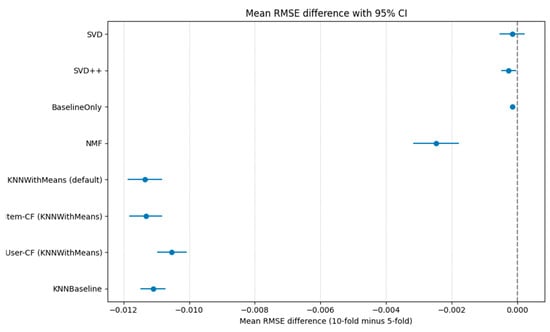
Figure 5.
Mean RMSE difference (10-fold minus 5-fold).
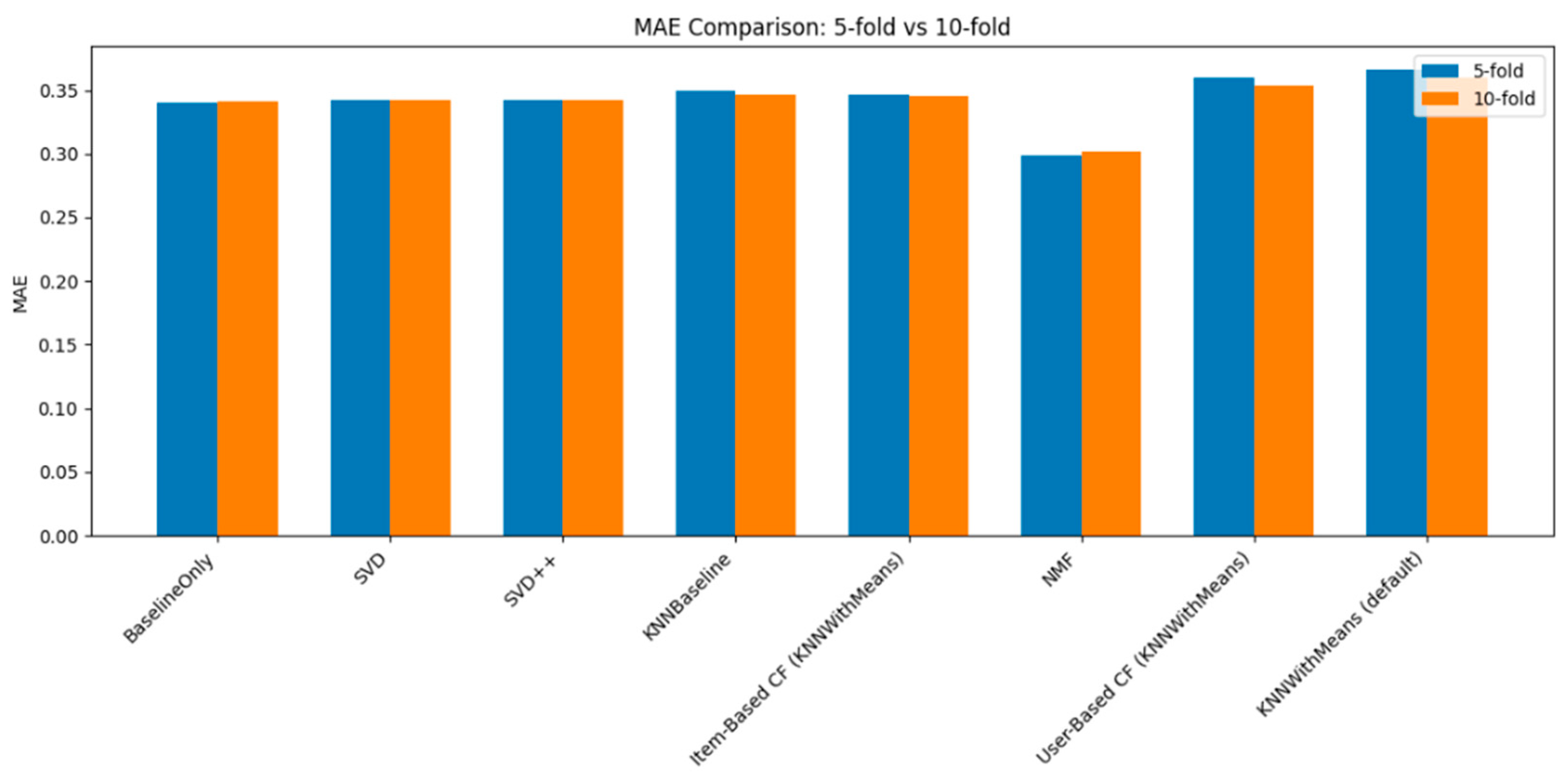
Figure 6 presents the MAE comparison between 5-fold and 10-fold cross-validation. In this paper, we used the eight recommended algorithms and observed that the MAE score is almost the same for the validation strategies. Some approaches exhibit a little bit of improvement, such as memory-based algorithms. Between the 5-fold CV and 10-fold CV, we observed that the 10-fold CV performed well with marginal improvement for the collaborative filtering method.
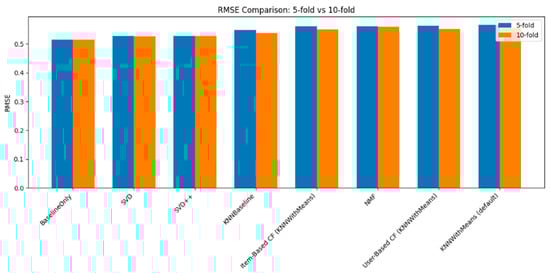
Figure 6.
Comparison of RMSE between 5-fold and 10-fold.
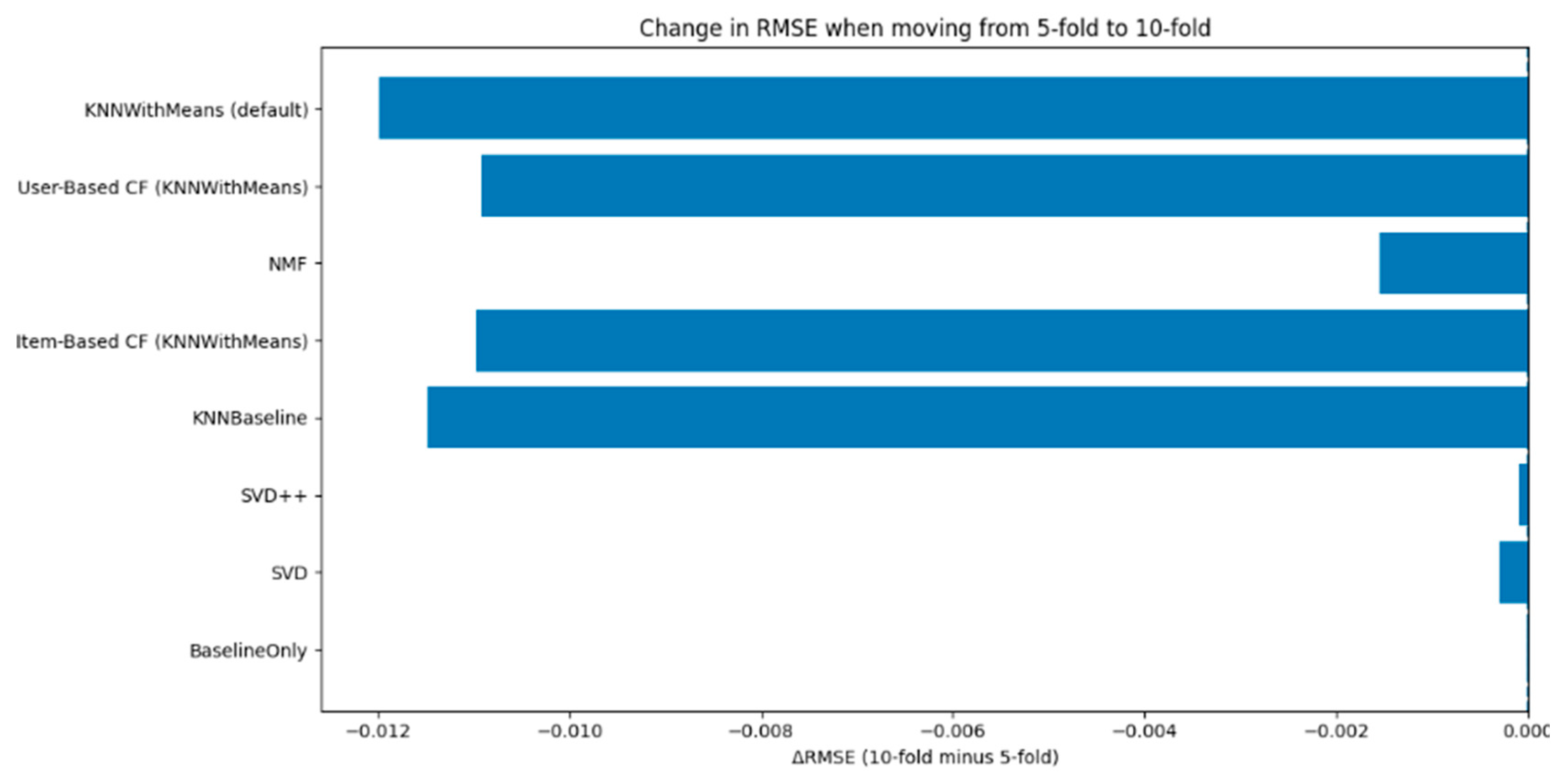
Figure 7 represents the comparison of 5-fold and 10-fold cross-validation of product recommendation. We utilized the eight CF algorithm to accomplish the task, where RMSE is considered one of the performance metrics. The X-axis represents the difference between 10-fold and 5-fold, and the negative numbers suggest an improvement in accuracy with tenfold cross-validation. The Y-axis represents the CF algorithms.
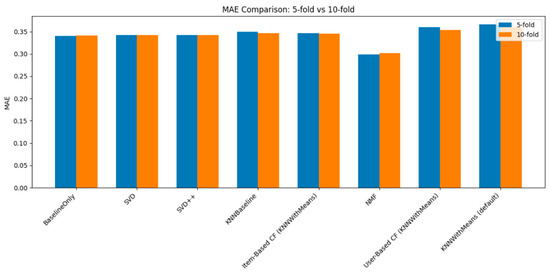
Figure 7.
Comparison of 5-fold vs. 10-fold for MAE.
Figure 8 discusses the XAI for a product recommendation system. It has been observed that KNNBaseline performs well and its score is 1.50 compared to other models. This model has a strong impact direction. KNNBaseline had the most positive influence, with high SHAP values indicating a significant contribution to accurate suggestions.
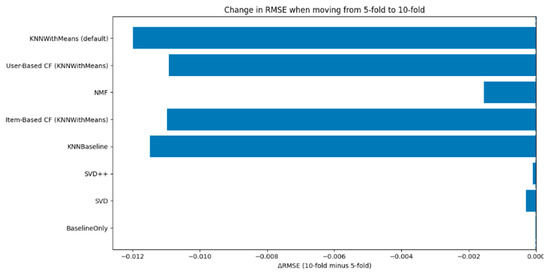
Figure 8.
RMSE transitioning from 10-fold to 5-fold cross-validation.
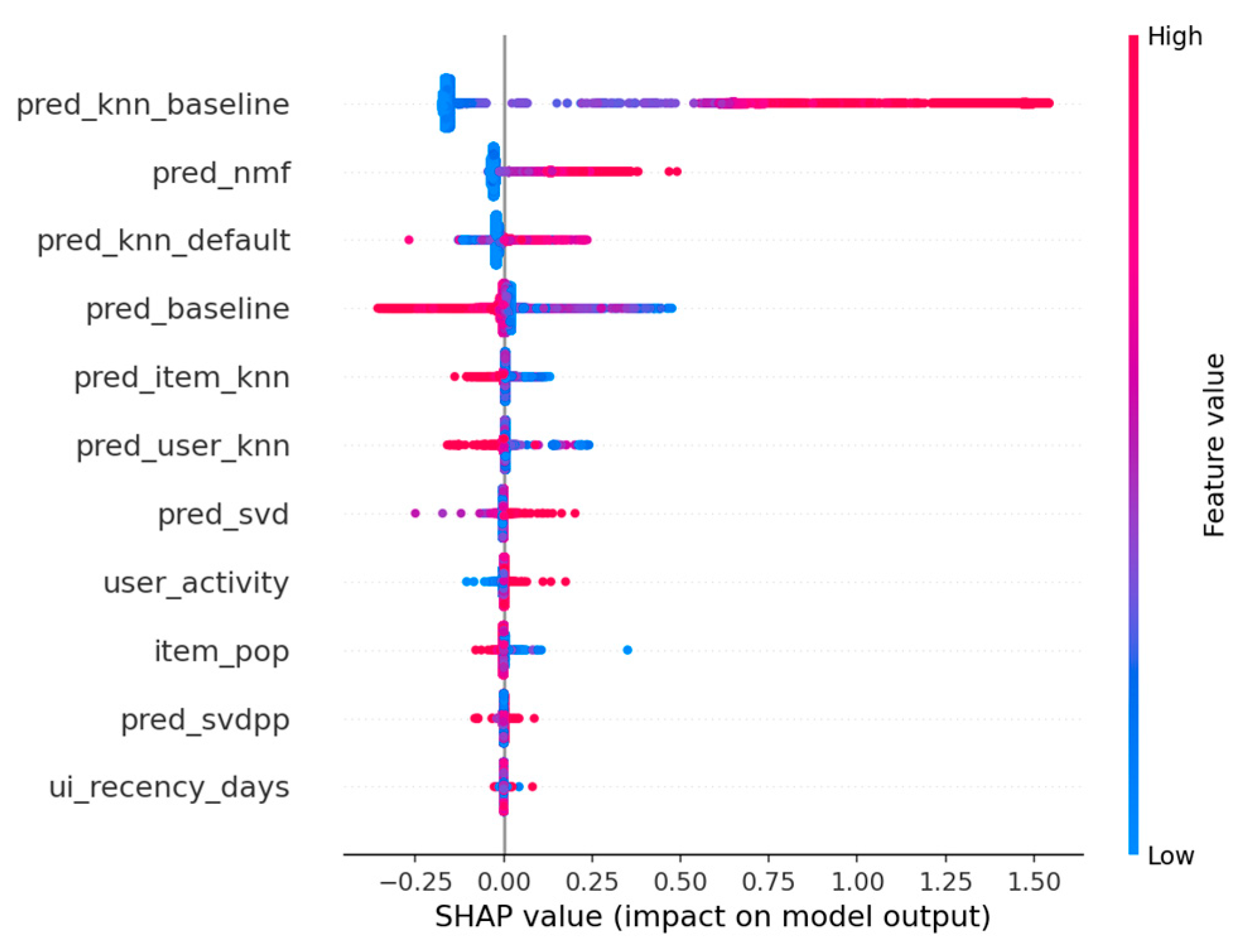
Figure 9 presents the SHAP score of different models. The following figure visualises the summary plot and user/item attributes that help with the final recommendation score. Here, each row discusses about one feature that is used in the meta-model. The horizontal spread points indicate the magnitude and the direction of the which have influenced on the output. This study also presents the most influential features that are exhibited in individual CF algorithms, such as pred_knn_baseline, pred_nmf, and pred_knn_default. These models purely depend on the base recommenders’ output. We also noticed that the colour gradient indicates the feature value, whereas the red gradient presents the high values. Similarly, the blue gradient denotes the low value.
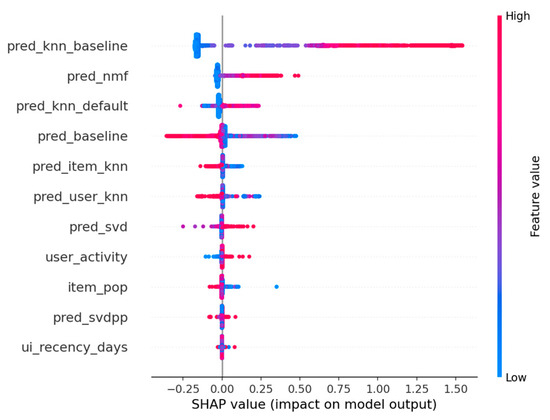
Figure 9.
Distribution of SHAP values for recommendation algorithms in the SAFIRE hybrid ensemble model.
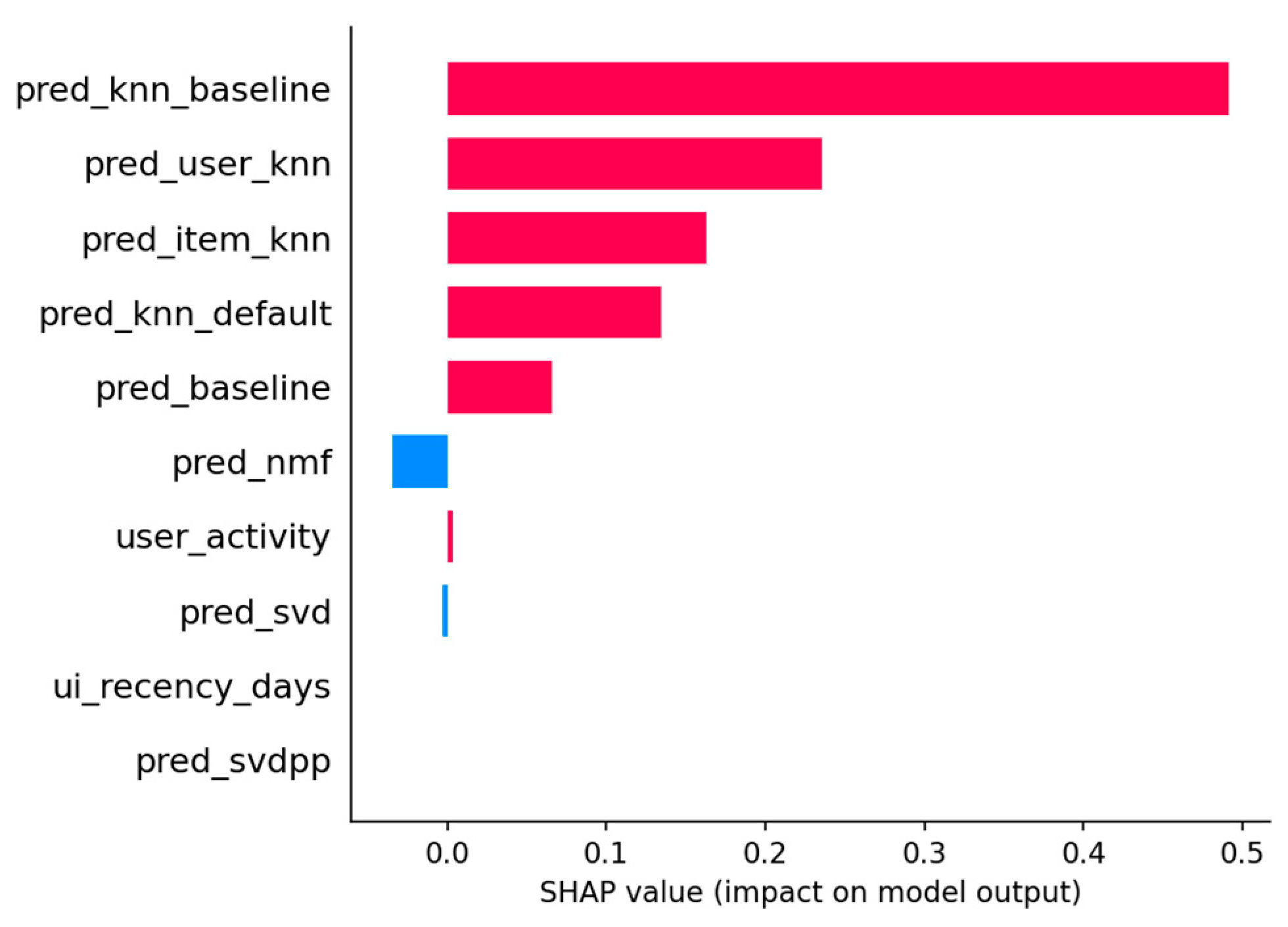
Figure 10 depicts the SHAP (SHapley Additive Explanations) scores and the accompanying prediction values. This visualization shows how each feature’s SHAP value effects the model’s output and displays the relative contribution of individual characteristics to the overall prediction. This figure presents the SHAP bar plot, where the red bar presents the positive SHAP values. This means that the feature boosts the anticipated relevance score and pushes the recommendation to a higher rating. In this figure, we have a blue bar that indicates negative SHAP values, that means the model prediction is low.
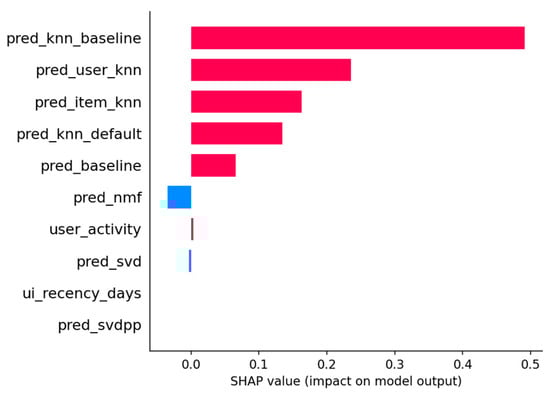
Figure 10.
Presents an analysis of SHAP contribution in SAFIRE.
4. Conclusions
This study discusses the product recommendation system using collaborative filtering techniques. In this paper, the eight CF algorithms utilized are BaselineOnly, SVD, SVD++, KNNBaseline, Item-Based CF (KNNWithMeans), NMF, User-Based CF (KNNWithMeans), and KNNWithMeans (default). The 5-fold cross-validation and 10-fold cross-validation techniques are used for a product recommendation system. The BaselineOnly model exhibits well. Its RMSE score is 0.51558, and its MAE is 0.34069. Similarly, for 5-fold cross-validation performance metrics, the RMSE is 0.5156, and the MAE is 0.34055. We also obtained the difference between the 5-fold and 10-fold cross-validation technique and found that ΔRMSE is 0.00002 and ΔMAE is 0.000131.
Author Contributions
Conceptualization, B.P.N. and N.P.; methodology, R.P.; software, B.P.N.; validation, B.P.N. and N.P.; formal analysis, B.P.N.; investigation, N.P.; resources, B.P.N.; data curation, B.P.N.; writing—original draft preparation, R.P.; writing—review and editing, B.P.N.; visualization, N.P.; supervision, R.P.; project administration, B.P.N.; funding acquisition, N.P. All authors have read and agreed to the published version of the manuscript.
Funding
This research received no external funding.
Institutional Review Board Statement
Not applicable.
Informed Consent Statement
Not applicable.
Data Availability Statement
The data that support the findings of this study are available from the corresponding author, B.P.N., upon reasonable request.
Conflicts of Interest
The authors declare no conflicts of interest.
References
- Perumal, B.; Narayanan, S.J.; Saman, S. Explainable Deep Learning Architectures for Product Recommendations. In Explainable, Interpretable, and Transparent AI Systems; CRC Press: Boca Raton, FL, USA, 2024; pp. 226–255. [Google Scholar]
- Hashmi, E.; Yayilgan, S.Y. A robust hybrid approach with product context-aware learning and explainable AI for sentiment analysis in Amazon user reviews. Electron. Commer. Res. 2024, 1–33. [Google Scholar] [CrossRef]
- Zhang, Y.; Chen, X. Explainable recommendation: A survey and new perspectives. Found. Trends® Inf. Retr. 2020, 14, 1–101. [Google Scholar] [CrossRef]
- Chaudhary, M.; Gaur, L.; Singh, G.; Afaq, A. Introduction to explainable AI (XAI) in e-commerce. In Role of Explainable Artificial Intelligence in E-Commerce; Springer Nature: Cham, Switzerland, 2024; pp. 1–15. [Google Scholar]
- Vultureanu-Albişi, A.; Bădică, C. Recommender systems: An explainable AI perspective. In Proceedings of the 2021 International Conference on Innovations in Intelligent Systems and Applications (INISTA), Kocaeli, Turkey, 25–27 August 2021; pp. 1–6. [Google Scholar]
- Sanjammagari, H.S.G.; Sougandhika, G.S.; Srinivasa Desikan, K.E. Bridging the Trust Gap: Leveraging Explainable AI for Personalized E-Commerce Recommendations. In Proceedings of the International Conference on Industrial, Engineering and Other Applications of Applied Intelligent Systems, Kitakyushu, Japan, 1–4 July 2025; Springer Nature: Singapore, 2025; pp. 225–236. [Google Scholar]
- Chen, C.; Tian, A.D.; Jiang, R. When post hoc explanation knocks: Consumer responses to explainable AI recommendations. J. Interact. Mark. 2024, 59, 234–250. [Google Scholar] [CrossRef]
- Sreelakshmi, A.; Padhy, N.; Senapaty, M.K. Strategic Retail Decision-Making: A Hybrid Apriori—FP Growth Algorithm for Efficient Association Rule Discovery. In Proceedings of the National Conference on Intelligent Systems, IoT, and Wireless Communication for the Society, Odisha, India, 16–17 February 2024; Springer Nature: Singapore, 2024; pp. 117–130. [Google Scholar]
- Padhy, N.; Suman, S.; Priyadarshini, T.S.; Mallick, S. A Recommendation System for E-Commerce Products Using Collaborative Filtering Approaches. Eng. Proc. 2024, 67, 50. [Google Scholar]
Disclaimer/Publisher’s Note: The statements, opinions and data contained in all publications are solely those of the individual author(s) and contributor(s) and not of MDPI and/or the editor(s). MDPI and/or the editor(s) disclaim responsibility for any injury to people or property resulting from any ideas, methods, instructions or products referred to in the content. |
© 2025 by the authors. Licensee MDPI, Basel, Switzerland. This article is an open access article distributed under the terms and conditions of the Creative Commons Attribution (CC BY) license (https://creativecommons.org/licenses/by/4.0/).