1. Introduction
In recent years, drone technologies have rapidly appeared in various aspects of everyday life. From social media platforms to the professional world, the usability and accessibility of drones are widely recognized. Initially popularized through hobbyist aerial photography, drones are now employed in more specialized forms, including event documentation (such as weddings and festivals), industrial inspections, and public safety operations by law enforcement agencies. Despite their increasingly user-friendly features, drones are complex systems that require careful handling, particularly when operating larger or more advanced models.
Safe and effective drone operation involves a series of technical steps and considerations, highlighting the need for proper training and knowledge. Moreover, as drones age or incur minor damage, the likelihood of functional issues increases. In such cases, diagnostic processes become essential to identify and address malfunctions, ensuring continued performance and safety.
In the context of engineering education, it is important not only to teach the basics of drone operation but also to incorporate diagnostic techniques into the curriculum. This fosters a deeper understanding of drone systems and better prepares students for real-world technical challenges. This paper presents a review of diagnostic methodologies applicable to drone systems, shares practical experiences, and explores their integration into educational programs.
After this introduction, the second section gathers different studies within this topic. The third section briefly introduces the two drones used for research, and their features with the focus on testing and diagnostics. This chapter collects the author’s experience as well. Finally, the last section summarizes this study.
2. Literature Background of Diagnostics
Drone technology has rapidly evolved, finding applications across various sectors, including agriculture, construction, healthcare, and military operations [
1]. These unmanned aerial vehicles (UAVs) are equipped with advanced technologies such as GPS, cameras, and specialized sensors, enabling precise positioning and real-time data communication [
2]. The drone market is projected to grow by 15% annually, with different models designed for specific tasks [
1]. In agriculture, drones assist farmers in decision-making, increasing productivity and profitability [
2]. However, the integration of drones into the national airspace raises safety and security concerns. To cope with these challenges, key enabling technologies have been identified, categorized into U-space capabilities, system functions, payloads, and tools [
3]. As drone technology continues to improve, it offers increasingly adaptable solutions for a wide range of applications [
1].
If diagnostics are generally in focus, automated diagnostics play a crucial role in enhancing the performance and efficiency of machines, particularly in building HVAC systems and CNC machines [
4,
5]. These systems can reduce energy consumption, extend equipment life, and improve occupant comfort [
4]. For CNC machines, diagnostics are essential in detecting wear and breakage, especially in minimally manned operations [
5]. Various technologies are available for automated machinery condition evaluation, including statistical analysis, parametric and non-parametric model diagnosis, and rule-based diagnostics [
6]. The implementation of diagnostic systems can significantly improve the efficiency of machine-building enterprises [
7]. However, to be effective, automated diagnostics must focus on relevant issues, present information, identify root causes, and avoid false alarms [
4]. The design of machines should be adapted to incorporate diagnostic features for efficient monitoring and evaluation [
7].
Recent research on drone diagnostics has focused on developing advanced methods for fault detection and diagnosis. Indoor testing environments using co-simulation have been proposed to evaluate drone performance and predict failures [
8]. Hardware-in-the-loop simulators connected via CAN bus have been used to implement and test control and diagnostic algorithms for quadrotor drones [
9]. Machine learning approaches, such as Support Vector Machines, have shown promise in classifying faulty and nominal flight conditions using simulated sensor data [
10]. More recently, a novel method called Multiverse Augmented Recurrent Expansion combined with Uncertainty Bayesian Optimization has demonstrated superior accuracy and efficiency in diagnosing propeller and motor failures based on acoustic emissions [
11]. These advancements aim to improve drone reliability, reduce maintenance costs, and enhance mission success rates through early fault detection and diagnosis.
Drones are being increasingly integrated into education, offering innovative ways to engage students and develop critical thinking skills across various subjects and grade levels [
12,
13]. Their applications range from simple coding for young children to complex remote sensing in higher education and research [
12]. Drones have shown promise in enhancing engineering education and preparing students for future careers [
14]. However, educators may face challenges in effectively incorporating this technology into their curricula and keeping up with rapid advancements [
14]. While studies indicate positive effects on student engagement and learning outcomes, limitations exist, and there is a need for a unified framework to guide drone implementation in educational settings [
15]. All in all, drones present exciting opportunities for transforming teaching and learning practices, but further research and development are needed to fully realize their potential in education.
Mention must also be made of the author’s contribution. The author has contributed significantly to the field of drone-based logistics through three key research publications. In 2021, he co-authored a paper examining the effective use of drones within indoor manufacturing environments, emphasizing energy-efficient route planning and logistical task automation in proximity to production lines [
16]. This work provides practical insights into integrating UAVs into smart manufacturing systems to enhance operational efficiency. More recently, in 2024, he collaborated as main co-author on a paper discussing the broader application of drones in logistics, covering both civil and military domains. The study also addresses current challenges such as legal regulations, cybersecurity concerns, and system integration issues in supply chain contexts [
17]. Together, these works reflect the author’s focused engagement with the evolving role of drones in industrial and logistical settings. Another source [
18] introduces an innovative application of drones in industrial settings by utilizing them for inventory checks and monitoring the movement of Autonomous Mobile Robots (AMRs) in a logistics system, thereby enhancing tracking accuracy and reducing the need for multiple tracking systems.
3. Overview of Testing and Diagnostic of Two Drones
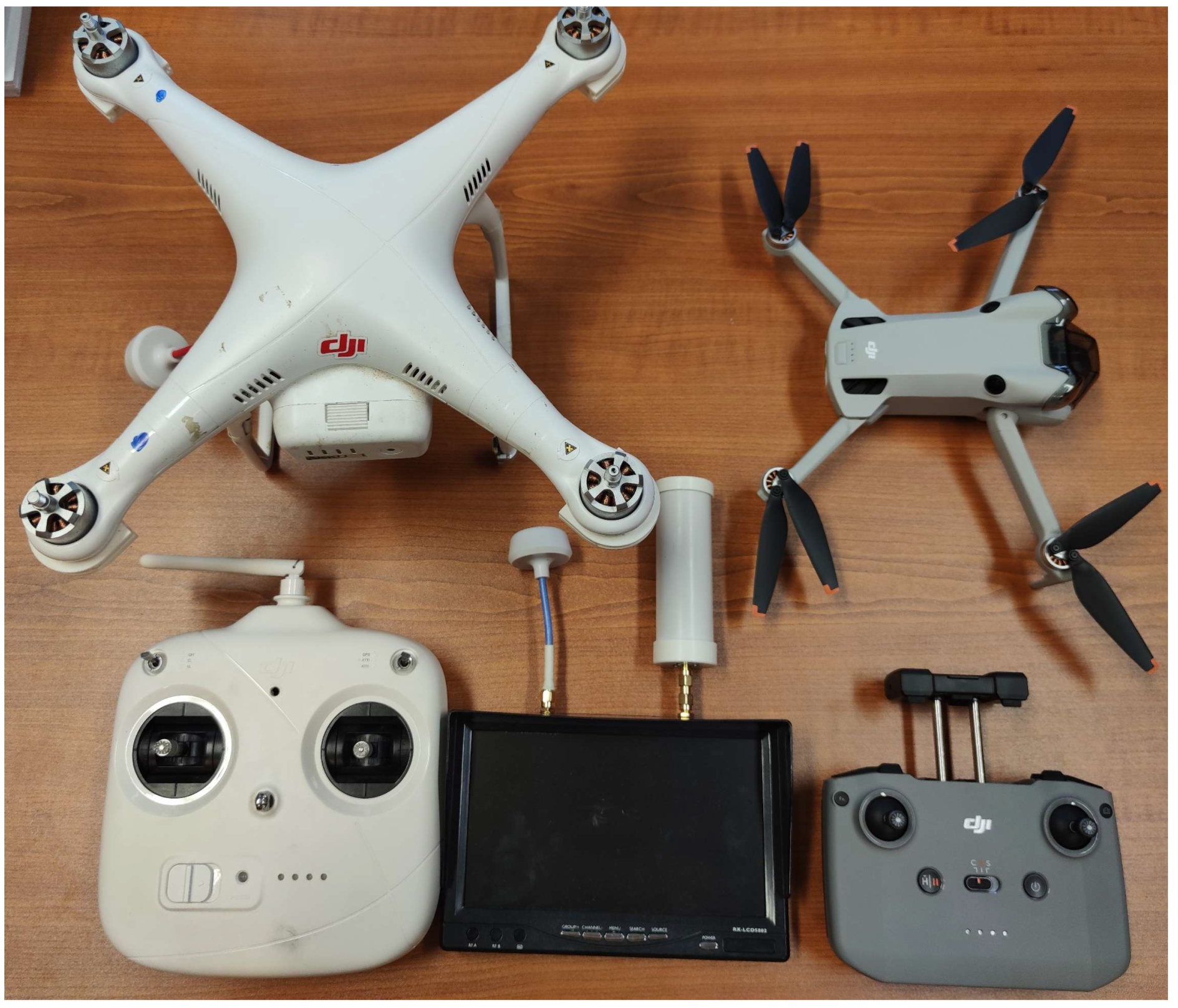
This section collects background information of diagnostics aspects of two drones. At University of Miskolc, in Institute of Logistics, the Laboratory of Logistics 4.0 basically focuses on automated material handling machines, like an automated stacker machine, a conveyor, and an AGV. However, recently, two drones were purchased to improve the lab’s features. For the older and larger drone, in the over 1 kg category, a DJI Phantom 2 was acquired, while for the smaller but newer drone under 250 g, a DJI Mini 4 Pro was obtained. The older drone is used purely for educational purposes, since its size is too big for indoor use, but the newer drone is also capable for research purposes, as can be seen in [
18]. Both drones can be categorized into a most typical quadcopter form with four propellers. The two drones together can be seen in
Figure 1.
In case of drones, the testing and diagnostic field can be divided into two parts:
Aerial testing: during flying, with a screen, the operator can check and monitor the different functions, like altitude, vertical and horizontal speed, battery level, and horizontal angles.
Ground testing: manual inspection of the drone and using software for checking like battery level, condition of propellers, and different electronic modules.
3.1. Diagnostic of Older and Bigger Drone
As mentioned beforehand, the older and bigger drone is from DJI brand, and the type is the Phantom 2. Although this drone is appr. 8–9 years old, when it appeared, it was one of the most advanced drones. At that time, the personal use of quadcopters lasted only 1–2 years. This drone can perform semi-autonomous flight as well.
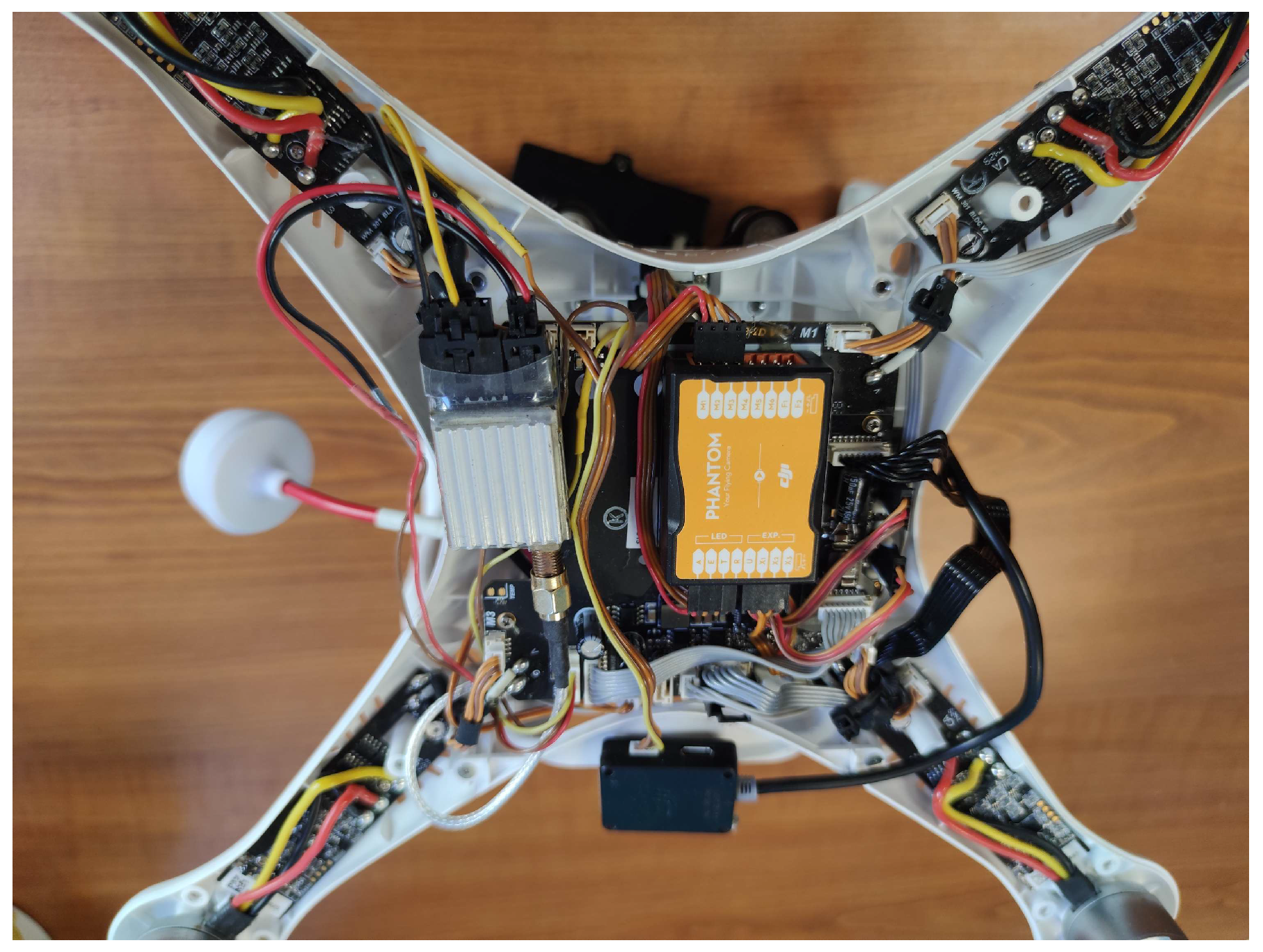
For aerial diagnostics, the OSD (On-Screen Display) function can be used. Initially, this function was not implemented into the drone; however with an additional iOSD device, the data can be read from main panel of drone through CAN-bus system. From the iOSD, the data is converted to video signal transmitter. The communication and implementation of OSD system is illustrated in
Figure 2 based on [
19].
The video signal can be received in three different ways:
By a 7” or similarly sized LCD monitor, as shown at the bottom of
Figure 1.
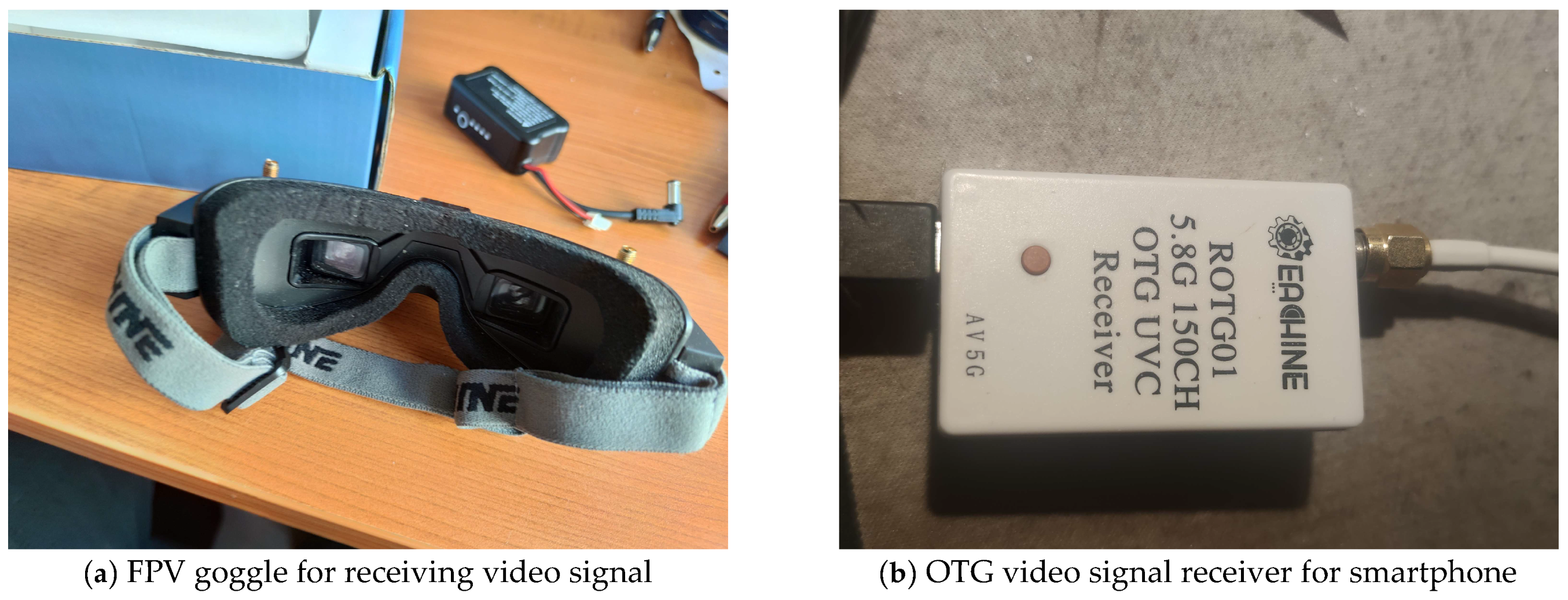
By an FPV goggle, like Eachine EV100, as shown in
Figure 3a.
By an OTG receiver, which can be connected to a smartphone, like Eachine ROTG01, as illustrated in
Figure 3b.
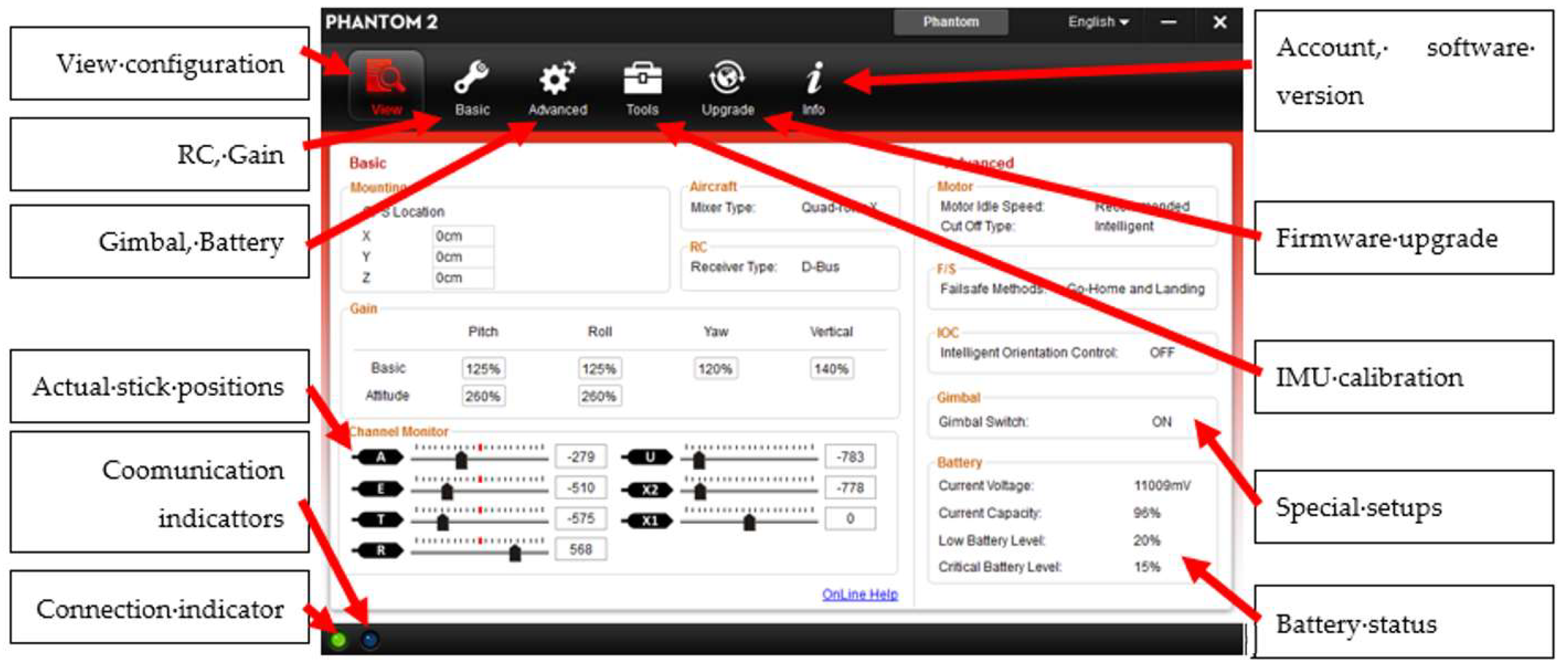
The software approach to ground diagnostic can be performed by the genuine DJI Assistant software version 3.8., provided by the manufacturer. The manual [
19] shows different information about how to use the features, as detailed in
Figure 4.
3.2. Diagnostic of Newer and Smaller Drone
The newer drone is also from DJI, and the type is the Mini 4 Pro. It is one of the newest and most advanced drones currently available in the 250 g category. It can perform fully autonomous movements, like following different objects, including humans and vehicles. In the laboratory, the research goal is to create an inventory management system, as initiated and described in [
17].
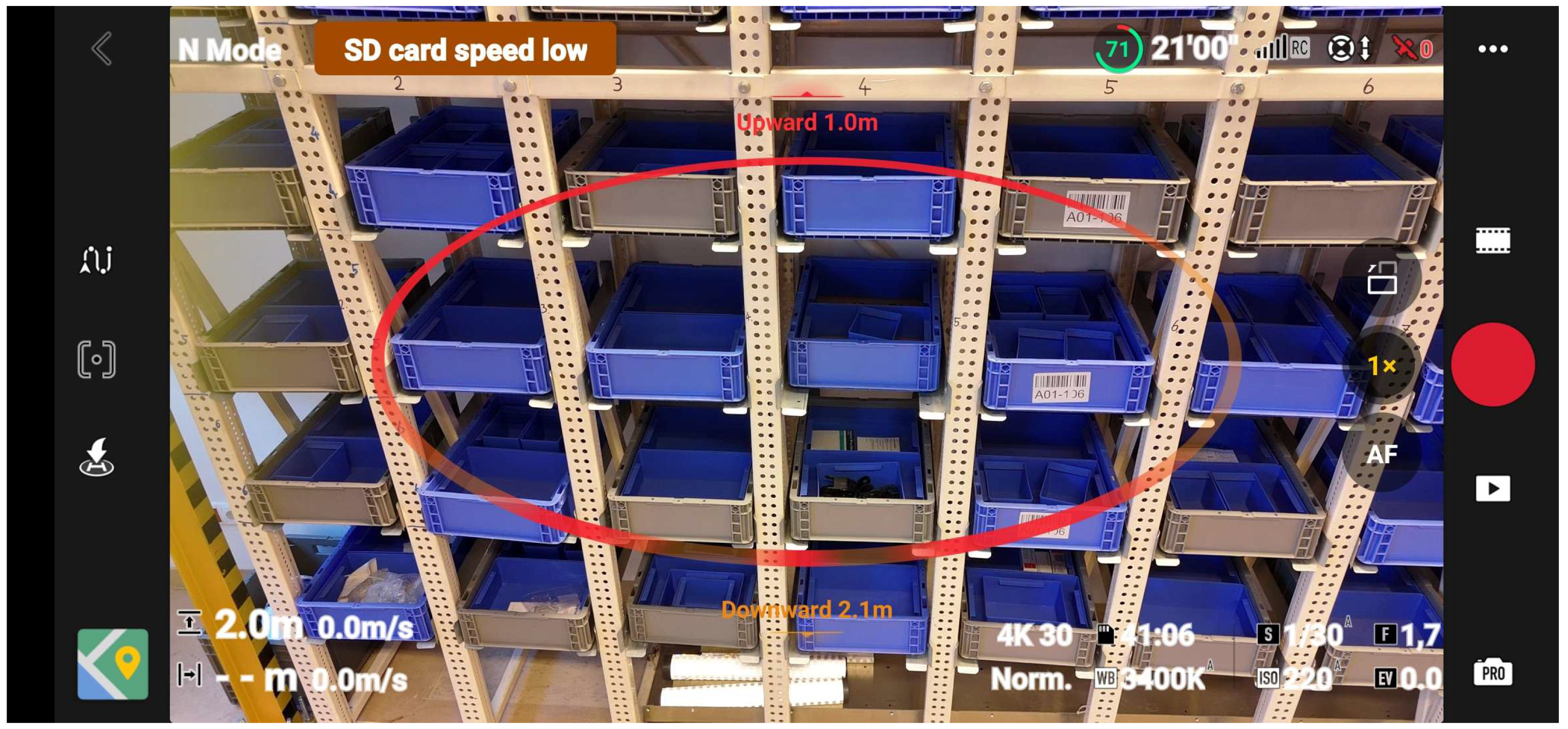
The aerial diagnostic can be screened on a smart device, like a smartphone or tablet. The manufacturer has its own DJI Fly application, but for a new DJI SDK has also been available for programming for the last few months. Similarly to the previously introduced drone, the most important data can be read, such as distances, angles, speeds, signal strengths, battery level, and video capture settings, as shown in
Figure 5.
3.3. Ground Diagnostic of Battery
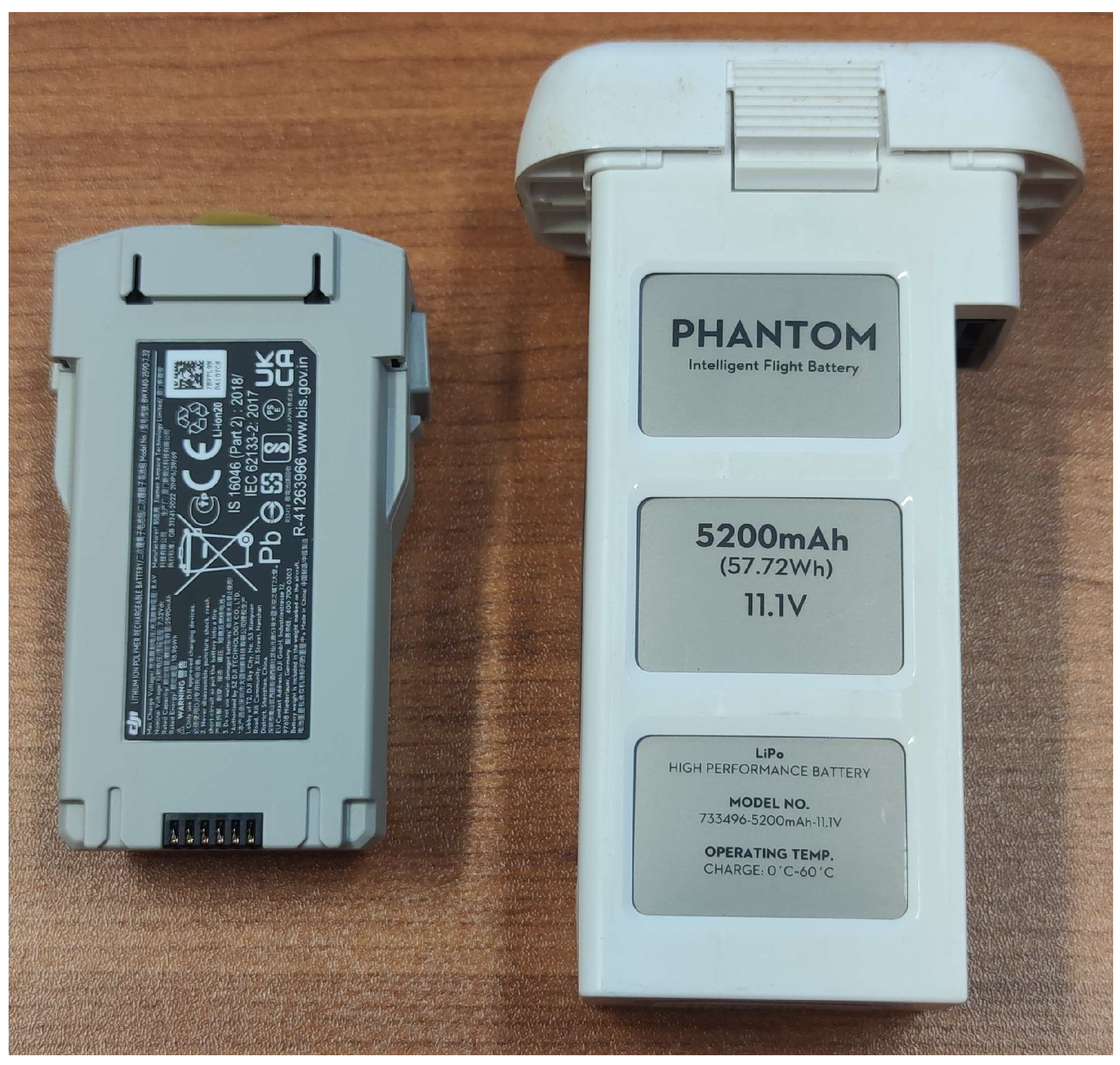
In case of drones, besides other data, the most important data is the battery level. If this is not considered, the drone can fall and damage the environment. This data can be read not only in the aerial mode, but also in ground mode. Both drones have built-in check function with a push button and 4 LEDs. The batteries can be seen on
Figure 6.
3.4. Educational Viewpoint of Diagnostic
At the University of Miskolc, within the frame of logistics engineering BSc and MSc, the drones have already been implemented in education. So far, the general theoretical introduction has been made, and parts and functions of the drones were shown. However, from the next semester, the diagnostics and testing functions will be included in the educational material.
The parts of drones shown to students can be listed as follows:
Actuators, like motors, for propellers gimbal system.
Sensors, like a camera, a visual obstacle avoidance system, a GPS, and a compass.
Control of the drone.
These parts will be extended by the previously introduced diagnostics and testing function as a fourth module.
4. Summary and Future Directions
As drone technology continues to expand into a wide range of industrial, educational, and logistical applications, the importance of robust diagnostic methods becomes increasingly evident. While drones are becoming more user-friendly, their internal complexity and potential for mechanical or electronic failure necessitate structured approaches to testing and maintenance. This paper has highlighted the dual importance of aerial and ground diagnostics, showcasing practical implementations using two DJI drones: the Phantom 2 and Mini 4 Pro.
By integrating these diagnostic practices into engineering education, students gain not only theoretical knowledge of drone components and control systems but also practical skills in fault detection and system evaluation. This hands-on approach prepares future engineers for real-world challenges in drone operations, where performance, safety, and reliability are crucial.
Additionally, the author’s prior research and contributions in drone-based logistics provide further context for the real-world applicability of drone diagnostics. As technology and usage expand, future efforts should aim to refine diagnostic tools, enhance automation, and develop standardized educational modules to keep state-of-the-art with the industry’s rapid advancements.
Ultimately, the integration of testing and diagnostics into both drone systems and academic curricula represents a crucial step toward safer, more efficient, and more intelligent UAV operations.