Abstract
An efficient method for evaluating the spectral irradiance properties of the white light of white LEDs is conducted. The method includes two main steps. The first step is to build up spectral irradiance modeling for the blue and yellow emission bands. The photometric parameter of the spectral irradiance of white light which is generated by yellow and blue light mixing is determined based on the photometry and colorimetry theories. The correlated color temperature value strongly depends on the power ratios of blue and yellow light. In addition, the result indicates that the emission bandwidth of yellow phosphor is also an important factor for increasing the color performance of output light. The selection of material with a broader bandwidth of yellow light can control a slower variation in color property compared to the case of using a material with a narrower bandwidth. In addition, the blue light hazard ratio of the spectral irradiance of white light can be extracted, which is helpful for designing the white light with moderate blue and yellow power ratios before fabricating the white LEDs product.
1. Introduction
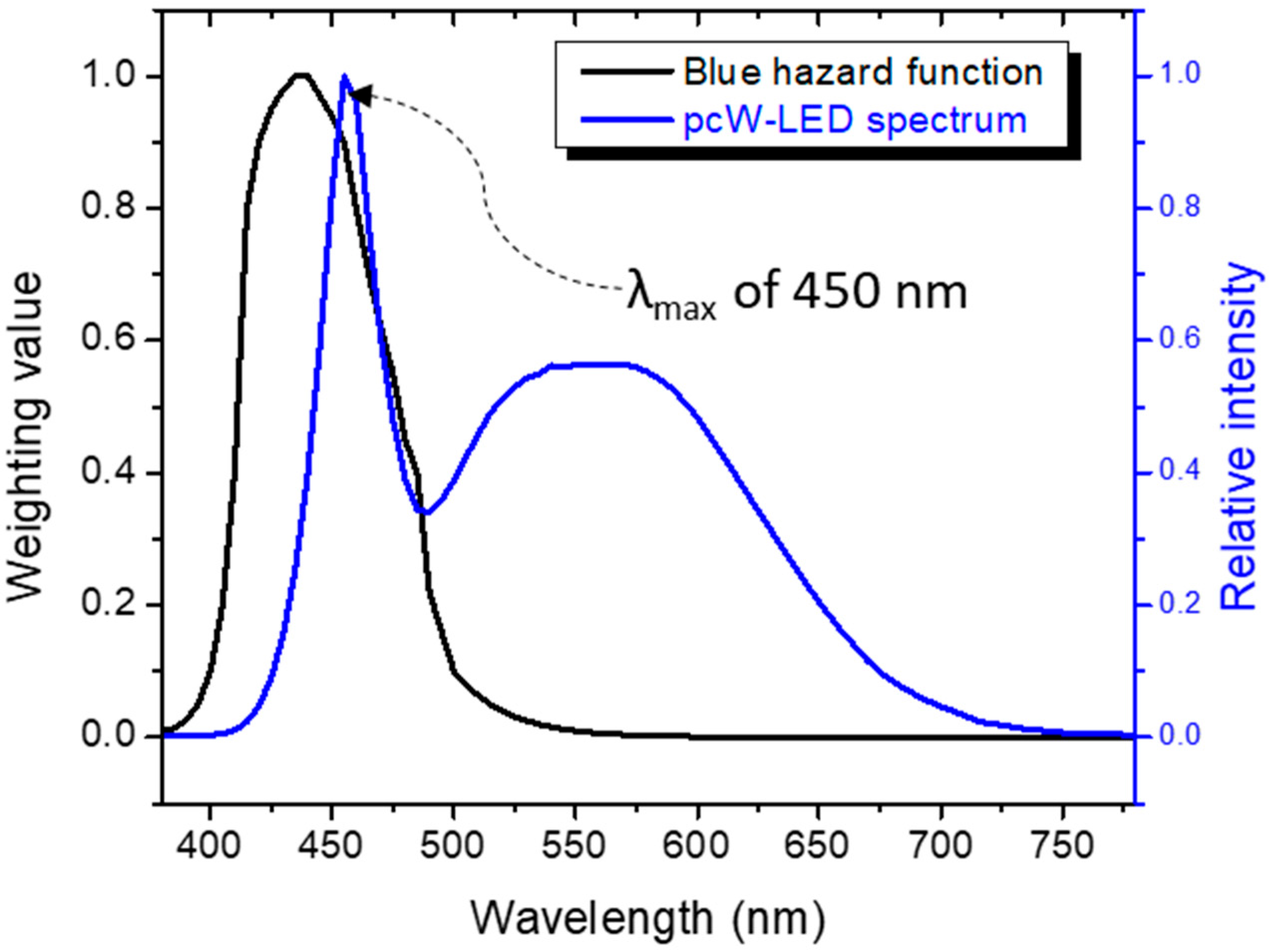
Solid-state lighting has been recognized for its unique advanced properties. It is widely used for different lighting purposes in human life such as indoor lighting, outdoor lighting, fashion lighting, and museum and architectural lighting [1,2,3,4,5]. The popular advantages are high energy efficiency, high brightness, high color rendering index, quick response after turning on/off, and no mercury content. An efficient method for creating white light is using blue light LEDs as an excitation source and yellow phosphor as wavelength conversion material [3]. The phosphor-converted white light LED is usually named by its shortened name of pcW-LED. The emission spectrum of white light is shown in Figure 1. Besides the advantages of white LEDs, the disadvantages are related to their emission spectrum characteristics. When compared to the spectrum of the blue light hazard function, the emission spectrum of white LEDs shows a potential risk for photobiological safety. The emission band of the blue light band of the white light spectrum is almost overlapping with the region that shows a high blue hazard level, as shown in Figure 1. It poses the requirement for a solution to this potential risk to the photobiological safety of solid-state lighting products. Related to the problem of blue light photobiological safety, much work has been reported [4,5,6,7,8,9,10,11,12,13,14,15,16,17,18,19]. Zhang et al. reported a solution to optimize the blue light hazard optimization for white light-emitting diode sources with high luminous efficacy of radiation and high color rendering index. In more detail, a genetic algorithm with penalty functions was proposed for realizing white spectra with low blue hazard, maximal luminous efficacy of radiation (LER), and high color rendering index (CRI) values [4]. Point has presented a first approach for taking into account the specific anatomy of newborn infants’ eyes in blue light hazard evaluation. The results show that differences in crystalline lens transparency, focal length, and pupil diameter could induce a significantly higher retinal exposure than for adults [5]. Zhang et al. studied the blue light hazard performances of phosphor-converted light-emitting diodes (pc-LEDs) with red phosphor and red quantum dots (QDs). It was found that the minimal blue light hazard efficiency of radiation (BLHER) value increases with the increase in the CCT value, and the minimal BLHER values of the two spectral models are nearly the same [6]. Ni et al. proposed a new method of reducing blue light for the backlight system in which the original white LED is modified so that the blue-band energy is reduced by 50% and cyan light LEDs are added among the white light LEDs. In addition, the authors have optimized and adjusted the distribution of the LEDs’ energy to reduce the harm of the blue light, and simultaneously maintained good color performance [7]. Chai et al. reported a novel strategy for suppressing the blue light hazards of white light-emitting diodes using transparent bamboo. It provides an effective method for suppressing blue light hazards, regulating circadian effects, and maintaining the color performance of LED lighting [8]. Nie et al. reported the solution of having a low blue light hazard for tunable white light-emitting diodes with high color fidelity and circadian performances. The optimized peak wavelengths of the five monochromatic LEDs are 385 nm, 467 nm, 524 nm, 564 nm, and 632 nm. The blue light hazard efficiency of radiation (BLHER) of the practical mixed white light is always less than 0.06 when its correlated color temperature (CCT) changes from 2500 to 7000 K [9]. Zhu et al. proposed a solution of multi-chip packaged LEDs for optimizing blue light hazards and non-visual biological effects [10]. Behar-Cohen has composed the evaluation of group risks of different white LEDs commercialized on the French market, according to the standards, and found that some of these lights belonged to group risk 1 or 2 [11]. Tosini et al. summarized the current knowledge of the effects of blue light on the regulation of physiological functions and the possible effects of blue light exposure on ocular health. Consideration of the spectral output of LED-based light sources to minimize the danger associated with blue light exposure is recommended [12]. Margrain et al. researched age-related macular degeneration (AMD). Studies of human macular pigment density and the risk of AMD progression following cataract surgery lend further weight to the hypothesis that blue light exposure has a role in the pathogenesis of AMD, but the epidemiological evidence is equivocal. On balance, the evidence suggests but does not confirm that blue light is a risk factor for AMD [13]. Nie et al. have corrected the evaluation models on the photobiological effects (PBEs) of light sources by considering the influence of age and luminance on pupil diameter, which affects the light radiation intensity on the human retina [14]. Yeh et al. have reviewed the categorized and evaluated BL-induced retinopathy in vivo, providing a comprehensive overview of the associated experimental parameters, including photosensitive fluorophores, light wavelength, illuminance, irradiance, exposure duration, animal strains, and their unique lesion patterns. Moreover, this study underscores the need for further research to evaluate photoprotective agents, which may offer valuable insights into the ongoing discussion on preserving ocular health in our increasingly illuminated digital environments [15]. Lu et al. has reported incorporating a PffBT4T-2OD:PC71BM bulk-heterojunction (BHJ) active layer in the layer structure ITO/ZnO/BHJ/MoO3/Ag, obtaining high-performance organic photodiodes (OPDs) for application in blue-light hazard (BLH) detection [16]. Tang et al. has engineered the spectrum power distribution (SPD) of white LEDs using advanced phosphor formulation and package design. The generated LED light sources offer benefits, including minimizing the potential blue hazard and improved color perception without drastically sacrificing lumen efficiency and reliability [17]. Price et al. studied the potential “blue light hazard” from LED headlamps for use by dental personnel [18]. Bauer et al. has proposed a calculative approach that can support the risk assessment Blue-Light Hazard (BLH) of Light-Emitting Diodes. The exploiting of Gaussian functions to study LED parameter variations affecting BLH exposure has been demonstrated. Finally, an experimental test of the presented Gaussian approach yielded its successful applicability for color and pc-LEDs, but yielded minor accuracy for blue and green LEDs [19].
Figure 1.
Relative radiant power of the white-emitting LED source with the overlaid blue-light hazard weighting function B(λ) according to EN 62471:2008 [12]. (The CCT and CRI of white light spectrum are 6483 K and 81, respectively. λmax—the wavelength at which the LED source exhibits maximum radiant power.)
In general, a research gap of a high-accuracy spectral irradiance modeling for evaluating the properties of output light from white light-emitting diodes is still in demand, to enrich the knowledge in the field of solid-state lighting. It requires an efficient method to extract the blue light hazard ratio of spectral irradiance of white light for the purpose of the evaluation of lighting quality and designing the white light with moderate blue and yellow power ratios before fabricating the white LEDs product. The demand is urgent for many young researchers, since the cost of testing equipment is expensive, which is a barrier in conducting related research.
In this study, we have developed an efficient spectral irradiance model for evaluating the properties of white light-emitting diodes. Firstly, the accuracy of spectral irradiance modeling for the blue and yellow emission band is established (including a mathematical model and simulation spectrum). The trustable level of the model is confirmed with experimental spectral irradiance. The similarity between the simulation and experimental spectral irradiance is quantitatively verified by the normalized cross-correlation (NCC) algorithm. Secondly, the properties the white light spectra (corresponding to the B/Y power ratios of 0.5; 1.0; 1.5; 2.0; 2.5; 3.0; 3.5; 4.0; 4.5; 5.0) are calculated correspondingly. The difference in properties for the spectral irradiance of white light with symmetry and asymmetry of the yellow emission band at different blue/yellow (B/Y) power ratios is defined.
2. Spectral Irradiance Modeling of Phosphor-Converted White Light-Emitting Diodes
2.1. Spectral Irradiance Modeling of pcW-LEDs
The modeling method presented here develops the authors’ earlier work on phosphor emission [20,21,22,23]. For the white light generation of the phosphor-converted white light LED, the white light can be generated by combining unabsorbed blue and converted yellow light. In the case of phosphor emission, the wavelength range for “yellow emission band” or “yellow spectral component” is a broad range (500–750 nm). For convenience, “yellow light” is used which stand for “yellow emission band” or “yellow spectral component.” The mathematical description of the spectral irradiance modeling of pcW-LEDs is similar to the spectral power distribution (SPD) of pcW-LED, which is written as follows [20,21,22,23]:
where Pwhite(λ) is the spectral irradiant of generated white light. Pblue(λ) and Pyellow(λ) are the spectral irradiance of blue and yellow light that contribute to the spectral irradiance of white light.
Pwhite(λ) = Pblue(λ) + Pyellow(λ)
The mathematical description of each component spectrum Pblue(λ), Pyellow(λ)
where P is the spectral irradiance of white light in watts (W/m2/nm) units, beta β is the corrected coefficient, ΔE is the FWHM in nanometers (nm) units, and peak is the wavelength at the peak of the emission band. The numerical model was implemented in MATLAB (MathWorks, version 2017), which was used to generate the simulated spectra.
2.2. Mathematical Equation for Extracting the Blue Light Hazard Ratio from Spectral Irradiance
In the case of visible radiation, the risk of photobiology safety for human eyes mainly resides in the blue light wavelength region. If the retina of a human eye is exposed to radiation within the blue light spectral range (400–500 nm) to high intensity for a certain period, then there will be irreversible damage to the retina due to the related photochemical processes. To ensure this situation does not happen, the EN 62471:2008 standard has classified the hazard potential related to the blue light of the luminaire emission spectrum into four risk groups (RGs) [24]. Based on this standard, the risk groups define the safety of specific luminaires and suitable distances must be observed. The risk groups are classified into four groups including RG0, RG1, RG2, and RG3. The RG0 and RG1 are non-hazardous. In the case of RG2 LED luminaires, the time exposure duration between the eyes and the luminaire must be less than 100 s. More dangerous is the case of the luminaire emission spectrum with RG3; the damage to human eyes will happen only with a brief look into the light source. The luminaires that emit a spectrum with risk group 3 are generally not allowed to be used in lighting applications. The Sun’s emission spectrum on a sunny day is classified as risk group 3. For an LED-based light source, the spectral weighting for hazards from visible light to human eyes is presented in Table 1 [24].
Table 1.
Spectral weighting functions for assessing retinal hazards from broadband optical sources.
By design, BLH is determined by the weighted radiance or irradiance of a source integrated over time, as prescribed in IEC/EN 62471 and related standards [12]. Hazard potential depends jointly on spectrum, radiant intensity, and exposure conditions. A spectrum with higher blue content may be harmless at low exposure but hazardous under high irradiance or with prolonged viewing. The dose and exposure time is a popular practical risk assessment tool; however, it requires the time for measuring and handling data.
In the proposed method of this paper, to avoid the misunderstanding of treating BLH as a function of spectral shape alone, it is necessary to emphasize that the proposed modeling is based on the spectral irradiance rather than spectral power distribution. An “irradiant spectrum,” more commonly known as a spectral irradiance, describes how the power of radiant energy (like sunlight or artificial light) is distributed across different wavelengths of the electromagnetic spectrum. It is measured in units of watts per square meter per nanometer (W/m2/nm), indicating the amount of energy received per unit area per unit time at each specific wavelength. Based on the data of spectral irradiance and the blue light hazard weighting function used by the IEC/EN 62471 standard, the blue light hazard ratio of spectral power distribution, Br, is therefore defined as follows [12,22]:
where YT() is the spectral irradiance of a test source, B() is the blue light hazard weighting function, and Δλ is the bandwidth in nm. The unit of Br is the percentage (%). It is suggested that the lower the Br, the safer to the human eye. Equation (3) is applied to calculate the blue light hazard ratio of spectral irradiance for different simulated white light spectral irradiance. The detailed content is presented in the next section.
3. Spectral Irradiance Modeling for White Light Using Yellow Phosphor with Symmetry and Asymmetry Emission Band
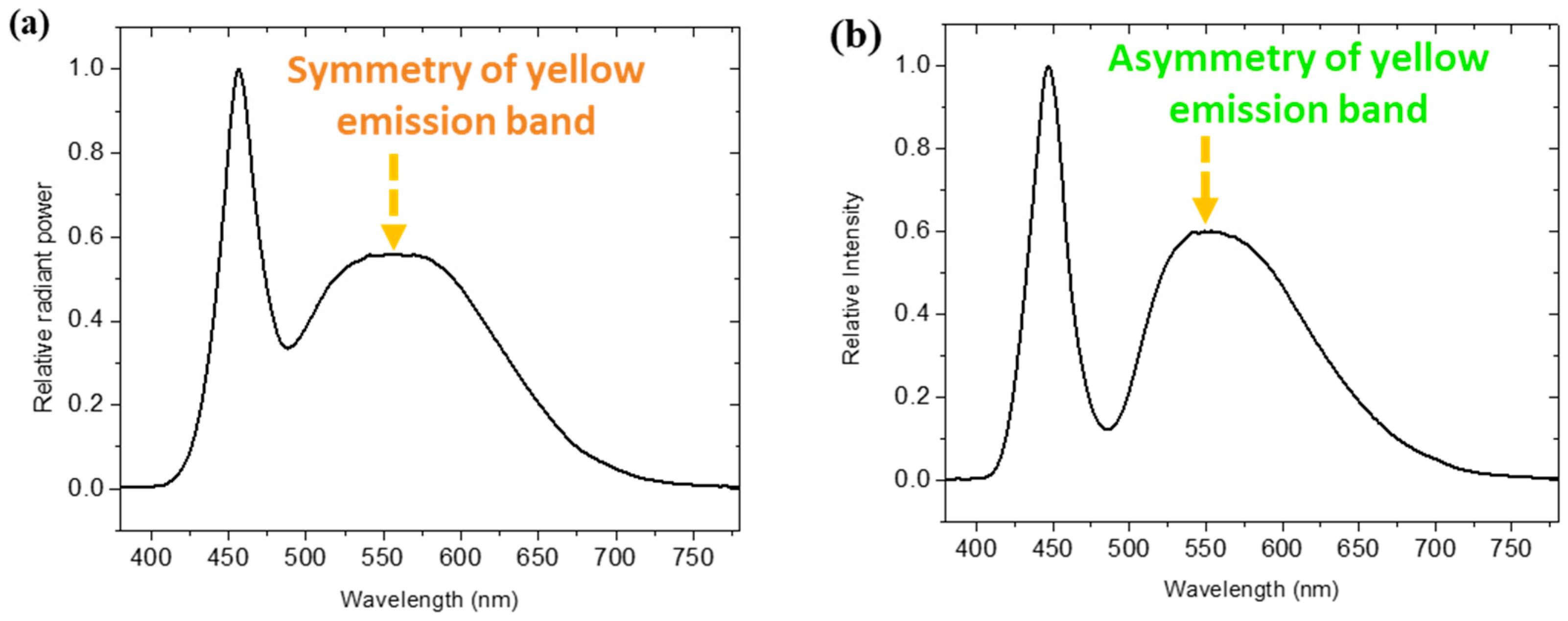
The spectral irradiant modeling begins with the detection of the experimental spectral irradiant. In this study, two different types of spectral irradiant of the white light of pcW-LEDs are measured. These spectra include the blue and yellow bands. The difference is in the type of phosphor; one has the symmetry curve of a yellow band while the other has an asymmetry curve of a yellow band. Figure 2a shows the experimental spectral irradiant of the white light of pc-WLEDs with the symmetry of the yellow emission band, and Figure 2b shows the experimental spectral irradiant of white light of pc-WLEDs with the asymmetry of the yellow emission band. Based on the experimental spectral irradiant data, the information on the blue and yellow emission bands that are needed for simulation will be determined, such as peak emission wavelength, range of emission wavelength, and FWHM value of blue and yellow emission bands.
Figure 2.
Experimental spectral irradiance of pc-WLEDs. (a) White light spectrum with symmetry of yellow emission band, and (b) white light spectrum with asymmetry of yellow emission band.
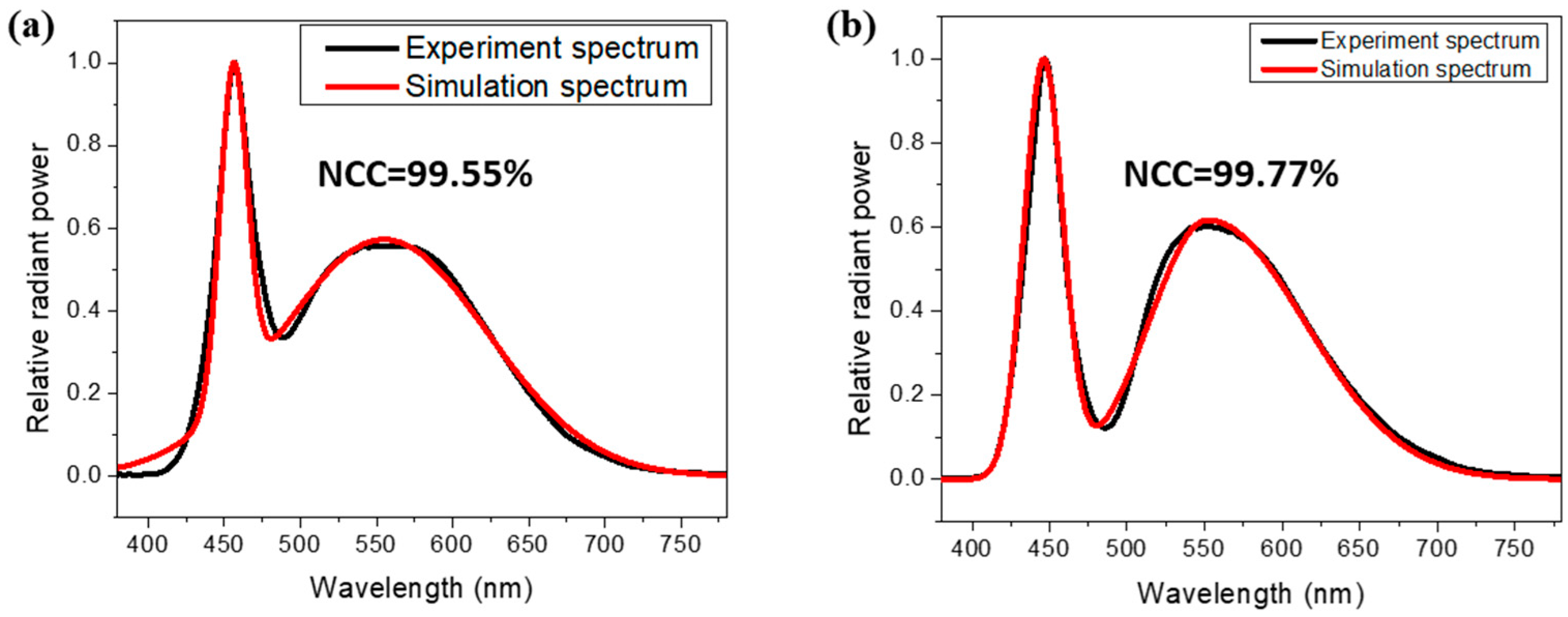
After the information on blue and yellow emission bands is determined, these parameters are replaced into Equations (1) and (2) for the simulation process. The beta value is changed and optimized until the simulation and experiment. The similarity between the simulation and experimental spectral irradiant is verified by the normalized cross-correlation (NCC) algorithm [23,25]. Figure 3 shows the verification result between the simulation and experimental spectral irradiant for the case of the white light spectrum with the symmetry of the yellow emission band, and the case of the white light spectrum with the asymmetry of the yellow emission band. The high values of NCC (99.55% and 99.77%) indicate that the spectral irradiant modeling is trustable.
Figure 3.
Simulation spectral irradiant and verification with experimental spectral irradiant. (a) Case of white light with symmetry of yellow emission band, and (b) case of white light with asymmetry of yellow emission band.
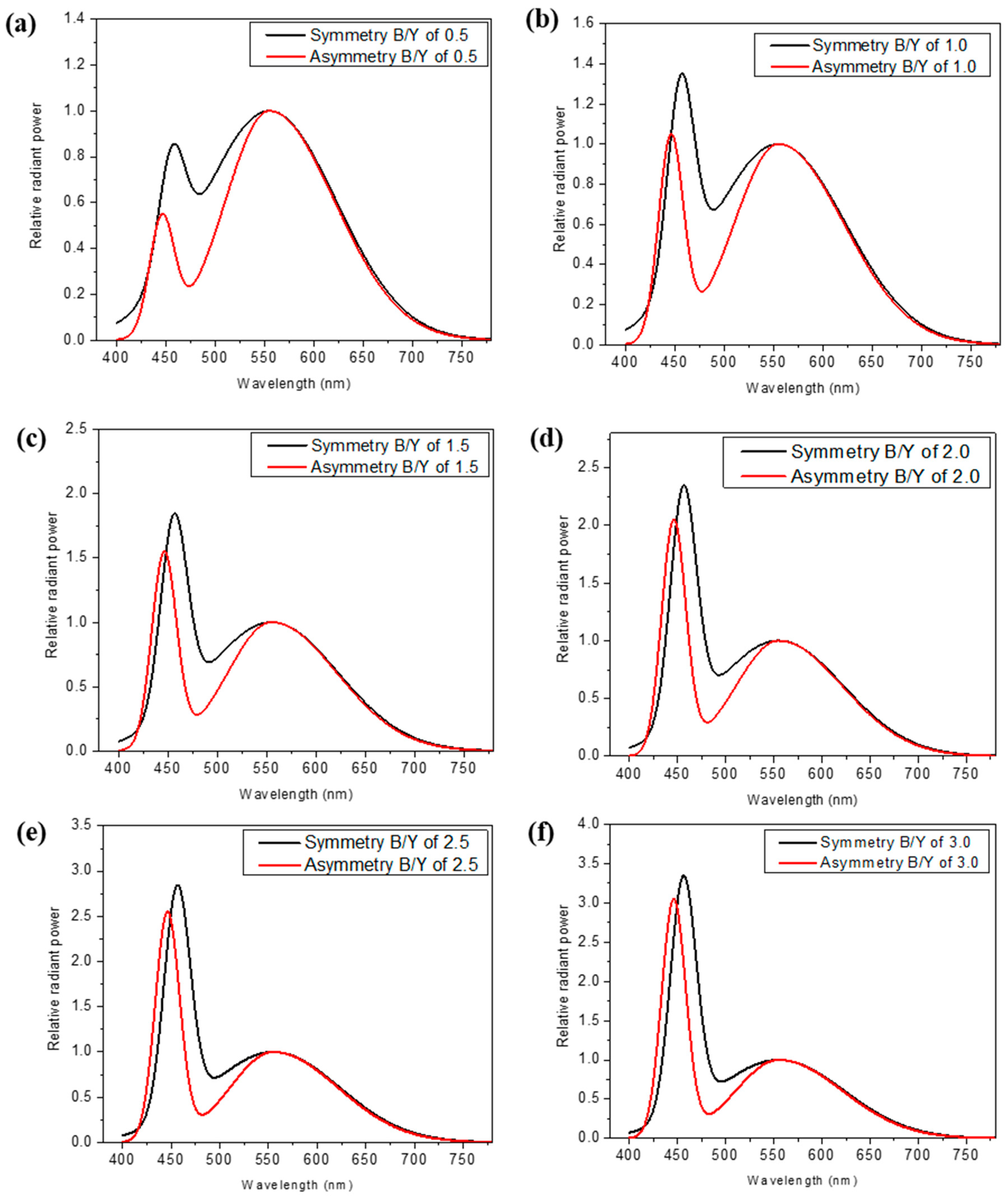
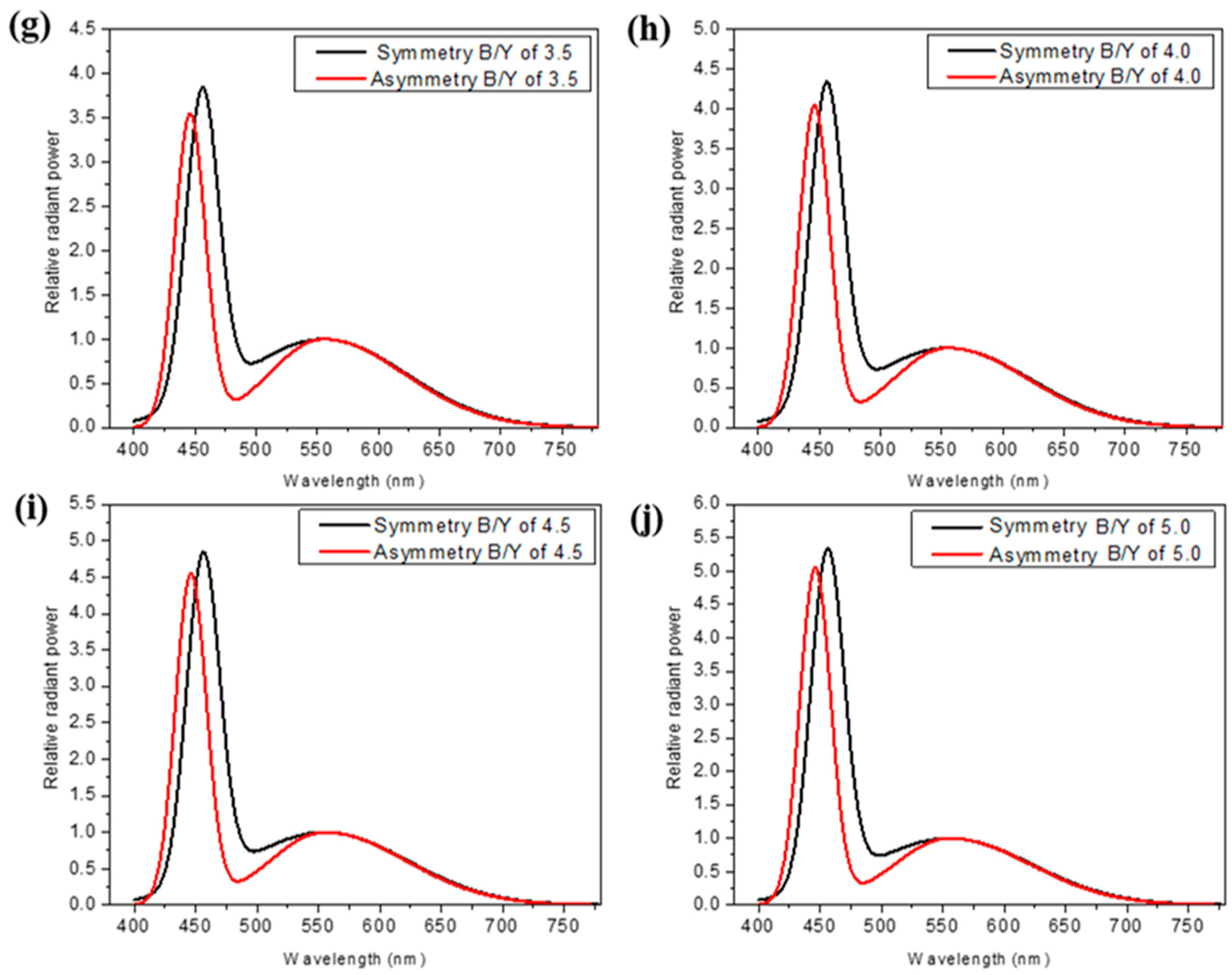
The successful development of the spectral irradiant modeling is confirmed. Based on the built model, different spectral irradiances of white light, corresponding to different power ratios of blue and yellow (B/Y) light, are simulated. A comparison of spectral irradiance spectra of white light with the symmetry and asymmetry of the yellow emission band at different blue/yellow (B/Y) power ratios is shown in Figure 4. Qualitatively, the main difference is the emission band in the blue light spectral range (400–500 nm).

Figure 4.
Comparison of spectral irradiance spectrum of white light with asymmetry and asymmetry yellow emission band at different blue/yellow (B/Y) power ratios. (a) Symmetry and Asymmetry cases of B/Y of 0.5. (b) Symmetry and Asymmetry cases of B/Y of 1.0. (c) Symmetry and Asymmetry cases of B/Y of 1.5. (d) Symmetry and Asymmetry cases of B/Y of 2.0. (e) Symmetry and Asymmetry cases of B/Y of 2.5. (f) Symmetry and Asymmetry cases of B/Y of 3.0. (g) Symmetry and Asymmetry cases of B/Y of 3.5. (h) Symmetry and Asymmetry cases of B/Y of 4.0. (i) Symmetry and Asymmetry cases of B/Y of 4.5. (j) Symmetry and Asymmetry cases of B/Y of 5.0.
4. Extraction of Blue Light Hazard Ratio from Simulated Spectral Irradiant of White Light
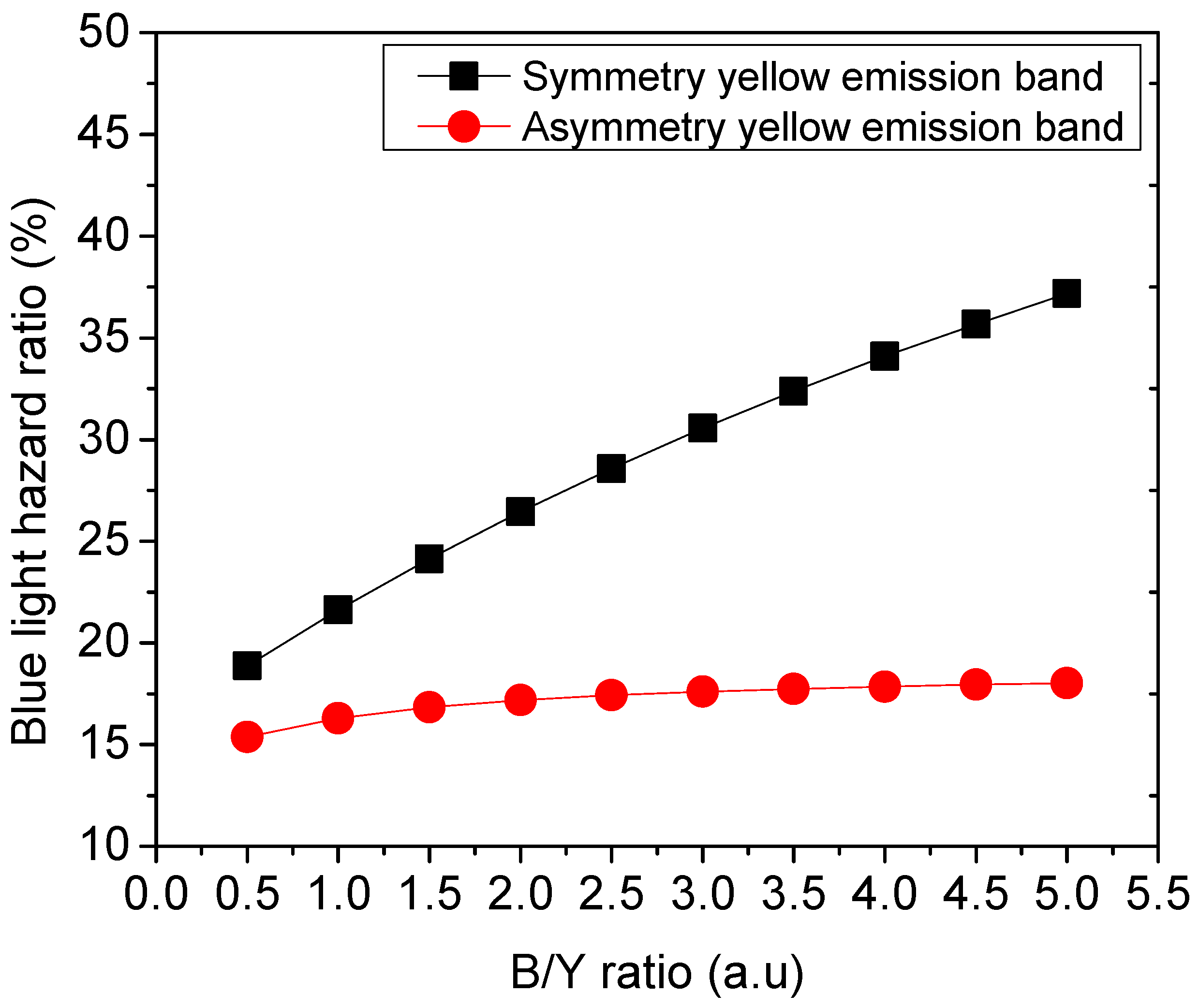
The blue light hazard ratio is calculated with the utilization of Equation (3). For each value of wavelength corresponding to the wavelength interval Δλ, the spectral irradiance YT(λ) is used from the simulated spectral irradiance of the white light spectrum, the blue light hazard function BT(λ) is used from Table 1, and the wavelength interval Δλ is 5 nm, replacing the values in Equation (3). After the calculation process is completed, the value of the blue light hazard ratio of each considered white light spectrum simulation is obtained for further evaluation. For quick processing purposes, the value of Br is calculated using the MATLAB software (version 2017). The unit of Br is in percentage (%). According to this Br calculation process, the Br values for the white light spectrum which have different B/Y power ratios (e.g., 0.5; 1.0; 1.5; 2.0; 2.5; 3.0; 3.5; 4.0; 4.5; 5.0) are calculated. The simulation result of the different blue light hazard ratios of the white light spectrum is shown in Figure 5. The higher the B/Y power ratio is, the higher the blue light hazard ratio is. Interestingly, the behavior of the blue light hazard ratio for the white light spectrum with the symmetry and asymmetry shape of the yellow emission band at different blue/yellow (B/Y) power ratios is significantly different. The case of the white light spectrum with the symmetry of the yellow emission band shows a small increase in Br versus the B/Y power ratios, while the white light spectrum with the asymmetry of the yellow emission band shows a small increase and tends to saturate as the B/Y power ratios increase.
Figure 5.
The blue light hazard ratio of different simulated spectral irradiant of white light.
To further understand the value of the photometric characteristics and the relation between Br and correlated color temperature (CCT), the photometric value of each simulated spectral irradiant of white light is calculated including CCT, color coordinates, and the distance of a light color point from the black body curve (Duv). The algorithm for calculating the photometric characteristics is presented in other published work [26]. The comparison of the photometric value of each spectral irradiance of white light with the symmetry and asymmetry of the yellow emission band at different blue/yellow (B/Y) power ratios is shown in Table 2.
Table 2.
Comparison of photometric value of each spectral irradiance of white light with symmetry and asymmetry of yellow emission band at different blue/yellow (B/Y) power ratios.
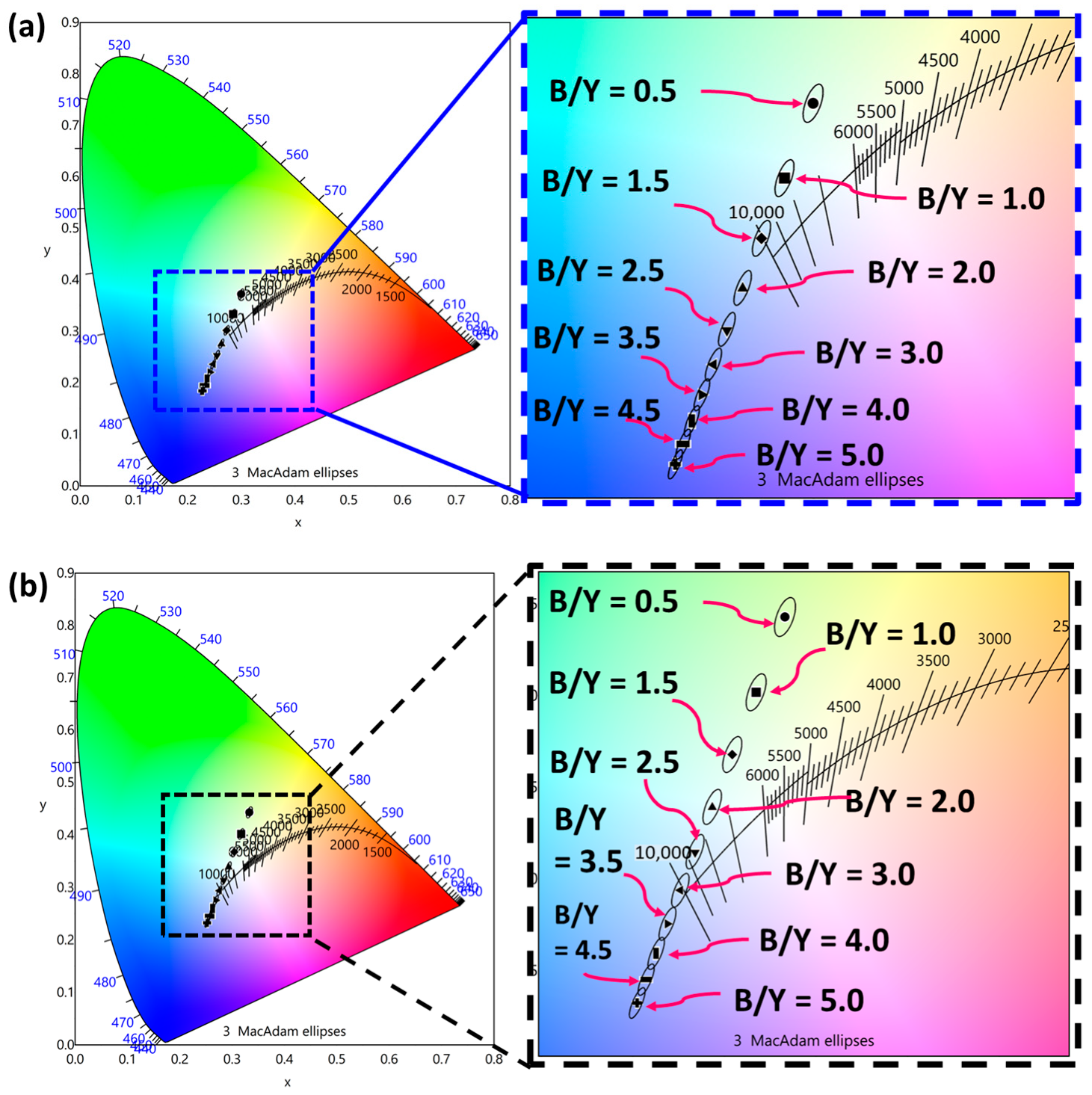
For a better visualization, changes in color coordinates in the color space of each spectral irradiance of white light at different blue/yellow (B/Y) power ratios are shown in Figure 6. Figure 6a shows the change in color coordinates in the color space of each spectral irradiant of white light wherein blue light combined with the symmetry of the yellow emission band at different blue/yellow (B/Y) power ratios. Figure 6b shows the change in color coordinates in the color space of each spectral irradiant of white light, wherein blue light is combined with the asymmetry of the yellow emission band at different blue/yellow (B/Y) power ratios. The result in Figure 6 shows a moving direction to the bluish region of the white light. However, it is noticeable that, at each value of the B/Y power ratios, the color characteristics of the case of the spectral irradiant of the white light with the symmetry of the yellow emission band are much more bluish than that of the case of the spectral irradiant of the white light with the asymmetry of the yellow emission band. The color space contains the label “3 MacAdam ellipses,” indicating that MacAdam ellipses represent regions of imperceptible color differences in the CIE 1931 chromaticity space, and the number “3” indicates three times the average perceptual threshold.
Figure 6.
Change in color coordinates in color space. (a) Case of each spectral irradiance of white light with symmetry of yellow emission band at different blue/yellow (B/Y) power ratios. (b) Case of each spectral irradiance of white light with asymmetry of yellow emission band at different blue/yellow (B/Y) power ratios.
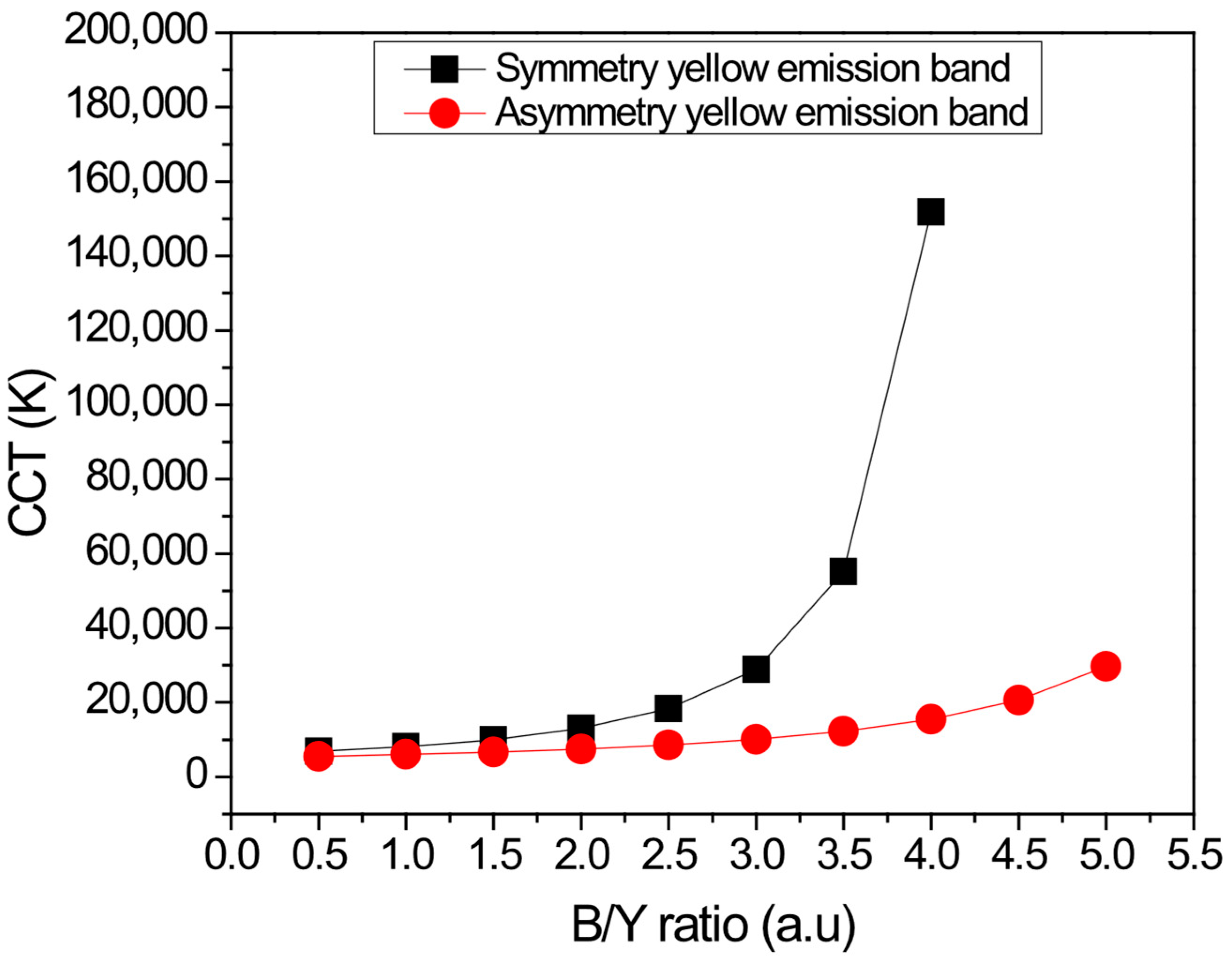
The relation between CCT and B/Y power ratios is shown in Figure 7. The behavior of the CCT value versus the B/Y power ratios is proportional. Higher B/Y power ratios lead to a higher value of CCT. The behavior shows that, at the same B/Y power ratios, the higher value of the CCT of the spectral irradiant of white light is obtained when combining blue light with the type of symmetry of the yellow emission band. For the spectral irradiant of white light which includes blue light and the asymmetry shape of the yellow emission band, the CCT value increases slower than that of the case of combining blue light with the type of symmetry of the yellow emission band.
Figure 7.
Difference in behavior of CCT values vs. B/Y power ratio between spectral irradiant of white light which is generated by a combination of the blue light with the type of symmetry and asymmetry of the yellow emission band.
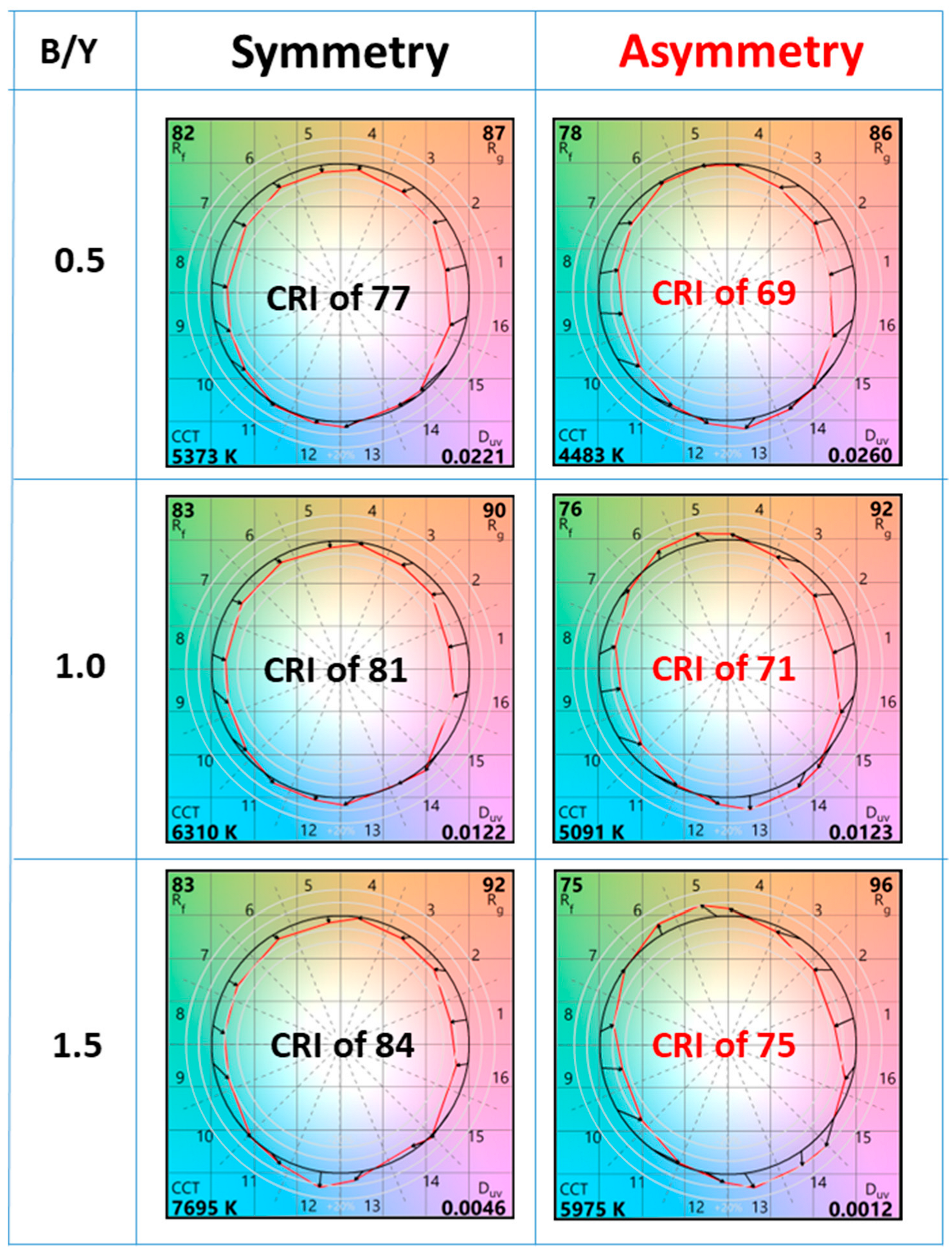
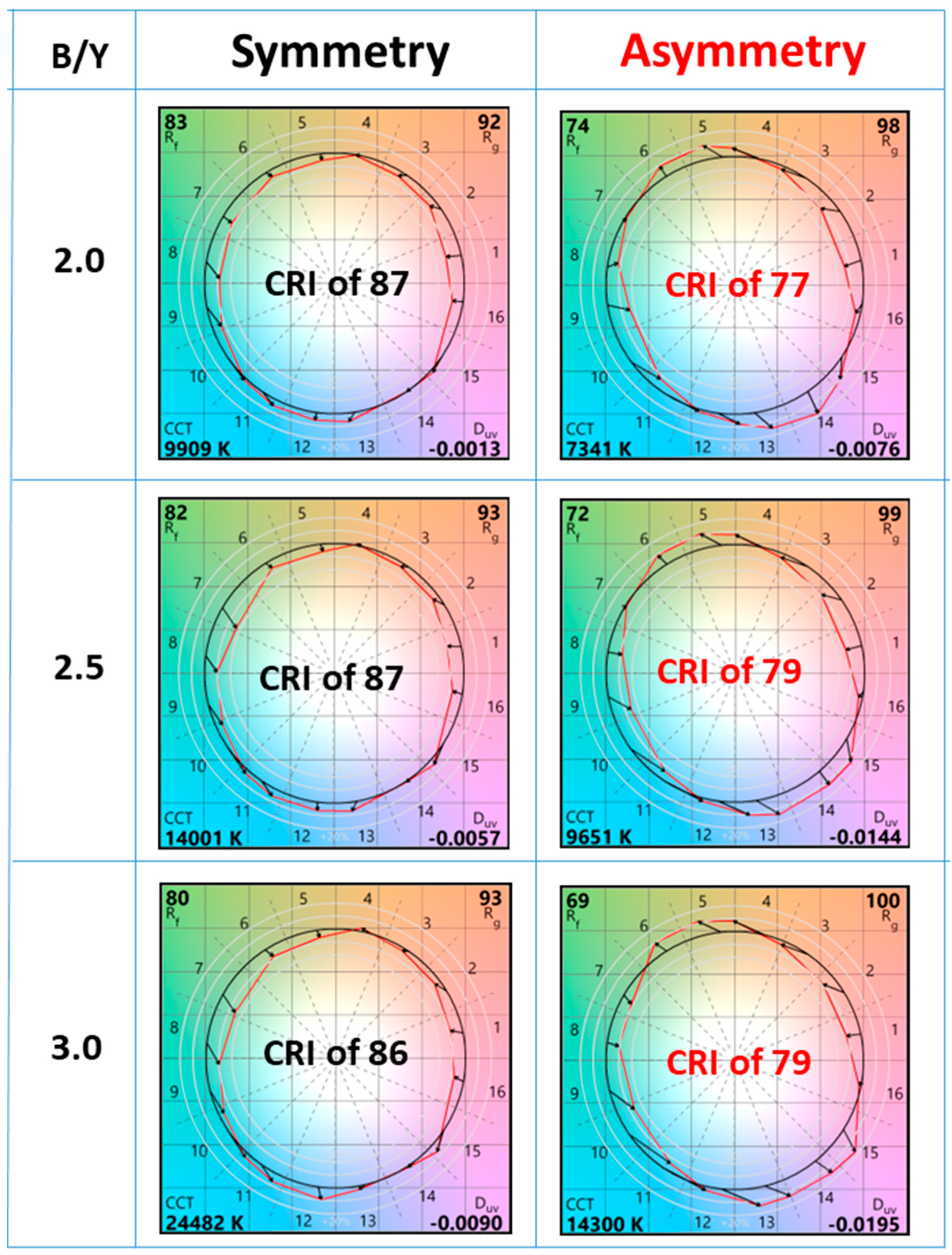
A comparison of the color performance under ANSI/IES TM 30-18 [27] assessment of each spectral irradiance of white light with the symmetry and asymmetry of the yellow emission band at different blue/yellow (B/Y) power ratios is shown in Figure 8. Corresponding to the B/Y power ratios of 0.5, 1.0, 1.5, 2.0, 2.5, and 3.0, the color performances of the spectral irradiance of the white light with the symmetry of the yellow emission band show the CRI values are 77, 81, 84, 87, 87, and 81, respectively. However, for the case of spectral irradiance of the white light with the asymmetry of the yellow emission band, the color performance is poorer. Corresponding to the B/Y power ratios of 0.5, 1.0, 1.5, 2.0, 2.5, and 3.0, the CRI values are 69, 71, 75, 77, 79, and 79, respectively. In addition, the characteristics of the IES TM 30 18 color vector graphics show the distortion of the color vector graphics circular between its corresponding emission and the reference spectrum. The significant distortion discloses the low-fidelity properties of the light emission spectrum of the light source. In the case with the symmetry of the yellow emission band, the distortion of the color vector graphics (CVG) circular is relative clear, and its shape is elliptic rather than a circle shape, as suggested by the word circular. In the case of the asymmetry of the yellow emission band, the distortion of the color vector graphics (CVG) circular is more serious. The distortion of the CVG circular becomes worse as its separation from the reference circular becomes greater. The corresponding CRI is poorer. There was a big difference in color performance for the case of having the symmetry of the yellow emission band compared to the case of having the asymmetry of the yellow emission band.

Figure 8.
Comparison of color performance under IES TM 30-18 assessment of each spectral irradiance of white light with symmetry and asymmetry of yellow emission band at different blue/yellow (B/Y) power ratios.
5. Discussion
In this research, extracting the blue light hazard ratio must be performed with spectral irradiance data. Also, the mathematical equation is presented in a simpler form and is more efficient in simulation. The similarity between the simulated spectrum and experimental spectrum is verified using normalized cross correlation. This is a novelty compared to several LED-related models that already exist [28,29]. The small practical limitation of the model is that, in practice, the spectral characteristics of LED radiation are influenced by factors such as LED junction temperature, phosphor aging, and changes in phosphor properties over time that are assumed not to be significant. Since the potential health and well-being aspects related to blue-light exposure are in progress intensively, the obtained results may have practical significance for designing human-centric lighting. The efficient calculation of the blue light hazard ratios is meaningful in practical applications since the obtained results have applicability for the design of white LED sources or lighting systems. The recommended range of B/Y values that ensures an optimal compromise between photobiological safety and the color quality of the emitted light can be less than 1.5 (for the case of symmetry) or less than 2.0 (for the case of asymmetry). The application of the model to other types of phosphors, LED configurations, or the experimental validation of simulated results is promising and is a subject for future work.
6. Conclusions
In summary, we have developed an efficient model for evaluating the blue light hazard of white light-emitting diodes using MATLAB software. For that purpose, the accuracy of optical modeling for the blue and yellow emission bands is established. Spectrum modeling of the spectral irradiant of the white light including blue and yellow light (types of symmetry and asymmetry of the yellow emission band) is developed. The similarity between the simulation and experimental spectrum is verified by the normalized cross-correlation (NCC) algorithm. The high values of NCC (99.55% and 99.77%) indicated that the spectral irradiant modeling is trustable. After finishing the development of the spectral irradiant modeling of white light at different color temperature (CCT) values, the blue hazard ratios for the spectral irradiant of the white light spectrum is calculated correspondingly.
The result of the blue light hazard ratio of different simulation spectral irradiances of white light (corresponding to the B/Y power ratios of 0.5; 1.0; 1.5; 2.0; 2.5; 3.0; 3.5; 4.0; 4.5; 5.0) showed that the higher values of the B/Y power ratios is, the higher the percentage of the blue light hazard ratio is. The range of B/Y values that can be less than 1.5 (for the case of symmetry) or less than 2.0 (for the case of asymmetry) can be used as a recommendation in ensuring an optimal compromise between photobiological safety and the color quality of the emitted light. The behavior of the blue light hazard ratio for the spectral irradiance of the white light spectrum with the symmetry and asymmetry of the yellow emission bands at different blue/yellow (B/Y) power ratios is significantly different. The spectral irradiance of the white light with the symmetry of the yellow emission band shows a small increase in Br versus the B/Y power ratios, while the spectral irradiant of the white light spectrum with the asymmetry of the yellow emission band shows a small increase and tends to saturate as the B/Y power ratios increase.
The change in color coordinates in the color space of each spectral irradiance of white light wherein blue light is combined with a yellow emission band showed a moving direction toward the bluish region of the color space as the blue/yellow (B/Y) power ratios increase.
However, it is noticeable that, at each equal value of B/Y power ratios, the color characteristics of the spectral irradiance of the white light with the symmetry shape of the yellow emission band are much more bluish than those of the case of the spectral irradiance of the white light with the asymmetry shape of the yellow emission band.
Author Contributions
Conceptualization, Q.-K.N.; methodology, Q.-K.N. and Q.-C.N.; formal analysis, Q.-K.N. and Q.-C.N.; investigation, Q.-K.N. and Q.-C.N.; data curation, Q.-K.N. and Q.-C.N.; writing—original draft preparation, Q.-K.N.; writing—review and editing, Q.-K.N.; supervision, Q.-K.N.; project administration, Q.-K.N.; funding acquisition, Q.-C.N. All authors have read and agreed to the published version of the manuscript.
Funding
This research is funded by University of Science, VNU-HCM under grant number UM2024-34.
Data Availability Statement
The original contributions presented in this study are included in the article. Further enquiries can be directed to the corresponding author.
Conflicts of Interest
The authors declare no conflicts of interest.
References
- Schubert, E.-F.; Kim, J.-K. Solid-state light sources getting smart. Science 2005, 308, 1274–1278. [Google Scholar] [CrossRef]
- Narendran, N.; Gu, Y. Life of LED-Based White Light Sources. J. Disp. Technol. 2005, 1, 167–171. [Google Scholar] [CrossRef]
- Schubert, E. Light-Emitting Diodes, 2nd ed.; Cambridge University Press: Cambridge, UK, 2006. [Google Scholar]
- Zhang, J.; Guo, W.; Xie, B.; Yu, X.; Luo, X.; Zhang, T.; Yu, Z.; Wang, H.; Jin, X. Blue light hazard optimization for white light-emitting diode sources with high luminous efficacy of radiation and high color rendering index. Opt. Laser Technol. 2017, 94, 193–198. [Google Scholar] [CrossRef]
- Point, S. Blue Light Hazard: Are exposure limit values protective enough for newborn infants? Radioprotection 2018, 53, 219–224. [Google Scholar] [CrossRef]
- Zhang, J.; Xie, B.; Yu, X.; Luo, X.; Zhang, T.; Liu, S.; Yu, Z.; Liu, L.; Jin, X. Blue light hazard performance comparison of phosphor-converted LED sources with red quantum dots and red phosphor. J. Appl. Phys. 2017, 122, 043103. [Google Scholar] [CrossRef]
- Ni, J.; Shen, T.; Ebara, Y.; Koyamada, K.; Kawakami, Y.; Nakamura, Y. Reduction of the blue light hazard by adding a cyan light LED. J. Adv. Sci. Sustain. 2018, 4, 44–63. [Google Scholar] [CrossRef]
- Chai, Y.; Yin, X.; Guo, Z.; Chen, Z.; Wan, C. A novel strategy for suppressing blue light hazards of white light-emitting diodes by using transparent bamboo. J. Lumin. 2025, 277, 120942. [Google Scholar] [CrossRef]
- Nie, J.; Chen, Z.; Jiao, F.; Zhan, J.; Chen, Y.; Chen, Y.; Pan, Z.; Kang, X.; Wang, Y.; Wang, Q.; et al. Low blue light hazard for tunable white light emitting diode with high color fidelity and circadian performances. Opt. Laser Technol. 2021, 135, 106709. [Google Scholar] [CrossRef]
- Zhu, X.; Guo, X.; Zhang, J.; Liu, J.; Jiang, F. Phosphor-free, color-mixed, and efficient illuminant: Multi-chip packaged LEDs for optimizing blue light hazard and non-visual biological effects. Opt. Lasers Eng. 2020, 134, 106174. [Google Scholar] [CrossRef]
- Behar-Cohen, F.; Martinsons, C.; Viénot, F.; Zissis, G.; Barlier-Salsi, A.; Cesarini, J.; Enouf, O.; Garcia, M.; Picaud, S.; Attia, D. Light-emitting diodes (LED) for domestic lighting: Any risks for the eye? Prog. Retin. Eye Res. 2011, 30, 239–257. [Google Scholar] [CrossRef]
- Tosini, G.; Ferguson, I.; Tsubota, K. Effects of blue light on the circadian system and eye physiology. Mol. Vis. 2016, 22, 61–72. [Google Scholar] [CrossRef]
- Margrain, T.H.; Boulton, M.; Marshall, J.; Sliney, D.H. Do blue light filters confer protection against age-related macular degeneration? Prog. Retin. Eye Res. 2004, 23, 523–531. [Google Scholar] [CrossRef]
- Nie, J.; Chen, Z.; Jiao, F.; Zhan, J.; Chen, Y.; Pan, Z.; Deng, C.; Xi, X.; Kang, X.; Wang, Y.; et al. Optimization of the dynamic light source considering human age effect on visual and non-visual performances. Opt. Laser Technol. 2022, 145, 107463. [Google Scholar] [CrossRef]
- Yeh, W.-J.; Chien, P.-T.; Wen, Y.-T.; Wu, C.-H. A comprehensive review of experimental models for investigating blue light-induced ocular damage: Insights into parameters, limitations, and new opportunities. Exp. Eye Res. 2024, 249, 110142. [Google Scholar] [CrossRef]
- Lu, J.H.; Jiang, B.H.; Hsiao, F.C.; Peng, Y.-C.; Su, Y.-W.; Lin, Y.-R.; Tsai, T.-H.; Shiu, M.-N.; Lin, C.-Y.; Fang, Y.-T.; et al. High-Performance organic photodiodes for Blue-Light hazard detection. Chem. Eng. J. 2022, 437, 135327. [Google Scholar]
- Tang, W.; Liu, J.G.; Shen, C. Blue Light Hazard Optimization for High Quality White LEDs. IEEE Photonics J. 2018, 10, 1–10. [Google Scholar]
- Price, R.B.; Labrie, D.; Sullivan, B.; Sliney, D.H. The potential ‘blue light hazard’ from LED headlamps. J. Dent. 2022, 125, 104226. [Google Scholar] [CrossRef] [PubMed]
- Bauer, S. Blue-Light Hazard of Light-Emitting Diodes Assessed with Gaussian Functions. Int. J. Environ. Res. Public Health 2021, 18, 680. [Google Scholar] [CrossRef]
- Nguyen, Q.-K. Emission spectrum modeling of white LEDs light source with using Gaussian function. Photonics Lett. Pol. 2023, 15, 54–56. [Google Scholar] [CrossRef]
- Vo, T.-M.-L.; Tran, T.-N.; Nguyen, T.-K.; Nguyen, T.-H.; Pham, T.-Y.-N.; Huynh, T.-B.; Pham, L.-M.-K.T.D.-K.; Nguyen, Q.-C.; Nguyen, Q.-K. Development of an efficient optical model for leds-based white light spectrum design applications. J. Innov. Bus. Ind. 2024, 2, 185–192. [Google Scholar] [CrossRef]
- Smick, K.; Villette, T.; Boulton, M.E.; Brainard, G.C.; Jones, W.; Karpecki, O.; Melton, R.; Thomas, R. Blue Light Hazard: New Knowledge, New Approaches to Maintaining Ocular Health; Report of a roundtable sponsored by Essilor of America; Essilor: Charenton-le-Pont, France, 2013. [Google Scholar]
- Nguyen, H.-T.-A.; Huynh, V.-T.; Nguyen, Q.-C.; Nguyen, Q.-K. High-accuracy emission modeling of yellow phosphor YAG: Ce validated by normalized cross-correlation. Photonics Lett. Pol. 2024, 16, 31–33. [Google Scholar]
- EN 62471:2008; Photobiological Safety of Lamps and Lamp Systems. International Electrotechnical Commission (IEC): Geneva, Switzerland, 2008.
- Sun, C.-C.; Lee, T.-X.; Ma, S.-H.; Lee, Y.-L.; Huang, S.-M. Precise optical modeling for LED lighting verified by cross correlation in the midfield region. Opt. Lett. 2006, 31, 2193–2195. [Google Scholar] [CrossRef] [PubMed]
- Nguyen, H.-T.-A.; Nguyen, Q.-K. Design, optimization, and photometric analysis of white light spectrum generated by RGB LEDs using MATLAB. Photonics Lett. Pol. 2024, 16, 90–92. [Google Scholar] [CrossRef]
- ANSI/TM-30-18; IES Method for Evaluating Light Source Color Rendition. Illuminating Engineering Society: New York, NY, USA, 2018.
- Wu, P.; Ju, J.; Yao, Q. Luminous and Melanopic Efficiency Performance of Phosphor-Converted LEDs with Tunable Spectral Characteristics. Appl. Sci. 2020, 10, 6198. [Google Scholar] [CrossRef]
- Françon, A.; Behar-Cohen, F.; Torriglia, A. The blue light hazard and its use on the evaluation of photochemical risk for domestic lighting. An in vivo study. Environ. Int. 2024, 184, 108471. [Google Scholar] [CrossRef]
Disclaimer/Publisher’s Note: The statements, opinions and data contained in all publications are solely those of the individual author(s) and contributor(s) and not of MDPI and/or the editor(s). MDPI and/or the editor(s) disclaim responsibility for any injury to people or property resulting from any ideas, methods, instructions or products referred to in the content. |
© 2025 by the authors. Licensee MDPI, Basel, Switzerland. This article is an open access article distributed under the terms and conditions of the Creative Commons Attribution (CC BY) license (https://creativecommons.org/licenses/by/4.0/).