


Abstract
To explore new possibilities in topological materials, we designed a tetrafunctional crosslinker composed of a [c2]daisy-chain rotaxane framework. In this study, a novel topological network polymer was successfully synthesized via an addition reaction between 3,6-dioxa-1,8-octanedithiol (DODT) and a tetrafunctional crosslinker, a [c2]daisy-chain rotaxane constructed from dibenzo-24-crown-8 ether (DB24C8) units and bearing long-chain alkenes on its four benzene rings. The resulting network polymer exhibited both high stiffness and toughness, along with excellent shape-memory properties. These characteristics were governed by a balance between plastic and elastic deformation originating from the DODT and rotaxane domains, respectively, highlighting a new design strategy for the creation of advanced topological materials.
1. Introduction
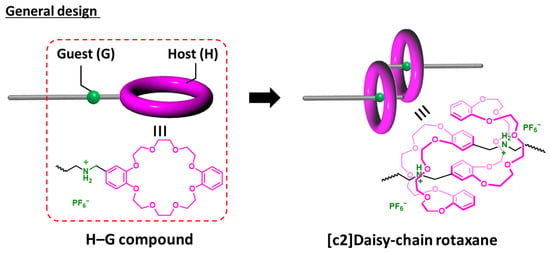
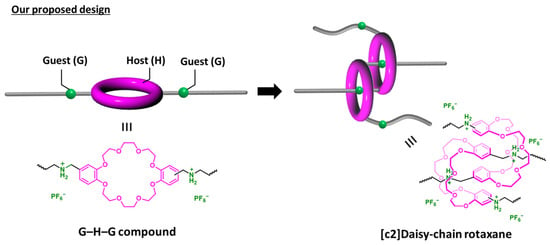
Since the 1990s, numerous studies have been reported on the synthesis of rotaxanes, and since the 2000s, increasing attention has been directed toward their physical properties and potential applications. Among these studies, [c2]daisy-chain rotaxanes stand out as supramolecular compounds with distinctive structural features [1,2,3,4,5,6,7,8,9,10,11,12,13,14,15]. Research has not only focused on their synthesis but also explored applications that take advantage of their unique architecture. The [c2]daisy-chain rotaxane is a highly symmetric interlocked molecule composed of two molecular units; however, when viewed as a single molecular, it is structurally asymmetric. This single molecule consists of a cyclic component and a complementary linear component captured within the ring, forming an integrated host–guest (H–G) compound (Figure 1).
Figure 1.
General design of an H–G compound for [c2]daisy-chain rotaxane composed of 24-crown-8 ether and secondary ammonium salt units.
The [c2]daisy-chain rotaxane is a supramolecular structure in which two H–G compounds are mechanically interlocked by mutual penetration of their host and guest components, such that the guest of each compound is threaded through the host of the other. It is also characterized by the presence of two cyclic units facing each other at a fixed distance, which can change in response to external stimuli. The host component of the H–G compound is typically a cyclodextrin or a 24-membered crown ether. The former has been used to synthesize hydrophilic [c2]daisy-chain rotaxanes, while the latter has been employed for hydrophobic variants. To date, approximately 200 research articles have reported on these systems.
In recent years, there has been a growing body of research on polymer materials based on [c2]daisy-chain rotaxanes incorporating 24-membered dibenzo-crown ether or cyclodextrin as the host component [16,17,18,19,20,21,22,23,24,25,26,27,28,29]. For example, Qu et al. reported the synthesis of a three-dimensional network polymer via an addition reaction between a dialkene bearing a [c2]daisy-chain rotaxane unit—composed of dibenzo-24-crown-8 ether (DB24C8) and a secondary ammonium salt in close proximity—and a tetrafunctional thiol [26]. The resulting polymer exhibited high rigidity due to its dense network structure, while also demonstrating shape-memory behavior as a result of its ability to undergo substantial plastic deformation upon heating. Lin et al. successfully developed a polyurethane elastomer by covalently incorporating blue-emitting tetraphenylethylene (TPE) and mechano-fluorophoric yellow-orange-emitting rhodamine derivatives into a [c2]daisy-chain rotaxane framework [27]. By mechanically modulating the distance between the host dibenzo-24-crown-8 (DB24C8) units, they induced Förster resonance energy transfer (FRET) from TPE to the rhodamine derivatives. The resulting film exhibited different fluorescence colors depending on the degree of mechanical strain, shifting from blue to green upon elongation. By controlling the distance between the two host molecules within the [c2]daisy-chain rotaxane through external stimuli, it has become possible to impart unique functions, such as shape-memory and fluorescence properties, to polymer materials.
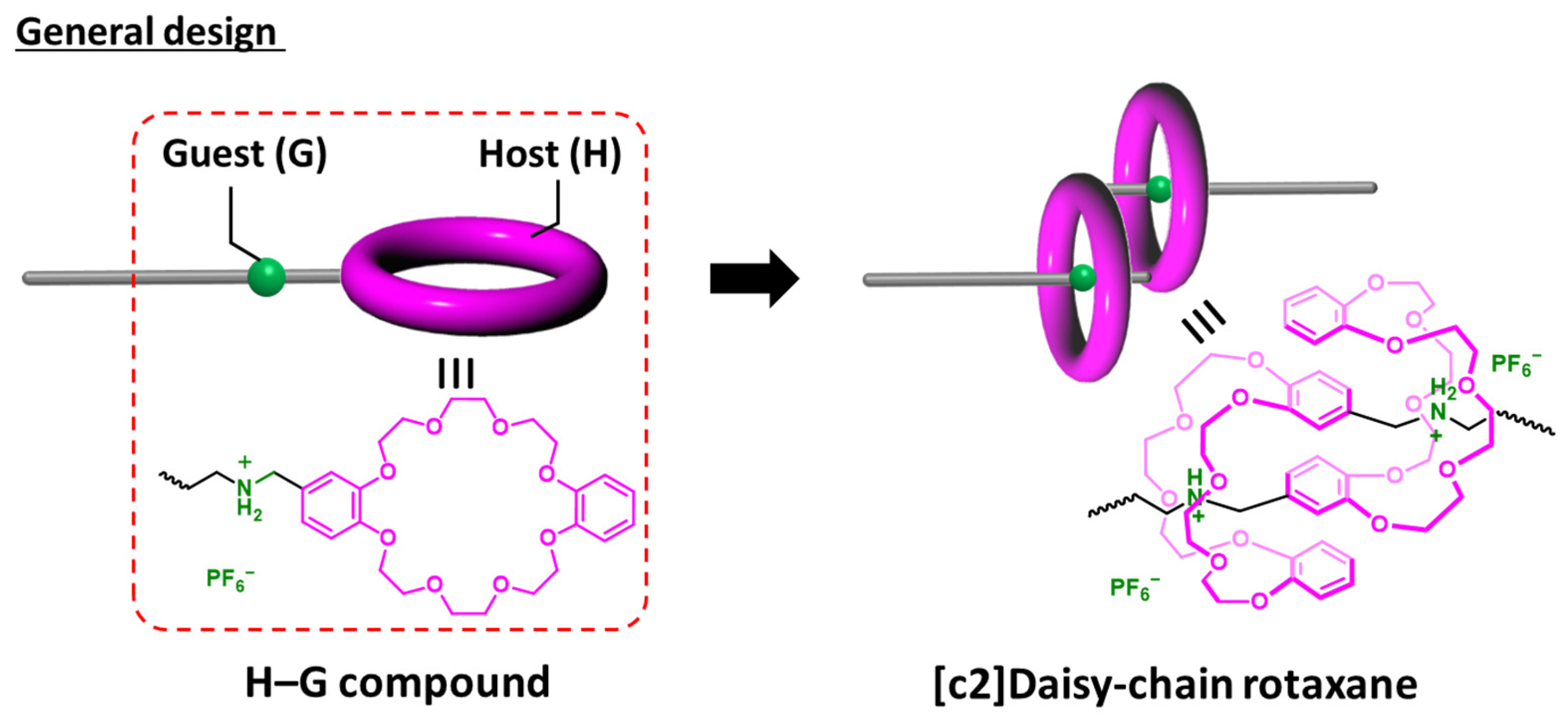
We have previously reported syntheses of [c2]daisy-chain rotaxane polymers covalently incorporating DB24C8 units as the host components (Scheme 1) [30,31].
Scheme 1.
One-pot syntheses of poly ([c2]daisy-chain rotaxane) and its network via a thiol–ene reaction (our previous work).
In those studies, we synthesized a dialkenyl compound with a [c2]daisy-chain rotaxane structure by using an H–G compound in which a secondary ammonium salt bearing a long-chain alkene at its terminus was covalently introduced onto one of the benzene rings of DB24C8. We then investigated the synthesis and properties of topological polymers through addition reactions with bi- or tetrafunctional thiol compounds. In particular, the network polymer obtained via the addition reaction with a tetrafunctional thiol exhibited high toughness and excellent compressive properties. Furthermore, this network polymer proved effective when applied as a polymer gel electrolyte, demonstrating high ionic conductivity even with a reduced amount of retained electrolyte. These results suggest that the migration of metal ions was facilitated by reversibly changing the distance between the facing macrocycles within the [c2]daisy-chain rotaxane. Thus, topological materials such as [c2]daisy-chain rotaxanes are expected to find applications in a wide range of fields, including material recycling, artificial muscles, and energy devices, owing to their ability to undergo dramatic changes in physical properties in response to external stimuli. However, the synthesis of such attractive materials is not straightforward and typically requires multiple reaction steps. Developing more efficient methods for synthesizing topological polymers composed of highly functional [c2]daisy-chain rotaxanes would be highly valuable in terms of expanding the diversity and practical utility of these materials.
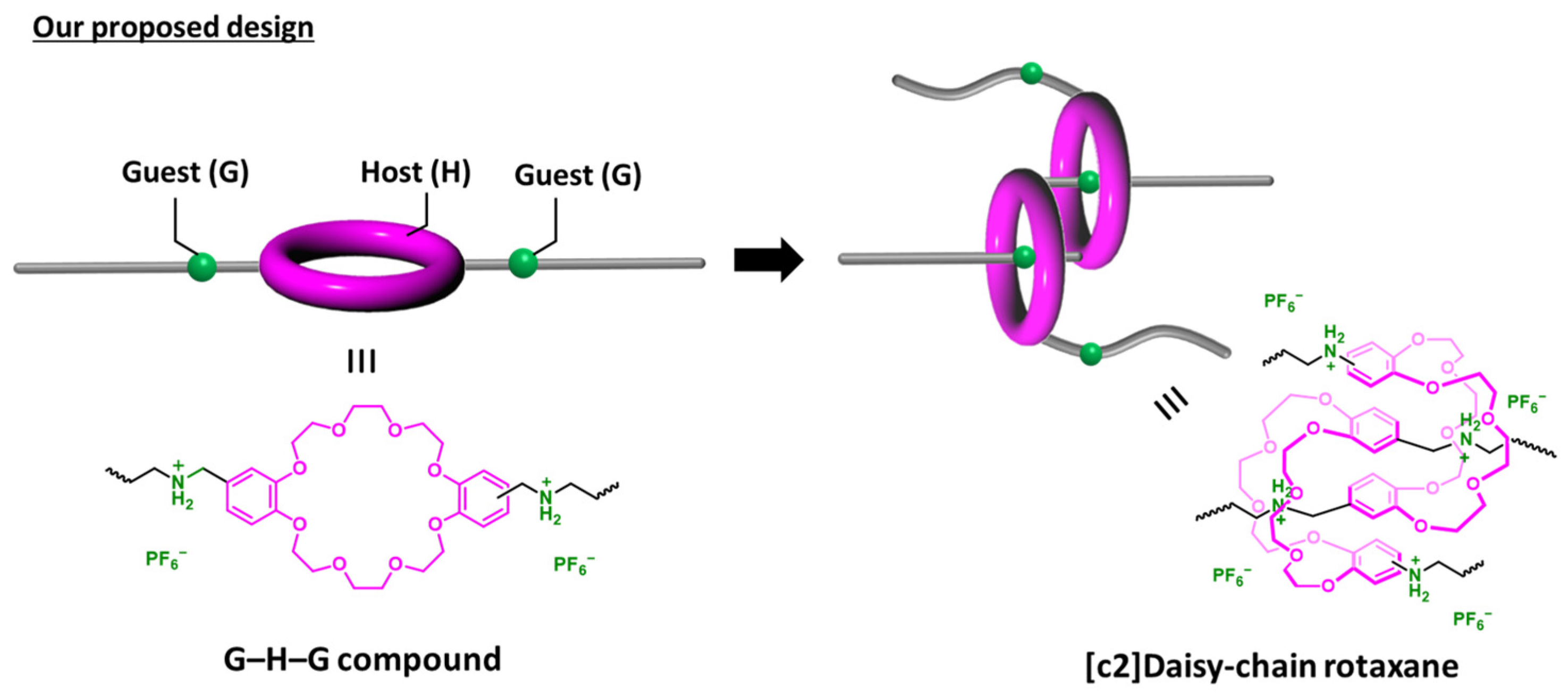
Therefore, we propose a simplified synthetic strategy for [c2]daisy-chain rotaxanes. As a new design, we have developed a G–H–G compound by covalently introducing an additional Guest unit to the H–G compound (Figure 2).
Figure 2.
New design of a G–H–G compound for the construction of a [c2]daisy-chain rotaxane composed of 24-crown-8 ether and secondary ammonium salt units.
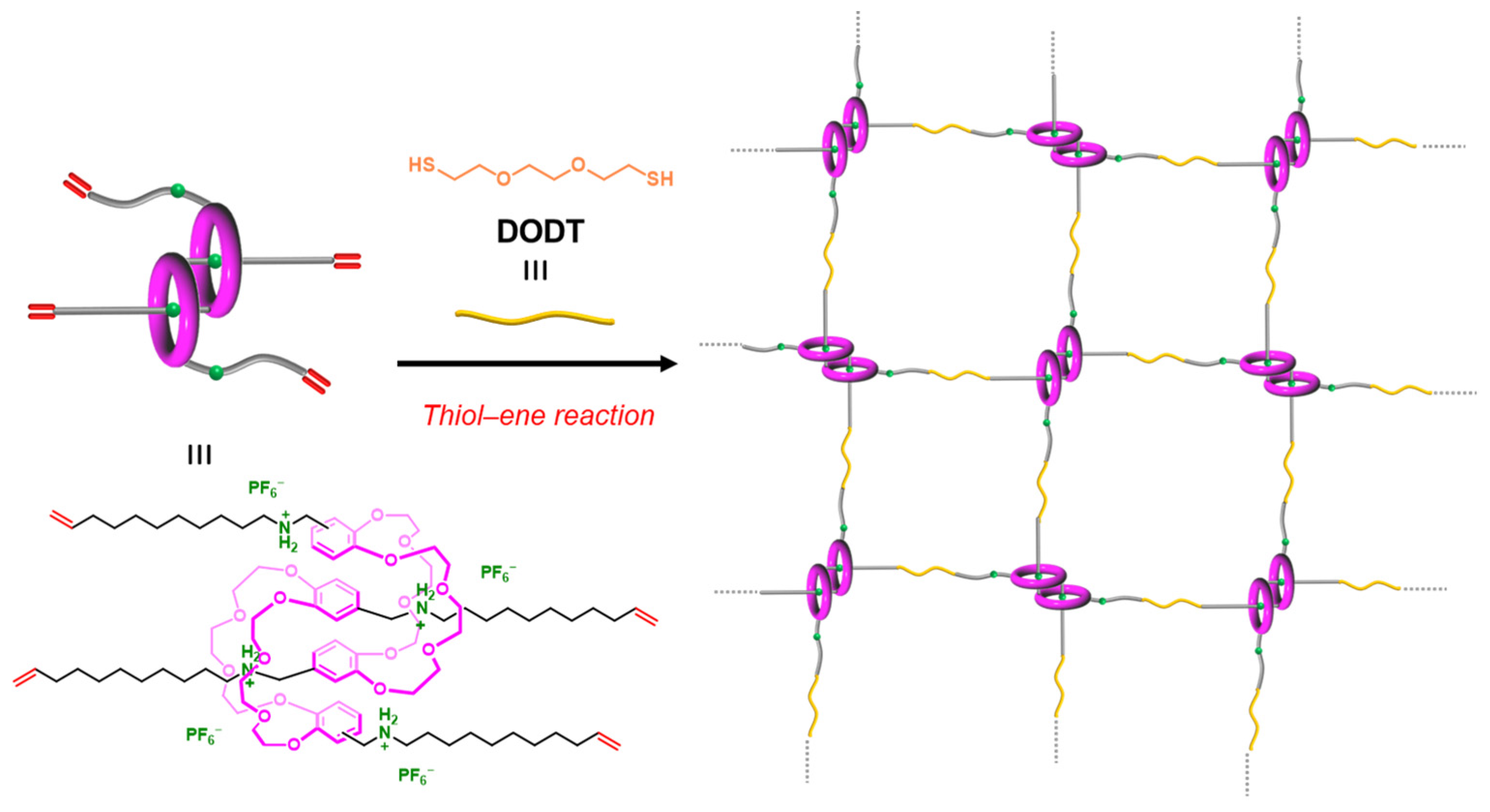
Specifically, we designed a symmetric compound in which secondary ammonium salt units bearing terminal alkenes are introduced onto both aromatic rings of DB24C8. In this G–H–G compound, one of the secondary ammonium salt units participates in complexation with DB24C8 to form a [c2]daisy-chain rotaxane, while the other unit remains unbound. As a result, a reversibly associating tetra-alkenyl compound was readily obtained. Furthermore, this tetrafunctional compound served as a crosslinker and enabled the construction of a stretchable topological network through a radical-mediated addition reaction (thiol–ene reaction) with a difunctional thiol. Based on the molecular design described above, this paper details the synthesis of a tetra-alkenyl compound featuring a [c2]daisy-chain rotaxane structure (referred to as a [c2]daisy-chain rotaxane crosslinker), as well as the construction of a topological network polymer via a thiol–ene reaction (Scheme 2).
Scheme 2.
One-pot synthesis of a [c2]daisy-chain rotaxane network via a thiol–ene reaction using a G–H–G compound and a dithiol (this work).
2. Experimental Section
2.1. Materials and Instruments
Unless otherwise stated, reagent-grade solvents and commercially available chemicals were used as received. Analytical thin-layer chromatography was carried out using MERCK 60 F254 plates (Darmstadt, Germany), and column chromatography was performed using MERCK 60 (0.063–0.200 mm) as silica gel (Darmstadt, Germany). NMR spectra (1H at 500 MHz; 13C at 270 MHz) were acquired on a JEOL JNM-ECA500 (Tokyo, Japan) spectrometer using CDCl3, CD3CN, DMSO-d6, with tetramethylsilane (TMS) as an internal reference. Accurate mass measurements with electrospray ionization time-of-flight (ESI-TOF) mass were performed using a Waters Xevo (TM) G2-XS QTof (Milford, MA, USA). FT-IR spectra were recorded on a JASCO FTIR-6600 (Tokyo, Japan), and glass transition temperatures (Tg) were determined by Hitachi High-Tech Science DSC 7020 (Tokyo, Japan). Tensile and compression tests were conducted using an A&D Company MCT-1150 (Tokyo, Japan).
2.2. Syntheses
2.2.1. Syntheses of DFB24C8 (See Scheme S1)
A 500 mL round-bottom flask was charged with dibenzo-24-crown-8 ether (2.01 g, 4.47 mmol) and hexamethylenetetramine (HMTA) (3.77 g, 26.9 mmol), which were dissolved in trifluoroacetic acid (TFA, 40 mL). The resulting solution was refluxed at 60 °C for 20 h, after which water (30 mL) was added and the mixture was stirred for an additional hour. The reaction mixture was then diluted with CH2Cl2 and washed three times with water. The organic layer was dried over anhydrous MgSO4 and concentrated. The residue was washed with methanol to afford DFB24C8 as a brown solid (2.00 g, 88.5% yield).
1H NMR (CDCl3) δ (ppm from TMS): 9.82–9.80 (s, 2H, Ph-OCH), 7.43–7.40 (d, 2H, Ph), 7.38–7.36 (s, 2H, Ph), 6.93–6.90 (d, 2H, Ph), 4.23–3.84 (m, 24H, -CH2CH2-O-). (See Figure S1)
2.2.2. Syntheses of G–H–G Compound (See Scheme S1)
DFB24C8 (2.00 g, 3.97 mmol) and 10-undecene-1-amine (2.15 g, 10.8 mmol) were dissolved in a mixed solvent of methanol (170 mL) and CH2Cl2 (30 mL), and the solution was stirred at 25 °C for 4 h to afford the imine intermediate (crude yield: 4.28 g). The crude imine compound was dissolved in methanol (50 mL), and NaBH4 (0.501 g, 13.2 mmol) was added under ice-bath conditions with stirring. After stirring at 25 °C for 4 h, the reaction mixture was diluted with CH2Cl2 and washed with water. The organic layer was dried over anhydrous MgSO4 and concentrated to afford the corresponding amine as a brown viscous liquid (crude yield: 3.57 g). The reduced amine compound was dissolved in methanol (50 mL), and 1 M aqueous HCl was added dropwise until the solution became acidic (ca. pH 2). The mixture was stirred at room temperature for 1 h, followed by the addition of a saturated aqueous solution of KPF6 (2.08 g, 11.3 mmol), and stirring was continued for another hour. The reaction mixture was then diluted with CH2Cl2 and washed with water. After drying the organic layer over anhydrous MgSO4 and concentrating, the target G–H–G compound was obtained as a brown solid (3.43 g, 78.4% yield).
1H NMR (DMSO-d6) δ (ppm from TMS): 7.12–6.96 (m, 6H, Ph), 5.83–5.72 (m, 2H, CH2=CH-CH2-), 5.02–4.90 (q, 4H, CH2=CH-CH2-), 4.16–3.60 (m, 24H, -CH2CH2O-), 4.08–4.03 (s, 4H, -Ph-CH2-NH2+-), 2.91–2.84 (t, 4H, -Ph-CH2-NH2+-CH2-), 2.03–1.97 (q, 4H, CH2=CH-(CH2)7-CH2-), 1.63–1.57 (m, 4H, CH2=CH-CH2-), 1.39–1.29 (m, 4H, CH2=CH-CH2-CH2-), 1.29–1.21 (m, 20H, CH2=CH-CH2-CH2-(CH2)5-).
13C NMR (270 MHz, DMSO-d6) δ (ppm from TMS): 148.86, 148.16, 139.07, 124.55, 123.15, 115.45, 114.75, 113.47, 70.50, 69.02, 49.82, 46.30, 33.35, 28.72, 26.11, 25.48 (see Figure S2)
The IR was shown in Figure S3. ESI-TOF-MS: m/z calculated for C48H72N2O8Na [M + Na]+ 833.57; found [M + Na]+ 833.5652.
2.2.3. Syntheses of [c2]Daisy-Chain Rotaxane Network (Thin Film)
A CH3CN solution (1.0 × 10⁻¹ M) of the G–H–G compound (0.110 g, 0.100 mmol) was prepared and mixed with 2 equivalents of 3,6-dioxa-1,8-octanedithiol (DODT) (18.2 mg, 0.100 mmol) and a small amount of benzophenone. The mixture was cast onto a glass substrate and irradiated with UV light (LED, 365 nm) for 30 min. The UV-cured sample was washed with methanol to completely remove any unreacted components, and further drying yielded a yellowish-brown resin in the form of a film was obtained as the [c2]daisy-chain rotaxane network. The IR was shown in Figure S4.
2.3. Measurements
2.3.1. Swelling Test
A test specimen (0.1 g), prepared according to Section 2.2.3, was immersed in a sample vial containing 5 mL of distilled water (H2O) or one of various organic solvents—dimethylformamide (DMF), acetonitrile (CH3CN), methanol (MeOH), dichloromethane (CH2Cl2), or tetrahydrofuran (THF). After standing for 12 h, the weight gain of the film was measured. The degree of swelling was calculated using the following equation.
Swelling degree(%) = [(Weight of swelling gel − Weight of dry gel)/(Weight of dry gel)] × 100
2.3.2. Compression Test
The test specimens were prepared by curing and drying the reaction mixture (CH3CN solution) in a silicone mold with a 10 mm diameter and 3 mm thickness. After being washed with MeOH and dried, the samples (approximately 10 mm in diameter and 2.5 mm thick) were subjected to compression testing at 25 °C, with a maximum load capacity of 500 N and a compression speed of 10 mm/min.
2.3.3. Tensile Test
The test specimens were prepared according to Section 2.2.3. The resulting film-like samples (thickness: approximately 230 μm) were cut into final test specimens with dimensions of 25 mm in length and 5 mm in width. Tensile tests were carried out at 25 °C with a gauge length of 10 mm and a tensile speed of 5 mm/min.
3. Results and Discussion
3.1. Synthesis of G–H–G Compound
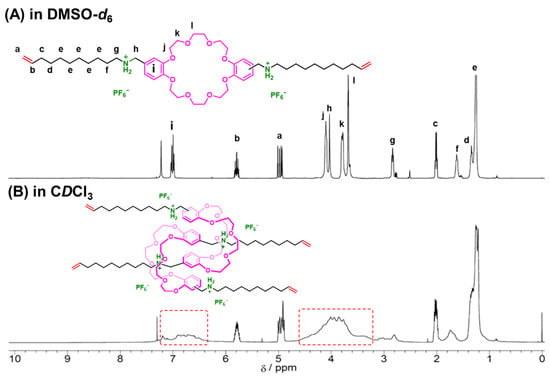
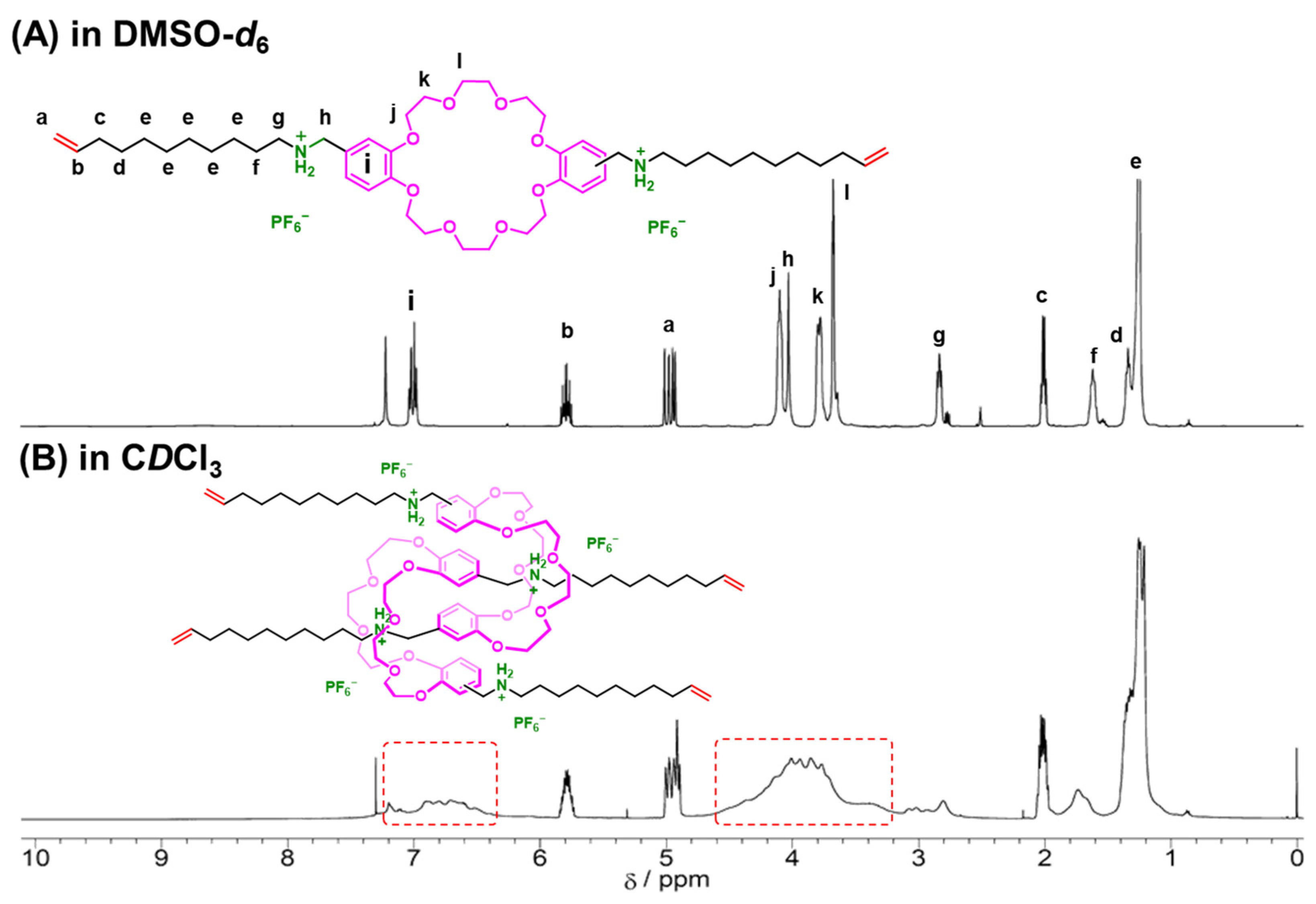
First, the [c2]daisy-chain rotaxane crosslinker was synthesized. Starting from DB24C8, the G–H–G compound was readily obtained through the following steps: (1) formylation, (2) imine formation with undecenylamine, (3) reduction with NaBH4 to yield the corresponding amine, and (4) formation of a secondary ammonium salt using KPF6 (Scheme S1). In the case of conventional H–G compounds using unmodified DB24C8, it is necessary to introduce a secondary ammonium salt unit selectively onto only one of the two benzene rings when starting from DB24C8. This significantly increases the synthetic difficulty due to challenges in regioselectivity and low yields. To impart selectivity to DB24C8, it is generally required to introduce a functional group onto one of the benzene rings during the macrocyclization step, which complicates and prolongs the synthetic process of the H–G compound. In contrast, the G–H–G compound requires only the introduction of identical molecular units onto both benzene rings of DB24C8, which not only leads to a higher synthetic yield but also results in simpler chemical shifts in the NMR spectrum, facilitating structural analysis. The 1H NMR spectra of the synthesized G–H–G compound are shown in Figure 3. Figure 3A shows the 1H NMR spectrum of the G–H–G compound in DMSO-d6, where sharp and well-resolved peaks with simple chemical shifts were observed. In highly polar solvents such as DMSO, the formation of rotaxanes is suppressed, allowing the spectrum to clearly reflect the intrinsic structure of the G–H–G compound and exhibit highly symmetric chemical shifts. In contrast, the spectrum recorded in CDCl3 (Figure 3B) exhibited noticeable peak broadening. In particular, significant broadening was observed for the proton signals derived from 24-crown 8-ether (ethylene oxide unit) and its adjacent methylene groups, appearing at 3.2–4.6 and 6.4–7.3 ppm. This broadening, along with the appearance of multiplet splitting, is characteristic of the chemical shifts associated with [c2]daisy-chain rotaxanes and suggests the formation of a rotaxane composed of two molecular components, as seen in the H–G compound. Furthermore, the integration value of the methylene protons adjacent to the ammonium group at 2.8 ppm in Figure 3B was reduced by approximately 50%, further suggesting that only one of the two ammonium units in the G–H–G compound is involved in the formation of the [c2]daisy-chain rotaxane with the DB24C8 moiety. These results indicate that rotaxane formation is promoted in low-polarity, aprotic solvents such as chloroform, which is consistent with previous reports on the typical synthesis of rotaxanes involving DB24C8 and secondary ammonium salts. Furthermore, the formation of [c2]daisy-chain rotaxane was also confirmed for the G–H–G compound in acetonitrile (Figure S1).
Figure 3.
1H NMR spectra of G–H–G Compound in (A) DMSO-d6 and (B) CDCl3.
3.2. Preparation of [c2]Daisy-Chain Rotaxane Network Polymer
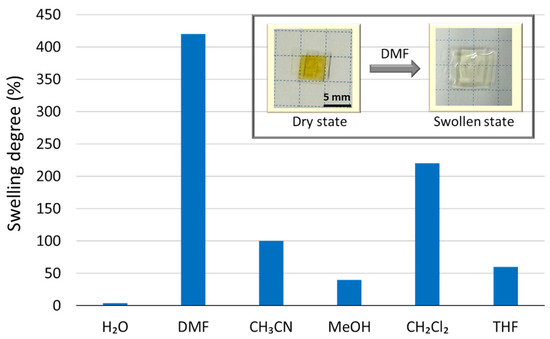
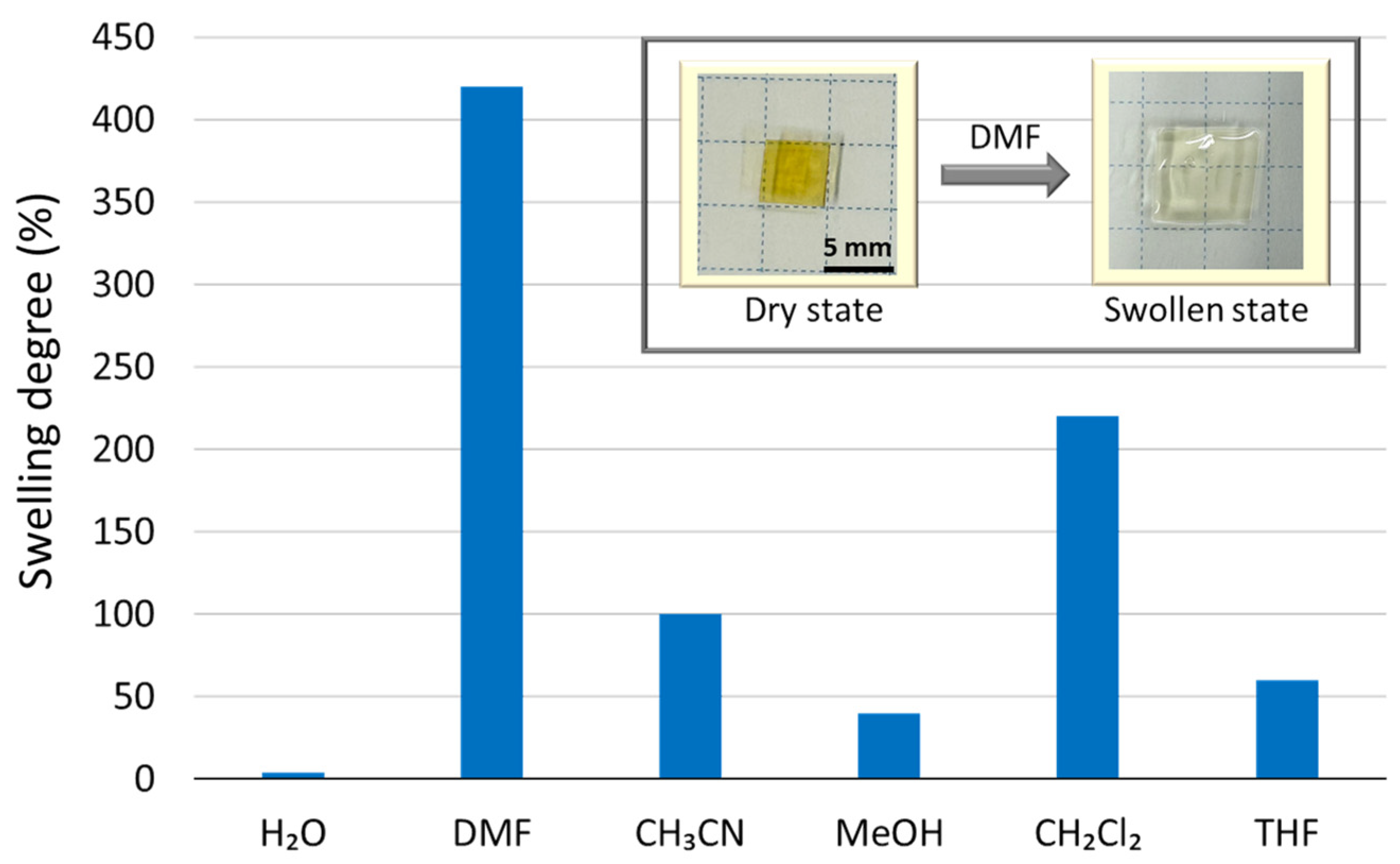
Based on the confirmed formation of the [c2]daisy-chain rotaxane, a three-dimensional crosslinked network was constructed by using it as a crosslinker in a thiol–ene addition reaction with a dithiol. A solution of the G–H–G compound and 3,6-dioxa-1,8-octanedithiol (DODT) in CH3CN was prepared with benzophenone as a photoinitiator, and the resulting mixture was cast onto a glass substrate and irradiated with UV light. After washing away the unreacted materials with MeOH and subsequent drying, an orange transparent sample (gel fraction = 100%) was obtained. This film was insoluble in the solvents tested, exhibiting different degrees of swelling (Figure 4).
Figure 4.
Swelling behavior of [c2]daisy-chain rotaxane network polymer in various solvents.
The resulting film exhibited very low swelling in protic polar solvents such as water and methanol, while showing significantly higher swelling in solvents like acetonitrile and halogenated solvents, which have high affinity for the G–H–G compound. In particular, the highest swelling ratio of 420% was observed in DMF. This suggests that the secondary ammonium units in the [c2]daisy-chain rotaxane were solvated by DMF, leading to destabilization of the inclusion complex. It has been previously reported that inclusion between DB24C8 derivatives and secondary ammonium salts is suppressed in DMF, and a similar inhibitory effect on the inclusion structure is considered to have occurred in the present [c2]daisy-chain rotaxane network [32]. This behavior implies that the distance between the two facing ring components in the [c2]daisy-chain rotaxane becomes more flexible, allowing the network structure to adopt a more expanded conformation, which in turn leads to increased swelling.
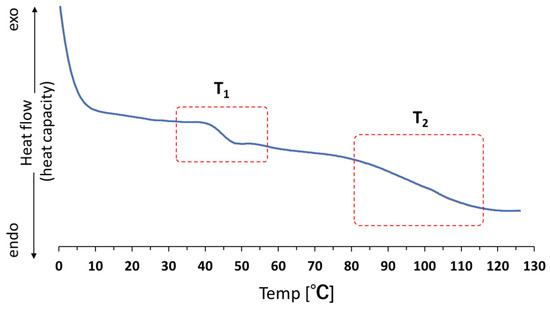
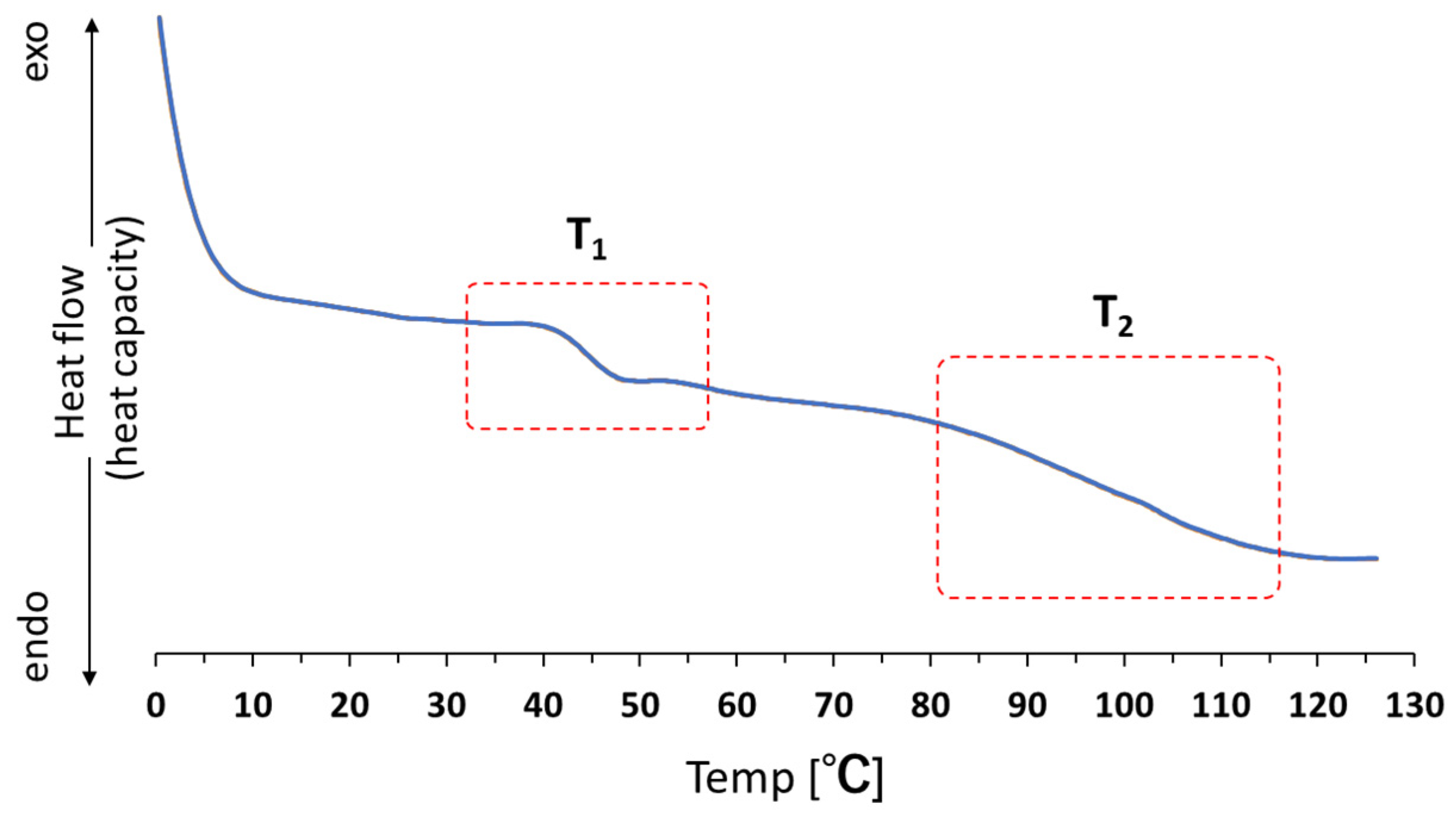
Next, the thermal properties of the [c2]daisy-chain rotaxane network were investigated by DSC measurements (Figure 5). Two endothermic regions (T1 and T2) were observed in the temperature range of 0–130 °C. T1, appearing around 45 °C, was attributed to the glass transition commonly observed in conventional network polymers. In contrast, T2 was a broad and gradual endothermic region observed between 80 and 110 °C. This endothermic region was attributed to a topological structural transformation of the [c2]daisy-chain rotaxane framework. Specifically, the interactions between the secondary ammonium salts and DB24C8 units in the [c2]daisy-chain rotaxane structure were disrupted upon heating, suggesting that the facing DB24C8 rings underwent a conformational change, leading to a new structural relaxation. In the dynamic mechanical analysis (DMA), the storage modulus remained higher than the loss modulus throughout the temperature range of 30–115 °C, and two increases in tan δ were observed around 48 °C and 73 °C. These two temperatures correlated well with the phase transition temperatures obtained from the DSC data (Figure S5). The existence and origin of the two transition states have already been reported by Qu et al. in a similar study, and our present experimental data are consistent with their findings [32].
Figure 5.
DSC curves of GHG type [c2]daisy-chain rotaxane network.
3.3. Mechanical Properties of the [c2]Daisy-Chain Rotaxane Network Polymer
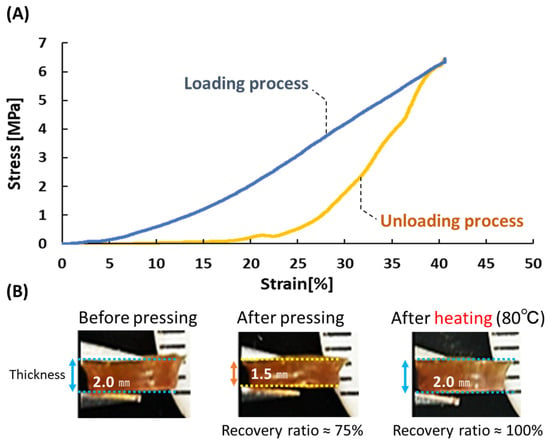
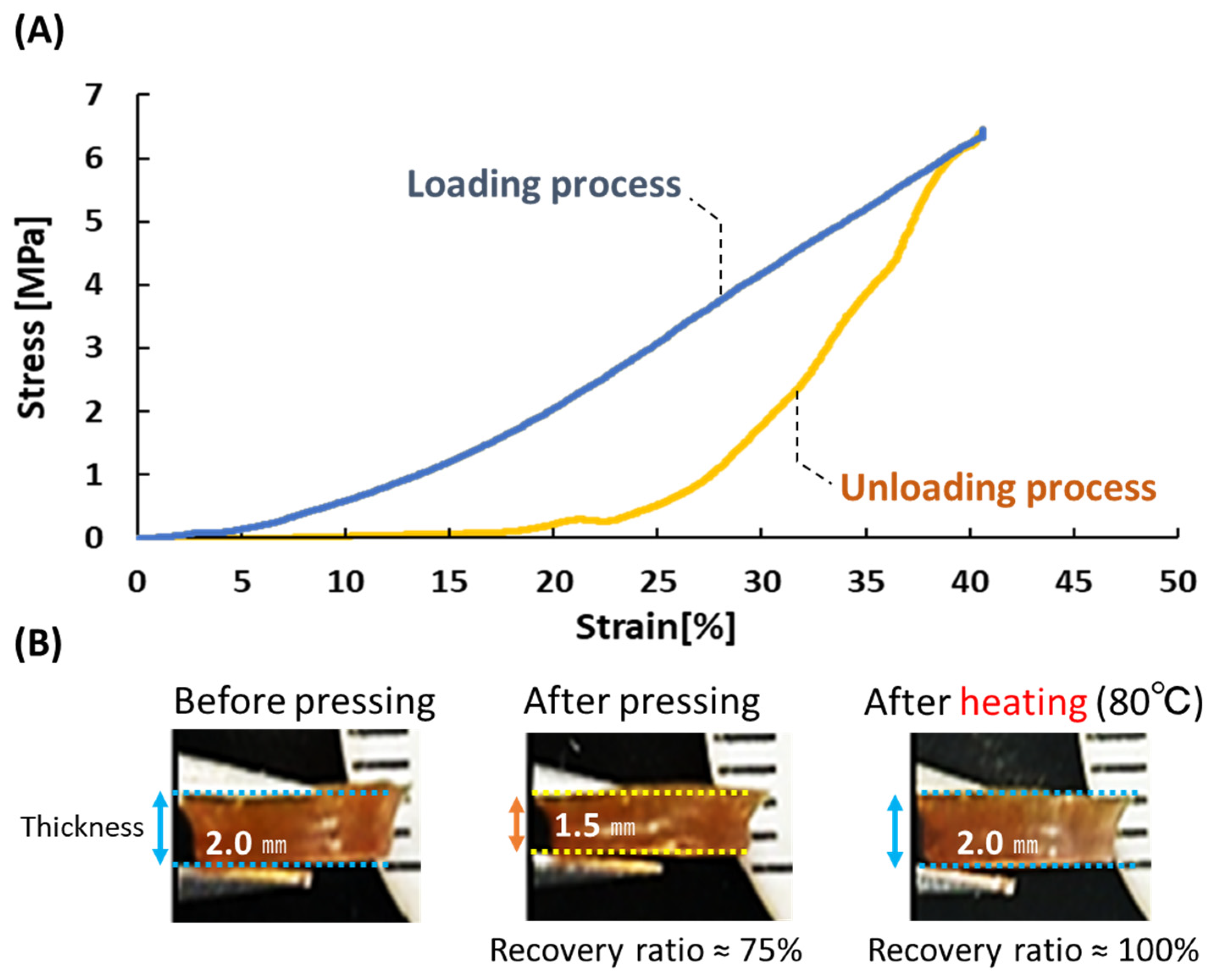
Furthermore, a thin film and a thick rectangular block were fabricated by UV irradiation using the G–H–G compound and DODT, and their mechanical properties were investigated. First, a compression test was conducted at 25 °C using the rectangular block (Figure 6).
Figure 6.
Compression test of the [c2]daisy-chain rotaxane network polymer: (A) compressive stress–strain curve of the test specimen; (B) photographs of the sample before and after compression, and after heat treatment.
When the rectangular specimen was compressed perpendicularly to the substrate, it withstood deformation up to approximately 40% without fracturing. On the other hand, the stress increased almost linearly with strain from 5% to 40%, ultimately reaching 6.5 MPa. This linear stress behavior indicates that the resin is a highly rigid material, as it possesses a glass transition temperature (Tg = 45 °C) higher than the measurement temperature (25 °C). This rigidity is considered to reflect the dense crosslinked network formed by the tetrafunctional [c2]daisy-chain rotaxane crosslinker and the robust rotaxane structure. Furthermore, the fact that the material did not fracture even under 40% strain below Tg suggests that the [c2]daisy-chain rotaxane structure imparts a stress-relaxing (toughening) function through topological extension and contraction motions, allowing it to withstand large deformations without failure. When the sample was unloaded after being subjected to 40% strain, the resin recovered to a certain thickness (recovery ratio ≈ 75%). In addition, heating to 85 °C resulted in a rapid recovery to its original thickness prior to compression (recovery ratio ≈ 100%), suggesting that the sliding motion of the rings within the [c2]daisy-chain rotaxane structure became activated under conditions above Tg. This behavior was consistent with the phase transition temperature (T2) observed in Figure 5.
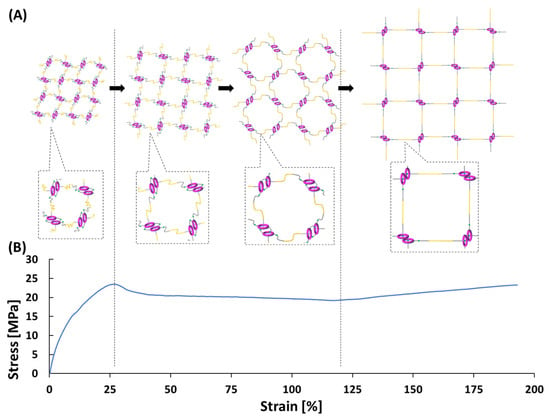
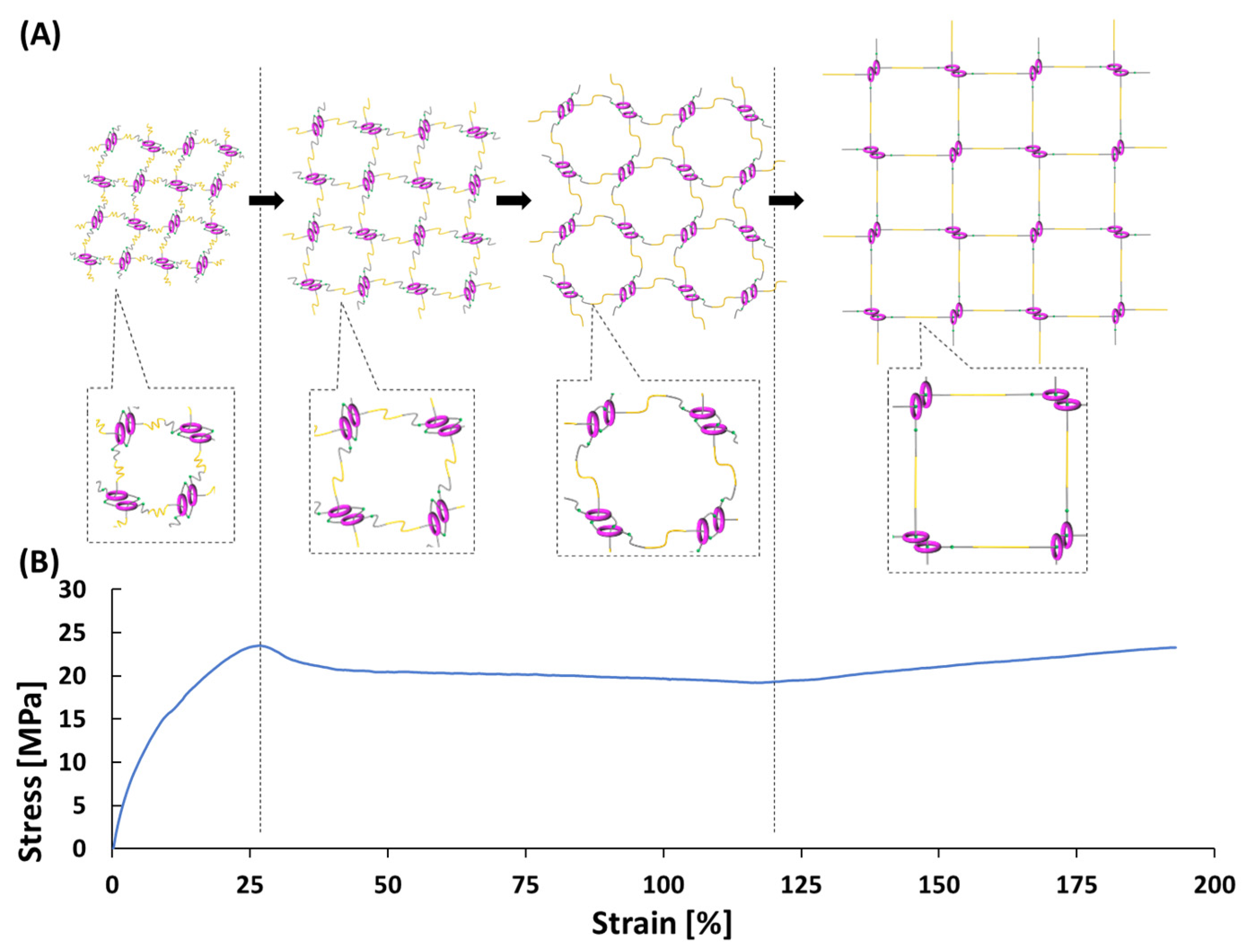
In addition, a tensile test was conducted at 25 °C using a film with a [c2]daisy-chain rotaxane structure (Tg = 45 °C). The film exhibited an elongation ratio of up to three times its original length, and three distinct stress variations were observed during the stretching process (Figure 7). In the displacement region up to approximately 30%, the stress increased sharply, and a yield point was observed at around 25 MPa. This region was considered to be dominated by elastic deformation, which was attributed to the strong entanglement of the dried and contracted network polymer. After passing the yield point, a very gradual stress relaxation was observed up to a strain of approximately 120%. This behavior was attributed to plastic deformation, during which the two DB24C8 units in the [c2]daisy-chain rotaxane were considered to move closer together (topological relaxation). As this distance decreased, the [c2]daisy-chain rotaxane structure itself was thought to reach a highly extended state. After that, the stress increased up to a strain of approximately 190%, at which point the material fractured. This behavior was mainly attributed to the [c2]daisy-chain rotaxane structure being stretched to its limit, resulting in further elongation of the overall network. Thus, under tensile testing conditions below the Tg of this material—where the material is in a more rigid state—the phenomenon in which it withstands large deformations through a stress relaxation process is unique, suggesting that the [c2]daisy-chain rotaxane structure contributes to this behavior.
Figure 7.
Tensile test of the [c2]daisy-chain rotaxane network polymer: (A) schematic illustration of the elongation mechanism of the test specimen; (B) tensile stress–strain curve.
3.4. Shape-Memory Behavior of the [c2]Daisy-Chain Rotaxane Network Polymer
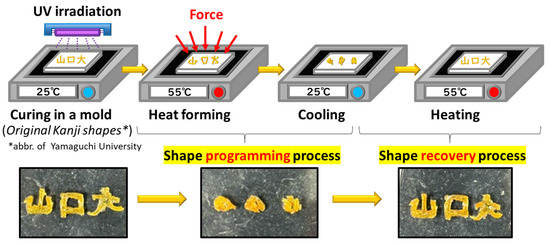
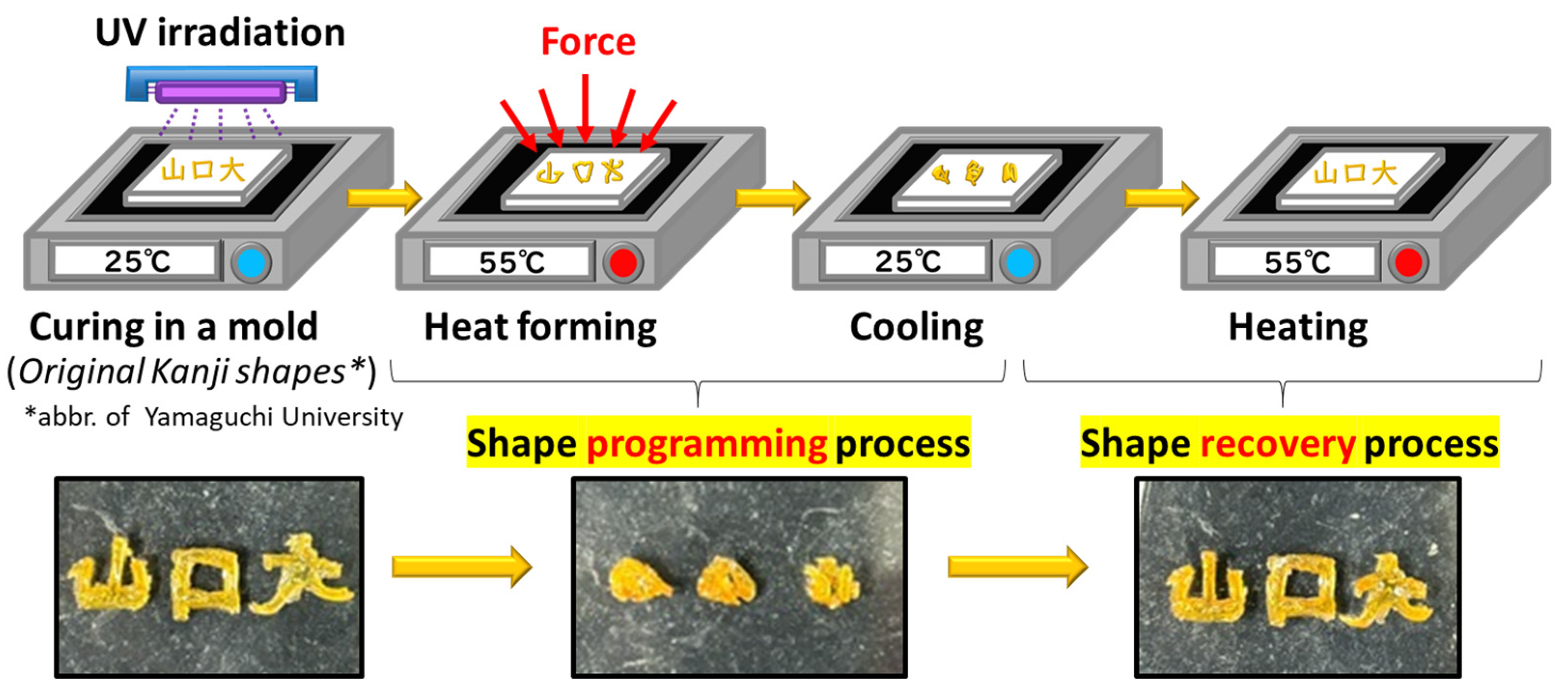
Based on these findings, we expected that the tough [c2]daisy-chain rotaxane network polymer could undergo various shape transformations while maintaining a certain level of stress, and we therefore evaluated its shape-memory properties (Figure 8). To test its shape-memory behavior, a dried sample of the [c2]daisy-chain rotaxane network polymer was molded into three distinct Kanji characters. These rigid molded characters were then heated on a 55 °C plate and deformed into a spherical shape, followed by cooling to 25 °C. When the resulting spherical object was reheated on the 55 °C plate for one minute, the original Kanji shapes were fully restored. This shape-memory performance was attributed to the excellent toughness of the topological [c2]daisy-chain rotaxane network polymer, which enables it to withstand large applied stresses and deformations without fracture.
Figure 8.
Evaluation of the shape-memory properties of the [c2]daisy-chain rotaxane network polymer.
4. Conclusions
In this study, we newly designed a DB24C8 derivative (G–H–G compound) bearing two secondary ammonium salt groups and successfully synthesized a tetrafunctional [c2]daisy-chain rotaxane with terminal vinyl groups. This molecular design enabled the facile preparation of [c2]daisy-chain rotaxane crosslinkers. Furthermore, a topological network polymer with unique properties was obtained via a thiol–ene reaction using the crosslinker. This network polymer exhibited selective swelling behavior by altering the distance between the two facing DB24C8 components in the [c2]daisy-chain rotaxane structure, showing a high degree of swelling in polar aprotic solvents such as DMF. In addition, the material exhibited excellent toughness without fracturing even under large stress or deformation under conditions below its Tg. These properties are considered beneficial for application to polymer gel/solid electrolytes for rechargeable batteries, where the retention of highly polar electrolytes, compressive strength, and shape adaptability are required. Based on this concept, we are currently conducting further research as part of a new strategy. As another notable property, this network polymer exhibited shape-memory capability derived from its excellent toughness. Upon heating to a certain temperature, the programmed shape was released, and the material fully recovered its original molded form. Such behavior holds promise for applications in material recycling and artificial actuators. Further studies focusing on new design strategies and potential applications are planned.
Supplementary Materials
The following supporting information can be downloaded at https://www.mdpi.com/article/10.3390/reactions6040062/s1, Scheme S1: Synthesis route of spectrum of G–H–G compound; Figure S1: 1H NMR spectrum of (A) DFB24C8 in CDCl3 and (B) [c2]Daisy-chain rotaxane crosslinker in CD3CN.; Figure S2: 13C NMR spectrum of G–H–G compound; Figure S3: IR spectrum of G–H–G compound; Figure S4: IR spectrum of [c2]daisy-chain rotaxane network; Figure S5: DMA temperature profile of [c2]daisy-chain rotaxane network.
Author Contributions
Conceptualization, K.O. and K.Y.; synthesis and structural analysis, Y.K. and M.K.; writing—original draft preparation, K.Y. All authors have read and agreed to the published version of the manuscript.
Funding
This research was funded by the Electric Technology Research Foundation of Chugoku.
Data Availability Statement
The data presented in this study are available upon request from the corresponding author. The data are not publicly available because of the lack of a dedicated server.
Conflicts of Interest
The authors declare no conflicts of interest.
References
- Ashton, P.R.; Baxter, I.; Cantrill, S.J.; Fyfe, M.C.T.; Glink, P.T.; Stoddart, J.F.; White, A.J.P.; Williams, D.J. Supramolecular daisy chains. Angew. Chem. Int. Ed. 1998, 37, 1294–1297. [Google Scholar] [CrossRef] [Scilit]
- Jiménez, M.C.; Dietrich-Buchecker, C.; Sauvage, J.P. Towards Synthetic Molecular Muscles: Contraction and Stretching of a Linear Rotaxane Dimer. Angew. Chem. Int. Ed. 2000, 39, 3284–3287. [Google Scholar] [CrossRef] [Scilit]
- Amirsakis, D.G.; Elizarov, A.M.; Garcia-Garibay, M.A.; Glink, P.T.; Stoddart, J.F.; White, A.J.P.; Williams, D.J. Diastereospecific Photochemical Dimerization of a Stilbene-Containing Daisy Chain Monomer in Solution as well as in the Solid State. Angew. Chem. Int. Ed. 2003, 42, 1126–1132. [Google Scholar] [CrossRef] [Scilit] [PubMed]
- Wu, J.; Leung, K.C.F.; Bnitez, D.; Han, J.Y.; Cantrill, S.J.; Fang, L.; Stoddart, J.F. An Acid–Base-Controllable [c2]Daisy Chain. Angew. Chem. Int. Ed. 2008, 47, 7470–7474. [Google Scholar] [CrossRef] [Scilit] [PubMed]
- Zheng, B.; Klautzsch, F.; Xue, M.; Huang, F.; Schalley, C.A. Self-sorting of crown ether/secondary ammonium ion hetero-[c2]daisy chain pseudorotaxanes. Org. Chem. Front. 2014, 1, 532–540. [Google Scholar] [CrossRef] [Scilit]
- Bruns, C.J.; Stoddart, J.F. Rotaxane-Based Molecular Muscles. Acc. Chem. Res. 2014, 47, 2186–2199. [Google Scholar] [CrossRef] [Scilit]
- Wang, P.; Gao, Z.; Yuan, M.; Zhu, J.; Wang, F. Mechanically linked poly[2]rotaxanes constructed from the benzo-21-crown-7/secondary ammonium salt recognition motif. Polym. Chem. 2016, 7, 3664–3668. [Google Scholar] [CrossRef] [Scilit]
- Zhang, Q.; Rao, S.; Xie, T.; Li, X.; Xu, T.; Li, D.; Qu, D.; Long, Y.; Tian, H. Muscle-like Artificial Molecular Actuators for Nanoparticles. Chem 2018, 4, 2670–2684. [Google Scholar] [CrossRef] [Scilit]
- Cai, K.; Shi, Y.; Zhuang, G.; Zhang, L.; Qiu, Y.; Shen, D.; Chen, H.; Jiao, Y.; Wu, H.; Cheng, C.; et al. Molecular-Pump-Enabled Synthesis of a Daisy Chain Polymer. J. Am. Chem. Soc. 2020, 142, 10308–10313. [Google Scholar] [CrossRef] [Scilit]
- Saura-Sanmartin, A.; Schalley, C.A. The Mobility of Homomeric Lasso- and Daisy Chain-Like Rotaxanes in Solution and in the Gas Phase as a means to Study Structure and Switching Behaviour. Isr. J. Chem. 2023, 63, e202300022. [Google Scholar] [CrossRef] [Scilit]
- Trung, N.T.; Nhien, P.Q.; Kim, C.T.T.; Wu, C.-H.; Buu Hue, B.T.; Wu, J.I.; Li, Y.-K.; Lin, H.-C. Controllable Aggregation-Induced Emission and Forster Resonance Energy Transfer Behaviors of Bistable [c2]Daisy Chain Rotaxanes for White-Light Emission and Temperature-Sensing Applications. ACS Appl. Mater. Interfaces 2023, 15, 15353–15366. [Google Scholar] [CrossRef] [Scilit]
- Tsuda, S.; Yano, Y.; Yamaguchi, M.; Fujiwara, S.; Nishiyama, Y. Simultaneous Hydrogenation of an Insulated Diarylacetylene Dimer Incorporated as Axle Molecules in a Cyclodextrin-Based [c2]Daisy Chain Rotaxane. Chem.—Eur. J. 2024, 30, e202403523. [Google Scholar] [CrossRef] [Scilit]
- Tsuda, S.; Yasumura, N.; Fujiwara, S.; Nishiyama, Y. Synthesis of an Insulated Oligo(phenylene ethynylene) Dimer Through Cyclodextrin-Based [c2]Daisy Chain Rotaxane. Molbank 2024, 2024, M1906. [Google Scholar] [CrossRef] [Scilit]
- Carmona-Vargas, C.C.; Faour, L.; Tokunaga, S.; Constantin, D.; Fleith, G.; Moulin, E.; Giuseppone, N. Molecular Actuation of a Bistable Liquid-Crystalline [c2]Daisy Chain Rotaxane. ChemistryEurope 2024, 2, e202300069. [Google Scholar] [CrossRef] [Scilit]
- Xu, J.; Deng, S.; Wei, P. Engineering Supramolecular [c2]Daisy Chains for Structural Hierarchy-Dependent Emission and Photoreactivity. J. Am. Chem. Soc. 2024, 146, 34176–34187. [Google Scholar] [CrossRef] [Scilit] [PubMed]
- Clark, P.G.; Day, M.W.; Grubbs, R.H. Switching and Extension of a [c2]Daisy-Chain Dimer Polymer. J. Am. Chem. Soc. 2009, 131, 13631–13633. [Google Scholar] [CrossRef] [Scilit]
- Hmadeh, M.; Fang, L.; Trabolsi, A.; Elhabiri, M.; Albrecht-Gary, A.M.; Stoddart, J.F. On the thermodynamic and kinetic investigations of a [c2]daisy chain polymer. J. Mater. Chem. 2010, 20, 3422–3430. [Google Scholar] [CrossRef] [Scilit]
- Du, G.; Moulin, E.; Jouault, N.; Buhler, E.; Giuseppone, N. Muscle-like Supramolecular Polymers: Integrated Motion from Thousands of Molecular Machines. Angew. Chem. Int. Ed. 2012, 51, 12504–12508. [Google Scholar] [CrossRef] [Scilit]
- Gao, L.; Zhang, Z.; Zheng, B.; Huang, F. Construction of muscle-like metallo-supramolecular polymers from a pillar[5]arene-based [c2]daisy chain. Polym. Chem. 2014, 5, 5734–5739. [Google Scholar] [CrossRef] [Scilit]
- Fu, X.; Gu, R.R.; Zhang, Q.; Rao, S.J.; Zheng, X.L.; Qu, D.H.; Tian, H. Phototriggered supramolecular polymerization of a [c2]daisy chain rotaxane. Polym. Chem. 2016, 7, 2166–2170. [Google Scholar] [CrossRef] [Scilit]
- Goujon, A.; Mariani, G.; Lang, T.; Moulin, E.; Rawiso, M.; Buhler, E.; Giuseppone, E. Controlled Sol–Gel Transitions by Actuating Molecular Machine Based Supramolecular Polymers. J. Am. Chem. Soc. 2017, 139, 4923–4928. [Google Scholar] [CrossRef] [Scilit]
- Goujon, A.; Lang, T.; Mariani, G.; Moulin, E.; Fuks, G.; Raya, J.; Buhler, E.; Giuseppone, N. Bistable [c2]Daisy Chain Rotaxanes as Reversible Muscle-like Actuators in Mechanically Active Gel. J. Am. Chem. Soc. 2017, 139, 14825–14828. [Google Scholar] [CrossRef] [Scilit]
- Goujon, A.; Moulin, E.; Fuks, G.; Giuseppone, N. [c2]Daisy chain rotaxanes as molecular muscles. CCS Chem. 2019, 1, 83–96. [Google Scholar] [CrossRef] [Scilit]
- Zhang, Z.; You, W.; Li, P.; Zhao, J.; Guo, Z.; Xu, T.; Chen, J.; Yu, W.; Yan, X. Insights into the Correlation of Microscopic Motions of [c2]Daisy Chains with Macroscopic Mechanical Performance for Mechanically Interlocked Networks. J. Am. Chem. Soc. 2023, 145, 567–578. [Google Scholar] [CrossRef] [Scilit] [PubMed]
- Liao, S.; Tang, J.; Ma, C.; Yu, L.; Tan, Y.; Li, X.; Gan, Q. Foldaxane-Based Switchable [c2]Daisy Chains. Angew. Chem. Int. Ed. 2024, 63, e202315668. [Google Scholar] [CrossRef] [Scilit]
- Zhou, S.-W.; Zhou, D.; Gu, R.; Ma, C.-S.; Yu, C.; Qu, D.-H. Mechanically interlocked [c2]daisy chain backbone enabling advanced shape-memory polymeric materials. Nat. Commun. 2024, 15, 1690. [Google Scholar] [CrossRef] [Scilit]
- Cuc, T.T.K.; Hung, C.-H.; Wu, T.-C.; Nhien, P.Q.; Khang, T.M.; Hue, B.T.B.; Chuang, W.-T.; Lin, H.-C. Force-activated ratiometric fluorescence switching of tensile mechano-fluorophoric polyurethane elastomers with enhanced toughnesses improved by mechanically interlocked [c2] daisy chain rotaxanes. Chem. Eng. J. 2024, 485, 149694. [Google Scholar] [CrossRef] [Scilit]
- Tian, D.; Jiang, K.; Wu, W.; Xie, M.; He, H.; Sun, R. Fatigue resistant photo-responsive [c2] daisy chain Poly(rotaxane) hydrogel. Dye. Pigment. 2024, 231, 112404. [Google Scholar] [CrossRef] [Scilit]
- Wang, Y.; Liu, G.; Zhang, Z.; Giuntoli, A.; Yan, X. Interfacial Dynamics and Mechanical Properties of Substrate-Supported [c2]Daisy Chain Networks. Macromolecules 2025, 58, 6418–6429. [Google Scholar] [CrossRef] [Scilit]
- Kamoto, R.; Onimura, K.; Yamabuki, K. One-Pot Synthesis of Stable Poly([c2]Daisy-chain Rotaxane) with Pseudo-Stopper via Metathesis Reaction and Thiol-Ene Reaction. Reactions 2023, 4, 448–464. [Google Scholar] [CrossRef] [Scilit]
- Kamoto, R.; Onimura, K.; Yamabuki, K. One-Pot Syntheses of [c2]Daisy-Chain Rotaxane Networks via Thiol-Ene Reaction and Its Application to Gel Electrolyte for Secondary Battery. Reactions 2024, 5, 800–811. [Google Scholar] [CrossRef] [Scilit]
- Oku, T.; Furusho, Y.; Takata, T. A Concept for Recyclable Cross-Linked Polymers: Topologically Networked Polyrotaxane Capable of Undergoing Reversible Assembly and Disassembly. Angew. Chem. Int. Ed. 2004, 43, 966–969. [Google Scholar] [CrossRef] [Scilit] [PubMed]
Disclaimer/Publisher’s Note: The statements, opinions and data contained in all publications are solely those of the individual author(s) and contributor(s) and not of MDPI and/or the editor(s). MDPI and/or the editor(s) disclaim responsibility for any injury to people or property resulting from any ideas, methods, instructions or products referred to in the content. |
© 2025 by the authors. Licensee MDPI, Basel, Switzerland. This article is an open access article distributed under the terms and conditions of the Creative Commons Attribution (CC BY) license (https://creativecommons.org/licenses/by/4.0/).