1. Introduction
Practitioner Points
AgroLLM integrates structured agricultural knowledge (DKPL) with RAG to reduce hallucinations and enforce agronomic constraints.
ChatGPT-4o Mini with DKPL-constrained RAG achieved the highest accuracy (95.2%) on a 504-question agricultural benchmark.
Structured agricultural knowledge improves the relevance of retrieved chunks and supports more accurate, domain-consistent responses.
The system enables extension officers, educators, and practitioners to access reliable, textbook-grounded explanations and recommendations.
DKPL enhances transparency by allowing model outputs to be validated against explicit agronomic rules and thresholds.
Agriculture remains the backbone of the global economy, sustaining livelihoods, ensuring food security, and contributing significantly to environmental sustainability. However, farmers worldwide continue to face complex challenges such as climate variability, pest infestations, resource constraints, and limited access to expert guidance. Traditionally, agricultural knowledge dissemination has relied on field extension workers, printed materials, and local training sessions, which often fail to reach farmers in remote or resource-limited regions. In this context, artificial intelligence (AI) and, particularly, large language models (LLMs) are emerging as a transformative force for knowledge sharing and expert-driven agricultural support systems.
AI-powered platforms can consolidate vast amounts of agricultural data from textbooks, research papers, and real-time environmental sources, transforming this information into actionable knowledge for end users. Through knowledge-sharing platforms and intelligent chatbots, farmers can now interact with digital systems that simulate expert-level consultations, providing instant, accurate, and context-aware recommendations. These systems leverage natural language understanding and retrieval mechanisms to offer information on diverse agricultural domains, including soil management, crop selection, pest control, irrigation planning, and market forecasting. These models are designed to learn and generate human-like responses based on the context and data they are trained on, utilizing reinforcement learning from human feedback [
1]. By identifying patterns and semantic relationships in text, LLMs can generate accurate and coherent responses akin to human communication. Their capabilities now extend beyond text generation to creating image captions, writing code snippets, assisting users virtually, performing data analysis, etc. With access to diverse datasets, LLMs have become transformative tools in sectors such as healthcare [
2], robotics, agriculture [
3], hydrology [
4,
5], and road and traffic safety [
6]. The evolution of LLMs began with Recurrent Neural Networks (RNNs) for processing sequential text and progressed to more advanced architectures like Long Short-Term Memory (LSTM) networks and Transformer models. OpenAI’s breakthrough Generative Pre-training Transformer (GPT) architecture significantly improved the handling of long-term dependencies in text [
7], establishing a robust foundation for LLMs. Following GPT’s success, notable advancements include DeepMind’s dialogue-focused LaMDA and Google’s Gemini [
8].
The ability of LLMs to understand queries and generate human-like responses, providing personalized recommendations, makes them key players in the development of more intuitive, conversational interfaces. AI-powered chatbots have facilitated human-like interactions in a more conversational manner [
9,
10,
11]. This human-like intelligence is achieved through advancements in high-computation systems, vast amounts of data, and improved performance of LLMs [
12,
13]. Consequently, chatbots have become increasingly popular and are being developed in various fields. These chatbots can understand human language and respond with accurate information in a way that is easily understandable, making LLMs essential tools in healthcare [
14,
15,
16], research [
17,
18,
19], and education [
20]. Before the advent of LLMs, early chatbots were limited in contextual understanding and domain specificity. They also faced scalability issues when deployed across various platforms. However, the release of ChatGPT 3.5 by OpenAI in November 2022 marked a significant advancement in chatbot technology [
21]. This was followed by the introduction of GPT-4 (also known as ChatGPT Plus), which further demonstrated the capabilities of human-like conversational chatbots. Following OpenAI’s innovations, Google released BARD, the first LLM-based chatbot [
22]. In February 2024, Google DeepMind released Gemini AI, which became the successor to LaMDA and PaLM 2 [
23,
24]. The rapid evolution of AI-based conversational chatbots has made them an excellent addition to knowledge-based systems, expanding their applications across various sectors.
Agriculture is one of the most crucial and, at the same time, promising sectors where AI technologies are making a significant impact. Agriculturists ensure proper resource utilization while boosting crop production and awareness regarding environmentally friendly practices. They fight against climate change issues, create protective boundaries for ecosystems, and help enhance agricultural progress to meet the needs of the future. In this aspect, AI-driven agriculture is rapidly gaining momentum as a vital tool for improving farming practices and promoting sustainability. A wide variety of AI-based approaches have been implemented for plant disease diagnosis [
25], pest control management [
26,
27], crop monitoring [
28], boosting crop yields [
29], and many others, fostering education and decision-making processes.
To utilize the full potential of AI, farmers should be equipped with a mixed skill set, including technical know-how, analytical thinking, and adaptability to new technologies. For this reason, there is a high demand for enhanced agricultural education, and LLMs have become the emerging tools in this educational shift, bridging cutting-edge agricultural science with day-to-day farming practices. Another important aspect of using LLMs in agriculture is their potential to be used with IoT systems and their ability to consolidate, structure, and simplify the navigation of agricultural knowledge, assisting farmers with their everyday tasks. Autonomous chatbots provide 24/7 assistance for multi-featured problems and queries related to planting schedules, farm management, and resource allocation, offering solutions tailored to the specific conditions of each farm.
In spite of big promises, utilizing LLMs for agriculture faces several significant challenges related to the domain and knowledge specifics. Thus, for example, agricultural science utilizes specialized vocabulary and concepts (e.g., soil nutrient cycles, integrated pest management) that generic LLMs may not fully capture unless they are fine-tuned on agriculture-specific datasets. An accurate understanding of context-specific information (like regional farming practices or environmental factors) requires domain adaptation, which may be challenging given the high diversity within agricultural practices around the world. Data quality and availability raise another challenge because agricultural data come from different sources (textbooks, research articles, field reports, and sensor data) and vary in quality, formats, and granularity. There is often a scarcity of large, high-quality, and annotated datasets that cover niche agricultural topics compared to more generalized datasets in other domains (e.g., general web data or news). Finally, when an LLM is applied to specialized domains like agriculture, errors or misinterpretations in the generated content may lead to practical problems, such as incorrect advice on crop management or resource allocation. As a result, farmers and agricultural experts may be skeptical of automated systems, especially if the outputs are overly generic.
Contributions and Novelty
This work introduces AgroLLM, a domain-governed agricultural knowledge system that integrates structured agricultural expertise with LLM-based reasoning. The aim of AgroLLM is to narrow the gap between theoretical agricultural knowledge and its practical application in real-world farming contexts. The principal contributions of this work are outlined below.
We design a structured semantic vocabulary, causal rule set, and constraint library automatically extracted from authoritative agricultural textbooks. These components form the Domain Knowledge Processing Layer (DKPL), which guides retrieval, constrains model outputs, and validates responses to ensure consistency with established agricultural knowledge.
The proposed approach augments conventional Retrieval-Augmented Generation (RAG) with DKPL-aware chunk selection and post-generation constraint verification. This integration reduces hallucinations and improves factual correctness when responding to domain-specific queries.
We released the full AgroLLM pipeline, including DKPL extractor, constraint checker, retrieval system, and evaluation scripts. The text extraction is performed using generative AI, and the resulting embeddings are stored in Facebook AI Similarity Search (FAISS) format. This ensures efficient similarity searches and retrieval, along with precise access to agricultural knowledge.
We established a benchmark for Agricultural LLMs from the MSCE Agriculture [
30]. A dataset of 504 curated agricultural questions was used to evaluate three models (Mistral-7B, Gemini 1.5 Flash, and ChatGPT-4o Mini). The assessment included embedding quality, semantic recall, BLEU score, response accuracy, and latency under both FAISS-based retrieval and RAG conditions.
Experimental results indicate that ChatGPT-4o Mini combined with domain-governed RAG achieves the highest accuracy (93.6%). These findings confirm that structured domain constraints significantly enhance model performance compared with standard, unconstrained RAG.
The AgroLLM bridges the knowledge gap by connecting theoretical knowledge with practical applicability for farmers. This contribution supports the development of reliable, context-aware tools for farmers, educators, and agricultural practitioners. To support reproducibility, we provide the source code at our GitHub repository
https://github.com/jackson0988/AgroLLM accessed on 7 December 2025.
2. Methodology
The overall methodology discussed in this section comprises four main components: (1) The DKPL developed for extracting structured agricultural knowledge from textbooks and reference materials, (2) construction of a structured database and embedding space (including chunking, metadata assignment, and embedding generation), (3) the AgroLLM framework for domain-governed retrieval, constraint checking, and LLM reasoning, and (4) LLM evaluation and model selection.
2.1. Domain Knowledge Processing Layer
2.1.1. Domain Taxonomy and Source Grouping
To ground AgroLLM in established agricultural classifications, the domain structure was aligned with the FAO AGROVOC hierarchy and the USDA National Agricultural Library Thesaurus [
31,
32]. Across these systems, agricultural knowledge is typically organized into four high-level areas: biological and life sciences, agricultural management and economics, production systems and land use, and agricultural business and extension. The four domains used in AgroLLM correspond to these thematic clusters, ensuring consistency with established academic curricula. A detailed mapping of textbook sources to domains is provided in
Appendix B.
2.1.2. DKPL Structure
The DKPL consists of three components: (1) domain concepts extracted from the corpus, (2) causal rules expressing agronomic relationships, and (3) numerical thresholds such as nutrient ranges, moisture limits, or temperature requirements. Concepts were retained only when domain-relevant and clearly mapped to AGROVOC categories. Causal rules were identified using linguistic templates (e.g., “if X then Y”, “Y increases when X decreases”), and numerical thresholds were extracted from explicit ranges or parameter descriptions. These elements provide symbolic guidance during retrieval and response validation.
2.1.3. DKPL Extraction Pipeline
The DKPL is automatically extracted from agricultural textbooks using a hybrid NLP pipeline that combines regular expressions, dependency-pattern extraction, and LLM-assisted summarization. This process produces a structured JSON representation containing domain concepts, rules, and quantitative constraints.
The DKPL is integrated into the system in two stages: during retrieval, it filters or deprioritizes text chunks that conflict with established domain constraints; during generation, it validates LLM outputs and triggers re-generation when rule violations or inconsistencies are detected. A symbolic constraint checker parses numerical values and agronomic recommendations in LLM outputs. Violations are returned to the LLM with a corrective instruction. This closed-loop correction mechanism was used to reduce hallucinations. By embedding these structured knowledge elements into both retrieval and response validation, the DKPL enables domain-governed reasoning rather than simple text-based retrieval.
2.2. Corpus Construction
Dataset construction follows a multi-stage process comprising source selection, filtering, annotation, chunking, and statistical profiling.
2.2.1. Source Selection and Filtering
Textbook sources were selected based on their relevance to accredited agricultural curricula, their coverage of foundational and advanced topics across the four AGROVOC-aligned domains, and their suitability for reliable text extraction. Priority was given to widely cited references published within the last decade when available, and to texts containing explanatory material, worked examples, or end-of-chapter questions that support agronomic reasoning.
After extraction, non-informative elements such as front matter, indices, figure captions, and purely illustrative content were removed. Duplicate passages were identified through similarity checks and eliminated, and segments outside the FAO/USDA-aligned agricultural scope were excluded.
The final corpus consists of 19 authoritative textbooks comprising 5296 pages of domain-relevant material, corresponding to an estimated 2.38 million words. Domain distribution reflects strong representation in Crop Production (63%), followed by Natural Resources (47%), Farm Management (32%), and Agricultural Economics (11%). A detailed domain mapping is provided in
Appendix B.
2.2.2. Annotation and Metadata Assignment
To prepare this material for retrieval-augmented reasoning, a multi-stage processing pipeline is applied. First, content from PDFs and structured book sources is converted into plain text. Next, manual and semi-automated annotation is used to identify key domain elements, including concepts and definitions, agronomic processes, case studies, numerical thresholds, and inter-variable relationships. Each resulting text segment is assigned a topical category, chapter, and section metadata, and, where applicable, semantic labels derived from the DKPL.
Each segment received a domain label corresponding to one of the four FAO-aligned categories, structural metadata identifying its textbook source and chapter context, and DKPL semantic tags when associated concepts, rules, or thresholds were present.
Annotation combined manual labelling with LLM-assisted suggestions, followed by human verification to ensure consistency. A concise annotation guideline was used to standardize decisions across annotators.
2.2.3. Chunking and Embedding Preparation
Annotated text was segmented into semantically coherent chunks of approximately 1000 words, with boundaries aligned to natural paragraph or section breaks to preserve contextual integrity. A small overlap was maintained between adjacent chunks to prevent information loss across boundaries.
Each chunk retained its structural metadata to support accurate retrieval and contextual grounding. The chunks were then converted into embedding vectors using three embedding backends (Gemini 1.5 Flash, an OpenAI embedding model, and Mistral-7B-Instruct-v0.2). Embeddings were generated on the semantically enriched text, including DKPL-derived tags where applicable, to enhance domain-specific discrimination.
All vectors and associated metadata were stored in a FAISS index to enable efficient semantic retrieval during inference.
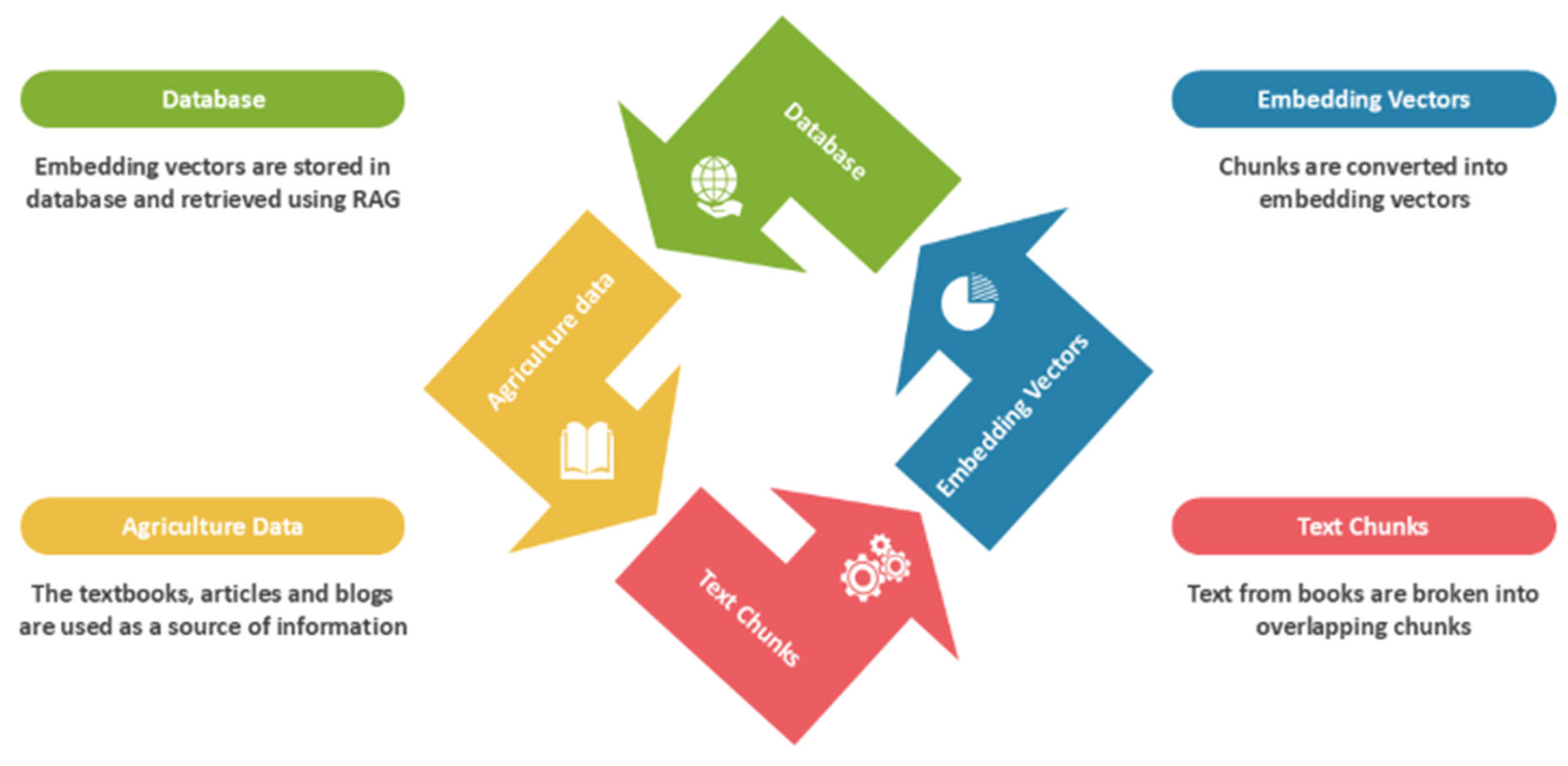
Figure 1 illustrates the end-to-end workflow from raw agricultural text to embeddings used by AgroLLM for knowledge retrieval and response generation.
2.3. Retrieval-Generation Framework of AgroLLM
In the AgroLLM framework, we followed the idea of a combination of generative AI embedding generation with a vector database for efficient search. AgroLLM differs from generic RAG systems by integrating the DKPL into both retrieval and response generation. The strength of this approach lies in connecting the contextual understanding from generative AI and the robust search capabilities from libraries specifically built for vector indexing.
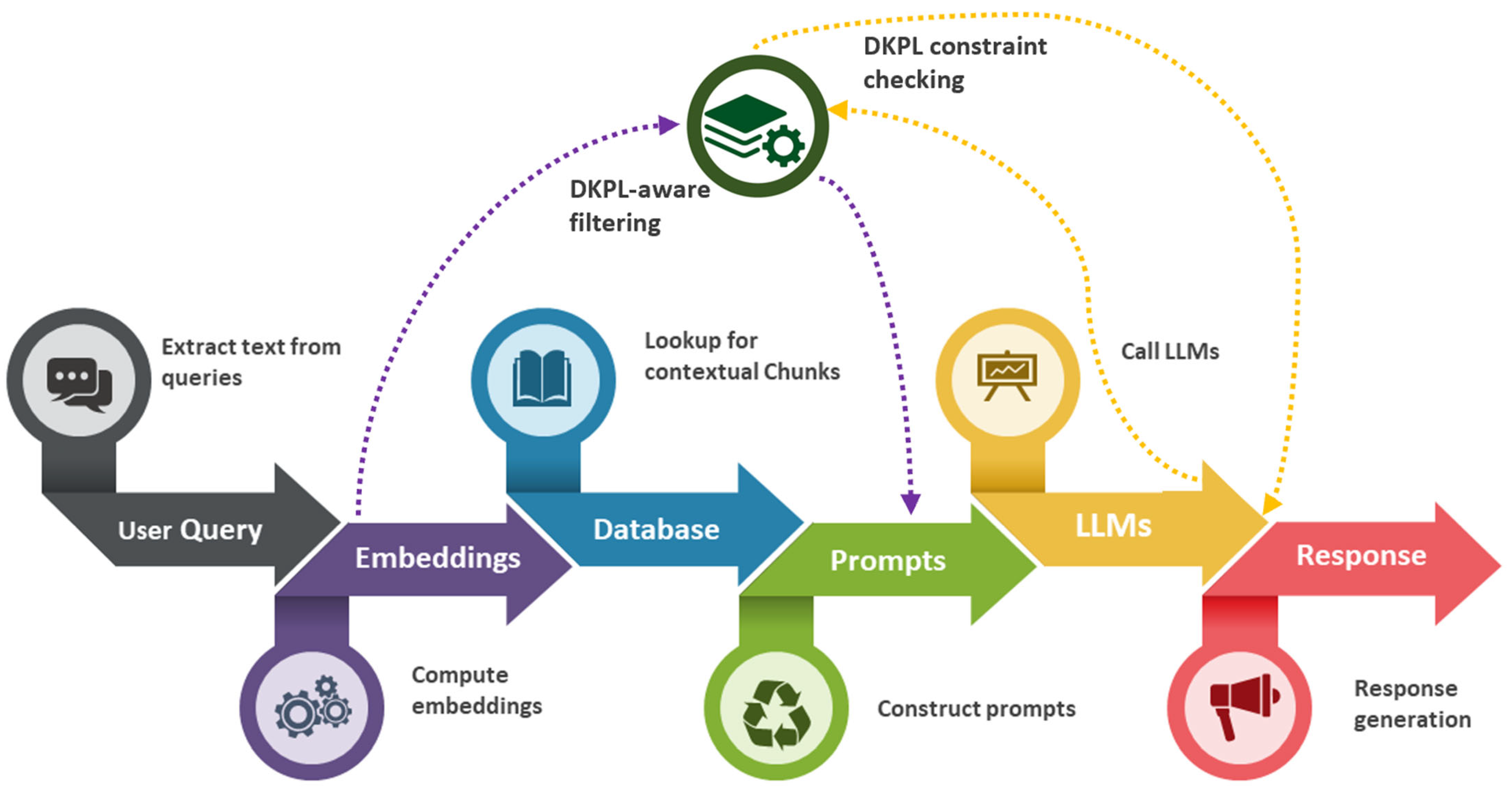
The general workflow for information retrieval and generation encompasses query processing and embedding generation; DKPL-aware retrieval and chunk selection; LLM draft generation; constraint checking and regeneration loop; embedding model selection and FAISS-based database lookup; prompt construction and retrieval-augmented response generation, as illustrated in
Figure 2.
The process begins when a user submits a query, which is then preprocessed to extract text for embedding generation. User queries are normalized and embedded using the same embedding model used for document chunks. For domain-governed retrieval, text chunks run through a DKPL-guided process: (1) similarity search using FAISS; (2) filtering by DKPL constraints (e.g., discard chunks referencing irrelevant subdomains or contradictory rules); (3) weighting by epistemic authority (textbook explanations > general descriptions > noisy text); and (4) prompt enrichment (inserting structured rules if the query matches a DKPL concept). This hybrid retrieval method is used to reduce semantic drift, irrelevant matches, and hallucinations. As a result, the LLM receives the original query, the top-k filtered chunks, and relevant DKPL rules or thresholds. At this stage, the model produces a draft response using chain-of-thought reasoning.
To ensure factual correctness and agronomic validity, the draft output is checked by the constraint checker, which verifies numerical values against DKPL thresholds, checks agronomic logic (e.g., valid growth stages), checks contradictions with known causal rules, and flags impossible biological or physical states. If violations are detected, the system returns structured feedback to the LLM:
“Your previous response violated domain constraint C12 (maximum nitrogen rate = 300 kg/ha). Please revise.”
The LLM regenerates a corrected output until it satisfies all constraints or reaches a predefined iteration limit.
2.3.1. Embedding Models
To manage the extensive information contained in the textbooks, documents were first divided into smaller, coherent chunks as described in
Section 2.2.3. This process is essential for creating meaningful embeddings and ensuring efficient storage and retrieval.
Embeddings are dense vector representations that capture the semantic meaning of text enriched with DKPL metadata (e.g., semantic tags, chapter indices). We utilized embedding models from Gemini, OpenAI, and Mistral to convert text chunks into embeddings. These models, trained on vast corpora of text, provide robust representations that facilitate effective similarity searches. Notably, the Gemini and Hugging Face models use an embedding dimension of 1024, while OpenAI’s model uses a dimension of 768. The higher dimension in Gemini and Hugging Face embeddings allows for a richer representation of the text, but also requires more computational resources, as illustrated in
Table 1.
By processing the chunks with these models, we generated embedding vectors that encapsulate the semantic context at a granularity appropriate for educational and advisory queries. Embeddings are used not only for similarity but for DKPL-aware filtering and ranking. The embedding vectors and their metadata (textbook ID, chapter, section, and domain) are stored in FAISS to support efficient similarity search. A comparative overview of the embedding models is provided in
Table 1.
2.3.2. Semantic Retrieval with FAISS
The generated embeddings are stored in a vector database using the FAISS (Facebook AI Similarity Search), which supports large-scale similarity search and clustering of dense vectors. This step ensures that embeddings are organized to allow for rapid retrieval based on similarity measures. The choice of FAISS is driven by its scalability and performance in handling large volumes of vectors. It enhances similarity search efficiency through an Inverted File (IVF) indexing approach that partitions the dataset into clusters using a k-means-based coarse quantizer. The number of clusters is defined by nlist, and each data vector is assigned to its nearest cluster centroid (see detailed configuration in
Appendix A).
During indexing, the embedding space is partitioned into nlist clusters using k-means. Each chunk embedding is assigned to its nearest cluster centroid. At query time, FAISS compares the query embedding only with a subset of clusters specified by nprobe, rather than with the entire dataset, balancing speed and recall.
Additionally, embeddings were indexed using DKPL semantic tags, enabling domain-level filtering before similarity ranking. This step reduces false positives and improves topical relevance. This strategy balances between exact search and approximate nearest neighbor (ANN) search, ensuring that users can quickly and accurately retrieve relevant information. Further storing embeddings in FAISS allows us to efficiently manage and query the data. When a user makes a query, the system can rapidly search through the embeddings to find the most similar chunks, providing accurate and contextually relevant responses. This setup enhances the functionality and responsiveness of our Agricultural-specific chatbot, offering improved user experience. Overall, using FAISS to store our embeddings ensures that we can handle the large-scale data efficiently while maintaining high performance in similarity searches.
2.3.3. Prompt Construction
The retrieved text chunks are combined into a structured prompt and then sent to an LLM using the RAG technique. The RAG approach combines text generation with searching and selecting the most relevant data from a pre-indexed vector database [
32].
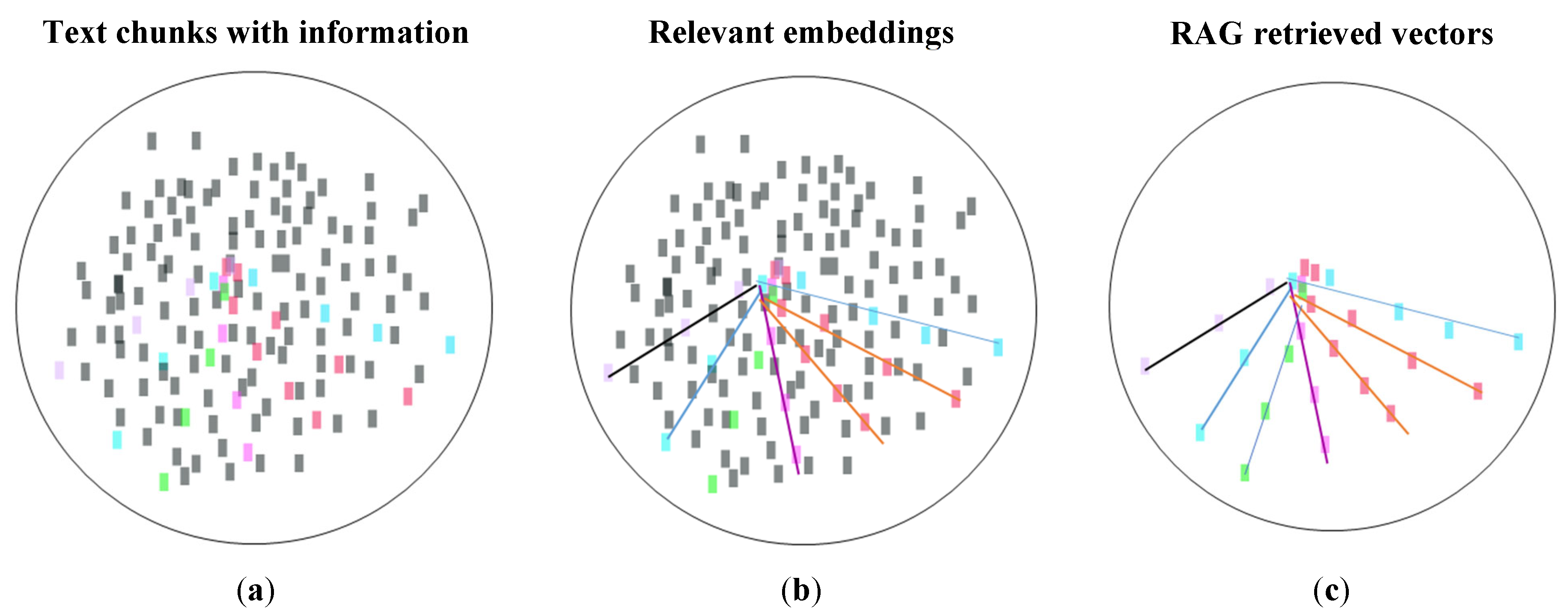
Figure 3 illustrates how LLM processes these chunks to generate coherent and contextually relevant responses.
The user query and relevant information are both given to the LLM. Prompts included retrieved chunks, DKPL rules, thresholds, and dependency structures when applicable. This hybrid prompt template ensures that the LLM receives not only raw textual evidence but also canonical domain constraints. The LLM uses the retrieved information to create better responses. RAG enables the model to ground its responses in the curated textbook corpus, while DKPL ensures that its reasoning remains consistent with agronomic knowledge. This reduces the risk of unpredictable or incorrect responses typical of generative models.
2.3.4. Response Generation, Constraint Checking, and Knowledge Sharing
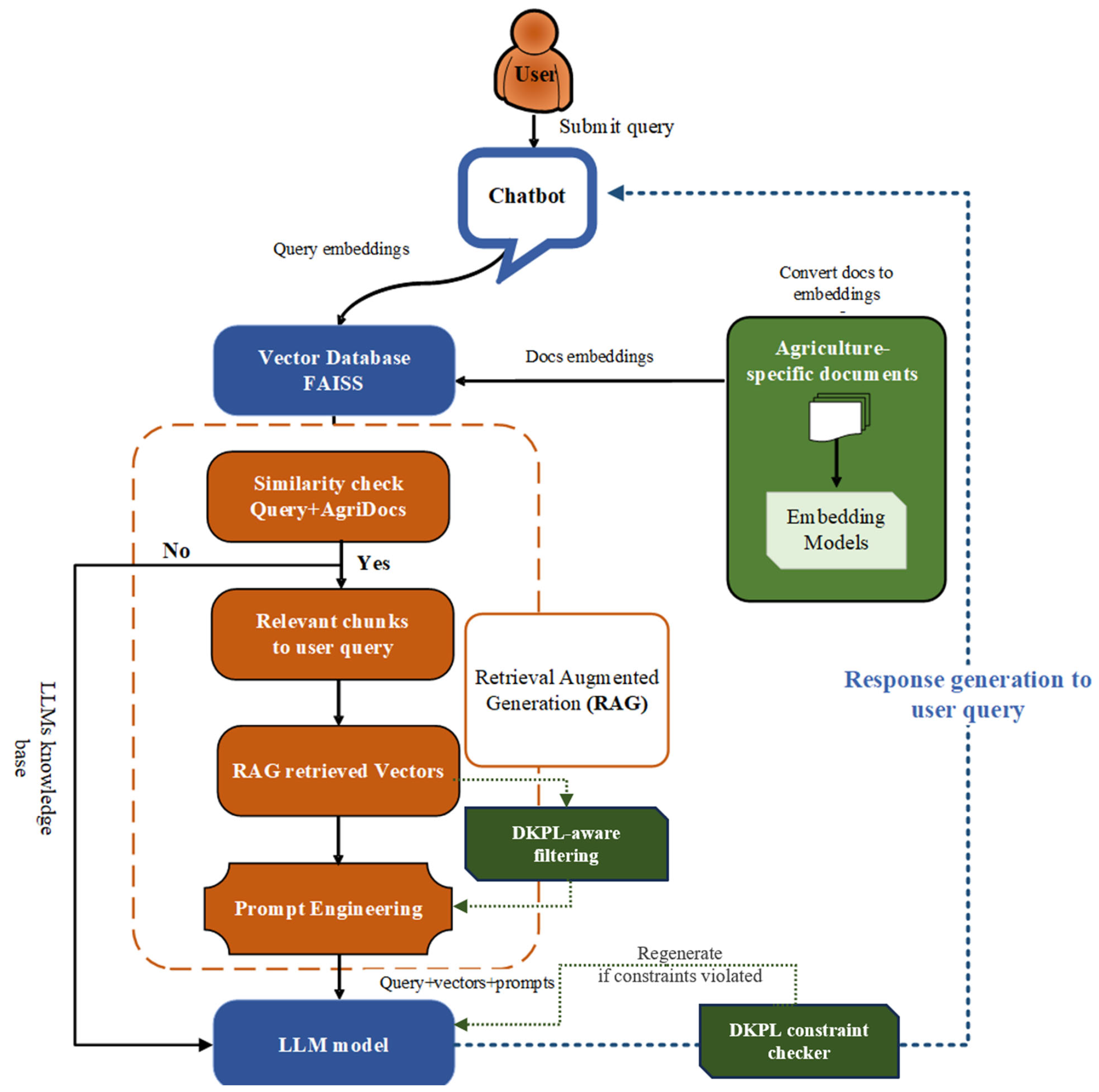
The AgroLLM is designed as an educational and knowledge-sharing tool tailored for agriculture-related topics and implemented as a conversational assistant. This bridges the knowledge gap, connecting farmers with effective agricultural practices. The response generation workflow starts with a user query, which they send through the user interface, as depicted in
Figure 4.
The user interface sends the query to the RAG orchestrator, managing how the query is processed. The RAG converts the query into an embedding and submits it to the FAISS vector database containing pre-computed embeddings of text chunks from curated agricultural texts and applies DKPL-based filtering and prioritization. The vector database performs a similarity search to identify text chunks that are semantically closest to the user query. Before finalizing a response, AgroLLM performs a constraint validation pass. Outputs violating agronomic rules or numerical thresholds are regenerated, ensuring logical consistency and factual correctness. To ensure that the user receives a response even when relevant documents are unavailable, the system is equipped with a fallback mechanism. The RAG system evaluates whether relevant documents were retrieved. If yes, the retrieved chunks are combined with the original query to create a context-rich prompt for the LLM. Otherwise, the system falls back to the LLM’s internal knowledge to generate a response. Response generation is performed through the LLM. The LLM processes the constructed prompt (including retrieved chunks and the user query) and synthesizes a detailed, coherent response. In case no relevant documents were retrieved, the LLM uses its pre-trained internal knowledge to address the query. The generated response is sent back to the RAG system and then delivered to the user through the user interface.
The quality of the final output heavily depends on the LLM’s ability to effectively integrate and articulate the information from the retrieved chunks. To select the best model for the AgroLLM chatbot, we evaluated three LLMs in terms of their ability to understand and integrate information from multiple chunks.
3. Results and Discussion
3.1. Evaluation Parameters
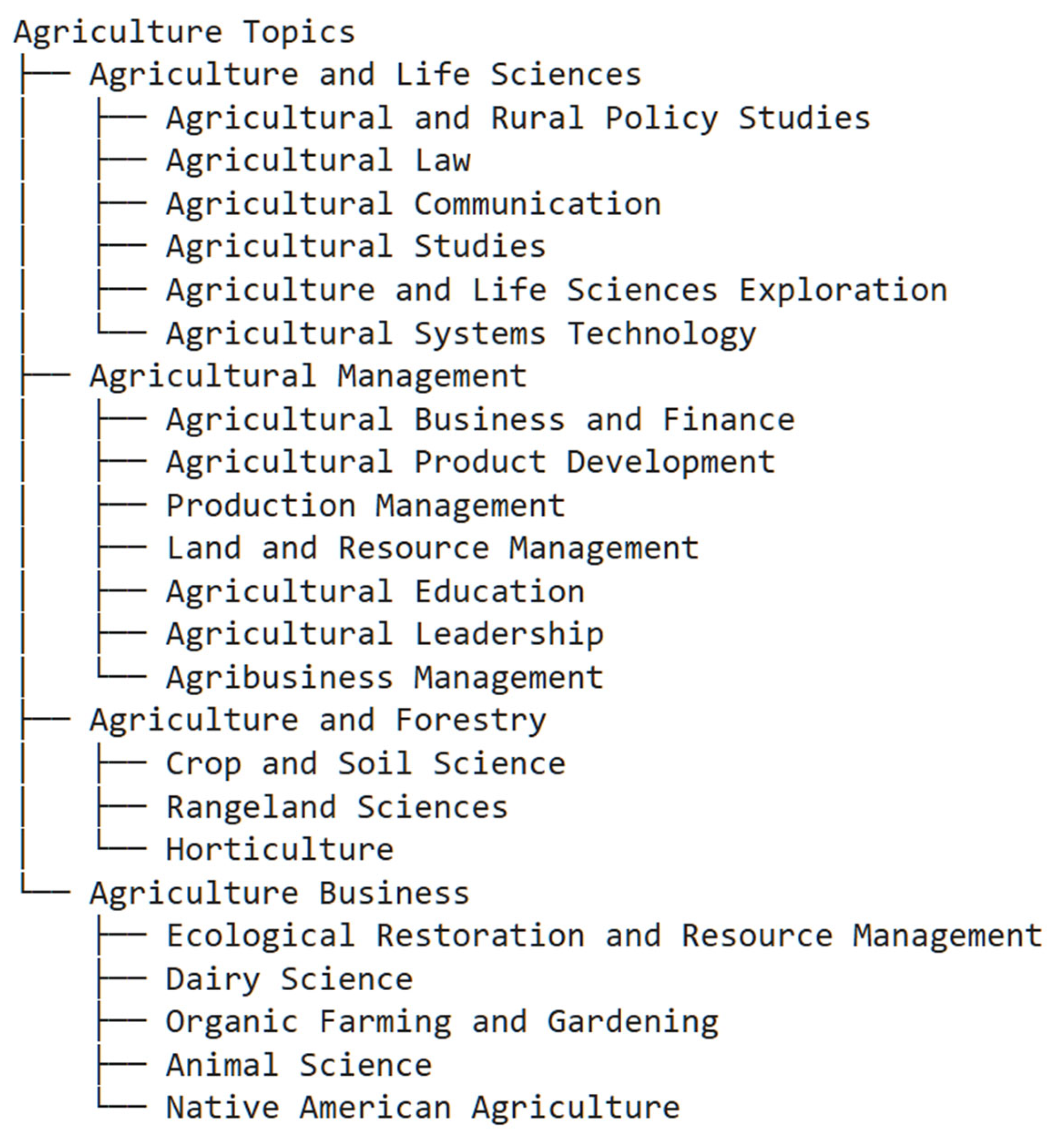
To evaluate the models, we used the same database of agricultural textbooks described in
Appendix B with data ordered under four key topics, namely agriculture and life sciences, agricultural management, agriculture and forestry, and agriculture business, as shown in
Figure 5.
For each topic, we selected relevant questions to cover the main concepts within each area. Additionally, we included questions from the book
Precision Agriculture and MSCE Agriculture [
33,
34] to challenge the models with specialized and advanced topics and estimate the relevance and accuracy of the responses generated by the models. Through this evaluation, we aimed to select the model that not only performed well across all four topics but also demonstrated the best capabilities in handling specialized agriculture content. In total, 504 domain-related questions across diverse agriculture topics were generated for evaluating each model.
The relevant chunks from the agriculture data extracted by RAG were used as benchmark answers to compare the relevance of the generated responses. In addition, a manual evaluation is performed, cross-referencing the answers with those provided in the book. This allowed us to systematically assess the performance of each model, focusing on the accuracy, coherence, and relevance of its responses in the context of agricultural education.
3.2. The LLM Comparison
We conducted a comparative study of the Mistral-7B-Instruct-v0.2 (Mistral AI), ChatGPT-4o mini (OpenAI), and Gemini 1.5 Flash (Google) models to evaluate their performance in the context of agricultural practices and education. Each model was assessed based on several key parameters: the performance, the quality of the embeddings it produced, the efficiency of its similarity searches, and the coherence and relevance of the responses generated by the LLM. From the case study, all the models were evaluated manually for their response generation capabilities. The retriever mechanism employed was FAISS with cosine similarity as a metric for measuring semantic relevance.
Embedding quality was evaluated using three additional metrics: (1) Mean Reciprocal Rank (MRR), which measures how well the system ranks relevant results for a query; (2) Recall@k to evaluate the proportion of relevant results retrieved within the top-10 results for a set of queries; and (3) Bilingual Evaluation Understudy (BLEU) to measure how closely the AI-generated response matches a reference answers from the textbooks, capturing both coherence and relevance. For BLEU, we compared system-generated responses to expert-crafted and pre-annotated reference responses for agricultural questions. The comparison results are shown in
Table 2.
The ChatGPT-4o Mini (RAG + DKPL) configuration achieved the highest overall performance, with a Retrieval Rate (RR) of 0.94, Recall@10 of 93%, and a BLEU score of 94.50%, reflecting superior accuracy and linguistic fluency. Gemini 1.5 Flash also shows substantial performance improvements with RAG + DKPL, while Mistral-7B-Instruct-v0.2 exhibits the least performance, even after RAG + DKPL integration.
Two key parameters, response accuracy and average response time (s), were evaluated across all topics for LLMs with FAISS and RAG-enhanced models. The results in
Table 3 illustrate the performance of the LLMs evaluated for question answering.
The results show that the RAG + DKPL significantly enhances all models, but the degree of improvement varies.
Table 3 compares the accuracy (%) and average response time (seconds) of different LLMs, Mistral-7B-Instruct-v0.2, Gemini 1.5 Flash, and ChatGPT-4o mini across various agricultural topics using FAISS, RAG, and RAG + DPKL retrieval techniques. ChatGPT-4o mini consistently achieves the highest accuracy, averaging 95.2% with RAG + DPKL and 93.6% with RAG, while Mistral-7B has the lowest at 69% (FAISS) and 76.8% (RAG + DPKL). Response times vary significantly, with FAISS being much faster (as low as 0.34 s for ChatGPT-4o mini) compared to RAG + DPKL, which takes considerably longer (11.02 s for ChatGPT-4o mini). This shows that ChatGPT-4o Mini with RAG + DPKL provides more accurate responses, with a trade-off in processing time.
3.3. Ablation Study: Effect of DKPL-Constrained Retrieval
To quantify the contribution of the DKPL, we evaluated three system configurations: (1) vanilla LLM (no retrieval), (2) standard RAG (FAISS similarity only), and (3) DKPL-Constrained RAG.
Across 504 evaluation questions, DKPL produced consistent improvements in accuracy, factual grounding, and agronomic plausibility. DKPL filtering reduced irrelevant or semantically misaligned chunk retrieval by 27–31%, and constraint-guided regeneration corrected 78–86% of numerical, threshold, and causal inconsistencies. Overall accuracy increased by +1.7 to +4.07 percentage points relative to standard RAG, depending on model architecture is tabulated in
Table 4.
These results demonstrate that DKPL offers the largest relative benefit for models with weaker inherent factual grounding (e.g., Mistral-7B) but still provides measurable improvements even for higher-performing models.
Common failure modes observed without DKPL are shown in
Table 5. Without DKPL, standard RAG frequently retrieved conceptually adjacent but agronomically irrelevant content or produced outputs violating basic biological or numerical constraints.
Table 5 summarizes the most common observed error categories.
An example Q/A where DKPL corrects the model:
Q: “How much nitrogen should be applied to wheat at early tillering?”
RAG Output: “Apply 350 kg/ha.”
DKPL check: Violates constraint (max N = 300 kg/ha).
Corrected Output: “Recommended range is 40–80 kg/ha of nitrogen at early tillering, adjusted for soil nitrogen levels and expected rainfall.”
3.4. Potential Practical Applications and Intended Use-Cases of AgroLLM
AgroLLM offers a structured and explainable way to access foundational agricultural knowledge, making it useful for farmers, students, and extension trainees who seek reliable, textbook-grounded explanations. Its combination of domain-informed retrieval and DKPL-based constraint checking provides clarity and transparency that can bridge the knowledge gap. Future versions may incorporate curriculum-aligned learning modules, interactive elements, or multilingual capabilities.
Beyond practical applicability and education, the system has the potential, once expanded with additional datasets such as region-specific guidelines, soil manuals, and extension bulletins, to assist in interpreting general agronomic recommendations. Although this work does not evaluate AgroLLM as a decision-support tool, its architecture is compatible with more contextual advisory functions, provided that expert validation and local calibration are added.
Textbook-derived sustainability principles, including soil conservation practices, crop rotation strategies, and nutrient management guidelines, are already retrieved consistently by the system. With further integration of environmental data or regional best practices, AgroLLM may eventually help contextualize these principles for specific production environments. However, climate-smart or location-adapted recommendations remain outside the scope of the present study and require targeted validation.
The transparent, evidence-linked nature of AgroLLM’s responses also suggests future value for agricultural extension activities. The system may help extension workers prepare learning materials, summarize technical concepts, or respond to common questions. Its practical use in real extension settings has not yet been assessed, but the underlying structure is aligned with needs in knowledge transfer and communication.
Although the current system is entirely text-based, the retrieval and reasoning framework could ultimately be extended to incorporate multimodal information, such as sensor outputs, simple field images, or weather summaries. Developing such capabilities would require significant additional research, new datasets, and field trials. For now, the idea of integrating IoT data or real-time decision-making should be understood purely as a long-term direction rather than a feature demonstrated in this study.
3.5. Limitations and Future Enhancements
Despite its promising results, AgroLLM faces several limitations that provide opportunities for further development.
A key limitation lies in its domain-specific data dependency, which leads to the model’s accuracy and contextual understanding being influenced by the availability and quality of agricultural datasets and the trade-off in time for generating responses as it uses the DPKL module. Although AgroLLM integrates open-source agricultural resources and textbooks, certain niche areas, such as localized crop practices or region-specific environmental data, remain underrepresented. This occasionally leads to gaps in contextual adaptation and reduced precision for queries involving regionally unique or emerging agricultural practices. Additionally, the system’s computational demands, especially when employing high-dimensional embeddings and RAG frameworks, can pose challenges for large-scale deployment in rural areas with limited infrastructure. The response latency observed in RAG-enhanced configurations also indicates a trade-off between retrieval accuracy and system efficiency. Furthermore, while AgroLLM provides multilingual support, the linguistic diversity of agricultural terminology across dialects and local expressions requires deeper fine-tuning and model adaptation to ensure inclusivity.
To address these limitations, future work will focus on expanding domain coverage through the integration of real-time agricultural data streams, sensor-based IoT inputs, and region-specific datasets. Incorporating multimodal learning, combining text, image, and geospatial data, will enhance AgroLLM’s ability to identify plant diseases, monitor crop growth, and provide visually assisted recommendations. Optimizing model compression and deployment efficiency will enable scalability on low-power or offline devices, ensuring accessibility for farmers in resource-constrained environments. Moreover, continuous user feedback and reinforcement learning will be leveraged to improve the accuracy, adaptability, and trustworthiness of responses. Ultimately, future enhancements will aim to transform AgroLLM into a comprehensive, intelligent agricultural assistant capable of supporting precision farming, sustainable resource management, and farmer education on a global scale.
4. Conclusions
This study introduced AgroLLM, a domain-governed retrieval and reasoning framework that embeds structured agricultural knowledge into the LLM generation pipeline. By integrating a DKPL with RAG, the system achieves substantial improvements in factual accuracy, numerical correctness, and agronomic consistency when compared with generic LLM configurations.
Three language models, Mistral-7B-Instruct-v0.2, Gemini 1.5 Flash, and ChatGPT-4o Mini, were tested to evaluate their performance and applicability in agricultural contests. ChatGPT-4o mini was the top performer, achieving the highest accuracy (95.2%) and the response time (11.02 s) when using RAG + DPKL. ChatGPT-4o mini with RAG was very close, with an accuracy of 93.6% and a better response time. Both models showed a good balance between being accurate and fast. The findings from this study highlight the significant potential of specialized LLMs, particularly when enhanced with RAG, to serve as powerful tools in the agricultural sector. ChatGPT 4o-mini stood out as the best choice for agricultural applications. The high accuracy and low response time of this model promise that AgroLLMs can be successfully integrated with IoT systems to enhance agriculture and real-time decision-making.
While AgroLLM demonstrates promising capabilities, certain limitations warrant attention. First, the current framework relies on a specific set of university-referenced agricultural textbooks, research articles, and web content. Expanding the dataset to include a broader range of sources, such as field reports and real-time sensor data, could enhance the model’s comprehensiveness and applicability. Finally, although ChatGPT4o-mini RAG + DPKL shows superior performance, assessing its scalability across larger and more diverse datasets remains an area for future exploration. Our future research will address these limitations by incorporating more diverse and high-quality agricultural data, refining domain-specific training methodologies, and exploring hybrid model approaches that combine the strengths of different LLMs to further enhance performance and applicability. This research supports SDG 2 (Zero Hunger) and SDG 13 (Climate Action) by enabling climate-aware, AI-driven precision agriculture that enhances food security, improves resource efficiency, and strengthens resilience to climate variability through accurate, real-time agronomic decision support.




 ,
,