


Abstract
This article presents a diagnostic study on the characterization of community and walkable rooftops in Barcelona’s historic district. The study aims to evaluate the potential for efficient improvement solutions that align with contemporary regulations for safety, accessibility, and energy efficiency. It is part of the REVTER project, which seeks to recover flat roofs as non-public collective areas in densely populated environments. The research emphasizes the importance of understanding the technical aspects of these rooftops before interventions, focusing on construction and performance to establish guidelines for future improvements. The methodology includes cartographies, on-site inspections, and performance evaluations, aiming to create a district-level overview, characterize roofing solutions chronologically, assess current technical performance, and identify deficiencies to develop intervention guidelines. Key findings highlight the evolution of construction practices across three distinct periods, revealing significant shifts in materials and techniques. The research underscores the necessity of data-driven technical characterization and proposes a systematic approach for evaluating historic architectural spaces. By selecting a broad study sample and using a GIS approach, the study sets a precedent for understanding and improving the technical characteristics of urban rooftops, contributing significantly to sustainable urban development and heritage conservation within Ciutat Vella.
1. Introduction
This article presents a diagnostic study focusing on the characterization of collective, walkable flat roofs in the district of Ciutat Vella (Barcelona). The research aims to lay a technical foundation for interventions that improve safety, accessibility, and energy performance in residential buildings built before the current technical requirements were in force [1].
The research is part of the conclusions of the REVTER project, entitled “Re-inhabiting the rooftops of Ciutat Vella.” This project explores how existing flat roofs, within a densely populated environment, can be recovered as shared, walkable outdoor spaces for the residents of the buildings, managed by the building community and therefore, not accessible to the general public [2]. Presently, many of these spaces remain underutilized, yet they hold significant potential due to their oversized space as community exterior, particularly in areas where high-quality public spaces are lacking [3].
Before any interventions can be considered, it is imperative to gain a profound understanding of the technical aspects of these rooftops. Therefore, this article serves as initial research to characterize their construction and performance. Understanding these elements is crucial, particularly when considering demolitions or conversions, as well as compliance with existing regulations [4]. This assessment also takes into account buildings’ heritage attributes as urban landscape, emphasizing the need for rehabilitation to enable their utilization and adaptation to present-day requirements. The overarching goal is to prevent the degradation of historic centers while aligning these spaces with contemporary needs.
The primary objectives outlined are as follows:
- To establish a comprehensive overview at the district level, outlining the key constructive and heritage characteristics defining the built-up area of Ciutat Vella.
- To characterize and define the roofing solutions used, categorizing them chronologically to understand the evolution of construction methods over time.
- To assess the current technical performance of these roofs in terms of structural integrity, thermal and sustainability behavior, and to identify common shortcomings.
To achieve these specific objectives, this article conducts an in-depth analysis and classification of the rooftop spaces in Ciutat Vella. The study encompasses all residential building rooftops in the district.
2. Literature Review and Knowledge Gap
This research delineates the primary technical and heritage features in conjunction with the existing data, aiming to establish intervention parameters within these areas. The initial focus goes around acknowledging the untapped potential of available data in assessing trends but also highlights the scarcity in utilizing data for evaluating technical characteristics.
Internationally, there is extensive scientific literature on methodologies or case studies for evaluating buildings in historic complexes or centers [5,6,7,8,9,10]. Publications on existing roofs in historic centers are less frequent; specifically, they focus on providing methodologies that offer more information on the roofs of existing buildings. Conceição, J. et al. [11] present inspection methodologies verified from the study of cases of flat roofs built with modern techniques. In consolidated urban contexts of historical centers such as the case of Rome, Fiumi, L. [12] proposes the application of remote urban sensing techniques to obtain the surface finishes of existing roofs. These investigations highlight the need to deepen our understanding of the construction techniques of roofs in historic centers and their behavior and functional conditions, given their potential for cities.
At Barcelona’s local level there has been limited exploration concerning the comparative definition of the roofs’ technical performances. For instance, the “Manual del Test Energètic” crafted by CAATEEB [13] outlines intervention techniques to enhance the energy efficiency of specific spaces. Other notable works [14,15] describe constructive traits of buildings constructed between 1800 and 1920 in Barcelona’s context, also Ciutat Vella. Additionally, a compelling research endeavor by Ramon Graus [16,17] offers a historical overview of the most prevalent roof types found in the historic city. Each of these works plays a fundamental role in defining the technical performance of spaces analyzed within this article. Studies have also been carried out in the historic center of Barcelona in which it has been possible to analyze the conditions of habitability [18] or the general state of the building [10]. However, despite these individual contributions, there remains a lack of cohesive, centralized data that comprehensively captures the diverse technical attributes of the collective roofs. The current practice involves a case-by-case evaluation, amalgamating various data sources and conforming to legal requirements. Yet, this process faces challenges due to data fragmentation and the absence of a standardized catalog to encapsulate these characteristics comprehensively.
This article proposes the generation of a technical characterization grounded in data. This approach will also draw from case studies for extrapolation purposes. By integrating available data, adopting a systematic GIS approach, and extrapolating insights from case studies, this proposal marks a step towards a more informed and efficient strategy for evaluating and intervening in historic architectural spaces.
The main contribution of this research is its focus on providing a method for technically characterizing all flat rooftops within a district—an approach previously unattempted. It is important to note that the intention here is not to replace the work of experts who handle individual cases but to offer a broader perspective, identifying overarching trends and potentials for improvement across these spaces. Achieving this vision needs extensive data collection and on-site inspections of selected case studies.
3. Methodology
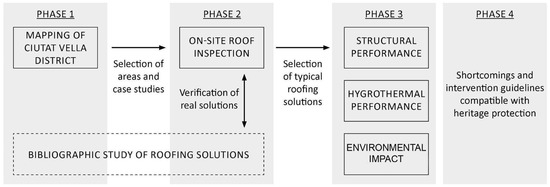
This research unfolds through a structured series of phases, spatial data analysis, documentary research, fieldwork, and technical performance assessment, in order to obtain a multifaceted understanding of the roofs of the existing residential building stock in Ciutat Vella (Figure 1).
Figure 1.
Research methodology outline. Source: Authors’ own work.
- Phase 1: The research begins with a district-scale mapping of residential flat roofs based on the official cadastral database of Ciutat Vella [19], processed using Geographical Information System (GIS). This phase enables a macroscopic characterization of roof geometry, distribution, construction period, and dimensional parameters. The GIS analysis was used to classify rooftops into three main historical construction periods and to identify recurrent roof typologies. In parallel, a comprehensive bibliographic review of historical construction manuals, regulatory documents, and previous academic studies was conducted to establish the constructive logic and material characteristics associated with each period. Based on this combined analysis, five study areas were selected to represent the diversity of urban morphology, construction periods, and heritage protection levels within the district, and eight case studies were identified for detailed investigation.
- Phase 2: On-site inspections were carried out for each case study to validate the information derived from cartographic and bibliographic sources. Data collection during fieldwork included visual inspection, photographic documentation, dimensional measurements, and identification of construction layers, materials, and visible pathologies. These inspections allowed the characterization of roof assemblies, verification of structural systems, identification of ventilation strategies, and assessment of maintenance conditions. The combination of documentary sources and in-situ observation ensured a reliable constructive classification of the analyzed roof typologies.
- Phase 3: Determining Technical Performance. This phase focuses on evaluating the technical performance of identified types identified in the previous phases. Structural behavior was evaluated qualitatively based on constructive logic, observed pathologies, and load transfer mechanisms, without performing structural recalculation. The hygrothermal calculation was performed using theoretical methods based on the current Spanish building regulations using representative roof sections and standardized boundary conditions for Barcelona’s climate [20,21]. Environmental performance was assessed through a Life Cycle Assessment (LCA) of selected roof assemblies, following ISO 14040 and EN 15978 standards [22,23], and using the SimaPro software in combination with the iTeC BEDEC and Ecoinvent databases [24,25]. This phase also enabled the identification of recurrent technical shortcomings and potential improvement strategies.
4. Research Methodology Outline
4.1. Mapping and Selection of the Study Areas
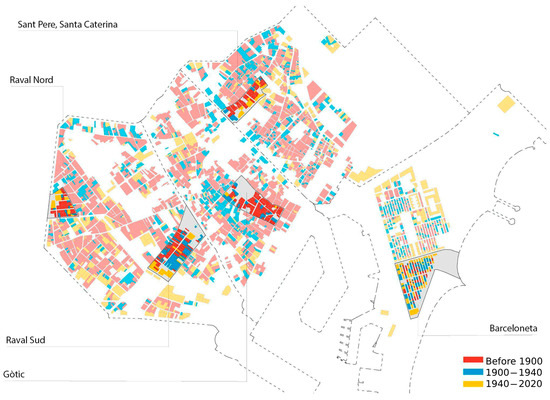
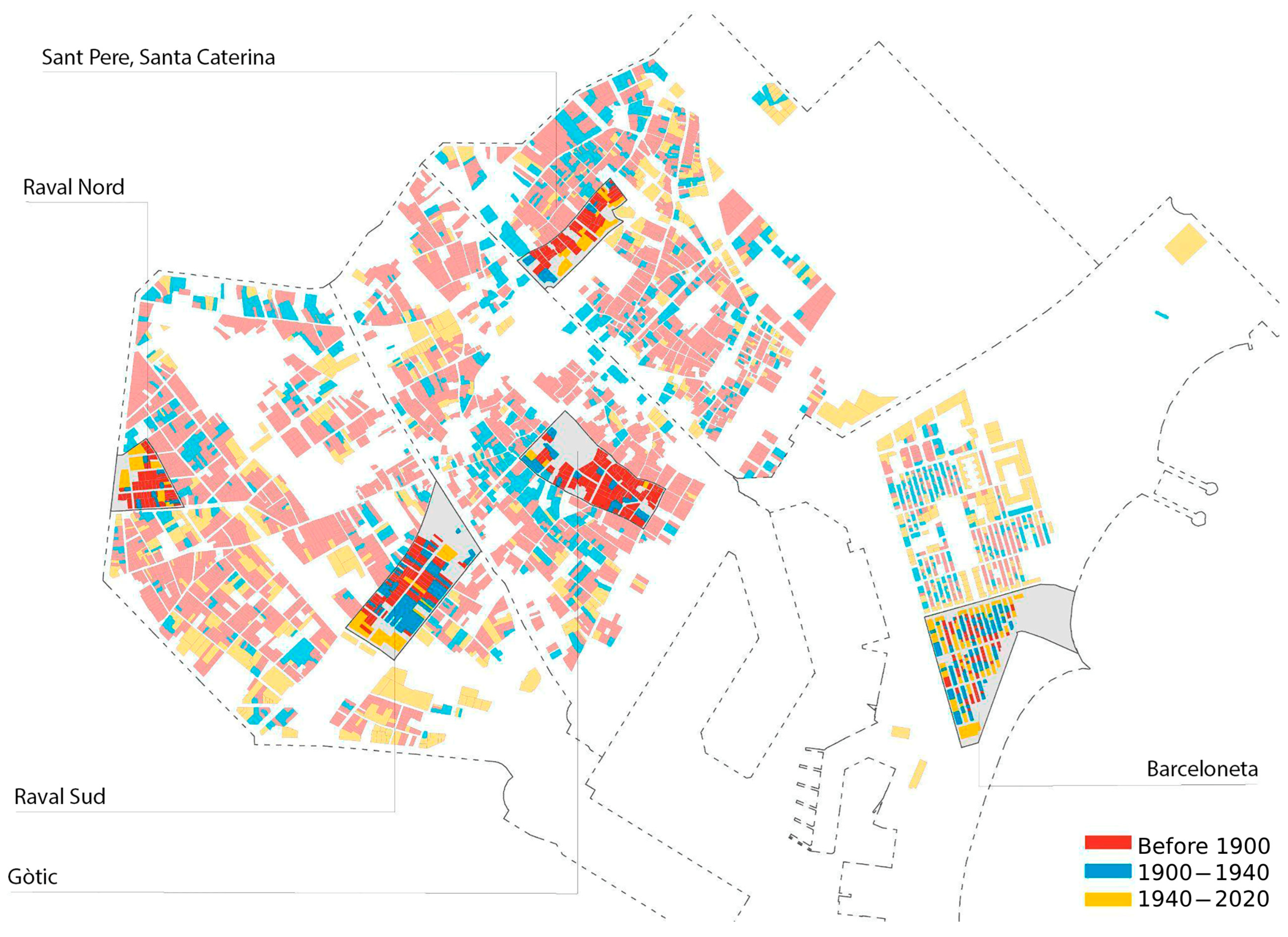
The research starts with a comprehensive mapping of residential building roofs across the entire district (Figure 2). The categorization of roofs into three distinct periods—before 1900, between 1900 and 1940, and from 1940 to 2020—provides a crucial framework for comprehending the evolution of construction practices and architectural styles within Ciutat Vella. These delineated periods act as markers, signifying pivotal shifts in how buildings were constructed and designed and were established by analyzing existing references [14,15]. Section 4.2 deepens into the chronological evolution of these construction systems, offering a comprehensive overview of their development across time.
Figure 2.
Mapping of the residential roofs of Ciutat Vella by period and selection of the study areas. Source: Authors’ own work based on [19,26].
This mapping allows the contextualization of the district’s architectural diversity. It serves as a first step for subsequent, detailed analyses of roof construction evolution.
Table 1 outlines the roofs in each study area, derived from the analysis of all roofs in the district. These dimensional parameters are used as preliminary indicators to estimate the spatial capacity of rooftops to potentially accommodate shared resident use (e.g., terrace-like collective use). At this stage, the analysis is intentionally limited to geometric characteristics, which allow a comparative, district-scale overview and support the subsequent selection of representative case studies. A comprehensive evaluation of actual usability is addressed in later phases of the research through on-site inspections and detailed performance assessments of selected cases.
Table 1.
Average dimensions of residential flat roofs by neighborhoods.
The selection of 5 study areas within each neighborhood of Ciutat Vella has been a strategic process, aimed at ensuring a comprehensive analysis encompassing all construction periods while reflecting the diverse building and socioeconomic landscape of the district with special focus on ageing population. To adhere to the principles of the REVTER project guiding this research, a meticulous approach has been taken. Constructive cartography has been overlaid with demographic data to identify areas that not only exhibit architectural and morphological diversity but are also strategically positioned for collective roof use [26,27,28].
4.2. Case Studies
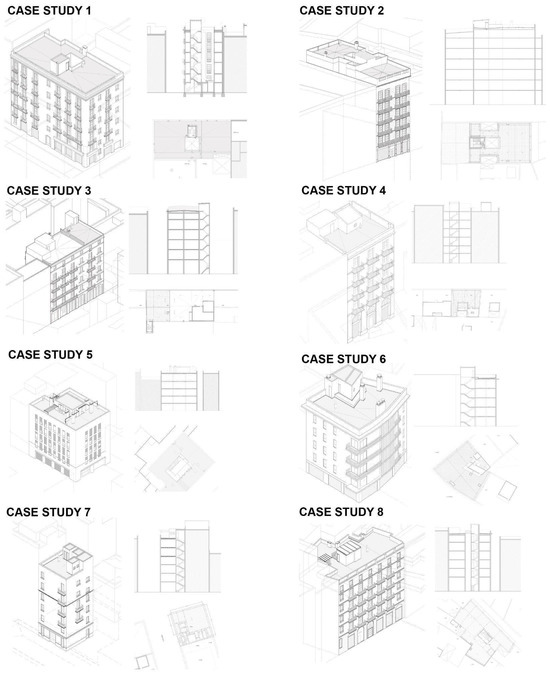
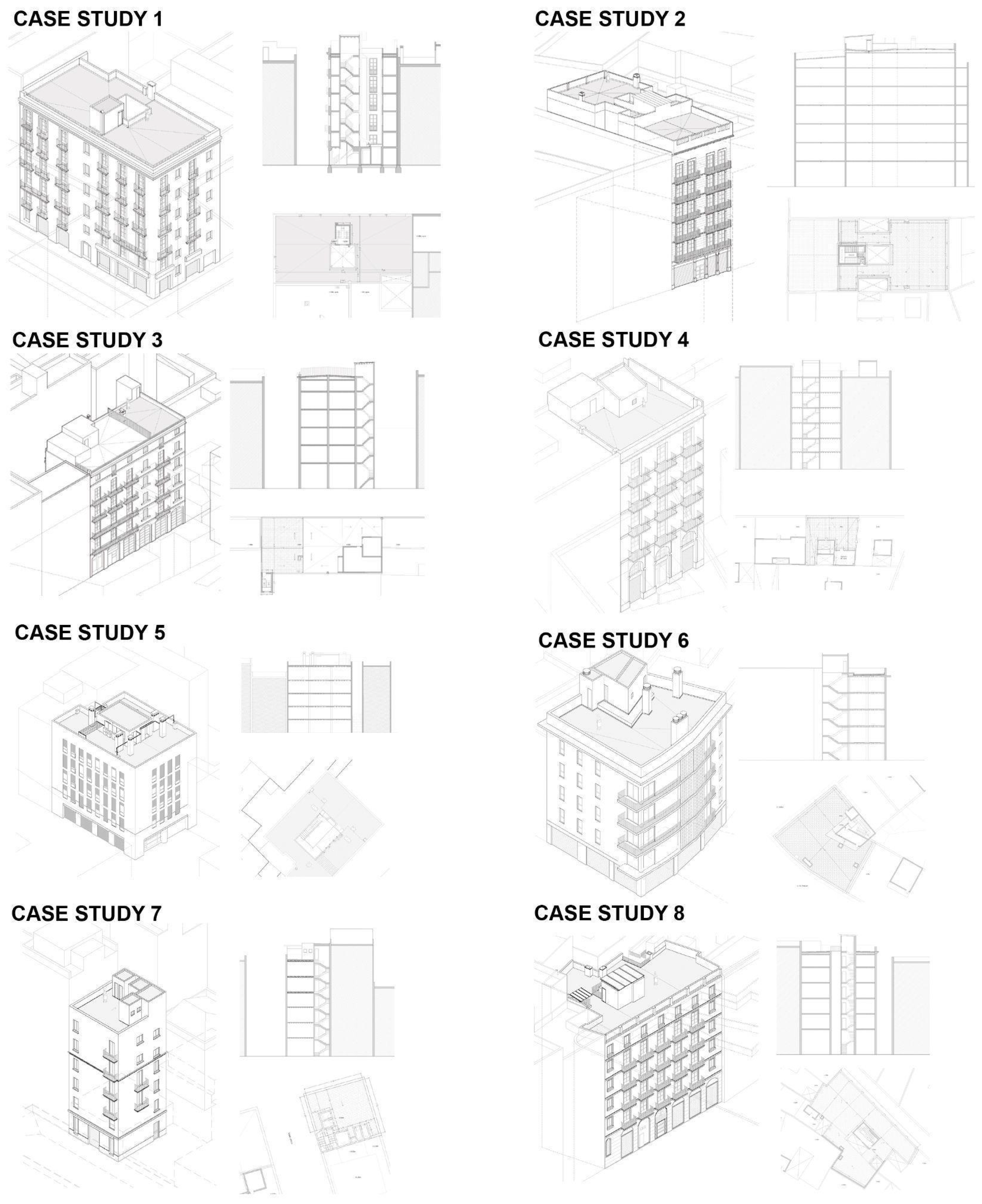
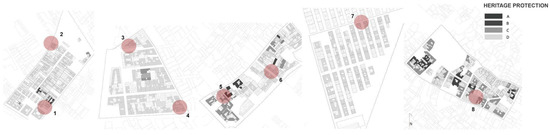
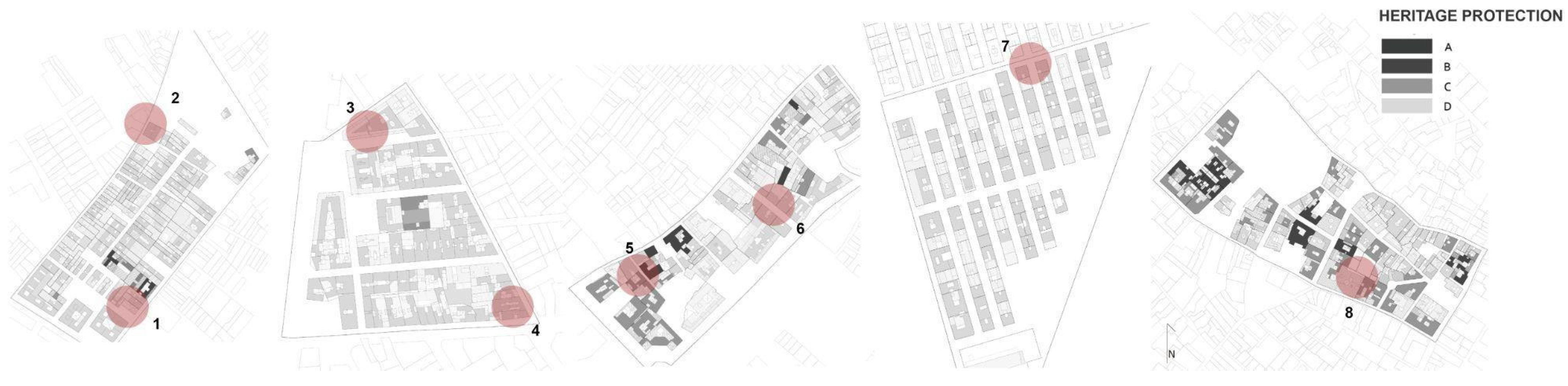
In this section, eight case studies are selected, covering a diverse range of architectural district typologies. They were selected through purposive sampling to maximize typological and constructive representativeness rather than statistical representativeness. Selection criteria included: (i) coverage of the three main construction periods identified in the GIS mapping; (ii) representation of the most recurrent roof assemblies and structural configurations observed in the district; (iii) diversity in urban morphology (e.g., corner buildings, interior blocks); and (iv) practical accessibility for on-site inspection. This approach introduces an inevitable selection bias; therefore, results from the detailed performance evaluation should be interpreted as representative of common assemblies, not as a complete statistical description of all roofs in Ciutat Vella. The selected cases are shown in Figure 3 and their location in Figure 4.
Figure 3.
Case studies in Raval Sud (1 and 2), Raval Nord (3 and 4), Sant Pere and Santa Caterina (5 and 6) Barceloneta (7) and Gòtic (8). Source: Authors’ own work based on [29].
Figure 4.
Heritage protection of study areas from left to right: Raval Sud, Raval Nord, Sant Pere and Santa Caterina, Barceloneta and Gòtic, highlighting the distribution of protection classes and location of the eight case studies (red dots). Source: Authors’ own work based on [19,30].
- Raval Sud study area. The selected block stands out for its remarkable diversity in construction periods. Case Study 1 corresponds to a typical pre-1900 building, Case Study 2 corresponds to a typical building from the 1900–1940 period.
- Raval Nord study area. Two case studies (Case Studies 3 and 4) of the pre-1900 period are selected, corresponding to different structural configurations.
- Sant Pere i Santa Caterina study area. Both Case Studies 5 and 6 belong to the post-1940 construction period and represent corner buildings.
- La Barceloneta study area. Case Study 7 is a post-1940 corner building.
- Gòtic study area with Case Study 8, a pre-1900 period building.
From a heritage point of view, there are several classifications [30]. All of the buildings of the case studies are classified as D—building of documentary interest—(Table 2), which is the general heritage protection level of the district where modifications and partial demolitions are allowed as long as they are approved by an historical-architectural report.
Table 2.
Case studies and their heritage protection classification.
Thus, heritage protection can impose limitations on the alteration of the shape or size of the building and the need to maintain the technical materials and designs to keep the historical appearance and integrity of the building, mainly applying to buildings of periods 1 and 2.
5. Technical Characterization
5.1. Definition of the Main Roof Construction Solutions
The second phase of analysis involved on-site inspections, a crucial step to validate and substantiate the findings derived from scientific literature and available databases.
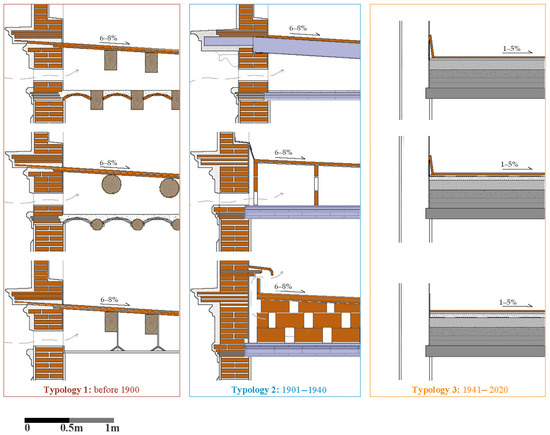
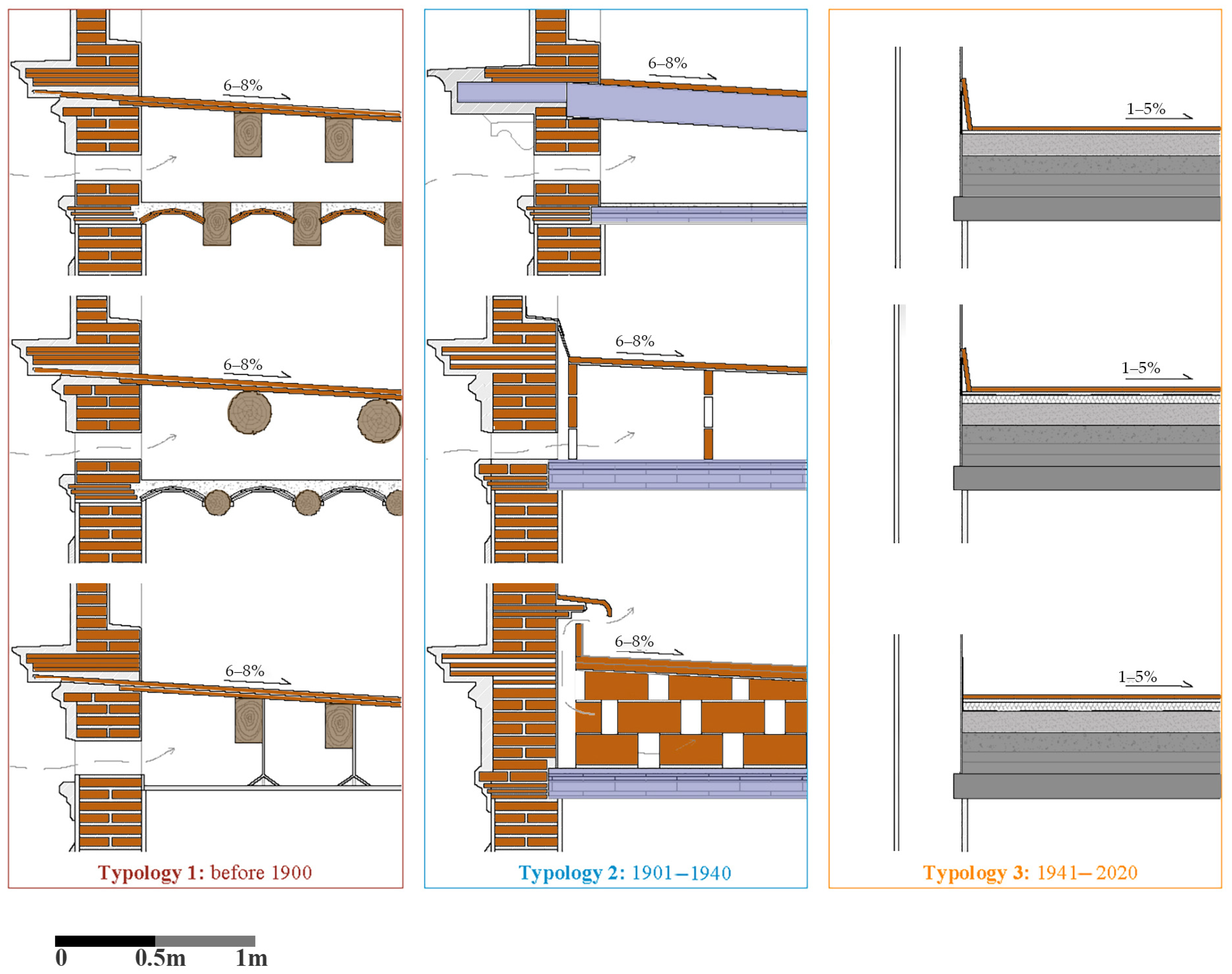
These served to confirm the chronological sequence established in the previous phase regarding the diverse construction systems employed. As depicted in Figure 5, this analysis has delineated three distinct time periods, defined by shifts in the construction systems and materials.
Figure 5.
Summary of flat roof construction typologies by period. Source: Authors’ own work based on [17].
- Period 1 (before 1900): Marked by the utilization of wooden beams and joists and ceramic roofs, indicative of the earliest phase of construction practices observed in the district (Figure 6). The roof is built by placing several layers of flat ceramic tiles on wooden joists, creating a ventilated chamber.
- Period 2 (1900–1940) Signifies a shift or evolution in construction methods, steel beams and joists and ceramic roofs are common. The roof is achieved by placing several layers of flat ceramic tiles on steel beams or tile partitions that create a ventilated chamber.
- Period 3 (1940–2000): Represents the most recent era characterized by further changes or advancements in construction techniques, concrete structures and specialized materials are common.
Figure 6.
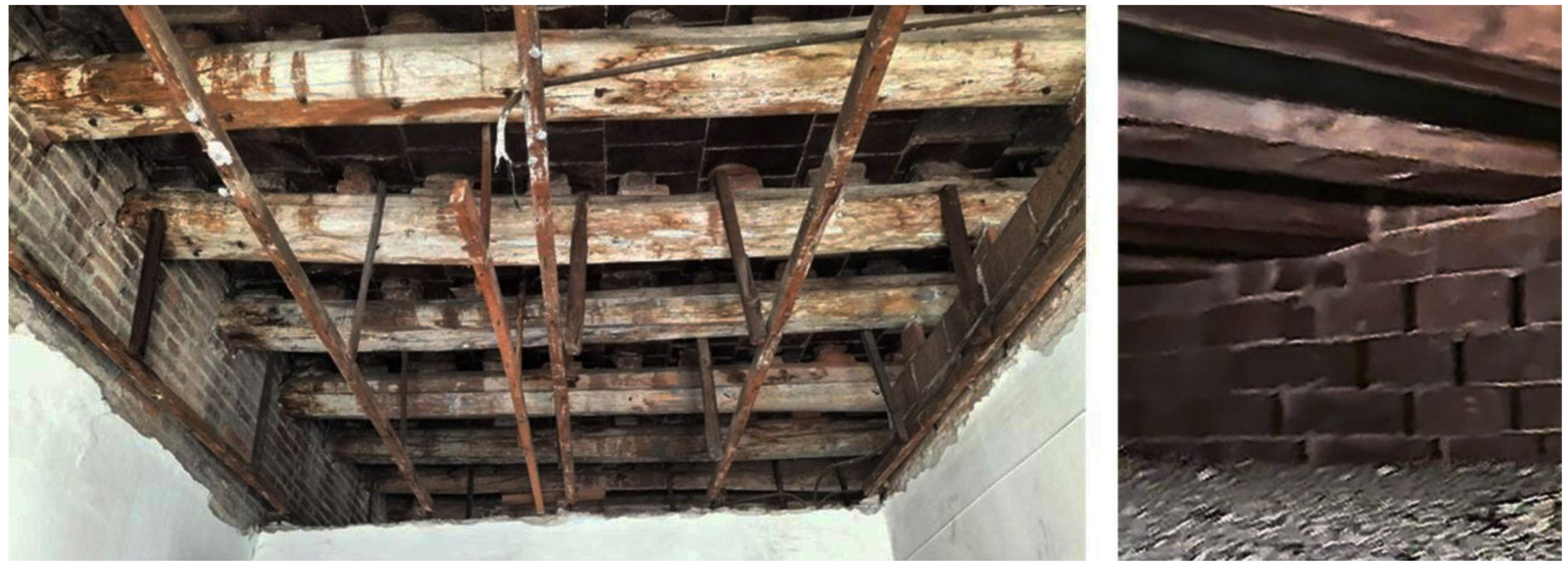
Images taken by the authors of case studies 4 (left) and 3 (right). In the image on the left, construction work has removed the false ceiling, revealing the wooden beams and the underside of the upper ceramic layer of a subtype 1.3 roof. The image on the right is an endoscopic photograph of the ventilated air chamber in a subtype 1.1 roof. Source: Authors’ own work.
Thus, heritage protection can impose limitations on the alteration of the shape or size of the building and the need to maintain the technical materials and designs to keep the historical value of the building, especially in buildings built with historical construction techniques, that is, prior to 1940.
Before 1900 flat roof construction was characterized by the use of wooden beams and joists supporting a ceramic boarding system, combined with a ventilated air chamber that played a fundamental role in regulating moisture and ensuring the durability of the timber structure. In addition to the ventilated chamber, significant emphasis was placed on ensuring water resistance. This was achieved through the incorporation of moderately steep slopes, typically ranging from 6% to 8%, combined with a triple layer of ceramic thin tiles laid with overlapping joints. These layers not only ensured water tightness through redundancy and capillary break but also provided a durable and walkable surface, allowing access and domestic use.
Between 1900 and 1940, notable shifts in construction techniques marked a significant evolution in building practices. During this period, iron beams emerged as a substitute for wooden beams, as showcased in typology 2.1. This change primarily focused on altering the structural material while maintaining the same construction system.
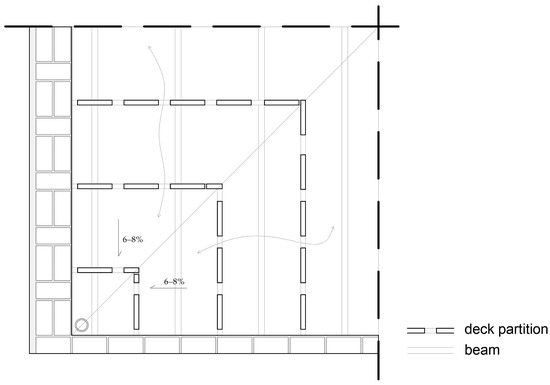
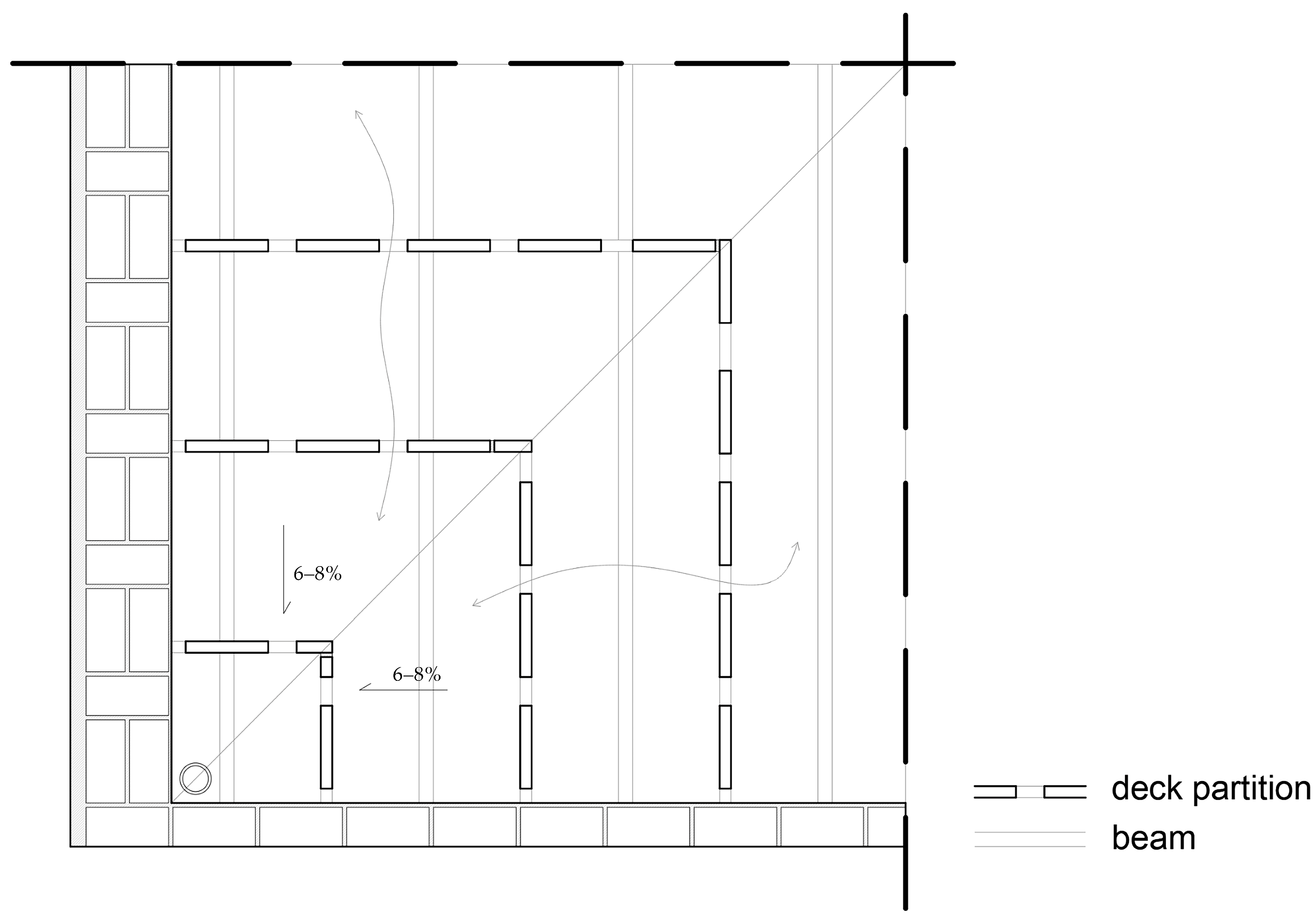
However, a pivotal development during this historical era was the introduction of the tile partition, evident in typologies 2.2 and 2.3. This partition, whether placed perpendicular or parallel to the beams according to the roof slope and drainage layout, featured perforations and facilitated the preservation of a ventilated chamber without necessitating the duplication of the floor slab. In both configurations, the partition walls rest on the load-bearing slab or directly on the beams, ensuring efficient load transfer while maintaining ventilation. By transmitting loads to the floor slab below, this new partition wall allowed continuous ventilation within the cavity.
Concurrently, the incorporation of perimeter flashings emerged alongside the introduction of the partition walls. Tile flashings served to isolate the most exposed part of the roof from the facade, effectively mitigating thrusts caused by roof expansion. Over time, the evolution of flashing material led to typology 2.3, where this disconnection between the roof and the facade fostered a new ventilation space, eliminating the need for ventilation through the facade. Roof slopes during this period typically ranged between 6% and 8%.
Finally, between 1940 and 2020, a transformative shift occurred in construction methods, primarily due to the integration of concrete and petroleum-derived elements, as highlighted in Figure 5. This transition brought about a level of sophistication and specialization in construction elements, where each specific roof requirement was addressed with dedicated layers.
Typology 3.1 illustrates the initial introduction of a waterproof sheet made from petroleum derivatives. This innovation eliminated the need for a ventilated chamber to ensure water impermeability, which was now provided directly by the waterproof membrane rather than by drying mechanisms associated with ventilation. Subsequently allowing for reduced roof slopes ranging between 1% and 5%, created by a layer of lightweight concrete. A significant advancement in this era was the introduction of thermal insulation mandatory from 1979 with the first regulations in Spain [31] that established limits on the thermal transmittance of facades and roofs.
5.2. Performance of Ciutat Vella Roofing Solutions
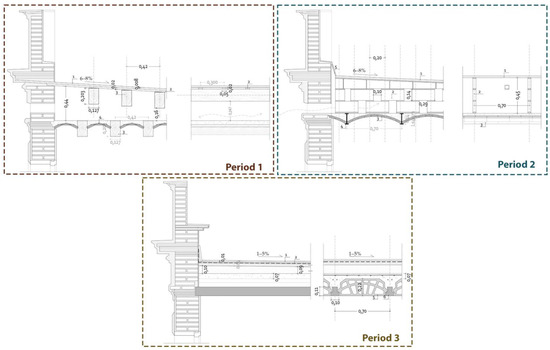
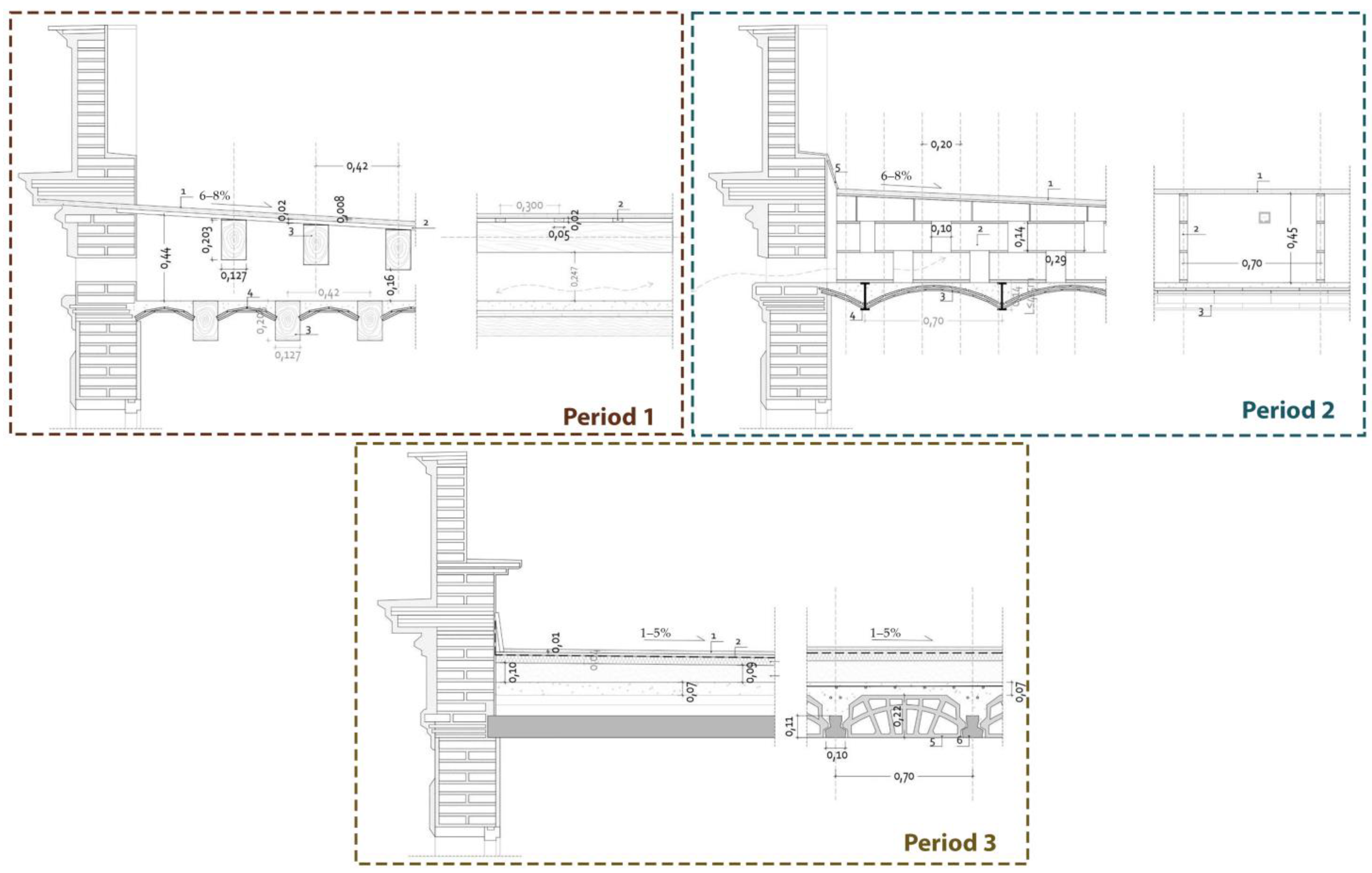
Understanding the performance characteristics of flat roofs in Ciutat Vella involves analyzing various parameters across different subtypes. The performance assessment was carried out on three representative roof subtypes, selected to reflect the most recurrent constructive solutions identified in the district-level GIS mapping and the in-depth case studies. The selection was guided by the principles of the REVTER project, which prioritize constructive representativeness, technical feasibility for rehabilitation, and potential for safe collective use under current residential conditions, rather than statistical representativeness. Each subtype corresponds to one of the three main historical construction periods identified in the study, allowing a comparative evaluation of structural, hygrothermal, and environmental performance across time (Figure 7).
Figure 7.
Roof chosen from each of the periods for evaluation. Source: Authors’ own work based on [17].
5.2.1. Pathology and Structural Assessment
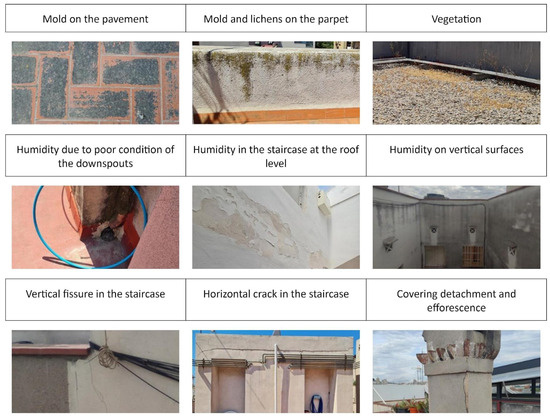
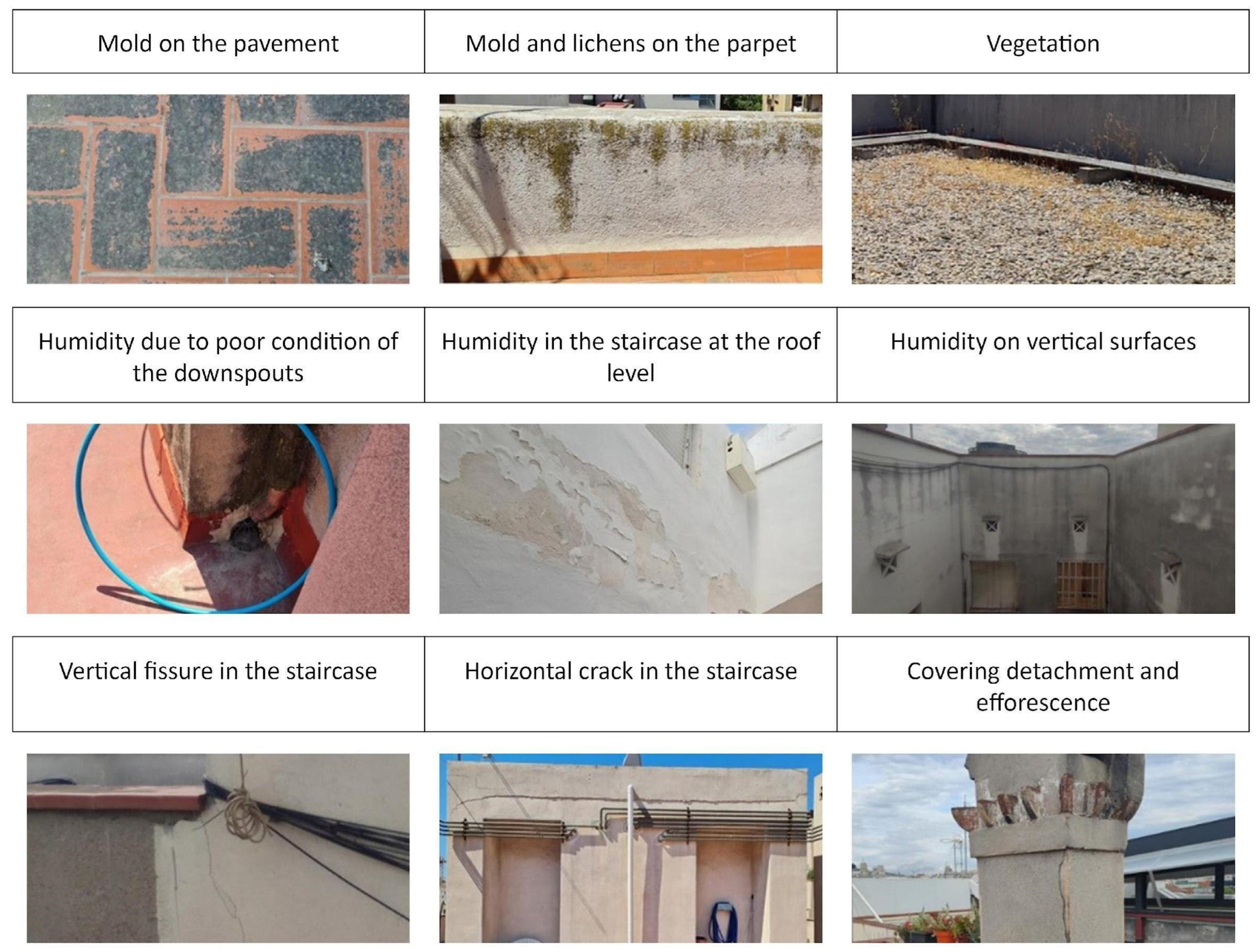
No damage has been observed because of the deformation of the ceramic top layer or its supports (partitions or lower joists). In essence, the roofs analyzed mainly show damage due to lack of regular maintenance. The damage observed is especially concentrated in the parts exposed to dampness, mold, lichen and thermal cracks (Figure 8), and it is not significant enough to prevent the use of the roof. Due to the economic conditions of the residents’ associations, repairs are only carried out when the damages are visible and not as a preventive measure [28].
Figure 8.
Most frequent damage. Source: Authors’ own work.
The first two construction periods (pre-1940) lack specific regulatory texts governing their construction. Consequently, the solutions adopted during these periods were based primarily on experience and traditional practices rather than codified regulations [16].
For these first two subtypes, the evaluation of structural behavior involves considering also the ceramic top layer and supporting partitions, despite not being integral parts of the building structure. These elements, while not constituting the primary structure, play a crucial role in collecting roof loads and transferring them to the underlying structure. As a result, they might experience unintended deformations or damage during this process, which should be accounted for in the assessment of the roofing solutions’ structural behavior.
The roofs of the first period consist of a ceramic top layer that rests on top of the wooden joists. In this case, the bending of the beams could be a limiting factor for the proper functioning of the roof. As the beams are wooden, it is essential to maintain proper ventilation of the chamber beneath the ceramic top layer to avoid the accumulation of moisture and their deterioration. The ceramic top layer of this subtype is supported between joists, which are separated by about 40–50 cm, a very small span that reduces its possibilities of bending between supports. Ceramic tiles are excellent in compression due to their rigid structure, but they can be prone to failure under tensile stresses. Any pulling or stretching force applied to a ceramic tile can lead to cracking or breaking. The absence of pathology due to the bending of the beams and the ceramic top layer leads us to affirm that this type of roof withstands the overloads associated with current residential use.
In the second period, the ceramic top layer rests on partition walls that have holes that allow ventilation of the roof. These partition walls can be supported parallel or perpendicular to the direction of the beams, this depends on the drainage direction of the roof (Figure 9). This fact means that the partition walls can be more or less affected by the possible bending of the metal beams where they rest. In the same way as in the previous case, no damage has been observed that suggests that there is no excessive bending of the metal joists or the upper ceramic layer, making these roofs suitable for their current residential use [32].
Figure 9.
Plan location of partition walls in relation to roof slopes. Source: Authors’ own work.
In Spain, the structural assessment of existing buildings falls under the guidelines of the CTE-DB-SE [32] (Spanish Technical Building Code—Basic Document on Safety in Buildings) in its Annex D. This document acknowledges that the structural assessment of existing buildings may involve a greater degree of differentiation in safety than the structural design of new buildings, always at the discretion of the qualified professional and under their responsibility. Furthermore, it establishes the possibility of carrying out a positive qualitative assessment of an existing building based on (i) whether it was constructed in accordance with good practice, historical experience, and accepted professional practice; (ii) whether the building has been used for a sufficiently long period without any damage or anomalies (displacements, deformations, cracks, corrosion, etc.); and (iii) whether a detailed inspection reveals no evidence of damage or deterioration. In this respect, it can be stated that, generally speaking, these roofs would pass the qualitative assessment of the CTE.
In contrast, the third period (post-1940) operates under established standards regulating both the imposed loads and the expected slab performance. This period begins with years of restrictions on the use of steel [32,33,34,35] due to the Spanish post-war period, which leads, years later, to a very common use of concrete joist floors, with regulations governing their use since 1939.
Conversely, roofs from the third construction period comprise a layered assembly in which waterproofing and slope formation are resolved through specialized layers, forming a cohesive unit that transfers loads to the structural slab below. These roofs were designed and executed under regulatory frameworks that defined minimum structural safety requirements for residential buildings at the time of construction. Consequently, based on the absence of evident pathology under existing conditions, they are considered adequate to support their current residential use, although this assessment does not imply compliance with present-day regulations or suitability for more demanding collective or public uses. Furthermore, CTE-DB-SE Annex D allows for the assumption that a building designed and constructed according to older standards will have adequate load-bearing capacity if it has been used for a period of time without damage, the construction system is suitable, and no changes are anticipated that could increase the loads, among other factors.
In all three cases, it is necessary to highlight that in the event of a change in the use of the roof, towards more demanding uses, or the location of heavy elements, such as small swimming pools or permanent orchards, a detailed study would be necessary in each case. Ensuring that the load transfer from these new elements is as uniform as possible is recommended to prevent damage or deformation of the ceramic tiles, especially in the roof types of the first two periods. Should any reinforcement work be required, the load-bearing capacity of the joists and supporting walls, as well as the current condition of all structural elements, must be taken into account.
5.2.2. Hygrothermal Performance
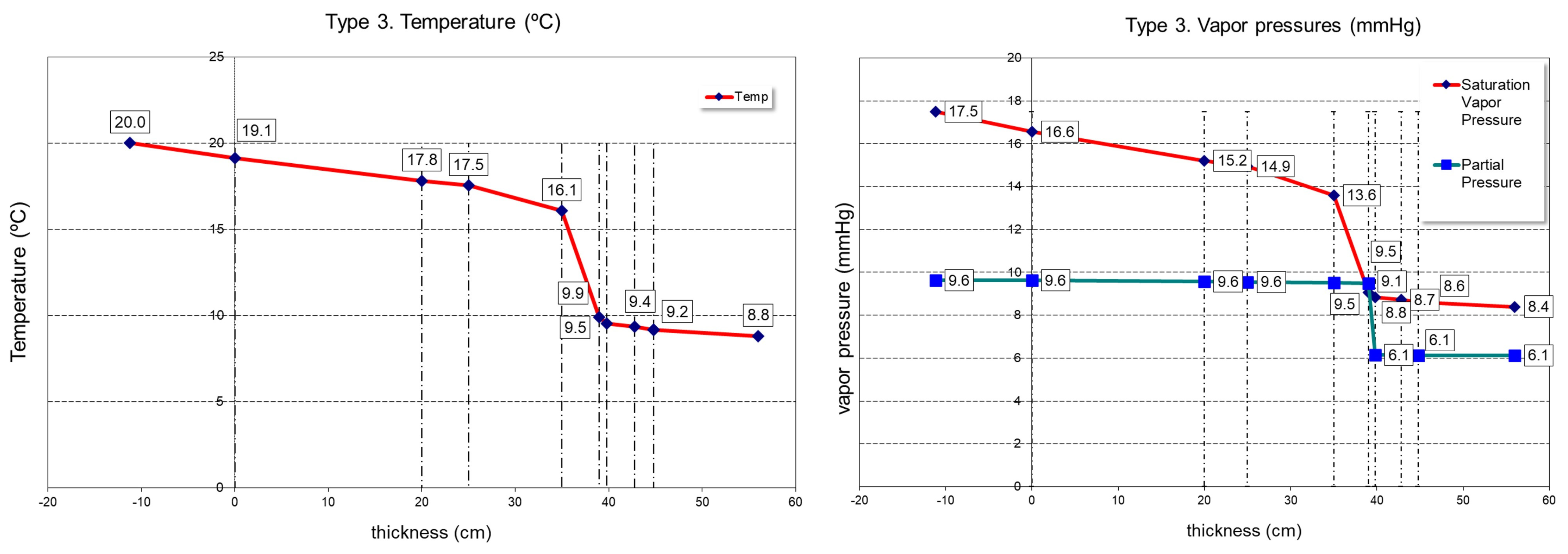
The methodology for characterizing hygrothermal behavior complies with current regulations [20,21], considering the specific environmental conditions of Barcelona defined by the CTE DB-HS (outdoor temperature of 8.8 °C and a humidity index (RH) of 73%, and an indoor temperature of 20 °C and an RH of 55%).
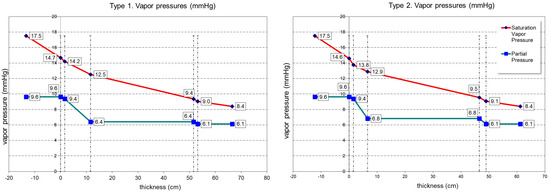
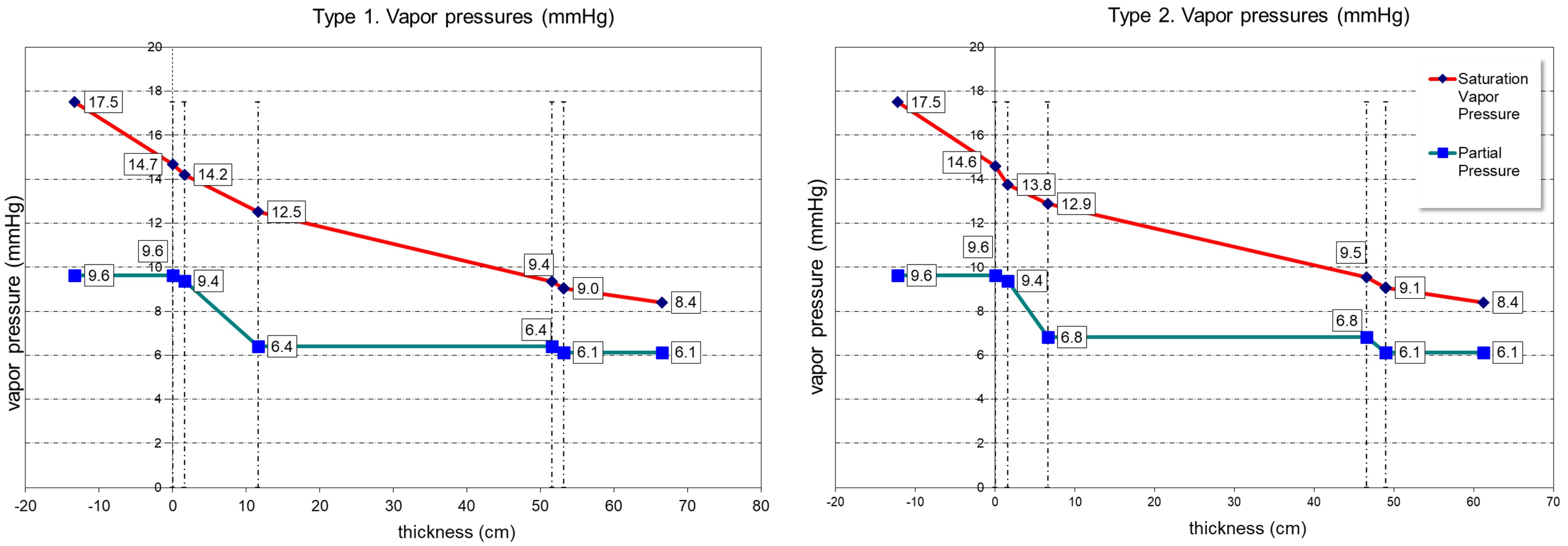
The calculation of thermal transmittance was carried out in accordance with UNE-EN ISO 6946:2021 [36]. The hygrothermal behavior of the building envelope was assessed following the methodology established in UNE-EN ISO 13788 [37], using a steady-state monthly approach (January). The actual temperatures within each layer of the envelope were determined assuming an indoor temperature of 20 °C and an outdoor temperature of 8.8 °C. Based on these temperatures, the corresponding dew point temperatures were obtained using a psychrometric chart, and the partial water vapor pressures across the envelope were calculated, taking into account the water vapor diffusion resistance of the constituent materials. The results are presented in Table 3.
Table 3.
Values of temperature, Saturation Vapor Pressure and Partial Pressure according to construction period and rooftop subtype.
Periods 1 and 2 were devoid of thermal regulations or specialized materials for hygrothermal functions. These roofs primarily relied on ventilated chambers that served as both a regulatory system and a vapor pressure dissipator, minimizing potential condensation in cold roof layers (Figure 10). The height of these air chambers varied based on pavement slope ranging between 50 cm and 20 cm. Ventilation was maintained through several openings on facades, facilitating continuous airflow. While this ventilation may weaken thermal transmittance in winter, it proves beneficial, especially in a Mediterranean climate, enhancing performance during summers. These air chambers also contributed to roof waterproofing. In cases of infiltration through the pavement, constant ventilation aided in drying any infiltrated water.
Figure 10.
Partial vapor pressures (mmHg) of the different roof layers, from the interior (left) to the exterior (right), Types 1 and 2. Source: Authors’ own work.
The construction typology of the 3rd period initially lacked specific thermal insulation materials. With subsequent regulations like NBE-CT-79 and later CTE DB-HE 2006 and 2017, roofs evolved, demanding enhanced materials and technologies. Consequently, roofs became more specialized over time, selecting materials to comply with stringent energy demand limitations.
Comparatively, the thermal transmittance values for construction periods 1 and 2, considering poorly ventilated air spaces, were considerably high at 2.45 W/m2K and 2.53 W/m2K, respectively. In contrast, for period 3, with the incorporation of specialized thermal insulation, the value significantly dropped to 0.78 W/m2K. The evolution over time has led to increasing specialization in material selection for roofs [38].
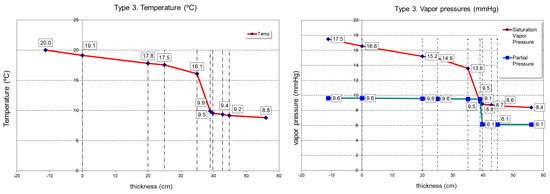
In Figure 11, the hygrothermal behavior in the 3rd case appears less satisfactory. Despite the notable enhancement in the thermal transmittance value, there’s an identified risk of surface condensation. This scenario mirrors a prevalent construction method during the 80s and 90s, wherein open-pore thermal insulation was shielded by the waterproof membrane. The relative placement of thermal insulation and the waterproof membrane in these cases often need the consideration of a vapor barrier. This issue was solved by further evolved roof solutions.
Figure 11.
Temperature (Left) and vapor pressures (right) in the roof section of type3. Source: Authors’ own work.
5.2.3. Performance in Terms of Sustainability of the Conservation System
An analysis of the three types of roofing was conducted based on the guidelines of ISO 14040 and EN 15978:2011 [22,23], which analyze the life cycle of a product or process. Comprehensively spanning from raw material extraction to the end of the product’s life cycle, the standard assessment encompasses several stages. This process is divided into different phases: A1 to A5, product and construction stage; B1 to B7, utilization stage; C1 to C4, the end-of-life stage; and finally, D, which analyzes the benefits and loads beyond the immediate system boundary. Our focus zeroes in on stages A1 through A5, examining the product and construction stages with attention to detail. Additionally, our lens extends to stages C1 through C4, delving deep into the end-of-life stage according to UNE-EN 15804:2012+A2 [39].
In the present work, the use stage (B1–B7) was not considered. As this is a characterization study and given the location of the buildings in vulnerable areas, it was assumed that no maintenance took place during the periods analyzed. Moreover, attempting to predict the frequency of maintenance operations would require statistical estimation as well as assumptions regarding product durability for stages B2–B5 (maintenance, repair, replacement, and refurbishment). Despite these limitations, qualitative assessments of the proposed intervention strategies affecting stage B6 (operational energy use) were provided.
By concentrating our efforts on these pivotal phases (A1–A5; C1–C4), we can dissect and decipher the environmental impact indicators per 1 m2. These indicators serve as a guide toward a more conscientious and responsible construction in Europe, and are:
- Embodied Carbon (EC) kgCO2e/m2
- Embodied energy (EE) MJ/m2
- Resource consumption kg/m2
The calculations for the various stages and indicators were conducted using the “SimaPro v9.1.1 by PRé Sustainability BV” software, in conjunction with the “iTeC BEDEC” and “Ecoinvent v3.6” databases [24,25].
Table 4 provides a comprehensive overview of the main unit impact values attributed to the materials considered in the Life Cycle Assessment (LCA), particularly in the cradle-to-gate calculation for the three distinct roof systems under scrutiny.
Table 4.
Unit impacts by main materials and type of roofing according to construction period.
In the initial period, handmade ceramics and sawn wood contribute to relatively low unitary impact values. Their use is characterized by simplicity and reduced industrial intervention. However, in the second period, the replacement of wooden beams with laminated steel profiles means an evolution towards modernization, but with a substantial increase in environmental impact, which has multiplied by approximately 15 compared to wood. In the third period, contemporary materials such as lightweight concrete, waterproof sheets and thermal insulation abound. The unit impact values of these materials show exponential growth when compared to the impacts of the initial period. As we move from previous periods to the present, a discernible trend emerges: the weight, emissions and energy metrics increase simultaneously.
An initial analysis reveals a disparity between the growth in weight and its corresponding impacts (Table 5). This trend intensifies significantly from the first to the third stage. While the weight merely doubles from the outset, the environmental impacts increase, almost tripling. The key to this difference lies in the use of specialized materials (steel, waterproofing membranes, lightweight concrete) that have higher unitary impacts.
Table 5.
Summary of the main characteristic values of rooftop subtypes and environmental impacts.
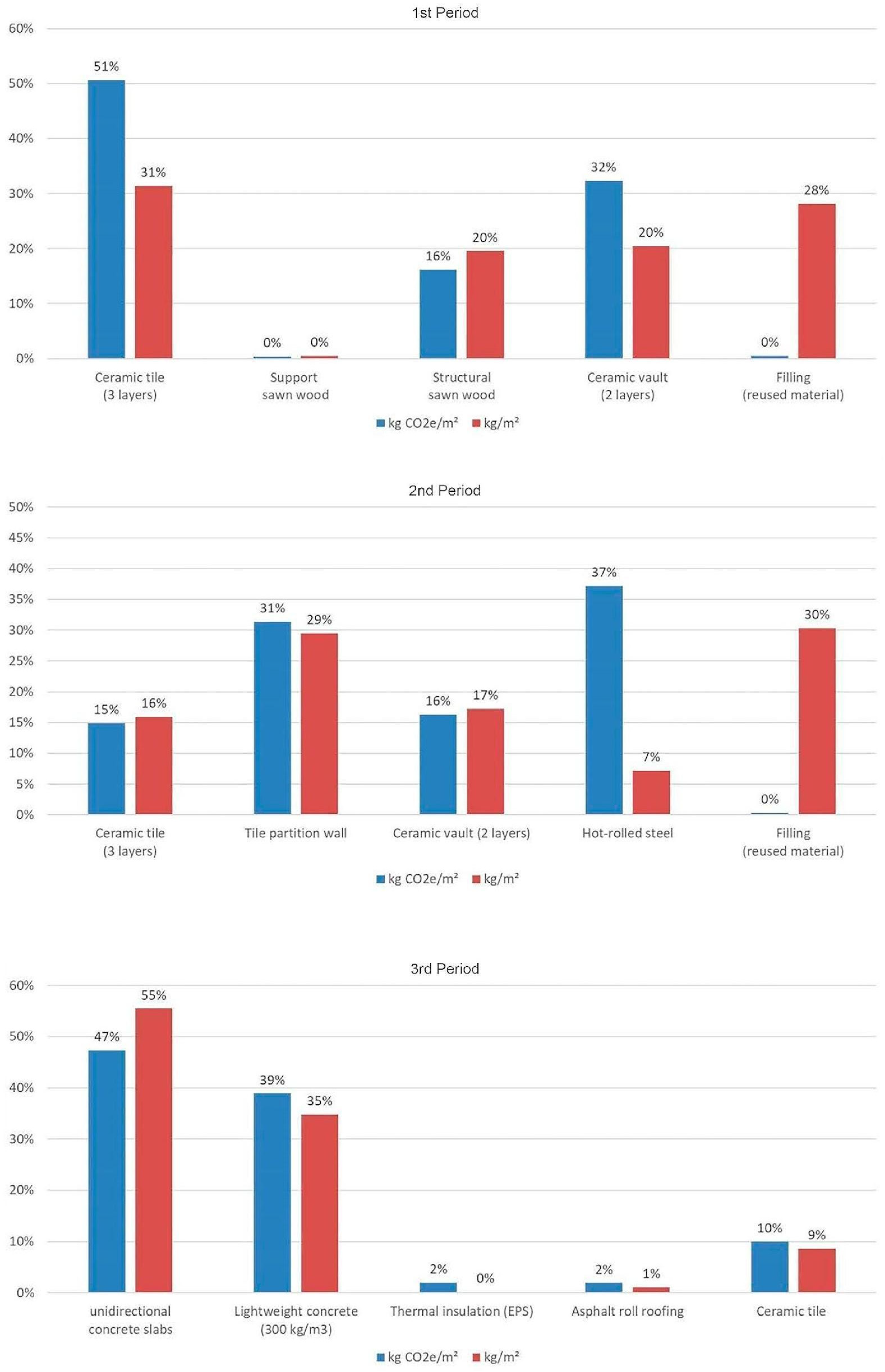
The evolution of roof construction solutions reflects distinct industrial periods and contexts, which directly influence the environmental impacts associated with each roof system (Figure 12). The products and materials used in each period mirror the prevailing industrialization processes; as the degree of industrialization increases, so does the unit environmental impact of the materials.
Figure 12.
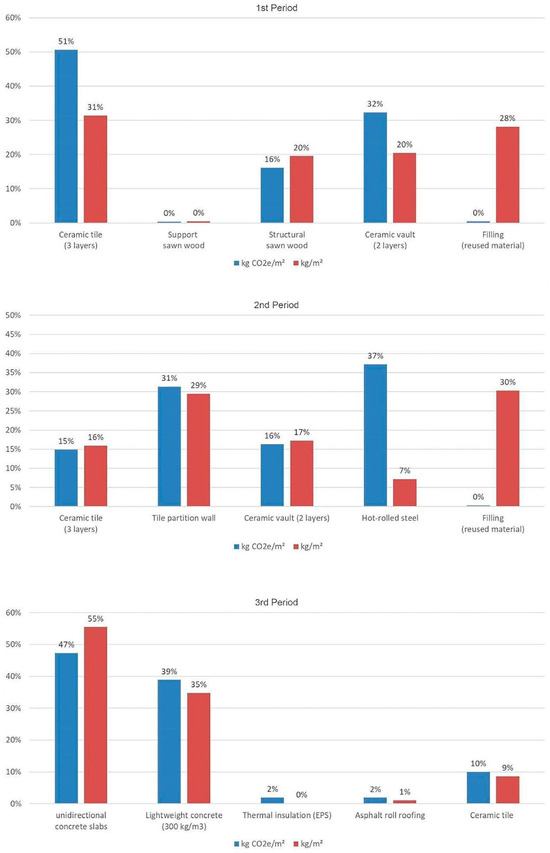
Contribution in % of the different construction elements in terms of CO2 and weight in each period. Source: Authors’ own work.
Conversely, this technological evolution has resulted in improved roof performance, including increased mechanical resistance and reduced thermal transmittance. However, when environmental impact values are normalized per unit of thermal transmittance, industrialized solutions do not demonstrate greater efficiency. The resulting ratios are 13.40 for Period 1, 25.78 for Period 2, and 146.60 for Period 3.
Below is a detailed analysis of each of the representative roofs of each period.
Period 1, before 1900: There is no relationship between the weight of the construction element and its environmental impact (Figure 12). In the case of the paving system, it contributes 50% in terms of weight while in terms of impact (kgCO2e/m2) it barely exceeds 30%. This is because ceramic materials have a greater presence in the construction solution and a higher unit environmental impact compared to timber, which is the other predominant material in the system. Even more noteworthy is the case of the reused material in the vaults, which accounts for almost 30% of the total roof weight while contributing less than 1% of the overall environmental impact. This is due to the fact that it is a reused material that has not undergone any industrial transformation processes, resulting in an almost negligible environmental impact.
Period 2, between 1900 and 1940: The roof of the second construction period weighs 20% more than the previous one. There is no direct correlation between the weight of a construction element and its environmental impact (Figure 12). This is evident in the steel structural profiles, which, despite representing only 7% of the weight, contribute more than 35% of the overall environmental impact. The manufacturing processes required for forming hot-rolled steel profiles involve high energy consumption, thereby increasing their unit environmental impact. As observed in the solutions from the previous period, the infill material of the ceramic vaults accounts for approximately 30% of the total weight, while its environmental impact remains minimal, barely reaching 1%.
Period 3, between 1940 and 2020: The third construction period is the heaviest. Despite incorporating a significant presence of specialized materials, some appear in substantial volumes, in particular concrete in both its structural role (287.18 kg/m2) and in the configuration of the slopes (180 kg/m2), representing 90% of the weight and 86% of the environmental impact (Figure 12). In this case, cement-based materials exhibit a relatively high unit environmental impact while having a substantial presence in the construction solutions. Conversely, construction elements such as the bituminous waterproofing membrane and expanded polystyrene thermal insulation contribute only about 1% by weight, yet account for approximately 4% of the CO2 emissions of the solution. This is due to their low mass combined with high unit impact values.
In this regard, no direct relationship can be observed between high material weight and high environmental impact, as these outcomes primarily depend on two factors: the quantity of materials used in each construction solution and the unit impact values associated with industrial transformation processes.
6. Discussion
The comprehensive exploration of rooftops within Ciutat Vella presented in this article serves as a cornerstone for informed decision-making in their transformation and utilization. The meticulous identification of construction specifics, performance metrics, and heritage values provides a valuable resource for guiding interventions aimed at rejuvenating these underutilized yet promising community spaces.
The methodology adopted represents a significant leap towards efficient evaluation of historic architectural spaces by generating a technical characterization grounded in data and integrated with specific case studies. A broad study sample was selected using a systematic GIS approach, allowing the methodology to be potentially extrapolated across the city. The strategic selection of study areas and eight specific case studies was guided by the principles of the REVTER project. Constructive cartography was overlaid with demographic data to ensure a comprehensive analysis that captured architectural and morphological diversity and strategically positioned areas for potential collective roof use.
To understand the evolution of construction practices, the roofs are categorized into three distinct periods: pre-1900, between 1900 and 1940, and from 1940 to 2020. These delineated periods act as crucial markers offering insights into pivotal shifts in building construction and design. On-site reviews were conducted to validate the chronological sequence of construction systems employed.
Regarding structural condition and performance, the roofs across all three periods are generally considered adequate to maintain and enhance their use in residential contexts. Observed damage is not attributed to the constructive resolution or the actual use of the roofs, but rather to material aging over time, typical thermal stresses, and the lack of regular maintenance, often associated with low-income areas. While acknowledging the need for more detailed insights into various flat roof subtypes, the study characterizes hygrothermal behavior. Certain roof types demonstrate resilience to condensation risks, even without specialized materials, due to the presence of an air chamber combined with the balanced thermal conductivity and vapor permeability of ceramic materials. Nonetheless, it is generally recommended to improve the insulation of the roofs, particularly those belonging to the first two periods.
The sustainability assessment employs an environmentally conscious approach leveraging the LCA framework defined by ISO 14040 [22], which evaluates construction solutions from raw material extraction to end-of-life stages. Stages B2–B5 were not considered, as they exceed the scope of a characterization study. Including these stages would require the definition of statistical service life and maintenance periods for materials and construction solutions. In addition, the location of the buildings in vulnerable areas was taken into account, which precluded the performance of any maintenance activities during the periods analyzed. The assessment of stage B6 was therefore conducted on a qualitative basis.
Overall, the discussion highlights that technical performance, heritage value, and sustainability considerations are deeply interrelated in historic rooftops. Effective rehabilitation strategies must therefore adopt a holistic approach that recognizes the specificities of each construction period while leveraging the strengths of traditional solutions and addressing their limitations.
7. Conclusions
This study presents a comprehensive technical characterization of flat roofs in the historic center of Barcelona, offering a novel, data-driven approach at the district scale. By combining GIS analysis, constructive classification, performance assessment, and sustainability evaluation, the research establishes a solid knowledge base for future rooftop rehabilitation strategies in Ciutat Vella and comparable historic urban fabrics.
One of the main contributions of this research lies in the systematic identification of three dominant rooftop construction periods and their associated constructive logics. This chronological framework enables a clearer understanding of how materials, structural systems, and performance strategies have evolved over time and provides a practical reference for diagnosing existing roofs and defining appropriate intervention strategies.
Intervention recommendations vary significantly based on the construction period.
- Periods 1 & 2 (Traditional, Pre-1940): These covers heavily rely on ceramic materials or stone fillers that are difficult to reuse or recycle. Therefore, interventions should prioritize conservation and maintenance, avoiding complete disassembly, aligning with heritage guidelines. These buildings were built without specific regulations, and their assessment should be based on observation of their condition and structural coherence [32]. Proper ventilation of the air chamber should also be ensured to guarantee better durability of the wooden beams. These conservation and maintenance operations directly affect LCA stages B2–B5, thereby increasing the durability of the roof system. In addition, improvements to thermal insulation for Periods 1 and 2 should also be considered, as they would enhance the environmental performance of stage B6.
- Period 3 (1940–2020): In this period, the heaviest elements, primarily concrete, are concentrated in the floor slab and slope formation layers, which are difficult to recycle. Intervening in these lower layers is consequently discouraged. Instead, removal and modification of the upper layers (insulations and membranes) are recommended for thermal and condensation improvements, offering greater freedom from a heritage conservation point of view. It is recommended to review these roofs for possible interstitial condensation. These repair operations also affect stages B2–B4. In this case, the origin and environmental impact of the new materials associated with stages A2–A5 should be taken into account when improving the performance of the roof.
Beyond the specific case of Ciutat Vella, the methodology and findings presented in this study offer broader applicability to other historic urban centers facing similar challenges related to aging building stock, heritage preservation, and the need for sustainable densification. By providing a structured framework for understanding rooftop construction and performance at the district scale, this research contributes to bridging the gap between technical diagnosis, heritage conservation, and sustainable urban development. The results serve as a valuable resource for researchers, practitioners, and policymakers engaged in the responsible transformation of historic residential environments.
Author Contributions
Conceptualization, C.C. and M.D.-R.; methodology, C.C.; software, O.P.-V.; validation, C.C., M.D.-R. and O.P.-V.; formal analysis, C.C., M.D.-R. and O.P.-V.; investigation, C.C., M.D.-R., O.P.-V., A.V. and P.J.R.; resources, C.C. and P.J.R.; data curation, C.C. and P.J.R.; writing—original draft preparation, C.C. and M.D.-R.; writing—review and editing, C.C. and M.D.-R.; visualization, A.V.; supervision, C.C. and M.D.-R.; project administration, C.C. and P.J.R.; funding acquisition, C.C. and P.J.R. All authors have read and agreed to the published version of the manuscript.
Funding
This publication is part of the R&D&I project PID2022-142352OB-I00, funded by MICIU/AEI/10.13039/501100011033/ and, by FEDER A way to make Europe; and by the Barcelona City Council and Fundació La Caixa (Pla Barcelona Ciència 2021) [REV-TER 21S09267-001].
Data Availability Statement
The relevant data are contained within the article.
Conflicts of Interest
The authors declare no conflicts of interest.
References
- Arbulu, M.; Grijalba, O.; Oregi, X. Analysis of Energy Retrofit Assessment Methodologies in Buildings by European Research Projects. Environ. Clim. Technol. 2021, 25, 265–280. [Google Scholar] [CrossRef] [Scilit]
- Cano-Hila, A.B.; Simó-Solsona, M.; Lorente, J.O.; Miquel, M.P. Dar Vida a Las Azoteas: Luces y Sombras Desde La Mirada de Las Comunidades de Vecinos. El Caso Del Distrito de Ciutat Vella (Barcelona). Waterfront 2023, 65, 3–38. [Google Scholar] [CrossRef] [Scilit]
- Elrayies, G.M. Prophylactic Architecture: Formulating the Concept of Pandemic-Resilient Homes. Buildings 2022, 12, 927. [Google Scholar] [CrossRef] [Scilit]
- Fahlstedt, O.; Temeljotov-Salaj, A.; Lohne, J.; Bohne, R.A. Holistic Assessment of Carbon Abatement Strategies in Building Refurbishment Literature—A Scoping Review. Renew. Sustain. Energy Rev. 2022, 167, 112636. [Google Scholar] [CrossRef] [Scilit]
- González, M.B.; Campisi, T.; Colajanni, S.; Saeli, M. European Actions to Improve the Building Energy Efficiency: State of the Art of the Technical Standards. In Proceedings of the ARCHDESIGN’22: 9th International Architectural Design Conference Proceedings, Istanbul, Turkiye, 6 May 2022; DAKAM: Istanbul, Turkiye, 2022; pp. 68–81. [Google Scholar]
- Ascione, F.; Ceroni, F.; De Masi, R.F.; de’ Rossi, F.; Pecce, M.R. Historical Buildings: Multidisciplinary Approach to Structural/Energy Diagnosis and Performance Assessment. Appl. Energy 2017, 185, 1517–1528. [Google Scholar] [CrossRef] [Scilit]
- Roca, P. Restoration of Historic Buildings: Conservation Principles and Structural Assessment. Int. J. Mater. Struct. Integr. 2011, 5, 151–167. [Google Scholar] [CrossRef] [Scilit]
- Gharib, R.Y. Sustainable assessment tool of historic centers: The Cases of Bath and Cambridge. Int. J. Archit. Res. ArchNet-IJAR 2014, 8, 108–119. [Google Scholar] [CrossRef] [Scilit]
- Acierno, M.; Fiorani, D. Innovative tools for managing historical buildings: The use of geographic information system and ontologies for historical centers. Int. Arch. Photogramm. Remote Sens. Spat. Inf. Sci. 2019, XLII-2-W11, 21–27. [Google Scholar] [CrossRef] [Scilit]
- Cornadó, C.; Vima-Grau, S.; Garcia-Almirall, P. Pre-Diagnosis Protocol for Large Residential Building Stock. The Case of Barcelona’s Vulnerable Areas. In Hygrothermal Behaviour and Building Pathologies; Springer: Cham, Switzerland, 2021; pp. 123–155. [Google Scholar] [CrossRef] [Scilit]
- Conceição, J.; Poça, B.; De Brito, J.; Flores-Colen, I.; Castelo, A. Data Analysis of Inspection, Diagnosis, and Rehabilitation of Flat Roofs. J. Perform. Constr. Facil. 2019, 33, 04018100. [Google Scholar] [CrossRef] [Scilit]
- Fiumi, L. Surveying the Roofs of Rome. J. Cult. Herit. 2012, 13, 304–313. [Google Scholar] [CrossRef] [Scilit]
- Colegio de Aparejadores de Barcelona. Manual Del Test Energètic, 1st ed.; CAATEEB—Colegio de Aparejadores de Barcelona: Barcelona, Spain, 2019. [Google Scholar]
- Draper, P.G. La Casa de Veïns Del Segle XIX a Barcelona: Avaluació Tipològica, Arquitectònica i Estructural-Constructiva Del Tipus de Casa de Residència Del s. XIX, a Partir de l’anàlisi Dels Edificis Construïts Entre 1800 i 1920, a Ciutat Vella i a l’Eixample Central. Ph.D. Thesis, Universitat Politècnica de Catalunya, Barcelona, Spain, 1995. [Google Scholar]
- Casademunt, A.P. Secrets d’un Sistema Constructiu; Universidad Politécnica de Cataluña/Universitat Politècnica de Catalunya: Barcelona, Spain, 2001; ISBN 84-8301-542-0. [Google Scholar]
- Graus, R.; Colomina, J.R. Història de la Construcció a la Catalunya Contemporània; Universitat Politècnica de Catalunya: Barcelona, Spain, 2010. [Google Scholar]
- Graus, R. La Cubierta Plana, Un Paseo Por Su Historia; Universitat Politècnica de Catalunya: Barcelona, Spain, 2005. [Google Scholar]
- Vima-Grau, S.; Cornadó, C.; Ravetllat, P.-J.; Garcia-Almirall, P. Multiscale Integral Assessment of Habitability in the Case of El Raval in Barcelona. Sustainability 2021, 13, 4598. [Google Scholar] [CrossRef] [Scilit]
- Sede Electrónica del Catastro. Available online: https://www.sedecatastro.gob.es/ (accessed on 31 March 2023).
- Gobierno de España. Ministerio de Vivienda y Agenda Urbana. Código Técnico de la Edificación—Documento Básico de Ahorro de Energía (CTE-DB-HE). Available online: https://www.codigotecnico.org/DocumentosCTE/AhorroEnergia.html (accessed on 10 June 2025).
- Gobierno de España. Ministerio de Vivienda y Agenda Urbana. Código Técnico de la Edificación—Documento Básico de Salubridad (CTE-DB-HS). Available online: https://www.codigotecnico.org/DocumentosCTE/Salubridad.html (accessed on 10 June 2025).
- ISO 14040:2006(Es); Gestión Ambiental—Análisis Del Ciclo de Vida—Principios y Marco de Referencia. IOS Press: Amsterdam, The Netherlands, 2004.
- EN 15978:2011; Sustainability of Construction Works—Assessment of Environmental Performance of Buildings—Calculation Method. European Committee for Standarization (CEN): Brussels, Belgium, 2011.
- Base de Datos BEDEC. Available online: https://itec.es/servicios/bedec/ (accessed on 10 June 2025).
- Ecoinvent Database. Available online: https://ecoinvent.org/database/ (accessed on 10 June 2025).
- Domènech-Rodríguez, M.; París-Viviana, O.; Cornadó, C. Re-Habiting the Rooftops in Ciutat Vella (Barcelona): Co-Designed Low-Cost Solutions for a Social, Technical and Environmental Improvement. Urban Sci. 2025, 9, 304. [Google Scholar] [CrossRef] [Scilit]
- Cano-Hila, A.B.; Simó-Solsona, M.; Bosch-González, M.; Ravetllat-Mira, P.J.; Vima-Grau, S.; Berrens, K. Nueva Vida En La Azotea: Promoviendo Estrategias de Sostenibilidad Social en Barcelona. Ciudad. Y Territ. Estud. Territ. 2025, 57, 395–404. [Google Scholar] [CrossRef] [Scilit]
- Cornadó, C.; Varela, A.; Vima-Grau, S.; Domenech, M.; Ravetllat, P.J. Flat Roofs Characterization in Barcelona’s Historic Center; RILEM Bookseries; Springer Nature : Cham, Switzerland, 2023; Volume 46, pp. 1031–1041. [Google Scholar] [CrossRef] [Scilit]
- Urban Planning Information Portal (PIU) Barcelona City Council. Available online: https://ajuntament.barcelona.cat/informaciourbanistica/cerca/en/ (accessed on 10 June 2025).
- Ajuntament de Barcelona. Pla Especial de Protecció Del Patrimoni Arquitectònic Històric Artístic de La Ciutat de Barcelona (Districte de Ciutat Vella): Normes Urbanístiques; Butlletí Oficial de La Província de Barcelona: Barcelona, Spain, 2000.
- Gobierno de España; Agencia Estatal Boletín Oficial Del Estado. Real Decreto 2429/1979, de 6 de Julio, Por El Que SE Aprueba la Norma Básica de Edificación Nbe-Ct-79, Sobre Condiciones Térmicas en Los Edificios. Available online: https://www.boe.es/buscar/doc.php?id=BOE-A-1979-24866 (accessed on 29 December 2025).
- Gobierno de España. Ministerio de Vivienda y Agenda Urbana. Código Técnico de la Edificación—Documento Básico de Seguridad Estructural (CTE-DB-SE). Available online: https://www.codigotecnico.org/DocumentosCTE/SeguridadEstructural.html (accessed on 10 June 2025).
- Carmona Arriaga, F. Teoría y práctica de la construcción en la España de la autarquía. In Actas del Cuarto Congreso Nacional de Historia de la Construcción; Instituto Juan de Herrera: Cádiz, Spain, 2005; Volume 1, pp. 77–86. [Google Scholar]
- Brillas, A.C.; Mestre, J.-L.Z.I. La innovació tecnològica en l’arquitectura per a la indústria durant els anys 40, 50 i 60 del segle XX a l’àrea de Barcelona. In Actas de la 3a Jornada de Doctorado del Programa de Tecnología de la Arquitectura, de la Edificación y del Urbanismo; Escola Politècnica Superior d’Edificació de Barcelona: Barcelona, Spain, 2020; Available online: https://hdl.handle.net/2117/338355 (accessed on 29 December 2025).
- Echegaray, C.S.R. Política de vivienda en el primer franquismo: 1936–1949. Temporánea. Rev. De Hist. De La Arquit. 2020, 1, 59–96. [Google Scholar] [CrossRef] [Scilit]
- UNE-EN ISO 6946:2021; Building Components and Building Elements—Thermal Resistance and Thermal Transmittance—Calculation Methods. European Committee for Standarization (CEN): Brussels, Belgium, 2021.
- UNE-EN ISO 13788:2016; Hygrothermal Performance of Building Components and Building Elements—Internal Surface Temperature to Avoid Critical Surface Humidity and Interstitial Condensation—Calculation Methods. European Committee for Standarization (CEN): Brussels, Belgium, 2020.
- Ubando, A.T.; Chueh, C.-C.; Jin, L.; Sánchez, E.C.; Vilà, D.M. Thermochromic Materials as Passive Roof Technology: Their Impact on Building Energy Performance. Energies 2022, 15, 2161. [Google Scholar] [CrossRef] [Scilit]
- UNE-EN 15804:2012+A2:2019; Sostenibilidad en la Construcción. Declaraciones Ambientales de Producto. Reglas de Categoría de Producto Básicas para Productos de Construcción. UNE: Madrid, Spain, 2019.

Disclaimer/Publisher’s Note: The statements, opinions and data contained in all publications are solely those of the individual author(s) and contributor(s) and not of MDPI and/or the editor(s). MDPI and/or the editor(s) disclaim responsibility for any injury to people or property resulting from any ideas, methods, instructions or products referred to in the content. |
© 2026 by the authors. Licensee MDPI, Basel, Switzerland. This article is an open access article distributed under the terms and conditions of the Creative Commons Attribution (CC BY) license.