


Abstract
Two folding screens by futurist artist Giacomo Balla (1871–1958) in the collection of the Kröller-Müller Museum (the Netherlands) were investigated: Paravento con linea di velocità (1916–1917) and Paravento (1916/1917–1958). The screens are painted on both sides, the first on four canvases, stretched onto two wooden strainers and framed with painted wooden strips, and the second on wooden panels set into four painted stiles. In the past, damages on Paravento con linea di velocità were restored by conservators, while Paravento was probably first reworked by the artist himself and later restored by conservators. Yellowed varnish and discolored retouches on both screens led to a wish for treatment. The aim of this research was to gain insight into the painting techniques, layer buildup, pigments, binders, and varnishes of the two artworks. This information supported the decision making for treatment, and it broadens the knowledge on the materials used by Balla. Up to now, only a few published studies deal with the technical examination of paintings by this artist. Both folding screens were subjected to technical photography (UV, IR photography, and X-ray) and were examined with portable point X-ray fluorescence (pXRF) and Raman spectroscopy. Moreover, samples were taken. Cross-sections were studied with optical microscopy, scanning electron microscopy with energy-dispersive X-ray spectroscopy (SEM-EDX), attenuated total reflection Fourier-transform infrared (ATR-FTIR) imaging, and micro-Raman spectroscopy. Loose samples were examined with SEM-EDX, FTIR and micro-Raman spectroscopy, and pyrolysis gas chromatography mass spectrometry (Py-GC/MS). For Paravento con linea di velocità, all pigments and fillers of the painted canvases are compatible with the dating of the screen (1916–1917), but they differ from those on the frame. Here, rutile, in combination with various pigments, among which are blue copper phthalocyanine (PB15) and other synthetic organic pigments, was found. This indicates that the frame has been painted later, likely after the Second World War. The composition of the binders differs as well. Drying oil and pine resin have been used on the canvases, explaining the smooth and glossy appearance and solvent-sensitivity of the paint. On the frame, oil with some alkyd resin was identified. The provenance of the screen before 1972 is not clear, nor when the frame was made and painted and by whom. The results for Paravento indicate that the palettes of the two sides—painted in different styles—are comparable. Mainly inorganic pigments were found, except for the dark red areas, where toluidine red (PR3) is present. pXRF showed high amounts of zinc; cross-sections revealed that zinc white is present in the lower layers. These pigments are compatible with the dating of the screen (1916–1917). In many of the upper paint layers though, except for some green, dark red, and black areas, rutile has been identified. This indicates that these layers were applied later, likely after the Second World War. Since this folding screen was used by the artist and his family until his death in 1958, it seems likely that Balla himself reworked the screen.
1. Introduction
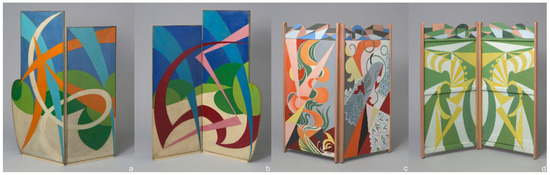
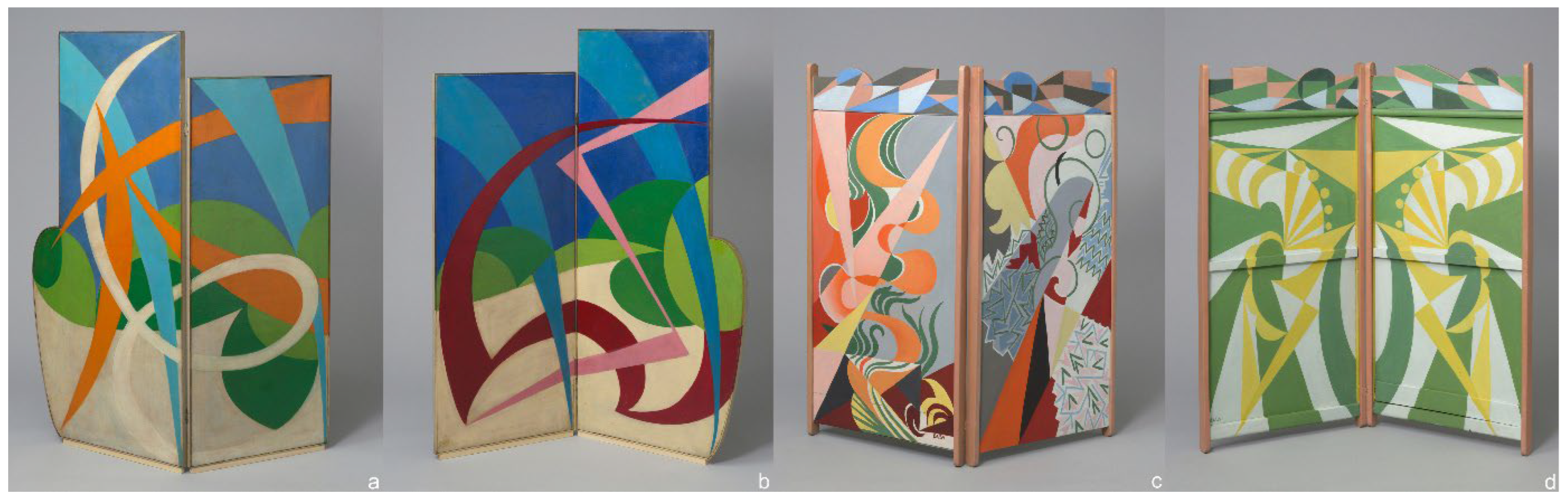
The Kröller-Müller Museum (the Netherlands) holds two double-sided painted folding screens by Italian artist Giacomo Balla (1871–1958; Figure 1). These works, titled Paravento con linea di velocità (KM 133.986, [1], no. 522-522A) and Paravento (KM 134.264, [1] no. 523-523A), both date from 1916 to 1917. Balla, a founding figure of Futurism, explored movement and speed throughout his career [2]—motives that are evident in these two paraventi. His interest in light and motion led him to use bold lines and vibrant colors. His mission—declared in his and Fortunato Depero’s manifesto of the Futurist Reconstruction of the Universe—was to break the concept of art away from the static form of painting and extend it to the infinite possibilities of everyday life, broadening the field of aesthetics to the world, or rather the universe, thus leading him to use unconventional materials and forms, rather than sticking to traditional techniques [3]. This more experimental approach may reflect his background as a self-taught rather than academically trained artist [2].
Figure 1.
(a,b) Paravento con linea di velocità, 1916–1917, paint on canvas in painted frames, 151.4 × 126.5 × 2.5 cm (h × w × d); wooden bars along bottom edges are later additions. (c,d) Paravento, 1916/1917–1958, paint on wood, 123.5 × 116 × 4.5 cm (h × w × d). Photos taken in 2023 by Rik Klein Gotink, after conservation treatment.
Since the 1970s, the Kröller-Müller Museum has acquired several works by Futurist artists. As a result, the museum now holds a substantial group of works by, among others, Giacomo Balla, Umberto Boccioni, Alexander Bohomazov, Vilmos Huszár, Jules Schmalzigaug, and Gino Severini. This has somewhat filled the gap in the museum’s original collection showing the development of modern painting from 1860 until 1930—a shortcoming that was later regretted by its founder, Helene Kröller-Müller1. In addition to a postcard from Balla to Schmalzigaug and two works on paper by Balla, the museum holds two of the four folding screens ever created by this artist2.
The two folding screens have a different provenance.
Only part of the provenance of Paravento con linea di velocità, made of four wooden-framed canvases, is known. Most likely, the screen was owned by a private collector3 until 1972, when it was sold to Galleria Notizie in Turin (Italy). After that, the screen was owned by several galleries and private collectors until 2015, when it was acquired by the Kröller-Müller Museum.
Paravento—painted on wooden panels set into four stiles—entered the museum collection in 2019. This artwork has a more straightforward provenance: it remained in Balla’s collection and that of his heirs in Casa Balla until 1994, after which it entered a private collection. In La Casa Futurista di Balla, home and studio of the artist at 2 Via Nicolò Porpora in Rome until 1929, and subsequently in Casa Balla, at 39 Via Oslavia, also in Rome, everything was self-designed in his futuristic style and self-made: tables, chairs, sofas, partition walls, ashtrays, lamps, rugs, and even clothing, all of which were used in everyday life.
Little is known about Giacomo Balla’s choice of materials and painting techniques, with the exception of the studies of three paintings: Bambina con fiori, dated 1902/1903 [6]; Velocità d’automobile + luce + rumore, dated 1913 [7]; and Grido dimostrazione in piazza del Quirinale, from 1915 [8]. These studies hence focus on a different type of object, and only the latter is from a comparable period of the two folding screens.
Our research project started shortly after the acquisition of Paravento in 2019, when it was planned to restore both objects for the exhibition Futurism & Europe: The Aesthetics of a New World held in the Kröller-Müller Museum in 2023.
Paravento con linea di velocità has suffered some damage over time: the canvases show old repaired tears and retouches. As a result of discoloration of both the original paint and the later additions, these have become more visible. There are no detailed records of past restoration treatments, making it unclear when or by whom these were carried out. However, a note in Komanecky’s 1984 publication [9] (p.226) informs us that the folding screen was “recently restored”. At that time, it was in the possession of Galerie Rudolf Zwirner in Cologne (Germany). When examining the screen before treatment at the Kröller-Müller Museum in 2021–2022, it was noticed that the colors of the paint on the wooden frame differ significantly from those on the painted canvasses. This raised the question of whether a different paint was used for the frame or if the colors of the paint might have changed over time.
Paravento clearly shows evidence of multiple painting campaigns: underlying paint layers have been partially removed by mechanical scraping and chemical dissolving; and some colors of the compositions have been overpainted in a different color, whereas on the stiles a similar pink color had been applied. This suggests that the screen—likely used in Casa Balla and, as a result, worn-out—was periodically reworked over the years, most likely by the artist himself. Unfortunately, no documentation can confirm this. There are also visible traces of previous conservation treatments, including fillings, retouching, and a partial varnish removal. These treatments were not documented, except for the most recent restoration, completed in November 2019, just before the museum acquired the piece, which included a surface cleaning and retouching [10].
1.1. Research Aim
This research aimed to enhance the understanding of the material composition and painting techniques used by Giacomo Balla in the two folding screens, while also supporting the conservation treatment and the long-term preservation.
One subject of interest was the yellowed varnish. Tests on Paravento con linea di velocità revealed that some colors were sensitive to solvents, complicating the varnish removal. A study by Rava et al. [8] on the painting Grido dimostrazione in Piazza del Quirinale (1915, private collection) reports that, here, Balla’s paint contains oil and/or natural resin. This finding raised the question whether this was also the case for Paravento con linea di velocità, since a binder containing a natural resin might give a similar solubility as the varnish.
Additionally, more specific issues were addressed for each artwork. For Paravento con linea di velocità, the research was also focused on the color difference between the paints on the canvas and the ones on the wooden frame; Paravento required a detailed examination to determine the dating of the various paint layers of the complete screen4 and, specifically, the later pink overpaint on the four stiles, since—during varnish removal tests—this paint dissolved together with the yellowed varnish on top.
1.2. Approach
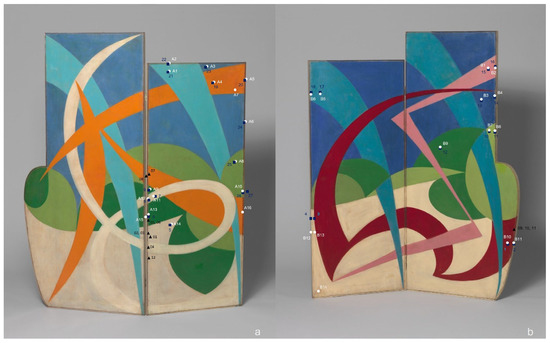
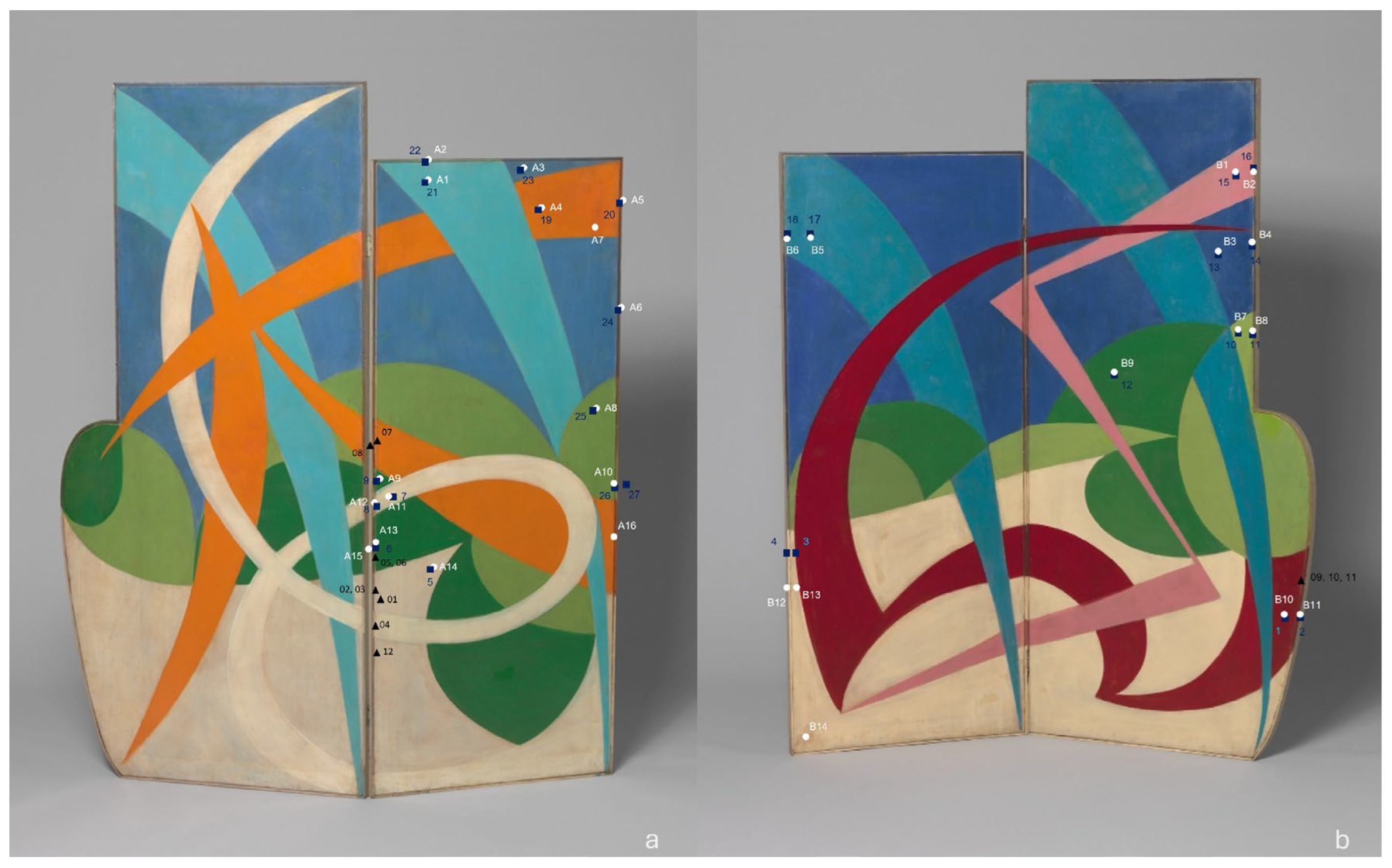
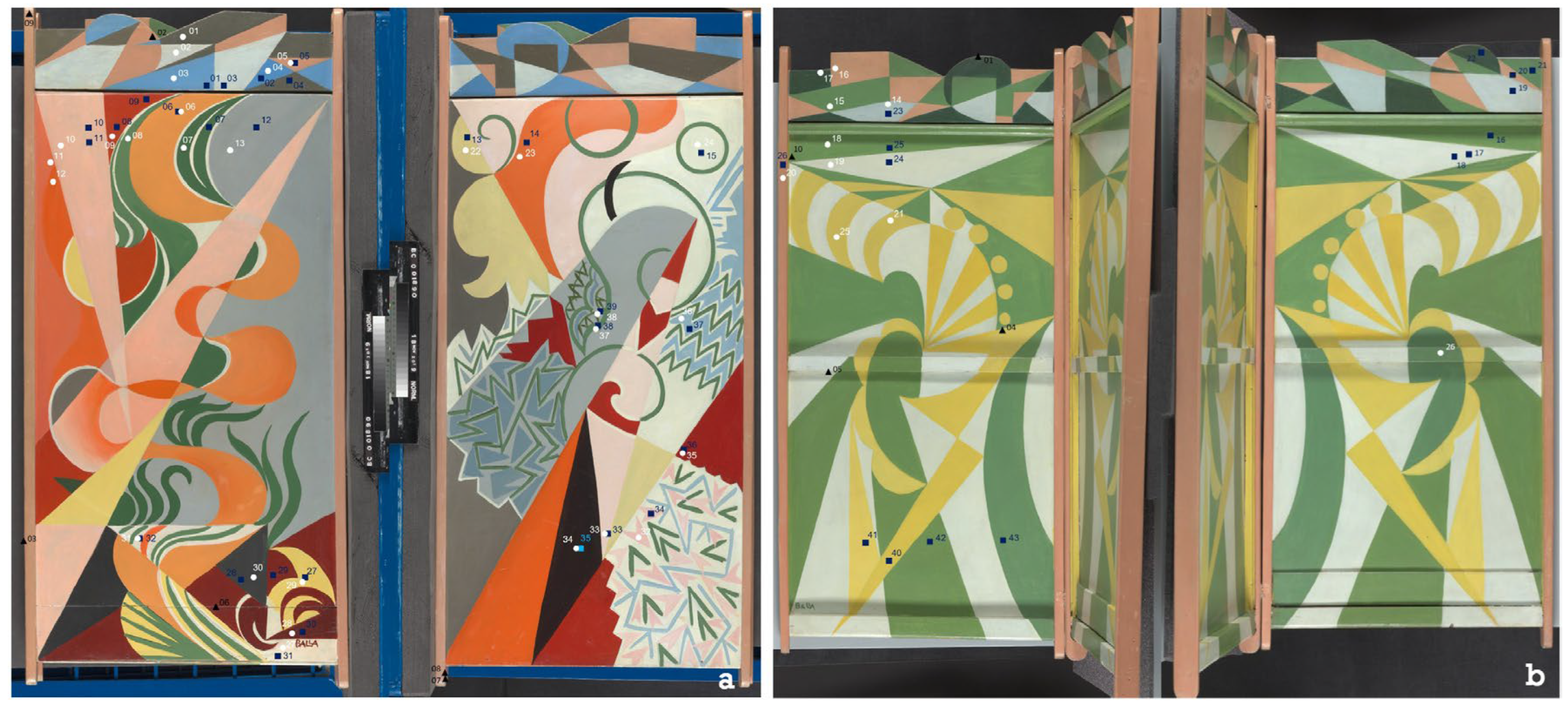
Both folding screens were initially examined with technical photography (visible light, raking light, infrared, UV, and X-ray. Then, non-invasive techniques were used to identify the pigments and fillers. All colors were analyzed with handheld point X-ray fluorescence (pXRF) spectroscopy and handheld Raman spectroscopy (Figure 2 and Figure 3). With pXRF spectroscopy, elemental analysis can be accomplished, whereas Raman spectroscopy provides molecular information on pigments and fillers [13]. Since the screens are double-sided, interpretation of the pXRF measurements is somewhat more complex. Conversely, the Raman spectra only provide information about the materials present in the uppermost paint layers (up to ca. 20 µm).
Figure 2.
Overview of pXRF and Raman measurement spots and sampling locations on Paravento con linea di velocità: (a) exterior and (b) interior. Blue squares, Raman spectroscopy; white circles, pXRF; black triangles, sampling spots.
Figure 3.
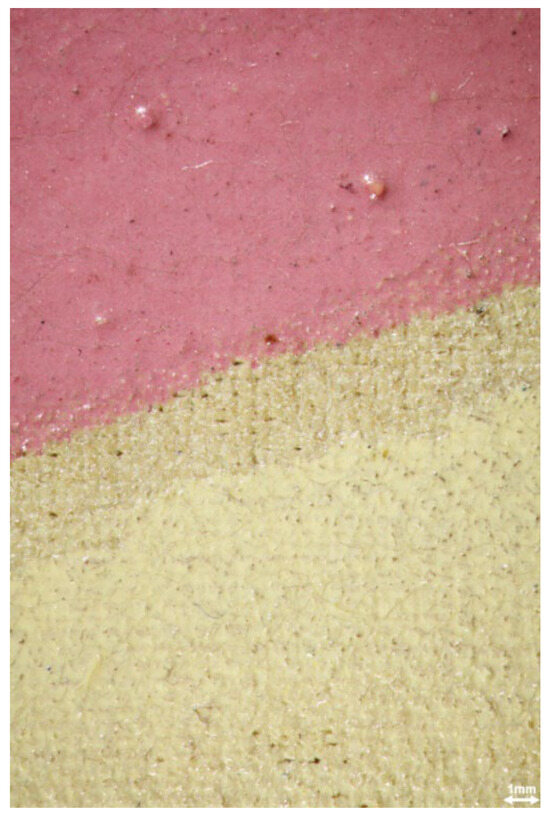
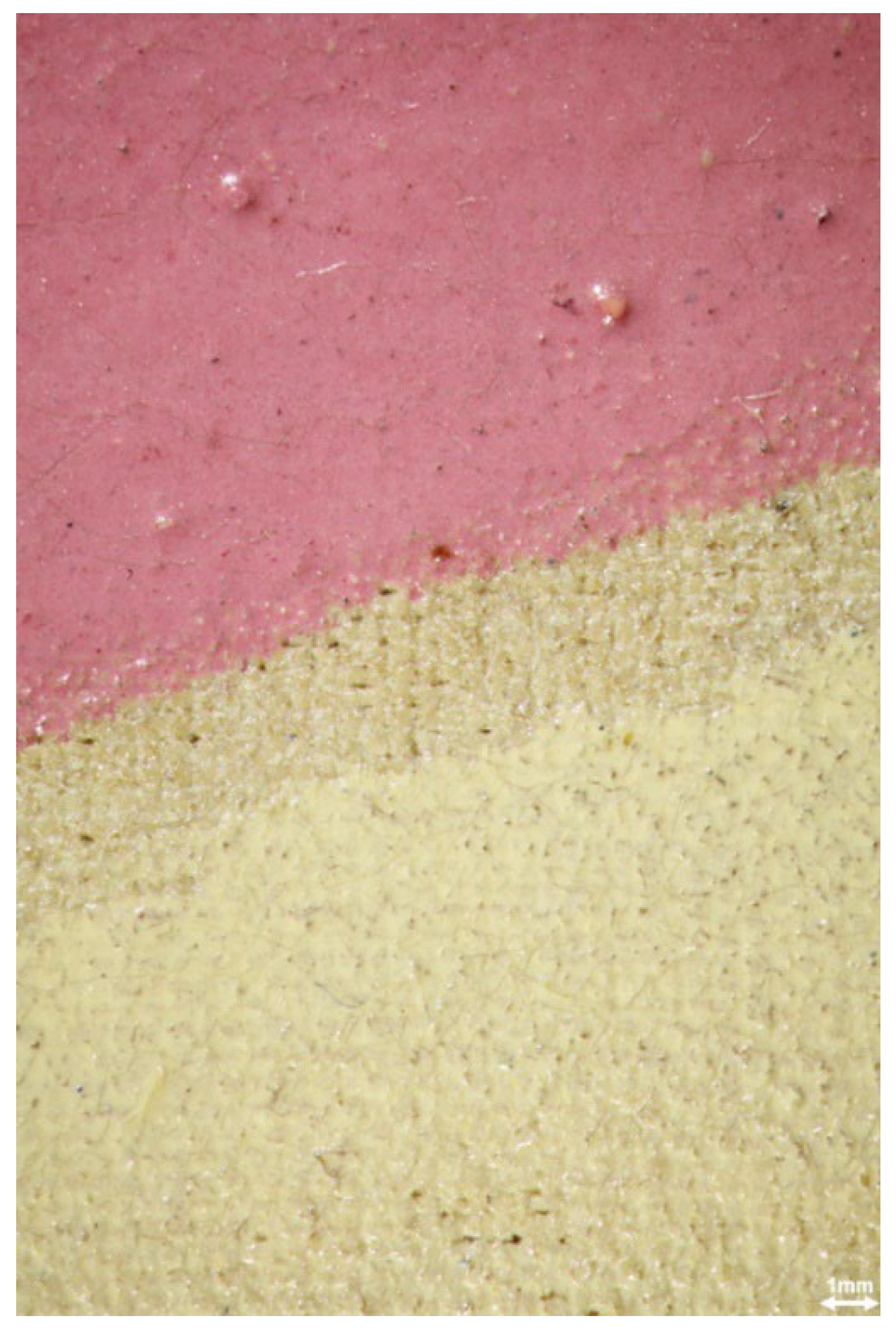
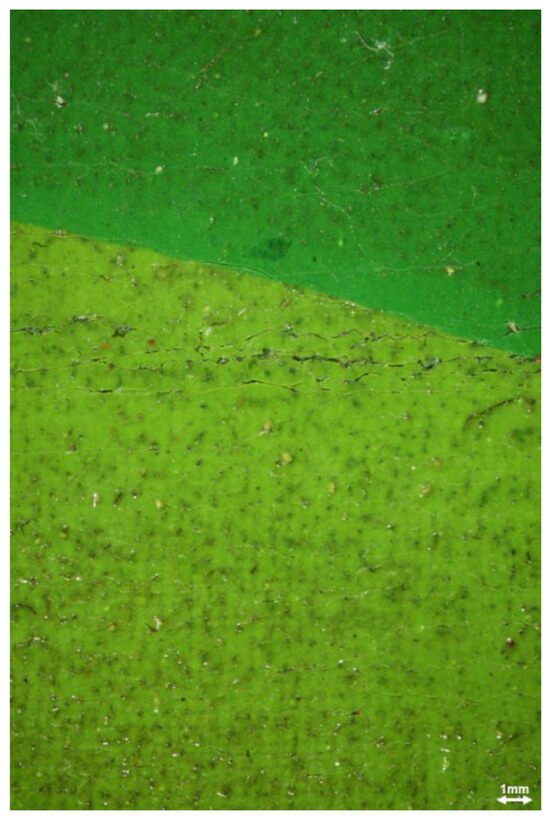
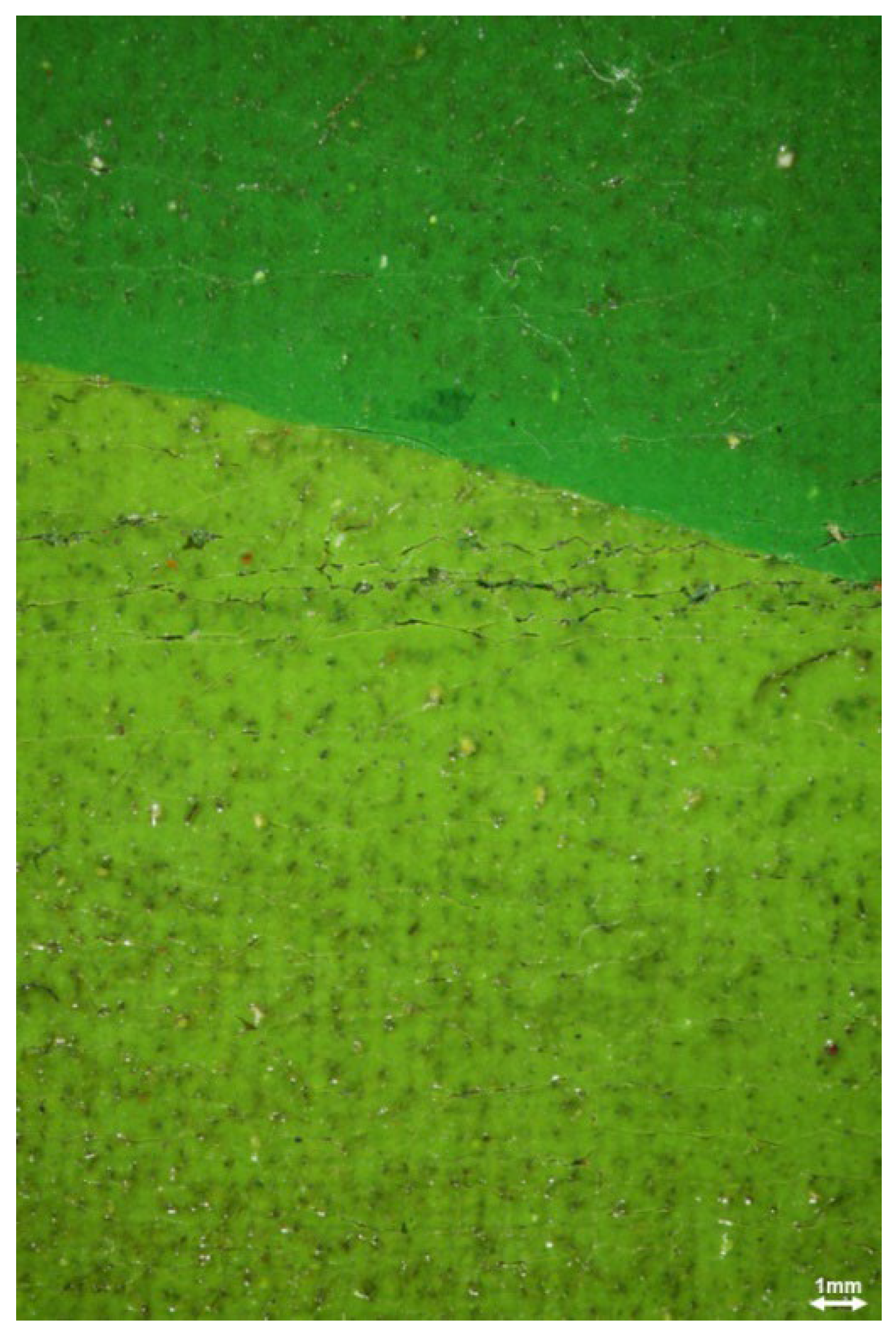
Overview of pXRF and Raman measurement spots and sampling locations on Paravento: (a) exterior and (b) interior. Blue squares, Raman spectroscopy; white circles, pXRF; black triangles, sampling spots.
Based on the results of the non-invasive analyses and technical photography, additional research was carried out by taking samples from selected areas. These samples were prepared as cross-sections and studied using optical microscopy in reflected polarized light and UV light, scanning electron microscopy with energy-dispersive X-ray spectroscopy (SEM-EDX), attenuated total reflection–Fourier-transform infrared (ATR-FTIR) imaging [14], and micro-Raman spectroscopy [15]. In this way, information on the buildup and composition of the paint layers was obtained, both in terms of inorganic pigments and fillers and organic constituents.
Small scrapings of varnish and paint layers were analyzed with FTIR spectroscopy and/or pyrolysis–gas chromatography–mass spectrometry (Py-GC/MS) [16,17] to gather information on the organic constituents.
2. Materials and Methods
2.1. Methods
2.1.1. Technical Photography
Technical imaging of both folding screens included images in visible light, raking light, infrared photography, and ultraviolet fluorescence. All technical images were taken prior to treatment, in 2015 for Paravento con linea di velocità, and in 2019 for Paravento.
The images for Paravento con linea di velocità were taken with a Hasselblad (Gothenburg, Sweden) H3DII-31 (31 megapixel) camera with a Hasselblad HC4/120 mm lens. The normal-light images were taken with Broncolor (Allschwil, Switzerland) Minicom 160 RFS Flash light with 2× softbox; raking-light images were taken with Rollei (Hamburg, Germany) 6 × 6 slide projector with Tungsten light 250 W, slide with a small slit; and for the UV-F images, a Tiffen (Iver Heath, United Kingdom) 2e filter (pale yellow-block UV) and a HOYA (Tokyo, Japan) 85B filter (color-inversion filter—reduces excess blue) were used with 2 banks of 3 UV blacklight fluorescent tubes, Philips (Amsterdam, the Netherlands), 36 W. Infrared images were taken with a Canon (Tokyo, Japan) 450 D camera, converted to full spectrum, up to 1100 nm (12 megapixel) with a Canon EF50 mm f/2.5 macro lens and a IR transmitting, 850 nm (visible block) filter with Broncolor Minicom 160 RFS, Tungsten light (“modelling light”).
The images for Paravento were taken with a Hasselblad H5D-50c (50 megapixel) camera with a Hasselblad HC4/120 mm lens. For the normal-light images, raking-light images, and UV-F images, the same equipment and settings used for Paravento con linea di velocità were used. Infrared images were taken with a Canon 5D-mark II camera, converted to full spectrum, up to 1100 nm (21 megapixel) with a Jenoptik (Jena, Germany) UV-VIS-IR 60 mm 1:4 APO Macro lens (dedicated lens for full spectrum UV-IR) with an IR transmitting, 850 nm (visible block) filter and Broncolor Minicom 160 RFS Flash light with 2× softbox.
In 2015, for Paravento con linea di velocità, and in 2019, for Paravento, X-ray films (AGFA Structurix (Mortsel, Belgium) D7, 30 × 40 cm) were exposed to X-rays created by a Eresco 160 MFR2 X-ray tube (Richard Seifert & Co., London, UK). For Paravento con linea di velocità, the settings of the X-ray tube were 30 kV, 10 mA, and 18 s. For Paravento, the settings were 30 kV, 10 mA, and 24 s. After development, the X-ray films were digitalized by photographing them on a light box with the abovementioned camera setup and subsequently digitally stitched with Adobe Photoshop version 21.
2.1.2. Stereomicroscopy
Both folding screens were visually studied with two binocular stereomicroscopes, (both Carl Zeiss, Oberkochen, Germany): a STEMI SV8, magnification 8–64×; and an Opmi Movena S7, magnification 6.8–42.5×.
The microscope images were taken with a Canon EOS 5D camera.
2.1.3. pXRF (X-Ray Fluorescence) Spectroscopy
In 2020 and 2021 (prior to treatment), for both folding screens, on-site pXRF spectroscopy was performed using a portable Bruker (Bremen, Germany) Tracer 5i X-ray fluorescence spectrometer, equipped with a low-power rhodium X-ray tube and a silicon drift energy-dispersive X-ray detector. The measurements were carried out in spectrometer mode, using a 3 mm collimator, a tube voltage of 40 kV, and a current of 6 µA. The acquisition time was 60 s. Spectral data were interpreted using a customized in-house software tool developed at the Cultural Heritage Agency of the Netherlands (RCE).
2.1.4. Handheld Raman and Micro Raman Spectroscopy
In 2020 and 2021 (prior to treatment), for both folding screens, the on-site Raman measurements were carried out using a portable Bravo Spectrometer (Bruker). The instrument employs two excitation wavelengths and records spectra in two separate spectral ranges (300–2200 cm−1 and 1200–3200 cm−1) using a near-infrared DUO Laser system (785 nm and 853 nm). The energy delivered to the paint surface is approximately 45 mW, with measurements conducted at a distance of about 0.5 mm and a spot size of 1 mm. The number of accumulations varied between 20 and 100, and the acquisition time was 200 ms.
The micro-Raman spectra were obtained using a Perkin-Elmer (Springfield, IL, USA) Raman Micro 300 (Raman microscope) and a Raman Station 400F (Raman spectrometer) with a diode laser (λ0 = 785 nm), in combination with an Olympus (Hamburg, Germany) BX51M microscope. The laser power, exposure time, and number of accumulations were adjusted for each measurement.
2.1.5. Cross-Section Preparation and Optical Microscopy
The samples (taken in 2021 for Paravento con linea di velocità, and in 2021 and 2022 for Paravento, all prior to treatment) were embedded in polyester casting resin (Polypol PS230, Amsterdam, the Netherlands) and then ground and polished perpendicular to the surface to produce cross-sections of the paint layers.
The cross-sections were examined with a Carl Zeiss AxioImager A2M optical microscope using brightfield illumination with a VIS-LED lamp in reflected polarized light and reflected light, as well as UV illumination with a Solid-State Light Source Colibri 7, type RGB-UV, with a “UV” LED (385 nm) for UV fluorescence. The filter set used for UV fluorescence consisted of three filters: excitation filter G 365, beam splitter FT 395, and emission filter LP 420 (filter set 02).
2.1.6. SEM-EDX (Scanning Electron Microscopy with Energy-Dispersive X-Ray Spectroscopy)
The analyses were performed using a JEOL (Tokyo, Japan) JSM 5910 LV Scanning Electron Microscope equipped with a Thermo Scientific (Waltham, MA, USA) SDD EDX detector. The primary electron beam was set to 20 kV. The cross-sections were examined in low-vacuum mode (30 Pa) at approximately 10 mm working distance. The spectral data were interpreted using the SMILEview 2.1.0.6 software.
2.1.7. ATR-FTIR (Attenuated Total Reflectance–Fourier-Transform Infrared Spectroscopy)
The ATR-FTIR imaging was performed using a Perkin Elmer Spectrum 100 FTIR spectrometer combined with a Spectrum Spotlight 400 FTIR microscope, equipped with a 16 × 1 pixel linear Mercury Cadmium Telluride (MCT) array detector. A Perkin Elmer ATR imaging accessory with a germanium crystal was used. FTIR spectral data were interpreted using the PerkinElmer Spectrum Software in combination with an in-house spectral library of spectra from references of the RCE reference collection. Principal Component Analysis (PCA) of the data was also used to evidence the presence of specific components.
2.1.8. Py-GCMS (Pyrolysis–Gas Chromatography–Mass Spectrometry)
Pyrolysis was conducted using a Frontier Lab (Koriyama, Japan) 3030D pyrolizer with a rapid temperature rise from 350 °C to 700 °C; the temperature of the pyrolysis interface was 290 °C. A Thermo Scientific Trace 1310 GC gas chromatograph and an ISQ mass spectrometer were used. The pyrolysis unit was directly connected via a split interface to an SLB5 ms (Supelco, Bellefonte, PA, USA) column (20 m in length, internal diameter of 0.18 mm, and film thickness of 0.18 μm). Helium was used as the carrier gas, with a programmed flow rate (0.5 to 1.2 mL/min). The temperature program used was 35 °C (1 min)–ramp 60 °C/min–110 °C–ramp 14 °C/min–240 °C–ramp 5 °C/min–315 °C (2 min). The column was directly connected to the ion source of the mass spectrometer. The interface temperature was 250 °C, and the ion source temperature was 220 °C. Mass spectra were recorded from 29 to 600 AMU at a rate of 7 scans per second. Xcalibur 4.1 software was employed for the acquisition and processing of spectral data. Tetramethyl ammonium hydroxide (TMAH) 5% in methanol (Sigma-Aldrich, Saint Louis, MO, USA) was used for thermally assisted hydrolysis and methylation. Sample preparation and data processing were carried out as described in [16,17].
2.2. Locations of the Non-Invasive Measurements and Sampling
Prior to collecting samples, both folding screens were first examined non-invasively, using handheld pXRF and Raman spectroscopy. The results of these analyses guided the selection of the sampling locations. Figure 2 and Figure 3 show the non-invasive measurement spots, as well as the areas where samples were taken with a scalpel in the conservation studio of the Kröller-Müller Museum (Table 1 and Table 2).
Table 1.
Samples from Paravento con linea di velocità.
Table 2.
Samples from Paravento.
3. Paravento Con Linea di Velocità—Results
3.1. Technical Photography and Visual Observation
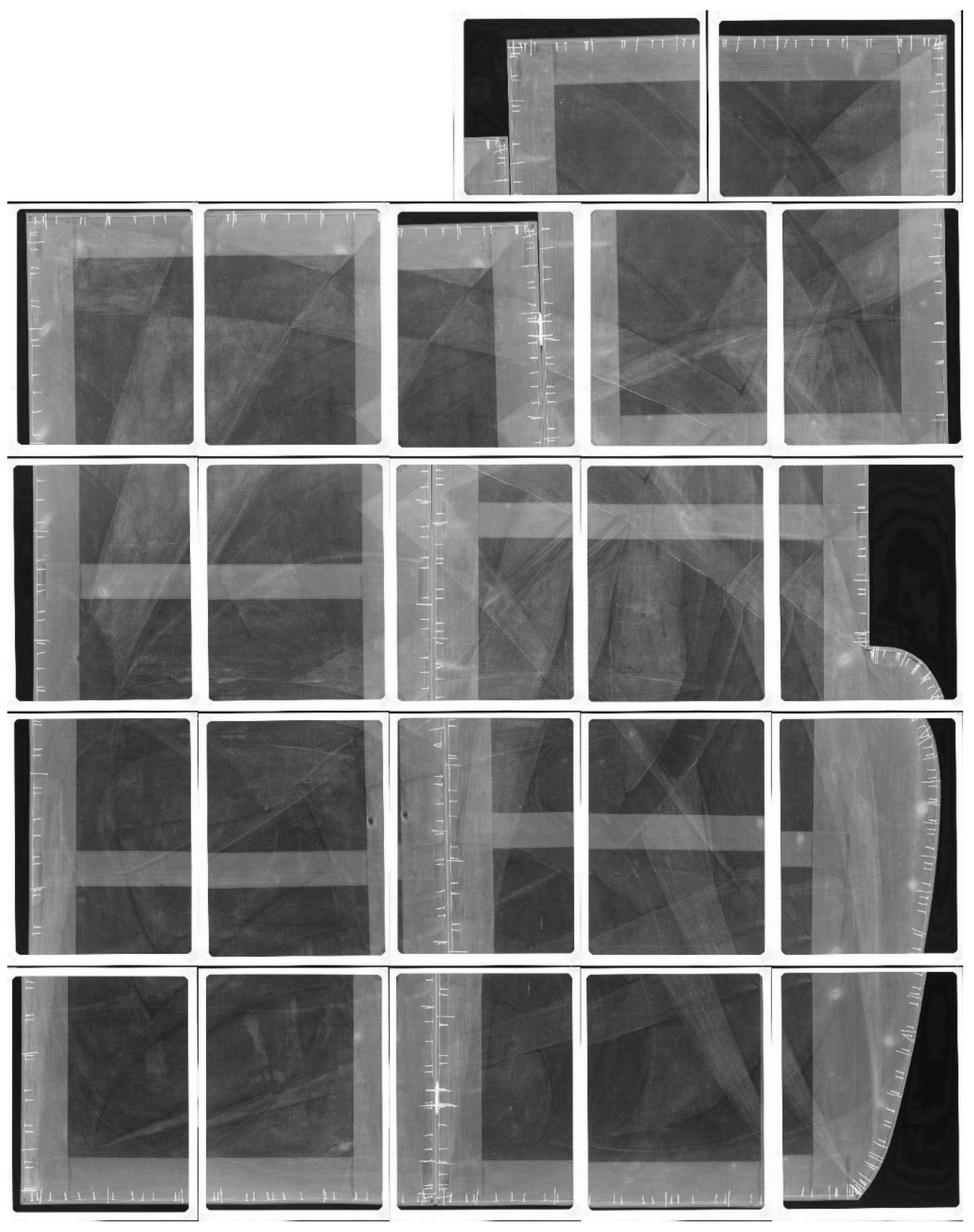
The X-radiograph of the screen (Figure 4) reveals, in addition to several old damages, cusping that does not match with the current stretching of the canvas. On the raking-light image, horizontal stretcher marks in the canvas are visible, caused by the crossbars of the stretcher, but the current positions of the crossbars do not align with these stretcher marks (Figure 4; RL images in Figure 5 and Figure 6). These observations suggest that the stretcher and the stretching of the canvases were adjusted in the past.
Figure 4.
X-radiograph of Paravento con linea di velocità, seen from the interior side of the screen, taken in 2015 (prior to treatment). Due to the distance between the canvases of the exterior and the interior and the repositioning of the X-ray source during examination, a more accurate digital stitch of the scans of the 22 X-ray films was not possible.
Figure 5.
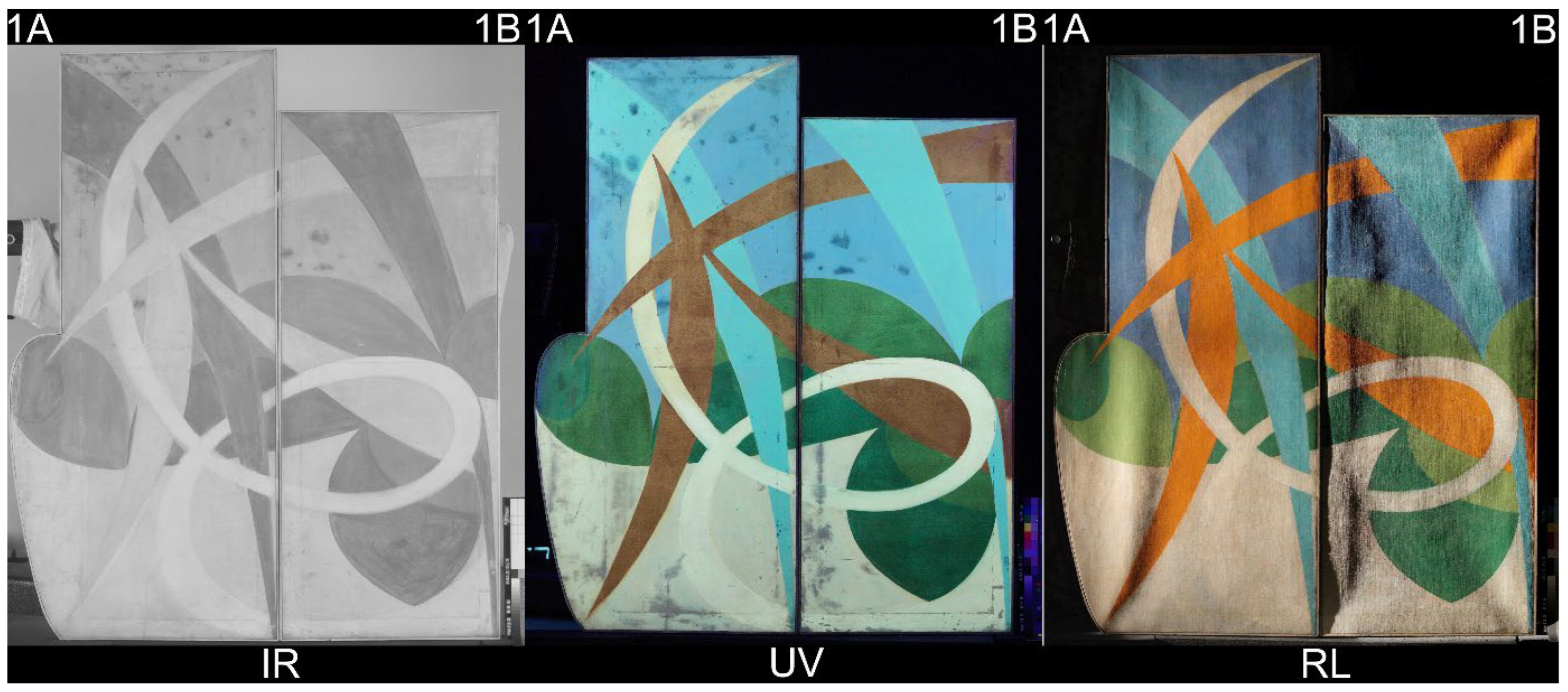
Exterior of Paravento con linea di velocità (1A, left part; 1B, right part). IR, infrared photography; UV, ultraviolet fluorescence; RL, raking light from left (digital stitch of two photos). Images taken in 2015 (prior to treatment).
Figure 6.
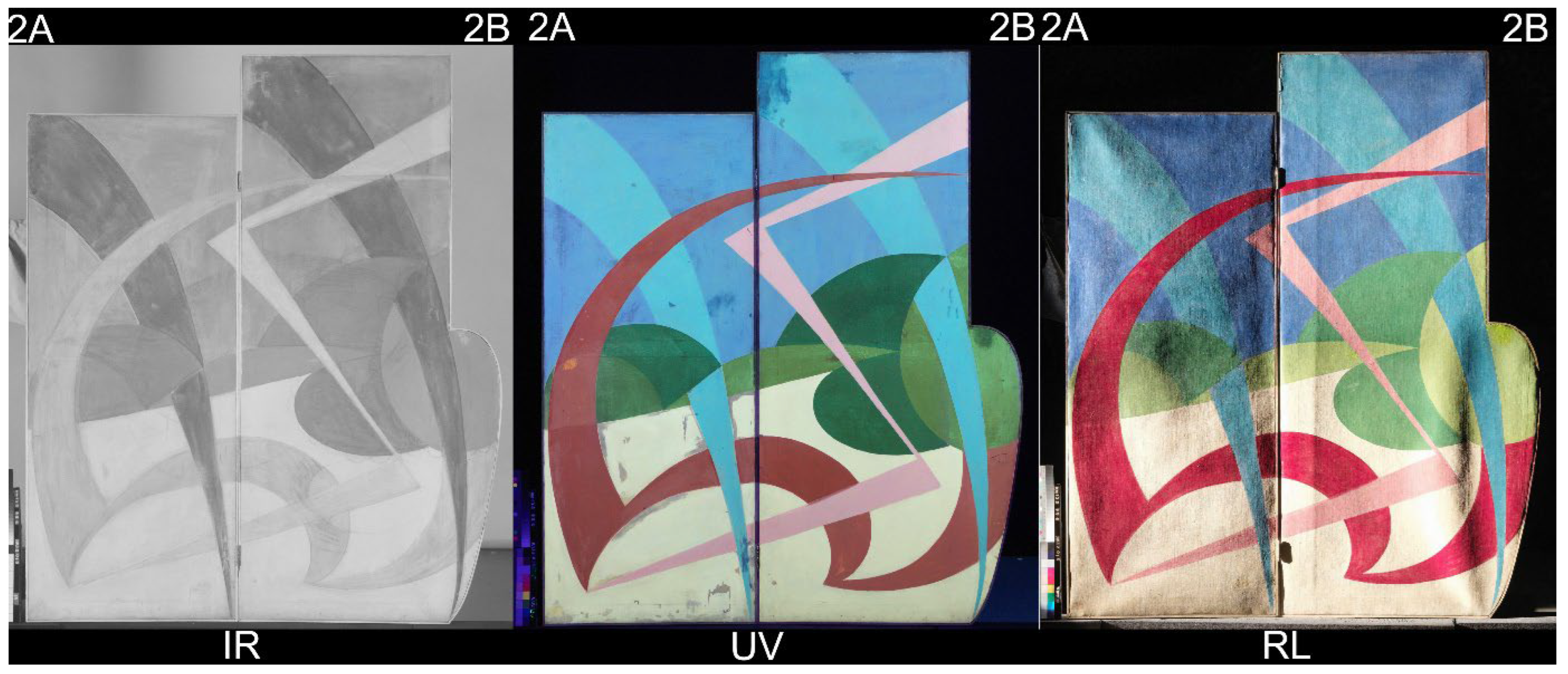
Interior of Paravento con linea di velocità (2A, left part; 2B, right part). IR, infrared photography; UV, ultraviolet fluorescence; RL, raking light from left (digital stitch of 2 photos). Images taken in 2015 (prior to treatment).
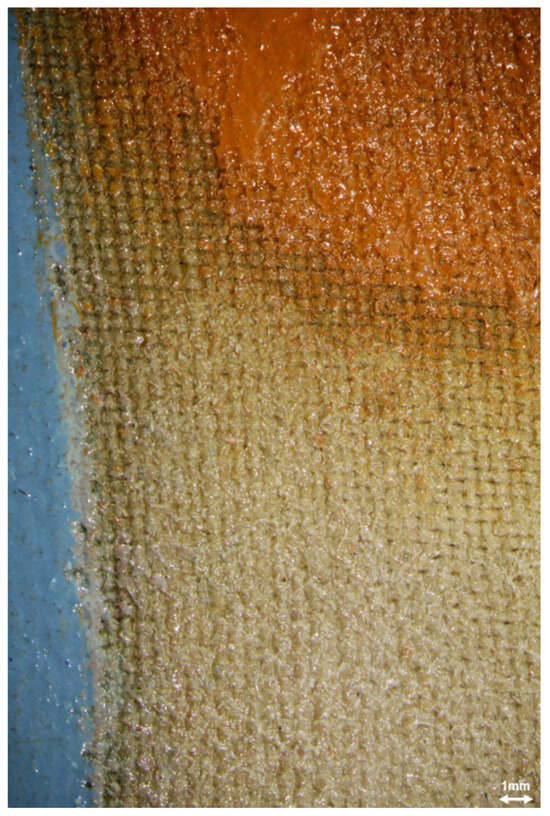
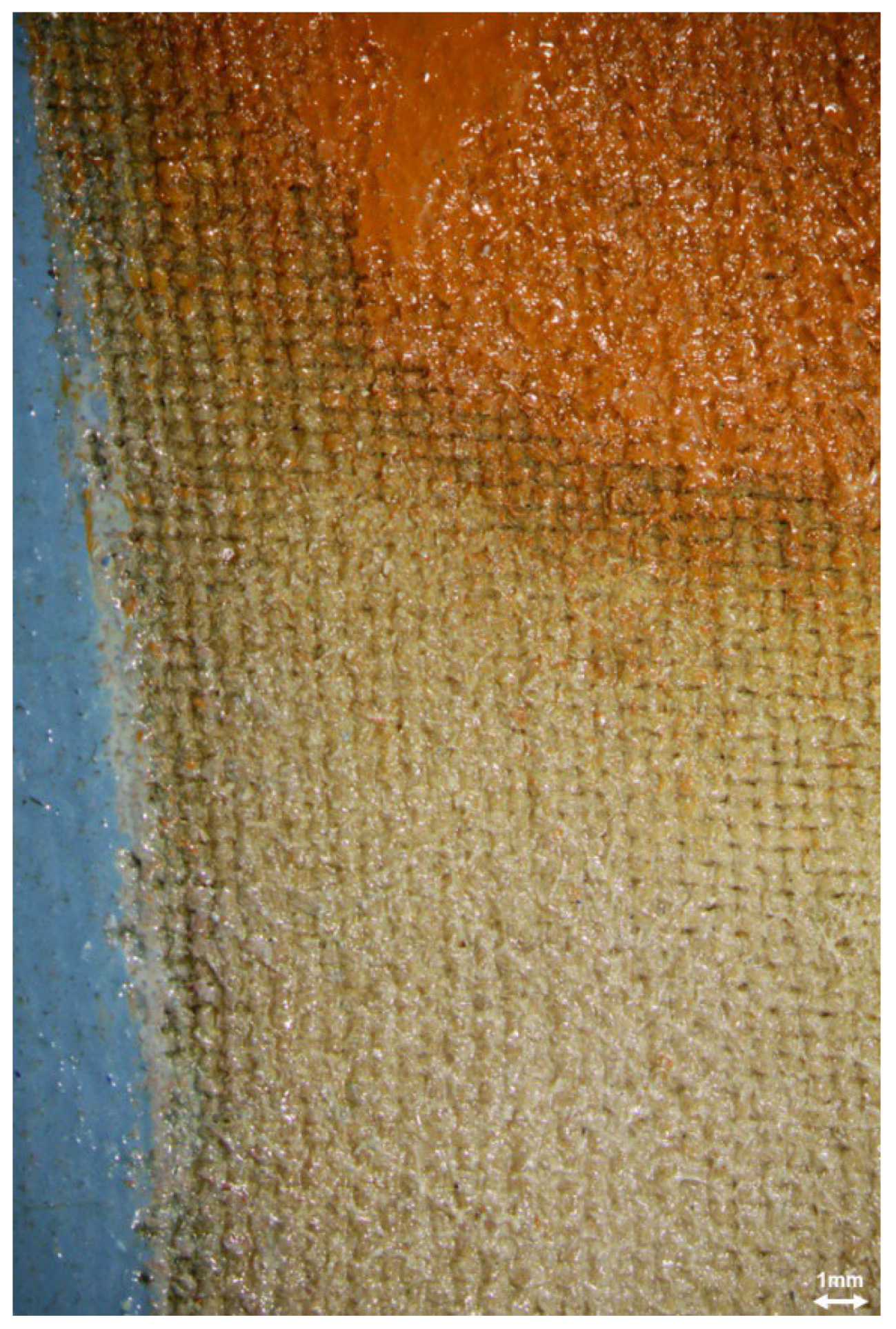
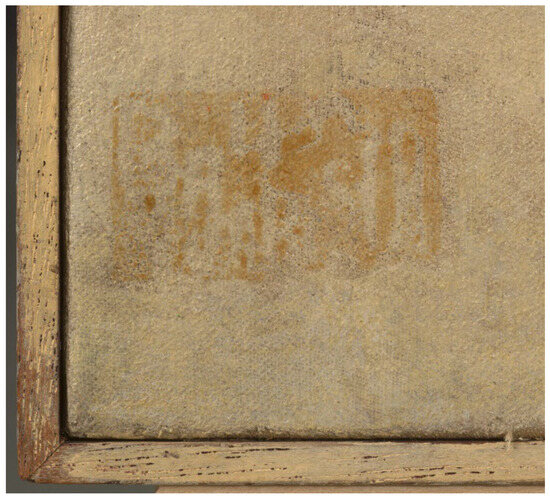
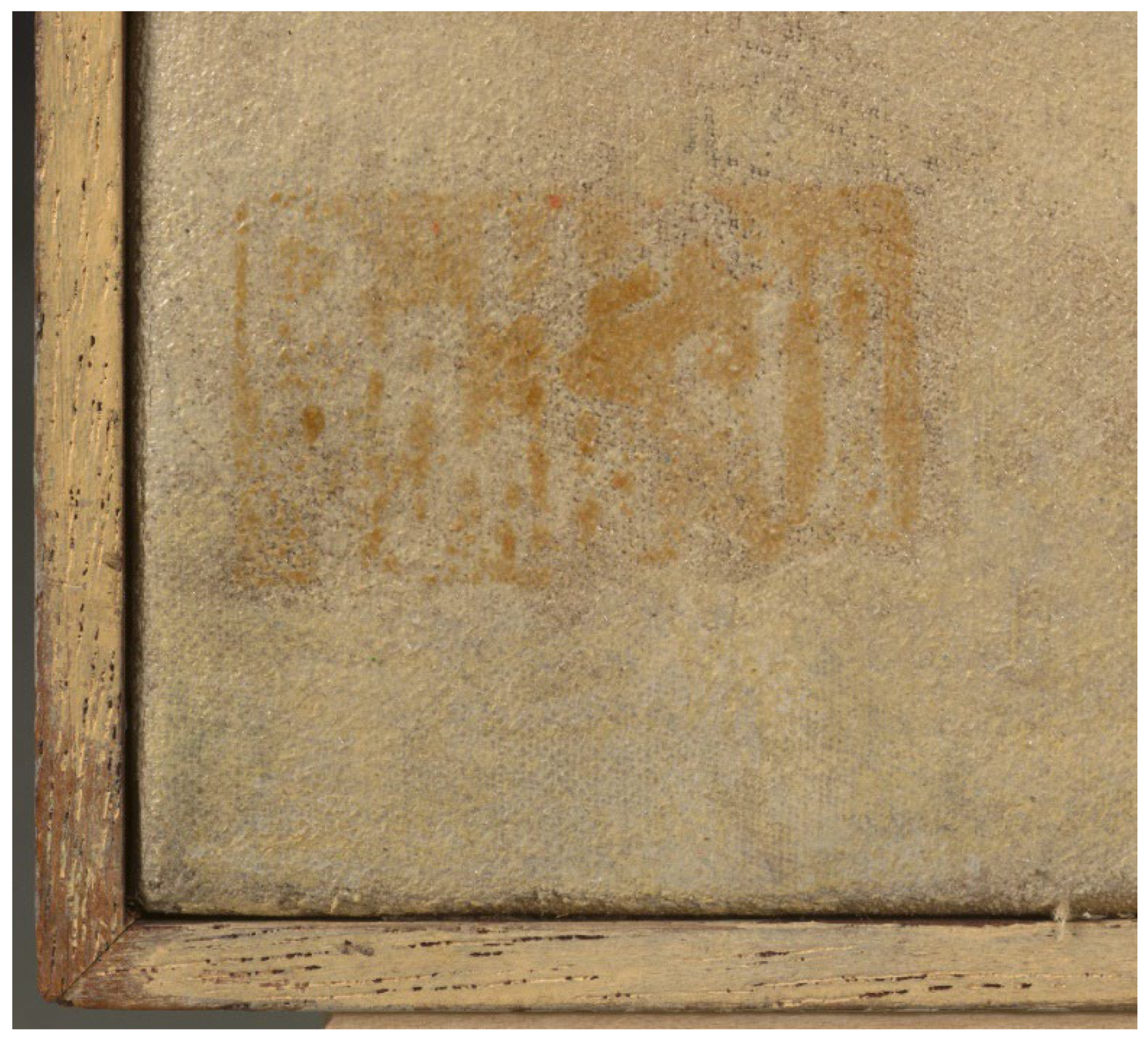
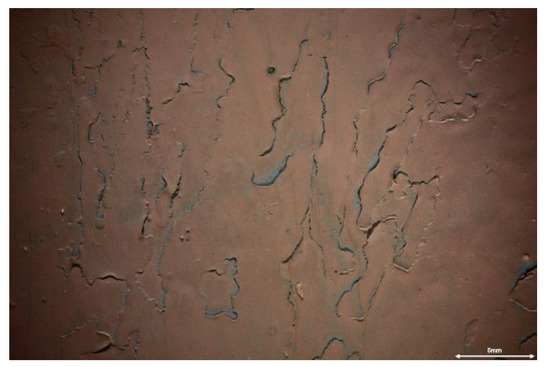
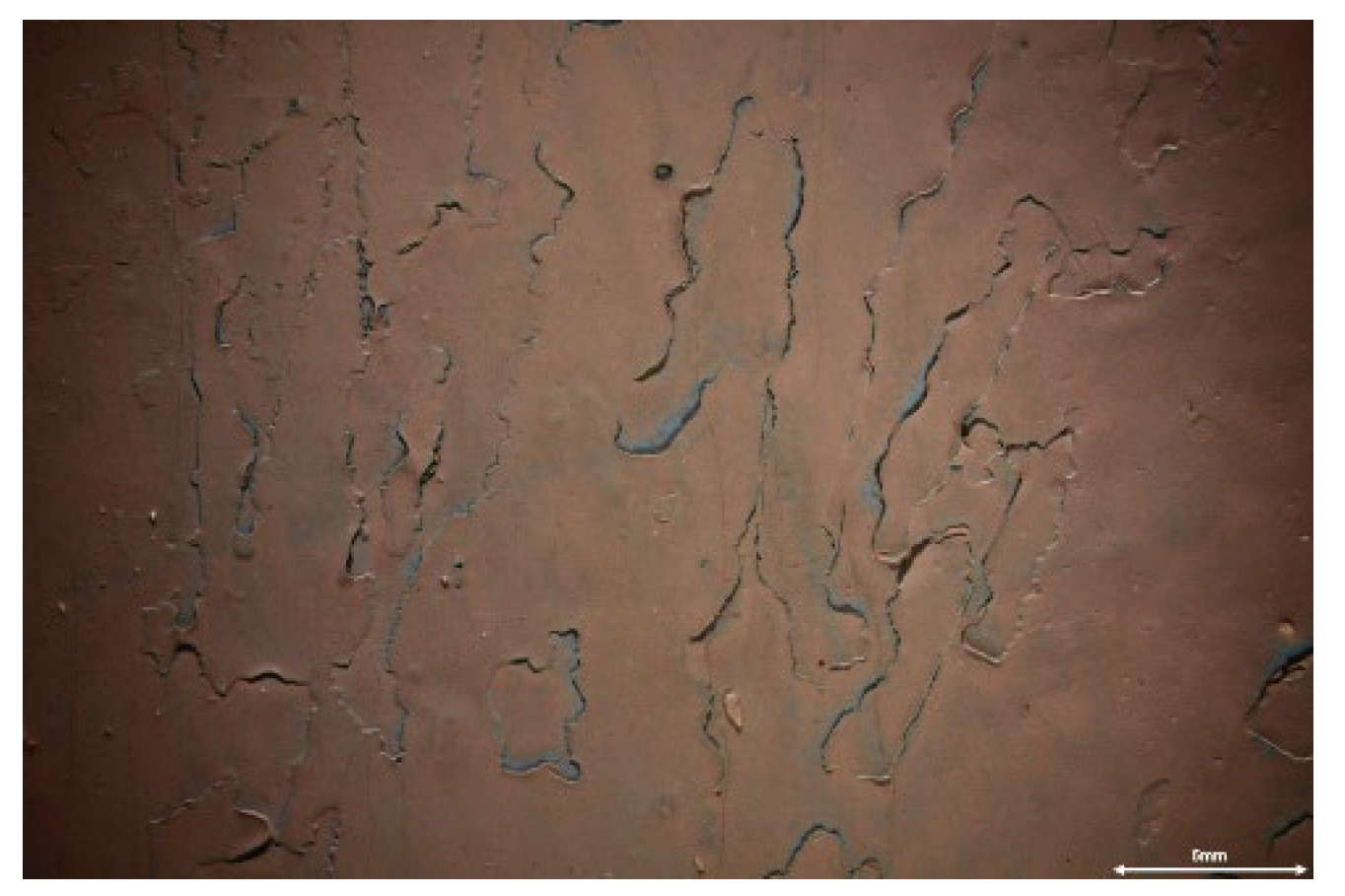
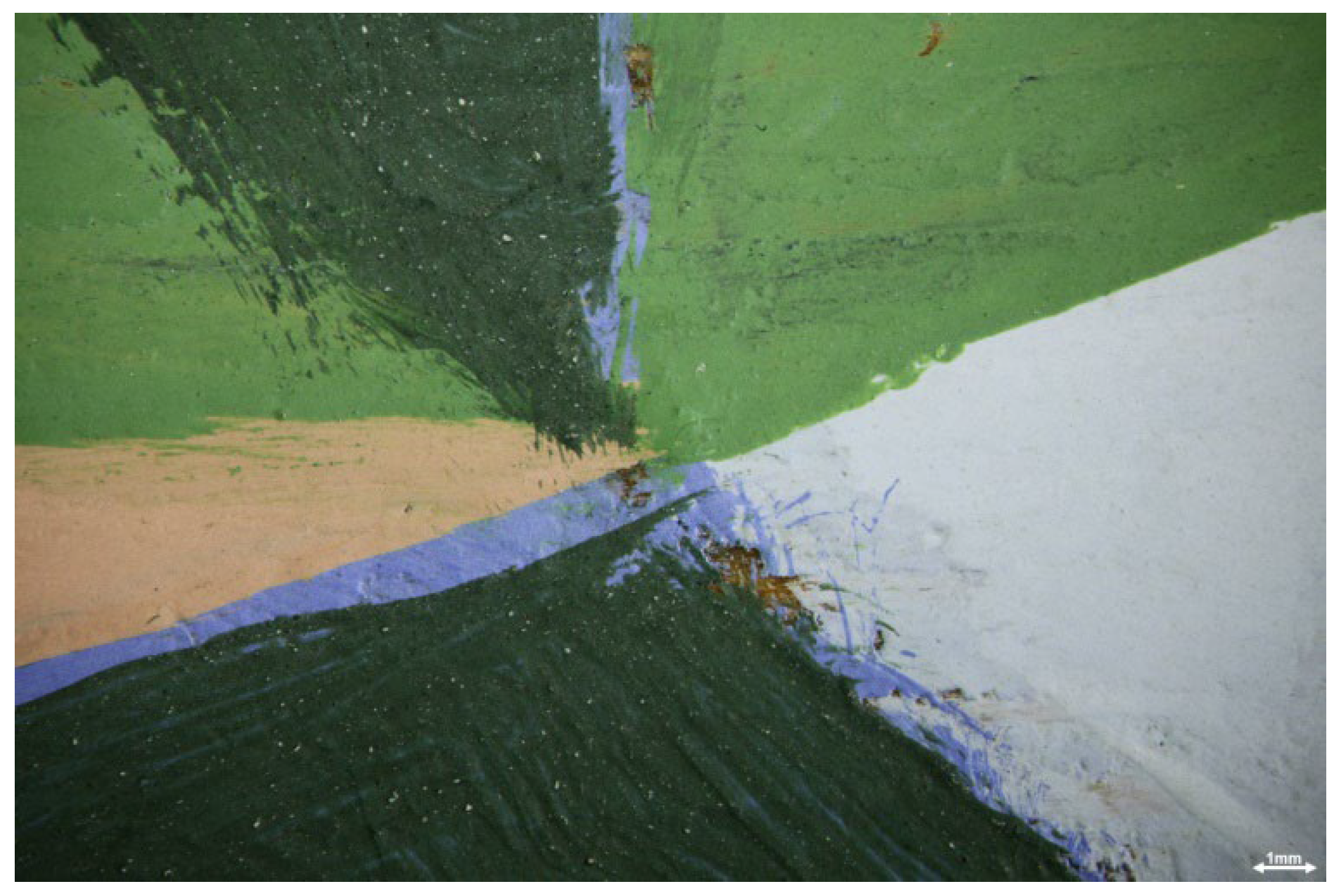
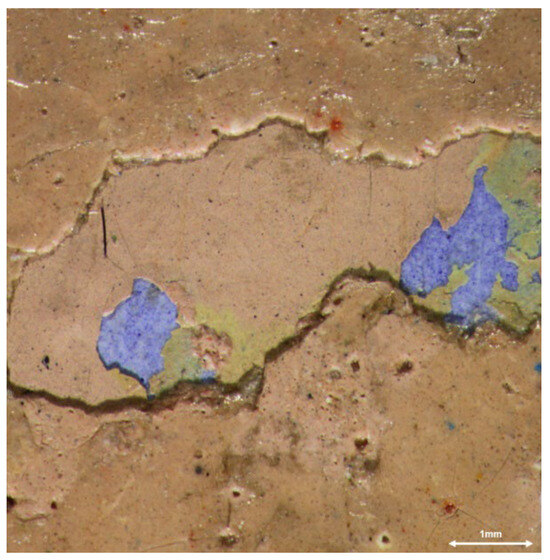
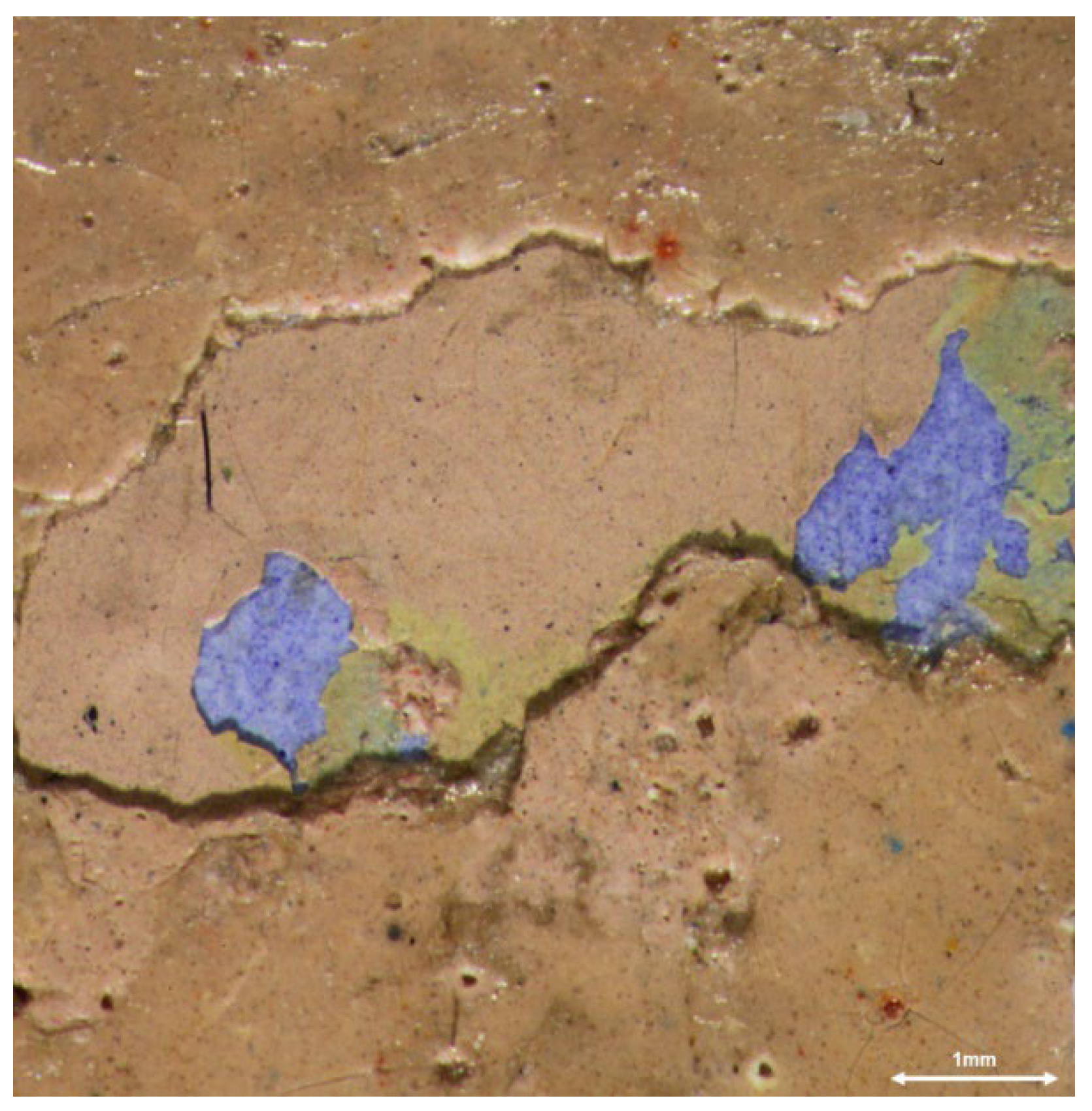
On the infrared image of the exterior of the screen, faint lines of an underdrawing can be observed, not matching the forms and design that are now visible (Figure 5, Figure 6 and Figure 7). Balla obviously changed the design while working on the screen. Visual and microscopic examination of the painted areas shows that the paint layers are relatively thin and appear to have been applied directly onto the unprimed canvas (Figure 8). Unfortunately, the tacking margins of the canvases are covered by painted wooden strips and could therefore not be studied. Overall, the paint layer has a very smooth, enamel-like appearance (Figure 9). No visible brushstrokes, typical for an oil-paint surface, can be observed. This suggests that the binding medium of the paint layer does not consist of oil alone; it must be a mixture. In most areas, the paint is applied in two layers, with small color differences between the layers (Figure 10). The screen is signed by Balla at the lower left corner of the left panel of the interior of the screen (2A) with Balla’s distinctive signature stamp (partly faded; Figure 11).
Figure 7.
Paravento con linea di velocità, right part of the interior, detail of Figure 6 (IR photo, 2B).
Figure 8.
Paravento con linea di velocità, right part of exterior, detail of paint directly applied onto the unprimed canvas (2A). Image taken in 2023.
Figure 9.
Paravento con linea di velocità, left part of interior, detail of enamel-like paint surface (2A). Image taken in 2021.
Figure 10.
Paravento con linea di velocità, left part of interior, detail of paint application (2A). Image taken in 2021.
Figure 11.
Paravento con linea di velocità, left part of interior, lower left corner, signature stamp (2A). Image taken in 2025.
3.2. Paint Layer Buildup and Materials
3.2.1. Painted Canvases
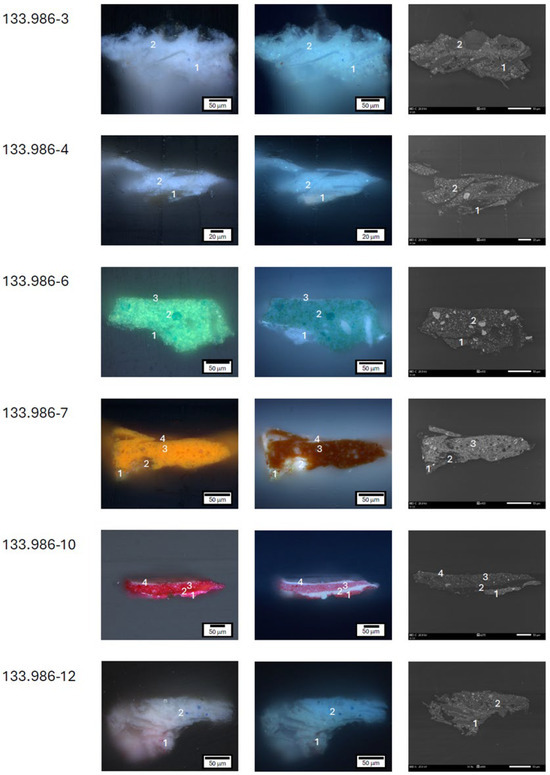
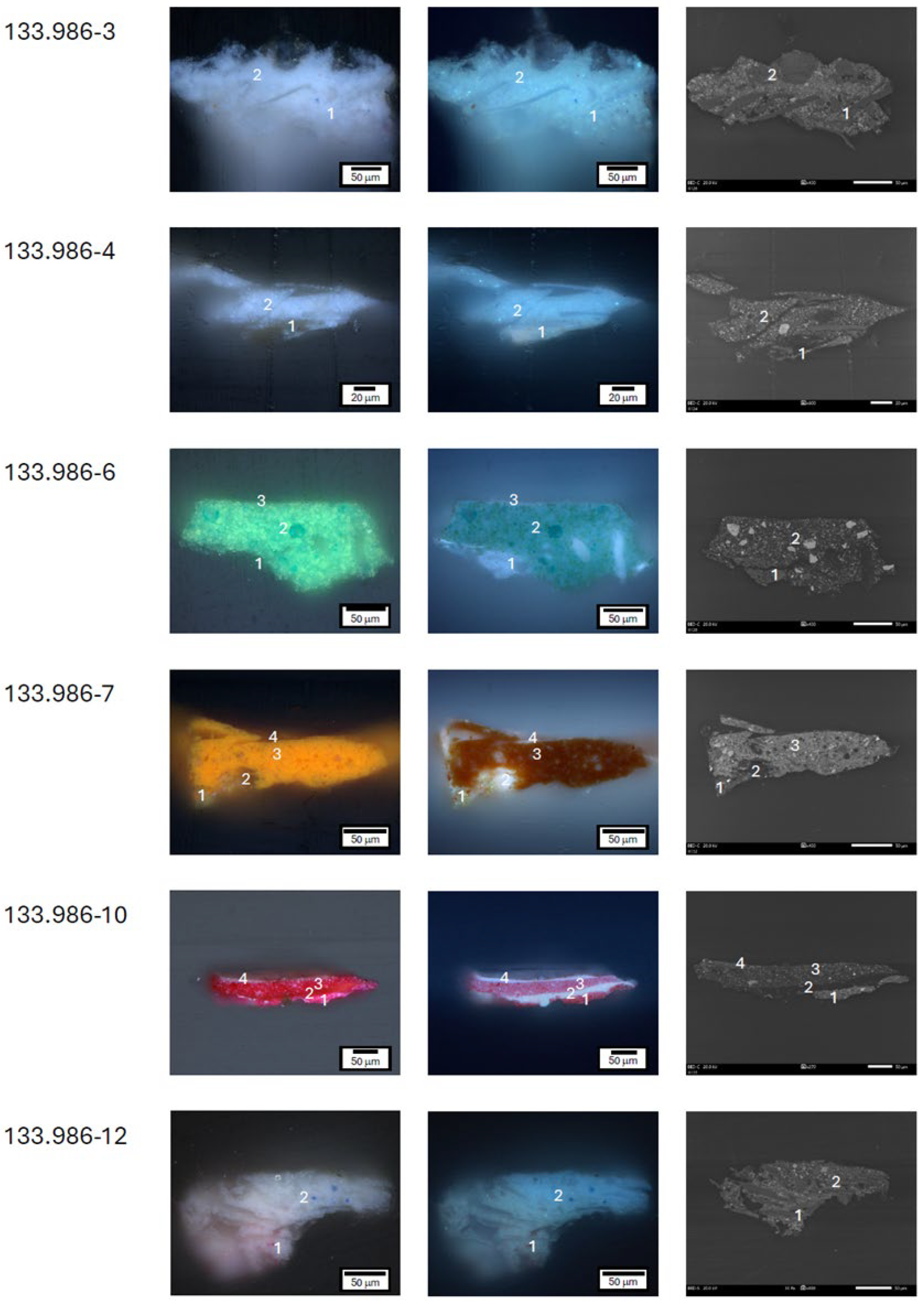
The combination of on-site p-XRF and Raman spectroscopy and the analysis of six cross-sections (Figure 12) provided detailed information about the pigments and fillers and the layer buildup used for the different colors. Samples were taken from white, dark green, orange, and red areas (Figure 2 and Table 1).
Figure 12.
Overview of images of the cross-sections taken from Paravento con linea di velocità. The left column shows photographs taken in visible light, the middle column shows images under UV illumination, and the right column displays backscattered electron (BSE) images.
The p-XRF and handheld Raman spectroscopy measurements revealed a significant presence of zinc white, along with gypsum, barium sulfate, and occasionally calcium carbonate, in all non-invasively analyzed spots (Table 3).
Table 3.
Overview of identified pigments in Paravento con velocità, organized by color on canvas and frame. An asterisk (*) indicates identification based on Raman spectroscopy, a square (□) denotes FTIR identification, a cross (†) indicates identification by XRF, and a double cross (‡) refers to identifications based on SEM-EDX, question mark (?) means uncertain identification.
Examination of the cross-sections confirmed these results and provided additional information. The colored pigments are not only mixed with the materials mentioned above, but also with talc. This filler is relatively specific and may point to the use of a particular brand of commercial paint. Talc was found in the white and orange paint layers on the exterior of the folding screen, as well as in the lower red paint layer of the dark red area on the interior. Furthermore, analysis of the cross-sections indicated that the gypsum is occasionally relatively coarse (up to about 30 µm).
In only one cross-section, an additional layer was found beneath the colored paint layers. This applies to the dark green area of the exterior (sample 133.986-6), where this layer consists of organic material and gypsum. Furthermore, fluorescent inclusions were observed in all cross-sections; these inclusions were identified as starch with ATR-FTIR spectroscopy (see Dark Green Areas). This material was likely added by the paint manufacturer.
With p-XRF and handheld Raman spectroscopy several inorganic pigments could be identified in the blue, green, and white areas, including Prussian blue, ultramarine, zinc chromate yellow, chromium oxide green (or viridian), and chrome orange. Furthermore, SOP lithol red (PR49) was found. Analyses of the cross-sections ascertained the presence of the chromium green pigment viridian.
Red and Orange Areas
The red area on the interior consists of two red paint layers (sample 133.986-10). Both contain PR49, zinc white, and gypsum, but they differ in composition: the lower layer also contains chrome orange and talc, while the upper, medium-rich paint layer includes barium sulfate and a small amount of calcium carbonate. Between the two red layers, there is an organic layer—possibly a varnish—which fluoresces bluish under UV light. This layer could not be identified using ATR-FTIR imaging.
The occurrence of the two distinct red paints and the intermediate layer clearly point to a reworking, most likely by the artist, considering the similar composition and appearance.
In the p-XRF spectra, the lead (Pb) signals are especially strong in the orange area, presumably due to the presence of chrome orange. In all other spots, Pb was also detected, but with varying intensities. In these cases, the intensity of the PbLα signal was similar or lower than the PbLβ signal, suggesting that, here, the lead originates from underlying paint layers or from paint layers on the canvas on the other side. Indeed, as confirmed by the cross-sections, lead-containing pigments such as chrome orange and red lead are used on both sides of the screen.
An orange retouching in the orange area contains cadmium red or cadmium orange, a pigment not found in any of the original paint layers. This clearly distinguishes this later reworking from the original paint.
Dark Green Areas
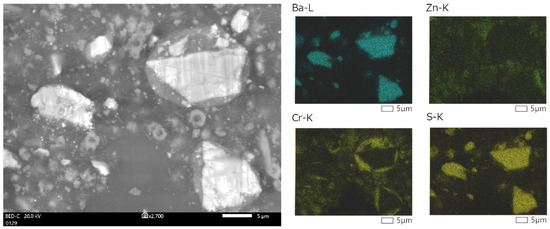
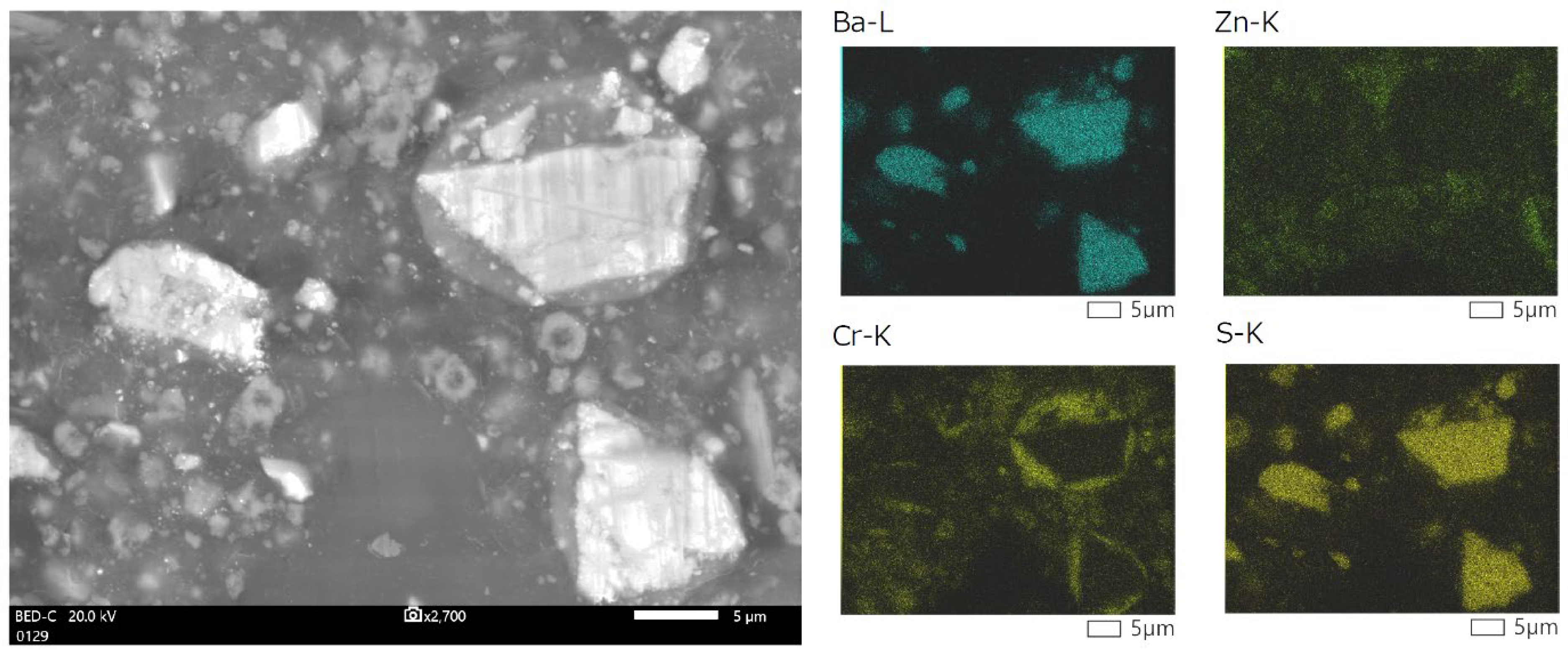
The cross-section of sample 133.986-6, taken from a dark green area on the exterior, shows interesting details on the composition of the paint layer (Figure 13), as it contains the pigment Victoria green, which has, to the best of our knowledge, not previously been identified in an artwork. It consists of viridian, zinc yellow (4ZnCrO4·K2O·3H2O), zinc white, and barium sulfate. In the SEM-BSE images, it can clearly be seen that the angular chunks of barium sulfate—grounded baryte—are covered with a thin layer of chromium oxide. The zinc chromate particles show characteristic round shapes with a lighter rim and darker nucleus (less Zn). With micro-Raman spectroscopy, Prussian blue was also identified.
Figure 13.
SEM-EDX elemental mapping of cross-section 133.986-6, showing the presence of angular barium sulfate (baryte) covered with chromium oxide and surrounded by zinc chromate (round particles)—interpreted as Victoria green.
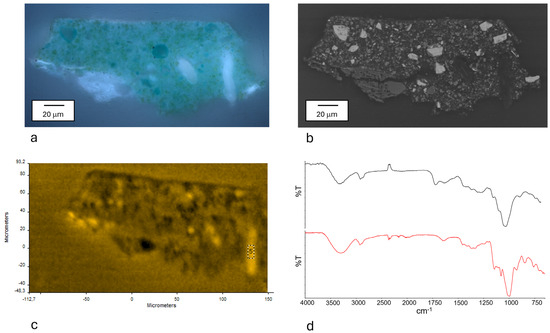
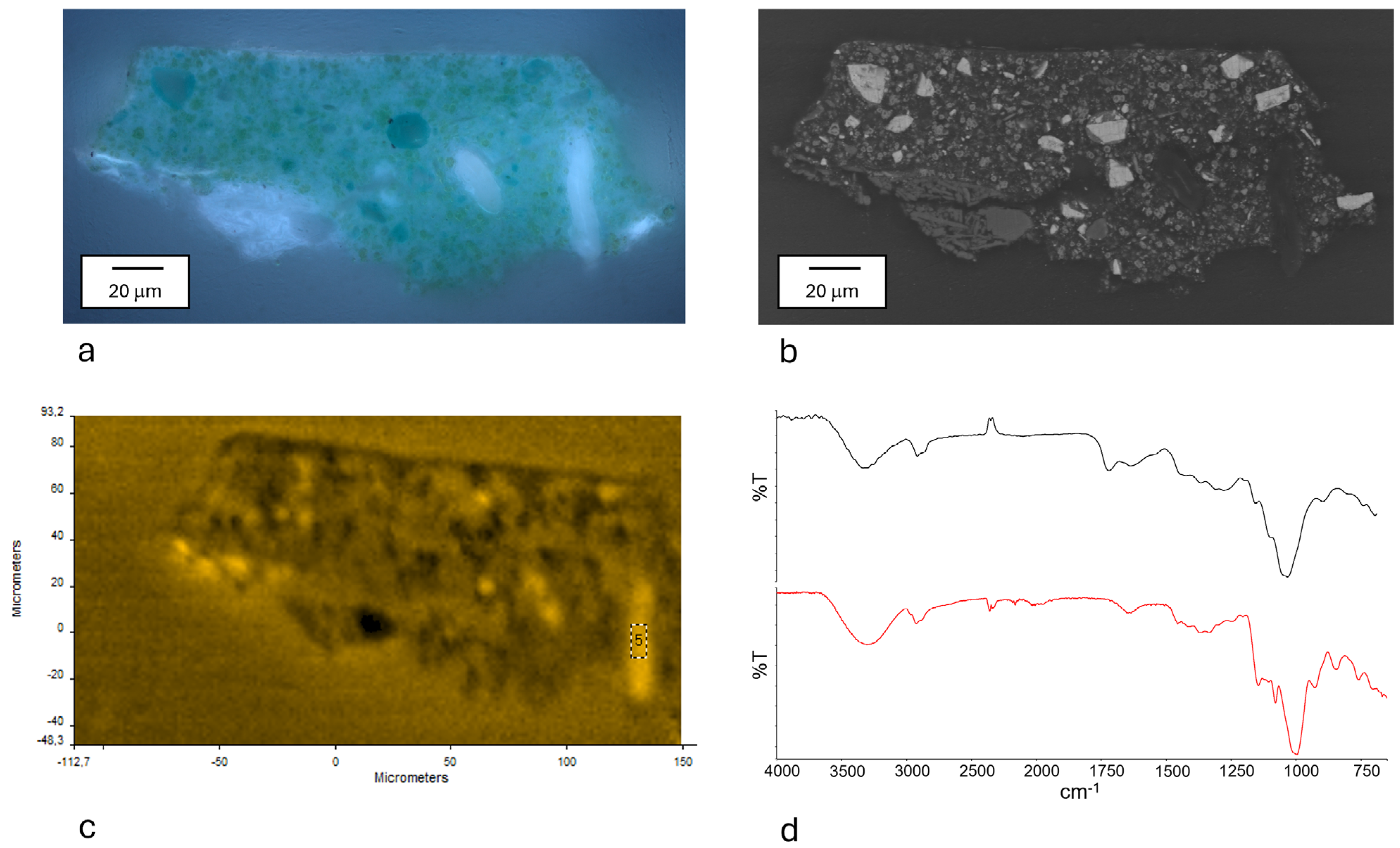
ATR-FTIR imaging of the strongly fluorescent particles, as well as Py-GC/MS analysis of the green paint, indicated that they contain starch (Figure 14). As the starch is consistently present throughout the paint layers and not limited to the underlying layer, it can be concluded that the starch is inherent to the paint layer rather than originating from the canvas preparation and was presumably added as a filler to “dilute” the color and give body to the paint [18] (p. 110). ATR-FTIR analysis also confirmed the presence of zinc yellow and barium sulfate, and additionally detected chromoborate—an indicator of the use of Guignet’s Green. This hydrated chromium oxide (viridian) pigment is formed via calcination of potassium dichromate (K2Cr2O7) with boric acid (H3BO3), during which insoluble chromoborate compounds can develop [19]. The resulting viridian was commonly mixed with barium sulfate and zinc chromate to create what Eibner referred to as Victoria green [20]. The addition of baryte improved the dispersion of viridian in oil and may also have reduced production costs.
Figure 14.
Cross-section 133.986-6. (a) Photograph taken in UV illumination. (b) Backscattered electron (BSE) image. (c) ATR-FTIR image of the principal component related to starch (bright particles). (d) FTIR spectrum of area 5 (black line) and reference spectrum of starch (red line). In the BSE image, baryte can be clearly distinguished as bright particles, whereas the starch shows a bluish fluorescence in UV light.
In the early 20th century, viridian began to replace the highly toxic arsenic-based greens, although it remained relatively expensive at the time. According to Wehlte, viridian in combination with baryte was often labeled “Permanent Green, Deep” (vert permanent foncé, Permanentgrün dunkel), referring to its less saturated and more transparent appearance compared to pure viridian [21].
Binder and Varnish
FTIR spectroscopy and Py-GC/MS analysis of samples from the white (samples 133.986-1 and 133.986-3), orange (sample 133.986-7), and dark green (sample 133.986-6) paint aimed to identify the binder. The presence of drying oil and oxidized pine resin was established, which could explain the smooth enamel-like surface (see Section 5) and the solubility of the paint toward solvents during varnish-removal tests.
Analysis of the varnish on top of the paint layers indicated that it consists of acrylic resin (methyl metacrylate (MMA) and isobutyl metacrylate (iBMA)) and/or ketone resin. In all cross-sections, except for the white paint, with UV light, the varnish is visible as a fluorescent layer with varying thicknesses on top of the paint layers.
3.2.2. Painted Frame
The thin paint layers of the frame were analyzed on-site using p-XRF and Raman spectroscopy, and cross-sections of the orange (sample 133.986-8) and red (sample 133.986-11) paints were examined as well.
Zinc white was consistently present, often accompanied by barium sulfate and/or calcium carbonate. Titanium dioxide was identified in the white, blue, pink, red, and orange paints. Raman analysis of the white paint indicated the presence of rutile.
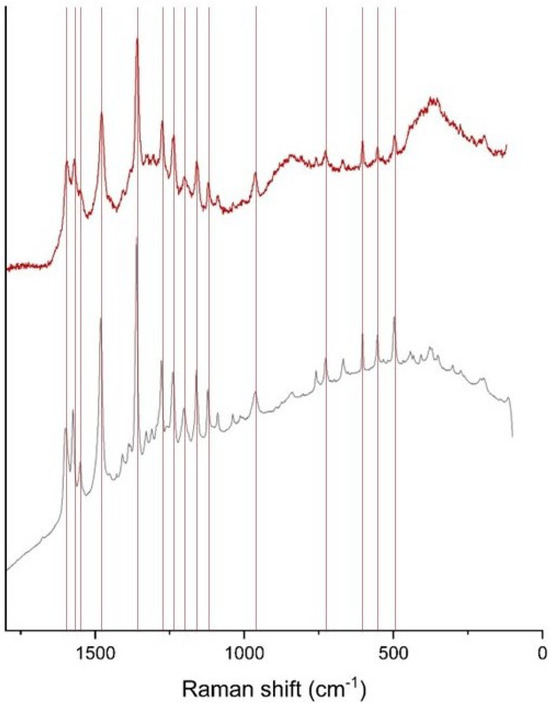
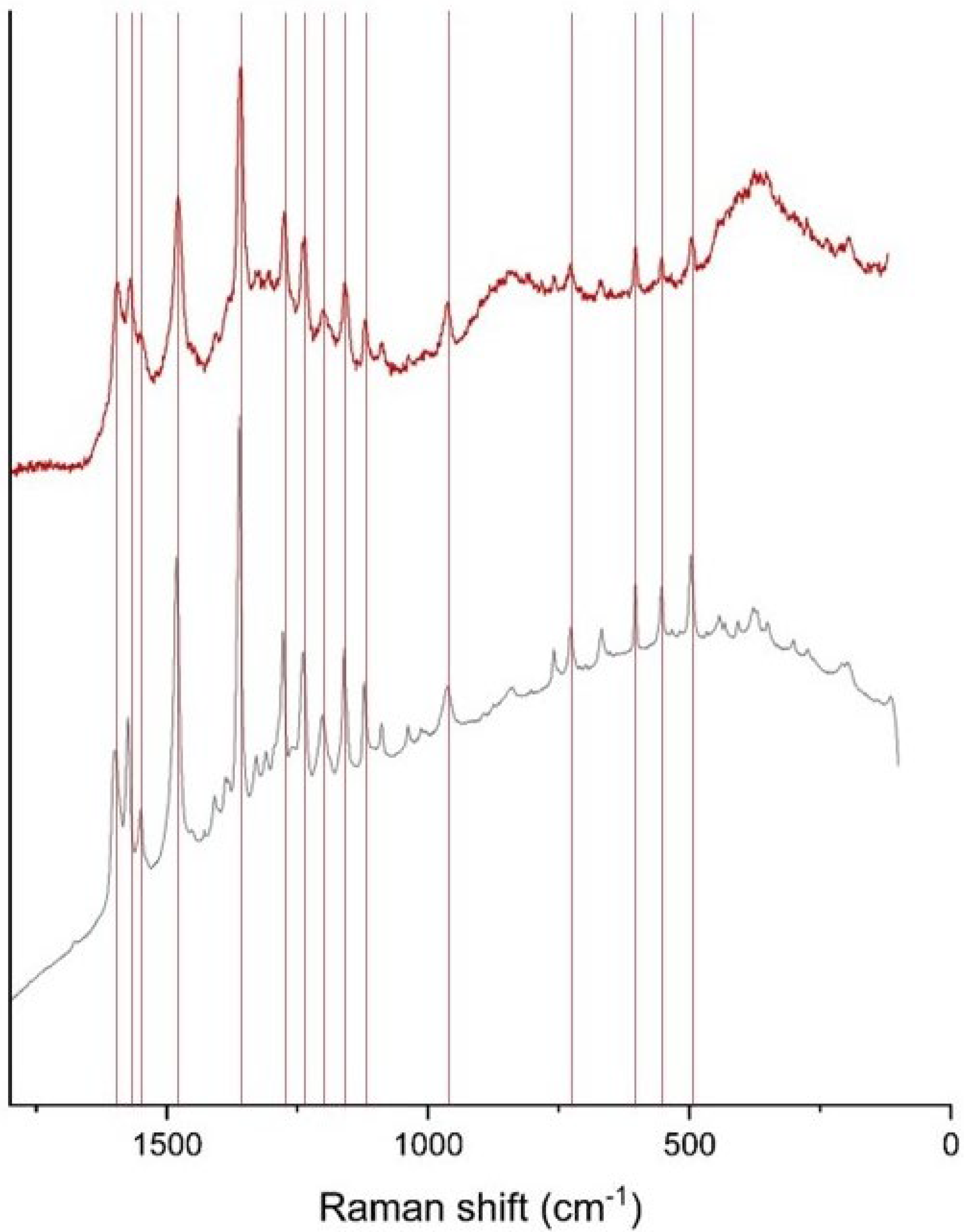
The paint layers of the frame contain various inorganic pigments, including ultramarine, chrome oxide green or viridian, and chrome orange. Several SOPs were also identified, not only in the pink and dark red paints (like on the painted canvas), but also in the green and orange paint layers: phthalocyanine blue (PB15), Hansa yellow (PY1, PY6, and possibly PY4), and PR7 (Figure 15). In sample 133.986-8, there appears to be a mixture of PR49 and PY1. In the pXRF spectrum of the pink paint on the right side of the frame, a small amount of bromine (Br) was detected, suggesting the presence of eosin. However, this could not be confirmed with Raman spectroscopy.
Figure 15.
Raman spectrum of the red layer of sample 133.986-11 (in red), shown alongside the reference spectrum of PR7 (in gray) of the Soprano database [22].
Binder
The orange paint on the frame (133.986-8) was analyzed with Py-GC/MS. It contains alkyd resin, based on pentaerythritol and oil, but no pine resin, as had been found in the paint on the canvas. The frame is unvarnished.
4. Paravento—Results
4.1. Technical Photography and Visual Observation
Microscopic examination of the painted areas revealed that no priming layer is present on the wooden construction. The paint seems to have been directly applied to the wood.
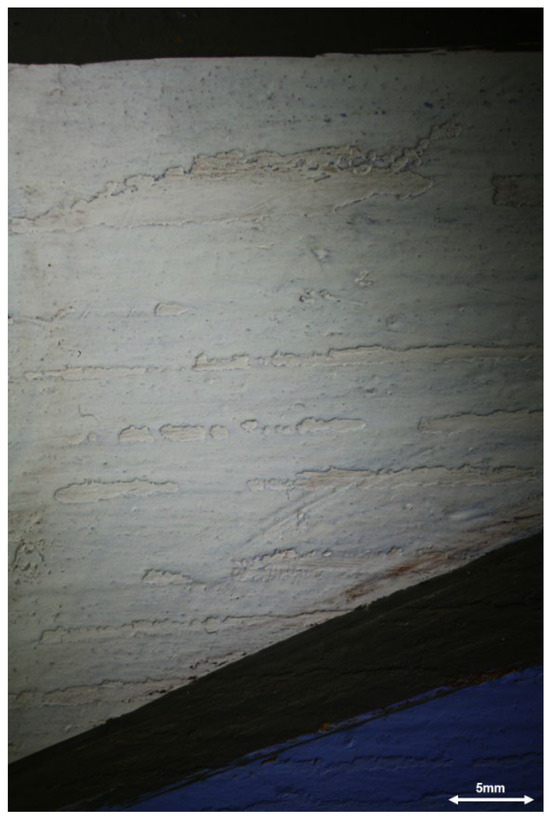
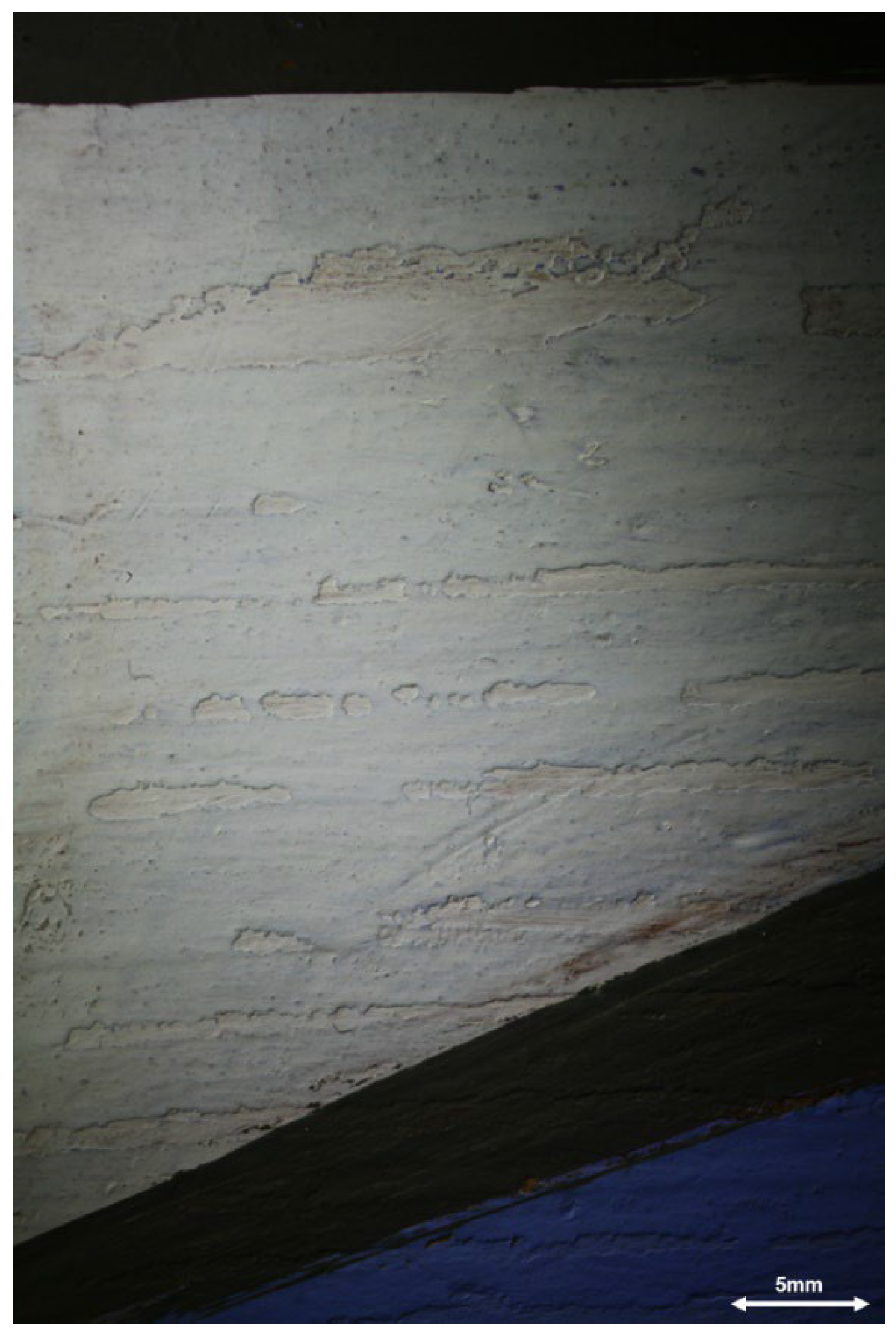
Underneath the paint layers of the currently visible compositions, however, parts of earlier paint layers are visible, especially in raking light. It seems that, at a certain moment, these paint layers were partly removed by mechanical scraping (Figure 16) and chemical dissolving (Figure 17), leaving behind remnants which were later overpainted and hence stand out in raking light.
Figure 16.
Paravento—detail of mechanically removed paint with later applied paint at the top rail of the exterior left panel (1A). Image taken in 2022 (after varnish removal).
Figure 17.
Paravento—detail of leached overpainted area with later applied paint at the upper middle left part of the exterior left panel (1A). Image taken in 2022 (after varnish removal).
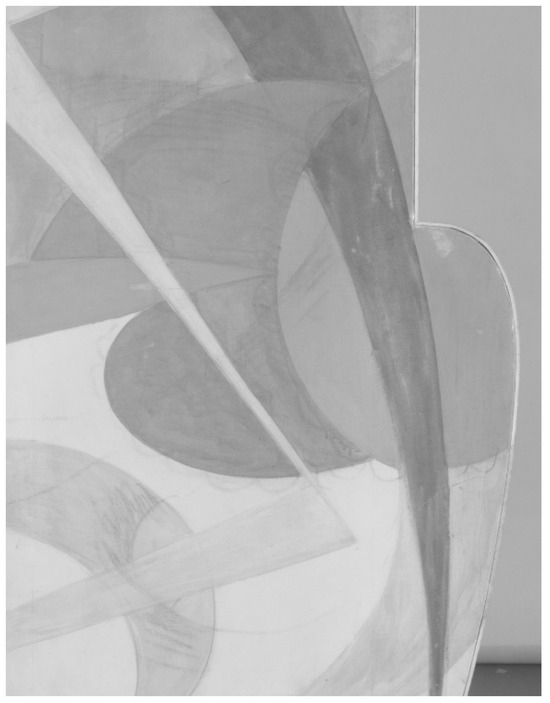
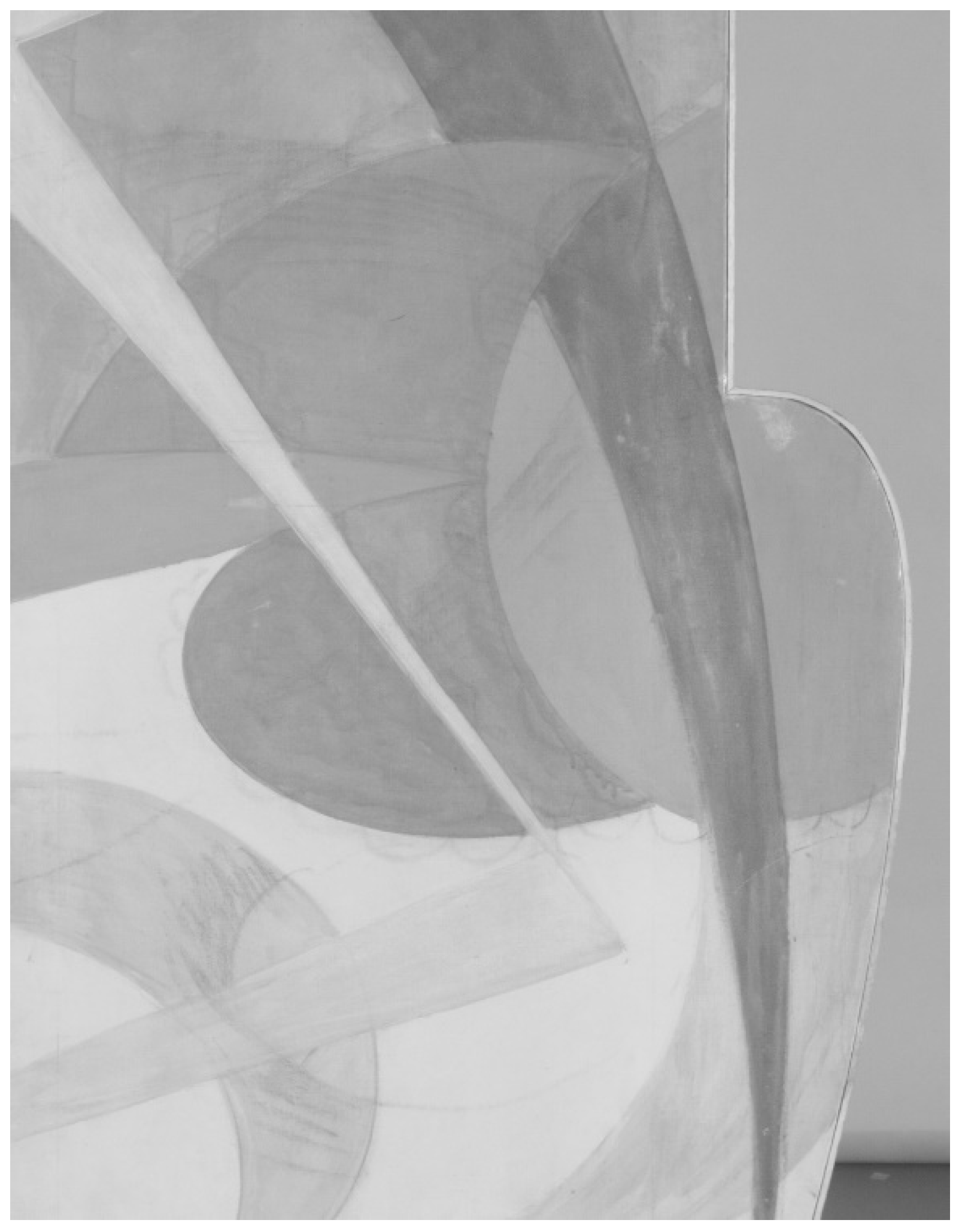
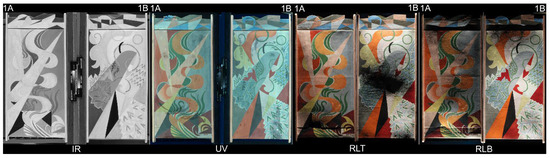
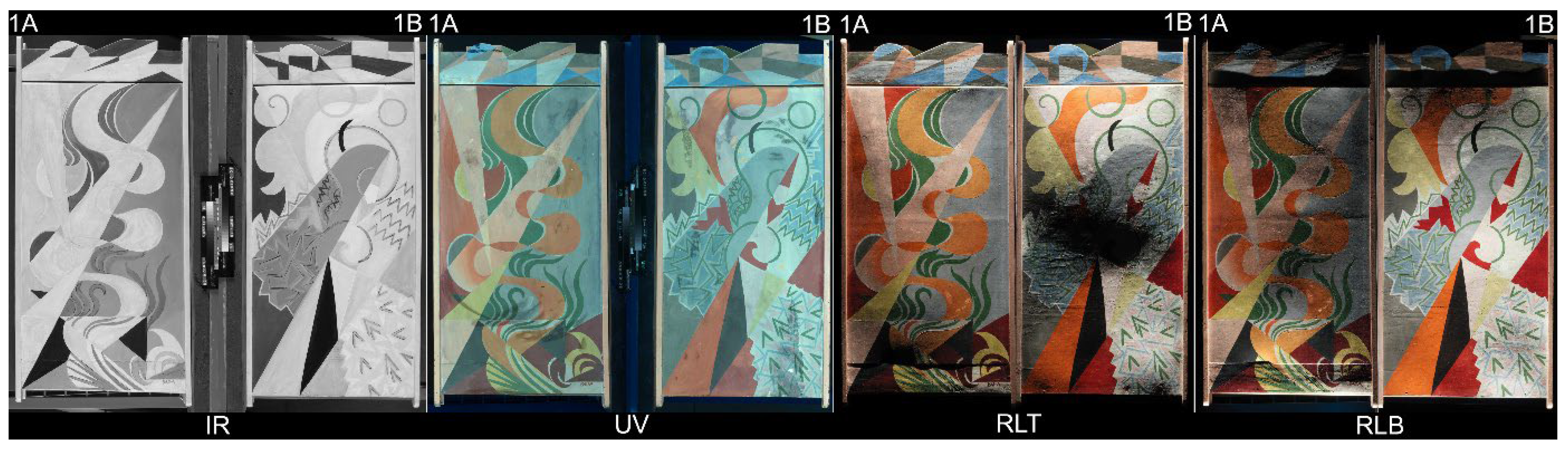
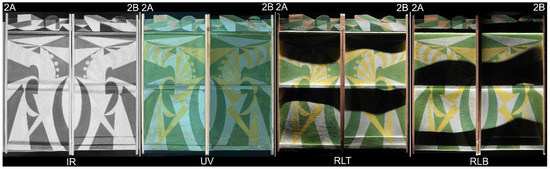
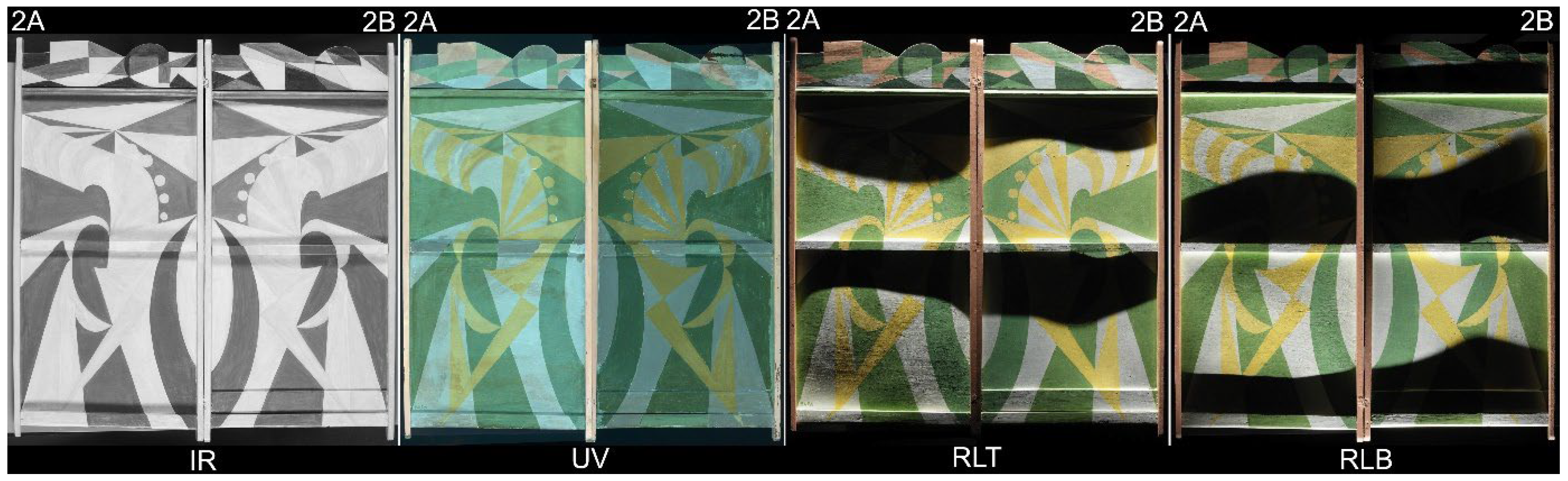
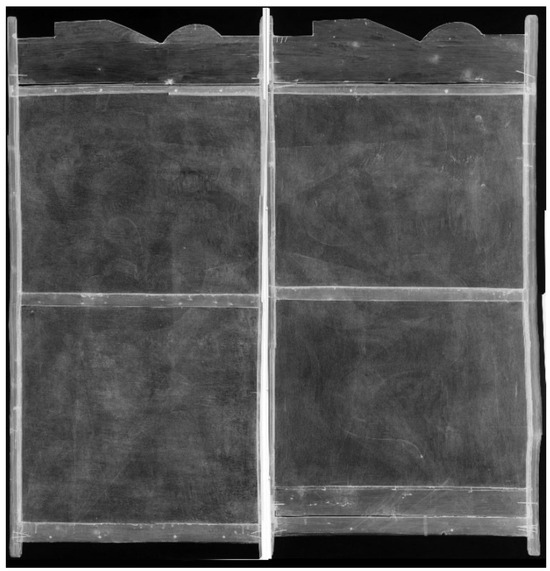
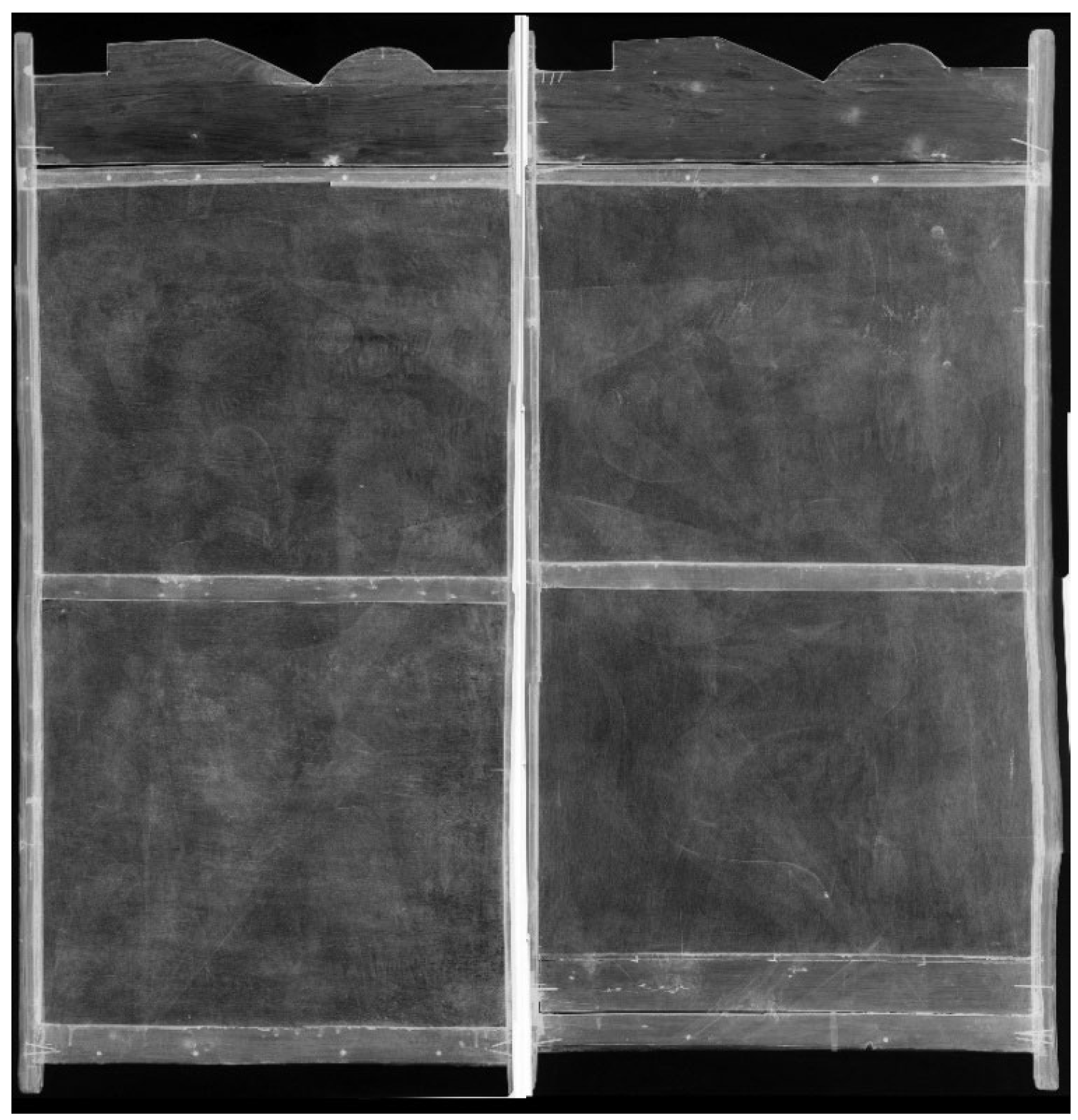
Locally, on top of these partly removed paint layers, parts of an underdrawing—probably conducted with a pencil—are visible with the naked eye and on the infrared photos (Figure 18 and Figure 19). This underdrawing corresponds to the compositions currently visible on the folding screen. The X-radiograph is reported in Figure 20.
Figure 18.
Exterior of Paravento (1A, left part; 1B, right part). IR, infrared photo; UV, ultraviolet fluorescence; RLT: raking light from above; RLB, raking light from below (instead of raking light from left, due to protruding stiles). Images are stitched and were taken in 2019 (prior to treatment).
Figure 19.
Interior of Paravento (2A, left part; 2B, right part). IR, infrared photo; UV, ultraviolet fluorescence; RLT, raking light from above; RLB, raking light from below (instead of raking light from left, due to protruding stiles). Images are stitched and were taken in 2019 (prior to treatment).
Figure 20.
X-radiograph of Paravento, seen from interior side of screen (two digital stitches of photos of 24 X-ray films in total), taken in 2019 (prior to treatment).
During different painting campaigns, Balla changed the color of some of the color fields (Figure 21).
Figure 21.
Paravento—detail of the top part of the interior left panel (panel 2A), showing the adjustment of color made during the painting process. Image taken in 2022 (after varnish removal).
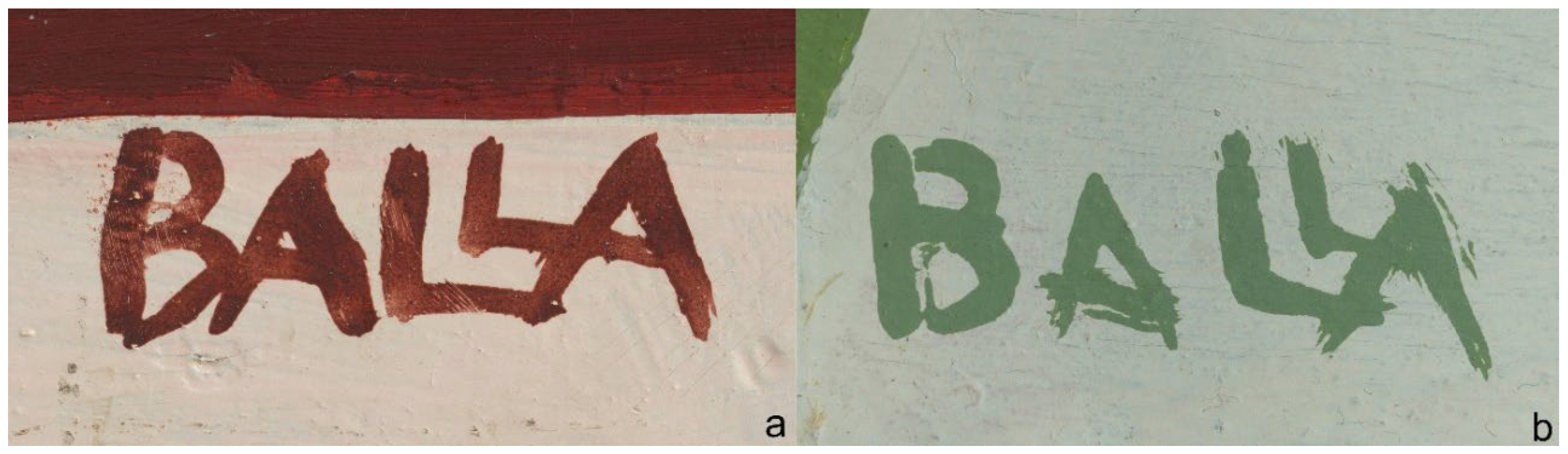
Two signatures are present on the folding screen (Figure 22): in the lower right corner of the left panel of the exterior (1A), “BALLA” was applied in dark red paint, while in the lower left corner of the left panel of the interior (2A), green paint was used for “BALLA”. The varnish was applied on top of the signatures.
Figure 22.
Paravento—details of the signatures ((a) panel 1A; (b) panel 2A). Images taken in 2025 (after varnish removal).
On all four stiles, a second pink paint layer, in almost the same color as the underlying original paint, is present. This is clearly a later overpaint, since it is less refined and consists of much coarser particles (Figure 23). It seems likely that this paint was applied to cover up damages on the stiles, which were probably more prone to wear—caused by the functional use of the folding screen in Casa Balla—than the rest of the folding screen.
Figure 23.
Paravento—detail of (varnished) coarser pink overpaint on top of more refined original pink paint underneath (visible through a loss in the pink overpaint) at top part of left stile of 1A. Image taken in 2021 (prior to treatment).
Once, a yellowed and very glossy varnish layer was present on the entire folding screen, but (unknown when and by whom) this varnish was largely (and rather sloppily) removed from the right panel (2B) and from a few small parts of the left panel (2A; see UV images in Figure 19) of the interior. The varnish is present on top of the signatures, old fills, and (discolored) retouches. However, also on top of the varnish, some discolored retouches are present.
4.2. Paint Layer Buildup and Materials
Unlike the framed Paravento con linea di velocità, in Paravento, the wood and paint layers of the panels and the stiles form a whole. For this reason, they will not be discussed separately.
The pigment composition on the exterior (panels 1A and 1B) and interior (panels 2A and 2B) of the folding screen appears to be largely consistent (Table 4). Mainly, inorganic pigments were identified, including zinc white, rutile (titanium dioxide), lead chromate, chrome orange, red iron oxide, cadmium red, ultramarine, Prussian blue, carbon black, and possibly chromium oxide green and/or viridian. Furthermore, two SOPs were found in the red and orange paint.
Table 4.
Overview of identified pigments in Paravento, organized by color. An asterisk (*) indicates identification based on Raman spectroscopy, a cross (†) indicates identification by pXRF, and a double cross (‡) refers to identifications based on SEM-EDX, question mark (?) means uncertain identification.
In most areas, barium sulfate, in combination with calcium carbonate and/or anhydrite, was detected; these materials were likely added by the paint or pigment manufacturer as extenders.
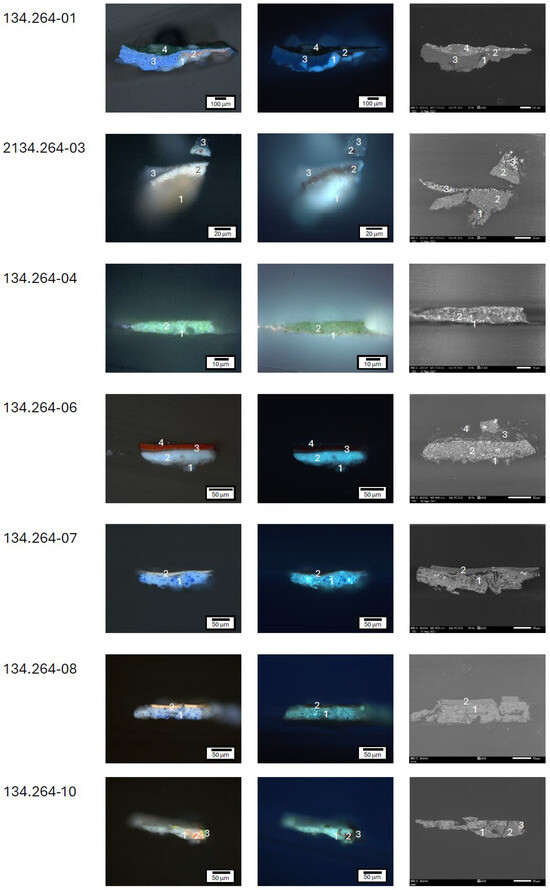
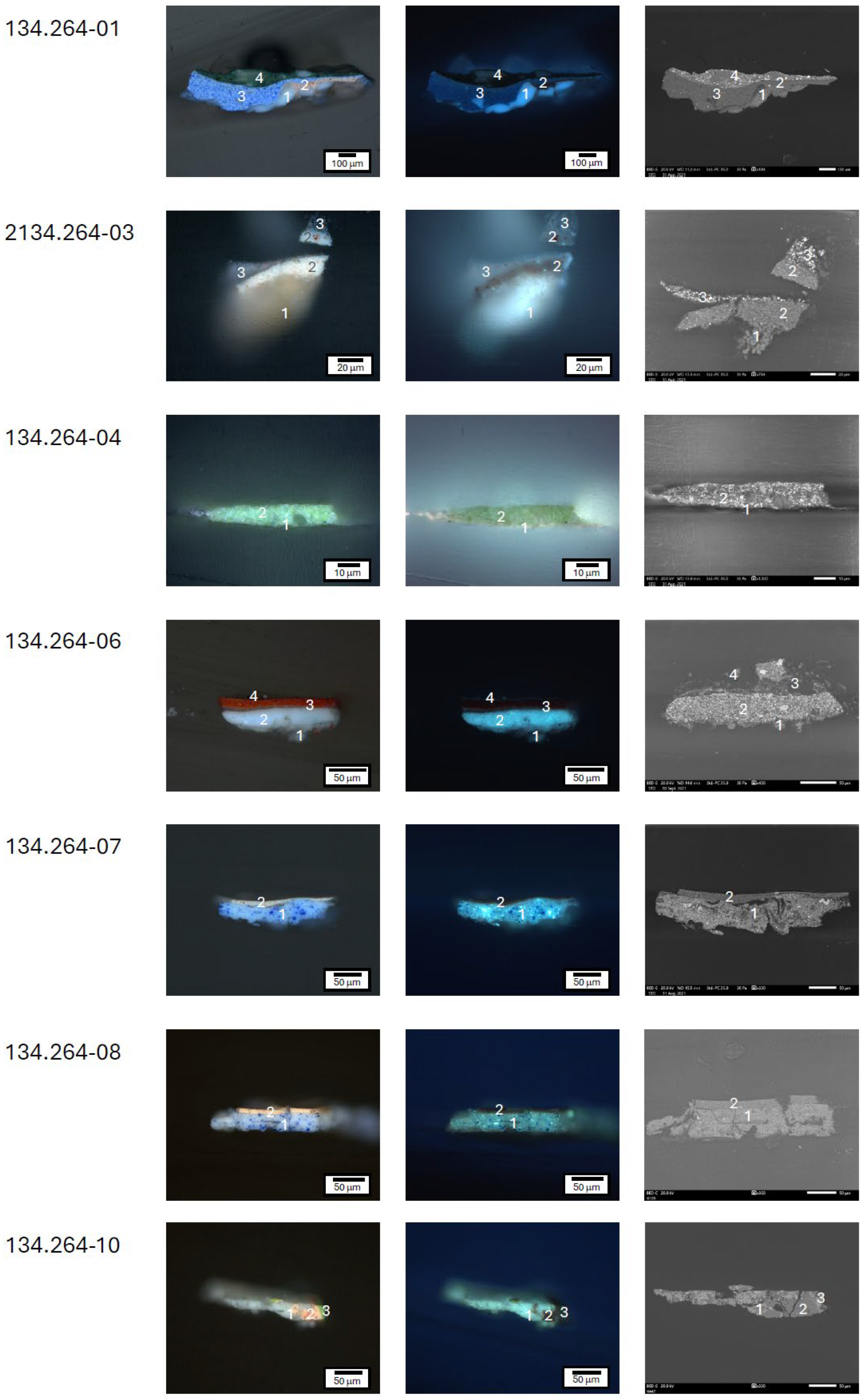
Large amounts of zinc white and titanium white (rutile) were found throughout the paint layers. Cross-section (Figure 24) analysis shows that zinc white is mainly found in the lower layers7. Micro-Raman spectroscopy identified rutile in most of the upper paint layers, but also in some of the deeper layers. In every layer that contains rutile, anhydrite was also consistently present, likely added as a filler. Rutile could not be detected with handheld Raman spectroscopy in some of the green, dark red, and black areas on the two sides of the screen and on the top rails. However, examination of cross-sections of a medium green area (samples 134.264-04 and 134.264-10) confirmed the presence of rutile, indicating that, in some cases, the amount of rutile may be too low for non-invasive Raman spectroscopy to be detected. Rutile was not found in the underlayers, including the white and light blue paint on both the interior and exterior. However, anatase was identified in one light blue underlayer, while the others contain zinc white.
Figure 24.
Overview of images of the cross-sections taken from Paravento. The left column shows photographs taken in visible light, the middle column shows images under UV illumination, and the right column displays backscattered electron (BSE) images.
Previous analysis of a sample taken near the signature on panel 1A [11] revealed three layers with zinc white and Prussian blue, followed by two titanium white layers. Reflectance spectroscopy confirmed the widespread use of titanium white in the upper layers, but the specific type (anatase or rutile) could not be determined, because no Raman spectroscopy had been carried out.
4.2.1. Pink and Red Areas
Visual observations highlighted possible differences in the composition of the pink overpaint and the underlying pink paint on the stiles, of which the latter seemed similar to the pink paint on the top rails. However, all pink paints seem to have a rather comparable composition. They contain rutile, anhydrite, and red iron oxide, along with some cadmium red and zinc white. In some of the original light pink areas, no cadmium red could be detected, possibly sometimes present only in very small quantities. This suggests that the use of cadmium red paint was related to a specific tone of pink and may have been deliberately mixed with red iron oxide-based paint by the artist. Additionally, traces of ultramarine or Prussian blue were occasionally found in the original pink paint.
The dark red paint areas on the exterior contain PR3 (Toluidine Red), which came into use after 1905. The uppermost pink paint layer (the overpaint) on the stile of the left panel on the exterior contains PO13 (Benzidine Orange), dating this layer to no earlier than the 1930s.
4.2.2. Blue Areas
Light blue paint layers were found in five of the cross-sections. In contrast to the pink paint layers, which are largely consistent across the different samples, the composition of the light blue layers varies significantly.
The light blue paint layers on the left stile of panel 1B (exterior), represented by samples 134.264-07 and 134.264-08, are identical, primarily consisting of zinc white and ultramarine. In contrast, the light blue layer on the top rail of panel 2A (sample 134.264-01) contains ultramarine mixed with rutile, along with small amounts of zinc white, barium sulfate, and anhydrite. This layer is applied on top of a pink layer, indicating that it was added in a later painting phase than the light blue layer on the stile of panel 1B.
Two other light blue layers, from the exterior (sample 134.264-06) and interior (sample 134.264-10), are visually similar in pale blue tone, but they differ in composition. Sample 134.264-06 contains Prussian blue mixed with anatase and zinc white, while sample 134.264-10 consists of Prussian blue combined with zinc white and calcium carbonate.
4.2.3. Green Areas
Green paint layers are present in three cross-sections. In all cases, the green color was achieved by mixing Prussian blue with lead chromate. However, based on the analyses that were carried out, the occurrence of chrome oxide green or viridian cannot be entirely ruled out.
The white pigments used in these green layers vary. In the dark green paint layer on the top rail of panel 2A (sample 134.264-01), zinc white is the main white pigment. In contrast, the medium green layers on the main panel surface (samples 134.264-04 and 134.264-10) contain rutile (titanium white), with only a small amount of zinc white. This difference may relate to the intended shade or tone of the green paint.
4.2.4. Binder and Varnish
The sample taken from the pink stile (134.264-09) reveals an upper underbound paint layer. Py-GC/MS results indicate a low content of a poorly drying oil. The fatty acid profile is inconclusive, making it impossible to identify the specific type of oil. Additionally, essential oil was likely added. Notably, dammar and some pine resin are present in the paint layer, even though they were not detected in the varnish. Some components of castor wax and wool wax were found as well.
A varnish layer is present on the whole object, except for some parts where it had previously been removed. A sample taken from the interior of the screen (134.264-05) was analyzed. Py-GC/MS revealed that it mainly consists of a cyclohexanone ketone resin. Additionally, an acrylic mixture was identified, consisting of MMA with small amounts of iBMA and n-butyl methacrylate (nBMA).
It could not be established whether these components formed a single mixed varnish or whether the acrylics derive from a separate varnish layer. An iBMA/nBMA combination is known to be present in products like Lucite® 44 and 45, which appear in treatment records from the early 1950s, as well as in Soluvar® varnish.
Previous analysis using FTIR spectroscopy also ascertained the presence of an acrylic resin [19].
5. Discussion
5.1. Paravento Con Linea di Velocità
5.1.1. Comparison Between Canvas and Frame
The frame is, in contrast to the canvas, painted in just one paint layer that, overall, is well adhered to the wooden support. The wood structure of the frame is locally visible underneath the thin, almost-translucent paint. The frame is not varnished. The paint on the canvas, however, is covered with a glossy varnish layer. Multiple cracks and small losses in the smooth enamel-like paint on the canvas can be observed, as well as issues with the paint adhesion.
The pigments of the painted canvases and frame were examined and could be compared (Table 3). On the canvas, inorganic colored pigments (Prussian blue, ultramarine, zinc chromate yellow, viridian, chrome orange, and minium) are mixed with zinc white, gypsum and/or calcium carbonate, and barium sulfate. Two SOPs (PR49 and PR3) were identified as well. The palette of the frame is rather different. Here, an ample use of SOPs was ascertained: PY1, PY4, PY6, PB15, PR7, PR49, and another unidentified red SOP. Viridian, chrome orange, and ultramarine are present as well. The following white pigments and fillers were found: zinc white, lead white, barium sulpfate, gypsum, and/or calcium carbonate. In some areas on the frame, titanium dioxide (rutile) was identified.
The binders of the canvases and frame differ as well: drying oil in combination with pine resin in the paint of the canvas, and oil (+alkyd resin) on the frame. As mentioned, a combination of drying oil and pine resin had previously been found in a painting made in 1913 by Balla [8]. Since the late nineteenth century, ready-mixed paints (house paints) have been produced in Europe for different applications. Among these, Ripolin®, a trade name for a series of commercial non-artists’ paints, was used by several European painters, including Pablo Picasso (1881–1973) and Francis Picabia (1879–1953), because these paints offered different visual and handling properties than artists’ oil paints, such as surface gloss, hiding properties, greater fluidity, and rapid drying times [23,24].
It can thus be concluded that the canvas and the frame were painted with different materials and not at the same moment. The pigments on the canvas are compatible with the dating of 1916–1917, whereas the occurrence of two specific pigments on the frame indicates that it was painted, and maybe also made and added, later: phthalocyanine blue (PB15) only came into use after around 1935 [25], and rutile became commercially available after World War II (see discussion in Section 5.2).
5.1.2. Discoloration of the Pink Paint
The pink paint on the canvas is significantly lighter in color than the pink paint on the wooden frame, and also lighter than a pink retouching applied over the original paint layer. This raised the question of whether the original pink paint may have faded over time.
Analysis revealed that the paint layers in the pink paint of the canvas contain lithol red (PR49), combined with zinc white, barium sulfate, and gypsum. PR49 was discovered in 1899 [26] and was adopted soon afterward, as testified by its presence in paintings from 1909 and 1910 by Kirchner [27]. Hence, the occurrence of this SOP fits the dating of Paravento con linea di velocità. Lithol red is known for its poor lightfastness, especially when combined with a white pigment, suggesting that the pink areas may indeed have undergone some degree of fading. It is worth noting that the limited lightfastness of PR49 may not have been widely recognized by artists until the mid-20th century [28].
Unlike the canvas, the red paint on the frame contains an unidentified red SOP, along with white pigments such as titanium white. The presence of bromine in the XRF spectrum suggests that the red SOP could possibly be eosin, although this could not be confirmed. The difference in pigment composition likely led to contrasting aging processes between the pink paint layers on the canvas and the frame, resulting in varying discoloration of these areas.
5.2. Paravento
5.2.1. Dating of the Paint Layers
The presence of rutile in most of the upper paint layers of the panels and stiles raises questions about the dating of 1916/1917, at least with respect to the now-visible compositions. Similarly, the detection of anatase in an underlayer might point to another painting campaign and also warrants reconsideration of the painting’s timeline.
The production of pigments combining anatase and barium sulfate started in Norway and the United States in late 1918. However, high-quality pure anatase was not produced until 1923 in France. Even after its creation, artists’ paint manufacturers were slow to adopt this new white pigment. A new white oil paint by Société LeFranc, likely containing anatase, appeared around 1925. By the 1930s, titanium white started to appear more frequently in artists’ practice. Synthetic rutile, on the other hand, only became widely used in Europe after 1945, with improvements in pigment quality continuing into the 1950s. Before the adoption of titanium white, rutile was mentioned in 19th-century patents, but it was usually used in the form of colored pigments due to elements like iron. The industrial use of paints based on natural rutile remained very limited, primarily because the mineral was difficult to grind into a fine pigment [29].
In the case of Paravento, the frequent presence of rutile in multiple upper paint layers makes it highly unlikely that these layers predate the Second World War. Notably, in the only two other works by Balla that have been analyzed, a painting from 1915 [8] and Paravento con linea di velocità, no titanium white was detected.
5.2.2. Pink Overpaint
In the cross-sections of the stile of panel 1A, a clear separation and poor adhesion can be observed between the light blue paint layer—composed mainly of zinc white and ultramarine—and the overlying original pink layer, which contains rutile and red pigment. This suggests that this pink paint may be a later reworking by the artist.
Interestingly, this same pink paint composition was found on the interior of the top rail of panel 2A (sample 134.264-01), as well as in sample 134.264-10. This indicates that these pink layers across different parts of the screen may all belong to a later painting phase.
This pink layer on the stile appears to have been repainted once again at a later stage with a similar shade of pink—probably by Balla himself (as seen in samples 134.264-03 and 134.264-09). As described in the Results section, on red and pink paint areas, this uppermost pink layer contains the synthetic organic pigment PO13, which only came into use in the 1930s.
The solubility of this latter pink paint layer—similar to the solubility of the yellowed varnish established during varnish removal tests—might be due to partial penetration of the varnish into the relatively porous paint. The occurrence of traces of essential oil suggests that the paint was applied in a thinned form. Additionally, the inclusion of dammar resin in the paint could contribute to its sensitivity to solvents.
6. Conclusions
This study of the Paravento con linea di velocità and Paravento (both dated 1916–1917) in the collection of the Kröller-Müller Museum made an important contribution to the knowledge of pigments and binders used by Giacomo Balla, especially with regard to his painted folding screens.
The results of Paravento con velocità show that all the pigments and fillers identified in the painted canvases are compatible with the dating of the folding screen (1916–1917). However, these differ from those of the frame, which was revealed to have been painted later, possibly after the Second World War. Some synthetic organic pigments have been found in the red and pink color areas of the canvasses, including lithol red (PR49). This pigment seemed to have been discolored.
A combination of drying oil and pine resin was found in the paint on the canvases, which could explain its enamel-like appearance and solubility in various solvents. The varnish, not present on the frame, is based on acrylates and ketone resin, and cannot be considered original. However, removal of this yellowed varnish proved impossible, due to similar solubility of the original paint layers, caused by the pine resin in the binder of the paint. Therefore, during the 2023 treatment, only the most disturbing discolored retouches were toned down.
The research into the paint layers of Paravento confirms that the screen was painted in several campaigns. All colored pigments, mostly inorganic, are compatible with an early-20th-century palette, but the white pigments suggest a varying dating of the paint layers. Rutile has been found in most top layers of paint, leading to the conclusion that they were applied after the Second World War. Anatase, which came into use after about 1925, was found in a lower light blue layer of paint. But some underlying white and light blue paint layers on both the outside and inside, and the stiles of the folding screen, contain zinc white, and not titanium white. These layers—probably the partly removed underlayers—can therefore be dated earlier (after 1850). It is most likely that Paravento was reworked various times by Balla himself. The painter passed away in 1958, and the folding screen was used in home and studio Casa Balla in Rome until his death. All determined pigments existed before 1958. Unfortunately, study of preliminary drawings of the folding screen by Balla, similar works by Balla, and early photos of the folding screen did not lead to a more precise dating of the folding screen yet.
Since it was not certain that the pink overpainting on the stiles had not been applied by Balla himself, and the varnish on top of it could not be removed without removing this pink overpainting, it was decided not to remove the yellowed varnish on these parts, in contrast to the rest of the folding screen, where the yellowed varnish was removed.
Author Contributions
Conceptualization, M.B., M.L., and I.D.v.d.W.; methodology, M.B., M.L., and I.D.v.d.W.; investigation, R.P., M.B., S.d.G., M.L., E.G.v.R., S.S. and I.D.v.d.W.; writing—original draft preparation, R.P., M.B., M.L., and I.D.v.d.W.; writing—review and editing, R.P., M.B., M.L., and I.D.v.d.W. All authors have read and agreed to the published version of the manuscript.
Funding
This research received no external funding.
Data Availability Statement
The raw data supporting the conclusions of this article will be made available by the authors on request.
Acknowledgments
Tirza Mol (furniture conservator, Rijksmuseum Amsterdam) and Miko Vasques Dias (independent conservator of wood and furniture and lecturer of conservation of cultural heritage, University of Amsterdam) are acknowledged for sharing their knowledge on materials and techniques and their observations on Paravento. Rik Klein Gotink (independent technical photographer) and Arnold Truyen (polychrome sculpture conservator, Stichting Restauratie Atelier Limburg (SRAL), Maastricht) are thanked for the technical imaging and X-ray imaging, respectively. Tanja de Boer (head of Collection and Research, Kröller-Müller Museum) and Renske Cohen-Tervaert (curator, Kröller-Müller Museum) are recognized for their support in writing this article and their art-history input, respectively.
Conflicts of Interest
The authors declare no conflict of interest.
Notes
| 1 | In her 1925 book Considerations Regarding Problems in the Development of Modern Painting, Helene Kröller-Müller writes, “Unfortunately, I cannot produce an example for you from the collection here. I say ‘unfortunately’, as it would be desirable for a collection that purports to demonstrate the course of development in art also to show the Futurist phase […]”. See [3]. |
| 2 | The two other folding screens by Balla are a lost folding screen, visible on a photo from the mid-1920s [4]; and Forme compenetrate + balfiori, 1932, paint on wooden panels, private collection [4,5]. |
| 3 | According to the allegations of the artist’s daughter, several exhibition catalogues and critique reviews have said, and maintain their position, that this Balla screen was made for Marguerite Caetani (1880–1963), Princess of Bassiano and Duchess of Sermoneta. It is difficult today to establish with certainty whether and when Balla’s screen was purchased by the princess, because her collection was dispersed after her death, and there is no archive concerning this matter. Her heirs still possess one painting by Balla without knowledge of the purchase date. See [4]. |
| 4 | In two analytical reports from 2019 [11,12] the occurrence of titanium white (type yet unknown) was reported, which raised questions on the dating of some of the paint layers. |
| 5 | Spectral Databases for Raman|IRUG (accessed 6 November 2025). |
| 6 | SOPRANO (accessed 6 November 2025). |
| 7 | These lower layers are probably the partly removed underlying paint layers, but unfortunately it was not possible to link these lower layers in the cross-sections with the remnants of the underlying layers on the folding screen, since sampling of these remnants was not possible and it was not clear on the sample locations if the remnants were present. |
References
- Lista, G. Balla; Galleria Fonte D’Abisso: Modena, Italy, 1982. [Google Scholar]
- Cupini, L.M.; Calabresi, P. Giacomo Balla: A Painter in the Context of Neuroscience. Neuroscientist 2022, 28, 310–317. [Google Scholar] [CrossRef] [Scilit] [PubMed]
- Benzi, F.; Cohen Tervaert, R. (Eds.) Futurism & Europe: The Aesthetics of a New World; Yale University Press: London, UK, 2023. [Google Scholar]
- Lista, G. Unpublished Study on the History of Paravento con Linea di Velocità; Kröller-Müller Museum Archive: Otterlo, The Netherlands, 2015. [Google Scholar]
- Cullinan, N. (Ed.) Paraventi. Folding Screens from the 17th to 21st Centuries; Fondazione Prada: Milano, Italy, 2023. [Google Scholar]
- Bonizzoni, L.; Caglio, S.; Frezzato, F.; Martini, M.; Villa, V.; Galli, A. Balla’s Bouquet: A Pigment Study for Flowers and Lights. J. Cult. Herit. 2021, 52, 164–170. [Google Scholar] [CrossRef] [Scilit]
- Möckel, V.; Hanspeter, M. Matte Malerei Mit Haftungsverlust. Konserveriung Und Restaurierung Des Gemäldes ‘Velocità d’automobile + Luce + Rumore’ von Giacomo Balla [Matte painting with loss of adhesion. Conservation and restoration of the painting ‘Velocità d’automobile + Luce + Rumore’ by Giacomo Balla]. Restauro 2017, 4, 28–31. [Google Scholar]
- Rava, A.; Radelet, T.; Giovagnoli, A.; Poli, T.; Chiantore, O.; Piccirillo, A. The Painting Materials in a Work of the Futurist Artist Giacomo Balla. J. Am. Inst. Conserv. 2013, 52, 227–235. [Google Scholar] [CrossRef] [Scilit]
- Komanecky, M.K.; Butera, V.F. The Folding Image: Screens by Western Artists of the Nineteenth and Twentieth Centuries; Yale University Art Gallery: New Haven, CT, USA, 1984; p. 226. [Google Scholar]
- Splendore, A.; Lo Russo, F. Unpublished Condition and Treatment Report, Milan; Kröller-Müller Museum Archive: Otterlo, The Netherlands, 2019. [Google Scholar]
- Frezzato, F.; Monni, E. Giacomo Balla, Paravento Dipinto—Analisi Microstratigrafica—Relazione Scientifica; Rif. 19CO13021; Centro Ricerche sul Dipinto, Divisione della C.S.G. Palladio s.r.l.: Vicenza, Italy, 2019. [Google Scholar]
- Poldi, G. Report: Relazione Analisi Scientifiche Non Invasive, Giacomo Balla, Paravento (due Ante Dipinte su Entrambi i Lati); Kröller-Müller Museum Archive: Otterlo, The Netherlands, 2019. [Google Scholar]
- Sawczak, M.; Kamińska, A.; Rabczuk, G.; Ferretti, M.; Jendrzejewski, R.; Śliwiński, G. Complementary use of the Raman and XRF techniques for non-destructive analysis of historical paint layers. Appl. Surf. Sci. 2009, 255, 5542–5545. [Google Scholar] [CrossRef] [Scilit]
- Kaszowska, Z.; Malek, K.; Pańczyk, M.; Mikołajska, A. A joint application of ATR-FTIR and SEM imaging with high spatial resolution: Identification and distribution of painting materials and their degradation products in paint cross sections. Vib. Spectrosc. 2013, 65, 1–11. [Google Scholar] [CrossRef] [Scilit]
- Pięta, E.; Proniewicz, E.; Szmelter-Fausek, B.; Olszewska-Świetlik, J.; Proniewicz, L.M. Micro-Raman spectroscopy analysis of the 17th century panel painting ‘Servilius Appius’ by Isaac van den Blocke. J. Raman Spectrosc. 2014, 45, 1019–1025. [Google Scholar] [CrossRef] [Scilit]
- Van Keulen, H. The Analysis and Identification of Transparent Finishes Using Thermally Assisted Hydrolysis and Methylation Pyrolysis-Gas Chromatography-Mass Spectrometry. In Proceedings of the 12th International Symposium, Furniture Finishes-Past, present and future of transparent wood coatings, Amsterdam, The Netherlands, 14–15 November 2014. [Google Scholar]
- Van Keulen, H.; Schilling, M. AMDIS & EXCEL: A Powerful Combination for Evaluating THM-Py-GC/MS Results from European Lacquers. Stud. Conserv. 2019, 64, S74–S80. [Google Scholar] [CrossRef] [Scilit]
- Carlyle, L.A. Oil Painting Instruction Manuals and Handbooks in Britain 1800–1900. In The Artist’s Assistant; Archetype Books: London, UK, 2001. [Google Scholar]
- Zumbuehl, S.; Scherrer, N.C.; Berger, A.; Eggenberger, U. Early Viridian Pigment Composition Characterisation of a (hydrated) Chromium Oxide Borate Pigment. Stud. Conserv. 2009, 54, 149–159. [Google Scholar] [CrossRef] [Scilit]
- Eibner, A. Malmaterialenkunde-als Grundlage der Maltechnik [Painting Materials—As the Basis of Painting Technique]; Springer: Berlin/Heidelberg, Germany, 1909. [Google Scholar]
- Newman, R. Chromium Oxide Greens. Chromium Oxide and Hydrated ChromiumOxide. In Artists’ Pigments—A Handbook of Their History and Characteristics; FitzHugh, E.W., Ed.; Cambridge University Press: Cambridge, UK, 1997; Volume 3. [Google Scholar]
- Fremout, W.; Saverwyns, S. Identification of Synthetic Organic Pigments: The Role of a Comprehensive Digital Raman Spectral Library. J. Raman Spectrosc. 2012, 43, 1536–1544. [Google Scholar] [CrossRef] [Scilit]
- Gautier, G.; Bezur, A.; Muir, K.; Casadio, F.; Fiedler, I. Chemical Fingerprinting of Ready-Mixed House Paints of Relevance to Artistic Production in the First Half of the Twentieth Century. Part I: Inorganic and Organic Pigments. Appl. Spectrosc. 2009, 63, 597–603. [Google Scholar] [CrossRef] [Scilit] [PubMed]
- Muir, K.; Langley, A.; Bezur, A.; Casadio, F.; Delaney, J.; Gautier, G. Scientifically investigating Picasso’s suspected use of Ripolin house paints in Still Life and the Red Armchair. J. Am. Inst. Conserv. 2013, 52, 156–172. [Google Scholar] [CrossRef] [Scilit]
- Defeyt, C.; Strivay, D. PB15 as 20th and 21st Artists’ Pigments: Conservation Concerns. E-Preserv. Sci. 2014, 11, 6–14. [Google Scholar]
- Lawson, C.A. Lithol Red. In Pigment Handbook, 2nd ed.; Lewis, P.A., Ed.; Wiley: Hoboken, NJ, USA, 1988; Volume 1, pp. 473–485. [Google Scholar]
- Stege, H.; Richter, M.; Steuer, C. Indanthrenblau, Helioechtrot and Pigmentscharlach—Identification of Synthetic Organic Pigments in Paintings of Ernst Ludwig Kirchner Using Raman Microscopy. Z. Kunsttechnol. Konserv. Wernersche Verlagsgesellschaft 2013, 27, 30–42. [Google Scholar]
- Standeven, H.A.L. The History and Manufacture of Lithol Red, a Pigment Used by Mark Rothko in His Seagram and Harvard Murals of the 1950s and 1960s. Tate Pap. 2008, 10. Available online: https://www.tate.org.uk/research/tate-papers/10/history-and-manufacture-of-lithol-red-pigment-used-by-mark-rothko-in-seagram-and-harvard-murals-1950s-and-1960s (accessed on 3 December 2025).
- Laver, M. Titanium Dioxide Whites. In Artists’ Pigments—A Handbook of Their History and Characteristics; FitzHugh, E.W., Ed.; Cambridge University Press: Cambridge, UK, 1997; Volume 3, pp. 295–355. [Google Scholar]

Disclaimer/Publisher’s Note: The statements, opinions and data contained in all publications are solely those of the individual author(s) and contributor(s) and not of MDPI and/or the editor(s). MDPI and/or the editor(s) disclaim responsibility for any injury to people or property resulting from any ideas, methods, instructions or products referred to in the content. |
© 2025 by the authors. Licensee MDPI, Basel, Switzerland. This article is an open access article distributed under the terms and conditions of the Creative Commons Attribution (CC BY) license (https://creativecommons.org/licenses/by/4.0/).