


Abstract
The medieval textiles collection of the National Museum of Art of Romania (MNAR) has been in place since 1865 and nowadays preserves about 1000 medieval and pre-modern weavings and embroideries. These extremely valuable objects, dated between the 14th and the 19th centuries, are mainly religious embroidered garments and veils with special significance in the Byzantine li-turgy. Ecclesiastical embroideries of Byzantine tradition are characterized by a complex technique: metallic threads with a silk core, metallic wires and coloured silk threads are couched over padding on layers of silk and cellulosic supports so as to create relief through light reflection. The silk sup-ports and the sewing threads are coloured, mainly in red, blue, green and yellow hues, and analytical investigations of the dyes used in embroideries preserved in the MNAR, in the Putna and Sucevița Monasteries, have been released in previous studies by the corresponding author. The present work continues the approach with research into dyes in about 25 aëres and epitaphioi from the MNAR collection. Considering their privileged function in the liturgical ritual, these luxurious pieces embroidered with silver, gilded silver or coloured silk threads and decorated with pearls, sequins or semi-precious stones are the most faithful description of the stylistic and technological evolution of the art of post-Byzantine embroidery in the Romanian provinces. The data resulting from the present research will improve the knowledge regarding this topic. Dye analysis was performed by liquid chromatography with diode array detection, while fibres were characterized by infrared spectroscopy (with attenuated total reflectance) and optical microscopy. The biological sources identified—carminic acid-based dyes, redwood, dyer’s broom, weld, indigo-based dyes––will be discussed in correspondence with their use in the embroidery technique: support, lining and embroidery threads, together with other sources previously reported on Byzantine embroideries in Romanian collections, and in similar objects preserved at Holy Mount Athos.
1. Introduction
Public and ecclesiastical museums in Romania preserve valuable medieval and pre-modern textile collections, perfectly integrated within the European luxury textiles, especially the Byzantine and post-Byzantine. Medieval embroideries, and especially the liturgical vestments and veils, are the most representative. These objects belong to the treas-uries of the Orthodox or Catholic churches that have been active over time in the three historical Romanian provinces, Moldavia, Wallachia and Transylvania. Liturgical embroideries in the Byzantine style particularly enjoyed great appreciation in the Romanian ter-ritories and set up a special chapter in the history of medieval and pre-modern South-eastern European art.
The large number of embroidered liturgical objects in Byzantine or post-Byzantine workshops perfectly document the interest of the Romanian medieval cultural elites in the Byzantine imperial art. The same enthusiasm was equally evident in all the other artistic fields: architecture, painting, sculpture and illuminated manuscripts. The geographical position of the three historical Romanian provinces allowed direct cultural exchanges with Byzantium during the Middle Ages, which is nowadays richly documented by archaeological research. However, towards the end of the Middle Ages, the political history of the provinces took different forms of attachment to the Byzantine artistic heritage. The principality of Transylvania, which had been in the sights of the newly established Hungarian state in the Pannonian Plain since the 10th century, was much more receptive to Western European art, which was intensively promoted through the Catholic Church and the papacy. Moldavia and Wallachia remained constantly within the sphere of influence of the Byzantine Empire, especially after the state organization of the two provinces, which had been under the spiritual authority of the Patriarchate of Constantinople since the mid-14th century [1].
The National Museum of Art of Romania (MNAR) preserves the largest and most representative collection of medieval textiles in Romania. Created in and developed since 1865, it was at that time, the first public collection of Byzantine and post-Byzantine art in the world [1]. Some of these objects, mainly those dated from the 15th and 16th centuries, were studied in terms of materials and techniques in the early 2000s, the years which preceded the re-opening of the Romanian Medieval Art Gallery [2]. Other liturgical embroideries from the same period, or later, preserved in MNAR or in monasteries in the northeastern part of Romania were also subject of research, with reference to the metallic threads and dyes [3,4,5,6,7].
Liturgical textiles of Byzantine tradition have two different supports, with distinct roles: one to provide resistance and another one as a base for building the relief [8]. The former is composed of a cellulosic support (never visible) (Figure 1), which is not coloured, and a silk support with an aesthetic role, which is totally or partially visible [8]. In order to provide a contrast with the precious metallic embroidery, as well as to give it importance, the silk support was coloured according to the Church canons: purple-red in most cases, with blue, yellow and brown also accepted [8]. Embroidery is made with silk threads—visible or wrapped up in precious metallic bands and wires––or just with metallic threads, to result in the so-called “needle painting” [9]. The scenes and decoration cover most of the silk support, which in some cases becomes almost completely masked [8] (Figure 1).
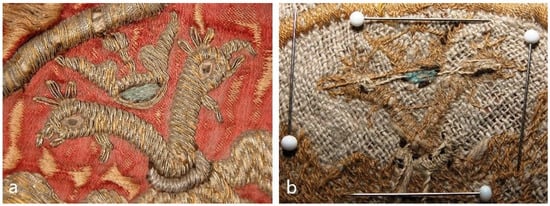
Figure 1.
Images to illustrate the technique of liturgical embroideries worked in the Byzantine tradition. (a) Left, front side: detail of embroidery on satin where the metallic thread, which runs only on the obverse, is visible. (b) Right, reverse side: detail of the embroidery where the cellulosic support and the attachment points of the metal threads are visible.
Natural dyes’ identification, together with attribution of the most probable biological sources used, represents an essential output in the studies of historical textiles. Data regarding the dyes’ places of origin, information on their first commerce and about trade routes, as well as guild regulations represent valuable instruments to document textile production and place a studied object in time and place [10,11]. The identification of dyes in historical textiles is nowadays possible mainly by liquid chromatography with diode array detection (LC-DAD). Since its first use in 1985, the above-mentioned configuration was considered for many years as the standard method for dye analysis [12,13,14,15,16]. Later on, the development of mass spectrometers (MS), with increased sensitivity and lower detection limits, mainly used in LC-DAD-MS layouts, proved to be extremely useful in biolog-ical sources’ detection [17,18,19]. Results are optimized when these structures are exploited together with dedicated in-house built databases. Moreover, when applied in tandem configurations, mass spectrometers confirmed their efficiency to characterize unknown marker compounds, with consequences in the accurate attribution of the biological sources used, and better contextualization of the studied textiles [20,21,22]. The interest in optimizing the information acquired from the tiny samples available and discerning between sources containing the same aglycones but different glycosides also led to the development of mild extraction methods, as alternatives to the classical acid hydrolysis [23,24,25,26].
With all these resources available, a vast amount of knowledge was acquired regard-ing the dyes used in various textiles from archaeological and historical contexts [27,28,29]. With reference to liturgical embroideries worked in the Byzantine tradition, the studies performed on textiles in Romanian collections evidenced that for the purple-red silk satin embroidery supports in objects dating from the second half of the 15th century, the combination of lac dye (Kerria lacca) and madder (Rubia tinctorum L.) was used for the warp, and redwood (Caesalpinia species, as, for example, C. sappan—now reclassified as Biancaea sappan or C. echinata—now Paubrasilia echinata) for the invisible weft. Kermes (Kermes vermilio) was responsible for the colour in the warp in a few samples, which correspond to very precious objects [4]. Starting from the last decades of the 16th century, warps in purple-red silk supports were dyed with Mexican cochineal (Dactylopius coccus) [4]. For the rare cases when blue silk satin supports were used in 16th century embroideries, indigo dyes were detected. A larger palette of colours and dyes, used individually or in combination, was identified in the embroidery threads in the studies performed on liturgical textiles in Romanian collections [2,3,4,5].
The present study aims to contribute to the existing knowledge on liturgical embroideries illustrating the theme of “Lamentation over Dead Christ” and dated between the 14th and the 19th centuries, using dye research. The objects had an important role in the Eastern Church ritual and this gives them the greatest artistic, historical and material value from the whole collection of liturgical embroideries of Byzantine tradition preserved in Romania. Epitaphioi and aëres belong to the same group of liturgical textiles but have different functions during the Orthodox religious service. Epitaphioi are mainly used on Good Friday when they are brought into the Church to symbolize Descending from the Cross and Lamentation and are then returned to the Altar and laid on the Table until Re-surrection (Figure 2). Aëres are used to cover the vessels and are then worn on the priest’s shoulders during the ceremony of the presentation of the “holy gifts” [1,30] (Figure 3). The objects studied are dated over a period of about 500 years, with most of them from the 17th to the 19th century and are all conserved in the National Museum of Art of Romania (MNAR).
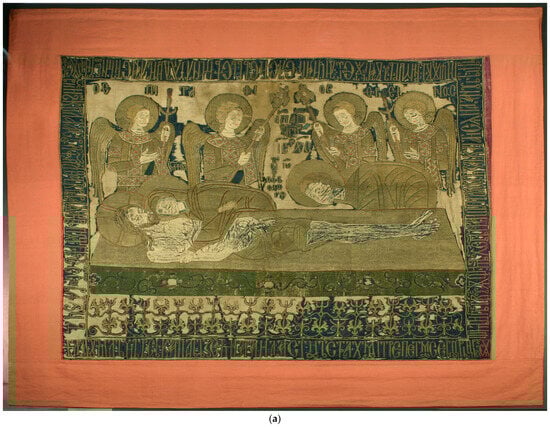
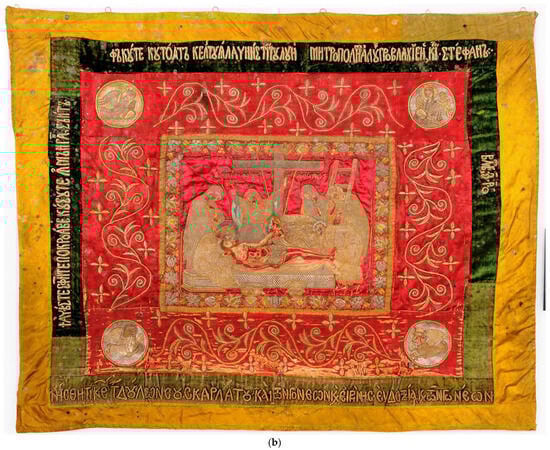
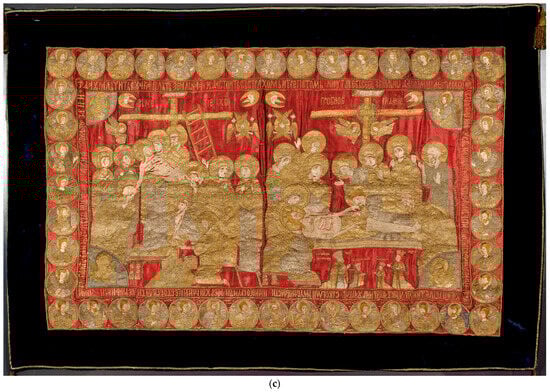
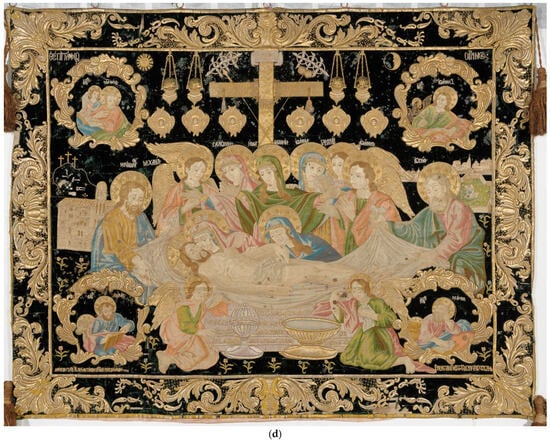
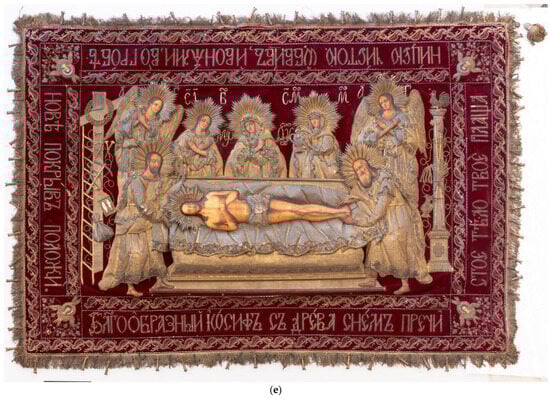
Figure 2.
Examples of epitaphioi preserved in the National Museum of Art of Romania (MNAR): (a) Epitaphios dated 1437, Moldavia (inv. 15827_B182); (b) Epitaphios dated 1661–1662, Constantinople? (inv. 10718_B111); (c) Epitaphios dated 1679–1680, Wallachia (inv. 10683_B76); (d) Epitaphios dated 1752, Wien (inv. 15833_B188); (e) Epitaphios dated 19th century, Russian (inv. 10695_B88).
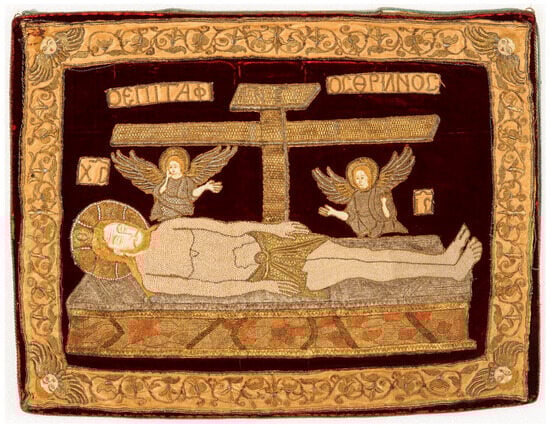
Figure 3.
Aër dated ~1700, Greek? (inv. 10668_B61), worked in the Byzantine tradition, preserved in the National Museum of Art of Romania (MNAR).
2. Materials and Methods
2.1. Objects, Samples and Sampling Strategy
Twenty-four liturgical textiles were studied, all defined as epitaphios or aër. According to the technique, most of the objects (21/24) are embroideries in the Byzantine tradition, while two have the scene painted on a silk support (Figure 4), and in one other, it is rep-resented in the Gobelin needlepoint technique. The textiles are dated between the 14th and the 19th century and are documented as Byzantine, Moldavian, Wallachian, Greek, Russian, of Viennese origin or from Constantinople (present-day Istanbul) (see Table 1). Fifty-seven samples were available for analysis. According to the sampling strategy, the specimens’ withdrawal was limited to the degraded areas, as the objects reverse sides were not accessible because they were covered by linings. As a consequence, most of the samples (32/57) are from the textiles’ supports, with samples being taken either from the main scene or from the frame, for all but four objects. For the other objects, samples are from embroidery threads (17/57) or from the original linings (8/57). One sample (1/57) comes from an ornamental silk cord frame. The present approach, which aims to document materials in the MNAR collection of liturgical textiles is very different compared with the previous ones performed in the same research group [2,3,4,5], where studies were correlated with restoration and more sampling areas were accessible.
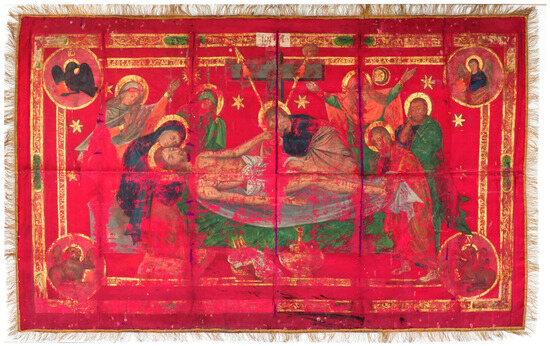
Figure 4.
Epitaphios dated 19th century, Greek (inv. 10869_Ț148), painted on silk support, preserved in the National Museum of Art of Romania (MNAR).

Table 1.
Information about the liturgical textiles studied: inventory number, date, technique, brief description and workshop.
2.2. Sample Documentation and Preparation for Dye Analysis
Samples about 0.5–1 cm long were first observed under the digital microscope at ~50x magnification and non-destructively analysed by attenuated total reflectance infrared spectroscopy (FTIR-ATR) for fiber identification. Yarns of about 0.5 cm (~3 mg) were cut from the original samples, when larger specimens were available, and placed in Eppendorf vials for sample preparation.
Dyes were extracted from the yarns by acid hydrolysis. This was an assumed decision although the limits of this method, caused by the decomposition of glycosides to their parent aglycones, in the case of flavonoid dyes, were known [23,24,25,26]. The reason for choos-ing acid hydrolysis was the existing database, which contains information about natural dyes, used as standards or extracted from standard dyed yarns by acid hydrolysis. An amount of 200 μL of a mixture containing 37% HCl, CH3OH and H2O in a ratio of 2:1:1 (v/v/v) was added to each yarn, followed by incubation at 100 °C for 10 min. Samples were then evaporated to dryness in a vacuum desiccator. Each sample was re-dissolved in a 100 μL solution of CH3OH/H2O 1:1 (v/v) and centrifuged at 12,000 rpm for 10 min. The supernatants were transferred to chromatography vials and injected into the LC system. When the presence of indigo-based dyes was suspected, as in the cases of visually blue, green and black samples, a second extraction in 100 μL dimethyl sulfoxide (DMSO) was made, with the samples kept at 80 °C for 10 min. The two solutions were analysed separately.
2.3. Fiber Identification
Fiber documentation and image collection were made with a DinoLite digital microscope, model AM4113ZT. Further fiber investigation was made by infrared spectroscopy (FTIR-ATR), where a Bruker Optics Alpha spectrometer equipped with a Platinum ATR single reflection diamond ATR module was used. Spectra were acquired in the 4000–400 cm−1 domain, with a resolution of 4 cm−1. Spectra collection and data processing were made with a dedicated software, Opus 7.0. Where FTIR indicated that cellulosic fibers were used, samples were also observed by optical microscopy for the clear identification of cotton.
2.4. Dye Analysis by Liquid Chromatography. Instrumentation and Parameters
All the samples were analysed by liquid chromatography with UV–Vis (diode array) detection (LC-DAD) on System 1. Some of the samples where carminic acid was identified were also examined on a similar configuration, further referred to as System 2, at the Royal Institute for Cultural Heritage (KIK/IRPA), in Brussels. These analyses were aimed at the attribution of the carminic acid-based insects down to the species level. More information about this will be given in Section 3.1., Supports, Red.
2.4.1. System 1 (LC-DAD)
An Agilent 1260 Infinity II series liquid chromatograph (Agilent Technology, USA) consisting of a quaternary pump (G7129A), a standard autosampler (G7111B), a column thermostat (G7116A) and a multi-channel diode array detector (G7115A) was used for dye analysis. OpenLAB CDS software was used for the chromatographic system control, data acquisition and processing. A Zorbax C18 column, of 150 mm length, 4.6 mm i.d. and 5 μm particle size, thermostated at 40 °C, was used. The mobile phase consisted of a mixture of aqueous 0.2% (v/v) formic acid (solvent A) and methanol/acetonitrile (1:1, v/v as solvent B). Gradient elution was applied by using the following profile: at 0 min, 15% solvent B; from min 0 to 5, linear increase to 25% solvent B; from min 5 to 10, constant at 55% solvent B; from min 10 to 16, linear increase to 100% solvent B; from min 16 to 18, constant at 100% solvent B; and step jump at 15% solvent B, with 5 min re-equilibration period between runs (post-time). The flow rate was set at 0.8 mL/min and the injected volume of the sample was 10 μL. The UV–Vis spectra were acquired in the range from 200 to 900 nm, with a simultaneous monitoring at five wavelengths (255, 275, 295, 420 and 490 nm), having a frequency of 0.03 min and a resolution of 2 nm.
2.4.2. System 2 (LC-DAD, with a Specific Method Constructed for Species Attribution of Carminic Acid-Based Insects)
High-performance liquid chromatography with diode array detection (DAD) was performed with an ACQUITY Arc HPLC system (Waters Chromatography n.v.), with a column heater/cooler and a quaternary solvent manager, a 2998 PDA with a low-dispersion flowcell detection system and Empower3 data handling software. The solvents used were (A) methanol (for HPLC > 99.8%), (B) a mixture of 1/9 (v/v) methanol/Milli-Q water and (C) 0.5% phosphoric acid (85 wt% p.a.). The analysis was performed at a flow rate of 1.2 mL/min with the following gradient: isocratic state 23A/67B/10C for 0–3 min, linear gradient to 90A/0B/10C between 3 and 29 min and isocratic 23A/67B/10C from 30 to 35 min. For the stationary phase, a temperature-controlled column of LiChrosorb RP-18 with a 125 mm x 4 mm diameter end cap with 5 µm particle size and 100 Å pore diameter was used. Calculation of the relative percentage of anthraquinone dyes was made after integration of the areas in the chromatograms registered at 255, 275, 290, 420 and 500 nm. More information regarding the methodology used is given below (see Section 3.1. Supports, Red) and an in-depth description of the method can be read in an earlier publication [31].
2.4.3. Dye Attribution—Databases
Dyes were attributed based on their retention and UV–Vis data, according to information collected on standards, dyes and dyed yarns. MS data were also considered for identification when the samples were investigated by LC-DAD-MS. As described in previous publications [32,33], biological source attribution was based on data collected on yarns dyed in the laboratory, by following traditional dyeing recipes. Analytical data (retention and UV–Vis spectra) and the corresponding biological sources of the natural dyes discussed in the present study are given in Table 2.
Table 2.
Dyes identified in the present study, their biological sources and identification criteria: retention and UV–Vis maximum.
2.5. Elemental Analysis
In two cases, when the presence of iron needed to be confirmed, the samples were investigated by X-ray fluorescence spectrometry (XRF). Elemental analysis was performed with a portable XRF spectrometer Bruker S1 TITAN Model 600, with the following specifications: rhodium (Rh) tube, silicon drift chamber detector (SDD) and 5 mm spot size. The system used was air-path, with an elemental range Z > 12 (Mg). Energy was set at 40 keV.
3. Results
Results will be discussed according to the visual colours of the yarns (Table 3) and the function of the fibers (support, lining, embroidery thread (Table 4)) and will be correlated with similar data obtained in previous studies of liturgical embroideries in the Byzantine tradition, in Romanian collections and beyond.
Table 3.
Samples (textile, colour and description of the type of thread), dyes identified and their biological sources. Objects are listed in chronological order. For more information regarding the objects, see Table 1.
Table 4.
Objects (listed in chronological order) and summary of results, presented separately for the three fibre functions: support, lining, embroidery thread.
3.1. Supports
In total, 32 samples from the supports in 20 liturgical textiles were available, which means they were from all but four of the textiles under discussion. In the present publication, the term “support” is used in a larger sense to include un-embroidered frames.
3.1.1. Red
Due to the high liturgical symbolism, red is the most common support in Christian Medieval Europe, regardless of the production area. About half of the supports in the epitaphioi and aëres studied (14/20) are red and the material was characterized as satin in most cases (10/14) and velvet in the remaining cases (4/14). With reference to textiles in the present study, red satin support corresponds to liturgical textiles worked in the Byz-antine technique dated from 1556 to the end of the 18th century and red velvet supports are correlated with similar objects from 1770 to the 19th century. This perfectly aligns with the scientific literature which states that in the embroideries of Byzantine tradition, satin supports are replaced by velvet starting from the 16th–17th centuries [8]. Red satin was also used as the support in two painted epitaphioi, dated 1613 and the 19th century, respectively. The poor conservation status of epitaphios inv. 11048 (dated 1613, painted), enabled a detailed investigation of the support. Microscopic observation of both sides of the red satin revealed that it was woven with a red warp and a yellow, or more correctly yellow-pink, weft (Figure 5). Carminic acid was the main dye component identified for the red warp, according to retention and the UV–Vis spectrum (λmax = 226; 276; 310; 494 nm). Carminic acid is the main dye component in several species of insects, with Porphyrophora species from the Old World and Dactylopius coccus (Mexican cochineal) from the New World as the main representatives. Identification down to the species level is sometimes possible based on the calculation of the relative amount between the minor compounds, dcII (the 2-C-glucoside of flavokermesic acid), kermesic and flavokermesic acids, with re-ference to carminic acid [34,35,36,37]. For the seven samples in this study where carminic acid was identified in red satin warps, no minor components were detected, which made any precise attribution of the species impossible.
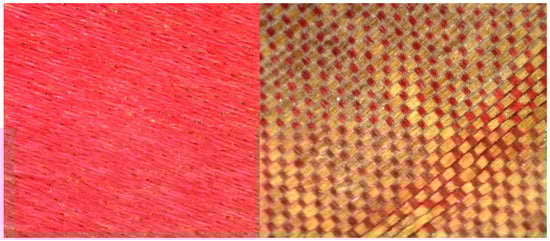
Figure 5.
Image (~50x) to illustrate the weaving structure in the red satin support in Epitaphios inv. 11048. (Left) Front side where only the red warp dyed with carminic acid-based dye is visible. (Right) Back side where both the red warp and the redwood dyed yellow weft could be observed.
Urolithin C, whose structure was only recently elucidated [38], was identified in the corresponding yellow-pink wefts, as well as in wefts from satin supports where no sample was available from the warp (inv. 15845). Its presence was revealed by retention and the UV–Vis spectrum (λmax = 238; 306; 336 nm) and suggests a soluble redwood species was used for dyeing. The above-mentioned dye component, also called “srw” or “type C” [39,40], was considered by the dye expert community as representative of the recognition of the soluble redwood dyeings for many years before its structure was decoded. Soluble redwoods contain brazilin as the main dye component, which oxidizes to brazilein, and transforms through acid hydrolysis to a brazilein derivative, coded “bra’ (bra prime)” or “type B” (λmax = 238; 260; 322; 384; 452 nm) [38], characterized as a dehydro-brazilein product [17]. Analysis performed on historical objects may not reveal the brazilein deri-vative due to its severe degradation, and attributions of redwood dyeings are in many cases based on the detection of urolithin C, thus a marker compound, which remains vis-ible in historical samples, even if the dehydro-brazilein product is gone [40]. It should be supposed that the original colour of the yellow-pink redwood dyed yarns was red.
In contrast to the samples discussed above when only urolithin C was present in yellow or yellow-pink yarns, in others described as red, the brazilein derivative bra’ (also called type B) was detected. These samples come from the warp and plush in velvet supports in epitaphios inv. 15834 (dated 1770). Brazilein derivative was also evidenced together with urolithin C in a yellow-pink sample from the satin in epitaphios inv. 10668 (dated ~1700) and from the velvet plush in epitaphios inv. 15836 (dated 1823). Figure 6 illustrates the difference in the analytical results of redwood dyed red and yellow yarns. While urolithin C (238; 306; 336 nm) is present in both cases, detection of the dehydro-brazilein product (bra’) (238; 260; 322; 384; 452) is associated with the red colour of the sample.
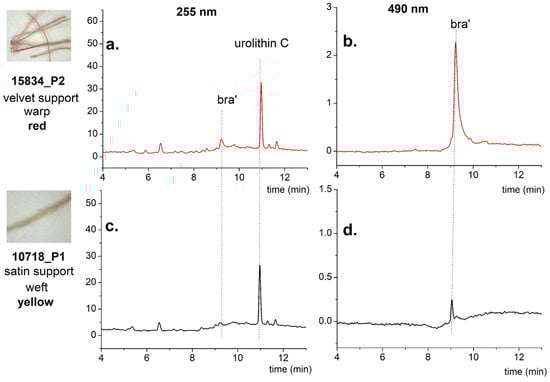
Figure 6.
Comparative chromatograms of samples 15834_P2 (velvet support, warp), red ((a,b) top images) and 10718_P1 (satin support, weft) yellow ((c,d) bottom images). While in both samples urolithin C (238; 306; 336 nm) is present, detection of the dehydro-brazilein product (bra’) (238; 260; 322; 384; 452) in 15834_P2 should be associated with the red colour of the sample. Details of the region between 4 and 13 min. Left: 255 nm; right: 490 nm.
Three samples from red velvet supports in two 19th century epitaphioi were available, and carminic acid was identified in all cases, for warp and plush (10695_P1 and P2; 15825_P1). Analysis performed on sample 10695_P1 (warp) at the Royal Institute for Cultural Heritage in Brussels (KIK/IRPA), where a procedure to discriminate between the carminic acid insect dyes was set up [37], revealed the presence of minor components dcII (the 2-C-glucoside of flavokermesic acid), and kermesic and flavokermesic acids. Furthermore, based on calculation of the ratio between the amounts of flavokermesic acid C glycoside and the total percentage of flavokermesic and kermesic acids, relative to carminic acid, it was proved that Dactylopius coccus (Mexican cochineal) was used for dyeing (Figure 7). More details regarding the procedure used was given in an earlier publication [37].
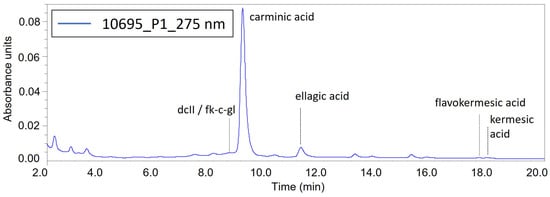
Figure 7.
Chromatogram (registered at 275 nm) to support identification of Mexican cochineal in sample 10695_P1 based on the detection of carminic acid and the minor components dcII (flavokermesic acid C glycoside), flavokermesic and kermesic acids.
As already mentioned, red satin was the most common support for epitaphioi worked in the Byzantine tradition. In the present study, it was observed in embroidered liturgical textiles dated from the 15th to the 18th century, from various workshops: Moldavian, Wallachian, Russian and from Constantinople as well as in painted epitaphios from Moldavian (17th century) and Greek workshops (19th century). In previous studies which referred to Byzantine liturgical embroideries from the Romanian provinces Moldavia and Wallachia, the combination of lac dye and madder was revealed for the weft in the 15th and the 16th century satin supports, while the preference for carminic acid-based dyes was observed from the late 16th century onwards. The small amounts of samples in the present approach made any attribution down to the species level impossible. However, it may be supposed that Mexican cochineal was used in these textiles, as it has been described as having replaced all the other insect dyes in European textiles from about 1570 [36]. This hypothesis is also supported by analysis performed on the support (warp) in a Byzantine liturgical embroidery preserved in Putna Monastery, dated to the late 16th century, where Mexican cochineal was identified in the presence of tannins [3].
One sample, visually red in colour, was available from the central area of epitaphios inv. 15837 (dated end 18th century), from a zone which according to visual and microscopic observations represents a later intervention. Analysis performed on the cotton red yarn evidenced the presence of alizarin (λmax = 202; 248; 278; 430 nm), anthrapurpurin (1,2,7-trihydroxyanthraquinone) (λmax = 274; 338; 428) and flavopurpurin (1,2,6-trihydroxyanthraquinone) (λmax = 272; 406), which suggests the use of synthetic alizarin. As the synthetic dye became available only in 1869, it becomes clear that the epitaphios was repaired and the intervention took place after the date mentioned.
3.1.2. Blue and Green
Samples were available from five blue or green silk satin and velvet supports, including frames in the respective colours. As in the case of red, satin was observed in objects dated from 1395-96 to 1638 and velvet in those dated later, more exactly, 1680 and 1752. For the blue satin supports, when samples from both weft and warp were analysed, indigotin was identified in both, as, for example, in epitaphios inv. 15826 from Cozia Monastery (dated 1395-96). Indigotin was detected based on retention associated with the UV–Vis spectrum (λmax = 238; 285; 330; 610 nm) and suggests that indigo-based dyes were used for dyeing. There are several species of plants which contain precursors of indigotin. Isatis tinctoria (woad), which was cultivated in Europe for a long time, and Indigofera species (indigo), which have a long history of use in Europe [10], would be the most probable candidates. However, with the analytical instrumentation and existing knowledge, it is not possible to distinguish between the various indigo-containing plants, nor between natural and synthetic indigo [41,42]. From the theoretical perspective, both woad and indigo could have been used.
When embroidery satin supports with green hues were intended, a combination of indigo-based and yellow flavonoid dyes was used for the weft, as for epitaphios inv. 15831 (dated 1638). Luteolin, genistein and apigenin were evidenced based on retention and UV-Vis spectra (λmax = 208; 254; 266; 348 nm, λmax = 208; 260 nm and λmax = 210; 268; 336 nm) in the acid hydrolysed extract of 15831_P2, and indigotin in the di-methyl-sulfoxide extracted solution, which suggests that Genista tinctoria (dyer’s broom) was used for dyeing. The same biological source was evidenced in the green velvet frame and pile threads (plush) in epitaphios inv. 16154 (dated 1680–1681). The yellow dye source was combined with indigo dyes to achieve green. For the green velvet support in epitaphios inv. 15833 (dated 1752), luteolin and apigenin were identified in the presence of chrysoeriol (λmax = 206; 268; 348 nm), which suggests the use of Reseda luteola (weld) (Figure 8).
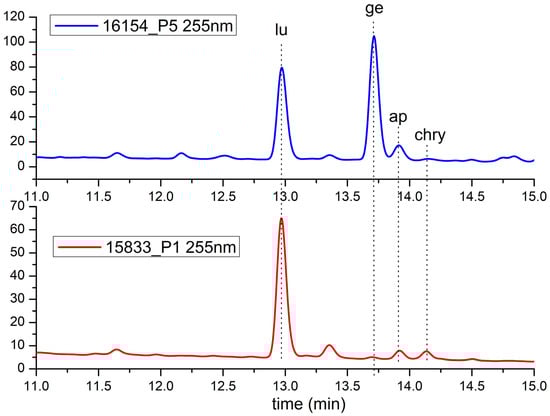
Figure 8.
Comparative chromatograms (registered at 255 nm) of samples 16154_P5 (velvet plush) and 15833_P1 (velvet) to suggest identification of dyer’s broom (luteolin, genistein, apigenin) and weld (luteolin, apigenin, chrysoeriol). Detail from 11 to 15 min.
3.1.3. Yellow
The three dyes representative of dyer’s broom were identified in a yellow satin support used as a decorative frame in aër inv. 10676 (dated to the 17th century), the only support in this colour in the actual group of objects.
3.1.4. Brown
A brown silk sample from the warp in the embroidery satin support in epitaphios inv. 15835, dated 1751, was selected for analysis. The presence of ellagic acid (λmax = 254; 366 nm) suggested that tannins were used for dyeing. Tannins are substances of vegetal origin, very common in the plant world, which give a brown-black hue in the presence of iron salts. The use of iron was confirmed by elemental analysis performed non-destructively by XRF (see Section 2.5.). Although very colourfast dyes are produced by tannin dyeing in the presence of iron, the mordant gradually corrodes and degrades the fibers [10]. This process was also observed for epitaphios inv. 15835.
3.2. Linings
Eight samples from linings in seven objects were available for analysis, with all but two characterized as silk.
3.2.1. Red
Carminic acid was detected in the red satin in two linings, from epitaphios inv. 15830 (dated 1628) and inv. 16154 (dated 1680–1681) (weft), as well as in the red velvet in epitaphios inv. 10686 (dated 1791). Analysis performed on the latter, at the Royal Institute for Cultural Heritage in Brussels, evidenced the presence of minor components dcII (the 2-C-glucoside of flavokermesic acid), and kermesic and flavokermesic acids, and proved that Mexican cochineal was used for dyeing.
Urolithin C was identified in a yellow silk sample from the weft in the lining of epitaphios inv. 16154 (dated 1680–1681), which suggests the use of soluble redwood. As carminic acid-based dyes were identified for the warp (see text above) in the same weaving, it is clear that the satin lining is similar to that used in the red embroidery supports discussed in Section 3.1. Furthermore, it should be noted that the satin lining is similar to the support in epitaphios inv. 10683, documented in the museum archives as donated by the same prince to a different monastery, and dated 1679–1680.
3.2.2. Blue
Indigo-based dyes were detected in a blue silk lining in epitaphios inv. 15845 (dated ~ 1639). As explained earlier, when blue embroidery supports were discussed, either woad or indigo could have been used for dyeing.
Two samples from blue cotton linings were available for analysis. Indigo-based dyes were detected in the painted epitaphios inv. 11048 (dated 1613) and the Prussian blue pigment in epitaphios inv. 10695 (dated 19th century). Prussian blue was identified based on the specific carbon–nitrogen bond at 2083 cm−1 in the attenuated total reflectance infrared spectroscopy (FTIR-ATR) and confirmed by the detection of iron in the elemental analysis by X-ray fluorescence spectrometry (XRF) (Figure 9). Prussian Blue, a pigment with the chemical formula Fe4[Fe(CN)6]3, was discovered in the early 18th century; although mainly used as pigment, it became a popular alternative to indigo in textile dyeing in the 18th and 19th centuries [43]. With reference to textiles in Romanian collections, this statement was proved by its identification, in dyeing combinations with Mexican cochineal or yellow dye sources, in black wool threads used in the decoration of 19th century traditional shirts or sheepskin coats from Sibiu, Transylvania [44,45].
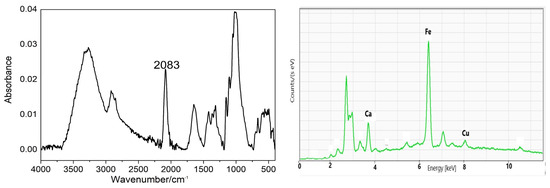
Figure 9.
Image to support identification of Prussian Blue (Fe4[Fe(CN)6]3) on cotton, in Epitaphios inv. 10695 (19th century). (Left) FTIR-ATR image where the specific carbon–nitrogen bond at 2083 cm−1 could be observed. (Right) XRF image where the presence of iron is confirmed.
3.2.3. Yellow
For the only yellow-green silk lining in epitaphios inv. 15835 (dated 1751), luteolin, apigenin and chrysoeriol were identified, which suggests the use of weld.
3.3. Embroidery Threads
Sixteen samples of embroidery threads were available from eight epitaphioi, one dated 1437 and the others from the 18th and 19th century.
3.3.1. Red and Violet
Two red samples representing embroidery threads in two different epitaphioi were studied. Carminic acid-based dyes were detected in both cases, the first dated 1437 (epitaphios inv. 15827) and the other 19th century (epitaphios inv. 15825). In none of the cases was it possible to establish the species of the insect used. However, it may be supposed that for the object dated 1437, a date which is before the arrival of the Mexican insects in Europe, either the Armenian or the Polish carmine scale insects were used.
In one case only were the dye components in redwood (urolithin C and brazilein derivative) and the hematein derivative coded hae’ (also called Type H) detected. For the latter, identification was made based on retention time and UV–Vis data (λmax = 244; 276; 330; 456 nm), which were compared with information available in the literature [17,46]. The compounds were evidenced in a visually pale violet embroidery thread from the only epitaphios in the present study, which is worked in the Gobelin needlepoint technique (inv. 11047, dated 19th century). Logwood was identified in previous studies in liturgical embroideries in the Byzantine tradition from Romanian collections, dated to the 18th and 19th centuries [47], as well as in similar 19th century textiles preserved at the Holy Mount Athos [17]. In some of these detections, logwood was also determined in dyeing combination with redwood type. The identification of logwood in 18th and 19th century European textiles is not surprising considering that the biological source is native from South America [10].
3.3.2. Blue, Green and Yellow
Indigo-based dyes were identified in five cases, twice in blue and three times in green samples. In all the cases when a green hue was intended, indigoid dyes were detected together with dyer’s broom. The flavonoid dye source was also responsible for the colour in four embroidery threads with a yellow colour. When these samples represented silk core in metallic threads, the objects were all dated to the 18th century, more specifically, between 1751 and 1791. While the earliest of these objects, epitaphios inv. 15835, is from Wallachia, all the others are attributed, for stylistic reasons, to Viennese workshops.
4. Discussion and Chronology
Carminic acid-based dyes represent the most frequent source of red. They were identified in the warp, which gives the colour, in the red satin, in objects dated from 1556 to the end of the 18th century. Satin was used as a support for embroidery or painting, and as a lining. Carminic acid was also detected in velvet supports in 19th century epitaphioi and in a red velvet lining in an embroidery dated 1791. Carminic acid-based dyes were also the source of red in embroidery threads in epitaphioi which are dated 1437, and from the 18th and 19th centuries. In just two cases, both from velvets, one used as a support in a 19th century epitaphios and the other the lining of an embroidery dated 1791, was it possible to establish that Mexican cochineal was used as a dye source (see Section 3.1. Supports, Red and Section 3.2. Lining, Red). In the case of the latter, the identification of Mexican cochineal indicates that it is more likely that the velvet is the original lining and not a later addition, as suggested by visual observations.
The identification of expensive insect dyes in the liturgical objects perfectly corresponds to the high value of the objects. The hypotheses stated earlier, about the use of Mexican cochineal in the red satin supports (Section 3.1. Supports, Red) in objects dated after ~1570, could be extended for the velvet, for linings and embroidery threads. The two successful identifications of Mexican cochineal tend to support these hypotheses. Moreover, the Mexican insect was also attested in previous studies on liturgical embroideries in Romanian collections [4,47]. The insect was also recognized in similar liturgical objects worked in the Byzantine tradition, from the same period, conserved in monasteries of the Holy Mount Athos [17]. As Mexican cochineal was a frequently used dye source, available everywhere in Europe, it becomes impossible to draw any conclusions regarding the origin of the materials in the epitaphioi studied.
Redwood dyes, known for their poor lightfastness, were detected in the (invisible) warps of the satin used in the epitaphioi supports and linings, as well as in velvets. The colour of the threads varies from yellow-pink to red, depending on the amount of dehydro-brazilein product present, and a perfect correlation was observed between the colour of the thread and the relative amounts of the two components in the chromatograms. While most of the detections are in the materials used as supports, redwood dyes were also identified, in a dyeing combination with logwood, in a pale violet embroidery thread in the 19th century epitaphios worked in the Gobelin needlepoint technique. The presence of logwood explains the violet colour of the fiber. Redwood and logwood dyes were also present in similar liturgical objects from the Holy Mount Athos, but in the cited work, no mention regarding the function of the samples was given [17].
Indigo-based dyes were identified in the blue satin embroidery supports, in silk and cotton linings and in embroidery threads. They were also present in green satin and velvet supports and in embroidery threads, where they were used together with weld and dyer’s broom. Either woad or indigo could have been used as dye sources. Indigo-based dyes were also present in liturgical objects from the Holy Mount Athos [17] and were the main source of blue on protein and cellulosic fibers in all the categories of textiles in Europe.
Prussian Blue, a pigment which was introduced in the early 1700s, was identified in a blue cotton lining in a 19th century epitaphios attributed as Russian. It was never identified in liturgical textiles from Romanian collections before, nor in similar objects from other regions within the Orthodox space, to the best of our knowledge. However, as already mentioned in Section 3.2. Linings, Blue, it was evidenced in 19th to 20th century traditional textiles from Romanian collections [44].
Weld and dyer’s broom are the two flavonoid dye sources identified in the present study. Weld was present in three cases only, in a silk satin lining and in a velvet support—both in epitaphioi dated to the 18th century, of Wallachian and Viennese origin, respectively, and in a green embroidery thread in a 19th century epitaphios worked in the Gobelin needlepoint technique. Dyer’s broom was the most frequently used source of yellow in the present study. It was identified in the satin and velvet supports, one time each in 17th century epitaphioi from Moldavia and Wallachia, and in embroidery threads in a large number of objects, also from the 17th century onwards. It was also present in an embroidery from Wallachia and in several samples in epitaphioi of Viennese origin, mostly as an individual dye source but also in combination with indigo-based dyes. The two yellow dye sources were also detected in liturgical embroideries in Romanian collections previously studied, as well as in similar objects preserved in monasteries from the Holy Mount Athos [17]. It should be noted that in the above-mentioned studies, another flavonoid-based source of yellow, young fustic, was also equally detected as a dye source in textiles dated between the 16th and the 20th centuries. Other yellow dye sources were also detected in liturgical textiles from Romanian collections [4].
Tannins may be used as dye sources, either to achieve black in the presence of iron salts [11], or for ochre yellow when combined with alum. They may also be used for silk weighting, a treatment applied to degummed silk in order to increase its weight. In the present study, tannins were used as a dye, in the presence of iron salts, in a brown velvet support and an embroidery thread in the same colour. The first detection was in a Wallachian epitaphios, dated 1752, while the latter was in a liturgical textile, dated 1823, of Viennese origin. The use of tannins in liturgical embroideries was also evidenced in previous studies, both for textiles in Romanian collections and from the Holy Mount Athos [2,3,4,6,17].
Chronology on the use of dyes in liturgical embroideries worked in the Byzantine tradition
The results of the present study, where most of the objects were dated from the 17th to the 19th centuries, are complementary with previous information achieved in the same research group for liturgical embroideries in Romanian collections, mainly dated to the 15th and 16th centuries [2,3,4,5,6]. Table 5 presents an overview of the dyes detected for each of the fibers and their function discussed in the present study: supports (satin and velvet), lining and embroidery threads.
Table 5.
Chronology on the use of dyes in liturgical embroideries worked in Byzantine tradition: (a) supports (satin and velvet); (b) lining; (a,c) embroidery threads.
Red is the main colour for supports, and lac dye, madder, Polish carmine and kermes were used in the 15th and 16th centuries, while carminic acid-based dyes (sometimes identified as Mexican cochineal) came from the 16th century onwards. As far as the American insect is concerned, the earliest date of use may be around 1570. It should be noted that the above-mentioned sources are used for the visible warp, while redwood dyes are mainly used for the wefts. Velvets are used as embroidery supports after the 18th century, and red is always achieved with carminic acid insect dyes. Earlier velvets dyed with lac dye and madder (or yellow and blue sources dyer’s broom and indigo-based dyes) were also observed in liturgical embroideries but they were not really used as supports, but as frames or base for embroidered inscriptions on satin. Blue is the second most frequently used colour for supports after red, and it is always based on indigo dyes. Yellow and brown satin supports are less common and they are dyed with dyer’s broom, safflower yellow (occasionally) and, rarely, tannins. Redwood velvet supports were also observed from the 18th century onwards (Table 5a).
The earliest surviving linings date from the 16th century, and are mainly in blue, silk or cotton, dyed with indigo. Red, yellow and green linings, dated from the 17th century onwards, were also preserved and the same dye sources discussed for the supports were observed. Weld was also detected in yellow 18th century satin linings, while a Prussian blue cotton one was noticed in a 19th century embroidery (Table 5b).
A larger palette of colour sources, as compared with supports and linings, was observed for the embroidery threads. Madder, lac dye, redwood, carminic acid-based (Porhyrophora species) and safflower were used for red in the 15th century, while carminic acid-based dye (probably Mexican cochineal) remains the only choice from the 17th century onwards. Several yellow dye sources, which were not detected in the present study, were revealed with different frequencies for yellow and green embroidery threads: young fustic, bastard hemp, emodin-based dyes and berries. Indigo-based dyes were used for blue and green embroidery threads (Table 5c).
5. Conclusions
A large number of objects with similar liturgical function, dated over a period of 500 years, were studied in terms of dye analysis, for the first time with reference to Romanian collections. The objects are attributed to Byzantine, Moldavian, Wallachian, Greek, Russian, Constantinople and Viennese workshops.
Most of the samples are from the supports and, of these, the most common were red satin, with a warp dyed with a carminic acid containing dye and a soluble redwood weft. The material was also used as lining. The above-mentioned sources, as well as the others identified in the supports, lining and as embroidery threads were discussed together with those identified in previous studies, and chronologies on the use of dyes were proposed for each of the three functions of the fibres.
The biological sources identified in the few samples accessible for each object do not differ with the geographical areas of provenance of the objects studied. Consequently, it became impossible to establish any criteria to be used for attribution purposes. However, it was observed that Moldavian supports are always red, redwood-type dyed velvet was common for the supports in epitaphioi of Viennese origin and all the embroidery threads from Viennese liturgical textiles studied are dyed with dyer’s broom.
The results obtained are extremely promising and valuable information was acquired, despite the limited number of samples available for each object. With reference to the whole Orthodox jurisdiction, liturgical embroideries of Byzantine tradition are little studied, and even less with reference to the materials and techniques used, which includes the dye sources. In-depth studies of liturgical embroideries in Romanian collections and beyond, correlated with conservation and a well-defined sampling strategy, would be worthwhile in order to better comprehend and appreciate these extremely valuable testimonies of world heritage.
Author Contributions
Conceptualization, I.P.; methodology, I.P., E.C. and I.T.; sample collection, I.T. and E.C.; investigation, I.P., S.V. and I.V.B.; writing—original draft preparation, I.P., E.C. and I.T.; writing—review and editing, all authors. All authors have read and agreed to the published version of the manuscript.
Funding
This research received no external funding.
Data Availability Statement
Data are available upon request by email to the corresponding author, Irina Petroviciu.
Acknowledgments
The authors are grateful to IFIN-HH who provided access to the analytical facilities and to Gheorghe Niculescu, independent researcher, who assisted them with the elemental analysis. I.P. is also grateful to Ana Ursescu, independent dyer, for fruitful discussions regarding the dyes and biological sources used.
Conflicts of Interest
The authors declare no conflicts of interest.
References
- Cernea, E.; Damian, I. La broderie de tradition byzantine en Roumanie (XIVe–XVIIe siècle). In Broderies de Tradition Byzantine en Roumanie XVe au XVIIe Siècle. Autour de l’Étendard d’Étienne le Grand; InFine éditions; Louvre éditions: Paris, France, 2019; pp. 20–26. [Google Scholar]
- Petroviciu, I.; Wouters, J.; Vanden Berghe, I.; Crețu, I. Dyes in Some Textiles from the Romanian Medieval Art Gallery. In The Diversity of Dyes in History and Archaeology; Archetype Publications: London, UK, 2017; pp. 18–29. [Google Scholar]
- Petroviciu, I.; Vanden Berghe, I.; Crețu, I.; Wouters, J. Dye Analysis on Some 15th-Century Byzantine Embroideries. In The Diversity of Dyes in History and Archaeology; Archetype Publications: London, UK, 2017; pp. 200–207. [Google Scholar]
- Petroviciu, I.; Vanden Berghe, I.; Crețu, I.; Wouters, J. Analysis of Dyestuffs in 15th-17th Century Byzantine Embroideries from Putna Monastery, Romania. In The Diversity of Dyes in History and Archaeology; Archetype Publications: London, UK, 2017; pp. 208–224. [Google Scholar]
- Petroviciu, I.; Creangă, D.; Melinte, I.; Creţu, I.; Medvedovici, A.; Albu, F. The use of LC-MS in the identification of natural dyes in the epitaphios from Sucevita Monastery (15th Century). Rev. Roum. Chim. 2011, 56, 155–162. [Google Scholar]
- Crețu, I.; Petroviciu, I.; Baltă, Z.; Vanden Berghe, I.; Lupu, M. Fibre Functionality, Dye and Metallic Thread Characterisation—Criteria for Liturgical Embroideries Attribution; Restitutio 11, Conservation—Restoration Bulletin; Muzeul Național al Satului “Dimitrie Gusti”: Bucharest, Romania, 2017; pp. 75–94. [Google Scholar]
- Balta, Z.I.; Demetrescu, I.; Petroviciu, I.; Lupu, M. Advanced Micro-chemical Investigation of Golden Threads from Romanian Byzantine Embroideries by Micro-Particle Induced X-ray Emission (micro-PIXE). Rev. Chim. 2019, 70, 1956–1959. [Google Scholar] [CrossRef]
- Crețu, I. Istoria Restaurarii Broderiei Liturgice, Secolele XV-XIX (The History of the Liturgical Embroideries Restoration, 15-th to 19-th Centuries); Karl A. Romstorfer Press: Suceava, Romania, 2019. [Google Scholar]
- Musicescu, A.M. Broderia Medievală Românească; Meridiane: Bucharest, Romania, 1969. [Google Scholar]
- Cardon, D. Natural Dyes—Sources, Tradition, Technology, Science; Archetype Publications: London, UK, 2007. [Google Scholar]
- Hofenk de Graaff, J.H. The Colourful Past. Origins, Chemistry and Identification of Natural Dyestuffs; Abegg Stiftung & Archetype Publications: London, UK, 2004. [Google Scholar]
- Wouters, J. HPLC of antraquinones: Analysis of plant and insect extracts and dyed textiles. Stud. Conserv. 1985, 30, 119–128. [Google Scholar] [CrossRef]
- Wouters, J. Dye Analysis in a Broad Perspective: A Study of 3rd- to 10th-Century Coptic Textiles from Belgian Private Collections. In Dyes in History and Archaeology 13; Archetype Publications: London, UK, 1994; pp. 38–45. [Google Scholar]
- Quye, A.; Cheape, H.; Burnett, J.; Ferreira, E.S.B.; Hulme, A.N.; McNab, H. Historical and Analytical Study of Red, Pik, Green and Yellow Colours in Quality 18th- and Early 19th-Century Scottish Tartans. In Dyes in History and Archaeology 19; Archetype Publications: London, UK, 2003; pp. 1–12. [Google Scholar]
- Orska-Gawry’s, J.; Surowiec, I.; Kehl, J.; Rejniak, H.; Urbaniak-Walczak, K.; Trojanowicz, M. Identification of natural dyes in archeological Coptic textiles by liquid chromatography with diode array detection. J. Chromatogr. A 2003, 989, 239–248. [Google Scholar] [CrossRef] [PubMed]
- van Bommel, M.R.; Vanden Berghe, I.; Wallert, A.M.; Boitelle, R.; Wouters, J. High-performance liquid chromatography and non-destructive three-dimensional fluorescence analysis of early synthetic dyes. J. Chromatogr. A 2007, 1157, 260–272. [Google Scholar] [CrossRef] [PubMed]
- Mantzouris, D.; Karapanagiotis, I.; Valianou, L.; Panayiotou, C. HPLC-DAD-MS analysis of dyes identified in textiles from Mount Athos. Anal. Bioanal. Chem. 2011, 399, 3065–3079. [Google Scholar] [CrossRef] [PubMed]
- Souto, C.S. Analysis of Early Synthetic Dyes with HPLC-DAD-MS—An important database for analysis of colorants used in cultural heritage. In Faculdade de Ciencias e Tecnologias; Universidade de Lisbon: Lisbon, Portugal, 2010. [Google Scholar]
- Manhita, A.; Balcaen, L.; Vanhaecke, F.; Ferreira, T.; Candeiasa, A.; Barrocas, D.C. Unveiling the colour palette of Arraiolos carpets: Material study of carpets from the seventeenth–nineteenth century period by HPLC-DAD-MS and ICP-MS. J. Cult. Herit. 2014, 15, 292–299. [Google Scholar] [CrossRef]
- Hulme, A.N.; McNab, H.; Peggie, D.A.; Quye, A. Negative ion electrospray mass spectrometry of neofavonoids. Phytochemistry 2005, 66, 2766–2770. [Google Scholar] [CrossRef]
- Peggie, D.A.; Hulme, A.N.; McNab, H.; Quye, A. Towards the identifcation of characteristic minor components from textiles dyed with weld (Reseda luteola L.) and those dyed with Mexican cochineal (Dactylopius coccus Costa). Microchem. Acta 2008, 162, 371–380. [Google Scholar] [CrossRef]
- Trolen, L.; Phillips, A.; Peggie, D.; Barran, P.; Hulme, A. Historical textile dyeing with Genista tinctoria L.: A comprehensive study by UPLC-MS/MS analysis. Anal. Methods 2014, 6, 8915–8923. [Google Scholar] [CrossRef]
- Zhang, X.; Laursen, R.A. Development of Mild Extraction Methods for the Analysis of Natural Dyes in Textiles of Historical Interest Using LC-Diode Array Detector-MS. Anal. Chem. 2005, 77, 2022–2025. [Google Scholar] [CrossRef] [PubMed]
- Wouters, J.; Grzywacz, C.M.; Claro, A. A comparative investigation of hydrolysis methods to analyze natural organic dyes by HPLC–PDA nine methods, twelve biological sources, ten dye classes, dyed yarns, pigments and paints. Stud. Conserv. 2011, 56, 231–249. [Google Scholar] [CrossRef]
- Mantzouris, D.; Karapanagiotis, I.; Panayiotou, C. A Comparison of extraction methods for the analysis of Indigofera tinctoria and Carthamus tinctorius in textiles by high performance liquid chromatography. Microchem. J. 2014, 115, 78–86. [Google Scholar] [CrossRef]
- Manhita, A.; Ferreira, T.; Candeias, A.; Barrocas Dias, C. Extracting natural dyes from wool—An evaluation of extraction methods. Anal. Bioanal. Chem. 2011, 400, 1501–1514. [Google Scholar] [CrossRef] [PubMed]
- Vanden Berghe, I.; Grömer, K. Sassanid Dyes from Ancient Persia—Case Study Chehrābād in Northern Iran. In Ancient Textile Production from an Interdisciplinary Perspective; Springer: Cham, Switzerland, 2023; pp. 55–68. [Google Scholar]
- Sharif, S.; Nabais, P.; Melo, M.J.; Oliveira, M.C. Traditional Yellow Dyes Used in the 21st Century in Central Iran: The Knowledge of Master Dyers Revealed by HPLC-DAD and UHPLC-HRMS/MS. Molecules 2020, 25, 908. [Google Scholar] [CrossRef] [PubMed]
- Trojanowicz, M.; Orska-Gawryś, J.; Surowiec, I.; Szostek, B.; Urbaniak-Walczak, K.; Kehl, J.; Wróbel, M. Chromatographic Investigation of Dyes Extracted from Coptic Textiles from the National Museum in Warsaw. Stud. Conserv. 2004, 49, 115–130. [Google Scholar] [CrossRef]
- Putna, M. Treasury of Putna Monastery. Embroideries and Fabrics 2017; Centrul de Cercetare si Documentare—Stefan cel Mare, Ed.; Iacov Putneanul: Suceava, Romania, 2017. [Google Scholar]
- Vanden Berghe, I.; Mannering, U.; Rimstad, C. New dye analyses of Danish Viking Age textiles from Bjerringhøj, Hvilehøj and Hedeby. J. Archaeol. Sci. Rep. 2023, 49, 103965. [Google Scholar] [CrossRef]
- Petroviciu, I.; Albu, F.; Medvedovici, A. LC/MS and LC/MS/MS based protocol for identification of dyes in historic textiles. Microchem. J. 2010, 95, 247–254. [Google Scholar] [CrossRef]
- Petroviciu, I.; Teodorescu, I.C.; Vasilca, S.; Albu, F. Transition from Natural to Early Synthetic Dyes in the Romanian Traditional Shirts Decoration. Heritage 2023, 6, 505–523. [Google Scholar] [CrossRef]
- Wouters, J.; Verhecken, A. The coccid insect dyes: HPLC and computerized diode-array analysis of dyed yarns. Stud. Conserv. 1989, 34, 189–200. [Google Scholar] [CrossRef]
- Wouters, J.; Verhecken, A. The scale insect dyes (Homoptera: Coccoidea): Species recognition by HPLC and diode-array analysis of the dyestufs. Ann. Soc. Entomol. Fr. 1989, 25, 393–410. [Google Scholar] [CrossRef]
- Serrano, A.; van den Doel, A.; van Bommel, M.; Hallett, J.; Joosten, I.; van den Berg, K.J. Investigation of crimson-dyed fbres for a new approach on the characterization of cochineal and kermes dyes in historical textiles. Anal. Chim. Acta 2015, 897, 116–127. [Google Scholar] [CrossRef] [PubMed]
- Vanden Berghe, I. A special challenge in the field of dye analysis: The identifcation of cochineal species in Turkmen Weavings. In Turkmen Carpets. A New Perspective; Rageth, J., Ed.; Abächerli Media AG: Sarnen, Switzerland, 2016; Volume I, pp. 303–310. [Google Scholar]
- Peggie, D.A.; Kirby, J.; Poulin, J.; Genuit, W.; Romanuka, J.; Wills, D.F.; De Simone, A.; Hulme, A. Historical mystery solved: A multi-analytical approach to the identification of a key marker for the historical use of brazilwood (Caesalpinia spp.) in paintings and textiles. Anal. Methods 2018, 10, 617–623. [Google Scholar] [CrossRef]
- Wouters, J. Dye analysis of Florentine borders of the 14th to 16th centuries. Dyes Hist. Archaeol. 1996, 14, 48–59. [Google Scholar]
- Nowik, W. The Possibility of Differentiation and Identification of Red and Blue ’Soluble’ Dyewoods. Determination of Species used in Dyeing and Chemistry of their Dyestuffs. In Dyes in History and Archaeology 16/17; Archetype Publications: London, UK, 2001; pp. 129–144. [Google Scholar]
- Wouters, J. Possible Future Developments in the Analysis of Organic Dyes. In Dyes in History and Archaeology 20; Archetype Publications: London, UK, 2005; pp. 23–29. [Google Scholar]
- Degano, I.; La Nasa, J. Trends in High Performance Liquid Chromatography for Cultural Heritage. Top. Curr. Chem. 2016, 374, 20. [Google Scholar] [CrossRef] [PubMed]
- Berrie, B.H. Prussian blue. In Artist’s Pigments: A Handbook of Their History and Characteristics; Feller, R.L., FitzHugh, E.W., Eds.; National Gallery of Art: Washington, DC, USA, 1997; Volume 3, Chapter 7; pp. 191–217. [Google Scholar]
- Petroviciu, I.; Teodorescu, I.C.; Albu, F.; Virgolici, M.; Nagoda, E.; Medvedovici, A. Dyes and biological sources in nineteenth to twentieth century ethnographic textiles from Transylvania, Romania. Herit. Sci. 2019, 7, 15. [Google Scholar] [CrossRef]
- Petroviciu, I.; Teodorescu, I.C.; Vasilca, S.; Troșan, L.; Albu, F. Dyes in traditional Saxon and Romanian costumes. In Dyes in History and Archaeology 40; Archetype Publications: London, UK, 2021; pp. 52–53. [Google Scholar]
- Hulme, A.N.; McNab, H.; Peggie, D.A.; Quye, A.; Vanden Berghe, I.; Wouters, J. Analytical characterization of the main component found in logwood-dyed textile samples after extraction with hydrochloric acid. In Proceedings of the 14th Triennial Meeting the Hague Preprints, ICOM Committee for Conservation, The Hague, The Netherlands, 12–16 September 2005; pp. 783–788. [Google Scholar]
- Petroviciu, I.; Vanden Berghe, I.; Crețu, I.; Albu, F.; Medvedovici, A. Identification of natural dyes in historical textiles from Romanian collections by LC-DAD and LC-MS (single stage and tandem MS). J. Cult. Herit. 2012, 13, 89–97. [Google Scholar] [CrossRef]
Disclaimer/Publisher’s Note: The statements, opinions and data contained in all publications are solely those of the individual author(s) and contributor(s) and not of MDPI and/or the editor(s). MDPI and/or the editor(s) disclaim responsibility for any injury to people or property resulting from any ideas, methods, instructions or products referred to in the content. |
© 2024 by the authors. Licensee MDPI, Basel, Switzerland. This article is an open access article distributed under the terms and conditions of the Creative Commons Attribution (CC BY) license (https://creativecommons.org/licenses/by/4.0/).