
Abstract
Mountain photovoltaic (PV) power stations cover vast areas and contain dense equipment. Once direct current arc faults occur in PV modules, they can pose a serious thermal threat to surrounding facilities and combustible materials, potentially resulting in a PV array fire accident. In this work, a series of PV module fire experiments were conducted to investigate the burning characteristics of PV modules exposed to the pool fire. The burning process, burning damage extent, and temperature distribution were measured and analyzed. The results showed that the surfaces of PV modules exhibited different burning characteristics due to the pool fire. Based on different characteristics, the front side was classified into four zones: intact zone, delamination zone, carbonization zone and burn-through zone. The back side was similarly divided into four zones: undamaged backsheet zone, burnt TPT zone, cell detachment zone and burn-through zone. Meanwhile, the burning process and surface temperature rise rate of intact PV modules were significantly lower than those of cracked modules at the same inclination angle. Cracked modules exhibited a heightened susceptibility to being rapidly burnt through by the pool fire. As the inclination angle increased from 0° to 60°, the burning damage extent and the expansion rate of high-temperature regions initially ascended and subsequently decreased, reaching their maximum at the inclination angle of 15°. These findings can offer valuable insights that can serve as a reference for the fire protection design and risk assessment of mountain PV power stations, ensuring their safe operation.
1. Introduction
With the fast advancement of economic development, the contradiction between the limited supply of traditional fossil energy sources and the ever-increasing global demand for energy has become more noticeable. As a green and renewable alternative energy source, solar energy has the potential to mitigate the excessive reliance on primary energy sources and alleviate the energy scarcity challenges faced by humanity. According to the International Energy Agency, about 300 GW of new photovoltaic (PV) systems were installed and commissioned worldwide in 2021 [1]. However, PV module fire accidents occur frequently, particularly in PV power stations located in the mountains. When hotspot faults [2] or direct current arc faults [3] occur in PV modules, they can pose a serious thermal threat to surrounding facilities and combustible materials, triggering a domino effect that leads to wildfires and PV array fires [4]. For instance, in February 2021, a PV array fire occurred at a mountain PV power station covering more than 233 acres in Shanxi, China, where PV module faults ignited weeds underneath the PV modules, resulting in the extensive burning of the PV array. Therefore, clarifying the PV modules burning characteristics under the influence of the pool fire is of great importance for ensuring the safe operation of mountain PV power stations and the sustainable development of PV power generation.
In recent years, the burning characteristics and fault features of PV modules have been conducted. Pandian et al. [5] investigated the effect of partial shading on the temperature distribution on the surfaces of PV modules and revealed that the hotspot faults could cause the surface temperature of PV modules to reach 347 °C, resulting in the ignition of backsheet materials and surrounding combustible materials. Despinasse and Krueger [6] utilized a propane burner as an ignition source to simulate the burning characteristics of PV modules subsequent to the fire triggered by hotspot faults and analyzed parameters such as temperature distribution, burning debris, and crystalline silicon cell burn-through time. It was observed that the fire hazard was significantly greater when the rear of the module was heated compared to the front. Manzini et al. [7] conducted experimental studies on PV module fires at different inclination angles, analyzing the burning damage patterns of PV modules exposed to the flame burner. The results indicated that as the angle between the PV module and the ground increased, PV module burning damage decreased, and burning damage extent was positively correlated with flame exposure time. Building on Manzini’s work, Ju et al. [8] carried out roof PV fire experiments with the flame burner and investigated the re-radiation effects and backsheet flame morphology of PV module fires at different inclination angles. The results showed that PV modules significantly increased flame radiation to the roof. However, as the inclination angle increased, the re-radiation to the roof decreased, and the backsheet flame’s length and thickness were reduced. Meanwhile, Cunningham et al. [9] conducted experiments on hotspot faults and direct current arc faults in PV modules of different sizes and reported that as the size of PV modules and series resistance increased, severe hotspot faults and direct current arc faults could generate localized high temperatures instantaneously, potentially contributing to PV module fires. As revealed in previous studies, most experiments primarily used flame burners to simulate the localized high temperatures caused by hotspot faults or direct current arc faults in PV modules. This ignition method, where there were significant differences in the flame coverage and heat flux density compared with wildfires, made it difficult to simulate the impact of wildfires on PV modules, leading to distinct burning characteristics.
Additionally, Vedrtnam et al. [10] discovered through numerical simulations and experimental studies that uneven high temperatures increased the likelihood of glass breakage. Furthermore, Dong et al. [11] found that glass breakage on the surfaces of PV modules significantly increased the risk of fire spread through surveys and experiments. Small-scale cone calorimetry experiments on PV modules conducted by Ju et al. [12] revealed that the burning characteristics were significantly affected by the cracked glass of PV modules. Previous studies have observed that burning characteristics and surface temperature distribution patterns were significantly affected by the PV module surface glass integrity. However, the combined effects of surface glass integrity and inclination angles on the burning characteristics of PV modules were rarely examined, particularly regarding the burning process and temperature distribution.
To fill this knowledge gap, this study was aimed at using the pool fire as an external fire to conduct experiments on the burning characteristics of PV modules with different inclination angles. It investigated the burning characteristics of both intact and cracked PV modules, focusing on the burning process, burning damage extent and surface temperature distribution, and it clarified the differences in burning characteristics between intact and cracked PV modules with different inclination angles. The findings of this study can provide theoretical and data references for the fire protection design and risk assessment of mountain PV power stations.
2. Experimental Setup and Conditions
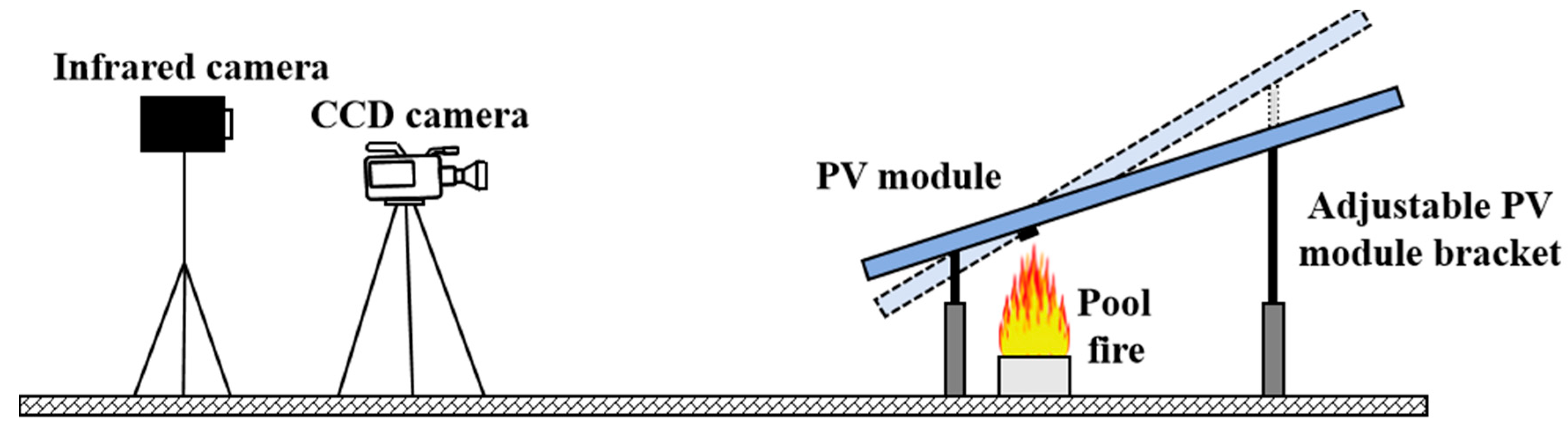
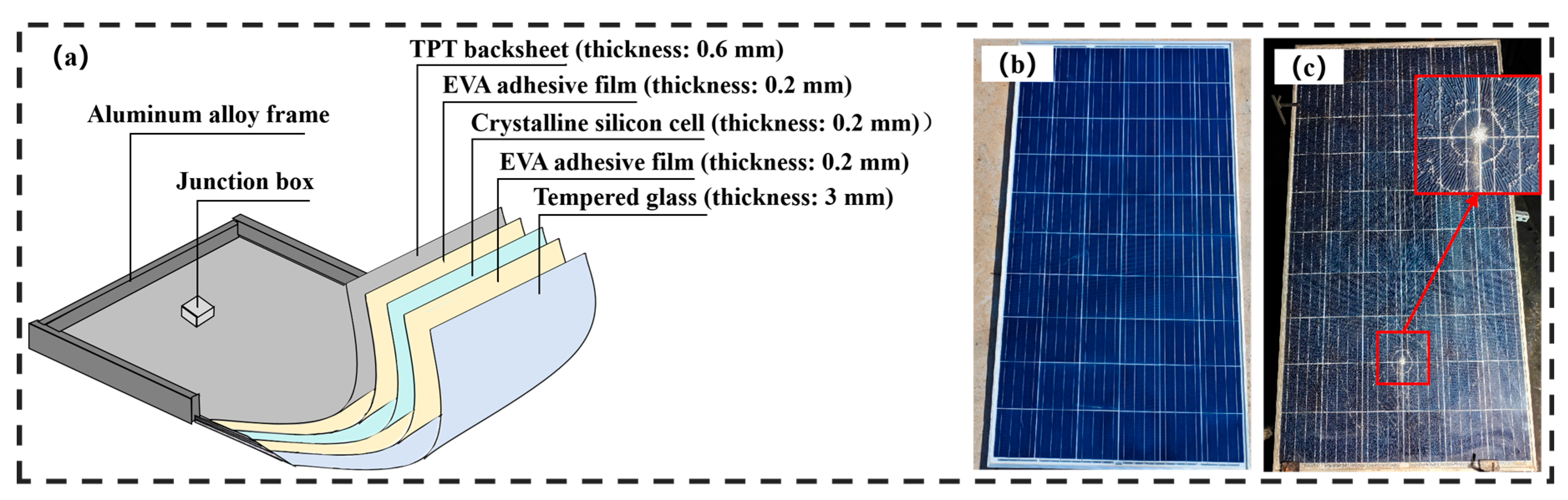
The schematic diagram of the experimental setup is illustrated in Figure 1, which consists of an adjustable PV module bracket, typical crystalline silicon PV modules, a fuel pool, a CCD camera, and an infrared camera. The adjustable PV module bracket used in the experiment is a steel structure designed to adjust the inclination angle of the PV modules. The experiment used crystalline silicon rigid PV modules (dimensions 1640 mm × 992 mm) as the research object, which are widely adopted in terms of materials and types. The PV module structure, from front to back, includes tempered glass, Ethylene Vinyl Acetate (EVA) adhesive film, crystalline silicon cell, EVA adhesive film and a Tedlar film-Polyethylene terephthalate-Tedlar (TPT) film backsheet. The structural details are shown in Figure 2a. PV modules with two levels of surface glass integrity were used in the experiment: one with intact tempered glass, as shown in Figure 2b, and the other with cracked tempered glass. The cracked module featured point-like cracks located directly above the pool fire to simulate cases where direct current arc faults or hotspot faults cause localized high temperatures, leading to stress concentration and then cracking of the tempered glass [13]. A force-controlled impact hammer was used to fracture the PV module. Details of the cracked PV module and the crack location are shown in Figure 2c.
Figure 1.
Schematic diagram of the experimental platform.
Figure 2.
(a) Schematic diagram of the PV module structure; (b) Intact PV module; (c) Cracked PV module and partial magnified section.
The experiment utilized a steel fuel pool with a diameter of 35 cm and a sidewall height of 15 cm, positioned 30 cm directly beneath the junction box of the PV module. The fuel used in the experiments was gasoline (92 octane), with an initial fuel mass of 2.5 kg. Prior to formal experiments, the steady-state combustion rate of the fuel measured using a balance was 2.65 g/s. A CCD camera was used to capture and record the combustion and burn damage process of the PV modules under the pool fire. An infrared camera (measuring range: 0–1200 °C, accuracy: 0.1 °C, frequency: 50 Hz) was employed to capture and record the dynamic surface temperature distribution of the PV modules during the experiments.
To eliminate the impact of ambient wind, the experiment was carried out in a semi-enclosed experimental site. The internal air pressure and oxygen concentration in this site are the same as those in the external environment, which will not influence the experimental results.
Five inclination angles (0°, 15°, 30°, 45°, and 60°) were selected to test both intact and cracked PV modules. The detailed experimental specifications are presented in Table 1, encompassing a total of ten experimental conditions. Each experiment was repeated at least twice to ensure the reproducibility of the results.
Table 1.
Specification of the test conditions.
3. Results and Discussion
3.1. Burning Process of PV Modules
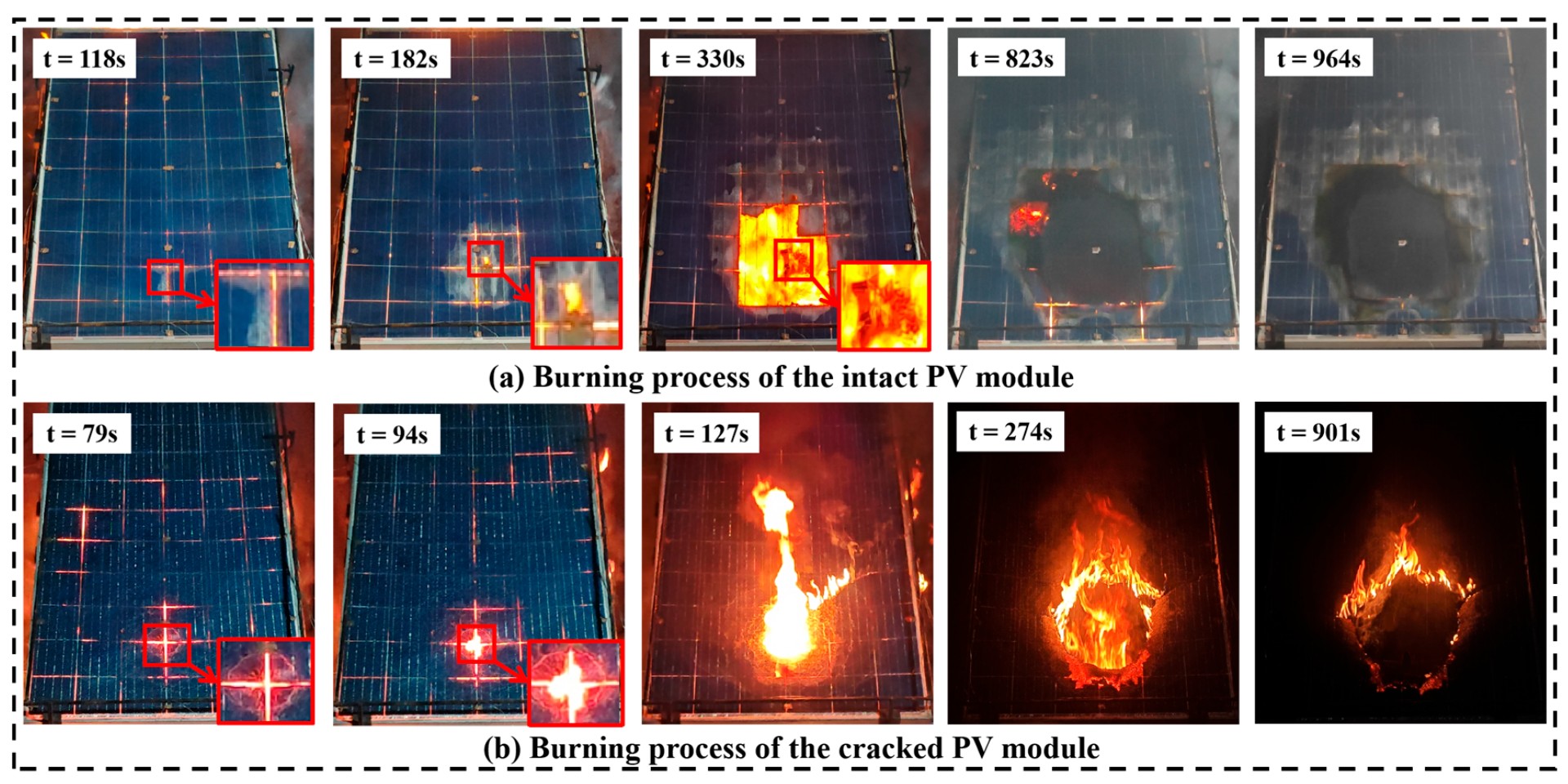
Figure 3 presents some typical images of the burning process at different times, and the experiments of intact and cracked PV modules with a 45° inclination angle (Test No.4 and No.9) are selected as examples.
Figure 3.
Burning process of PV modules with a 45° inclination angle and partial magnified section.
Figure 3a illustrates the burning stage of the intact PV module exposed to the pool fire. As shown in the figure, noticeable fire lines appeared in the gaps between the crystalline silicon cells after the pool fire had continued to burn for some time, and the grayish blistering area began to appear directly above the pool fire. As the burning continued, the grayish blistering area steadily expanded, and the crystalline silicon cells of the PV module directly above the pool fire began to crack and gradually fall off. After the continuous fragmentation and detachment of the crystalline silicon cells, the tempered glass progressively turned black under the influence of the pool fire. Subsequently, the PV module burning damage extent intensified further. Eventually, the pool fire was extinguished, and the PV module surface exhibited distinct regional characteristics after burning.
Compared to the intact PV module, cracked PV modules exposed to the pool fire manifested a more rapid appearance and spread of the grayish area, as well as faster emergence of fire lines in the gaps between the crystalline silicon cells and quicker fragmentation of the silicon cells. In a short period of time, the PV module was burned through by the flame, causing the tempered glass above the pool fire to collapse and fall off. Cracks formed around the burn-through area, allowing significant amounts of smoke and flame to escape from the burn-through area and cracks. Subsequently, large areas of the PV module broke apart and detached. The pool fire penetrated the burn-through area, and stable flames were observed at the edges of the burn-through area. Ultimately, the pool fire was extinguished, and the flames at the edges of the burn-through area gradually diminished until they were extinguished. No further noticeable changes occurred on the surface of the PV module.
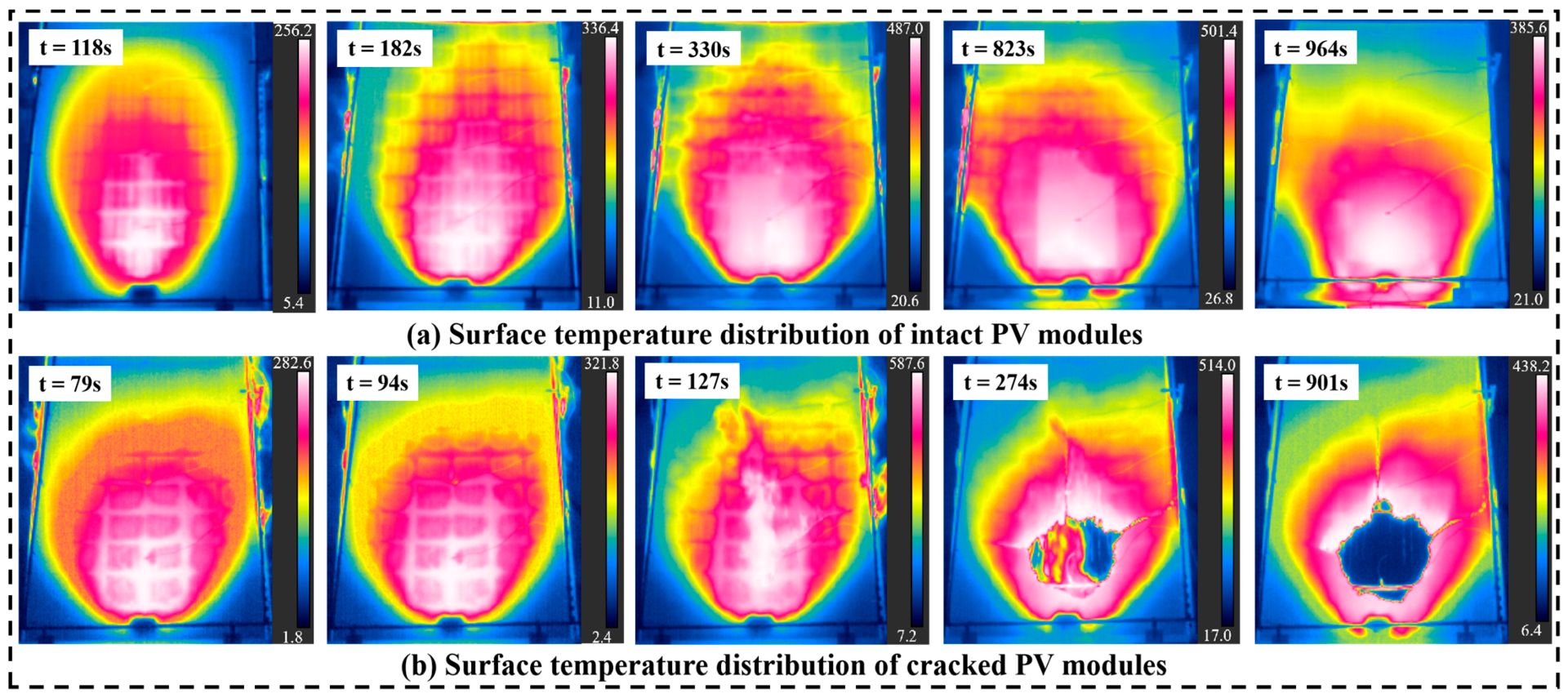
In order to further illustrate the burning characteristics of intact and cracked PV modules under the influence of the pool fire, Figure 4 presents the surface temperature distribution of PV modules in the experiments with a 45° inclination angle (Test No.4 and No.9). As illustrated in the figure, the surface temperature distribution of the PV modules can be roughly divided into three regions: high-temperature region, medium-temperature region, and sustained low-temperature region. Figure 4a presents the surface temperature distribution patterns of intact PV modules at different times. It shows that after exposure to the pool fire, the front surface of the intact PV module experienced a rapid temperature rise, with temperatures in the gaps between crystalline silicon cells being significantly higher than those in the covered regions, resulting in the grid-like maximum temperature distribution. As the pool fire continued to burn, the overall temperature of the front surface of the PV module gradually increased, the high-temperature region expanded continuously, and the temperature in areas where the crystalline silicon cells had detached was significantly higher than in areas where they remained intact. Eventually, as the pool fire diminished and extinguished, the surface temperature of the PV module gradually decreased, and the high-temperature region contracted.
Figure 4.
Surface temperature distribution of PV modules with a 45° inclination angle.
Figure 4b illustrates the surface temperature distribution patterns of cracked PV modules. It demonstrates that cracked PV modules experienced a rapid temperature rise under the influence of the pool fire, with a temperature rise rate significantly higher than that of intact PV modules. Subsequently, the high-temperature region of the PV module was burned through by the pool fire, and cracks appeared around the burn-through area, with flames escaping from the burn-through area and cracks. As the burning continued, large areas of the PV module fractured and detached. The pool fire directly penetrated the burn-through areas of the PV module, reducing the efficiency of heat transfer to the module and causing the sustained high-temperature region on the surface to decrease. Terminally, as the pool fire diminished and extinguished, the high-temperature region on the PV module surface continued to shrink, the overall surface temperature decreased, and the temperature at the edges of the burn-through area remained relatively high. Additionally, the surface temperature distribution of the PV module revealed a noticeable lateral shift in flame spread toward both sides of the module. This was primarily due to slight depressions forming on the module surface during heating, which caused the flames to tilt.
From the above description, it can be concluded that PV modules exhibit distinct regional characteristics under the influence of the pool fire. The temperature distribution patterns align closely with the burning damage features of the PV modules, and the burning process of cracked PV modules is significantly faster than that of intact PV modules.
3.2. Analysis of Burning Damage Extent of PV Module
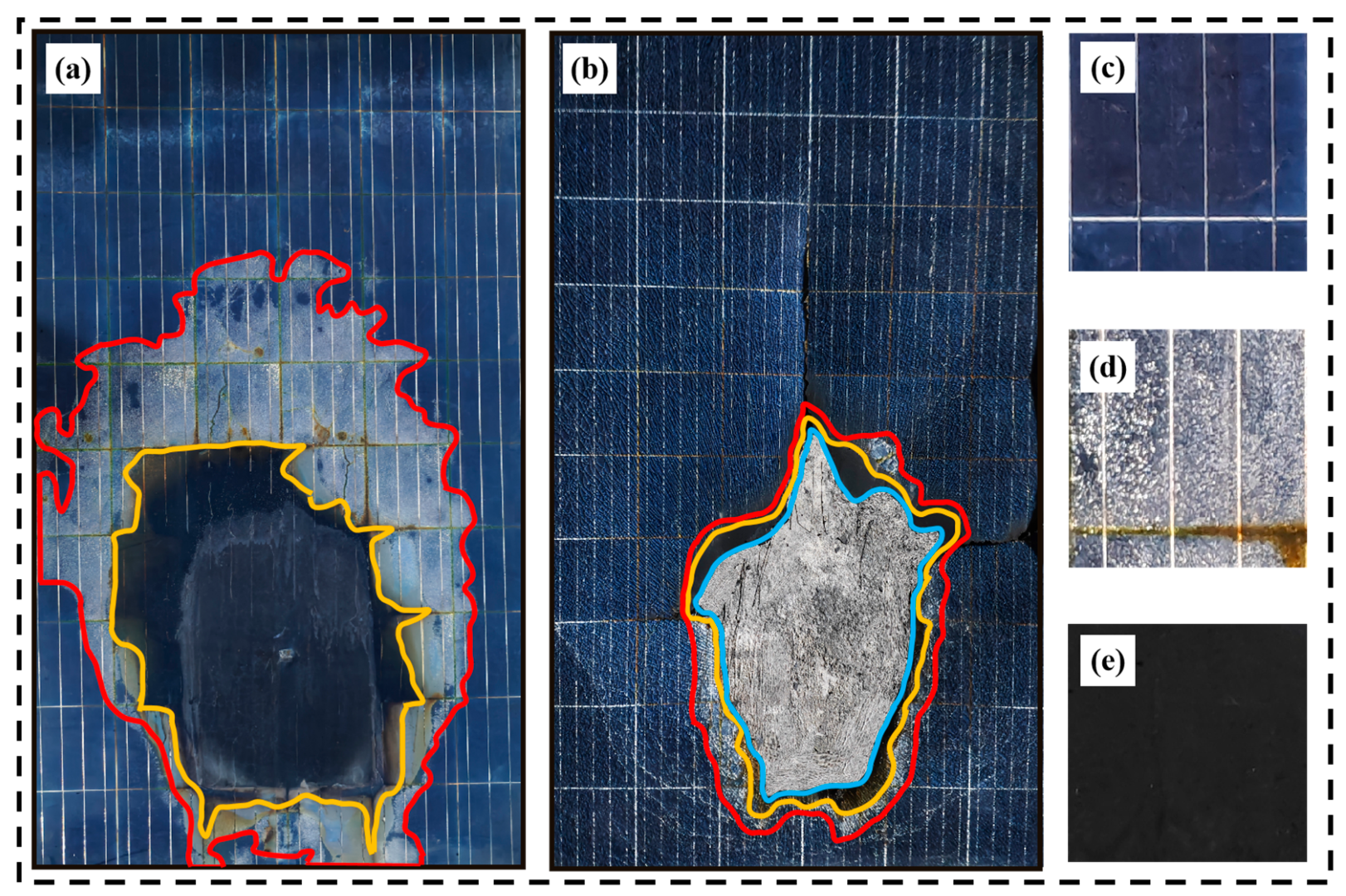
PV modules are affected by different degrees of damage after exposure to the pool fire. In order to study the burning characteristics and the damage extent of PV modules with different inclination angles, the experiments of intact and cracked PV modules with a 45° inclination angle (Test No.4 and No.9) were selected as examples. Figure 5 provides a schematic diagram of the front side burning damage zones of PV modules. Based on the burning damage characteristics, the front surfaces of the PV modules can be divided into four zones: the intact zone, the delamination zone, the carbonization zone, and the burn-through zone. The intact zone refers to areas of the PV module front surface that remain undamaged after exposure to the pool fire. The delamination zone is associated with regions where the crystalline silicon cells and tempered glass have become detached. This phenomenon mainly occurs because, when the PV module is heated, pyrolytic gases are generated in the EVA adhesive film between the cells and the glass [14]. Consequently, this leads to the delamination of the PV modules and the emergence of a grayish blistering appearance. The carbonization zone refers to blackened areas where the crystalline silicon cells have fractured and fallen off, leaving the EVA adhesive film between the cells and tempered glass charred by the flame. The burn-through zone refers to areas where the PV module was burned through by the pool fire, leading to fractured and detached tempered glass. Based on the above division, the extent of damage caused by the pool fire to PV modules with different inclination angles can be further quantified.
Figure 5.
(a) Schematic diagram of the frontside regional classification of the intact PV module; (b) Schematic diagram of the frontside regional classification of a cracked PV module; (c) Enlarged view of the intact zone; (d) Enlarged view of the delamination zone; (e) Enlarged view of the carbonization zone.
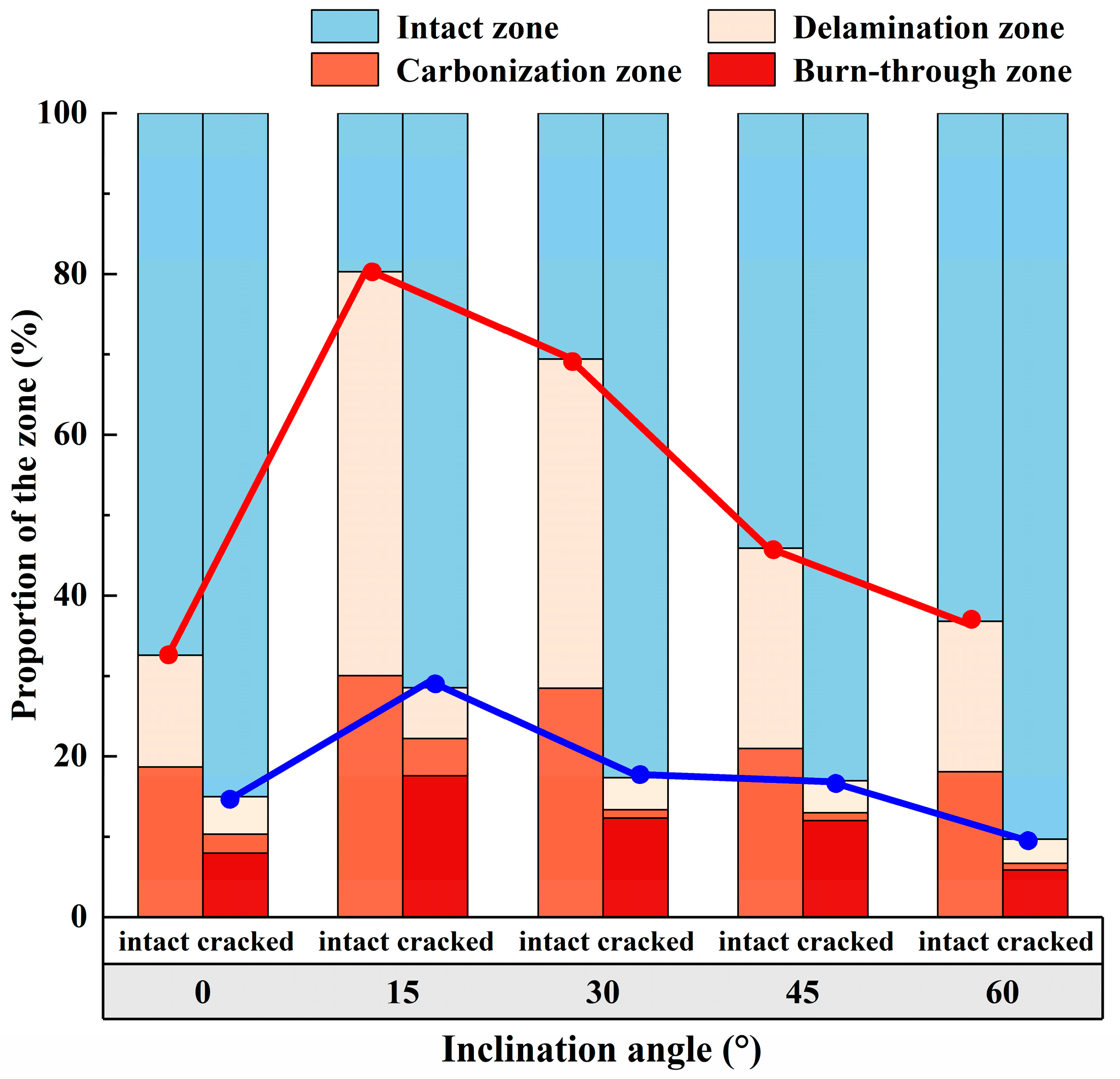
Figure 6 presents the variation patterns of the proportion of each zone on the PV module front side and the burning damage extent under different conditions (where burning damage extent refers to the proportion of areas excluding the intact zone).
Figure 6.
The proportion of different zones and burning damage extent on the front side of both intact (red curve) and cracked (blue curve) PV modules.
As depicted in Figure 6, the burning damage extent on the front side of both intact and cracked PV modules demonstrated a trend of initially increasing and subsequently decreasing as the inclination angle increased from 0° to 60°. For intact PV modules, at an inclination angle of 0°, the intact zone was the largest at 10,965.2 cm2, and the burning damage extent was only 32.6%. This was mainly because the PV module influenced the air entrainment and flame shape of the pool fire, limiting the flame contact area with the PV module [15]. When the inclination angle increased to 15°, the delamination and carbonization zones expanded to 8174.3 cm2 and 4887.9 cm2, respectively, increasing by 5912.5 cm2 and 1846.1 cm2 compared to the 0° condition. The burning damage extent also increased to 80.3%, reaching the maximum burning damage extent of the front side observed in the experiments. This was primarily because, as the inclination angle initially increased, the PV module obstruction of air entrainment into the pool fire decreased, allowing the fire plume to scorch a larger area of the PV module [16]. Consequently, the overall temperature and temperature rise rate of the PV module increased. As the inclination angle gradually increased to 60°, the lateral width and vertical thickness of the fire plume in contact with the PV module decreased [17], causing heat transfer to become more diffuse. The areas of the delamination and carbonization zones decreased to 3041.6 cm2 and 2945.3 cm2, respectively, and the burning damage extent reduced to 36.8%.
The variation trend of the burning zones and burning damage extent of cracked PV modules was consistent with that of intact PV modules. Burn-through zones were observed in cracked PV modules across all tested inclination angles, but the burning damage extent was significantly lower for cracked PV modules. This could be attributed to the fact that, after the pool fire quickly burned through the cracked PV module, the flames passed through the module instead of burning along its backsheet, significantly reducing heat conduction from the pool fire to the PV module. Additionally, after the PV module was burned through, the self-sustained combustion flames generated by the module were relatively small, making it difficult for the burning damage extent to continue increasing.
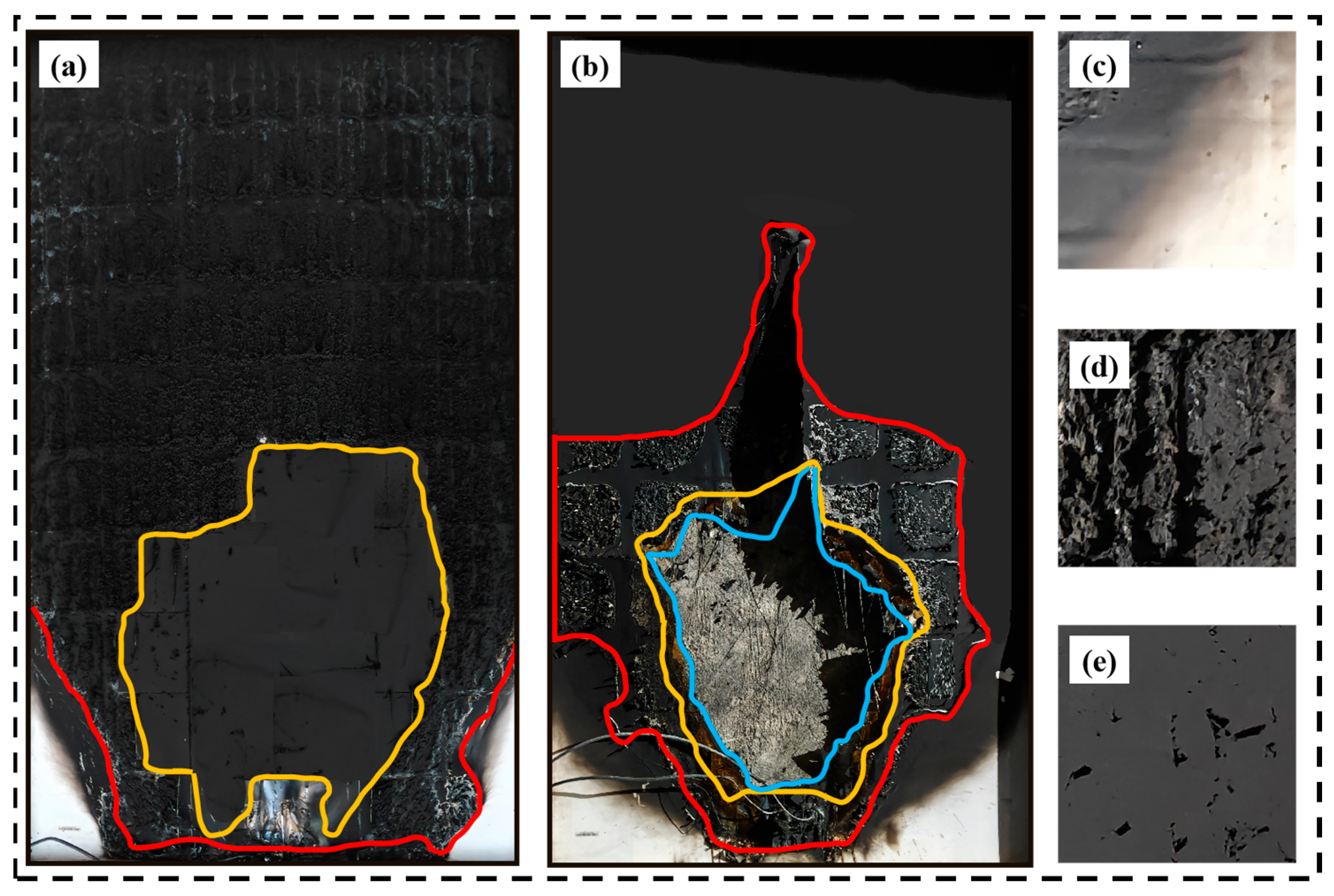
The back side of PV modules was also affected to different degrees after exposure to the pool fire. To further investigate the burning characteristics and extent caused by the external fire source on PV modules with different inclination angles, the experiments of intact and cracked PV modules at a 45° inclination angle (Test No.4 and No.9) were selected as examples. The burning damage zones on the back side of the PV modules were classified, as shown in Figure 7.
Figure 7.
(a) Schematic diagram of the back side regional classification of an intact PV module; (b) Schematic diagram of the back side regional classification of a cracked PV module; (c) Enlarged view of the undamaged backsheet zone; (d) Enlarged view of the burnt TPT zone; (e) Enlarged view of the cell detachment zone.
Based on the backsheet burning characteristics shown in Figure 7, the back side of the PV modules can be roughly divided into four zones: the undamaged backsheet zone, the burnt TPT zone, the cell detachment zone, and the burn-through zone. The undamaged backsheet zone refers to areas of the PV module backsheet that remain unaffected by flame damage. However, it should be noted that this zone may include parts blackened by smoke from the pool fire but without actual damage to the backsheet. The burnt TPT zone comprises areas where the TPT material has been thermally damaged by the flame, with the burnt TPT material either detached or adhered to the crystalline silicon cells. The cell detachment zone refers to areas where the silicon cells have fractured and detached. The burn-through zone represents areas where the PV module has been burned through by the pool fire. Based on this classification, the back side damage characteristics of PV modules under different conditions were systematically analyzed, as illustrated in Figure 8.
Figure 8.
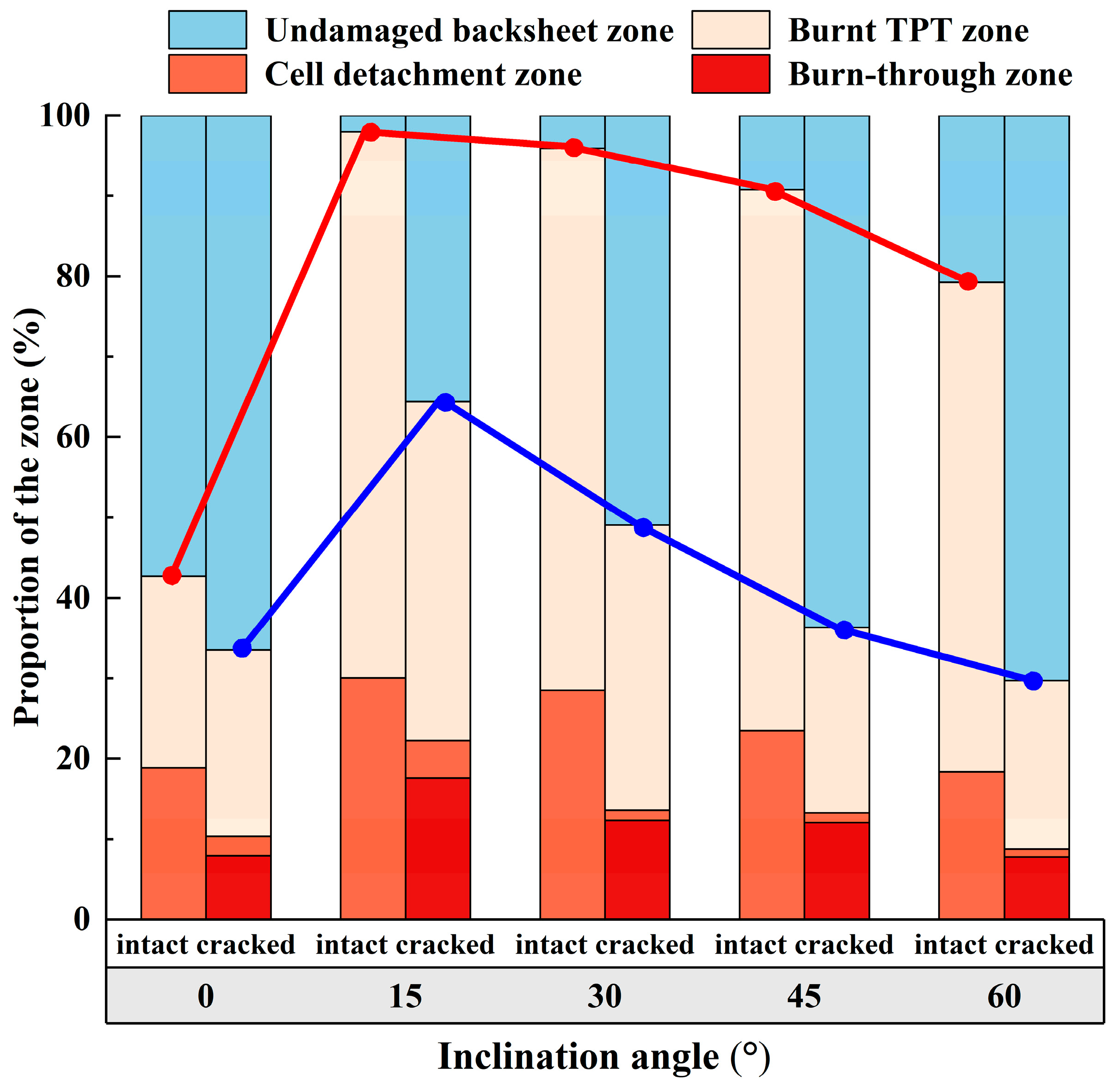
The proportion of different zones and burning damage extent on the back side of both intact (red curve) and cracked (blue curve) PV modules.
Figure 8 illustrates that as the inclination angle of the PV modules increased from 0° to 60°, the burning damage extent on the back side of both intact and cracked PV modules exhibited a trend of initially increasing and subsequently decreasing, consistent with the damage observed on the front side. At an inclination angle of 0°, the undamaged backsheet zone measured 9321.6 cm2 for intact PV modules and 10,817.1 cm2 for cracked PV modules. The burning damage on the back side of intact PV modules was 1495.5 cm2 larger than that of cracked PV modules. This discrepancy is primarily due to the obstruction of intact PV modules, which caused the flame to deflect [18]. In contrast, after the cracked PV modules were burned through by the pool fire, the flames passed directly through the modules, ceasing to burn along the backsheet. As the inclination angle increased, the difference in burning damage extent between intact and cracked PV modules became more pronounced. At an inclination angle of 15°, both intact and cracked PV modules exhibited a peak burning damage extent of 97.9% and 64.4%, respectively. Concurrently, the areas of all partitioned zones (excluding the undamaged backsheet zone) reached their maximum values under the inclination angle.
In addition, compared to the burning damage extent on the front side, the burning damage on the back side of PV modules was relatively larger. This is primarily due to the multi-layered polymer composition of PV modules, where each encapsulation layer exhibits distinct pyrolysis processes and critical ignition temperatures under external thermal radiation. Given the thermally thick characteristics of PV modules, significant thermal gradients develop through their multilayer structure when subjected to external radiative heat fluxes [19]. Consequently, the burning damage extent on the back side of the PV modules was significantly higher under the influence of the pool fire.
3.3. Surface Temperature Distribution of PV Modules
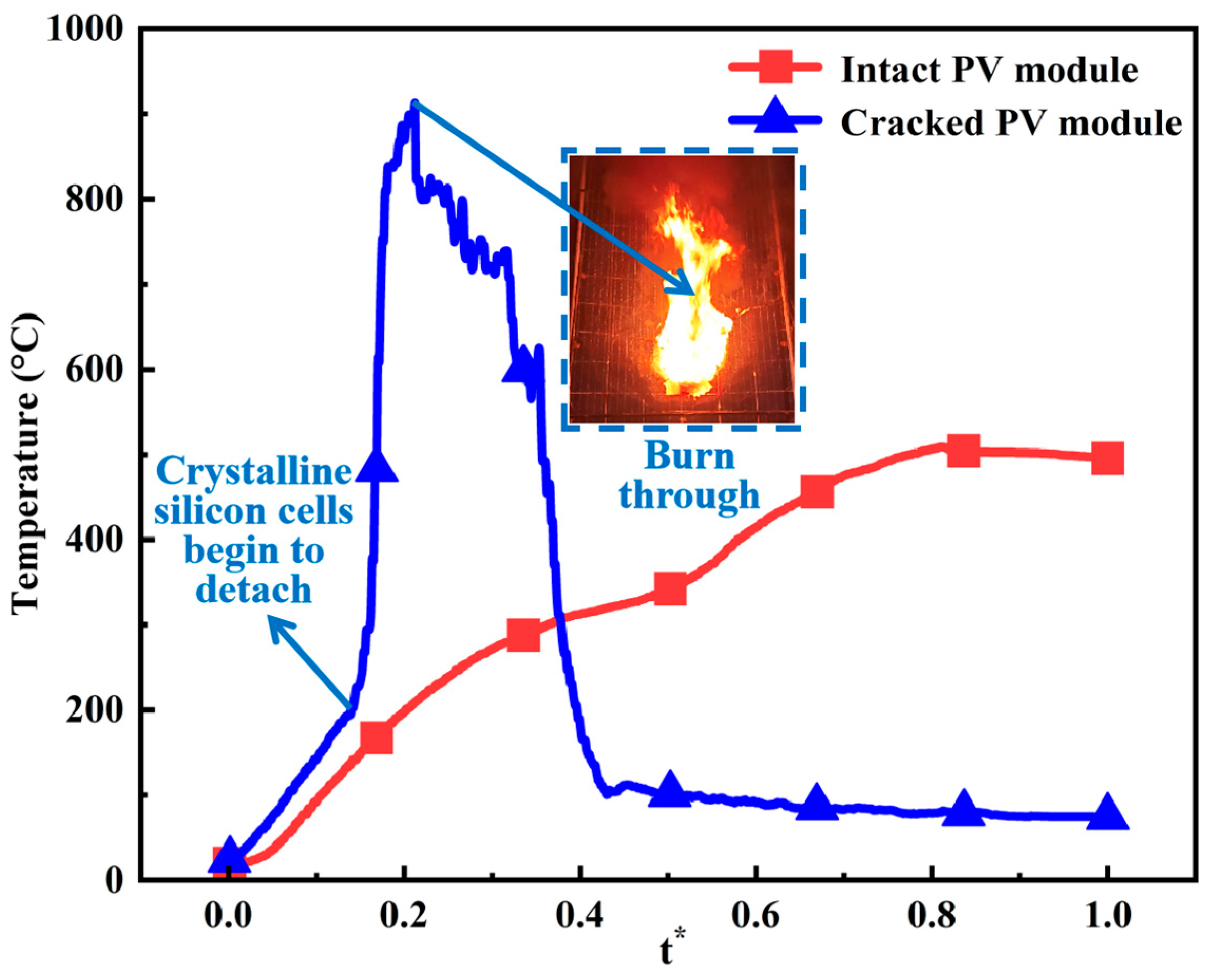
In order to analyze the surface temperature distribution of PV modules, an infrared camera was used to monitor the module surface, and temperature data from the central region during the burning process were recorded. To better illustrate the temperature rise patterns of intact and cracked PV modules, Figure 9 presents the temperature variation curves at the central surface location of intact and cracked PV modules with a 45° inclination angle. The ignition moment of the pool fire is marked as t = 0, and a dimensionless time parameter, t* = t/tmax, is used to measure the fire duration of the PV modules, where t represents the pool fire burning time, and tmax is the time when the pool fire extinguished under the given condition.
Figure 9.
Temperature variation curves at the central location of intact and cracked PV modules with a 45° inclination angle.
From Figure 9, it can be observed that the temperature at the central location of the intact PV module gradually increased after the ignition of the pool fire, stabilizing at approximately 500 °C. In contrast, the temperature at the central location of the cracked PV module spiked sharply after heating, reaching 913.5 °C. This is primarily because the cracked PV module was rapidly burned through, and the infrared camera recorded the flame temperature of the pool fire. Additionally, the figure reveals that the temperature rise rate at the central location of the cracked PV module was significantly higher than that of the intact PV module. This can be attributed to the glass breakage exposing the EVA adhesive film to air, making it more susceptible to ignition and significantly reducing the fire resistance of the PV module [20].
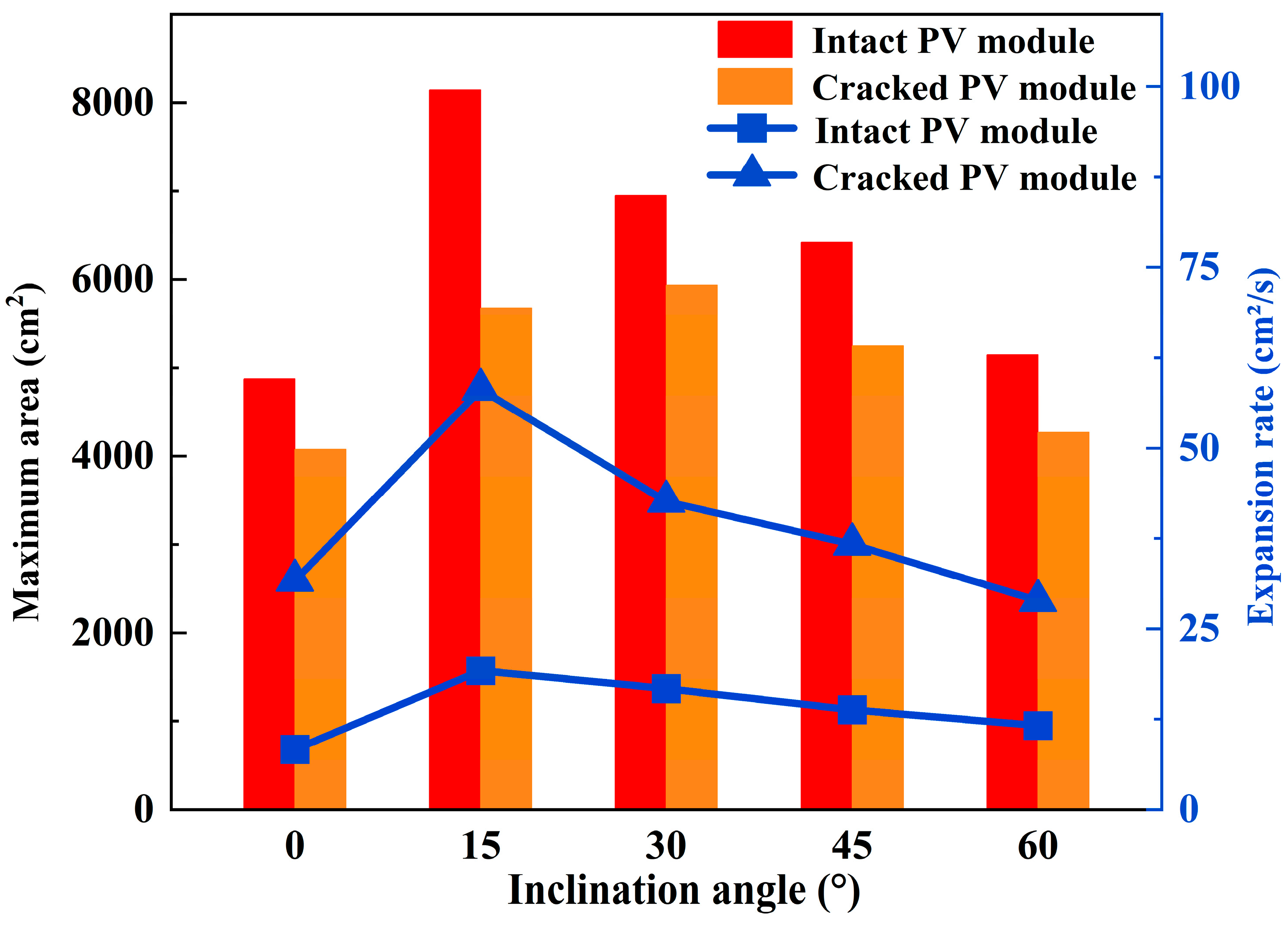
The surface temperature distribution of PV modules under the influence of the pool fire varied significantly across different conditions. However, the temperature of a single measurement point on the surface could not fully represent the overall heating condition of the PV modules. Thermal imaging video data were processed using MATLAB2023 to investigate the effect of inclination angles on the surface temperature distribution patterns and to further clarify the burning characteristics of the intact and cracked PV modules. A boundary temperature of 320 °C was set to define the high-temperature region, as 320 °C is the minimum temperature at which the EVA adhesive film in PV modules produces pyrolytic gases [21]. The maximum area of regions on the PV module surface exceeding 320 °C was calculated, and the expansion rate of the high-temperature region was determined using Equation (1). The results are shown in Figure 10.
where represents the expansion rate of the high-temperature region of the PV module, cm2/s; represents the maximum area of the high-temperature region, cm2; represents the initial area of the high-temperature region, cm2; represents the time required for the high-temperature region on the PV module surface to expand from its initial appearance to its maximum value, s.
Figure 10.
Maximum area and expansion rate of the high-temperature region.
As presented in Figure 10, both the maximum area and the expansion rate of the high-temperature region for intact and cracked PV modules demonstrated a trend of initially increasing and subsequently decreasing as the inclination angle increased. The maximum area of the high-temperature region for intact PV modules was consistently larger than that of cracked PV modules, whereas the expansion rate was consistently higher for cracked PV modules than for intact ones. This was primarily because the burning process of cracked PV modules is faster than that of intact PV modules. The temperature rise rate is higher, and after being rapidly burned through by the pool fire, the stable combustion flame generated by the PV module itself at the edges of the burn-through zone and the thermal radiation from the pool fire were insufficient to cause a sustained expansion of the high-temperature area. In contrast, intact PV modules were not burned through by the pool fire, allowing for a more thorough heating.
When the inclination angle was 15°, the maximum area of the high-temperature region for intact PV modules peaked at 8145.2 cm2, which was 1.43 times that of cracked PV modules. At an inclination angle of 30°, the maximum area of the high-temperature region for cracked PV modules peaked at 5937.5 cm2. However, the expansion rate at this angle was 42.6 cm2/s, which was 15.5 cm2/s lower than the expansion rate at an inclination angle of 15°. This is primarily because the temperature rise rate of cracked PV modules was higher at 15°, and after rapid burn-through by the pool fire, the high-temperature area decreased.
4. Conclusions
In this study, the experiments on photovoltaic (PV) modules with different inclination angles under the pool fire were systematically conducted. The burning process, burning damage extent and the expansion rate of the high-temperature region were comparatively measured and analyzed between intact and cracked PV modules. The main findings are as follows:
- (1)
- Intact PV modules exhibited a slower burning process, and the expansion rate of the high-temperature region was relatively slow. In contrast, cracked PV modules demonstrated a heightened susceptibility to being rapidly burnt through under the influence of the pool fire. The burning process of cracked PV modules was significantly faster than that of intact PV modules;
- (2)
- As the inclination angle increased from 0° to 60°, the burning damage extent and the expansion rate of the high-temperature region of both intact and cracked PV modules exhibited a trend of increasing rapidly and then decreasing. Notably, at an inclination angle of 15°, the burning damage extent and the expansion rate of the high-temperature region reached their maximum values;
- (3)
- Under the same inclination angle, intact PV modules, which were not burned through, experienced more thorough heating, resulting in a larger high-temperature region compared to cracked PV modules. However, the expansion rate of the high-temperature region was significantly higher in cracked PV modules. Additionally, stable combustion flames generated by the module were observed around the burn-through zone of cracked PV modules, indicating that the damage to the tempered glass compromised the fire resistance of the PV module;
- (4)
- PV modules exhibited distinct regional burning characteristics, with temperature distribution patterns closely corresponding to the burning damage extent. Additionally, there was a significant difference in burning damage between the front and back sides of the PV modules. Given the thermally thick characteristics of PV modules, the burning damage extent on the back side was significantly higher under the influence of the pool fire.
This study reveals that cracked PV modules exhibit poorer fire resistance and present a greater risk of combustion during fires. It is recommended to strengthen the application of fire-resistant materials and maintain the integrity of the PV module surface. Furthermore, an inclination angle of 15° is more likely to lead to severe burning damage, so fire risk should be considered when setting the inclination angle of PV modules to avoid significant threats from external fires to the PV array. The findings can provide valuable data support and theoretical guidance for fire risk assessment and fire protection design in PV power stations, especially offering critical insights for optimizing the layout and fire protection measures of PV modules in mountainous complex environments.
Author Contributions
Conceptualization, S.Z.; methodology, J.X. and S.Z.; investigation, J.X. and D.L.; resources, J.Z. (Jia Zeng) and D.L.; writing—original draft preparation, S.Z. and J.X.; writing—review and editing, S.Z. and J.Z. (Jinlong Zhao); visualization, S.Z. and J.Z. (Jinlong Zhao); supervision, D.L.; project administration, J.X.; funding acquisition, J.X. and D.L. All authors have read and agreed to the published version of the manuscript.
Funding
This research was funded by Key Research and Development Program of Ordos City “Research and Development of Key Technologies and Fire Extinguishing Equipment for Fire Prevention and Control of Photovoltaic Power Generation Systems in Desertification and Gobi Areas” (No. YF20240006).
Institutional Review Board Statement
Not applicable.
Informed Consent Statement
Not applicable.
Data Availability Statement
The authors declare that the data supporting the findings of this study are available within the article.
Conflicts of Interest
Author Jingwen Xiao, Dong Lin and Jia Zeng were employed by the company PetroChina Southwest Oil and Gas Field Company. The remaining authors declare that the research was conducted in the absence of any commercial or financial relationships that could be construed as a potential conflict of interest.
References
- Zhang, X.; Reda, I.; Aram, M.; Qi, D.; Wang, L.L. Scaling method between sub-scale helium and full-scale smoke tests of smoke spread during solar roof fires. J. Build. Eng. 2023, 70, 106426. [Google Scholar]
- Yang, R.; Zang, Y.; Yang, J.; Wakefield, R.; Nguyen, K.; Shi, L.; Trigunarsyah, B.; Parolini, F.; Bonomo, P.; Frontini, F.; et al. Fire safety requirements for building integrated photovoltaics (BIPV): A cross-country comparison. Renew. Sustain. Energy Rev. 2023, 173, 113112. [Google Scholar]
- Ong, N.; Sadiq, M.A.; Said, M.S.M.; Jomaas, G.; Tohir, M.Z.M.; Kristensen, J.S. Fault tree analysis of fires on rooftops with photovoltaic systems. J. Build. Eng. 2022, 46, 103752. [Google Scholar]
- Lin, Y.; Jiang, Y.; Li, S.; Zhang, Z.; Zhang, Y. An experimental study on the morphology and behaviors of fire with nearby inclined surface during flame spread on building integrated photovoltaic (BIPV). Fuel 2025, 383, 133566. [Google Scholar] [CrossRef]
- Pandian, A.; Bansal, K.; Thiruvadigal, D.J.; Sakthivel, S. Fire hazards and overheating caused by shading faults on photo voltaic solar panel. Fire Technol. 2016, 52, 349–364. [Google Scholar]
- Despinasse, M.C.; Krueger, S. First developments of a new test to evaluate the fire behavior of photovoltaic modules on roofs. Fire Saf. J. 2015, 71, 49–57. [Google Scholar]
- Manzini, G.; Gramazio, P.; Guastella, S.; Liciotti, C.; Baffoni, G.L. The fire risk in photovoltaic installations-Test protocols for fire behavior of PV modules. Energy Procedia 2015, 82, 752–758. [Google Scholar]
- Ju, X.; Zhou, X.; Gong, J.; Zhao, K.; Peng, Y.; Zhang, C.; Yang, L.; Ren, X. Impact of flat roof–integrated solar photovoltaic installation mode on building fire safety. Fire Mater. 2019, 43, 936–948. [Google Scholar]
- Cunningham, D.W.; Solar, B.P. Analysis of hot spots in crystalline silicon modules and their impact on roof structures. In Proceedings of the Photovoltaic Module Reliability Workshop 2011 (PVMRW), Phoenix, AZ, USA, 16–17 February 2011; p. 642. [Google Scholar]
- Vedrtnam, A.; Bedon, C.; Youssef, M.A.; Wamiq, M.; Sabsabi, A.; Chaturvedi, S. Experimental and numerical structural assessment of transparent and tinted glass during fire exposure. Constr. Build. Mater. 2020, 250, 118918. [Google Scholar] [CrossRef]
- Dong, Q.; Song, Y.; Huang, L.; Song, Z.; Zhou, Y.; Zou, S.; Shi, L. Experimental study on the fire characteristics of opaque and transparent solar photovoltaic panels. Sustain. Energy Technol. Assess. 2023, 58, 103369. [Google Scholar]
- Ju, X.; Zhou, X.; Peng, F.; Wu, Z.; Lai, D.; Hu, Y.; Yang, L. Correlation analysis of heat flux and fire behaviour and hazards of polycrystalline silicon photovoltaic panels. In IOP Conference Series: Materials Science and Engineering; IOP Publishing: Bristol, UK, 2017; Volume 201, p. 012036. [Google Scholar]
- Akram, M.W.; Li, G.; Jin, Y.; Chen, X. Failures of Photovoltaic modules and their Detection: A Review. Appl. Energy 2022, 313, 118822. [Google Scholar]
- Wang, Y.; Xiao, C.; Bedon, C. Performance of photovoltaic panels with different inclinations under uniform thermal loading. Int. J. Therm. Sci. 2025, 208, 109489. [Google Scholar]
- Kristensen, J.S.; Faudzi, F.B.M.; Jomaas, G. Experimental study of flame spread underneath photovoltaic (PV) modules. Fire Saf. J. 2021, 120, 103027. [Google Scholar] [CrossRef]
- Kristensen, J.S.; Jomaas, G. Experimental study of the fire behaviour on flat roof constructions with multiple photovoltaic (PV) panels. Fire Technol. 2018, 54, 1807–1828. [Google Scholar] [CrossRef]
- Ju, X.; Zhao, K.; Peng, F.; Yang, L. Experimental study on fire behaviors of flexible photovoltaic panels using a cone calorimeter. J. Fire Sci. 2018, 36, 63–77. [Google Scholar] [CrossRef]
- Salmerón-Manzano, E.; Muñoz-Rodríguez, D.; Perea-Moreno, A.J.; Hernandez-Escobedo, Q.; Manzano-Agugliaro, F. Worldwide scientific landscape on fires in photovoltaic. J. Clean. Prod. 2024, 461, 142614. [Google Scholar]
- Liao, B.S.; Yang, L.Z. Fire Hazard Study of Photovoltaic Modules Considering Structuralb Properties of Multilayer Non-Homogeneous Polymers. Ph.D. Thesis, University of Science and Technology of China, Hefei, China, 2023. [Google Scholar]
- Yang, H.Y.; Yang, L.Z. Experimental Studies on the Fire Hazards of Photovoltaic Module. Master’s Thesis, University of Science and Technology of China, Hefei, China, 2016. [Google Scholar]
- Ju, X.Y.; Yang, L.Z. Study on Fire Characteristics of Building-integrated Flexible and Rigid Crystalline Silicon Photovoltaic Modules. Ph.D. Thesis, University of Science and Technology of China, Hefei, China, 2019. [Google Scholar]
Disclaimer/Publisher’s Note: The statements, opinions and data contained in all publications are solely those of the individual author(s) and contributor(s) and not of MDPI and/or the editor(s). MDPI and/or the editor(s) disclaim responsibility for any injury to people or property resulting from any ideas, methods, instructions or products referred to in the content. |
© 2025 by the authors. Licensee MDPI, Basel, Switzerland. This article is an open access article distributed under the terms and conditions of the Creative Commons Attribution (CC BY) license (https://creativecommons.org/licenses/by/4.0/).