1. Introduction
Composite structures can be analyzed using macromechanical methods as well as multiscale micromechanical approaches. The macromechanical modeling approach treats the composite material as a homogenized anisotropic medium, where the properties of its individual constituents are averaged. The latter method is more suitable for linear elastic analysis, assuming the absence of nonlinear effects and ultimate failure stress states in regions of stress concentration [
1].
Alternatively, a micromechanical analysis approach preserves the composite’s inherent architecture rather than homogenizing it, making it essential for accurately capturing nonlinear material behavior after damage initiation and inelastic strain evolution while resolving distinct damage characteristics. It effectively accounts for stress concentrations and enables analysis beyond the structural load-bearing capacity. To achieve this, micromechanical modeling provides a precise representation of the local mechanical interactions between fiber and matrix constituents, offering a more accurate alternative to homogenized nonlinear anisotropic models [
2,
3,
4,
5]. It is worth noting that while the computational cost of micromechanical analysis is higher than that of the homogenization approach, advancements in computing power continue to minimize this limitation.
The high-fidelity generalized method of cells (HFGMC) micromechanical theory can be applied for detailed nonlinear analysis of composites with multiple phases [
6]. It serves as a feasible alternative to conventional numerical approaches, such as finite element, finite-volume, and finite difference methods. This is due to its direct specialization for multiphase composites, with a formulation rooted in micromechanical variables essential for determining the elastic and inelastic concentration tensors of the phases, along with detailed local field distributions. The HFGMC method has developed from earlier approaches, including the method of cells (MOC) and the generalized method of cells (GMC) [
7,
8,
9], accordingly. The HFGMC incorporates a higher-order displacement expansion, while both the MOC and GMC are confined to a linear displacement expansion.
There have been several recent updates to the HFGMC formulation. Ref. [
10] developed an iterative procedure to reduce residual errors and ensure that the governing equations of HFGMC are satisfied in their entirety. Ref. [
11] developed a finite strain HFGMC formulation to analyze composites under large deformations, requiring conjugate stress and strain measures alongside the deformation gradient tensor. The HFGMC method has seen widespread application over the past two decades (cf. [
12,
13,
14,
15,
16,
17]). However, the HFGMC formulation relies on orthogonal arrays of cells to model the phase geometry. This constraint necessitates a significant number of cells to precisely capture intricate geometric details.
To overcome this HFGMC deficiency, ref. [
2] proposed a linear and parametric geometric mapping (PHFGMC) that can be flexibly applied to general phase geometries, utilizing quadrilateral cell shapes that are converted into an auxiliary uniform square configuration. It is crucial to emphasize that in the latter approach (i.e., PHFGMC), although linear geometric mapping is used, a quadratic displacement expansion, akin to the original HFGMC, is still carried out, but within the auxiliary space coordinate system. The latter PHFGMC formulation was developed for doubly periodic composites, where it was later generalized by [
3] for the triply periodic multiphase composites with a periodic microstructure, where general hexahedral subcells were introduced to represent triply-periodic composites. This triply periodic PHFGMC represents the most general case, with the previously discussed doubly periodic PHFGMC serving as a special case. Thus, in the present study, the nonlinear triply periodic PHFGMC formulation is employed to model inelastic deformation in composites and their damage.
A thorough understanding of composite damage processes and the development of accurate predictive models is crucial for enhancing their effectiveness and reliability. This is particularly challenging due to the complex damage mechanisms and interactions between damage and inelastic deformation. Therefore, a versatile model is needed to capture both elastic degradation and inelastic deformation. Ideally, the model should be free from predefined material assumptions and capable of modeling damage in tension, compression, and shear in all three directions. Additionally, it should account for the coupling between damage mechanisms and allow for the evolution of inelastic strains across all damage modes, which can be tailored to specific failure cases. In the present study, a robust three-dimensional model is developed that is implemented in the general PHFGMC formulation. The damage is based on continuum damage mechanics (CDM) and inelastic strain evolution is based on the incremental plasticity theory.
Continuum damage mechanics (CDM), based on phenomenological approaches, often utilize the principles of irreversible thermodynamics, employing internal state variables to characterize the material’s loss of load-bearing capacity, with material parameters calibrated through macroscopic experiments [
18,
19,
20,
21]. The primary difference between continuum damage mechanics (CDM) and fracture mechanics lies in how they handle displacement fields. CDM employs a standard continuum framework with smooth displacement fields, facilitating straightforward application. On the other hand, fracture mechanics deals with discontinuous displacement fields, necessitating specialized approaches such as remeshing or extended finite element methods to represent the discontinuities effectively [
22].
Ref. [
23] developed a model to characterize the damage behavior of an elementary ply in a fibrous-composite laminate, utilizing continuum damage mechanics (CDM) to represent the degradation of composite laminates. Their model also combines plasticity to describe permanent inelastic strain with isotropic hardening function. Although their model accounts for the distinction between tension and compression, damage is only considered in the transverse tension and in-plane shear directions. Ref. [
24] proposed a model to characterize the mechanical behavior of plain-woven C/SiC composites, focusing on orthotropic damage modes. Through a series of experimental tests [
25], they calibrated their model, which incorporates both material degradation and the evolution of plastic strain. This model is broader than that of [
23] as it accounts for damage in the fiber direction. However, it is limited to in-plane loading scenarios and is more applicable to the specific material under consideration. Ref. [
26] proposed a computational framework for modeling impact-induced damage in composite structures, incorporating intraply failure, plastic deformation, and interply delamination. Their approach builds on the work of Ladeveze and collaborators [
23,
27], which was implemented for in-plane failure within a commercial explicit finite element software. Interface degradation is handled using the method described by [
28], where stresses are systematically reduced via an interface damage mechanism once a critical strain is surpassed. In [
29] an elastoplastic-damage framework is developed to incorporate irreversible deformations arising from plastic behavior and material deterioration. The evolution of inelastic strains is described using plasticity theory, implemented through a return mapping algorithm. The model has been validated using two types of laminates: T300/1034-C carbon/epoxy composites and AS4/PEEK composites. Their results indicate that the proposed methodology effectively predicts the failure loads of carbon fiber-reinforced composite laminates. However, the model remains limited to a two-dimensional framework. Additionally, their study employs a one-parameter plastic potential formulation, specifically adapted for plane stress conditions, to characterize the irreversible strains, which are confined to transverse and/or shear loading. Ref. [
30] introduced a framework for studying the behavior of fiber-reinforced ceramic matrix composites (CMCs) under multiaxial loading, with a focus on materials exhibiting orthotropic fibrous reinforcement. This model extends the formulation pioneered by [
31] for concrete, where damage progression is linked to changes in the compliance tensor under applied loads. Experimental tests conducted on 2-D woven composites were utilized to calibrate the model, demonstrating its effectiveness in capturing the nonlinear response under various on-axis and off-axis uniaxial loading scenarios. One of the limitations of the model is its inability to incorporate hysteretic effects associated with frictional sliding, which may become significant under certain non-proportional loading conditions [
30]. Building on the work of [
32,
33] proposed a single-parameter flow rule for orthotropic plasticity to capture the nonlinear behavior of fiber-reinforced composites, under the assumption that plastic deformation along the longitudinal fiber direction is negligible. This model was tested and validated using experimental data from boron/aluminum and graphite/epoxy composites. Ref. [
34] presented a damage model tailored for elastic–brittle fiber-reinforced composites for C/C-SiC laminates. The model employs five damage parameters to describe the reduction in elastic properties. Using Hashin’s criteria [
35,
36] within the effective stress space, the damage surface is defined. The progression of each damage parameter, corresponding to a specific failure mode, is influenced by the effective stress acting on the relevant failure plane. Ref. [
37] proposed a damage model to capture the degradation of in-plane elastic properties within an idealized matrix phase, represented by a single scalar variable. The model does not account for residual deformation after unloading. It considers damage in fibers and the matrix, with its progression governed by the in-plane stress state of the matrix. This evolution is described using functions based on the square root of the Tsai–Wu criterion, applied in the effective stress framework. Ref. [
38] developed a three-dimensional model to capture the mechanical behavior of composite laminates subjected to impact. Their damage framework, grounded in continuum damage mechanics (CDM), accounts for degradation in the two in-plane directions corresponding to normal stresses and in all shear directions, while assuming no damage occurs in the out-of-plane normal direction. Although the model shares certain characteristics with that of [
23], it is less parameter-intensive. Furthermore, the damage variables reach their upper limit of unity when the material can no longer bear shear loads. Ref. [
39] introduced a constitutive model designed specifically to capture the anisotropic behavior of 3D needled C/C-SiC composites. In this framework, the inelastic deformation of the material is described through the principles of plasticity theory. To represent the deterioration of the material’s stiffness, three independent scalar damage variables were defined. The model also incorporates a distinctive plastic potential function, which includes adjustable parameters to account for the directional dependence of plastic deformation. Furthermore, an exponential damage function was developed, grounded in the Weibull statistical distribution of material strength, to effectively describe the reduction in stiffness along each principal material direction. Although designed to investigate the behavior of 3D needled C/C-SiC composites, the model was developed within a two-dimensional framework, and its plastic potential function does not incorporate stress decomposition, thereby restricting its applicability to certain composite materials. Ref. [
40] introduced a two-dimensional framework aimed at modeling the behavior of fiber-reinforced ceramics with porous matrices. This approach incorporates mechanisms to simulate damage under both tensile and shear stress conditions. To characterize the material’s plastic deformation, Hill’s criterion [
41] was utilized as the plastic potential.
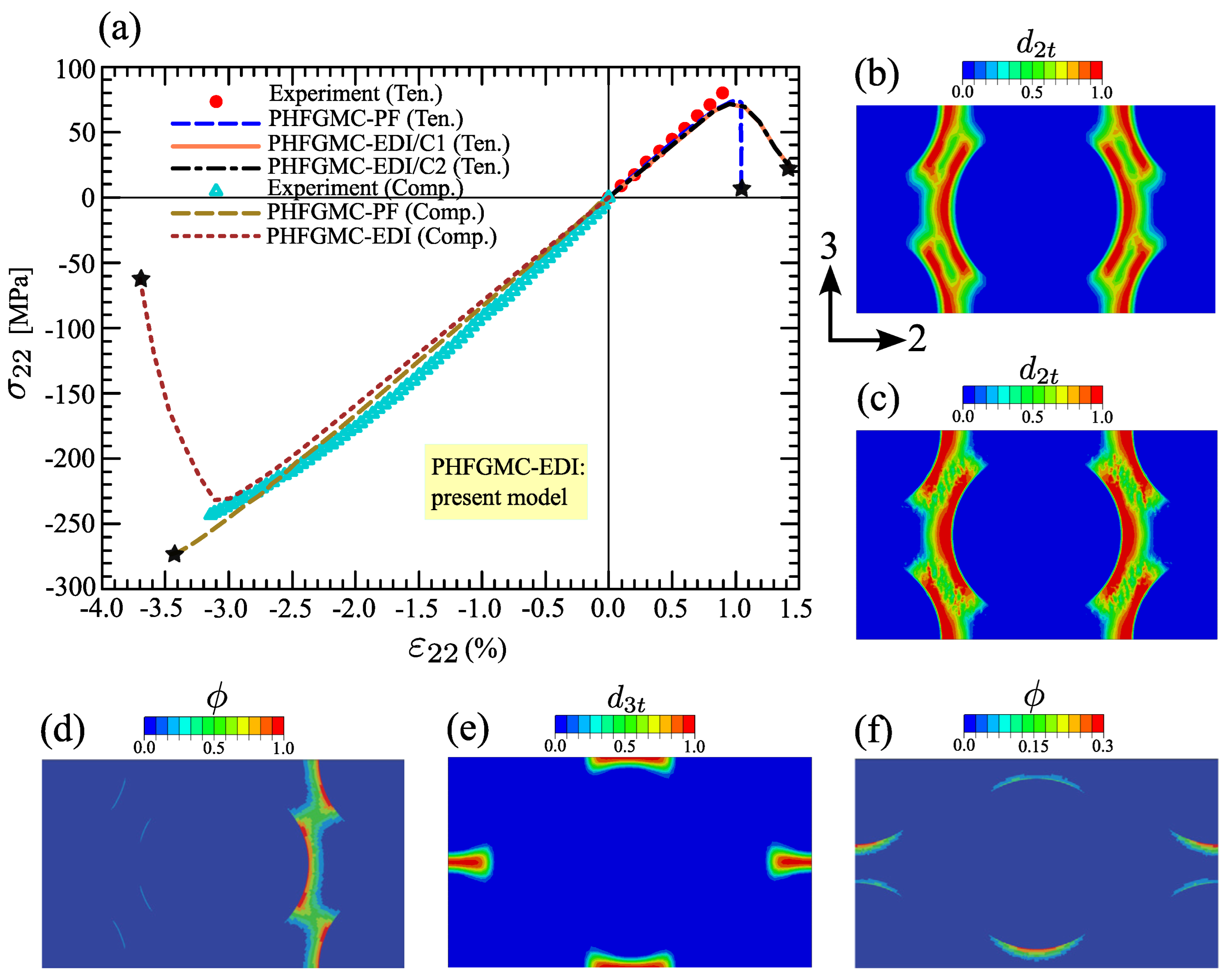
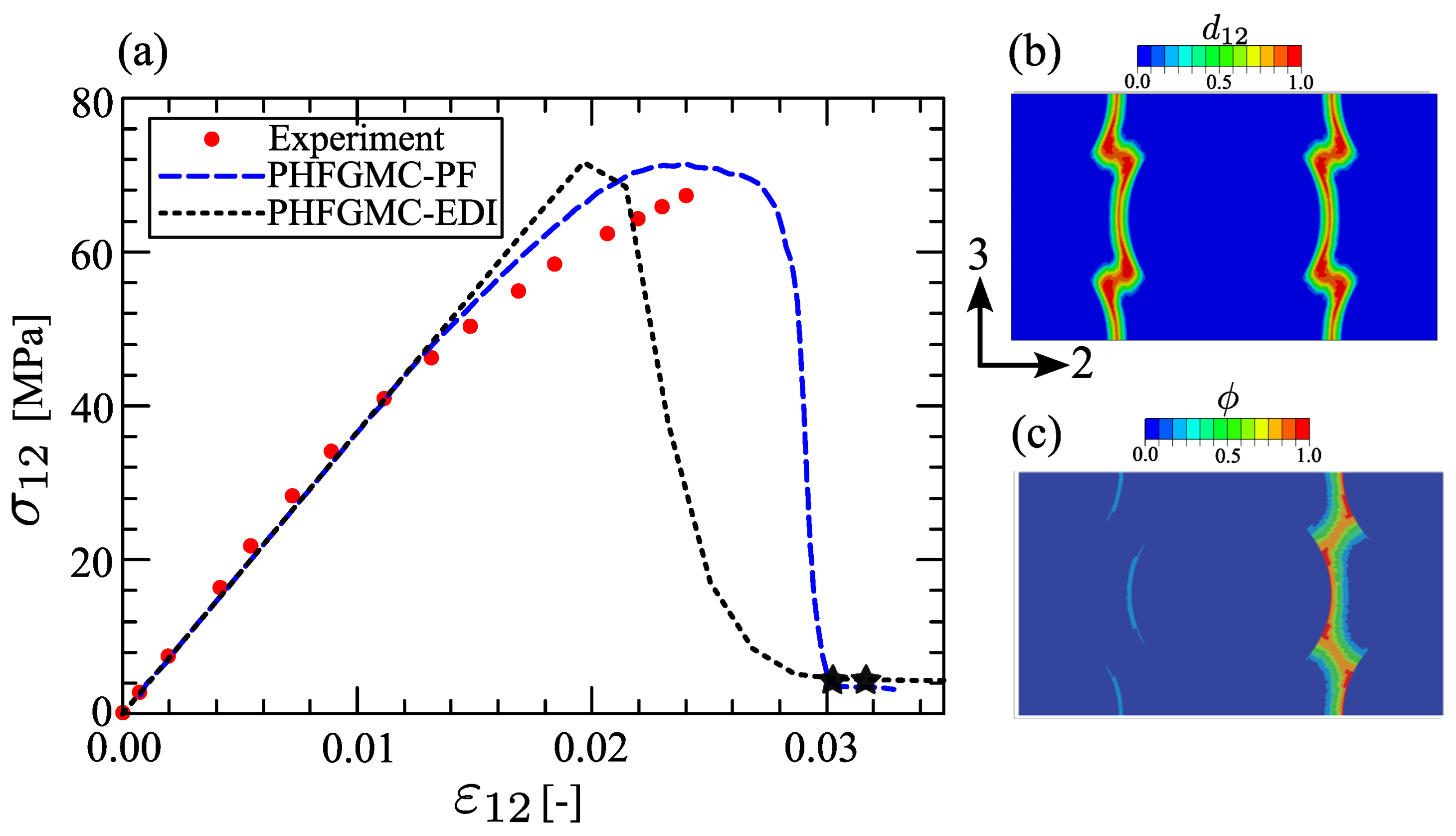
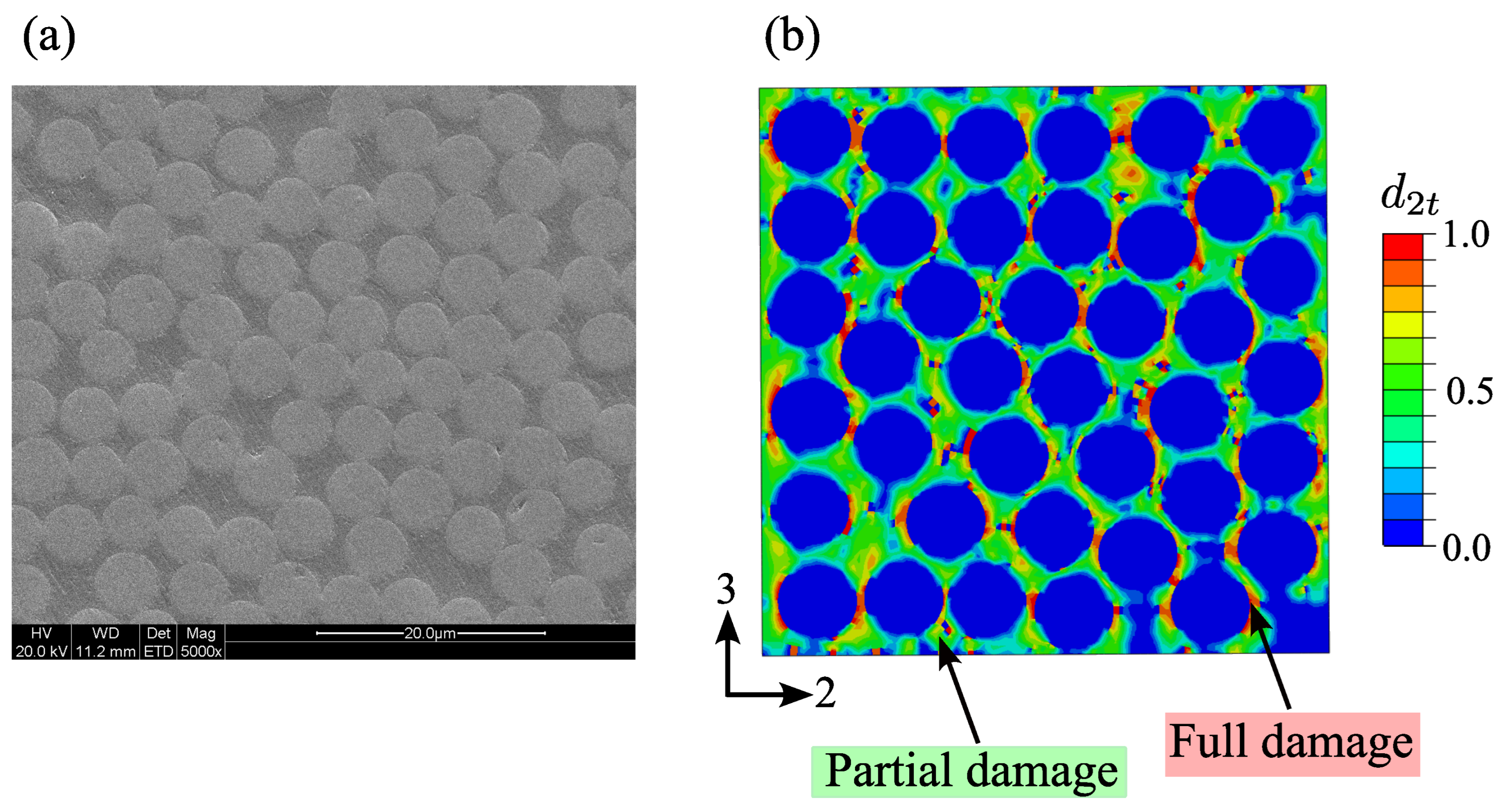
The present study introduces a robust three-dimensional generalized framework for characterizing the mechanical behavior of fibrous composites, implemented within the PHFGMC. The formulation incorporates Continuum Damage Mechanics (CDM) to model damage evolution in both the matrix and the fibers. Inelastic strain evolution is captured using the incremental plasticity theory, with a local Newton–Raphson iterative scheme and a return-mapping algorithm implemented to ensure robust numerical integration. To incorporate a strength criterion, the three-dimensional form of the Tsai–Wu failure criterion is introduced, enabling a comprehensive assessment of failure onset within the orthotropic fibrous composite under multiaxial loading conditions. It should be emphasized that the proposed micromechanical model does not impose any a priori assumptions regarding the presence or absence of damage in specific directions. In contrast to previous approaches, where damage is typically considered in a single direction within a two-dimensional framework, the present investigation defines damage using nine variables. These variables correspond to all normal and shear directions, effectively capturing both tensile and compressive damage mechanisms. The evolution of these damage variables occurs under all stress states and is determined through the solution of the boundary-value problem, with their magnitudes resolving to either finite values or zero based on the computed response and material properties. On the other hand, the inelastic strain induces plastic deformation in all directions, incorporating adjustable parameters across all stress states to account for the directional dependence of inelastic strain evolution. Applications are presented for polymeric matrix composites (PMCs) and ceramic matrix composites (CMCs). The analysis of PMCs is validated against phase-field simulations conducted by [
42], while CMC results are verified against NASA data by [
43].
It should be mentioned that plasticity in composite materials arises from distinct mechanisms depending on the matrix type. In PMCs, plasticity stems from matrix deformation, interfacial effects, and progressive damage. Interfacial shear, fiber debonding, and crack bridging contribute to energy dissipation, while microcracking and void growth further enhance plasticity under high strain [
44]. In CMCs, plasticity primarily results from toughening mechanisms that prevent brittle failure [
45]. Weak fiber–matrix interfaces enable debonding and frictional sliding, while crack deflection, fiber bridging, and microcracking enhance energy dissipation. Additional mechanisms such as phase transformations and grain boundary sliding contribute to plastic-like behavior, particularly under high temperatures or dynamic loading [
46,
47]. These mechanisms collectively improve damage tolerance, making PMCs ideal for lightweight applications and CMCs suitable for extreme environments like aerospace and thermal protection systems [
48].
This paper is organized as follows. In
Section 2, the PHFGMC formulation is briefly presented.
Section 3 elaborates on the mathematical framework of the developed coupled material degradation and plasticity model.
Section 4 discusses the numerical methodology employed in this study, including its implementation. Benchmark simulations are detailed in
Section 5, followed by conclusions in
Section 6.
2. PHFGMC Micromechanical Model for 3D Multi-Phase Composites
The PHFGMC method is formulated here in its most general three-dimensional form with a nonlinear framework. It is important to note that only a brief overview of the formulation is provided, while further details can be found in [
5]. The parametric HFGMC adopted in this study is highly suitable for capturing nonlinear and damage behaviors, as noted by [
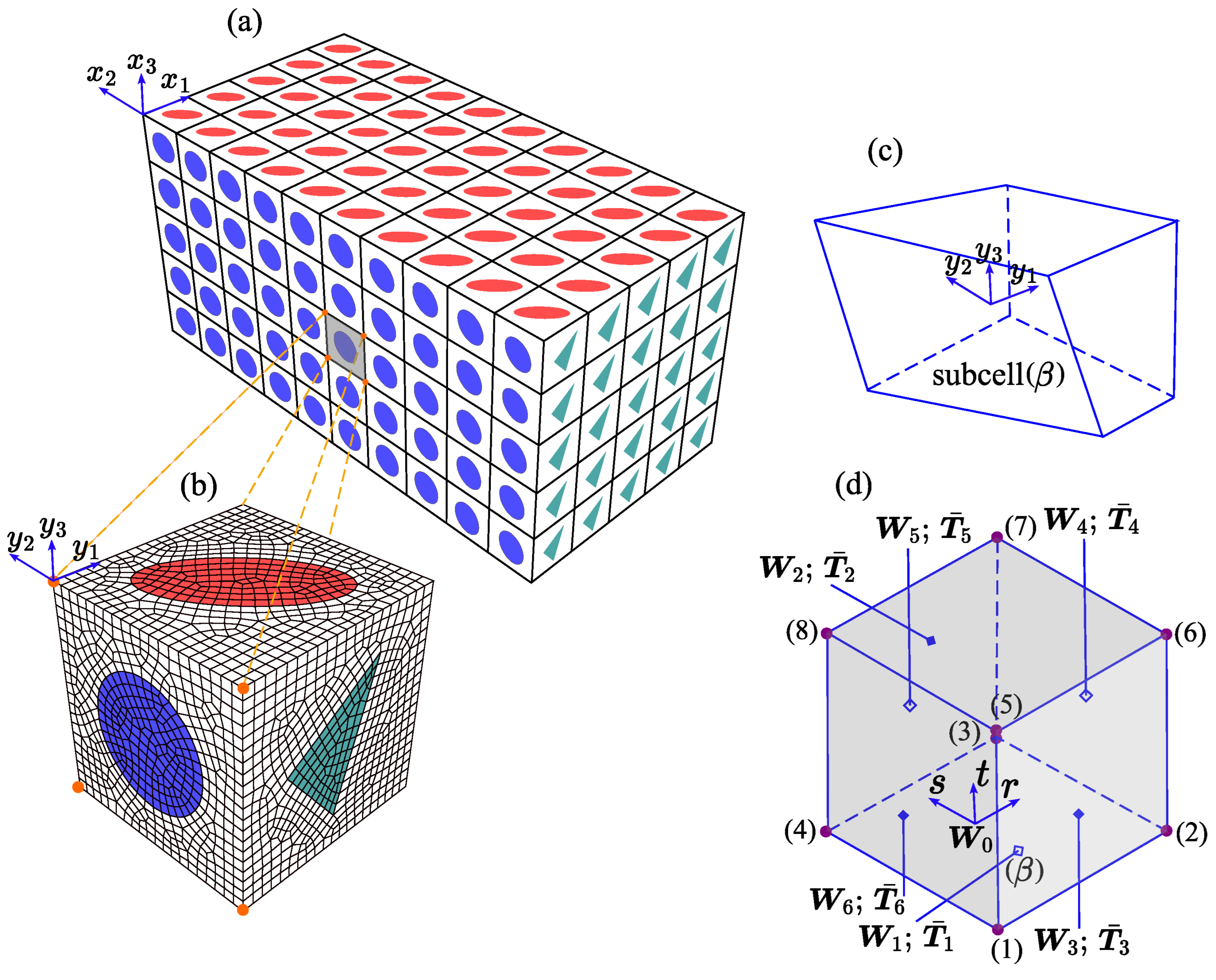
4]. The primary objective of the PHFGMC micromechanical approach is to estimate the effective properties and to model behavior of periodic composite materials. A schematic representation depicts a triply-periodic multiphase material system with a global coordinate framework is shown in
Figure 1a, where a global Cartesian coordinate system
is employed to define the periodic composite and the three-dimensional repeating unit cell (RUC) is characterized using a local coordinate system
as in
Figure 1b.
The displacement field is decomposed into two distinct terms: one represented by a linear polynomial in the global coordinate system, where the average strain acts as the coefficient, and another described by a quadratic polynomial in the local RUC coordinate system, incorporating micro-scale displacement variables as coefficients. Within the 3D PHFGMC framework, the RUC is discretized into a three-dimensional arrangement of hexahedral subcells with arbitrary shapes as shown in
Figure 1b.
Figure 1c displays an individual hexahedral subcell, defined within its physical coordinate system
. This subcell is then mapped onto a standardized parametric coordinate system
(
Figure 1d) as
where
represents the coordinates of an arbitrary point within the subcell domain, while
specifies the coordinates corresponding to the
k-th vertex of the subcell. The shape functions
are defined as:
where
are the natural coordinates of the
k-th node in the reference element.
It is important to highlight that, although the parametric transformation is linear, the displacement field is inherently quadratic. The displacement expansion within each subcell is expressed in its full quadratic form as:
where the externally applied macroscopic displacement field is given by
. The face-average displacement vectors at the six subcell faces are denoted by
for
, while
represents an internal displacement variable.
The subcell (
)-averaged virtual work balance is given by
where
denote the global displacement gradients and the locally averaged micro-displacement gradient vectors, respectively. The internal resisting vectors
characterize the subcell’s contribution to the overall stress averaged over the RUC and its local stress contribution, respectively. The stress tensor
is defined as
based on the generalized Hooke’s law, the mechanical behavior of the subcell is characterized by
, which defines its material stiffness. The terms
are formulated as a direct global strain-gradient matrix and a matrix that correlates the spatial strain components with the micro-displacement variables, respectively. For a detailed formulation of these matrices, the interested reader is referred to [
5]. Collectively, the total dimensions of
encompass all displacement variables for subcell
.
The two components of the generalized internal force vector
are conjugate to the global displacement gradients and to local variations, respectively, defined as
where the findings are expressed without the
notation, as the resulting formulations are valid for both individual RUC subcells and the complete assembly.
The stiffness matrix is determined by differentiating the generalized internal force vectors with respect to the subcell variables
and
as
The stiffness matrix in the PHFGMC maintains a symmetric structure. Within its formulation, traction continuity between adjacent subcells is approximated through a weak formulation approach. Displacement compatibility is achieved by averaging and linking the micro-variables corresponding to shared interfaces in the governing equations. As a result, periodic boundary conditions for the RUC are enforced by matching the displacements on opposing faces. The equilibrium residual of the complete RUC system is formulated in a generalized way, incorporating interface continuity and periodicity conditions on the displacement micro-variables as follows
where
and
are external and internal load vectors, respectively. Typically, in an RUC configuration,
is not explicitly defined, as the outer surfaces are generally governed by periodic boundary conditions applied to the corresponding conjugate micro-variables,
. However, an exception occurs when internal surfaces are free and subjected to pressure-type loading. The generalized force
that is applied corresponds to the average stress within the RUC with a unit volume. At a given time
t, the system of equations governing the incremental response can be expressed as follows
where
t denotes the time at the beginning of the increment, and
represents the time increment.
6. Conclusions and Discussion
This study introduced a comprehensive three-dimensional micromechanical framework to describe the nonlinear mechanical behavior of composite materials, accounting for coupled elastic degradation, inelastic strain evolution, and phenomenological failure mechanisms. The generalized elastic degradation–inelasticity (EDI) model was implemented within the parametric high-fidelity generalized method of cells (PHFGMC), enabling robust simulation of nonlinear response and failure mechanisms in composite systems.
The formulation is grounded in continuum mechanics, using a unified orthotropic damage model based on scalar field variables governed by an energy potential function. Thermodynamic forces are defined along three orthogonal directions—each decomposed into tensile, compressive, and shear components, with shear failure modeled on each principal plane. An incremental anisotropic plasticity model couples damage evolution with inelastic strain, ensuring generality and flexibility across diverse composite constituents. While a failure criterion is used for ultimate strength evaluation, the framework also permits implementation of a crack-band theory to simulate post-ultimate degradation.
The simulated examples demonstrated the predictive capability and flexibility of the proposed framework in modeling the complex behavior of two high-performance composite systems: IM7/977-3 and C/C–SiC. These systems pose distinct challenges in microstructural architecture, constituent behavior, and damage evolution, yet the model effectively captured the key mechanisms governing their mechanical response.
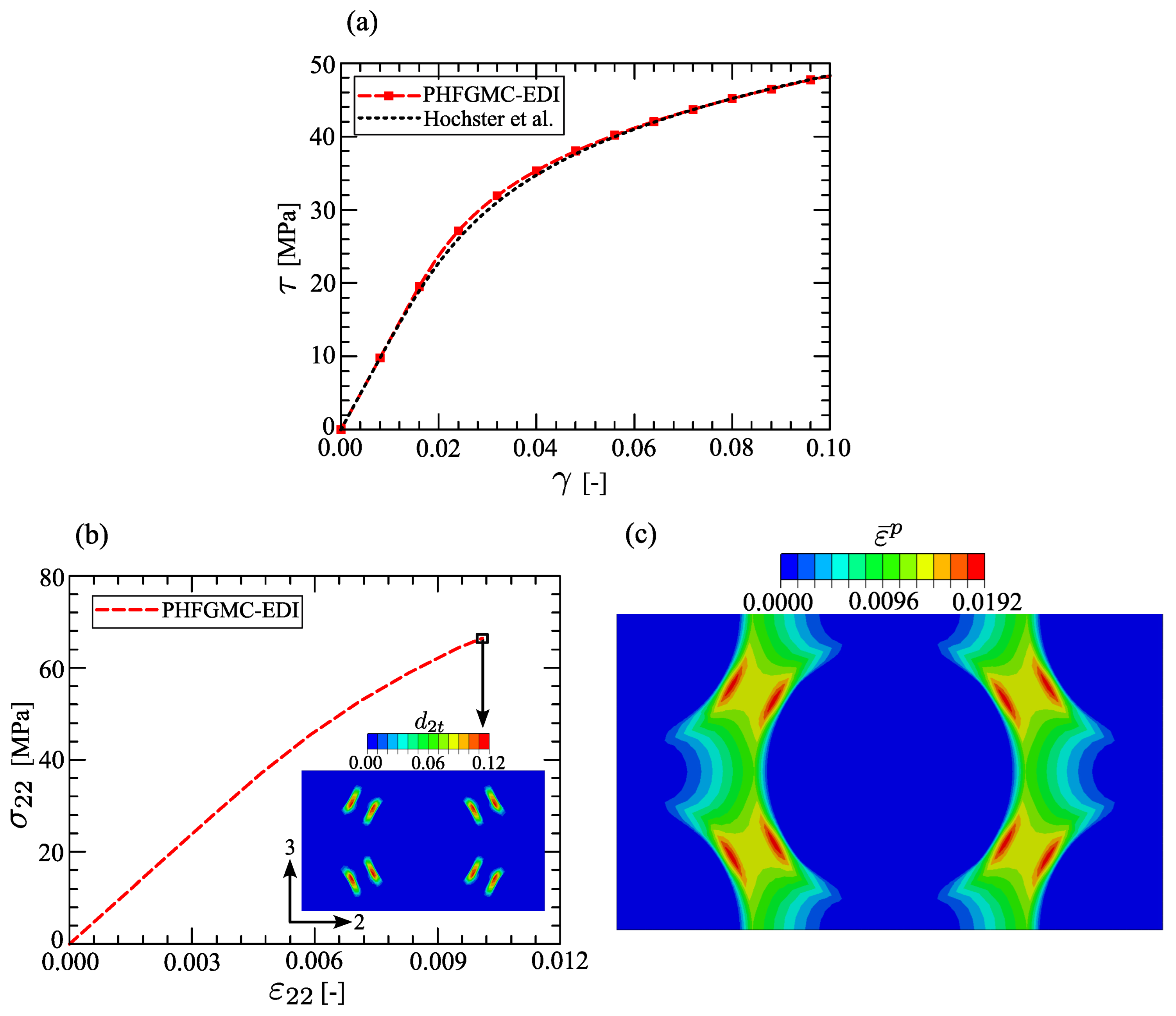
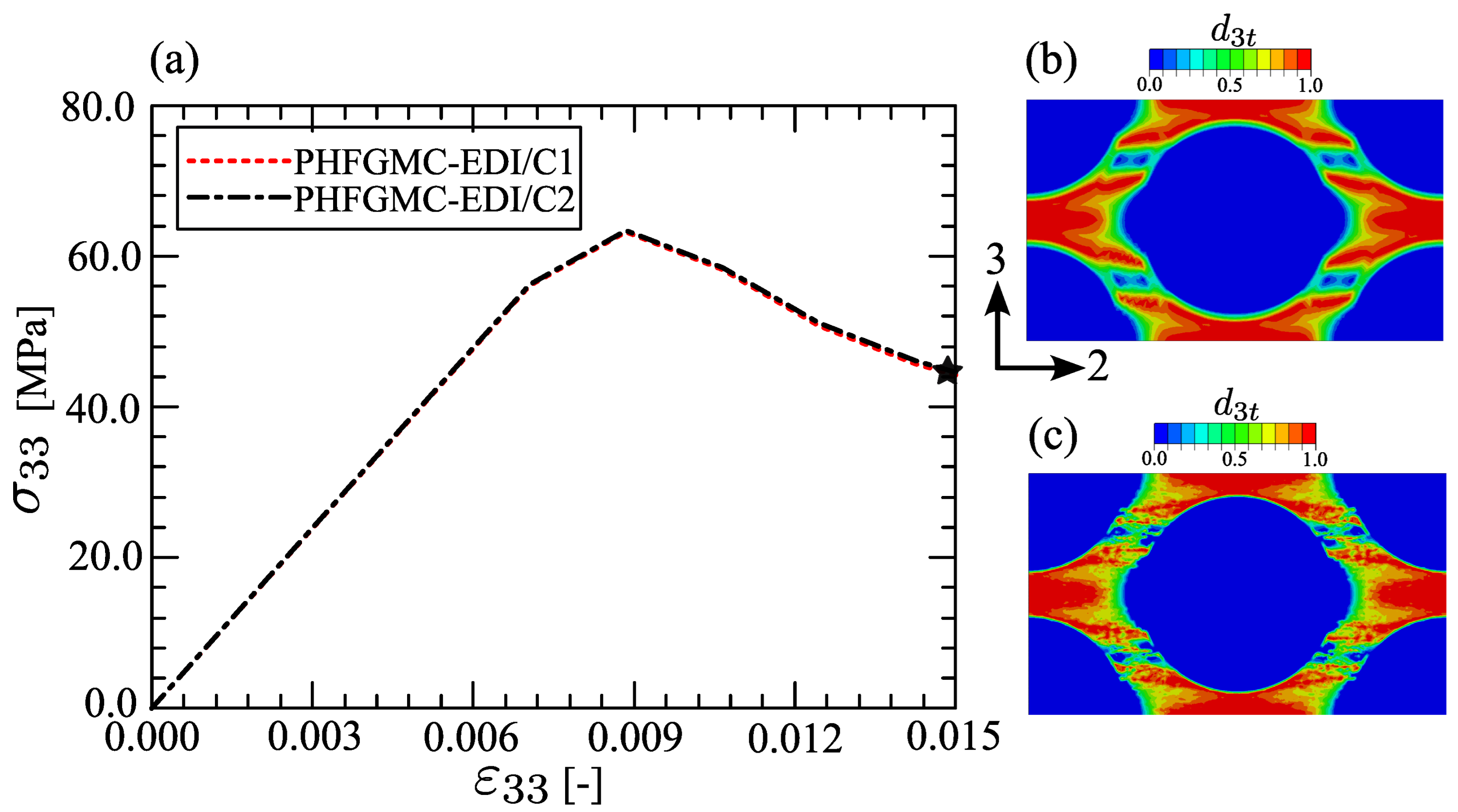
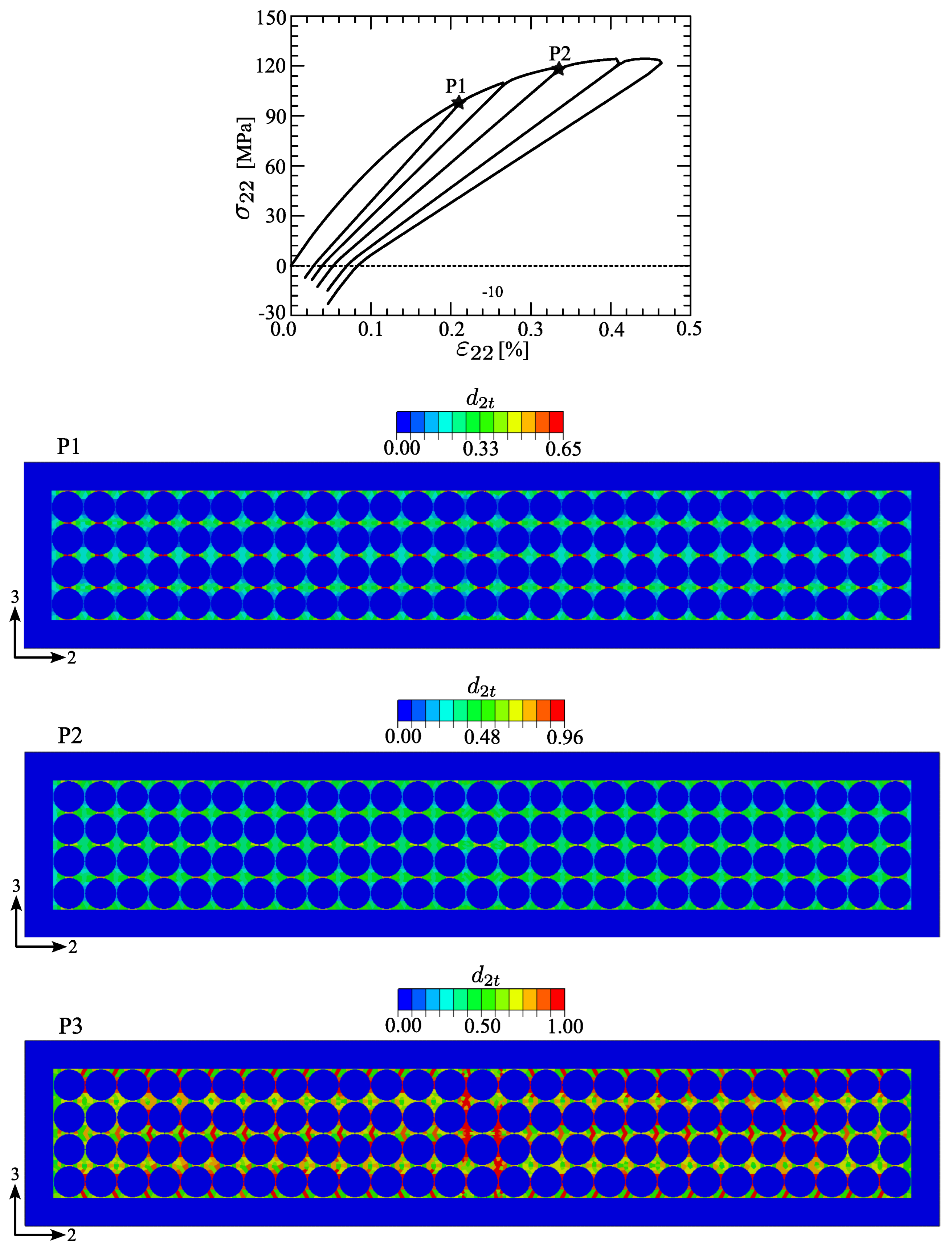
For IM7/977-3, the framework reproduced the nonlinear stress–strain behavior in agreement with experimental data, capturing matrix-dominated damage, stiffness degradation, and inelastic strain accumulation. The modularity of the framework allowed damage and plasticity mechanisms to be selectively activated, offering insight into the underlying physics. Its computational efficiency further enabled parametric studies to guide material optimization. Specifically, the computational efficiency of the PHFGMC-EDI framework arises from its micromechanical formulation, solving a compact system of
governing equations per RUC, where
is the number of subcells (typically 1000–5000 for complex triply periodic composites). This yields far fewer degrees of freedom than equivalent FE models with comparable microstructural resolution. Benchmarks indicate that PHFGMC runtime makes up at most 50% of displacement-based FE simulations under nonlinear loading while preserving accuracy in local fields and responses [
5]. Efficiency is boosted by parametric mapping, enabling flexible arbitrary phase geometries with fewer subcells than orthogonal HFGMC, thus cutting assembly and solution times.
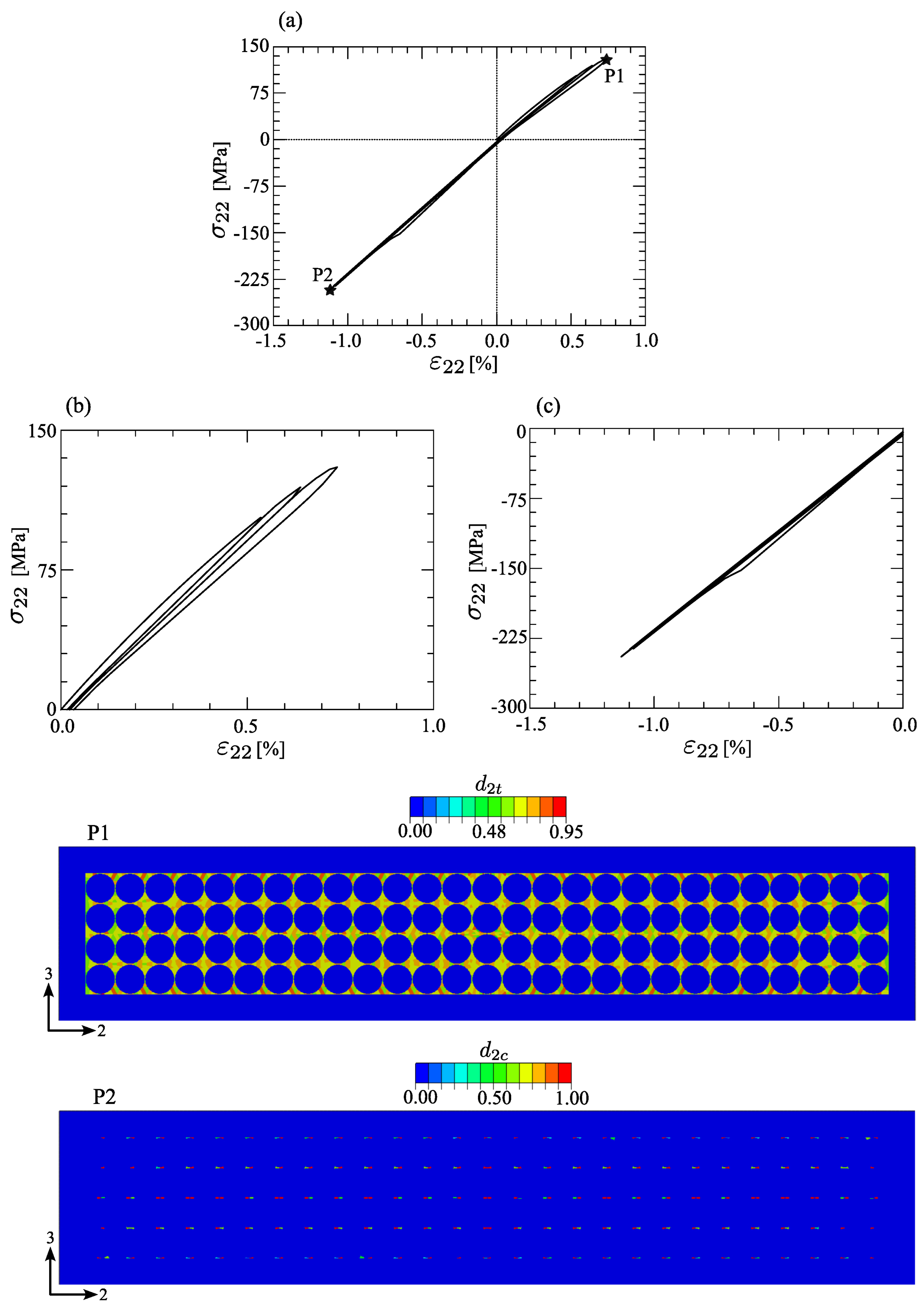
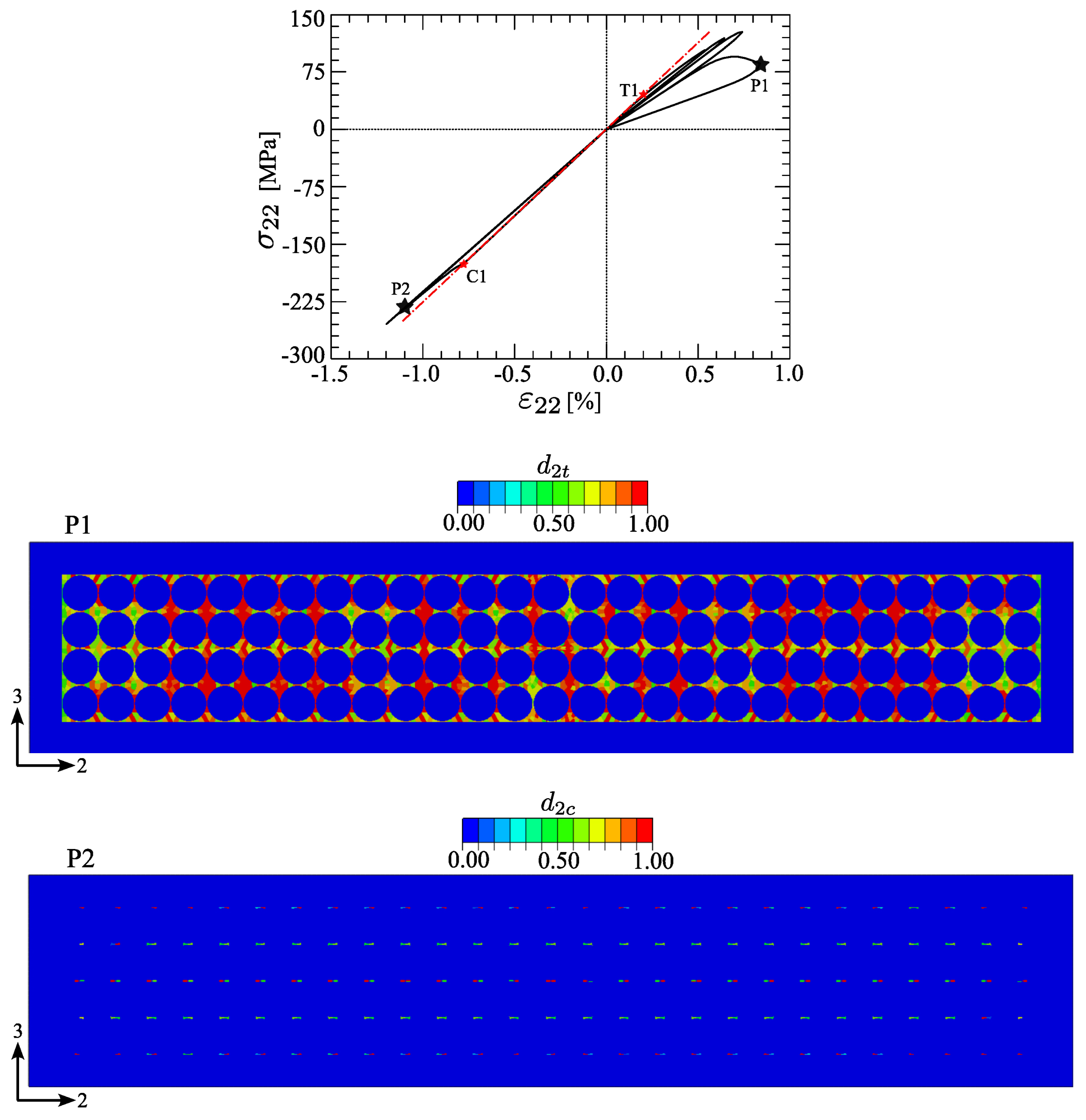
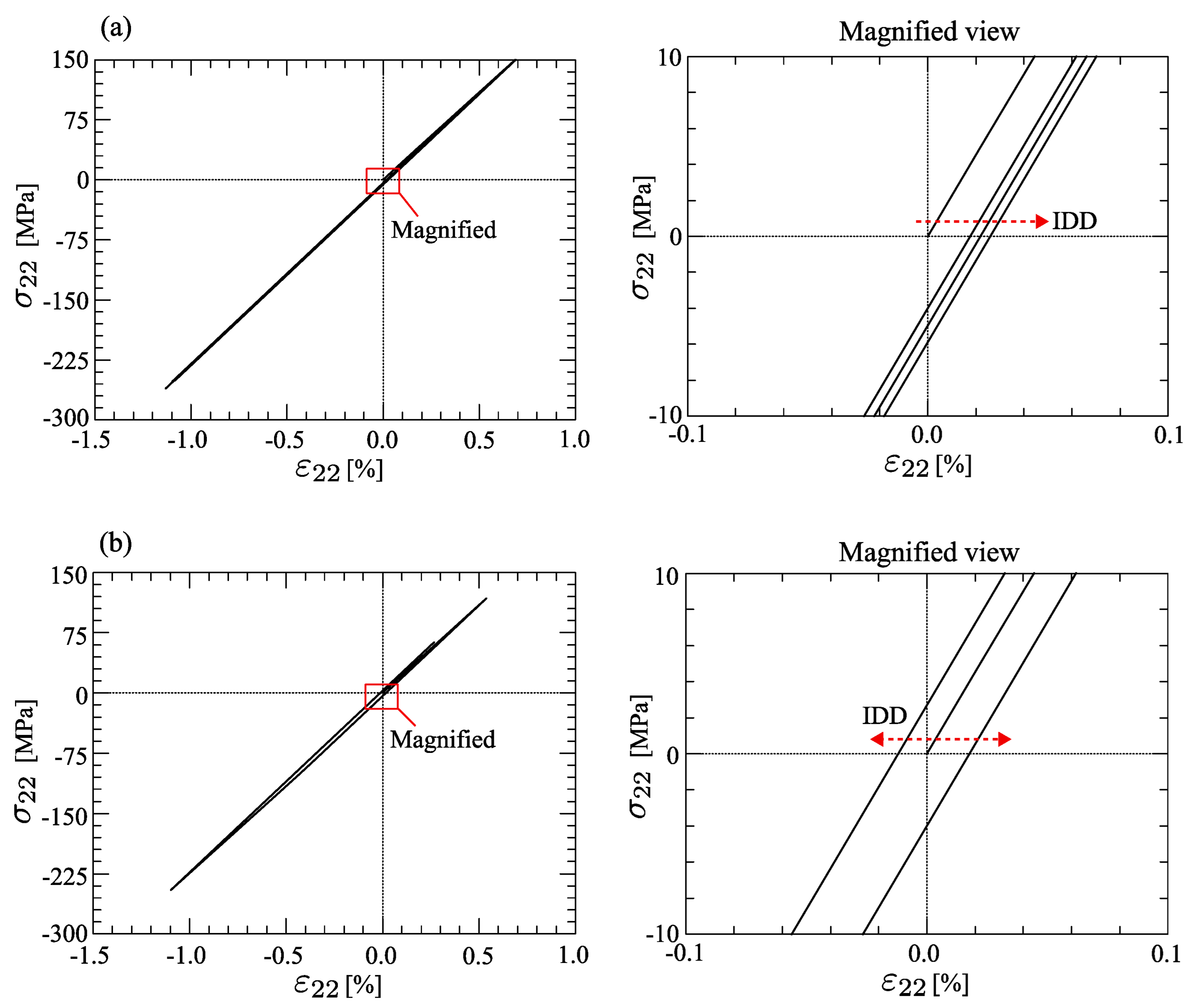
For the C/C–SiC composite, the complex three-phase microstructure—comprising carbon fibers, amorphous carbon, and SiC matrix—was explicitly modeled using a representative unit cell informed by microstructural data and literature. The model successfully captured progressive mechanical degradation and crack closure behavior under cyclic loading. Importantly, it also captured tension–compression asymmetry, a hallmark of such composites. The use of a logistic damage evolution law facilitated a smooth, continuous transition to failure.
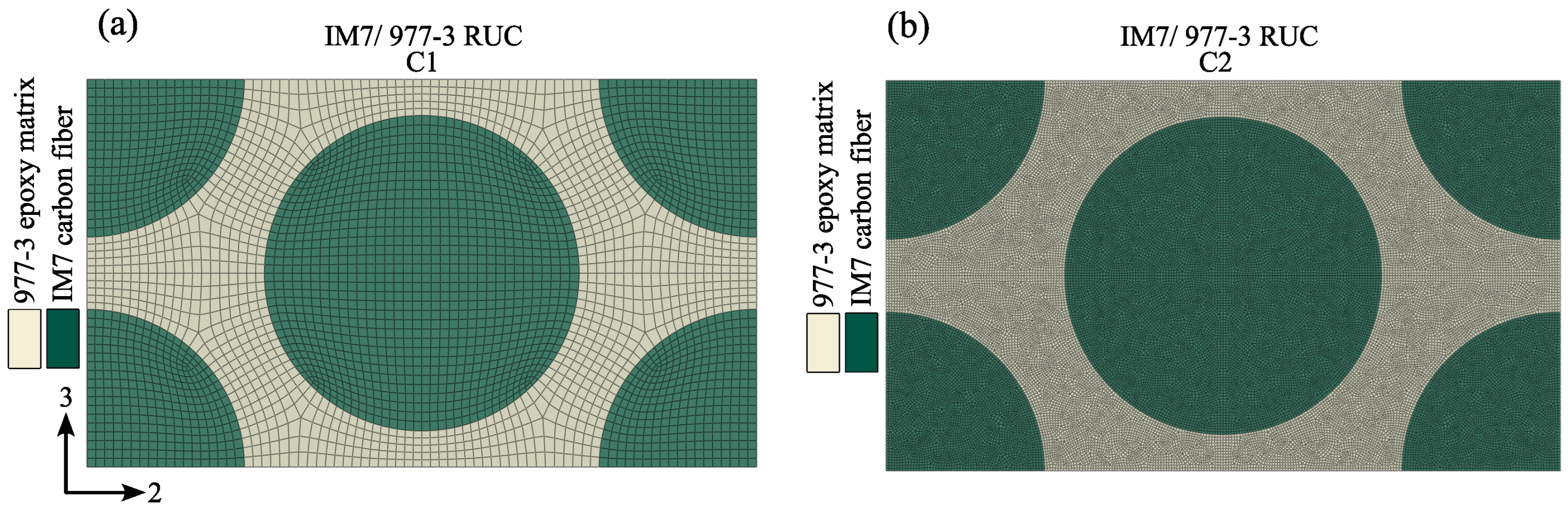
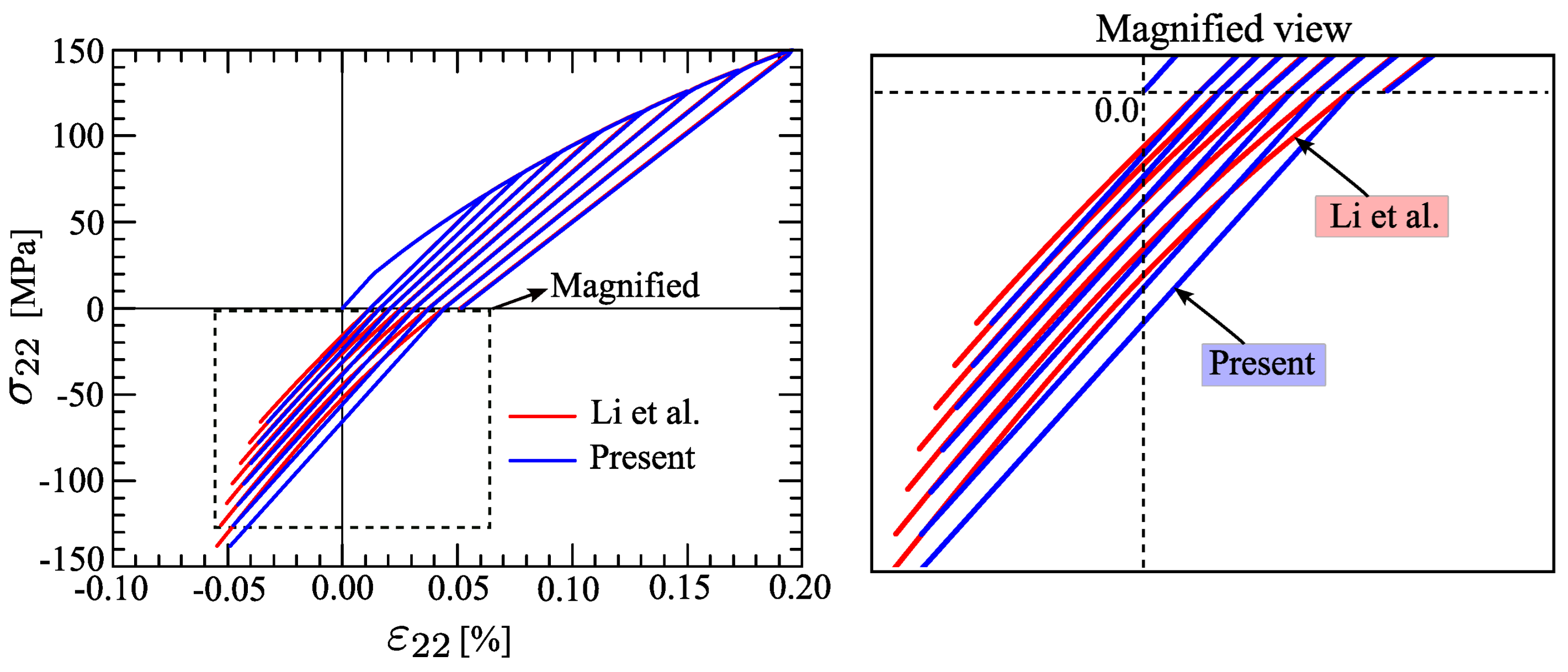
Results showed convergence under mesh refinement—an essential aspect of damage simulation. Unlike phase-field methods that require energy decomposition to isolate tensile damage, the PHFGMC–EDI approach models tension-driven failure directly by calibrating compression thresholds.
In summary, the PHFGMC–EDI framework provides a versatile and high-fidelity tool for simulating the nonlinear behavior of advanced composite materials. Its generalized 3D formulation, integration of scalar-field damage modeling with energy potential-based thermodynamics, orthotropic representation, and selectively activated inelasticity mechanisms make it well-suited for capturing complex multi-phase, multi-mechanism responses. Future work will focus on extending the framework to high-temperature applications, incorporating viscoplastic effects, and applying it to novel architectured composite systems.