
Microstructure Statistical Symmetry, and Quantification of Anisotropic Thermal Conduction in Additive Manufactured Short Carbon Fiber/Polyetherimide Composites

 , , and
Abstract
1. Introduction
2. Experimental Methods
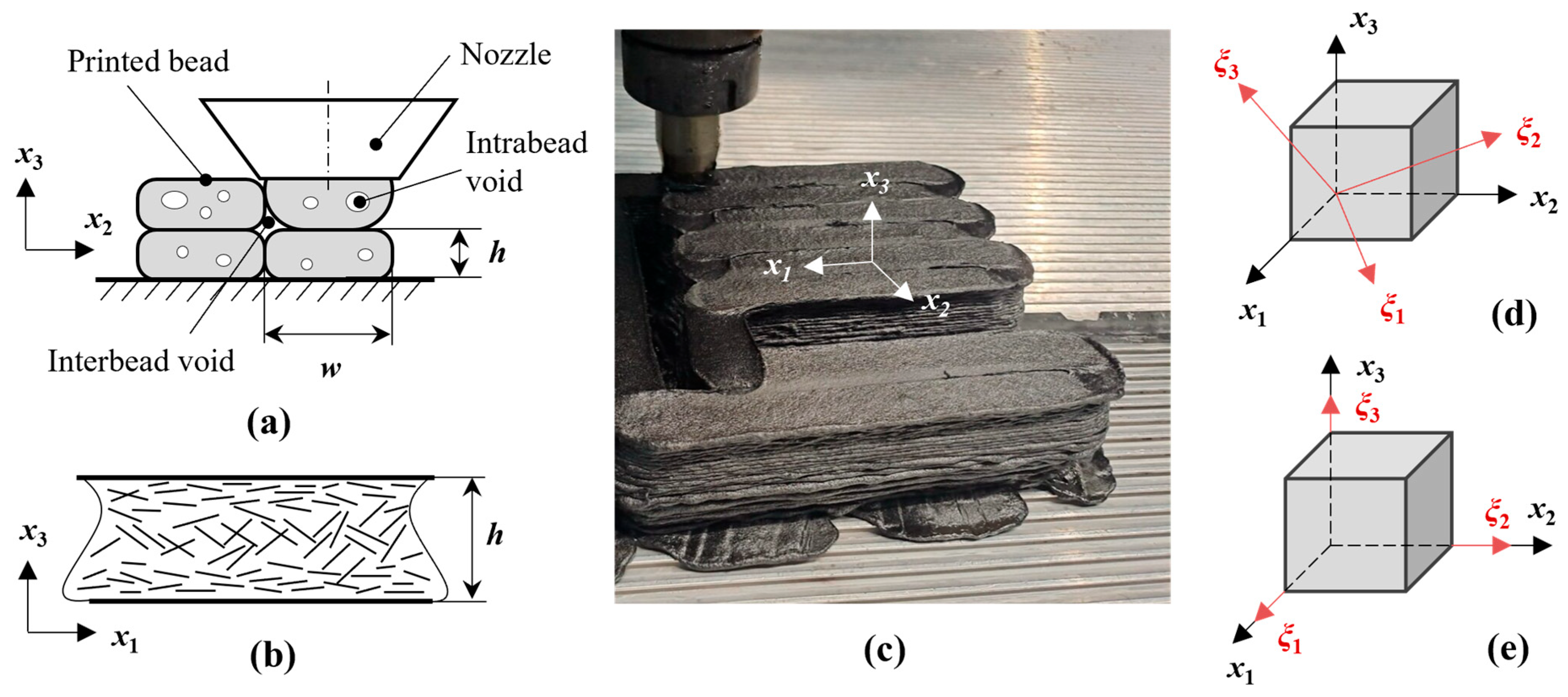
2.1. Materials and Sample Manufacturing
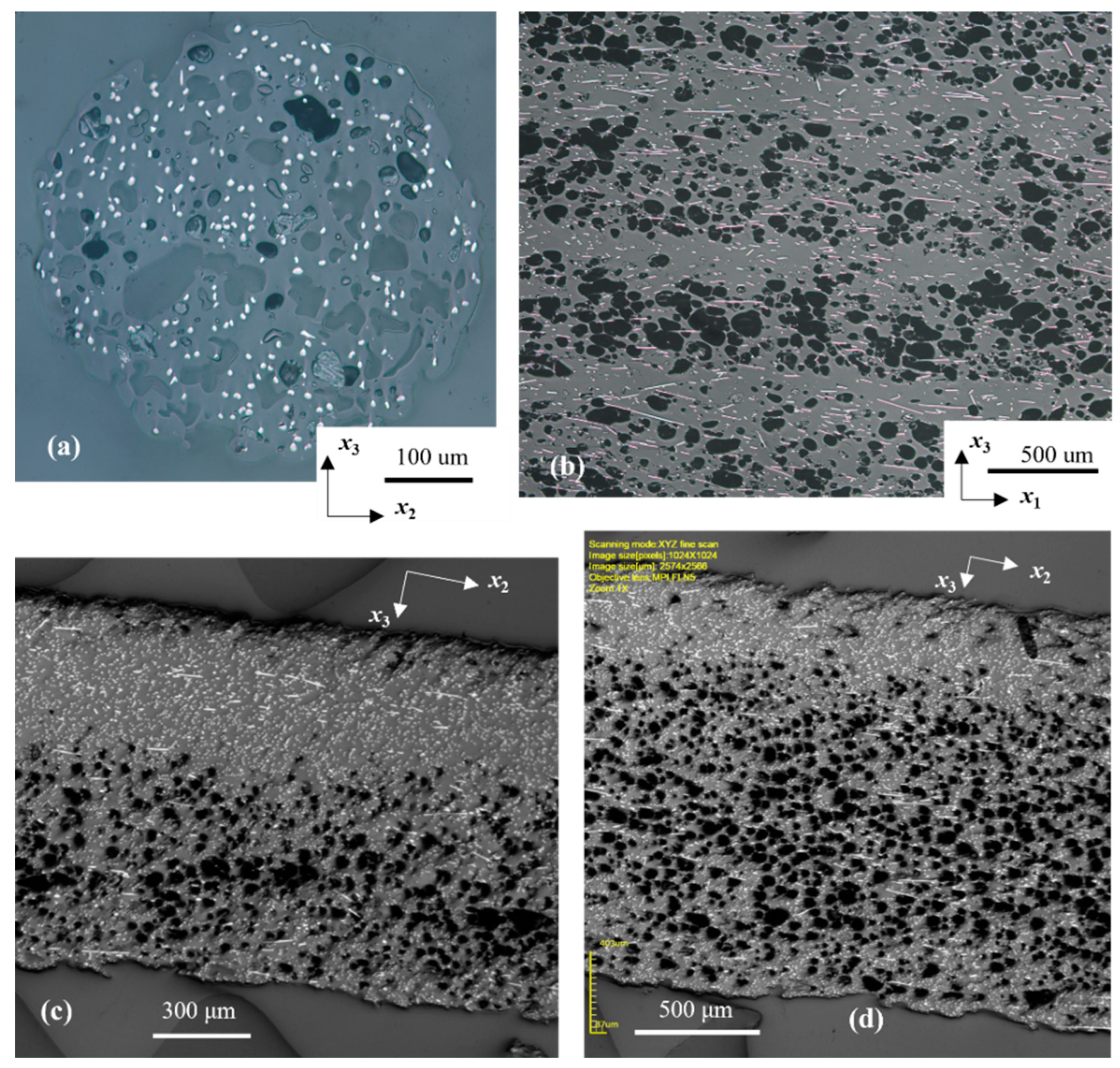
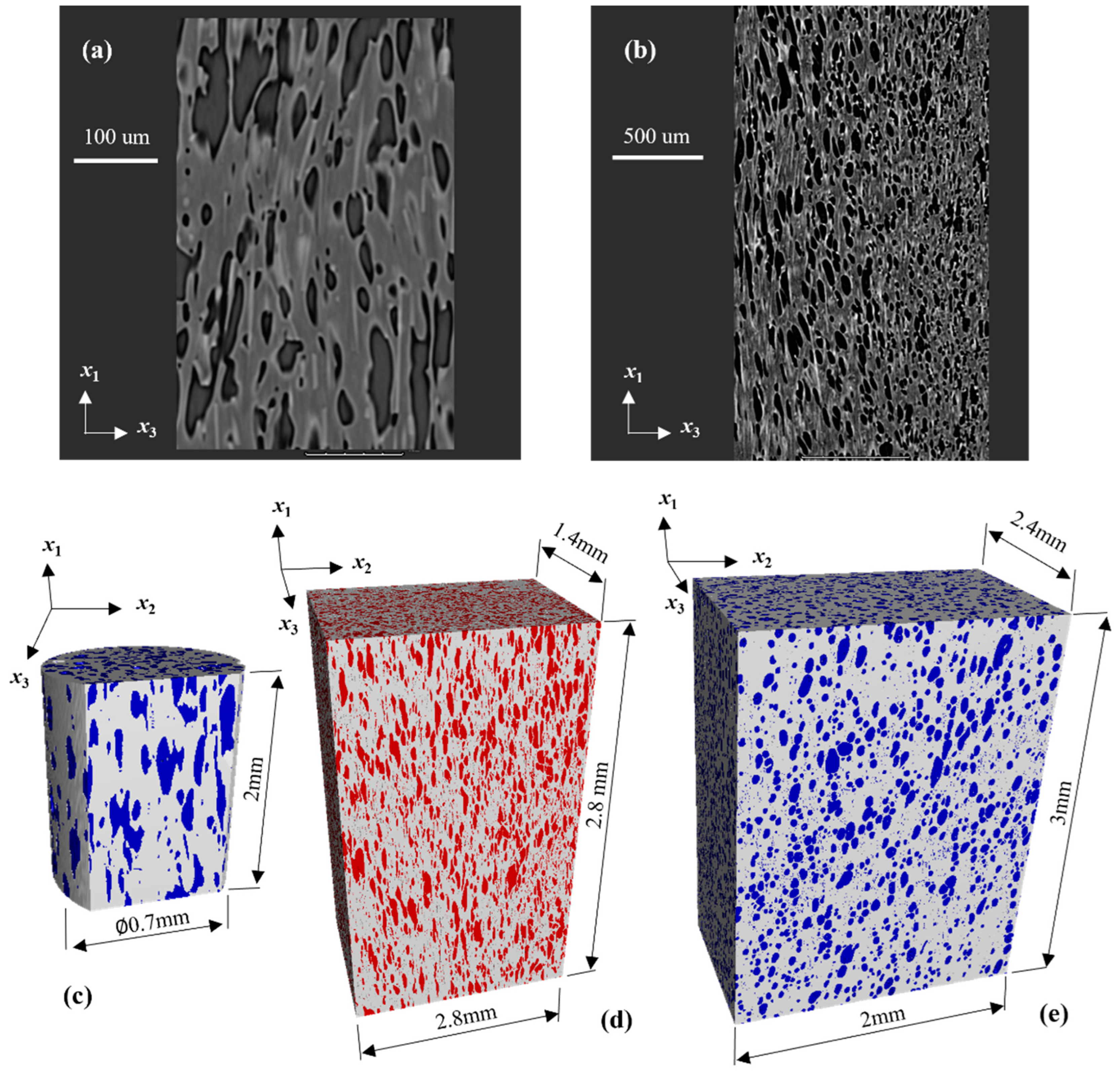
2.2. Microstructure Imaging
2.3. Microstructure Parameters Characterization Methods
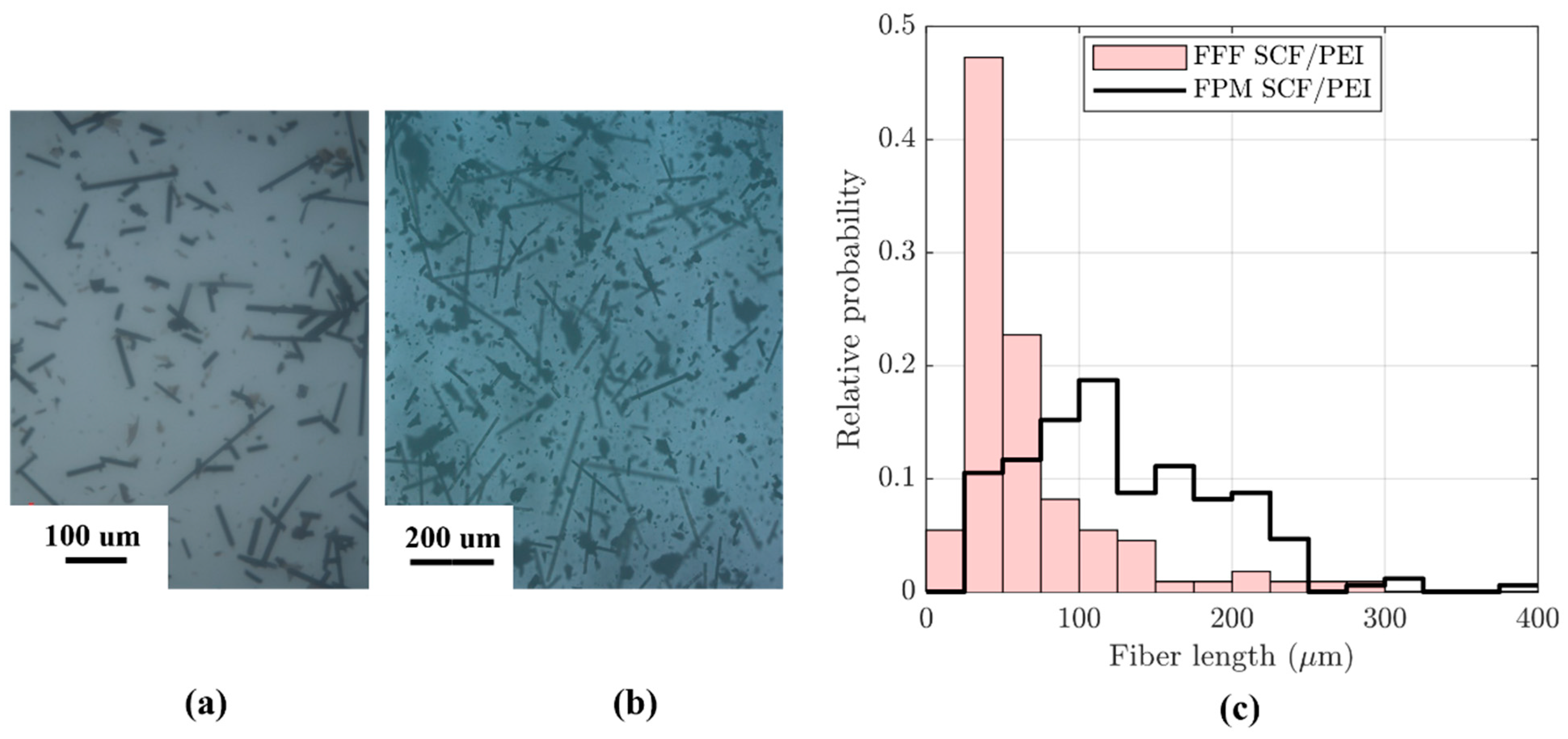
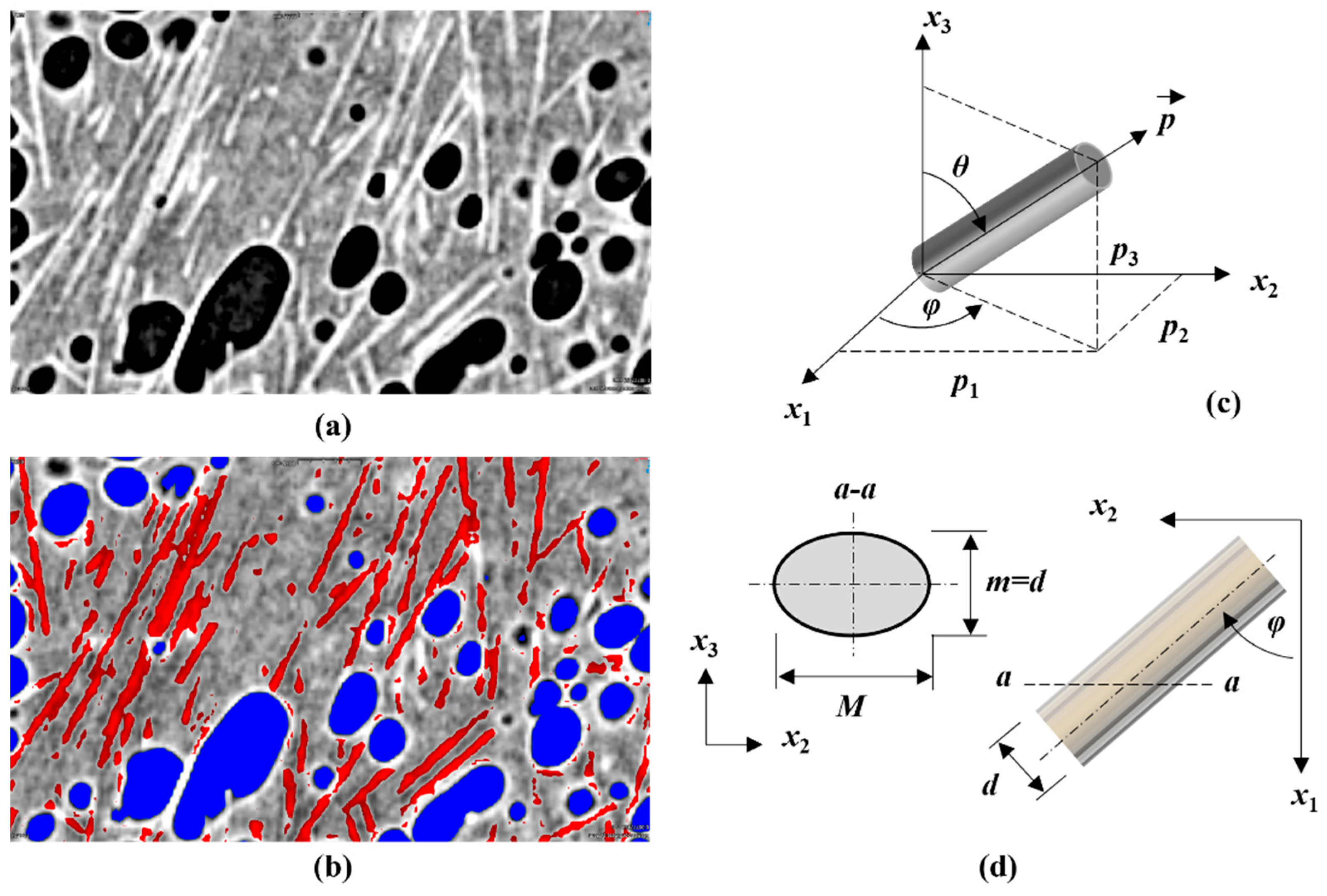
2.3.1. Fiber Length Distribution
2.3.2. Fiber Orientation Distribution
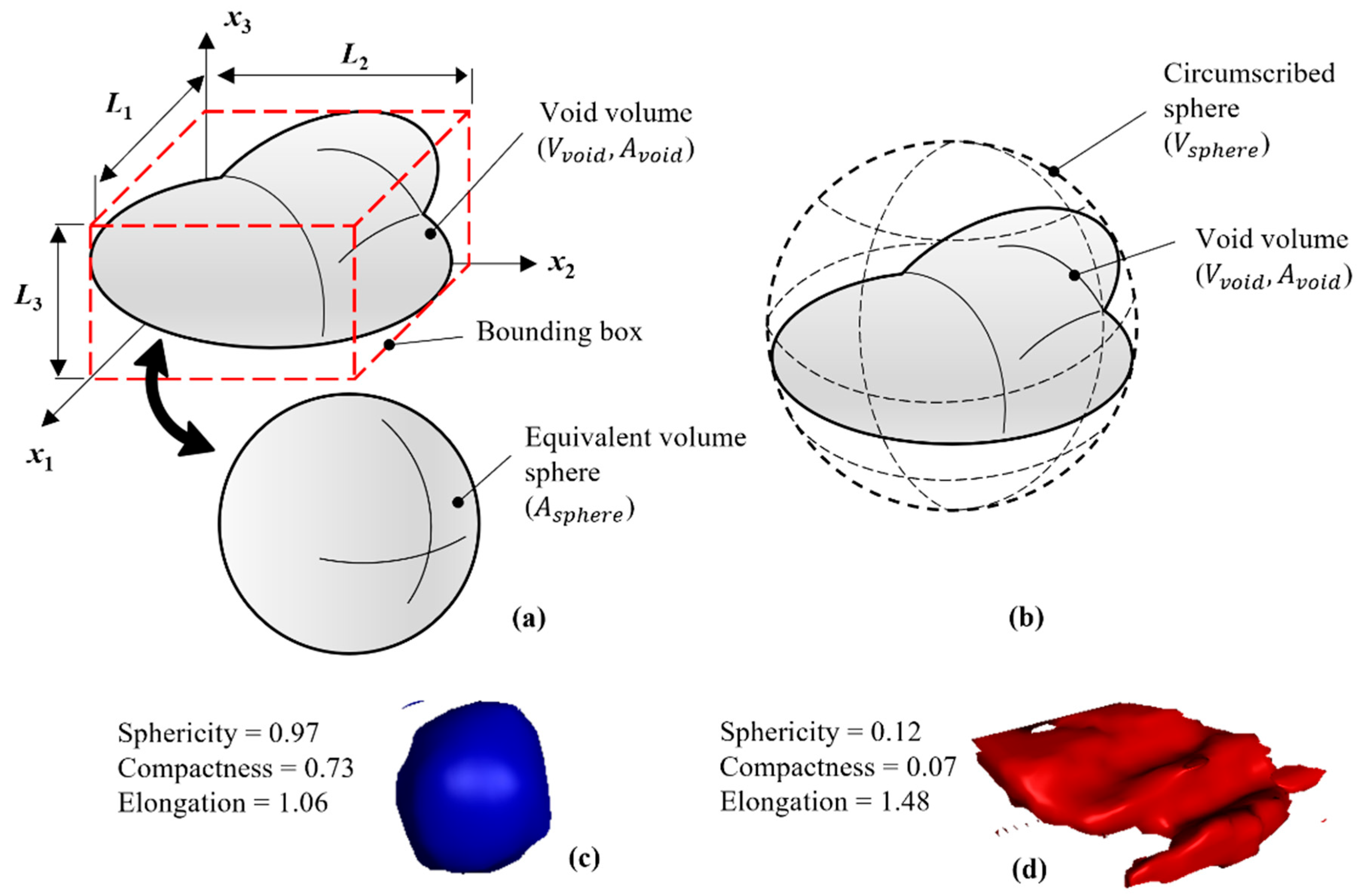
2.3.3. Void Morphology and Orientation Distribution
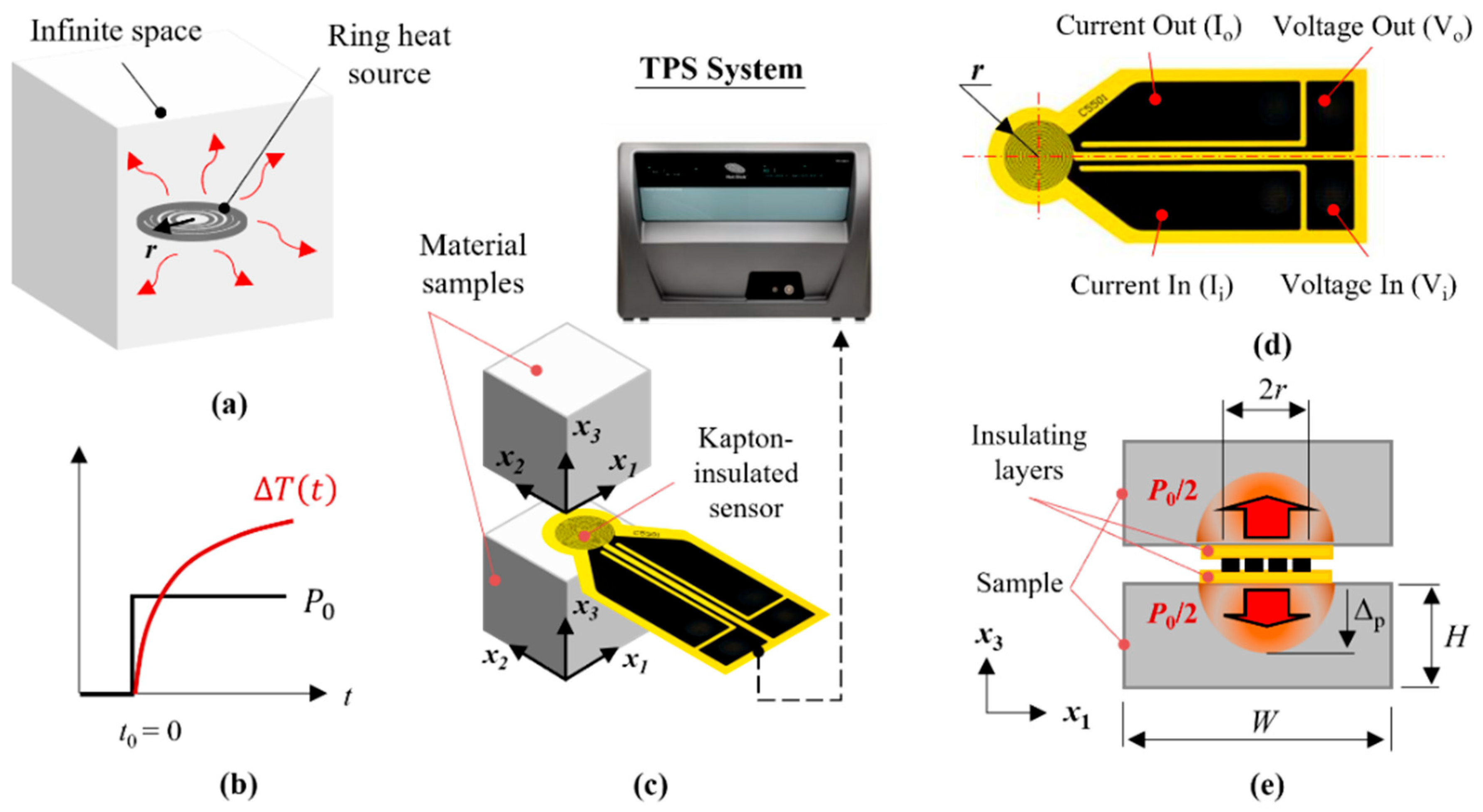
2.4. TPS Measurements of ETC
3. Results and Discussion
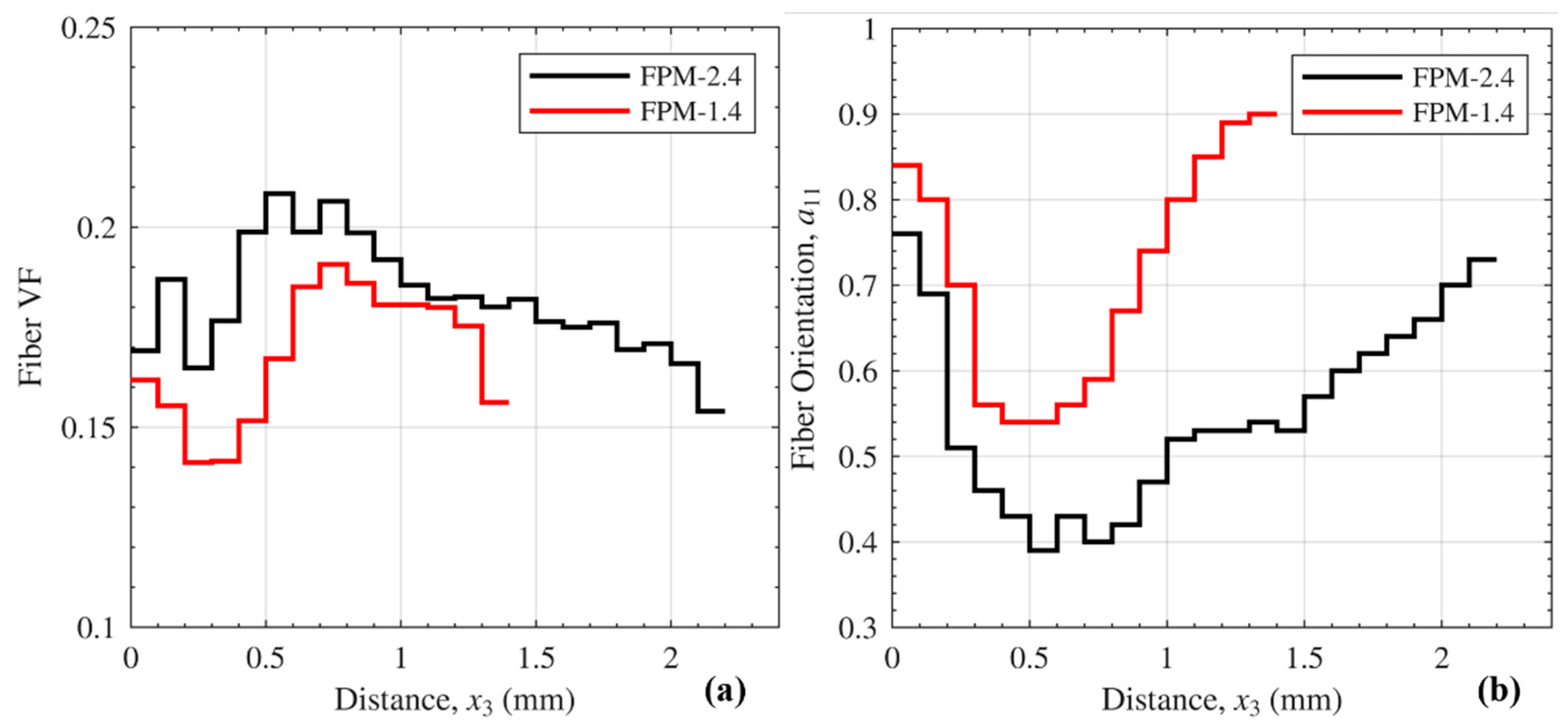
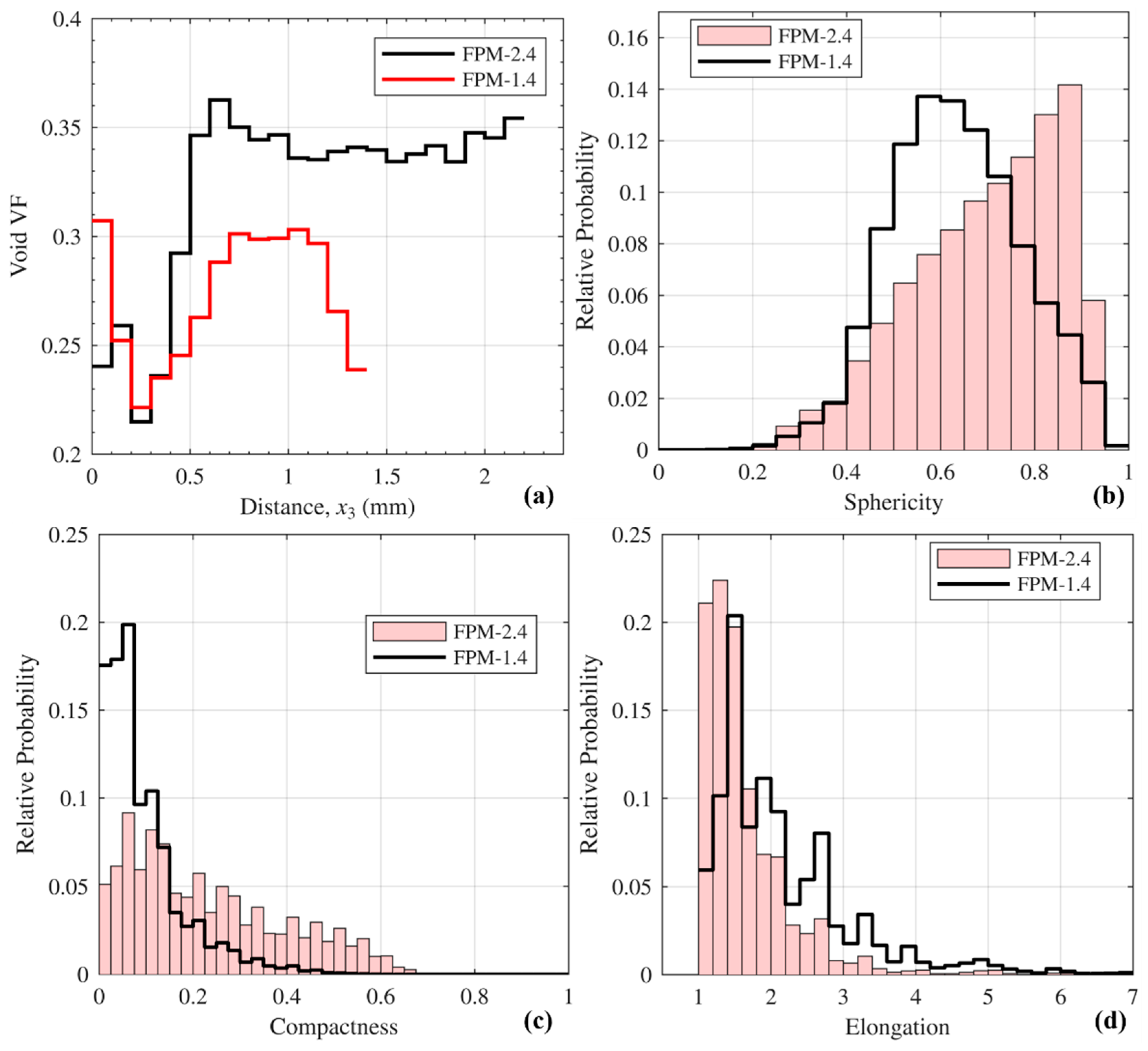
3.1. Comparative Analysis of Microstructure Parameters in SCF/PEI AM Composites
3.2. Thermal Conductivity Measurements in SCF/PEI Composites
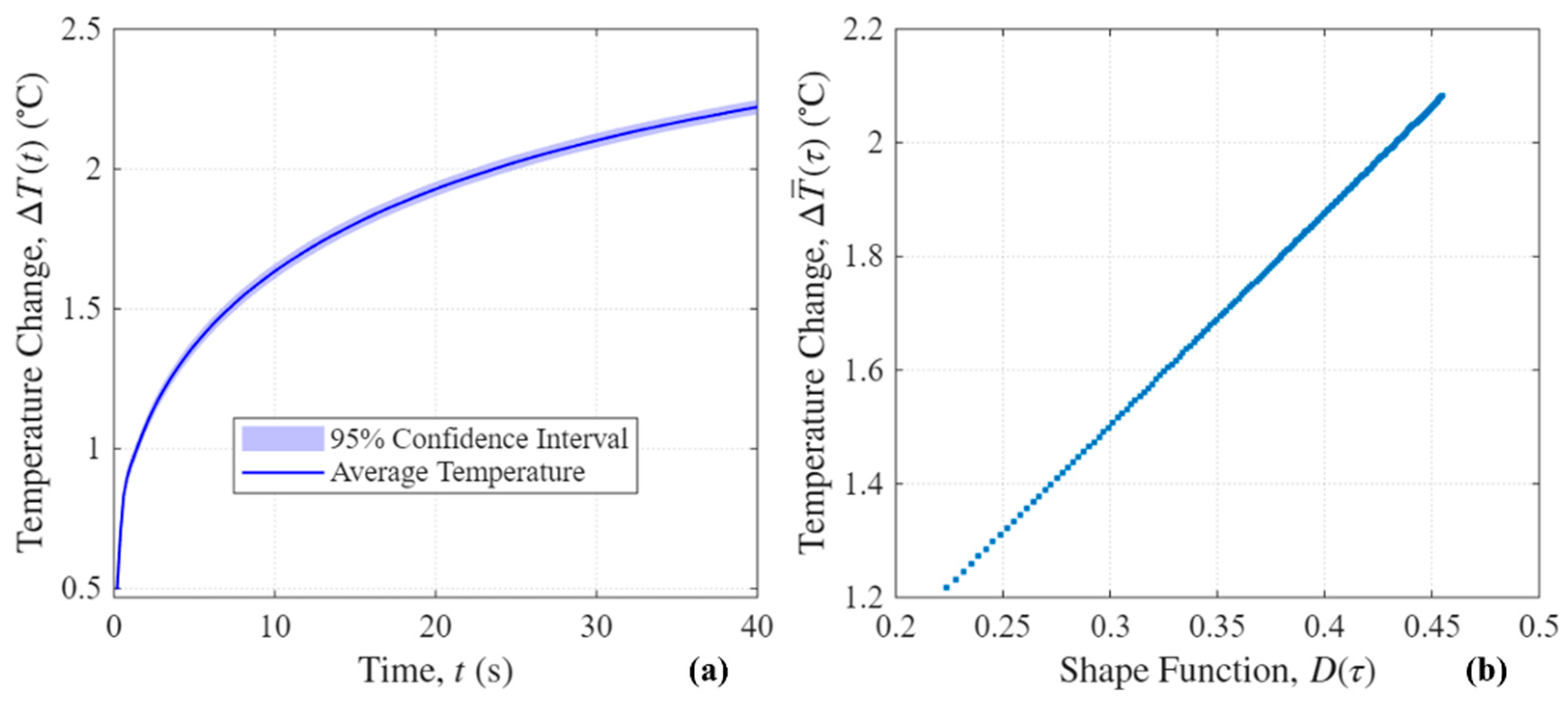
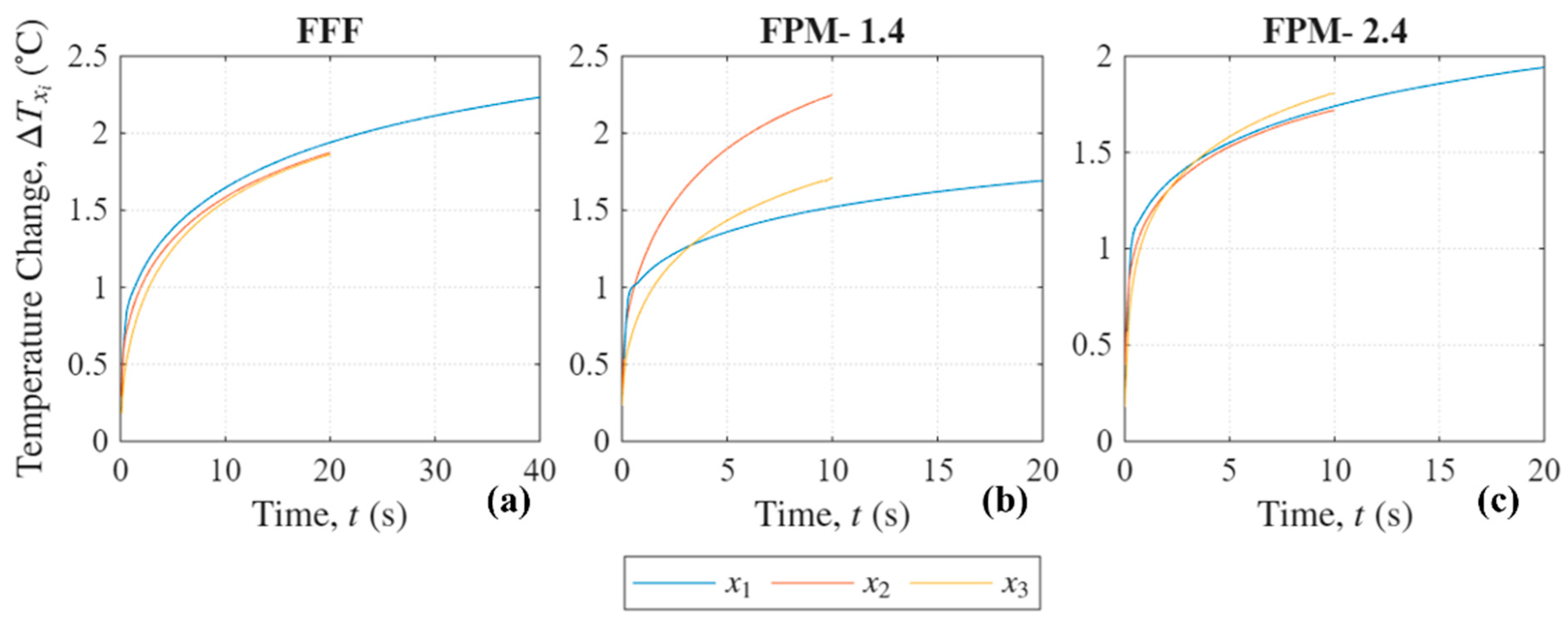
3.2.1. Interpretation of the TPS-Measured Temperature Rise for Macroscopically Anisotropic Materials
3.2.2. Transverse-Isotropic Thermal Conduction of FFF SCF/PEI Composite
3.2.3. General Anisotropy in Thermal Conduction of FPM SCF/PEI Composites
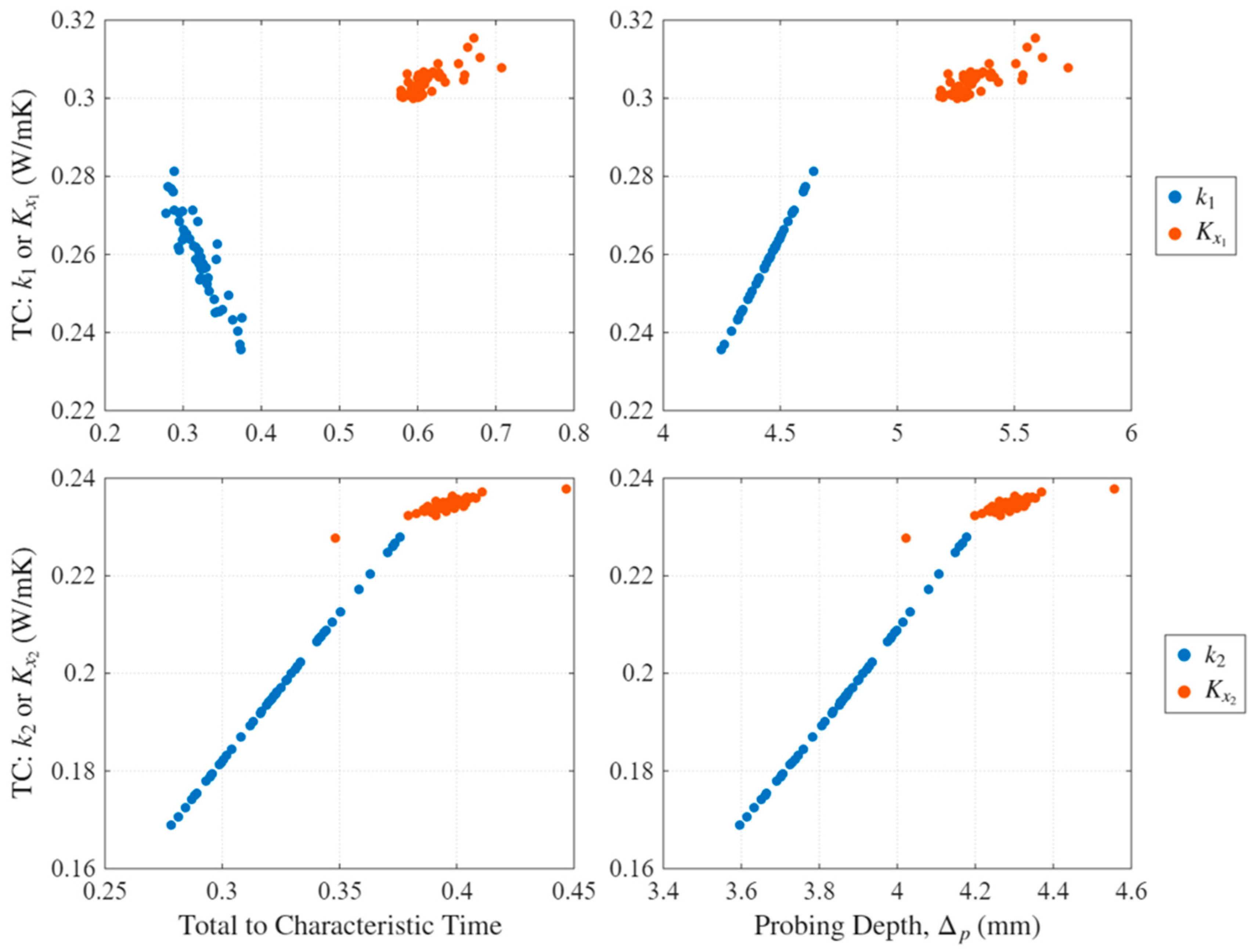
3.3. Correlation Between Microstructure Parameters and Thermal Conductivity Measurement Values
4. Conclusions
Author Contributions
Funding
Data Availability Statement
Conflicts of Interest
References
- Burger, N.; Laachachi, A.; Ferriol, M.; Lutz, M.; Toniazzo, V.; Ruch, D. Review of thermal conductivity in composites: Mechanisms, parameters and theory. Prog. Polym. Sci. 2016, 61, 1–28. [Google Scholar] [CrossRef]
- Chen, H.; Ginzburg, V.V.; Yang, J.; Yang, Y.; Liu, W.; Huang, Y.; Du, L.; Chen, B. Thermal conductivity of polymer-based composites: Fundamentals and applications. Prog. Polym. Sci. 2016, 59, 41–85. [Google Scholar] [CrossRef]
- Guo, Y.; Ruan, K.; Shi, X.; Yang, X.; Gu, J. Factors affecting thermal conductivities of the polymers and polymer composites: A review. Compos. Sci. Technol. 2020, 193, 108134. [Google Scholar] [CrossRef]
- dos Santos, W.N.; de Sousa, J.A.; Gregorio, R., Jr. Thermal conductivity behaviour of polymers around glass transition and crystalline melting temperatures. Polym. Test. 2013, 32, 987–994. [Google Scholar] [CrossRef]
- Dashora, P.; Gupta, G. On the temperature dependence of the thermal conductivity of linear amorphous polymers. Polymer 1996, 37, 231–234. [Google Scholar] [CrossRef]
- Jia, Y.; Mao, Z.; Huang, W.; Zhang, J. Effect of temperature and crystallinity on the thermal conductivity of semi-crystalline polymers: A case study of polyethylene. Mater. Chem. Phys. 2022, 287, 126325. [Google Scholar] [CrossRef]
- Bai, L.; Zhao, X.; Bao, R.-Y.; Liu, Z.-Y.; Yang, M.-B.; Yang, W. Effect of temperature, crystallinity and molecular chain orientation on the thermal conductivity of polymers: A case study of PLLA. J. Mater. Sci. 2018, 53, 10543–10553. [Google Scholar] [CrossRef]
- Zhang, T.; Luo, T. Role of Chain Morphology and Stiffness in Thermal Conductivity of Amorphous Polymers. J. Phys. Chem. B 2016, 120, 803–812. [Google Scholar] [CrossRef] [PubMed]
- Jia, Y.; Zhang, J. Thermal conductivity of ethylene-vinyl acetate copolymers with different vinyl acetate contents dependent on temperature and crystallinity. Thermochim. Acta 2022, 708, 179141. [Google Scholar] [CrossRef]
- Tsukuda, R.; Sumimoto, S.; Ozawa, T. Thermal conductivity and heat capacity of ABS resin composites. J. Appl. Polym. Sci. 1997, 63, 1279–1286. [Google Scholar] [CrossRef]
- Tritt, T.M.; Weston, D. Measurement techniques and considerations for determining thermal conductivity of bulk materials. In Thermal Conductivity: Theory, Properties, and Applications; Springer: Boston, MA, USA, 2004; pp. 187–203. [Google Scholar]
- Zhao, D.; Qian, X.; Gu, X.; Jajja, S.A.; Yang, R. Measurement techniques for thermal conductivity and interfacial thermal conductance of bulk and thin film materials. J. Electron. Packag. 2016, 138, 040802. [Google Scholar] [CrossRef]
- Speyer, R. Thermal Analysis of Materials; CRC Press: Boca Raton, FL, USA, 1993. [Google Scholar]
- Hassen, A.A.; Dinwiddie, R.B.; Kim, S.; Tekinalp, H.L.; Kumar, V.; Lindahl, J.; Yeole, P.; Duty, C.; Vaidya, U.; Wang, H.; et al. Anisotropic thermal behavior of extrusion-based large scale additively manufactured carbon-fiber reinforced thermoplastic structures. Polym. Compos. 2022, 43, 3678–3690. [Google Scholar] [CrossRef]
- Shi, S.; Jiang, T.; Cao, S.; Gui, X.; Wang, Y.; Li, Y.; Yu, W.; Lin, D.; Xie, H.; Li, X.-F.; et al. Anisotropic Thermal Conductivity of Epoxy Laminate Composites Constructed with Three-Dimensional Carbon Fiber Felt. ACS Appl. Polym. Mater. 2024, 6, 11508–11517. [Google Scholar] [CrossRef]
- Bard, S.; Schönl, F.; Demleitner, M.; Altstädt, V. Influence of Fiber Volume Content on Thermal Conductivity in Transverse and Fiber Direction of Carbon Fiber-Reinforced Epoxy Laminates. Materials 2019, 12, 1084. [Google Scholar] [CrossRef]
- Hind, S.; Robitaille, F. Measurement, modeling, and variability of thermal conductivity for structural polymer composites. Polym. Compos. 2009, 31, 847–857. [Google Scholar] [CrossRef]
- Carson, J.; Lovatt, S.; Tanner, D.; Cleland, A. An analysis of the influence of material structure on the effective thermal conductivity of theoretical porous materials using finite element simulations. Int. J. Refrig. 2003, 26, 873–880. [Google Scholar] [CrossRef]
- Chung, S.-Y.; Stephan, D.; Elrahman, M.A.; Han, T.-S. Effects of anisotropic voids on thermal properties of insulating media investigated using 3D printed samples. Constr. Build. Mater. 2016, 111, 529–542. [Google Scholar] [CrossRef]
- Prajapati, H.; Ravoori, D.; Woods, R.L.; Jain, A. Measurement of anisotropic thermal conductivity and inter-layer thermal contact resistance in polymer fused deposition modeling (FDM). Addit. Manuf. 2018, 21, 84–90. [Google Scholar] [CrossRef]
- Shen, Y.-L.; Abdo, M.G.; Van Rooyen, I.J. Numerical Study of Effective Thermal Conductivity for Periodic Closed-Cell Porous Media. Transp. Porous Media 2022, 143, 245–269. [Google Scholar] [CrossRef]
- Wang, X.; Gu, W.; Lu, H. Effects of three-dimensional pore structure on effective thermal conductivities of thermal insulation materials. Int. Commun. Heat Mass Transf. 2022, 139, 106523. [Google Scholar] [CrossRef]
- Patel, A.; Taufik, M. Extrusion-Based Technology in Additive Manufacturing: A Comprehensive Review. Arab. J. Sci. Eng. 2022, 49, 1309–1342. [Google Scholar] [CrossRef]
- Billah, K.M.M.; Lorenzana, F.A.; Martinez, N.L.; Wicker, R.B.; Espalin, D. Thermomechanical characterization of short carbon fiber and short glass fiber-reinforced ABS used in large format additive manufacturing. Addit. Manuf. 2020, 35, 101299. [Google Scholar] [CrossRef]
- Quintana, J.L.C.; Slattery, L.; Pinkham, J.; Keaton, J.; Lopez-Anido, R.A.; Sharp, K. Effects of Fiber Orientation on the Coefficient of Thermal Expansion of Fiber-Filled Polymer Systems in Large Format Polymer Extrusion-Based Additive Manufacturing. Materials 2022, 15, 2764. [Google Scholar] [CrossRef]
- Pibulchinda, P.; Barocio, E.; Favaloro, A.J.; Pipes, R.B. Influence of printing conditions on the extrudate shape and fiber orientation in extrusion deposition additive manufacturing. Compos. Part B Eng. 2023, 261, 110793. [Google Scholar] [CrossRef]
- Wickramasinghe, S.; Do, T.; Tran, P. FDM-Based 3D Printing of Polymer and Associated Composite: A Review on Mechanical Properties, Defects and Treatments. Polymers 2020, 12, 1529. [Google Scholar] [CrossRef] [PubMed]
- Tao, Y.; Kong, F.; Li, Z.; Zhang, J.; Zhao, X.; Yin, Q.; Xing, D.; Li, P. A review on voids of 3D printed parts by fused filament fabrication. J. Mater. Res. Technol. 2021, 15, 4860–4879. [Google Scholar] [CrossRef]
- Yang, D.; Zhang, H.; Wu, J.; McCarthy, E.D. Fibre flow and void formation in 3D printing of short-fibre reinforced thermoplastic composites: An experimental benchmark exercise. Addit. Manuf. 2021, 37, 101686. [Google Scholar] [CrossRef]
- Gonabadi, H.; Hosseini, S.F.; Chen, Y.; Bull, S. Size effects of voids on the mechanical properties of 3D printed parts. Int. J. Adv. Manuf. Technol. 2024, 132, 5439–5456. [Google Scholar] [CrossRef]
- Sommacal, S.; Matschinski, A.; Drechsler, K.; Compston, P. Characterisation of void and fiber distribution in 3D printed carbon-fiber/PEEK using X-ray computed tomography. Compos. Part A Appl. Sci. Manuf. 2021, 149, 106487. [Google Scholar] [CrossRef]
- Wang, X.; Zhao, L.; Fuh, J.Y.H.; Lee, H.P. Effect of Porosity on Mechanical Properties of 3D Printed Polymers: Experiments and Micromechanical Modeling Based on X-ray Computed Tomography Analysis. Polymers 2019, 11, 1154. [Google Scholar] [CrossRef]
- Sayah, N.; Smith, D.E. Effect of Process Parameters on Void Distribution, Volume Fraction, and Sphericity within the Bead Microstructure of Large-Area Additive Manufacturing Polymer Composites. Polymers 2022, 14, 5107. [Google Scholar] [CrossRef]
- Vicente, C.M.S.; Sardinha, M.; Reis, L.; Ribeiro, A.; Leite, M. Large-format additive manufacturing of polymer extrusion-based deposition systems: Review and applications. Prog. Addit. Manuf. 2023, 8, 1257–1280. [Google Scholar] [CrossRef]
- Mehdikhani, M.; Gorbatikh, L.; Verpoest, I.; Lomov, S.V. Voids in fiber-reinforced polymer composites: A review on their formation, characteristics, and effects on mechanical performance. J. Compos. Mater. 2018, 53, 1579–1669. [Google Scholar] [CrossRef]
- Cox, M.E.; Dunand, D.C. Acoustic Emission Analysis of Damage during Compressive Deformation of Amorphous Zr-Based Foams with Aligned, Elongated Pores. Met. Mater. Trans. A 2013, 44, 3114–3122. [Google Scholar] [CrossRef]
- Andreozzi, M.; Bianchi, I.; Mancia, T.; Simoncini, M. Investigation on the mechanical and environmental behaviour of 3D-printed molds for manufacturing of CFRP components. Int. J. Adv. Manuf. Technol. 2024, 135, 4785–4802. [Google Scholar] [CrossRef]
- Talabi, S.I.; Chawla, K.; Rodriguez, B.; Barakat, A.; Meraki, Y.; Phadatare, A.; Brander, M.; Šeta, B.; Spangenberg, J.; Wu, H.F.; et al. Fiber orientation and porosity in large-format extrusion process: The role of processing parameters. Compos. Part A Appl. Sci. Manuf. 2025, 194, 108891. [Google Scholar] [CrossRef]
- Salvi, D.; Ucciardello, N.; Vesco, S. Multi-Head MEX 3D Printing of Self-Recoverable Joule-Heating-Based Shape Memory Polymeric Components. Arab. J. Sci. Eng. 2025, 1–15. [Google Scholar] [CrossRef]
- Özışık, M.N. Heat Conduction; John Wiley & Sons: Hoboken, NJ, USA, 1993. [Google Scholar]
- Onsager, L. Reciprocal Relations in Irreversible Processes. I. Phys. Rev. 1931, 37, 405–426. [Google Scholar] [CrossRef]
- Casimir, H.B.G. On Onsager’s Principle of Microscopic Reversibility. Rev. Mod. Phys. 1945, 17, 343–350. [Google Scholar] [CrossRef]
- Authier, A. Section 1.1.4. Introduction—Neumann’s Principl. In International Tables for Crystallography; John Wiley & Sons: Hoboken, NJ, USA, 2013; p. 11. [Google Scholar]
- Authier, A. Section 1.1.4. Curie Laws. In International Tables for Crystallography; John Wiley & Sons: Hoboken, NJ, USA, 2013; p. 11. [Google Scholar]
- Sahimi, M. Heterogeneous Materials I: Linear Transport and Optical Properties; Springer: New York, NY, USA, 2003. [Google Scholar]
- Nava-Gómez, G.G.; Fuentes, L.; Sabina, F.J.; Camacho-Montes, H.; Rodríguez-Ramos, R. On the prediction of anisotropy in a binary composite due to the spacing among their fibers. Mech. Res. Commun. 2010, 37, 241–245. [Google Scholar] [CrossRef]
- Sen, A.K.; Torquato, S. Effective conductivity of anisotropic two-phase composite media. Phys. Rev. B 1989, 39, 4504–4515. [Google Scholar] [CrossRef]
- Advani, S.G.; Tucker, C.L., III. The use of tensors to describe and predict fiber orientation in short fiber composites. J. Rheol. 1987, 31, 751–784. [Google Scholar] [CrossRef]
- Corasaniti, S.; Gori, F. Further considerations on anisotropic thermal efficiency of symmetric composites. Int. J. Heat Mass Transf. 2015, 88, 836–843. [Google Scholar] [CrossRef]
- Shemelya, C.; De La Rosa, A.; Torrado, A.R.; Yu, K.; Domanowski, J.; Bonacuse, P.J.; Martin, R.E.; Juhasz, M.; Hurwitz, F.; Wicker, R.B.; et al. Anisotropy of thermal conductivity in 3D printed polymer matrix composites for space based cube satellites. Addit. Manuf. 2017, 16, 186–196. [Google Scholar] [CrossRef]
- Kerschbaumer, R.; Stieger, S.; Gschwandl, M.; Hutterer, T.; Fasching, M.; Lechner, B.; Meinhart, L.; Hildenbrandt, J.; Schrittesser, B.; Fuchs, P.; et al. Comparison of steady-state and transient thermal conductivity testing methods using different industrial rubber compounds. Polym. Test. 2019, 80, 106121. [Google Scholar] [CrossRef]
- Rutkowski, P.; Dubiel, A.; Piekarczyk, W.; Ziąbka, M.; Dusza, J. Anisotropy in thermal properties of boron carbide–graphene platelet composites. J. Eur. Ceram. Soc. 2016, 36, 3051–3057. [Google Scholar] [CrossRef]
- Zhang, H.; Wu, K.; Xiao, G.; Du, Y.; Tang, G. Experimental study of the anisotropic thermal conductivity of 2D carbon-fiber/epoxy woven composites. Compos. Struct. 2021, 267, 113870. [Google Scholar] [CrossRef]
- Elkholy, A.; Rouby, M.; Kempers, R. Characterization of the anisotropic thermal conductivity of additively manufactured components by fused filament fabrication. Prog. Addit. Manuf. 2019, 4, 497–515. [Google Scholar] [CrossRef]
- VGStudio Max, version 2024.1; Volume Graphics GmbH: Heidelberg, Germany, 2024.
- MATLAB, version R2024a; The MathWorks Inc.: Natick, MA, USA, 2024.
- Gustafsson, S.E. Transient plane source techniques for thermal conductivity and thermal diffusivity measurements of solid materials. Rev. Sci. Instruments 1991, 62, 797–804. [Google Scholar] [CrossRef]
- Elkholy, A.; Sadek, H.; Kempers, R. An improved transient plane source technique and methodology for measuring the thermal properties of anisotropic materials. Int. J. Therm. Sci. 2019, 135, 362–374. [Google Scholar] [CrossRef]
- Chen, C.-H.; Wang, Y.-C. Effective thermal conductivity of misoriented short-fiber reinforced thermoplastics. Mech. Mater. 1996, 23, 217–228. [Google Scholar] [CrossRef]
- Fu, S.; Mai, Y. Thermal conductivity of misaligned short-fiber-reinforced polymer composites. J. Appl. Polym. Sci. 2003, 88, 1497–1505. [Google Scholar] [CrossRef]
- Li, D.; Li, H.; Mao, Z.; Zhang, Y.; Li, T.; Wang, B. Heat transfer mechanism and thermal conductivity prediction in short carbon fiber reinforced polymer composites. Int. J. Heat Mass Transf. 2024, 235, 126180. [Google Scholar] [CrossRef]
- Shafiro, B.; Kachanov, M. Anisotropic effective conductivity of materials with nonrandomly oriented inclusions of diverse ellipsoidal shapes. J. Appl. Phys. 2000, 87, 8561–8569. [Google Scholar] [CrossRef]



| FFF | FFF | FPM 1.4 mm | FPM 2.4 mm | |
|---|---|---|---|---|
| Feedstock | Neat PEI | SCF/PEI | SCF/PEI | SCF/PEI |
| Bed Temperature (°C) | 175 | 175 | 90 | 90 |
| Chamber Temperature (°C) | 135 | 135 | N/A | N/A |
| Nozzle Temperature (°C) | 380 (First layer) 365 | 380 (First layer) 365 | 400 | 400 |
| Nozzle Size (mm) | 0.6 | 0.6 | 12 | 12 |
| Bead Width, W (mm) | 0.65 | 0.65 | 15 to 18 | 15 to 18 |
| Layer Height, H (mm) | 0.3 | 0.3 | 1.4 | 2.4 |
| Print Speed (mm/s) | 40.0 | 40.0 | 14.6 | 14.6 |
| Scanning Parameters\Sample ID | FFF | FPM-1.4 mm | FPM-2.4 mm |
|---|---|---|---|
| Resolution (µm) | 0.7 | 3 | 3 |
| Number of Projections | 1601 | 3201 | 3201 |
| Exposure Time (s) | 1.2 | 0.5 | 1 |
| Voltage (kV) | 60 | 40 | 40 |
| Power (W) | 5 | 3 | 3 |
Disclaimer/Publisher’s Note: The statements, opinions and data contained in all publications are solely those of the individual author(s) and contributor(s) and not of MDPI and/or the editor(s). MDPI and/or the editor(s) disclaim responsibility for any injury to people or property resulting from any ideas, methods, instructions or products referred to in the content. |
© 2026 by the authors. Licensee MDPI, Basel, Switzerland. This article is an open access article distributed under the terms and conditions of the Creative Commons Attribution (CC BY) license.
Share and Cite
Ke, T.; Zhou, H.H.; Azhdari, S.; Feuchtgruber, M.; Kravchenko, S.G. Microstructure Statistical Symmetry, and Quantification of Anisotropic Thermal Conduction in Additive Manufactured Short Carbon Fiber/Polyetherimide Composites. J. Manuf. Mater. Process. 2026, 10, 16. https://doi.org/10.3390/jmmp10010016
Ke T, Zhou HH, Azhdari S, Feuchtgruber M, Kravchenko SG. Microstructure Statistical Symmetry, and Quantification of Anisotropic Thermal Conduction in Additive Manufactured Short Carbon Fiber/Polyetherimide Composites. Journal of Manufacturing and Materials Processing. 2026; 10(1):16. https://doi.org/10.3390/jmmp10010016
Chicago/Turabian StyleKe, Tiantian, Harry Hongru Zhou, Soroush Azhdari, Matthias Feuchtgruber, and Sergii G. Kravchenko. 2026. "Microstructure Statistical Symmetry, and Quantification of Anisotropic Thermal Conduction in Additive Manufactured Short Carbon Fiber/Polyetherimide Composites" Journal of Manufacturing and Materials Processing 10, no. 1: 16. https://doi.org/10.3390/jmmp10010016
APA StyleKe, T., Zhou, H. H., Azhdari, S., Feuchtgruber, M., & Kravchenko, S. G. (2026). Microstructure Statistical Symmetry, and Quantification of Anisotropic Thermal Conduction in Additive Manufactured Short Carbon Fiber/Polyetherimide Composites. Journal of Manufacturing and Materials Processing, 10(1), 16. https://doi.org/10.3390/jmmp10010016