
Synthesis and X-ray Diffraction Study of thiosemicarbazone Palladacycles with dppm †


Abstract
:1. Introduction
2. Experimental
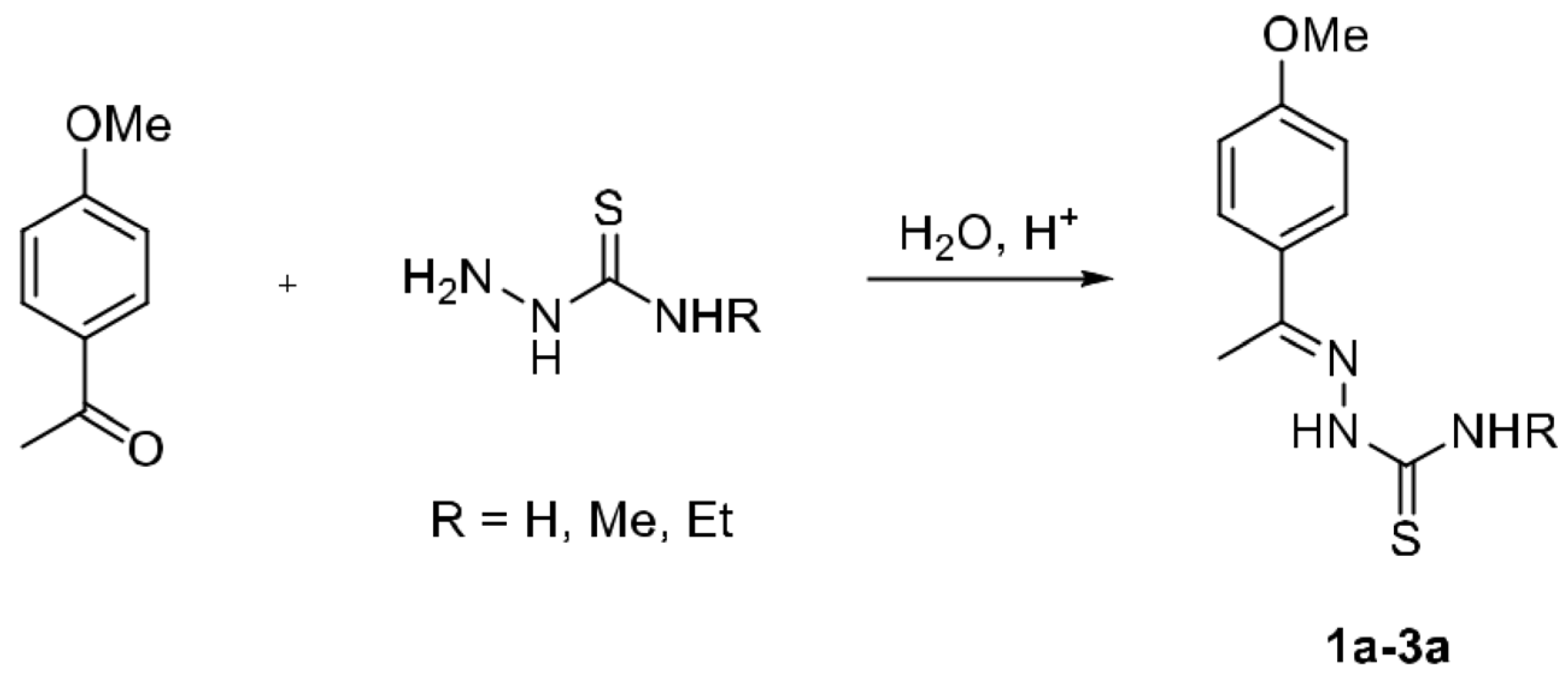
2.1. Ligands
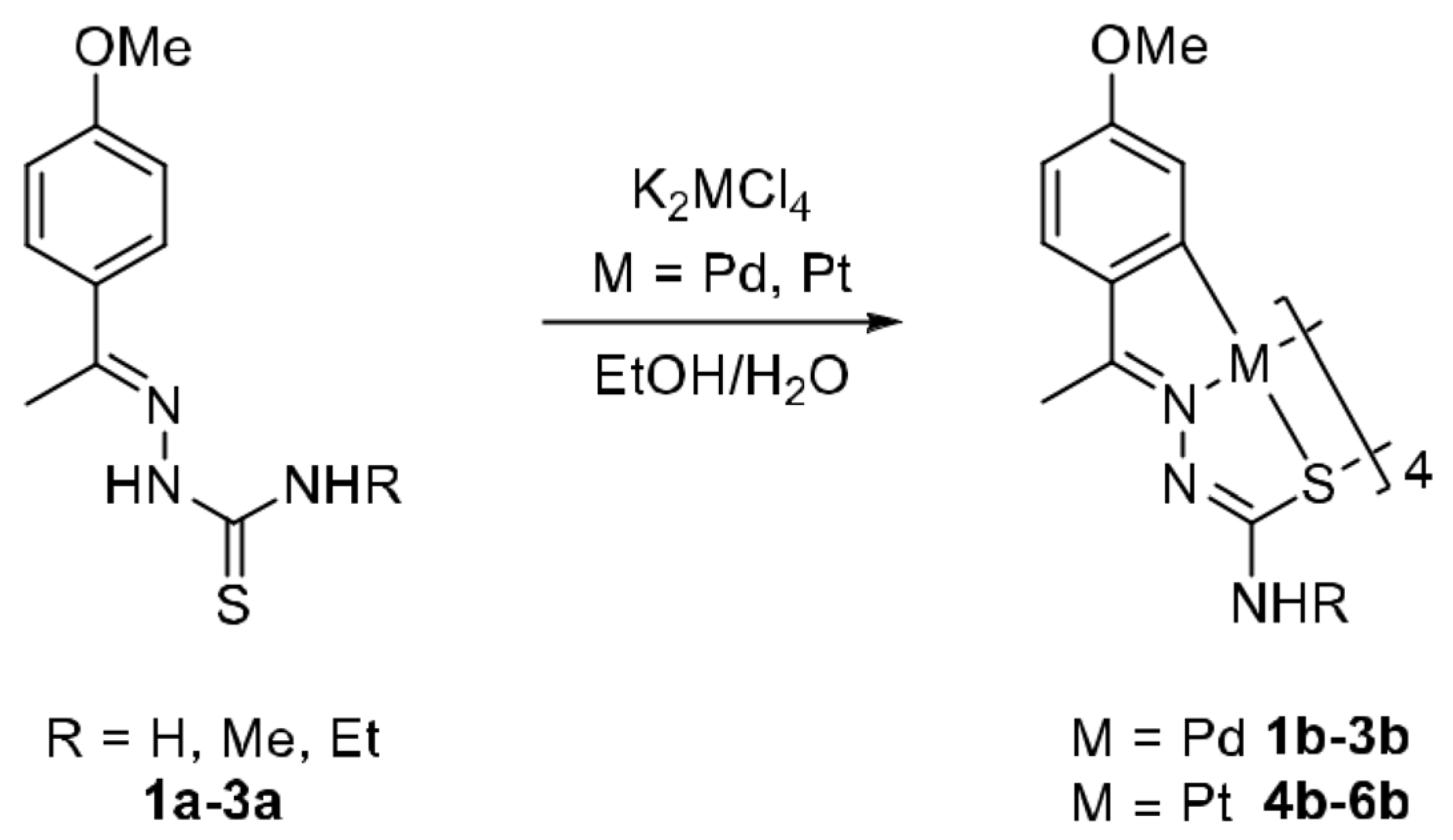
2.2. Cyclometallated Compounds
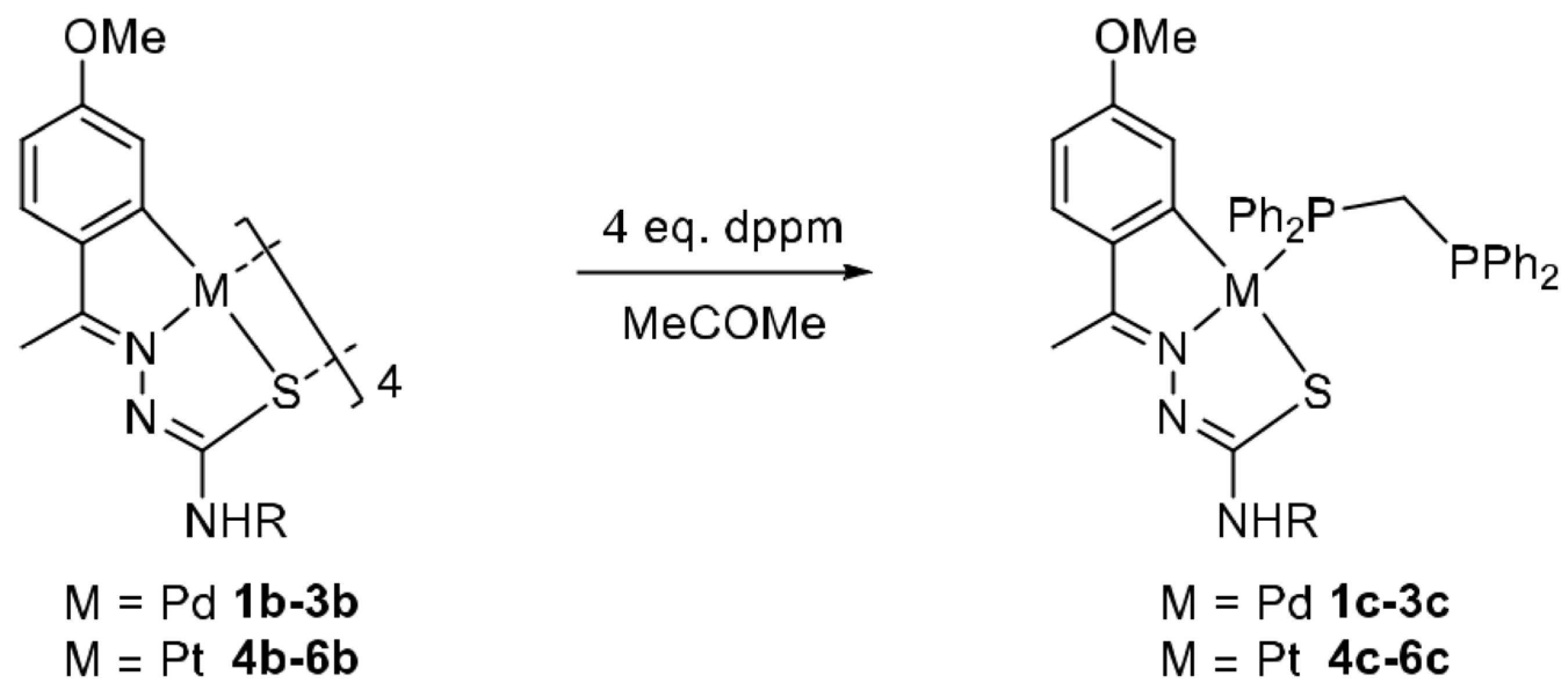
2.3. Reactivity with dppm
3. Results and Discussion
3.1. IR Spectroscopy
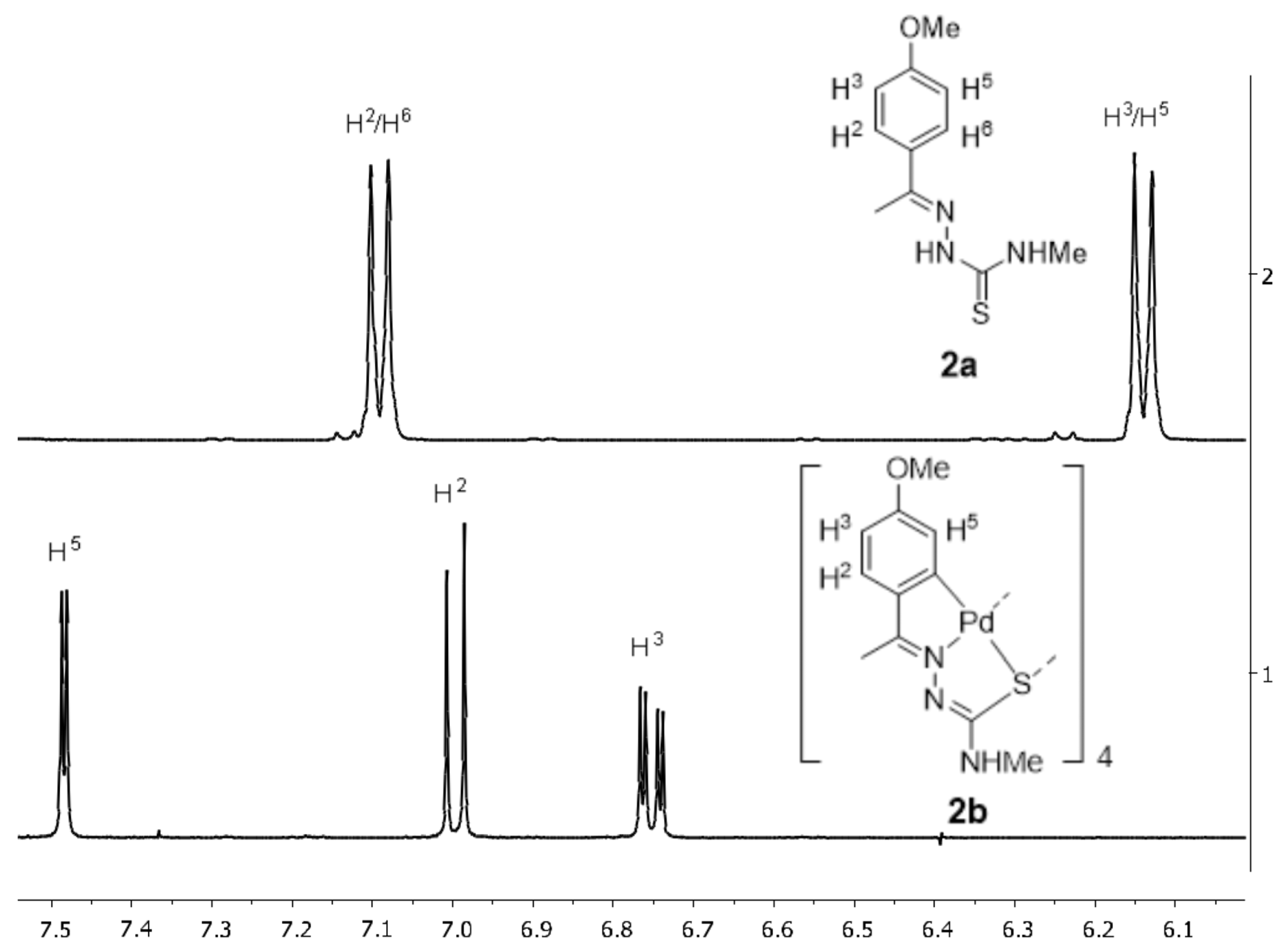
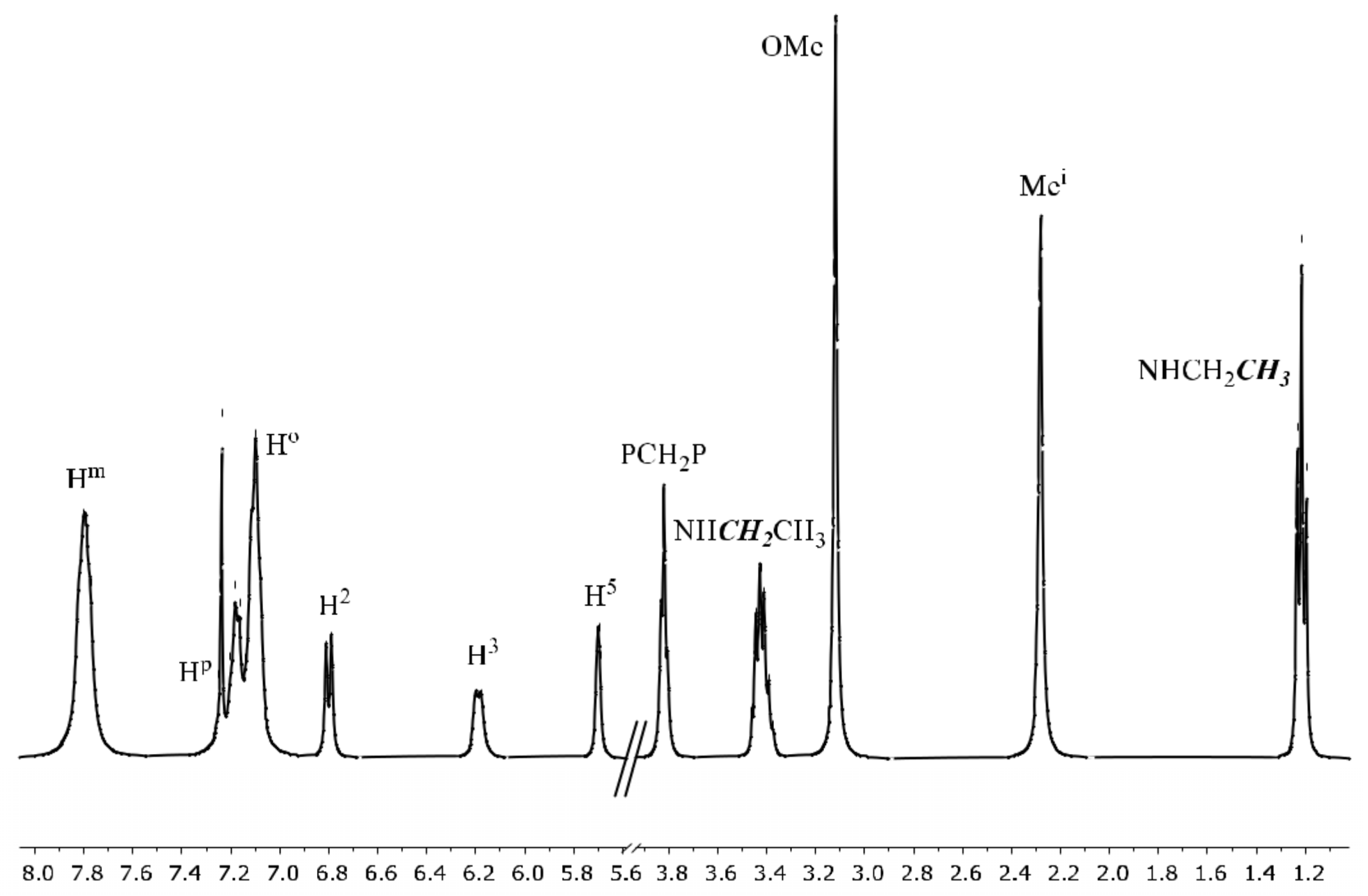
3.2. 1H NMR Spectroscopy
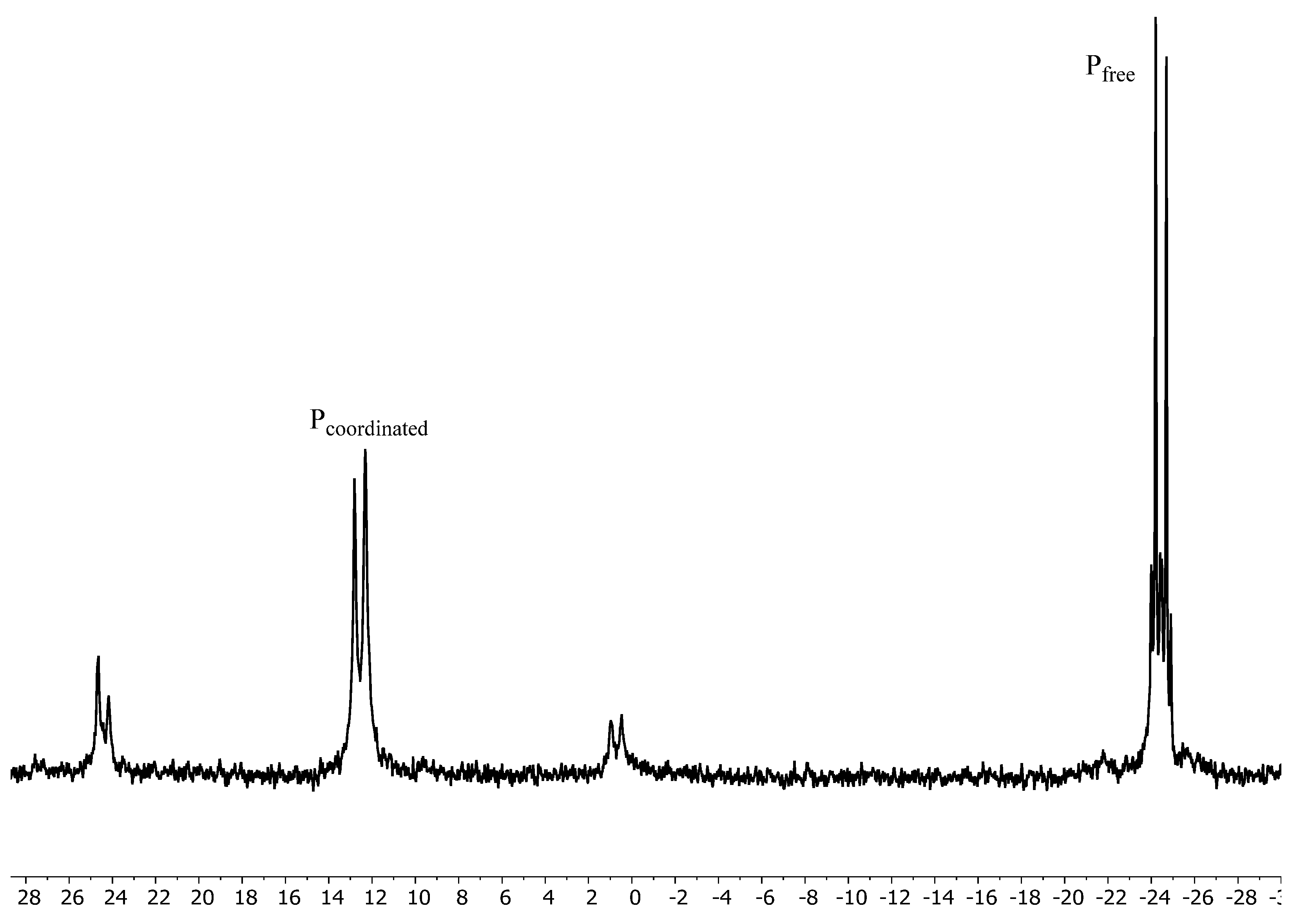
3.3. 31P-{1H} NMR spectroscopy
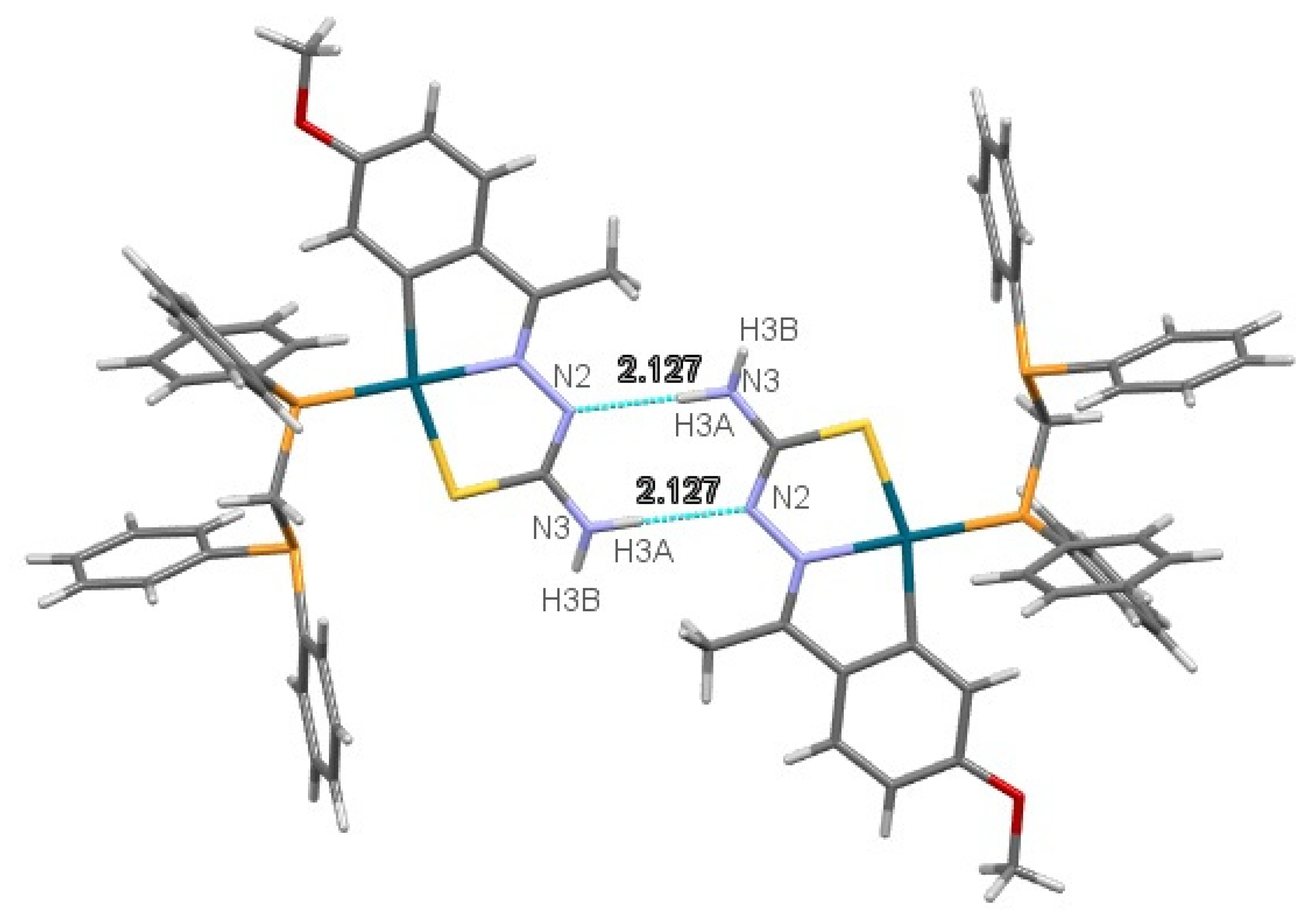
3.4. Single Crystal X-ray Diffraction
4. Conclusions
- Coordination to the metal center occurs in the thiol form of the thiosemicarbazone ligand, as shown by IR spectroscopy.
- 1H NMR spectroscopy confirms cyclometallation, with the thiosemicarbazone ligand as tridentate [C, N, S].
- The cyclometallated compounds show a tetranuclear structure, with two types of bonds between palladium and sulfur: Pd-Schelate and Pd-Sbridging.
- Reaction with dppm generates mononuclear compounds with one free phosphorus atom.
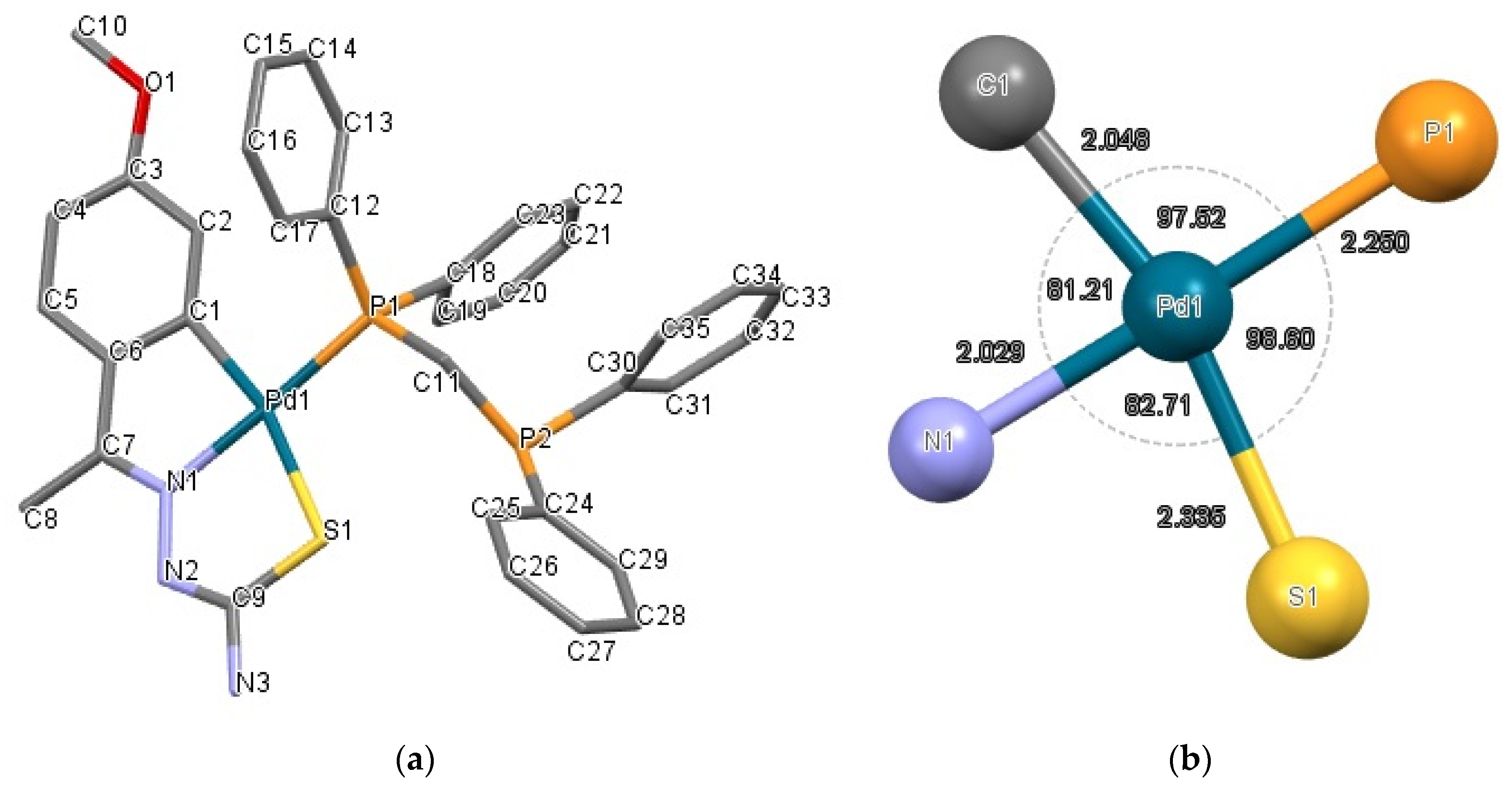
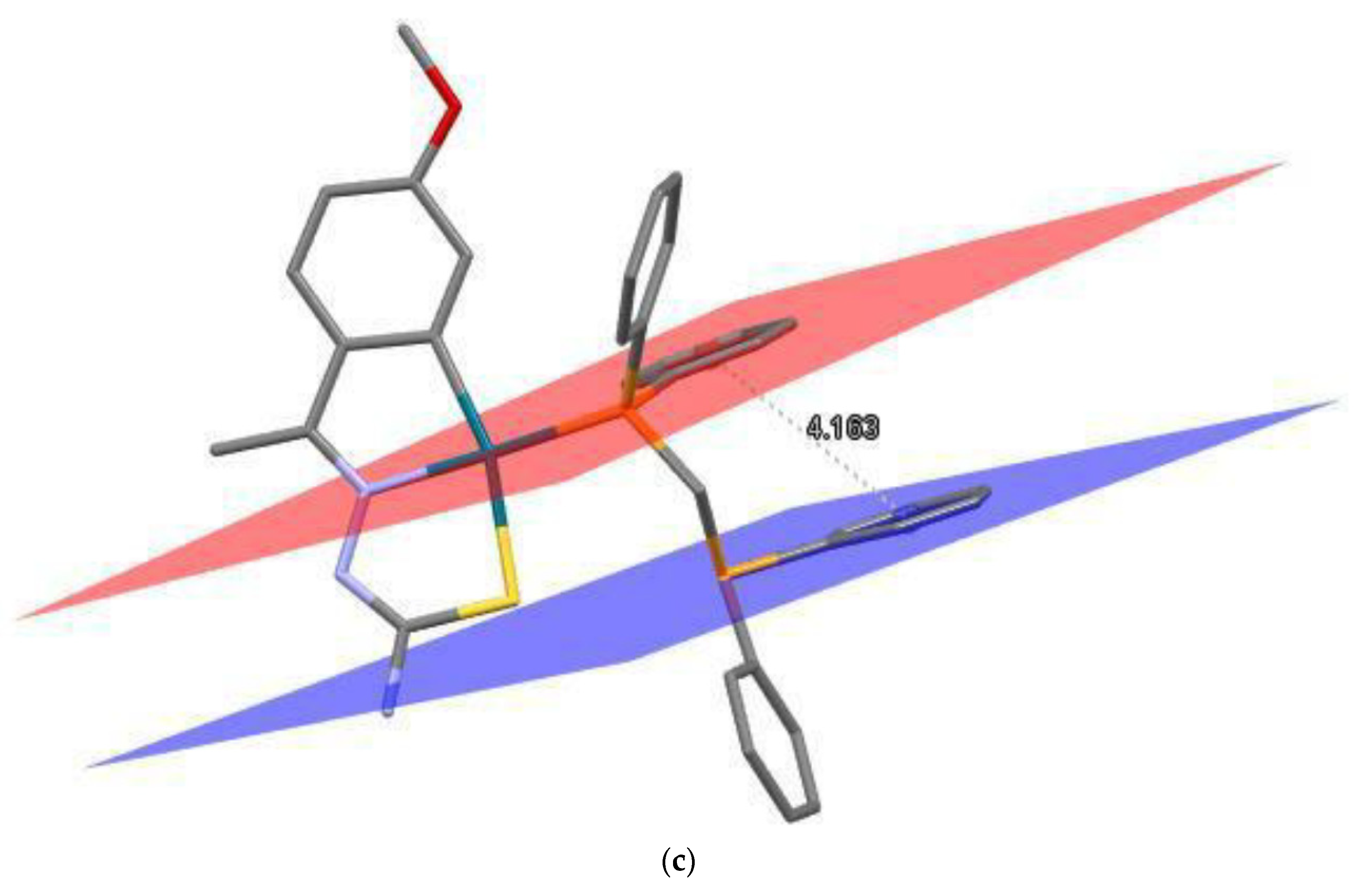
- Single crystal X-ray diffraction study of compound 1c shows the proposed structure, with the palladated thiosemicarbazone ligand and dppm as a monodentate ligand.
Funding
Conflicts of Interest
References
- Ramírez-Rave, S.; Morales-Morales, D.; Grévy, J.-M. Microwave assisted Suzuki-Miyaura and Mizoroki-Heck cross-couplings catalyzed by non-symmetric Pd(II) CNS pincers supported by iminophosphorane ligands. Inorg. Chim. Acta 2017, 462, 249–255. [Google Scholar] [CrossRef]
- Dharani, S.; Kalaiarasi, G.; Sindhuja, D.; Lynch, V.M.; Shankar, R.; Karvembu, R.; Prabhakaran, R. Tetranuclear Palladacycles of 3-Acetyl-7-methoxy-2H-chromen-2-one Derived Schiff Bases: Efficient Catalysts for Suzuki–Miyaura Coupling in an Aqueous Medium. Inorg. Chem. 2019, 58, 8045–8055. [Google Scholar] [CrossRef] [PubMed]
- López-Mosquera, C.; Grabulosa, A.; Rocamora, M.; Font-Bardia, M.; Muller, G. Cyclopalladated Compounds with Polyhalogenated Benzylphosphanes for the Mizoroki-Heck Reaction. Eur. J. Inorg. Chem. 2020, 2020, 2470–2484. [Google Scholar] [CrossRef]
- Zhang, D.; Yu, J. Fine Tuning of Chiral Bis(N-heterocyclic carbene) Palladium Catalysts for Asymmetric Suzuki–Miyaura Cross-Coupling Reactions: Exploring the Ligand Modification. Organometallics 2020, 39, 1269–1280. [Google Scholar] [CrossRef]
- Avila-Sorrosa, A.; Estudiante-Negrete, F.; Hernández-Ortega, S.; Toscano, R.A.; Morales-Morales, D. Buchwald–Hartwig C–N cross coupling reactions catalyzed by a pseudo-pincer Pd(II) compound. Inorg. Chim. Acta 2010, 363, 1262–1268. [Google Scholar] [CrossRef]
- Kostas, I.D.; Steele, B.R. Thiosemicarbazone Complexes of Transition Metals as Catalysts for Cross-Coupling Reactions. Catalysts 2020, 10, 1107. [Google Scholar] [CrossRef]
- Fong, T.T.-H.; Lok, C.-N.; Chung, C.Y.-S.; Fung, Y.-M.E.; Chow, P.-K.; Wan, P.-K.; Che, C.-M. Cyclometalated Palladium(II) N-Heterocyclic Carbene Complexes: Anticancer Agents for Potent In Vitro Cytotoxicity and In Vivo Tumor Growth Suppression. Angew. Chem. Int. Ed. 2016, 55, 11935–11939. [Google Scholar] [CrossRef] [PubMed]
- Tabrizi, L.; Zouchoune, B.; Zaiter, A. Experimental and theoretical investigation of cyclometallated platinum (ii) complex containing adamantanemethylcyanamide and 1,4-naphthoquinone derivative as ligands: Synthesis, characterization, interacting with guanine and cytotoxic activity. RSC Adv. 2019, 9, 287–300. [Google Scholar] [CrossRef] [PubMed]
- Özerkan, D.; Ertik, O.; Kaya, B.; Kuruca, S.E.; Yanardag, R.; Ülküseven, B. Novel palladium (II) complexes with tetradentate thiosemicarbazones. Synthesis, characterization, in vitro cytotoxicity and xanthine oxidase inhibition. Invest. New Drug 2019, 37, 1187–1197. [Google Scholar] [CrossRef] [PubMed]
- Yousef, T.A.; Abu El-Reash, G.M. Synthesis, and biological evaluation of complexes based on thiosemicarbazone ligand. J. Mol. Struct. 2020, 1201, 127180. [Google Scholar] [CrossRef]
- Pike, S.; Lord, R.; Kergreis, A. Influence of Ligand and Nuclearity on the Cytotoxicity of Cyclometallated C^N^C Platinum (II) Complexes. Chem. Eur. J. 2020, 26, 14938. [Google Scholar]
- Lucio-Martínez, F.; Adrio, L.A.; Polo-Ces, P.; Ortigueira, J.M.; Fernández, J.J.; Adams, H.; Pereira, M.T.; Vila, J.M. Palladacycle catalysis: An innovation to the Suzuki–Miyaura cross-coupling reaction. Dalton Trans. 2016, 45, 17598–17601. [Google Scholar] [CrossRef] [PubMed]
- Martínez, J.; Cabaleiro-Lago, E.M.; Ortigueira, J.M.; Pereira, M.T.; Frieiro, P.; Lucio, F.; Vila, J.M. Synthesis and reactivity of thiosemicarbazone palladacycles. Crystal structure analysis and theoretical calculations. Inorg. Chim. Acta 2016, 449, 20–30. [Google Scholar] [CrossRef]
- Lucio-Martínez, F.; Bermúdez, B.; Ortigueira, J.M.; Adams, H.; Fernández, A.; Pereira, M.T.; Vila, J.M. A Highly Effective Strategy for Encapsulating Potassium Cations in Small Crown Ether Rings on a Dinuclear Palladium Complex. Chem. Eur. J. 2017, 23, 6255–6258. [Google Scholar] [CrossRef] [PubMed]



| Ligand | R | Thiosemicarbazide (mg) | Ketone (mg) | Yield (%) |
|---|---|---|---|---|
| 1a | H | 250 | 412 | 90 |
| 2a | Me | 250 | 357 | 98 |
| 3a | Et | 250 | 315 | 88 |
| Compound | R | M | K2MCl4 (mg) | Thiosemicarbazone (mg) | Yield (%) |
|---|---|---|---|---|---|
| 1b | H | Pd | 200 | 164 | 71 |
| 2b | Me | Pd | 200 | 174 | 78 |
| 3b | Et | Pd | 200 | 185 | 86 |
| 4b | H | Pt | 150 | 80.7 | 85 |
| 5b | Me | Pt | 150 | 85.8 | 85 |
| 6b | Et | Pt | 150 | 90.8 | 86 |
| Compound | R | M | Metallacycle (mg) | dppm (mg) | Yield (%) |
|---|---|---|---|---|---|
| 1c | H | Pd | 35 | 41.0 | 60 |
| 2c | Me | Pd | 35 | 39.3 | 75 |
| 3c | Et | Pd | 35 | 37.8 | 72 |
| 4c | H | Pt | 35 | 32.3 | 64 |
| 5c | Me | Pt | 35 | 31.3 | 59 |
| 6c | Et | Pt | 35 | 30.2 | 61 |
| Compound | R | M | ν(N-H) | ν(C=S) |
|---|---|---|---|---|
| 1a | H | - | 3154/3243/3375 | 826 |
| 2a | Me | - | 3193/3366 | 836 |
| 3a | Et | - | 3201/3299 | 829 |
| 1b | H | Pd | 3159/3292 | - |
| 2b | Me | Pd | 3353 | - |
| 3b | Et | Pd | 3341 | - |
| 4b | H | Pt | 3215/3320 | - |
| 5b | Me | Pt | 3286 | - |
| 6b | Et | Pt | 3303 | - |
| Pd(1)-N(1) | 2.029(3) | S(1)-C(9) | 1.762(3) |
| Pd(1)-C(1) | 2.048(3) | N(1)-C(7) | 1.305(4) |
| Pd(1)-P(1) | 2.2504(8) | N(1)-N(2) | 1.379(4) |
| Pd(1)-S(1) | 2.3351(13) | N(2)-C(9) | 1.305(4) |
| N(1)-Pd(1)-C(1) | 81.22(12) | N(1)-Pd(1)-S(1) | 82.70(8) |
| N(1)-Pd(1)-P(1) | 177.18(8) | C(1)-Pd(1)-S(1) | 163.87(10) |
| C(1)-Pd(1)-P(1) | 97.52(10) | P(1)-Pd(1)-S(1) | 98.60(4) |
Publisher’s Note: MDPI stays neutral with regard to jurisdictional claims in published maps and institutional affiliations. |
© 2021 by the authors. Licensee MDPI, Basel, Switzerland. This article is an open access article distributed under the terms and conditions of the Creative Commons Attribution (CC BY) license (https://creativecommons.org/licenses/by/4.0/).
Share and Cite
Rúa-Sueiro, M.; Munin-Cruz, P.; Reigosa, F.; Vila, J.M.; Ortigueira, J.M. Synthesis and X-ray Diffraction Study of thiosemicarbazone Palladacycles with dppm. Proceedings 2020, 62, 13. https://doi.org/10.3390/proceedings2020062013
Rúa-Sueiro M, Munin-Cruz P, Reigosa F, Vila JM, Ortigueira JM. Synthesis and X-ray Diffraction Study of thiosemicarbazone Palladacycles with dppm. Proceedings. 2020; 62(1):13. https://doi.org/10.3390/proceedings2020062013
Chicago/Turabian StyleRúa-Sueiro, Marcos, Paula Munin-Cruz, Francisco Reigosa, José M. Vila, and Juan M. Ortigueira. 2020. "Synthesis and X-ray Diffraction Study of thiosemicarbazone Palladacycles with dppm" Proceedings 62, no. 1: 13. https://doi.org/10.3390/proceedings2020062013
APA StyleRúa-Sueiro, M., Munin-Cruz, P., Reigosa, F., Vila, J. M., & Ortigueira, J. M. (2020). Synthesis and X-ray Diffraction Study of thiosemicarbazone Palladacycles with dppm. Proceedings, 62(1), 13. https://doi.org/10.3390/proceedings2020062013