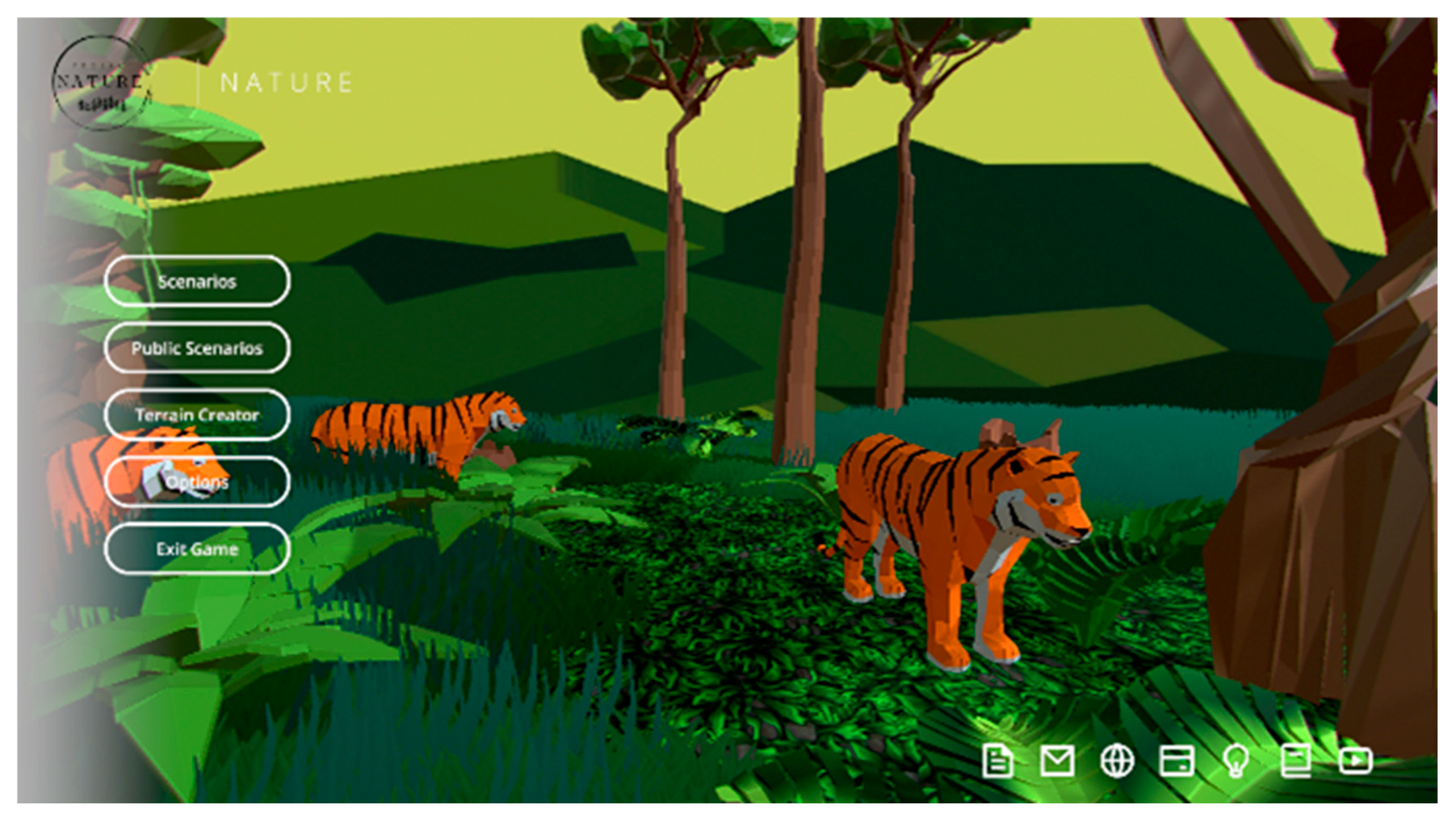


Using a Game to Educate About Sustainable Development
 , , ,
, , ,  ,
,  and
and 
Abstract
1. Introduction
1.1. Current Approaches for Education for a Sustainable Development
- Protection of water and the sea (preschool, primary).
- Protection of biodiversity: flora and fauna (preschool, primary).
- Sustainable nutrition (preschool, primary, first-grade secondary, second-grade secondary school).
- Waste management (preschool, primary, first-grade secondary school).
- Protection of biodiversity: ecosystem services (first-grade secondary, second-grade secondary school).
- Green economy: green jobs and green talent (secondary school).
- The sustainable city: pollution, land and waste consumption (second-grade secondary school).
- Adaptation to climate change: hydrogeological instability (second-grade secondary school).
1.2. Digital Approaches for Education
1.3. The NATURE Project Concept
- Educating students: Building theoretical knowledge and soft skills applicable to responsible natural resources management. Building their awareness of the importance of sustainable natural resources management for the well-being of communities and plant and animal species.
- Training instructors: Supporting the seamless integration of the proposed experiential learning design and digital learning games in existing instructional practices through reference material in diverse media.
- Modernizing higher education through digital technologies: Developing an open digital game developed specifically for learning purposes that promotes interactive exploration, fosters motivation in learning, promotes long-term student engagement, and helps students understand the link between certain actions and their effects on the environment.
1.4. The Scope of the Article
2. Materials and Methods
2.1. The NATURE Educational Game
- An active, game-based learning methodology for environmental education through exploration, collaboration, and experimentation.
- A digital serious game that challenges students to engage in scenarios related to responsible natural resource management inspired by real-life. The game should introduce clear learning objectives, interesting roles, and rich actions that students could undertake to design environmentally sustainable solutions. The game should provide real-time feedback on the consequences of their choices, thus developing awareness and knowledge on the effects of human activity to natural ecosystems.
- Educator support content in the form of learning activities, videos, and a reference guide that facilitates the integration of project outcomes into teaching practices.
- Clearly and precisely define learning objectives and student learning actions.
- Setup the environment of a scenario in a manner that supports learning objectives by precisely customizing the problem to meet certain educational needs. This could be achieved either by using existing material or by creating the layout of land formations, bodies of water, sources of minerals, habitats, residences and economic activity, industries, educational organizations, recreational areas, small businesses, malls, public services, and infrastructures.
- Monitor student progress.
- Expose students to different learning scenarios that should encourage them to think critically and entrepreneurially with respect to solutions that respect the environment.
2.2. Methods
- To what extent does the game-based learning environment increase student engagement and motivation in addressing environmental issues?
- In what ways does the game environment enhance students’ understanding of complex environmental concepts and their ability to apply theoretical knowledge in practical scenarios?
- How relevant is the game environment for teaching and learning about natural resource management among students?
- Reviving Porto: Porto, a vibrant city in Portugal, historically thrived on its industrial activities. In recent years, the city has faced challenges due to its limited green spaces and increasing air pollution. The heavy reliance on industrial activities has resulted in a decline in urban green areas, adversely impacting the environment and quality of life. The European Union has allocated significant funds for urban redevelopment with a focus on increasing green spaces and reducing pollution, aiming to transform Porto into a model of sustainable urban living. Porto’s current state is unsustainable, marked by poor air quality and a lack of green spaces amidst a growing industrial backdrop. The challenge is to revitalize the city, balancing industrial growth with environmental health and community well-being.
- Porto’s Energy Revolution: Porto faces energy sustainability challenges, including high energy demand and reliance on non-renewable sources. This scenario explores transitioning Porto to sustainable energy use, balancing economic growth and environmental protection. Porto’s growing energy needs, driven by urban expansion, require innovative solutions for sustainable energy production, distribution, and consumption. The city aims to adopt renewable energy sources, improve energy efficiency, and integrate smart city technologies.
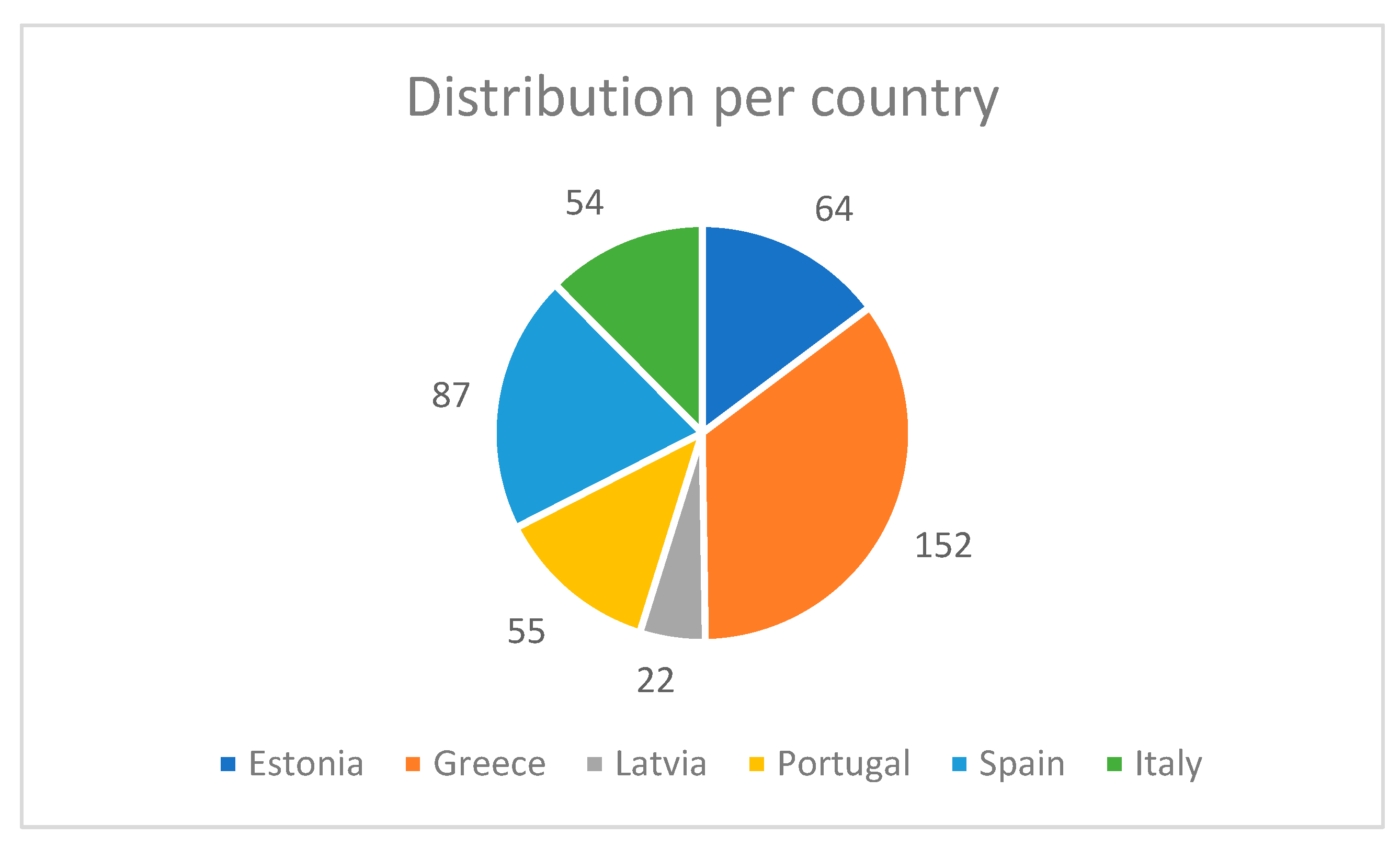
- Distribution per knowledge area
3. Results
- Usability and User Experience
- Obstructive—supportive
- complicated—easy
- inefficient—efficient
- confusing—clear
- boring—exciting
- not interesting—interesting
- conventional—inventive
- usual—leading edge
- Playability and User Engagement
- I was interested in the game’s story;
- I felt successful;
- I felt bored;
- I found it impressive;
- I forgot everything around me;
- I felt frustrated;
- I found it tiresome;
- I felt irritable;
- I felt skillful;
- I felt completely absorbed;
- I felt content;
- I felt challenged;
- I had to put a lot of effort into it;
- I felt good.
- Learning and Awareness Raising Effectiveness
- I learnt something related to natural resources management;
- The game represents well real life situations;
- The game improved my soft-skills on responsible natural resources management;
- The game promotes interactive exploration;
- The game fosters motivation in learning;
- The game helped me to understand the link between actions and effects on the environment.
- Qualitative comments
4. Discussion
4.1. User Experience and Educational Impact
4.2. Technical Performance and Usability
4.3. Alignment with Curriculum and Learning Objectives
4.4. Feedback Summary and Recommendations
- Addressing and resolving technical issues to ensure a stable and responsive gaming environment.
- Enriching the game’s educational content with a broader array of scenarios, each designed to highlight different aspects of environmental management.
- Improving the user interface and interaction design to make the game more intuitive and engaging.
- Optimize the game for varying levels of hardware performance, ensuring a consistent experience across different devices.
- Develop a comprehensive tutorial or introductory session to acquaint users with the game mechanics and objectives, facilitating a smoother entry into the game environment.
5. Conclusions
Author Contributions
Funding
Institutional Review Board Statement
Informed Consent Statement
Data Availability Statement
Conflicts of Interest
References
- United Nations. Sustainable Development. Available online: https://sdgs.un.org/goals (accessed on 13 March 2024).
- Sachs, J.; Schmidt-Traub, G.; Mazzucato, M.; Messner, D.; Nakicenovic, N.; Rockström, J. Six Transformations to achieve the Sustainable Development Goals. Nat. Sustain. 2019, 2, 805–814. [Google Scholar] [CrossRef] [Scilit]
- European Commission, 2050 Long-Term Strategy. Available online: https://climate.ec.europa.eu/eu-action/climate-strategies-targets/2050-long-term-strategy_en (accessed on 13 March 2024).
- Pineiro-Villaverde, G.; García-Álvarez, M. Sustainable Consumption and Production: Exploring the Links with Resources Productivity in the EU-28. Sustainability 2020, 12, 8760. [Google Scholar] [CrossRef] [Scilit]
- Anchieta, R.B. Educação Ambiental Através do Lúdico para o Público Infantil. Master’s Thesis, Faculdade de Belas Artes da Universidade do Porto, Porto, Portugal, 2009. [Google Scholar]
- UNESCO. Education for Sustainable Development for 2030 Toolbox. Available online: https://www.unesco.org/en/sustainable-development/education/toolbox (accessed on 13 March 2024).
- Angélico, M.J.; Rocha, A. Tecnologias de Informação (TI) na Educação. RISTI Rev. Ibérica De Sist. E Tecnol. Da Informação 2015, 16, 9–11. [Google Scholar]
- Alenezi, M. Digital Learning and Digital Institution in Higher Education. Educ. Sci. 2023, 13, 88. [Google Scholar] [CrossRef] [Scilit]
- Antonova, E.; Familyarskaya, L. Use of Digital Technologies in the Educational Environment of Higher Education. Open Educational E-Environment of Modern University. In Proceedings of the International Conference on New Pedagogical Approaches in STEAM Education, Kyiv, Ukraine, 26–27 September 2019. [Google Scholar] [CrossRef] [Scilit]
- Caeiro-Rodriguez, M.; Manso-Vazquez, M.; Mikic-Fonte, F.A.; Llamas-Nistal, M.; Fernandez-Iglesias, M.J.; Tsalapatas, H.; Heidmann, O.; De Carvalho, C.V.; Jesmin, T.; Terasmaa, J.; et al. Teaching Soft Skills in Engineering Education: An European Perspective. IEEE Access 2021, 9, 29222–29242. [Google Scholar]
- Medeiros, F.; Maia, N.; Cavalcante, C.; Rodrigues, M.; Cabral, J.; Ferreira, V. Promoção da educação ambiental através de jogos didáticos. In INNODOCT/14: Strategies for Education in a New Context; Editorial Universidad Politécnica de Valencia: Valencia, Spain, 2014; pp. 861–870. [Google Scholar]
- Costa, M.; Manso, A.; Patrício, J. Design of a Mobile Augmented Reality Platform with Game-Based Learning Purposes. Information 2020, 11, 127. [Google Scholar] [CrossRef] [Scilit]
- Videnovik, M.; Trajkovik, V.; Kiønig, L.; Vold, T. Increasing quality of learning experience using augmented reality educational games. Multimed. Tools Appl. 2020, 79, 23861–23885. [Google Scholar] [CrossRef] [Scilit]
- Vaz de Carvalho, C.; Durão, R.; Llamas-Nistal, M.; Rodriguez, C.M.; Heidmann, O.; Tsalapatas, H. Desenvolvimento de Competências Profissionais no Ensino Superior através de Aprendizagem Ativa e Jogos Sérios: O Caso Português. In Proceedings of the 14th Iberian Conference on Information Systems and Technologies (CISTI), Coimbra, Portugal, 19–22 June 2019. [Google Scholar]
- Coelho, A.; Vaz de Carvalho, C. Game-Based Learning, Gamification in Education and Serious Games. Computers 2022, 11, 36. [Google Scholar] [CrossRef] [Scilit]
- Zairi, I.; Dhiab, M.; Mzoughi, K.; Mrad, I.; Abdessalem, I.; Kraiem, S. Serious Game Design with medical students as a Learning Activity for Developing the 4Cs Skills: Communication, Collaboration, Creativity and Critical Thinking: A qualitative research. La Tunis. Médicale 2021, 99, 714–720. [Google Scholar]
- Zadeja, I.; Bushati, J. Gamification and serious games methodologies in education. In Proceedings of the Eleventh International Symposium GRID 2022, Ljubljana, Slovenia, 3–5 November 2022. [Google Scholar] [CrossRef] [Scilit]
- Carvalho, A.A.; Araújo, I.; Fonseca, A. Das Preferências de Jogo à Criação do Mobile Game Konnecting: Um estudo no ensino superior. RISTI Rev. Ibérica De Sist. E Tecnol. Da Informação 2015, 16, 30–45. [Google Scholar]
- Novo, C.; Zanchetta, C.; Goldmann, E.; Vaz de Carvalho, C. The Use of Gamification and Web-Based Apps for Sustainability Education. Sustainability 2024, 16, 3197. [Google Scholar] [CrossRef] [Scilit]
- Tran, T.; Ho, M.; Pham, T.; Nguyen, M.; Nguyen, K.; Vuong, T.; Nguyen, T.; Nguyen, T.; Nguyen, T.; Khuc, Q.; et al. How Digital Natives Learn and Thrive in the Digital Age: Evidence from an Emerging Economy. Sustainability 2020, 12, 3819. [Google Scholar] [CrossRef] [Scilit]
- Sarkar, N.; Ford, W.; Manzo, C. Engaging Digital Natives through Social Learning. J. Syst. Cybern. Inform. 2017, 15, 1–4. [Google Scholar]
- Mei, X.Y.; Aas, E.; Medgard, M. Teachers’ use of digital learning tool for teaching in higher education: Exploring teaching practice and sharing culture. J. Appl. Res. High. Educ. 2019, 11, 522–537. [Google Scholar] [CrossRef] [Scilit]
- Rodrigues, A.L. Dificuldades e Desafios na Integração das Tecnologias Digitais na Formação de Professores—Estudos de Caso em Portugal. Rev. Contrapontos 2018, 19, 354–373. [Google Scholar] [CrossRef] [Scilit]
- Neves, A. A Utilização de Jogos Digitais, como Estratégia de Motivação no Ensino das Ciências Naturais (Project Report); Escola Superior de Educação e Ciências Sociais, Politécnico de Leiria: Leiria, Portugal, 2020. [Google Scholar]
- Gonzálvez, E.; Kikot, T.; Fernandes, S.; Costa, G. Potencial da aprendizagem baseada-em-jogos: Um caso de estudo na Universidade do Algarve. RISTI Rev. Ibérica De Sist. E Tecnol. Da Informação 2015, 16, 17–29. [Google Scholar]
- Stöckert, A.; Bogner, F. Cognitive learning about waste management: How relevance and interest influence long-term knowledge. Educ. Sci. 2020, 10, 102. [Google Scholar] [CrossRef] [Scilit]
- Debrah, J.K.; Vidal, D.G.; Dinis, M.A.P. Raising Awareness on Solid Waste Management through Formal Education for Sustainability: A Developing Countries Evidence Review. Recycling 2021, 6, 6. [Google Scholar] [CrossRef] [Scilit]
- Mkhonto, B.; Mnguni, L. The Impact of a Rural School-Based Solid Waste Management Project on Learners’ Perceptions, Attitudes and Understanding of Recycling. Recycling 2021, 6, 71. [Google Scholar] [CrossRef] [Scilit]
- Tiplady, L.S.; Menter, H. Forest School for wellbeing: An environment in which young people can ‘take what they need’. J. Adventure Educ. Outdoor Learn. 2021, 21, 99–114. [Google Scholar] [CrossRef] [Scilit]
- Tiippana-Usvasalo, M.; Pajunen, N.; Maria, H. The role of education in promoting circular economy. Int. J. Sustain. Eng. 2023, 16, 92–103. [Google Scholar] [CrossRef] [Scilit]
- Hays, J.; Reinders, H. Sustainable learning and education: A curriculum for the future. Int. Rev. Educ. 2020, 66, 29–52. [Google Scholar] [CrossRef] [Scilit]
- Herodotou, C.; Ismail, N.; IBenavides Lahnstein, A.; Aristeidou, M.; Young, A.N.; Johnson, R.F.; Higgins, L.M.; Ghadiri Khanaposhtani, M.; Robinson, L.D.; Ballard, H.L. Young people in iNaturalist: A blended learning framework for biodiversity monitoring. Int. J. Sci. Educ. 2024, 14, 129–156. [Google Scholar] [CrossRef] [Scilit] [PubMed]


| Name | URL | Description |
|---|---|---|
| Mission possible: save the planet | https://www.cruzroja.es/juego_cambio_climatico/ (accessed on 29 October 2024) | Cruz Roja Juventud/Ministerio de Medioambiente: Players become ecological superheroes who fight against the uncontrolled emission of greenhouse gases into the atmosphere, overcoming various mini-games and quizzes. |
| Kingfisher | http://www.gipuzkoakour.eus/Martintxo/juego.asp?idioma=E (accessed on 29 October 2024) | Water consortium of Guipúzcoa: Game related to questions about water culture, personified by means of the Martin Fisherman bird. This kingfisher is the symbol of the new culture of water; there has been a great drought and now it is in danger. If you want to help Martintxo and his world, select the correct answer. |
| Avasturada Discovery Trail | https://avastusrada.ee/ (accessed on 29 October 2024) | Browser-based application that helps create interactive outdoor trails where players can follow marked interactive trails, answer questions, obtain information, do exercises, and study the surroundings. Target groups of Avastusrada are schoolchildren but also a general audience through the environmental education center’s network and schools. Avastusrada, as a location-based GPS adventure game, gives players the opportunity to use location-specific interactive content designed for all target audiences (based on age, education, interests, nationality etc.), offering a better learning experience. The player has to find the way from one trail point to another on an interactive map showing the players’ location for the educator in real-time. The task opens only if the player is in a predefined radius from the trail point. Avastusrada allows educators to integrate the subjects of natural sciences and other disciplines taught in schools through practical activities surrounded by the real environment, to help students learn through inquiry, and to enhance general competencies in sustainability. The Discovery Trail was specifically created for environmental education centers and schools with a focus on teaching environmental and sustainability issues. |
| End of the World Begins in Kurtna | https://seemik.tlu.ee/toolbox/ (accessed on 29 October 2024) | An educational role playing board game which shows the impact of economic activities on our natural environment. The game takes place in Kurtna Lake District, which is a part of the Alutaguse National Park located in the northeastern Estonia. The Kurtna Lake District is unique for its diverse landscapes and lake ecosystems. At the same time, this region is heavily affected by human activities—peat, sand and oil shale mining, and excessive groundwater intake, effecting the provision of drinking water to nearby towns. Because of the fact that lake levels have dropped, water chemistries and lake ecosystems have changed. The game uses these real-life problems in Kurtna Lake District as an example to illustrate both the positive and negative impact humans have on ecological balance. Each decision and action taken by the player affects the course of the game and determines if the in-game world is moving towards sustainable management or the end of the world. |
| Praia Ambiente | https://praiaambiente.pt/jogo-da-reciclagem/ (accessed on 29 October 2024) | Throughout the game, the player faces various types of tasks, from putting the garbage in the correct recycling bin—and, at the end of the level, finding out the total amount of recycled waste found on the beach—to answering questions about the use of waste and more sustainable consumption habits. Although no information was found on the application of this tool in the classroom context, the game provides added value for children, especially those at early-school levels. By allocating the rubbish in the correct recycling bin, the players will assimilate their knowledge and clear up any doubts about waste separation. It is a great way to introduce this subject to younger generations. |
| Mission 360 | https://missao360.com/en/mission-360/ (accessed on 29 October 2024) | An educational project aimed at promoting environmental awareness among children attending primary and preparatory schools. It is sponsored by CELPA, a Portuguese paper industry association, as part of its Social Responsibility actions. The game presents the story of an extra-terrestrial squirrel called Quico, who travels to Earth in order to stop Dr. Sillywaste, who plans to destroy the planet. The platform presents various games (online and on paper), educational resources, and circular news. Regarding technological tools, two online games are available: a recycling game, in which children help Quico to recycle the garbage by putting it in the correct recycling bin and answering questions about the waste collection process; and a match game, where players help Quico to find animals of the same species. In addition, downloadable and printable games are also available, which again cover topics such as forest protection, species awareness, and the circular economy. |
| Forester | https://mezotajs.lv/ (accessed on 29 October 2024) | Interactive game that allows players to become acquainted with the sustainable management of Latvia’s most important natural resource—forests. It reflects the real-life situations related to decision-making about forest management and explores the growth of trees, the diversity of living organisms, and the factors influencing them. It is intended for 8th–9th-grade school students and promotes sustainable forestry and the ecological, economic, and social importance of the forest. The engaging interactivity of this digital tool is ensured in such a way that the user not only chooses what content he wants to receive or what actions to perform, but the scenario is branched and can interact differently with each user, adapting to the needs and situation of a particular user. The user is an active receiver of information and multimedia content, who is able to influence the direction of the content. |
| Sciences | Computer Science | Engineering | Information Technology | Educational Sciences | Business Economics | Arts and Culture | Total | |
|---|---|---|---|---|---|---|---|---|
| Estonia | 2 | 7 | 9 | 33 | 2 | 11 | 0 | 64 |
| Greece | 1 | 0 | 144 | 0 | 7 | 0 | 0 | 152 |
| Italy | 0 | 0 | 1 | 0 | 1 | 52 | 0 | 54 |
| Latvia | 0 | 0 | 0 | 0 | 0 | 2 | 20 | 22 |
| Portugal | 2 | 0 | 52 | 0 | 0 | 1 | 0 | 55 |
| Spain | 3 | 0 | 1 | 0 | 82 | 1 | 0 | 87 |
| TOTAL | 8 | 7 | 207 | 33 | 92 | 67 | 20 | 434 |
| EE | GR | IT | LV | PT | ES | TOT | ||
|---|---|---|---|---|---|---|---|---|
| obstructive | 4.36 | 5.27 | 4.96 | 5.05 | 3.24 | 4.31 | 4.64 | supportive |
| complicated | 3.63 | 4.66 | 4.69 | 4.50 | 3.53 | 4.20 | 4.26 | easy |
| inefficient | 4.55 | 5.30 | 5.07 | 4.64 | 3.64 | 5.34 | 4.92 | efficient |
| confusing | 3.53 | 4.86 | 5.19 | 3.45 | 3.62 | 4.63 | 4.43 | clear |
| boring | 4.47 | 4.69 | 4.91 | 3.68 | 4.07 | 5.17 | 4.65 | exciting |
| not interesting | 4.92 | 5.26 | 5.48 | 4.41 | 3.95 | 5.66 | 5.11 | interesting |
| conventional | 4.28 | 5.03 | 4.54 | 4.45 | 3.71 | 5.09 | 4.67 | inventive |
| usual | 3.91 | 4.70 | 4.30 | 3.68 | 4.45 | 4.68 | 4.44 | leading edge |
| EE | GR | IT | LV | PT | ES | TOT | ||
|---|---|---|---|---|---|---|---|---|
| E1 | I was interested in the game’s story | 2.86 | 3.39 | 3.76 | 2.73 | 2.67 | 3.57 | 3.27 |
| E2 | I felt successful | 3.05 | 3.55 | 4.11 | 2.82 | 2.91 | 3.06 | 3.33 |
| E3 | I felt bored | 2.55 | 2.35 | 2.33 | 2.41 | 2.80 | 1.95 | 2.36 |
| E4 | I found it impressive | 2.88 | 3.49 | 3.28 | 3.14 | 2.91 | 3.21 | 3.23 |
| E5 | I forgot everything around me | 2.61 | 2.24 | 1.76 | 2.18 | 2.49 | 3.15 | 2.45 |
| E6 | I felt frustrated | 2.80 | 2.14 | 1.80 | 2.55 | 3.24 | 2.71 | 2.47 |
| E7 | I found it tiresome | 2.30 | 2.20 | 2.13 | 2.32 | 3.02 | 2.00 | 2.28 |
| E8 | I felt irritable | 2.44 | 1.99 | 1.65 | 1.77 | 3.02 | 2.32 | 2.20 |
| E9 | I felt skillful | 2.88 | 3.31 | 3.89 | 2.14 | 2.69 | 3.02 | 3.12 |
| E10 | I felt completely absorbed | 2.83 | 2.68 | 2.78 | 2.27 | 2.69 | 2.71 | 2.70 |
| E11 | I felt content | 3.06 | 3.28 | 3.54 | 2.86 | 2.80 | 3.57 | 3.26 |
| E12 | I felt challenged | 3.50 | 3.33 | 3.93 | 3.00 | 3.09 | 3.64 | 3.44 |
| E13 | I had to put a lot of effort into it | 3.13 | 2.68 | 3.46 | 2.68 | 3.11 | 3.24 | 3.01 |
| E14 | I felt good | 3.39 | 3.68 | 4.15 | 3.36 | 2.80 | 3.60 | 3.55 |
| EE | GR | IT | LV | PT | ES | TOT | ||
|---|---|---|---|---|---|---|---|---|
| E1 | I learnt something related to natural resources management | 3.36 | 4.01 | 4.22 | 3.41 | 2.53 | 3.72 | 3.67 |
| E2 | The game represents well real life situations | 3.41 | 3.64 | 4.13 | 3.14 | 3.11 | 3.84 | 3.61 |
| E3 | The game improved my soft-skills on responsible natural resources management | 3.03 | 3.63 | 4.04 | 2.91 | 2.49 | 3.49 | 3.38 |
| E4 | The game promotes interactive exploration | 3.52 | 3.95 | 4.24 | 3.45 | 2.91 | 4.20 | 3.82 |
| E5 | The game fosters motivation in learning | 3.47 | 3.85 | 4.07 | 3.14 | 2.76 | 4.17 | 3.71 |
| E6 | The game helped me to understand the link between actions and effects on the environment | 3.78 | 3.94 | 4.04 | 3.36 | 2.78 | 4.15 | 3.79 |
| What I Liked More in the Game Was… | |
|---|---|
| Environmental Focus and Education | Actual focus on having a sustainable environment and having it expressed and be resolved. The importance of the message it wants to teach the players. The idea of real-life scenarios is engaging and grows the interest and awareness about the responsible management of natural resources. The educational “character” of the game, which aims to raise user awareness of the idea of sustainability. Learning new things about nature. The relationship it establishes with the environment and sustainability. |
| Game Design and Interactivity | The design of the game and the sims feel-like exploring. Good style and graphics. The variety of things that can be implemented and tested through it. The realistic simulation of disaster scenarios in the game. The sheer amount of information that is available to the player. |
| Resource Management and Gameplay Mechanics | That everything you build affects the environment. The resource management and the mission of the game in general. The different types of farms and energy production types. The ability to create every possible scenario. The sense of accomplishment derived from making strategic decisions. |
| Creativity and Customization | The freedom to do as you wish. Customizability, etc. I liked most the fact that I could us my creative imagination and build a city from zero. That I had the freedom to explore. The opportunity to make a meaningful impact. |
| Game Experience and Engagement | It’s easy to understand and more optimized. The scenario options and their captivating and immersive storyline. The interactive exploration and the concept of resource management. The realistic graphics and engaging storyline. |
| Realism and Practical Application | The city-building aspect and the entrepreneur and economical management aspect of it. How close to the real world the narrative was. Making me feel like I’m actually learning about real stuff. The realistic display of an environmentally friendly city. |
| Challenges and Learning Opportunities | Having to figure out the problems. The variety of challenges that had, and the opportunity to create your own. How you learn and improve your skills in certain parts. The challenge it poses and the responses to the actions I was taking. |
| Accessibility and User-Friendliness | The game is enough complicated (in a good way). A user can do many things and has a big variety. It is easy and understandable to play it. The ease of the game; it is clear and easy to understand. A good educational game to use in a class. |
| The Game Would Be Better If … | |
|---|---|
| Tutorial and Guidance Enhancements: | Inclusion of tutorials for UI and gameplay understanding. More tips and explanations for actions and effects. Specific guides for building placement and resource management. |
| Performance and Optimization: | General improvements in game performance and speed. Better optimization for different types of hardware. Reduction of “invalid terrain” issues and increased buildable areas. |
| Interface and User Experience: | Improved UI for more comfortable navigation and interaction. Clearer indicators for resource ranges and effects. More intuitive controls, possibly with mouse interaction for building and navigating. |
| Accessibility and Language Options: | Addition of more languages and better translation quality. Enhanced accessibility features, including keyboard shortcuts and tool-tips. |
| Visual and Aesthetic Improvements: | Brighter night mode for better visibility. Enhanced graphics and animations for a more appealing look. More detailed icons and visual elements to convey information clearly. |
| Game Mechanics and Content: | Introduction of more varied tasks and goals. Better-defined terrain and building requirements. Inclusion of a wider variety of scenarios with clear objectives. |
| Resource Management and Economy: | More notifications and indicators for low resources and unhappy residents. An economy system that allows for selling resources or getting loans. Better explanation of the production and consumption rates of different resources. |
| Technical Issues and Bugs: | Resolution of existing bugs that affect gameplay. Improved feedback on why certain actions can’t be taken (e.g., why a building can’t be placed). Fixes for terrain manipulation and clipping issues. |
| Educational Content and Environmental Focus: | More information on environmental impact and sustainability. Incorporation of real-life ecological challenges and resource management. |
| Multiplayer and Community Features: | Possibility for cooperative gameplay or scenario sharing among players. Community-driven content creation and sharing capabilities. |
| Storyline and Engagement: | Development of a more engaging and coherent storyline. Enhanced storytelling elements to keep players invested in the gameplay. |
| Functional Improvements: | More streamlined building processes and management tasks. A more responsive and faster camera movement system. Simplified game mechanics for a more focused gameplay experience. |
| If I Could Add a Scenario, It Would Be… | |
|---|---|
| Environmental and Ecological Challenges: | Natural disaster management and prevention (e.g., tsunamis, earthquakes). Climate-specific scenarios like deserts, polar regions, and aquatic environments. Biodiversity conservation and the impact of entertainment and leisure on ecosystems. |
| Urban and Rural Planning: | Urban centers with high-density populations and limited resources. Rural settings focusing on agriculture and resource management. Transitioning industrial cities to clean energy. Building up cities from scratch or after catastrophic events. |
| Educational and Tutorial Content: | Introductory stages teaching problem-solving with tools. Scenarios with specific educational purposes, such as learning about sustainable practices. |
| Historical and Temporal Settings: | Scenarios set in different eras, like the industrial revolution or post-war development. Reconstruction of ancient cities with historical accuracy. Futuristic settings exploring advanced technology and sustainability. |
| Geographical and Topographical Diversity: | Scenarios set in real cities where players attempt improvements. Island and archipelago management with a focus on marine resources. Mountainous regions, forests, and specific countries or regions like the Iberian Peninsula or Siberia. |
| Economic and Resource Management: | Overpopulated cities with scarce resources and economic challenges. Scenarios focusing on specific industries, like fishing or renewable energy sectors. |
| Space and Extraterrestrial Environments: | Colonizing and managing habitats on other planets, like Mars. Addressing space pollution and its impact on environments. |
| Societal and Cultural Aspects: | Reconstruction and improvement of known local communities. Management of a multicultural or multinational company with eco-friendly goals. |
| Simulated Real-world Applications: | Scenarios that mimic current environmental issues like global warming. Cities facing immediate issues like pollution, with goals to implement green solutions. |
| Adventure and Exploration: | Remote or extreme locations where survival and adaptation are key. Exploration of uncharted territories or preservation of endangered species. |
| Collaborative and Multiplayer Scenarios: | Cooperative gameplay where players manage different aspects of a city or ecosystem. Scenarios where players can interact, communicate, and assist each other’s developments. |
| Miscellaneous and Creative Scenarios: | Unique and creative setups like managing a ski resort or dealing with pandemics. Pop culture references or scenarios from films or series to engage younger audiences. |
| Guideline Questions | Results |
|---|---|
| Relevance Objective: discover if NATURE is relevant for the teaching and learning of natural resource management.
| The NATURE game has successfully demonstrated its relevance as an engaging and educational tool within the classroom, garnering positive feedback from students who find it a refreshing alternative to conventional educational methods. Through immersive and interactive gameplay, students are able to apply theoretical knowledge in a practical setting, enhancing their understanding and retention of environmental management concepts. While the game excites students in a structured classroom context, its appeal diminishes as an extracurricular activity, highlighting its optimal use as an integral part of the learning process rather than an optional homework task. The effectiveness of the NATURE game in imparting real-life, problem-solving skills is evident, with students navigating complex environmental scenarios that demand critical thinking and strategic resource allocation. The game’s ability to simulate impactful environmental consequences helps students appreciate the real-world relevance of their decisions, fostering a sense of responsibility and a deeper understanding of sustainability. Despite the game’s strengths, the pace of learning and engagement varies among students, necessitating adequate time for exploration and adaptation to different learning styles, particularly in complex scenarios. Tailoring the game to align with specific learning objectives and integrating it into the curriculum can maximize its educational potential, although this requires careful planning and support. The interactive nature of the game encourages active participation and fosters key competencies in natural resource management and environmental sustainability. By offering scenarios that reflect local and global ecosystems, the game provides a diverse and enriching learning experience, broadening students’ perspectives on environmental challenges. Feedback suggests a demand for enhanced mechanisms within the game that allow for instructor feedback and student evaluation, which could further personalize and reinforce the learning experience. The adaptability of the NATURE game to different educational contexts, coupled with its capacity to simulate complex environmental systems, positions it as a valuable resource in environmental education. The NATURE game stands out for its unique approach to learning, combining fun, engagement, and educational rigor. While its integration into existing curricula presents challenges, its benefits—ranging from enhanced problem-solving skills to a comprehensive understanding of environmental management—are significant. As the game continues to evolve, its potential to shape informed and responsible environmental stewards is immense, marking a significant step forward in educational technology. |
| Acceptance Objective: discover if NATURE is engaging and easy to adopt by teachers and students.
| The NATURE game emerges as a promising educational tool, intertwining entertainment with significant learning outcomes. Teachers and students alike have acknowledged its potential to redefine conventional teaching methodologies, favoring its interactive and immersive approach. The initial orientation session proves crucial, laying the foundation for successful engagement and mitigating potential barriers such as technical difficulties or the game’s inherent complexity. Students’ feedback underscores a genuine interest and enjoyment in the game’s experiential learning environment, suggesting that a more detailed introduction could further augment their comprehension and satisfaction. Technical issues, such as lagging and interface responsiveness, detract from the overall experience, indicating a need for ongoing technical refinement to enhance usability and engagement. Support resources, including an in-game encyclopedia and tutorial videos, provide essential aid, facilitating the integration of the NATURE game into diverse educational contexts. These tools, alongside the game’s capacity to simulate real-world environmental and cultural management challenges, underscore its value as a multifaceted learning platform. The development of additional, context-specific scenarios is recommended to deepen engagement and relevance, particularly in fields like culture management and sustainable resource utilization. While the game’s fundamental mechanics are well-received, enabling swift acclimatization to its environment, the true measure of its effectiveness lies in students’ ability to apply analytical and critical thinking to complex, interdisciplinary issues. The variability in familiarization times points to the necessity of accommodating diverse learner profiles, ensuring that all students can fully leverage the game’s educational potential. |
| Quality Objective: discover if NATURE’s quality is good enough to be used in higher education settings.
| The NATURE game stands as a distinctive educational tool that merges the thrill of gaming with the depth of academic learning, particularly in the field of environmental management and urban planning. Participants have lauded the game for its rich, buildable environments and the autonomy it affords, enabling a sense of creativity and ownership over their virtual spaces. The game’s sandbox nature not only fosters individual exploration and innovation but also promotes collaborative learning, as students are keen to share insights and strategies with peers, enhancing the communal learning experience. Educational merits of the game are profound, especially in illustrating complex concepts like biodiversity and the ramifications of human activities on ecosystems. Its design and mechanics are admirably intuitive, bolstering students’ engagement and facilitating an immersive learning journey. The game’s visuals and interactivity are standout features, enriching the educational content with a dynamic and visually captivating interface. However, feedback indicates a variability in user engagement, with calls for structured tutorials or introductory sessions to align players’ understanding of game functionalities with educational goals. Addressing this, alongside enhancing the game’s responsiveness, could optimize user experience and educational outcomes. Adjustable difficulty levels are recommended to cater to diverse learner profiles, ensuring sustained engagement and progressively deepening the educational impact. This adaptability would allow students of varying proficiency levels to find challenge and growth within the game, fostering a nuanced understanding of environmental management principles. The game’s adaptability to higher education contexts and its potential to elucidate critical environmental themes through gamification techniques highlight its relevance and applicability. By incrementally increasing the complexity and depth of scenarios, NATURE can stimulate advanced cognitive skills like strategic planning and critical thinking, essential for future environmental stewards and planners. |
| Value Objective: find out if there is something specific about the technology of NATURE that users would like to recognize.
| The NATURE game delivers an innovative, hands-on, and experiential learning platform, particularly within the realms of business and cultural management projects. By immersing students in real-world scenarios, NATURE facilitates an active understanding and engagement with environmental challenges, providing a deeper and more nuanced comprehension than traditional educational tools. Through its interactive gameplay, NATURE encourages students to navigate and address environmental issues by making informed decisions, fostering a sense of responsibility and accountability. The integration of diverse stakeholders within the game, such as municipalities, financial institutions, and local communities, enriches the learning experience, offering insights into the interconnectedness of various societal elements and their collective impact on environmental management. Adopting an interdisciplinary approach, NATURE blends elements from ecology, urban planning, and community engagement, providing a comprehensive understanding of environmental issues. This strategy not only broadens students’ perspectives but also enhances their critical thinking and problem-solving abilities, essential skills for future environmental stewards. Moreover, NATURE promotes collaboration and networking among students, an essential feature that fosters a community-centric approach to learning and problem-solving. Whether in a classroom setting or through remote collaboration, the game encourages shared experiences and collective efforts in addressing environmental challenges. The game distinguishes itself by offering a platform for experiential learning, allowing students to engage with and explore complex environmental topics directly. Through realistic simulations and scenarios, students are empowered to make decisions, experiment with solutions, and witness the outcomes, thereby gaining a profound understanding of the intricacies of environmental management. Furthermore, NATURE serves as a versatile educational tool, adaptable to various teaching and learning contexts, and capable of complementing traditional educational resources. It engages students dynamically and practically, enhancing their ability to contribute effectively to environmental conservation and sustainable practices. In conclusion, NATURE represents a significant advancement in environmental education, characterized by its interactive design, interdisciplinary content, and emphasis on experiential learning. By offering a comprehensive and engaging educational experience, NATURE equips students with the knowledge, skills, and perspectives necessary to navigate and address the environmental challenges of the contemporary world, fostering a generation of informed, responsible, and proactive environmental citizens. |
| Effectiveness Objective: check if NATURE can be effective to support environmental education.
| Beyond mere academic reinforcement, NATURE acts as a catalyst for behavioral transformation, promoting personal growth and environmental consciousness. Participants, through active involvement in environmental management simulations, experience a sense of empowerment, evolving into informed and responsible advocates for sustainability. This dynamic interaction with the game combats passive learning, providing a richer, more nuanced educational experience and reshaping learners’ worldviews. A significant aspect of NATURE’s appeal lies in its accessibility and ease of use, which contribute to demystifying technology within educational contexts. The game’s simplicity encourages broader adoption among educators, facilitating the integration of advanced technology into teaching strategies and curbing technological illiteracy. Consequently, NATURE not only advances educational methodologies but also fosters technological proficiency among both teachers and students. Behavioral changes induced by the game underscore its effectiveness in enhancing environmental awareness and fostering a proactive stance on sustainability issues. By encouraging critical reflection on the consequences of their actions within the game, participants develop robust problem-solving abilities, directly applicable to real-world environmental challenges. This aligns with broader educational goals, supporting educators in nurturing more sustainable mindsets and practices among students. In summarizing NATURE’s educational contributions, it is clear that the game’s unique blend of hands-on experience, community engagement, and interdisciplinary learning distinguishes it as a superior educational tool. It transcends conventional learning paradigms, offering a holistic approach to environmental management education. Through its multifaceted gameplay, NATURE not only enhances the learning process but also significantly develops essential human capabilities, fostering a more engaging, practical, and comprehensive educational journey. |
| New possible additional scenarios If you could create a new scenario, which one would you suggest? | In this proposed scenario, students engage in a project to transform a dilapidated urban area into a vibrant community space while focusing on sustainable energy practices. They must plan and implement the use of independent energy resources like solar panels and wind turbines to power street lights, community centers, and art installations. The students analyze the impact of their energy choices on the local environment and community well-being, dealing with challenges such as budget constraints, public opinion, and logistical hurdles. The goal is to create a sustainable model that can be replicated in other urban revitalization projects, highlighting the balance between development and environmental preservation. In this other proposed scenario, students are tasked with organizing a local agricultural fair that promotes sustainability and environmental awareness. They need to employ independent energy sources to power various aspects of the event, including lighting, music, and food stalls, ensuring that the fair’s carbon footprint is minimized. Students evaluate the effectiveness of different energy solutions in a rural setting, considering factors like energy reliability, weather conditions, and the availability of local resources. They also engage with local farmers and vendors to incorporate sustainable practices throughout the event, providing a platform for education and community engagement around environmental issues and sustainable agriculture. A scenario using the temperature variables and their effects and consequences to study and investigate specific environmental issues occurring in the big cities. A scenario using the independent energy resources (e.g., local and portable energy generators and their effects and consequences) to study and investigate specific environmental issues occurring in open-air festivals or culture events in abandoned places. |
| Aspect | NATURE Project | Other Approaches |
|---|---|---|
| Learning Method | Game-based learning, simulation of real-world scenarios | Traditional lectures, project-based learning |
| Student Engagement | High, through interactive and immersive gameplay | Moderate, passive learning |
| Skill Development | Focus on critical thinking, problem-solving, collaboration | Primarily knowledge-based learning |
| Feedback Mechanism | Immediate feedback on decisions within the game | Delayed feedback through assignments |
| Practical Application | Simulated hands-on application of theoretical knowledge | Limited real-world application opportunities |
| Flexibility | Customizable scenarios based on educational needs | Often limited to fixed curricula |
Disclaimer/Publisher’s Note: The statements, opinions and data contained in all publications are solely those of the individual author(s) and contributor(s) and not of MDPI and/or the editor(s). MDPI and/or the editor(s) disclaim responsibility for any injury to people or property resulting from any ideas, methods, instructions or products referred to in the content. |
© 2024 by the authors. Licensee MDPI, Basel, Switzerland. This article is an open access article distributed under the terms and conditions of the Creative Commons Attribution (CC BY) license (https://creativecommons.org/licenses/by/4.0/).
Share and Cite
Senka, G.; Tramonti, M.; Dochshanov, A.M.; Jesmin, T.; Terasmaa, J.; Tsalapatas, H.; Heidmann, O.; Caeiro-Rodriguez, M.; Vaz de Carvalho, C. Using a Game to Educate About Sustainable Development. Multimodal Technol. Interact. 2024, 8, 96. https://doi.org/10.3390/mti8110096
Senka G, Tramonti M, Dochshanov AM, Jesmin T, Terasmaa J, Tsalapatas H, Heidmann O, Caeiro-Rodriguez M, Vaz de Carvalho C. Using a Game to Educate About Sustainable Development. Multimodal Technologies and Interaction. 2024; 8(11):96. https://doi.org/10.3390/mti8110096
Chicago/Turabian StyleSenka, Gita, Michela Tramonti, Alden Meirzhanovich Dochshanov, Triinu Jesmin, Jaanus Terasmaa, Hariklia Tsalapatas, Olivier Heidmann, Manuel Caeiro-Rodriguez, and Carlos Vaz de Carvalho. 2024. "Using a Game to Educate About Sustainable Development" Multimodal Technologies and Interaction 8, no. 11: 96. https://doi.org/10.3390/mti8110096
APA StyleSenka, G., Tramonti, M., Dochshanov, A. M., Jesmin, T., Terasmaa, J., Tsalapatas, H., Heidmann, O., Caeiro-Rodriguez, M., & Vaz de Carvalho, C. (2024). Using a Game to Educate About Sustainable Development. Multimodal Technologies and Interaction, 8(11), 96. https://doi.org/10.3390/mti8110096