Article

Beyond the Archive: Designing a Digital Showroom for Exploring the Living Heritage of Nakhon Si Thammarat Brocade


by
Supaporn Chai-Arayalert
1,*,
Ketsaraporn Suttapong
2,
Supattra Puttinaovarat
1,
Nattaporn Thongsri
1 and
Jariya Seksan
1
1
Faculty of Science and Industrial Technology, Prince of Songkla University, Surat Thani Campus, Surat Thani 84000, Thailand
2
Faculty of Liberal Arts and Management Sciences, Prince of Songkla University, Surat Thani Campus, Surat Thani 84000, Thailand
*
Author to whom correspondence should be addressed.
Multimodal Technol. Interact. 2026, 10(9), 91; https://doi.org/10.3390/mti10090091
Submission received: 7 July 2026 / Revised: 24 August 2026 / Accepted: 27 August 2026 / Published: 30 August 2026

Abstract

Handwoven textiles constitute a form of intangible craft heritage whose cultural value resides not only in finished artifacts but also in the embodied skills, motif knowledge, practitioner narratives, and community-based meanings through which they are produced and transmitted. However, many digital heritage platforms remain oriented toward visual presentation, product cataloguing, and archival access, offering limited support for communicating the interpretive, practice-based, and relational dimensions of craft knowledge. Addressing this gap, this study designed, developed, and evaluated a four-room digital showroom for Nakhon Si Thammarat Brocade, a traditional brocade textile of southern Thailand. Guided by Design Science Research methodology and heritage interpretation theory, the digital showroom was conceptualized as a cultural communication interface rather than as an online product display. Knowledge elicitation with master weavers and a user-needs survey informed the development of four connected spaces: the Historical Room, Aesthetic Room, Livelihood and Craft Value Room, and Learning-by-Doing Room. Together, these rooms organize user engagement through a progressive interpretive pathway, moving from cultural orientation and motif understanding to artisan-value recognition and guided creative participation. An end-user evaluation with 100 participants showed positive perceptions across functionality and usability (M = 4.13, SD = 0.72), content structure and organization (M = 4.06, SD = 0.79), cultural content quality (M = 4.34, SD = 0.73), and interactive learning-by-doing experience (M = 4.17, SD = 0.81). Users particularly valued the culturally grounded content, practitioner-centered narratives, and opportunities to apply cultural knowledge through virtual design activities. The findings suggest that a practitioner-informed and theoretically grounded digital showroom can extend digital heritage practice beyond passive product representation by supporting contextualized, interpretive, and participatory engagement with intangible craft heritage.

1. Introduction

Digital technologies have increasingly reshaped how cultural products and traditional crafts are presented, interpreted, and experienced beyond the boundaries of physical exhibition spaces [1,2]. However, many digital presentations of craft heritage remain primarily visual, emphasizing visual access to artifacts or products while providing limited support for the interpretation of cultural meaning, craftsmanship, artisan knowledge, and community identity [3]. This limitation is particularly significant in the context of intangible cultural heritage, where the value of craft products cannot be understood through visual appreciation alone but must be situated within the practices, narratives, techniques, and symbolic systems through which they are produced and transmitted [4,5]. A digital showroom therefore offers an approach for transforming static product displays into contextualized and interactive cultural experiences. By integrating product visualization, motif exploration, customization, storytelling, and artisan narratives, digital showrooms can function not merely as presentation spaces but as cultural communication interfaces that connect heritage knowledge, community identity, creative design, and contemporary users.
This issue is particularly salient in the handwoven textile heritage of southern Thailand, where cultural products embody distinctive historical, aesthetic, and community-based identities [6]. Nakhon Si Thammarat Brocade represents an important case because much of its production knowledge remains practice-based and dependent on experienced practitioners [2]. As opportunities for intergenerational transmission decline [7], digital approaches are needed not only to document textile artifacts but also to communicate their cultural contexts, craft processes, meanings, and relationships to practitioner knowledge.
Many existing digital heritage platforms and online craft showcases remain primarily display-oriented, emphasizing the storage, cataloguing, and visual presentation of cultural products rather than the structured communication of the knowledge, practices, and meanings embedded in them [3,8]. Although such platforms can improve access to heritage materials, they often provide limited support for users to understand the living, practice-based, and interpretive dimensions of intangible cultural heritage. Recent studies have therefore called for digital heritage systems to move beyond passive access toward more active, experiential, and meaningful forms of engagement [9]. However, limited operational guidance exists on how craft knowledge can be articulated, organized, and represented within a digital showroom in ways that support both cultural interpretation and user engagement [10]. This gap between the recognized need for contextualized digital heritage experiences and the lack of design frameworks for transforming craft products into meaningful interactive showroom environments defines the problem addressed in this study.
To address this gap, this study employs Design Science Research (DSR) methodology [11] to design, develop, and evaluate a four-room digital showroom for Nakhon Si Thammarat Brocade. Heritage interpretation is adopted as the primary design lens for selecting, organizing, and presenting cultural content within a progressive interpretive environment. The showroom is intended to move beyond static product presentation by supporting contextualized, interpretive, and participatory engagement with textile heritage.
The first objective is to design and develop a four-room digital showroom that transforms Nakhon Si Thammarat Brocade from static product display into a contextualized, interpretive, and interactive cultural experience guided by heritage interpretation principles. The second objective is to evaluate user perceptions of the showroom across four dimensions: functionality and usability, content structure and organization, cultural content quality, and interactive learning-by-doing experience. The study contributes to digital heritage and intangible cultural heritage research in two ways. First, it reconceptualizes the digital showroom as a cultural communication and learning interface, rather than merely a space for online product presentation. Second, it proposes a transferable four-room showroom design model that integrates cultural storytelling, motif interpretation, artisan knowledge, and interactive design practice to support more meaningful engagement with craft heritage.
RQ1: How can heritage interpretation principles be operationalized in the design of a digital showroom for intangible craft heritage? RQ2: How do users perceive the resulting digital showroom in terms of functionality and usability, content structure and organization, cultural content quality, and interactive learning-by-doing experience?
The remainder of this paper is organized as follows. Section 2 reviews the literature on intangible cultural heritage, digital showroom, and digital heritage engagement to establish the theoretical foundation and identify the research gap. Section 3 explains the Design Science Research methodology. Section 4 presents the platform development process and describes how the four-room digital showroom is structured to support heritage interpretation. Section 5 reports the end-user evaluation findings. Section 6 discusses the results, theoretical contributions, practical implications, limitations, and conclusions.

2. Literature Review

2.1. Intangible Cultural Heritage and the Epistemic Challenge of Craft Knowledge

The safeguarding of intangible cultural heritage (ICH) concerns the continuity of living practices, knowledge systems, and skilled performances through which communities enact, negotiate, and transmit cultural identity [4,5]. Although policy frameworks for ICH have broadened attention beyond the conservation of material objects, traditional craftsmanship continues to raise a distinctive epistemic challenge: much of its knowledge is tacit, embodied, and practice-based. The concept of tacit knowledge helps explain why craft expertise often relies on memory, physical movement, hands-on judgment, and situated decision-making rather than on fully verbalized or textual forms [12,13].
This tacit dimension is not simply a practical obstacle to documentation; it is a structural characteristic of craft knowledge itself. Craft expertise is typically acquired through observation, imitation, repetition, and guided participation within apprenticeship relationships. It is therefore sustained through intergenerational experiential engagement rather than through propositional instruction alone [7,14]. When such transmission channels weaken due to urbanization, declining apprentice participation, or the aging of practitioners, documentation alone is unlikely to compensate for the loss of situated and embodied forms of knowledge [15].
Textile heritage occupies a particularly complex position within this challenge. Although woven textiles are tangible artifacts, the knowledge required to produce them involves an integrated system of material preparation, loom configuration, pattern memorization, bodily rhythm, sensory calibration, and symbolic interpretation [3]. These components are mutually dependent and difficult to separate into discrete units of information. In the case of Nakhon Si Thammarat Brocade, or Phaa Yok, this complexity is especially pronounced. The pattern-lifting process requires the synchronization of bodily movement with the cognitive memory of intricate motif sequences. Master weavers often describe this competence as felt through repeated practice rather than as knowledge that can be fully explained through verbal instruction. This bodily and cognitive embeddedness creates a demanding threshold for any attempt to externalize, represent, or communicate brocade knowledge through digital media.
Prior digital preservation initiatives have often privileged the visible and static dimensions of textile heritage. Many platforms document motifs, color systems, object typologies, and visual aesthetics but provide more limited support for communicating how craft knowledge is enacted, learned, and reproduced in practice [15]. This tendency reflects a persistent conflation of preservation with documentation. Recent studies on southern Thai textiles challenge this assumption by arguing that object-centered records may overlook the relational, narrative, and embodied dimensions of community-based craft knowledge, and therefore calls for more participatory and practitioner-centered approaches to digital heritage engagement [8]. For Nakhon Si Thammarat Brocade, this critique suggests that effective digital safeguarding requires more than the accumulation of visual records or the use of more sophisticated media. It requires a design premise that treats tacit craft expertise, artisan narratives, motif meanings, and practice-based knowledge as central elements of a digital showroom, rather than as supplementary background to an object archive.
Thus, the key challenge is not simply how to digitize textile artifacts, but how to design a digital showroom that can communicate the embodied, relational, and interpretive knowledge through which craft heritage remains meaningful.

2.2. Heritage Interpretation as a Cultural Communication Framework

Heritage interpretation provides an important conceptual foundation for digital heritage design because it shifts attention from the presentation of heritage objects to the communication of cultural meaning. Rather than treating heritage as a set of facts or objects to be displayed, interpretation emphasizes how users encounter, understand, and relate to the values, narratives, practices, and identities embedded in heritage materials [16,17]. This perspective is particularly relevant to intangible cultural heritage, where cultural significance is not located only in the visible artifact but also in the knowledge systems, practices, memories, and social relationships through which the artifact is produced and sustained.
A central concern of heritage interpretation is the communication of significance. In craft heritage contexts, this means that digital environments need to explain not only what a product, motif, material, or technique is but also why it matters culturally [18]. A textile motif, for example, may be interpreted through its symbolic meaning, historical use, aesthetic logic, production process, and relationship to artisan knowledge. Similarly, the cultural value of a woven product can be understood through the relationship between material form, embodied skill, maker identity, community memory, and local tradition. From this perspective, interpretation provides a way to move beyond object description toward contextualized cultural understanding.
In digital heritage environments, interpretive principles can be translated into narrative, visual, interactive, and participatory forms of communication. Digital storytelling can situate cultural products within broader social and historical contexts, while motif explanation and process visualization can support understanding of symbolic, aesthetic, and technical knowledge [1,19,20]. Practitioner and first-person narratives can further connect heritage objects to lived experience, occupational identity, and community memory [21]. Interactive functions may extend this engagement by enabling users to explore or apply cultural knowledge rather than passively consume information [22,23].
When applied to digital showroom design, heritage interpretation can therefore function as both a cultural communication framework and a design rationale for user experience. It offers guidance for selecting, sequencing, visualizing, and connecting cultural content so that users can move from visual recognition toward deeper cultural understanding and participatory engagement. This is especially important for craft-based intangible cultural heritage, where cultural products cannot be separated from the practices, narratives, and social relationships that give them meaning. Accordingly, this study adopts heritage interpretation as the primary design lens for developing a four-room digital showroom for Nakhon Si Thammarat Brocade.

2.3. Conceptual Model of Heritage Interpretation Based on Digital Showroom Design

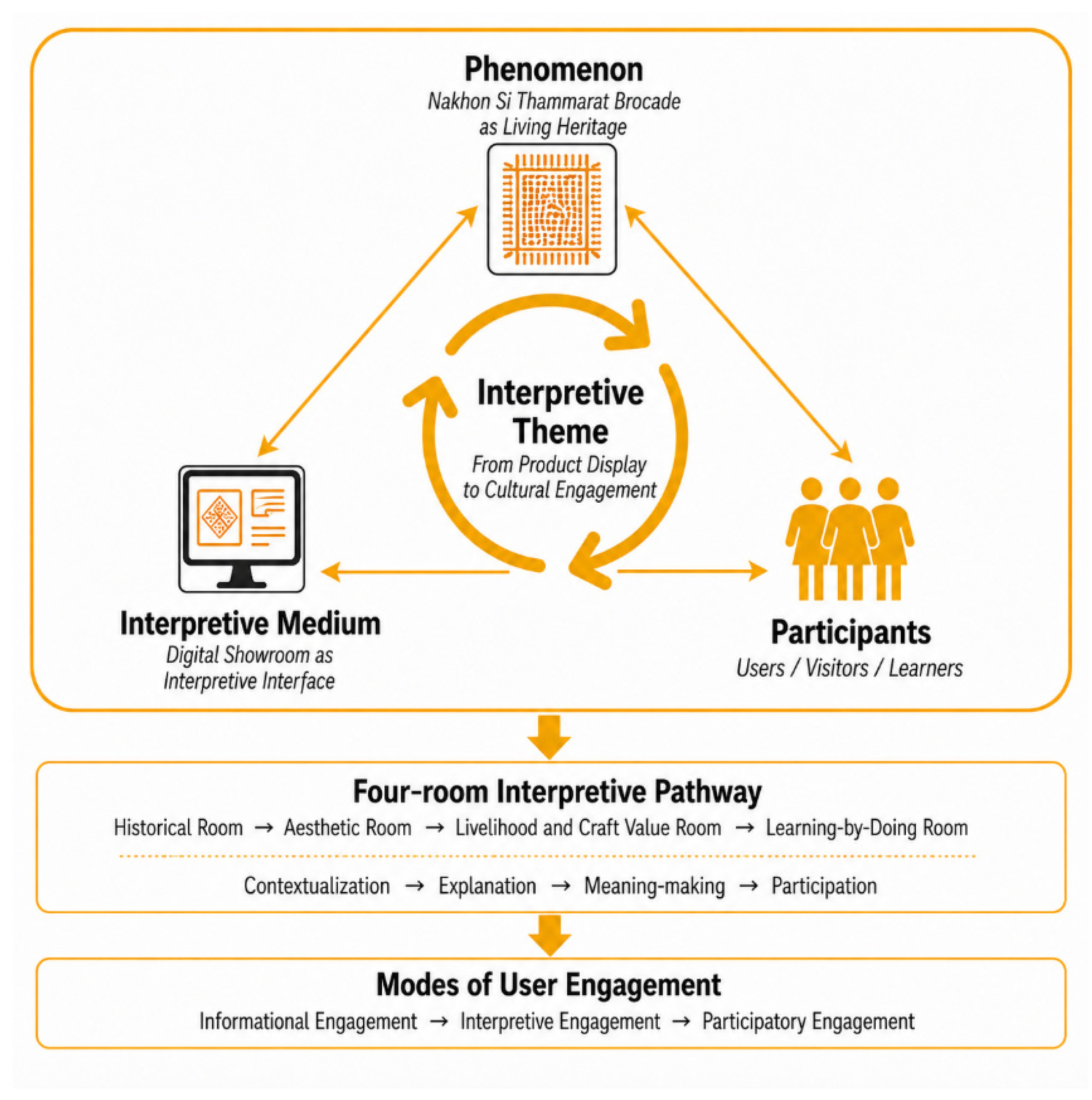
Building on Ludwig’s interpretive model [24] and heritage interpretation principles [17], the conceptual model translates heritage interpretation into a progressive pathway comprising four interpretive functions: contextualization, explanation, meaning-making, and guided participation (as shown in Figure 1). These functions provide the conceptual basis for the four-room architecture developed in Section 4.2. Rather than treating the rooms as isolated content categories, the model positions them as connected stages through which users move from initial cultural orientation toward increasingly interpretive and participatory forms of engagement.
In this study, the heritage phenomenon is Nakhon Si Thammarat Brocade, understood not merely as a textile product but as a living heritage system embedded in motif symbolism, embodied weaving knowledge, artisan experience, livelihood value, community memory, and cultural continuity. The participants are non-specialist users who encounter the brocade tradition through the digital showroom. The interpretive medium is the four-room digital showroom, which mediates the relationship between users and heritage content through narrative, visualization, practitioner voices, motif explanation, process representation, and guided design interaction. The central interpretive theme is that Nakhon Si Thammarat Brocade is a living cultural practice sustained through skilled making, symbolic knowledge, artisan identity, and community-based transmission.
The conceptual model translates this interpretive relationship into a progressive showroom structure. The Historical Room contextualizes the brocade tradition; the Aesthetic Room explains technical, visual, and symbolic knowledge; the Livelihood and Craft Value Room connects textile products to artisan experience and community value; and the Learning-by-Doing Room extends interpretation into guided participatory application. Together, these rooms operationalize interpretation as a movement from cultural orientation to explanation, to meaning-making, and finally to participation.
Accordingly, the four-room showroom is structured as an interpretive pathway rather than a set of isolated content categories or product displays. This progression corresponds to three design-based modes of user engagement: informational engagement, interpretive engagement, and participatory engagement. These modes are not standardized measurement levels, but design-based categories derived from the intended interpretive progression of the showroom. They indicate the primary form of interaction supported by each room and provide the conceptual basis for organizing the digital showroom as a cultural communication interface for intangible craft heritage.
Existing digital heritage research provides several relevant but differently focused approaches. Wimalasuriya et al. [16] proposed a conceptual framework for on-site digital heritage interpretation, emphasizing the selection and design of digital techniques that are appropriate to the heritage context and support the communication of heritage significance and values to visitors. Mason and Vavoula [18] presented a broader framework for digital cultural heritage design practice that incorporates multiple forms of heritage content and user engagement. Shim et al. [1] emphasized digital storytelling, heritage values, and communication within virtual heritage environments, while Chai-Arayalert et al. [2] focused on co-learning and participatory design in handicraft contexts. These studies demonstrate the value of storytelling, visualization, practitioner-related knowledge, and interaction, but they do not organize these elements around the same staged interpretive structure proposed in this study. Accordingly, the contribution of the four-room model does not lie in introducing entirely new digital techniques. Rather, it provides a practitioner-informed application of heritage interpretation that organizes established techniques into a progressive pathway from cultural contextualization to technical and symbolic explanation, to practitioner-centered meaning-making, and finally to guided participation. This structure provides explicit design guidance for connecting heritage objects, craft processes, practitioner knowledge, cultural values, and participatory application within a single digital showroom for intangible craft heritage.

3. Research Methodology

3.1. Research Design

This study adopted Design Science Research (DSR) as its methodological framework [11]. The research process comprised three linked phases: problem identification, artifact design, and artifact evaluation. In the problem-identification phase, a user-needs survey and interviews with master weavers were conducted to identify cultural content requirements, user expectations, and interpretive needs. In the artifact-design phase, these findings informed the development of a four-room digital showroom. The conceptual model presented in Section 2.3 guided the artifact-design phase by translating heritage interpretation principles into the four-room digital showroom structure and its three modes of user engagement. Heritage interpretation was used as the primary design lens to guide the selection, sequencing, visualization, and interaction of cultural content. In the artifact-evaluation phase, end users assessed the completed showroom environment to examine perceived quality and identify areas for refinement.

3.2. Research Context

This study focuses on Nakhon Si Thammarat Brocade, a southern Thai textile tradition. It was purposively selected because it integrates historical symbolism, complex weaving techniques, distinctive motif systems, and strong regional identity. At the same time, it faces significant challenges in intergenerational knowledge transmission due to an aging practitioner population, declining engagement among younger generations, and limited digital resources for cultural interpretation and public engagement [6,25]. Grounding the technological artifact in a specific cultural setting aligns with the DSR paradigm, ensuring that the digital showroom addresses authentic heritage communication and engagement challenges while informing design principles transferable to analogous craft-heritage contexts [26].

3.3. Participants and Sampling

Purposive sampling was employed across all phases of the study. During requirements gathering, fifty prospective users completed a user-needs survey. This initial cohort was independent of the final evaluation group, with no overlapping participants, thereby reducing potential response bias. Participants had varying familiarity with southern Thai textiles and generally limited experience with digital heritage platforms, making them suitable for identifying baseline user expectations, content-accessibility needs, and preferred forms of digital engagement.
To ground the digital showroom in authentic practitioner knowledge, fourteen master weavers were purposively recruited from the active Nakhon Si Thammarat Brocade weaving community. Participants were selected based on their experience and knowledge of traditional weaving techniques, motif systems, local textile history, cultural meanings, and the transmission of weaving knowledge. These criteria were used to identify practitioners able to provide culturally grounded knowledge relevant to the interpretation and design of the digital showroom. The master weavers served as the primary qualitative source for understanding brocade heritage as a living system of skill, symbolism, memory, livelihood, and community identity.
For artifact evaluation, a separate cohort of 100 end users was recruited using purposive sampling. Eligible participants were non-specialist users with a general interest in Thai cultural heritage and without specialist knowledge of Nakhon Si Thammarat Brocade. Data collection was conducted in both onsite and online settings. In the onsite setting, participants accessed the digital showroom using available internet-enabled devices, whereas online participants accessed the same system remotely using their own devices. The same digital showroom and evaluation procedure were used in both settings. The evaluation cohort was independent of the 50 participants involved in the earlier user-needs survey.

3.4. Research Instruments

Three instruments supported the DSR process. First, a structured questionnaire collected quantitative user requirements regarding content expectations, interface preferences, cultural information needs, and desired forms of interaction within a digital showroom.
Second, semi-structured interviews were conducted with the 14 master weavers using an interview guide developed in alignment with heritage interpretation principles. The semi-structured format enabled the researchers to address a common set of topics while allowing practitioners to elaborate on their experiences and cultural knowledge. Interview topics included historical background, motif meanings, weaving techniques and processes, material preparation, artisan identity, livelihood value, cultural transmission, and appropriate ways of presenting brocade heritage to contemporary audiences.
Third, user perceptions of the developed digital showroom were assessed using a questionnaire developed with reference to the Museum Experience Scale (MES) and Multimedia Guide Scale (MMGS) proposed by [27,28]. Items related to usability, navigation, learnability, interaction quality, engagement, and perceived learning experience were adapted to the Nakhon Si Thammarat Brocade digital-showroom context, while additional study-specific items were developed to assess content organization, cultural accuracy, local textile identity, practitioner narratives, motif meanings, livelihood and craft value, and interactive textile-design activities.
The final questionnaire comprised 38 items across four dimensions: functionality and usability (13 items), content structure and organization (6 items), cultural content quality (9 items), and interactive learning-by-doing experience (10 items). All items were rated on a five-point Likert scale. The questionnaire was reviewed by three experts in educational technology, information systems, and cultural preservation for content relevance, clarity, and contextual appropriateness. It was subsequently pilot-tested with 10 participants, and minor wording revisions were made before the main evaluation. Because the questionnaire combined adapted concepts with newly developed items rather than directly translating a complete standardized instrument, formal back-translation was not conducted.

3.5. Data Analysis

Qualitative data from the master weavers were analyzed using systematic content analysis [29]. The analysis involved identifying recurring statements and concepts concerning brocade history, motifs, weaving knowledge, artisan experience, cultural value, and craft transmission, and then grouping related content into broader thematic domains. Four domains were identified: (1) historical context, (2) aesthetic and technical knowledge, (3) livelihood and craft value, and (4) practice-oriented engagement.
These thematic domains were subsequently translated into design requirements using heritage interpretation principles. Historical-context findings generated requirements for cultural orientation, historical narratives, and motif symbolism, leading to the Historical Room. Aesthetic and technical findings generated requirements for explaining materials, tools, weaving processes, visual structures, and motif meanings, leading to the Aesthetic Room. Livelihood and craft-value findings generated requirements for practitioner narratives, occupational identity, community value, and cultural transmission, leading to the Livelihood and Craft Value Room. Practice-oriented findings generated requirements for guided application of cultural knowledge through motif, color, and product-design activities, leading to the Learning-by-Doing Room.
Heritage interpretation principles were then applied to translate these thematic domains into showroom design functions. Historical themes informed contextual orientation and cultural background content. Aesthetic and technical themes informed motif explanation, visual interpretation, process representation, and the organization of textile knowledge. Livelihood and craft-value themes supported the representation of artisan narratives, occupational identity, community value, and cultural continuity. Practice-oriented themes informed the design of interactive learning-by-doing activities that allowed users to explore and apply cultural knowledge through virtual design practice.
Quantitative survey data were analyzed using frequency, percentage, mean, and standard deviation [29]. For each participant, a dimension score was calculated as the arithmetic mean of all items assigned to that dimension: functionality and usability (13 items), content structure and organization (6 items), cultural content quality (9 items), and interactive learning-by-doing experience (10 items). The mean and standard deviation of these dimension scores were then used to summarize users’ perceptions of the digital showroom. Internal consistency was assessed separately for each dimension using Cronbach’s alpha. Cronbach’s alpha coefficients were 0.934 for functionality and usability, 0.851 for content structure and organization, 0.949 for cultural content quality, and 0.934 for interactive learning-by-doing experience, indicating acceptable to good internal consistency across the four dimensions.

4. System Design and Development

4.1. System Overview

Following the conceptual model presented in Section 2.3, the digital showroom was developed as an interpretive medium for communicating Nakhon Si Thammarat Brocade to non-specialist users. The system was designed to move beyond passive product presentation by integrating cultural context, craft knowledge, practitioner perspectives, and interactive functions within a coherent digital environment.
Three design principles guided the development of the system. First, the showroom should represent both the tangible and intangible dimensions of textile heritage, including textile forms, motifs, materials, techniques, artisan narratives, and cultural values. Second, it should use multimodal media to communicate craft knowledge beyond text, including images, videos, annotated visuals, interviews, and interactive design functions. Third, it should sequence content from cultural orientation to interpretive understanding and participatory engagement. These principles were informed by mixed-methods findings, including knowledge-elicitation sessions with master weavers, which indicated that users needed visual, interactive, and well-organized materials to understand production processes, motif meanings, and the cultural value of brocade heritage.
Heritage interpretation served as the primary design lens for organizing content, media, and interaction within the showroom. Rather than treating interpretation as the simple delivery of heritage information, the system uses it as a design rationale for selecting, sequencing, contextualizing, and making cultural content interactive. This resulted in a four-room digital showroom: the Historical Room, Aesthetic Room, Livelihood and Craft Value Room, and Learning-by-Doing Room. Section 4.2 details the content, interpretive rationale, and sequencing logic of each room.
To preserve cultural consistency, the system relies on expert-led curation and practitioner validation. Patterns, images, videos, interviews, and cultural descriptions were categorized using practitioner-informed metadata to support reliable retrieval of motifs, meanings, processes, and related materials. User interaction progresses through three levels: informational engagement with historical, visual, and technical content; interpretive engagement through connections among motif meanings, artisan narratives, and cultural values; and participatory engagement through the application of motifs and colors in a virtual design activity. Through this structure, the system functions not as an online product catalogue, but as a digital showroom that transforms brocade textiles into contextualized, interpretive, and interactive cultural experiences.
From a technical perspective, the digital showroom was implemented as a web-based interactive system using PHP 8.2, JavaScript, and MySQL 8.0. The system followed a three-layer architecture comprising presentation, application, and data layers. These layers supported the four-room interfaces, navigation, content retrieval, virtual design functions, and the management of textile, motif, and practitioner data. The interface was designed for access via desktop, tablet, and smartphone devices. Formal benchmarking of response time, browser compatibility, or cross-device technical performance was not conducted.

4.2. The Four-Room Digital Showroom

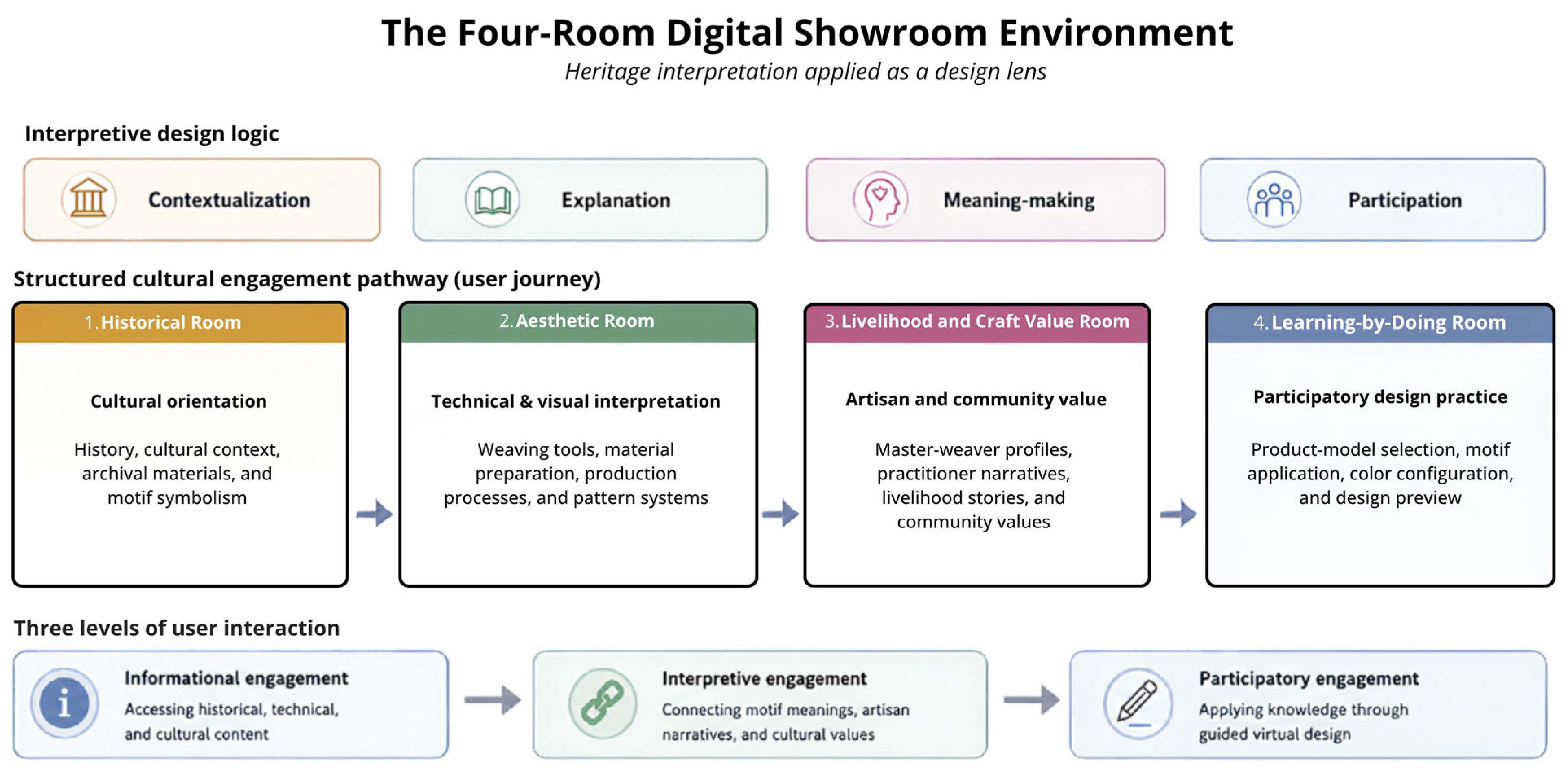
The four-room architecture was developed to transform Nakhon Si Thammarat Brocade from a static visual product display into a structured interpretive experience. Rather than organizing content only by object category or product type, the showroom arranges heritage content according to a progressive pathway of cultural engagement, moving through three levels of interaction: informational engagement in the Historical Room, which introduces historical and cultural context; informational and interpretive engagement in the Aesthetic Room, which explains aesthetic and motif systems; interpretive engagement in the Livelihood and Craft Value Room, which foregrounds artisan knowledge and community value; and finally participatory engagement in the Learning-by-Doing Room, which supports user participation through virtual design practice. This structure reflects the principle of heritage interpretation, in which cultural products are presented not only as objects to be viewed but as carriers of meaning, practice, memory, identity, and community value. Table 1 summarizes the content scope, interpretive function, and user engagement level of each room.
To make the translation from heritage interpretation theory to system design explicit, Table 1 maps each interpretive principle to its corresponding design requirement, digital features, showroom room, and intended mode of user engagement.
As shown in Table 1, heritage interpretation was operationalized as a progression from contextualization and explanation to meaning-making and guided participation. Each interpretive principle was translated into specific design requirements and digital features, which together formed the four-room architecture.
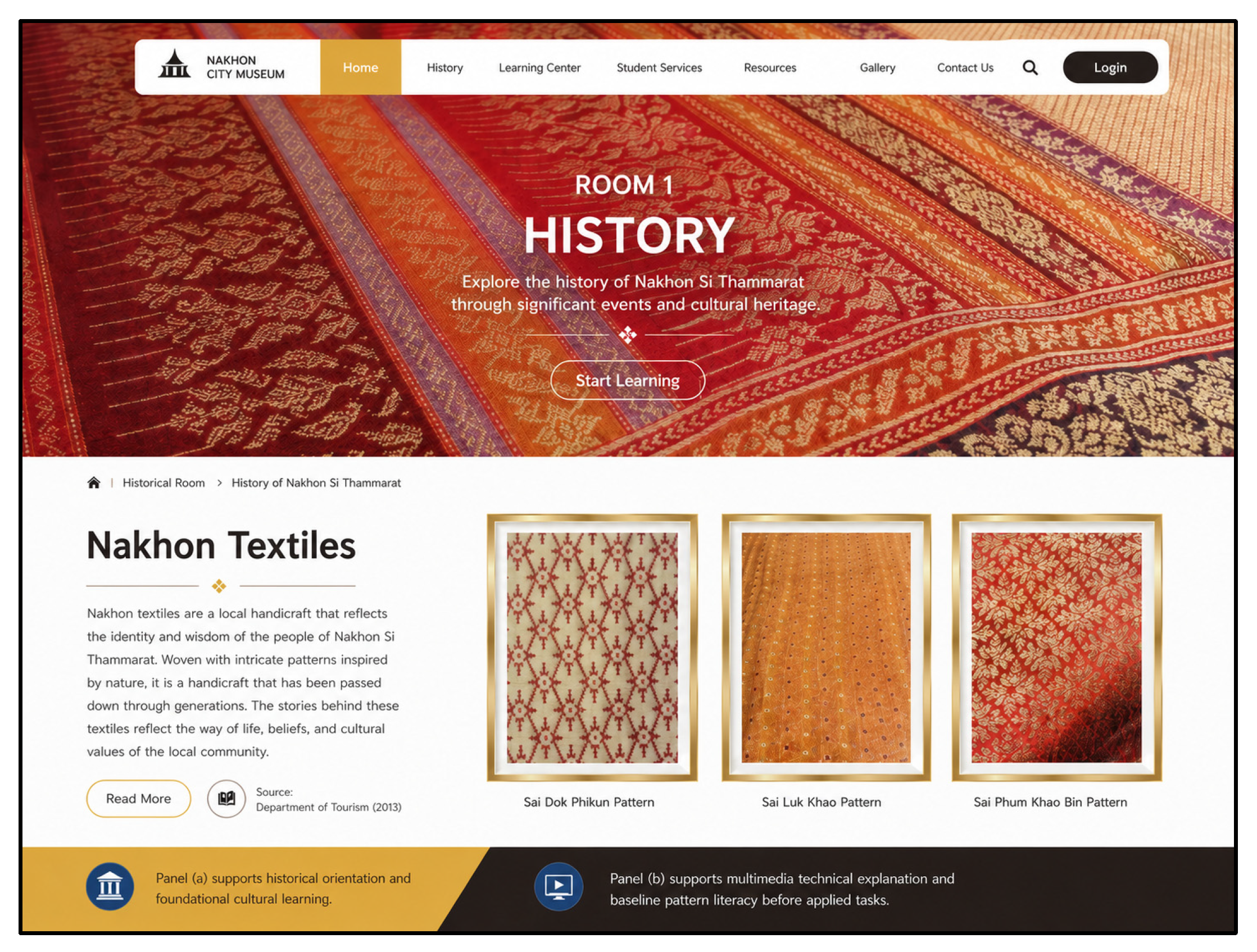
Figure 2 visually summarizes the four-room interpretive pathway and the progression from informational to interpretive and participatory engagement. The Historical Room (see Figure 3) introduces Nakhon Si Thammarat Brocade through historical narratives, cultural context, archival materials, and explanations of motif symbolism. Its function is to situate brocade as a culturally significant textile tradition rather than as a decorative or commercial object. Interactive elements such as timelines, images, and motif annotations help users understand the relationships among textile forms, historical memory, regional identity, and symbolic meaning. This room therefore establishes the contextual foundation for later interpretation by helping users recognize why brocade matters within southern Thai cultural heritage.
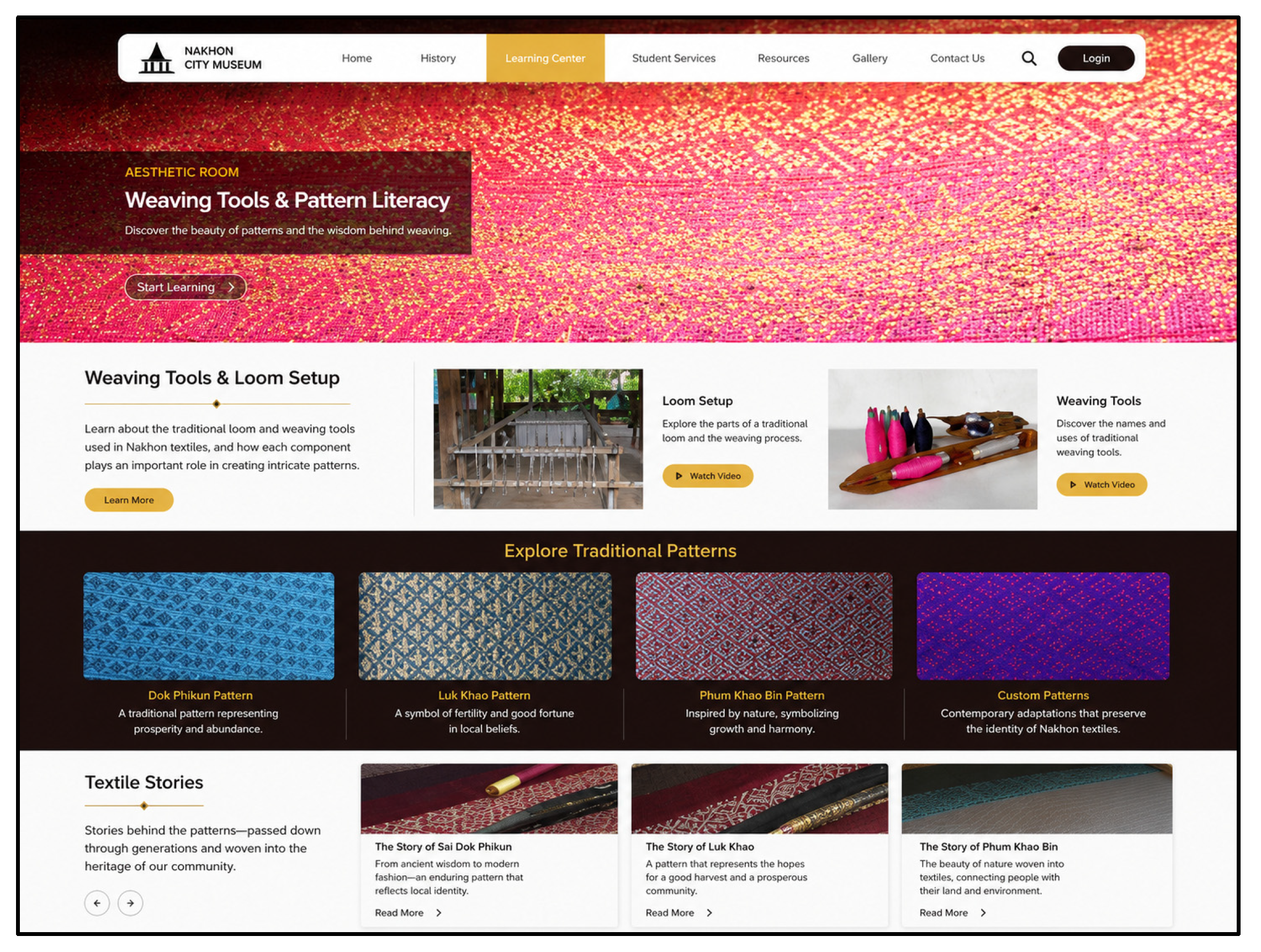
Building on this contextual foundation, the Aesthetic Room (as shown in Figure 4) presents the technical and visual dimensions of brocade production, including weaving tools, material preparation, loom operation, pattern construction, and motif systems. It addresses the difficulty of conveying procedural craft knowledge through text alone by using photographs, video demonstrations, diagrams, annotations, and structured explanations. The room supports visual and technical interpretation by helping users understand how textile forms emerge from material preparation, bodily skill, tool use, design logic, and procedural decisions. In this way, aesthetic appreciation is extended into pattern literacy and craft-process understanding.
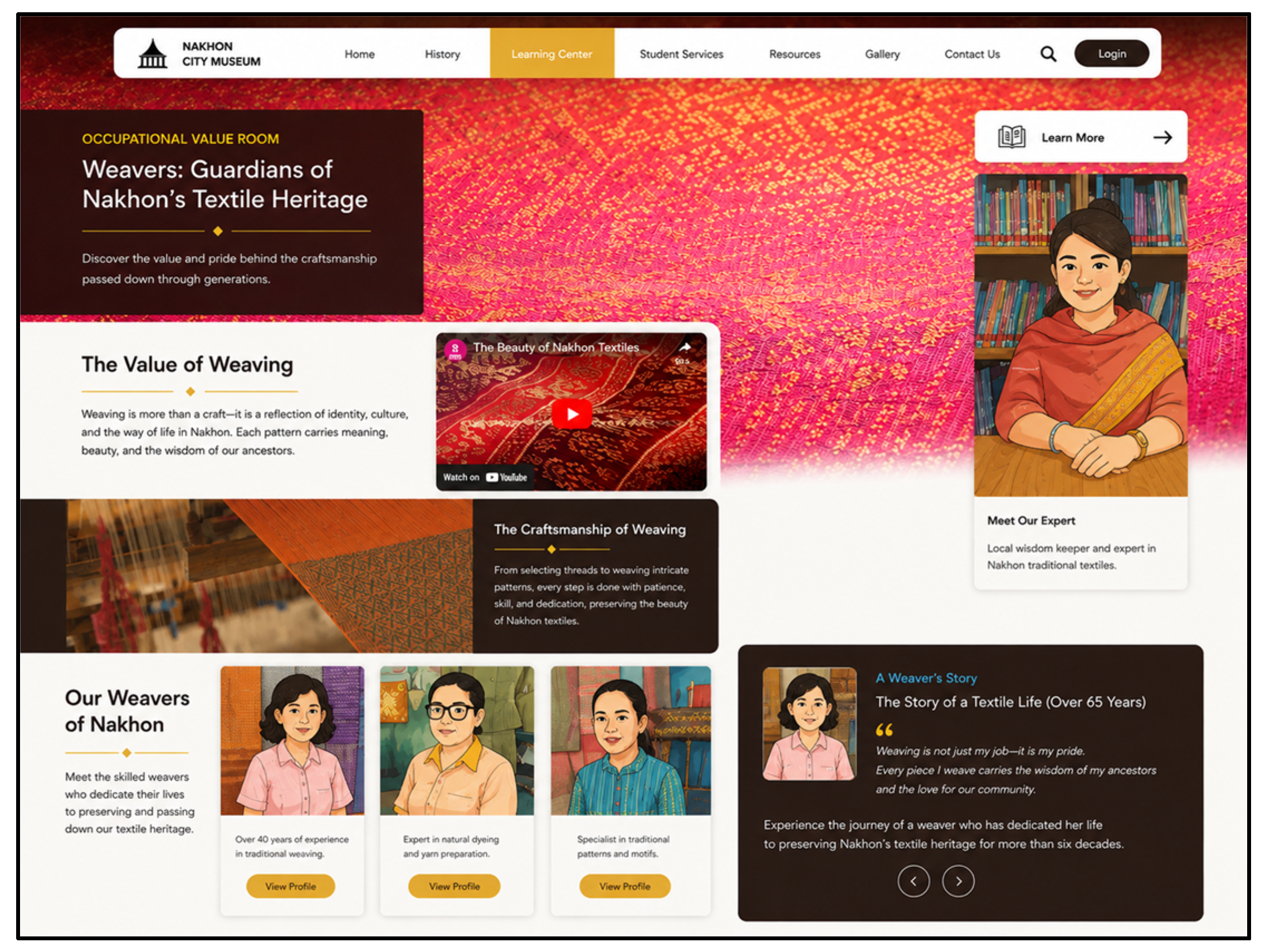
The Livelihood and Craft Value Room (see Figure 5) shifts attention from textile objects and techniques to the human and community dimensions of the craft. Through master-weaver profiles, interview videos, and practitioner narratives, the room foregrounds the personal, economic, social, and cultural values embedded in brocade weaving. It gives users access to the voices, experiences, and values of master weavers, linking textile knowledge to lived practice, occupational identity, community memory, and cultural continuity. Although a digital showroom cannot replace direct apprenticeship, this room helps users understand brocade as a living heritage practice sustained by people, relationships, and local value systems.
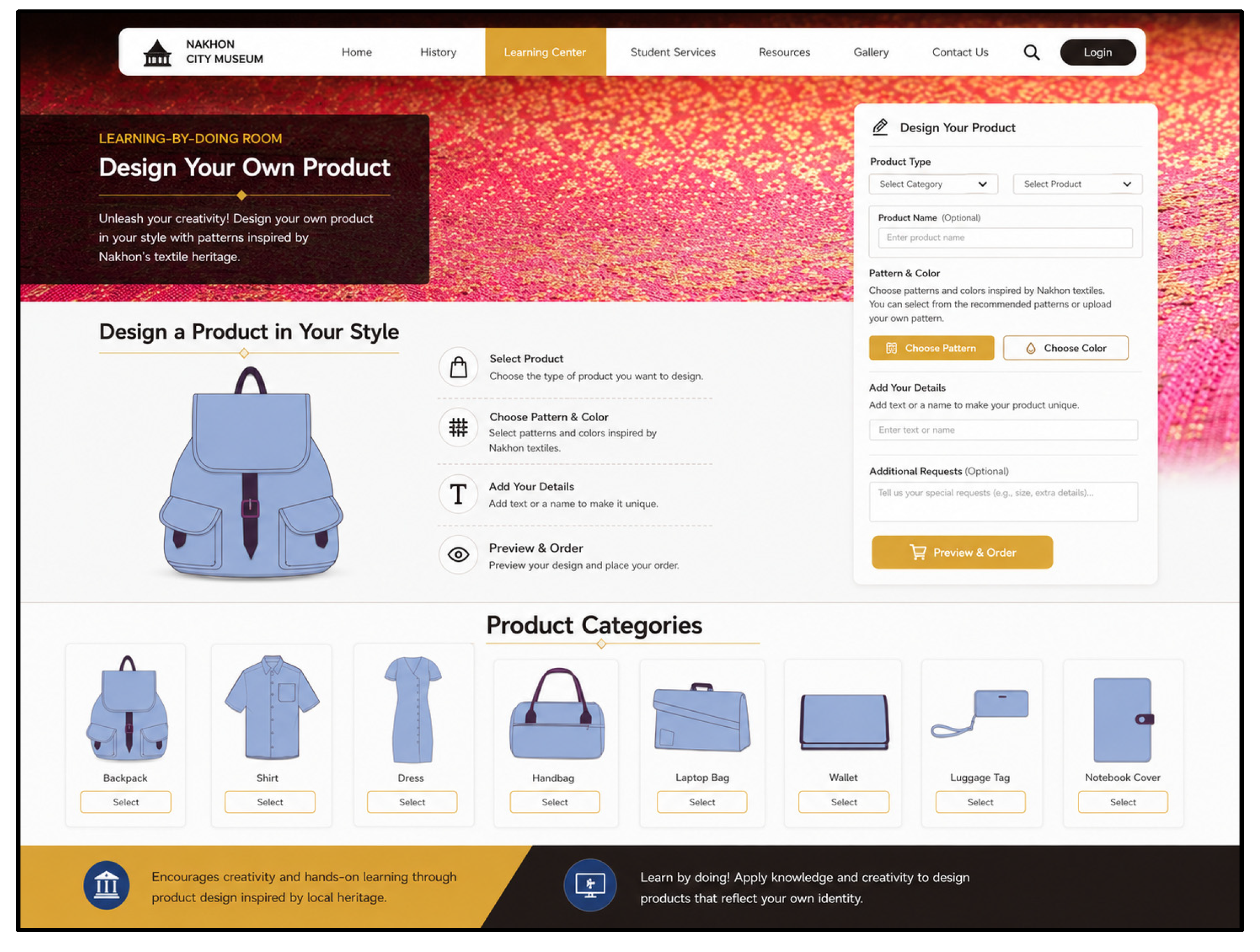
Finally, the Learning-by-Doing Room (as seen in Figure 6) translates cultural and technical knowledge into active engagement through a virtual textile-design activity. Users select product models, apply traditional motifs, configure colors, and preview their design outcomes. To maintain cultural consistency, design customization is guided by practitioner-informed constraints, allowing users to experiment with color and product application while preserving the structural geometry and cultural integrity of traditional motifs. This room supports creative participation by enabling users to apply previously encountered cultural knowledge in a guided design context.
Together, the four rooms operationalize heritage interpretation as a working design structure rather than a theoretical principle, addressing the gaps identified in Section 2 by representing brocade as a carrier of tacit knowledge and community identity, integrating visualization, interpretation, and participation into a single coherent interface, and translating interpretive theory into a functioning digital environment.

5. Evaluation Results

5.1. Evaluation Procedure

The evaluation was conducted in both onsite and online settings using the same digital showroom and evaluation procedure. First, the participants received a brief orientation to the purpose and general structure of the digital showroom. To preserve a first-encounter context, no detailed technical tutorial was provided. Second, participants independently explored all four rooms of the digital showroom—the Historical Room, Aesthetic Room, Livelihood and Craft Value Room, and Learning-by-Doing Room—at their own pace. Participants spent approximately 20–30 min exploring the digital showroom. Onsite participants accessed the showroom using available internet-enabled devices, while online participants accessed the same system remotely using their own devices. Third, after completing their exploration of all four rooms, participants completed the structured questionnaire immediately after use.
The instrument used a five-point Likert scale ranging from 1 (strongly disagree) to 5 (strongly agree). Consistent with the study’s DSR orientation, the evaluation focused on perceived artifact quality and design refinement rather than the direct measurement of cognitive learning gains, long-term knowledge retention, or behavioral change. This scope is appropriate because the evaluation aimed to assess how users perceived the showroom’s functionality and usability, content structure and organization, cultural content quality, and interactive learning-by-doing experience after direct use.
Table 2 presents the demographic and digital-experience profile of the 100 evaluation participants. The sample was predominantly female (68%), aged mainly between 25 and 54 years (78%), and held a bachelor’s degree (64%), consistent with the study’s purposive sampling of non-specialist users. Participants were highly digitally experienced, with 88% reporting more than six years of internet use, and smartphones were the most common access device (94%). This profile indicates that participants were well-equipped to engage independently with the digital showroom, supporting the validity of the usability and interaction-quality ratings reported in the following sections.

5.2. User-Perceived Functionality and Usability

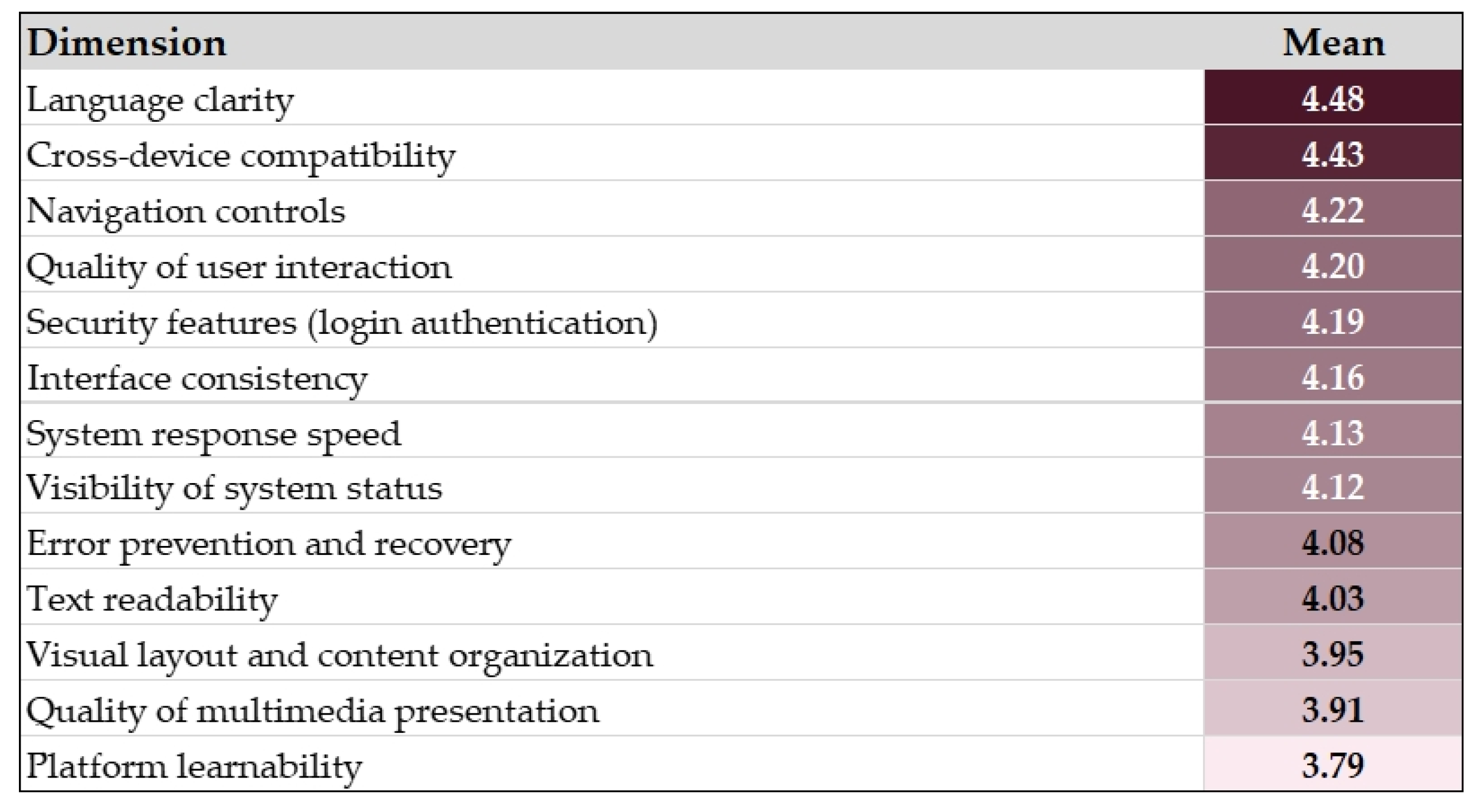
The functionality and usability dimension (As shown in Figure 7) received a positive overall rating (M = 4.13, SD = 0.72), indicating generally positive user perceptions of the showroom’s accessibility, clarity, and usability. These ratings represent subjective user assessments following system use and should not be interpreted as objective measures of technical performance.
The highest-rated items were language clarity (M = 4.48, SD = 0.54) and perceived cross-device compatibility (M = 4.43, SD = 0.61), followed by navigation controls (M = 4.22, SD = 0.69). The cross-device compatibility score reflects participants’ perceptions when accessing the showroom rather than the results of a controlled technical compatibility test. It therefore provides evidence of perceived accessibility across the devices used by participants but does not establish objective compatibility across all device types, operating systems, browsers, or network conditions.
The lowest-rated items were system learnability (M = 3.79, SD = 0.81), multimedia presentation quality (M = 3.91, SD = 0.94), and visual layout and content organization (M = 3.95, SD = 0.80). Although these scores remained positive, they indicate areas for interface refinement. The lower learnability score suggests that first-time users may benefit from guided onboarding, clearer visual hierarchy, and more explicit navigation cues. The relatively high standard deviation for multimedia presentation also suggests variation in how users perceived media quality. These findings identify practical priorities for the next design iteration.

5.3. User Perceptions of the Four-Room Showroom Structure

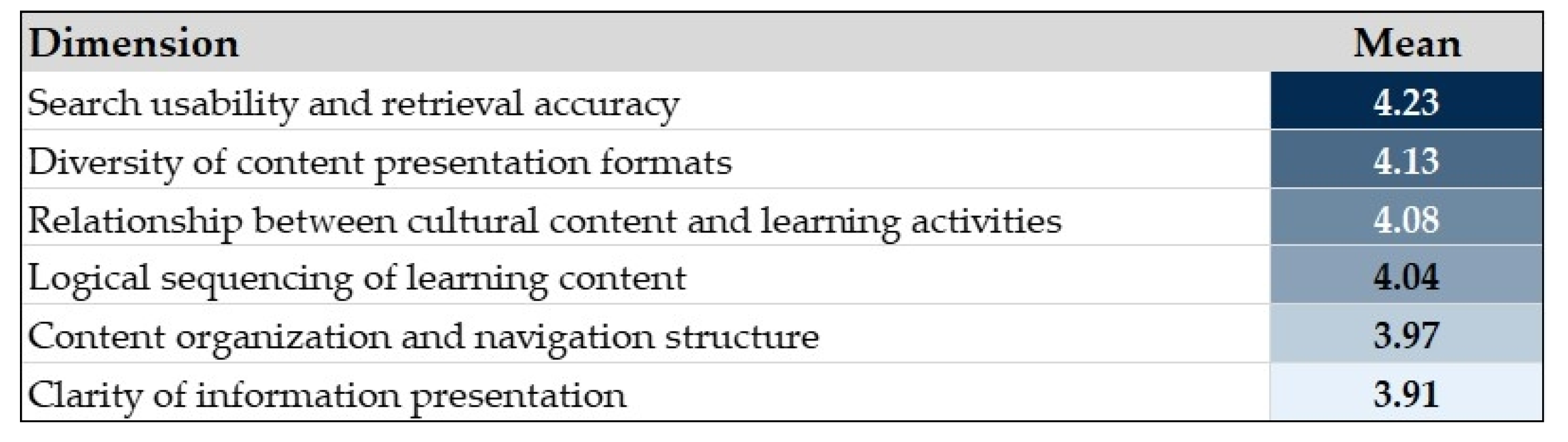
The content structure and organization dimension (As shown in Figure 8) received a positive overall rating (M = 4.06, SD = 0.79), suggesting that users generally perceived the four-room digital showroom as a coherent organizational structure. The highest-rated item was searching usability and retrieval precision (M = 4.23, SD = 0.75), followed by diversity of content presentation formats (M = 4.13, SD = 0.82). These results indicate that users valued the showroom’s ability to organize cultural content through multiple formats, including text, images, video, practitioner narratives, and interactive functions.
The positive rating for the relationship between cultural content and interactive activities (M = 4.08, SD = 0.78) suggests that users perceived meaningful connections among the showroom spaces. Rather than encountering the four rooms as isolated content sections, users appeared to recognize the progression from historical orientation to aesthetic and technical interpretation, to practitioner-based cultural value, and finally to applied design activity. These findings suggest that users perceived the four-room model as a coherent interpretive pathway.
The lowest-rated items were clarity of information presentation (M = 3.91, SD = 0.82) and content organization and navigation structure (M = 3.97, SD = 0.76). These results imply that, although the overall showroom structure was perceived positively, the system still requires stronger navigational scaffolding. Future refinement should focus on clearer labels, more visible transitions between rooms, and improved visual cues that help users understand how each showroom space contributes to the overall interpretive journey.

5.4. User Perceptions of Cultural Content Quality and Meaning

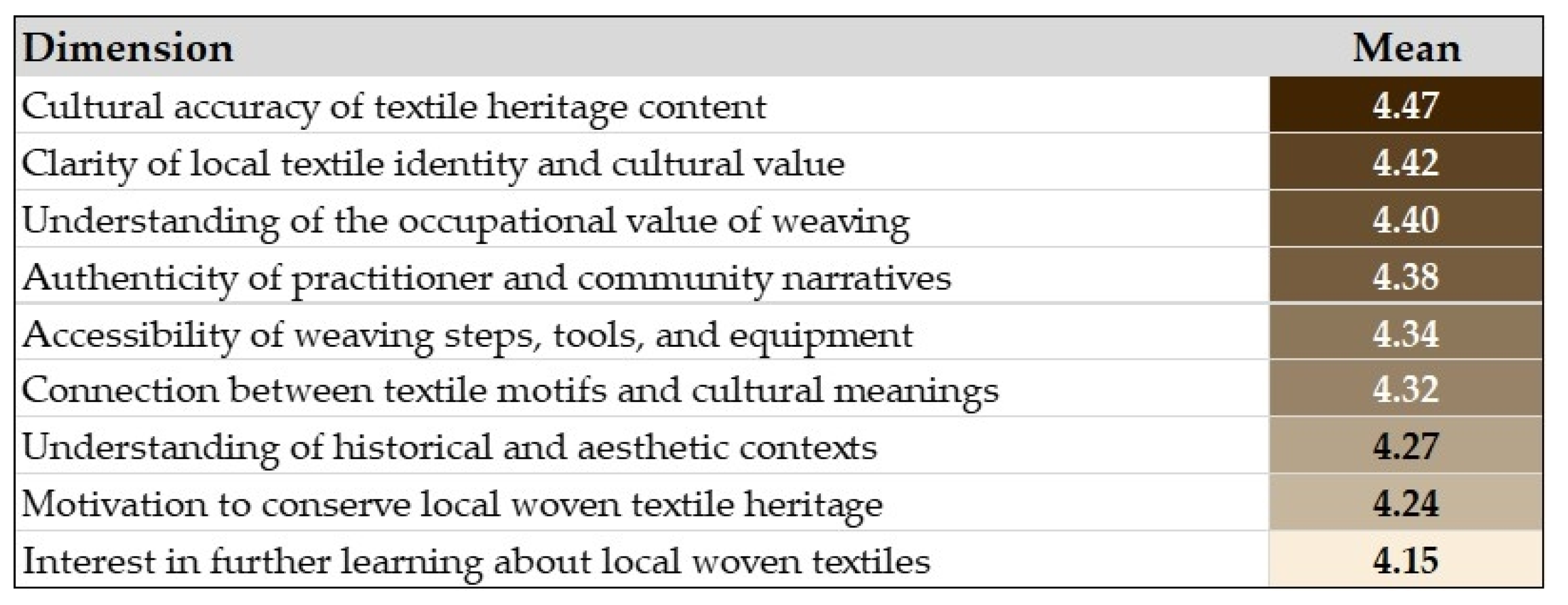
The cultural content quality dimension (as shown in Figure 9) received the highest mean rating among the four dimensions (M = 4.34, SD = 0.73), indicating that users perceived the digital showroom as culturally meaningful and credible. The highest-rated items included perceived cultural accuracy (M = 4.47, SD = 0.59), clarity of local textile identity (M = 4.42, SD = 0.64), understanding of livelihood and craft value (M = 4.40, SD = 0.68), and perceived credibility of practitioner narratives (M = 4.38, SD = 0.70).
This pattern suggests that users responded positively to content connecting textile products with local identity, practitioner knowledge, motif meanings, and community values. The showroom was perceived to communicate not only visual information about Nakhon Si Thammarat Brocade but also the cultural meanings and lived experiences associated with the craft. These findings should be interpreted as user perceptions of practitioner-informed cultural content rather than as objective evidence that cultural authenticity or cultural meaning has been fully preserved.
The lowest-rated items in this dimension were interest in further learning (M = 4.15, SD = 0.83) and motivation to conserve local heritage (M = 4.24, SD = 0.76). Although both remained positive, they suggest that the showroom may need stronger mechanisms to sustain engagement beyond the initial session. Overall, the results indicate positive user perceptions of practitioner-informed cultural content within the digital showroom.

5.5. Creative Engagement Through Learning-by-Doing

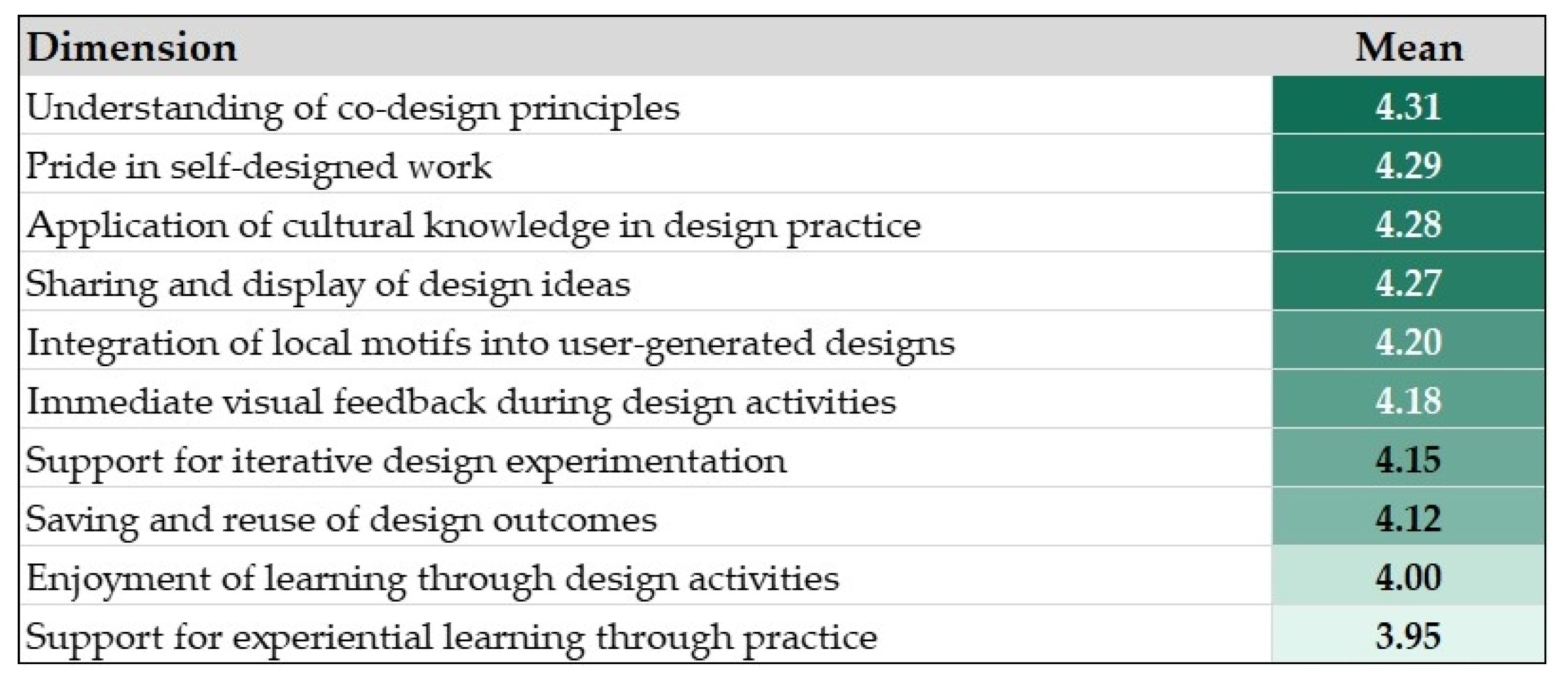
The interactive learning-by-doing experience dimension received a positive overall rating (M = 4.17, SD = 0.81). As shown in Figure 10, users generally valued the transition from content reception to active, design-oriented engagement. The results suggest that the Learning-by-Doing Room supported users’ perceived ability to apply cultural knowledge in a virtual textile-design activity.
The highest-rated items were understanding the principles of co-design (M = 4.31, SD = 0.80), pride in self-designed work (M = 4.29, SD = 0.74), application of cultural knowledge in design practice (M = 4.28, SD = 0.76), and sharing and display of design ideas (M = 4.27, SD = 0.78). These results indicate that users valued the opportunity to make design decisions, apply traditional motifs, and produce visible design outcomes. Positive ratings for the integration of local motifs in user-generated designs (M = 4.20, SD = 0.77), immediate visual feedback during design activities (M = 4.18, SD = 0.79), and support for iterative design experimentation (M = 4.15, SD = 0.81) further suggest that visual interaction helped users connect cultural content with applied design practice, while also allowing room to revise and refine their design choices.
The lowest-rated items were support for experiential learning through practice (M = 3.95, SD = 0.86) and enjoyment of learning through design activities (M = 4.00, SD = 0.83). Although positive, these scores indicate that the interactive component could be strengthened through clearer task guidance, more scaffolded design challenges, and more engaging interaction features. The rating for saving and reuse of design results (M = 4.12, SD = 0.78) further suggests that portfolio-related functions could be developed to support continuity among cultural interpretation, design experimentation, and user-generated outcomes.

5.6. Cross-Dimensional Findings

Across all four dimensions, the digital showroom received positive ratings, with mean scores ranging from 4.06 to 4.34 (as shown in Table 3). Cultural content quality received the highest mean rating (M = 4.34), followed by interactive learning-by-doing experience (M = 4.17), functionality and usability (M = 4.13), and content structure and organization (M = 4.06). These differences are presented descriptively and should not be interpreted as statistically significant differences or causal relationships among the dimensions.
Three cross-dimensional findings emerge from these descriptive results. First, cultural content quality was the highest-rated dimension, indicating particularly positive user perceptions of culturally grounded content, practitioner narratives, motif meanings, livelihood and craft value, and community-related information. Second, interactive learning-by-doing experience received the second-highest mean rating, suggesting that users responded positively to opportunities to apply cultural knowledge through design-oriented activities. Third, the comparatively lower ratings for functionality and usability and content structure and organization identify areas for further refinement, particularly in relation to learnability, visual layout, multimedia quality, navigation, and transitions between showroom spaces.
Overall, the evaluation suggests that users perceived the platform as a structured digital showroom for intangible textile heritage and valued its combination of cultural content, interpretive organization, usability, and creative participation. At the same time, the results identify clear directions for the next design cycle, particularly improving interface guidance, strengthening participatory design tasks, and enhancing continuity between cultural interpretation and user-generated design outcomes.

6. Discussion and Conclusions

6.1. Discussion

The evaluation findings suggest that users perceived the four-room digital showroom as a structured interface for engaging with intangible textile heritage. By organizing historical information, aesthetic and technical knowledge, practitioner narratives, and interactive design activities into a coherent interpretive pathway, the platform appears to support users’ perceived understanding of Nakhon Si Thammarat Brocade as both a material textile tradition and a body of living cultural knowledge.
Cultural content quality received the highest score (M = 4.34), suggesting that users perceived the digital showroom as culturally meaningful and credible. This may reflect the integration of historical background, weaving techniques, motif meanings, artisan stories, and value-based narratives. These elements address a recognized challenge in digitizing intangible cultural heritage: craft knowledge is not only explicit information but also tacit, embodied, socially situated, and culturally interpreted. Rather than claiming to transmit tacit expertise in full, the platform made selected dimensions of craft knowledge more visible, contextualized, and accessible to non-specialist users.
This pattern is broadly consistent with prior work emphasizing that digital heritage systems should preserve the experiential and contextual dimensions of cultural practice, rather than only visual artifacts [3,15]. However, where much prior work has concentrated on visual or archival digitization, the present platform extends this direction by embedding practitioner-based narration directly within the showroom structure. Textile heritage is therefore presented as living knowledge connected to artisans, livelihoods, community identity, and cultural value. The relatively high scores for cultural accuracy, local textile identity, livelihood and craft value, and practitioner narratives suggest, though do not conclusively establish, that users valued content linking textile forms to the people, practices, and meanings that sustain them.
The findings are also consistent with the use of heritage interpretation as a design lens for the digital showroom. Rather than treating the showroom as a product catalogue or visual archive, the study applied heritage interpretation to structure movement from contextual orientation to aesthetic interpretation, artisan-value recognition, and participatory design practice, as detailed in Section 4. The positive ratings suggest that users perceived this interpretive sequencing as coherent.
The positive rating for the interactive learning-by-doing activity (M = 4.17) suggests that users responded favorably to applying cultural knowledge through digital product design, selecting forms, motifs, and colors with visual feedback. This finding is consistent with studies emphasizing interactive, experiential, and participatory heritage engagement [9]. However, this result reflects users’ perceived engagement and perceived ability to apply cultural knowledge rather than objectively measured learning gains. This activity should not be interpreted as equivalent to physical apprenticeship or craft skill acquisition. Instead, it represents a preliminary and scaffolded form of participatory engagement that allows users to explore the relationship between motif, form, color, and cultural meaning within a guided digital environment. The digital activity therefore complements rather than replaces direct engagement with practitioners and embodied craft practice.
The functionality and usability dimension also received a positive overall rating (M = 4.13), suggesting that participants generally perceived the digital showroom as usable, accessible on the devices they used, and clear in its use of language. These findings represent subjective user assessments rather than objective measures of cross-device compatibility or technical performance. This is consistent with recommendations in the digital heritage literature that technical barriers should not impede engagement with cultural content, particularly for non-specialist or first-time users [30]. However, system learnability received the lowest rating among all evaluated items, indicating that users may benefit from clearer onboarding guidance before independently navigating the four-room structure. This finding echoes broader concerns in digital heritage design that interpretive richness can be undermined if the interface itself is not sufficiently intuitive on first encounter [10].
The content structure and organization dimension received the lowest score among the four dimensions (M = 4.06), although it remained positive overall. This points to the difficulty of organizing complex textile knowledge—spanning history, symbolism, tools, techniques, artisan experience, and contemporary application—into a clear digital showroom structure. This finding reflects a broader challenge noted in the digital heritage literature: presenting culturally rich, multi-dimensional content without overwhelming or fragmenting the user experience remains difficult even when the underlying content itself is well-developed [10]. Future development should therefore prioritize clearer room-to-room transitions and more explicit interpretive cues that help users understand how each showroom space contributes to the overall cultural engagement pathway, complementing the onboarding and navigational improvements identified above.
Taken together, these findings indicate that a digital showroom for intangible textile heritage may benefit from combining culturally validated content, interpretive organization, practitioner narratives, and interactive application. The four-room showroom model offers one example of how complex craft heritage can be transformed from static product display into a structured, contextualized, and participatory cultural experience. However, further evaluation is needed to establish the generalizability of the model across other craft traditions and cultural settings.
Drawing on the artifact development and evaluation findings, this study suggests several design considerations for digital showroom in intangible cultural heritage contexts. First, cultural content should be sequenced as an interpretive pathway rather than arranged as a collection of isolated digital assets. Second, practitioner narratives should be central to cultural communication, as master-weaver stories and value-based accounts help users understand heritage as lived knowledge. Third, cultural explanation should be paired with guided application so that interactive activities connect motifs, forms, and colors with cultural meaning. Fourth, a digital showroom should complement rather than replace embodied apprenticeship: digital tools can support access, interpretation, and preliminary engagement, but full transmission of craft knowledge still requires direct engagement with artisans, tools, materials, and community contexts. Finally, content should be reviewed by knowledgeable practitioners or local experts to maintain cultural consistency and interpretive credibility.

6.2. Limitations and Future Research

This study has two main limitations. First, the artifact was developed for a specific weaving tradition, so the proposed design model may require adaptation for other craft typologies, cultural settings, or community-based heritage organizations. In addition, the use of purposive sampling and the relatively high level of digital experience among participants limits the generalizability of the findings to broader user populations. Second, the evaluation measured perceived artifact quality and user satisfaction rather than direct learning gains, long-term retention, behavioral change, or sustained cultural participation. The study also did not include a control or comparison group; therefore, the findings cannot establish whether the proposed digital showroom performs better than conventional digital heritage interfaces. Although this scope is appropriate for an initial DSR evaluation, it provides limited evidence of long-term interpretive or educational impact.
Future research should test the transferability of the four-room digital showroom architecture across other craft-heritage contexts using larger, more diverse, and independently recruited samples. Outcome-based evaluation designs, such as pre-test/post-test assessment, delayed retention testing, comparative studies with conventional digital archives, or longitudinal engagement tracking, would provide stronger evidence of learning and interpretive impact. Future studies should also examine how prior cultural knowledge, digital literacy, design experience, and motivation influence user engagement with the digital showroom.

6.3. Conclusions

This study developed and evaluated a four-room digital showroom for Nakhon Si Thammarat Brocade, a southern Thai textile tradition facing challenges in intergenerational knowledge transmission. The platform organized heritage engagement into four spaces: the Historical Room, Aesthetic Room, Livelihood and Craft Value Room, and Learning-by-Doing Room. Together, these spaces guided users from cultural orientation and motif interpretation to artisan-value recognition and participatory design practice.
This study makes two key contributions that directly address the gaps identified in Section 2.3. Theoretically, it reconceptualizes the digital showroom as an interpretive cultural communication interface for intangible craft heritage, rather than merely as a space for online product display, thereby repositioning craft products as carriers of tacit knowledge and community identity rather than isolated visual objects. It further demonstrates how heritage interpretation can guide the selection, sequencing, visualization, and interaction of cultural content within a digital showroom, operationalizing a framework that has previously remained largely theoretical. Practically, it provides a four-room showroom design model that integrates product visualization, motif interpretation, process explanation, artisan narratives, and guided creative participation into a single coherent structure, offering concrete design guidance where none previously existed. Rather than replacing embodied apprenticeship, the platform illustrates how structured, practitioner-centered digital showroom can support cultural access, interpretation, and preliminary engagement with complex craft knowledge. In doing so, it offers a partial but valuable complement to traditional modes of transmission and provides a design approach for presenting intangible craft heritage as contextualized, interactive, and culturally meaningful digital experience.

Author Contributions

Conceptualization, S.C.-A. and K.S.; methodology, S.C.-A. and K.S.; software, S.C.-A.; validation, S.C.-A.; formal analysis, S.C.-A.; investigation, S.C.-A.; resources, S.P., N.T. and J.S.; data curation, S.C.-A. and K.S.; writing—original draft preparation, S.C.-A.; writing—review and editing, S.C.-A.; visualization, S.C.-A. and S.P.; project administration, S.C.-A.; funding acquisition, S.C.-A. and K.S. All authors have read and agreed to the published version of the manuscript.

Funding

This research received no external funding.

Institutional Review Board Statement

The study was conducted and approved by the Research Ethics Committee of Mahachulalongkornrajavidyalaya University (protocol code W.D. 013/2021, approved on 30 November 2021).

Informed Consent Statement

Informed consent was obtained from all subjects involved in the study.

Data Availability Statement

The data presented in this study are available in the article.

Acknowledgments

The authors express their sincere gratitude for the financial support provided by the Prince of Songkla University and the Faculty of Science and Industrial Technology, Surat Thani Campus. During the preparation of this manuscript, the authors used Canva for Education (web-based platform) (photo-to-cartoon function) to replace photographs of identifiable individuals in Figure 5 with cartoon-style illustrations in order to protect personal information and privacy. The authors also used ChatGPT 5.2 (OpenAI) for language editing and to improve the clarity and readability of the manuscript. The authors have reviewed and edited the output and take full responsibility for the content of this publication.

Conflicts of Interest

The authors declare no conflicts of interest.

References

  1. Shim, H.; Oh, K.T.; O’Malley, C.; Jun, J.Y.; Shi, C.-K. Heritage Values, Digital Storytelling, and Heritage Communication: The Exploration of Cultural Heritage Sites in Virtual Environments. Digit. Creat. 2024, 35, 171–197. [Google Scholar] [CrossRef] [Scilit]
  2. Chai-Arayalert, S.; Suttapong, K.; Chumkaew, S. Design of Digital Environments to Enhance Handicraft Co-Learning Experiences. Cogent Bus. Manag. 2023, 10, 2286687. [Google Scholar] [CrossRef] [Scilit]
  3. Hou, Y.; Kenderdine, S.; Picca, D.; Egloff, M.; Adamou, A. Digitizing Intangible Cultural Heritage Embodied: State of the Art. J. Comput. Cult. Herit. 2022, 15, 55. [Google Scholar] [CrossRef] [Scilit]
  4. Lázaro Ortiz, S.; Jiménez de Madariaga, C. The UNESCO Convention for the Safeguarding of the Intangible Cultural Heritage: A Critical Analysis. Int. J. Cult. Policy 2022, 28, 327–341. [Google Scholar] [CrossRef] [Scilit]
  5. Ding, C.; Ismail, N.A.; Hussein, M.K.; Hussain, N. A Systematic Review of the Traditional Handicrafts Preservation Toward Sustainable Intangible Cultural Heritage. Sage Open 2025, 15, 1–15. [Google Scholar] [CrossRef] [Scilit]
  6. Chai-Arayalert, S.; Suttapong, K.; Kong-Rithi, W. Systematic Approach to Preservation of Cultural Handicrafts: Case Study on Fabrics Hand-Woven in Thailand. Cogent Bus. Manag. 2021, 8, 1872889. [Google Scholar] [CrossRef] [Scilit]
  7. Miton, H.; DeDeo, S. The Cultural Transmission of Tacit Knowledge. J. R. Soc. Interface 2022, 19, 20220238. [Google Scholar] [CrossRef] [Scilit]
  8. Chai-Arayalert, S.; Puttinaovarat, S.; Saetang, W. A Crowdsourcing-Based Digital Storytelling Platform for Preserving Intangible Cultural Heritage: A Case Study of Southern Thai Textiles. Heritage 2026, 9, 160. [Google Scholar] [CrossRef] [Scilit]
  9. Cook, K.; Hill, G. Digital Heritage as Collaborative Process. Stud. Digit. Herit. 2019, 3, 83–99. [Google Scholar] [CrossRef] [Scilit]
  10. Xie, X.; Wang, C.; Dai, T.; Chen, Y. An Innovative Model of Digital Pedagogy: Digital Experience Scenes Design for Cultural Heritage Properties Based on Multi-Form Spatial Theory. Humanit. Soc. Sci. Commun. 2026, 13, 416. [Google Scholar] [CrossRef] [Scilit]
  11. Hevner, A.R.; March, S.T.; Park, J.; Ram, S. Design Science in Information Systems Research. MIS Q. 2004, 28, 75–106. [Google Scholar] [CrossRef] [Scilit]
  12. Hadjimichael, D.; Ribeiro, R.; Tsoukas, H. How Does Embodiment Enable the Acquisition of Tacit Knowledge in Organizations? From Polanyi to Merleau-Ponty. Organ. Stud. 2024, 45, 545–570. [Google Scholar] [CrossRef] [Scilit]
  13. Otero, J. Beyond Skills: Reflections on the Tacit Knowledge-Brain-Cognition Nexus on Heritage Conservators. Herit. Sci. 2024, 12, 223. [Google Scholar] [CrossRef] [Scilit]
  14. Lensjø, M. From Craftsman to Vocational Teacher: A Narrative Study of Tacit Knowledge and the Nexus between Complex Cultures. Vocat. Learn. 2025, 18, 2. [Google Scholar] [CrossRef] [Scilit]
  15. Guo, J.; Ahn, B. Tacit Knowledge Sharing for Enhancing the Sustainability of Intangible Cultural Heritage (ICH) Crafts: A Perspective from Artisans and Academics under Craft–Design Collaboration. Sustainability 2023, 15, 14955. [Google Scholar] [CrossRef] [Scilit]
  16. Wimalasuriya, R.; Kapukotuwa, A.; Ranasinghe, G. Conceptual Framework for On-Site Digital Interpretation Developments in Cultural Heritage Sites. Vidyodaya J. Humanit. Soc. Sci. 2022, 7, 64–84. [Google Scholar] [CrossRef] [Scilit]
  17. Rahaman, H. Digital Heritage Interpretation: A Conceptual Framework. Digit. Creat. 2018, 29, 208–234. [Google Scholar] [CrossRef] [Scilit]
  18. Mason, M.; Vavoula, G. Digital Cultural Heritage Design Practice: A Conceptual Framework. Des. J. 2021, 24, 405–424. [Google Scholar] [CrossRef] [Scilit]
  19. Pei, Y. The Value of Technology and Interactive Systems in Cultural Heritage Interpretation: A Study Based on Existing Empirical Research. Mus. Manag. Curatorship 2025, 40, 659–677. [Google Scholar] [CrossRef] [Scilit]
  20. Orphanidou, Y.; Efthymiou, L.; Panayiotou, G. Cultural Heritage for Sustainable Education Amidst Digitalisation. Sustainability 2024, 16, 1540. [Google Scholar] [CrossRef] [Scilit]
  21. Venieri, F. Digital Storytelling and First-Person Narratives in Heritage Interpretation: An Overview. In Computational Methods for the Digital Humanities; Karpouzis, K., Skarpelos, Y., Eds.; Springer Nature: Cham, Switzerland, 2026; pp. 23–52. [Google Scholar]
  22. Mantzou, P.; Bitsikas, X.; Floros, A. Enriching Cultural Heritage through the Integration of Art and Digital Technologies. Soc. Sci. 2023, 12, 594. [Google Scholar] [CrossRef] [Scilit]
  23. Liu, Y. Visitor Experience of Digital Interpretation and Presentation of Cultural Heritage Sites. In Digital Interpretation and Presentation of Cultural Heritage Sites; Springer Nature: Singapore, 2026; pp. 93–112. [Google Scholar]
  24. Ludwig, T. The Interpretive Guide: Sharing Heritage with People, 2nd ed.; Bildungswerk Interpretation: Werleshausen, Germany, 2015. [Google Scholar]
  25. Chai-Arayalert, S.; Suttapong, K. Increasing Potential of Distribution Channels for Creative Thai Hand-Woven Textile Products in the Digital Economy. Creat. Stud. 2020, 13, 477–493. [Google Scholar] [CrossRef] [Scilit]
  26. vom Brocke, J.; Hevner, A.; Maedche, A. Introduction to Design Science Research. In Design Science Research; Springer: Cham, Switzerland, 2020; pp. 1–13. [Google Scholar]
  27. Othman, M.K.; Petrie, H.; Power, C. Measuring the Usability of a Smartphone Delivered Museum Guide. Procedia Soc. Behav. Sci. 2013, 97, 629–637. [Google Scholar] [CrossRef] [Scilit]
  28. Othman, M.K.; Petrie, H.; Power, C. Engaging Visitors in Museums with Technology: Scales for the Measurement of Visitor and Multimedia Guide Experience. In Human-Computer Interaction—INTERACT 2011; Campos, P., Graham, N., Jorge, J., Nunes, N., Palanque, P., Winckler, M., Eds.; Springer: Berlin/Heidelberg, Germany, 2011; pp. 92–99. ISBN 978-3-642-23767-6. [Google Scholar]
  29. Creswell, J.W. Research Design: Qualitative, Quantitative and Mixed Approaches, 4th ed.; Sage Publications: New York, NY, USA, 2014. [Google Scholar]
  30. Sapu, S.; Aphathanakorn, A.; Thienmongkol, R. Digital Learning Platform for Cultural Heritage: New Normal Tourism for Community. J. Cult. Herit. Manag. Sustain. Dev. 2026, 16, 396–422. [Google Scholar] [CrossRef] [Scilit]
Figure 1. Conceptual model (adapted from [24]).
Mti 10 00091 g001
Figure 2. The four-room digital showroom as an interpretive cultural engagement pathway.
Mti 10 00091 g002
Figure 3. Historical Room interface.
Mti 10 00091 g003
Figure 4. Aesthetic Room interface.
Mti 10 00091 g004
Figure 5. Livelihood and Craft Value Room interface.
Mti 10 00091 g005
Figure 6. Learning-by-Doing Room interface.
Mti 10 00091 g006
Figure 7. User evaluation of functionality and usability. Darker shading indicates higher mean scores, while lighter shading indicates lower mean scores.
Mti 10 00091 g007
Figure 8. User evaluation of content and data structure. Darker shading indicates higher mean scores, while lighter shading indicates lower mean scores.
Mti 10 00091 g008
Figure 9. User evaluation of cultural content quality. Darker shading indicates higher mean scores, while lighter shading indicates lower mean scores.
Mti 10 00091 g009
Figure 10. User evaluation of interactive learning-by-doing experience. Darker shading indicates higher mean scores, while lighter shading indicates lower mean scores.
Mti 10 00091 g010
Table 1. Translation of heritage interpretation principles into the four-room digital showroom design.
Heritage Interpretation PrincipleDesign RequirementDigital FeatureShowroom RoomIntended
Engagement
ContextualizationSituate brocade within its historical, cultural, and symbolic contextHistorical narratives, archival materials, timelines, images, and motif annotationsHistorical RoomInformational engagement
ExplanationExplain how textile forms emerge from materials, tools, techniques, processes, and motif systemsPhotographs, video demonstrations, diagrams, process explanations, and motif interpretationAesthetic RoomInformational and interpretive engagement
Meaning-makingConnect textile objects and techniques with artisan experience, livelihood, community identity, and cultural transmissionMaster-weaver profiles, interview videos, practitioner narratives, and livelihood storiesLivelihood and Craft Value RoomInterpretive engagement
Guided participationEnable users to apply cultural knowledge through creative activity while maintaining motif integrityProduct-model selection, motif application, color configuration, and design previewLearning-by-Doing RoomParticipatory engagement
Table 2. Demographic characteristics of respondents (n = 100).
VariableCategoryn%
GenderMale3232.0
Female6868.0
Age15–24 years1717.0
25–34 years2323.0
35–44 years2929.0
45–54 years2626.0
55–64 years00.0
65 years and above55.0
Educational levelBelow lower secondary school44.0
Lower secondary school55.0
Upper secondary school/vocational certificate88.0
Diploma/higher vocational certificate1010.0
Bachelor’s degree6464.0
Higher than bachelor’s degree99.0
Internet usage experienceLess than 1 year11.0
1–3 years33.0
4–6 years88.0
More than 6 years8888.0
Regular internet-access device *Personal computer1414.0
Notebook/Tablet3232.0
Smartphone9494.0
Note. * Respondents could select more than one option for regular internet-access device; percentages for this variable do not sum to 100%.
Table 3. Summary of evaluation results by dimension.
Evaluation DimensionMSDInterpretation
Cultural content quality4.340.73Highest-rated dimension
Interactive learning-by-doing experience4.170.81Supported participatory cultural engagement
Functionality and usability4.130.72Positively perceived functionality and usability
Content structure and organization4.060.79Requires stronger interpretive scaffolding
Disclaimer/Publisher’s Note: The statements, opinions and data contained in all publications are solely those of the individual author(s) and contributor(s) and not of MDPI and/or the editor(s). MDPI and/or the editor(s) disclaim responsibility for any injury to people or property resulting from any ideas, methods, instructions or products referred to in the content.