1. Introduction
In recent decades, research in the domain of multipurpose cadastre has undergone substantial development [
1], reflecting the mounting significance of efficiency in the administration of geospatial data pertaining to property and land use [
2,
3]. This is particularly salient in the context of the multipurpose nature that is sought, with a focus on the territory and the events that occur within it. For local governments, this translates into the efficient management of the territory they administer, in accordance with international regulations or standards. The necessity of implementing a standardized protocol, such as ISO 19152 [
4], is paramount for ensuring interoperability and effective information management [
5].
Conversely, the territory is confronted with challenges posed by natural hazards and disasters [
6], primarily attributable to uncontrolled urban expansion and the location of cities in high-risk zones [
7]. These challenges are further compounded by historical events that have impacted both urban and rural regions within each nation [
8]. The prevalence of natural disasters, including earthquakes, floods, tsunamis, and wildfires, has been observed to increase in recent years. This phenomenon has been attributed, in part, to the impact of human activities on the ecosystem and the climate [
9]. International experiences, including that of Afghanistan, have facilitated the establishment of a pragmatic framework for land use planning, predicated on numerous risks in the city of Pul-e-Khumer [
10]. Moreover, these experiences have further enabled the conceptualisation of adaptation to climate change and land use planning as exemplary practices of territorial governance in Rotterdam [
11]. These findings are supplementary to other international experiences that predominantly address the accelerated development of informal urban settlements and their correlation with land use and risk management policies, as evidenced by the MOCOA initiative in Colombia. This initiative emerged as a consequence of the 2017 disaster, functioning as a disruptive event [
12].
The multipurpose cadastre is a comprehensive repository of information and knowledge about the territory, facilitating comprehension of the events that occur within it [
13]. It enables urban planners to develop and design their cities, defining risk patterns in populated areas [
14]. The review and analysis of academic articles address how risk situations have been dealt with internationally from the perspective of the multipurpose cadastre, serving as a basis for defining actions in countries such as Chile.
The objective of this academic article is to strengthen the implementation of the ISO 19152 standard [
4] through sub-packages aimed at risk and disaster management with a post-emergency approach, providing local responses to territorial problems caused by this type of event.
In response to the country’s needs and in accordance with the prevailing legal framework, Chile has established a property registry [
15] that is linked to land tax [
16]. The primary challenges associated with the registry pertain to the intricacy of the array of institutional entities involved at the national level. On the one hand, the Internal Revenue Service (SII) is the highest authority in this matter. On the other hand, the Ministry of National Assets is responsible for fiscal property. In addition to these entities, the Military Geographic Institute (IGM), the National Land Information System (SNIT), and Chile’s municipalities [
16] at the local level have been involved. However, these entities have been observed to relegate land management and administration, as well as citizen participation, to a secondary role.
The hard data (77% housing exemption; only 3.82 million taxpayers; 1.3% of GDP in property taxes; >50% of the country under fiscal control) demonstrates that the tax cadastre fulfills its tax objective, yet is inadequate for contemporary territorial governance [
17]. The transition to a multipurpose cadastre that is both interoperable and semantically rich is supported by international literature and practice [
18]. This cadastre would connect registration, cadastre, planning, risk, and public land, thereby increasing the public value of cadastral data in Chile.
The absence of a cadastral data model has resulted in Chile’s municipalities possessing a data system that is neither structured nor standardized, leading to duplication and a significant deficit of knowledge regarding their respective territories [
19]. Furthermore, the decentralized nature of this information complicates its management by municipal authorities [
20]. This has resulted in each municipal department or agency employing its own cadastral model, which has led to challenges in coordination between entities and the transfer of information.
Considering these challenges, we have undertaken the initiative of formulating a data model for the Chilean Land Registry, underpinned by the LADM ISO 19152 standard [
4]. This initiative involves the implementation of the proposed model in Temuco, a municipality with a population of 300,000. The primary objective of this implementation is to facilitate the integration of the model with other multipurpose data sources. This integration is expected to enhance the efficient management of the territory’s administration and development, thereby addressing critical issues related to risk and disaster management [
21].
The purpose of this study is to propose a cadastral data model aligned with the Land Administration Domain Model [
4] that supports the development of a multipurpose cadastre in Chile. The model is conceived as a strategic instrument to strengthen disaster risk management by facilitating preparedness, response, and recovery processes in urban contexts. Specifically, the objectives of this research are threefold, (i) to design and formalize a data model that ensures interoperability and adherence to international standards; (ii) to evaluate its applicability through the case of Temuco, where control panels for fire management are currently under development; and (iii) to assess the model’s potential to enhance resilience and safety in municipal decision-making.
To guide the reader, the remainder of this article is organized as follows.
Section 2 reviews the relevant literature on risk and disaster management with a focus on multipurpose cadastres.
Section 3 outlines the methodological framework and presents the Chilean profile derived from municipal data in Temuco.
Section 4 presents the results and discusses the scope of the proposed model. Finally,
Section 5 provides the conclusions and outlines avenues for future research.
This has led us to propose the following hypothesis, the implementation of a cadastral data model based on the international LADM standard will strengthen risk and disaster management in urban contexts in Chile by ensuring interoperability, standardization, and efficiency in territorial information management. In particular, its application in municipalities such as Temuco is expected to help overcome institutional fragmentation and the absence of unified data models, thereby improving emergency preparedness, response, and recovery capacity, as well as enhancing resilience in municipal decision-making.
2. Related Work
One of the most intricate processes in the annals of human history pertains to the administration of territorial space. In this domain, proprietors employ physical boundaries, such as fences, to demarcate their property. This practice has, over the course of history, given rise to the establishment of registries, with the aim of averting conflicts among proprietors. The evolution of these records has enabled local authorities and states to establish tax rates that generate revenue for the treasury, which has expanded from rural plots to urban land or properties.
The majority of articles published prior to 2015 address land governance [
21,
22]. In this regard, the LADM ISO 19152:2012 [
4] model facilitates efficient land administration thanks to its easy adaptation and integration with legal and spatial sources, both in 2D and 3D. In a 2015 study, Van Oosterom and C. Lemmen demonstrated the impact of blockchain on land administration systems and its potential for standardization [
23,
24] Furthermore, Kalantari proposed a comprehensive framework to assist organizations in navigating this process [
25].
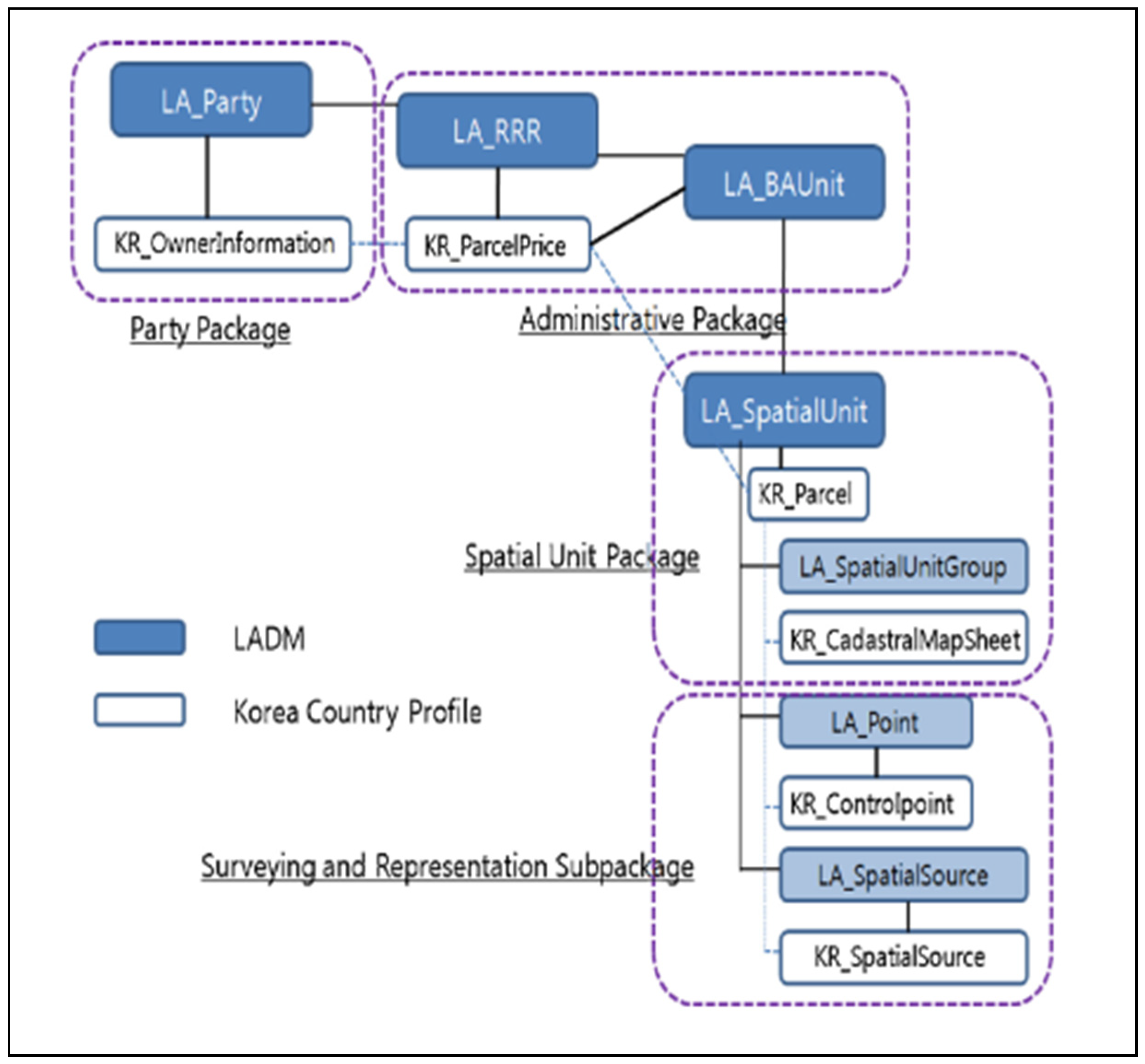
The implementation of the Land Administration Domain Model (LADM), with implications for the Chilean context, is exemplified in the work of Korea M. Lee and J. Choi (2015) [
26]. Their model, developed on the basis of ISO 19152:2012 [
4], incorporates a main class (
Figure 1) that delineates the classes and their relationships with entities [
26].
The decision to refine the existing content and expand the capabilities of ISO 19152:2012 [
4] enabled the development of a second version of the standard. The second edition of ISO 19152 [
27] delineates several components, where the first part of the text presents a generic conceptual model. The second part is concerned with the property register. The third part of the text focuses on marine georegulation. The fourth part of the text is about valuation information. The fifth part of the text is about spatial planning information. The sixth and final part of the text is about implementation aspects [
28].
Numerous countries have adopted ISO 19152:2012 [
4], thereby facilitating sustained growth and interest, as well as more efficient land administration. Peninsular Malaysia (Sarawak) has established its land administration system based on Edition II of the standard [
29], integrating the departments of surveying, land registration, valuation, and planning. This model aligns with the objectives pursued in Chile.
The implementation of ISO 19152 in Chile aims to enhance the management of the natural risks and disasters that the country encounters on an annual basis. The cadastre plays a pivotal role in providing data for rural and urban planning, as well as disaster risk management. In the case of Chile [
30], natural events, including earthquakes due to its location between two tectonic plates, erupting volcanoes, floods, and summer wildfires, are frequent.
In Croatia, wildfires have been shown to have a devastating impact on coastal areas, resulting in the destruction of thousands of hectares. These areas are characterized by an abundance of vegetation, including shrubs and evergreen trees, which serve as highly suitable fuel for wildfires during periods of drought. The prevalence of these fuel sources has been a consistent concern, with no signs of abatement [
31]. In the United States, the interaction between climate change and the increasing incidence of wildfires has become a central focus of wildfire risk planning [
32], Gaps in communication and coordination between counties during the planning stage have resulted in delays in the control of large-scale fires. These delays have had detrimental consequences, including damage to infrastructure and loss of life.
Countries such as Poland [
33], with the goal of providing a solid structure for data management, and research by C. Aydinoglu and R. Bovkir in Turkey have laid the groundwork for defining an information structure at the level of Esri’s geographic database [
34]. This structure serves as a reference for the implementation of a spatial data infrastructure. A comparable structure is proposed for municipalities in Chile, with the objective of standardizing information based on the LADM. This will establish a foundation for both internal and external actors to access public information, thereby fostering enhanced collaboration between communities and authorities. This objective is pursued by leveraging the insights [
35] study, which posits the multipurpose cadastre as a community-centric construction.
The collective contribution of the academic articles evaluated in this document is predicated on the pillars of efficient land management, centralization of information, transparency, and a collaborative environment among municipal departments. This collaborative environment facilitates the coordination of land policies related to urban planning and land management that are aligned with legal frameworks that provide confidence, transparency, and allow for citizen participation to strengthen land administration with a multipurpose character. One such area of concern is the management of risks and disasters caused by natural phenomena, a subject that will be the focus of the following article.
It is noteworthy that in 2021, Law No. 21,364 [
36], was promulgated in the official gazette, thereby establishing the national disaster prevention and response system and formally recognizing municipalities as pivotal entities in the management and response to such events. Municipalities are obligated to formulate a Community Plan for Disaster Risk Reduction, which encompasses a diagnostic study of the risks (threats, vulnerability, exposure) present within the jurisdiction of the municipality.
In light of the international experiences and academic analyses cited, such as the studies reviewed by Paulsson and Paasch which analyze 184 publications [
22], or Burak Usak and Volkan Kagdas with their analysis of 367 publications [
2], there is an urgent need to move toward a more comprehensive, integrated, and functional cadastral model. As they make it clear, the dimension of natural disasters is largely absent. This critical gap in the current system is particularly salient in highly vulnerable countries such as Chile, where effective emergency response and post-disaster management are paramount [
37,
38]. The implementation of LADM in Chile would modernize land administration and better equip the country to deal with natural disasters. This is due to the tool’s capacity to coordinate legal, physical, and environmental information about the territory in real time.
3. Research Methodology and Formulation of the Chilean Profile
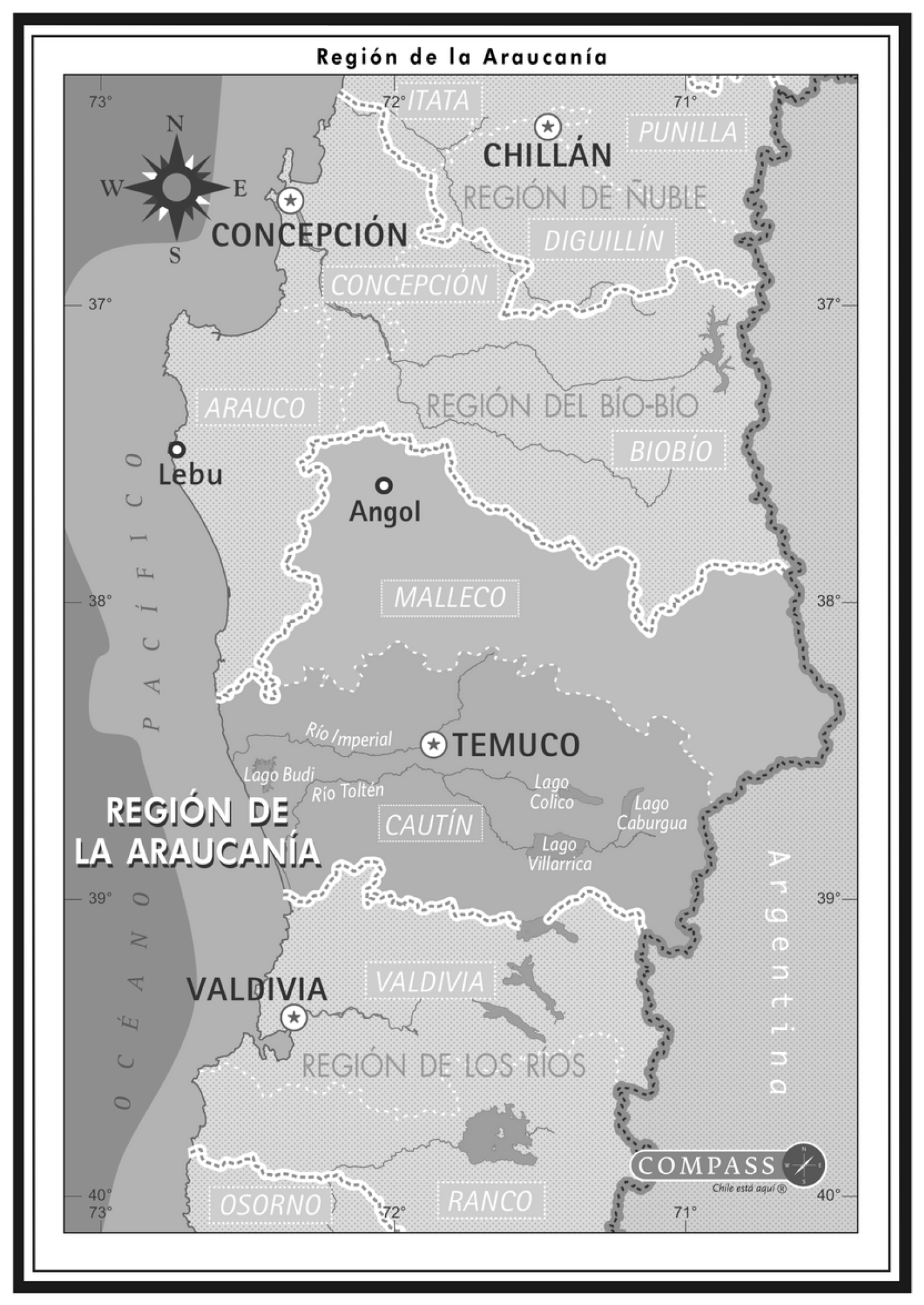
The methodological approach employed consisted of adopting an applied and mixed approach, involving internal actors from the municipality of Temuco, which covers the geographical area of the commune of Temuco [
39,
40], located in southern Chile and capital of the province of Cautín, Araucanía Region (
Figure 2).
Temuco, the capital, has a population of 282,415 inhabitants (2017 census), an area of 464 km2, a density of 664.1 inhabitants per km2, and an altitude of 122 m above sea level. The Araucanía region, which has a population of 957,224 inhabitants residing in 381,151 households (2017 census, National institute of Statistics “INE”).
The information on Temuco is stored in an ArcGIS Geodatabase that lacks a standardized structure and supports information from different areas or departments of the municipality, which do not communicate with each other. This information has been used as a basis for generating a structure based on the ISO 19152 standard [
4], with the aim of facilitating management and decision-making at the local level.
This methodological approach entails a normative analysis of the LADM profile and its applicability in the pilot municipality of Temuco. This analysis is based on research, experience, and technical knowledge of profiles implemented internationally [
5], their adaptation, and local implementation. This has enabled the delineation of three implementation phases that address management, risks, and disasters caused by natural events or human action that affect the region and that municipalities must address in response to disasters.
The three phases under consideration take into account the LADM profile, within which the risk and disaster management solution is incorporated as a sub-package into the model. The basis of the model aligns with the fundamental structure of editions I and II of LADM 19152 [
26,
27].
Phase 1. Scope and regulatory analysis
In this initial phase, the implementation of the model entailed the identification of wildfires in the region as the primary risk factor that municipalities must address during the summer season.
The first phase addresses the scope and regulatory framework required to integrate wildfire risk management into a multipurpose cadastre. It begins with risk identification, where historical wildfire data from CONAF and MODIS Terra/Aqua imagery is collected and analyzed for Temuco. This step produces a georeferenced baseline map of wildfire hazards, with its effectiveness evaluated by the percentage of critical summer seasons between 2018 and 2025 successfully covered by both satellite and official data.
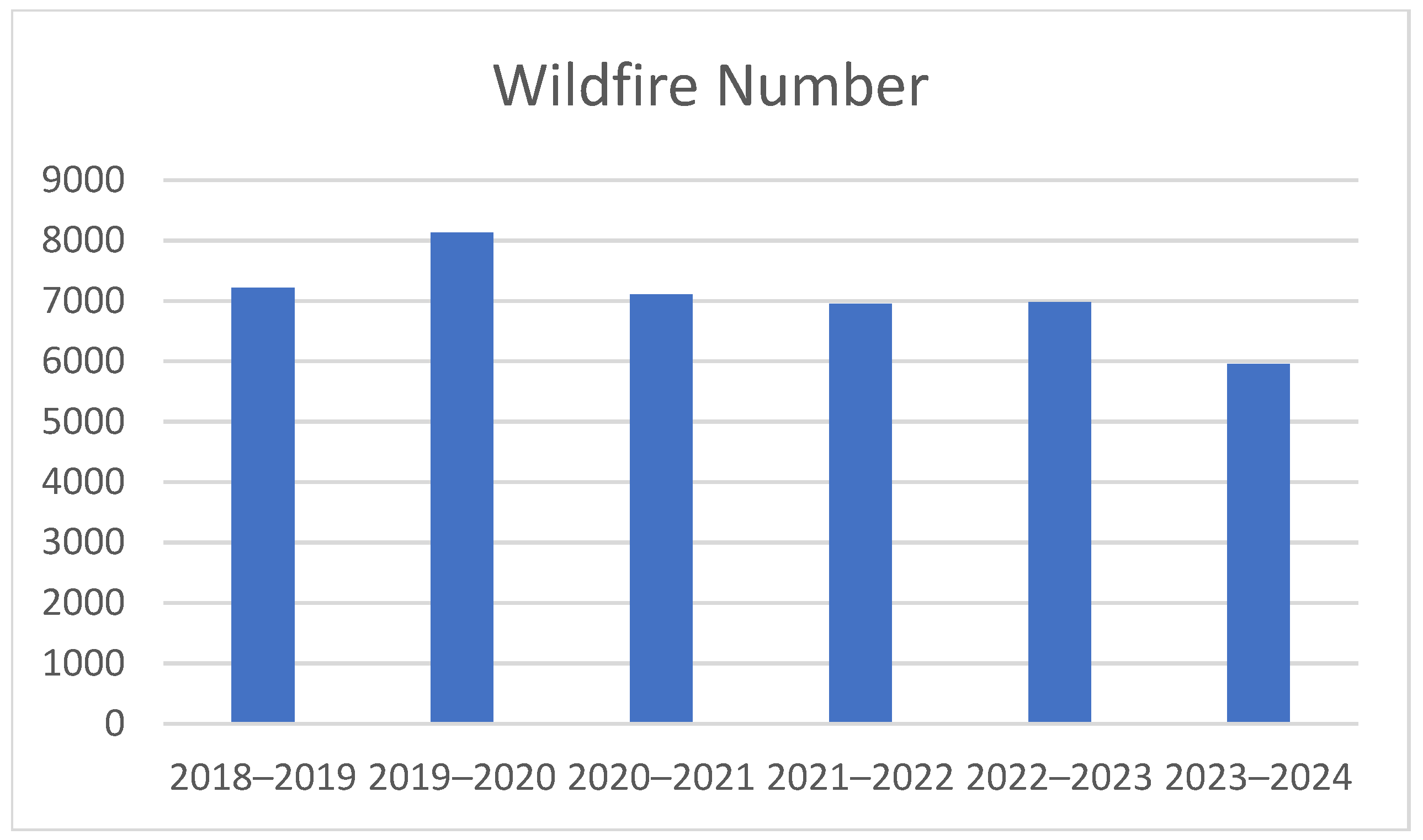
The subsequent graph (
Figure 3) provides a synopsis of historical occurrences in the region and the areas affected in hectares (ha) due to wildfires, based on public information from the National Forestry Corporation (CONAF). The map displays data acquired from the Terra and Aqua satellites, equipped with MODIS sensors, which provide surface temperature information crucial for wildfire monitoring.
According to the Chilean regulations, which are in accordance with the risk and disaster management plan [
36], guidelines for dealing with crisis situations caused by natural or man-made risks and disasters have been established. These guidelines include the development of plans for rapid response to disaster situations [
40].
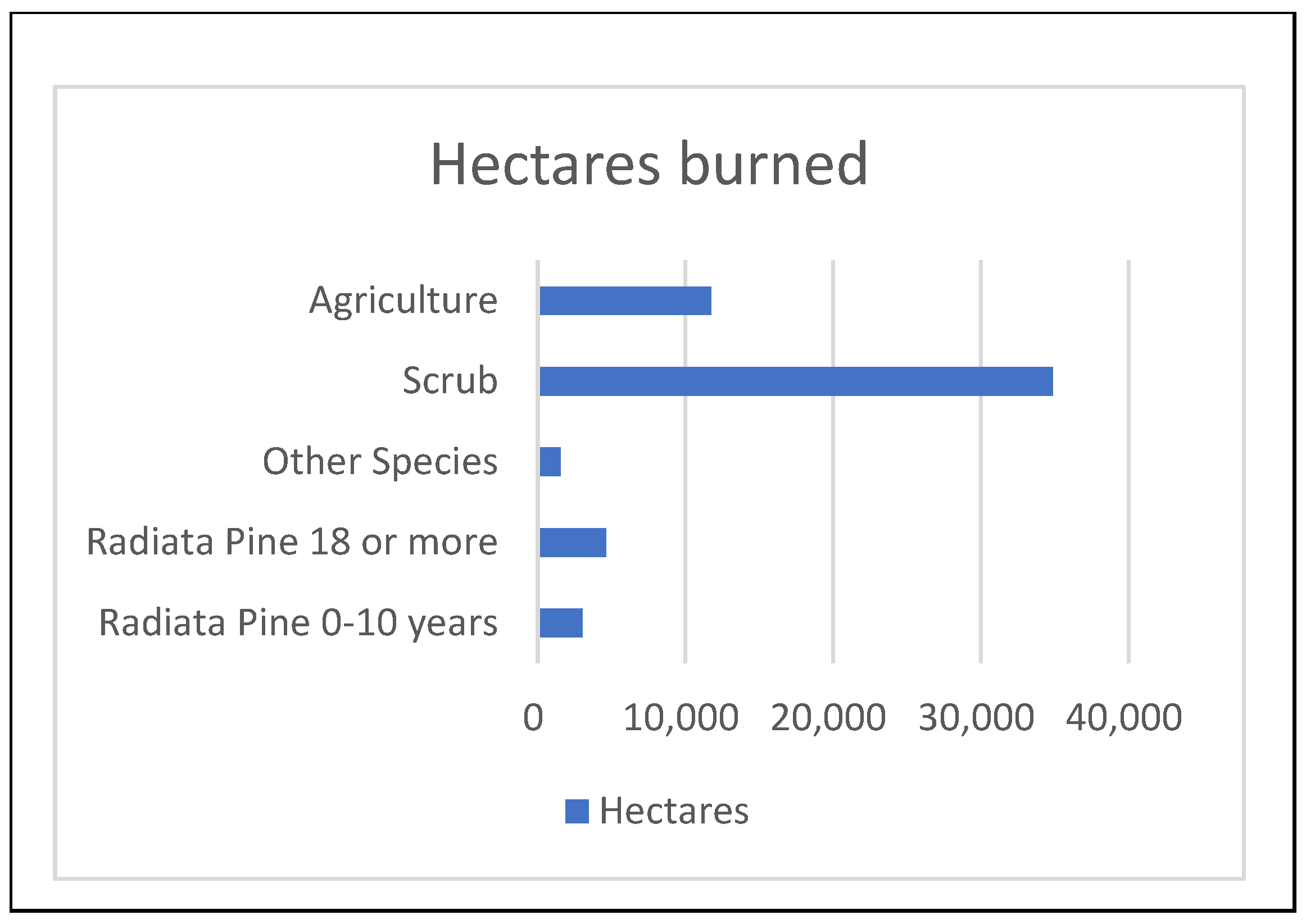
As an example, and based on information from CONAF, the main species burned as fuel in the 2023–2024 period are detailed below (
Figure 4).
This reference offers insight into the scope of forest fires and their impact on the territory, which is administered by municipalities that are obligated to have their own disaster response and action plans.
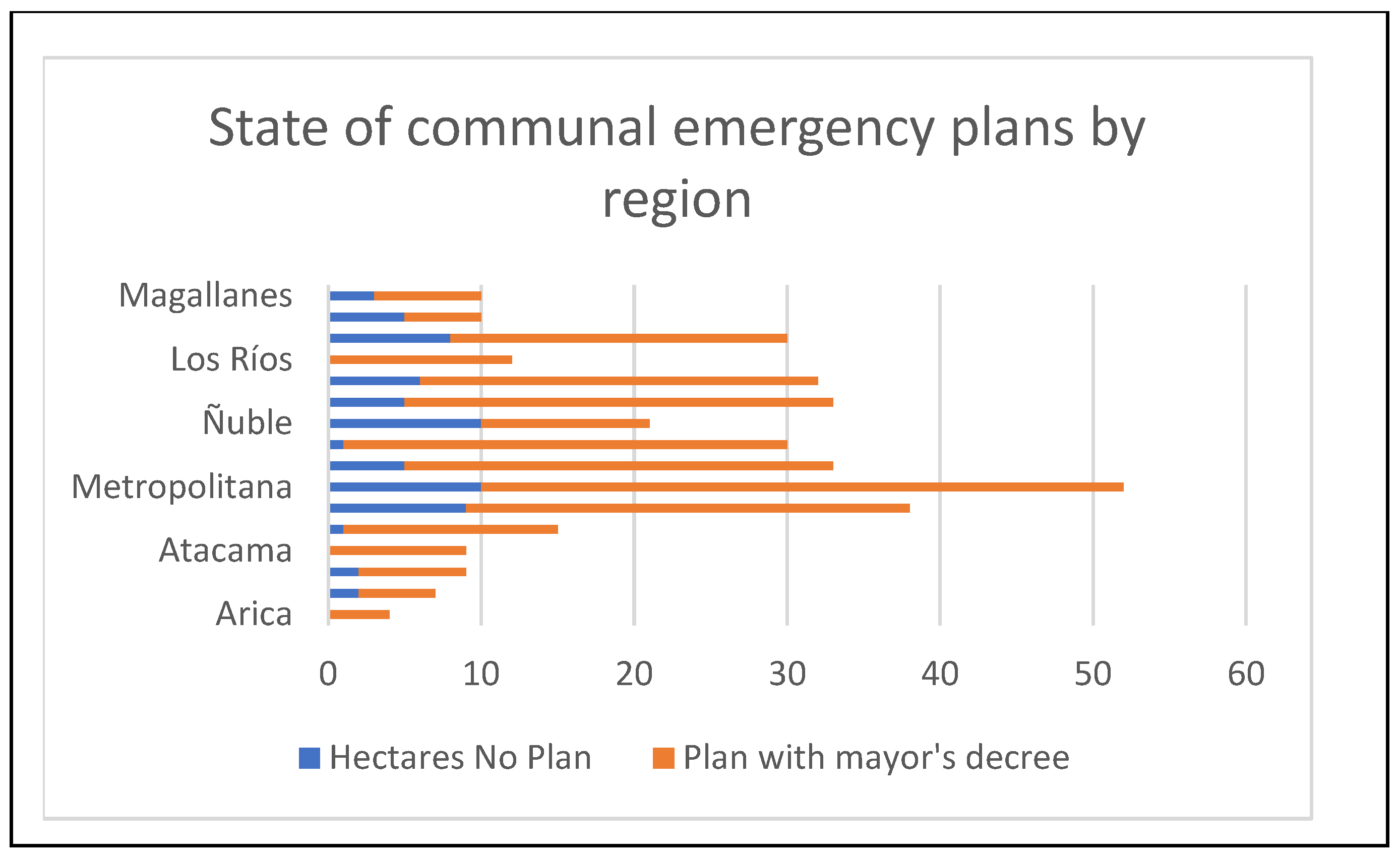
Figure 5 shows the status of community emergency plans by region.
The municipality of Temuco, selected as a case study, has developed an emergency plan [
21] as a management instrument, accessible via a PDF document. However, this plan does not incorporate spatial data. The plan is designed to address the three most prevalent natural disasters in the region—wildfires, floods, and earthquakes. Consequently, the response phase to risks and disasters becomes imperative for the management of local authorities’ actions.
In terms of wildfires, the following
Table 1 shows the hectares burned during the summer periods, with 2018–2019 and 2022–2023 standing out as the most complex for the municipal authority.
Complementing this, a regulatory review examines national and municipal regulations, identifying gaps in the use of geospatial information. The expected outcome is a comparative report linking legal frameworks with geospatial requirements, evaluated by the number of regulations incorporated into the model.
To strengthen territorial understanding, a territorial assessment develops a dashboard that summarizes wildfire occurrences and hectares affected. This tool visualizes the spatial extent of affected areas and historical trends, with accuracy assessed by comparing hectares mapped against official records and ensuring the representativity of wildfire periods. In parallel, a technological gap analysis highlights the limitations of current PDF-based emergency plans, documenting the absence of spatial data compared to GIS-enabled alternatives. The ratio of non-spatial to GIS-supported plans serves as the metric for quantifying this gap.
Finally, the phase introduces standardization guidelines and response simulation to test the integration of wildfire risk into the LADM. Subpackages are defined for hazards, vulnerabilities, and response measures, with alignment to ISO standards and interoperability indicators used as evaluation metrics. Simulated emergency scenarios further demonstrate the benefits of GIS, providing evidence of reduced response times and improved decision support. The effectiveness of this step is measured through the estimated reduction in decision-making time compared to current PDF-based workflows.
Together, these actions establish a comprehensive baseline—legal, technical, and operational—that ensures the proposed model not only complies with Chilean regulations but also extends LADM to incorporate disaster risk management in a practical and interoperable manner.
Phase 2. Solution development and adaptation
Phase 2 is characterized by the adoption of a method focused on land administration, which Kalantari (2015, University of Melbourne, Melbourne, Australia) regards as the most appropriate within the framework of agile software development [
25].
The proposed roadmap is structured in stages that encompass organizational motivation, institutional actions, interpretation of information, data organization, governance and commitment, and finally, production capacity.
For the Municipal Planning Secretary (SECPLA) and other departments of the Municipality of Temuco, it is imperative to manage cadastral information in a Geographic Information System (GIS). This approach enables the centralization of information according to its geospatial component, facilitating the acquisition of knowledge regarding heritage, critical infrastructure, threats, vulnerabilities, cadastral information, and assets within the municipality’s administrative area. This, in turn, ensures the efficient control of the territory administered by the Municipality of Temuco.
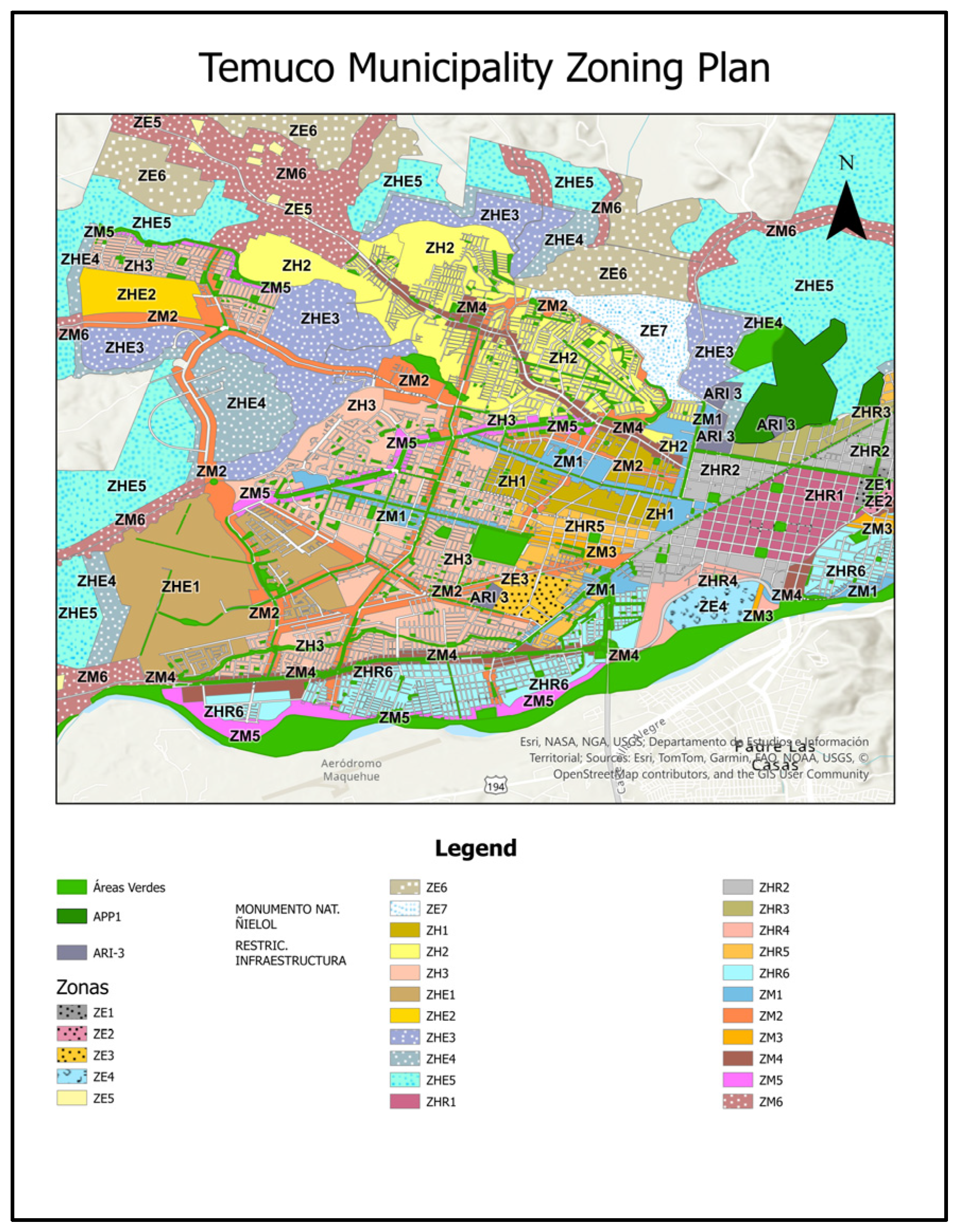
In addition to the development of a cadastral information system, there is a necessity to link and model the geographical environment, considering additional variables, such as the territorial planning instruments managed by the municipality. In this case, the Communal Regulatory Plan and its respective zoning are pertinent examples (
Figure 6). This measure is intended to enhance transparency regarding the information disseminated to citizens concerning the various uses and restrictions applicable to their properties. Conversely, units such as risk and disaster management must map natural and anthropogenic hazards, territorial vulnerabilities, and infrastructure and the environment. These elements collectively constitute community risk and must be identified in a Geographic Information System (GIS) viewer. Such a viewer enables monitoring, management, and mitigation of risks within the territory. It facilitates the implementation of strategic actions that enable a response to these types of events [
41].
- 2.
Institutional Actions
The initiation of institutional actions is predicated on the acceptance of the implementation of a multipurpose cadastre based on an international standard. Consequently, the meetings held with SECPLA were significant, given the scope of the municipality’s objectives. In pursuit of this goal, several steps have been undertaken, encompassing the following.
A formal meeting was conducted with the Municipality of Temuco to present the Multipurpose Land Registry. During the session, the scope of the registry was explained, the proposals specific to the municipality were outlined, and the potential benefits were analyzed. Furthermore, relevant international experiences were discussed as reference frameworks.
The Department of Territorial Studies and Information has invited professionals to present on geodatabase structure. The invited professionals will include those with the relevant credentials to speak on the subject, and they will present the structure of geodatabases, feature datasets, and feature classes. In addition, the invited professionals will present tables that demonstrate the management of information.
- 2.
Definition of multipurpose cadastre project meetings
To this end, a series of weekly and biweekly meetings have been scheduled over the course of the next year, with the objective of developing a multipurpose land registry.
- 3.
It is hereby proposed that several viewers and dashboards be created with Esri’s ArcGIS platform, with municipal infrastructure information in the commune and risk areas. The purpose of this proposal is to ensure that the risk and disaster management plan is reflected not only in a text file (PDF), but also in a Geographic Information System.
As illustrated in
Figure 6 and
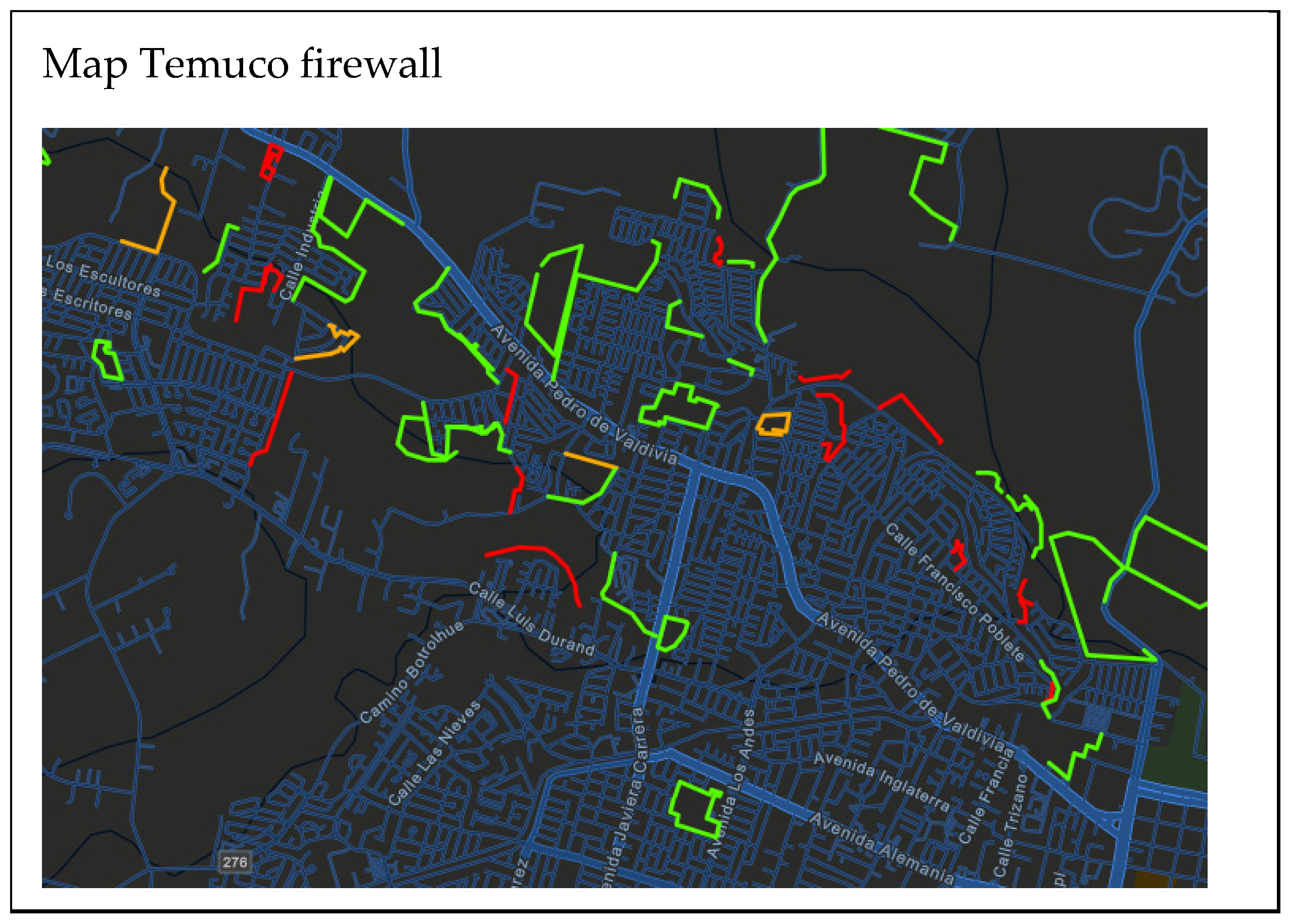
Figure 7, the zoning plan for the municipality of Temuco and the forest fire firebreaks demonstrates the municipality’s preparedness in its management area of the Municipal Planning Secretariat (SECPLA). The municipality has prepared its internal teams for events that require a rapid response.
As illustrated in
Figure 6, the various zones are delineated, To illustrate this point, consider the case of ZHE5, where the allocation of land is subject to the approval of land use permits for residential and commercial development. These subdivisions constitute a component of Chilean legislation, which grants municipalities the authority to subdivide the territory within their jurisdiction [
41].
As illustrated in
Figure 7, the map indicates the designated firebreaks for the 2024–2025 season. The color orange is used to indicate reported firebreaks, red to indicate pending firebreaks, and green to indicate completed firebreaks [
42].
The implementation of mitigation firebreaks has been achieved through the utilization of specialized machinery, with the objective of forestalling the propagation of wildfires. This process entails the extraction of combustible materials such as brush, vegetation, and fallen branches, thereby creating firebreaks. It is imperative to implement a thorough cleaning process as a preventative measure against the potential spread of fire in the event of such an occurrence.
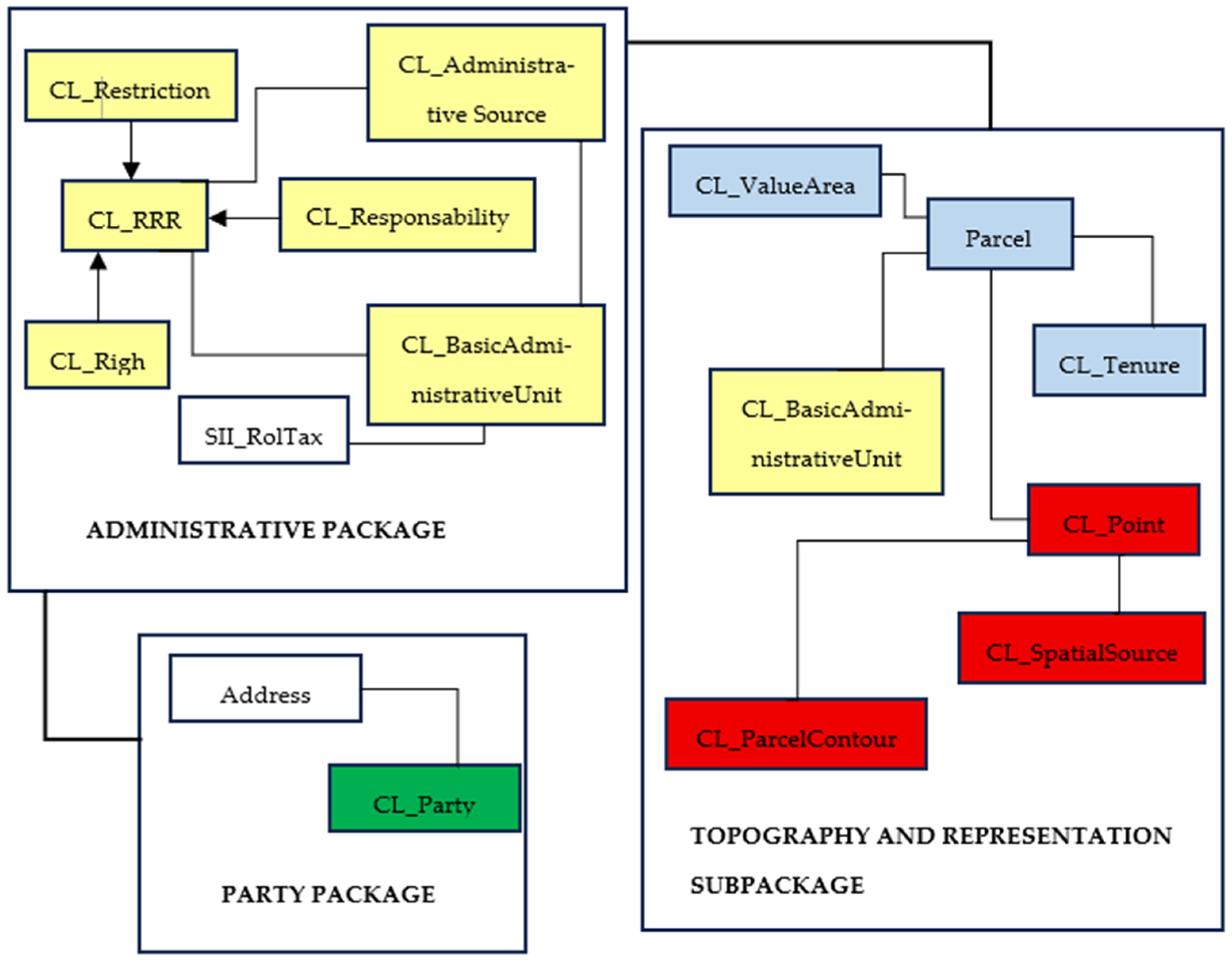
Efficient land management provides appropriate guidelines for dealing with risks and disasters caused by natural events and/or human action. This involves organizing and centralizing information so that authorities and internal actors in public services can act in the event of risks. As illustrated in
Figure 8, the data model was generated using Interlis 3.6.5 software from the core packages of the standard to be implemented in the municipality of Temuco. This core package contains the basic administrative packages: rights, restrictions, responsibilities, and spatial unit.
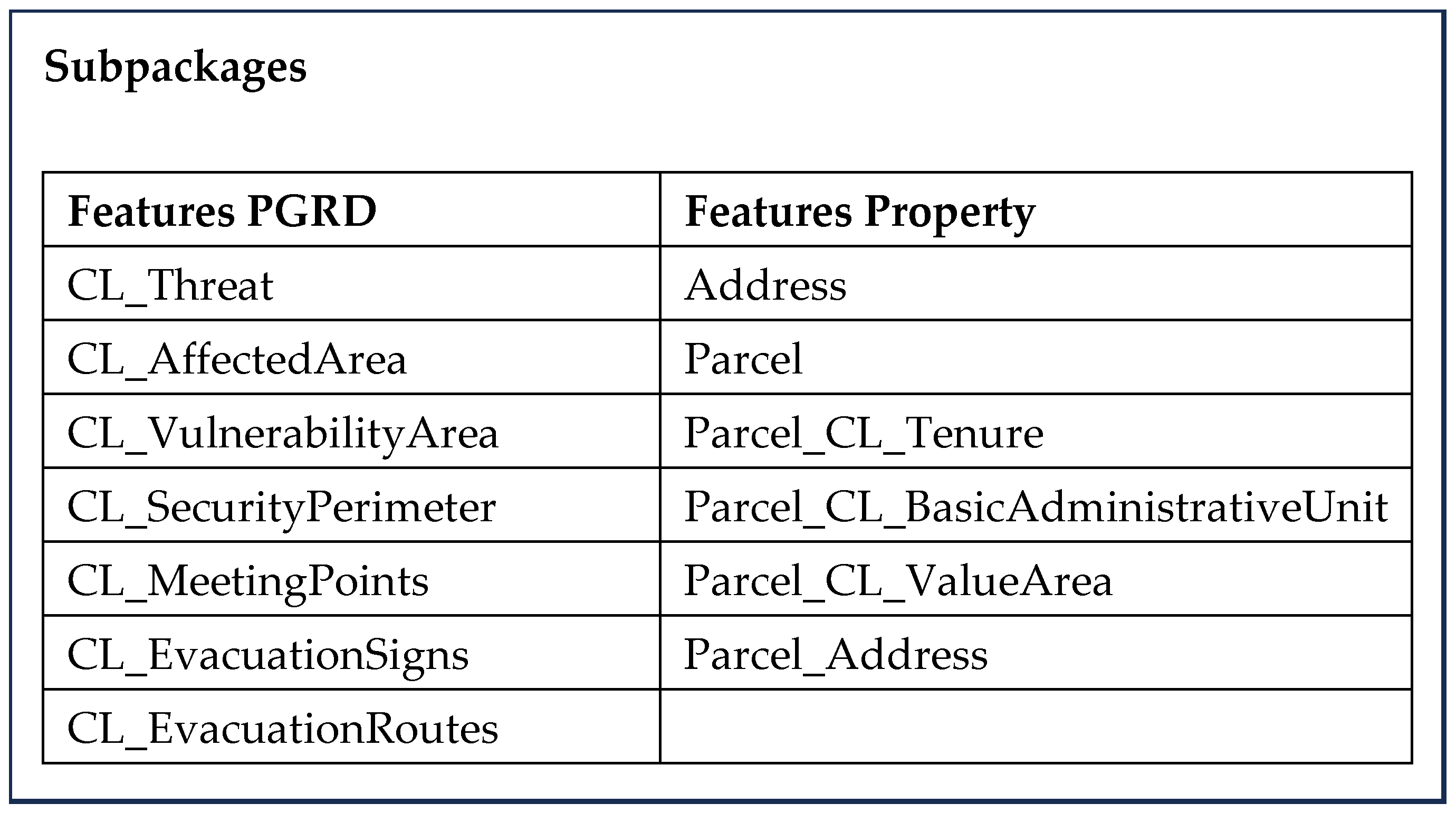
The flexibility of the model strengthens the fundamental model (core), which is the basis of the geodatabase constructed, and the sub-packages (
Figure 9) that maintain information from the municipal departments around the territory, such as planning, security, infrastructure, emergency management, etc., form a series of features that can be modified depending on the reality of each municipality in Chile. It is noteworthy that Chile is a narrow strip of land measuring 4270 km in length, with a maximum width of 445 km and a minimum width of 90 km. This geographical diversity is further compounded by the presence of diverse climates, soil types, and territorial conditions, necessitating a comprehensive and nuanced administration approach by the authorities, tailored to the specific characteristics of each territory in accordance with its geographical location. The importance of implementing territorial administration under a flexible standard that facilitates internal and external interaction within each municipality is therefore paramount.
- 3.
Governance, commitment, and products
The prevailing institutions are committed to inclusive governance, which permits the involvement of organizations representing civil society, the private sector, academia, and priority groups, with an emphasis on social participation. Consequently, municipalities, such as autonomous public law corporations with legal personality and proprietary assets, are obligated to confront these challenges through their regulatory framework and the instruments provided by law. The fundamental purpose of these institutions is to address the needs of the local community and to facilitate its involvement in the economic, social, and cultural advancement of their respective municipalities [
43].
It is important to acknowledge that the majority of municipalities lack a comprehensive risk and disaster management plan. This deficiency is primarily attributable to a shortage of trained professionals and insufficient local investment in this crucial domain, which hinders the implementation of effective strategies. The aforementioned circumstances have culminated in the generation of PDF documents, a situation that is poised to precipitate a municipal crisis due to a paucity of resources, as asserted by the authorities of the Association of Municipalities (Amuch) [
30]. The implementation of a geographic information system (GIS) has been shown to facilitate the work of professionals from the different departments that comprise the municipality, especially if the GIS is multipurpose in nature, given a strong fundamental or core model and sub-packages that precisely address the needs of each municipal department.
In this presentation, the emphasis is placed on the significance of multipurpose cadastres, which empower municipalities to address territorial concerns that extend beyond the conventional tax-related emphasis of cadastres. These concerns encompass a range of issues, including infrastructure, emergency preparedness, disaster management, and environmental sustainability, among others.
The implementation plan entails the establishment of a centralized repository (Geodatabase), which will encompass feature classes and tables, in addition to the relationships between these data. This will facilitate the storage of information within the same database. This approach enables the implementation of a scalable model that facilitates migration to formats capable of accommodating an increased number of users and editors working with the data. This approach enhances data integrity by ensuring the definition of domains, subtypes, and topology. It facilitates the creation of spatial and attribute behaviors, thereby enabling the elimination of input errors and the maintenance of spatial and attribute relationships in the data.
For the summer months (January/February), an application (prototype) is being developed, based on the model developed, to respond to wildfires and enable action to be taken to assist the population. The prototype is designed to facilitate a rapid response to natural disasters.
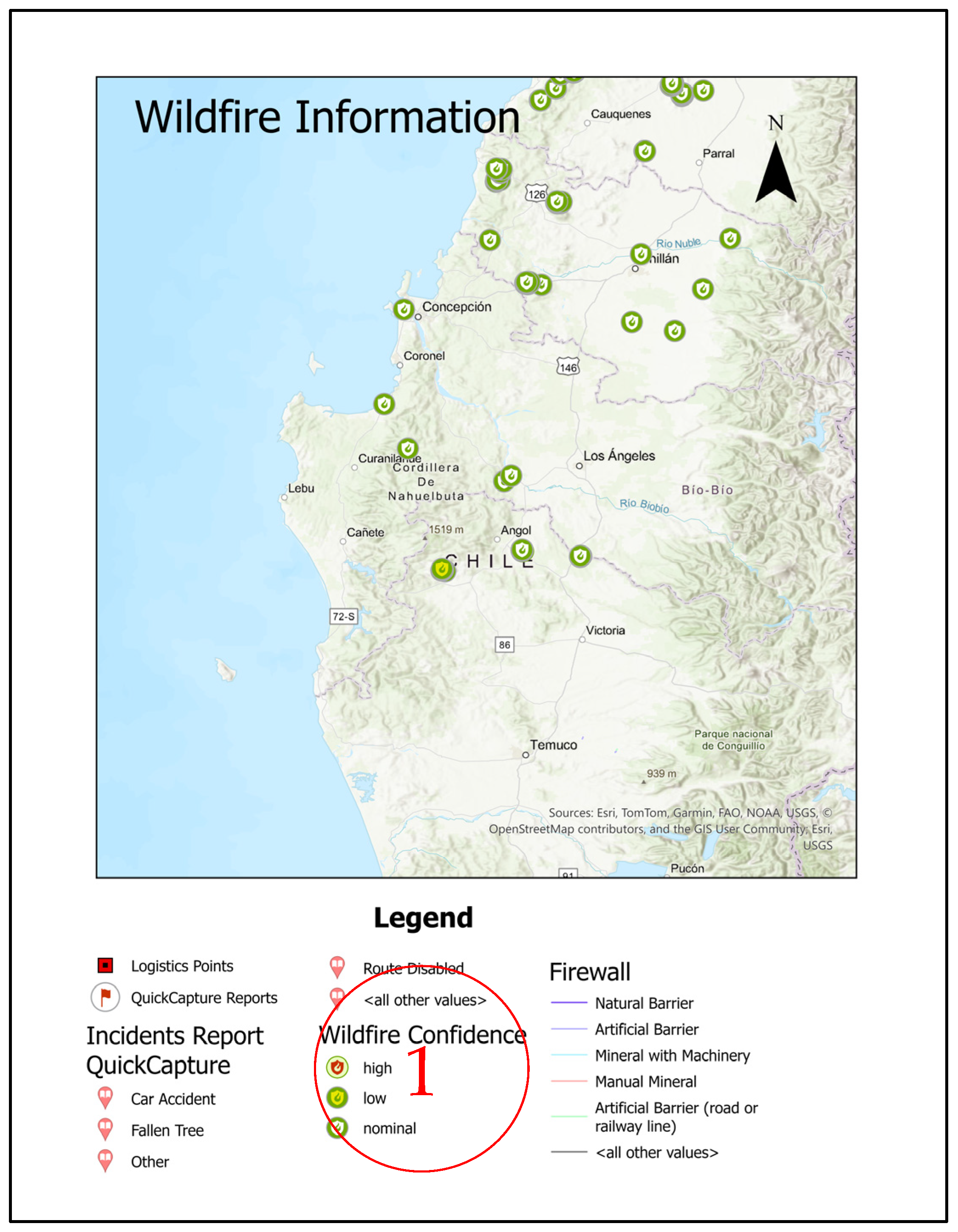
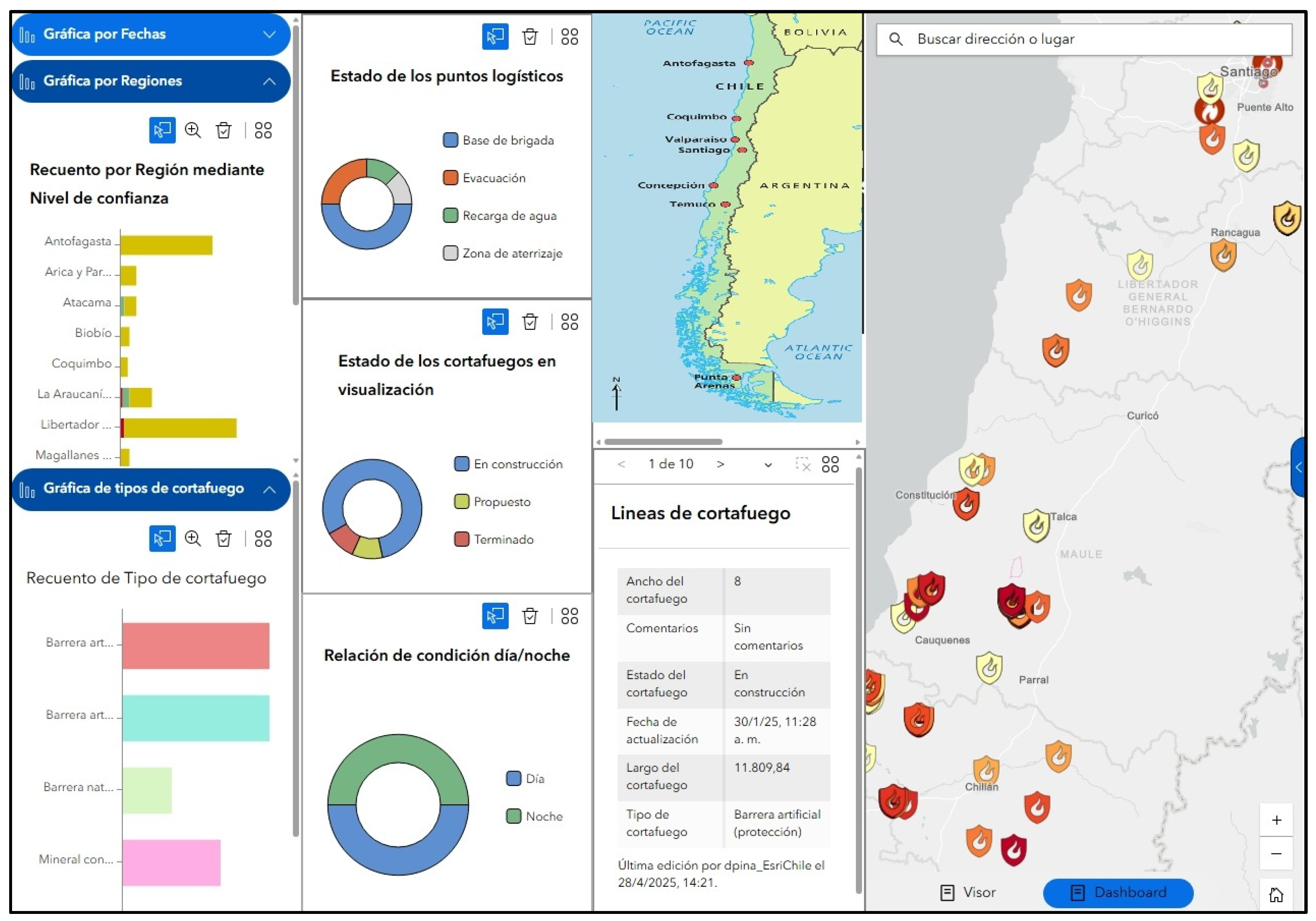
The prototype is composed of two applications of a web-based fire map that incorporates information from the MODIS satellite (providing global heat areas) [
44,
45], as illustrated in
Figure 10 and
Table 2, and a dashboard with detailed background information on each event (
Figure 11).
In
Figure 10, circle 1 displays a legend indicating fire probability—classified as high (red), medium (yellow), and low (green)—together with the types of fire barriers, whether artificial or natural. Circle 2, in turn, provides details on thermal intensities and fire radiative power (FRP), defined as the rate of thermal energy released by active fires and commonly used as an indicator of fire intensity and biomass combustion.
Although MODIS provides reliable indicators such as fire probability and fire radiative power (FRP), it is important to acknowledge the inherent uncertainties of the system. These are derived from the spatial resolution (1 km), potential interference from clouds or smoke, and the probabilistic thresholds applied in fire detection algorithms. It has been demonstrated by earlier research that the MODIS system has a tendency to underestimate the size of small fires and to report commission errors with a range of 10–20% [
42,
43]. Consequently, while the dashboard integrates MODIS data as a robust proxy for monitoring fire intensity and barriers, it is imperative to interpret the results as indicative rather than absolute measurements.
The application incorporates two tabs at the bottom that contain information gathered from the field using ArcGIS FieldMap (implemented on smartphones) in order to provide logistics information, firebreak lines, and incident and fire reports. The dashboard provides statistics on events that have occurred in the territory, as well as reliable background information based on MODIS satellite data (Terra and Aqua satellites) regarding the temperature of the Earth’s surface.
Control panels facilitate decision-making, as authorities have a more comprehensive understanding of the disaster and its scope in the territory [
46], improving communications and the response of the agencies or services in charge of the emergency. This initiative is designed to facilitate the construction of firewall and logistics points. The implementation of these measures is expected to enable the community to respond effectively to territorial emergencies caused by fires, floods, or other events that pose a threat to local life and infrastructure.
Phase 3. Implementation
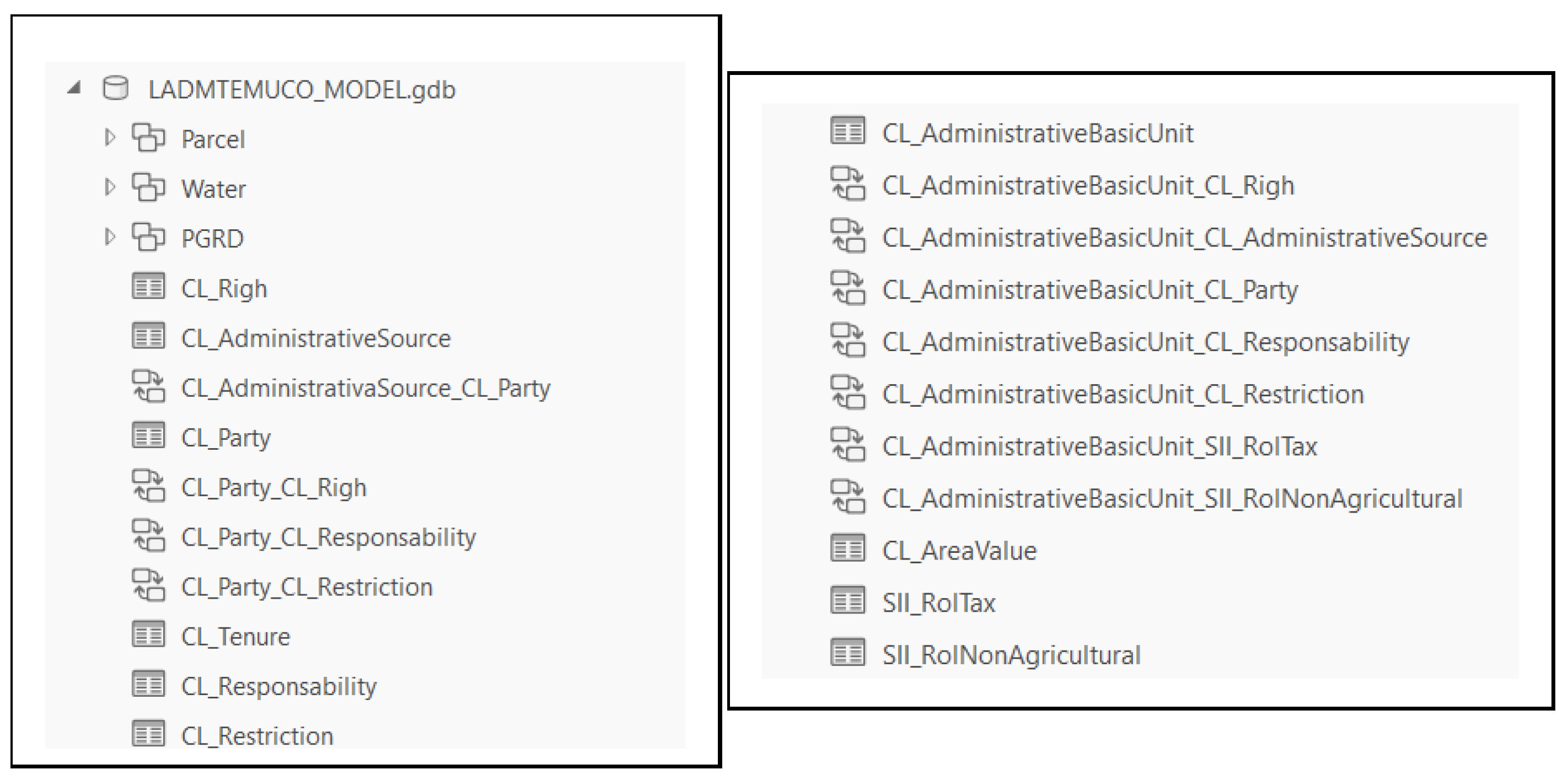
In this phase, a prototype geodatabase was developed based on the model generated with the Interlis tool, using municipal information from Temuco as a reference (
Figure 12). The process was informed by a series of stakeholder meetings and designed as an iterative pilot project, initially relying on data from the municipality’s Risk and Emergency Management Department.
As illustrated in
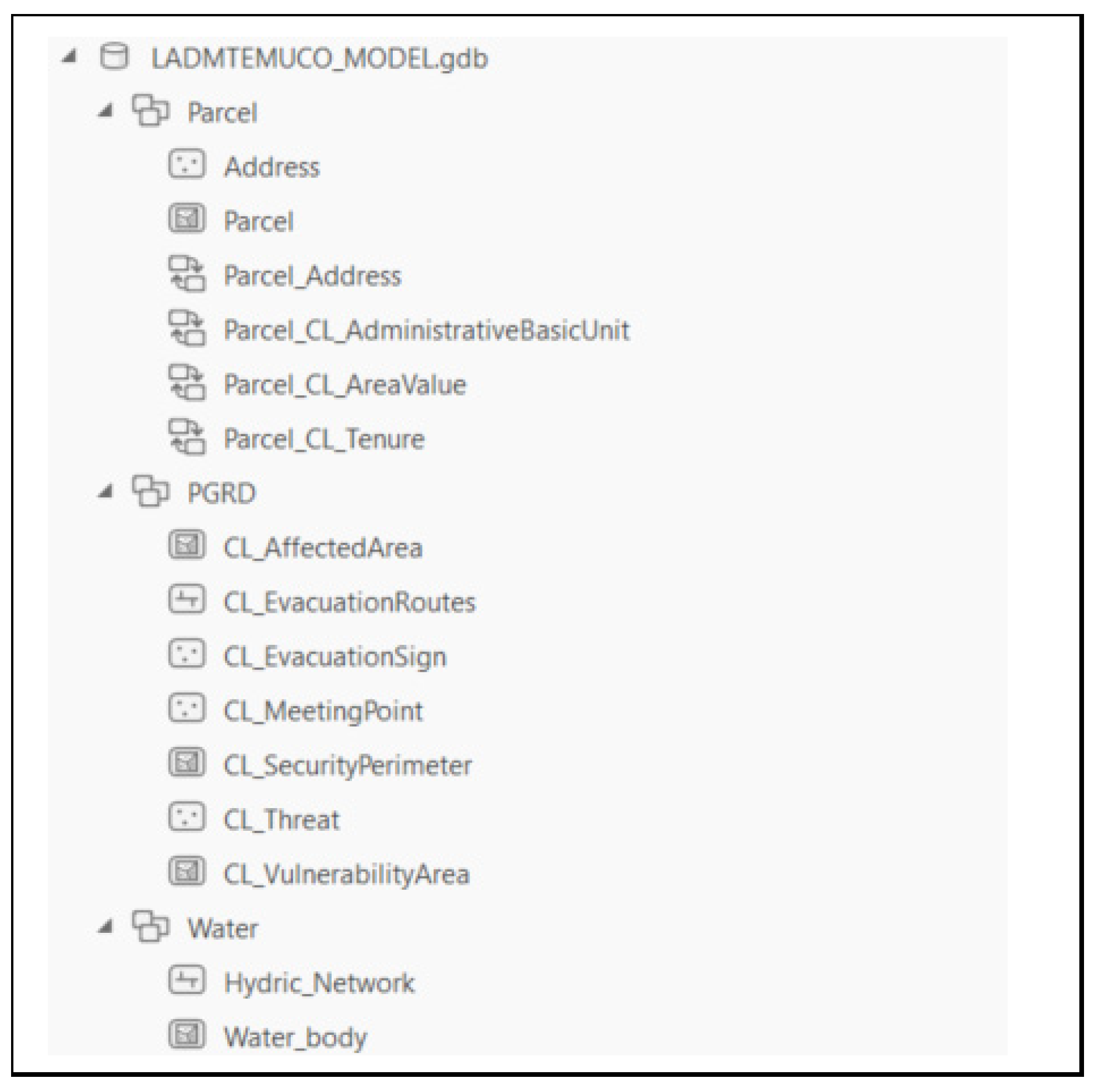
Figure 12, the geographic database has been structured using Interlis software for the ArcGIS Pro 3.6 Software geodatabase, incorporating entity classes and tables that facilitate the establishment of relationships between them, thereby populating the model. These datasets are defined as containing feature classes related to the aforementioned themes, in addition to tables and relationships between these feature classes. For instance, CL_Party_Right establishes the rights relationship with the interested parties (owners), or CL_AdministrativeBasicUnit_CLResponsibility establishes their responsibilities at the parcel management level. As illustrated in
Figure 13, the pilot integrates multiple feature datasets relevant to risk and disaster management. The Parcel dataset incorporates cadastral information from the SII and its relationships, while the Water dataset introduces the feature classes Water_body and Hydric_Network, both critical for addressing wildfires in summer (January–February) and floods in winter (July–August).
In addition, the Risk and Disaster Management Plan (PGRD) dataset represents a legal requirement for Chilean municipalities, which to date has largely been limited to static PDF documents; transferring this information into GIS format significantly enhances its utility for territorial management. The expected result of this step is a functional geodatabase structured around LADM principles, capable of integrating cadastral, hydrological, and emergency planning data into a coherent spatial framework.
Evaluation metrics include the completeness of feature datasets incorporated into the pilot, the percentage of PGRD information successfully translated from PDF into GIS, and the degree of stakeholder validation achieved through the iterative process.
4. Results
In the initial phase (2001–2011), land governance emerged as a pivotal domain due to its emphasis on ensuring access to land, water, and other essential resources, all of which are indispensable for the advancement of our societies. The ISO 19152 standard (2012) saw a significant expansion of its initial scope, incorporating a diversification of approaches that extended beyond the realm of land administration. This expansion encompassed a range of disciplines, including culture, infrastructure, the environment, and social and economic aspects, among others. The flexibility of the LADM 19152:2012 model is a contributing factor to its adoption in several countries worldwide.
This initiative has given rise to the establishment of customized profiles, which each nation adapts according to its specific realities, legal frameworks, organizational structures, or needs. This approach enables the realization of an impact on territorial development. This flexibility is maintained in its second edition, Parts 1 and 2.
The results presented here are mainly derived from the empirical research conducted in this study, specifically the implementation of the LADM-based Chilean profile in the Municipality of Temuco. These findings include the structuring of sub-packages in the geodatabase, the development of the Risk and Disaster Management Plan, and the creation of dashboards and web-based applications that support decision-making in local risk scenarios such as forest fires and floods. The findings of this research and the implementation of the LADM as a Chilean profile demonstrate that maintaining a robust main model is essential for developing other sub-packages, as evidenced by the ISO 19152:2012 standard and its subsequent second edition, akin to the Korean profile. This establishes a standard from the outset, thereby laying the foundations for the design of other models or sub-packages. At the same time, references to Colombia, China, and California State in US, are included as secondary literature. These cases serve as comparative benchmarks to demonstrate the adaptability of the LADM standard in different contexts and to highlight the relevance of the Chilean implementation.
Within the Latin American context, Colombia exhibits the greatest cultural and linguistic affinities with Chile. It is in this region that the efficiency of a core model’s definition and fortification becomes evident [
47], paving the way for the generation of expanded models or submodels, as delineated in the Colombian profile.
At the geodatabase level, the data structure has enabled the delineation of sub-packages that are aligned with information of interest to the stakeholders of the Municipality of Temuco. This has facilitated the initial development of applications that offer responses to territorial development, particularly in terms of risk and disaster management. For instance, the experience in China, where sustainable urban development is promoted [
48], has allowed for the addressing of the challenges associated with the city’s rapid growth, thereby strengthening territorial governance.
The alignment of social and technological factors affecting land administration [
9] guides governments in the establishment or coordination of territorial policies that enable efficient management. In many cases, these measures translate into short-term solutions that remain in place during the term of the current government in power. The establishment of a legal framework that facilitates the standardization of information is therefore paramount, as evidenced by the Colombian case [
47]. This approach enables the enhancement of cadastral documentation at the national level by implementing the LADM, thereby facilitating the implementation of standardization regulations at the municipal level through legal provisions.
The results of the model defined as the Chilean profile align with the structure of all international models at the core or main model level. However, there are discrepancies when extending the models (extended models) or sub-packages, as they adhere to each country’s unique technical and legal regulations. Consequently, the primary contribution of this study is the development of a standard that enables Chilean municipalities to manage their information efficiently, facilitates interoperability, and establishes the foundation for coordinating territorial policies to benefit citizens under local administration. This finding aligns with the research and academic articles cited, which underscore the importance of effective territorial administration, particularly in the context of risk and disaster management caused by natural phenomena. This issue has been particularly highlighted in the municipality of Temuco, where significant Geographic Information System (GIS) solutions have been developed to address catastrophic events within the territory [
49].
This initiative offers the Risk and Disaster Management Plan a foundation of dashboard with graphical and statistical data, accessible via web-based solutions. These solutions empower stakeholders to establish response policies for crisis situations, thereby enhancing the plan’s efficacy. This information can be disseminated to social actors, enabling their contribution to territorial development, particularly during the summer months when forest fires, both natural and man-made, result in the destruction of thousands of hectares of forest production and native forest. This has ramifications for crops, infrastructure, and human lives. Forest fires constitute a mounting challenge for effective planning and policy development. The state of California in the United States exemplifies the intricacy of local planning and the social vulnerability to such events [
32].
The methodology outlined in the roadmap proposed by Mohsen Kalantari has facilitated closer ties with internal municipal actors and is well suited to providing solutions to risks and disasters [
25]. This phenomenon is particularly salient in a nation where the absence of a legal mandate compelling all municipal entities to adhere to a uniform land administration standard hinders the propagation of the outcomes of this pilot initiative to the broader municipal landscape of Chile. This study establishes a foundation for subsequent research in this field.
The proposed data model facilitates standardization, as provided by ISO 19152 [
4], while aligning all internal actors within the municipality toward a single source of information. Its centralization facilitates interoperability, transparency, and decision-making with the participation of internal and external actors. This approach fosters transparency regarding land information, thereby mitigating informality in land tenure and enhancing governance from a risk mitigation perspective, particularly in contexts such as flood mitigation. It underscores the significance of land use planning, a point emphasized by R. Sarkissian and M. Sayah (2022) [
50] in their article “Land Use Planning to Reduce Flood Risk: Opportunities, Challenges and Uncertainties in Developing Countries” [
6].
The empirical findings of this study corroborate the initial hypothesis by demonstrating the feasibility and effectiveness of implementing the ISO 19152 standard within the Chilean context through the development of a localized LADM profile. The findings indicate that the maintenance of a robust core model is imperative for the extension of the framework into context-specific sub-packages, thereby ensuring interoperability, standardization, and efficient management of territorial information. In the case of Temuco, the implementation of the Chilean profile at the geodatabase level enabled the development of the Risk and Disaster Management Plan, supported by dashboards and web-based solutions that enhance preparedness, response, and recovery capacity in the face of recurrent natural hazards such as forest fires and floods. A comparative analysis reveals Colombia as a significant regional exemplar, where the establishment of a central model has facilitated the development of consistent national and municipal submodels. International experiences, including those in China and California, demonstrate the adaptability of the standard to address complex challenges such as sustainable urban growth and social vulnerability. The findings of this study demonstrate that the implementation of ISO 19152 leads to the promotion of standardization, the enhancement of transparency, the reduction in informality in land tenure, and the strengthening of governance. This is achieved by enabling the coordination of municipal policies for disaster risk reduction, thereby enhancing resilience and informed decision-making in urban contexts.
5. Discussion and Conclusions
A review of the experiences of implementing a multipurpose cadastre demonstrates the value of this research in optimizing processes and enhancing the efficiency of land administration. This has led to the authorities’ justifiable investments, as evidenced by the case of Turkey, where the investment promoters determined that the cadastre is a dynamic activity in which the initial investment can be recuperated [
51]. The coordination of efforts among the state, represented by cadastral entities, and civil society has been identified as a crucial element in fortifying territorial responses. In Turkey’s experience, there was a 16% decrease in land prices, in addition to a 1.98% reduction in appeals to the courts [
51].
A comprehensive review of the extant literature reveals a notable interest in the standardization of information from a technical perspective, with the overarching objective being the efficient administration and management of land. This standardization is congruent with the implementation of information and communication technologies. The primary deficiency identified pertains to the absence of citizen participation, a crucial element in the realm of territorial development. Stakeholders, being a pivotal component of this process, play a pivotal role in shaping the comprehensive development of the territory. However, the current approach fails to address this fundamental aspect, thereby compromising the efficacy of “smart community” development initiatives, which are widely recognized as the cornerstone of territorial advancement.
In Chile, the property registry adheres to a conventional model characterized by a unified cadastral and land tax structure, involving multiple institutions, with a primary focus on the valuation of both movable and immovable property. The Internal Revenue Service holds the highest rank, followed by institutions such as the Military Geographic Institute, the Ministry of National Assets, the National Land Information System, and the municipalities of the State of Chile.
The proposed multipurpose cadastre offers advantages such as the integration of cadastral information with legal, environmental, and infrastructure data, facilitating decision-making for better administrative land management. The implementation of this system in a Geographic Information System (GIS) facilitates the storage of standardized data, thereby enabling its updating and analysis, as well as the study of patterns in the territory. Temuco serves as a paradigmatic example of this phenomenon, having standardized information in a geodatabase using the ISO 19152:2012 standard [
4] as a reference, centralizing information, and involving other municipal departments.
Article 28 of Chilean Law 21.364 establishes the development of the Community Plan for Disaster Risk Reduction. This instrument is designed to strengthen the mitigation and preparedness of community plans during emergencies, thereby improving municipal management in response and recovery. This information has been incorporated into the Geodatabase of the Municipality of Temuco, facilitating data exchange between organizations and public services, where standards promote interoperability. The integration of updated cadastral data facilitates the formulation of effective policies for territorial development and planning, promoting coordination in response to forest fires and enhancing disaster resilience.
From this perspective, our contribution lies in defining a multipurpose LAND profile for Chile through this cadastral model. This model standardizes information, facilitates decision-making, and enables the coordination of public policies in territorial development. In response, the Municipality of Temuco is implementing the model to centralize information, structure its data, and define plans such as the Management, Risk, and Disaster Plan and the Climate Action Plan, which will be addressed within the geospatial platform that Temuco seeks to implement.
As Eva-Maria Unger (2018) [
6] has noted, effective disaster prevention, response, and recovery strategies depend on accurate and up-to-date information on land tenure [
6]. In many cases, this information is either non-existent or outdated. Therefore, there is a clear need to integrate land administration with risk and disaster management.
The methodology implemented by Mohsen Kalantari is consistent with the proposed roadmap [
25]. It has enabled the Community Planning Secretary to standardize information in the Municipality of Temuco. Furthermore, it has provided professionals with institutional actions that have led to the centralization of information and encouraged the participation of other departments, such as the Municipal Works Department and the Emergency Department. In the short term, the implementation of this system will enable the provision of products for risk and disaster management, including forest fires during the summer months and floods during the winter season. Additionally, the centralization of information and the accessibility of historical data will facilitate a comprehensive understanding of the territory’s historical context. This, in turn, will support the enhancement of resilience in the face of natural disasters.
The proof-of-concept tests implemented have been well received by municipal managers. Future research will aim to expand the functionalities and reassess the proposed data model so that it can adapt to the community climate change action plan mandated by law, support the development of utilities that facilitate citizen participation, and align with data governance models.
This research demonstrates that the implementation of the LADM ISO 19152 model [
4] as a Chilean profile provides a robust foundation for strengthening territorial governance and integrating disaster risk management into municipal practice. The pilot in Temuco shows that structuring data in a standardized geodatabase enables the development of sub-packages—particularly for risk and disaster management—that support decision-making through dashboards and web-based applications. These tools, aligned with Chilean Law 21.364 on Community Disaster Risk Reduction Plans, enhance municipal capacity to address recurrent hazards such as floods and forest fires, thereby fostering resilience. Despite the absence of a legal mandate requiring municipalities to adopt uniform standards, the Chilean pilot illustrates that a well-defined core model facilitates interoperability, transparency, and more efficient coordination of public policies. Overall, this study contributes to the design of a multipurpose land profile for Chile, promoting standardized territorial information, supporting disaster risk management, and advancing the broader goal of developing smart and resilient communities.