1. Introduction
Over the past two decades, environmental concerns regarding the accumulation of plastic waste have grown substantially, prompting international efforts to develop sustainable recycling strategies [
1]. Plastics such as polypropylene (PP), high-density polyethylene (HDPE), and polyethylene terephthalate (PET) are among the most widely consumed polymers globally due to their versatility, low cost, and durability. However, their long degradation times and limited recycling efficiency have contributed to serious environmental and waste management challenges [
2].
In response, research on plastic recycling and reuse has expanded rapidly, particularly in the construction sector, where recycled plastics are being explored as alternatives to conventional materials [
3,
4]. The use of plastics in cementitious composites, polymeric blocks, and paving materials offers an opportunity to reduce natural resource consumption and the environmental footprint of construction activities. Nevertheless, these materials still face technical limitations, including low adhesion, reduced stiffness, and variable mechanical performance, which restrict their structural applications [
5].
Recent studies have addressed these challenges using different strategies. Reference [
6] investigated the use of crushed PET mixed with industrial by-products for brick manufacturing, finding that a full replacement of sand reduced compressive strength by approximately 75%. Shinde et al. (2022) [
7] developed 100% plastic bricks made from HDPE and PP, achieving compressive strengths between 10 and 11 MPa—values comparable to clay bricks—but noted difficulties in achieving uniform melting and compaction. These findings demonstrate that while recycled plastics have potential, their manufacturing process parameters play a crucial role in determining product quality and performance.
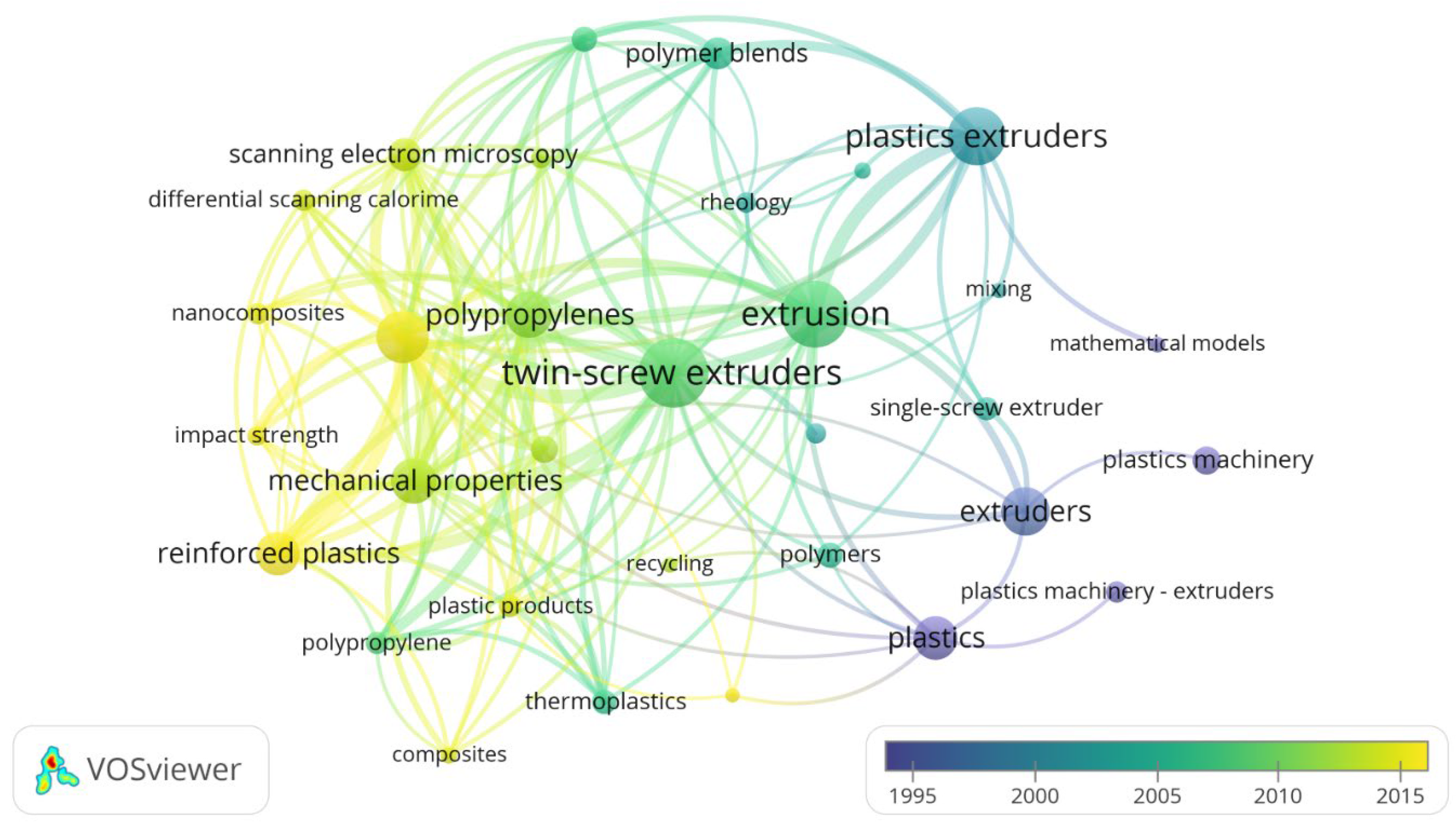
Similarly, the literature also shows the use of extruder machines to manufacture recycled plastic elements. According to a search on Scopus using the terms “plastic” AND “extruder,” 5145 articles were found. Subsequently, a bibliometric analysis was performed using VOSviewer V1.6.18 resulting in the graph shown in
Figure 1, where 32 keywords with a minimum of 200 occurrences are evidenced.
The literature shows the predominant use of two types of extruders: twin-screw (995 occurrences) and single-screw (339 occurrences). According to Wagner et al. (2014) [
8], twin-screw extruders facilitate better dispersion and combination of polymers with other compounds, which explains the frequent association of keywords such as reinforced plastic (626 occurrences) and nanocomposites (310 occurrences) with this type of extruder. In contrast, the same author points out that single-screw extruders offer excellent stability and quality in the flow of molten polymer, ensuring a consistent output. Based on these characteristics, recent studies, such as the one by Roman Junior et al. (2024) [
9], have used both extruders. In their research, they analyzed the behavior of high-density polypropylene by incorporating three types of nanofillers: calcium carbonate, Cloisite 15A montmorillonite, and graphene nanoplatelets. The mixtures were initially compounded and pelletized in a twin-screw extruder with concentrations of 0%, 0.5%, and 1% and then processed into thin sheets using a single-screw extruder. Among these parameters, extrusion temperature and screw rotational speed are key factors influencing polymer flow, homogeneity, and final mechanical properties—Wagner et al. (2014) [
8]. Despite this, the majority of the literature on recycled plastics in construction focuses on material formulations or mix proportions, with relatively few studies analyzing the process–property relationship during extrusion [
10]. A bibliometric survey conducted on Scopus using combinations of relevant keywords confirmed this trend (
Table 1).
The results of this bibliometric analysis demonstrate that while temperature and screw rotational speed are frequently studied in polymer processing in general (more than 19,000 documents for PET with the keyword “temperature”), their joint analysis in the context of construction materials remains virtually unexplored. Specifically, only one publication was found addressing these two parameters for PP in relation to construction, and none for HDPE or PET. This clear lack of studies reveals a significant research gap concerning the optimization of extrusion conditions for recycled plastics intended for construction applications.
Some notable exceptions include studies such as Somashekar & Shanthakumar (2019) [
11], who examined sisal fiber-reinforced polypropylene at varying extrusion speeds (100–200 rpm), observing that higher speeds altered the flexural modulus depending on fiber concentration. Altepeter et al. (2023) [
12] analyzed the degradation of polypropylene under different temperatures and screw diameters, concluding that lower speeds and moderate temperatures minimized molecular degradation. Similarly, Devra et al. (2024) [
13] investigated low-density polyethylene extruded at 155–195 °C and speeds of 3–6 rpm, highlighting the complex interaction between temperature, speed, and material modulus. However, these studies mainly address virgin or composite polymers rather than recycled plastics intended for construction use.
Therefore, the present research aims to fill this gap by systematically analyzing the effect of extrusion temperature and screw rotational speed on the physico-mechanical behavior of recycled HDPE, PP, and PET. Through controlled extrusion and standardized mechanical testing, this study seeks to identify the optimal process conditions for producing construction elements from recycled plastics, contributing to the standardization of sustainable materials and the transition toward a circular economy in the construction sector.
2. Methodology
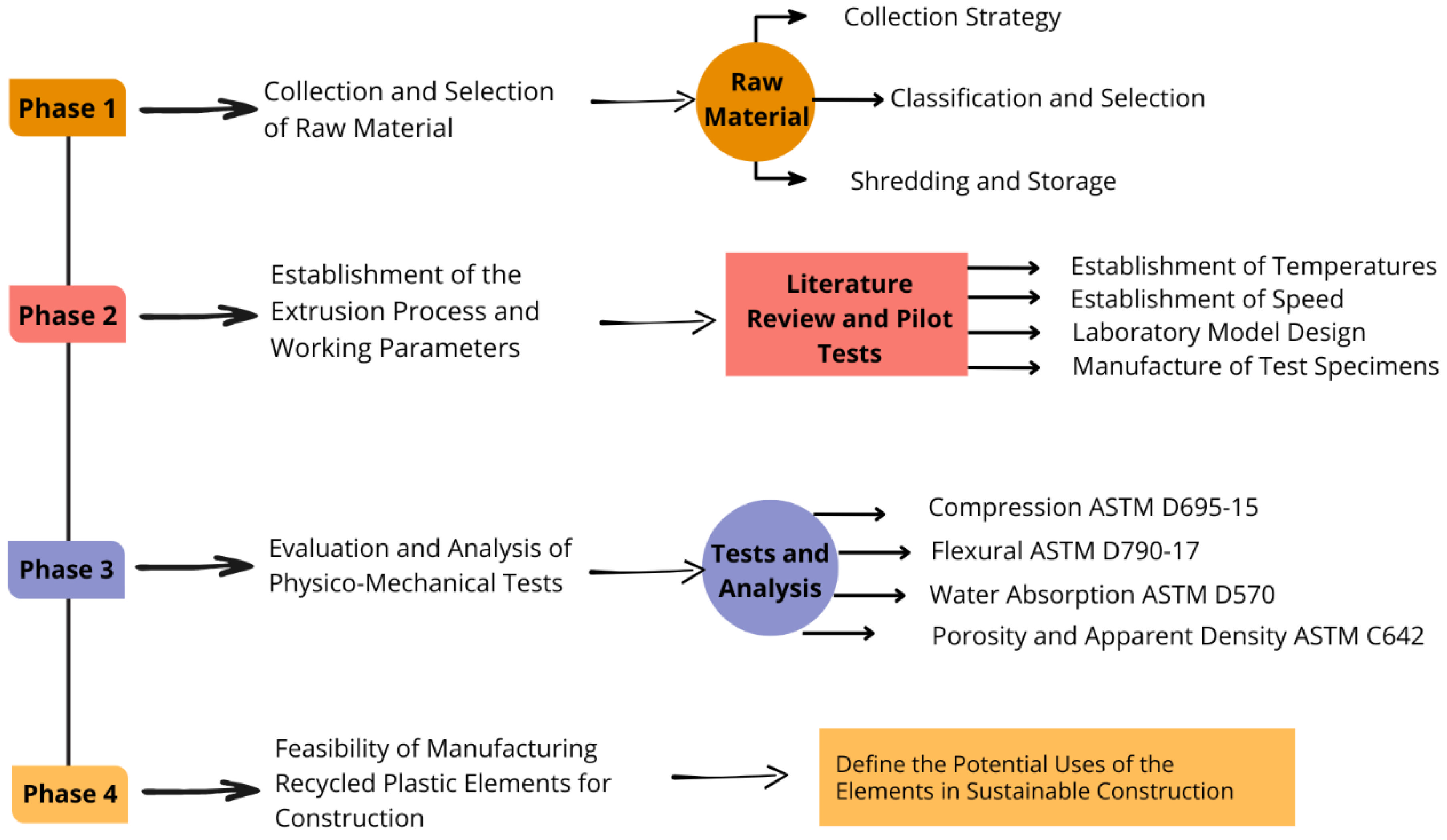
This research aimed to analyze the mechanical properties of recycled plastics (PP, HDPE, and PET) to standardize processes in manufacturing sustainable construction elements for civil engineering. An efficient methodology was designed to ensure the quality and technical feasibility of the materials, addressing challenges related to their handling at high temperatures. The study, developed in four phases (see
Figure 2), included optimizing extrusion parameters and designing tests to ensure product traceability and quality, thereby contributing to sustainable construction.
In Phase 1, the raw materials were collected, classified, and conditioned to ensure their suitability for specimen fabrication. The process began with the identification and separation of the three targeted post-consumer plastics—polypropylene (PP), high-density polyethylene (HDPE), and polyethylene terephthalate (PET)—followed by a visual inspection to assess cleanliness, particle integrity, size, shape, and overall condition. Prior to processing, the materials were manually sorted to remove foreign components such as labels, multilayer packaging, and metallic or organic residues. Each batch was then washed with a neutral detergent and distilled water, followed by air-drying to eliminate surface impurities and dirt. This procedure ensured that only clean and homogeneous plastics were introduced into the shredding and extrusion stages. Although these steps effectively minimize contamination, the potential presence of residual additives, pigments, or fillers from the original manufacturing process cannot be entirely excluded; their potential influence on mechanical variability is acknowledged and discussed in later sections.
To prevent the negative effects of residual moisture during extrusion, all selected plastics underwent a drying and conditioning treatment prior to shredding. The materials were oven-dried at 80 ± 2 °C for six hours, cooled to ambient temperature, and stored in airtight containers containing silica gel to prevent moisture reabsorption. This step was particularly critical for PET, owing to its hygroscopic nature, as it reduces the risk of hydrolytic degradation and surface bubbling during melting and extrusion. The drying temperature adopted for PET (80 ± 2 °C) is lower than typical industrial standards but was selected to minimize premature thermal degradation in recycled material under laboratory-scale conditions; however, it is acknowledged that higher drying temperatures may further reduce residual moisture and improve mechanical performance. Subsequently, the dried materials were shredded using a 9 mm sieve, producing particles between 5 and 10 mm, which represent the optimal range for feeding small-scale extruders. This procedure enhanced the uniformity of the feedstock and improved process efficiency, ensuring consistent extrusion performance across all material types [
14].
In Phase 2, pilot tests were conducted to determine the optimal extrusion parameters (speed and temperature). All extrusion trials were performed using a laboratory-scale single-screw extruder (Manufacturer: Machine Design Colombia, Bogotá, Colombia) designed for thermoplastic processing. The equipment consisted of a steel screw with constant pitch housed in a heated barrel divided into independently controlled thermal zones. The screw rotational speed was electronically regulated, allowing operation within the range of 40–90 rpm, while barrel temperatures were controlled using integrated resistance heaters and monitored by embedded thermocouples with digital feedback control (Manufacturer: Machine Design Colombia, Bogotá, Colombia). Material feeding was carried out through a gravity-fed hopper under constant feed conditions to ensure stable melt flow. A circular metallic die was used to extrude the molten polymer, which was subsequently cast into standardized molds. No in-line pressure sensors or degassing units were employed; therefore, process control was based on temperature stability, rotational speed, and visual assessment of melt continuity. The extrusion system was selected to represent a controlled laboratory-scale setup suitable for evaluating process–property relationships rather than industrial throughput optimization.
Extrusion was carried out using a laboratory-scale single-screw extruder equipped with a constant-pitch screw and a temperature-controlled barrel divided into independent heating zones. The extruder was fitted with a circular die and operated under steady-state conditions to ensure uniform material flow. Screw rotational speed was electronically controlled, while barrel temperature was monitored using integrated thermocouples positioned along the heating zones. This configuration was selected due to its stability in polymer melt flow and its suitability for processing recycled thermoplastics under controlled conditions. The temperature selection was initially based on previous studies [
15], which provided theoretical reference values for each polymer’s processing window. However, to ensure that the parameters were truly optimal under the specific laboratory conditions of this study, an additional series of empirical pilot tests was performed.
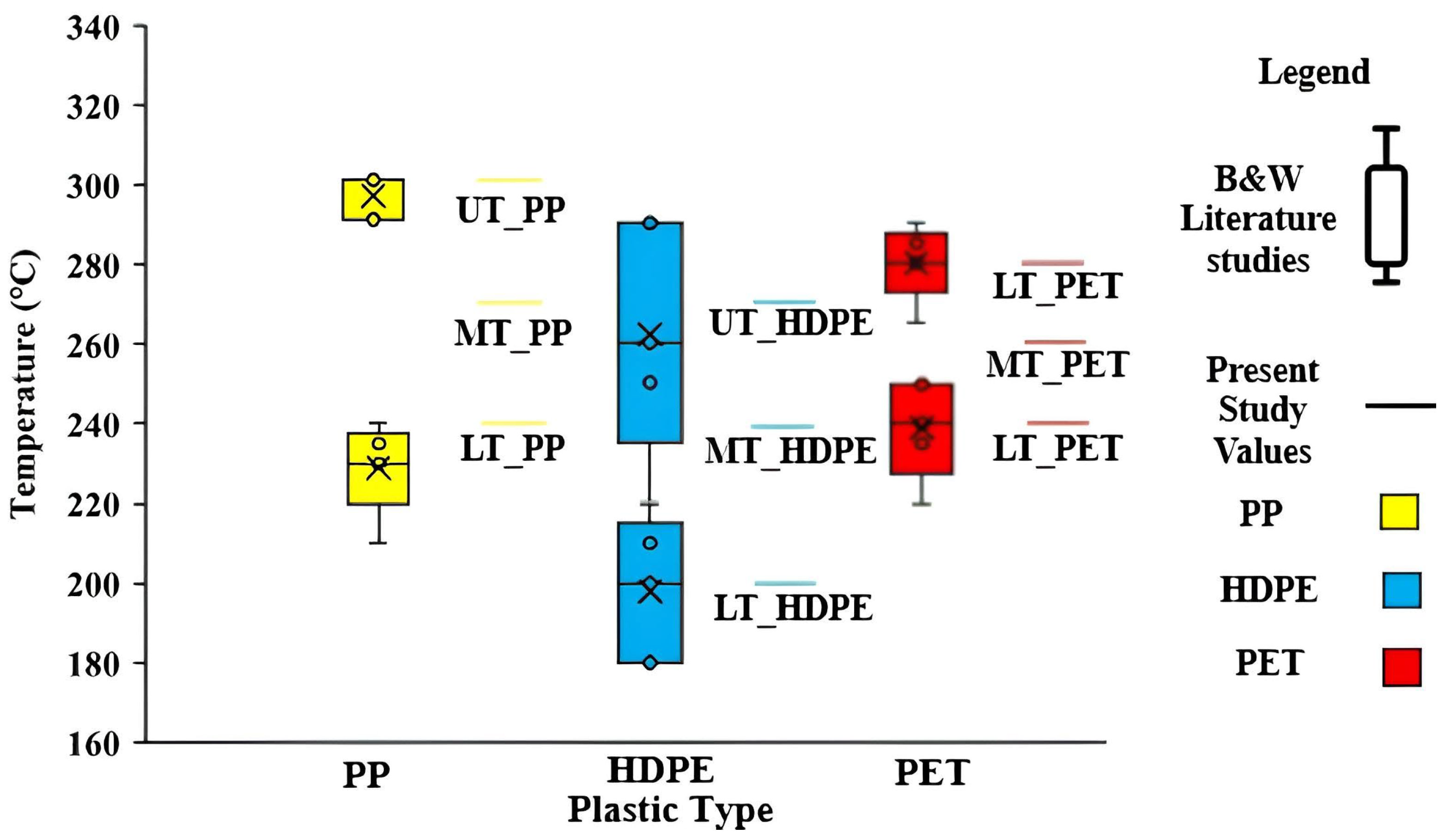
Each plastic type (PP, HDPE, and PET) was processed at incremental temperature intervals of 10 °C and extrusion speeds varying from 40 rpm to 90 rpm, using a constant feed rate. During these trials, several performance indicators were carefully monitored: (i) uniformity of the melt flow, (ii) surface smoothness and homogeneity, (iii) dimensional stability of the extrudate during cooling, and (iv) color or odor changes that might indicate thermal degradation. The optimal parameters were selected when the extrudate showed continuous flow without pulsations or voids, homogeneous texture, and no evidence of degradation. These operational conditions were subsequently compared with those reported in the literature to ensure consistency and reproducibility. The ranges adopted for each plastic type are summarized in
Table 2, which integrates both theoretical references and experimental validation results.
Extrusion speeds were finally set between 50 and 80 rpm, guaranteeing stability and efficient performance within the optimal thermal window. A full-factorial design was implemented, combining three optimal temperatures and two extrusion speeds per plastic, resulting in six configurations evaluated according to ASTM D695-15 (see
Table 2). The selection of the six temperature–speed combinations summarized in
Table 2 was based on the outcomes of the pilot trials and aimed to cover the most representative conditions within the operational window of each polymer. The three temperature levels were defined as follows: the lower limit, corresponding to the onset of complete melting without degradation; the intermediate level, representing the most stable flow region; and the upper limit, approaching the thermal degradation threshold observed during the preliminary tests.
Similarly, two extrusion speeds were selected to examine the influence of shear rate and residence time on material homogeneity, one near the stability threshold and another at higher throughput. This factorial combination enabled the analysis of the interaction between thermal and mechanical variables affecting the mechanical performance of the recycled plastics, ensuring a systematic and non-arbitrary parameter selection.
The information presented in
Table 2 and
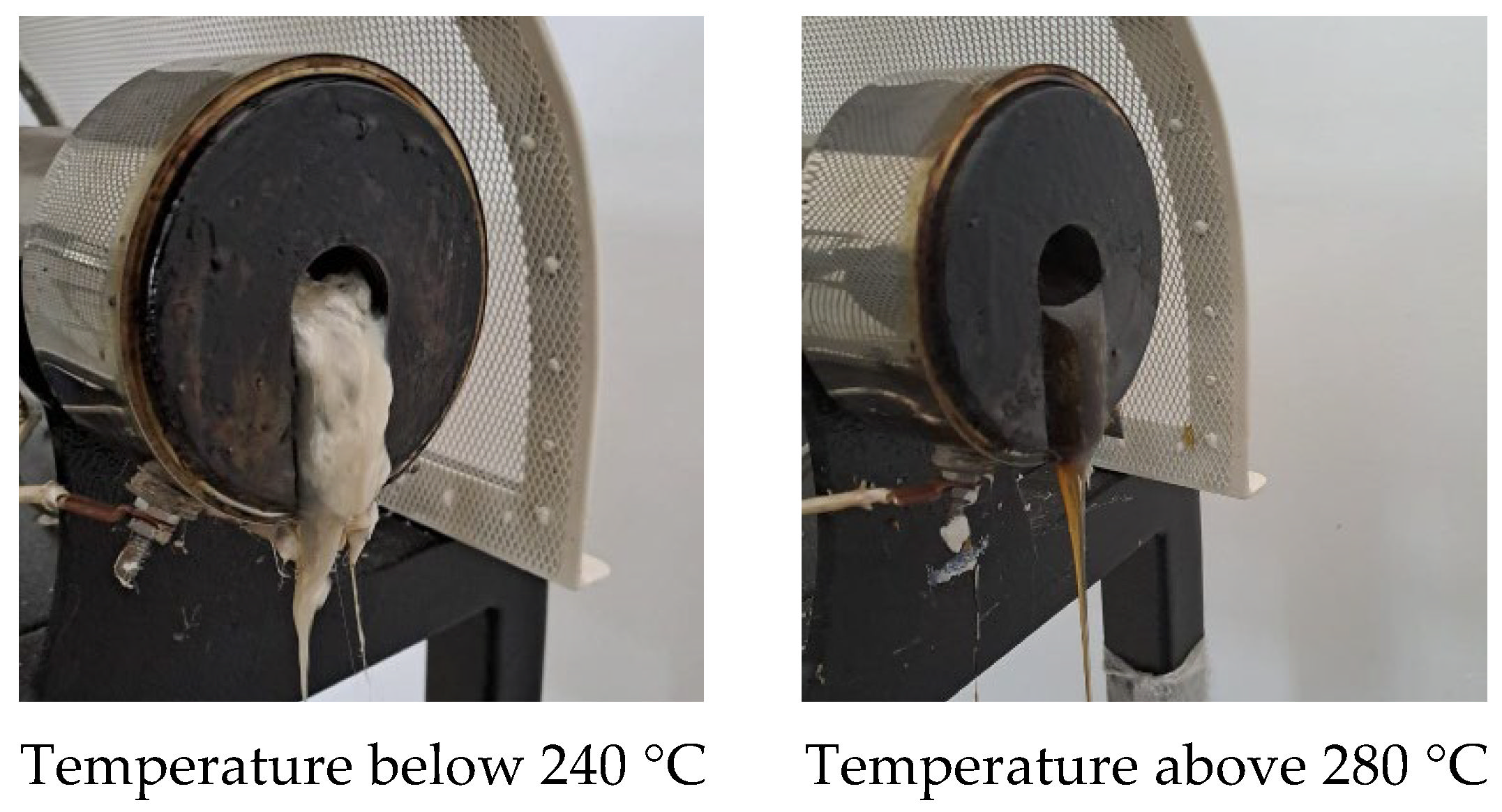
Figure 3 illustrates the optimal temperatures determined after the pilot tests. These trials enabled the observation of material behavior under various processing conditions, confirming that exceeding the established temperature range caused noticeable changes in texture and color associated with thermal degradation
Figure 4. Maintaining the extrusion parameters within the validated ranges ensured the stability, repeatability, and mechanical integrity of the recycled plastic specimens.
After extrusion, the molten material was directly cast into preheated metallic molds corresponding to the compression and flexural specimen geometries. Cooling was performed under ambient laboratory conditions (23 ± 2 °C) without forced convection or water quenching, allowing gradual solidification of the polymer melt. This controlled air-cooling approach was adopted to minimize thermal gradients, residual stresses, and warping, particularly in the case of PET, which is sensitive to rapid cooling. Specimens were demolded only after reaching thermal equilibrium and were stored at room temperature for 24 h prior to mechanical testing.
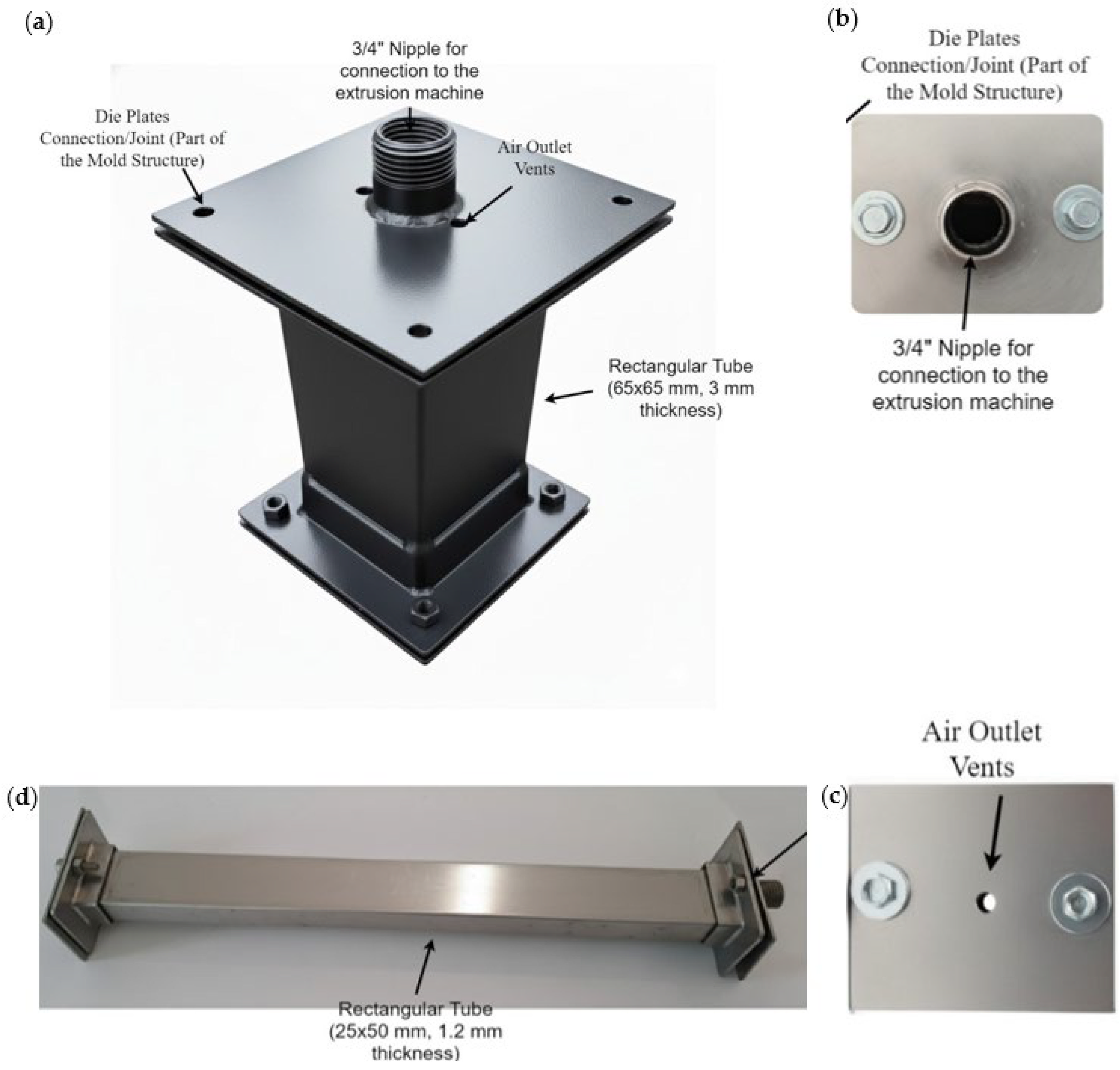
In addition, geometric molds were manufactured according to ASTM D695-15 and ASTM D790-17 standards, as shown in
Figure 5, ensuring accuracy in the tests.
In Phase 3, compression and flexural strength tests were performed according to ASTM D695-15 and ASTM D790-17, respectively. To minimize shear effects at the loading interfaces, neoprene pads were placed between the specimen and the testing platens. The tests were conducted under controlled conditions, with a loading rate of 1.3 mm/min for compression and a strain rate of 0.01 mm/mm/min for flexure. From the resulting stress–strain curves, Young’s modulus and the flexural modulus were determined. Because plastic specimens are sensitive to localized stress concentrations, neoprene was used to ensure uniform load transfer and prevent premature failure. However, this layer introduces a small deformation zone not representative of the material’s intrinsic response. Therefore, a correction factor was applied prior to calculating the final modulus.
Compressive stress (CS), flexural stress (FS), compressive modulus of elasticity (ECS), and flexural modulus of elasticity (EFS) were calculated according to ASTM D695-15 and ASTM D790-17 using Equations (1)–(4):
where
is the applied compressive load (N),
the cross-sectional area of the specimen (mm
2),
the load applied during the flexural test (N),
the span length between supports (mm),
the specimen width (mm),
the specimen thickness (mm), and
the slope of the initial linear portion of the load–deflection curve (N/mm), experimentally determined to calculate the flexural modulus. In Equation (4),
represents the variation in stress within the elastic range and
the corresponding strain variation in stress–strain graphics. According to the standard, the modulus should be determined from the linear region between strains of 0.0005 and 0.0025 mm/mm, using linear regression to obtain the slope.
Because the mechanical parameters evaluated in this study—namely compressive stress, flexural stress, and elastic moduli—are derived quantities calculated from multiple directly measured variables (load, specimen geometry, and displacement), an explicit error propagation approach was adopted to quantify the associated experimental uncertainty. This methodology ensures that measurement inaccuracies originating from instrumentation limits and geometric tolerances are systematically transferred to the calculated mechanical properties. Absolute uncertainties were assigned based on the resolution and calibration specifications of the testing equipment and measuring tools, while differences among plastic types reflect variations in specimen geometry and measurement sensitivity rather than material-dependent assumptions. The error propagation analysis was therefore implemented to provide a consistent and transparent estimation of uncertainty across all test configurations, enabling reliable comparison among extrusion conditions and polymer types.
To quantify the uncertainty associated with the mechanical data, error propagation analysis was applied since the derived magnitudes (stress and modulus) depend on directly measured variables such as load (
), cross-sectional area (
), and geometric dimensions (
,
,
). The general form of a composite function describing the relationship among variables is expressed in Equation (5).
where the variables correspond to those defined in Equations (1)–(4). Error propagation from experimental measurements to computed parameters was evaluated analytically using partial derivatives (Equation (6)).
where
is the absolute error in compressive stress, and
represent the uncertainties associated with each variable.
Finally, in Phase 4, the compression and flexural results were compared with the minimum requirements established by national and international standards and literature. This analysis enabled the assessment of the technical feasibility of recycled plastics (PP, HDPE, and PET) as structural materials, highlighting their potential for applications in sustainable construction.
For each extrusion condition, five specimens were tested to ensure repeatability of the mechanical measurements (
Table 3). The resulting mechanical properties are reported as mean values, and experimental variability among replicates was quantified using standard deviation. In parallel, an analytical error propagation approach was employed to estimate uncertainty in the calculated mechanical parameters, as these values are derived from multiple measured quantities.
It should be noted that the experimental program was intentionally limited to physico-mechanical characterization in order to evaluate the macroscopic performance of recycled plastics under controlled extrusion conditions. Advanced microstructural and thermal analyses—such as Differential Scanning Calorimetry (DSC), Thermogravimetric Analysis (TGA), and Scanning Electron Microscopy (SEM)—were not included in the present study. As a result, the interpretation of the observed mechanical behavior is based on process–property relationships rather than direct quantification of crystallinity, molecular orientation, or thermal degradation. While this approach is adequate for assessing engineering feasibility, it restricts a deeper mechanistic explanation of the material response, particularly in the case of PET. These analyses are therefore identified as a priority for future work to strengthen the correlation between extrusion parameters and microstructural evolution.
3. Results and Discussion
The physical characterization of the recycled plastics revealed consistent trends among all analyzed materials. Water absorption values were 0.15 ± 0.001% for PP, 0.11 ± 0.001% for HDPE, and 0.13 ± 0.001% for PET, reflecting their inherent hydrophobicity and low permeability. These results confirm that the extrusion process produced dense and well-compacted materials with minimal surface porosity and limited moisture absorption. The apparent densities fell within the typical ranges reported in the literature for these polymers (PP = 0,92–1.0 g·cm−3; HDPE = 0.93–1.01 g·cm−3 and PET = 1.3–1.35 g·cm−3), while porosity was practically negligible (PP = 0.03–0.11%; HDPE = 0.06–0.3% and PET = 0.21–0.33%), consistent with the compact structure observed in the extruded samples. The low water absorption and minimal porosity are advantageous for construction applications, as they enhance durability and dimensional stability, particularly under humid or variable environmental conditions.
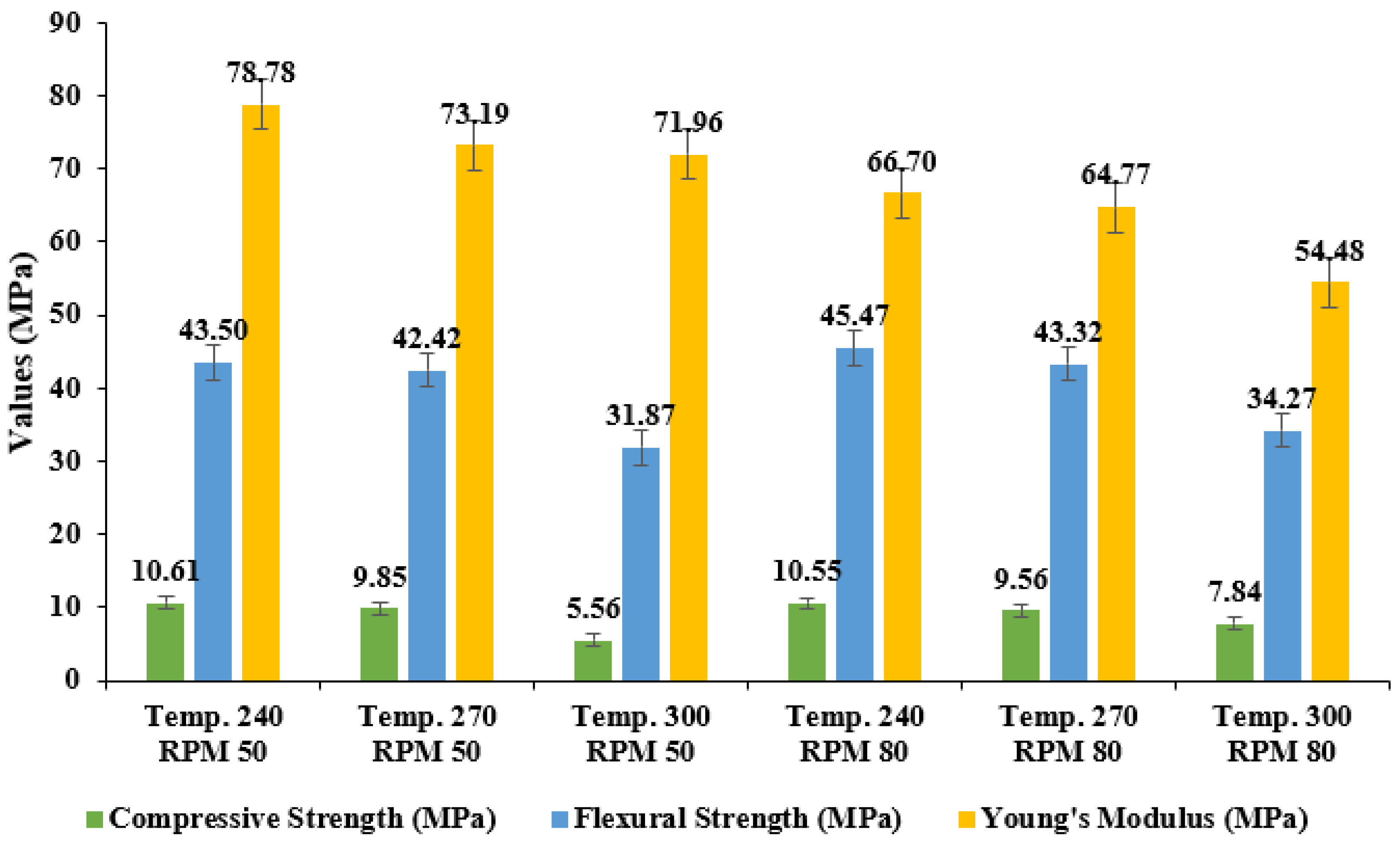
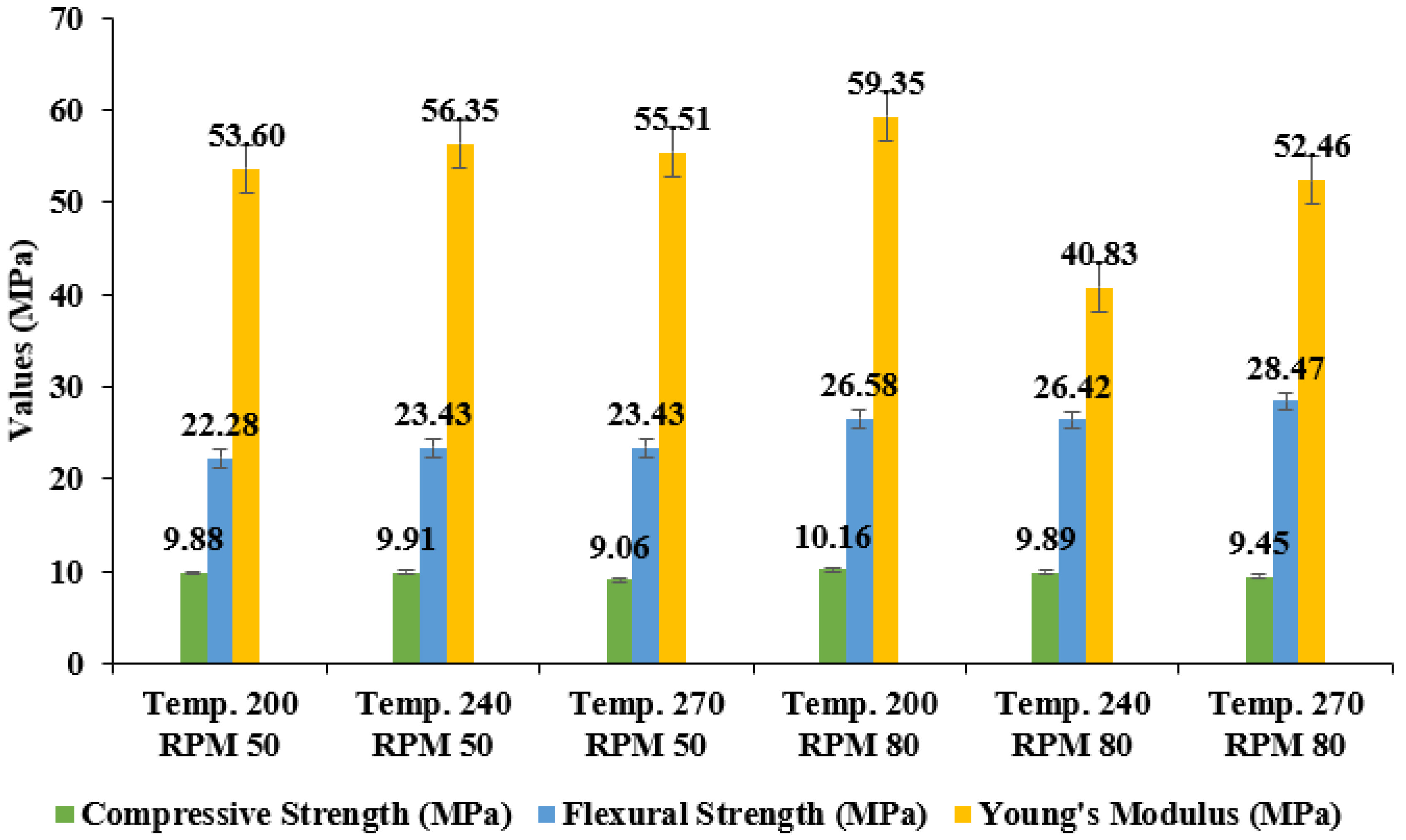
The mechanical tests showed that PP and HDPE excelled in compression, flexural strength, and workability. PP exhibited the highest strength in both compression (10.55 ± 0.13 MPa) and flexion (45.47 ± 1.62 MPa), followed by HDPE (10.16 ± 0.17 MPa in compression and 26.58 ± 0.53 MPa in flexion). In contrast, PET demonstrated significantly lower performance (3.93 ± 0.66 MPa in compression and null in flexion). These results are detailed in
Table 4 and
Figure 6,
Figure 7 and
Figure 8 summarize the optimal temperatures and speeds for each type of plastic.
The relatively large scatter observed in the mechanical results is consistent with the heterogeneous nature of recycled polymer feedstocks and the sensitivity of thermoplastic processing to temperature and shear conditions. Variability may arise from differences in molecular weight distribution, prior thermal history, and residual contamination inherent to recycled plastics. In addition, extrusion parameters strongly influence melt homogeneity and interlayer adhesion, leading to specimen-scale defects such as porosity or incomplete fusion, which can significantly affect mechanical response. This effect is particularly evident under high-temperature or high-shear conditions, where degradation or melt instability may occur. While the use of five specimens per condition captures this variability, the observed scatter highlights the importance of optimized processing windows and supports the interpretation of the results in terms of trend analysis rather than absolute property values.
The experimental data from recycled plastics were analyzed using error propagation theory to estimate the overall measurement uncertainty during extrusion and mechanical testing, ensuring result accuracy and reliability. The extrusion temperature and screw rotational speed were measured using sensors integrated into the extruder, operating with a 95% confidence level. Temperature was monitored by a pyrometer with an absolute error of ±10 °C, while the extrusion speed presented an absolute error of ±1 rpm. The load measurement errors were determined according to the specifications of the compression testing machine, which exhibits a relative error of ±0.5% of the reading. Regarding geometric measurements, the absolute error in cross-sectional area was ±3 mm for PET, ±2.5 mm for PP, and ±2.8 mm for HDPE. This procedure allowed a more reliable estimation of the uncertainty in compressive stress values, ensuring the statistical validity and reproducibility of the experimental results. For flexural tests, both stress and modulus of elasticity were evaluated following the same theoretical principle of error propagation. The relative errors associated with the measurements of beam thickness (d) and width (b) were ±2 mm and ±1.5 mm, respectively, while the absolute error in the slope (m) of the linear region of the load–deflection curve was ±0.007. Through this methodology, the compressive and flexural strength values were interpreted with quantitative reliability, confirming that the observed differences among polymers reflect their intrinsic mechanical behavior rather than instrumental or procedural variations.
Consistency is observed in some key findings when comparing the results obtained in this study with those of previous national research. In particular, the survey conducted by ref. [
29] on the characterization of recycled PP plastic reports similar mechanical behavior in terms of deformation, ductility, and progressive failure, aligning with the observations of this study. Although the compression stress values vary slightly, with 12.38 MPa reported compared to the 10.55 MPa obtained in the present study, these differences can be attributed to variations in testing models and applied standards. This highlights the importance of local standards in evaluating recycled materials and their behavior in different production environments.
The results obtained in this study can be compared with those of ref. [
30], who analyzed the shear, tensile, flexural, and compressive strength properties of recycled plastic specimens. The tests conducted in the present study align precisely with their findings. The failures observed in the recycled plastic specimens, such as buckling, wedge failure, and shear failure, exhibit a structural behavior similar to that described in their study, reinforcing the validity of the obtained results and their correlation with the material’s properties under compression. On the other hand, the compressive and bending force values of the polypropylene specimens were 8.9 MPa and 9.25 MPa, respectively. These values were lower than those in this research for propylene, 10.55 MPa and 45.47 MPa. These differences can be attributed to variations in the test models and the regulations applied, such as the conformation of the extrusion of the elements.
In
Figure 7,
Figure 8 and
Figure 9, the best properties of PET and PP are achieved at the lowest temperature and maximum extrusion speed. In contrast, the highest compressive strength is obtained at the lowest temperature and highest speed for HDPE, while the highest flexural strength is achieved at the highest temperature and speed.
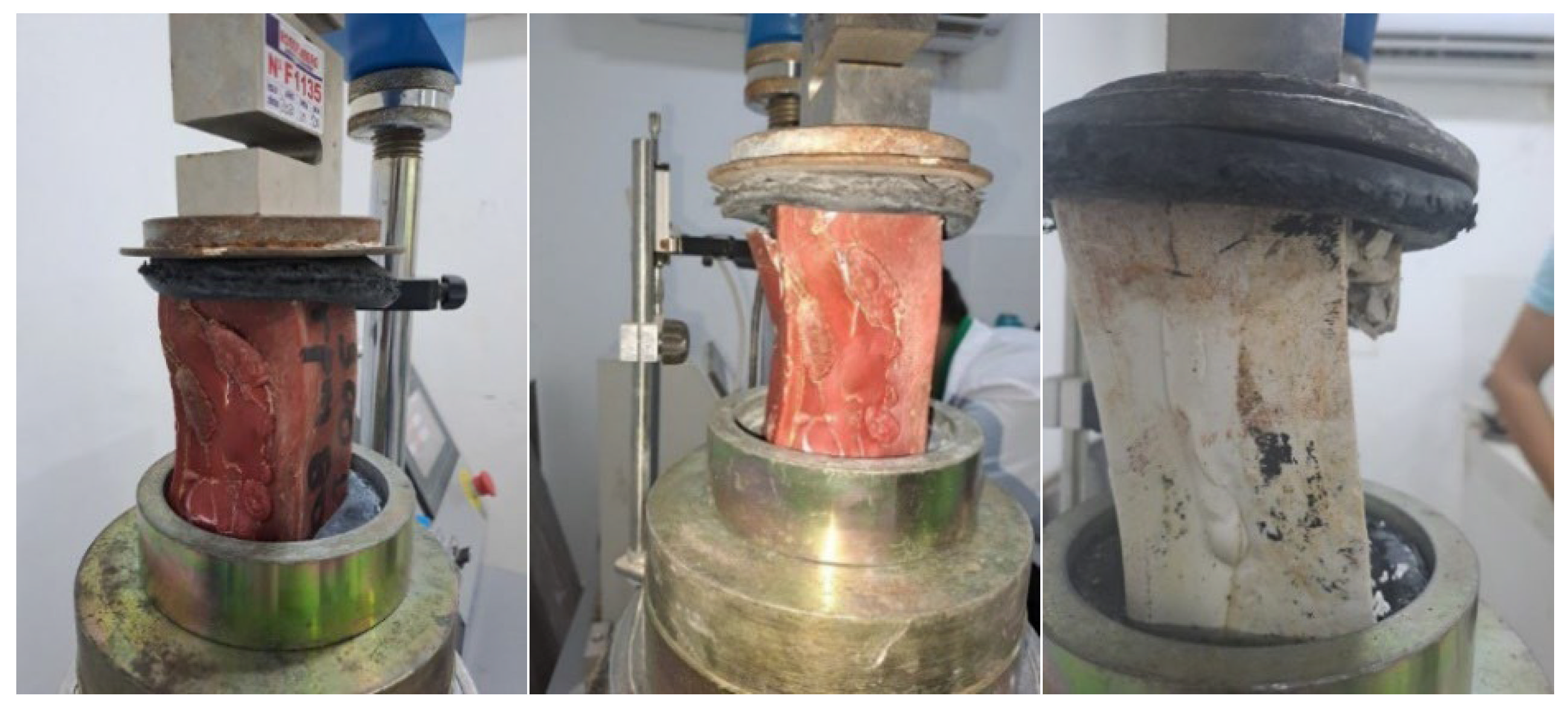
A significant finding from the tests conducted is that PET proved to be the least capable of sustaining loads among the three types of plastic evaluated, and its behavior under loading conditions is not flexible. This results in sudden failure under high stress. For the extrusion condition at 280 °C and 60 RPM, specimens exhibited severe porosity and poor interlayer adhesion, leading to immediate collapse upon loading; therefore, no measurable compressive strength could be obtained. The deformations experienced by PET under load quickly translate into cracks, indicating a low capacity for strain absorption before breaking (
Figure 9). This highlights that the use of PET in structural construction elements is limited, primarily due to its low ductility and poor ability to absorb impacts or dynamic loads—critical factors in applications such as pavements or structures subjected to vibrations or variable loads. This result is further evidenced by the mechanical property found for PET in compression (
Table 4).
The brittle failure observed in PET specimens suggests a microstructural origin associated with polymer chain rigidity and low capacity for plastic deformation. During visual inspection after testing, PET samples exhibited smooth and glassy fracture surfaces, characteristic of a cleavage-type fracture rather than ductile tearing. This behavior is likely related to limited chain mobility and the presence of microvoids caused by insufficient relaxation during cooling. Although a detailed microstructural analysis (e.g., Scanning Electron Microscopy, SEM) was not conducted in this study, such techniques would be valuable to confirm the relationship between internal morphology and macroscopic mechanical performance. Incorporating these analyses in future research will allow a more precise correlation between extrusion parameters, fracture mechanisms, and the resulting ductility or brittleness of recycled plastics.
PET could be suitable for specific non-structural applications. Still, its brittleness makes it less viable than materials such as PP or HDPE, which exhibited greater deformation capacity before fracture. Materials that can withstand significant deformations without breaking, such as steel or certain plastics with higher ductility, are preferred in civil engineering. Therefore, PET would require enhancements or combinations with other materials to expand its applicability in construction, especially in scenarios where impact or vibration absorption is critical.
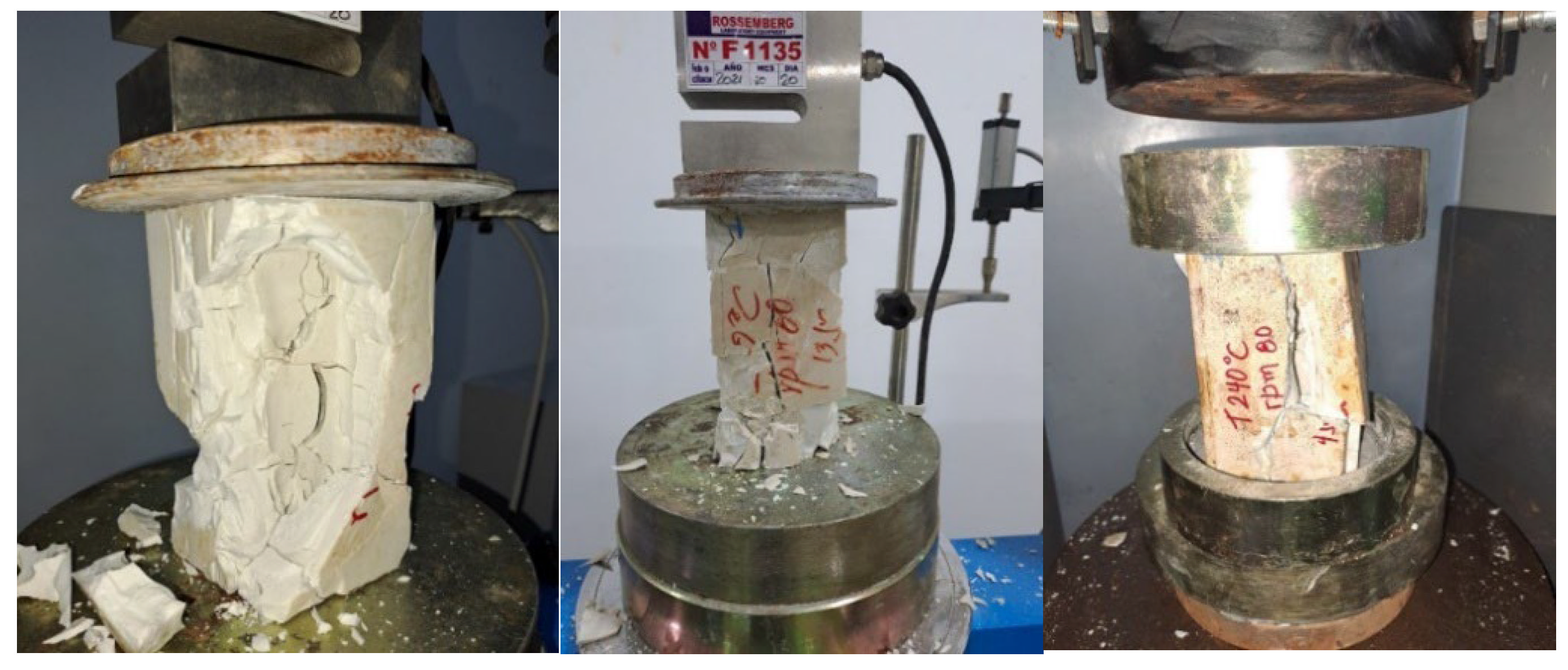
Regarding PP and HDPE, both plastics exhibited markedly more ductile behavior during testing, allowing the applied loads to interact progressively with the material until failure occurred. This suggests that these polymers possess a more pronounced elastic phase compared to PET. In several instances, after the load was released, the PP and HDPE specimens partially recovered their original shape, demonstrating superior elasticity (
Figure 10).
When comparing the types of failures that occur in recycled plastic specimens with those of other structural materials such as concrete and steel, it is observed that these polymers exhibit a highly ductile behavior. Unlike concrete, which tends to fail when it exceeds its tensile strength capacity, recycled plastics progressively absorb and redistribute the load before reaching its fracture point. This feature reduces the risk of catastrophic failures and allows for better identification of overloads by visible deformations before collapse. The ductile behavior of recycled plastic is especially evident in polypropylene (PP) and high-density polyethene (HDPE) materials, which can significantly dissipate energy without a sudden fracture. This is due to its polymeric structure, which allows greater mobility of molecular chains under stress, facilitating stress redistribution. In contrast, although PET has a specific deformation capacity, it behaves more brittle due to its high rigidity and lower energy absorption capacity.
According to [
31], properties such as tensile strength, bending, fatigue, impact, the ability to inhibit or avoid cracks, and energy absorption are substantially improved with FRC mixtures. In addition, according to the results obtained, the flexural strength benefits from the fibers; however, in the tests carried out, it is observed that it is not always correct due to the proportion of this when the proportion of 0.25% is exceeded, as the compressive strength is compromised. On the other hand, Shinde et al. (2022) [
7] determined that with the use of 25% synthetic fiber plus 75% steel fiber in an HFRC, a better flexural behavior of the concrete sample is obtained because this combination of fibers helps to reduce cracks (micro and macro) suffered by hydraulic concrete.
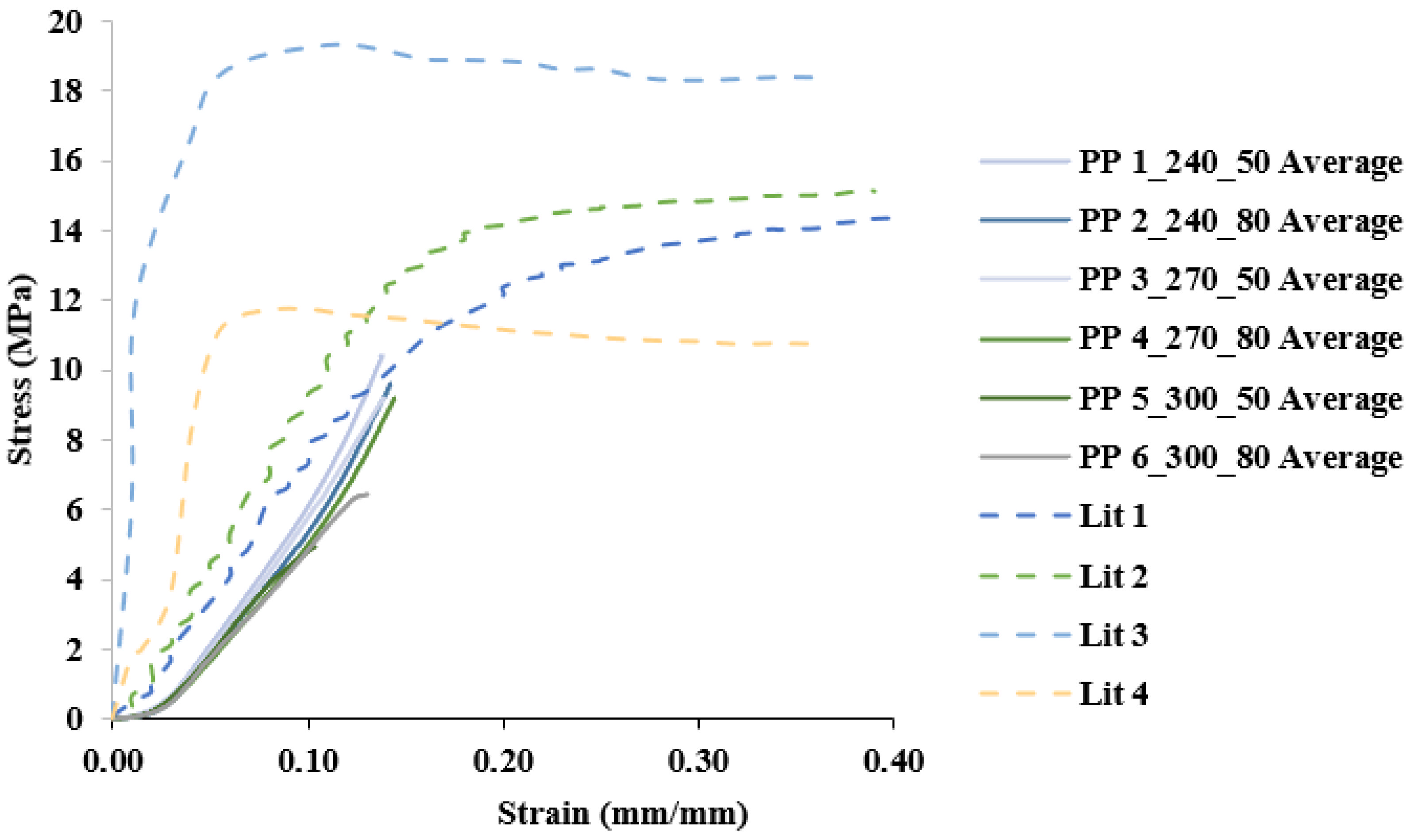
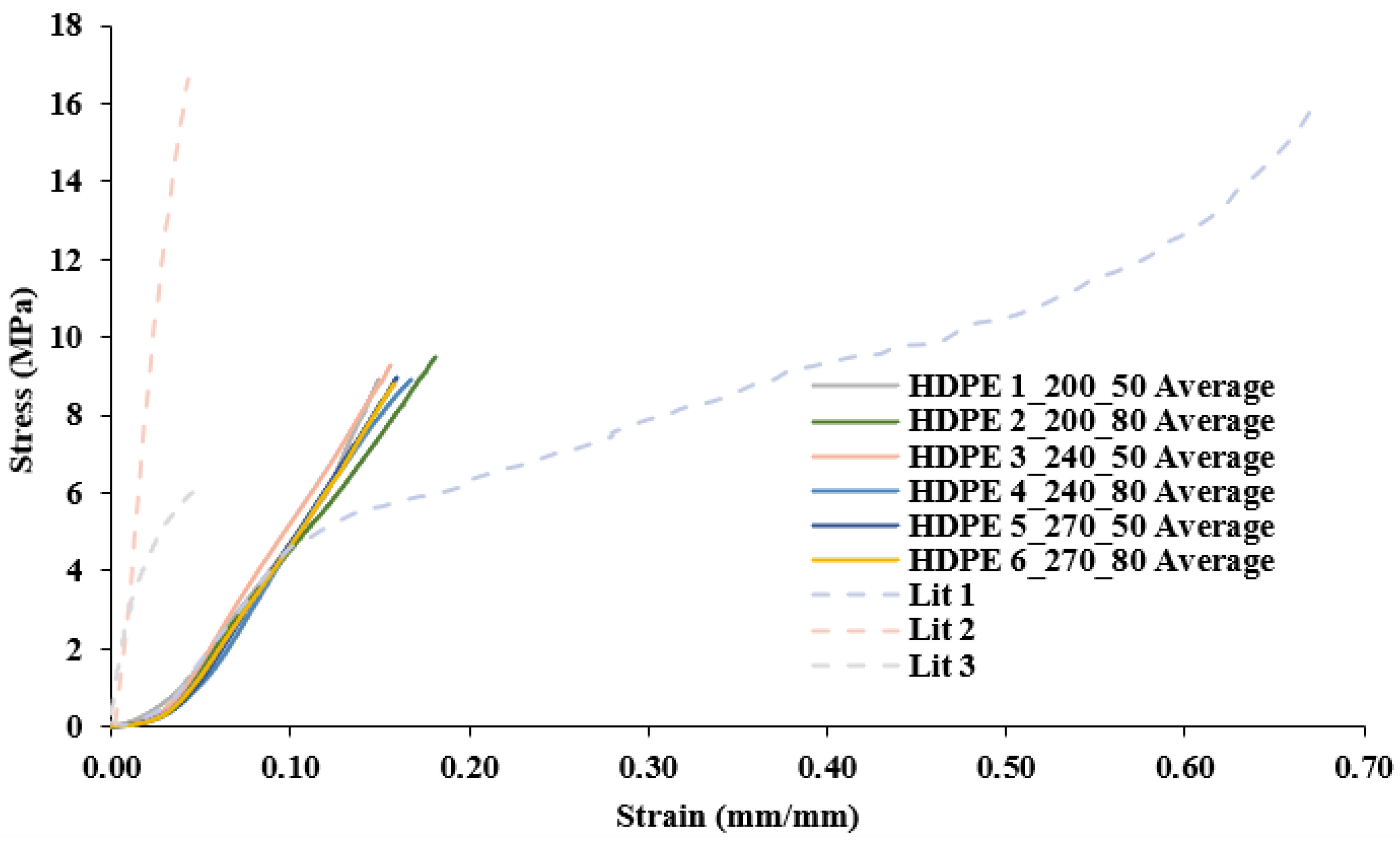
Figure 11,
Figure 12 and
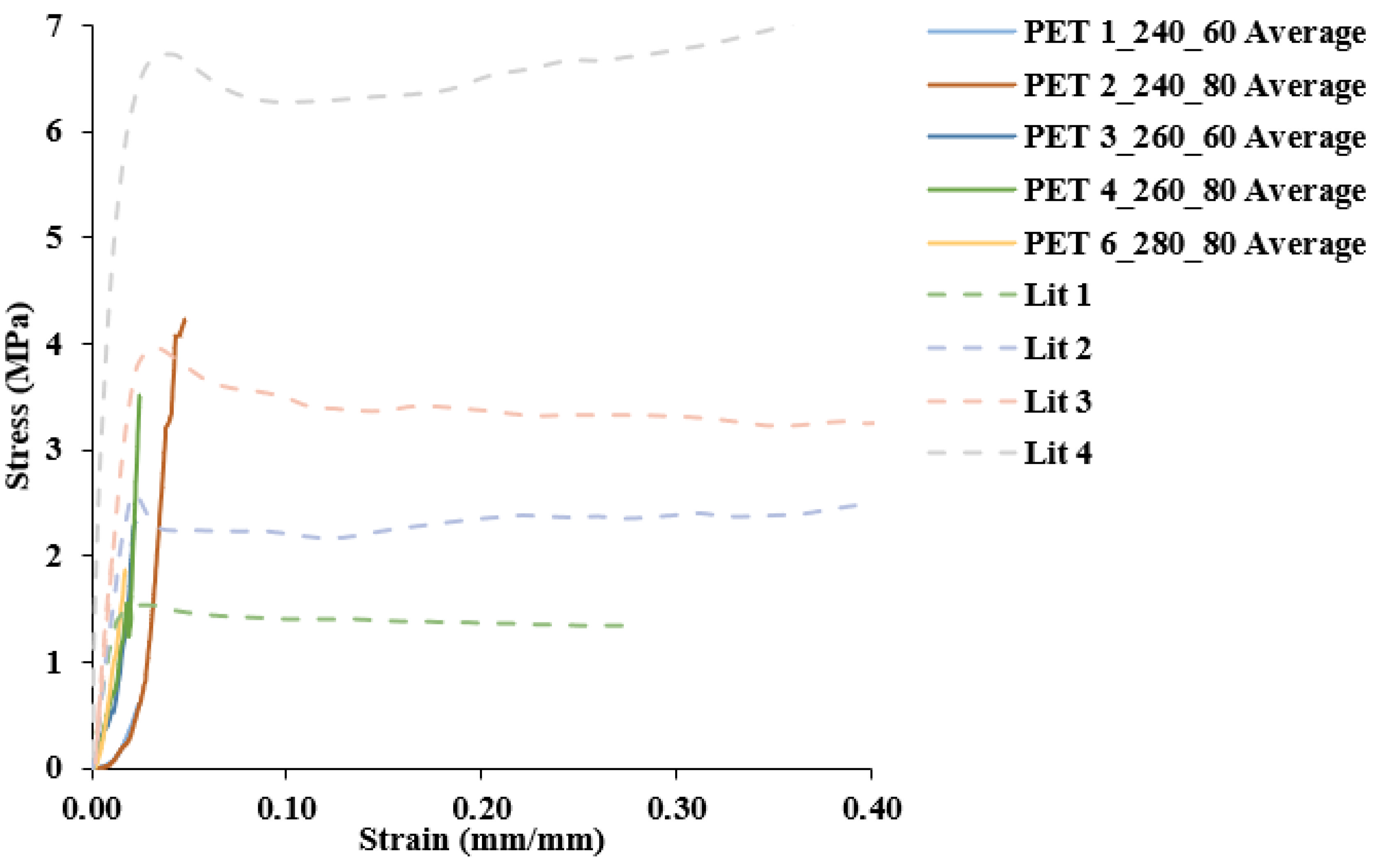
Figure 13 present the compressive stress–strain curves for PP, HDPE, and PET obtained in this study. For all analyzed plastics, the maximum stress recorded during the compression tests coincides with the failure stress, indicating immediate fracture without a substantial post-yield deformation phase. This behavior, typical of materials with low ductility, reflects a limited ability to redistribute stresses, making them more susceptible to sudden failure once their strength limit is reached.
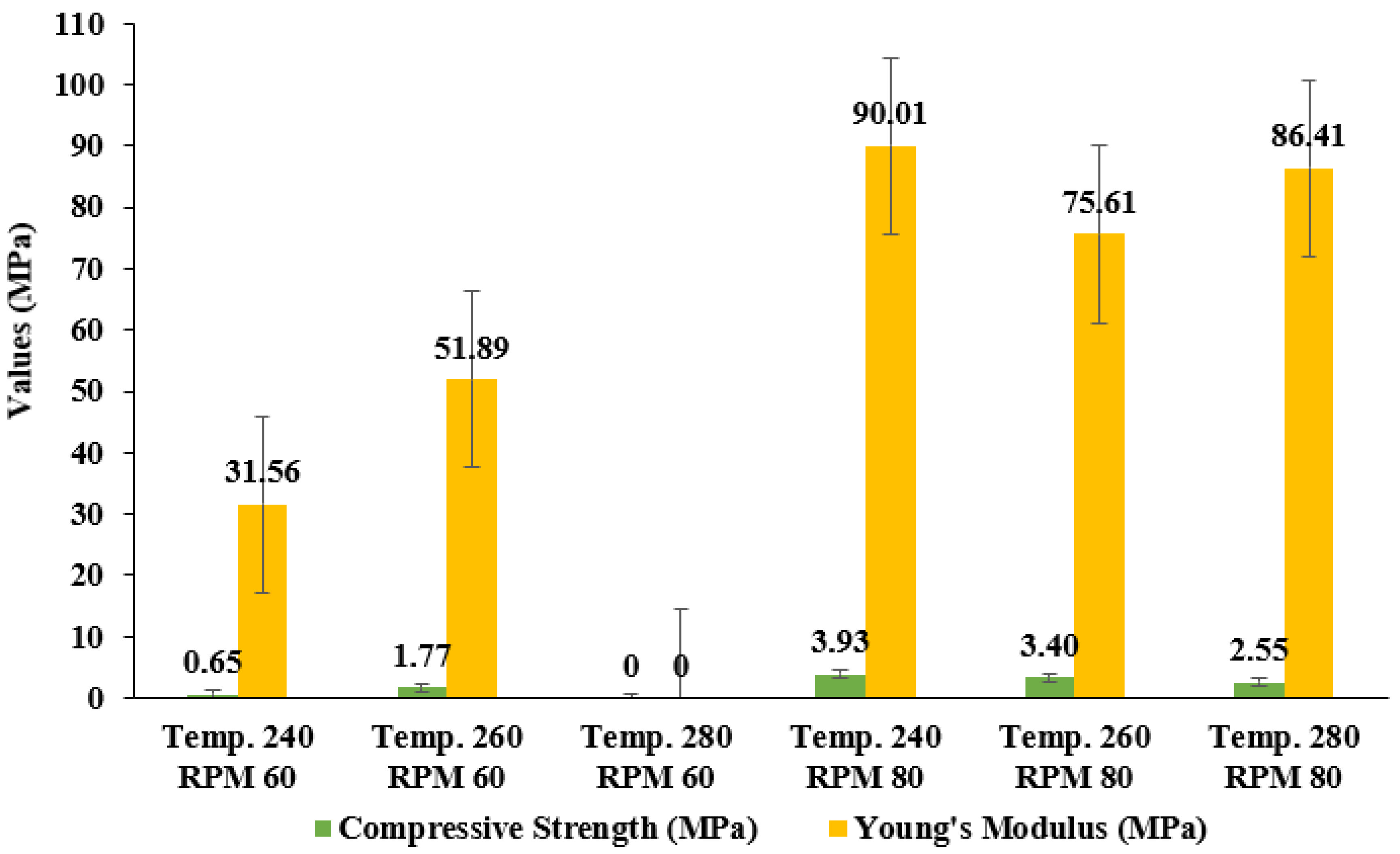
PET exhibits the highest modulus of elasticity in its best combination despite registering the least deformation. However, its modulus displays high variability, ranging from 247.80 MPa to 53.89 MPa (
Figure 8), indicating inconsistent elastic behavior. This fluctuation affects its ability to efficiently withstand loads, which limits its suitability for applications requiring high rigidity and resistance to deformation under prolonged loading.
Figure 6 shows Young’s modulus of polypropylene (PP) under different temperature and speed conditions, indicating that although the average in most cases is between 66 kN and 78 kN, this value is not very high in terms of resistance to deformation under loads. Young’s higher modulus indicates a stiffer material more resistant to elastic deformation under load. In this case, the observed values suggest that PP has moderate resistance to elastic deformation but would not be ideal for applications requiring high load-bearing capacity or high levels of rigidity. In applications requiring significant load support, such as structural elements, these values may not be sufficient, as other materials, such as specific reinforced polymers or metals, offer much higher moduli of elasticity.
In the HDPE (high-density polyethene) recorded in
Figure 7, Young’s modulus values range between 40.83 kN and 59.35 kN, depending on temperature and speed conditions. These values indicate that HDPE has moderate stiffness and can resist deformation under load, although, like PP, it is not excessively high. HDPE may not be the most suitable material in applications requiring significant load-bearing capacity compared to other more rigid polymers or metallic materials, which exhibit much higher moduli of elasticity.
On the other hand, PET did not exhibit measurable flexural performance. This may be attributed to its thermo-sensitivity and hygroscopic nature, which demand careful handling to ensure the production of high-quality specimens. According to Gneuss MG [
32], polyethylene terephthalate is a polymer whose thermo-sensitivity and hygroscopicity strongly influence its extrusion processing. Its thermo-sensitivity implies that exposure to elevated temperatures can lead to thermal degradation, thereby compromising both the mechanical integrity and esthetic quality of the material.
When comparing the results of the materials according to their compression and bending behavior, shown in
Figure 10, a similar trend is observed to that reported in the research of Arcila & Figueroa [
30]. Generally, the behavior under load presents similarities in the relationship between deformation and time and in the evolution of the applied load. In the case of flexion, the graphs show comparable patterns. However, differences in maximum load and modulus of elasticity can be attributed to the composition of the materials tested. In the study by Arcila & Figueroa, (2017) [
30], the specimens were manufactured with a combination of different types of plastic, influencing the mechanical properties and, therefore, the results obtained. On the other hand, in the compression test, a mechanical response similar to that observed in the plastics evaluated by Arcila & Figueroa, (2017) [
30] is identified. A key difference lies in the deformations recorded. The loads were measured at deformations greater than 4 mm, indicating a greater capacity for deformation before reaching failure. In addition, the normative and methodological parameters used in the present study differ from Arcila & Figueroa, (2017) [
30], which could influence the variability of the results.
Figure 11.
Compression Stress–Strain Curve for PP of the present study. In batch treatment, stress–strain curves from the literature. Lit 1 and Lit 2 = [
33]; Lit 3 and Lit 4 = [
34].
Figure 11.
Compression Stress–Strain Curve for PP of the present study. In batch treatment, stress–strain curves from the literature. Lit 1 and Lit 2 = [
33]; Lit 3 and Lit 4 = [
34].
Figure 12.
Compression Stress–Strain Curve for HDPE of the present study. In batch treatment, stress–strain curves from the literature Lit 1 = [
35]; Lit 2 and Lit 3 = [
36].
Figure 12.
Compression Stress–Strain Curve for HDPE of the present study. In batch treatment, stress–strain curves from the literature Lit 1 = [
35]; Lit 2 and Lit 3 = [
36].
Figure 13.
Compression Stress–Strain Curve for PET of the present study. In batch treatment, stress–strain curves from the literature. Lit 1 = [
37]; Lit 2 = [
37]; Lit 3 = [
37]; Lit 4 = [
37].
Figure 13.
Compression Stress–Strain Curve for PET of the present study. In batch treatment, stress–strain curves from the literature. Lit 1 = [
37]; Lit 2 = [
37]; Lit 3 = [
37]; Lit 4 = [
37].
Therefore, PET emerged as a complex material for extrusion-based manufacturing, particularly for slender elements such as beams. The PET specimens exhibited high fragility and very low ductility, fracturing rapidly after production. This brittle behavior hindered the successful formation of uniform specimens and prevented the generation of measurable flexural data, indicating that, under the processing conditions applied, PET was unable to withstand flexural stresses. These results suggest that, within the tested temperature and screw speed ranges, PET does not exhibit adequate mechanical stability for direct use in structural applications.
In contrast, polypropylene (PP) and high-density polyethylene (HDPE) demonstrated satisfactory behavior, showing higher ductility and energy absorption capacity, which makes them promising for the fabrication of non-structural construction components, such as masonry blocks, tiles, and finishing elements. Their suitability, however, should ultimately be evaluated in accordance with the minimum mechanical requirements established in relevant construction standards.
Although PET is widely recognized as a recyclable polymer with proven applications in the construction sector—including concrete reinforcement fibers, lightweight aggregates, and polymer-modified composites—the poor performance observed in this study is attributed to suboptimal extrusion parameters rather than an inherent limitation of the material. The specific combination of temperature, screw rotational speed, and cooling rate likely prevented the development of a balanced molecular orientation and crystallinity structure, leading to brittle fracture and low mechanical response. Consequently, the limitation observed here may reflect process inefficiency rather than material infeasibility. Future research will therefore focus on optimizing PET extrusion conditions and exploring the use of compatibilizers, reinforcing fibers, and thermal modifiers to improve ductility and toughness. These efforts will aim to enhance PET’s suitability for both structural and non-structural applications, aligning the results with the growing evidence of PET’s potential as a sustainable and high-performance material in the construction industry.
Following the analysis of the mechanical properties of the evaluated materials, the obtained results were compared with the minimum values established by various international standards in order to determine the feasibility of using recycled plastics (PP, HDPE, and PET) in the production of construction elements. This comparative process made it possible to identify which materials meet the requirements for strength, stiffness, and load-bearing capacity, based on parameters such as the modulus of elasticity, ultimate stress, and deformation behavior. According to ASTM C1319, which sets the criteria for the manufacture of concrete pavers, the minimum required compressive strength is 35 MPa. Under this criterion, none of the evaluated plastics achieved the strength level necessary to be considered suitable for such applications. Similarly, the UNE-EN ISO 10545-4:2019 standard, which pertains to the production of glazed tiles for light pedestrian traffic, demands compressive strengths that far exceed those obtained; therefore, the analyzed plastics are also not recommended for structural uses in these types of elements.
However, when comparing the results with the design guideline UNE-EN 1996-1-1:2011 (Eurocode 6), which establishes minimum compressive strength values of approximately 2.5 MPa for unreinforced clay masonry units, it is observed that the three evaluated plastics could be employed in low-load applications or equivalent elements. In contrast, ASTM C90-24, which specifies the requirements for load-bearing concrete masonry units, establishes a minimum compressive strength of 13.8 MPa (2000 psi), a value that none of the analyzed plastics achieve. On the other hand, ASTM C129-22, which regulates non-load-bearing concrete masonry units, requires a minimum strength of 3.45 Mpa—a threshold met by all three materials studied—making them viable for non-structural applications.
Regarding non-structural prefabricated panels, ASTM C1186-22 establishes strength values between 6 and 12 MPa, a range achieved by PP and HDPE, which demonstrated more stable and resistant behavior compared to PET, the latter exhibiting greater brittleness. However, when evaluating primary structural applications such as columns or beams, standards such as ACI 318 and NTC 550-2020 require compressive strengths ranging from 21 to 28 MPa for structural concrete and around 14 MPa for fill concrete—values significantly higher than those obtained with the recycled plastics. In the Colombian context, NTC 4205-2009 (clay masonry units) allows the classification of PP and HDPE within category PH, while NTC 4026-1997 (concrete blocks) places them under Type B, both applicable to non-structural elements.
This analysis, however, opens an important debate: although PP and HDPE show real potential for non-structural applications due to their low water absorption, light weight, and relatively good strength, they cannot be considered suitable materials for uses that demand high mechanical performance, such as load-bearing structures or pavements, due to their limitations in compression and stiffness. PET, on the other hand, is the most brittle and least ductile of the group, according to the present study, and still needs more studies by the authors to fulfill the above standards. Consequently, the scientific challenge lies in improving plastic performance through reinforcement or hybrid mixtures so that recycled plastics can evolve into sustainable construction materials with enhanced structural properties.
On the other hand, the potential of recycled plastics can be further enhanced through their incorporation into composite systems, which combine polymer matrices with natural or inorganic fillers to improve mechanical, thermal, and durability performance. Recent studies have demonstrated that plastic-based composites can serve as low-carbon and energy-efficient alternatives to traditional construction materials. For instance, in the literature [
38,
39] is reported that clay–plastic–biodegradable waste composites achieved high compressive strength, low water absorption, and enhanced freeze–thaw resistance, surpassing first-class clay bricks. Similarly, ref. [
40] classified 88 plastic composites and demonstrated compressive strengths up to 158 MPa and thermal conductivities from 0.02 to 2.23 W·m
−1·K
−1, highlighting their potential for both structural and insulation applications. Parallel progress has been achieved in wood–plastic composites (WPCs), where recycled polymers are reinforced with lignocellulosic fibers. As reviewed by ref. [
41], replacing virgin plastics with recycled PP, HDPE, or PET in WPCs enhances stiffness, dimensional stability, and cost efficiency while reducing environmental impact. In addition, ref. [
42] emphasized that advances in polymer–fiber composite recycling technologies—including thermal, chemical, and mechanical routes—are essential to support the circular economy. These studies indicate that the integration of recycled plastics into hybrid composite matrices represents a promising pathway to overcome brittleness and processing limitations observed in certain polymers, particularly PET. Future work in this direction should focus on developing hybrid composites combining recycled plastics with mineral or natural fibers to achieve the balance of strength, ductility, and thermal stability required for durable and sustainable construction materials.
It is worth emphasizing that this study primarily focused on the physico-mechanical characterization of recycled plastics to assess their suitability for sustainable construction applications. Nevertheless, the internal structural modifications induced by variations in extrusion temperature and screw speed—such as changes in crystallinity, molecular orientation, or the onset of thermal degradation—were not directly evaluated. Advanced analytical techniques such as Differential Scanning Calorimetry (DSC), Thermogravimetric Analysis (TGA), and Fourier Transform Infrared Spectroscopy (FTIR) would provide valuable complementary insights to establish quantitative correlations between processing parameters and microstructural transformations. Integrating these methods in future research will enable a more comprehensive understanding of how extrusion conditions influence the mechanical behavior, durability, and long-term stability of recycled PP, HDPE, and PET. Furthermore, future research should address the long-term durability of recycled PP, HDPE, and PET under different environmental stressors, including high temperature, moisture, chemical exposure, and marine conditions. These analyses, although beyond the scope of the present study, will be essential to validate the materials’ performance and reliability in real construction environments.
Another factor that may contribute to the variability in mechanical performance is the presence of residual additives or contaminants inherent to post-consumer plastics. Additives such as stabilizers, pigments, and fillers can alter polymer chain mobility, thermal behavior, and interfacial adhesion, thereby affecting the reproducibility of strength and stiffness results. Although the materials were meticulously cleaned and sorted before extrusion, the complete removal of such substances cannot be guaranteed due to the heterogeneous nature of recycled feedstock. Future studies should therefore incorporate spectroscopic and elemental analyses, including FTIR and X-ray Fluorescence (XRF), to identify and quantify these components and to better elucidate their influence on the chemical composition, structural integrity, and mechanical response of recycled plastics.
Although the present study focused on short-term physico-mechanical performance, the suitability of recycled plastics for construction applications must also be evaluated considering long-term durability under environmental exposure. Factors such as moisture cycling, ultraviolet (UV) radiation, temperature fluctuations, and creep deformation are known to significantly influence the mechanical stability of polymer-based materials over time. While the low water absorption observed for PP, HDPE, and PET suggests favorable resistance to moisture ingress, repeated wet–dry cycles may still induce microstructural changes and dimensional instability. Similarly, prolonged UV exposure can lead to polymer chain scission and surface embrittlement, particularly in recycled materials lacking stabilizing additives. In addition, the relatively low elastic modulus of PP and HDPE highlights the importance of assessing creep behavior under sustained loads, which is critical for construction elements subjected to long-term service conditions. These aspects were beyond the scope of the present work but are essential for validating the long-term performance of recycled plastics in real construction environments and will be addressed in future research.
Although the superior mechanical performance of PP and HDPE compared to PET in recycled form is well documented, the present study provides process-oriented insight into how extrusion temperature and screw speed influence the feasibility of recycled thermoplastics for construction-related applications. Beyond PP, HDPE, and PET, other polymer systems merit investigation within a similar experimental framework. For instance, recycled polyvinyl chloride (PVC) [
43] offers high stiffness and dimensional stability but poses challenges related to thermal degradation and additive variability. Acrylonitrile–butadiene–styrene (ABS) [
44] exhibits favorable impact resistance and toughness, making it a candidate for modular or prefabricated construction components, although its recyclability and thermal sensitivity require careful control. Polyamide-based materials (e.g., PA6) [
45] present high mechanical strength and wear resistance but are highly hygroscopic, necessitating optimized drying and processing strategies. Incorporating such polymers into future studies would allow the proposed methodology to be extended and validated across a broader class of recycled plastics relevant to construction applications.
Finally, although a full life-cycle assessment (LCA) or techno-economic analysis was beyond the scope of this experimental study, the sustainability relevance of recycled thermoplastics in construction is well supported by existing literature. Previous LCA studies report that mechanical recycling of polyolefins such as PP and HDPE can reduce greenhouse gas emissions and cumulative energy demand by approximately 30–80% compared to virgin polymer production [
46,
47,
48], depending on recycling efficiency and energy mix. Similarly, energy consumption associated with extrusion-based processing of recycled plastics is substantially lower than that of primary polymer synthesis, which involves energy-intensive polymerization and refining stages. From a techno-economic perspective, the use of recycled polymers has been shown to reduce raw material costs while enabling value-added applications in construction, particularly for non-structural elements. These literature-based findings support the environmental motivation of the present work and provide quantitative context for the proposed reuse of recycled plastics in construction-related applications.




 ,
,