3.1. Calibration of the Instrument
The light source (the monitor) in the system is not an ideal polarization-state generator: its emitted polarization depends on both the spatial position on the screen and the wavelength in a nonlinear manner [
8]. For this reason, the calibration procedure must determine a polarization-state correction map
over the entire field of view. In parallel, an angle-of-incidence (AOI) calibration must be performed, which assigns each CMOS pixel (or pixel group) to its corresponding local angle of incidence. Calibration is carried out using well-characterized optical reference samples.
The calibration samples are 20 cm diameter crystalline silicon (c-Si) wafers with different thicknesses of thermal oxide (SiO2), nominally 60, 80, and 100 nm thick SiO2 layers. These samples provide reliable and sufficiently distinct ellipsometric responses to constrain the device-specific instrumental correction terms.
The monitor-correction factor enters the optical model multiplicatively through the complex reflection ratio:
where
and
denote the position on the sample surface.
A smooth parameterization of
is required to ensure numerical stability and physical consistency. For each pixel (or pixel group), the real and imaginary parts of the correction factor are represented by second-order polynomials in wavelength,
For clarity of presentation, the polynomial coefficients are quoted in later sections at the average wavelengths of the R, G, and B channels. This allows a compact and physically intuitive representation of the calibration parameters without altering their role in the forward optical model.
The calibration is not performed on individual pixels, but on pixel groups whose size is chosen to match the nominal lateral resolution of the system.
In
Section 2.2,
Theory of Ellipsometry, the theoretical ellipsometric ratio
was introduced based on the multilayer optical model (MLOM). During the calibration procedure, this quantity is extended to include the instrumental correction of the light source, yielding the effective optical response
where
is understood for a given pixel or pixel group.
The corrected optical response
determines the Stokes vector components
and
appearing in the rotating-analyzer intensity formulation. By inserting
into the expressions for
and
given in
Section 2.2, and subsequently into the spectral integration
the complete intensity-based forward model used during the calibration is obtained.
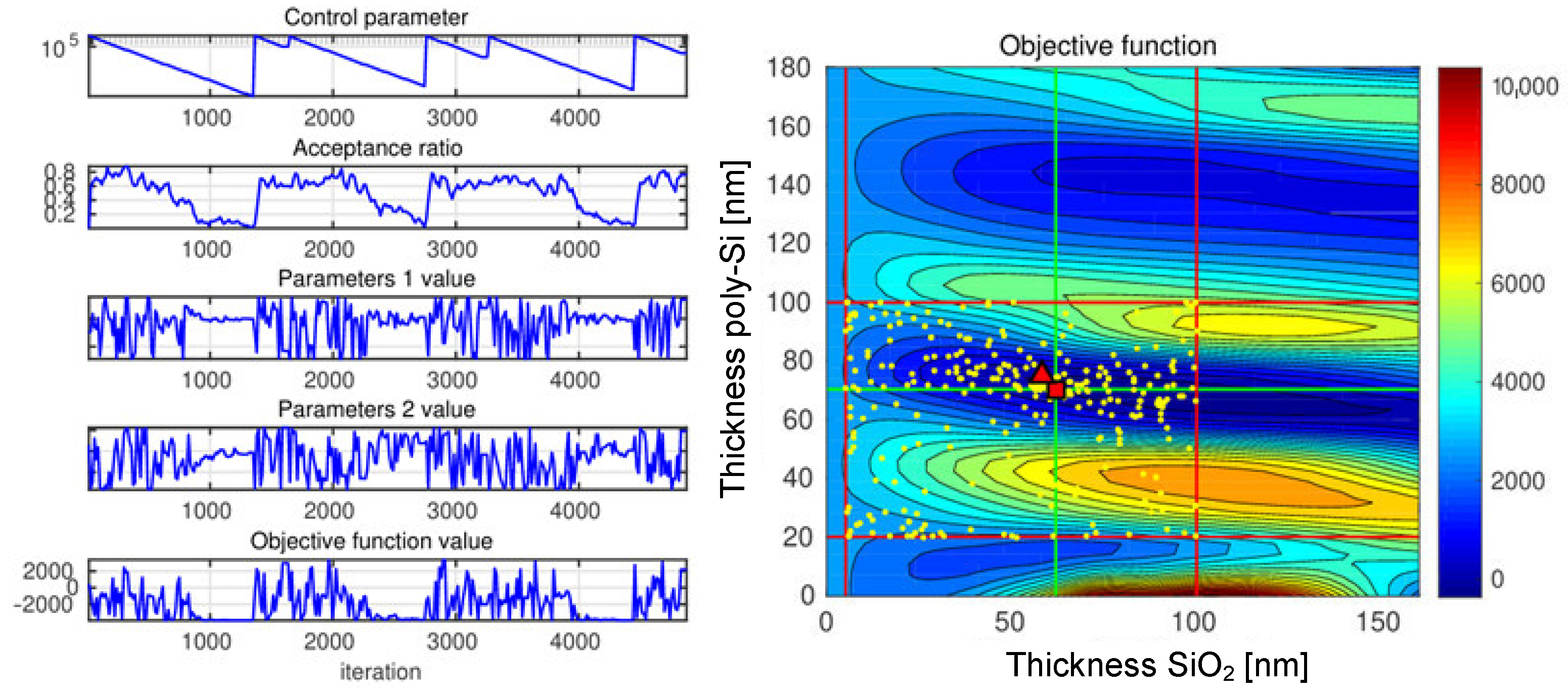
Within this framework, the calibration procedure simultaneously determines the following through a unified Bayesian optimization:
The physical layer parameters of the calibration wafers ();
The angle-of-incidence related instrumental parameters ();
The wavelength-dependent monitor-correction factor .
For all three calibration samples, the predicted normalized intensities are used to construct the likelihood function in the Bayesian analysis. The oxide thickness values obtained from a high-precision commercial spectroscopic ellipsometer (Woollam M–2000DI) serve as informative priors for the oxide layer thicknesses. Since the same monitor-correction function is assumed to apply over the entire sample surface, uninformative (flat) priors are adopted for the corresponding instrumental correction parameters, allowing for spatial variations in the oxide thickness across the wafer.
By combining the forward model and the prior information, the posterior distribution
is evaluated, and the most probable values of the calibration parameters are determined.
The prior distributions reflect the different levels of prior knowledge available for the calibration parameters. For the SiO2 reference wafers, the oxide thicknesses are assigned narrow, approximately flat priors centered on the nominal values, consistent with the independent thickness measurements obtained by commercial spectroscopic ellipsometry. These priors allow for small thickness variations across the wafer while preventing unphysical solutions.
In contrast, for the instrumental parameters, including the angle-of-incidence and the parameters of the monitor-correction function , flat (non-informative) priors are employed over physically meaningful parameter ranges. This choice reflects the absence of detailed a priori knowledge of the instrumental distortions while ensuring that the inferred parameters remain within realistic bounds.
The Bayesian formulation of the calibration problem has an important consequence: there is no fundamental restriction on the number of calibration samples used in the procedure. Any number of well-characterized reference wafers may be included in the joint inference
because each additional calibration sample contributes an additional likelihood factor, thereby refining the inferred parameter distributions.
Consequently, the accuracy of the inferred calibration parameters (the six polynomial coefficients describing , the angle-of-incidence map, and the oxide thicknesses of the reference wafers) systematically improves as the number of calibration samples increases. With more samples, the likelihood becomes more constrained and the parameter uncertainties are reduced, while the priors ensure physical consistency.
3.2. Results of Calibration
3.2.1. Full Area Calibration
As a first step, the calibration procedure was applied to the entire camera field of view. The full frame is 30 × 30 cm, X-direction: 1–50 columns; Y-direction: 1–30 rows.
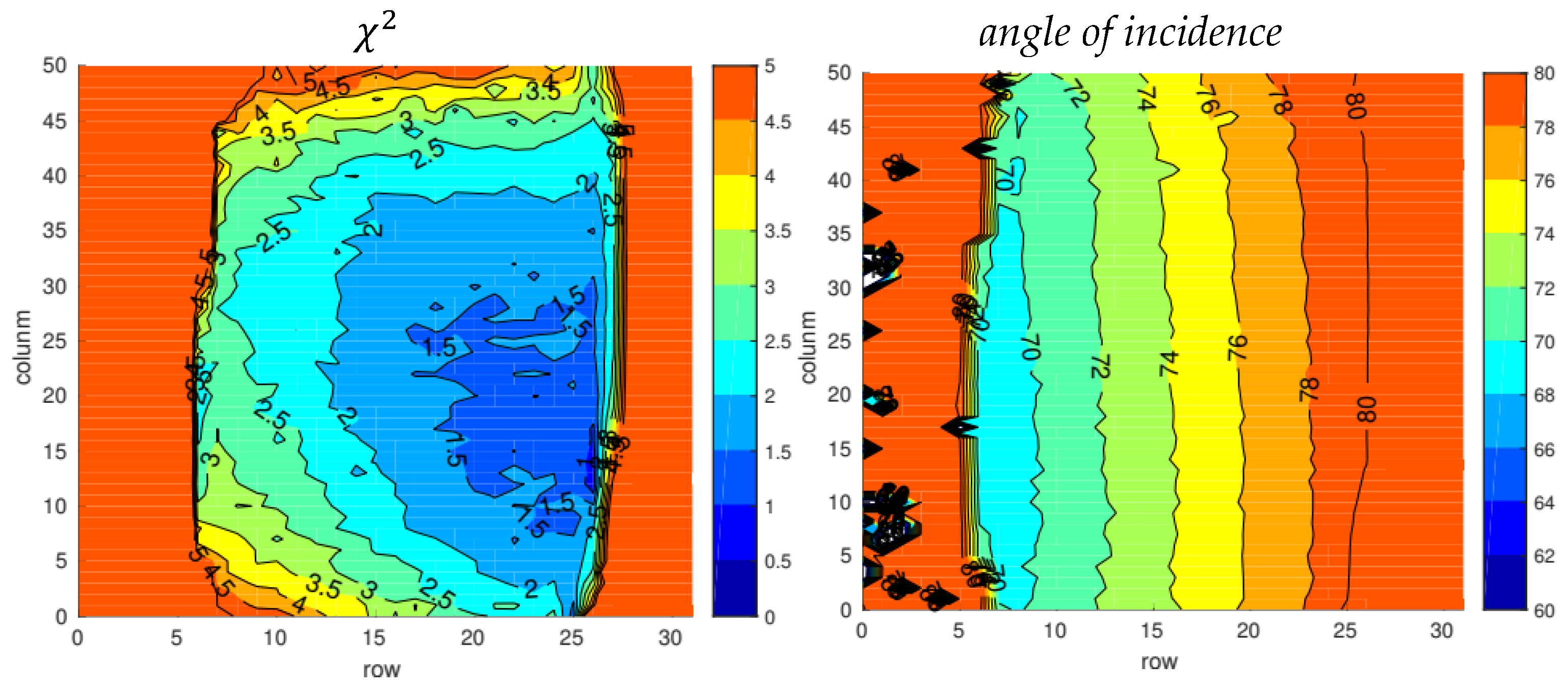
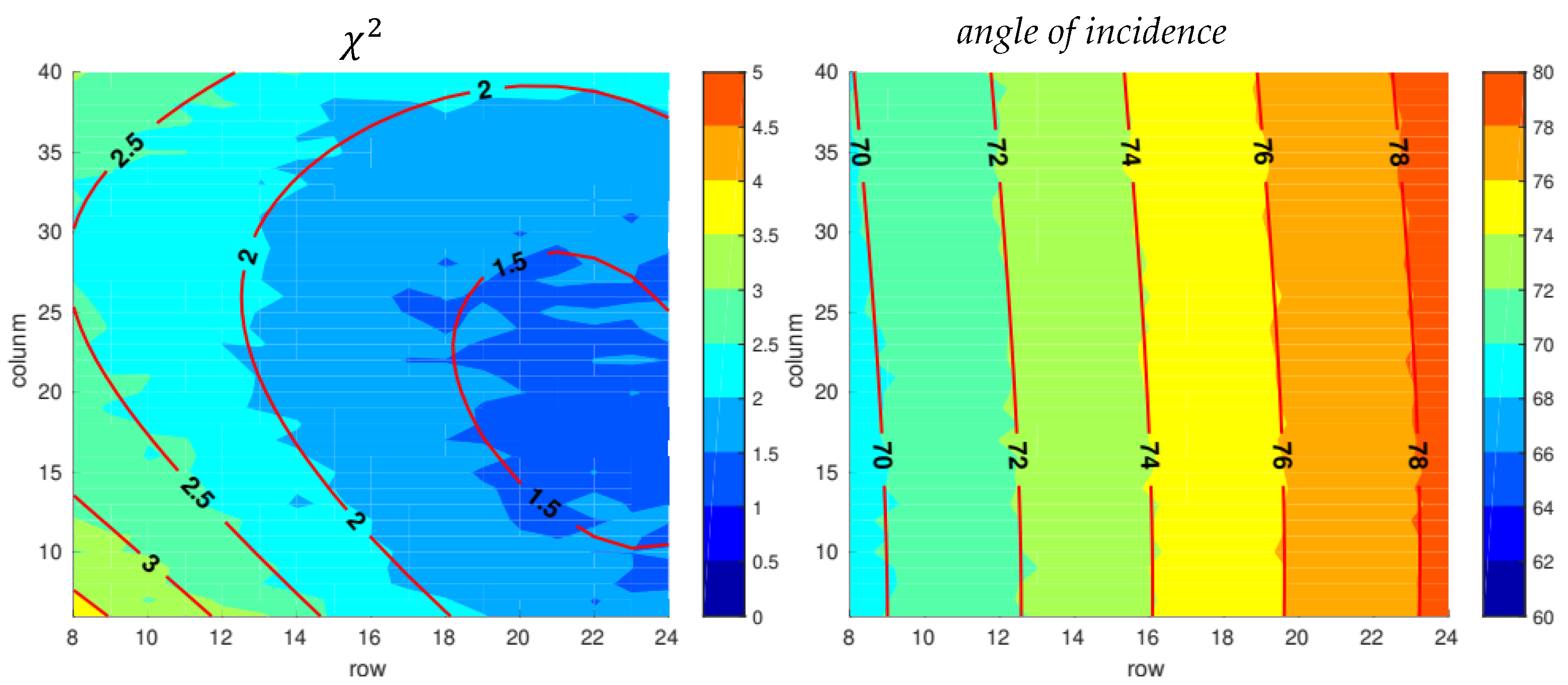
The results can be seen in
Figure 10,
Figure 11 and
Figure 12: the
map, the angle-of-incidence map, the
ρmonitor maps, and the thickness maps of SiO
2/Si samples with nominal thicknesses of 60 nm, 80 nm, and 100 nm.
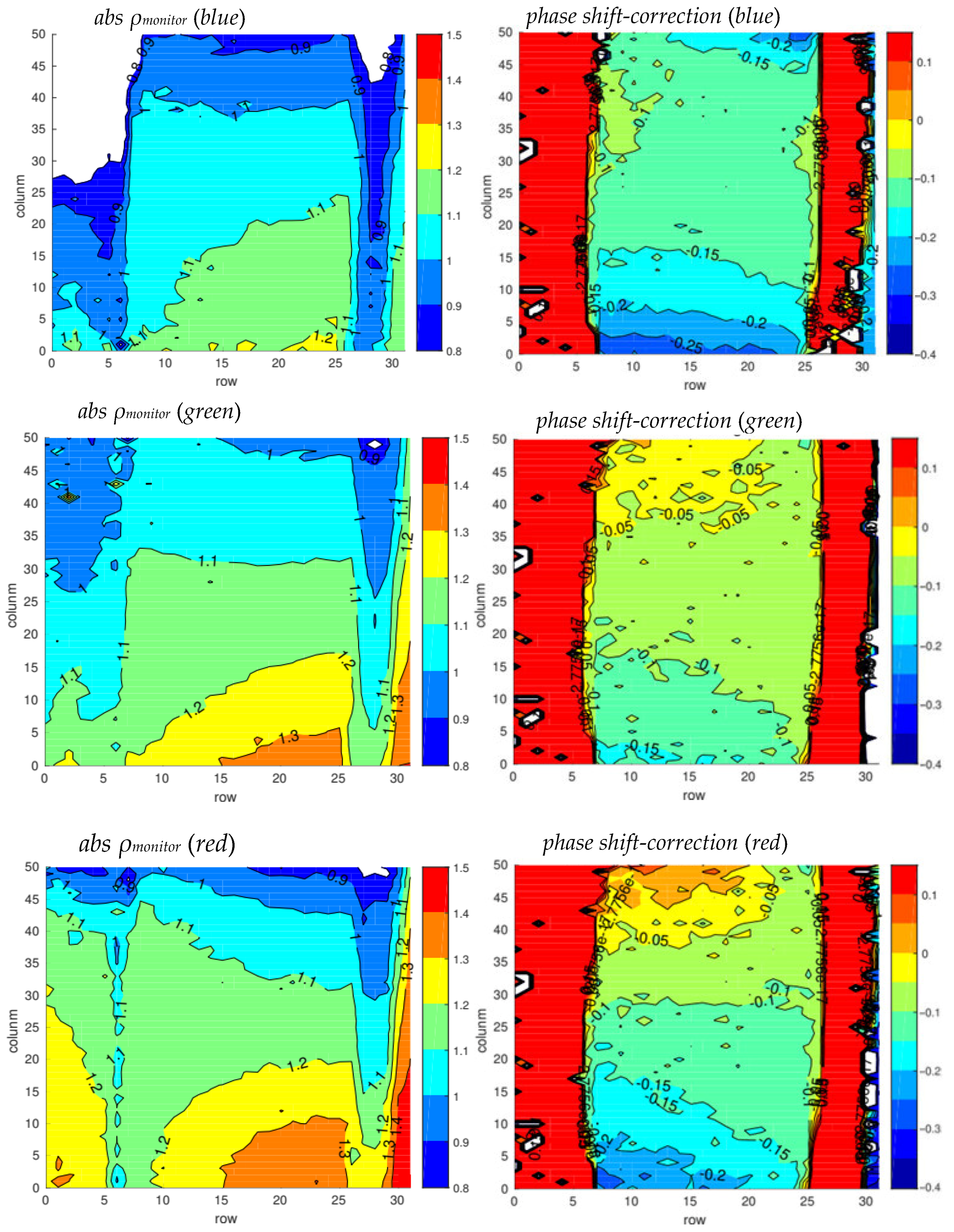
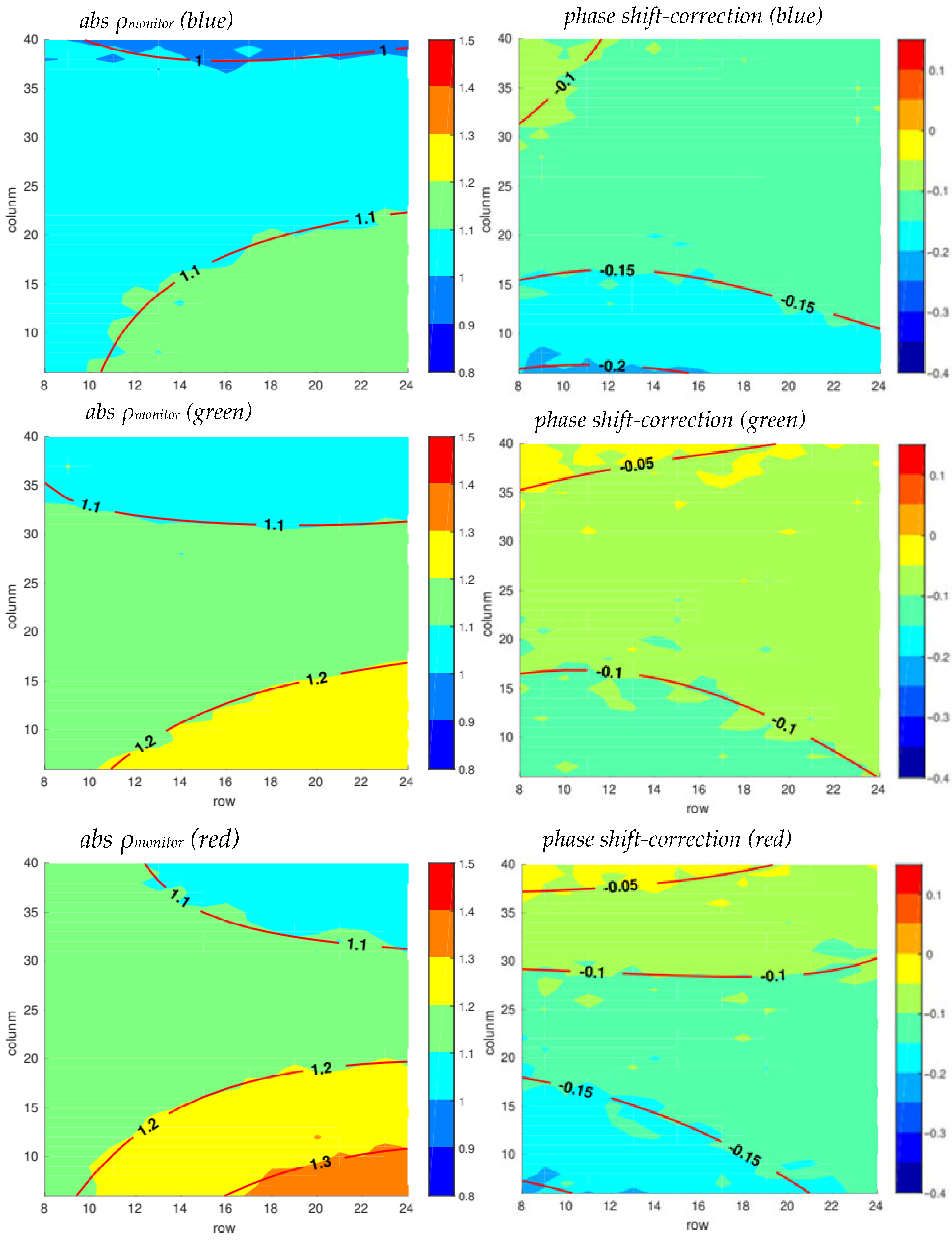
The wavelength-dependent monitor-correction factor maps obtained from the calibration procedure are shown in
Figure 11. Both the absolute value and the phase of
are displayed. For clarity, the result is shown explicitly for the blue channel (approximately 450 nm); the corresponding maps for the green (550 nm) and red (650 nm) channels exhibit similar behavior. The inferred angle-of-incidence map (
Figure 10, right) follows the behavior expected from the experimental geometry. The monitor-correction factors (
Figure 11) are smooth and exhibit relatively small deviations (with absolute values close to unity and phases close to zero), indicating that the calibration compensates moderate but systematic deviations of the optical response.
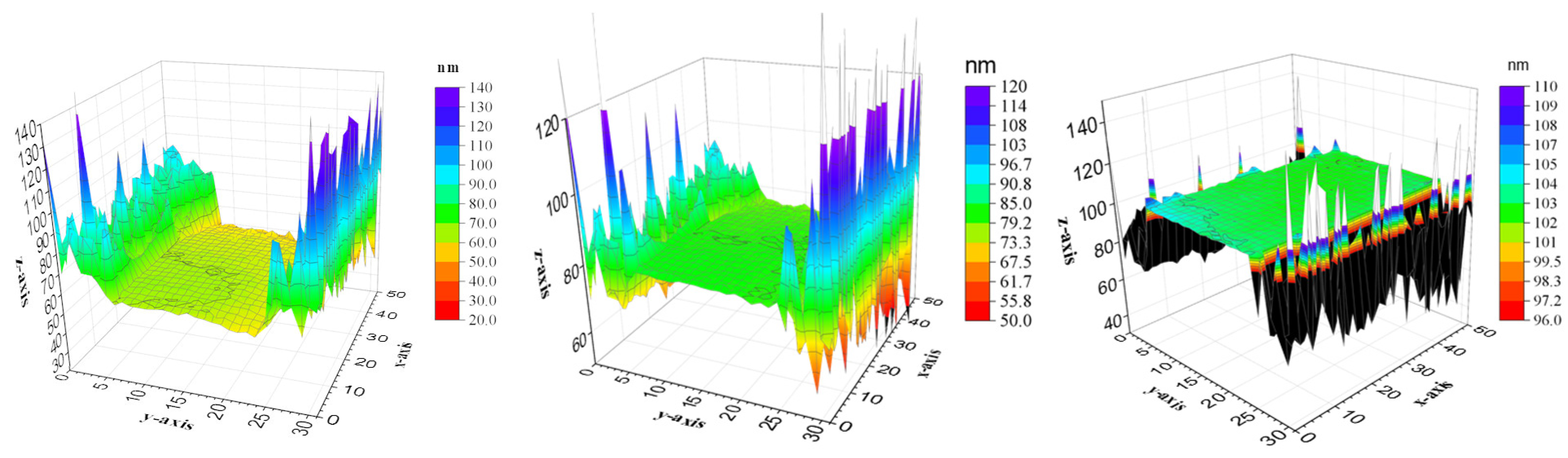
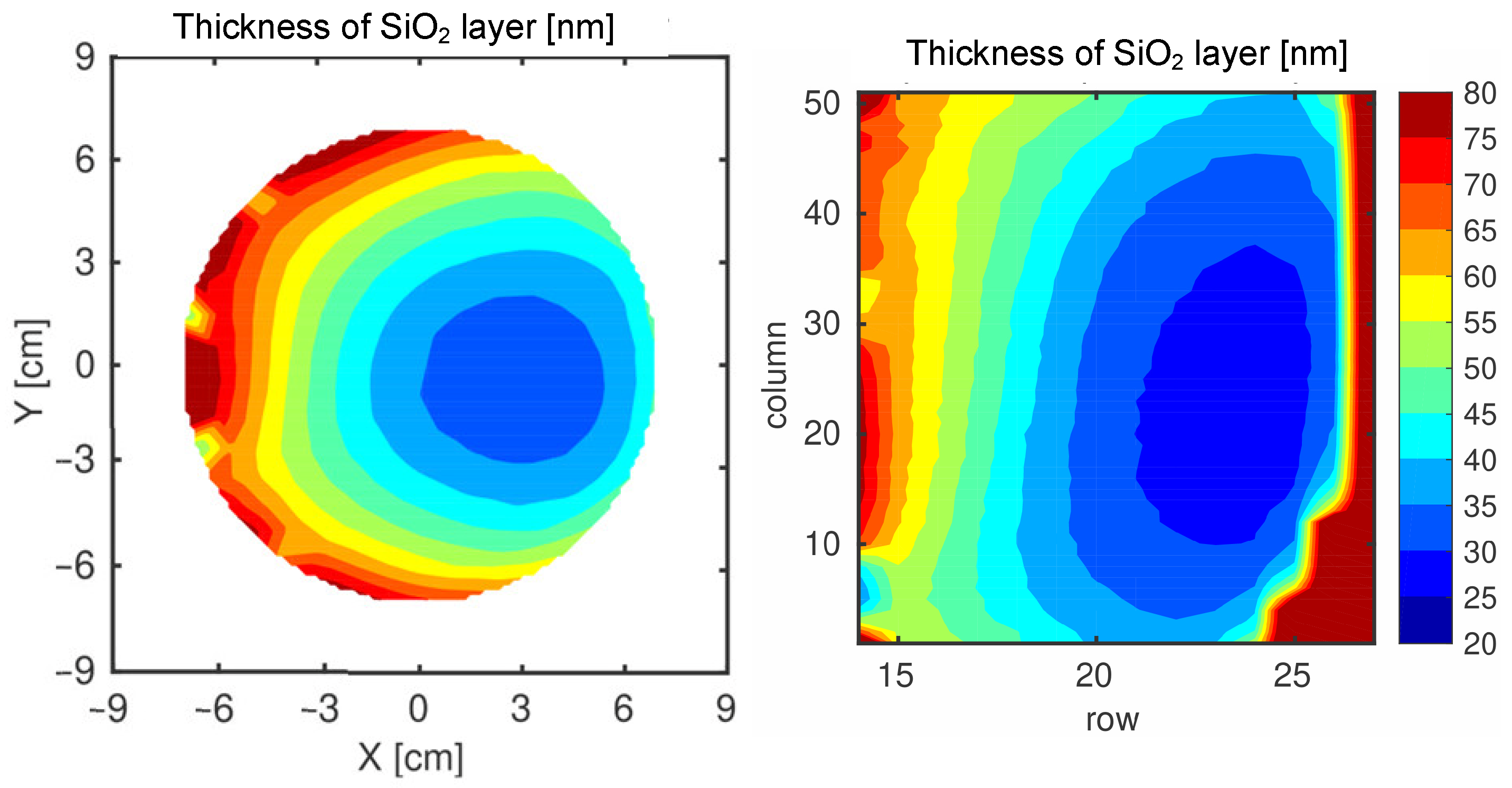
The same calibration process resulted in the thickness maps of our calibration oxide samples (nominal thicknesses of 60, 80, and 100 nm), which are shown in
Figure 12.
The calibration results obtained over the full camera field of view clearly demonstrate that the validity of the measurement and evaluation model is not uniform across the image. While the Bayesian calibration framework is capable of inferring instrument- and sample-related parameters simultaneously, its physical and statistical reliability depends on the quality and consistency of the measured data. One can see from the
map (
Figure 10) that the region with the calibration is valid only at the central part, where the measuring conditions are good (Calibration sample is smaller than the camera-view area and the intensity is not enough everywhere). The
values are too high, and the angle-of-incidence map is not smooth at the edges. So, a narrower (valid) area can be used for the other measurements (see
Figure 13 and
Figure 14). This valid area is the central 20 × 15 cm, X-direction: 5–40 columns; Y-direction: 8–24 rows. We show the robustness of the calibration procedure in
Appendix B.
3.2.2. Valid Area Calibration
Not only are the values of the calibration parameters important, but also their uncertainties, since these uncertainties propagate directly into the subsequent analysis of the polycrystalline silicon samples. The uncertainties of the inferred calibration parameters originate from both systematic and statistical error sources. These contributions are explicitly taken into account in the subsequent analysis and define the limits of the achievable accuracy of the method. Systematic errors are primarily related to the measurement system and the calibration procedure. They include uncertainties in the effective polarization states of the illumination, as well as imperfect knowledge of the analyzer and polarizer angles.
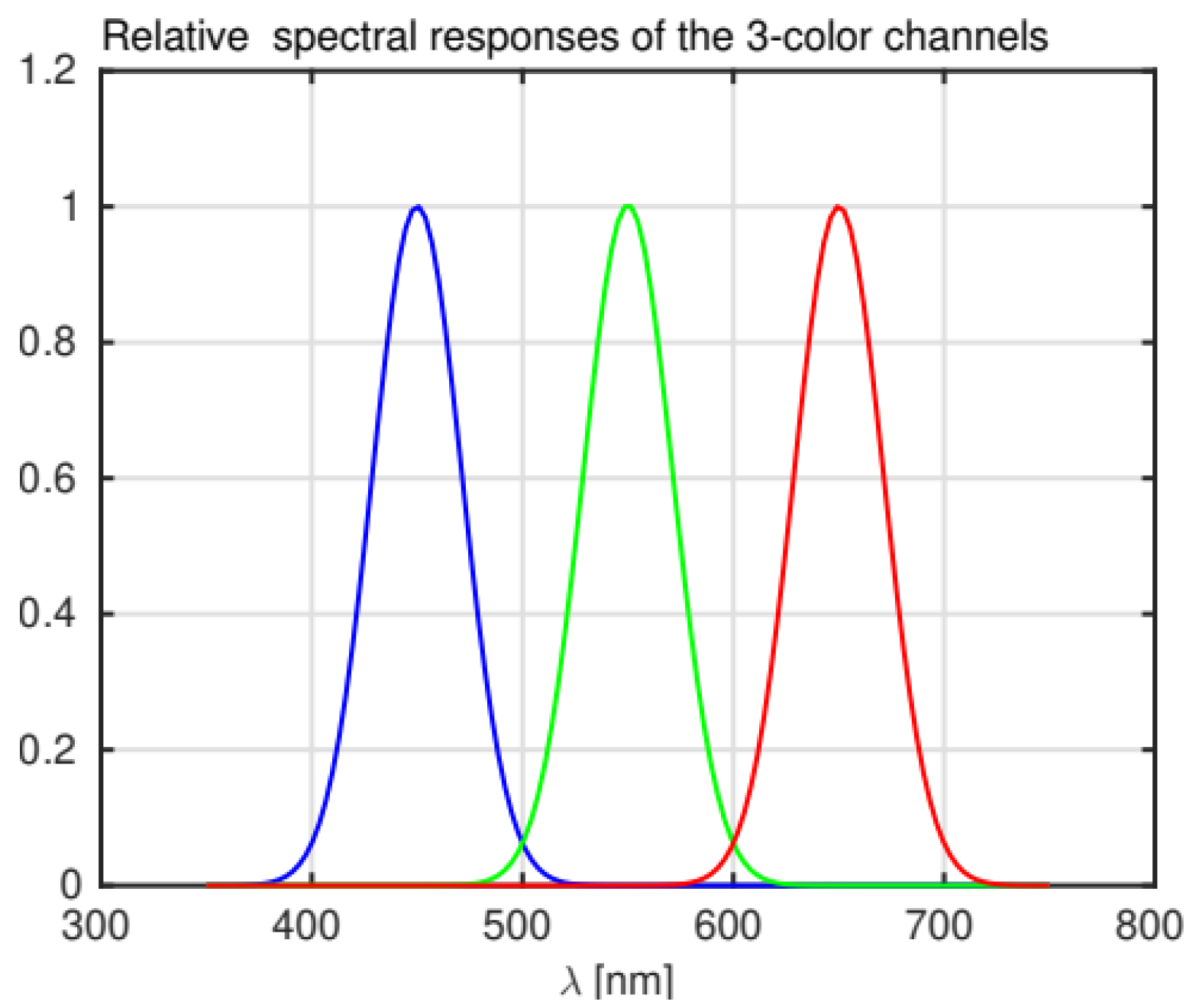
An additional source of systematic uncertainty originates from the spectral response functions SRj(λ) of the RGB channels. These functions are not known exactly and are therefore approximated by Gaussian functions. The associated uncertainties enter the forward model through the parameters describing the center wavelength and the spectral width of the Gaussian profiles, and they propagate into the inferred calibration parameters via the model evaluation.
Statistical errors arise mainly from sample-related effects. These include spatial variations in the SiO2 layer thickness across the surface of the calibration wafers, as well as local variations in surface properties such as surface roughness. Such effects introduce spatially varying deviations in the measured intensities and contribute to the statistical spread of the inferred parameters.
Taking the considerations of the previous paragraphs into account, a quadratic surface was fitted to the calibration parameters within the valid area. This fitted surface acts as a spatial smoothing of the calibration parameter maps. When using the values obtained from this smooth quadratic surface for the analysis of the polycrystalline silicon samples, the contribution of the statistical uncertainty of the calibration parameters becomes negligible compared to other sources of uncertainty. Within the Bayesian framework, this is reflected by omitting the statistical variance term associated with these calibration parameters from the prior distribution used in the subsequent analysis.
The resulting calibration maps together with the fitted quadratic surfaces are shown in
Figure 13 and
Figure 14. The parameter correlations obtained from the inverse analysis reveal a strongly coupled parameter space. Several pairs of parameters exhibit correlation coefficients with magnitudes exceeding 0.6, indicating that different combinations of layer parameters, instrumental quantities, and correction factors can reproduce the measured RGB intensities with comparable accuracy.
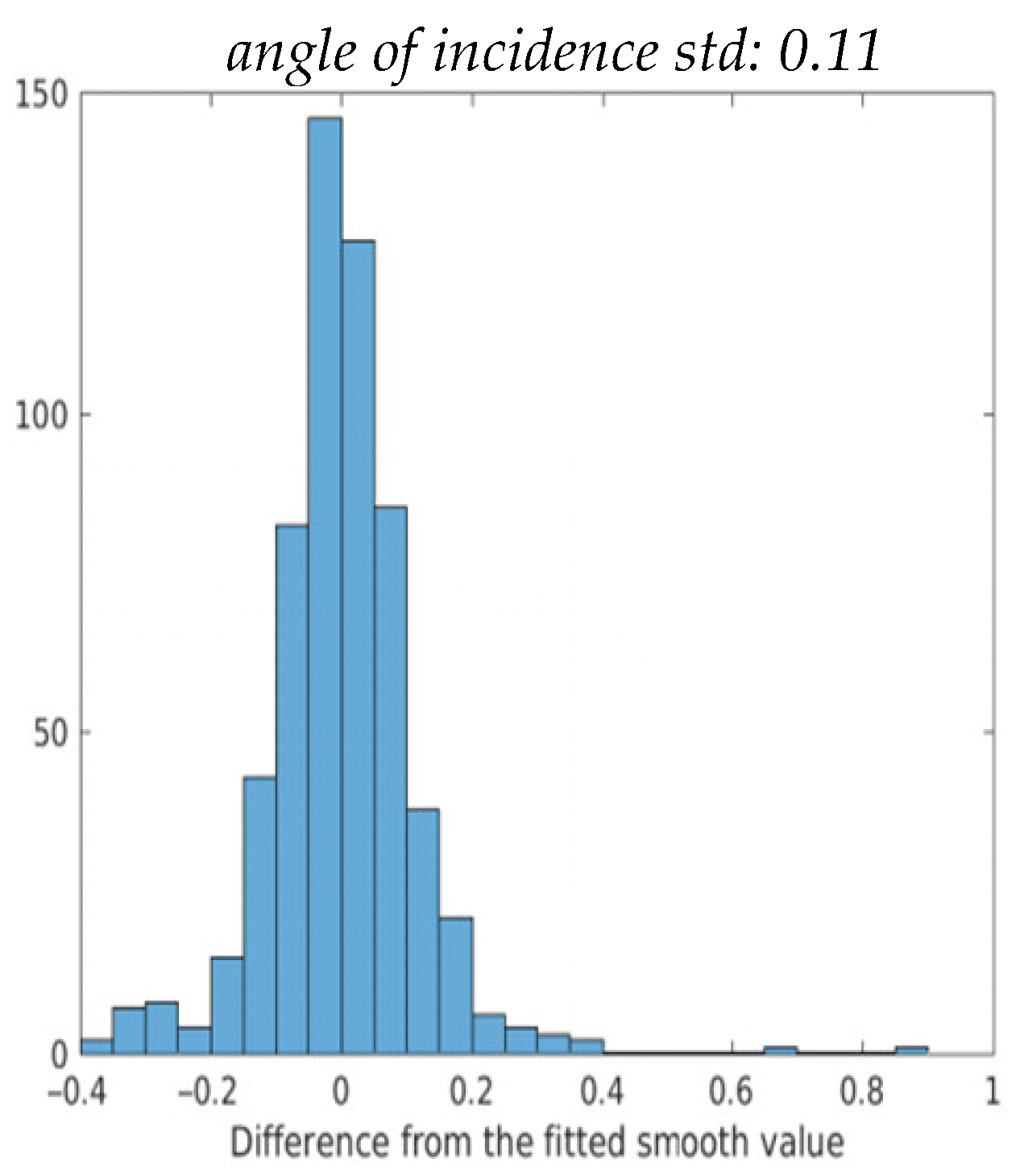
We estimated the scattering of the instrument calibration parameters, which we obtained by taking the difference between the calibrated parameters and the smoothed calibrated parameters. From these distributions, the statistical error of the calibration parameters can be determined, which we used later to determine the error of the layer parameters of the other samples (see later).
The standard deviation of abs (
ρmonitor) and phase shift-correction values are around ±0.01, and 0.11 degrees in the case of angle of incidence (see
Figure 15).
3.3. Validation Measurements
The purpose of this section is not to validate the measurement itself. Within the valid area, we assume the measured RGB intensities to be reliable. Instead, we validate the complete evaluation pipeline, i.e., the sequence and we test whether the inferred calibration parameters can be reused consistently in the analysis of independent samples.
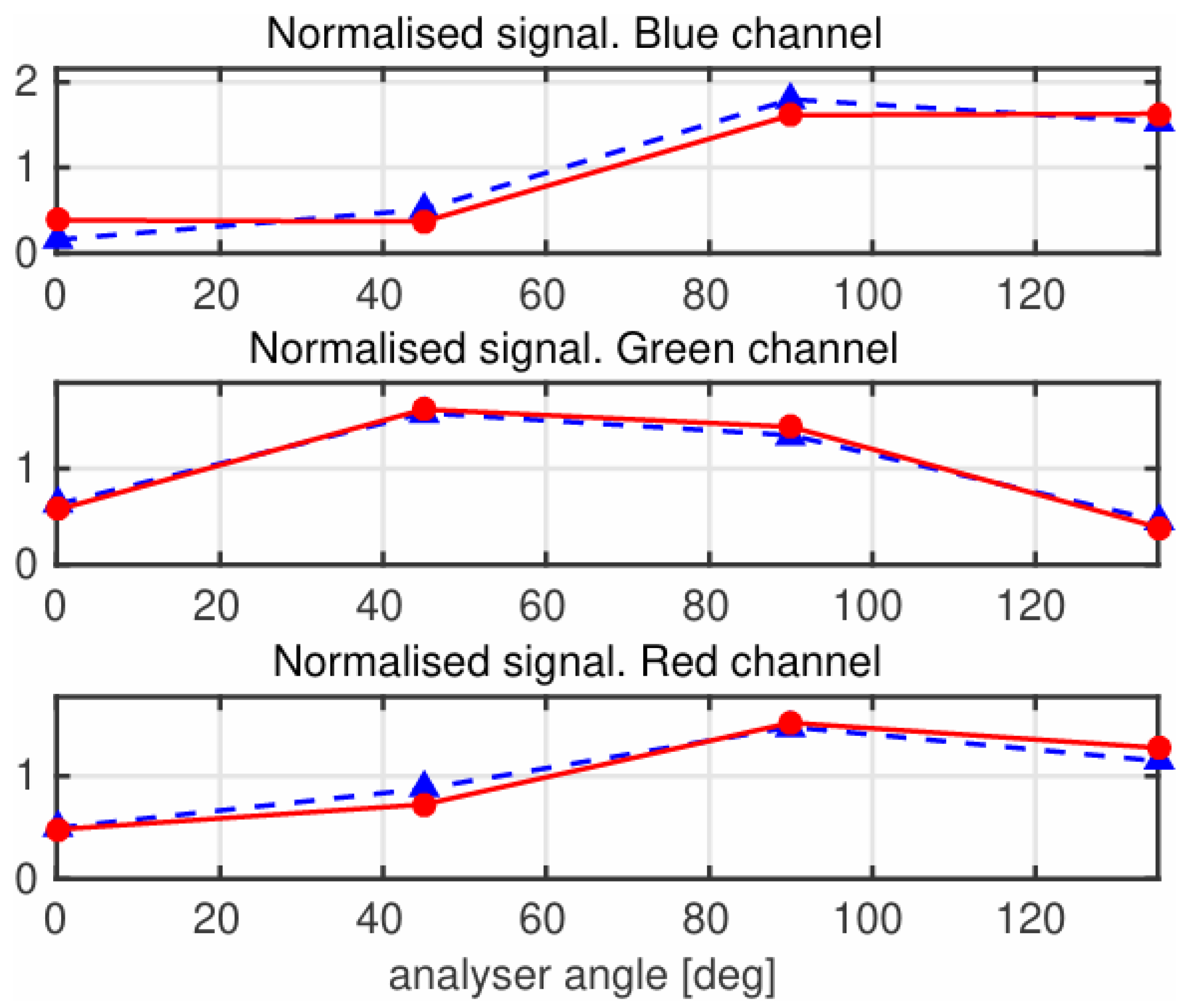
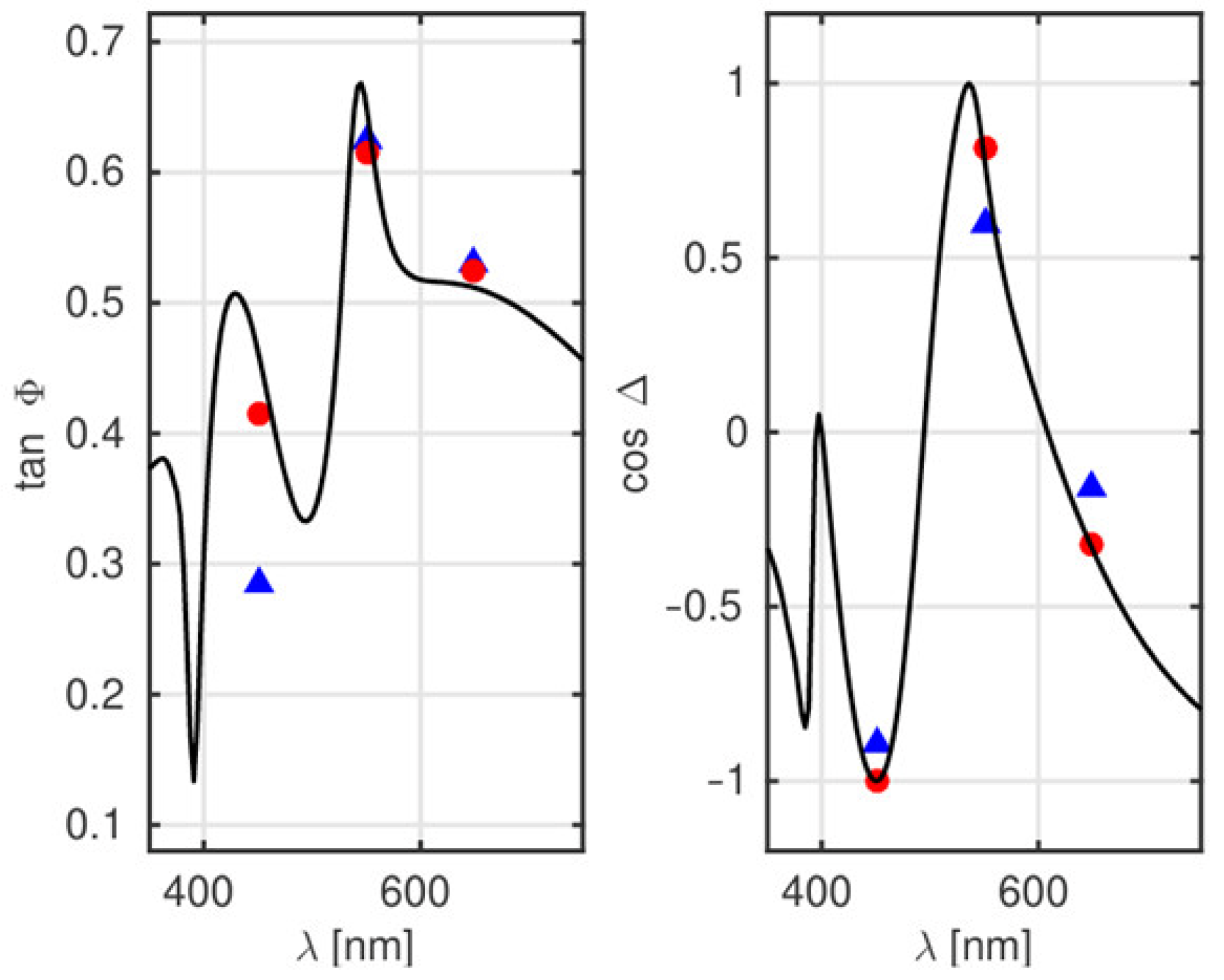
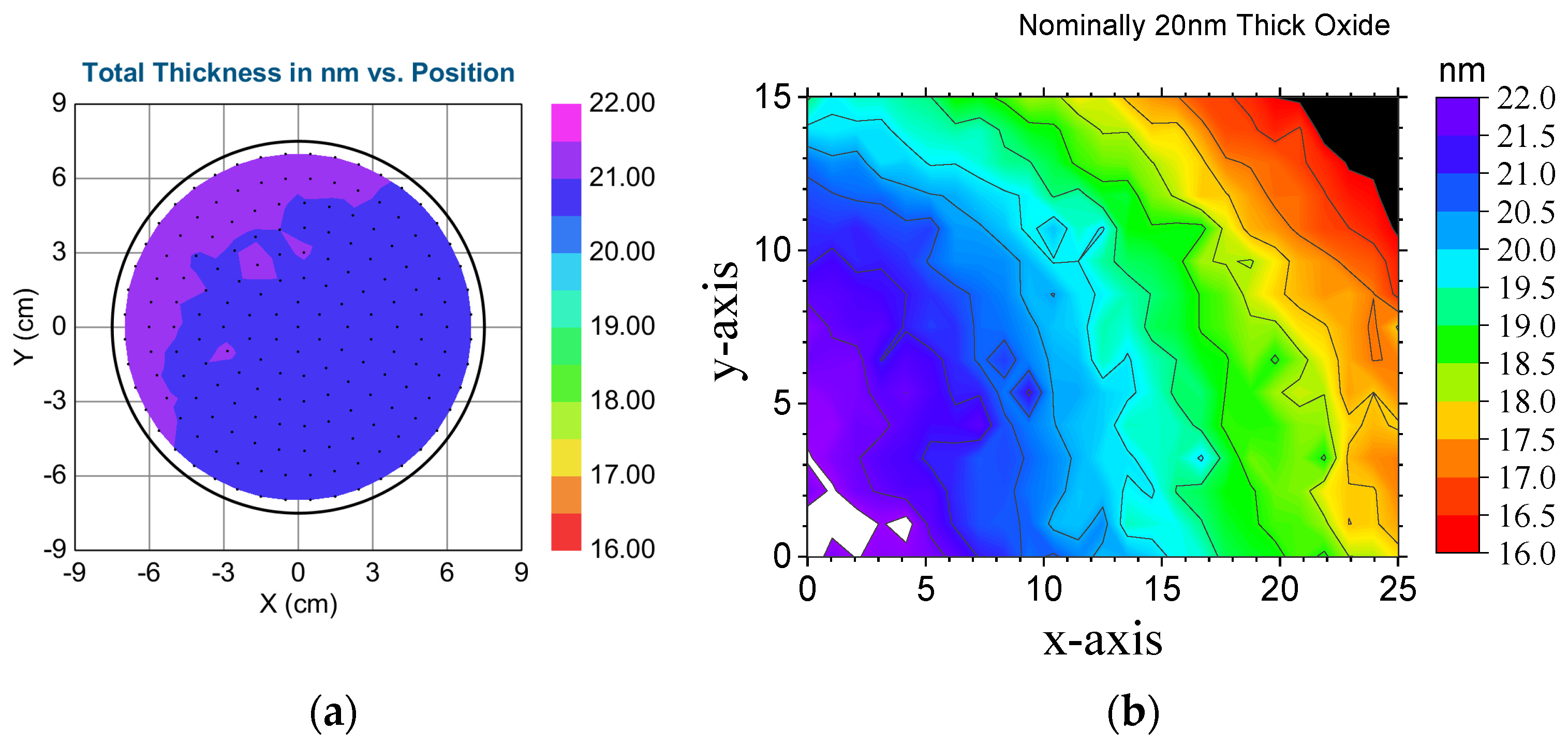
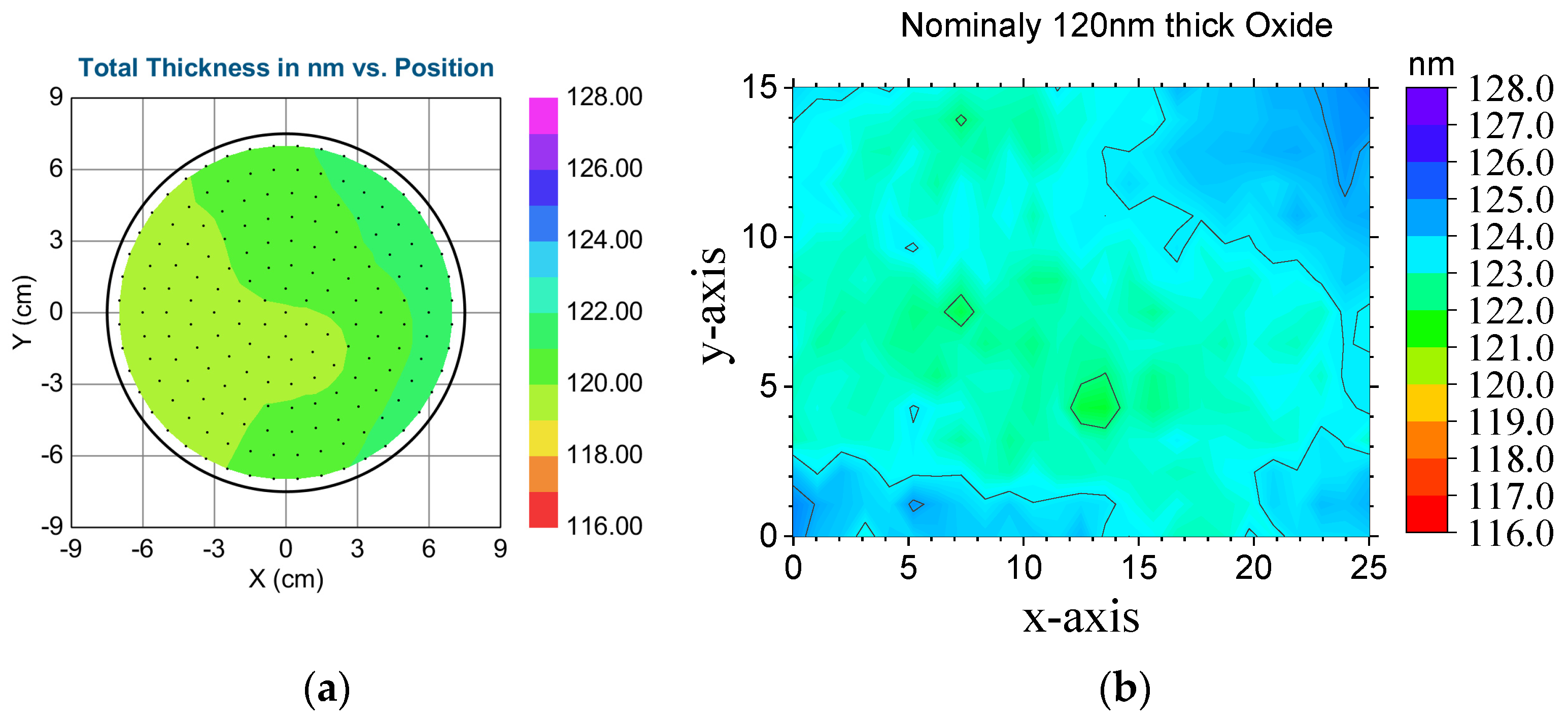
To validate the calibration procedure and its use in subsequent sample analysis, independent measurements were performed on two SiO2/Si wafers that were not involved in the calibration step. Both samples had a diameter of 20 cm and nominal oxide thicknesses of 20 nm and 120 nm, respectively. The calibrated monitor-correction function ρmonitor(x,y,λ) and the angle-of-incidence map obtained from the Bayesian calibration were applied to the measured RGB intensity data. Using these corrected intensities, oxide-thickness maps were determined with the Bayesian inversion procedure described in the previous sections. In this way, the calibration posterior is reused as an informative prior for the analysis of independent samples.
For reference, the same wafers were measured using a commercial Woollam M–2000 spectroscopic ellipsometer. Due to the geometrical constraints of the M–2000 system, only the central 14 cm diameter region of the 20 cm wafers could be mapped. Therefore, a strict point-by-point comparison over the full wafer area is not possible.
The thickness maps of the oxide samples in
Figure 16b and
Figure 17b appear to be smooth enough. Note that one color in
Figure 16 and
Figure 17 is only 0.5 nm or 1 nm, which corresponds to one or two atomic layers.
Within the overlapping measurement area, the agreement between the oxide-thickness values obtained with the present RGB ellipsometric mapping system and those measured by the Woollam M–2000 ellipsometer is typically better than 1 nm for both samples. Considering the broadband RGB integration, the non-collimated illumination geometry, and the different lateral resolutions of the two systems, this level of agreement demonstrates that the calibration posterior can be reused consistently in the Bayesian analysis of independent samples.
Validation Using Poly-Si on SiO2 on Si Samples
As a further independent test of the proposed calibration-to-analysis workflow, two polycrystalline–silicon on silicon-dioxide (poly-Si-on-SiO2) samples were investigated. The films were deposited by standard chemical vapor deposition (CVD) on 6-inch-diameter crystalline silicon wafers.
As in the previous validation on SiO2 samples, the purpose of this experiment is not to validate the measurement itself, but to assess whether the calibration posterior obtained from reference samples can be reused consistently as an informative prior in the Bayesian analysis of more complex, multilayer structures.
The calibrated monitor-correction function ρmonitor(x,y,λ) and the angle-of-incidence map were applied to the measured RGB intensity data. Thickness maps of both the poly Si and the underlying SiO2 layers were determined using the Bayesian inversion procedure described in the previous sections.
Independent reference measurements were performed on the same samples using a Wool lam M–2000 spectroscopic ellipsometer evaluated with the CompleteEASE software package. For both measurement systems, the same optical layer model was used, consisting of a poly–Si layer on a SiO2 layer on a crystalline silicon substrate.
The effective dielectric function of the poly–Si layer was described by an effective medium approximation (EMA) consisting of crystalline silicon (c–Si) and amorphous silicon (a–Si). The dielectric functions of c–Si and a–Si were taken from Ref. [
17]. The amorphous-silicon fraction was determined from the spectroscopic ellipsometry (M–2000) measurements and subsequently fixed to 11% during the evaluation of the RGB ellipsometric mapping data. This choice reflects the limited information content of three broadband RGB channels and avoids introducing poorly constrained additional free parameters into the inversion.
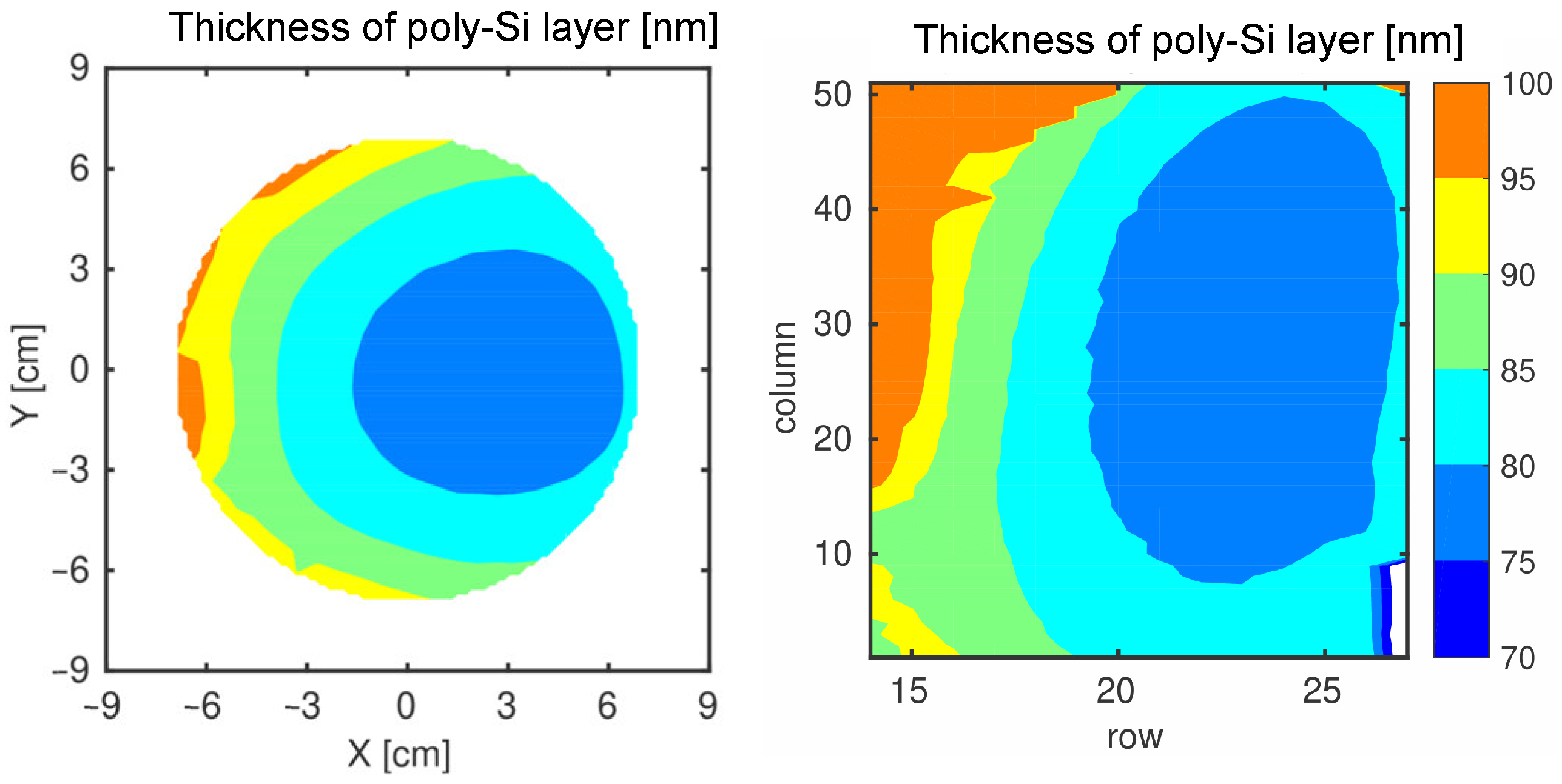
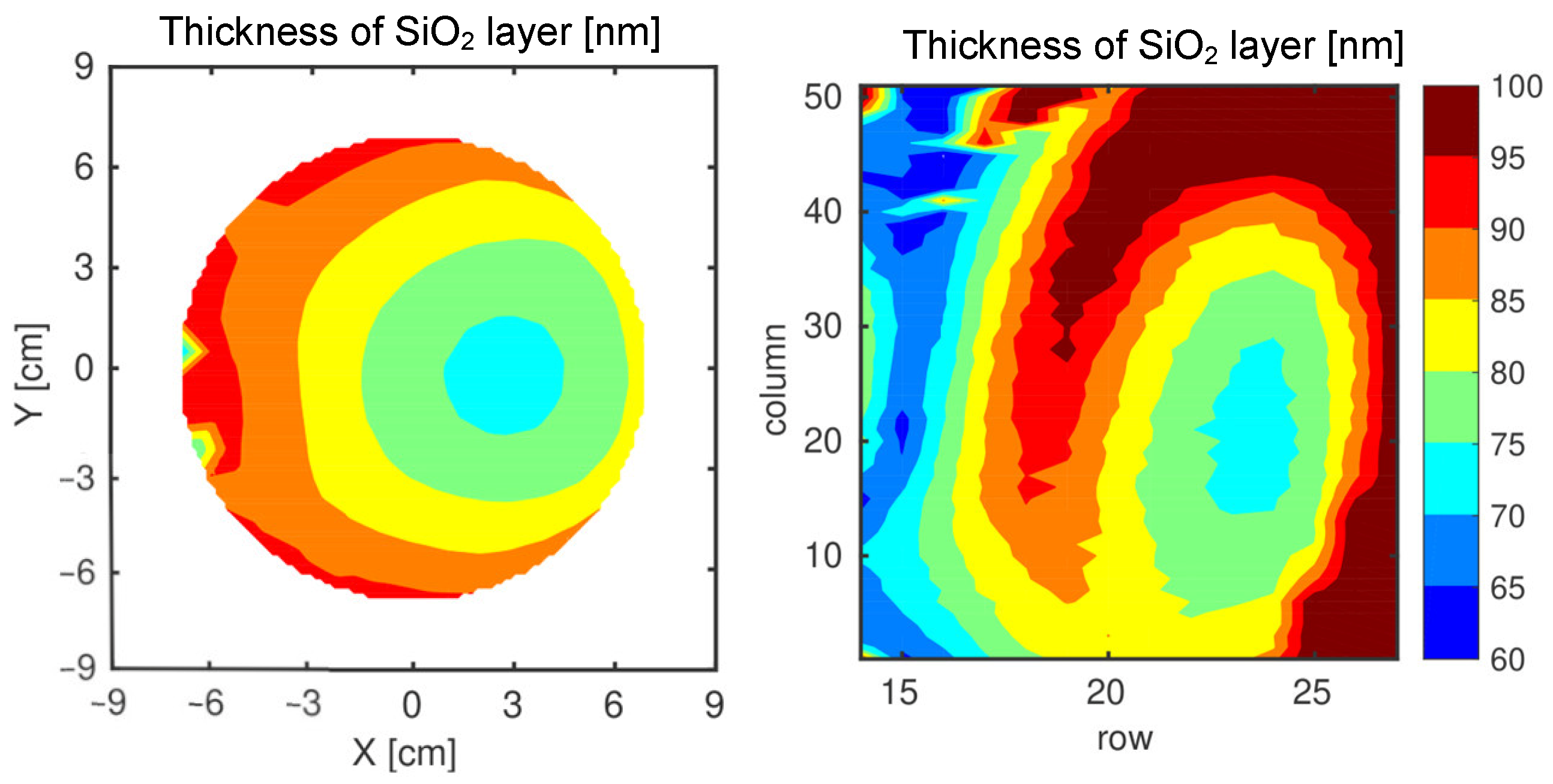
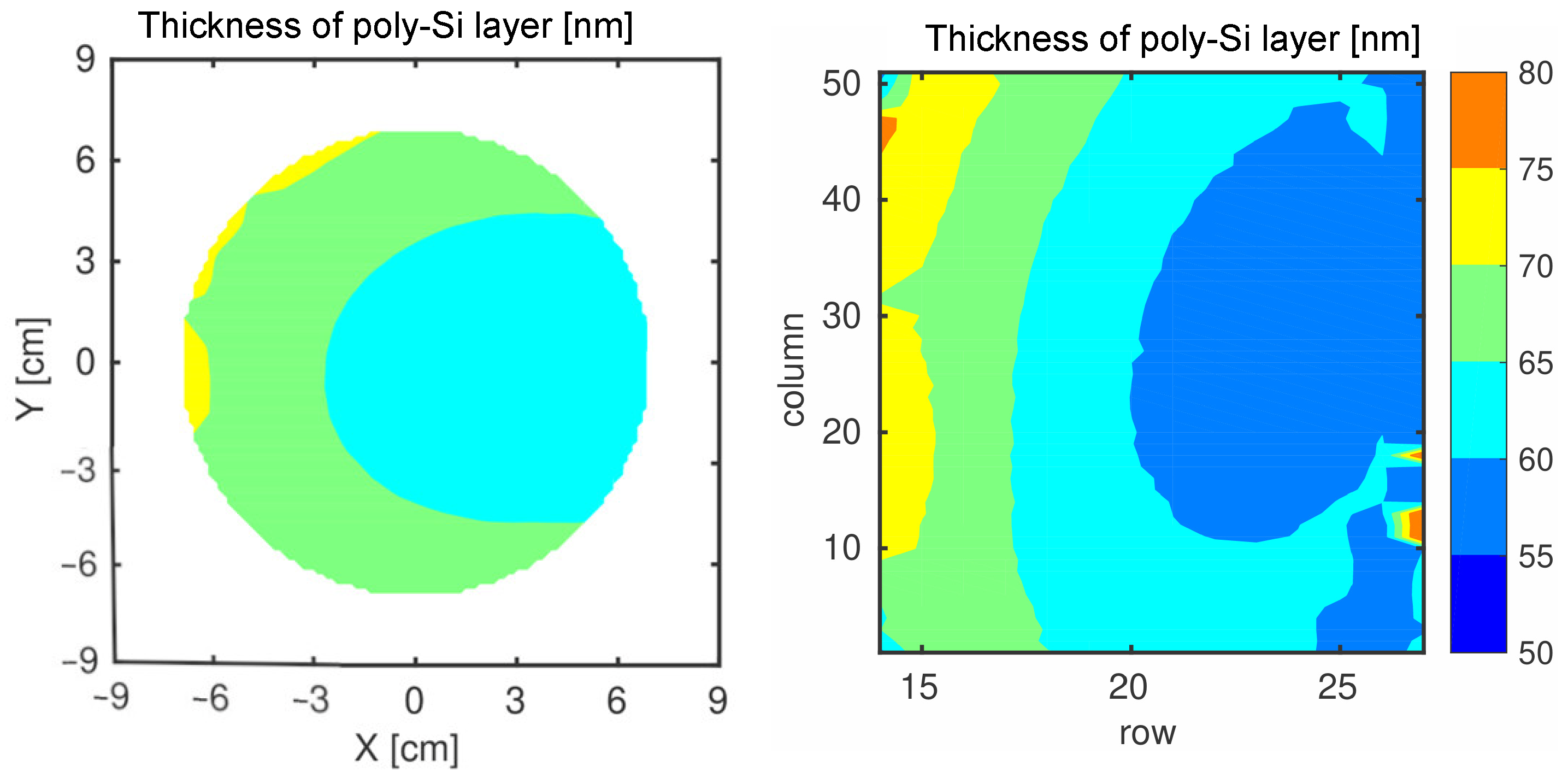
Figure 17 and
Figure 18 show the results. We must note that perspective causes the map to “shrink”. In both figures, the left panels correspond to the Woollam M–2000 measurements, while the right panels show the results obtained with the present RGB ellipsometric mapping system using the calibrated correction parameters. We compare the results of the point-by-point measurements and evaluation using the same optical model by the M2000 device and CompleteEASE software [
16] by Woollam Co.
The two measurement systems differ fundamentally in both spectral and spatial resolution. The M–2000 measures full spectra at each point with a spot size of approximately 1 mm, whereas the present RGB system operates with three broad spectral bands and averages over pixel groups corresponding to lateral dimensions of approximately a few mm by a few mm. As a consequence, a perfect point-by-point agreement is not expected for samples exhibiting lateral thickness variations.
Nevertheless, within the overlapping measurement area, the agreement between the poly–Si thickness values obtained with the two systems is typically within approximately 1 nm. Considering the reduced spectral information content, the non-collimated illumination geometry, and the spatial averaging inherent to the RGB system, this level of agreement confirms that the calibration parameters and their associated uncertainties can be propagated consistently into the Bayesian analysis of multilayer samples.
We used the same optical model to evaluate both measurements (M2000 and our multi-color device): poly-Si(mixture of c-Si and a-Si)–SiO
2–c-Si substrate. The poly-Si effective dielectric function was modeled by an effective medium approximated (EMA) mixture of c-Si and a-Si, where c-Si (crystalline silicon) and a-Si dielectric functions were used from Ref. [
19]. We determined the amorphous-silicon (a-Si) percentage from the M2000 measurement and we fixed this percentage (11%) when we evaluated the imaging measurements by our multi-color device. This choice reflects the limited information content of three broadband RGB channels and avoids introducing poorly constrained additional free parameters into the inversion.
We must note that this parameter (amorphous-silicon percentage) showed a relatively high cross-correlation with the thickness parameter and the uncertainty was ±3% (absolute error) even in the case of the evaluation of M2000 measurements by CompleteEASE software in the same 450–650 nm wavelength range. So, our three-color band cannot serve enough measured data to use a more sophisticated optical model. Therefore, in the present work, we treat the a–Si fraction as a calibration/auxiliary input and focus the RGB evaluation on reliable thickness mapping of the multilayer structure.
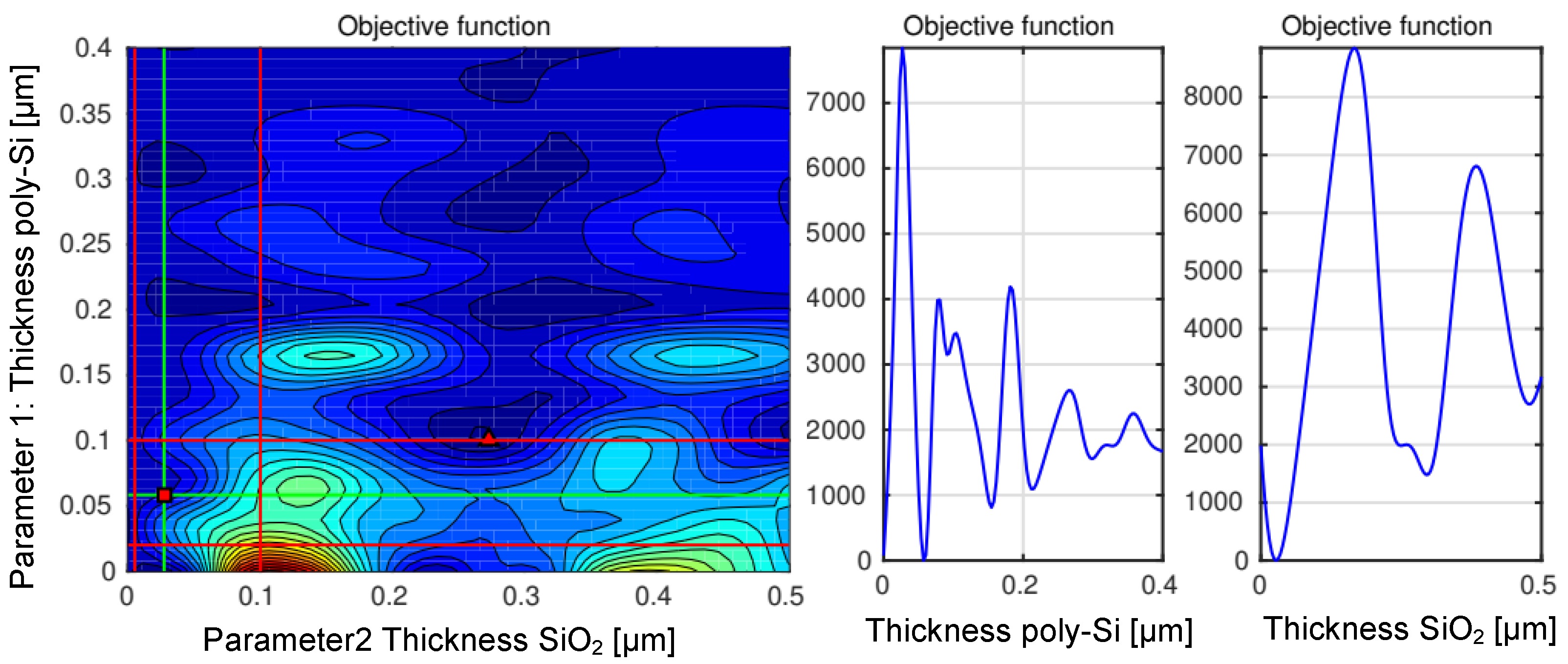
To test whether three-color data can constrain the EMA composition, we performed an additional inversion in which the a–Si fraction was treated as an unknown parameter with a narrow prior centered at the M–2000 value. The resulting posterior shows strong correlation between composition and thickness parameters, indicating that RGB data provide only limited independent information on the a–Si fraction in the present configuration. However, the thickness posteriors remain stable within the valid area.
This is considered an independent checking measurement of the same samples by the Woollam M2000 ellipsometer, as shown in
Figure 18 and
Figure 19. We must note that M2000 measures full spectra at each point, while our device measures at three color bands. We must note that M2000 measures on 1 mm size spots, while our device averages (pixel groups) approximately 5 × 5 mm spots. So, in the case of laterally changing thicknesses we cannot wait for full agreement between the two measurements. The agreement between the thickness measurements made between our non-collimated ellipsometer after correction and the conventional Wollam M2000 spectroscopic ellipsometer is only within 1 nm, which is a good agreement. Note that our M2000 device can map only a 14 cm diameter area, so there is not a one-to-one correspondence between the two areas.
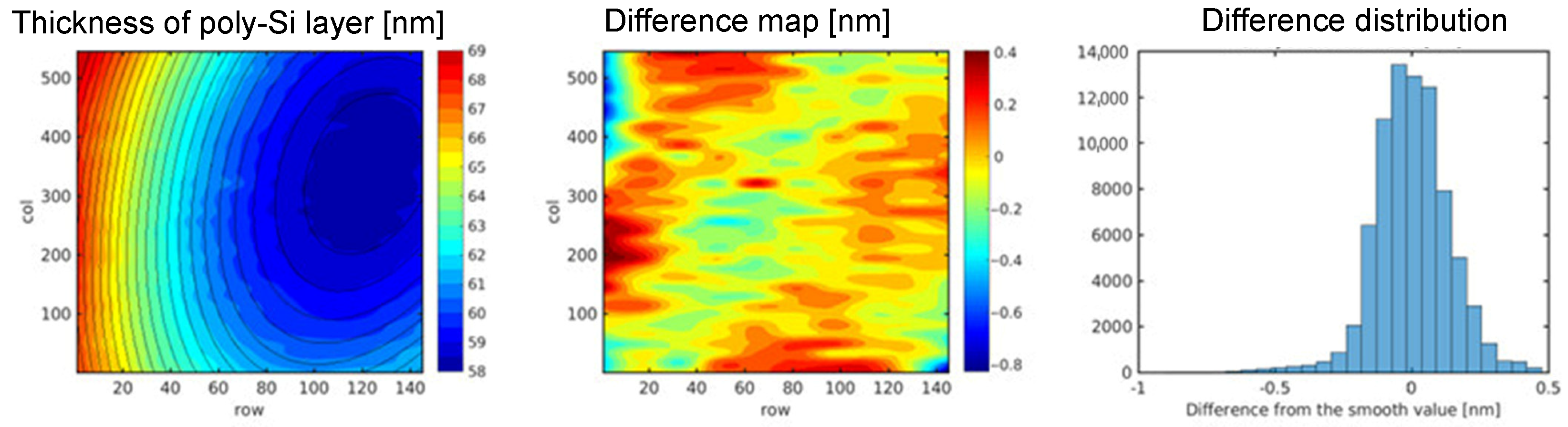
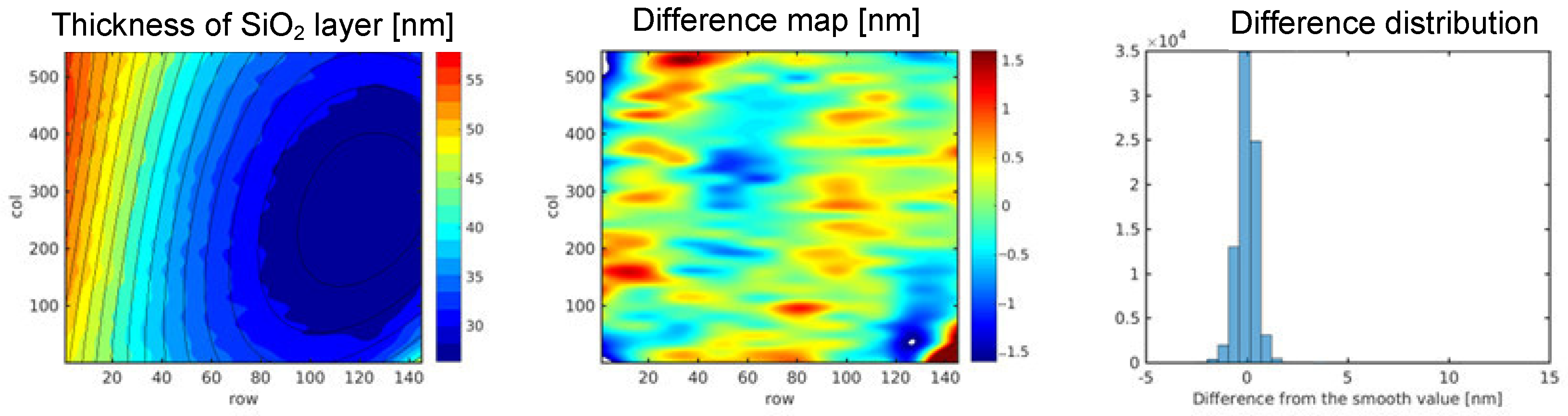
To further quantify the agreement, a comparative error analysis was performed for the second poly–Si/SiO
2/Si sample, using the device with smaller pixel groups.
Figure 20 and
Figure 21 show the smoothed thickness maps of fitted values of poly-Si and SiO
2 layers (left maps), the differences between the smoothed and M2000 thickness values (middle maps), and the distribution of the thickness differences.




 ,
,