1. Introduction
Modern footbridges are particularly susceptible to human-induced excitation due to their slender and lightweight design, which results in low natural frequencies that may coincide with pedestrian walking frequencies [
1,
2]. This can produce near-resonance conditions, as experienced by the Millennium Bridge in London [
3] and the Solférino footbridge in Paris [
4], making vibration serviceability a critical aspect of footbridge design and assessment. As a result, the civil engineering community is actively advancing research in this area [
5,
6,
7,
8]. Pedestrians exert forces in three directions (horizontal-lateral, horizontal-longitudinal, and vertical), with the vertical component being the largest [
9]. To assess vertical vibrations, serviceability checks have traditionally focused on structural bending modes, as these primarily govern the vertical response to pedestrian forces. This approach is reflected both in the research literature and in the few available design guidelines [
10,
11,
12,
13].
Nevertheless, highly asymmetric footbridges with striking visual impact are becoming increasingly common [
14,
15,
16,
17,
18,
19,
20]. In such structures, the primary vertical modes may involve coupled bending-torsion or even pure torsion, rather than pure bending. When pedestrian loading excites these modes, torsion-related rotations of the structure might potentially amplify vertical structural responses beyond what is predicted by bending-only analyses, which only account for deflection. Eccentric walking or uneven crowd distributions may further enhance vertical vibrations, as torsional moments are generated in addition to the pedestrian vertical forces, making it essential to consider the interaction between translational and rotational effects when evaluating vibration serviceability. Neglecting these torsional contributions can lead to an underestimation of vertical vibrations, and consequently, to overly conservative design decisions [
21]. Despite the increasing recognition of torsional dynamics in modern footbridge design, research on this topic remains limited, leaving a significant gap in the literature [
22]. Indeed, serviceability-oriented experimental studies are rarely supported by numerical models incorporating human-induced torsion. This limitation affects not only simple straight footbridges [
23,
24] but also more complex geometries [
25,
26], such as curved or asymmetric layouts that exhibit bending-torsional modes within typical pedestrian pacing frequencies.
In this context, the paper addresses the coupling between bending and torsion in both pedestrian action (vertical forces and moments) and structural response (cross-sectional translations and rotations). The combined effects of bending and torsional vibrations are investigated through a comprehensive approach that includes experimental tests on a real structure, detailed numerical simulations, and a simplified methodology based on multiplication factors [
21]. These factors allow to correct bending-only analyses to account for torsional effects, including (i) the potential amplification of vertical vibrations at the centre of mass and (ii) the shift of maximum vibrations away from the centre of mass due to rotational effects. Multiplication factors are derived analytically by comparing the equations of motion under bending-only and coupled bending-torsion scenarios, ensuring they are not influenced by numerical calibration errors. They only depend on modal parameters, structural and loading eccentricities. This allows their calculation a priori, to quantify the contribution of torsional effects in a given application case and determine whether detailed bending-torsion analyses are necessary.
First, to quantify the contribution of torsional behaviour to the overall structural vibrations, a parametric analysis of the multiplication factors is carried out, assessing the influence of both load and structural eccentricity. Subsequently, an experimental campaign is carried out on a highly asymmetric steel footbridge with a curved layout, a configuration that makes the structure particularly susceptible to coupled bending-torsional vibrations. The experimental results are compared with both detailed numerical simulations and predictions obtained using the multiplication factor-based approach. The tests consider several loading scenarios, including uniformly and non-uniformly distributed pedestrian crowds across the deck, as well as different pacing frequencies and crowd densities. The experimental validation demonstrates that all these aspects have a strong impact on the structural response, and highlights the importance of accounting for bending-torsion coupling in serviceability assessments of asymmetric footbridges under eccentric pedestrian loading. Lastly, further numerical analyses are carried out using the Latin Hypercube Sampling [
27] and the Social Force Model [
28,
29] to assess the crowd-induced bending and torsional vibrations over a wider range of pedestrian traffic levels. Particular emphasis is given to the definition of an equivalent moment arm for crowd scenarios, which is required to establish the multiplication factors according to the presented simplified approach. In particular, the simulations examine whether the crowd can be assumed to be uniformly distributed across the deck for the calculation of the equivalent moment arm, as such an assumption is necessary for a rapid multiplication factor-based assessment.
The paper is organized as follows.
Section 2 introduces the traditional bending-only mathematical framework, presents its extension to include bending-torsion coupling, and analytically derives the corresponding multiplication factors.
Section 3 presents a parametric analysis of the multiplication factors in relation to their governing parameters.
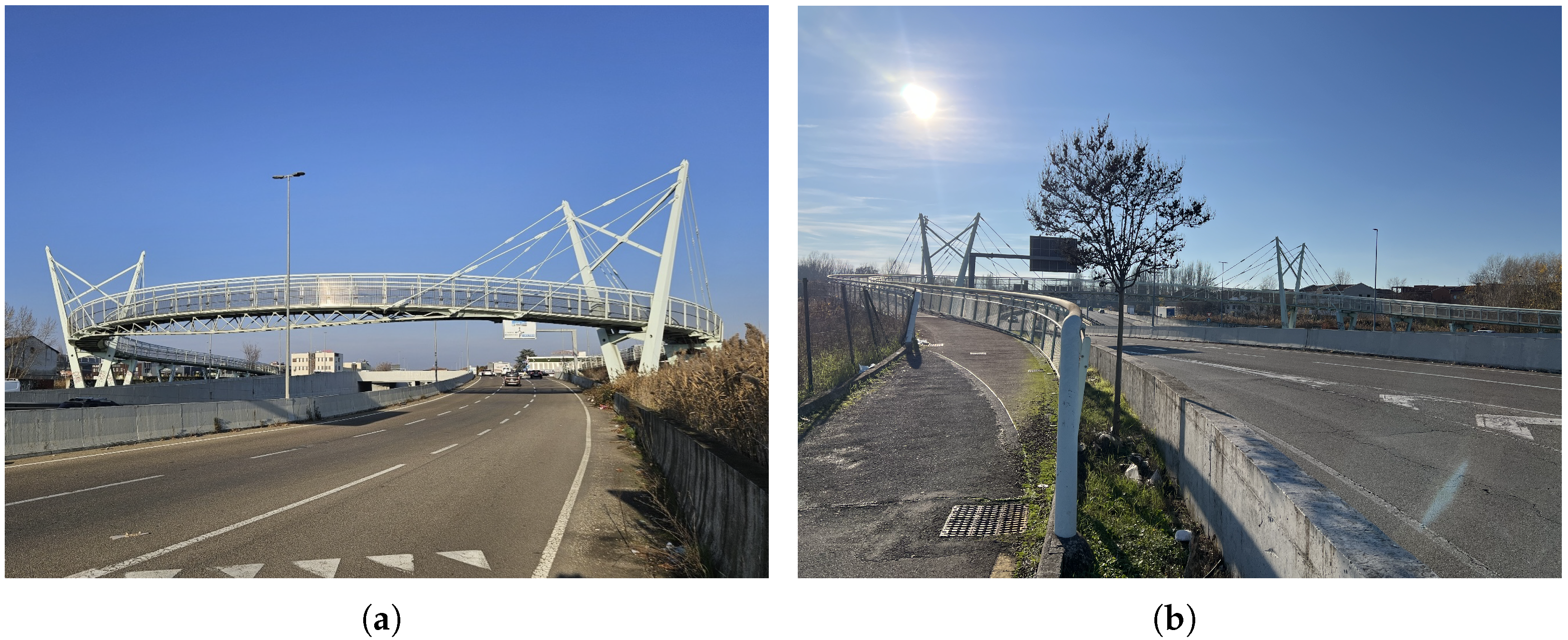
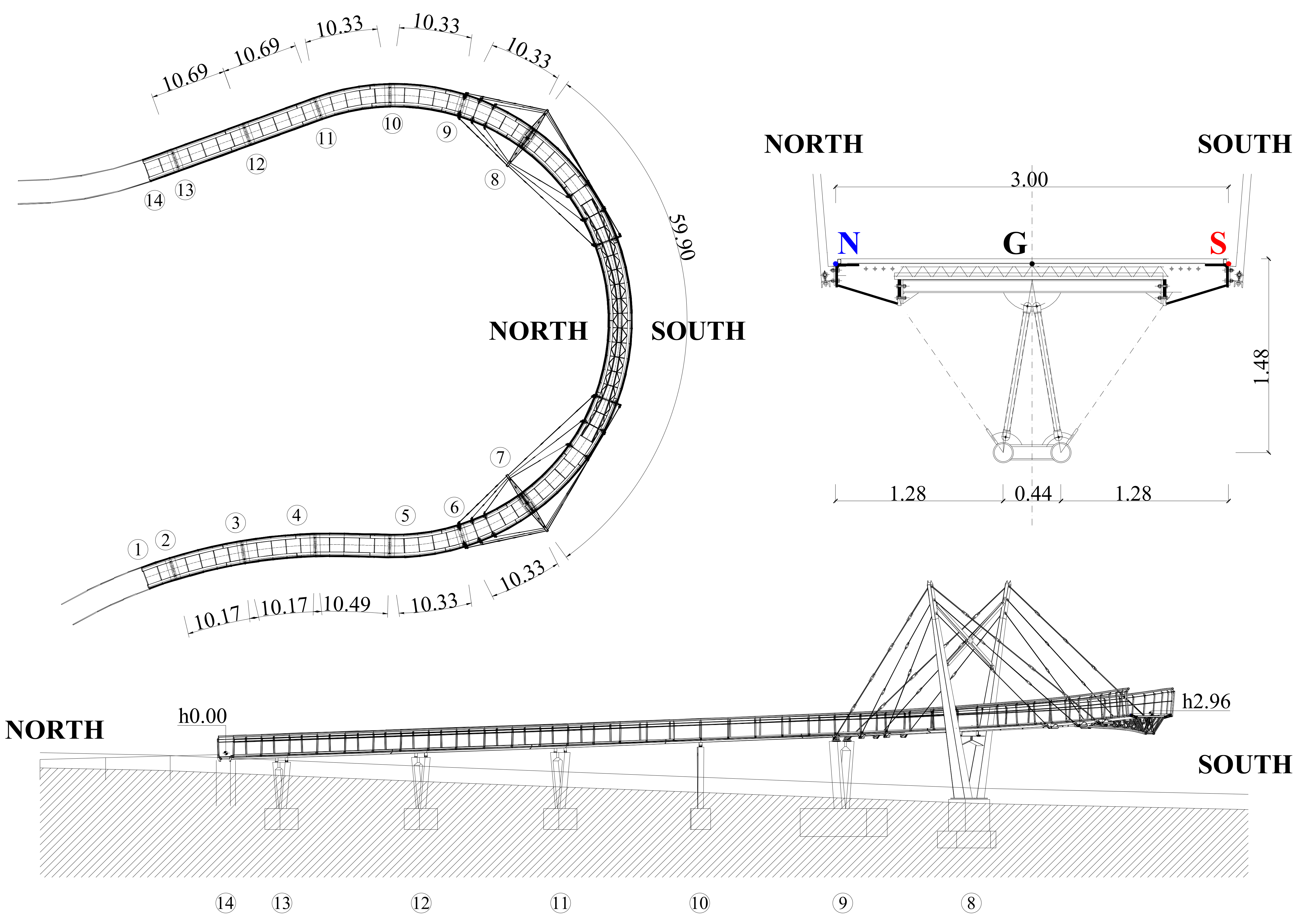
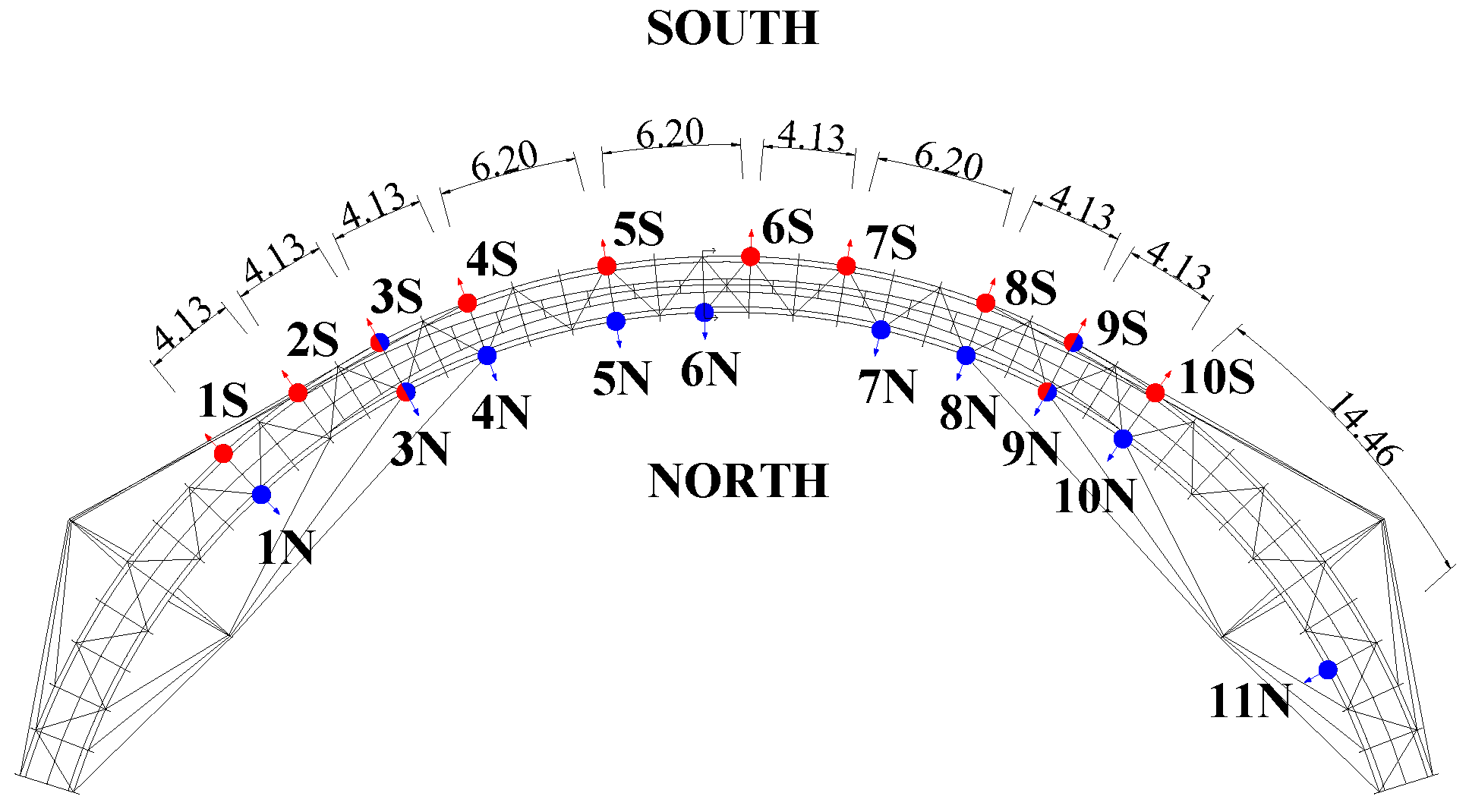
Section 4 deals with the experimental tests conducted on the Pasternak footbridge.
Section 5 describes the numerical analyses performed for the specific application cases.
Section 6 discusses the experimental validation of the numerical predictions.
Section 7 conducts further numerical analyses to investigate the crowd equivalent moment arm. Finally,
Section 8 provides the conclusions.
3. Parametric Study of Multiplication Factors
To investigate the dependence of the multiplication factors on the governing parameters, a parametric analysis is conducted. The multiplication factors
and
are evaluated at midspan and, for the sake of brevity, the quantities
, and
are hereafter denoted as
, and
, respectively. The analysis considers modal configurations ranging from predominantly first bending modes (with
and
), to predominantly torsional modes (with
and
), as well as intermediate coupled cases. Loading eccentricity
and positional eccentricity
e are both varied from
to
m considering a typical deck width of 3 m. The torsional multiplication factor
is examined first. Referring to Equation (
12), the contribution of the numerator is isolated by setting the denominator equal to unity. This is achieved by imposing
, where
r denotes the ratio between the rotational and translational generalised masses, namely
. The condition
therefore corresponds to a translational modal mass that is dominant with respect to the rotational one.
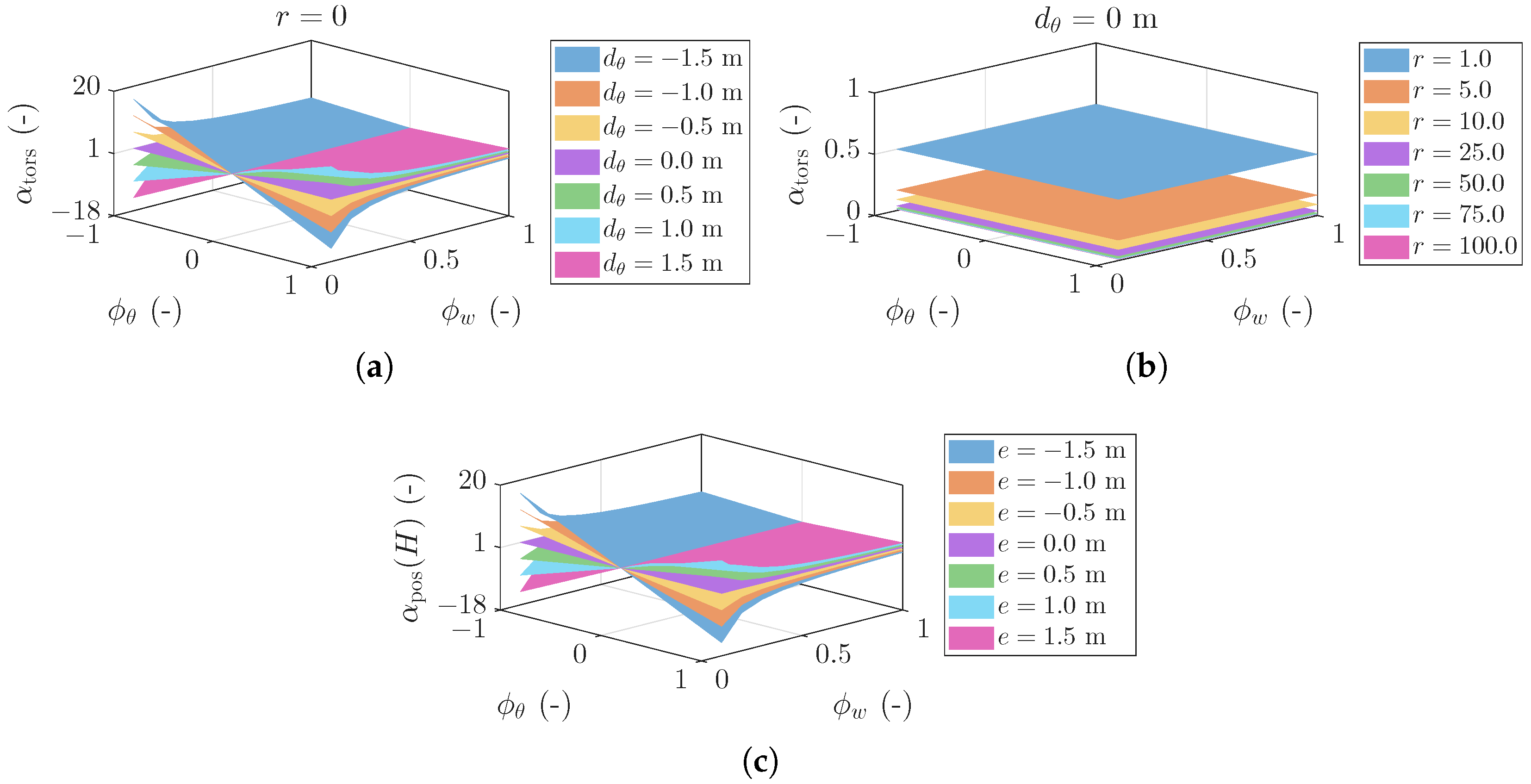
Under this assumption, the torsional multiplication factor is reported in
Figure 1a. The results indicate a strong dependence of
on the modal shape components evaluated at the considered cross-section, as well as on the loading moment arm
. When
, the bending-torsion formulation reduces to the bending-only case at
G, yielding
independently of
. For nonzero
, the sign and magnitude of
are governed by the combined effect of
and
. When these parameters have the same sign, the load eccentricity amplifies the rotational contribution, resulting in a positive
. Conversely, when they have opposite signs, the eccentric loading opposes the torsional response, leading to a negative
.
The contribution of the denominator is isolated in
Figure 1b, imposing the numerator equal to unity through
. In the absence of load eccentricity, the response at
G obtained from the bending-only formulation coincides with that of the bending-torsional formulation, up to differences in the generalised modal mass. Therefore, in such instance,
is a constant equal to
(see Equation (
12)).
Lastly, the parametric positional multiplication factor
is shown in
Figure 1c, based on Equation (
13). This factor equals unity when
H coincides with
G, i.e., when the positional eccentricity is
. Otherwise, its value depends on whether point
H is located in a region where rotational contributions amplify or counteract the pure translational deflection. This behaviour is governed by the relative sign of
e and
, with same signs amplifying and opposite signs opposing.
5. Numerical Predictions
This section presents simulations to numerically predict the experimentally recorded accelerations. The step-by-step pedestrian load model introduced in
Section 5.1 is adopted. The analyses are carried out using both the bending-only formulation, the coupled bending-torsion formulation, and the multiplication factor approach, as illustrated in
Section 5.2, allowing a direct comparison of their predicted structural responses.
5.1. Pedestrian Loading
Regarding pedestrian loading, this paper adopts the single-step model proposed in [
33], in which the
z-th footfall force
is represented through a five-harmonic Fourier series:
In Equation (
14),
(N) is the subject weight, here assumed as 73.85 kg, consistent with the population-average reported in [
34];
k (-) is the harmonic counter;
(-) is the
k-th dynamic load factor;
(s) is the foot-ground contact time. According to [
33], step parameters are all dependent on the pacing frequency
(Hz), including the period
(s), the contact time
(s), the overlapping time between left and right feet
(s), and the dynamic load factors
(please refer to [
33] for the specific formulations).
In this paper, the pacing frequency
is set as indicated in
Table 1 depending on the specific test, and all the step parameters are computed accordingly. After defining the individual step force
, the periodic walking time history is obtained by replicating at
T time increments and
space increments. Here,
denotes the step length, which is set to 0.71 m as the statistical average observed in [
35]. Each step force is thus linked to a specific time and position along the span. For example,
is shown spatially at a representative cross-section in
Figure 8. Its repetition at intervals
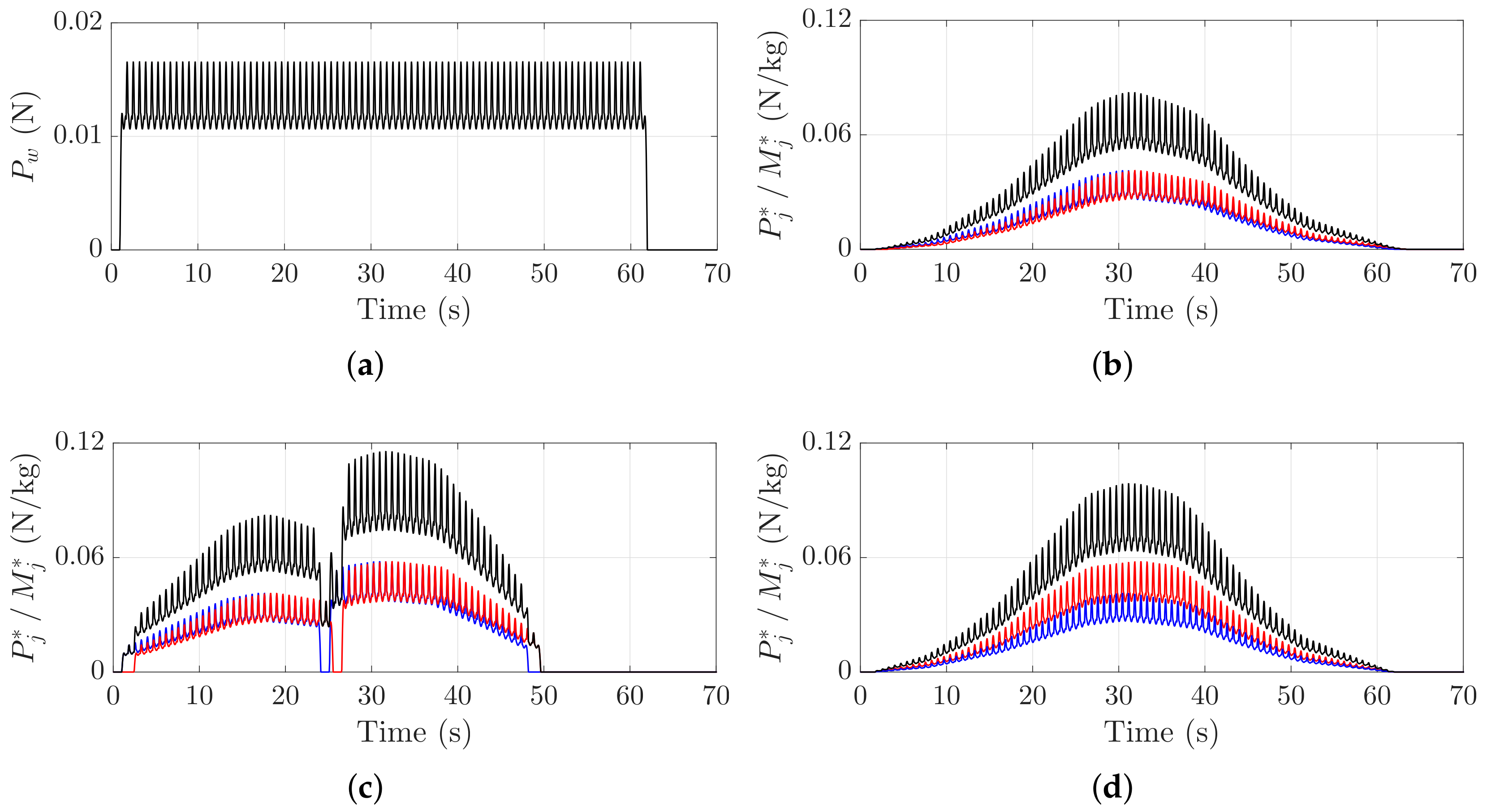
T produces the time-varying force shown in
Figure 9a, generated by a representative pedestrian walking at 1.4 Hz.
Once the pedestrian loading is computed, crowd conditions are generated by replicating it
times, where
is the number of pedestrians, at intervals of
. The latter is chosen to maintain sufficient spacing between consecutive pedestrians, ensuring a realistic representation of the loading. Specifically, for single-file walking (either crossing the footbridge or along a loop),
is applied between all pedestrians, whereas for distributed walking,
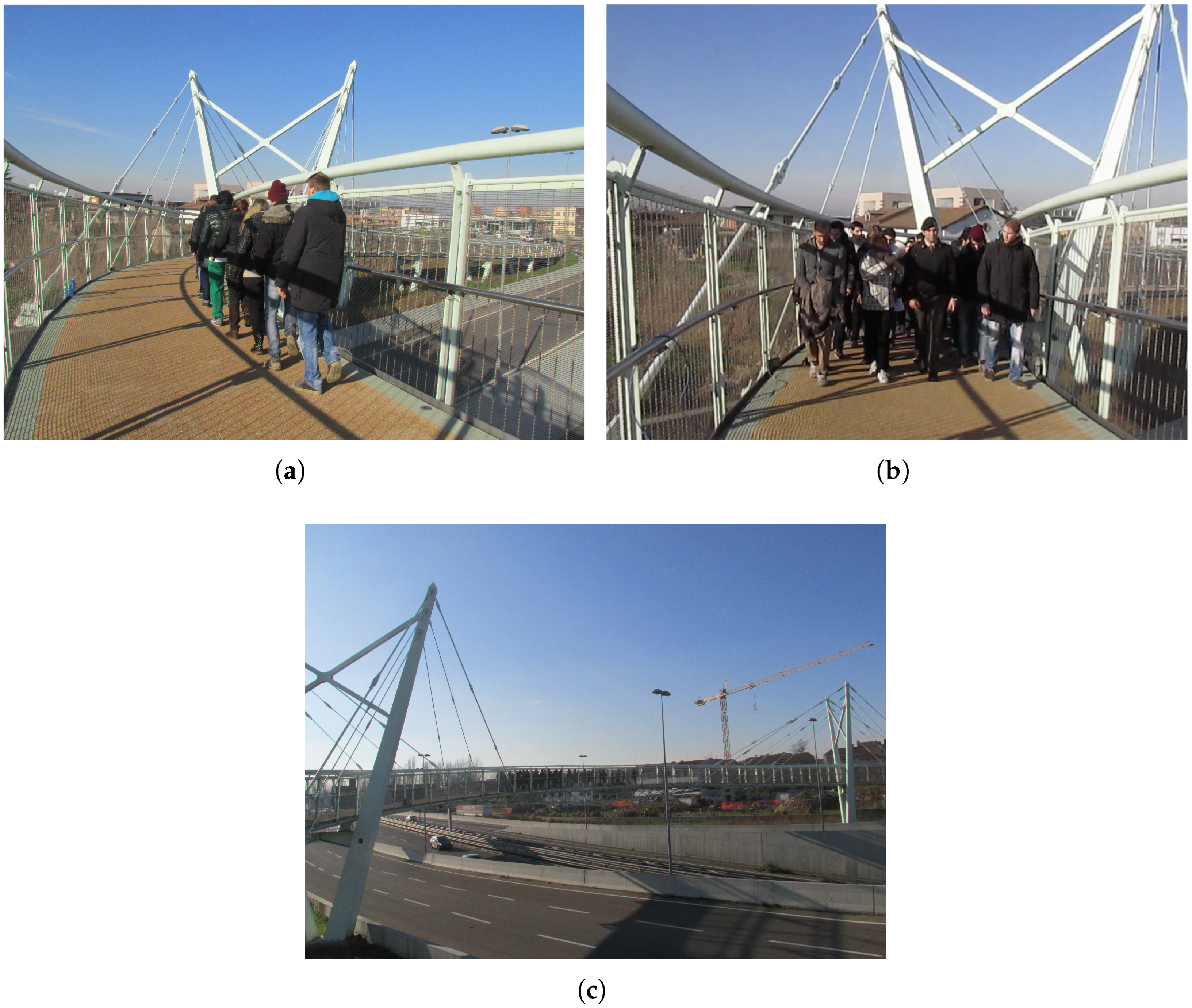
corresponds to the shift between groups of four side-by-side pedestrians, as four parallel lines were formed during the tests (please see
Figure 6b).
To obtain the modal force for the bending-only framework (i.e.,
) each step force
is weighted by the amplitude of the translational mode shape
evaluated at the corresponding footfall location, i.e., interpolated at
increments. Regarding the generalised modal force for the bending-torsion framework (i.e.,
), each step force
contributes both through the translational mode component
and, scaled by the corresponding step moment arm
, through the rotational mode component
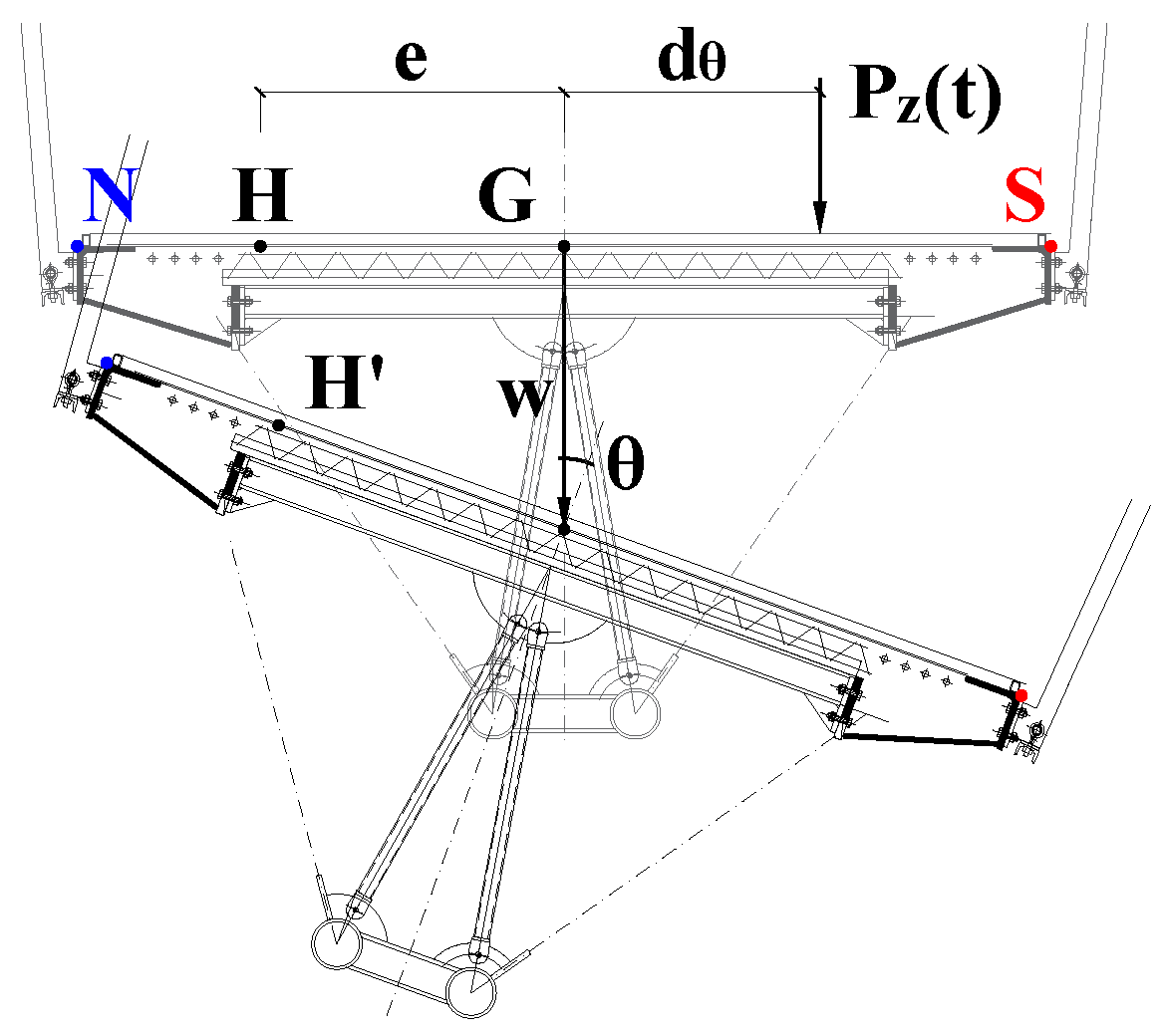
. This allows accounting for both the step force and the moment it induces when the force is eccentric by
with respect to
G, as illustrated in the example of
Figure 8.
The cross-sectional coordinate is centred at the centre of mass G, located on the centreline, with positive values toward the south side (S) and negative values toward the north side (N). Therefore, is set to m for pedestrians walking in single file on the north side of the deck. When pedestrians change direction while walking in a loop, the sign of is reversed, and the mode shapes and are mirrored accordingly. Please note that the path followed during loop walking is asymmetric relative to the midspan. Lastly, for cases in which the deck is fully occupied, the moment arm is assigned values of , , , and m to the four parallel lines of pedestrians, in order to reflect the actual distribution of the crowd.
Figure 9b–d illustrates the generalised modal force for the tested layouts, showing two pedestrians (blue and red) as a representative example. In
Figure 9b, the contributions of the two pedestrians are identical but time-shifted, as they walk one behind the other in a single file with the same eccentricity. A similar behaviour is observed in
Figure 9c, with a change in amplitude due to the direction reversal in loop walking, which suddenly alters the sign of the moment arm. By contrast, in
Figure 9d, the contributions of the two pedestrians differ in amplitude as they walk side by side under distributed loading, with different moment arms generating different moment components in their generalised modal forces.
5.2. Structural Responses
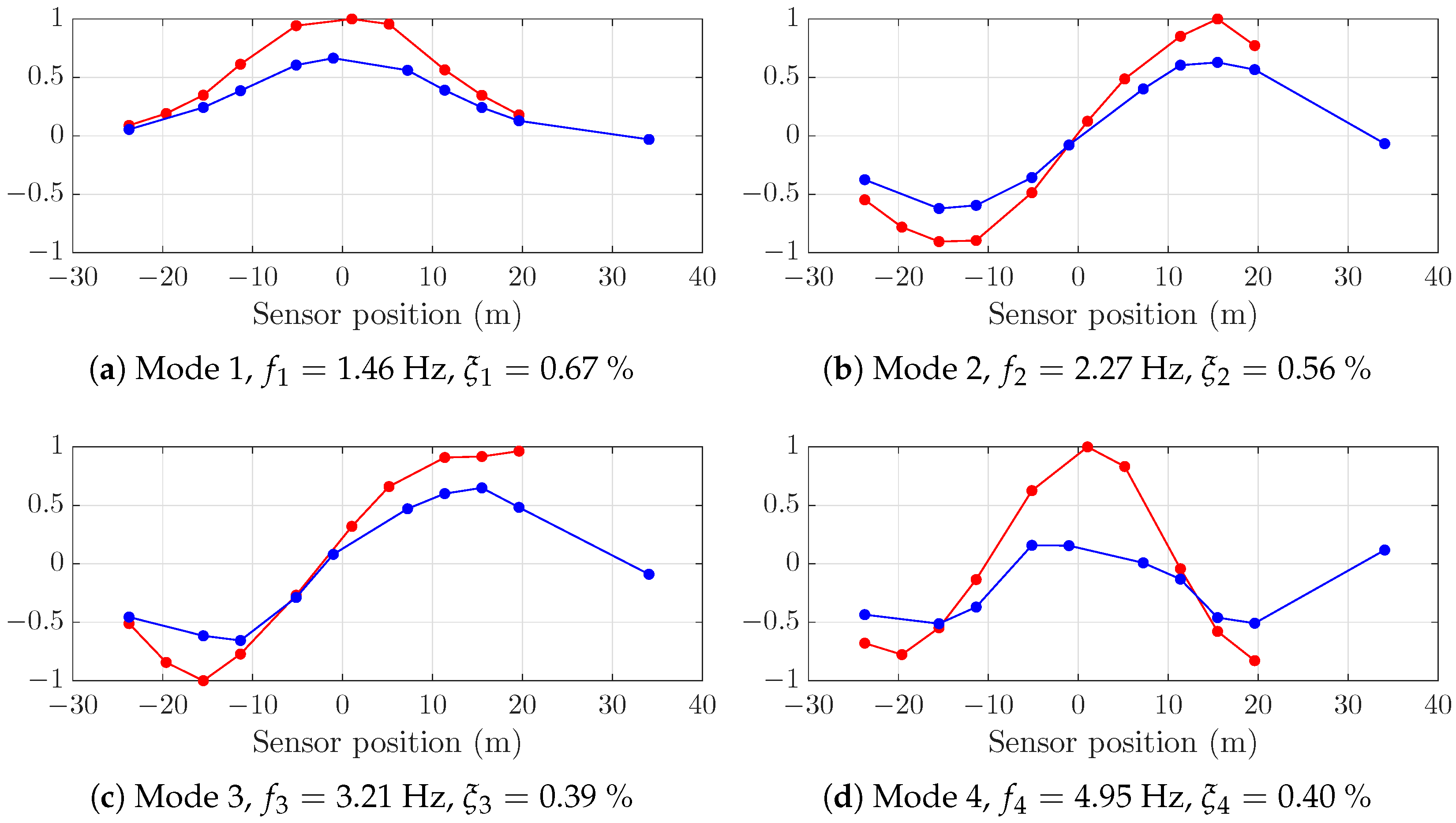
To numerically evaluate the serviceability of the experimentally tested footbridge, as is common in the literature, the structural response is calculated considering the contribution of a single mode. Specifically, the first mode () is considered, as the most excited by pedestrian activity across all the tested pacing frequencies.
Although the girder exhibits slight asymmetry along the length of the main span, the centre of mass G is assumed to coincide with the centreline at each cross-section for the sake of simplicity.
To evaluate the translational mode shape at the centre of mass G, the experimental components obtained at the north and south edges of the deck are averaged. For the determination of the rotational mode shape , the angle between the two experimentally measured vertical components at the edges is calculated. Finally, is normalised to unit, and is scaled accordingly.
The total mass of 250,000 kg is scaled linearly with the main span length and lumped at nodes spaced at 1 m intervals. The translational mass matrix is evaluated consistently. As concerns the rotational mass matrix , the polar moment of inertia is computed by distributing the nodal mass over the section and summing the contributions of each discretised area relative to the section centroid.
Bending-only and bending-torsion frameworks are implemented as outlined in
Section 2.1 and
Section 2.2, respectively, to evaluate the maximum absolute accelerations where experimental data are available. In the bending-only formulation, the assumption of rigid deflection implies identical peak accelerations at
G and
N, i.e.,
. In contrast, the bending-torsional framework accounts for the rotational contribution at any generic point
H on the cross-section, depending on its distance
e from
G, through Equation (
11). Similarly to
,
e is measured from
G and assigned positive values towards
S, where translational and rotational contributions are additive (see the example in
Figure 8). Since the experimental acceleration at the midspan is recorded at location 6N,
is here selected, yielding peak responses
. Maximum absolute accelerations predicted by the two frameworks are listed in the first two columns of
Table 3.
As concerns the simplified approach, multiplication factors are computed based on Equations (
12) and (
13). For cases with pedestrians walking in single files along the north side of the deck, the equivalent moment arm is
m, resulting in a torsional multiplication factor of
. In scenarios with looped or stream walking, the equivalent moment arm is
m, as pedestrians on opposite sides of the deck counterbalance each other, leading to
. The positional multiplication factor
is calculated at the deck edge
N, where
m.
Bending-only results are scaled by the torsional and positional multiplication factors, to respectively account for torsional rotation at the centre of mass and rotational effects at the deck north side. The resulting estimates
are reported in the last column of
Table 3. The two torsion-aware methods (detailed bending-torsion framework and simplified approach) produce estimates in close agreement, both diverging from the traditional bending-only model. The following section discusses an in-depth comparison and interpretation of the results, validated against experiments.
6. Experimental Validation
This section addresses the discussion of the results, comparing the experimental structural responses with those predicted numerically.
First, it is important to note that, regardless of the modelling framework, the numerical results (see
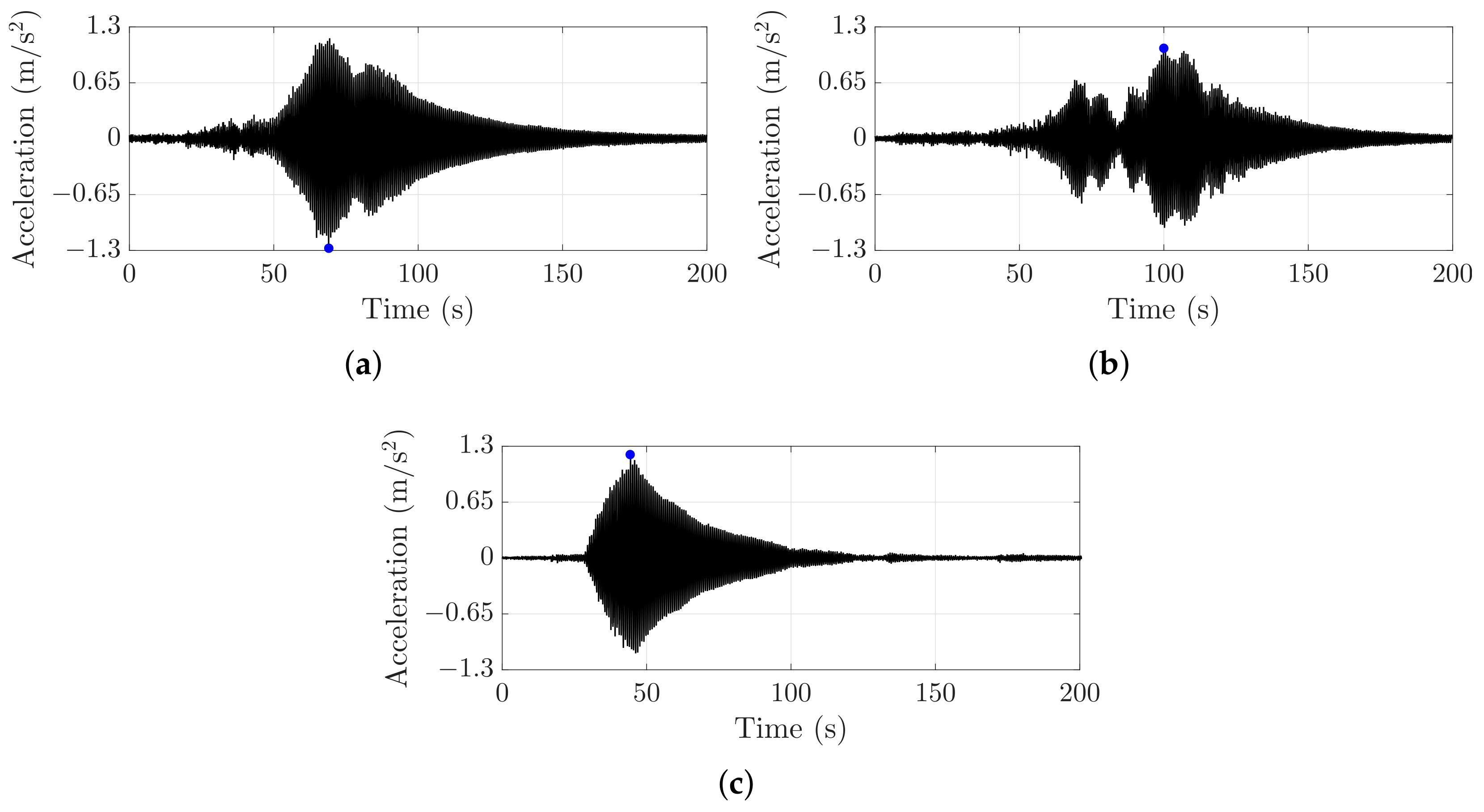
Table 3) are higher than the experimental ones (see
Table 2). This can be explained by the fact that, despite measures taken to ensure synchronisation, the pedestrians were likely not perfectly synchronised during the tests.
Furthermore, bending-only simulations yield higher structural responses compared to bending-torsion simulations. This occurs because, on the north side of the deck (where experimental data is available), rotations act against the deflections, whereas on the south side, rotations amplify the deflections (please refer to the schematic in
Figure 8). Therefore, bending-only simulations are not over-conservative in an absolute sense, but they tend to overestimate the structural response at one extremity (north N) and underestimate it at the other (south S).
Following these clarifications,
Table 4 reports the relative errors between the experimental and numerical accelerations, defined as:
where
denotes the experimental response recorded at location 6N, listed in
Table 2, and
refers to the numerical predictions yielded by the various approaches adopted. Specifically,
indicates
,
, and
for the bending-only, bending-torsion, and simplified approaches, respectively, corresponding to the first, second, and third columns of
Table 3.
In Tests A, B, and C, with eccentric single-file walking, the bending-torsion framework yields consistently lower errors compared to the bending-only framework, with average errors of 4% and 53%, respectively. In Tests D (distributed crossing) and E (loop walking), the pedestrian loading is more balanced across the deck, resulting in smaller error differences between the two models. Nevertheless, the bending-torsion framework still exhibits an order-of-magnitude lower error.
Table 4 also confirms the efficiency of the simplified approach, which performs a traditional bending-only computation and incorporates torsional effects through two multiplication factors. The method yields very low errors despite its simplicity, remaining on the order of 5% across all tested scenarios. The accuracy is essentially equivalent to that of the detailed bending-torsion framework, yet the method preserves the simplicity needed during design or assessment stages.
7. Crowd Equivalent Moment Arm
This section deals with the moment arm definition in real-world crowd scenarios, as detailed in the following.
To implement the simplified approach, the multiplication factors can be easily derived by only knowing the modal parameters, the eccentricity of the loading and that of cross-sectional edges. In the experimentally tested scenarios, the definition of the loading eccentricity is straightforward, as pedestrians were instructed to maintain predefined path. In real-world conditions, crowds are generally expected to be uniformly distributed across the deck, resulting in an equivalent moment arm for the torsional multiplication factor equal to the distance between the centreline (the crowd centre of mass) and the cross-sectional centre of mass.
To validate this hypothesis, statistical analyses are performed as described in the following. Latin Hypercube Sampling (LHS) [
27] is used to generate representative pedestrian positions on the deck, offering a more uniform, space-filling distribution than purely random sampling. Monte Carlo analyses are performed with 10,000 simulations for each crowd density, ranging from 0.2 to 1.5 ped/m
2. For the 60 × 3 m
2 main span deck, this corresponds to simulate a number of points (i.e., pedestrians) ranging from 36 to 270. An example simulation is illustrated in
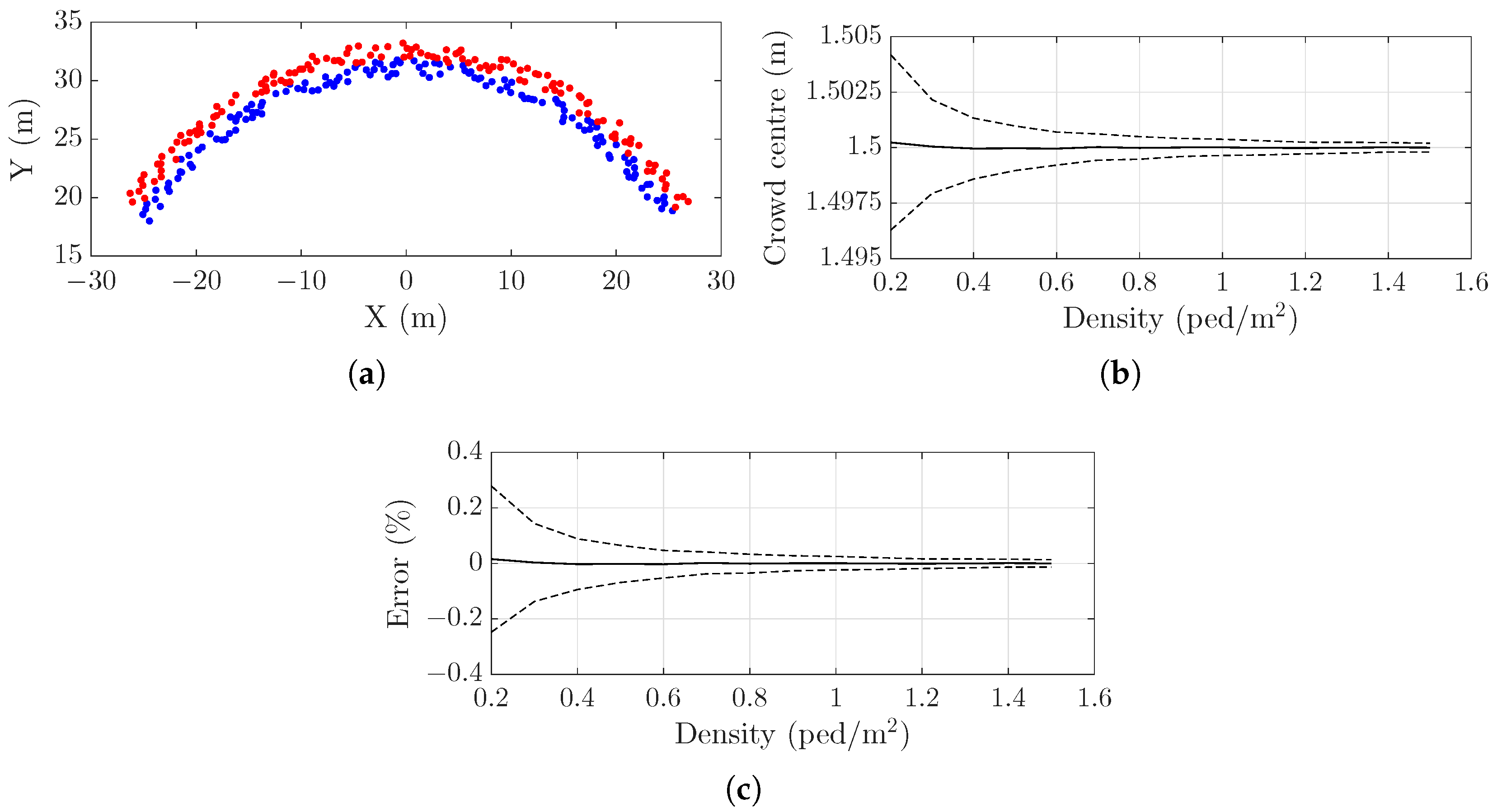
Figure 10a, with blue and red colours indicating people walking on the north and south sides of the centreline.
The simulated points in the original
X–
Y coordinate system (please see
Figure 10a) are mapped into a curvilinear
x–
y coordinate system, where the
x-axis follows the curved trajectory of the central span and the
y-axis represents the deck width. To simplify the simulation, the curved trajectory is then unwrapped into a linear configuration, taking advantage of the relatively small curvature of the central span. Note that, unlike the other numerical simulations performed, the reference system for the
y coordinates is here centred at edge
N rather than at
G. In this way, the transverse positions of pedestrians range from 0 to 3 m, corresponding to the deck width.
For each simulation, the crowd centre of mass
is calculated by averaging the transverse coordinates
y of all pedestrians. The mean and standard deviation of the crowd centre of mass are then computed across the 10,000 simulations for each density, where a location at 1.5 m corresponds to the centreline (see
Figure 10b).
For each simulation, the relative difference between the simulated crowd centre of mass
and
m (the value under the uniform distribution assumption, corresponding to
m) is determined as
The mean and standard deviation of
across all simulations are shown in
Figure 10c. Notably, the average difference decreases with increasing density, as denser crowds more closely approximate a uniform distribution. The standard deviation of
is also small, even at low densities, confirming that the uniformity assumption provides a reliable and computationally efficient basis for simplified analyses.
However, a clarification is needed. While crowds are on average uniformly distributed, instantaneous off-centre arrangements can occur, generating rotations that amplify vertical vibrations. Thus, the equivalent lever arm accurately predicts mean accelerations, but may underestimate peak values, as peak accelerations are more likely to occur when instantaneous eccentricities arise.
To confirm this, further numerical analyses are carried out, modelling crowd motion through the Social Force Model (SFM) [
28]. The latter captures pedestrian dynamics while explicitly incorporating individual heterogeneity, environmental effects, and human-human interactions. Specifically, the SFM version introduced in [
29] is implemented, calibrated such that the average crowd velocity decreases with increasing crowd density, as observed in [
36]. Inter-pedestrian variability is introduced by randomly assigning body mass and preferred walking speed according to the distributions in [
34,
37], while deviations from the target pace arise from boundary avoidance and local interactions with neighbouring pedestrians.
For each examined crowd density, 100 simulations are performed. Density is kept constant by returning pedestrians who have completed crossing to the span start. The SFM provides time histories of pedestrian positions and velocities, from which instantaneous step frequencies are obtained using the cubic speed-frequency relationship reported in [
38]. For each pedestrian, footfall times are determined iteratively, with each step occurring after a time interval equal to the inverse of the step frequency evaluated at the previous footfall, and footfall locations are extracted from the time-varying pedestrian position at those times.
In the bending-only formulation, each footfall is modelled as a vertical walking force computed using the step-by-step loading approach of Equation (
14). When bending-torsion coupling is included, a torsional moment is additionally applied, evaluated as the product of the step force and the lateral offset of the footfall position from the section centre of mass. In the simplified approach, multiplication factors turn:
assuming
m,
,
.
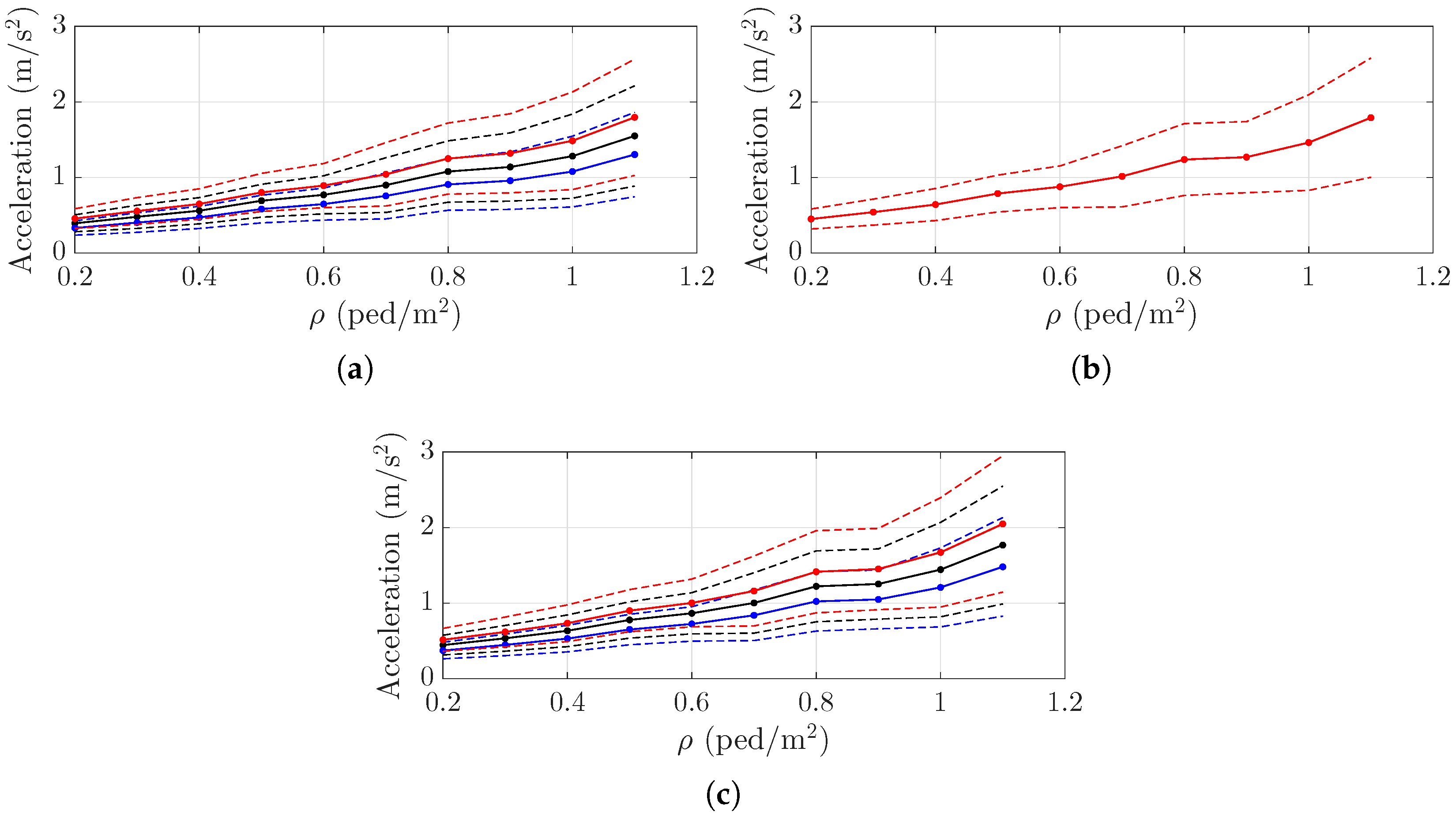
Peak midspan accelerations due to SFM crowds are reported in
Figure 11, including those obtained by the bending-only, bending-torsion, and simplified approaches. Specifically, results are presented as the mean (solid line) and one standard deviation (dashed lines) over the 100 simulations performed for each crowd density, as functions of the traffic level and transverse coordinate
e. Here,
m denotes the north side
N (in blue),
m indicates the south side
S (in red), and
m the centre of mass
G (in black).
In the bending-torsion framework, the response varies along the cross-section, with higher accelerations where torsional-related rotation reinforces the bending-driven deflection (deck edge S) and lower accelerations where it opposes deflection (deck edge N). In the bending-only framework, the section undergoes rigid-body translation without any rotational component, producing identical responses at the deck edges N (in blue) and S (in red), and at the centre of mass G (in black). In the simplified approach, multiplication factors applied to bending-only responses effectively reproduce the acceleration variability along the transverse coordinate e.
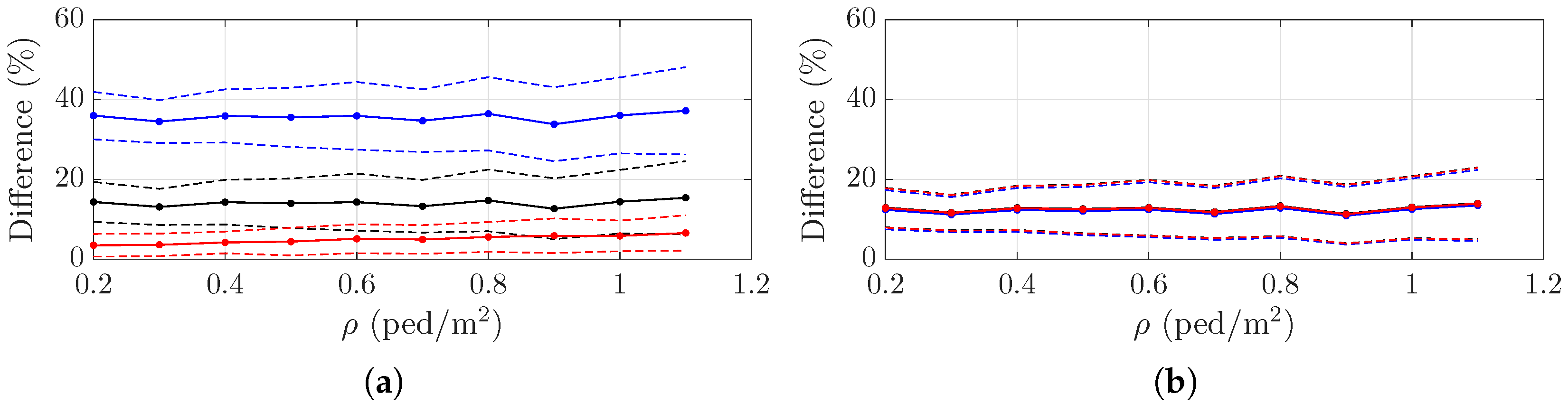
Figure 12 shows the differences between the bending-torsion and the other two methods. As evident in
Figure 12a, the bending-only system shows notable differences of approximately 40%. In
Figure 12b, the simplified approach demonstrates consistently lower differences, around 10%. These are not driven by the positional amplification factor
(with
or
), whose definition is free from uncertainty and thus produces negligible errors. In contrast, the torsional amplification factor
depends on the crowd equivalent moment arm definition. The latter is here set to zero under the assumption of a uniformly distributed crowd, as confirmed by the LHS simulations. This condition holds in a time-averaged sense rather than instantaneously, which leads to expected deviations in peak estimates. Nevertheless, these deviations remain limited, and the simplified method can be considered satisfactorily validated, given the necessary assumptions for rapid assessments.
8. Conclusions
This paper addresses torsional effects induced by pedestrian activity. While bending-only analyses are well established, the inclusion of cross-sectional rotational degrees of freedom and the pedestrian-induced moment resulting from eccentric walking becomes necessary when the main torsional modes are excited, especially when structural geometries and loading are asymmetric. A detailed bending-torsion framework is presented, along with a simplified, rapid approach based on correction multiplication factors.
The performance of these methods is assessed through experimental tests conducted on a full-scale curved footbridge in Modena, Italy. The tested scenarios include both eccentric and uniform crowd distributions. Experimental results demonstrate that neglecting torsional effects can lead to substantial inaccuracies under real-world conditions, particularly for eccentric loading, with errors of up to approximately 50%. Both the detailed bending-torsion framework and the simplified method yield limited errors (around 5%), an order of magnitude smaller than those observed in conventional bending-only analyses.
The simplified approach allows the use of the traditional bending-only framework while correcting predictions with multiplication factors that account for torsional effects, thereby preserving the practicality and efficiency of the assessments. These factors are derived analytically, eliminating calibration uncertainties, and can be computed solely from the modal parameters, structural geometry, and loading eccentricity.
Regarding pedestrian loading eccentricity, the equivalent moment arm of the crowd is required. Numerical analyses using Latin Hypercube Sampling are conducted to assess realistic crowd configurations as a function of crowd density. Results confirm that assuming a uniform crowd distribution, with its centre of mass along the structural centreline, is a valid approximation, especially for dense crowds. However, peak accelerations are likely to occur under instantaneous eccentric configurations.
To investigate maximum structural responses induced by realistic crowd scenarios, the Social Force Model is adopted, accounting for inter-pedestrian variability, human-human interaction, and intra-personal variability driven by environmental influences. These simulations demonstrate that the assumption of crowd distribution uniformity leads to limited errors, confirming that the simplified approach provides sufficiently accurate estimates for practical assessments.
In conclusion, this study demonstrates that bending-only analyses are oversimplified and that accounting for torsional effects induced by pedestrian activity is essential, especially when pacing excites torsional modes or loading is eccentric, as confirmed experimentally. The mathematical frameworks adopted here do not consider cross-sectional transverse deformations or human-structure interaction, as in current guidelines, but they are torsion-aware, thus advancing the footbridge serviceability state-of-the-art.